How New Car Models End Up Unmasked
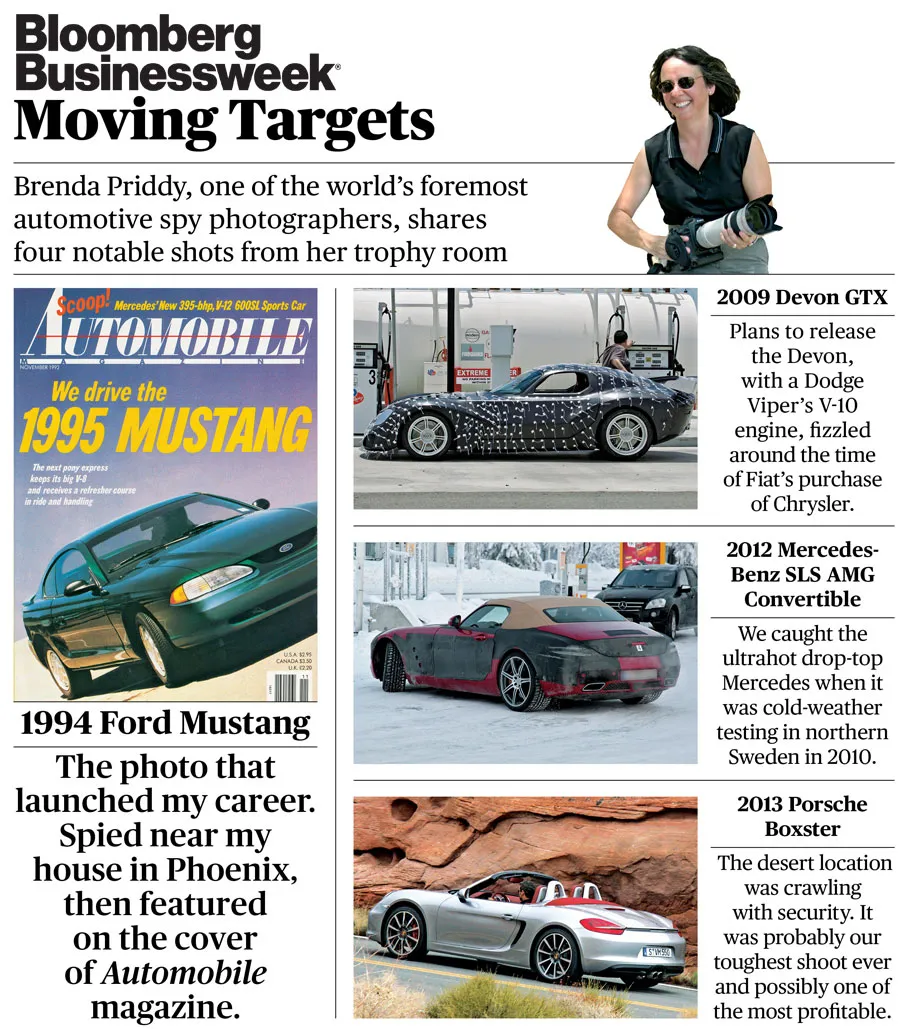
When Phoenix housewife Brenda Priddy goes to walk her dog, she drives farther than the local park. She grabs one of her Canon EOS 50D cameras, loads her mutt into her station wagon, and heads toward Death Valley, or the Rockies, or another site known for extreme temperatures or elevation, in search of vehicular prey. Priddy runs an international photo syndicate, Brenda Priddy & Co. Her business card reads “Automotive Spy Photography.” “People claim that we do industrial espionage,” she says, “but we do it all from public areas and without breaking any laws. Basically we spend hours and hours doing surveillance and stakeouts, hoping to catch sight of a future car.”
This isn’t as easy as it sounds. Automakers take myriad measures to protect forthcoming models. They cloak vehicles during transport. They create “mules,” cars with updated running gear hidden under the body of a current model. And they use camouflage—darkened trim, grafted prosthetics, black vinyl patches, or arresting paint patterns. “If you catch an action shot of our vehicles driving, you won’t be able to catch a clear shot of a feature line on the exterior,” says Corey Davis, who, as General Motors’ former quality audit supervisor for pre-production operations, was responsible for camouflage inspection.