What Happens When the Winter Olympics Can’t Rely on Winter
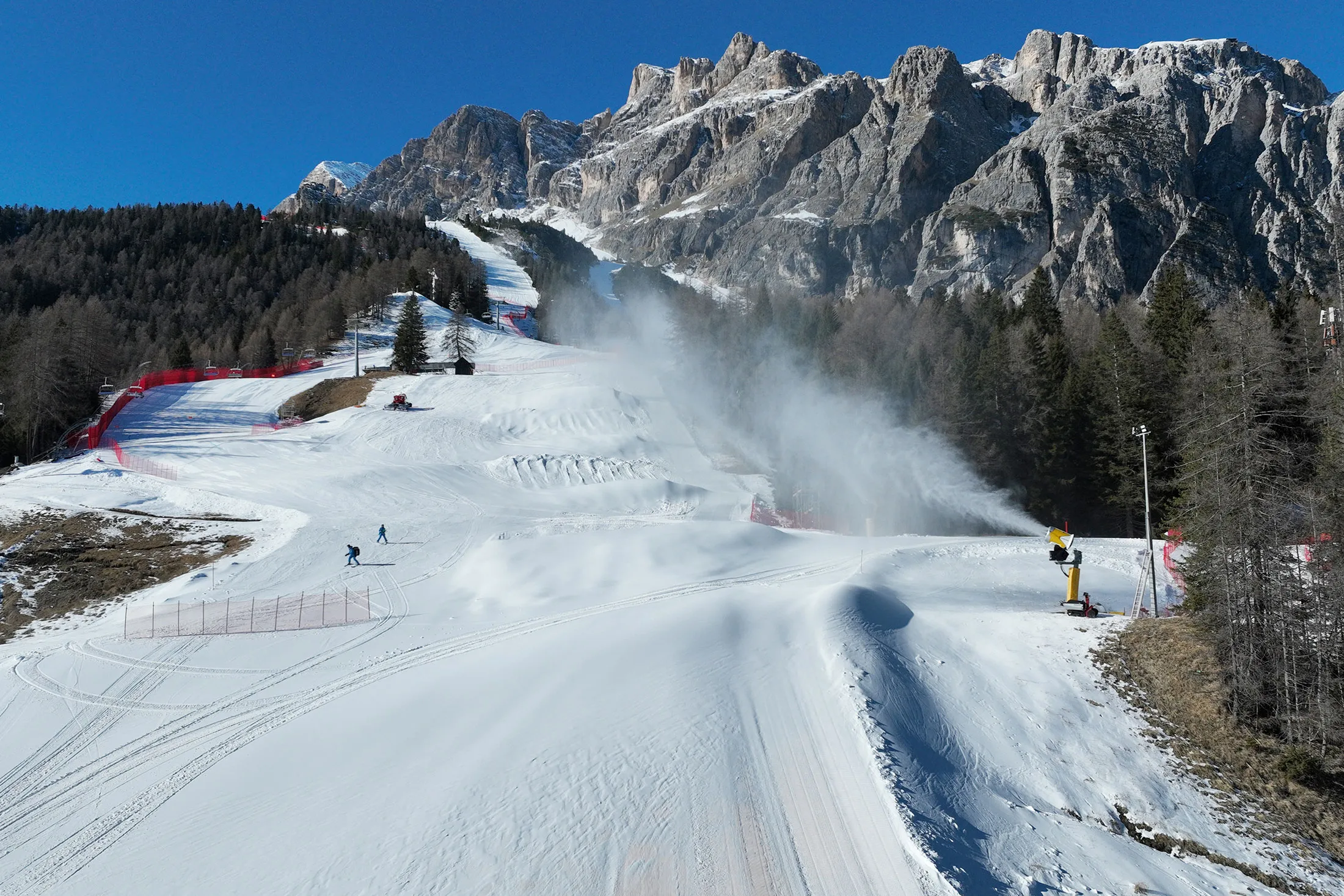
The snow that blanketed the Italian Alps throughout January came as a huge relief to the organizers of this month’s Winter Olympic Games. Unusually warm weather around the holidays had them worried the slopes wouldn’t be ready in time.
Alpine areas are heating up faster than the rest of the planet, with shorter winters that tend to bring less snowfall and more rain, plus bouts of extreme cold and poor visibility. The vast range of possible conditions and their increasing unpredictability makes planning for the quadrennial winter sporting event harder than ever before.
Host cities, backed by local and national governments, are making multimillion-dollar investments in sophisticated snowmaking systems to create and maintain optimal surfaces in hopes of avoiding even costlier cancellations or relocations of races. Even so, the International Olympic Committee (IOC) may eventually need to rotate the century-old Games between a small group of the most “climate-reliable” countries to help minimize complications.
“Climate change is already reshaping winter sports as we know it,” says IOC sustainability head Julie Duffus. “The question is how we can evolve the Olympic Winter Games responsibly.”
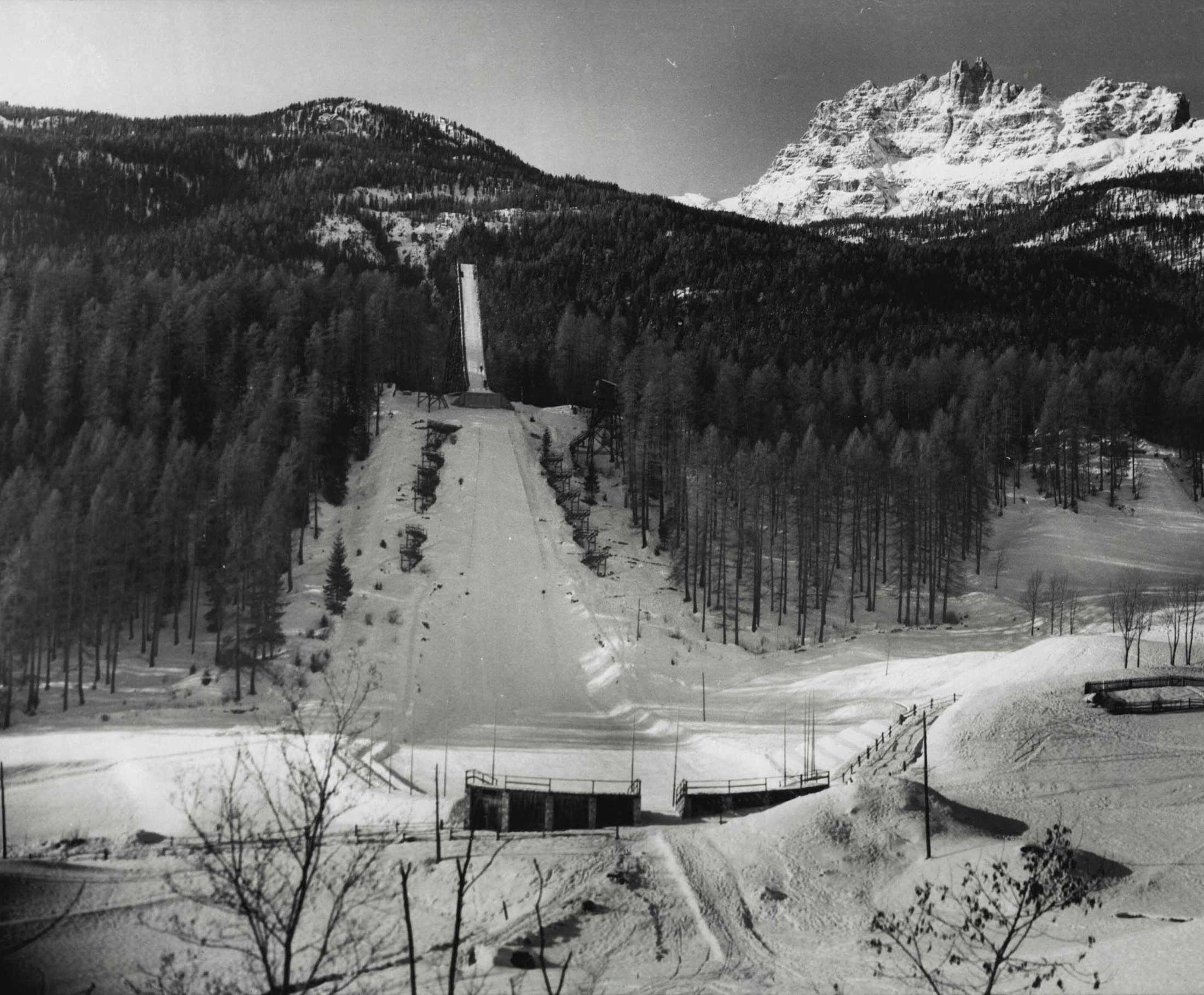
The Olympic ski jump at Cortina d’Ampezzo in 1956. Photographer: De Agostini Picture Library/Getty Images
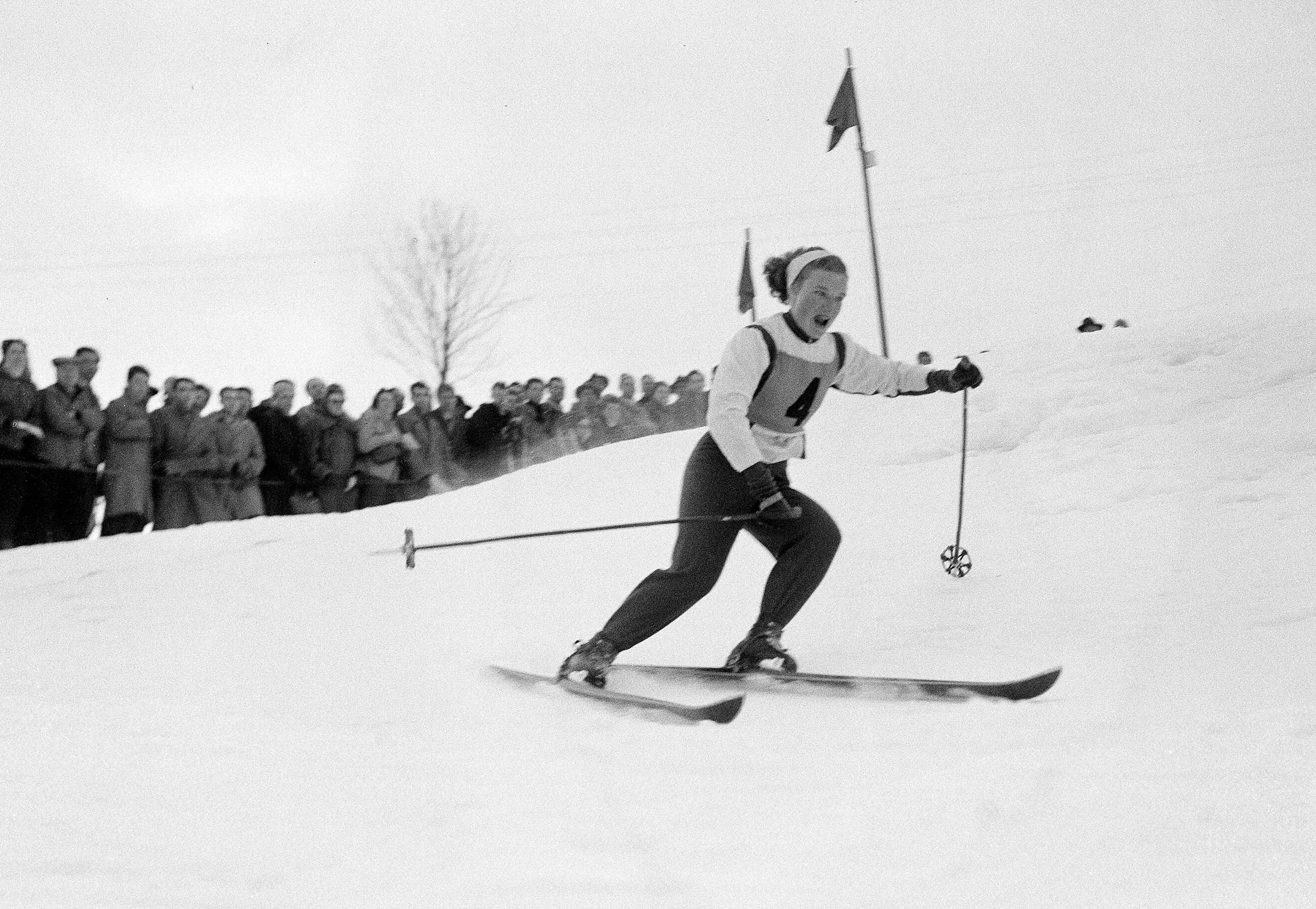
Canada’s Lucile Wheeler during the women’s slalom event at Kitzbühel, Austria, a warmup meet for the Cortina d’Ampezzo Olympic Winter Games. Photographer: AP Photo
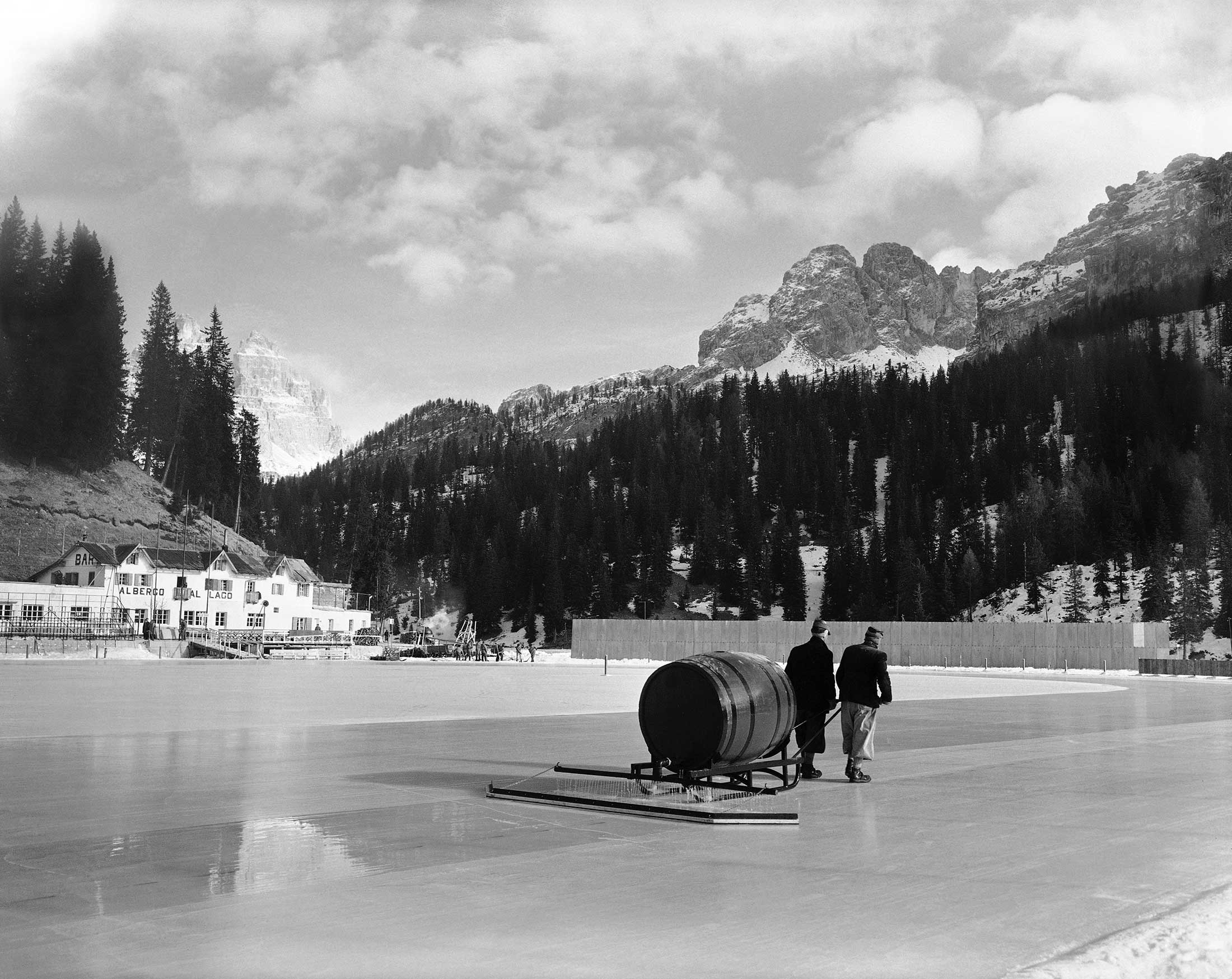
To form a fresh, smooth surface for speed skating events, lukewarm water was poured over the ice of Lake Misurina. Photographer: AP Photo
When Cortina hosted in 1956, it was an unusually cold winter. February's average temperature was -14.1C. In the decade to follow, February temperatures averaged -7C.
In the 70 years since Cortina first held the Winter Games, February temperatures in the Northern Italian town have warmed 3.6C.
Trend line
Source: Climate Central
In fact, all the cities that staged the Winter Games since 1950 have heated up in the years since by an average of 2.7C (4.9F), according to scientists at Climate Central. That’s well above 1.4C, the warming average for the entire planet. And temperatures are set to keep rising. If greenhouse gas emissions continue at their current pace, 13% of global ski areas will have lost natural snow cover entirely by 2071 to 2100, according to a study by researchers at the University of Bayreuth in Germany published in 2024.
In practical terms, that means many of the lower-altitude resorts that typically sit at 1,000 meters to 1,300 meters (3,281 feet to 4,265 feet) above sea level are shutting down or looking to focus on hiking, mountain biking and other three-season activities instead. Even Chamonix, France, home to the first Winter Games in 1924, struggles to keep its cross-country trails open in the center of town all winter long. Of the 93 locations that have the infrastructure to host the Winter Olympics, at least 44% will have unreliable snow conditions by around 2050, according to research by University of Waterloo professor Daniel Scott and University of Innsbruck associate professor Robert Steiger. The fewer skiing trails and snow resorts that exist around the world, the more expensive and inaccessible these sports will become, winnowing the potential pool of future Olympians further.
Some ‘Reliable’ Olympic Hosts Will Lack Good Snow by 2050
Note: Compares 1981–2010 baseline period with RCP 2.6 low-emission scenario consistent with 2015 Paris Agreement targets.
To safeguard the upcoming event, the 2026 Milano Cortina Foundation has upgraded artificial snowmaking infrastructure in some venues with technology that uses less water and energy, says its head of sport competitions, Alberto Ghezze. To limit the process’s greenhouse gas emissions, it also built water reservoirs at high altitude to use gravity rather than energy-consuming pumps. Automated controls adjust production, and weather stations identify the most efficient time for artificial snow production. TechnoAlpin SpA—the world’s largest manufacturer of snowmaking systems and the company responsible for nearly all the artificial snow infrastructure for the Games—was awarded €30 million ($36 million) for the snowmaking projects. “Preparing for variable conditions is central to our operational planning,” says Ghezze.
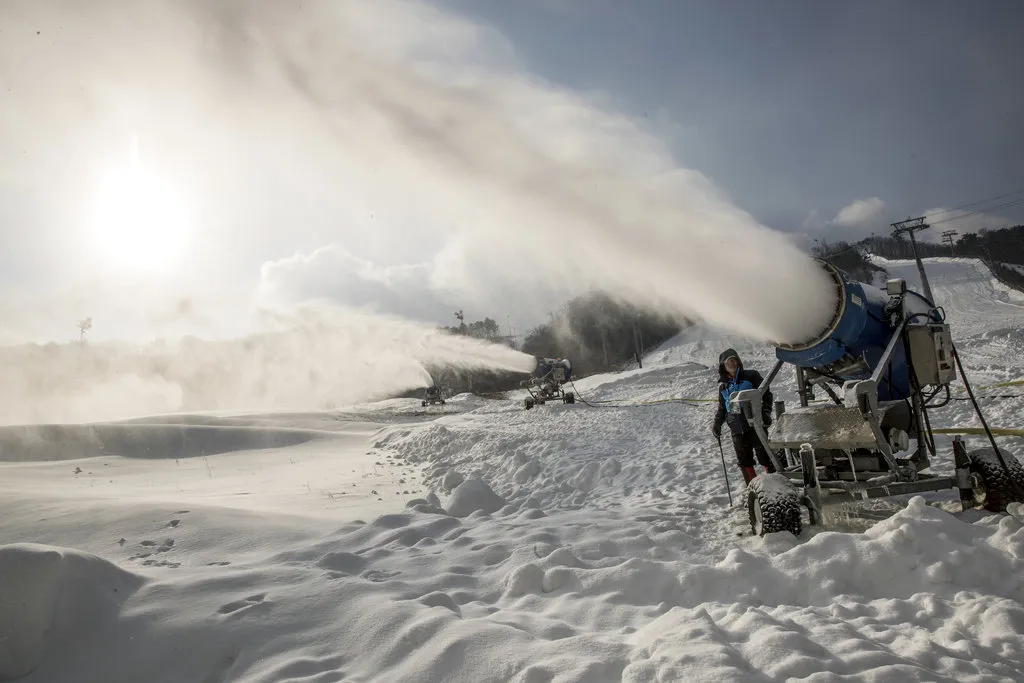
Snow cannons eject artificial snow in Pyeongchang, South Korea, in 2018. Photographer: Michael Kappeler/picture-alliance/dpa/AP Photo
But even the most advanced technology can’t create snow when the weather is too warm. Due to the change in temperatures, race cancellations and reschedulings have become more common in recent years, especially for competitions at the beginning and end of the season, disrupting plans for athletes who need to win points to qualify for the Olympics.
Annual Snow Days in Major Mountain Ski Areas Could More Than Halve by Century’s End
Sources: Global reduction of snow cover in ski areas under climate change, Veronika Mitterwallner, 2024; CHELSA; OpenStreetMap; Global Mountain Biodiversity Assessment
Note: Compares 1981–2010 baseline with the high-emission SSP3–7.0 pathway.
Just 16 races were staged during the first Winter Olympic Games, with 17 countries represented. Over the years, it has become a bigger, more lavish competition. This year, 116 contests are being held across multiple locations in Northern Italy, with athletes from more than 90 countries participating. A new addition, ski mountaineering, will make its debut.
As the climate warms, it’s possible the Games will look to add more sports not typically associated with winter. David Lappartient, the head of global cycling body UCI, told Bloomberg News at the 2024 Paris Summer Games that he planned to team up with track legend and World Athletics chief Sebastian Coe to propose introducing cyclocross and cross-country running in a shared venue for future Winter Olympics. “With climate change, it’s a winter sport,” Lappartient said at the time. “They’re both winter sports, and you don’t need snow and ice.”
For organizers of winter sporting competitions, one worry is that insurers will change their risk calculations and legal definitions as conditions change, and that premiums will rise sharply. “If you cancel something in one place two years in a row, there’s a big discussion to be had when you plan for the next year,” says Bruno Sassi, communications director at the International Ski and Snowboard Federation (FIS), the governing body for the two sports. “One day, insurance companies are going to look at that place and say it’s not force majeure, it’s part of reality.”
The worsening climate doesn’t help the long-term prospects of the Games, whose viability is also being threatened by a tendency to run over budget, according to a 2024 paper by Alexander Budzier, fellow in management practice at the Saïd Business School at University of Oxford, and his colleague Bent Flyvbjerg. That’s partly because for years the IOC encouraged big spending by hosts, leading to financial burdens for cities and national governments and causing some candidates to withdraw from the bidding process amid fears of ballooning costs.
The 2014 Games in Sochi, Russia, became the most costly in history—and although politics and cronyism played a role, the lack of existing ski infrastructure was also a major factor. The city by the Black Sea has a subtropical climate, and snow had to be produced on a massive scale, stored for months and then trucked to sites. Venues required huge engineering projects to stabilize slopes.
Games Have Become Increasingly Expensive
At the 2018 Winter Olympics in Pyeongchang, South Korea, about 80% of the snow was artificial. Four years later, in Beijing, all the snow was manufactured for the first time in Olympic history, sparking an outcry over the event’s sustainability, as well as the Games’ impact on local environments and global warming more broadly. The optics and images of ribbons of white surrounded by dirt-brown hills in China that were flashed around the world only accelerated the discussion, even if it was extremely cold during the events.
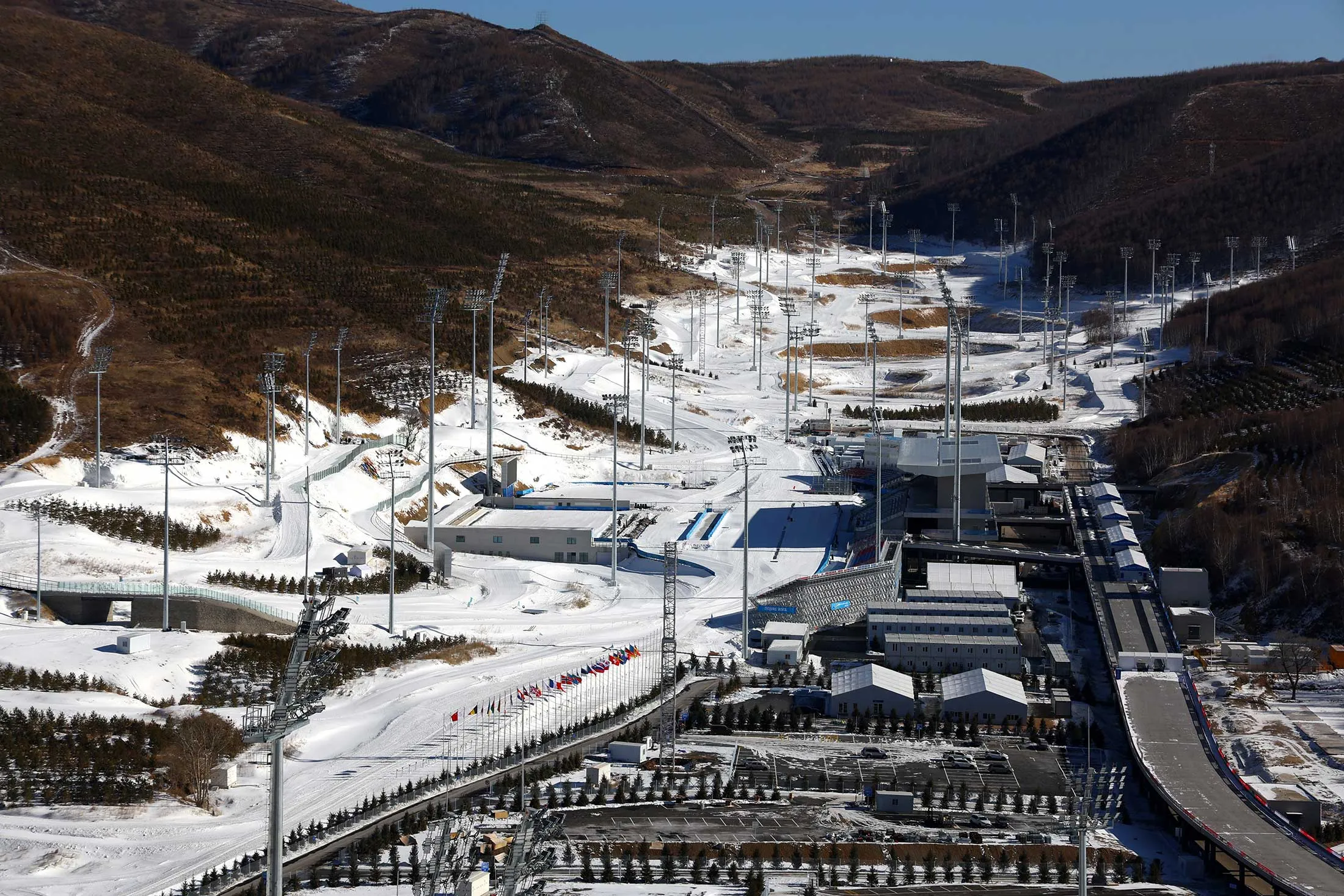
The competition venue for the biathlon events at the 2022 Beijing Olympics. Photographer: Pawel Kopczynski/Reuters
After the Beijing Games, the IOC—a nonprofit that doesn’t publicly disclose the cost of its events—decided that from 2030 onwards, countries would be contractually obligated to minimize the event’s direct and indirect greenhouse gas emissions, protect biodiversity and manage resources sustainably. It is also considering rotating hosts among only those able to demonstrate average minimum temperatures below 0C at the time of the Winter Games over a 10-year period—just seven or eight countries would be suitable, including France, Switzerland, the US, Japan and some in the Nordics.
“Deciding where the Games will take place has become more important,” says the University of Innsbruck’s Steiger. “There is a trade-off between locations that are climate reliable and locations that are not so reliable but have established infrastructure.”
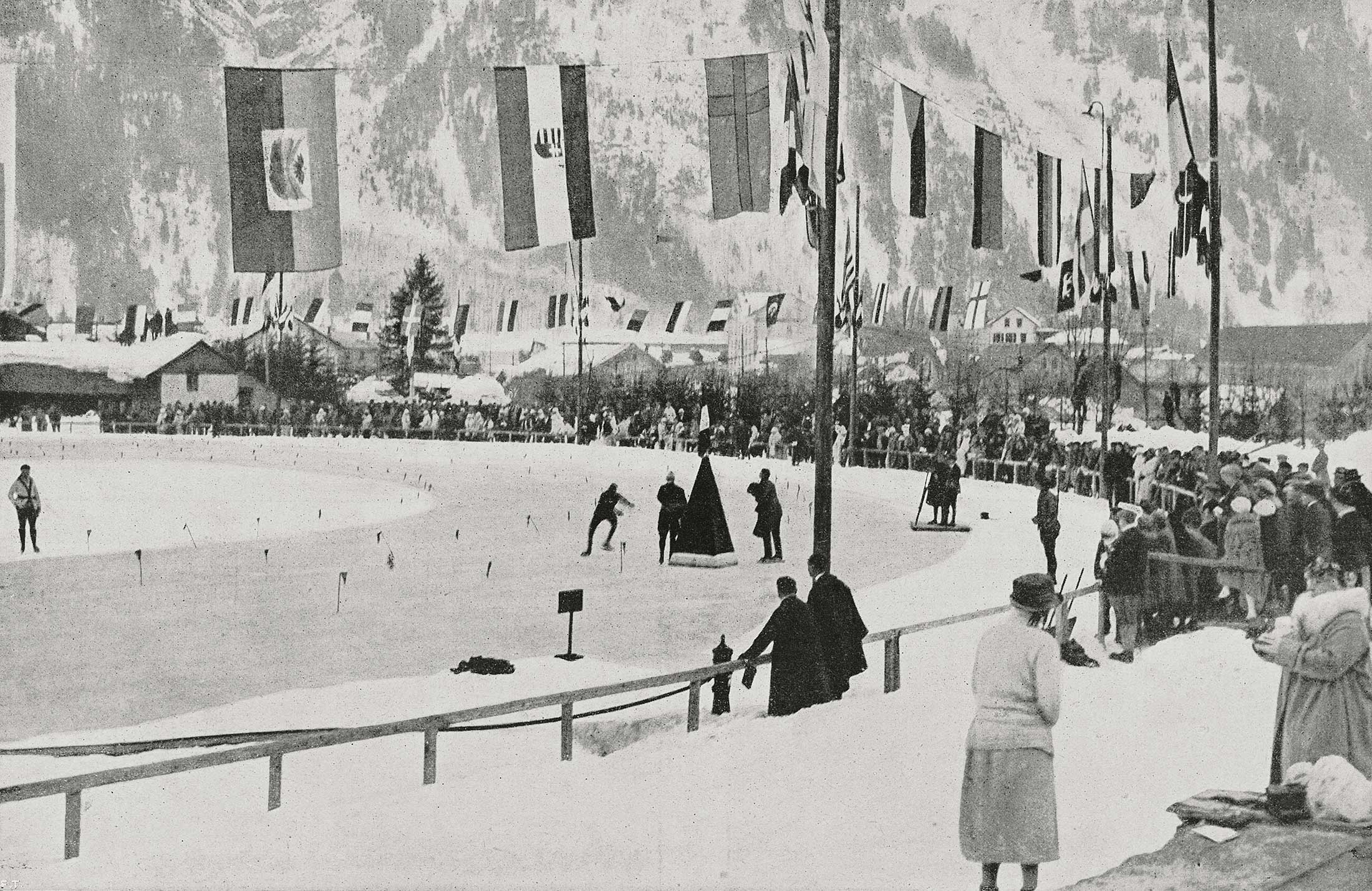
The first Winter Olympics in Chamonix, France, in 1924. Photographer: De Agostini Picture Library/Getty Images
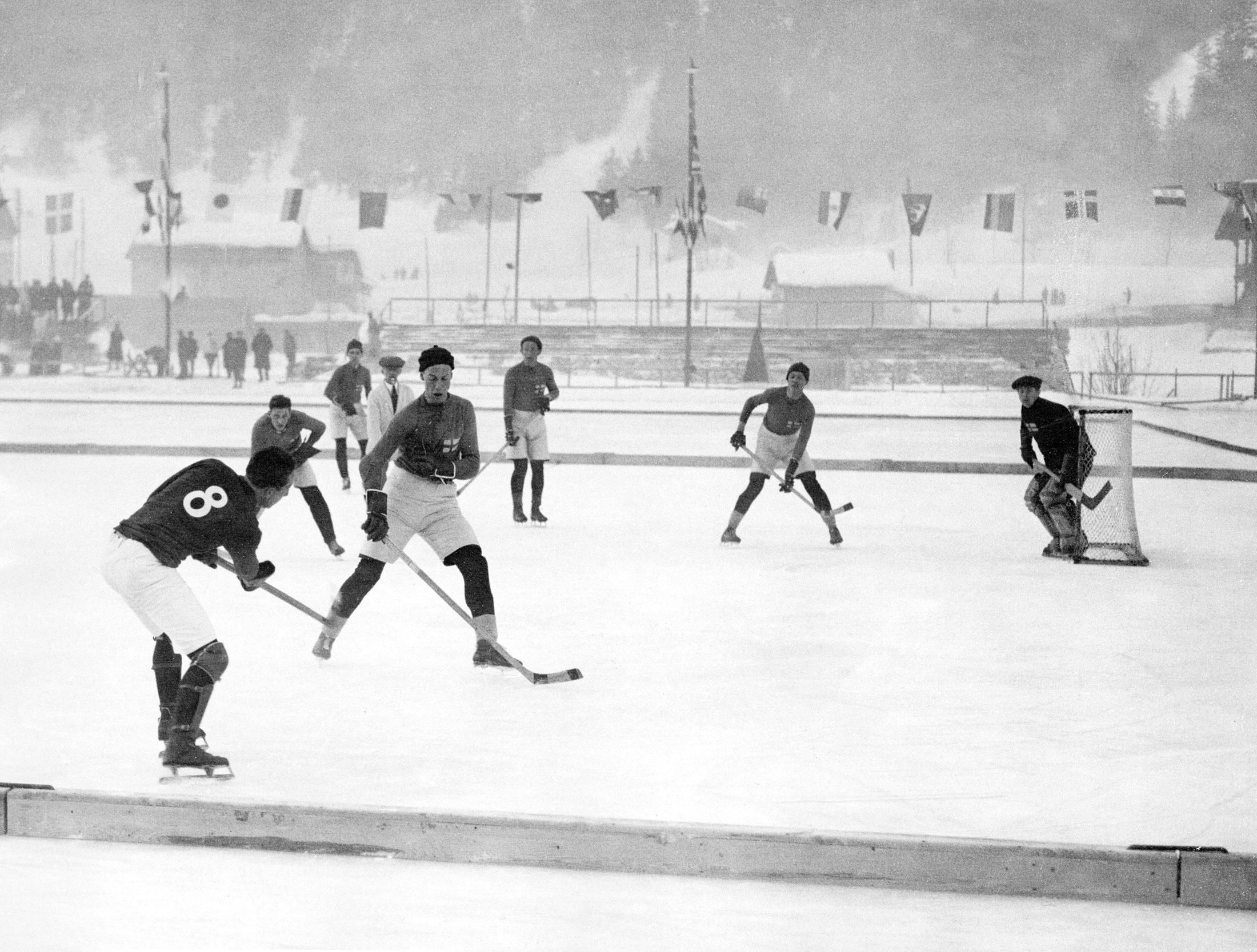
A hockey match at the inaugural Winter Games, in which Sweden defeated Switzerland 9-0. Photographer: TT News Agency/akg-images
Around 85% of the infrastructure used for the Milan Cortina Games is preexisting, but that’s not enough, say critics, to prevent the creation of so-called white elephants, or expensive venues built for the Games that then go underused or abandoned. The Italian organizers, at the urging of Deputy Prime Minister Antonio Tajani, were determined to build a new track for luging and bobsledding that required clearing forest and raised questions about how it will serve the neighboring community after the Games. That kind of addition runs contrary to the wishes of the IOC, which maintains that facilities should be built only if it will leave a useful legacy for local sports and citizens.
In the end, total spending for the Milan Cortina event may be around $3 billion—well over the initial budget of $1.6 billion but in line with most Winter Games, according to Oxford’s Budzier. To try to offset costs, the IOC has opened up every aspect of the Games to advertisers and is growing its audience through deals with local television networks; it’s also expanding to social media and internet broadcasting.
IOC Revenue Keeps Climbing
Source: Olympic Committee’s Olympic Marketing Fact File, July 2025
James Clugnet, a cross-country skier with Team Great Britain, says that pretty much every competition he participates in these days depends on artificial snow—and that although it is firmer, allowing for faster racing, he prefers the real thing. He lives in Norway and trains on roller skis in the summer, which he says is similar to skiing on snow. When possible, the 29-year-old waits as late in the winter season as he can to start training on real snow, as cover tends to be deeper, lessening the environmental impact.
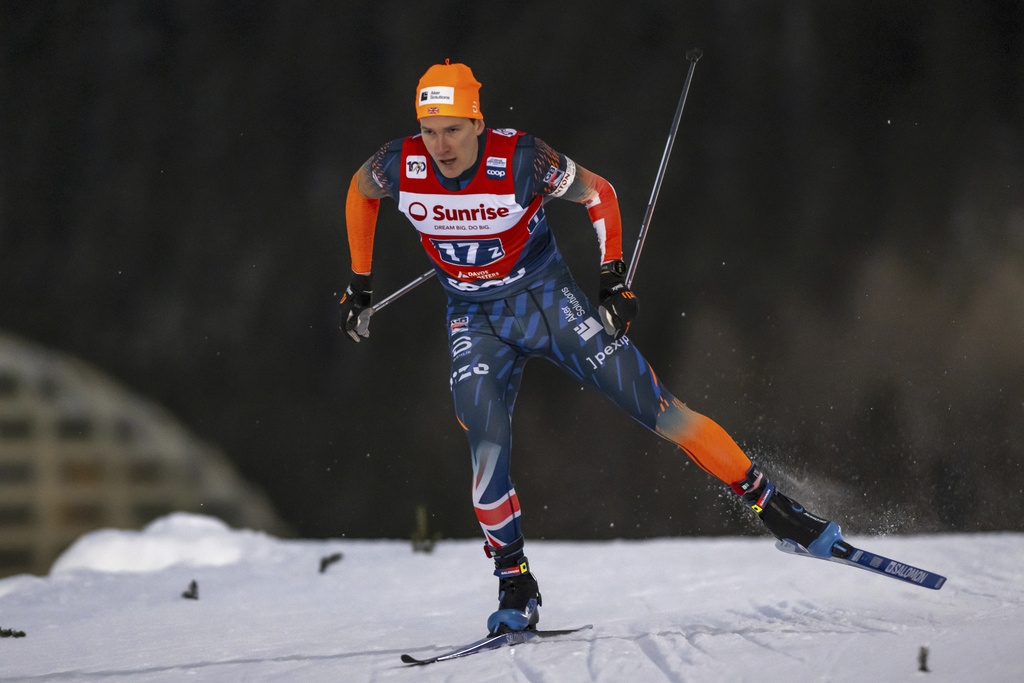
Clugnet of Great Britain competes during a qualification event in Davos, Switzerland. Photographer: Jean-Christophe Bott/Keystone/AP Photo
He’s not the only athlete concerned about the future of winter sports. Hundreds of competitors have been sounding the alarm through campaigns and in open letters to the IOC. Last year, just as the organization was choosing a new leader, 450 Olympians urged the IOC to do more to protect the environment. Days after being elected president, Kirsty Coventry said she would make those concerns a priority and later met with athletes to discuss the issue.
Clugnet, raised near Grenoble, France, grew up near two winter resorts in the Alps—one at 1,000 meters above sea level and the other at 1,200 meters. As the years passed and temperatures rose, he recalls, training sessions moved to the higher-altitude resort; the lower one eventually closed. “That’s when I understood the impact it can have on the sport,” he says. “I don’t really remember not being aware of climate change.”