China’s Pivot to Vietnam Blows Hole in Trump’s Made-in-USA Plan
A year on from “Liberation Day,” Trump’s tariffs have fueled a change in global supply chains — just not in the way he envisioned.
Standing in front of a tripod streaming live to TikTok, a recruiter announces yet another round of job openings at a factory behind him churning out MacBooks. This hiring surge is in a booming Vietnamese city not far from the Chinese border.
Fixing the US’s $760 billion trade deficit with Asia was a key priority when President Donald Trump unveiled sweeping global tariffs on April 2, 2025. Declaring a national emergency on “Liberation Day,” he promised to bring back manufacturing to America and reduce the country’s reliance on China.
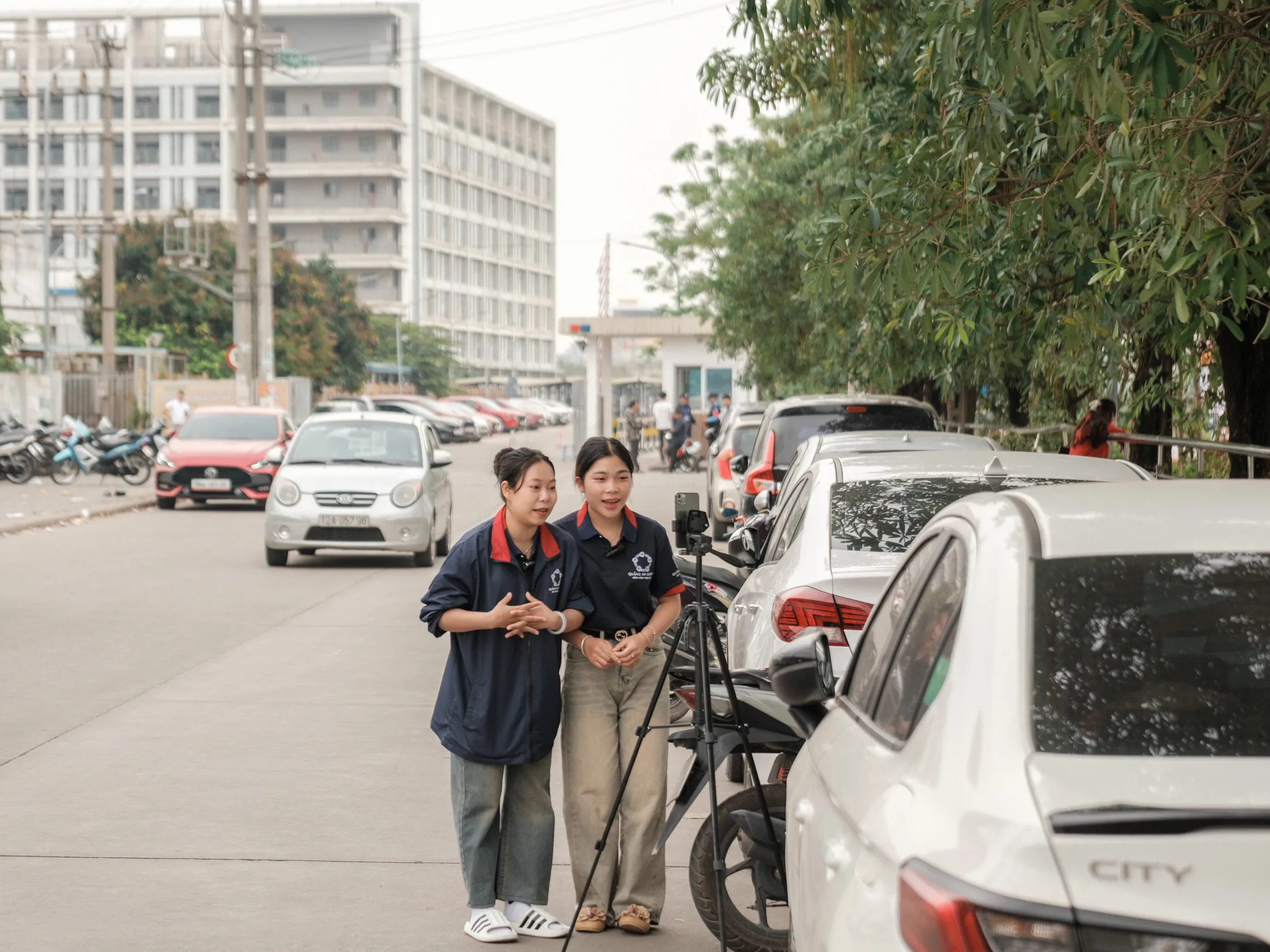
Recruiters live-stream on TikTok outside a Foxconn Technology Group factory in Bac Ninh in March. Photographer: Linh Pham/Bloomberg
Under heavy lobbying from US tech companies, consumer electronics including laptops produced across Asia were exempted from the so-called reciprocal tariffs. But those made in China were still subject to separate fentanyl-related taxes of up to 20%.
One year later, Trump’s volatile tariff policy has altered supply chains — just not in the way he envisioned. A Bloomberg analysis of shipment-level customs data shows a shift in manufacturing toward Vietnam that begun under Trump’s first term has accelerated, with the country last year surpassing neighboring China as the leading supplier to the US of laptops and game consoles for the first time.
What’s more, the findings showed that the core production of those electronics is still happening in China. Faced with unpredictable tariffs, Chinese manufacturers found a cost-effective workaround: moving low-skilled, final assembly lines across the border to Vietnam, where they have faced lower levies. Vietnamese factories that screw together Chinese-made components and ship them onward added less than 8% of the export value in some cases, the Bloomberg analysis showed.
Although China’s shipments to the world’s biggest economy fell by $51 billion last year, that was more or less offset by the US’s cumulative $49 billion rise in imports from a group of countries including Vietnam, India and Mexico, according to the data. The data also shows the US still bought $130 billion worth of seven big-ticket electronics from overseas last year, falling just over 1% compared with 2024.
Vietnam Beats China as Top US Source for Key Electronics Imports
Source: Bloomberg analysis of US customs data
Labor demand at a Vietnamese industrial park in the northern province of Bac Ninh is so high that first-time factory workers are bused in from remote villages to fill the 1,000 jobs advertised since Lunar New Year, recruiters told Bloomberg News.
“The bonus companies give to new workers reveals how urgently they need workers,” said Nguyen Van Dai outside a Foxconn Technology Group factory, as his team wrapped up a social media livestream advertising vacancies. “Last year, Foxconn had five hiring rounds in which it gave workers a bonus of 15 million dong ($570), the highest amount so far, to meet their orders and expansion plan.”
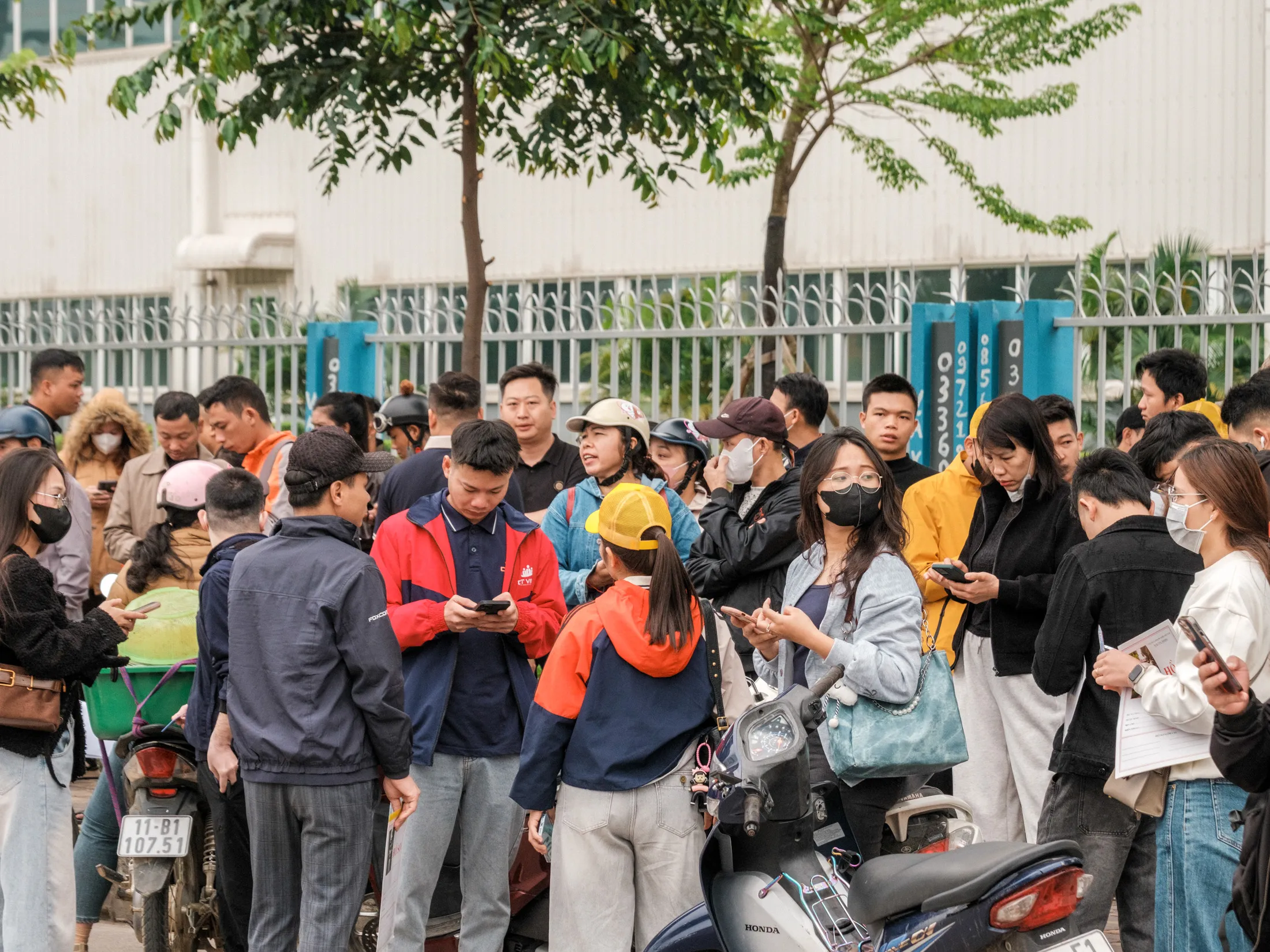
Job applicants line up outside a Foxconn Technology Group factory. Photographer: Linh Pham/Bloomberg
Bloomberg analysis of 2025 data found Fukang Technology Co., a subsidiary of Foxconn, exported $8.6 billion worth of MacBooks, iPads and motherboards for both products and servers, while importing $7.9 billion of various components from China, South Korea and Taiwan. That means at most 7.8% of the export value was created in Vietnam, if all final products at Fukang were exported.
BYD Co., although better known for its electric cars, also makes iPads for Apple Inc. and follows a similar strategy. From its factory in Phu Tho, 100 kilometers (62 miles) outside of Hanoi, it exported $5.1 billion worth of iPads and other products, and imported $4.9 billion of components, generating only 4.5% of the export value in Vietnam. Imports from China accounted for 61% of its inward shipments, almost the same share as Foxconn.
BYD and Foxconn did not respond to requests for comment. Vietnam’s Ministry of Foreign Affairs didn’t immediately respond to a request for comment outside regular business hours.
Foxconn Trade Flows Signal Its Vietnam Branch Growth in 2025
Source: Big Trade Data
The hiring sprees in Vietnam deal a blow to the “Made in USA” agenda touted by Trump, who wants to bring back manufacturing and blue-collar jobs to America.
When Trump hiked tariffs to levels unseen in a century, one of the main reasons he cited was America’s inability to make much of anything. “We import virtually all of our computers, phones, televisions and electronics,” he said in the White House Rose Garden, next to giant placards listing tariff rates for more than 180 countries.
China was the top target, slapped with the highest levies that peaked at 125% during an ensuing trade war. The world’s two largest economies eventually called a one-year truce in October as the trade imbalance narrowed, even as China’s overall surplus soared to the highest ever recorded by pivoting to markets beyond the US. White House spokesman Kush Desai told Bloomberg News that “reshoring manufacturing that’s critical to our national and economic security remains a top priority for President Trump,” adding that he had secured trillions in “high-tech manufacturing investments.”
Not Made In the USA
Value-added trade flows via third countries have helped China to manage geopolitical risks while exposing the limit of tariffs to curb its export machine.
“Chinese companies are simply much better at controlling costs. They are much more efficient because they have such large supply chains — from upstream, midstream, to downstream, so it’s easier to contain costs at each segment,” said Dan Wang, China director at Eurasia Group.
“Vietnam, in particular, is a very strategic location for Chinese producers.”
In a setback to Trump’s flagship policy, the Supreme Court struck down most of his tariffs earlier this year including the fentanyl duties on China. The White House swiftly turned to launching trade investigations into concerns of excess industrial capacity and labor rights abuses into 16 and 60 economies respectively, including China, Vietnam and other Southeast Asian countries. For now, universal tariffs officially sit at 10% until July 24, with threats they could rise to 15%.
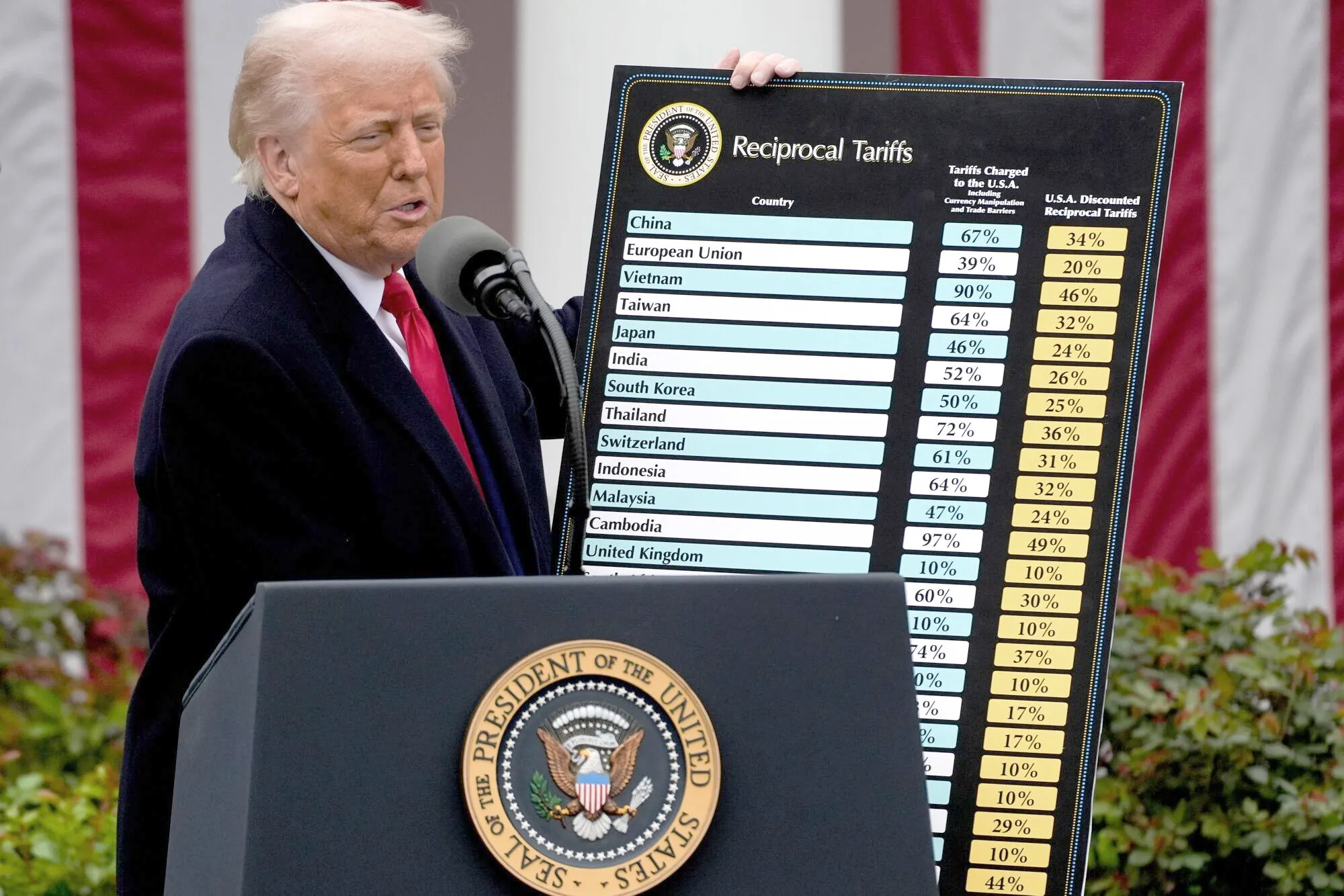
Trump on April 2, 2025 Photographer: Kent Nishimura/Bloomberg
Southeast Asia’s fastest-growing economy, Vietnam has been steadily building as an alternative source for imports since Trump’s first trade war in 2016 that has accelerated since last year. Foxconn, the world’s largest electronics manufacturer, is one of the vanguards expanding capacity from China to Bac Ninh province, the new electronics hub of the region.
Output of smartphones increased 39.4% and laptops surged 130.3% in the province last year, according to provincial government data. Foxconn’s Fukang factory alone exported $8.6 billion of electronics, more than double the value in 2024.
Most of the exports were MacBooks bound for the US, according to Bloomberg analysis of Vietnam’s customs figures from Big Trade Data which collates import and export statistics.
Vietnam Gained Where China Lost
Source: Bloomberg analysis of US customs data
At Bac Ninh’s Quang Chau industrial park, workers finishing their shift told Bloomberg that there were recruitment drives almost every month last year allowing some staff to hop between employers and take advantage of fresh bonuses without penalty.
“There is no longer a blacklist like in the past, companies here are so thirsty for labor,” said 38-year-old Ha Thi Mai after finishing overtime at the Fukang factory.
“I have worked overtime almost every day the past two weeks, similar to last year. Thanks to overtime, I have doubled my income.”
Source: Google Maps, OpenStreetMap, The Humanitarian Data Exchange
Her role testing codes on circuit boards is simple, requiring minimal training, no experience or high school certificate. The only challenge, she says, is standing for hours at a time.
Deborah Elms, head of trade policy at the Hinrich Foundation, said the trade flow change “cannot be attributed only to Trump’s tariffs, but market uncertainty sped up supply chain relocation out of China”.
Production in Vietnam increased at the fastest pace in over a year and a half amid a sharp increase in new orders, according to February data from S&P Global Vietnam Manufacturing Purchasing Managers’ Index. Business confidence hit its highest since September 2022, a survey by S&P Global found.
The boom however creates uncertainty for Vietnam: The biggest trade deficit on record could invite scrutiny from Washington, which has agreed a framework for a deal with Hanoi that would put a 20% tariff on imports. The disruption in energy supply caused by the Middle East war poses another possible risk to Vietnam’s manufacturing sector.
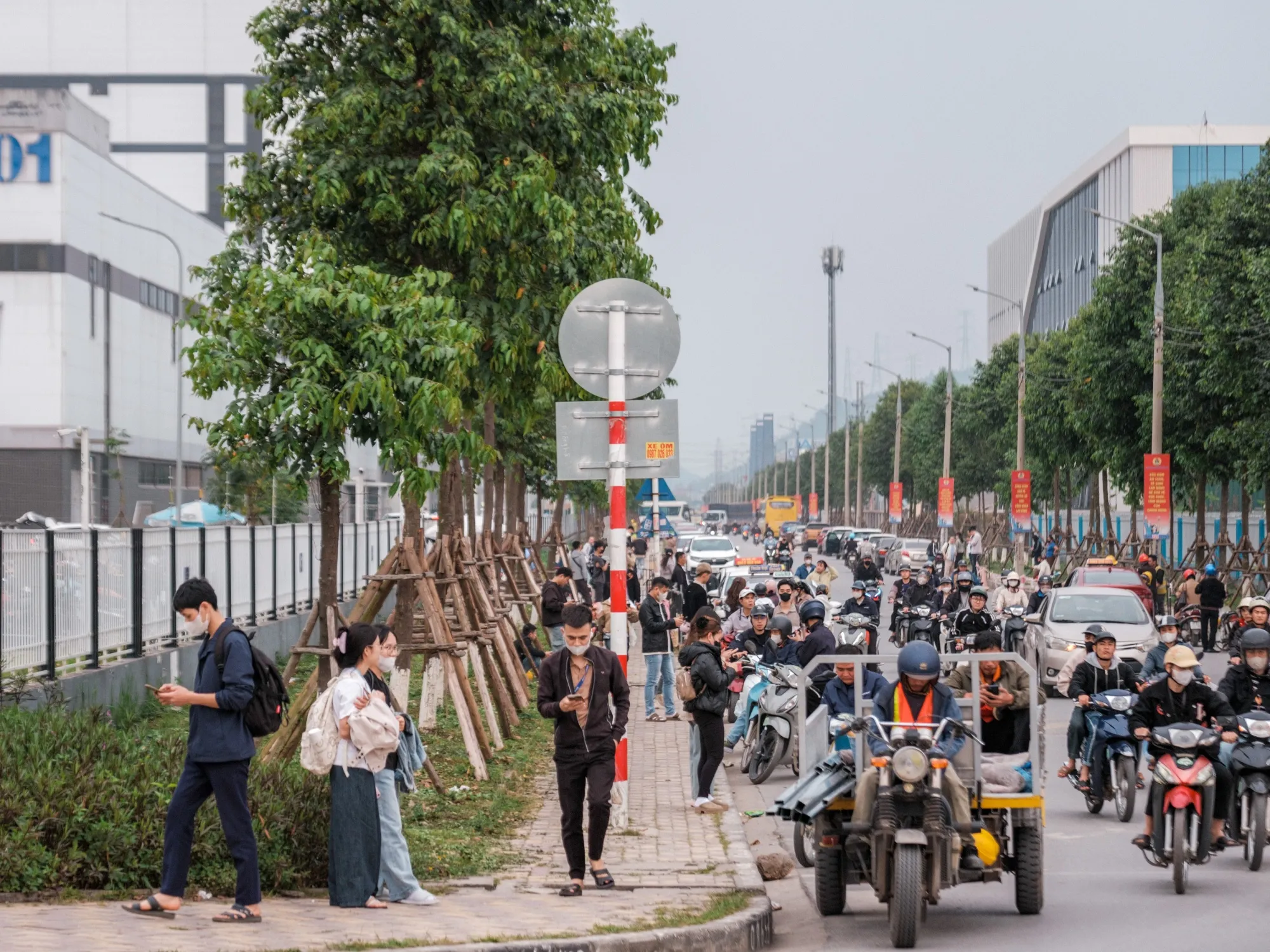
Employees leave Fukang Technology Co., a subsidiary of Foxconn Technology Group, after work on March 14. Photographer: Linh Pham/Bloomberg
Facilitating Chinese companies in evading tariffs also risks possible punishment, with Trump weighing up hefty transshipment penalties. Uncertainty clouds how the US will define or enforce transshipment restrictions, however, with details on verification lacking.
“The optics of being the country with the largest trade surplus against the US means Vietnam is now a bigger target for the administration. It is a strong risk to Vietnam’s economy,” said Jian Xin Heng, senior Asia analyst at BMI.
As the trade tensions unfold between the US and Asia, more under-construction factories are close to becoming operational in Bac Ninh.
“Business is great,” said Nguyen Anh, a recruitment contractor earning high commission in Bac Ninh. “As companies build new facilities and expand their factories, they will need to hire a lot more workers. We’re going to be busy all year round.”