Iran’s Hormuz Blockade Leaves Stranded Crews Braving Missiles and Signal Jamming
Tehran’s maritime blockade has left a fleet of stranded tankers and 40,000 sailors facing a crossfire of drones and electronic warfare
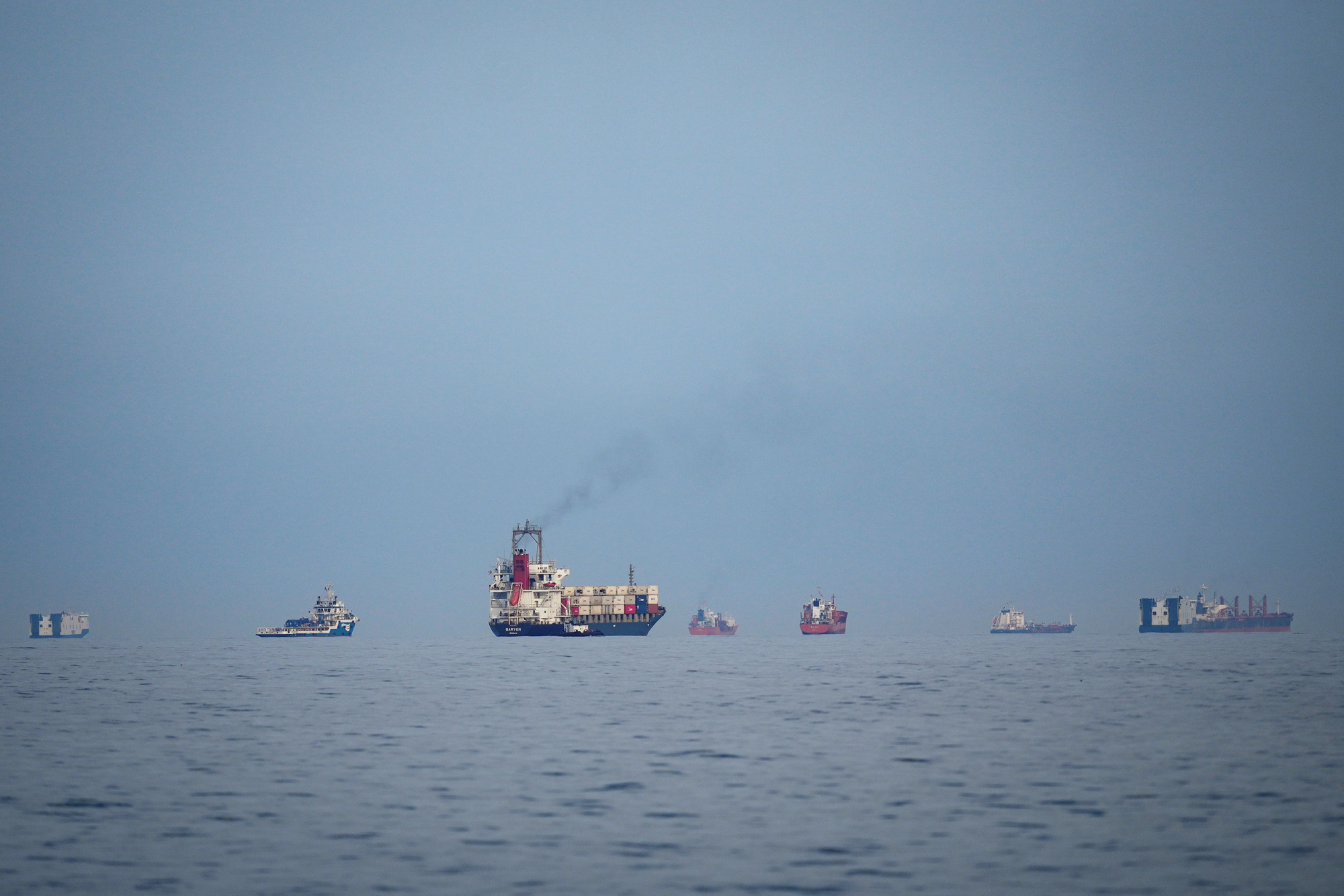
For the past three weeks, one ship captain has been sitting in the Persian Gulf atop two million barrels of crude oil, listening to the occasional sounds of explosions overhead. Onboard his 300-meter-long tanker, he and his crew play basketball and watch movies, trying to take their minds off the war going on around them.
On another vessel, on the far side of the narrow Strait of Hormuz, a senior officer watched the Fujairah terminal on fire off the starboard side of his tanker, as fighter jets flew above him. When the ship went to sail back out into the Gulf of Oman and away from the warzone, its GPS systems were subject to interference and the crew had to navigate using radar.
The officers, who spoke to Bloomberg on condition of anonymity, offer a snapshot of the hardships faced by the estimated 40,000 seafarers stuck on board ships on either side of the strait, which has been almost entirely shut since the US and Israel began bombing Iran in late February. Half of those, according to the International Maritime Employers’ Council, are effectively trapped in the Gulf. There they face the constant threat of attacks, and have to navigate in a fog of electronic warfare — which means they are often blind to the position of other vessels.
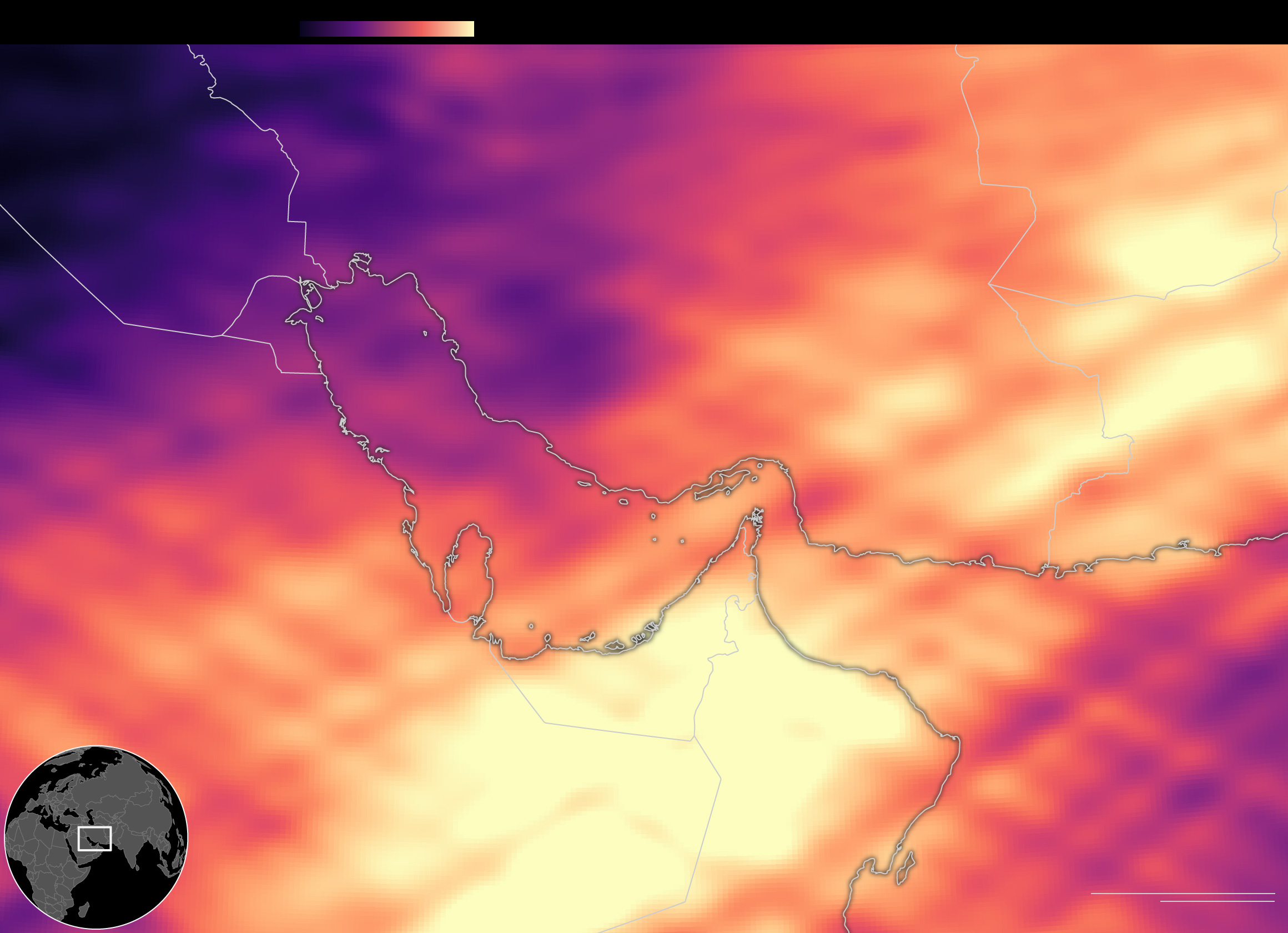
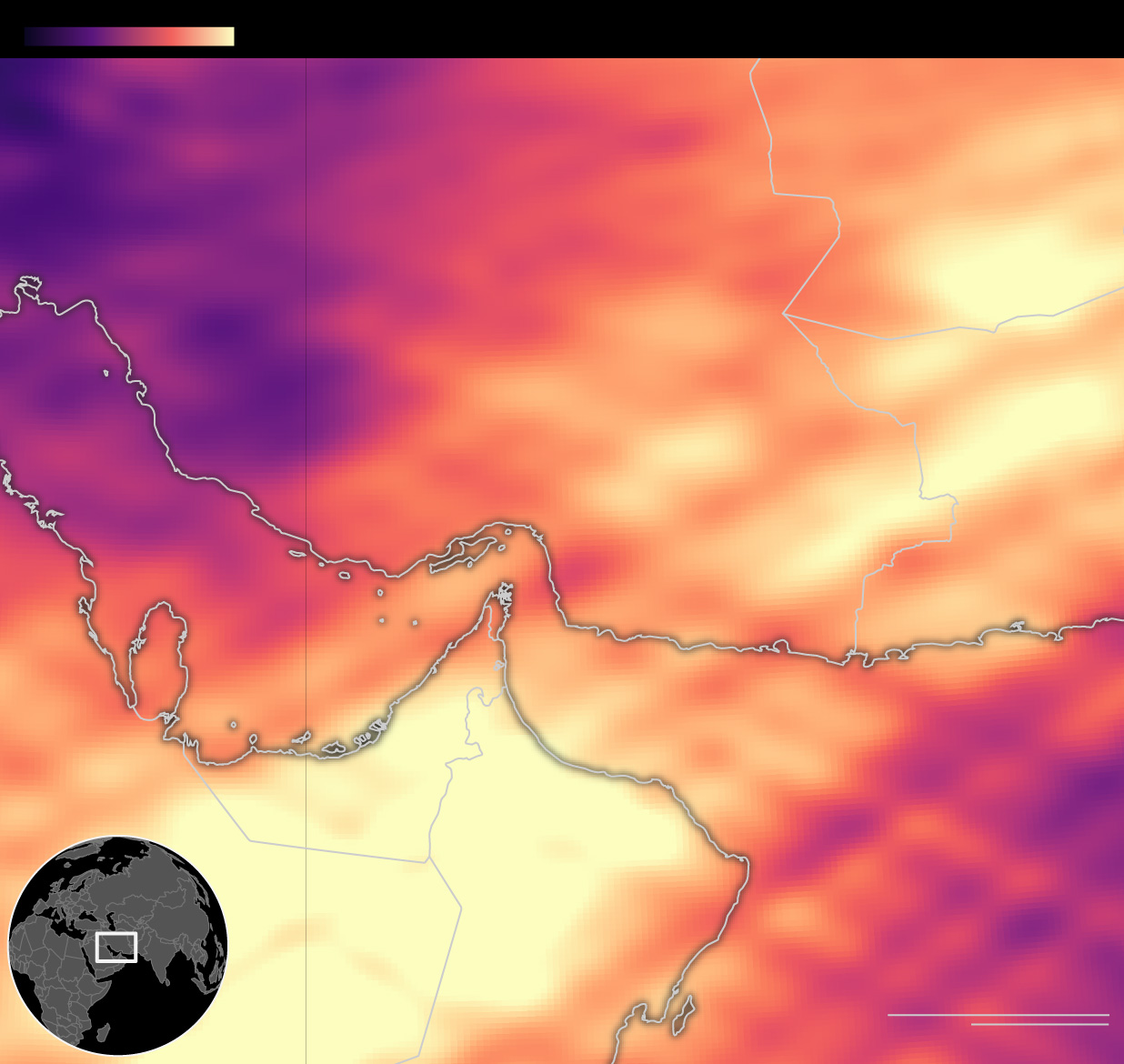
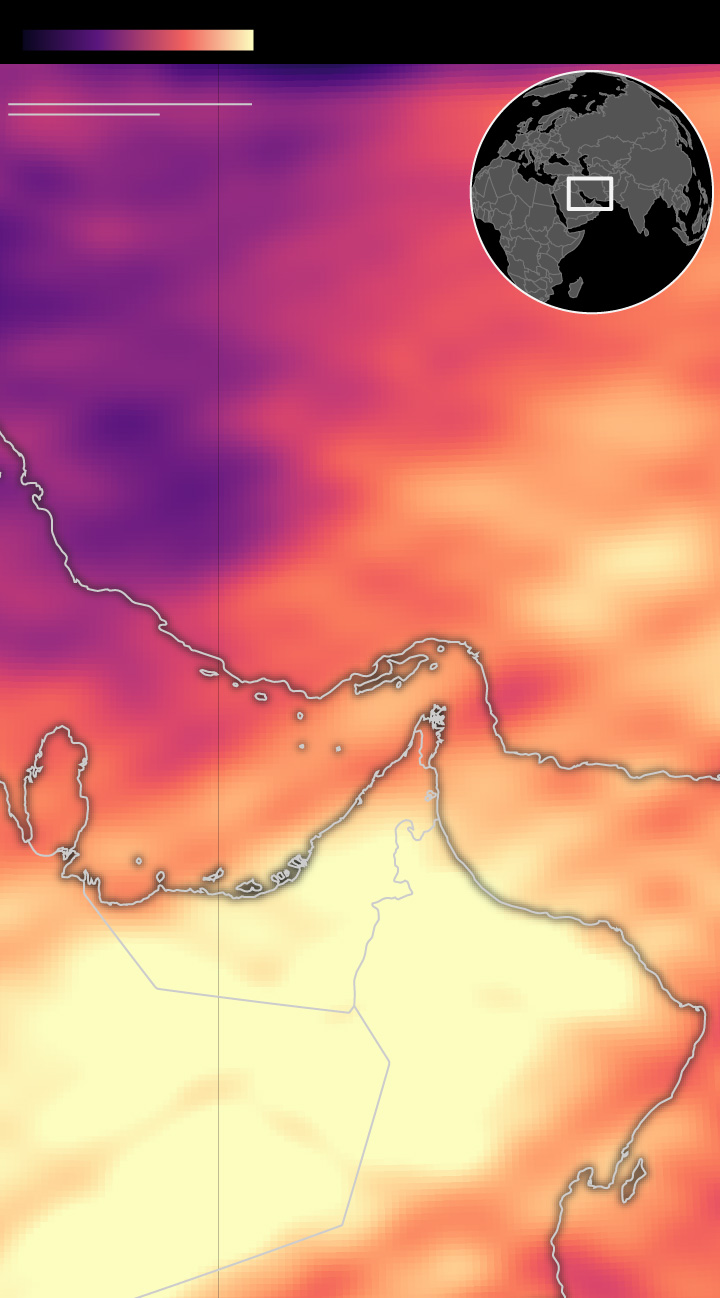
GPS Interference Blinds Navigation in Strait of Hormuz
GPS noise measured by satellites compared to normal baseline
Increase in GPS noise
0
5 dB
AFGHANISTAN
IRAQ
IRAN
KUWAIT
PAKISTAN
Persian
Gulf
Strait of
Hormuz
QATAR
Severe interference around the
Strait of Hormuz disrupts
maritime navigation
SAUDI
ARABIA
U.A.E.
Gulf of
Oman
OMAN
Gulf nations, bearing the brunt of recent strikes,
have experienced the region's highest GPS interference
200 miles
200 km
Increase in GPS noise
0
5 dB
AFGHANISTAN
IRAN
PAKISTAN
Persian
Gulf
Strait of
Hormuz
QATAR
Severe interference around the
Strait of Hormuz disrupts
maritime navigation
SAUDI
ARABIA
Gulf of
Oman
U.A.E.
OMAN
Gulf nations, bearing the brunt
of recent strikes, have experienced the
region's highest GPS interference
200 miles
200 km
Increase in GPS noise
0
5 dB
200 miles
200 km
IRAN
Severe interference around the
Strait of Hormuz disrupts
maritime navigation
Strait of
Hormuz
Persian
Gulf
QATAR
U.A.E.
OMAN
Gulf nations, bearing the brunt
of recent strikes, have experienced the
region's highest GPS interference
SAUDI
ARABIA
Sources: NASA CYGNSS, Clara Chew, Bloomberg News analysis
Note: Noise levels are shown relative from March 1–13 to a baseline period from January 1–31
Around a quarter of global seaborne oil trade passes through the strait, so Iran’s disruption to shipping has sent shockwaves through the global economy. Energy prices have spiked, Asia and Africa face fuel shortages, and fertilizer costs have jumped, threatening food security. The US has asked other countries for help in reopening the channel, but without a ceasefire it’s unlikely that Tehran will yield and let ships move freely. That leaves seafarers subject to geopolitical and military forces beyond their control.
“Shipping depends on a large workforce that often remains invisible to the outside world,” said Jesper Kristensen, Chief Executive Officer of Synergy Marine Group, which manages more than 700 ships — including some currently in the Gulf. “In moments like this we are reminded how essential seafarers and operational networks are to global trade.”
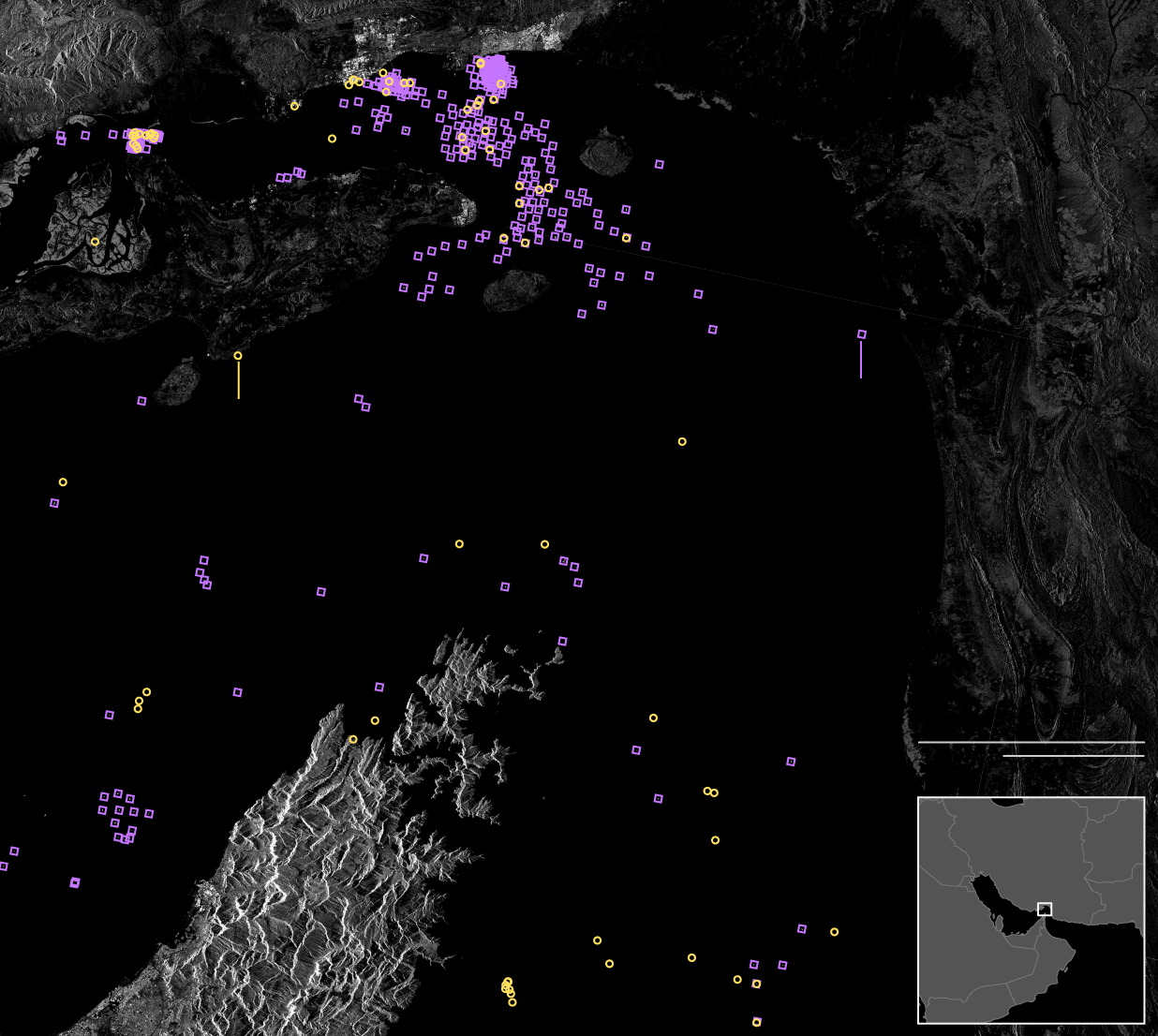
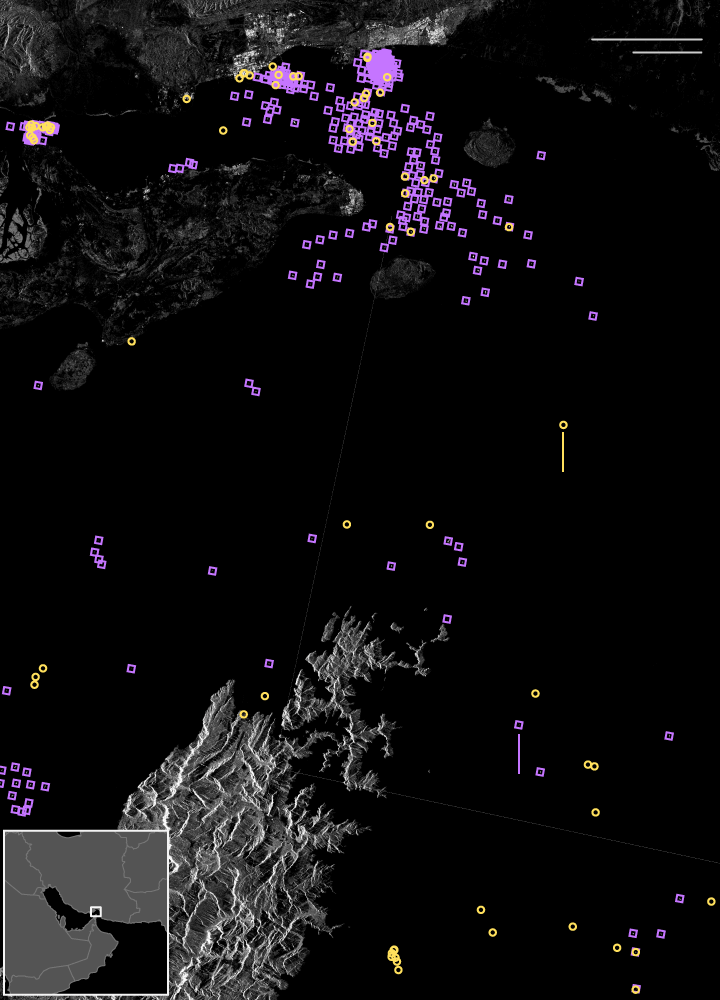
Few Ships in the Strait Are Broadcasting Their Locations
Satellite-detected ship locations compared to vessels that self-report their coordinates
↑
Bandar
Abbas
N
IRAN
Strait of
Hormuz
Ships detected
by satellite
Broadcast
ship positions
Satellite-detected ships in the strait
fell by half compared to January,
but ships broadcasting their
location dropped by 87%
20 miles
20 km
OMAN
10 miles
IRAN
Bandar
Abbas
10 km
↑
N
Strait of
Hormuz
Broadcast
ship positions
OMAN
Ships detected
by satellite
Sources: Copernicus Sentinel-1, Bloomberg analysis of data from S&P Global Energy and Wood Mackenzie
Note: Ship broadcast locations and satellite image used for comparison are from March 10
The Strait of Hormuz, Gulf of Oman and Persian Gulf have been declared a “Warlike Operations Area” by the International Transport Workers’ Federation and the Joint Negotiating Group, a collection of unions and employers. That means that seafarers operating there are granted additional benefits, including higher pay, and can decide to leave their ship rather than enter a danger zone — although not all vessels come under these agreements.
Benchmark oil tanker earnings in the Middle East are about $200,000 a day higher than they were before the war started. For shipowners willing to take the risk, there are potentially millions of dollars of profit waiting for them inside the Gulf. But insurance costs have soared for vessels that want to cross the straits.
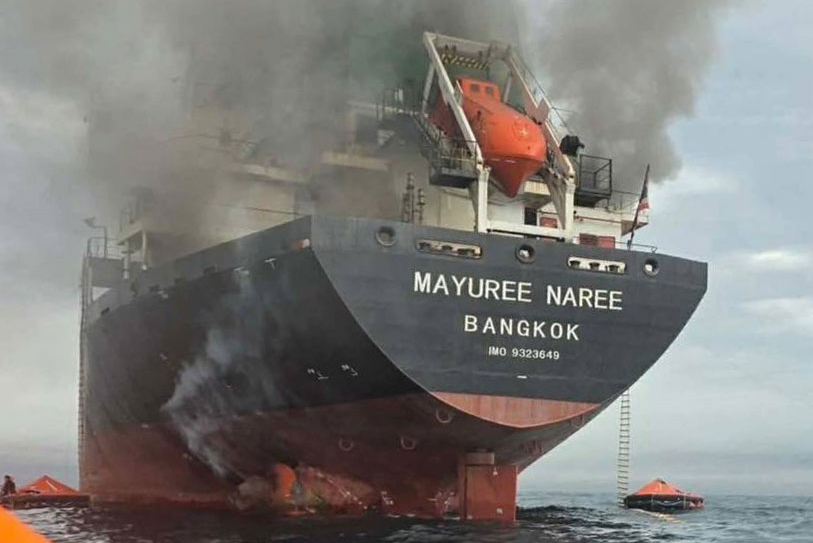
The dangers of crossing the strait were laid bare last week, when a Thai-flagged vessel, the Mayuree Naree, was struck by a projectile. Three crew remain missing, and are believed to be trapped in the ship’s engine room. The vessel’s owner, Precious Shipping Pcl said the commodity carrier was deemed suitable to transit with heightened security measures.
At least two seafarers are known to have died during attacks on their vessels since the war began.
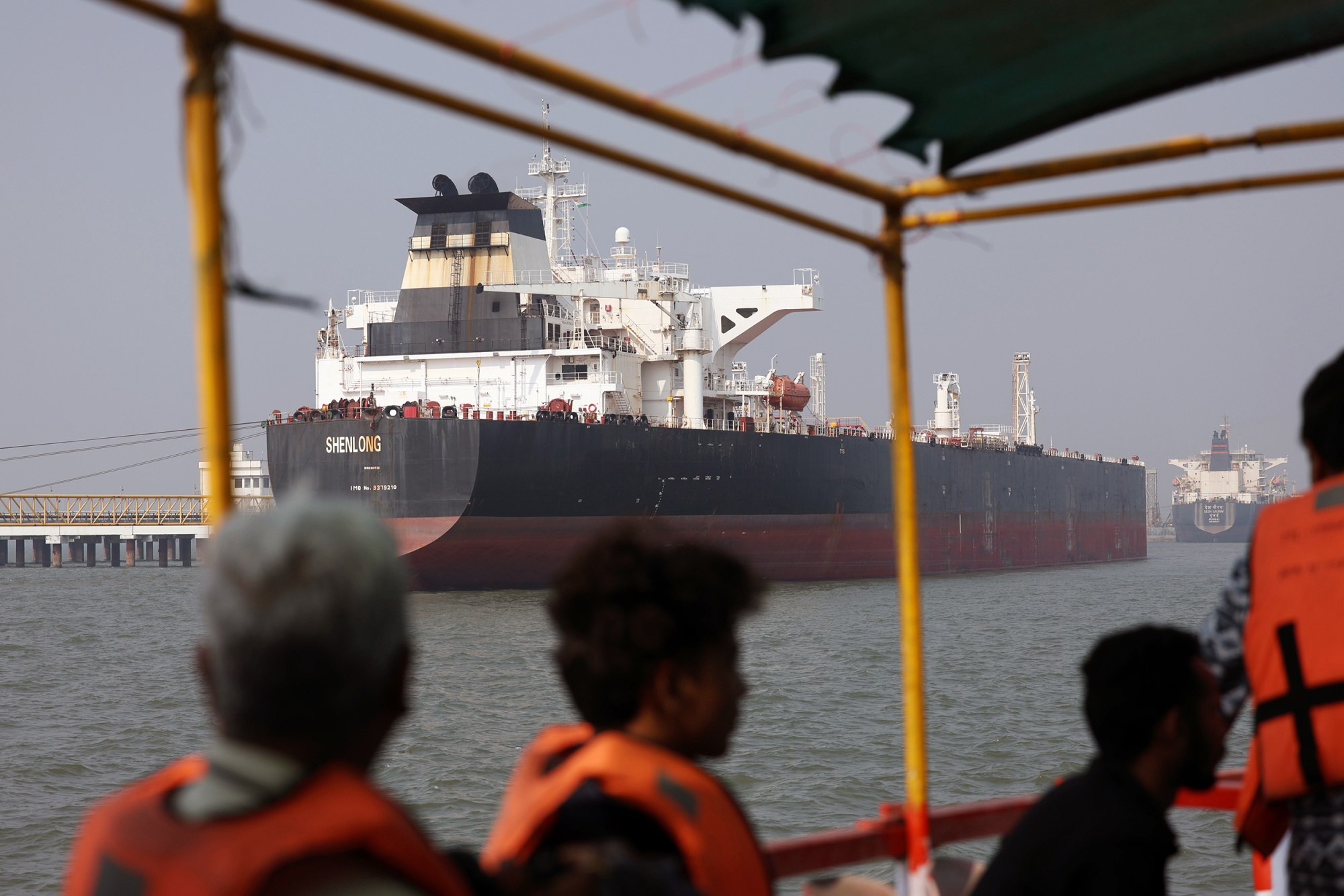
A few vessels have made it through the strait on paths that hug the Iranian coast, routes that pass between the islands of Larak and Qeshm, which are normally advised against. So far, a pair of Indian liquefied petroleum gas ships, a Pakistani tanker and two bulk carriers that had docked at Iranian ports have transited, broadcasting their location as they did so. Analysts have said that suggests that Iran is giving permission to some ships to pass, while keeping others trapped.
Based on Bloomberg’s analysis of AIS data, fewer than 100 commercial ships have crossed the Strait of Hormuz since March 1. Around one in five of those appeared to switch off their transponders as they did so.
Listen: The Iran Mine Threat Rattling Global Oil (The Big Take Podcast)
For those trying to make the run without authorization, the risks are severe. The geography of the area, with mountainous terrain flanking the narrow passage — which is just 39 kilometers (24 miles) wide at its narrowest point — means vessels have little warning of incoming attacks from the shore, and there have been reports of Iranian forces mining the channel.
The extra remuneration for facing those dangers can feel inadequate, according to seafarers, who spoke with Bloomberg on condition of anonymity to talk freely about their employers. Bloomberg spoke to sailors over cellphones and via messaging apps.
One ship captain with more than a decade of experience said the higher pay only equates to $100 extra per day, and that a more junior member of the crew would only get $20-$30 more per day. The senior officer on the Fujairah-bound ship said that for his rank, danger pay would only amount to about an extra $70 a day.
“Owners cannot send crew home without replacements willing to travel into the conflict zone.”
For the mariners stuck on the hundreds of ships stuck inside the Persian Gulf, there are few ways out if they decide they want to leave. Air traffic has been disrupted across the region, and there are not enough seafarers willing to go into the region to relieve the crews that are currently there.
“In practice, exercising the right to repatriation is extremely difficult,” said Francesco Gargiulo, the chief executive officer of the International Maritime Employers’ Council, a body that handles industrial relations in the shipping industry. “Even when repatriation is possible, owners cannot send crew home without replacements willing to travel into the conflict zone.”
Some crews face incredibly difficult choices, balancing their safety with financial incentives and disincentives. Bloomberg spoke with several seafarers who, like more than half of the mariners aboard ships in the Gulf today, come from India. All said they want to evacuate but are currently trapped, unable to get on flights home. Some can physically not get to land because their ships can’t dock; others can’t get the paperwork they need to go ashore.
Chirag Bahri, international operations manager at the International Seafarers’ Welfare and Assistance Network, said that a hotline his organization runs has been inundated with calls. “The people on board are worried, their families are worried,” he said. “Most of them are looking for evacuation information.”
The Indian government has been trying to help facilitate visas and passage for seafarers, and some shipowners hold out hope for a diplomatic solution that will allow ships to cross the straits. However, Bahri warned, there is little chance that most of the seafarers will be able to leave in the short term. “It is all about coping right now,” he said.
It's not just veteran seafarers that are stuck. Ten South Korean students from maritime universities who were conducting training on board vessels are also stranded in Hormuz, according to the nation’s oceans and fisheries ministry. The Korean government said it is in contact with the students four times a day and none have yet said they intend to disembark their ships.
Seafarers stuck on the ships waiting for passage face extreme stresses. With no clarity over how long they’ll be trapped, some have begun rationing supplies. One young Indian sailor, Kumar — who asked to be identified only by his surname — said that the crew are surviving on sugar and rice. His ship, which is stuck off the coast of Iraq, is short of fresh water.
When out in the open sea, ships can make their own fresh water using reverse osmosis systems. When anchored, those can get clogged with mud, making it hard to replenish supplies.
Another sailor, Pereira, who also asked to be identified by his surname, said that he and three other Indian crew members were trapped aboard a ship in the Gulf. Although they took on supplies recently, they only have enough fuel to run their generator for 20 days.
The crew are constantly reminded of the physical dangers. “Every evening we hear loud, ear-damaging sounds of bombs and our families are panicking,” Kumar said. “What do I do? We are so hopeless right now.”
“Every evening we hear loud, ear-damaging sounds of bombs and our families are panicking.”
One sailor, who spoke on condition of anonymity, said he’d counted more than 20 drones flying overhead as he worked to load cargo in Kuwait. While the port authorities have advised mariners to remain below deck for their own safety, he said the crew are being compelled to take risks — including operating with the deck lights turned off. The sailor said that despite repeatedly raising concerns about the dangers, the company was pushing them to work and threatening to bring in local crew if they refused.
Ships’ desire to avoid becoming targets, combined with the electronic warfare going on around the region have made the Gulf a difficult and dangerous place to operate.
Since the beginning of the war, GPS signals have been jammed across the region, potentially as a tactic to disrupt shipping, but also to make it more difficult for drones and missiles to find their targets. That means that ships now find it hard to accurately determine their positions and those of other vessels. On top of that, some of the signal interference is affecting the automatic identification system, or AIS transponders that ships use to broadcast their locations to other vessels.
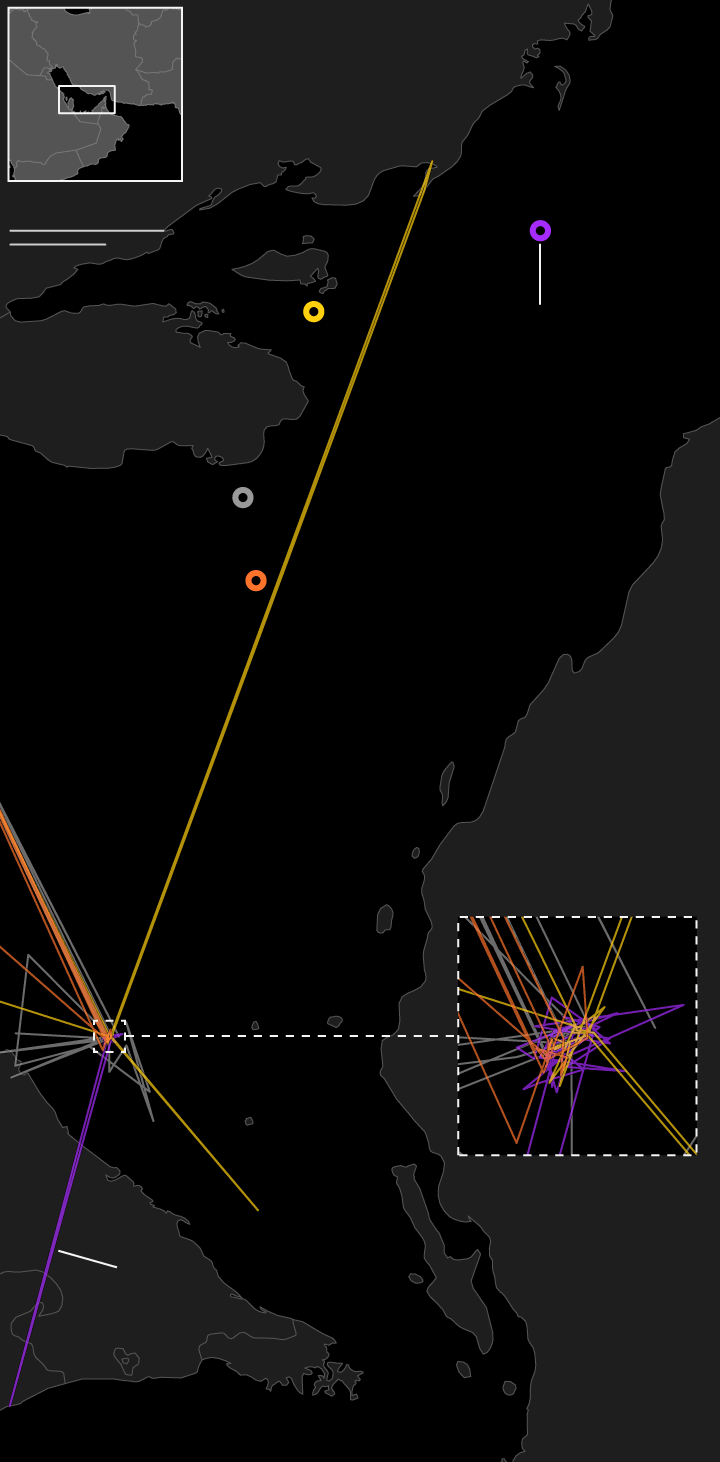
This level of GPS interference manifests in ships appearing to make unnatural, if not impossible moves: massive GPS displacements that make them appear to be on land, or traveling at speeds above a hundred knots. Even anchored ships sometimes appear to be broadcasting positions hundreds of kilometers away from where they are moored.
GPS Interference Makes Ships Appear Wildly Off Course
Sample anchored ship locations compared with reported trajectories
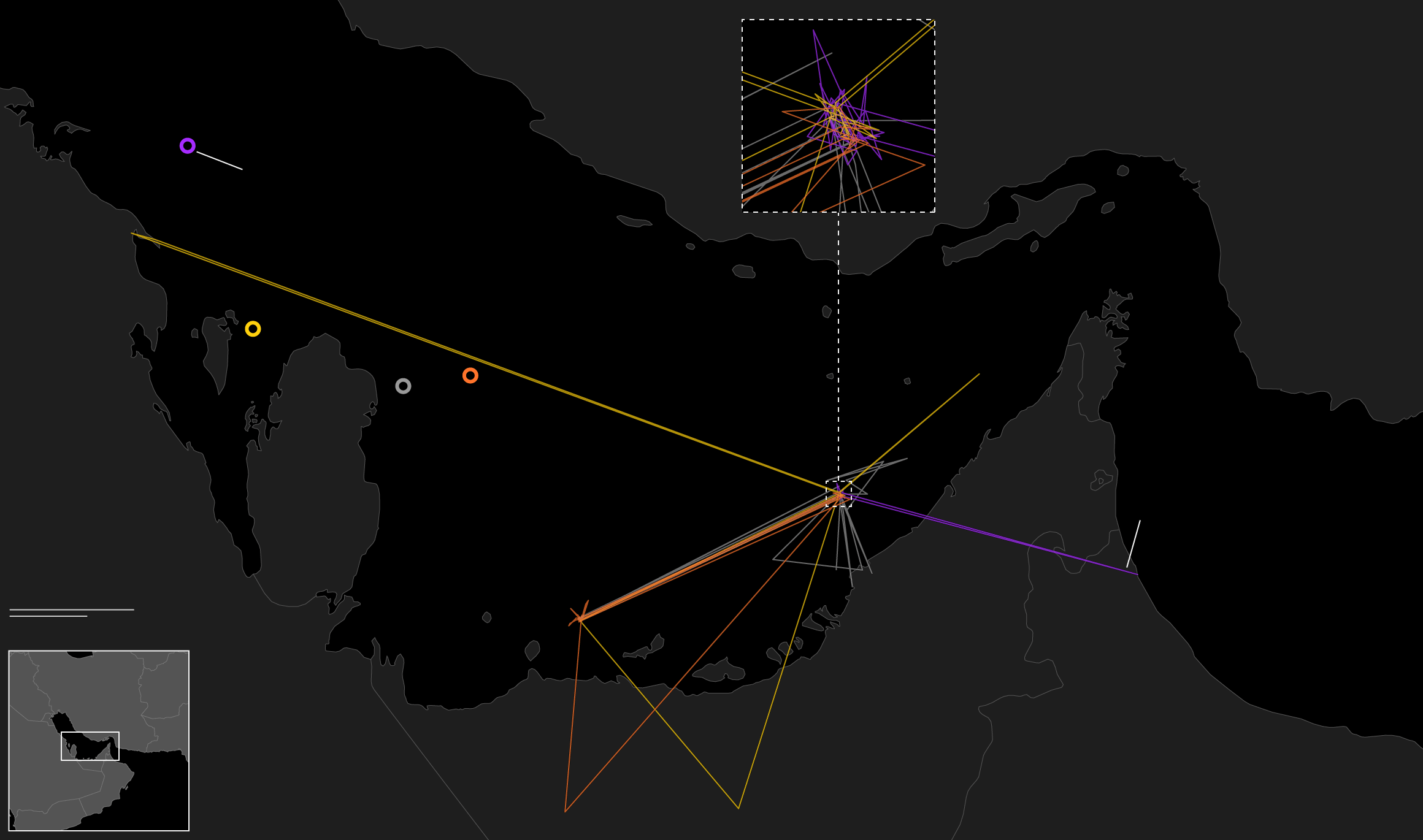
... they repeatedly broadcast false positions
hundreds of kilometers from their actual
locations, a hallmark of GPS interference
IRAN
While ships
sit anchored ...
Strait of
Hormuz
Persian
Gulf
Broadcast
ship trajectories
QATAR
Gulf of
Oman
50 miles
50 km
SAUDI
ARABIA
UNITED ARAB
EMIRATES
OMAN
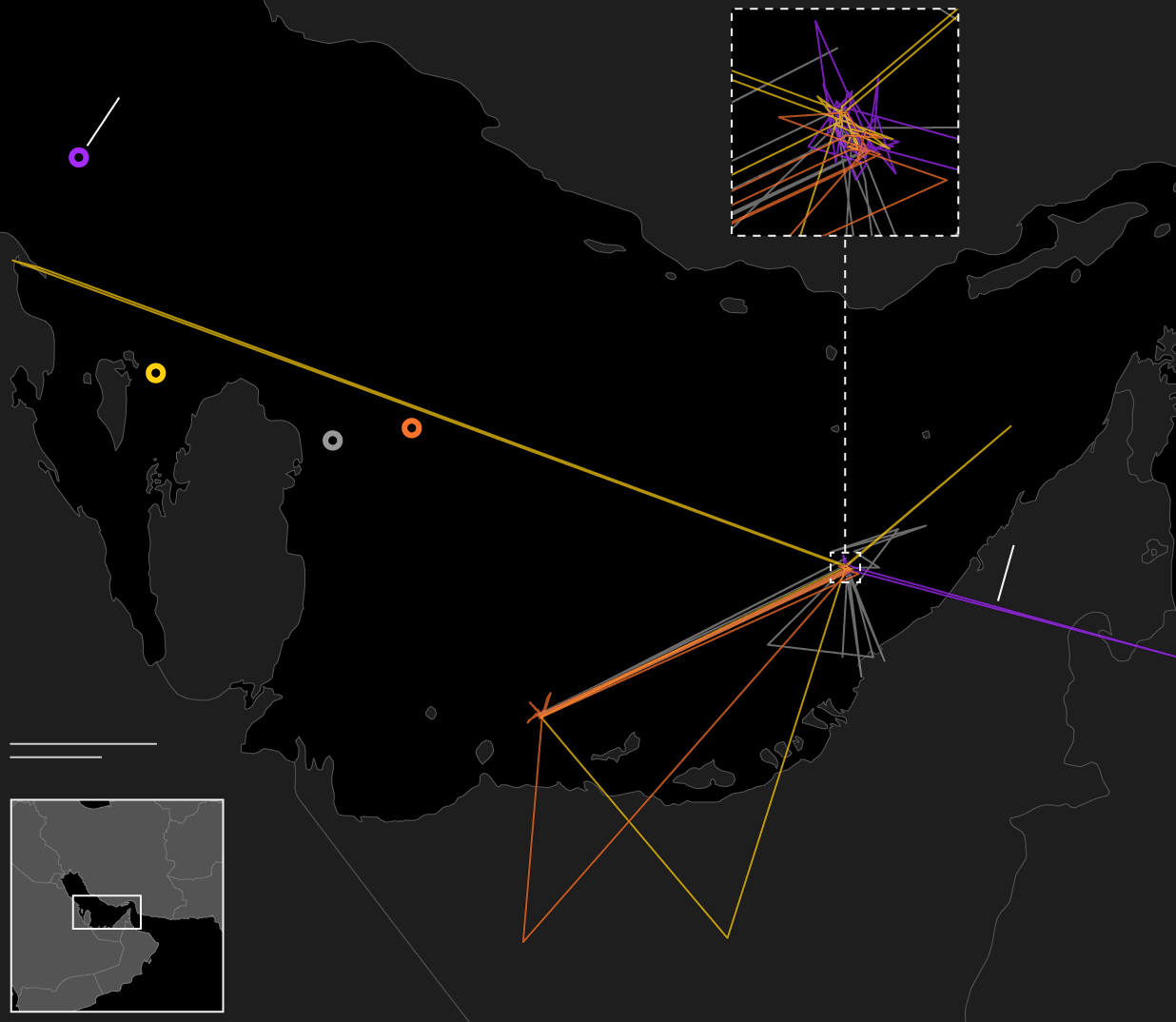
... they repeatedly broadcast
false positions hundreds of
kilometers from their actual
locations, a hallmark of GPS
interference
While ships
sit anchored ...
IRAN
Strait of
Hormuz
Broadcast
ship trajectories
Persian
Gulf
QATAR
50 miles
50 km
UNITED ARAB
EMIRATES
SAUDI
ARABIA
OMAN
↑
N
SAUDI
ARABIA
50 miles
50 km
While ships
sit anchored ...
QATAR
Persian
Gulf
... they repeatedly broadcast
false positions hundreds of
kilometers from their actual
locations, a hallmark of GPS
interference
Broadcast
ship trajectories
IRAN
Strait of
Hormuz
Source: Bloomberg analysis of data from S&P Global Energy and Wood Mackenzie
Note: Broadcast and anchored locations are from March 14
Many ships in the Gulf appear to have turned off their transponders anyway. A Bloomberg analysis of satellite imagery and AIS data found 340 ships in the area, but only 56 ships are broadcasting their locations — just 16% of all the vessels.
Mariners now often have to use traditional navigation techniques, positioning themselves with maps and visual confirmation of landmarks and other vessels. Captains said that it’s become dangerous to navigate.
Many of the attacks happen after dark. Sailors told Bloomberg that means they’re often awake all night, either on watch or because of the noise of the bombardment, and can only rest after the sun rises, adding to the anxiety and exhaustion.
“We have been seeing aerial attacks and blasts. Loud noises, vibrations are felt all the time. This is not something that we have ever seen,” Pereira said. “We have all kept our bags packed and ready. Whenever we get a chance we will leave.”