South Carolina Redistricting Debate Shows Risks for Republicans
Some Palmetto State Republicans are pushing for new Congressional maps to expand GOP dominance. Others fear unintended consequences.
The redistricting race that has broken out across the US feels all too familiar to Americans who have endured cycle after cycle of redrawn electoral maps. Some are starting to wonder what they are getting out of it.
President Donald Trump, California Governor Gavin Newsom and state lawmakers around the US have been racing to realign districts to give their party a better chance to win the majority of House seats in November’s midterm elections.
While drawing new maps can help parties tighten their hold on a particular seat, voters say they can wind up feeling cut out of the process, even when their party comes out ahead. And one place where even some political leaders have started to question what redistricting can deliver is in South Carolina.
When Nancy Mace was first elected to represent much of the state’s coast, her margin of victory couldn’t have been much smaller.
Mace beat Democrat Joe Cunningham, a single-term incumbent, by 1 percentage point to prevail in the Palmetto State’s 1st Congressional district. At the time, the district encompassed the beach communities and saltmarshes of the lowcountry, as well as Charleston’s scenic waterfront, where artisans sell sweetgrass baskets at the site of a former slave market and the historic homes lining Battery Street look out at Fort Sumter, the garrison where the first shots of the Civil War were fired.

Representative Nancy Mace speaking during the Republican National Convention. Photographer: Hannah Beier/Bloomberg
It wouldn’t stay that way. Soon after her election, South Carolina’s legislature drew a new map for her district that cut out the entire Charleston peninsula and the suburb of West Ashley — home to some Democrats and moderate Republicans — and scooped up more conservative precincts to the north. Charleston’s scenic, diverse waterfront was tucked into the district of James Clyburn, a Democratic stalwart first elected to Congress in 1992.
The change strengthened the GOP’s grip on the 1st district. It may also have stoked Mace’s political metamorphosis. Her criticism of Trump after the Jan. 6, 2021, riot at the Capitol softened in the months that followed. In 2022, she won a tough GOP primary against a Trump-endorsed challenger, and then easily defeated her Democratic opponent in the general election by 14 points. By 2024, she’d become a full-on MAGA warrior and won by 17 points.
Voters have noticed the change, and many approve. “I have seen her get a lot more aggressive” during Trump’s second term, said Tami Davis, who works at an Italian bakery in downtown Summerville, South Carolina.
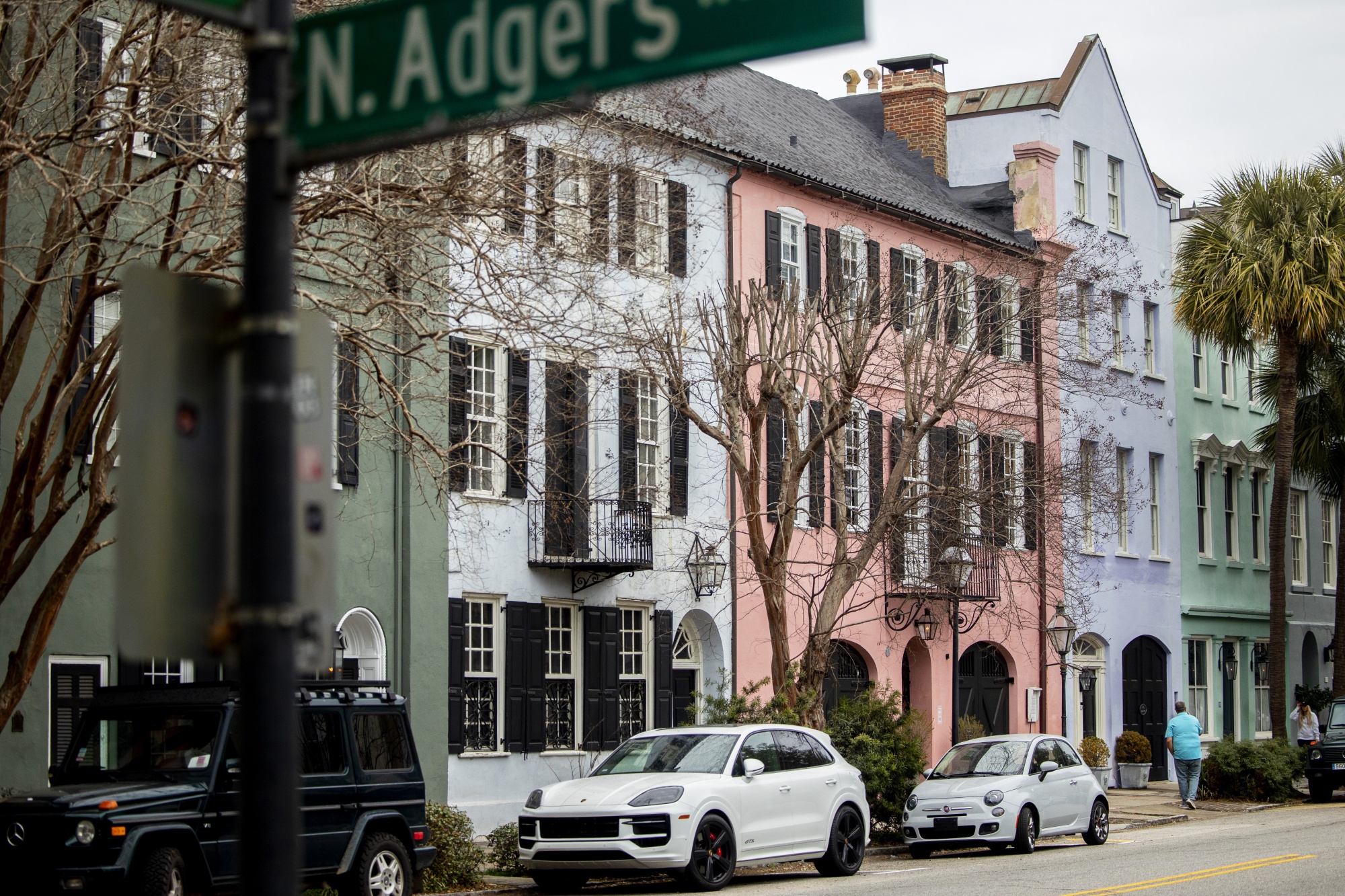
Nancy Mace’s district included the historic downtown Charleston peninsula where Rainbow Row is located. Photographer: Gavin McIntyre/Bloomberg
Yet some voters have questioned whether Mace has focused on her home base as she has grown her national profile. This will be her last congressional term as she runs for governor this year. Jamee Haley, 60, owns a housewares shop in North Charleston’s artsy Park Circle neighborhood. The state’s representatives aren’t addressing its most burdensome problems, including failing schools, poor roads and wages that don’t cover the cost of living, Haley said.
“We have terrible roads and terrible schools,” said Haley. “I think Nancy Mace is more about Nancy Mace than about representing her constituents.”
Now, a group of GOP lawmakers are pushing to redraw the state’s congressional lines once again. Their target this time: Clyburn, a senior Black lawmaker and the only Democrat holding a top elected post in the state.
2020 election results
Nancy Mace just barely won the 1st district, defeating Democrat Joe Cunningham. Jim Clyburn, South Carolina’s only Black member of Congress and now the only Democrat in the state’s delegation, has comfortably won reelection in the neighboring 6th district for more than three decades.
New map drawn in 2021
South Carolina’s Republican-led legislature redrew the state’s congressional map in 2021, making Mace’s district more conservative. Mace’s reelection by double digit-margins in 2022 and 2024 coincided with her ideological tack to the right.
Share of Black population
The precincts with the highest concentration of Black voters are currently packed into South Carolina’s 6th district, represented by Clyburn.
Proposed district boundaries
Some Republicans in the state legislature are pushing a redistricting plan this year that would split Clyburn’s majority Black district across several new districts, including one stretching from the North Carolina border all the way to Charleston, and another spanning the entire Georgia border.
Proposed district boundaries
This map of the proposed new districts shows the Black population by ZIP code. In political science parlance, this map would “crack” the concentration of Black voters in Clyburn’s district. Some Republican leaders caution that this map could make several seats competitive for the right kind of Democratic candidate.
Sources: US Census, South Carolina House Bill 4717
Clyburn said that efforts to force Black lawmakers out of their seats have been a feature of his state’s political history for generations. Four of South Carolina’s five members of Congress were Black in the late 19th century after the Civil War, until Jim Crow-era gerrymandering removed them all, according to Clyburn, who chronicled those efforts in a recently published book.
“I’m the first African American to serve in Congress from South Carolina in 95 years,” Clyburn said. “This is nothing new. We’ve had this issue for a long, long time.”
Jordan Pace, the state representative who chairs the South Carolina Freedom Caucus, said that the new congressional map in the bill he introduced this year would put Republicans in every major office in the state and fix what he describes as a district rigged for Clyburn. He said that the proposed new maps are race-agnostic.
Some South Carolina Republicans are reluctant to wage a new redistricting battle. They worry that a new map could make other GOP-leaning districts vulnerable in a state where 40% of registered voters are Democrats. Lawmakers are debating how much partisan advantage they can squeeze out – and how risky it is to push too far.
John Morgan, a Republican redistricting expert, said at a legislative committee hearing in South Carolina’s capital, Columbia, on Wednesday that in its effort to target Clyburn, Pace’s plan fails to shore up several Republican districts — and that could raise the risk of the GOP losing seats in the midterms, when Democrats are expected to make gains across the US.
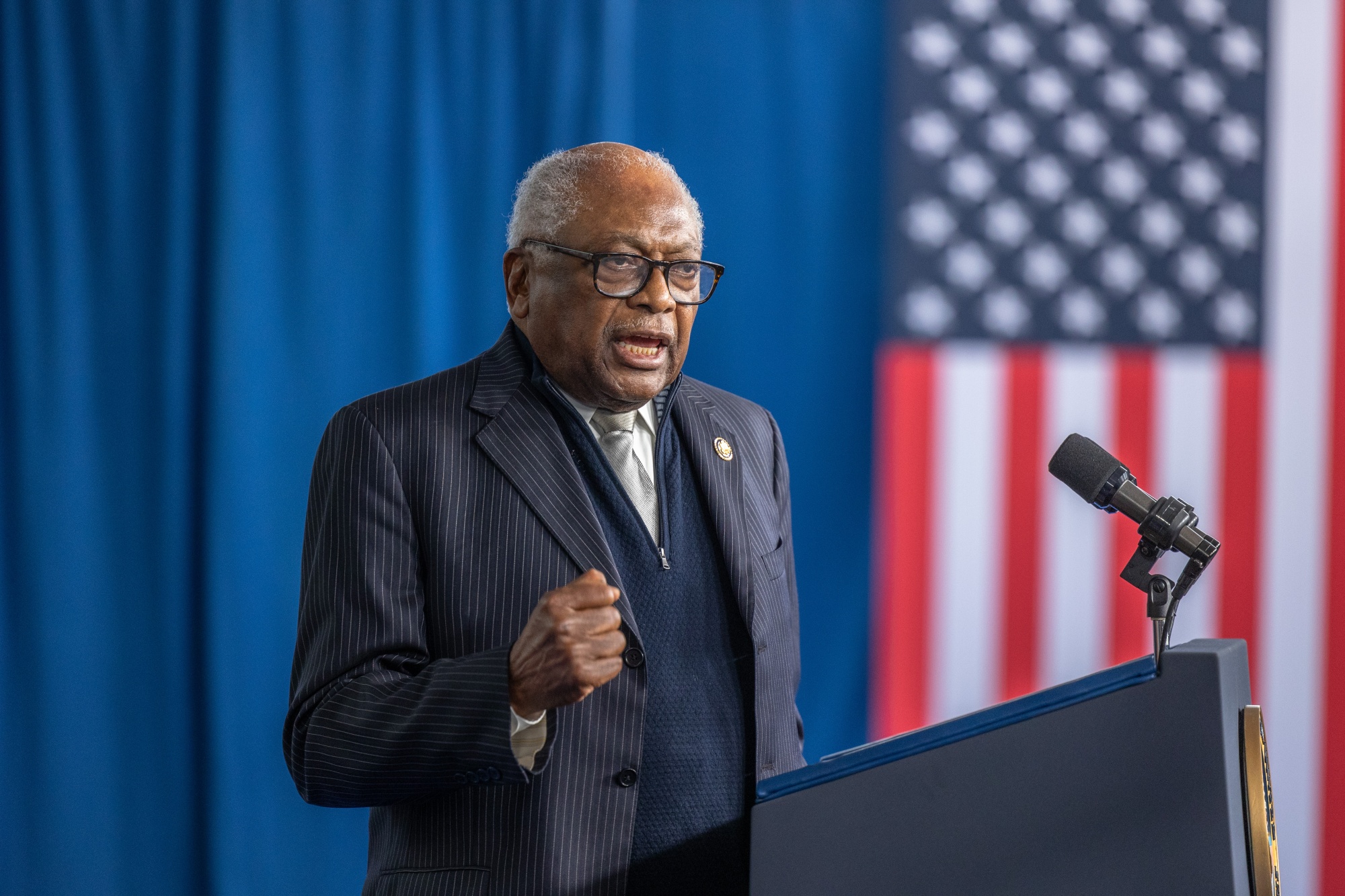
James Clyburn was first elected to Congress in 1992. Photographer: Grant Baldwin/Getty Images
Safer Districts
Just east of Charleston’s historic downtown, the Cooper River zigzags through the lowlands, separating affluent coastal areas from the mainland and weaving through Berkeley County, a Republican stronghold. The GOP solidified Mace’s District 1 in 2021 by taking on the parts of Berkeley they didn’t already control, while giving up parts of more Democratic North Charleston to Clyburn’s 6th District.
Charleston Is in Clyburn’s 6th District
Source: US Census
Sean McCawley, who chairs Berkeley County’s Democratic Party, said the district was drawn that way to contain as many Black Democratic voters in one district as possible and “mitigate their effectiveness throughout the state as a whole.”
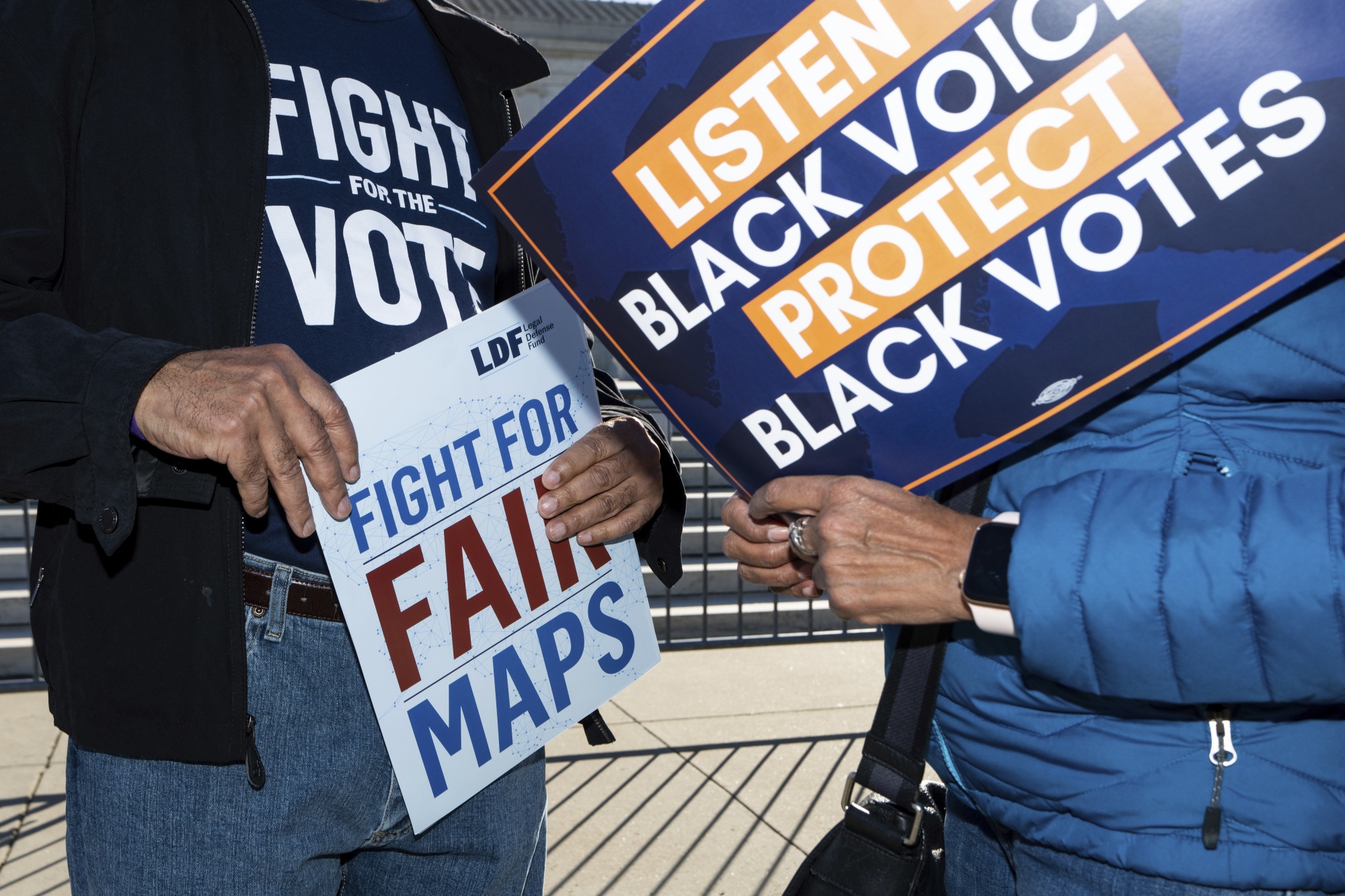
Activists gather outside the US Supreme Court for oral arguments in the Alexander v. South Carolina Conference of the NAACP gerrymandering case in Washington, in 2023. Photographer: Bill Clark/CQ Roll/AP Images
The lawmakers pushing for the new round of redistricting are in part looking ahead to an expected Supreme Court ruling that could dismantle part of the Voting Rights Act that requires states to ensure some representation for racial minorities. Such a decision would likely lead to widespread alterations of court-ordered districts in the Deep South with Black representatives.
Clyburn’s district was designed by state lawmakers, not a court. But undoing the Voting Rights Act protections would “remove one legal avenue for groups to block a new map that erases his advantage,” Pace said.
South Carolina is a state in transition. It’s the fastest-growing state in the country, gaining nearly 80,000 people over the 12 months that ended in July. But its Black population is slowly declining, according to Census data, to 25.6% of the population in 2022 from 27.7% in 2010.
Political Isolation
South Carolina Republicans who support redistricting say the current map has left communities of color underserved.
Dwayne “Duke” Buckner, a 53-year-old Black Republican from Walterboro who challenged Clyburn in 2024, said the district has become a Democrat-led pocket in a state dominated by Republicans, leaving it isolated politically and cut off from resources that could help revitalize the poor, rural counties between Columbia and Charleston.
If there were a Republican with GOP principles in that district, “you would see the sixth Congressional district prosper,” Buckner said.
Yet some residents fear losing Clyburn would leave them without a powerful voice on Capitol Hill. Greg Perry, 41, is a North Charleston city councilman and former chair of the county’s Democratic Party. He said that Clyburn’s seniority and work on the Biden-era infrastructure bill brought millions of dollars to the region.
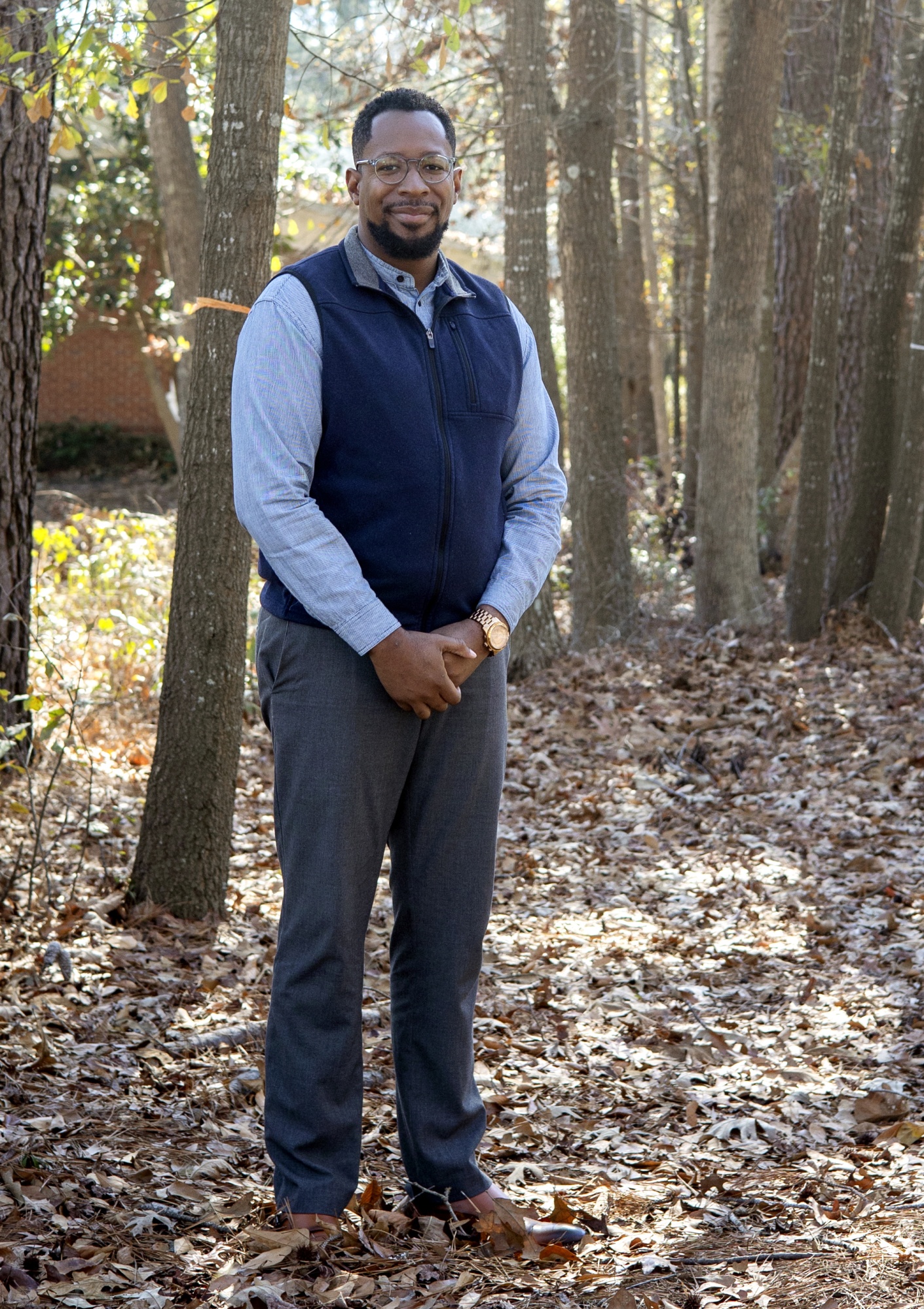
Greg Perry, a North Charleston city councilman and former chair of the county’s Democratic Party. Photographer: Gavin McIntyre/Bloomberg
“All of the individuals who are serving statewide are Republican,” Perry said. “I would look at South Carolina now as a purple state. I think that we need to have more Democrats in office.”
LaTisha Vaughn’s North Charleston neighborhood was among those bumped from Mace’s 1st congressional district to Clyburn’s 6th in 2021. She has been watching redistricting in other states with trepidation.
“This isn’t the first time this has happened, even in our state,” said Vaughn, a 53-year-old educator. “The idea of further disenfranchising Black voters is not great.”
The redistricting debate has featured in the race for governor, where Mace and fellow House Republican Ralph Norman, as well as Attorney General Alan Wilson and Lieutenant Governor Pamela Evette are seeking the GOP nomination. Norman, a member of the Trump-aligned House Freedom Caucus, has made redistricting a central part of his campaign.
Mace hasn’t said whether she supports redrawing the congressional map this year. Her Washington, South Carolina and campaign offices didn’t respond to emails and calls seeking comment.
Wilson’s campaign pointed to earlier comments he made stopping short of endorsing a new congressional map this year but saying the Republican party should “explore all options” to maximize Trump’s next three years in office.
Evette spokesperson Matthew Goins said it’s time to “end the Democratic stronghold on South Carolina’s 6th Congressional District and maximize conservative representation.”

Ralph Norman has made redistricting a central part of his campaign. Photographer: Tom Williams/CQ-Roll Call/Getty Images
Deepening Polarization
Some observers worry that the recent wave of gerrymandering across the country will help deepen polarization among voters and entrench lawmakers in a way that makes them less accountable to constituents.
Without Clyburn, South Carolina’s two senators and seven House members would join 19 states whose congressional delegation come from one party. That’s up from six states with single-party delegations in 2008.
The consolidation of party control means Congress has lost members who would be more likely to seek bipartisan compromise to respond to their region’s needs, according to David Daley, a fellow at the nonprofit FairVote and author of several books about gerrymandering.
He said some of the most constructive members of Congress have been New England Republicans or conservative Democrats that can speak for voters who might think differently than the majority of representatives from their state. More politically pure delegations mean more voters who feel disenfranchised.
Even in some closely divided states, “you might not have a single meaningful election for Congress,” Daley said. “That ought to really terrify people.”