Hegseth’s Culture Wars Are Inviting a Military Disaster
Pete Hegseth, America’s self-proclaimed “secretary of war,” is nothing if not quotable:
It would be easy to pass Hegseth’s sound bites off as mere rhetoric — an infinity-loop locker-room speech intended to stir the troops and stoke the culture wars. (All of the above quotes come from an address he delivered to senior officers at Quantico, Virginia, last September.)[1] But his ambitions run deeper; chief among them is to reform America’s military capabilities “for generations to come.”
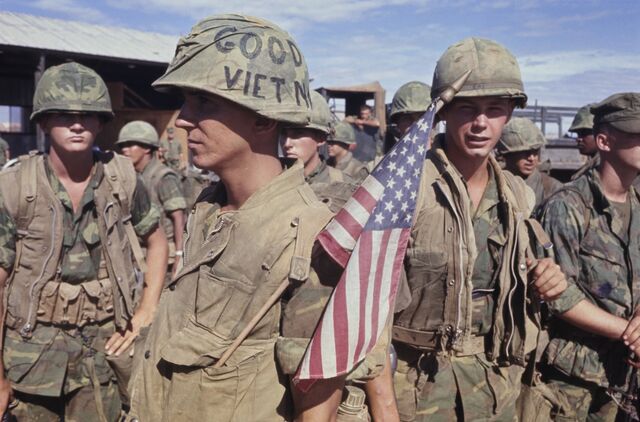
Count me skeptical: Revolutions in training, equipment, tactics, personnel and organization occur over the long haul. The force that he and President Donald Trump have unleashed on Iran was forged decades ago, beginning with the post-Vietnam war reforms of the 1970s and President Ronald Reagan’s defense buildup of the ’80s.
But Hegseth may be planting the seed for a radical change in one aspect of military behavior that doesn’t get enough attention: psychology. Broadly, armed forces take on a mentality shaped by their leaders. My concern is that the wrong one can lead to disaster.
One person who understood the importance of the second half of the phrase “military mind” was Norman F. Dixon. A British psychologist with a decade of military experience, Dixon wrote a remarkable (and surprisingly funny) 1976 study called “On the Psychology of Military Incompetence,” which won a devoted following among military and corporate leaders and remains in print on its 50th anniversary.
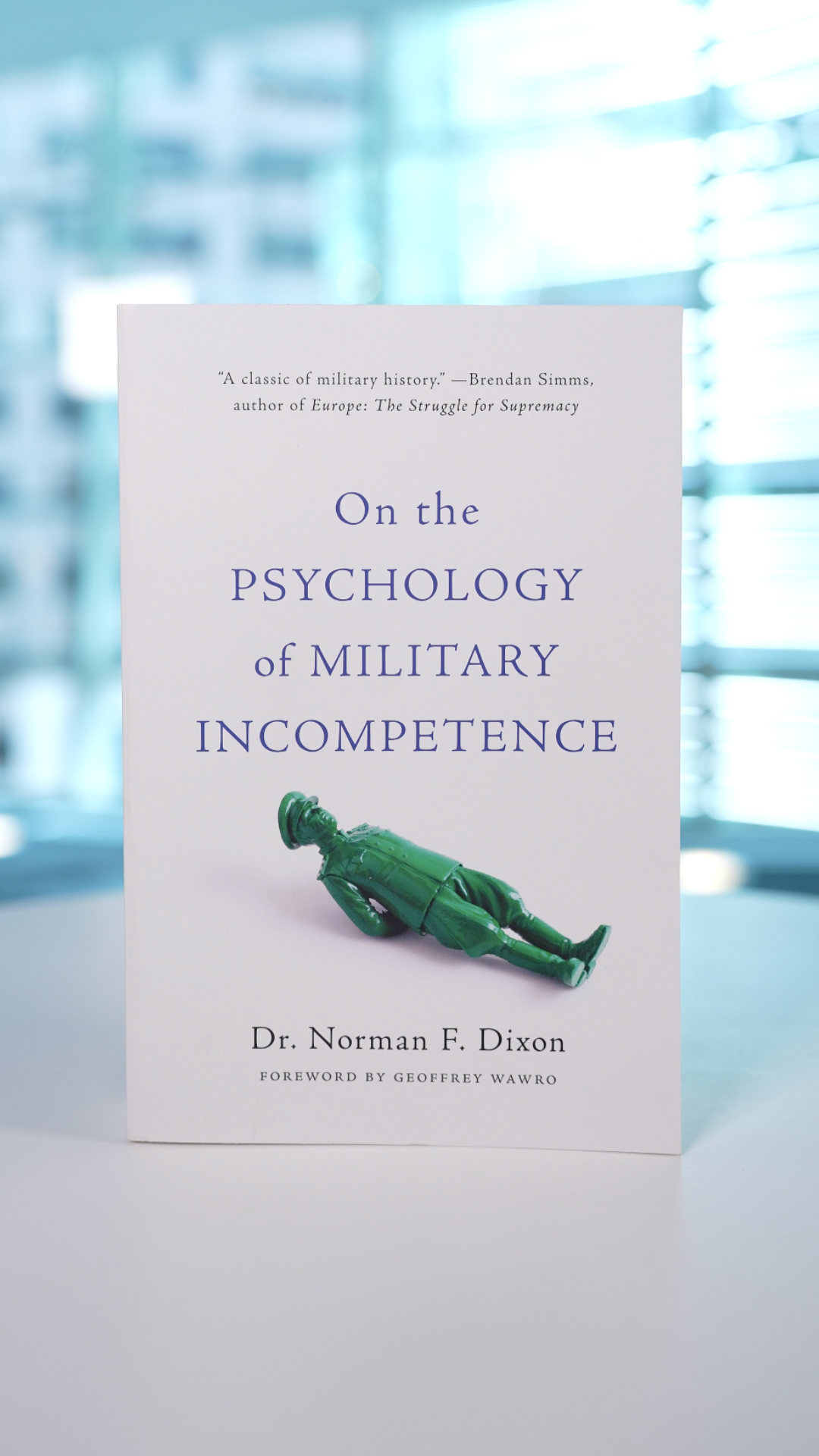
Despite its title, the book is no broadside against fighting men and women or their leaders. Dixon rightly insists that it is “only by contemplation of the incompetent that we can appreciate the difficulties and accomplishments of the competent.”
Nor does he postulate that incompetence occurs more frequently in the military than other professions; the problem is that in no other profession can incompetence cause so much human tragedy so quickly.
And no other profession has such an obligation to scrupulously examine history and learn from past mistakes.
Thus the first half of Dixon’s book closely analyzes several British military fiascos, including the retreat from Kabul of 1842, the Crimean War of 1853-1856, the Second Boer War of 1899-1902, the muddy trenches of Flanders Fields in World War I, and the fall of Singapore to the Japanese in World War II.
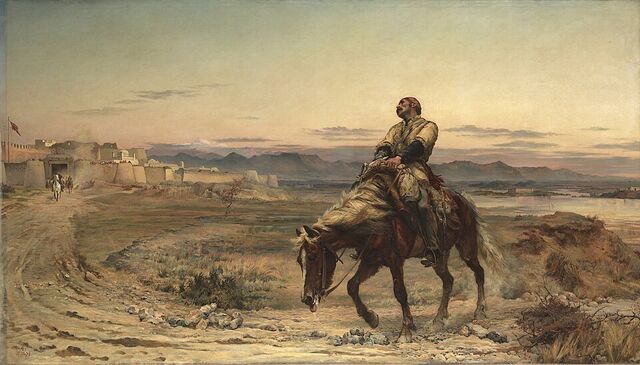
For the empire on which the sun never set, there were plenty of dark moments. “Like the common cold, flat feet or the British climate,” Dixon writes, military calamity “is accepted as a part of life — faintly ludicrous but quite unavoidable.”
In fact, he argued, it is neither of those things: “Military incompetence is a largely preventable, tragically expensive and quite absorbing segment of human behaviour. It also follows certain laws.” And it is unimaginably costly, in terms of national aims, treasure and, far above all, blood.
This is where Dixon’s originality and professional training as a psychologist kick in. In the second half of the book, he puts the military mind on the couch and ingeniously lays down those “certain laws.”
Through brief psychological profiles of the generals and admirals who led those disastrous 19th- and 20th-century wars, he demonstrates how top brass — and the militaries they led — succumbed to institutional rigidity, groupthink, uniformity and authoritarianism.
There are few better examples than Douglas Haig, commander of the British forces in the second half of World War I, who remorselessly sent millions of young soldiers into a veritable meat grinder for little or no purpose. Hundreds of thousands never returned.
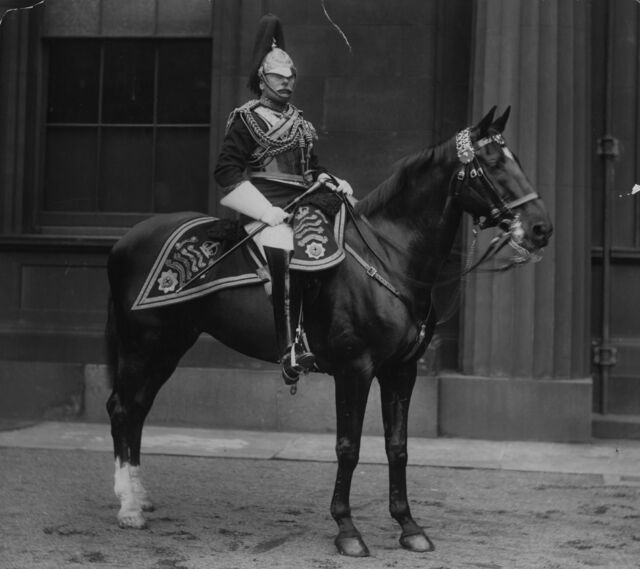
In addition to being “manifestly lacking in compassion towards his fellow men,” Dixon writes, Haig displayed the “triad of traits which, according to contemporary research, defines the obsessive character and is correlated with authoritarianism. He was obstinate, orderly and mean.”
Catastrophe can happen even to the smartest among them: Dixon describes General Arthur Percival, whose almost pathological resistance to reinforcing Singapore’s defenses led to Japan’s easy conquest in 1942, as “highly intelligent.” Yet, like other architects of disaster, he was afflicted by rigidity, obstinacy and dogmatism.[2]
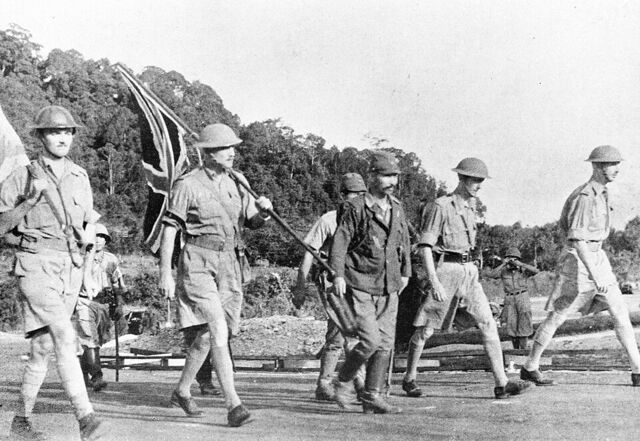
“Those intellectual shortcomings which appear to underlie military incompetence may have nothing whatever to do with intelligence, but usually result from the effect upon native ability of two ancient and related traditions,” he explains. “The first of these, originally founded in fact, is that fighting depends more upon muscle than brain, the second that any show of education is not only bad form but likely to be positively incapacitating.”
Half a century later, we find these two traditions going strong. For an example of the first (muscle over brain), look no further than Ukraine. On Feb. 24, 2022, Russian President Vladimir Putin exhorted his nation and troops: “Strength and readiness to fight … are the necessary foundation on which you can only reliably build your future.” We are now in the fourth year of a war he expected those troops to wrap up in three days.
For the second, there is Dixon’s warning about a “cult of anti-intellectualism” — which brings us back to Hegseth’s most recent cultural jihad. For decades, the Pentagon has sent promising junior officers to elite universities to obtain graduate degrees, a practice the secretary banned last month on the grounds that they returned with “heads full of globalist and radical ideologies that do not improve our fighting ranks.”
The tragedy here would be obvious to Dixon: “The saddest feature of anti-intellectualism is that it often reflects an actual suppression of intellectual activity rather than any lack of ability.”
There are plenty of other examples that should trigger alarm about the long-lasting psychological effects on America’s force of Hegseth’s version of America First. His catchphrase these days is in fact a state of mind — the “Warrior Ethos” — in which he takes great personal relish.
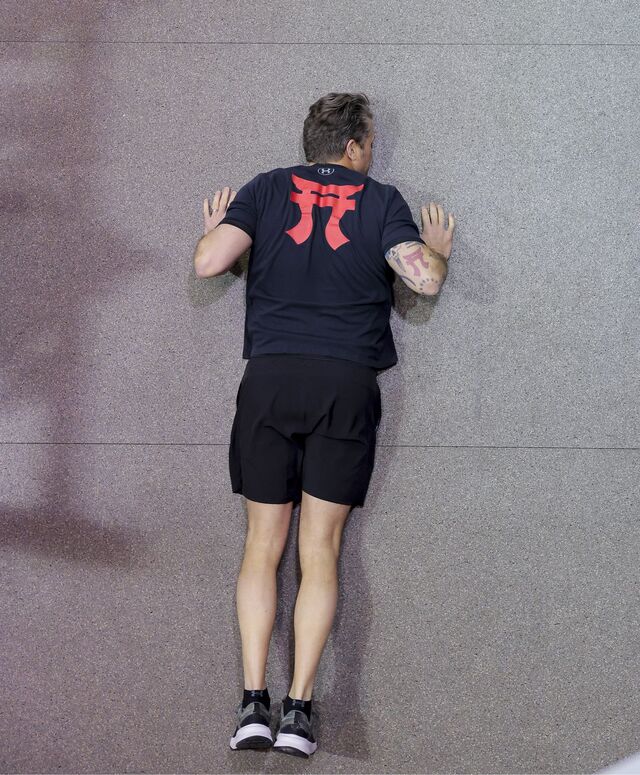
There is, Dixon writes, “a complex interaction between the nature of military organizations and certain features of human personality.” Given Hegseth’s intention to forge a military in his own image, I think it’s fair to consider a few more personality characteristics that Dixon enumerates in his catalogue of the causes of incompetence:
Hegseth, alas, checks all those boxes: Titling his book In the Arena; censoring and banning reporters; pushing women out of combat roles; disparaging “defenders” as not being “warriors”; sporting a “Deus Vult” (“God Wills”) tattoo.
Most disturbingly, he dismissed the death of US service members in the Middle East with the trite “tragic things happen,” while Trump added: “That’s the way it is, likely to be more.”
Add it all up and, as Dixon puts it: “We are talking of ‘militarism,’ a sub-culture which, in the end, may well hamper rather than facilitate warring behaviour.”
In case you think this analysis is less relevant now than half a century ago, consider this warning from one of the great military minds of our day, retired General Stanley McChrystal, who headed Joint Operations Command during the Iraq war. “The danger of some of that verbiage now is that much of the force is 18 years old, and it’s influenceable. They see that and they go, ‘Wow, that’s the way we ought to think. That’s the way we ought to be. We are superior,’ ” McChrystal recently told David French of The New York Times. “I even have a problem with the word ‘warrior.’ Traditionally, warriors were separate from soldiers. The difference between an army and a mob is discipline and leadership.”
Another catchphrase that Hegseth and Trump have used to valorize the military is “peace through strength.” It echoes an admirable and effective attitude that informed the deterrence strategy toward the Soviet Union in the Cold War and undergirded decades of subsequent American global leadership.
But Hegseth laid bare the disingenuity of his version in the speech he gave last year to his captive audience of his generals: “Peace through strength brought to you by the warrior ethos … we are the strength part of peace through strength.”
Where, then, is the peace part?
Warfare has at its heart the paradox of waging both war and peace.[3]This is why Dixon suggests that “a tight rein on aggression is mandatory in a profession whose stock in trade and solution to most problems is physical violence.”
Hegseth’s military will have no problem with aggression. The question is, will anybody be holding the reins?
–With assistance from Ale Lampietti and Taylor Tyson
This column reflects the personal views of the author and does not necessarily reflect the opinion of the editorial board or Bloomberg LP and its owners.
With every hair slicked into place, Hegseth has dictated that “the era of unprofessional appearance is over” and set strict limits on religious and medical exemptions for facial hair. To his credit, this includes troops practicing “Norse paganism.”
Some commanders have been both brilliantly successful and maddeningly incompetent. Consider Bernard Montgomery, whose adaptability, unflappability and tactical genius led to victory in the North African desert in 1942, but whose obstinacy and thirst for glory led to the Allied disaster of Operation Market Garden in 1944. Dixon, while admitting that Monty “had a way of turning difficulties into phantoms,” thinks the hero of El Alamein was more lucky than good.
With characteristic humor, Dixon expands this inherent contradiction more broadly: “Man,” he writes, “is basically a battlefield, a dark cellar in which a well-bred spinster lady and a sex-crazed monkey are forever engaged in mortal combat, the struggle being refereed by a rather nervous bank clerk.”
More From Bloomberg Opinion:
• Hegseth and His War Department Have Lots of Explaining to Do: Andreas Kluth
• Hegseth Is Targeting the Military’s ‘Constitution’: James Stavridis
• NATO Enlargement Was a Good Idea, Until It Wasn’t: Tobin Harshaw