Magnetic North
Finland Is Ready for Russia. Is Anyone Else?
This is where the West ends. Drive northeast from the Lapland village of Salla for 20 minutes, and route 82 runs into a closed chain-link gate. “Don’t touch,” warns a sign in Finnish.
Beyond, up a gentle slope, looms Russia. Finns used to drive across here to fill up on half-price gasoline. That was before Russia started pushing migrants across the two countries’ roughly 830-mile border as human weapons in a hybrid war and then attacked Ukraine. Sealed in 2023, the crossing was deserted when I stopped there on a bright winter morning. Just a lonely stretch of road through Finland’s endless boreal forest, cut short by the North Atlantic Treaty Organization’s newest Arctic frontier with its oldest adversary.
Salla’s tongue-in-cheek motto is “In the middle of nowhere.” The real joke is that the village shouldn’t even be here. The original town sat just east of that gate, lost when Stalin grabbed about a 10th of Finland after the Soviet invasion and subsequent campaigns of World War II.
Finland Is Where the West Ends
Source: International Institute for Strategic Studies
Note: The Transpolar Sea Route will potentially be usable in the future.
A lifetime later, but only one lifetime, Moscow once again preys upon a smaller neighbor. Russian President Vladimir Putin’s renewed invasion of Ukraine in 2022 exposed the fragility of a European peace predicated on post-Cold War assumptions. Meanwhile, the second coming of President Donald Trump, whose persistent NATO-skepticism metastasized into an unprecedented threat to seize Greenland from US ally Denmark, has blown up whatever was left of the certitudes of international rules and US protection.
Finland, a nation of less than six million that for decades inhabited a diplomatic limbo between East and West, now sits at the center of these geopolitical cross currents. Joining NATO in April 2023, it is an Arctic bulwark for the West, having — in the words of the country’s former military intelligence chief Pekka Toveri — “for 109 years stared to the east without blinking an eye.”
Abandoned by Britain and France when Stalin attacked in 1939, Finland effectively stood alone, cultivating a self-sustaining spirit throughout the Cold War that it has maintained even as it drew closer to the West. It is, in essence, what many European allies now aspire to be: committed to the rules-based order but also ready if that order breaks down.
Finnish Army conscripts drive their Leopard 2 tank toward a rusting Soviet tank during the Northern Spike 25 exercise at the Rovajärvi range, in northern Finland, November 2025. Videographer: Louie Palu/Agence VU
With Russia rampant, and Trump treating the once-solid US commitment to its greatest alliance as a bargaining chip, Europe’s leaders and militaries should look to a country that long assumed it would have to defend itself and organized its society around that possibility. The trillion-dollar cost of making Europe ready for Russia, and less reliant on the US, is actually the easy bit.
The far harder task is to develop the cultural and institutional sinews that Finland has built over many decades. Conscription and extensive civil defense shelters, now historical curios in much of the West, remain bedrock elements of Finnish defense. “Go to a bar and shout, ‘Who can shoot an anti-tank weapon?’ All the men will stand up,” says Oskari Jaakkola, chief executive officer of Finnish battery startup Cactos and an army reservist with the rank of lieutenant. Finnish companies, meanwhile, form an organized industrial reserve of their own. Even preschoolers there are taught to spot the online disinformation that characterizes 21st-century hybrid warfare. For the sake of its own security, and that of the wider Arctic, Finland needs its allies to learn these lessons quickly. Its uniqueness makes it a hard study, and Europe has thus far lacked the focus and impetus of a star student. The continent’s failure to learn could lead not just to the subjugation of individual nations but to the end of the European project.
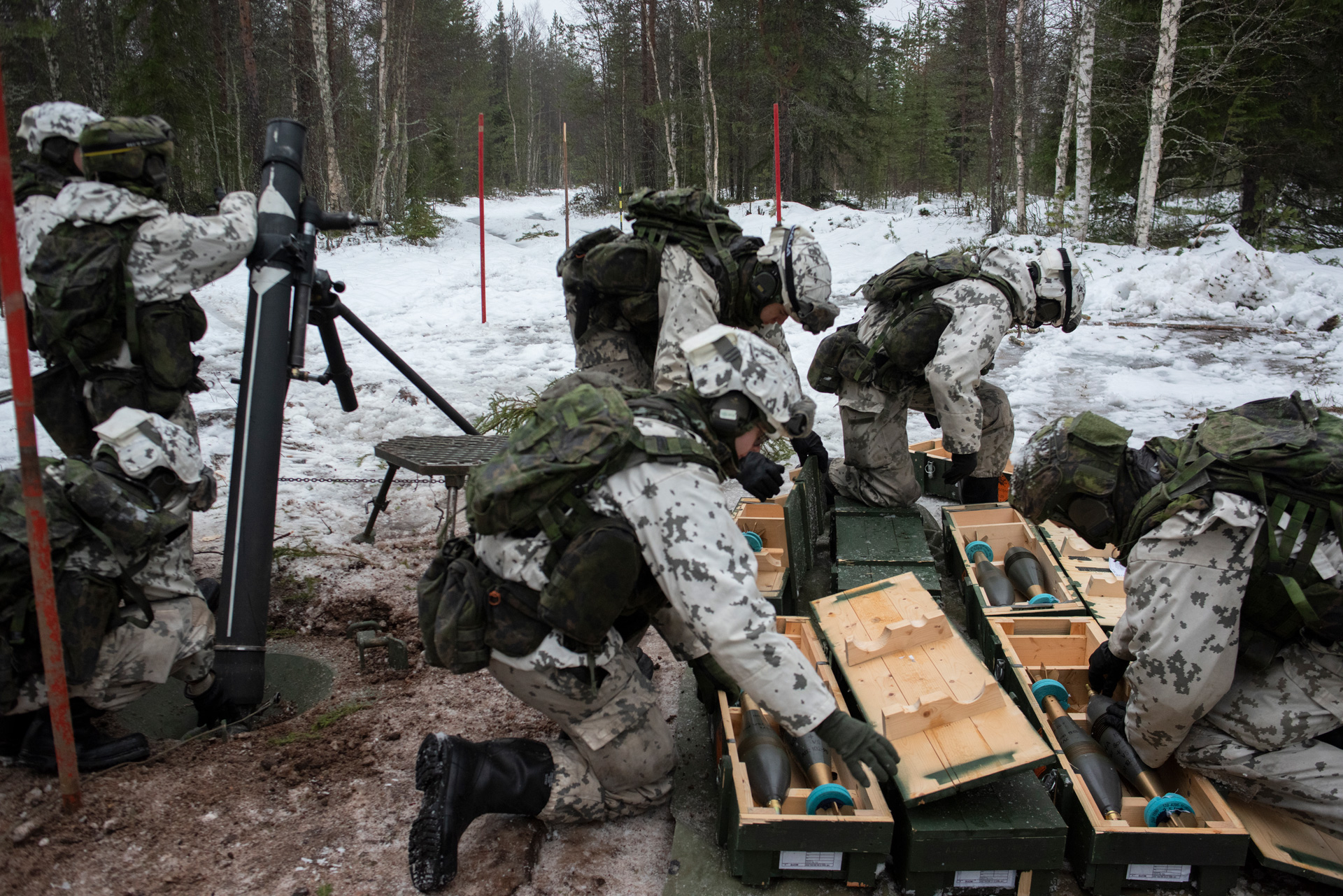
A Finnish Army 120mm mortar platoon during a live-fire exercise at the Rovajärvi range, November 2025. Photographer: Louie Palu/Agence VU
Finland, along with other NATO newbie Sweden, fills a gap in the alliance’s jigsaw puzzle, stretching from northern Lapland to the Baltic Sea. The country is also a David to Russia’s Goliath, with armed forces that, including reservists, outstrip those of Germany or the UK. Defense spending per capita is roughly double the European average.
Finland also brings enviable martial skills and physical presence to the Arctic, as climate change opens up a new arena of competition for natural resources, shipping routes and geopolitical advantage. A couple of years ago, sitting in a Canadian base far above the Arctic circle and discussing winter warfare training, a visiting US Army major told me: “I don’t know why we don’t just go to Finland, watch what they do, and then do that.”
Read more of our Magnetic North series here.
I take his advice, landing in Rovaniemi, Lapland’s capital, with photojournalist Louie Palu in November, just as the first winter snows began falling. Perched on the edge of the Arctic Circle and virtually razed by retreating Nazi forces in 1944, the city is now the de facto capital of Christmas. Tourists swarm in for the Northern Lights and a sitdown with Santa Claus.
I am here for something else. Less than an hour’s drive from the holiday markets, on the way to Salla and its forbidden frontier, hundreds of Finnish soldiers are training to repel any future Russian invasion. Rovajärvi, a wilderness almost as big as New York City, is Western Europe’s largest firing range, increasingly an essential stop for NATO troops. Rovaniemi will host the new multinational staff headquarters for NATO’s Forward Land Forces in northern Finland. In a latter-day echo of GIs flooding into England ahead of D-Day, Tinder in the Rovaniemi area is apparently filling up with profiles of foreign soldiers.
Watching Finnish conscripts born after 9/11 practice firing shells from German-made tanks at the rusting, frosted hulks of Soviet T-54s is like seeing a Mad Libs of history come to life. Before getting there, however, I encountered another crucial munition in Finland’s arsenal: donuts.
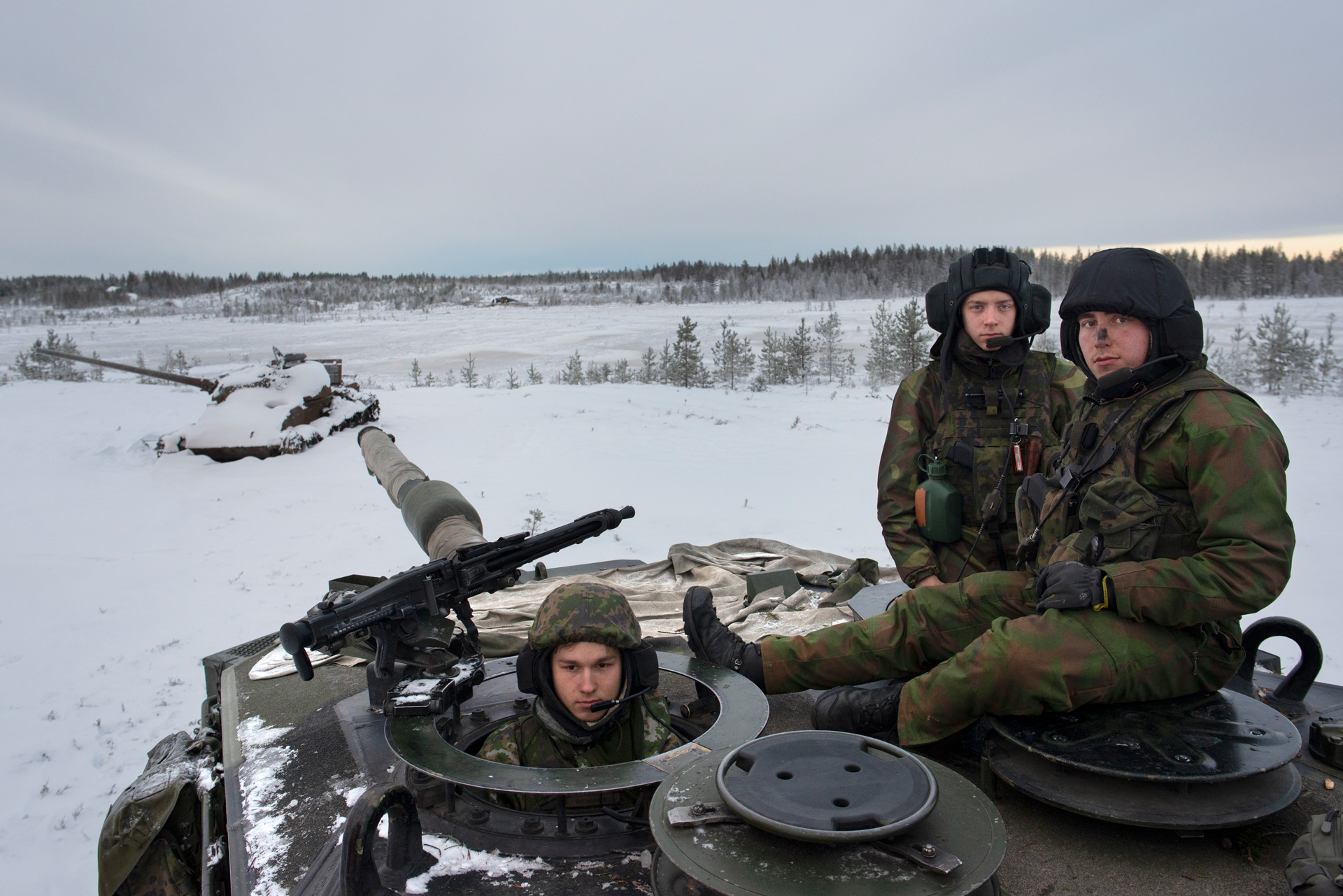
(L-R) Antti Ritvanen (loader), Jukka Miinalainen (gunner) and Viljami Töhönen (platoon leader and tank commander) with their Leopard 2 tank at the Rovajärvi range, November 2025. Photographer: Louie Palu/Agence VU
The Soldiers' Home
My introduction to Northern Spike 25, an anti-tank warfare exercise, begins at Rovajärvi’s sotilaskoti. The center of this “soldiers’ home” is the canteen. Even before entering, the smell of baking dispels the predawn chill and darkness. Inside, volunteer Finnish grandmothers brew bottomless coffee and prepare food, including munkki – signature donuts dangerous in their own way, especially the cinnamon ones.
Their bustle and care are a reminder of something bigger that dates back to the Soviet Union’s invasion of Finland during World War II. This was total war, with Soviet aircraft bombing Helsinki in the opening hours and Finland, vastly outnumbered, mobilizing all its resources to fight back. Stalin expected a quick victory, as Putin subsequently did with Ukraine. Yet, even though forced to cede territory, Finland’s impressive resistance to outright conquest nonetheless turned the Winter War into a moral victory of almost mythic proportions. More conflict followed. First, the Continuation War, when Finland invaded the Soviet Union alongside Nazi Germany, in hopes of winning back territory. Then, the Lapland War to expel German forces as a condition of making peace with the Allies, including the Soviet Union. Long decades of enforced neutrality to appease Moscow, “Finlandization,” followed.
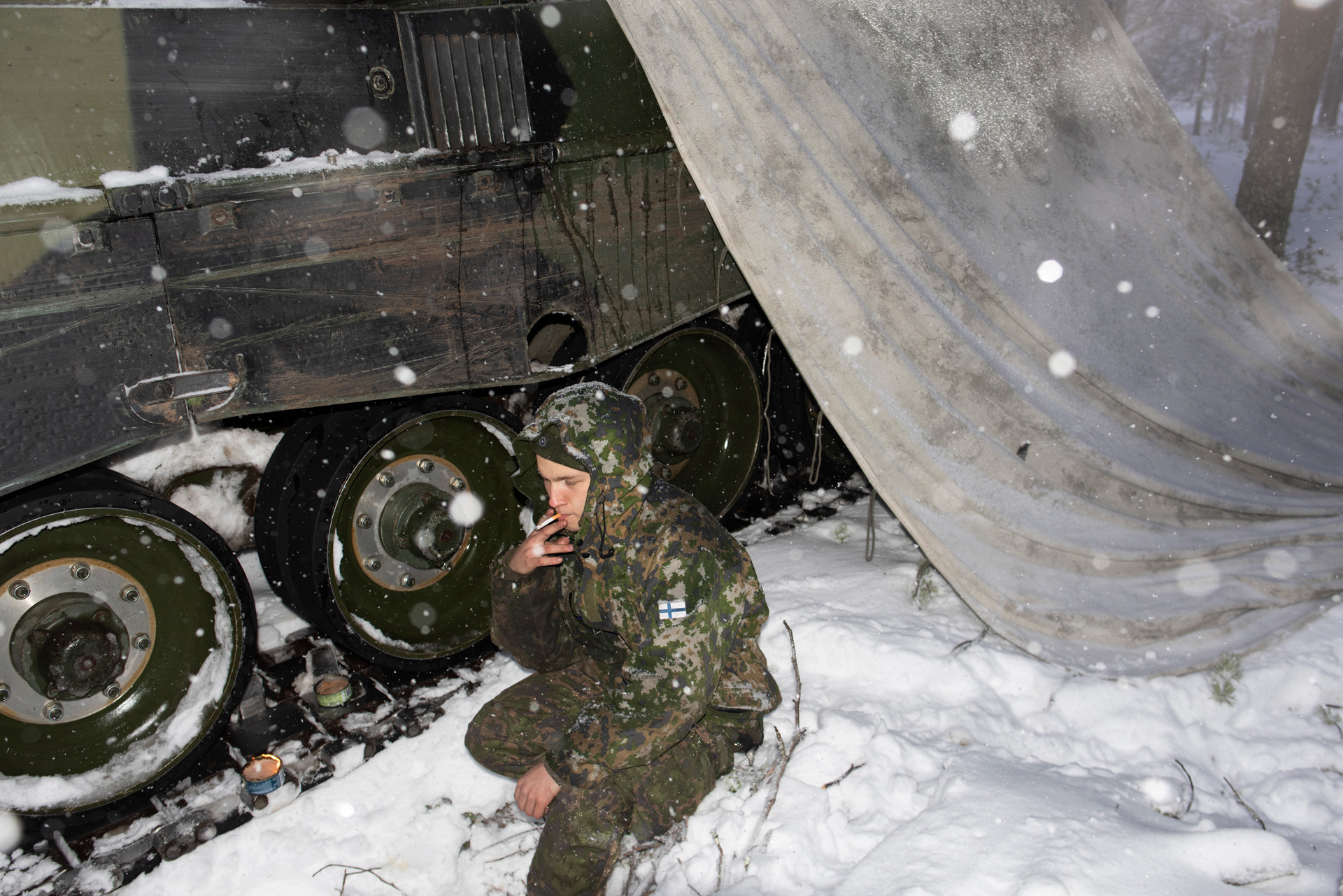
Antti Ritvanen, a 19-year-old Finnish conscript and Leopard 2 tank loader, sitting by the tracks of a tank and heating up food during training at the Rovajärvi range, November 2025. Photographer: Louie Palu/Agence VU
The resulting reputation for stout self-sufficiency is captured in the term sisu, meaning grit or resilience. This has begun to percolate beyond Finland’s borders as the title of a movie franchise about a 1940s war hero who dispatches Soviet and Nazi soldiers in creatively visceral ways. Think Rambo but even more taciturn.
To fetishize the martial spirit, however, would miss the broader effort feeding it. The Soldiers’ Home Association is Finland’s oldest volunteer-based defense organization. When your security relies on annually conscripting around 24,000 young people and sending them out into the Arctic hinterland, providing a strong sense of support — of home — isn’t mere kind-heartedness. It’s strategic. A nation this small, less than 500 miles from Moscow, must get everyone involved in defense, grandmothers included. London, Berlin and a host of other capitals, take note.
Finland kept conscription, for males, long after others abandoned it. (The eight other NATO allies that have it, including almost all the other Nordic countries, the Baltic states, Greece and Turkey, are all further east than west.) The result is a trained reserve of roughly one sixth of the population. Women, who can volunteer today, will likely soon face some sort of draft themselves, as demographic pressures force Finland to expand the pool. It just raised the age limit for reservists to 65 years old.
Conscription acts like a social glue, binding people to a common experience and to their ancestors. I stopped asking whether folks’ grandparents had fought in the Winter War; it was redundant. Nearly 100,000 Finns died in the conflicts of 1939-1945; adjusted for population, that represents 10 times the US losses during World War II.
Finnish soldiers unpack anti-tank weapons at the Rovajärvi range, November 2025. Videographer: Louie Palu/Agence VU
Preparing for the worst, or the return of the past, doesn’t end with conscription. As Toveri says: “When Russia attacks you, it doesn’t attack your defense forces only; it attacks your whole society.” Finland’s corporate sector is tasked with stockpiling and keeping domestic industry and infrastructure resilient. Even socks are critical items at these latitudes; the Danes recently placed an order for 750,000 pairs of Finland’s finest merino specimens (perfect for action in, say, Greenland). Finnish CEOs may also be selected to participate in the country’s national defense courses, a prestigious invitation to a network that is like LinkedIn but for catastrophe.
“The Cold War never really ended for us,” says Minna Ålander, a Rovaniemi native and Arctic security expert with the Center for European Policy Analysis. She points out that when other European countries were shedding military hardware, Finland snapped up the bargains. Germany sold 124 surplus Leopard tanks to the Finns for less than a million euros (about $1.2 million) each in 2002. Today, you could pay 12 million euros for a new one.
Even during the tactful decades of Finlandization, the adversary was obvious. Lieutenant Colonel Arro Jäntti, the commander directing Northern Spike 25, has the air of a happy warrior with an affinity for heavy metal — not uncommon in Finland — and regards the training that young conscripts undergo in this wilderness not as a burden but as their “right.” He recalls exercises decades back that imagined, bizarrely, invasion from the north or west (those revanchist Norwegians and Swedes). This may have appeased Russian sensitivities, but in the field, “It was funny because everyone knew that we have to just turn the map,” he laughs.
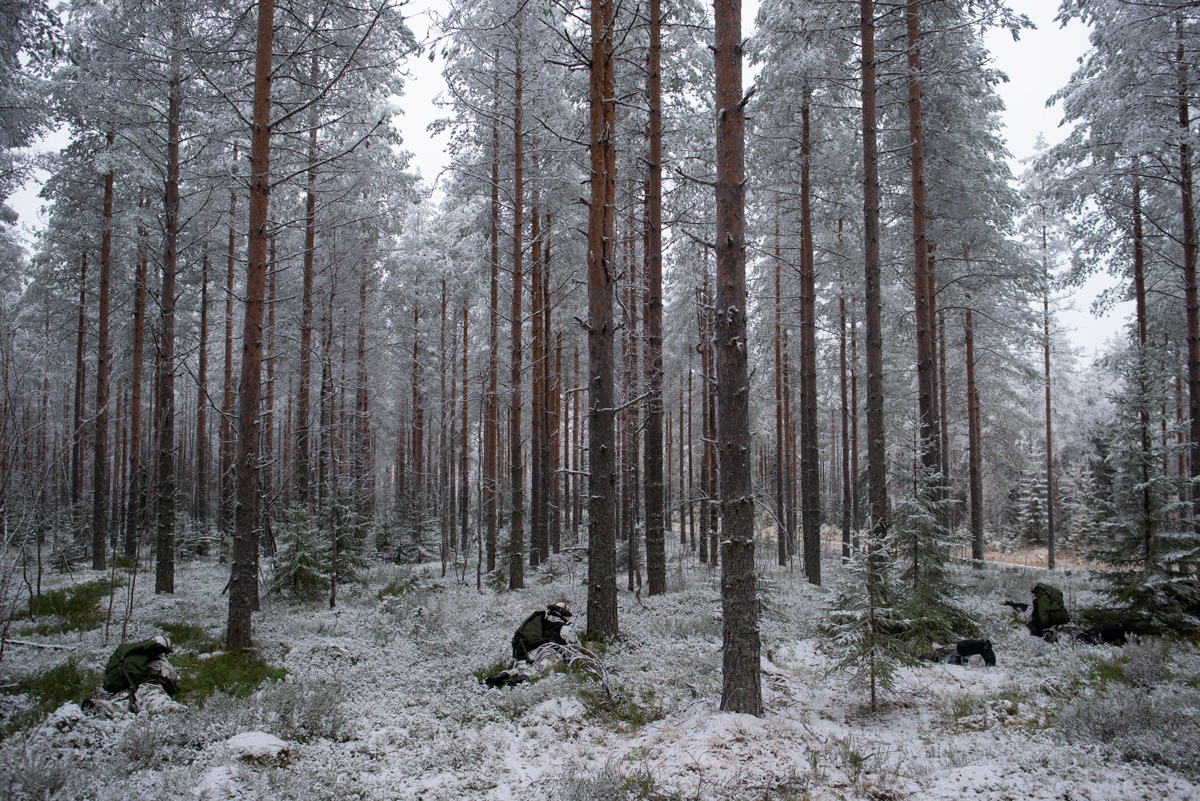
Finnish soldiers await a mock attack by fellow Finnish soldiers posing as an invading enemy during an exercise in North Karelia, Finland, November 2022. Photographer: Louie Palu/Agence VU
Whereas exercises I observed in North America’s Arctic focused on small, tactical groups, this one imagines mass warfare. My mentions of the defense technology du jour, drones, sometimes drew the equivalent of eyerolls. While the Finns work with them, officers point out that necessity has been the mother of Ukraine’s inventiveness in drones, making up for the country’s relative lack of mass infantry and heavy weaponry — just as Finns did with Molotov cocktails in the Winter War.
Their strategy for countering – and deterring – a Russian invasion can be summed up as Vietnam but with snow. Finland’s Arctic is, unlike North America’s, virtually all below the tree line.
The tyranny of logistics offers mobile units of Finns, masters of these trackless forests, opportunities to halt, isolate and bleed enemy columns. “A mechanized enemy is always somewhat tied to roads,” an army inspector explains to me as I watch conscripts shoot anti-tank missiles across a snow-covered valley. Later, I observe a team of white-clad conscripts firing live mortar rounds in the forest, each one capable of dealing death in a 130-foot radius. Finnish conscripts learn relatively quickly to shoot live rounds while moving and, unsurprisingly, they look far more comfortable on skis than many of the US soldiers I met in Alaska. Their Arctic clothing, including camouflage, and vehicles are also more up-to-date.
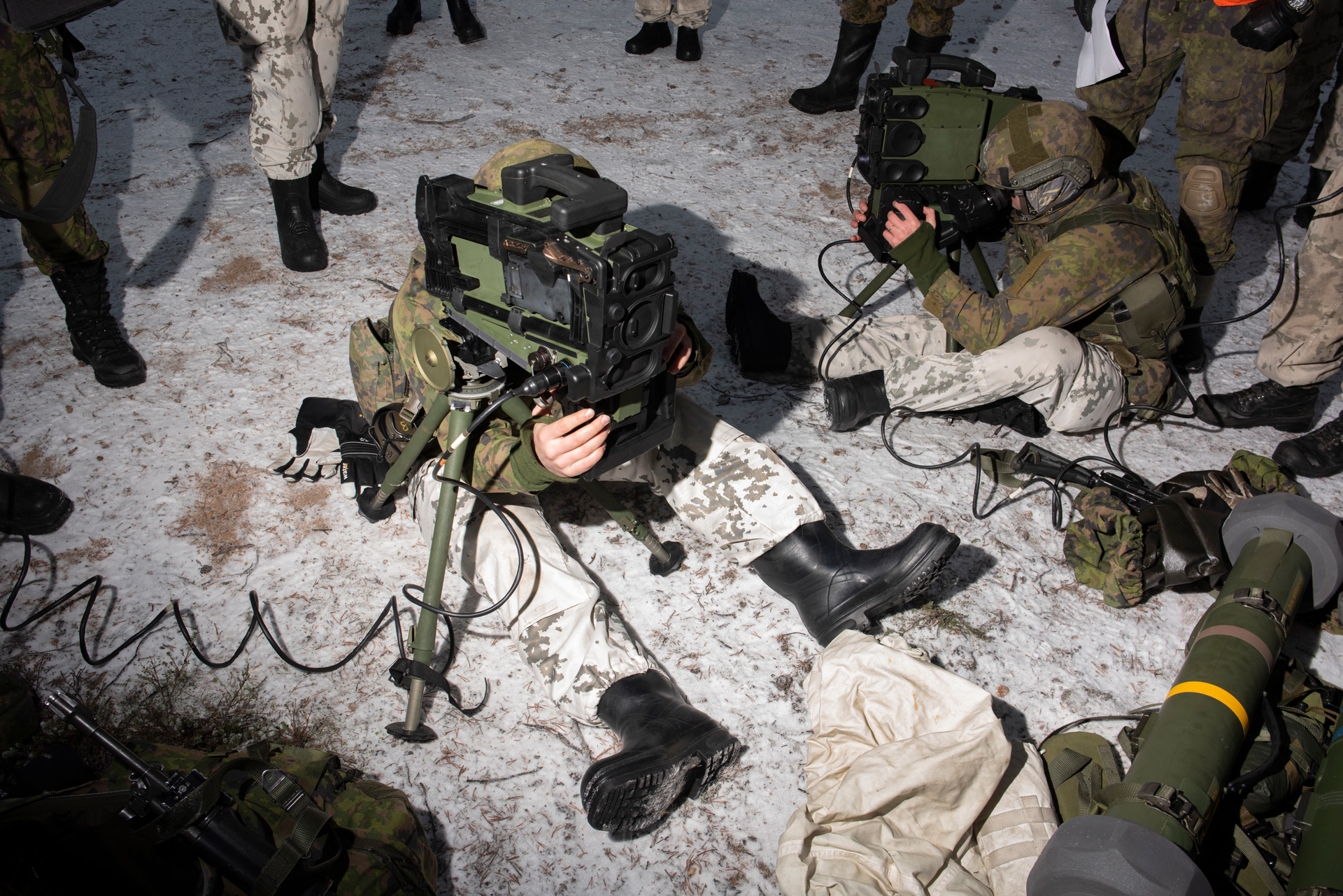
Finnish conscripts learn how to use the command launch unit for anti-tank weapons at the Rovajärvi range, November 2025. Photographer: Louie Palu/Agence VU
Then there’s the attitude. When I met officer candidate Viljami Töhönen, just 23 years old and about 300 days into his training, he was commanding a platoon of four tanks, several armored personnel carriers and 50 troops. I could try to remember what I was doing aged 23 in London, but let’s move on. Standing in blowing snow next to his Leopard 2 tank, a rumbling beast weighing 55 metric tons, he says quite calmly, “If the Russians come, we are ready.” I believe him.
The same couldn’t be said for Europe as a whole. Louie Palu recalls a prior Arctic reporting trip when a Swedish military spokesperson remarked that his country, which hasn’t fought a major war in two centuries, was recovering from “peace damage.” Few European nations adopted Sweden’s dogged embrace of neutrality, but the military capabilities of many, including the heavyweights of Germany and the UK, shrank after the Soviet Union collapsed, stunted under the canopy of the US security umbrella. Finland has more than 2.5 times the combined military personnel of neighbors Norway and Sweden, making it something of a shield for Scandinavia.
Finland Spends More on Defense and More Where It Counts
Source: NATO
Note: Data are estimates for 2025. Share of GDP and equipment share data for Germany and equipment share data for Denmark are for 2024.
While annual defense spending by European NATO members has doubled in real terms over the past decade to more than half a trillion dollars, replacing US capabilities in the region would alone cost an estimated $1 trillion, according to the International Institute for Strategic Studies. Critical gaps include a reliance on US aerospace contractors and command capabilities, industrial bottlenecks in the production of ammunition and explosives and the recruitment and retention of personnel. The UK’s latest Strategic Defence Review declared a “workforce crisis.”
As Toveri says: “There’s only two things assured when war first starts: You’ll lose people and materiel; and second, you don’t know how long the war will last.”
For Europe to overhaul decades, or centuries, of atrophy to match the Finns, and back them up, would take a transformational effort sustained over many years. The wildcard is Russia’s intentions and capabilities.
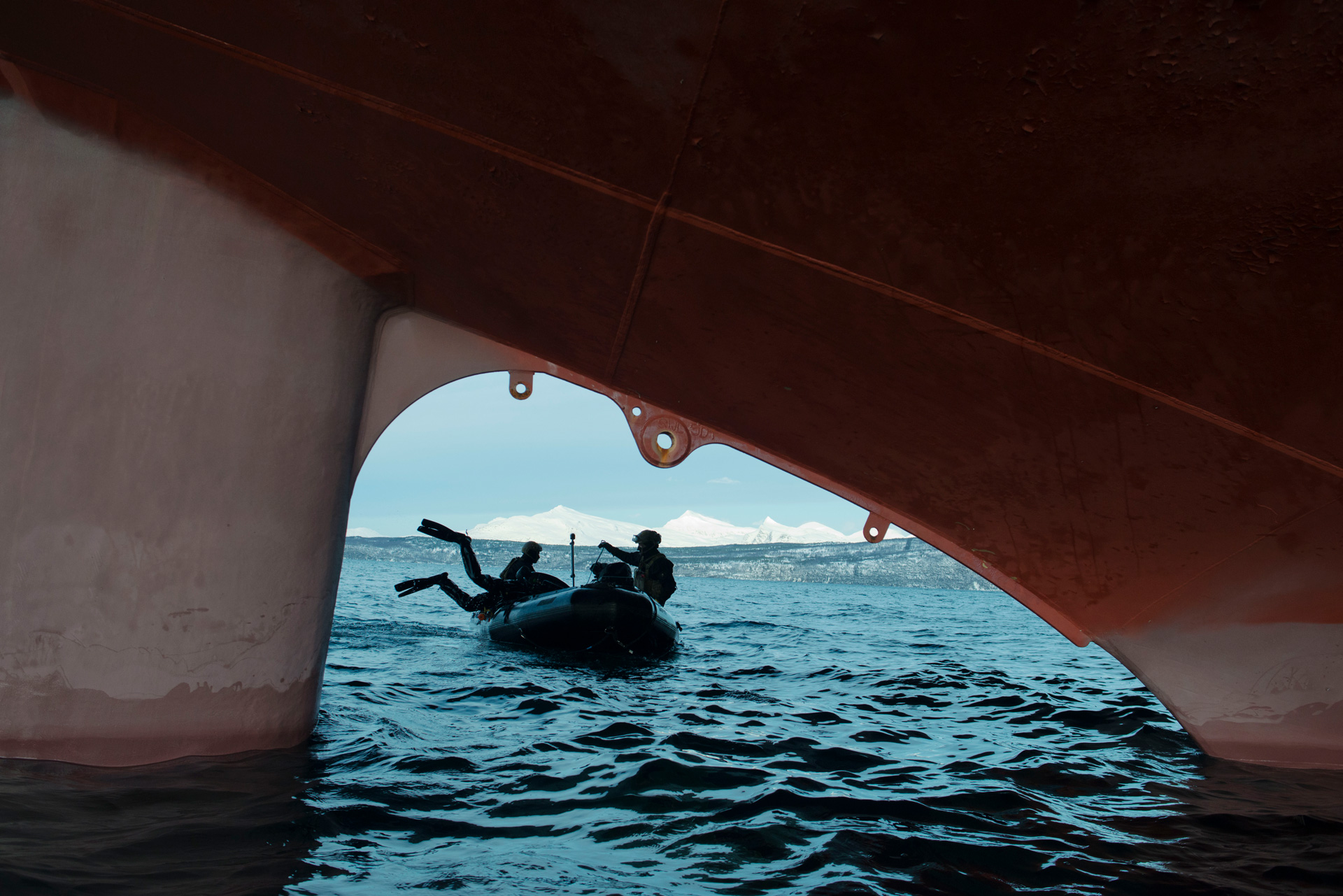
Norwegian military ordnance disposal divers practice inspecting a vessel for limpet mines in the port of Narvik, Norway, February 2020. Photographer: Louie Palu/Agence VU
Head in the Arctic, Feet in the Baltic
On that front, Major General Sami Nurmi, the Finnish military’s deputy chief of staff, has good news of sorts. Asked about Russian readiness, he replies, “The Ukraine war is wearing them out, and especially land forces from close to our borders have been quite heavily involved in the fighting.” He gives Russia’s forces three-to-five years to recover after any peace deal and more like a decade to modernize.
Even so, while many soldiers have gone south, he says the Russians are rebuilding infrastructure across the border to prepare for their return: “They are looking at the next phase.” That phase, while not necessarily centered on Finland, would inevitably draw it in. As Finnish President Alexander Stubb says of his country: “Our feet are in the Baltic, and our head is in the Arctic.”
The North American Arctic is vast, but it is also an isolated fringe, out of sight and mind for most people. Helsinki to Rovaniemi, meanwhile, is only a 10-hour drive on good roads. Similarly, Russia’s Arctic is core to its economy and Putin’s dreams of greatness.
Finland complicates that.
A Dangerous Neighborhood
Sources: Lt. Col. Juha Kukkola, Finnish National Defence University; TeleGeography; OpenHistoricalMap
Note: Peacetime garrisons, based on open sources; does not include all support units, nor FSB Border Guards and National Guard units.
Troy Bouffard, director of the University of Alaska Fairbanks Center for Arctic Security and Resilience, notes that Putin carved out a new regional command for the Arctic in 2014, signalling its strategic importance. He backtracked on that only a decade later after Finland joined NATO in response to the Ukraine War. That Putin felt compelled to fold those Arctic assets back into a broader military district stretching from Murmansk to St. Petersburg “reaffirmed the Baltics are the top priority of Russia,” Bouffard says.
Putin’s expansionism is the latest iteration of Moscow’s longstanding foreign policy objectives, centered on pushing out frontiers to more defensible positions and reaffirming Russia’s status as a great power. Of all the potential flashpoints in Eastern Europe, the Baltic states of Estonia, Latvia and Lithuania are NATO’s most vulnerable members. Former Soviet possessions, they have large Russian-speaking minority populations. They are threateningly close to St. Petersburg and separate Russia from its exclave of Kaliningrad. Above all, they offer the most obvious battleground for Putin to test NATO’s commitment to collective defense. Finland, separated from Estonia by only 50 miles or so of open water, provides a bastion of support — and another potential threat to Putin’s hometown.
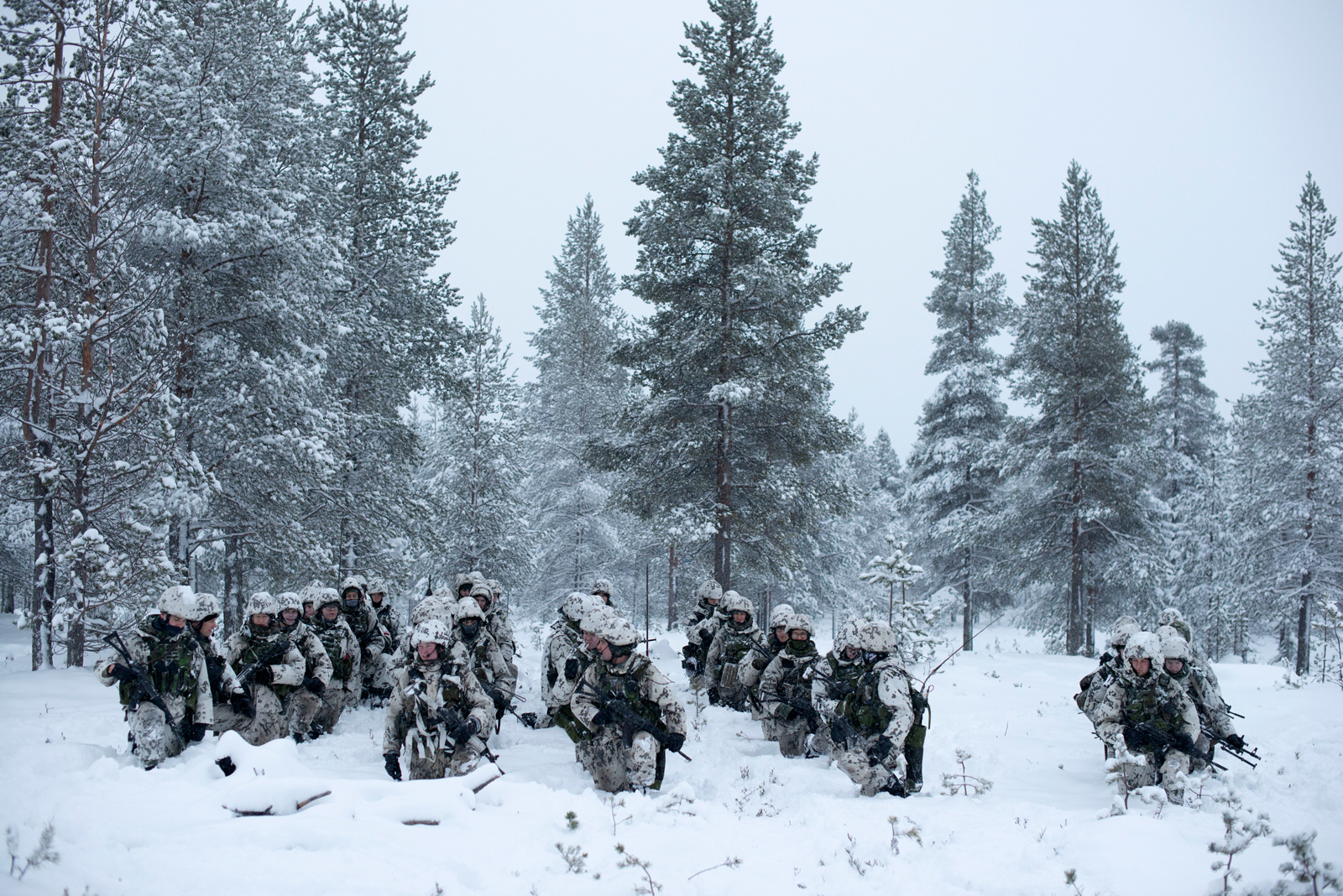
Finnish soldiers training for winter warfare at the Rovajärvi range, December 2018. Photographer: Louie Palu/Agence VU
Meanwhile, at the opposite end of the country, Lapland pushes into one of the most strategically sensitive parts of the Arctic. Its northern tip almost reaches the Barents Sea, which is the gateway toward the North Atlantic for Russia’s Northern Fleet. “Almost” because Finland’s sole Arctic port, Petsamo, was snatched by the Soviet Union. That also makes Finland a bastion for the narrow northern coastal strip of Norway that shares a border with Russia, a hotbed of espionage.
Petsamo itself hosts the headquarters of Russia’s 14th Army Corps, which boasts amphibious assault capabilities of particular concern for Norway with its long coastline. Northern Lapland also neighbors the heavily militarized Kola Peninsula, home to Russia’s second-strike nuclear submarines. When truck-borne Ukrainian drones launched their audacious attacks inside Russia last summer, one target was the strategic bombers at Olenya airbase near Murmansk, only 100 miles or so from the Finnish border.
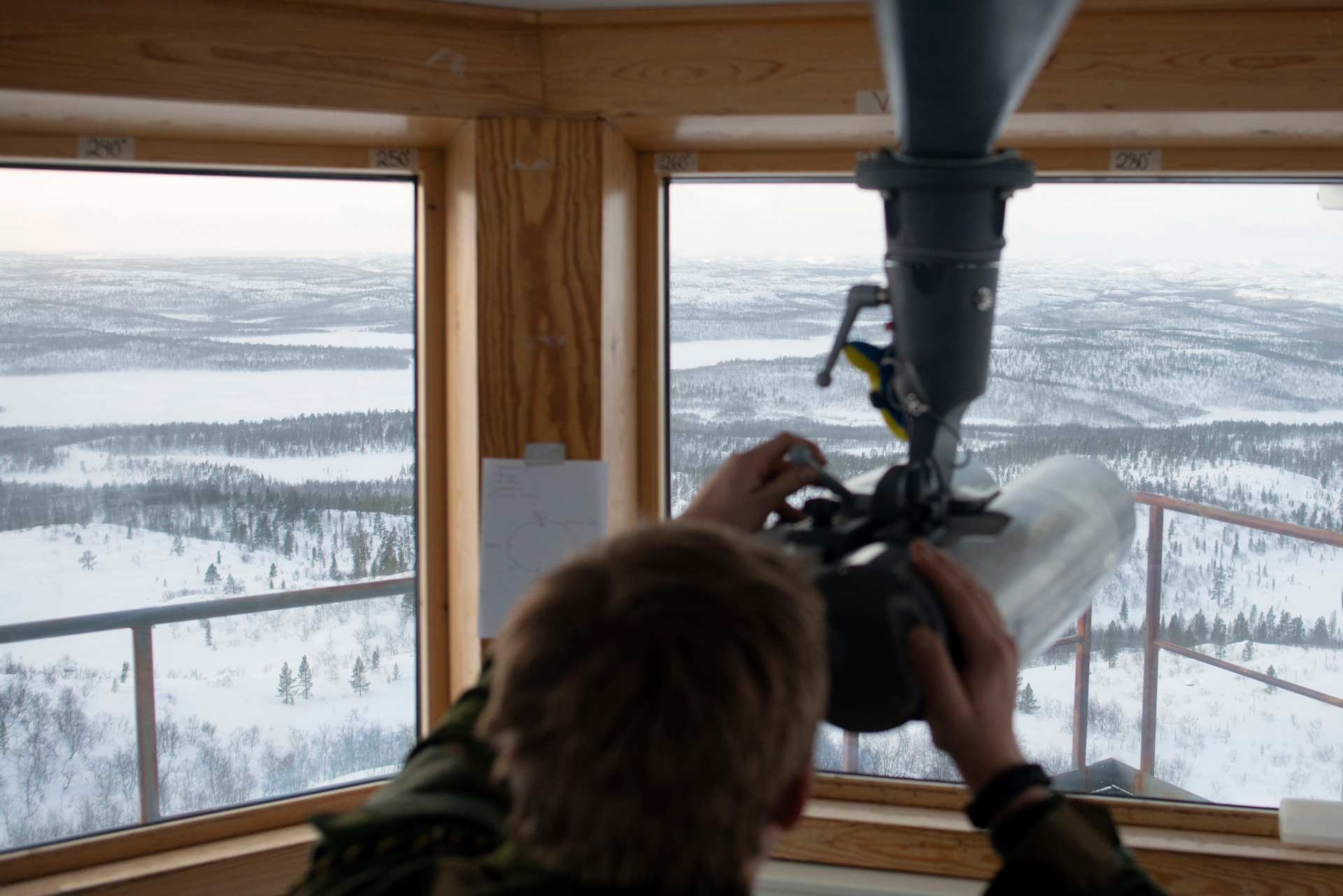
A Norwegian soldier monitoring his country’s border with Russia from an observation post east of Kirkenes in northern Norway, January 2020. Photographer: Louie Palu/Agence VU
As much as NATO needs Finland, the necessity is mutual. Joining doesn’t come without complications for a country that effectively cannot order its conscripts to fight overseas. Nor does a nuclear umbrella necessarily sit easily with the public’s lack of support for hosting such weapons. Yet Finland’s need for the strategic depth that allies would provide means it must navigate such challenges.
In the Winter War, what ultimately forced Finland to make concessions was its lack of international support facing an enemy that could absorb huge losses and keep coming. NATO’s importance is summed up by Nurmi’s initial response when I ask him about life inside the alliance, that Finland had been a member for “what, two years, seven months, and is it six days today?”
Asked the same question, Colonel Ari Mure, inspector of infantry at the Rovajärvi exercise, took out his phone and showed a map of Finland with Russia clearly marked but other neighboring countries as a gray zone, emphasizing pre-NATO isolation. Northern Spike commander Jäntti chimes in that “we will have to do the first four weeks, who knows” if war breaks out, but “mentally, we know that we have support from the alliance.”
As much as Putin casts Finland’s membership in NATO as a provocation, Moscow’s hostility stems from something the Finns can’t change: where they live. “In a war, the Russians are just going to work to keep Finland away from the Baltic fight as much as possible by causing issues in Finland,” Bouffard says. But if “issues” are markers, then war of a kind is here already.
A Finnish Leopard 2 tank conducts live firing at the Rovajärvi range, November 2025. Videographer: Louie Palu/Agence VU
'Peacetime Warfare'
Toveri entered Finnish politics in 2023 after almost 40 years in uniform, spurred on, he says, by “the world’s best recruiter: Mr. Putin.” Finding Parliament more or less united on the topic of defense, he then ran for election to the European Parliament, partly due to Prime Minister Petteri Orpo’s concern that, for all the EU’s growing focus on defense, it didn’t know too much about it. “My prime minister was right,” Toveri deadpans over the phone from Brussels.
While his father was an officer, Toveri says his own military career owes more to an incident at high school in the late 1970s. “One day a girl from my year group — she was an active communist, party member and everything — came to me and said: ‘Well, your father is in the military, so he’s a pig, and since you’re a pig’s son, you’re a pig, too.’” He resolved, he says, to “go to the military and take care that people like you never take control of this country.”
More than Russian tanks, Toveri is concerned with “attacking from the inside.” This is the West’s weakness writ large, given the rise of populist movements, anti-social media and violent incidents such as the Jan. 6 insurrection attempt in the US. Small and relatively homogeneous, the Finnish nation isn’t an easy target for scammers and misinformation. Its famously daunting language — the author JRR Tolkien drew on it to create elvish — is a shield of its own. “As soon as the Russians start writing, even Twitter, you think ‘OK, this guy is not a Finn,’” Toveri says.
That doesn’t stop Moscow from trying. In January 2025, weeks after an oil tanker suspected of being part of Russia’s “shadow fleet” allegedly damaged a major power cable between Finland and Estonia, Stubb told a NATO gathering that Europe now existed in a strange state of neither peace nor war. The alliance was announcing a new naval operation, Baltic Sentry, to counter underwater sabotage. Several more telecom cables were damaged this winter.
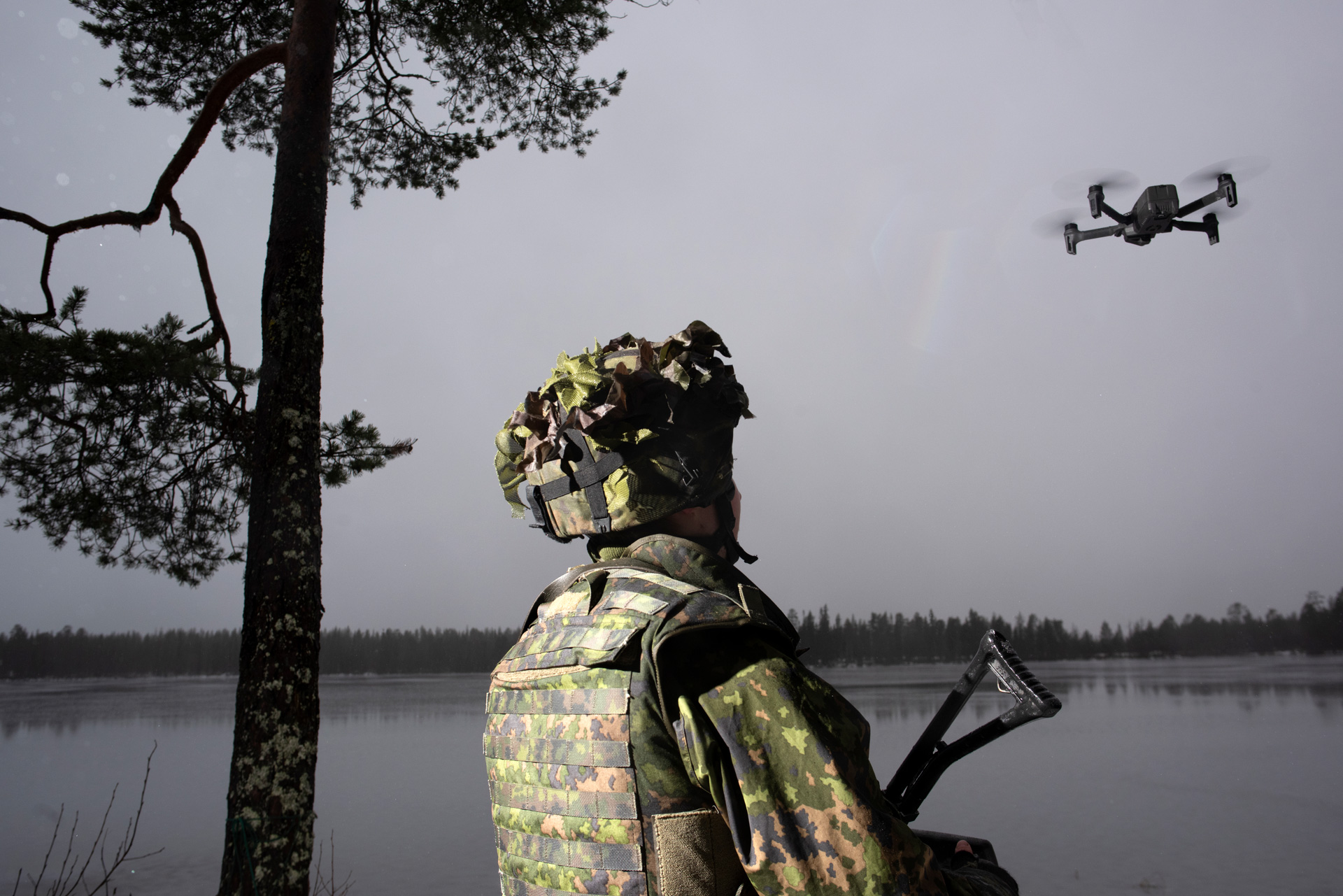
Aaro Salo, a Finnish soldier, operating a surveillance drone at the Rovajärvi range, November 2025. Photographer: Louie Palu/Agence VU
Hybrid attacks are a cocktail of destabilization and deniability, unsettling populations and creating an impression of a strong aggressor and a powerless target. The Center for European Policy’s Ålander has tracked multiple Russian campaigns of what she calls “peacetime warfare.”
You’ve heard of cable cutting but how about weaponized real estate? After Finland relaxed foreign-ownership rules in the early 2000s, Russian entities began buying property close to strategic installations. One amassed island and coastal sites astride major sea-routes, even installing a helipad. Finland tightened its ownership laws again in 2020 and effectively banned property sales to non-resident Russians altogether last year.
“They’re not as good at understanding our strengths, but they do understand our weaknesses,” Ålander says. Yes, ownership rules were tightened back up, but it took nearly two decades, allowing Russia to exploit Finland’s attachment to open markets and parliamentary process. Similarly, she recalls a “very, very divisive” domestic debate over how to handle targeted migration.
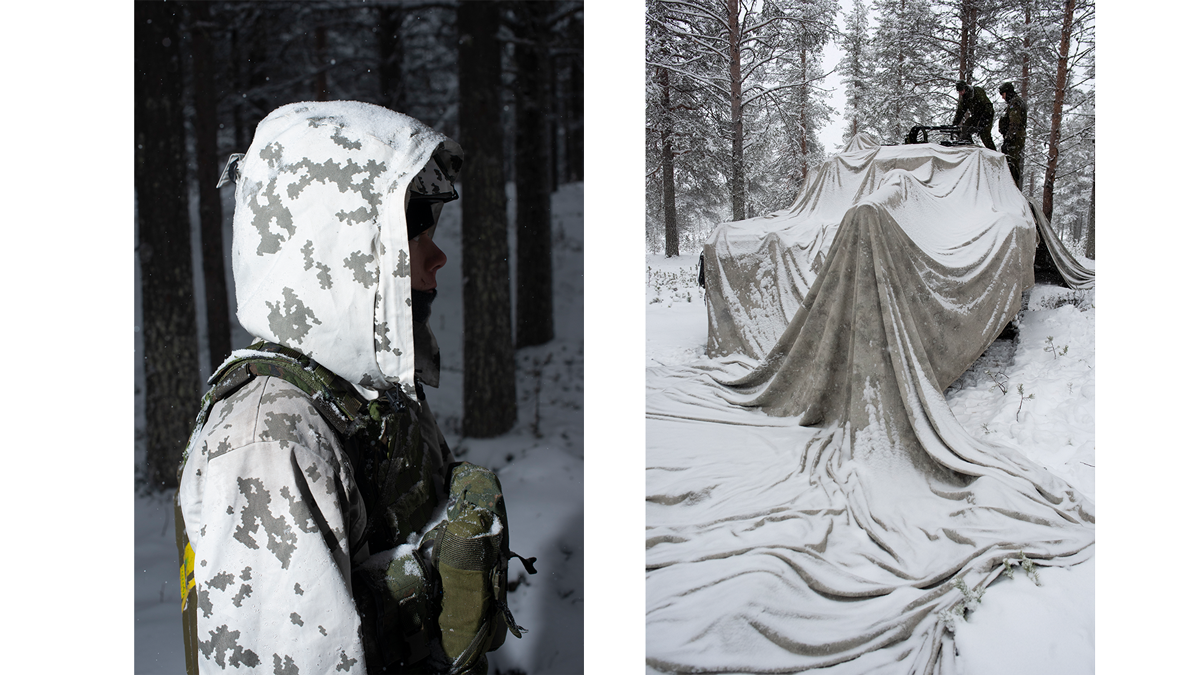
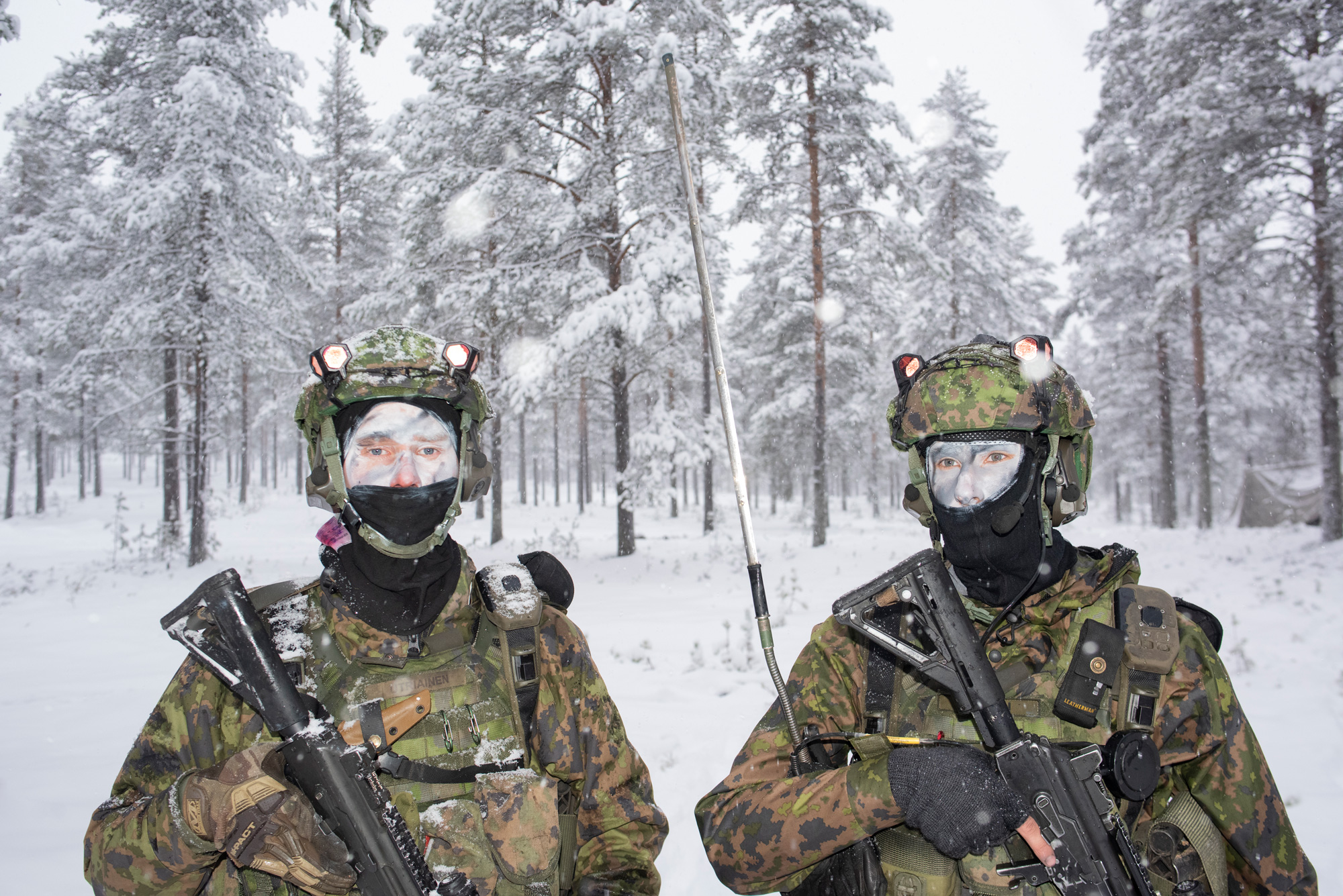
A Finnish soldier wearing camouflage whites (left) and a Finnish Leopard 2 tank under a camouflage tarp (right), at the Rovajärvi range, November 2025. Photographer: Louie Palu/Agence VU
Finland’s total defense model necessarily extends to the virtual world. Media and information literacy has been taught as a core part of the country’s school curriculum for the past decade, starting with the very youngest who, after all, “are using daddy’s iPad,” says Kari Kivinen, a former school principal in Helsinki and expert on digital literacy. Students are taught to approach the barrage of online content with a more judicious mindset that can be summed up as “stop, think, check.”
It seems to work: Finland regularly tops the Media Literacy Index, although Denmark just nudged into first place by less than one point in the latest ranking. Kivinen cautions, however, that “we are shooting at a fast-moving object,” noting the explosion of online deepfakes. The sealed border I saw cannot stop Russian disinformation across the ether; in Salla I was warned to watch out for my cellphone jumping unexpectedly to a Russian network. Even the protection afforded by that fiendish Finnish grammar is being eroded: “AI has broken the language barrier,” he says.
Media Literacy Reflects Strong Education and Independent Press
Source: Media Literacy Index 2026
Regardless, Finland remains at the forefront of efforts to fend off online attacks and encroachment. Its few “cluster one” peers include its Nordic neighbors; meanwhile, prime targets of Russian disinformation such as Germany, France, the UK and US score as much more vulnerable. The very concept of teaching media literacy in the US would be treated as a political attack by many parents (as American teachers have told Kivinen). Despite controversies such as Elon Musk’s Grok chatbot being used to create sexualized images of people, the Trump administration responded to the EU’s Digital Services Act, which forces tech giants to police illegal content more aggressively, with visa bans for several European officials.
Indeed, the US pressure campaign to wrest control of Greenland is itself a form of West-on-West hybrid warfare. Trump has employed a mix of shifting narratives — minerals, national security, the Nobel Peace Prize — with ambiguous threats and asymmetric weapons (tariffs) to sow confusion, incredulity and fear among allies. In doing so, he offered Russia an opportunity to pile on, with Foreign Minister Sergei Lavrov equating Greenland’s importance to the US with occupied Crimea’s to Russia.
The biggest casualty of such Western infighting is a crucial quality that the Finns, for now, still have in abundance: trust.
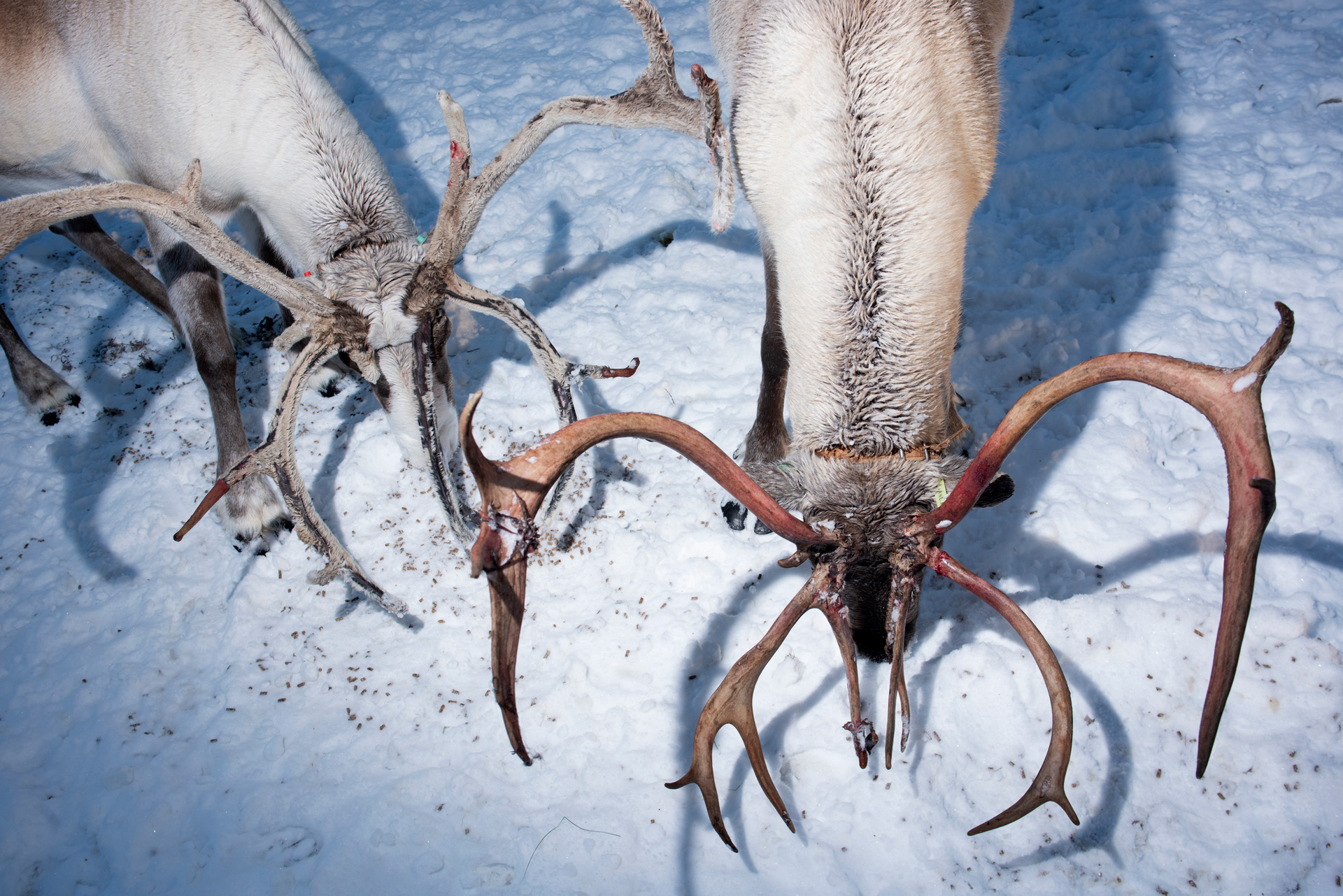
Reindeer eating food pellets at a farm in Kelloselkä, a village in the municipality of Salla, close to Finland’s border with Russia, November 2025. Photographer: Louie Palu/Agence VU
Wolves at the Door
When I reach Salla after several days with the military, the wolf is literally at the door.
Raisa Aatsinki herds reindeer with her husband on a family farm in between the town and the frontier. Besides meat, the skins are raw material for the belts, purses and jackets she fashions in a workshop out back. Feeding time in the snow-covered paddock has a Disneyesque quality. Their livestock wander about us, enormous antlers swinging, hooves clicking — the sound helps them to find each other in a blizzard — and occasionally nibbling lichen from Aatsinki’s outstretched hand. She explains that as more Russian men have gone south to fight in Ukraine, fewer hunters remain across the nearby border to keep the wolfpacks in check. Her reindeer, as docile as the seemingly oblivious creatures I had to swerve around on Lapland’s highways, make tempting targets for these predators, which, like certain residents of the Kremlin, care little for lines on a map.
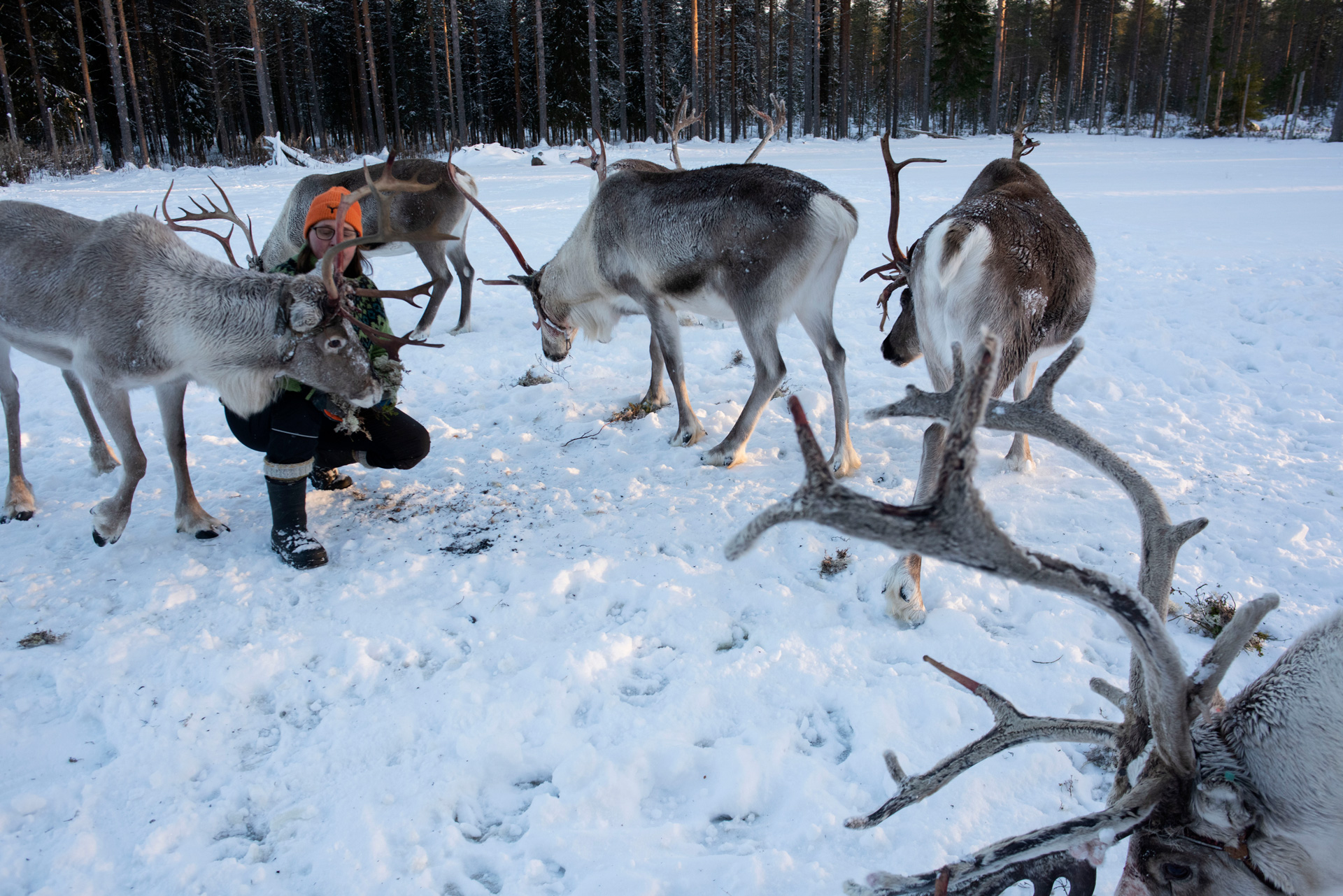
Raisa Aatsinki, a reindeer farmer, feeds her herd in a paddock in Kelloselkä, close to Finland’s border with Russia, November 2025. Photographer: Louie Palu/Agence VU
Asked how she protects the herd, she laughs: “We trust to God.” Later, drinking coffee in her kitchen, I ask how she feels about living near that border. This time, she puts her trust in the military. There is no trace of the anxiety or anger I expected. Rather, an air of disappointment: She remembers friends beyond the closed gates and her daughters crossing to play in basketball tournaments.
Salla is a microcosm of Finland’s exposure to the complications of its eastern neighbor. Near the town hall, I pass a Teboil-branded gas station owned by Russian oil giant Lukoil PJSC, its pumps running dry due to sanctions. A local outdoors gear store, Tuntsa kauppa, is having trouble sourcing camo fabric for its line of tents as defense departments snap up supplies. After four decades in business, the website declares up top Liiketoimintamme on myytävänä! (“Our business is for sale!”) for any interested browsers.
Mayor Erkki Parkkinen brought Salla a measure of international fame some years back with a spoof bid to host the Summer Olympics, highlighting climate change in the Arctic. He is also known for officiating weddings out in the local landscape, earning him the unlikely sobriquet of Salla’s “Arctic romantic hero.” Parkkinen has roots in both the indigenous Sámi people and the formerly Finnish town of Alakurtti, 50 miles to the east and now home to a base hosting a key Russian army unit, the 80th Arctic Motorized Brigade. After a lunch of stewed moose at the Evakko — “evacuee” — Pub, we toured a field on Salla’s outskirts where boulders jut from the snow like crude gravestones, remnants of the Salpa Line of fortifications thrown up after the Winter War.
Training in the Middle of Nowhere
Sources: National Land Survey of Finland, Finnish Transport Infrastructure Agency
Despite the clear memory of war and the growing threat of it, Parkkinen’s priorities are more prosaic. The break with Russia hit a Finnish economy that had been sluggish for years. Tourist crossings at Salla peaked in 2013, just before Putin annexed Crimea. Parkinnen is working to get an old railroad reopened from Kemijärvi, 40 miles to the west, to bring in visitors coming up on the main line from southern Finland. He hopes its dual importance as a potential logistical route for the military will speed things along. Meanwhile, his administrative director, Seppo Selkälä, hopes to develop a high-end resort. Being “in the middle of nowhere” is cute advertising, but it also means high living costs and a perceived lack of attention from Helsinki.
As for Russia, Parkinnen has confidence in the military and, like the senior officers I spoke with, NATO membership. “It’s quite normal, our life; we are not afraid,” he says with an equanimity that has become familiar. Selkälä, with the perspective of someone who returned home after many years studying and working in China, puts this down to something quite simple: “People in general trust each other quite well.”
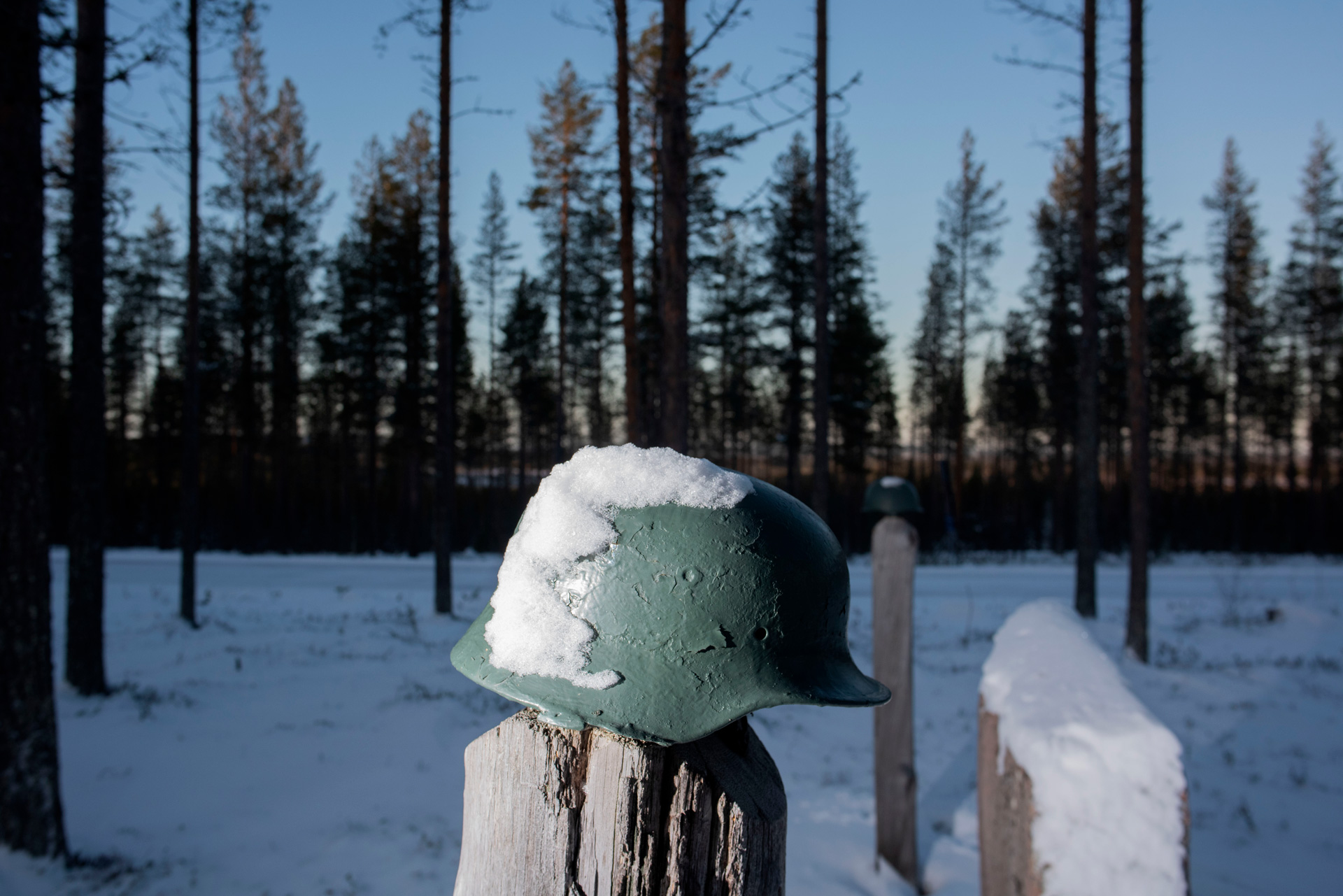
A helmet mounted at a memorial to soldiers who fought in the Winter War of 1939-40, including Finns plus Swedish and Norwegian volunteers, in Salla, November 2025. Photographer: Louie Palu/Agence VU
In Finland, trust is both an antibody arising from a common threat and an institutional construct requiring ceaseless work. Conscription is one manifestation, along with Finland’s extensive network of sophisticated civil defense shelters.
So, too, is the Nordic welfare model, including the sort of high-quality education that makes digital literacy possible. The relative equality of wellbeing underpins a sense of security and trust. Finns even score highly, fifth in the world, in their expectations of having a lost wallet returned by strangers. (The US ranks 52nd, below Russia as it happens.)
Finland famously tops the World Happiness Ranking year after year. That can seem quaint, sure. But Finns’ willingness to defend their country also polls far higher than in most other countries, especially in Europe. Perhaps such willingness reflects their belief that they have something worth defending.
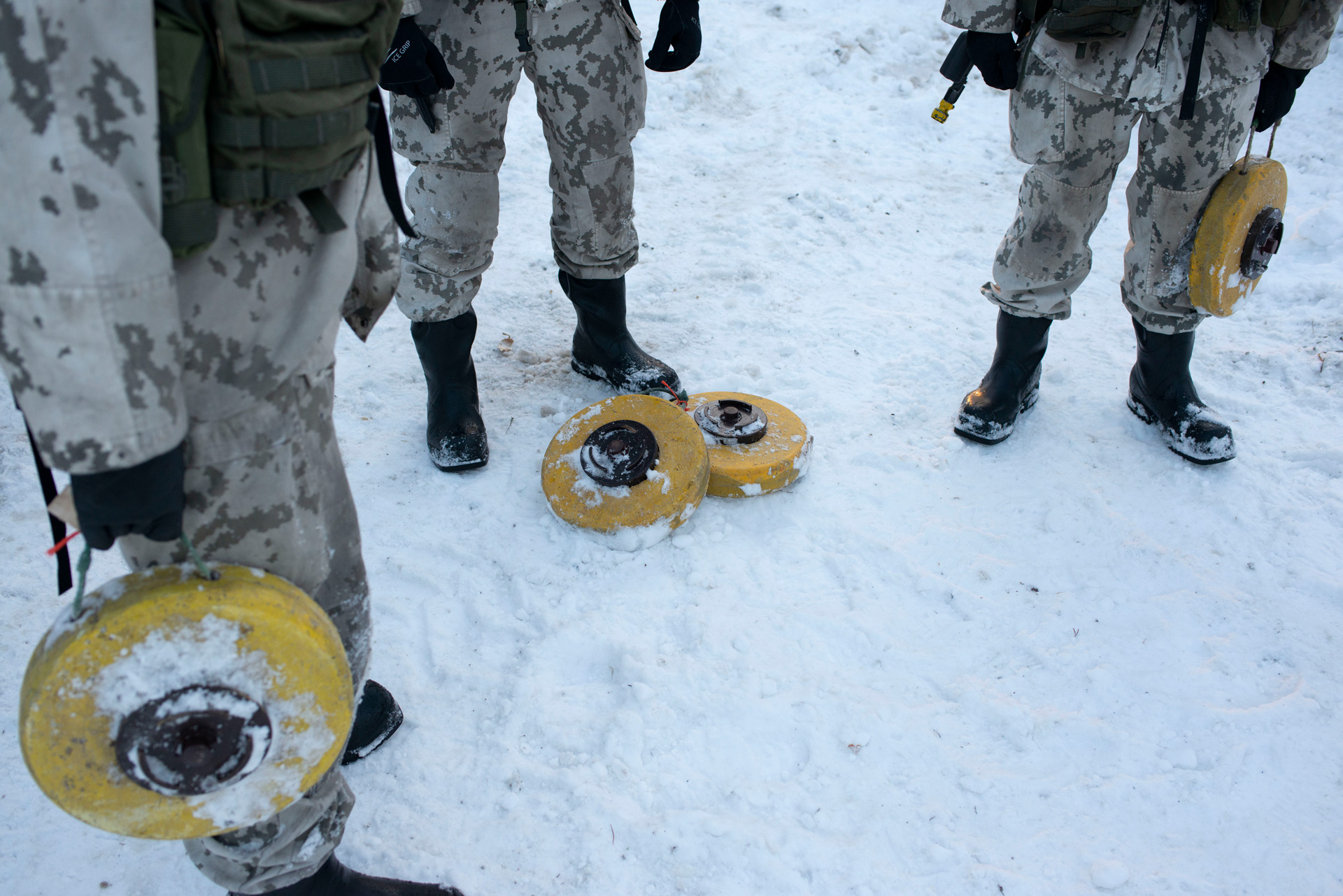
Finnish soldiers training with anti-tank mines on a road during an exercise with Swedish and Norwegian soldiers in Norbotten, northern Sweden, March 2019. Photographer: Louie Palu/Agence VU
While the advantages of Finland’s total defense model seem clear, “the question is more about why it is so hard for the rest of Europe to translate that in an actionable way,” says Peter Olive, a retired commodore in the Royal Navy who helped get the Joint Expeditionary Force (JEF) going. Established in 2014, the JEF is a more flexible military grouping, distinct from NATO, for Europe’s “beer drinking nations of the north,” a moniker relayed to me by Matthew Palmer, a former British Army officer who also worked with the organization. (And yes, they drink beer in Finland.)
Weapons are one thing, but you can’t export culture in a crate. Germany’s newly unleashed defense budget, for example, is momentously important. But billions of euros alone can’t fix the problem of only a sixth of Germans, raised on pacifism, being “definitely” willing to defend their country. Olive, meanwhile, notes a troubling disconnect in the UK between words and action: “If you were to look at our last defense review and the lofty words in it, you’d assume you’d walk onto Whitehall and there’d be sandbags out.”
The establishment of the JEF is a hopeful sign that European countries can institute military coordination beyond NATO’s confines — a more pressing concern these days.
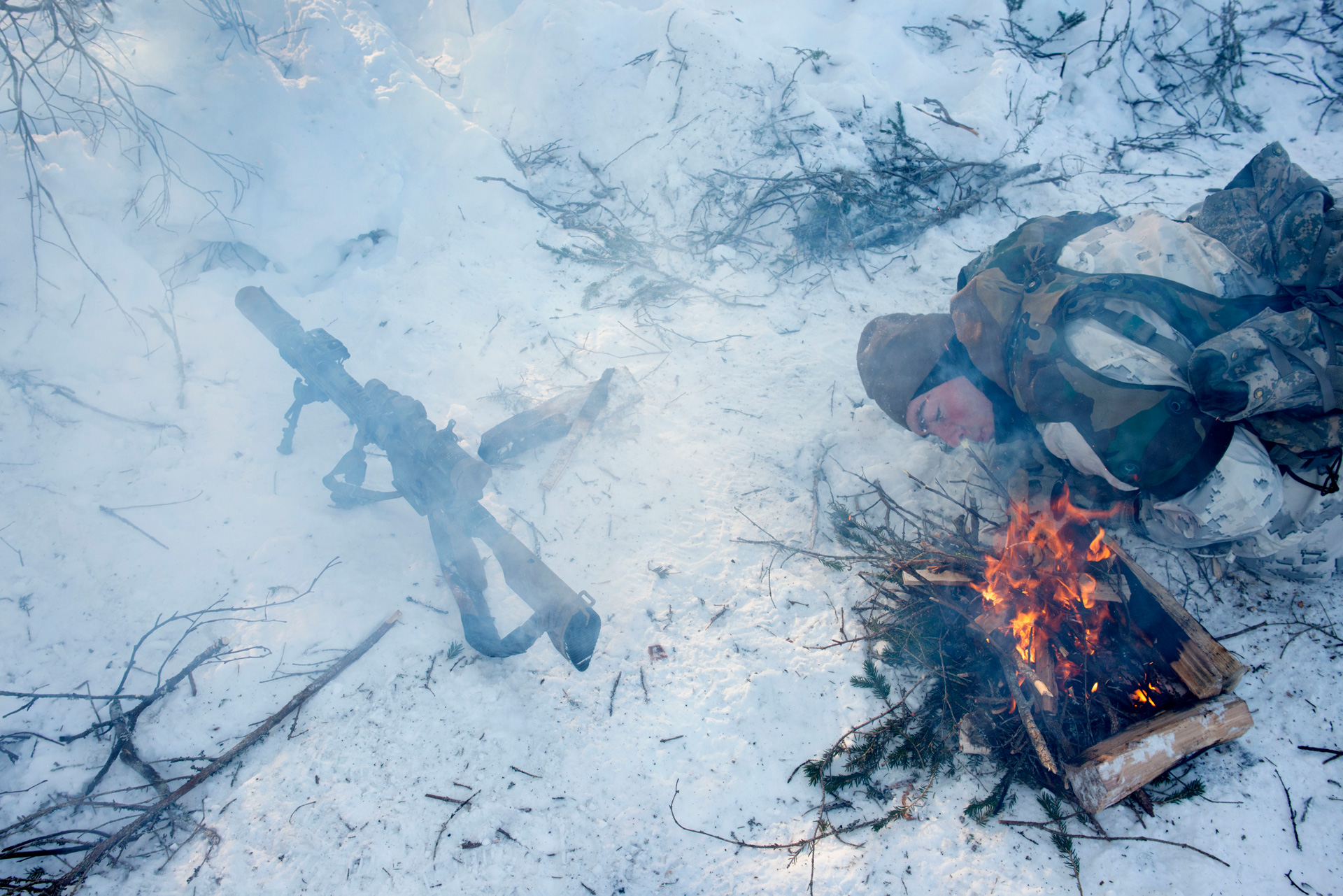
A US soldier learning how to start a fire while training for winter warfare at the Finnish Army’s Sodankylä training area in Lapland, northern Finland, February 2023. Photographer: Louie Palu/Agence VU
Meanwhile, some European countries have reintroduced conscription or are considering doing so. Sweden brought it back in 2018 after suspending it only eight years before, and Latvia reintroduced it in 2023. France and Germany will take baby steps this year with new, voluntary military service programs.
Putting all youngsters in uniform isn’t necessarily useful everywhere; for example, it seems less of a priority for the UK, traditionally a maritime and air-defense bastion for NATO. But conscription could still prove useful in more nations, provided it is part of a wider effort at motivation a la Finland, rather than a blunt tool to instill fiber into a perceived mass of “soft” or “aimless” citizens. As Florence Gaub and Roderick Parkes of the NATO Defense College wrote recently, the will to fight isn’t a fixed quantity but instead a “social potential: something that can be cultivated or suppressed.”
The border with Russia is a 20-minute drive from the Lapland village of Salla. Videographer: Louie Palu/Agence VU
Evidence of cultivation is hard to find these days despite the looming threats. Look at leaders in major European countries struggling to fend off far-right, and often pro-Russian, parties. Or Trump trashing trust in the US commitment to NATO, and even basic respect of sovereignty, as well as politicizing the military, one of the last US public institutions enjoying broad trust, with deployments to Democratic-run cities. Or the anxiety about the cost of living and middle-class retreat that spans the Atlantic. The fight may well eventually be in NATO’s frozen northeast, but these frontlines crisscross the West already.
Once balanced between East and West, Finland is now poised between the relative certainties of an old order and the chaotic tendencies of whatever is now emerging. Stubb captured this in a recent essay for Foreign Affairs titled, ominously, “The West’s Last Chance.” It is a plea to preserve and reform multilateralism from a leader who recognizes that spheres of influence are hazardous for small nations at the edge of those spheres. Stubb calls on the rest of the West to convince the ever more transactional US, as well as the Global South, that postwar institutions are worth the effort. Even given the unlikely rapport that Stubb has struck up with Trump, that seems a tall order.
As ever, Finland must hedge its bets with a strong dose of self-reliance — this time backed by a wider set of European countries growing more willing to do the same. Speaking at the World Economic Forum in Davos earlier this year, a gathering overshadowed by Trump’s threats against Greenland, Stubb said that “Europe needs to use this moment.” That means not just rebuilding the continent’s military independence but rejuvenating its sinews of industrial capacity and, even harder, the common purpose underpinning them. On this, Finland can teach much, but it urgently needs more keen and motivated students.
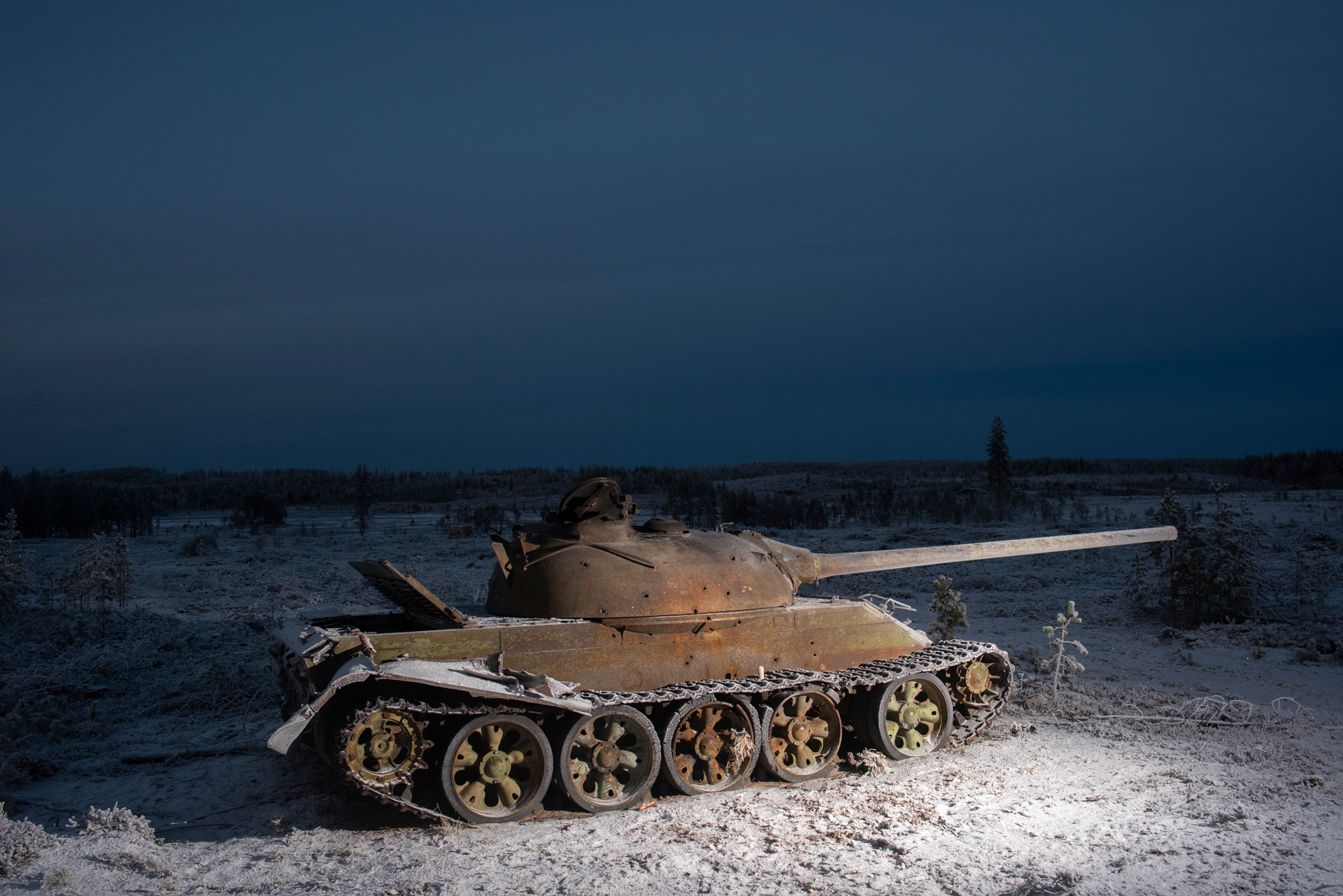
A heavily damaged and rusting Soviet tank from the Cold War era, used for target practice at the Rovajärvi range, November 2025. Photographer: Louie Palu/Agence VU
–With assistance from Taylor Tyson
This column does not necessarily reflect the opinion of the editorial board or Bloomberg LP and its owners.