
Boston’s Michelle Wu Is a Model Wartime Mayor
On the bright, brisk morning of March 5, Boston celebrated the anniversary of the Boston Massacre. In 1770, a band of skittish British troops killed five members of an angry mob in occupied Boston, igniting one in a series of powder kegs leading to rebellion. To commemorate the occasion, Mayor Michelle Wu appeared before dozens of fourth graders and other guests at the Old State House in downtown Boston.
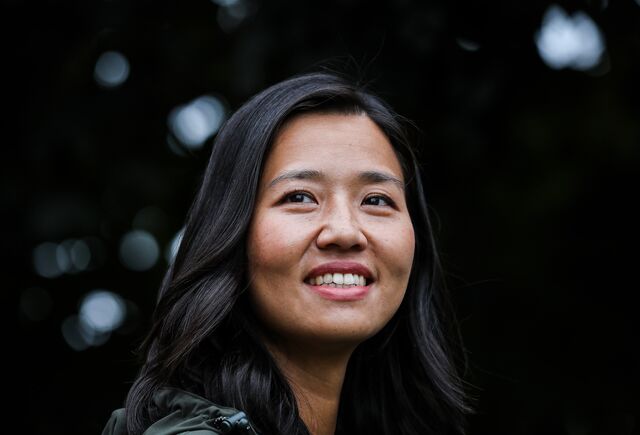
Wu, 41, is a transplant from Michael Jordan’s Chicago whose mayoralty might well have been inconceivable to previous generations of Celtics fans. Boston’s first female and first non-White mayor, she is a self-made super-achiever with two degrees from Harvard University. She is also the wartime Democratic mayor of a city that has been targeted by President Donald Trump and his MAGA movement, whose resentment of liberal eggheads fuels federal policy as well as politics. This spring the city is launching a new marketing campaign — “You Can’t Beat Boston.” Yet as long as MAGA remains in power, and Boston remains a global capital of learning, that claim will be tested.
Wu speaks of her adopted city as a kind of civic superhero. In her oft-repeated telling, Boston marches to the beat of a righteous syncopation that less courageous, less determined, less freedom-loving, less socially astute, less Boston locales can only regard with awe and humility. She wields her city’s estimable history as sword and shield against reactionary politics past and present.
“We didn’t back down when it came to confronting a tyrant king and founding a nation. We didn’t back down when it came to the fight to end slavery,” Wu said in the colonial-era Council Chamber at the Old State House, where regal portraits of Charles I and James II condescended from perches on the wall above each of her shoulders.
For a politician, Wu seems oddly comfortable ceding attention, which she does frequently at public events. One admirer told me of watching Wu at a community clean-up actually picking up trash, often wandering off alone to hunt down litter. When I met her at a coffee shop in March, she scrupulously bussed the table when our time was up. Two staff members stood by.
“It’s weird to say about a mayor, but she’s not someone who calls attention to herself,” said Erin O’Brien, a political scientist at the University of Massachusetts Boston.
Despite displays of public modesty, Wu is a forceful and commanding presence in the city where she has been mayor since 2021. Members of the local real estate industry, which blames Wu’s affordability and energy efficiency regulations for impeding new construction, complain that she is steely and unyielding. Wealthy businessmen, traditionally accustomed to dropping by City Hall to work a little something out, have found Wu less congenial than her predecessors.
But in public Wu comes off largely as a happy warrior, dispensing ready smiles and political hugs to the constituents she has vowed to serve and protect from harm. “We will never back down when it comes to preserving our history, protecting our people,” Wu said at the Old State House, “and that includes all our people.”
The greatest threat to Boston’s people, 256 years after the Boston Massacre, might be another remote ruling power. The MAGAfication of Washington, DC, has produced a federal government at war with its cities. While exurban and southern bastions of the GOP have embraced ethno-nationalism and a social hierarchy topped by White Christian males, US cities and their near suburbs, especially in the nation’s most prosperous and economically productive cosmopolitan areas, have continued racing in the opposite direction — bolstering civic commitments to immigration, diversity and multiculturalism.
Minneapolis, where residents continue a grinding civic resistance to Trump’s masked paramilitary, proves the case daily. Meanwhile, Wu, like New York City’s new mayor, Zohran Mamdani, is an increasingly visible champion, and symbol, of the values that Minneapolis has defended in the streets.
Much more than cultural turf is at stake. Cosmopolitan America has made the most of three powerful attributes that the US carried into the 21st century. First, world-class higher education. Second, the world’s most dynamic and innovative bio-medical and tech infrastructure. Third, the deployment of those preeminent “eds and meds” to attract the world’s most talented immigrants, who, in a virtuous circle, reinforced the intellectual and economic capital that drew them in the first place.
Boston’s affluence is a product of that munificent cocktail. The proximity of elite universities, stellar research hospitals and a bustling academic-entrepreneurial pipeline that gave birth to technology, pharmaceutical and bio start-ups catapulted Boston from a depleted 20th-century straggler beset by racial and economic divisions to the forefront of 21st-century urban America. Since 1980, Boston’s population has grown by more than 100,000 residents, to 675,000.
Boston became a multiracial city in the process. Since 1980, the number of Hispanics has more than tripled; Asians have more than quintupled. The White population has also risen, although its share of population fell from more than two-thirds of the city in 1980 to less than half today. Blacks have held relatively steady, although many working-class Boston Blacks have migrated to more affordable places, while Haitians, now Boston’s third-largest foreign-born cohort, and other immigrants moved in.
Once notorious for insularity, Boston today is almost 28% foreign-born. Wu “looks the way Boston looks now,” said O’Brien, the political scientist.
Boston Combines Education, Innovation and Global Talent
Demographic and economic characteristics of the 25 largest US cities

Median household income in the city has risen to more than $97,000. A majority of Boston residents has a bachelor’s degree or more. For Trump, who has spoken of his ardor for the “poorly educated,” that’s a concern: The more education an American has, the less likely they are to vote for Trump. Higher education, Vice President JD Vance has said, is MAGA’s “enemy.”
The MAGA assault on higher education, immigration and bio-medical research is an attack on blue America’s prosperity, designed to diminish the economic power and social clout of liberal cohorts while simultaneously defunding Democratic cities and causes. The economic hit, if Trump manages to sustain his attack, is potentially enormous. Counties won by the Democrat in the past three presidential elections represented at least 62% of the nation’s gross domestic product.
Massachusetts is the third-largest recipient of National Institutes of Health funding and ranks fifth among states in the share of immigrants in its population. According to one estimate, NIH funding alone supports 28,000 jobs and $7 billion in economic activity in the state, with Boston as the epicenter. Among US cities, Boston ranks second in total NIH funding only to New York, which has 12 times Boston’s population. Within months of Trump taking office in 2025, some $2.6 billion in NIH and National Science Foundation grants had been canceled in Massachusetts, often in cases where significant research was well underway.
Under the barrage of hostility from Washington, foreign researchers who would have gravitated to Boston or other US cities pre-MAGA found offers from Canada, Europe and elsewhere more enticing. In a MassINC/Boston Globe survey of 4,000 Massachusetts scientists with NIH funding, 26% reported having colleagues or research staff who had left the US. Demand for lab space in Greater Boston, already overbuilt before Trump’s assault, has collapsed, with lab vacancy above 40% in the city. Mark Melnik, director of the Economic & Public Policy Research group at the UMass Amherst Donahue Institute, called the federal attack on research “a threat to our global competitiveness now and in the long term.”
The quackery of MAGA officials may be offensive to scientists, academics and other peer-reviewed and reality-based populations. But in Boston, the MAGA campaign to destroy research and innovation is not just a moral calamity and rising menace to public health. It is economic warfare.
The Antithesis of Trump
Just as educated, immigrant-rich, liberal Boston is the antithesis of Trumpism, Wu is in many ways the antithesis of Trump.
Both sets of Wu’s grandparents emigrated from mainland China to Taiwan during China’s civil war. Her maternal grandfather was a general in the Kuomintang, the nationalist army that fled to Taiwan after having been routed by communist forces. Her paternal grandfather was a graduate of Beijing University, a rare distinction in a land where the vast majority was illiterate.
Wu is the eldest daughter of Taiwanese immigrants who settled in Chicago, where her father pursued a doctorate in chemical engineering and her mother worked in a library in Chinatown. Neither spoke English when they arrived. Wu attended public school before graduating from Harvard University and Harvard Law School. After college, she returned to Chicago to take care of her younger sisters when her mother experienced mental illness. Stranded back home, she opened a tea house to help support the family. Somewhere along the way, she also acquired concert-level skill as a pianist. Since becoming mayor, she has moved a piano into her office and performed with the Boston Symphony Orchestra. She speaks Mandarin and Spanish and can “manage” in French. She is learning Haitian creole.
“When I met Michelle, she was already managing care for her mother, who has mental health issues. She was the legal guardian for her sister, who was in high school in Boston Public Schools. She was at Harvard Law School and working in a bank to make money that summer. Also, she had a boyfriend who she’s now married to. To say she’s ‘high functioning’ is an understatement,” said Heather Campion, a managing director at an executive search firm, who has deep roots in Boston politics and business.
Wu has three young children, including an infant born in January last year. Her mother lives in a first-floor unit in Wu’s house. (The mayor needs no briefing on the stresses of the sandwich generation.) Bostonians have grown accustomed to seeing their mayor holding a baby over one shoulder while delivering a speech.
Wu is also unabashedly political. She cultivated powerful political mentors in her former law school professor Elizabeth Warren and former Boston Mayor Thomas Menino. (Wu brought her newborn to visit Menino’s widow, Angela, and posted the video online.) The city council is well-stocked with her allies. She has encouraged primary challenges to legislators whom she finds particularly vexing. She speaks regularly with her friend Aaron Michlewitz, a powerful state legislator who is reputed to be next in line for speaker of the Massachusetts House.
Wu’s relationship with Governor Maura Healey appears markedly less warm, and she has struggled and largely failed to win over the state Senate, which has resisted her efforts to shift the local tax base from residential taxpayers to the struggling commercial sector. Her effort to wedge bike lanes into Boston’s often narrow streets was met with public grumbling, and the decline in commercial real estate, exacerbated by Trump’s attacks on universities and bio-medical research, has contributed to a budget crunch. Boston, clotted with schools, foundations, state government, museums and more, has a large amount of untaxed real estate.
Yet Wu remains popular and politically dominant. At a city government event to connect Roxbury residents to city services, I had a lengthy chat with two long-time Roxbury residents. Each articulated objections to certain Wu policies while giving her a strong overall vote of confidence. Wu, they said, mostly listens to the community and tries to do right. “I give her credit,” said Andrea Walker, who said she has lived for 34 years in Roxbury and feels pinched by residential taxes. “We have been getting things done on the street. Boston Water and Sewer have come out and flushed the drains.”
Wu’s network penetrates neighborhoods across the city, the result of years of campaigning for herself and others. “She was a ferocious campaigner even before she was an elected official — for Hillary and Obama, for Elizabeth Warren and for her colleague Ayanna Pressley,” said Charles Baker, a veteran Democratic operative in Boston. “She gets into the nitty gritty of actually organizing campaigning, which is interesting. It’s not a surface-level commitment.”
My interview with Wu produced some time-tested talking points that I could have copied verbatim from previously published comments. “This is a city where you can’t fake it. You can’t get away with not following through,” Wu told me, as she has told others. “That’s been true for hundreds of years here in Boston,” she added, casting a benign glow over some of her griftier predecessors, such as the luxury-loving mayor and occasional jailbird James Michael Curley, who most definitely did some faking in his day. When I asked her to name contemporary politicians whom she admires, she stalled before offering up a stable of mayors with minimal national profiles. When I asked if the Democratic Party is an institution that can advance her vision, she said that government should be a force to improve people’s lives and said nothing about the Democratic Party as an agent for such improvements.
Wu’s message discipline — as a city councilor she was known to be more free-wheeling — isn’t much fun for journalists. But she doesn’t shy from calculated risks.
In 2013, one year out of law school, she ran for and won a citywide seat on Boston’s city council. It was audacious but entailed little downside: There wasn’t much for a fledgling campaigner to lose. Then in 2020, as council president, Wu launched a campaign for mayor against incumbent Marty Walsh. An incumbent hadn’t lost a mayor’s race in Boston since the city finally dispensed with Curley in 1949. But in early 2021, Boston’s election year, Walsh left Boston to run the US Department of Labor under President Joe Biden. That left Wu in prime position to win the race.
Her enormous popularity in a city known for tough politics and first-tier political talent has taken many by surprise, not least Josh Kraft and his backers. Kraft, the son of New England Patriots owner and Trump ally Robert Kraft, raised millions from MAGA donors and Wu opponents — many in real estate, where opposition to Wu seems concentrated — for a 2025 mayoral run. He contributed millions more of his own wealth, vastly outspending the incumbent.
In her first mayoral run, in 2021, Wu had trounced her ultimate opponent by a margin of almost 2-to-1. Yet Wu’s margin in the first-round election against Kraft last September was, remarkably, much larger. She won the preliminary election over Kraft by 49 percentage points, capturing all 22 wards in the city.
The lopsided outcome had perhaps been foreshadowed at a June mayoral forum, in a moment that the political tipsheet MASSterList reported had “entered Boston political lore.” When Kraft proved unable to say in which city ward he resided, Wu, seated beside him, helpfully raised three fingers — Ward 3. The Chicago native got the billionaire’s son right where he lived.
After his September drubbing, Kraft abandoned the general election. In a city that prides itself on competitive zeal — You Can’t Beat Boston — Wu proceeded to November’s general election unopposed.
Who Won Out in Boston?
When Colin Diver and his wife returned to live in Boston in 2012, after Diver retired as president of Reed College in Oregon, he said he felt like Rip Van Winkle. “I was a bit stunned at how upscale everything seemed to be,” said Diver, 82, who now lives with his wife in a senior community outside Philadelphia. “All those poor Black people and working-class Irish Catholics and Italians seemed to have largely disappeared and a whole lot of lawyers and computer programmers and medical researchers had taken their places.”
Diver is one of the principal characters of Common Ground, J. Anthony Lukas’s majestic, Pulitzer-Prize-winning history of a city burning itself down in the 1970s. Common Ground analyzes Boston’s demise through the thoughts and actions of three archetypal families — privileged WASP, working-class Irish Catholic and poor Black.
Lukas begins with what the Reverend Martin Luther King Jr. in 1965 called “the vision of the new Boston,” in which the city would become “a testing ground for the ideals of freedom.” The story ends a decade later in a city polarized by class, broken by race and overwhelmed by poverty, crime and the suffocating web of recriminations and resentments that issued from school busing and the integration of Boston Public Schools.
In the early 1970s, Diver was an idealistic Harvard Law School graduate who gave up a lucrative law career to work at Boston City Hall. He and his wife, who went on to lead one of Boston’s preeminent philanthropies, bought a home in a marginal neighborhood, fixed it up and looked forward to raising a family in a revitalized, racially integrated city.
It didn’t pan out that way. After rising to become a top aide to Mayor Kevin White, Diver abandoned City Hall in disillusion and frustration. As the elusive urban renaissance receded from view, the community patrols that the Divers had helped organize in their neighborhood to fend off predators weren’t enough. Crime was commonplace, often violent. The Divers scuttled their dreams of interracial urban harmony and moved to the suburbs, where the neighbors were affluent, the streets were safe and the public schools were not collapsing.
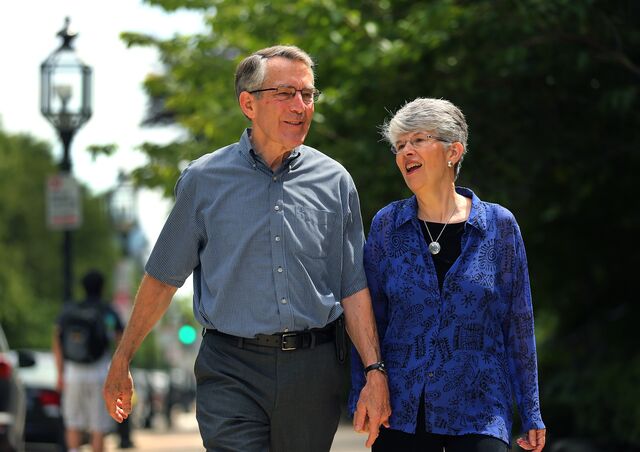
Diver’s gilded career path reflected the extraordinary opportunities available to someone of his talents and background. The book’s other main characters seemed to follow similarly predictable, if not predetermined, paths.
One of the Black Bostonians who fled the city was Rachel Twymon, whose family narrative was as central to Common Ground as the Divers’ story. On a March morning, with mounds of snow clogging the streets, I picked up Twymon in front of her house in New Bedford, Massachusetts, and we drove together to her childhood home in Boston’s Roxbury neighborhood.
“This is all different,” she said as we rolled into Roxbury. In a seeming parody of gentrification, her once hardscrabble block of Columbus Avenue now features a pilates studio and a storefront personal trainer. “I’m not a fan of Boston,” said Twymon, wearing a Boston sweatshirt beneath a pristine green-and-white Celtics jacket. “Boston wasn’t good to me.”
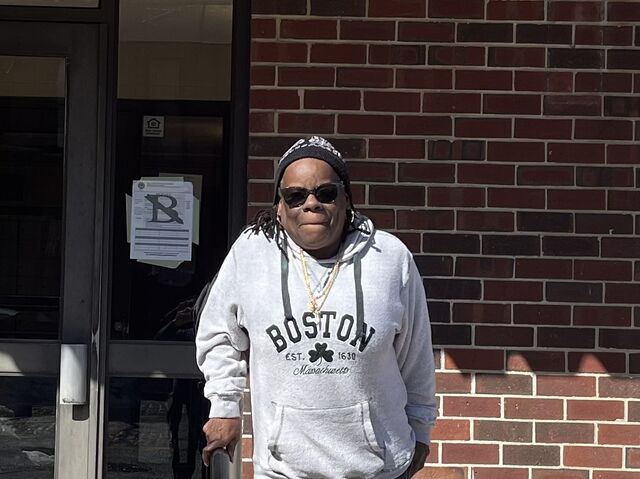
Twymon’s mother, also named Rachel, had physical ailments that prevented her from working regularly. The family lived in a subsidized apartment, surviving on public assistance and the mother’s side income. Rachel, now 64, and her older sister, Cassandra, were bussed to hostile White neighborhoods while navigating a home front that proved every bit as perilous.
If Diver’s Harvard-branded life provided a glide path upward, Twymon’s life was, for many years, a daily struggle for dignity. Her sister Cassandra was part of a group of Black high-school students whose written demands to school officials included: “All racial profanities be removed from school property” and White students stop referring to Blacks and Asians as “n----- and chin--.” Common Ground described Twymon’s teen pregnancy and the subsequent adoption of the baby. But Twymon faults Lukas, who died by suicide in 1997, for failing to probe how she became pregnant.
She said she was raped by an acquaintance of her mother. Her mother, she told me, had required her to accompany the assailant at his job. “My mother sent me to work with this gentleman who raped me and impregnated me,” Twymon said. “She knew who did it.”
After years of struggle, including drug addiction, Twymon rose above her childhood trauma, finding steady work, raising children and buying her own home in New Bedford. She also located the son she had been forced, as an adolescent, to give up for adoption. His name is Tito Jackson, an entrepreneur. He was a member of the Boston City Council from 2011 to 2017, serving alongside Michelle Wu. In 2017, he ran unsuccessfully for mayor.
The final family in the Common Ground trinity were the Irish Catholic McGoffs. Lisa McGoff Collins is still in Boston. She didn’t respond to messages I left at her workplace and on Facebook. In 2007, however, she and her mother were interviewed for an oral history project related to Senator Edward Kennedy of Massachusetts.
“We were poor, blue collar,” her mother, Alice McGoff, said. “Everybody in the town was blue collar, but we were proud of this town.”
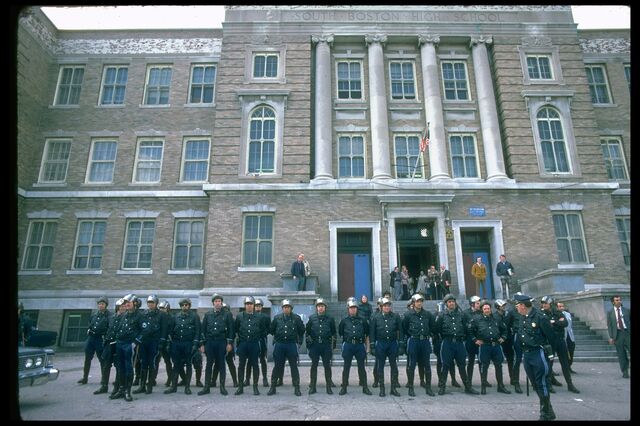
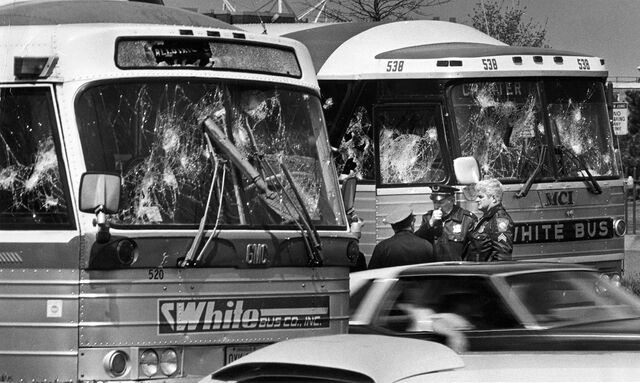
The anti-integration forces of 1970s South Boston and Charlestown were a kind of proto-MAGA — White, tribal and saturated with racial and class resentments. “Deep down, we all knew we were going to lose,” Alice McGoff told an interviewer.
When the city hit bottom in the busing wars, families fled. In one four-year period, Boston public schools lost 20,000 White students. Yet cheap rents, immigrant inflows and the concentration of brainpower at Boston University, Massachusetts Institute of Technology, Harvard and other institutions soon proved a combustible mix. The information economy was tailored to Boston’s strengths; the economic engine refired.
Boston, like other run-down, polarized cities, clawed its way out of poverty and strife. Seemingly intractable Black-White conflict was diffused as new immigrants, and new races, poured in. “People moved in relatively cheaply, and they didn’t really care whether the neighbors wondered which Mass they went to at St. Gregory’s,” said former city councilman Lawrence DiCara, one of Boston’s native historians. “These were not people from the neighborhood. These were people from elsewhere.”
Having once been condemned as broken and unlivable, with White families fleeing, Boston is now condemned for being elitist and unaffordable, with poor, working-class and middle-class families priced out. Disparities are still color-coded. A 2015 study by the Federal Reserve Bank of Boston and other researchers found that White households in the city then had a median wealth of a quarter million dollars. The median wealth of Blacks in Boston, it said, was “close to zero.”
Like Twymon’s old corner of Roxbury, the McGoffs’ Charlestown went upscale. Meanwhile, a Boston Globe survey this year found that South Boston, the longtime bastion of working-class Irish, is now the city’s second richest neighborhood. More than 40% of Southie households earn more than $200,000 a year. Of the archetypes that commanded the 659 pages of Common Ground, neither poor Black nor working-class Irish Catholic won out in the end. Boston was reclaimed by the wealthy and well-educated.
Affordable Housing’s Urban Kryptonite
If Boston is Superman in Wu’s cinematic universe, city government is Superman’s alter-ego, the earnest, workaday reporter Clark Kent. Civic Boston defends history, democracy, freedom and immigrants, fielding champion sports teams along the way. Municipal Boston filled 27,000 potholes, launched three successful fare-free bus lines, achieved a 1.6 percentage point increase in the graduation rate at Boston Public Schools.
Wu’s political origin story is not steeped in human rights, class conflict or the life-and-death consequences of misbegotten wars. It’s about her personal struggle to overcome municipal red tape when she tried to open that tea shop in Chicago. “I felt like no one in government was even acknowledging real life, much less trying to help us,” she told an interviewer when she was on the City Council.
Wu said that one of her administration’s most successful programs is also one of its simplest. “The program that I hear about the most across the entire city is our Boston Family Days program — free museum access for every kid growing up in Boston,” she said. “Being able, as a city, to recognize not only gaps in infrastructure that need to be filled but also the gaps in a general sense of excitement and wonder and belonging in a city is really important.”
The product of a family that felt alienated from government, Wu sees defense of the republic and delivery of municipal services as an integrated mission. “We’re striving to be a high-trust city in the era of Donald Trump, Elon Musk, AI,” she said.
The biggest stumbling block is the real-estate conundrum facing many affluent, high-education cities: How to produce affordable housing in places where the super-wealthy own part-time residences and members of an expansive upper middle-class are willing to spend seven figures on desirable housing.
Housing has been a primary focus for Wu. She directed nearly a quarter billion dollars in federal Covid stimulus funds into affordable housing. She has provided municipal land for construction of affordable homes. She has created long-term incentives to transform a glut of commercial space to residential, a difficult task made somewhat easier by older, narrower buildings, which Boston has in volume. But as in New York, San Francisco and other affluent places, market dynamics are unforgiving to families with modest incomes; city hall has failed to tip the balance in their favor. Public school enrollment in Boston has declined 15% since 2014 as people raising children settle in more affordable places. Wu has said that if she and her husband, Conor Pewarski, had not scraped together enough to buy a home in 2015, they would have been priced out of their Roslindale neighborhood.
While commercial and lab space in Boston is oversupplied, “residential is exactly the opposite,” said Daniel Dain, a Boston real estate lawyer and author of yet another history of Boston. “There are more people who want units than there are units at every price point.” High interest rates, expensive union labor and material costs, Wu’s affordability and energy requirements, which require set-asides for affordable units and energy efficiency, and a looming statewide ballot initiative on rent control are stalling investment, Dain said.
The ballot initiative, which Wu has said she would support in November if the state legislature doesn’t produce a viable alternative, would repeal a state ban on local rent control and cap annual rent increases. The initiative wouldn’t apply to small owner-occupied buildings and includes other exemptions. Dain said that’s not enough to inspire development. “You’re not going to see any money going into apartment buildings until after the election on the ballot initiative in November,” he said. “If it passes, that’s going to kill apartment financing for the foreseeable future.”
Dain said Wu may be the smartest mayor in Boston history and characterized her administration as “highly competent.” But in Boston, as elsewhere, an elemental force is at work: Times, and people, have changed. More residents, with more money to spend, simply demand more and better space. Boston buildings were once crammed with poor and working-class lodgers. Mid-20th century spaces that housed a half dozen family members are now home to an unmarried professional or a childless couple. Meanwhile, tax assessments rise beyond the means of longtime residents, and renters are pushed out as apartments are converted and sold. “We were a poor city. As recently as 1950 or 1960 we were at the very bottom in terms of per capita income. Now, we’re sort of close to the top,” Lawrence DiCara said. “The demographics of the city have changed.”
Filling Potholes, Rebuilding Trust
The anniversary of the Boston Massacre is known as Crispus Attucks Day in Boston. It honors Attucks, a one-time slave of mixed African and Native American parentage who was the first Bostonian — one might say American — slain by British troops. Crispus Attucks Day is not the creation of woke 21st-century liberals trying to jostle the math of revolutionary glory. It was the creation of 19th-century abolitionists trying to move a Black man from history’s wings to center stage and showcase his role in the birth of the nation. Crispus Attucks Day was a bit of clever marketing, and belated justice, to leverage against the slaveocracy as the Civil War approached.
Watching a female Asian-American mayor at the public lectern celebrating Crispus Attucks is a remarkable piece of democratic theater. In a city known as the cradle of liberty, a woman, whose talents not long ago would also have been relegated to the wings, stands on democracy’s center stage. She honors a Black man who was once subjugated, then forgotten, but who now holds an honored place beside her. Present in that scene is much of the gnarled history of the US and a sizable tranche of the contemporary political struggle over which groups command the spotlight, and direct the drama, in American life.
Exactly one year before, on March 5, 2025, Crispus Attucks Day fell on Ash Wednesday. Wu, only weeks from having given birth to her daughter, was in Washington, DC, appearing before the US House Committee on Oversight and Accountability chaired by Republican Representative James Comer. The Ash Wednesday hearing was convened to enable Republicans once again to brandish photographs of Americans killed by undocumented immigrants while denouncing three Democratic mayors of so-called sanctuary cities — Boston, Denver and Chicago — as political accomplices to the crimes.
Given Comer’s history of show trials, some of Wu’s supporters urged her not to attend. “It is objectively true that when you’re faced with a retaliatory and law-agnostic federal government, the cost-benefit analysis usually points to keeping your mouth shut,” Wu said. “Yet that is how our democracy slips away.”
Wu said she took her cue from constituents. “I met with just about every immigrant group that we could, to ask those residents who have most intensely been under pressure and targeted and attacked what they would like their city to do,” Wu recalled. “And in Boston the response came out loud and clear from all of those community members: ‘Go tell them who we are’.”
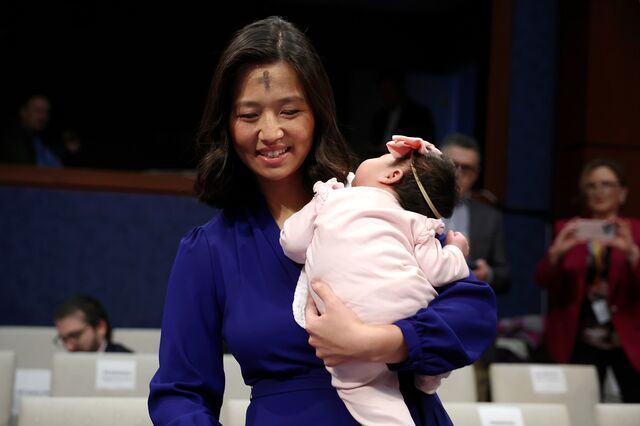
Newborn in her arms, Wu traveled to Washington days before the hearing for hours of high-priced preparation at Cahill Gordon & Reindel LLP, a Wall Street law firm where legendary First Amendment lawyer Floyd Abrams was once a partner.
On the morning of the hearing, Wu said she had felt “a tremendous amount of anxiety and worry.” A Catholic, Wu had received an introduction to a parish priest near her Washington hotel. “So my husband and I and the baby went and we prayed with the priest,” she said.
Republicans have long used Christianity and motherhood as weapons. Christian nationalism drives rhetoric, policy and even war in the Trump administration. Meanwhile, “tradwife” imagery, with children trailing like ducklings behind a retrofitted maternal-feminine ideal, abounds in conservative social media.
When the mayor of Boston arrived for Comer’s hearing, her forehead was splotched in a giant Christian cross and she was carrying her infant. Republicans were wrong-footed from the start. Playing in her head, Wu said, was a passage from the preceding week’s Mass, which included Jesus’s admonition to hypocrites: “First cast out the beam out of thine own eye; and then shalt thou see clearly to cast out the mote out of thy brother’s eye.”
Wu said the ashes on her forehead comforted her. “That reminder that we are all ashes to ashes, dust to dust, we have a moment on earth to do what we can, and to be connected to what is guiding us to do right, was extremely centering for me,” she said.
She parried questions with confidence, not that her answers mattered inside the room. Boston had just experienced the fewest annual murders in at least six decades; Republicans insisted cities were out of control. At one point Wu accused Trump’s “border czar” Tom Homan of lying and told the panel that they should swear him in for testimony.
Her calm defiance seemed to galvanize her hometown behind her. “She’s the mayor everyone remembers from that panel,” said Erin O’Brien. The 2025 Boston mayoral election was probably never much in doubt. But Wu may well have run up the score that day in Washington.
With last fall’s campaign triumph behind her, Wu is now back in a similar spot to her party nationally — working to deliver incremental improvements in civic life while fending off an assault on republican government and democratic values that could render such incrementalism absurd. She is trying to build trust in government in Boston while the majority party in Washington executes a long-term strategy of undermining trust in institutions ranging from city hall and the news media to universities and public health experts.
“I think the core of this is still the fundamental breakdown, the fundamental disintegration of bonds between people and their community, people and institutions, people and government,” Wu said. “And the only place where you can build that trust back up effectively is through local government, through the face-to-face, day-by-day earning of our democracy.”
Wu is sketchy about her personal ambitions. She has claimed to have no hankering for higher office. She might mean it. But she is in this fight now, trying to fill potholes with one hand and bolster a democracy under siege with the other. She might not be the future of the Democratic Party. She might not want to be. But she looks a lot like its embattled present.
–With assistance from Carolyn Silverman and Taylor Tyson
This column reflects the personal views of the author and does not necessarily reflect the opinion of the editorial board or Bloomberg LP and its owners.