The Rise of the Manhattan Mega-Mansion
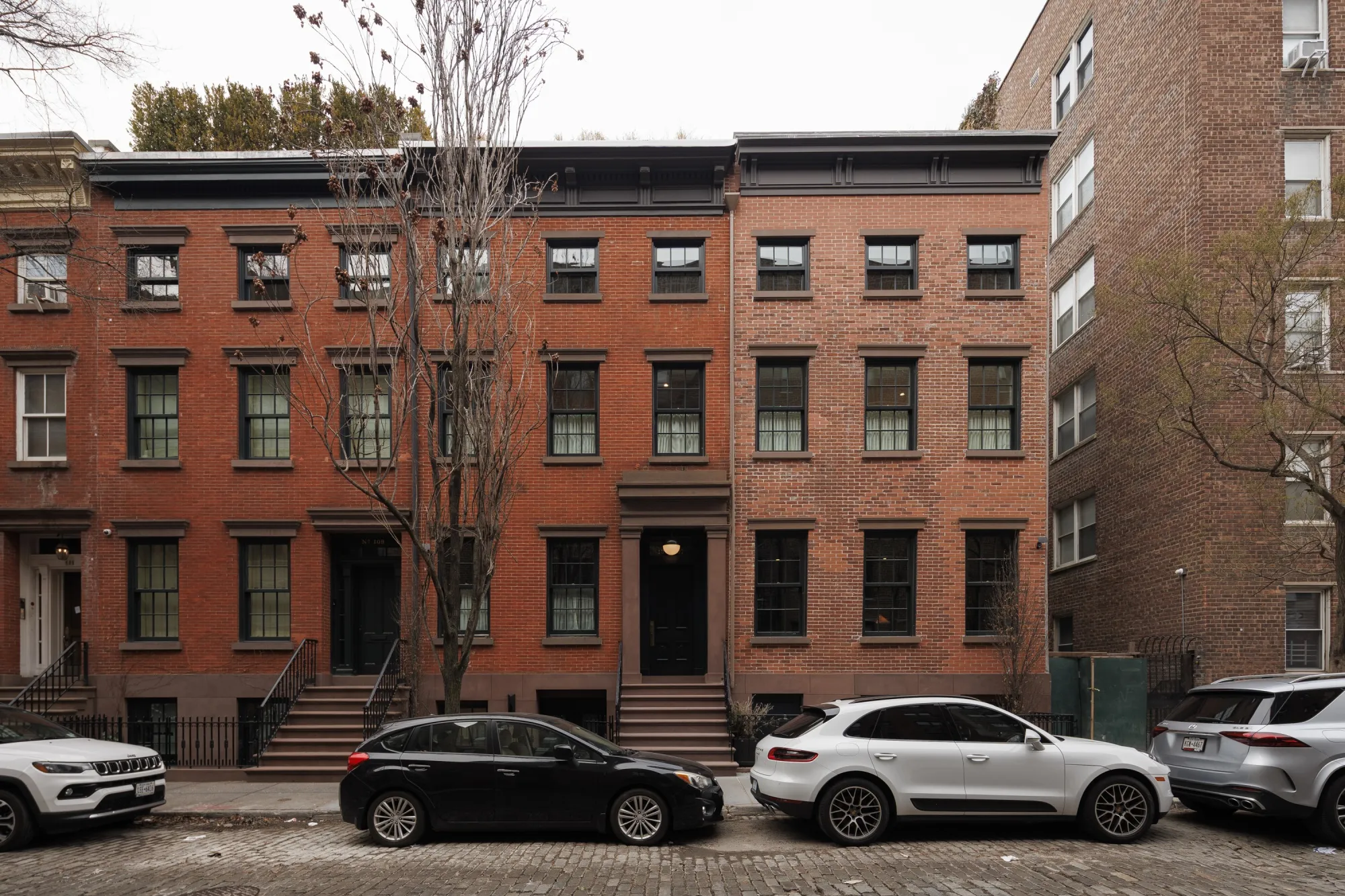
Before it was purchased by a hedge-fund billionaire, this townhouse on Charles Street was like any other in the West Village.
Built in the 1860s, the three-story red brick residence was converted to multi-family apartments during the Great Depression.
Over the next nine decades, it was home to all sorts of New Yorkers.
In recent years, a young woman who worked in sales rented a top-floor studio apartment overlooking the back garden.
Below her lived a real estate agent from California.
A widow who moved into the building with her husband in the 1970s lived in the basement unit with her roommate, an elderly man who tended to the garden.
In 2021, John Arnold, founder of the hedge fund Centaurus Advisors, and his wife Laura purchased the whole building from the landlord, returning it to its roots as a single-family residence.
But the Arnolds, who are based in Houston, didn't just buy this townhouse. They also bought the one next door.
Their plan: Combine both buildings into a 40-foot-wide pied-a-terre. Construction is ongoing.
Projects such as these, called double-wides or mega-mansions, have cropped up across Manhattan in recent years as the wealth of the richest Americans has surged. Like the super-yacht or the private island, the mansion made up of two or three Manhattan townhomes has become the latest billionaire status symbol.
Big-money buyers are no longer content with the usual conversions. Steven Harris, an architect whose eponymous firm has worked on more than 100 single-family townhouses over the past 30 years, says demand for bigger urban homes has been booming.
“We’re trying to recreate the suburban house in the city,” says Harris, who added that when they get calls from brokers these days, “they’re often looking for two adjacent houses.”
Nowhere has the trend been more pronounced than in the West Village, a neighborhood once home to artists and upper-middle-class New Yorkers that’s become a magnet for the ultra-rich. Bloomberg News identified 19 Manhattan townhouse combinations since 2010, across what used to be 40 separate buildings. Ten of them are in the West Village. The rest are in other historic neighborhoods popular among the highly affluent: the Upper East and Upper West Sides.
While many of today’s mega-mansions are hard to spot from the outside — they often preserve the historic facades — their interiors are rebuilt as thoroughly modern palazzos. Harris says clients want the Hamptons kitchens, gyms, screening rooms and “other amenities one would normally have to leave the house for.”
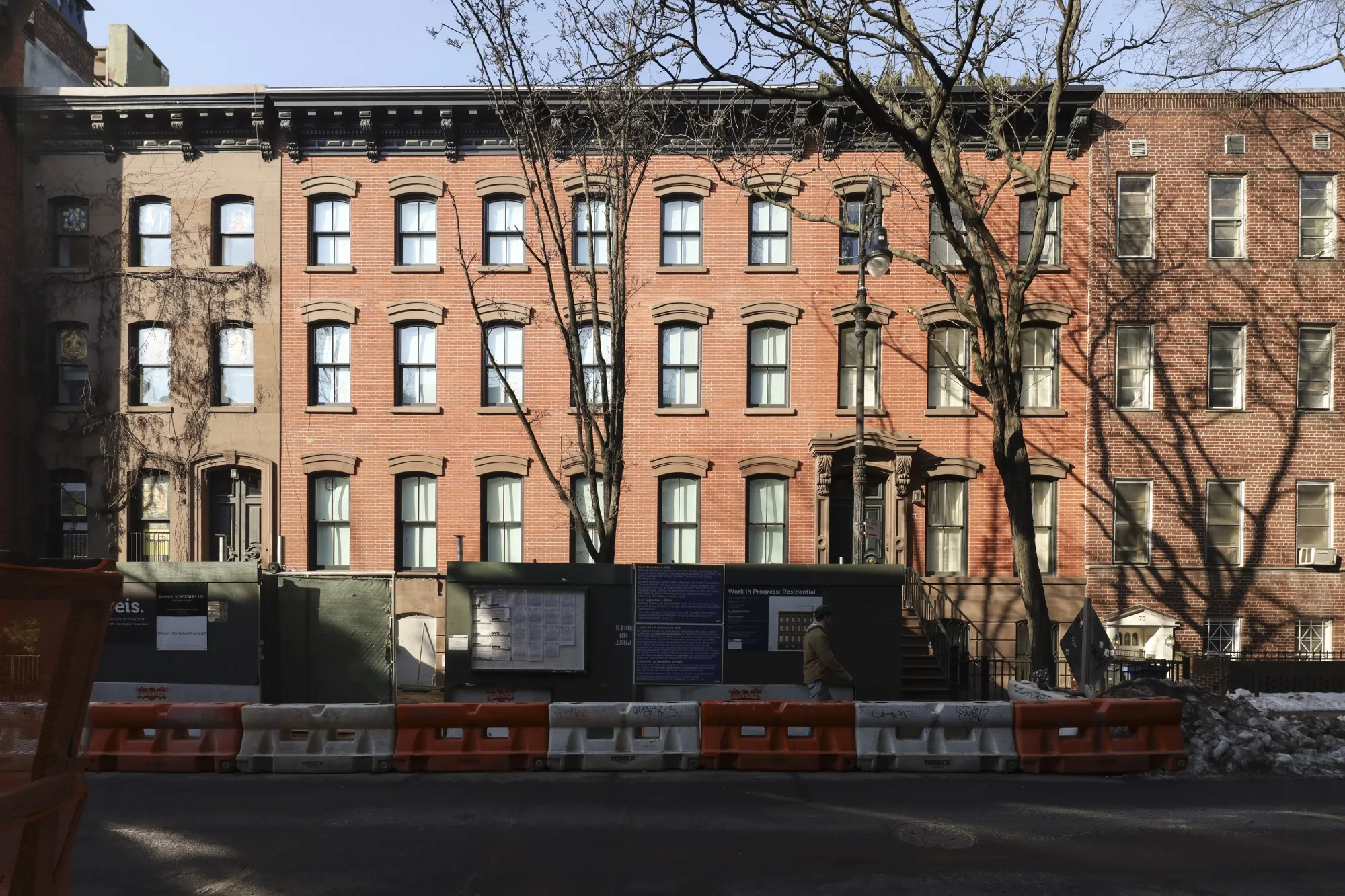
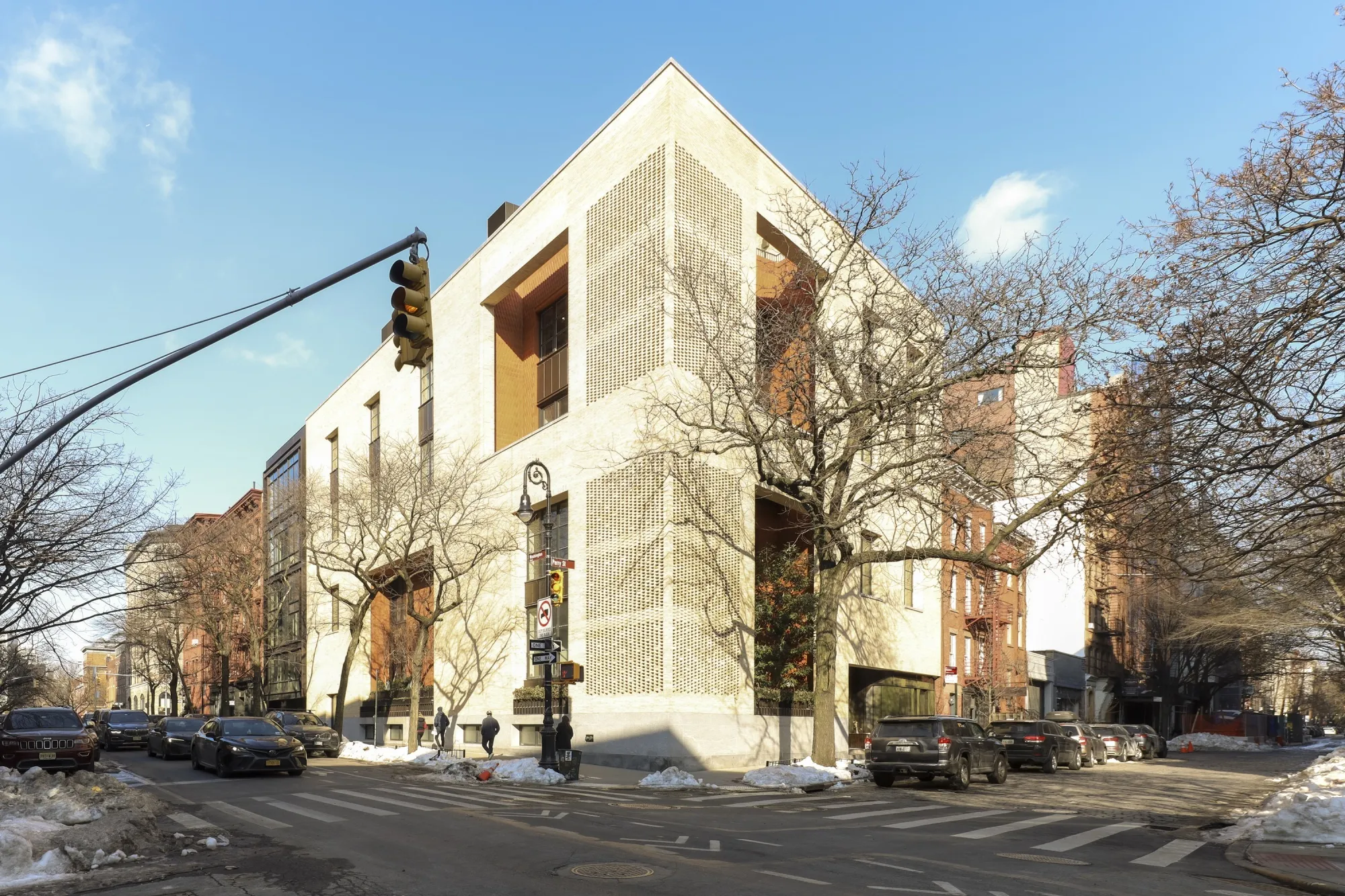
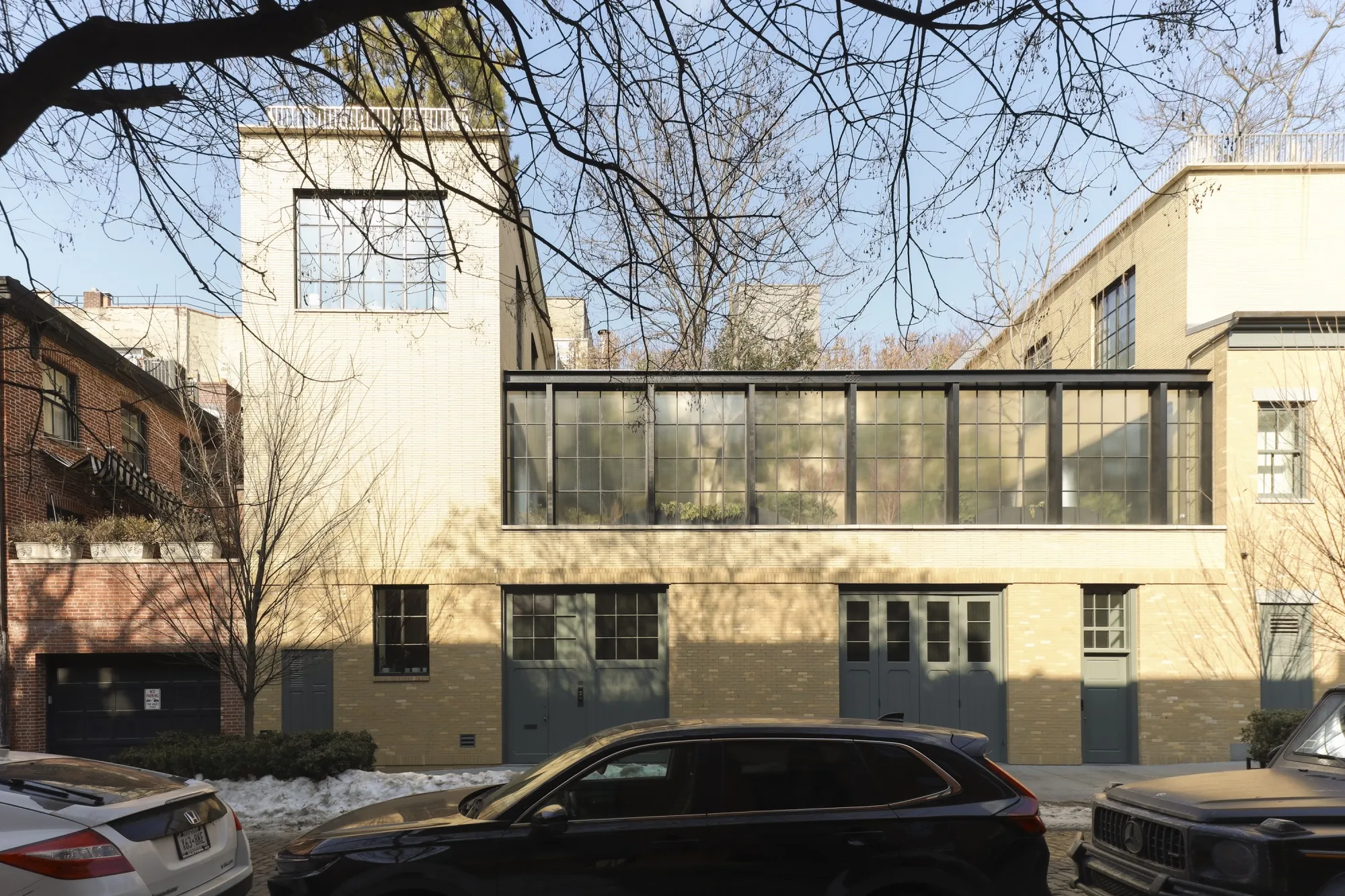
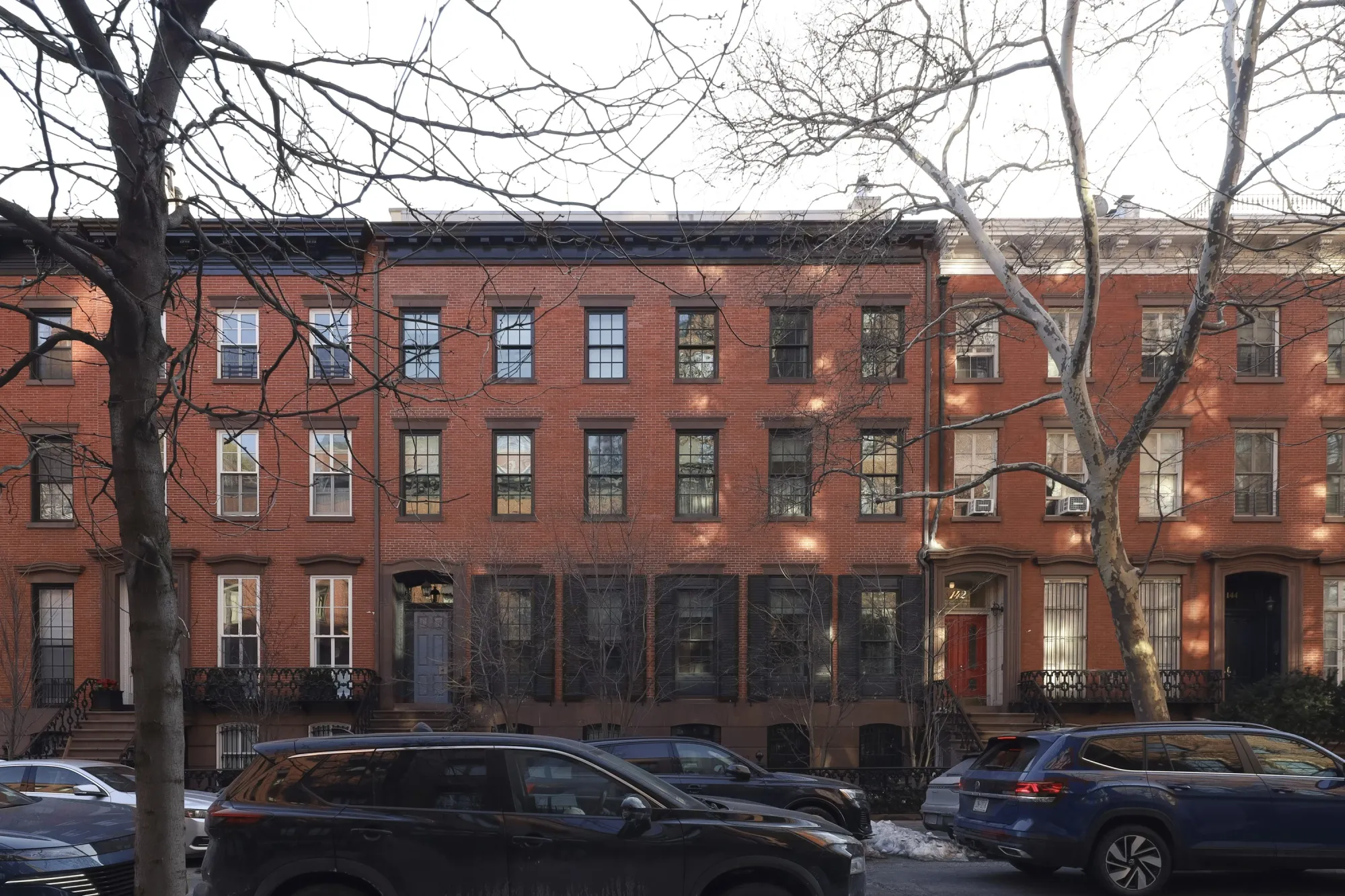
Some mega-mansions preserve their original facades, others present a more modern face. Photography: Manuela Lourenço/Bloomberg
The city’s top brokers say the arrival of Mayor Zohran Mamdani hasn’t cooled demand for such luxurious homes, despite his campaign pledges to raise taxes on high earners.
The rich are “always going to be people looking for large trophy properties because New York is still the place they want to be,” says broker Donna Olshan. She noted that a pair of Queen Anne townhomes a block from the Metropolitan Museum of Art sold in October for over the $28 million asking price.
David Greenspan, an actor and playwright who has lived in affordable artist housing in the West Village since 1999, says the conversions can make parts of the neighborhood feel like a “millionaire’s or even a billionaire’s setting.” But, he adds, “for whatever complicated issues they may bring up, they’re attractive dwellings.”
Many of the same New York neighborhoods where townhome combinations are popular have long been caught up in a larger wave of consolidation, as wealthy buyers have rolled up thousands of multi-family buildings into single-family homes. As mansions and mega-mansions have proliferated, the rent-stabilized studios, one-bedrooms and other apartments that once enlivened neighborhoods such as the West Village have become harder to find.
Townhome Conversions Have Reshaped Some Neighborhoods
- Single-family roll-up
- Two or more townhomes combined
Source: NYC Department of Buildings
Note: Neighborhoods based on NYC Neighborhood Tabulation Area boundaries.
An analysis of tax lot data by Bloomberg News found that at least 9,300 units have been lost citywide to single-building roll-ups since 2004, the earliest year for which detailed data are available. Combinations of two or more buildings since 2010 resulted in the loss of an additional 169 housing units.
The number of apartments lost to combos and roll-ups is a tiny fraction of New York’s 2.4 million rental housing units. But it has had a particular impact on rowhouse-heavy neighborhoods across the city, including the Upper West Side, Harlem, Park Slope and Carroll Gardens.
While an eclectic mix of New Yorkers still call the West Village home, one out of every six small apartment buildings in the neighborhood has been rolled up into a single-family home since 2004. The only other neighborhood with a rate that high is a stretch of the Upper East Side adjacent to Central Park, a longstanding epicenter of wealth.
The Hottest Neighborhoods for Single-Family Conversions
Source NYC Department of City Planning
Note: Data reflects single-family roll-ups as a percentage of all multi-family homes with 2-8 units for Neighborhood Tabulation Areas with at least 100 roll-ups. Upper East Side reflects “Upper East Side-Carnegie Hill” NTA, Upper West Side reflects “Upper West Side (Central)”
These are conservative estimates, since they don’t include consolidation projects that left buildings with two or more units, such as in-law units. They don’t include conversions of commercial spaces, either. In some instances the city may still list a co-op building as several different units even if one person owns them all. (Michael Bloomberg, the founder and owner of Bloomberg News parent company Bloomberg LP, has executed a consolidation that the city still lists as six units.)
The Arnolds declined to be interviewed for this story and didn’t respond to an emailed request for comment through a representative.
George Janes, an urban planning consultant focused on Manhattan, says he comes across a new proposal to turn a multi-family building into a single-family home roughly once a week.
“The city has been hemorrhaging housing units,” says Janes. “I’m hoping that our new administration recognizes the issue as a problem and decides to act.”
Developer Robert Kaliner, who’s overseen a recent double-wide mansion project, scoffs at the idea that lawmakers should implement rules that would prevent the loss of housing units from townhome combinations and single-family roll-ups.
“The fractional impact of the rare case of combining two homes in a major city, compared to the thousands of lost or delayed units coming to market, is the biggest joke in the world,” says Kaliner.
New York’s housing crisis is driven by a supply shortage caused by decades of under-building. Estimates vary, but the region needs hundreds of thousands of new units to make up for the historical shortage, according to the nonpartisan think tank Citizens Budget Commission.
Last year, to address New York’s housing shortage, city officials enacted a sweeping overhaul of zoning laws to encourage the construction of more housing. But the quiet disappearance of homes through deteriorating conditions at one end and luxury mergers on the other has drawn less scrutiny.
That means lawmakers are missing part of the equation, says Ingrid Gould Ellen, faculty director of New York University’s Furman Center for Real Estate and Urban Policy. “We don’t talk about the removals from supply, we only talk about new construction,” she says. “Maybe we’re swimming upstream here.”
Housing officials in Mamdani’s administration didn’t respond to requests for comment.
Gilded Age 2.0
Over the past decade, the wealth of the richest people in the world has surged. No city on earth has more millionaires and billionaires than New York. And within New York, arguably no neighborhood has been transformed by that wealth more than the West Village.
Rent-regulated housing in the neighborhood historically made space for the city’s humble creative class — James Baldwin, Bob Dylan, Woody Guthrie and Mark Rothko were all residents at one point. But these days, the fifty-odd blocks have become a bastion of concentrated wealth, with fewer, larger and more expensive homes, some of which Greenspan says seem like “ghost buildings.”
Two blocks north of the Arnolds’ Charles Street mega-mansion-to-be, Chipotle founder Steve Ells spent years assembling several rowhouses to build his compound. Down the street, Hollywood stars Sarah Jessica Parker and Matthew Broderick live in a double-wide townhouse that reportedly cost more than $50 million to construct and design. Representatives for Ells and Parker did not respond to requests for comment.
Up a couple more blocks on Bank Street, Kaliner just put the final touches on a brand new, double-wide mansion.

The double-wide townhome at 105-107 Bank Street in the West Village is currently for sale. Photography: Manuela Lourenço/Bloomberg
Once a pair of multi-family buildings, including a duplex shared by John Lennon and Yoko Ono, the approximately 13,500-square-foot home at 105-107 Bank Street now caters to the tastes of the ultra-wealthy. The six-bedroom home has seven walk-in closets and a 2,000-plus-pound marble slab tub in the master bathroom. Bathroom fixtures are hand-painted to match the wallpaper. The living room mantelpiece dates back to the reign of Louis XIV. The spiral staircase that serves as the spine of the house is detailed in Venetian plaster.
Weeks before the viewings were opened widely in February, Kaliner had shown the property to global titans of AI, finance, crypto and hospitality. He’s hoping a bidding war will drive up the $75 million price tag. Whoever moves in, he says, must love his baby as much as he does.
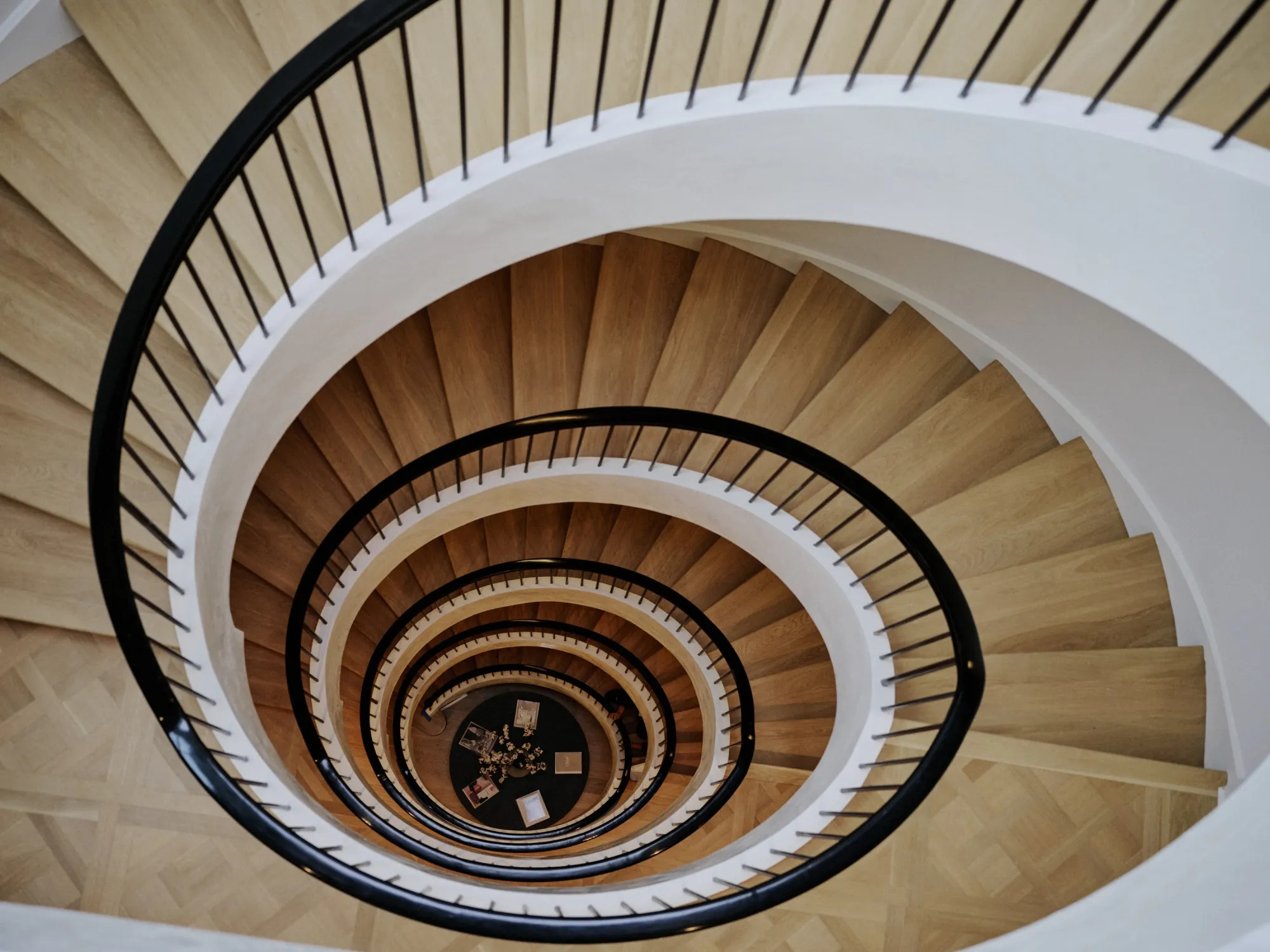
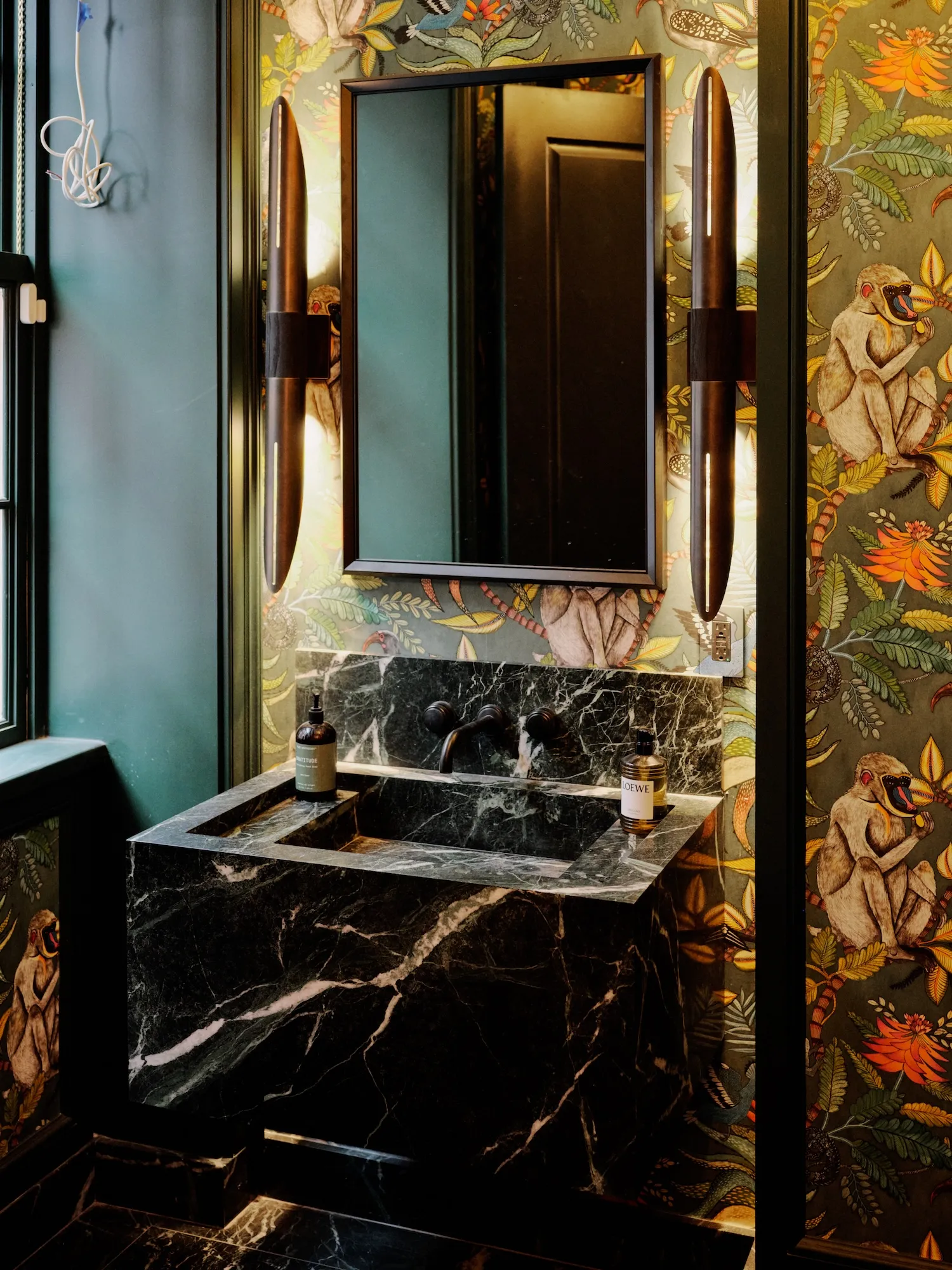
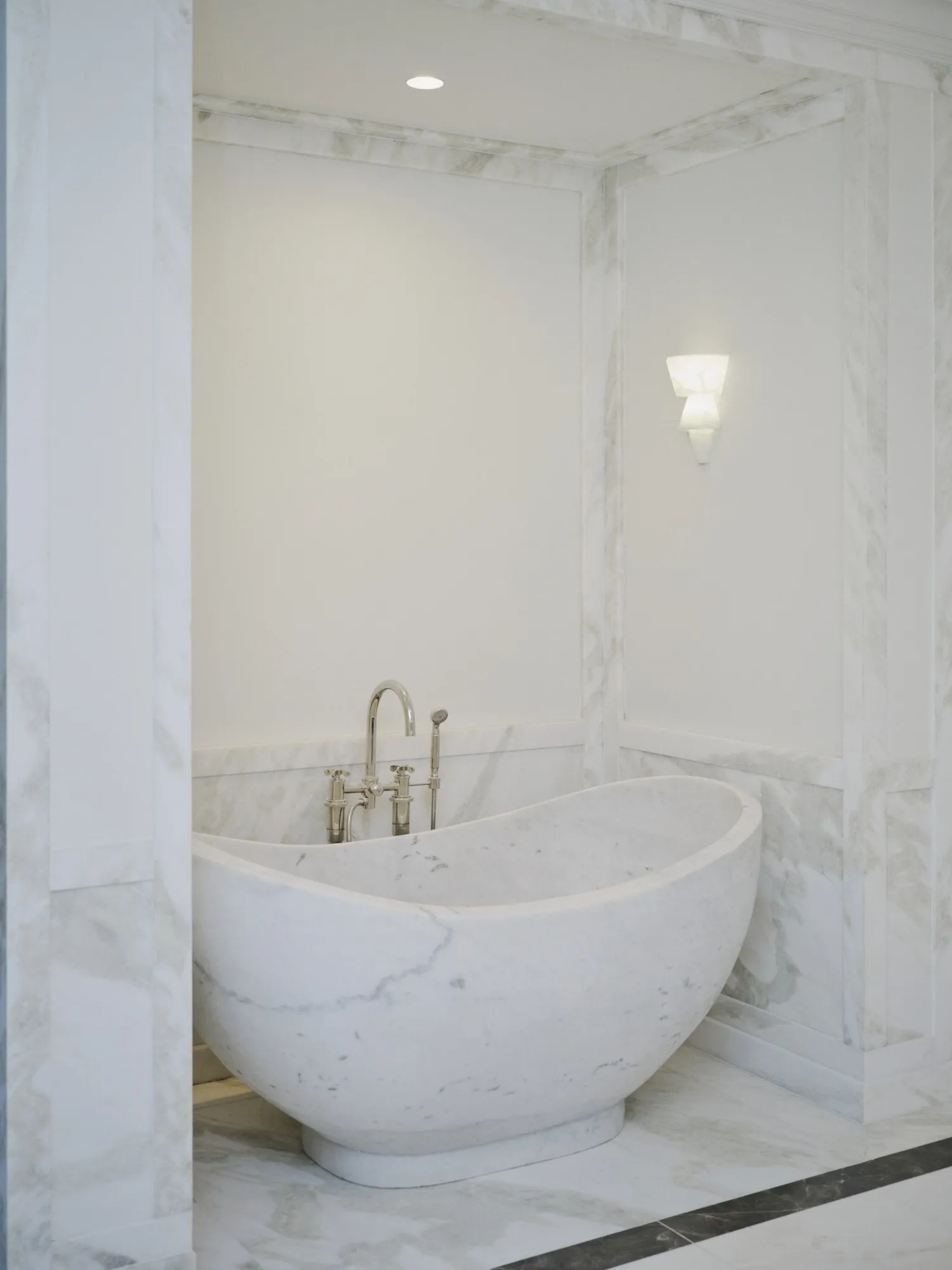
The home is six stories. Details include a more than 2,000-pound marble bath tub and hand-painted fixtures to match the wallpaper. Photography: Scott Rossi/Bloomberg
The founder of RoundSquare Development, Kaliner and Robert A.M. Stern Architects spent more than three years on Bank Street. Projects like this can easily employ more than 100 people. Hard construction costs alone can run between $1,400 and $2,500 per square foot. Those figures exclude legal fees, architectural costs and, in some cases, payouts to tenants or neighbors.
105-107 Bank Street: Anatomy of a Mega-Mansion
Source: RoundSquare Development
Jon Stryker, the billionaire heir to the medical equipment firm Stryker Corporation, spent over a decade and more than $100 million on his 110-foot-wide estate according to people familiar with the project, who asked not to be named in order to discuss proprietary industry matters. A representative of Stryker’s Arcus Foundation didn’t respond to a request for comment.
Even at these exorbitant price tags, the demand is there, Kaliner says. Another developer is working on two double-wide mansions a few blocks away from his, on Charles Lane.
“A double-wide is like a Picasso or that Gustav Klimt that sold for $236 million,” he says. “A suburban house in Manhattan, in the West Village? There’s not that many.”
Character at a Cost
In Manhattan, most of these consolidation and combination projects occur in historic districts — parts of the city designated by the Landmarks Preservation Commission, or LPC, as having a longtime “distinct sense of place.”
Right now, the LPC is one of the only hurdles property owners face when trying to convert or combine buildings in the city. The LPC’s current priority is to maintain the character of the neighborhood: That’s why even after being merged, a lot of these mega-mansions still look like separate buildings. Landmarked neighborhoods build less housing than non-historic areas, in part due to the additional approvals required, meaning there’s little to offset the loss of units from combinations. Historic districts in the West Village, Upper West Side, Upper East Side, Greenwich Village and most other landmarked neighborhoods have fewer units now than they did 20 years ago.
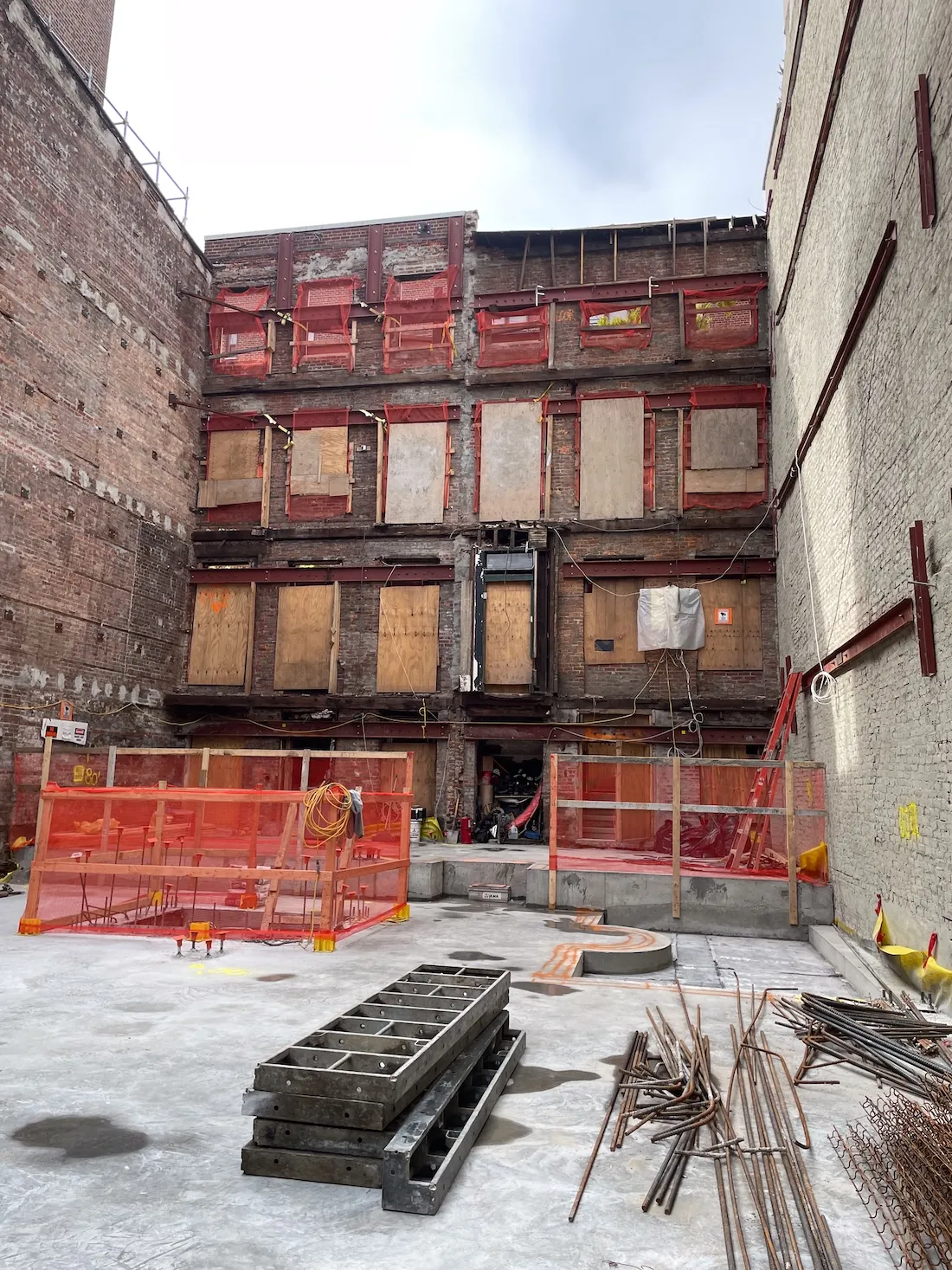
Mega-mansions in landmarked neighborhoods often preserve facades while rebuilding interiors from the ground up. Source: Robert Kaliner
In New York, few rules if any are in place to slow or stop this kind of housing loss. But Janes says there are existing zoning tools that could be tweaked to address combos and roll-ups. Janes suggests using the city’s dwelling unit factor — rules about the maximum number of apartments allowed in a building — to create a minimum. Or, he says, the city could implement zoning that would prohibit alterations to a building that reduce the number of units by more than 20%.
“We have tools at our disposal to address the problem,” says Janes. “But before we can develop a solution, we have to decide this is a problem. That’s what’s missing.”
Kaliner believes the city should focus efforts on removing regulatory barriers to building more housing. “If the city wants to increase housing, and I have been doing this for way too many years, they need to end some simple bureaucracies.”
Beyond the loss of housing, there’s also been a loss in tax revenue for the city. That’s because the ultra-wealthy who convert multi-family buildings into a single residence get levied at a lower rate thanks to the city’s regressive property tax system. Under the existing tax code, an Upper West Side building with 16 apartments had an annual tax bill of $50,000 in 2017. After it was converted, the levies dropped to just $12,000.
Mansionization in New York’s historic neighborhoods takes other forms, too. The townhouse combinations and building consolidation projects identified by Bloomberg News don’t include the repurposing of commercial spaces. These new-build mansion projects — including hedge-fund billionaire Steve Cohen’s 30,000-square-foot compound in the West Village or WhatsApp co-founder Jan Koum’s planned seven-story Soho home — are technically adding to the city’s housing stock by turning stores or offices into homes, but come at an opportunity cost of apartment buildings with dozens of units. Neither Cohen nor Koum responded to requests for comment through representatives.
“As an urban planner, these neighborhoods in Manhattan are designed to have smaller apartments and lots of people living there,” says Moses Gates, vice president for housing and neighborhood planning at the civic organization Regional Plan Association. “These roll-ups cost the city several thousands units. That’s the equivalent of a major neighborhood rezoning. That’s not nothing.”
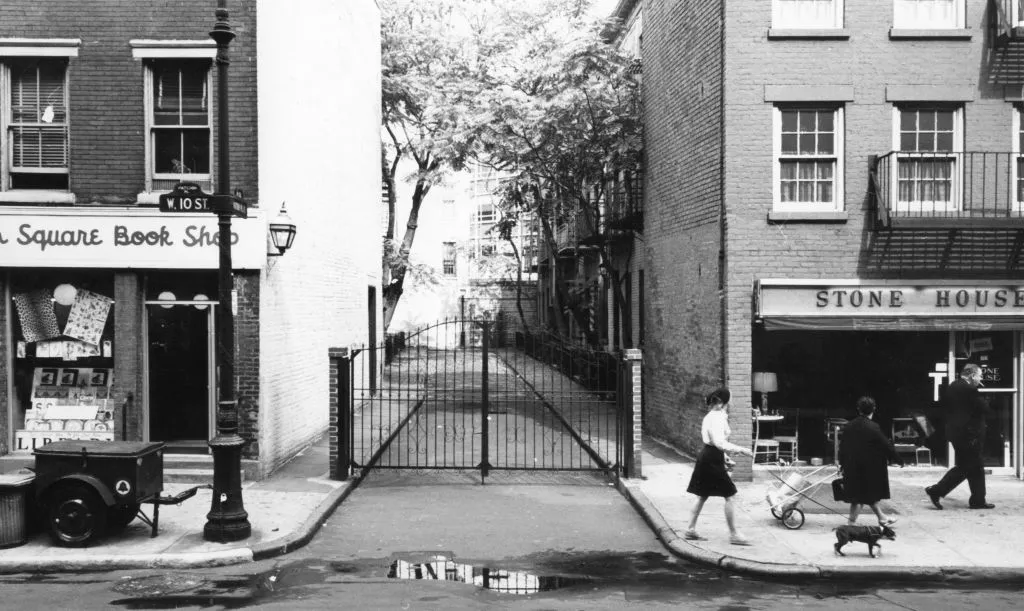
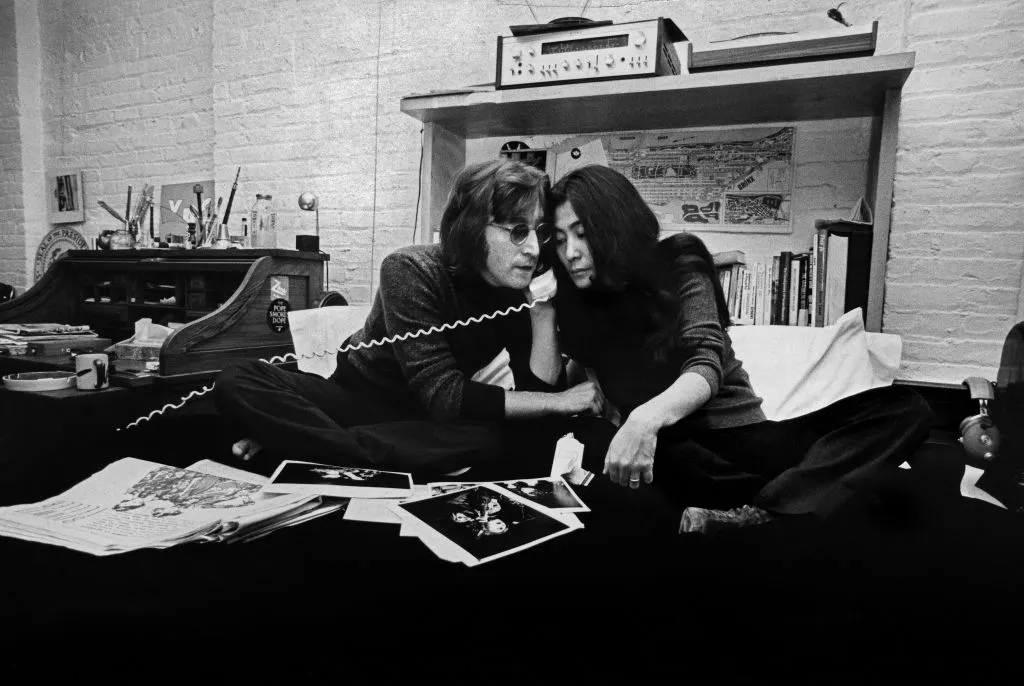
The West Village, a mecca for the city’s creative class in the 1960s and 70s, has become increasingly upscale. Photography: Fred W. McDarrah/The New York Historical/Getty Images, Brian Hamill/Getty Images
Other cities facing similar pressures have taken a different path. In Chicago, property owners must pay demolition surcharges of $5,000 per unit and $15,000 per building in designated neighborhoods — rising to $20,000 per unit and $60,000 per building in some areas. That “teardown tax” cut demolitions by as much as 90% in one area nearly one year after the ordinance went into effect.
In San Francisco, after wealthy Silicon Valley entrepreneurs started turning the city’s rowhouses into tech palaces, local lawmakers implemented new rules that require projects that eliminate housing units to first seek approval from the planning commission. Those regulations have effectively banned the new millionaires and billionaires from merging homes. Dan Sider, chief of staff of the San Francisco Planning Department, says he can’t imagine what the city would look like today if the city hadn’t implemented the rule more than a decade ago.
“Housing — safe housing, sanitary housing, sound housing — should not be eliminated without some very extenuating circumstances being presented,” says Sider.
On Charles Street in the West Village, 10 rental apartments were eliminated as a result of the combination project. John Arnold, who spent at least $26 million to acquire the two townhomes, addressed the US housing crisis in a January op-ed for the Houston Chronicle, emphasizing the need to build more.
“We all feel the impact of the housing affordability crisis,” he wrote in the op-ed, which argued against blaming institutional investors for escalating home prices. “We should resist the temptation to unfairly demonize one market actor.”