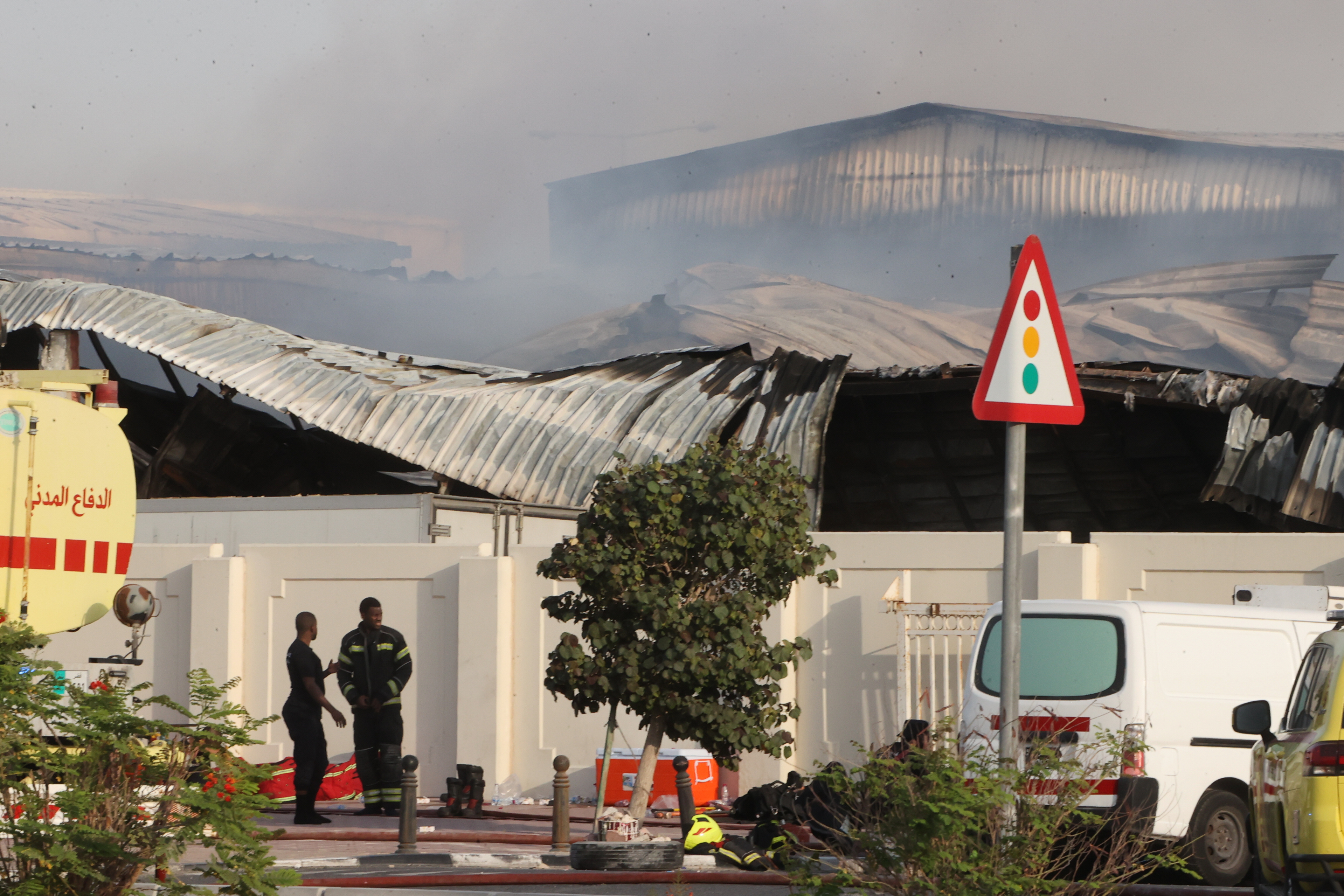
QATAR | Firefighters at a damaged warehouse in an industrial area in Al Rayyan, west of Doha, on March 1. Source: AP
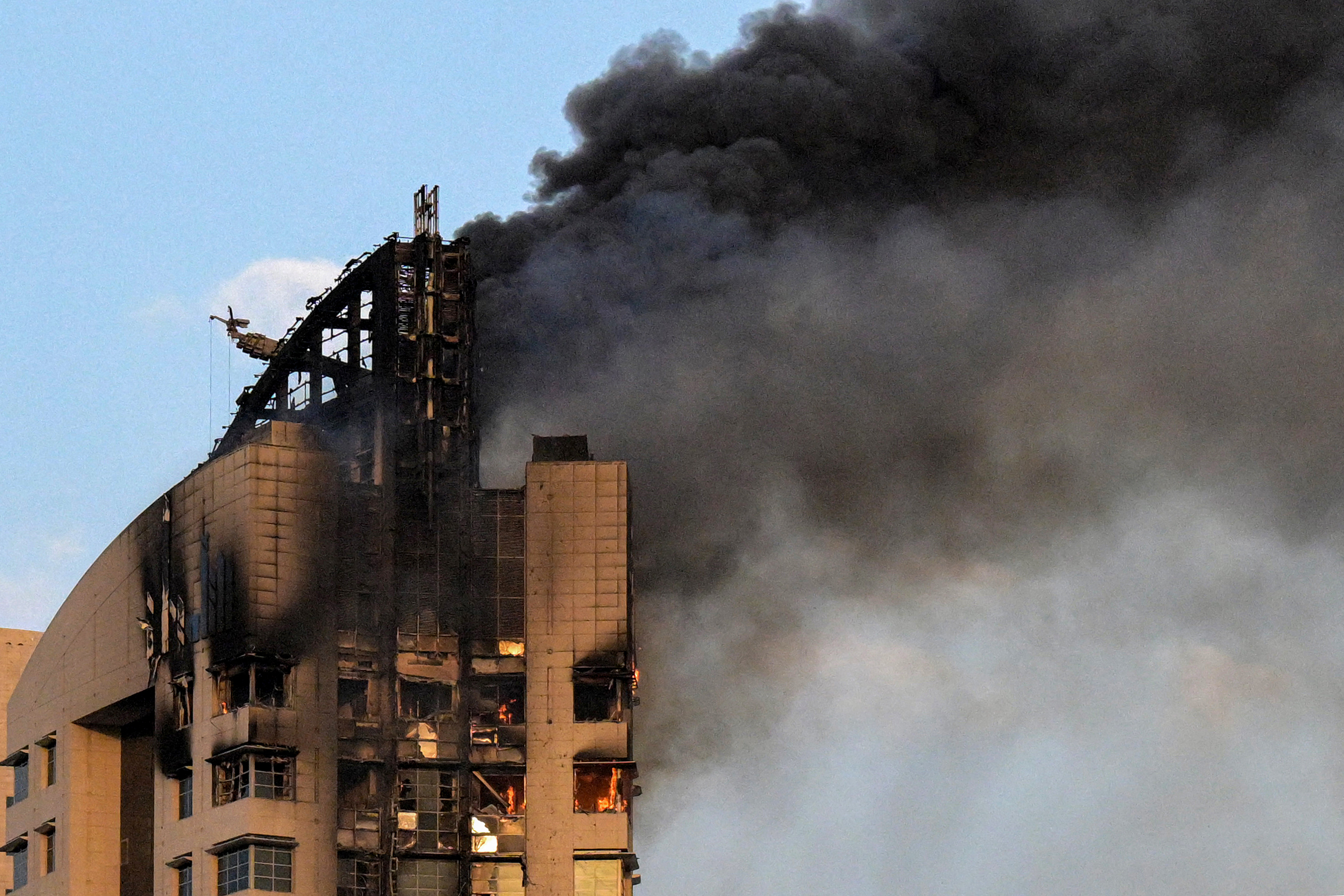
KUWAIT | Smoke rises from a high-rise building in Kuwait City on March 8. Source: AFP via Getty Images
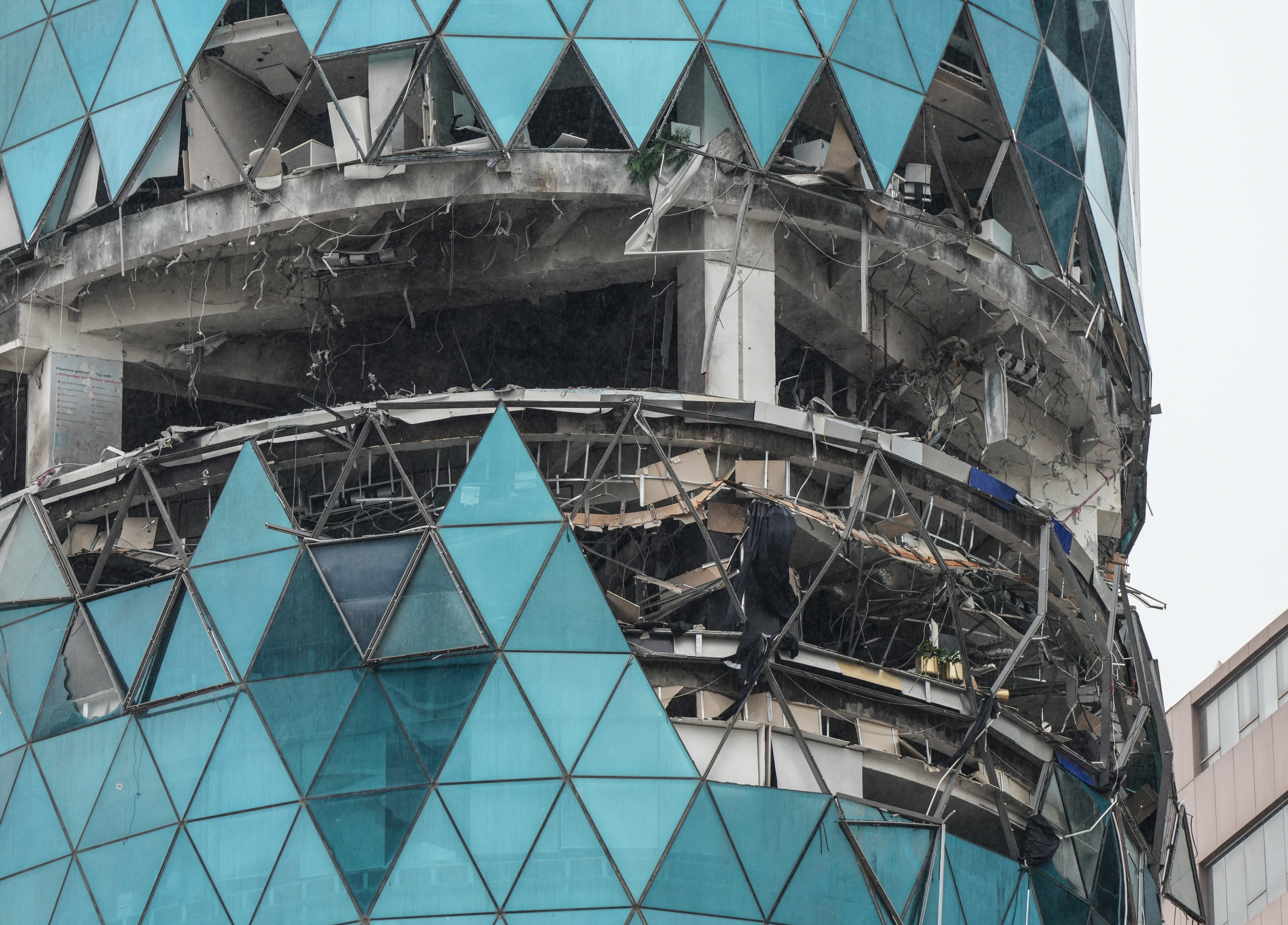
BAHRAIN | A damaged building in the Seef district of Manama on March 10. Source: AFP/Getty Images
Iranian Retaliation Widens as Conflict Escalates Across Gulf
As the US and Israeli air campaign against Iran enters its third week, Tehran has continued to strike out across the Middle East.
Iranian drones and missiles have increasingly been aimed at economic and political targets, including energy infrastructure, data centers and airports, as Iran tries to disrupt oil and gas markets and inflict lasting damage on the economies of the US and its allies in the region.
The tactic is a demonstration of Iran’s desire — and ability — to hold out and fight back against a bigger, better armed adversary, according to Seth Jones, president of the Defense and Security Department at the Washington-based Center for Strategic and International Studies.
“The Iranians really established themselves as a regime capable of conducting asymmetrical activities,” Jones said. “I’m not surprised at Iran’s ability to continue doing this, because the Iranian regime, the way it’s been structured, is to withstand significant pressure.”
A Bloomberg News analysis of data from the Armed Conflict Location and Event Data, an organization known as ACLED, shows 823 documented Iranian airstrikes, 483 of which were intercepted, since the war began on Feb. 28 through March 13. It also shows that 1,879 US and Israeli hits were recorded (1,661 by Israeli military and 218 by US forces), with at least 73 of those intercepted.
Iranian attacks have killed at least 30 people, according to official reports. US-Israeli strikes on Iran, meanwhile, killed 1,858 people during the first 12 days of fighting, according to the Human Rights Activists News Agency, and at least 700 others in Lebanon.
Conflict Rapidly Spread Across Entire Gulf
- Target struck Interceptions
- Iran
- Iranian proxies
- Israel
- US
- 1
- 10
- 30 events
Source: Armed Conflict Location and Event Data (ACLED)
Note: Some events may include more than one strike. Data as of March 13, some recent strikes from the US and Israel on other countries, as well as strikes from Iranian proxies may not be included yet. Some events, including a March 4 US strike on an Iranian warship off the coast of Sri Lanka, are outside the frame of this map.
The 12-day US and Israeli war against Iran in June was measured. Tehran warned the governments in Washington and Doha in advance that it intended to target the Al Udeid Air Base — an American military facility — and both the US and Israel focused their strikes on the Islamic Republic’s nuclear installations.
This time is different.
The Islamic Republic is targeting economic, civilian, political and military sites in Israel, Kuwait, Qatar, the UAE, Saudi Arabia, Iraq, Jordan, Oman and Bahrain. It has also struck Cyprus and Azerbaijan, and NATO on Friday intercepted a third missile fired at Turkey from Iran – though Iran denied involvement.
The US and Israel, meanwhile, are mainly focusing their attacks on Iran’s leadership and entire military network, while also striking targets in Lebanon, where Iran has proxies.
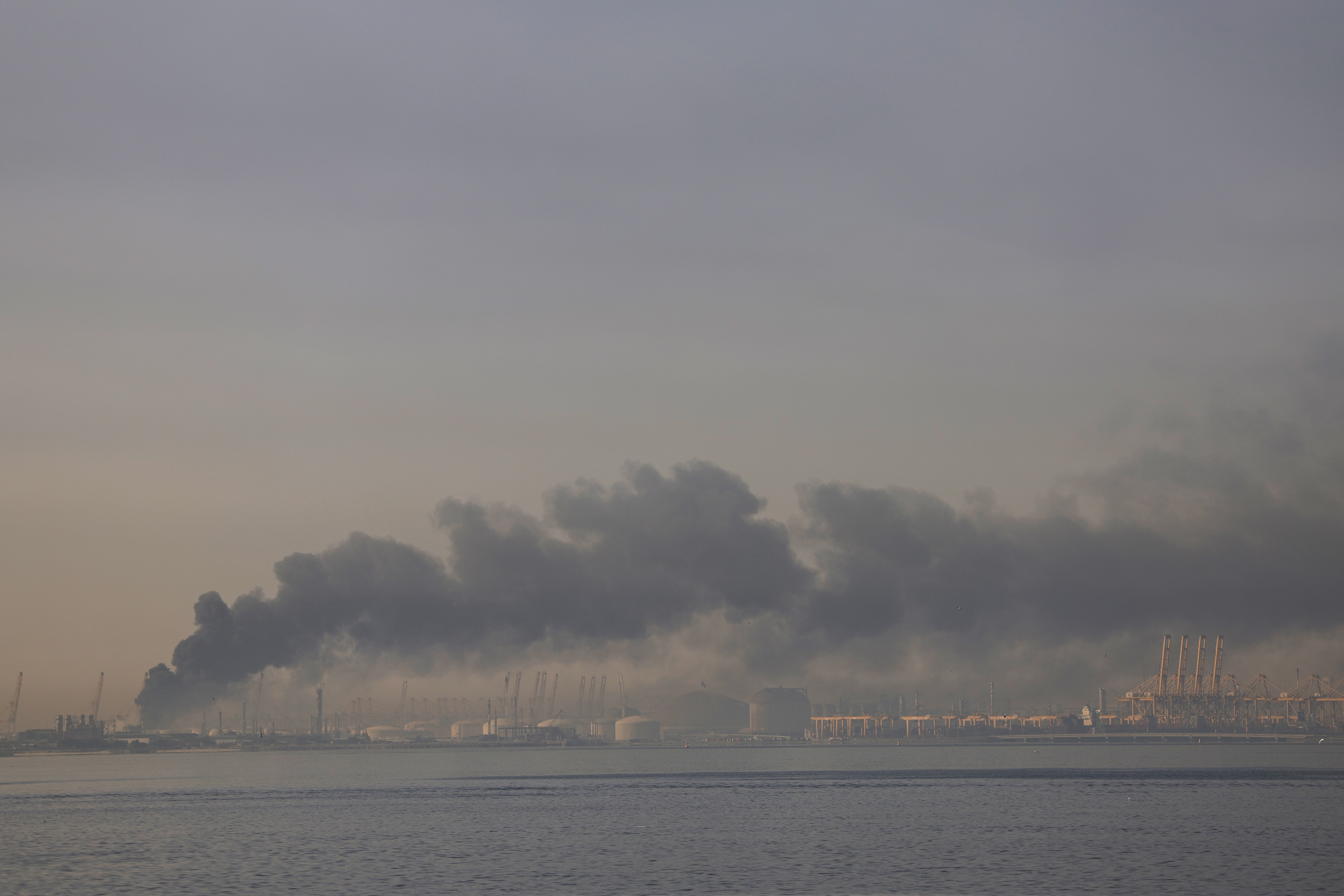
A plume of smoke rises from the port of Jebel Ali in Dubai on March 1. Photographer: Fadel Senna/AFP/Getty Images
Such a rapid widening of a conflict is “unprecedented,” said Clionadh Raleigh, a professor of political geography and conflict at the UK’s University of Sussex who also heads ACLED. “Even in World War II it wasn’t within days. That’s down to Iran’s response.”
“They may be running out of medium range and missile launchers but Iran has an endless number of pretty cheap drones,” she added of Iran’s Islamic Revolutionary Guard Corps. They are “going to keep going until they have nothing left.”
Military, Political and Civilian Infrastructure All Targeted by Iran
- Military
- Oil, energy assets and shipping
- Other civilian
- Political
- Unspecified
Source: Bloomberg News analysis of Armed Conflict Location and Event Data (ACLED)
Note: Data as of March 13, some recent strikes from the US and Israel on other countries, as well as strikes from Iranian proxies may not be included yet. On March 1, British forces intercepted two Iranian missiles near a Royal Air Force base in British territory on the coast of Cyprus.
Initially, Iran was mostly zeroing in on military infrastructure: interceptors, air defenses and communication systems, and bases. Then, it started hitting energy and water infrastructure, and airports.
In a statement read out on state TV on Thursday, Iran’s new Supreme Leader, Mojtaba Khamenei, said that the plan now was to open “new fronts,” without providing details. He vowed to keep the Strait of Hormuz — the world’s most important channel for energy shipments — shut.
“For Iran, victory is based on regime survival and some international agreement that agrees to a permanent cessation of hostilities with some economic relief also guaranteed,” said Sanam Vakil, director of the Middle East and North Africa programme at Chatham House, a London-based think tank. “Hard to imagine that they can achieve that but those are the goals.”
Over the Past Two Weeks, Iran Has Repeatedly Fired at Major Cities Around the Gulf, Paralyzing Travel and Trade
- Target struck Interceptions
- Iran
- Iranian proxies
- Israel
- US
- 1
- 10
- 30 events
Feb. 28
Mar. 4
Mar. 8
Mar. 12
Source: Armed Conflict Location and Event Data (ACLED)
Note: Some incidents may include more than one strike. Data as of March 13, some recent strikes from the US and Israel on other countries, as well as from Iranian proxies may not be included yet.
The war has been experienced differently in each nation involved. In Lebanon, where there are no sirens to warn of incoming strikes, there’s chaos. In the Gulf, interceptors are shooting down many missiles in the sky, though some have landed with devastating effect.
Governments are banning live broadcasts and the sharing of photos and video that identify locations of damage. And satellite imaging companies like Planet Labs are releasing images with a 14-day delay so that they can’t be used for real-time military intelligence.
Among casualties in the Gulf are an 11-year-old girl in Kuwait who died from shrapnel wounds, and a woman killed after an Iranian assault on a residential building in Bahrain’s capital Manama in the second week of the conflict. The Iranian drone, which was reportedly heading for the US naval base in the small Gulf archipelago, hit the Breaker tower, leaving many of the high-rise’s top floors engulfed in flames.
The Breaker high-rise apartment building in Manama, Bahrain. Source: Satellite image ©2026 Vantor
Just two days into the war, Iran began targeting the biggest oil and gas assets in the Persian Gulf, launching missiles and drones at ports, pipelines and processing units.
Energy prices have surged, with oil making record moves — nearing $120 a barrel and sometimes falling just as quickly — as traders try to gauge the US and Israeli endgame.
In most cases, Iran has caused little direct damage, but its strikes have led to precautionary shutdowns and forces majeures. Operations were suspended at Saudi Arabia’s largest oil refinery, Aramco’s Ras Tanura plant, following an Iranian drone strike in the area.
Source: Satellite image ©2026 Vantor
For Kuwaitis, the hostilities are stirring up memories of two previous wars: the 1991 US-led Desert Storm operation to liberate the oil-rich nation from brutal Iraqi occupation and the 2003 US-led invasion of Iraq, which toppled Saddam Hussein.
Saad Rashed Al-Enezi lived through both. He said that while this latest conflict was expected, its scale and open-ended nature came as a surprise.
“In the first few days, people were really scared,” said the 65-year-old, who fought alongside the US army as a volunteer during the first Gulf War. But, he added, now many of them are continuing with some sense of normality, even though it’s been home schooling and work options for most.
The country’s pension fund headquarters — the Public Institution for Social Security — was hit on the night of March 7, causing an extensive fire that burned for hours across floors, in the heart of the capital. Banks said employees would no longer be working in high rises, and operations were decentralized across branches. The pension fund also said it would continue activities from alternative sites and that all data had been backed up.
Two US military bases have also been targeted. At Camp Arifjan in southern Kuwait, satellite images show damage to radar systems.
Source: Planet Labs PBC, Bloomberg reporting
And at Ali Al Salem Air Base, west of Kuwait City, fuel storage and aircraft hangers were hit, along with often expensive and rare radar systems that detect incoming missiles and drones.
Source: Planet Labs PBC, Bloomberg reporting
“The damage is minimal compared to the huge firepower sent to us, though we do fear shrapnel and debris falling from the skies,” Al-Enezi said. “When will it finish, and at what cost?”