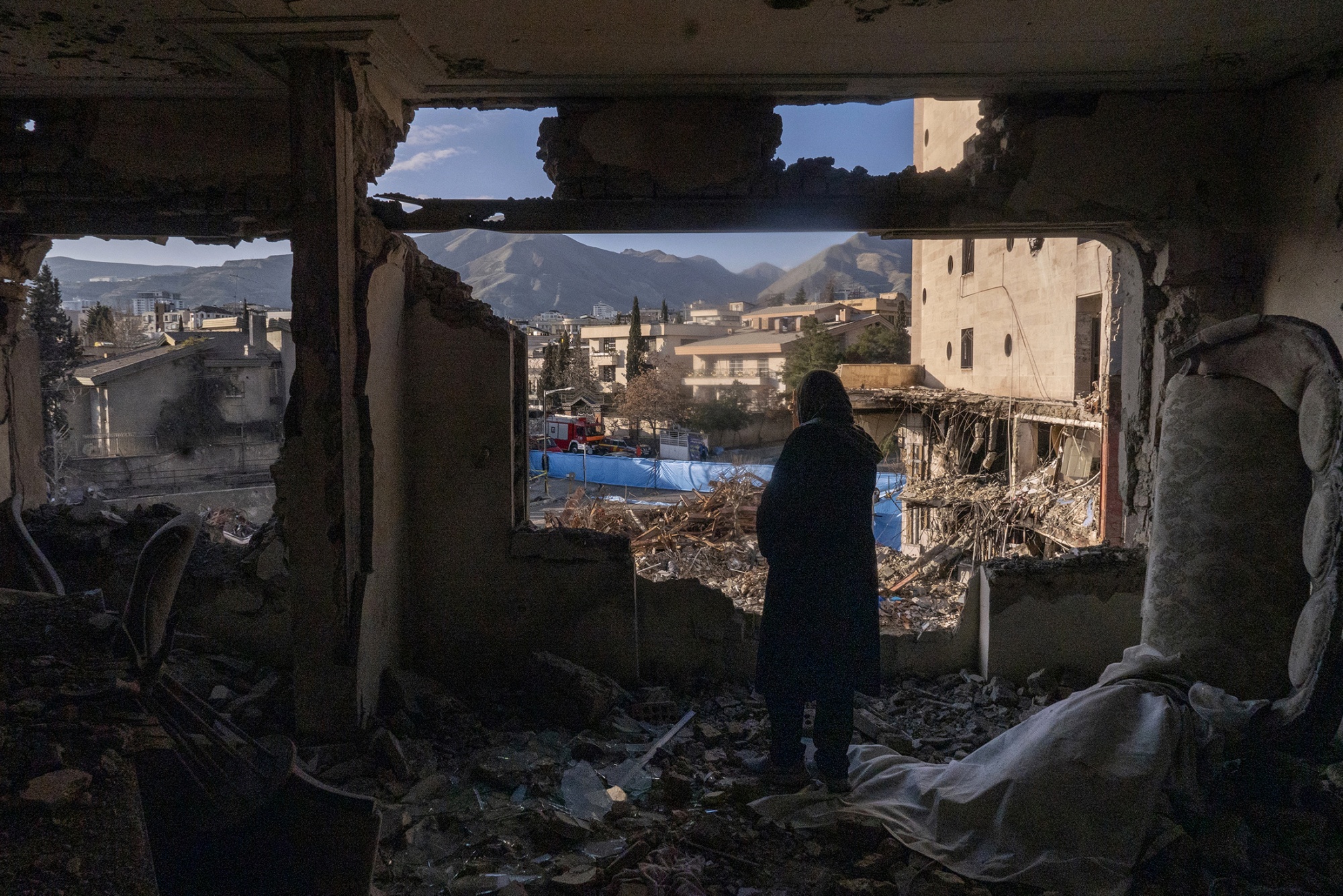
A destroyed apartment in a residential and commercial building in Tehran’s Shahrak-e Gharb neighborhood, March 21. Photographer: Majid Saeedi/Getty Images
Satellite Data Reveal Scope and Scale of US-Israeli Strikes on Iran
After more than five weeks of fighting, the 14 days of fragile ceasefire between the US, Israel and Iran have given residents of Tehran the chance to take stock of the damage. The city of 9 million people is scarred by debris, rubble and bombed-out high-rises.
President Donald Trump announced on Tuesday that he was extending a ceasefire with Iran indefinitely a day before it was set to expire, even as plans for a fresh round of talks fell apart. The two sides remain far apart on key issues, including Iran’s nuclear program, its grip on the Strait of Hormuz and support for militant groups in the Middle East.
Even if the peace holds and a lasting solution is found, at least 3,300 Iranians, including civilians and members of the military, have been killed across the country, and the damage that’s already been done is substantial.
Iranian curbs on photography and internet access as well as US restrictions on high resolution satellite imagery have hampered visual damage assessment. But a study by Conflict Ecology researchers at Oregon State University, which draws on radar imagery, estimates conservatively that at least 7,645 buildings were damaged or destroyed across the country — including 60 education and 12 health facilities — between the beginning of hostilities on Feb. 28 and the start of the truce on April 8.
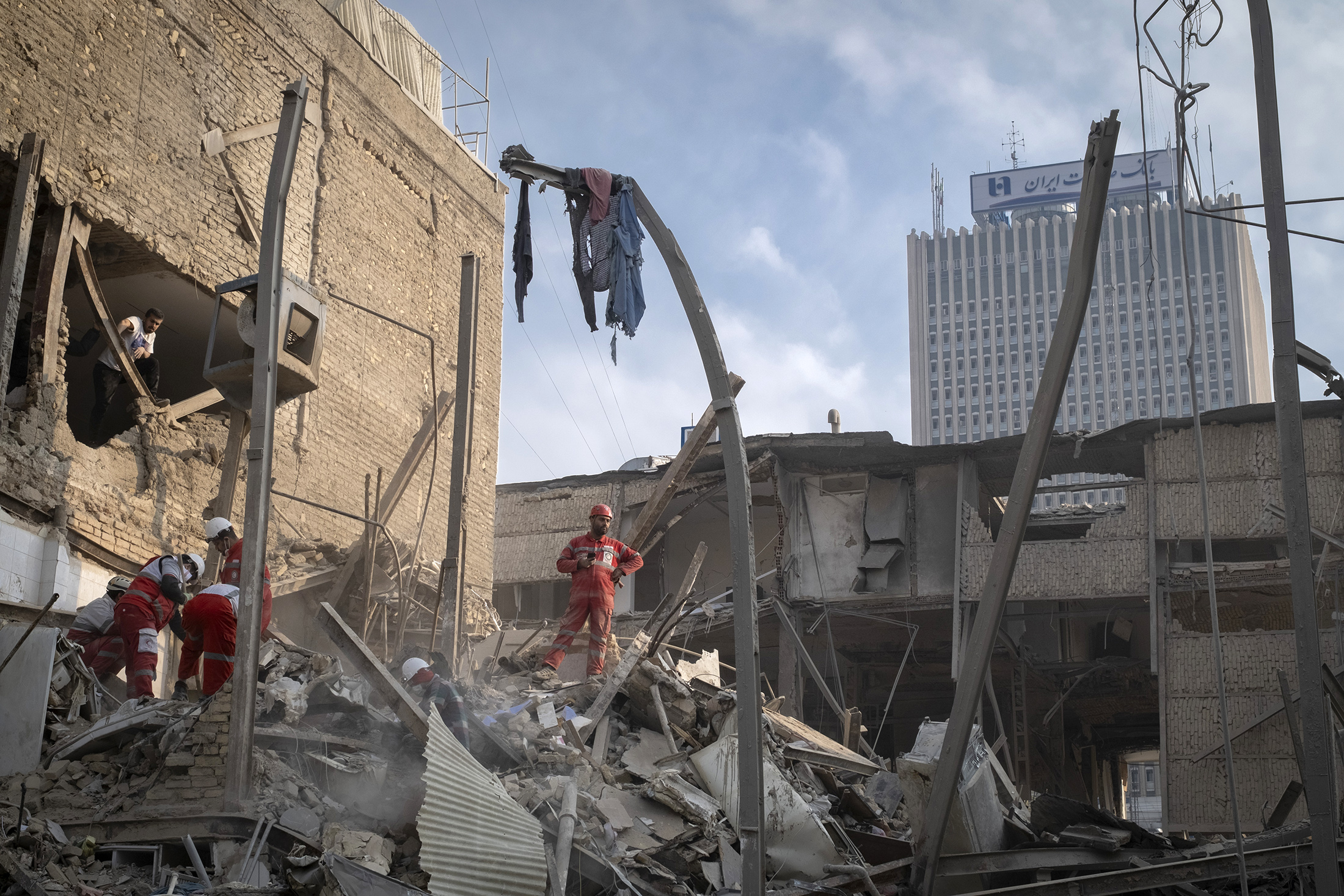
A member of the Iranian Red Crescent Society at the ruins of a building in Tehran on March 16. Photographer: Morteza Nikoubazl/NurPhoto/Getty Images
Bloomberg News analyzed land use within damage clusters in Tehran, and found that 2,816 buildings were hit, around 32% of which were linked to the military, 25% to industry, 21% to civilians, while 19% were commercial and 2% governmental.
“In a city of this size, destruction does not always produce a single, concentrated visual field of devastation,” said Nazanin Shahrokni, associate professor at the School for International Studies, Simon Fraser University, Canada. “The line between military targets and civilian life cannot be cleanly drawn in practice. Once strikes begin, their impact spreads across this interdependent fabric.”
Residential Areas in Tehran Sustain Significant Damage
- Civilian
- Commercial
- Industrial
- Military
- Government
Sources: Damage analysis of Copernicus Sentinel-1 satellite data from Corey Scher and Jamon Van Den Hoek at Oregon State University, land use data from OpenStreetMap and Overture Maps, Bloomberg analysis
Tehran is vast and sprawling — similar in size to New York City. From densely populated, traditional districts of the south, the city stretches into the foothills of the Alborz Mountains, where wealthier neighborhoods perch at higher altitudes, enjoying cooler, cleaner air. Here, liberal-minded, secular Iranians live alongside pious regime elites and luxury shopping malls. The streets are wide and often lined by plane trees.
Most districts are a mix of residential buildings, commercial blocks, shops, banks and government buildings. Parks and landscaped spaces struggle to offset a vast web of urban highways congested with some 16 million vehicles.
There have been strikes across Iran, including in Isfahan — the country’s historic cultural capital and a major industrial hub — but Tehran has been hit particularly hard. Although large areas are unscathed, clusters of damage run the breadth of the capital.
Analysis of damage clusters across Tehran reveals that military or government targets are side-by-side with civilian and commercial assets.
Damage clusters with mostly military structures
- This area includes the headquarters of Tehran’s internal security forces and was hit on March 1
Mostly government
The US and Israel have said they carry out targeted killings and precision strikes on sites used for military purposes or by security services, and accuse the Islamic Revolutionary Guard Corps, which controls various sectors including defense, construction, and energy, of embedding in civilian areas.
Those terms are “often used to describe and justify attacks in ways that make them appear controlled and contained, almost as if war can be made clean,” Shahrokni said. “But that language obscures both the real effects of these operations and the limits of such warfare in a dense urban setting.”
Anna Kelly, White House spokeswoman, rejected the Bloomberg analysis. She said that “The Department of War achieved all of the objectives laid out under Operation Epic Fury – Iran’s ballistic missiles are destroyed, their production facilities are demolished, their navy is sunk, and their proxies are weakened.” Kelly added, “our warfighters struck 13,000 targets since the beginning of major combat operations, and the United States does not target civilians.” The Israel Defense Forces didn’t immediately respond to a request for comment.
Military or industrial sites can also be found in areas that are predominantly civilian or commercial.
Mostly civilian
- A border guard station in northern Tehran, located within a predominantly residential area, was struck on March 4
Mostly commercial
- The Azadi Olympic Complex, which Israel says was used by IRGC forces, was hit on March 5 with civilian buildings nearby
Civilian assets can also be found in damage areas that are predominantly industrial.
Mostly industrial
- An aviation company supplying the Iranian military was struck on March 8, with civilian assets also in the impact area
Sources: Damage analysis of Copernicus Sentinel-1 satellite data from Corey Scher and Jamon Van Den Hoek at Oregon State University, land use data from OpenStreetMap and Overture Maps, Bloomberg analysis
Even before this war, Tehran was facing a number of major challenges.
In November, President Masoud Pezeshkian warned in a speech that its population might have to be evacuated because of looming water shortages driven by years of poorly managed industrialization, expansion, and severe drought. In the winter, the city is often cloaked in thick smog as pollution levels swell, trapped by cold air.
US sanctions on Iran over its uranium enrichment program, human rights abuses and regional security concerns had left its economy in crisis, triggering a nationwide uprising weeks before the war.
The devastation of the bombing campaign — which Trump has threatened would send Iran back to the “stone age” — is likely to compound these hardships.
“With that kind of aggressive bombing campaign, it’s shocking but not surprising to see this kind of damage,” said Natalie Mossin, head of the Institute of Architecture and Technology at The Royal Danish Academy in Copenhagen, who studies rebuilding practices in the built environment. “Damage does not only affect the structures that are hit, it also ripples out, and compounds all existing problems and challenges.”
Last week, the Iranian government put total direct and indirect damage from the airstrikes at around $270 billion — not far off the International Monetary Fund’s estimate for the entirety of Iran’s 2026 gross domestic product of $300 billion. The IMF projects that inflation is likely to top 70%, setting a record for a country accustomed to eye-watering price rises.
Already, many private sector businesses — which serve as a major source of income for many ordinary households — are shuttered or are operating at a partial capacity, according to several owners, who spoke to Bloomberg requesting anonymity because of fear of reprisals from authorities.
Tehran’s municipality says that more than 39,000 residential units have been seriously damaged since the bombing began.
Hadi Kahalzadeh, a nonresident fellow at the Quincy Institute and research fellow at the Center for Global Development and Sustainability at Brandeis University said that he expects spikes in unemployment and inflation to push millions more Iranians into poverty.
Like most of Tehran’s neighborhoods, Vanak is a mixture of residential high-rises, offices, shopping precincts, government and ministerial buildings, banks, and police stations, as well as schools, clinics, bakeries, cafes, restaurants, and a big taxi terminal. It’s where the Middle East’s longest street, the plane-tree-lined Vali Asr, crosses with the more affluent areas of the capital.
According to locals, entire blocks in a mostly residential section north of Vanak square have been flattened by US-Israeli airstrikes, many of them conducted at the start of the war.
Damage Detected Across Affluent Northern Tehran District
Sources: Damage analysis of Copernicus Sentinel-1 satellite data from Corey Scher and Jamon Van Den Hoek at Oregon State University, Bloomberg reporting
Attar Square and Attar Street are home to a vast walled compound housing the offices and facilities for Iran’s national police headquarters, which were also targeted by Israel during its 12-day war with Iran last year.
A number of nearby blocks of flats were damaged in the most recent strikes, including one to the southeast of the square, which had all its windows and doors and main entrance blown out in a blast, residents said. It’s unclear if there were any civilian casualties and Iranian state media hasn’t reported on the strike. One brief, unverified video posted on social media at the time shows plumes of thick, black smoke, rising from between residential buildings.
“The entire area stretching out from the back of Attar Square to the Seoul Highway has been flattened,” said one resident. “There’s nothing there anymore.”
While the data show bomb damage covering the Ararat Sports Complex, several residents said that the decades-old cultural club for Tehran’s Armenian Christian community is intact. A large nearby hospital owned and managed by the Revolutionary Guard is, too.
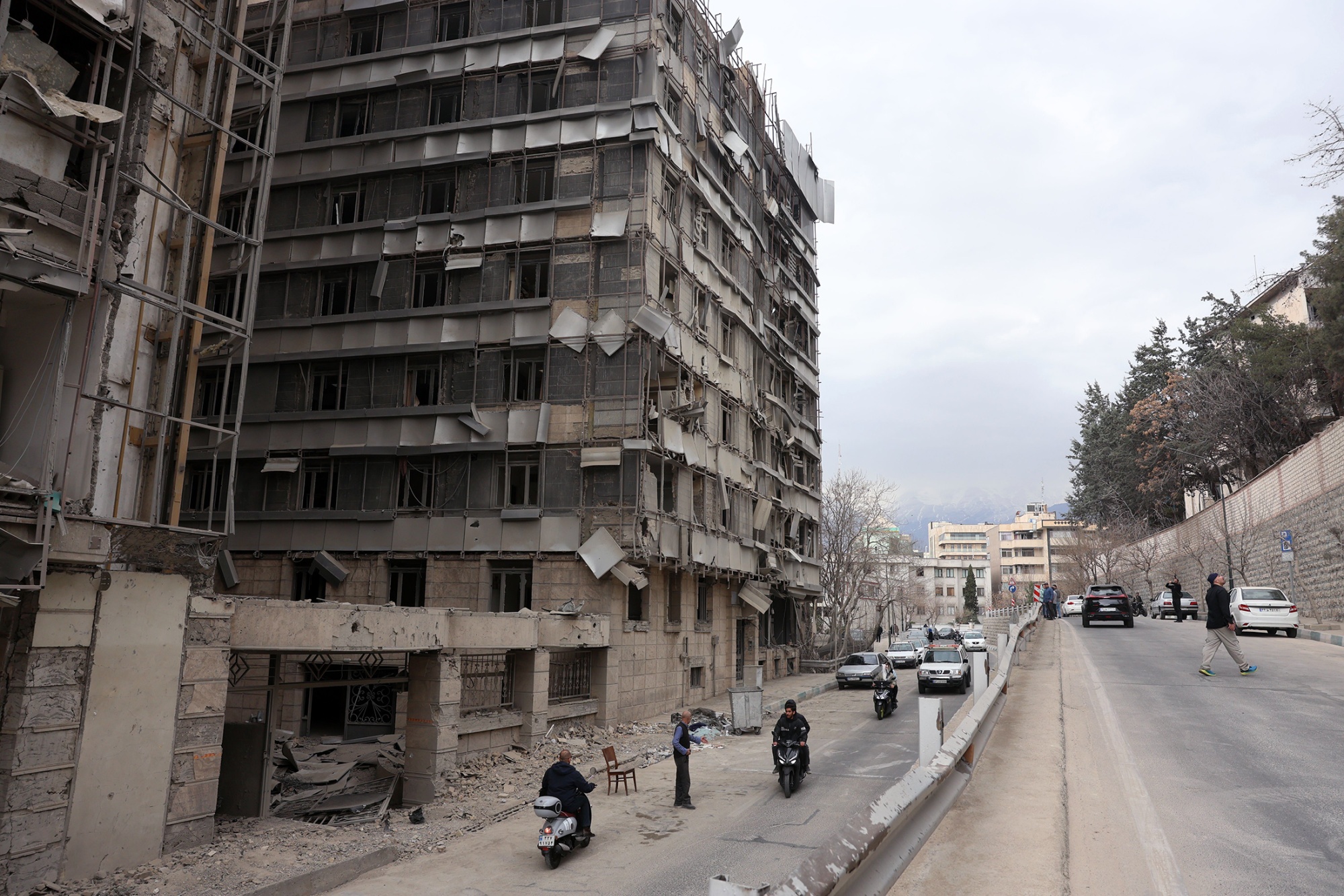
The damaged Gandhi hospital in Tehran on March 2. Photographer: Abedin Taherkenareh/EPA/Shutterstock
To the south of Vanak Square, though, the Gandhi Hospital was bombed. It’s at the start of Gandhi Street, with its low-rise apartment blocks, commercial offices, fabric shops and cafes. State media reports show extensive damage to the building.
Destruction Across Iran, Tehran and Isfahan Sustain the Greatest Damage
Sources: Damage analysis of Copernicus Sentinel-1 satellite data from Corey Scher and Jamon Van Den Hoek at Oregon State University, Bloomberg analysis
Elsewhere, the biggest single loss of civilian life was in the southern city of Minab, where a strike on a school on the first day of the war killed at least 150 children, according to local officials.
And in Isfahan, the bombing of a major steel producer is likely to send shock-waves through other parts of Iran’s non-oil economy that depend on its supply.
Destruction Detected Across Industrial Hub
- Civilian
- Commercial
- Industrial
- Military
- Government
Sources: Damage analysis of Copernicus Sentinel-1 satellite data from Corey Scher and Jamon Van Den Hoek at Oregon State University, land use data from OpenStreetMap and Overture Maps, Bloomberg analysis
The Mobarakeh Steel Co., along with another major steel plant in the southwestern city of Ahvaz, was bombed on April 1. Production has since been shut down, according to state media. In 2024, the World Steel Association ranked Mobarakeh the top steel maker in the region and one of the biggest outside of China.
“The domino effect on other industries’’ will be serious, with sectors like the car industry likely seeing an impact on their output, said Kahalzadeh, of the strike on Mobarakeh.
Iran’s vast petrochemicals sector, another major driver of its non-oil economy, has also been badly hit. A shutdown at one of the sector’s largest sites near the port town of Mahshahr on the Persian Gulf coast is impacting the food industry, with some dairy companies reporting difficulty securing plastic containers for products that supply thousands of supermarkets in Iran and neighboring countries.
“Because they hit petrochemical plants we have a problem with plastics now — the raw material for plastic containers isn’t there and the price of what’s in the market has more than doubled,” the owner of a dairy producer in western Iran said of the strikes, adding that the government had told manufacturers that it would ban exports of plastics needed by the food industry.
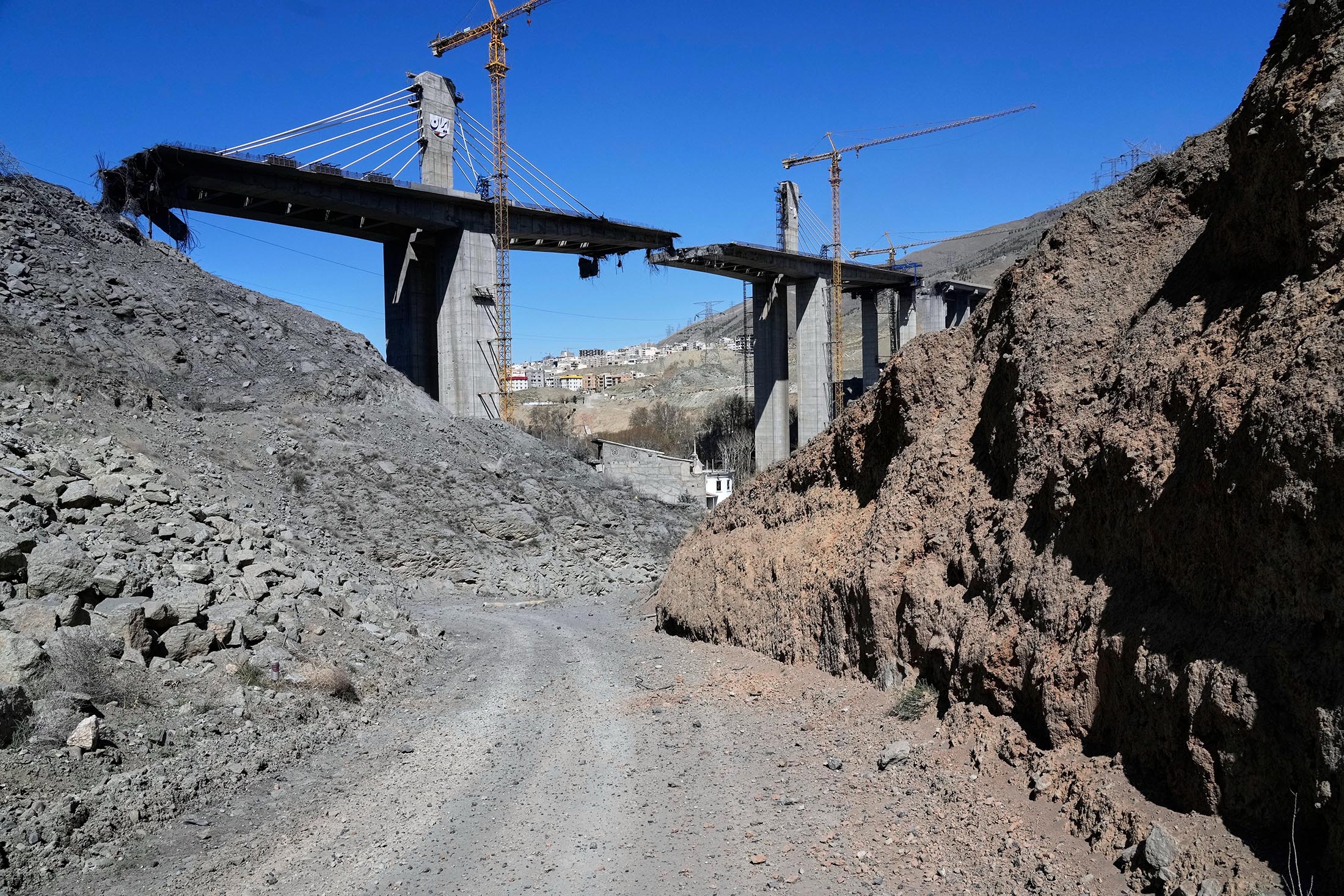
The damaged B1 highway bridge in Karaj, near Tehran on April 3. Photographer: Vahid Salemi/AP
Iranian officials hope to eventually recover reconstruction costs by formalizing their demands for tolls and fees for ships passing the Strait of Hormuz. The country has also asked for war reparations as part of a ceasefire deal with Washington.
After its eight-year war with Iraq, Iran’s focus was on economic recovery.
Authorities oversaw a major reconstruction push, along with an expansion of the country’s industrial base and infrastructure. Rural populations were encouraged to cultivate land for crops to reduce dependence on imports. The economy rebounded and by 1990 GDP had grown by more than 13%, according to the IMF.
This time the situation is likely to be far more complicated. Iranians are exhausted by years of tension and conflict with the US and Israel, decades of economic turbulence, and a leadership that has repeatedly rejected — often with deadly violence — their pleas for change.
“What comes next depends on priorities,” Shahrokni said. “Reconstruction can be restorative, focused on housing, services, livelihoods, and everyday stability, or it can be extractive, where destruction becomes an opportunity for the state to consolidate authority and reallocate resources on its own terms.”
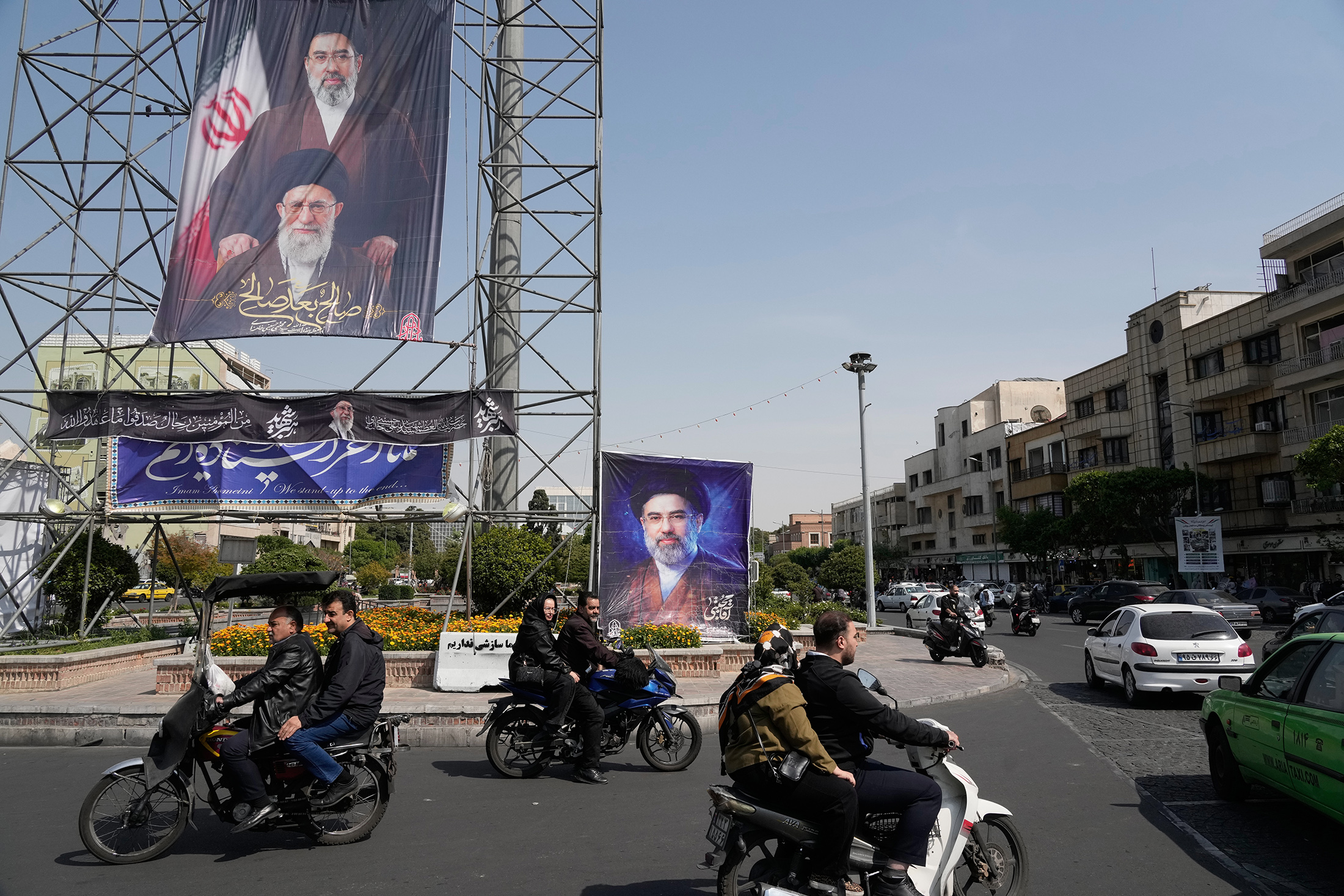
Motorcyclists pass billboards of Supreme Leader Mojtaba Khamenei and his father, Supreme Leader Ali Khamenei, who was killed in US and Israeli strikes on Feb. 28, in downtown Tehran on April 16. Photographer: Vahid Salemi/AP