Trump’s Shifting Iran Strategies Risk a Chaotic Global Endgame
New satellite imagery and data reveal the breadth of destruction to military and civilian targets from the US-Israeli strikes.
In the opening days of the Iran war, US President Donald Trump and his team have offered a series of often changing objectives for the campaign.
Airstrikes, carried out with Israel, have sought to destroy Tehran’s navy, missiles and drones. At the same time, attacks against government officials and facilities are meant to weaken the regime and potentially pave the way for Iranians to rise up and replace it. But Trump has also said he would be open to an option like in Venezuela, where elements of the existing government are now cooperating with the US.
Israel has been more explicit about seeking to remove the threat from Iran entirely, even targeting a gathering Tuesday that was to choose a successor to Ayatollah Ali Khamenei, who was killed in the first strikes.
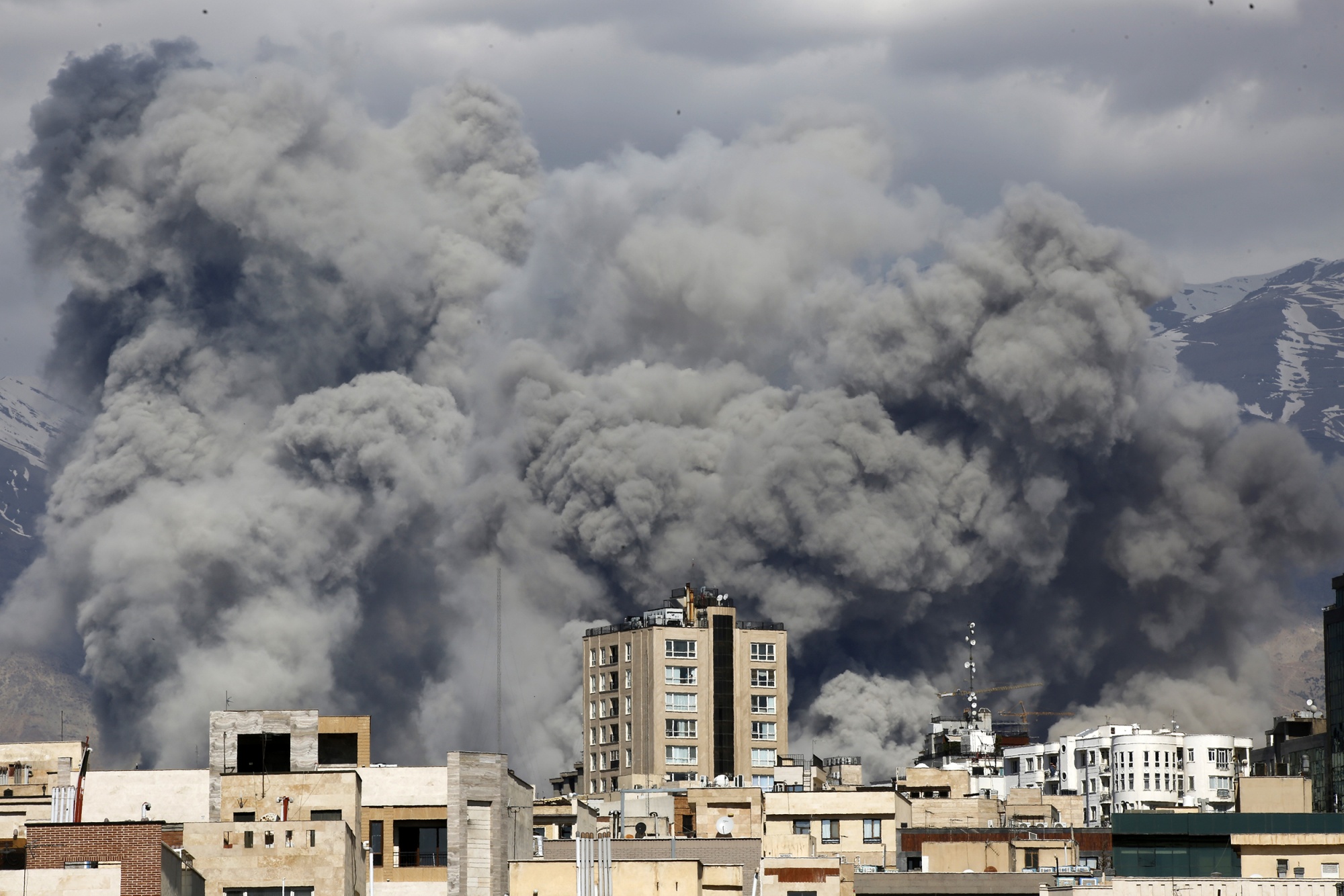
On the battlefield, the US and Israeli campaign’s opening phase has been swift. Missiles and bombs hit command nodes and suppressed air defenses. Iran’s navy was decimated, according to US officials. Five days into the conflict, satellite imagery and open data sources show that while Iran’s nuclear facilities have so far largely avoided attack, strikes have damaged a range of sites, including hospitals, police stations, a court and densely populated areas of northern Tehran.
Substantial Damage Reported in Tehran
Note: Confirmed strikes are ISW data verified by Bloomberg with satellite imagery from multiple sources. Sources: Institute for the Study of War and AEI’s Critical Threats Project, Bloomberg reporting, Satellite image ©2026 Vantor
But the lack of clarity on the endgame has raised questions about what all this destruction is meant to achieve.
“It’s all over the place right now,” said Richard Fontaine, chief executive officer of the Center for a New American Security and former adviser to Senator John McCain, when asked about strategy and objectives. The risk, he added, is that “if you don’t know what you’re fighting for, then among other things you don’t know when you’ve attained it — and you don’t know when to stop.”
That’s one reason why the widening war has shaken global markets: investors can’t tell when the threat to energy and trade will lift. The effective closure of the Strait of Hormuz, through which a fifth of the world’s oil flows, drove crude prices to the highest in four years and European gas costs surged as Qatar cut production. Gold and the dollar jumped and Treasuries fell amid fears of rising inflation.
In a briefing on Wednesday, officials said the US is shifting to closer-in attacks with more precise targeting, including of the resources Iran might use to rebuild its military capability. Initially, strikes were fired largely at coastal areas and from a distance to avoid return fire.
“More and larger waves are coming,” Pentagon Chief Pete Hegseth said. “We are just getting started.”
But Senator Mark Warner, a Democrat who receives classified briefings as a member of the Senate Intelligence Committee, has called on Trump to go before Congress and Americans “and decide amongst these four-five goals that have been laid out — what is the real goal? What is the objective? What is our exit plan?”
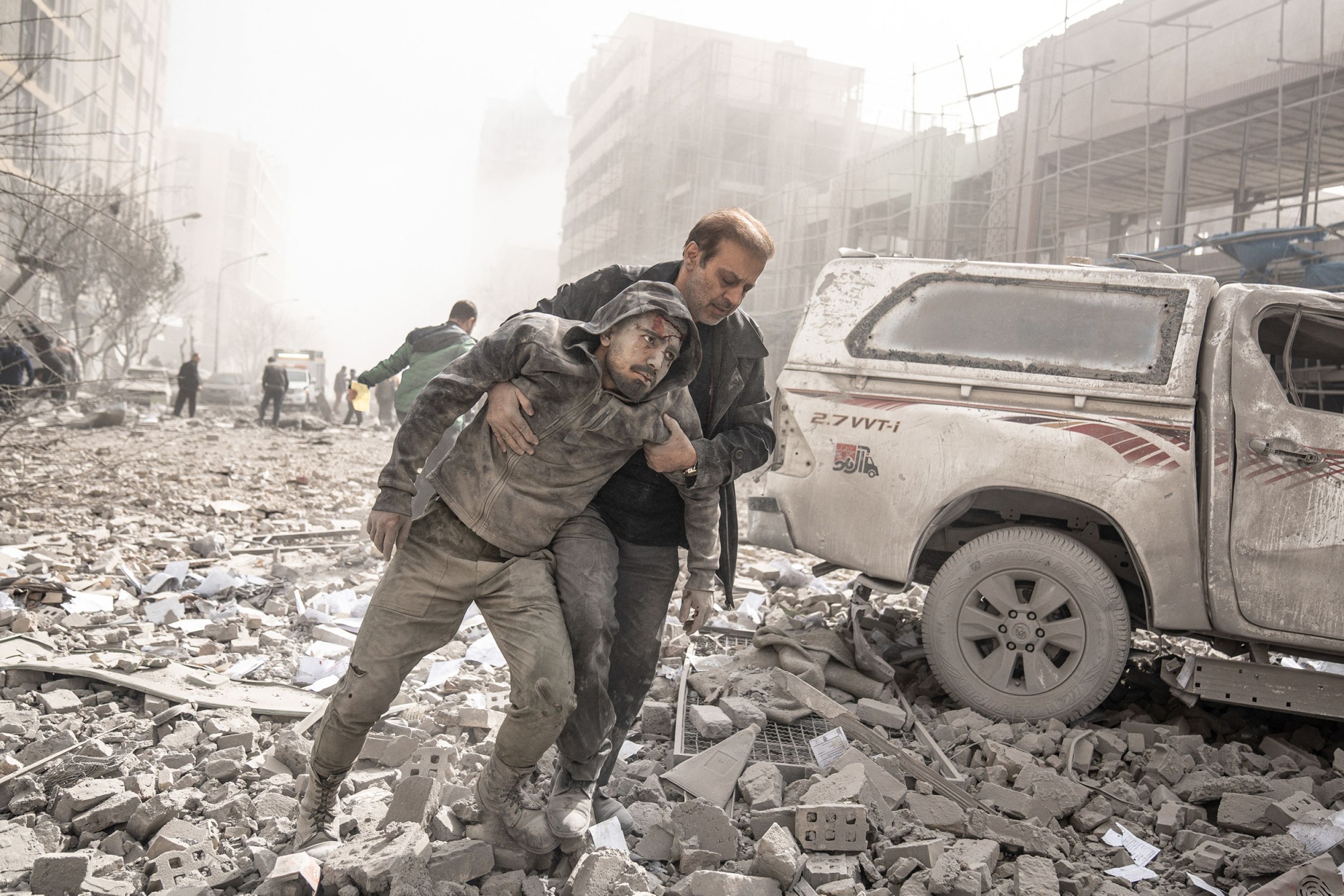
Near Ferdowsi Square following an airstrike in central Tehran on March 2. Source: Parspix/ABACA/Shutterstock
Of course, creating doubt in the enemy’s mind can play an important strategic role in military operations.
“You want to have ambiguity in their minds of how far will the US take this,” said retired Vice Admiral Kevin Donegan, who commanded the Navy’s Fifth Fleet and is now a fellow at the Middle East Institute. “The military objectives are clear.”
Still, inside the Pentagon, some officials have also questioned the strategy amid growing concerns about depleting already-limited stocks of key munitions and uncertainty about the goals of the operation, according to a person familiar with the situation. Hegseth and Trump have said weapons supplies are adequate.
Listen: Big Take: Former Secretary of State on the Two Keys to Ending War in Iran (Podcast)
White House Press Secretary Karoline Leavitt on Wednesday reiterated that the administration has four objectives for the war: eliminating Iran’s missile threat, destroying its naval capacity, disrupting missile and drone production and ending its path to a nuclear weapon. When pressed during a news briefing to state explicitly if regime change is one of the aims, she declined to do so.
“The goals of this operation have been made very clear,” Leavitt told reporters. “As for what comes next for Iran, the president has said of course, it’s a good thing for the United States to want freedom for the Iranian people, and ultimately, we hope that freedom rests in their hands.”
Israel’s goals are clearer: the complete obliteration of the regime and state, according to two senior European officials who spoke on the condition of anonymity.
Ophir Falk, foreign policy adviser to Netanyahu, described the objective as “to remove the existential threat of the Ayatollah regime that has been terrorizing the world for 47 years.” Israel has said its strikes focused initially on western Iran, including Tehran.
According to Richard Clarke, a former White House official and assistant secretary of state, “The Americans seem to be going after the Air Force, the Navy and the drone-launching facilities, while the Israelis seem to be going after senior leaders and police stations throughout the country plus IRGC local command centers.”
The destruction so far has been sweeping, according to satellite data and open-source accounts reviewed by Bloomberg News.
The US said it has hit more than 2,000 targets and destroyed more than 20 Iranian naval vessels – including one in the waters off Sri Lanka – since the start of the campaign on Feb. 28.
Military, Missile Bases Targeted, Few Attacks on Nuclear Sites
Sources: Institute for the Study of War and AEI’s Critical Threats Project, Bloomberg reporting
In June’s 12-day conflict, nuclear installations were the primary focus of the US and Israel. And, while there’s been a broader range of targets this time, comparatively less firepower has so far been directed at Iran’s atomic infrastructure, including the key site at Isfahan.
Tehran and its surrounding metropolitan region — home to roughly 15 million people — have borne the brunt of the bombardment, with about one-fifth of identified targets located there, according to a preliminary analysis by the Institute for the Study of War.
Among the sites hit are government and security buildings and the judiciary complex, as well as the central Gandhi Hospital and police headquarters.
“It’s more than just depriving their strategic capabilities,” said Danny Citrinowicz, a former Israel Defense Intelligence commander who is now a senior fellow at Tel Aviv’s Institute for National Security Studies. “It’s actually about undermining the ability of the regime to control Iran itself.”
State Police Headquarters, Other Buildings Destroyed
Source: Planet Labs PBC, Bloomberg reporting
On the first day of the campaign, a missile struck a primary school in the southeastern city of Minab, killing around 180 schoolgirls and staff, according to Iran’s health ministry, and drawing condemnation from the United Nations. US and Israeli officials have said they are targeting military sites and investigating reports of civilian harm.
The strike – the worst mass casualty event of the war so far – highlights the main risk of an air-power-heavy campaign in and around major cities: sensitive military assets, particularly those involved in the suppression of civilian unrest, are sometimes embedded within or adjacent to residential areas, raising the probability of unintended damage even when precision-guided munitions are used.
Across the country, more than 1,200 people have been killed as of March 4, according to Iran’s semiofficial Tasnim news agency.
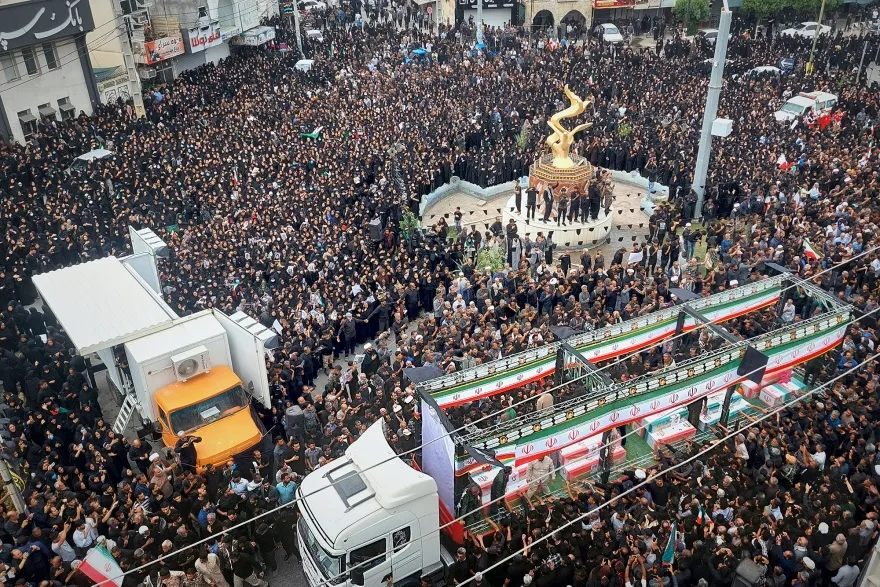
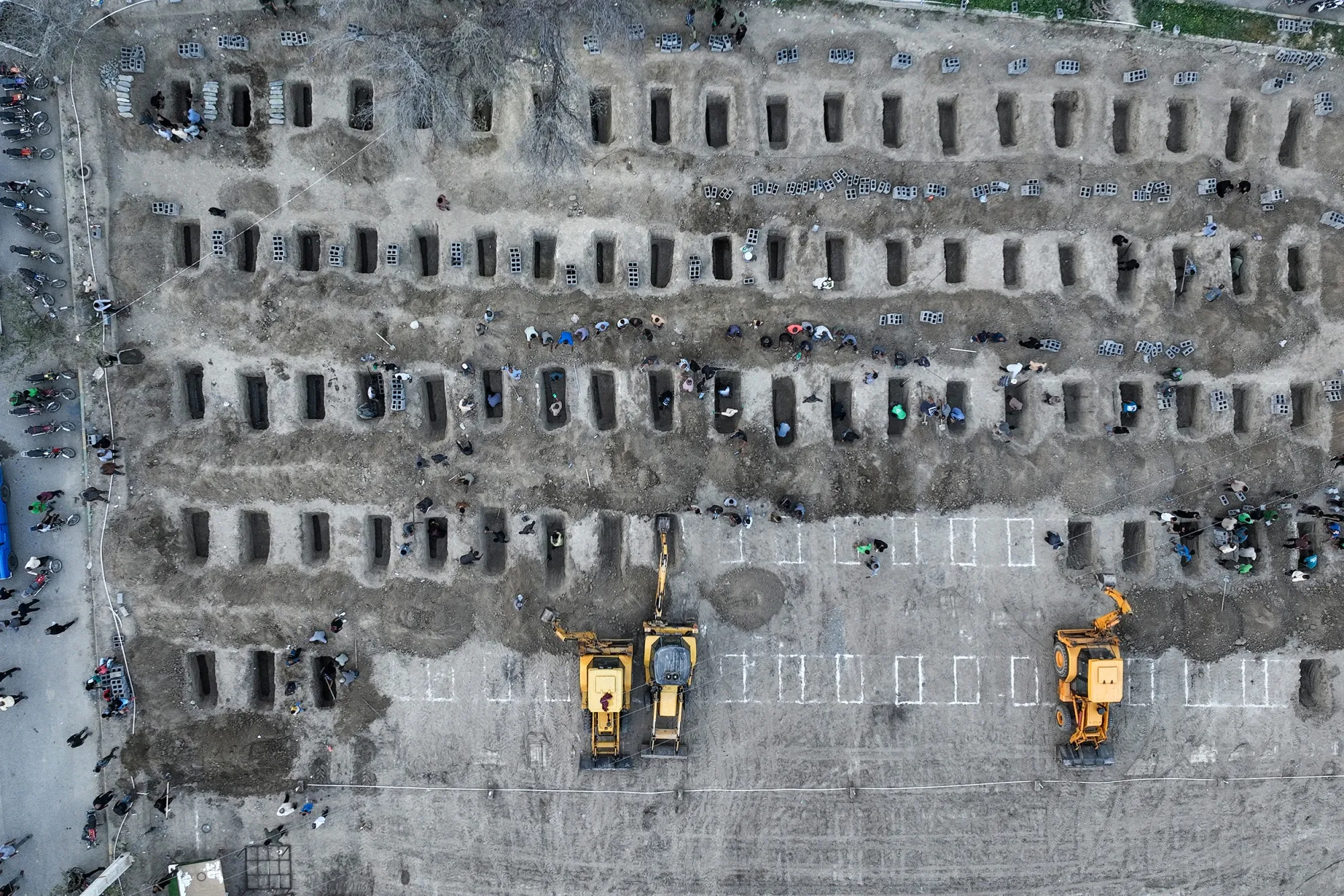
(1) A funeral ceremony for the victims of a missile strike on a primary school in the southeastern city of Minab on March 3. Source: Abbas Zakeri/Mehr News Agency/AP. (2) Mourners dig graves on March 3 for the children and adults killed in the attack. Source: Iranian Press Center/AFP/Getty Images
Sources: Planet Labs PBC, Middlebury Institute, Bloomberg reporting as of March 3.
Imagery reviewed by independent analysts suggests the US-Israeli campaign has successfully disrupted parts of the ballistic missiles and drone arsenal that Tehran used to strike targets in at least 10 countries over the past four days, according to regional security officials.
“The enemy can no longer shoot the volume of missiles they once did, not even close,” Pentagon chief Hegseth said Wednesday.
Satellite evidence shows multiple collapsed tunnels and fresh bomb craters at the sprawling Tabriz Missile base in northwest Tehran, which consists of underground bunkers and silos hardened against attack, as well as multiple entry and exit points for mobile launch vehicles.
Collapsed Tunnels Visible at Tabriz North Missile Base
Sources: Planet Labs PBC, Bloomberg reporting
Tabriz is strategically significant because its location puts parts of southeastern Europe within reach of Iranian missiles. NATO said Wednesday it shot down an Iranian ballistic missile headed for Turkey.
Israeli and US forces appear to have had some success targeting mobile launchers at other missile sites, as they were being taken out of concealment. At Isfahan North missile base, for example, Iran’s largest missile assembly complex, satellite evidence shows multiple strikes on launchers and ancillary buildings.
Satellite images analyzed by Sam Lair, a research fellow at the Middlebury Institute, show mobile launchers capable of transporting, elevating and firing missiles destroyed on roadways at other sites, too.
At Isfahan, Multiple Strikes Hit Mobile Missile Launchers
Sources: Planet Labs PBC, Middlebury Institute, Bloomberg reporting
Air campaigns have historically struggled to eliminate dispersed missile inventories, thrown off by decoys, secrecy and rapid relocation. Remote sensing can identify blast craters, damaged structures and destroyed vehicles, but it cannot easily determine how many missiles were stored at a given site, how many remain operational underground, or how quickly facilities can be repaired.
Evidence of strikes on coastal areas is also apparent in satellite imagery.
Read more: Iran’s Navy in Crosshairs as US Strikes Warship With Submarine
Two days into the attack, at least one warship and neighboring re-fueling facilities were damaged at an Iranian naval base on the Persian Gulf port of Bandar Abbas.
Attacks Destroyed Iranian Ship at Bandar Abbas
Sources: Planet Labs PBC, Bloomberg reporting
The harbor abuts the narrowest point of the Strait of Hormuz, a critical bottleneck for global energy supplies and regional economies.
Another radar and air defense system about 3.2 kilometers (2 miles) north of Bandar Abbas showed visible damage in a March 1 satellite image.
Attacks have focused on taking out drone and light-aircraft bases, too. One such facility, located 40 kilometers (25 miles) west of the Iranian city of Kermanshah, near the village of Choqa Balk-e, shows burned out buildings and bomb craters at the end of a narrow runway.
Craters, Destroyed Buildings at Iranian Drone Base
Sources: Satellite image ©2026 Vantor, Bloomberg reporting
Historical images show the site, surrounded by farmland, was built in 2019 and upgraded with a new hangar and support building three years later, around the time Iran’s drone capabilities received international attention because of their use in Russia’s war on Ukraine.
The same difficulties that the US-Israeli campaign faces in targeting Iran’s missile network apply to the country’s nuclear program.
Last week, the International Atomic Energy Agency said that satellite imagery showed activity around key enrichment facilities, and that there’s evidence Iranian engineers were reinforcing underground infrastructure before the latest wave of attacks.
IAEA Director General Rafael Grossi said inspectors have been able only recently to confirm new strikes at the Natanz enrichment complex. He cautioned that air power and satellite analysis alone cannot resolve concerns over Tehran’s atomic capabilities.
Natanz Nuclear Facility Is One of Few Nuclear Sites Attacked
Sources: Satellite image ©2026 Vantor, Institute of Science and Security
“Iran is not going to disappear from the surface of the Earth,” Grossi said, noting the country’s industrial base, technical expertise and existing stockpiles of enriched uranium. “We will not be able to escape this issue.”
Trump Tuesday warned that “the worst case would be, we do this, and then somebody takes over, who’s as bad as the previous person, right?”
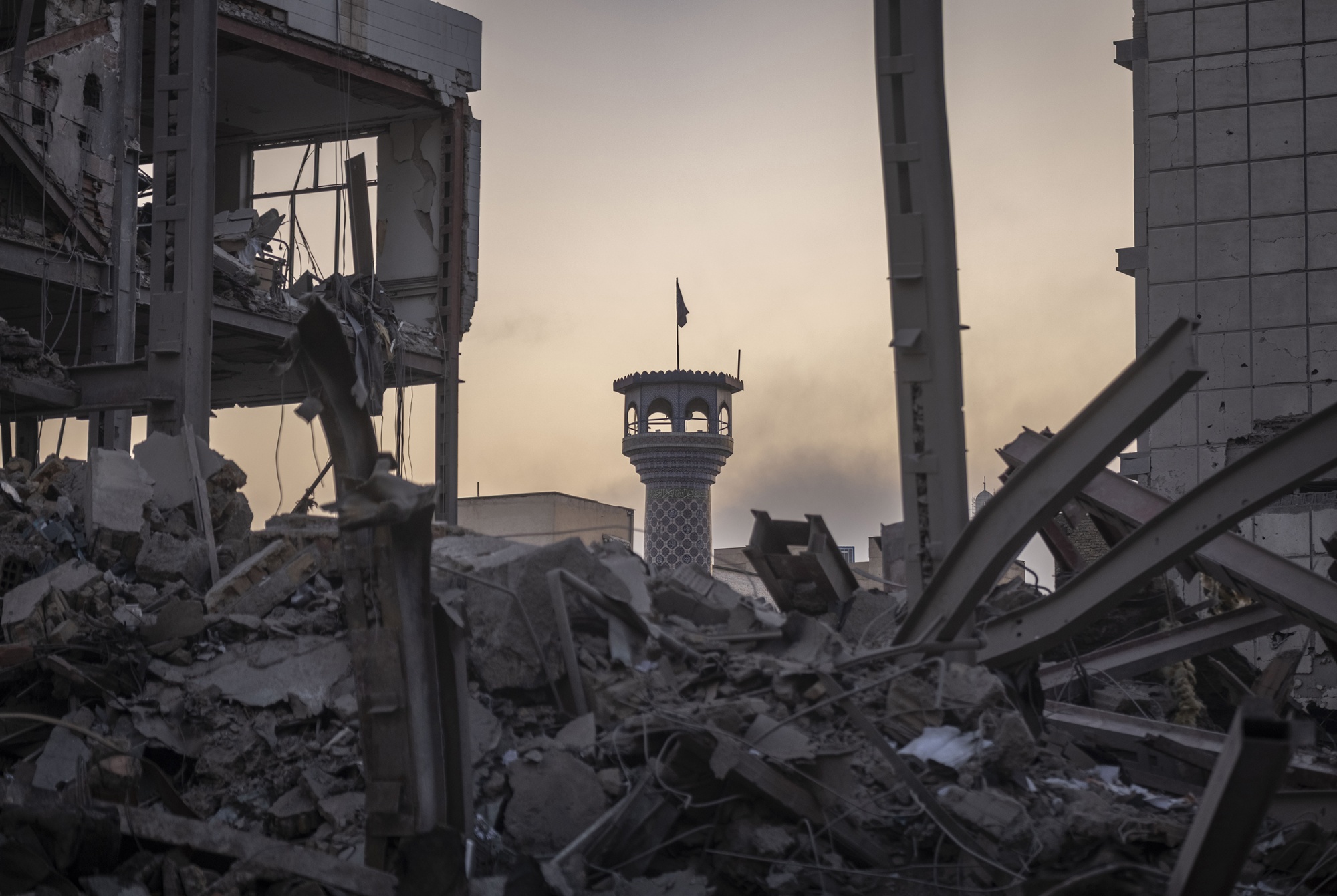
The minaret of a mosque behind the ruins of a destroyed police headquarters in Tehran on March 2. Photographer: Morteza Nikoubazl/NurPhoto/Getty Images
The lack of public clarity may prove a political advantage for the president, giving him the flexibility to decide when to declare mission accomplished.
It’s been a playbook Trump has used for years, said Fontaine, the former adviser to McCain, referring to the drone strike ordered by Trump during his first stint in office that killed Qasem Soleimani, an Iranian major general.
“He often doesn’t have a clear objective at all, and those worked out OK,” Fontaine said.
(Updates Iran death toll in 27th paragraph. A previous version of the story corrected a reported target on the map of Tehran.)