Iran War Threatens the Building Blocks of Europe’s Food and Car Production
In World War I, Germany needed imports of compounds essential for fertilizers and explosives to sustain its war effort, a vulnerability that the British tried to exploit with a naval blockade. More than a century later, Europe again faces strategic risks related to its industrial building blocks.
This time, its supplies of basic chemicals are at risk not because of an opposing military but because of the economics of producing them. And the problems are largely self-made.
Over decades, the European Union has pursued policies that have relied on easy access to the world’s resources. Amid the breakdown of the global order, those built-in dependencies threaten to rise up its value chain and affect everything from food and painkillers to cars and building materials.
Recent Price Increases From Chemicals Producers and Impacts From Surging Costs
With oil and natural gas markets disrupted by the halt of shipping through the Strait of Hormuz, basic chemicals — such as ethylene and propylene, which go into plastics — have become increasingly uncompetitive to produce in Europe. Those conditions also affect compounds like ammonia, the pungent-smelling gas that Germany began producing synthetically in World War I after its supplies of nitrates from Chile were cut off.
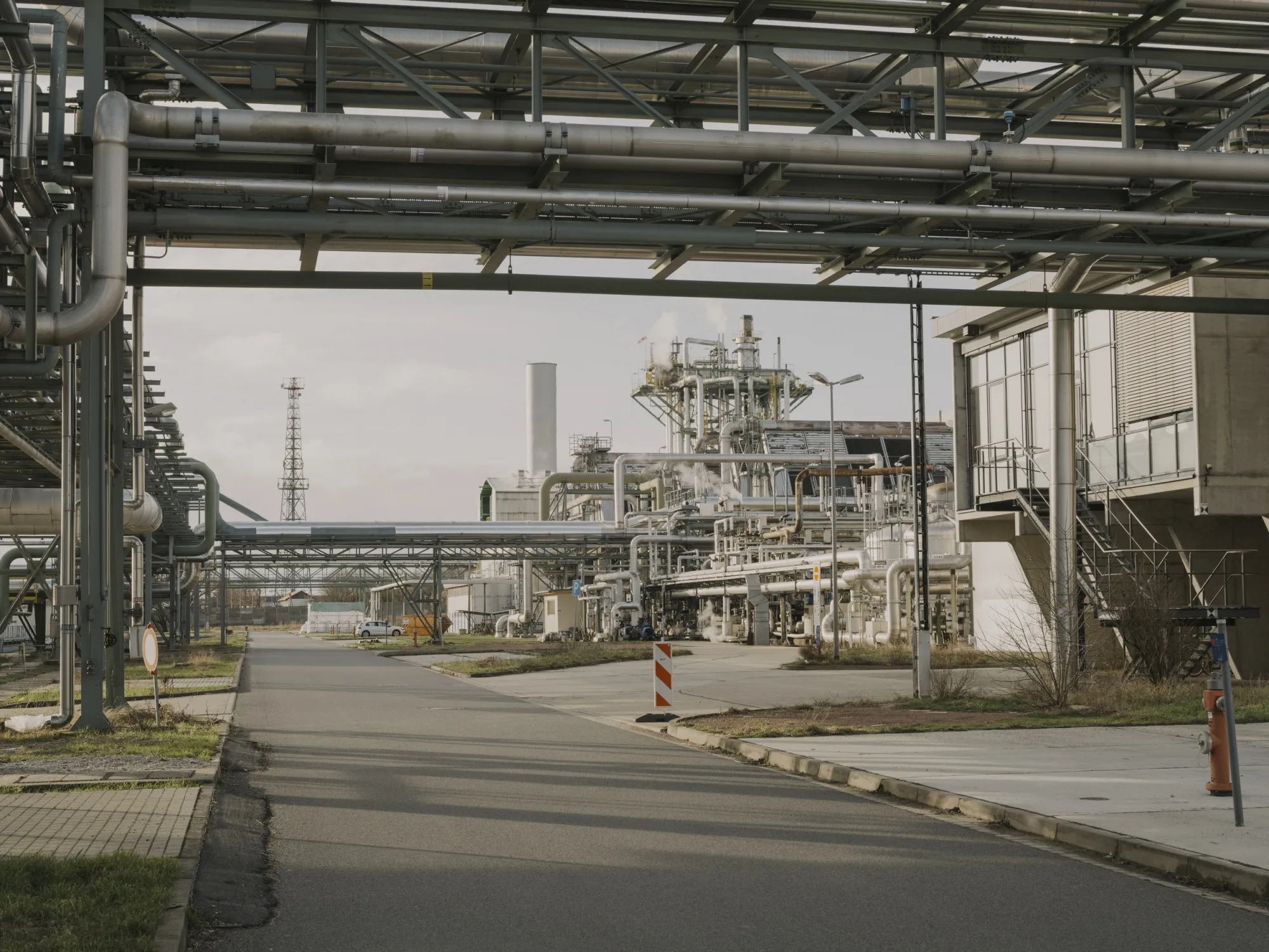
SKW Stickstoffwerke Piesteritz GmbH in Wittenberg is Germany’s largest ammonia producer. Photographer: Iona Dutz/Bloomberg
For more on Europe's industrial economy listen to Marilen Martin on today's Daybreak Europe podcast on Apple, Spotify or anywhere you listen.
Already for decades, the EU has imported a majority of its energy. The dependency was exposed by Russia’s invasion of Ukraine and has intensified following the US and Israel’s conflict with Iran. As oil and gas prices surge, it risks local production of the materials needed to make more complex chemicals. While imports are an option, that would expose the region even more to global volatility.
“In a scenario with free global trade, many chemical products can be imported easily,” said Jan Friese, a partner at Boston Consulting Group. “But in times of crisis or when geopolitical blocs form that hinder free trade, this becomes problematic, as entire production lines can suddenly come to a halt.”
There have been plenty of warnings that Europe’s reliance on globalized supply chains has become a problem. After the Covid pandemic, auto production on the continent ground to a halt due to shortages of chips from Asia. More recently, European aviation has been put on high alert after the closure of the Strait of Hormuz threatened shortages of jet fuel.
Read More: The Strait of Hormuz Oil Shock Is Now Heading West
Chemicals Accounted for €635 Billion in EU Sales in 2024
Source: Cefic Chemdata International
Note: Figures don’t add up to 100 due to rounding
For SKW Stickstoffwerke Piesteritz GmbH — a legacy of investments made by the German Empire to rebuild its supply chain during World War I — the risks have become palpable. “We’re focusing primarily on survival, because that’s what’s at stake,” Carsten Franzke, SKW’s chief operating officer, said from the fifth floor of a Soviet-style office block in Wittenberg in eastern Germany. “The ground beneath us is beginning to shift, the walls are crumbling.”
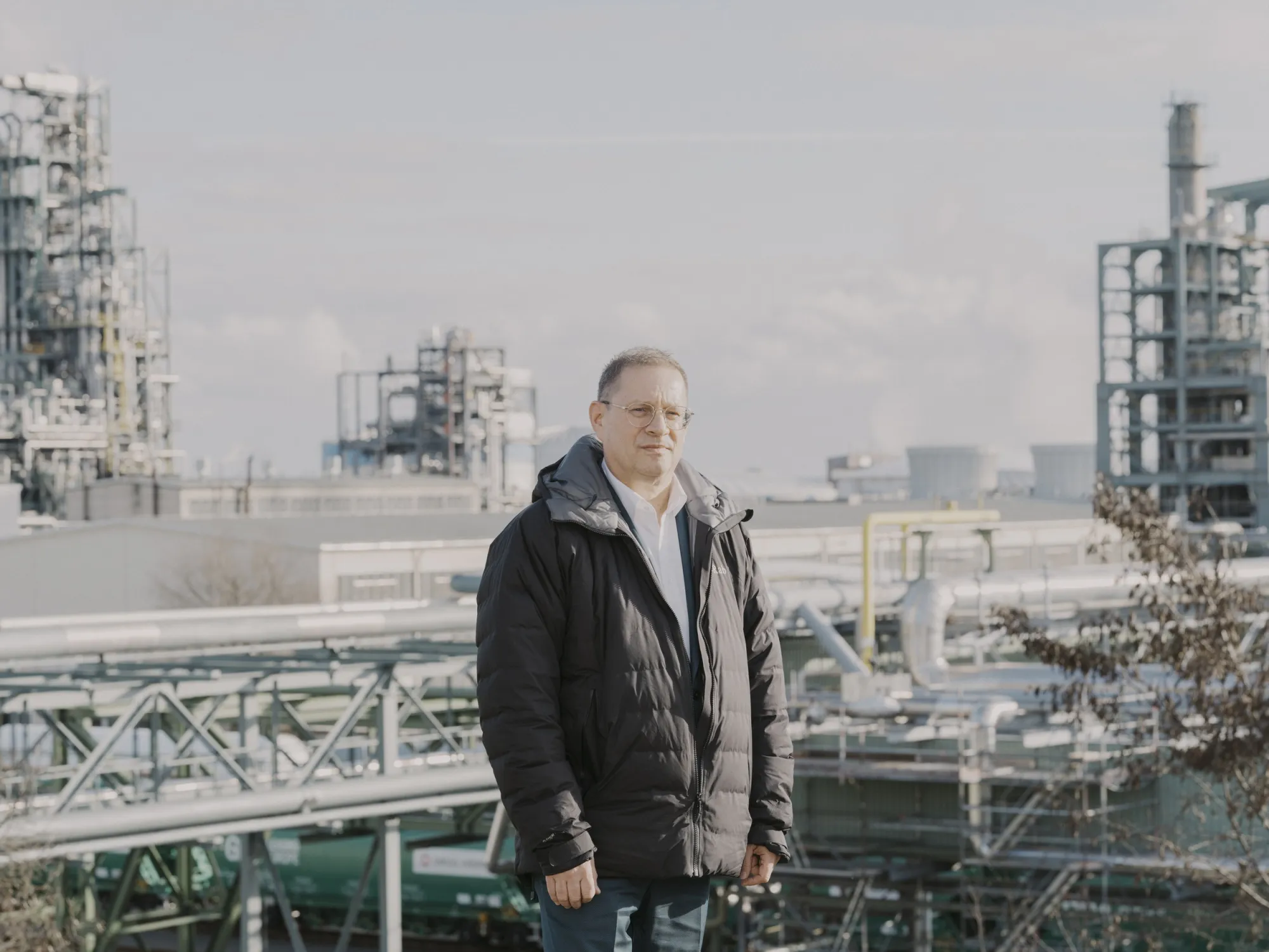
Carsten Franzke, SKW’s chief operating officer, warns that the company’s survival is at stake. Photographer: Iona Dutz/Bloomberg
Germany’s largest ammonia producer had to temporarily shut production in 2022 after a spike in gas prices made producing the key ingredient for fertilizers, fuel additives and explosives unprofitable. While SKW can still pass on costs that have surged due to the Iran war, the current situation shows how volatile the sector has become.
Due to cost spikes and struggles to source material in the fallout from the Iran war, German chemical giant BASF SE moved to hike prices for detergents by some 30%, while peer Evonik Industries AG also announced higher rates for compounds used in feed for cattle and chickens. Eventually those increases filter through to the cost of living.
Even before the latest energy shock, major ammonia plants were shuttered in Germany and Belgium. Between 2022 and 2025, around 9% of Europe’s chemical production capacity was shut, with closures accelerating sharply in the past two years, according to industry group Cefic.
At the same time, China has rapidly expanded capacity in its drive to become more self-sufficient, contributing to a global glut of product and squeezing European companies.
Read More: Mergers Likely for Europe’s €635 Billion Chemicals Sector
While people often feel energy shocks through gasoline prices, chemical plants sit far upstream from everyday products so that the sector’s issues go largely unremarked despite it employing some 1.2 million people. But big manufacturers are taking notice.
“Resilient supply chains are increasingly becoming a strategic factor,” a spokesman for BMW AG said in response to Bloomberg questions. While the German carmaker leaves it up to its suppliers of adhesives, paints and antifreeze to source their own materials, “we closely monitor market developments and potential supply risks.”
Europe’s reliance on imports of liquefied natural gas often makes the fuel two to three times more expensive than in the US, with China falling in between. Energy-intensive industries like chemicals also have to pay for emitting carbon. SKW paid €40 Million ($47 million) for emissions certificates in 2025, a cost that is set to increase over the coming years.
Most international competitors don’t face such levies, and the rules were designed at a time when Europe’s policymakers expected other major economies to move in the same direction on the environment. But that hasn’t happened. Under President Donald Trump, the US has abandoned many climate protections, while China seeks to move up the industrial value chain to compete more directly with Europe.
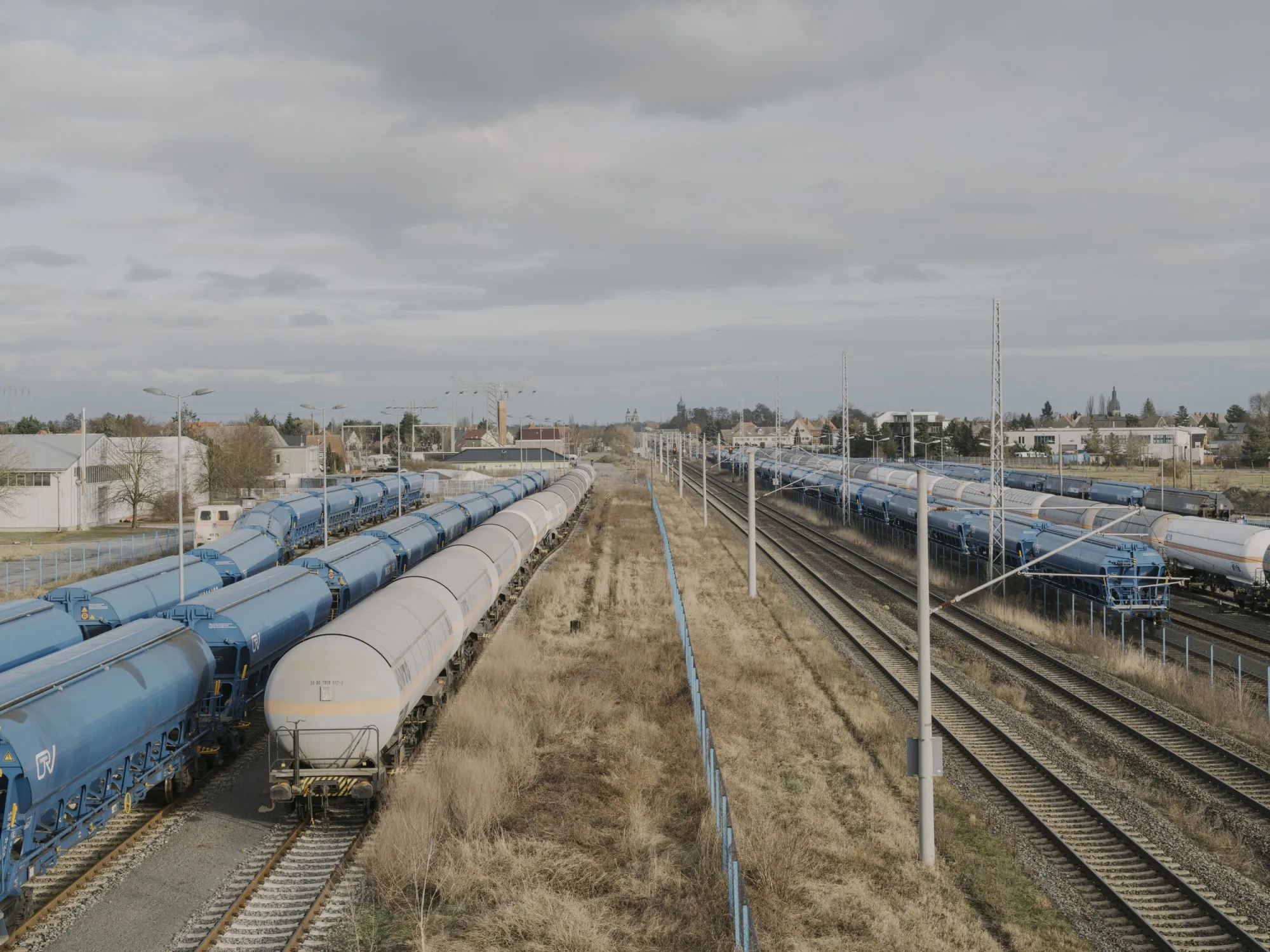
The chemicals produced at SKW — transported exclusively by rail for safety reasons — are a key ingredient for fertilizers, fuel additives and explosives. Photographer: Iona Dutz/Bloomberg
Over decades, Europe built up dense industrial clusters that link chemicals and manufacturing, but as final production increasingly moves abroad, the model has become harder to sustain.
Being forced to import basic materials “sets off a downward spiral in which customers for the chemical industry begin to leave,” said Iris Herrmann, a partner at consultancy Oliver Wyman. “At a certain point, it becomes incredibly difficult to reverse.”
Read More: Iran War Is Yet Another Blow to Europe’s Industrial Backbone
The EU and its member states are aware of the risks, yet the response follows a familiar pattern in which national interests compete with one another and bog down efforts to find solutions.
The bloc last year launched the Critical Chemicals Alliance to identify compounds and sites that are crucial to the region’s resilience. But that is contentious as it effectively would pick winners and losers.
France and several other member states have proposed classifying a range of substances including ammonia and ethylene — used to make antifreeze and plastics and to ripen fruit — as strategic and therefore eligible for targeted support. Germany, by far Europe’s largest chemical producer, has resisted and wants to improve framework conditions, such as lowering energy costs and cutting red tape.
“The discussion about what might be preferred in the first place is an approach that we in the German chemical industry don’t really like,” said Matthias Blum of Germany’s VCI chemical industry association. “It’s important to take an approach that’s as objective as possible — without giving individual molecules a thumbs-up or thumbs-down.”
Aside from what to protect, the question of how to aid the industry is also controversial. Proposals range from state-aid exemptions to trade measures. Given the bloc’s strained finances, any subsidies would likely be targeted and temporary.
Basic chemicals are integral for Europe’s industrial system, without local production import dependencies would increase and other sectors would be at risk. Photographer: Iona Dutz/Bloomberg
But with the energy crisis still evolving and global competitors pressing ahead, the time for discussion is running out. Delays in implementing a plan risk holding back investments that would be critical to maintaining competitiveness against rivals in the Middle East and China, according to Benedikt Frank, a partner at Kearney.
“If it proceeds like normal European processes, it will be too slow,” said Michael Vassiliadis, head of Germany’s IGBCE union, which represents chemical workers. He warned that relying on imported ammonia is not just about deepening dependencies, but would also demand significant new infrastructure to transport the toxic gas.
Basic chemicals are most at risk because they’re a standardized commodity and need to be competitive on price. Production though is highly energy-intensive, relying on oil and gas not only for energy but also as feedstock.
Why Paint Prices Are Closely Tied to Global Energy Markets
Sources: BloombergNEF
In steam crackers, hydrocarbons such as ethane or naphtha are heated to extreme temperatures, causing large molecules to break apart. Ammonia is produced by combining hydrogen — typically derived from natural gas — with nitrogen from the air at high temperatures and pressures. Natural gas accounts for over 70% of production costs.
When gas prices surge, companies have little room to maneuver. They pass on higher costs if they can or shut down — like SKW did in 2022. The risk for Europe is that if production of these basic chemicals disappear from the continent, it would compound vulnerabilities and create a contagion effect that sends shutters through the entire economy.
“If we no longer have the ten basic chemicals here in Germany — because we lose them or supply chains break down — we have a serious problem,” said SKW’s Franzke. “If no action is taken, it is a very real possibility that the economy here in Europe will collapse.”