Amazon’s Rural Delivery Push Slams Into Walmart
The turf war between the two retail giants is playing out in towns across the country.
When the blue Amazon box truck rolled into her smoothie shop parking lot in late February, Pamela Peterson knew it was time to start her side hustle. She turned off her blender and popped the rear hatch of her minivan to load up the day’s haul: about 50 boxes and bubble wrap envelopes she’d deliver to Amazon shoppers in the remote fringes of southern Utah.
“Oh look, someone’s getting diapers,” said Peterson, 45, as she carried a jumbo box of Huggies to a black Chrysler Town & Country splattered with Utah’s signature red dirt. “We do sell these in town, but they could be cheaper on Amazon.”
Peterson’s daily run has become a critical supply line for the 5,000 residents of Kanab, which is close to global attractions like Zion National Park but a good 90-minute drive from the nearest big-box store. It also earns Peterson an extra $800 a week — $2.50 per package — supplementing what she makes at Asava Juice & Smoothies, where sales ebb and flow with tourist season.
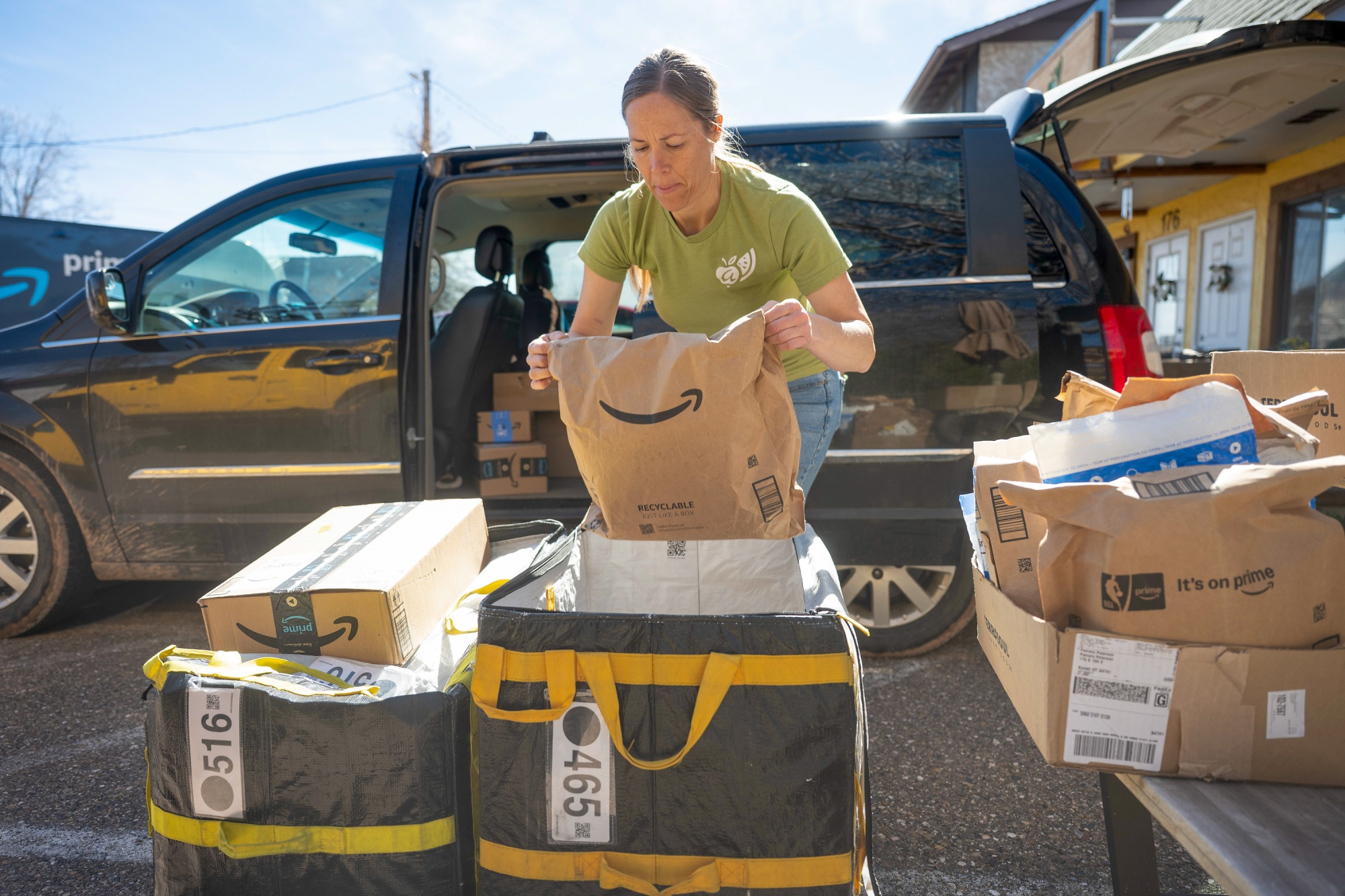
Pamela Peterson, owner of Asava Juice & Smoothies helps unload and sort Amazon packages in Kanab, Utah. Photographer: Jacob Kepler/Bloomberg
Small business owners craving extra cash are on the front lines of an ambitious Amazon.com Inc. initiative: bringing the quick delivery popularized in cities and suburbs to America’s remote outposts. Many rural online shoppers are used to waiting half a week or longer for purchases to arrive. Amazon, which disclosed its $4 billion rural delivery push last year, has narrowed that to less than 24 hours for 1 in 5 rural and small-town households, according to a Bloomberg analysis of delivery times for commonly purchased items. The company offers 48-hour delivery to 62% of rural households, the analysis found.
A $1 Trillion Market
Sources: Amazon, US Department of Agriculture
The payoff could be huge. Rural shoppers in the US collectively spend $1 trillion a year on clothing, electronics, household goods and other items, representing about 20% of retail purchases excluding cars and gasoline, according to Morgan Stanley. Amazon aims to recondition those shoppers to expect quick delivery, which would play to its strengths and make the company top-of-mind for online purchases.
Amazon’s biggest obstacle is Walmart Inc., which claimed the heartland decades ago during an aggressive expansion on its path to become the world’s largest retailer. Walmart has spent years training rural shoppers to come to its stores for groceries and then snag clothes, TVs and crockpots while there. It has a big head start on Amazon in proximity, with stores and Sam’s Clubs located within a 10-mile drive of nearly two-thirds of rural households, Bloomberg’s analysis shows. Walmart is also upping its e-commerce game, turning its thousands of locations into delivery hubs and pickup locations for products ordered online.
Sources: Amazon, Walmart, USDA
Wall Street is more fixated on the $200 billion Amazon plans to invest mostly on artificial intelligence infrastructure than the relatively meager $4 billion it’s spending to shake up rural retail. So the fight between the titans has been unfolding slowly and quietly, one town at a time — from Kinston, North Carolina, to Grand Rapids, Minnesota, where Amazon this spring is scheduled to open a delivery hub just a quarter mile from a Walmart.
“Rural America is often overlooked,” said Sky Canaves, an analyst at EMarketer Inc. who tracks online sales. “This is the opportunity Amazon is trying to seize because e-commerce growth is getting harder to come by.”
It Started With a Tweet
Amazon’s rural delivery push began more as a reaction than a plan. In 2017, President Donald Trump, then in the first year of his first term, issued a veiled threat to cancel or rewrite the e-commerce giant’s contract with the US Postal Service — potentially saddling the company with billions of dollars in extra costs.
“Why is the United States Post Office, which is losing many billions of dollars a year, while charging Amazon and others so little to deliver their packages, making Amazon richer and the Post Office dumber and poorer?” Trump asked on what was then called Twitter.
The tweets kept coming, sowing panic in Amazon’s executive suite, according to people familiar with the situation. Fearing that the company’s reliance on USPS in the heartland left it exposed to Trumpian whims, executives scrambled to create a rural logistics network, said the people, who requested anonymity to discuss internal strategy. Amazon spokesperson Steve Kelly disputed that the rural push was prompted by Trump’s tweets, saying it was a “natural evolution of our last-mile network” and not driven by “external factors.”
Amazon has spent decades perfecting quick delivery in cities and suburbs through networks of inventory-stuffed warehouses and robots that quickly fetch items when online shoppers click the buy button. Once packed, the orders head to delivery stations, where blue vans are stuffed with boxes and fan out in all directions.
Sparsely settled areas challenged this model, making the US Postal Service a default delivery partner because carriers already serve local homes. Delivery wasn’t as fast as in cities, but it was still reliable and connected rural shoppers with an assortment of products that would otherwise require long drives — if consumers could find them at all.
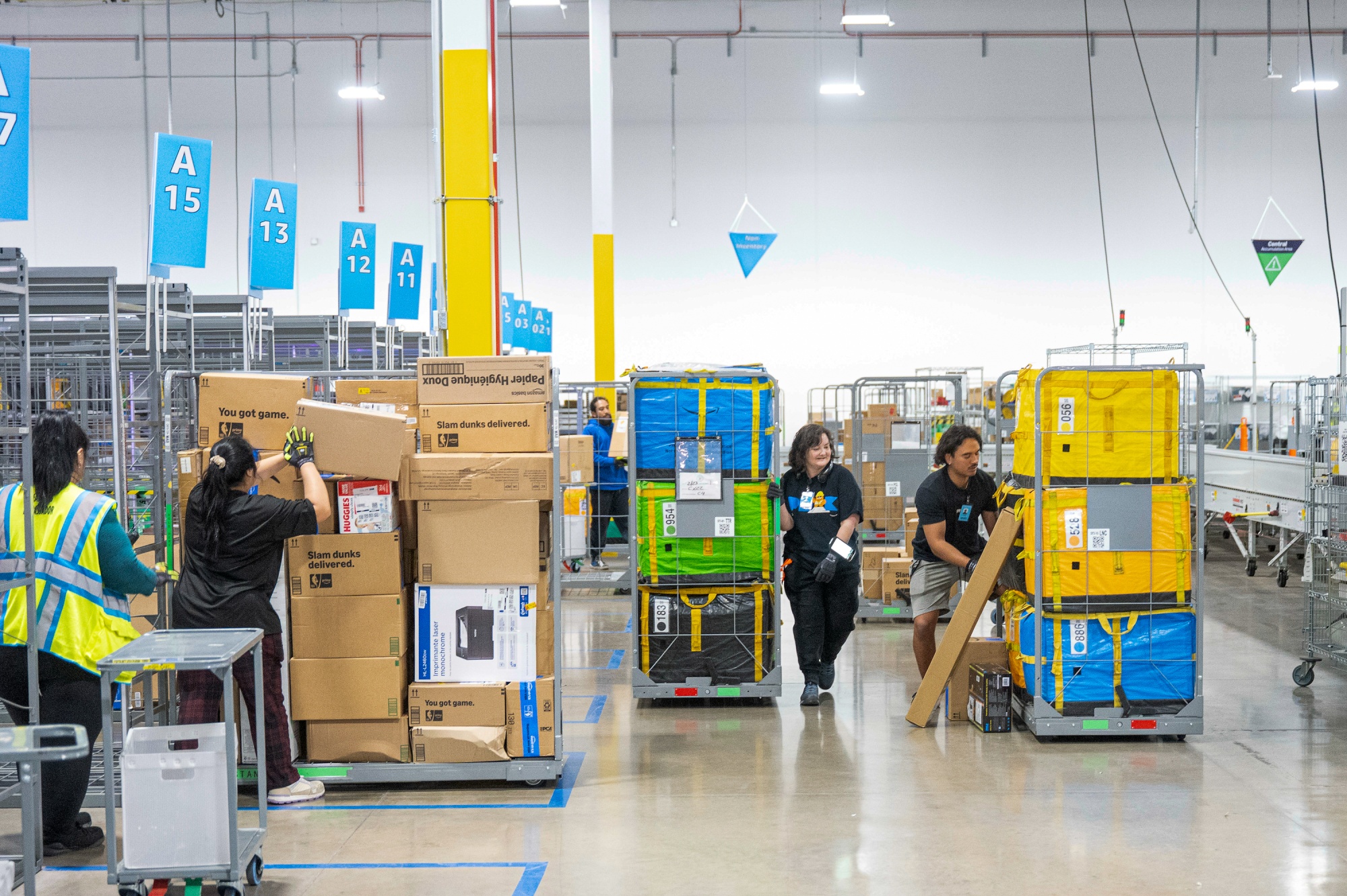
Workers sort packages at an Amazon delivery station in St George, Utah. Photographer: Jacob Kepler/Bloomberg
It was also a pretty good deal for Amazon. The company’s USPS contract isn’t public, but in 2015 Bernstein Research analysts estimated that the postal service was delivering some 40% of Amazon packages for about $2 apiece, about half what United Parcel Service Inc. and FedEx Corp. charged at the time.
UPS currently imposes a $16.50 surcharge for residential deliveries in many rural areas, largely handled by union drivers earning up to $45 per hour. Amazon wanted a cheaper alternative, hence outsourcing rural deliveries to small businesses hungry for a side gig.
The company wanted to move quickly, and the path was sometimes bumpy, according to people involved in the rollout, which began with limited operations in Florida, Mississippi and Ohio. One of them recalled that drivers relying largely on inaccurate digital maps encountered unexpected dead ends and dirt roads planted over with soybeans. Kelly, the Amazon spokesperson, said Amazon uses artificial intelligence mapping that continuously improves and that inaccuracies are “rare.”
Trump’s election to a second term gave Amazon a chance to recast the endeavor as a patriotic investment since other carriers like UPS and FedEx were pulling back from rural towns.
“At a time where many logistics providers are backing away from serving rural customers because of cost to serve, we are stepping up our investment to make their lives easier and better,” Amazon Senior Vice President Udit Madan wrote in a blog post last April after touting the new $4 billion investment.
The company plans to have 200 rural delivery stations around the country by the end of the year, Holly Sullivan, Amazon’s vice president of economic development policy, said in an interview. That’s up from 70 the company had at the end of 2023. The goal is to cut delivery times roughly in half — to as little as two days from four to six currently — and give shoppers a more consistent experience, she said.
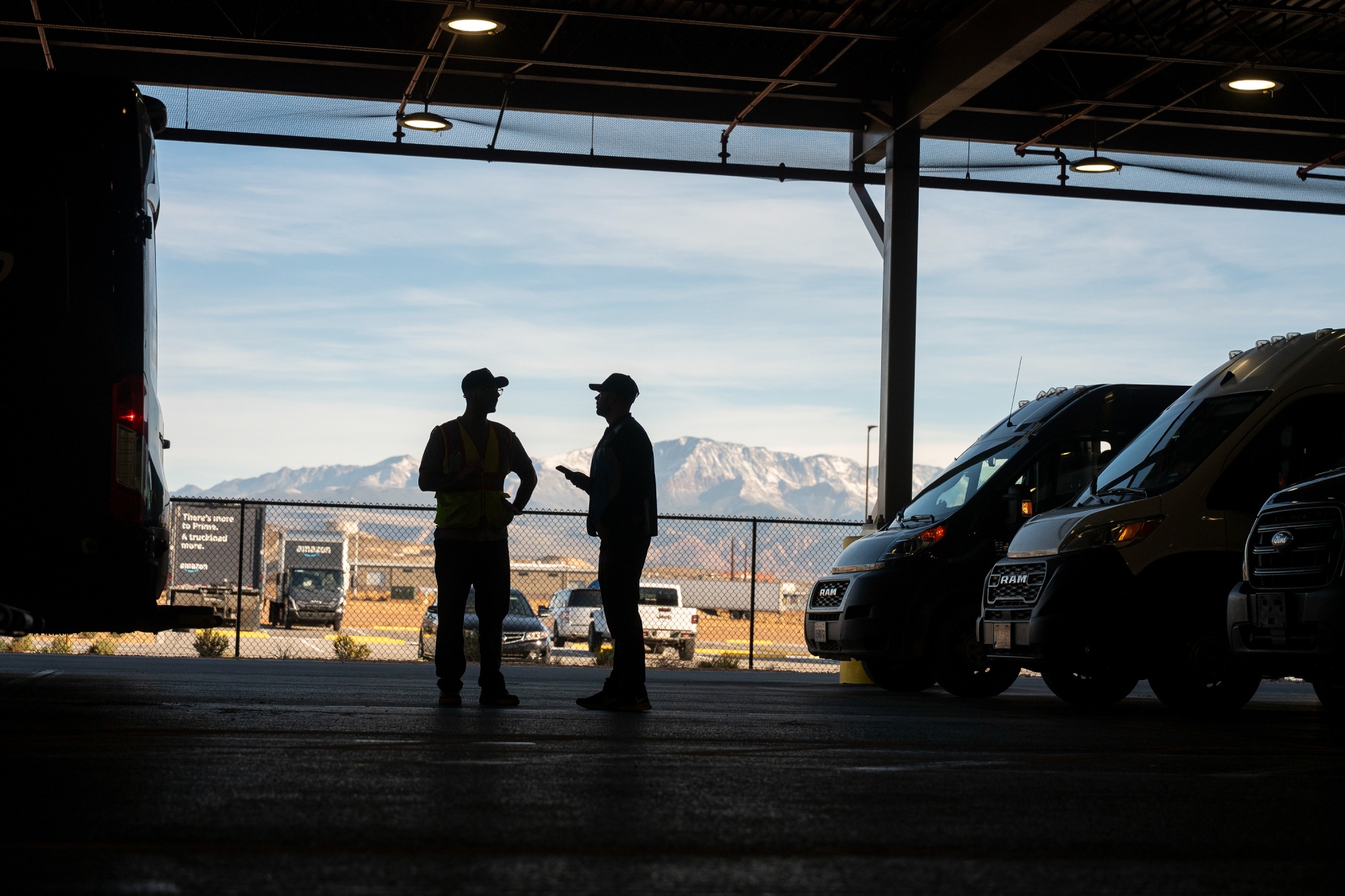
Amazon drivers at a delivery station in St George, Utah. Photographer: Jacob Kepler/Bloomberg
“We’re well known for our delivery infrastructure,” she said.
Amazon’s rural buildout has complicated the company’s relationship with the postal service. The existing contract expires later this year, but negotiations broke down in December after USPS said it would auction off its parcel delivery network.
“USPS abruptly walked away at the eleventh hour instead of continuing the renewal agreement we’d been negotiating,” Amazon said in a blog post earlier this month. “This creates significant uncertainty for our long-term network planning. Despite this, we participated in good faith and submitted a bid in February 2026. We’ve received no response.”
The postal service is prepared to give Amazon favorable rates in exchange for a long-term commitment, US Postmaster General David Steiner said in an interview. Otherwise, the postal service will view Amazon as a short-term customer and charge it a “high price,” he said.
“I think we absolutely have to look toward a future where they might not be a customer anymore because they’ve built this amazing network,” Steiner said. “If you want us to be your long-term partner, you can get a great price, but let’s sign a long-term contract so that we know you’re a friend, not a foe.”
Walmart’s Rural Connection
The fight for rural shoppers is hardly winner-take-all. Small shops, regional chains and national players like Dollar General Corp. and Tractor Supply Co. account for some 80% of rural spending, according to Morgan Stanley.
But Amazon’s biggest rival is Walmart, a behemoth with 4,600 US stores and a decades-long connection to rural America. Founder Sam Walton recognized that existing chains were overlooking shoppers in small, remote towns such as Rogers, Arkansas, and opened the first Walmart there in 1962. His essential insight — which now seems obvious — was to provide a one-stop place where households could buy multiple necessities.
Over the last decade, Walmart has also transformed itself into a force in e-commerce. It did so, in part, by copying the Amazon playbook, opening an online marketplace where third-party merchants sell hundreds of millions of products. The chain’s Walmart+ subscription service offers free shipping, gas discounts, video streaming and other perks to members for $98 a year, undercutting Amazon’s $139-a-year Prime offering. In an effort to telegraph its technological prowess, Walmart listed on the Nasdaq and in February became the first traditional retailer to reach a $1 trillion market value, briefly joining a rarefied club that includes Amazon.
Walmart’s main competitive advantage remains its stores and their adjacency to much of the US population. The company slowed openings in the late 2010s as it sharpened its focus on e-commerce and has since jumpstarted construction of new supercenters that sell everything from groceries and apparel to medications and auto services. Over the years, Walmart has also remodeled locations around the country — brightening the lighting, lowering displays and updating layouts to make it easier for customers to shop. It opened 12 new stores and upgraded 674 locations last year.
“Proximity is our superpower,” said Greg Cathey, Walmart’s senior vice president of digital fulfillment transformation. “The closer we are to the customer, the faster we’re going to be able to deliver and get them the items they need.”
The effort is paying off, with customers prioritizing faster delivery regardless of where they live, he says. About 80% of Walmart’s express orders were delivered in an hour last year, and the company says that customers of all incomes are willing to spend more to get their orders faster.
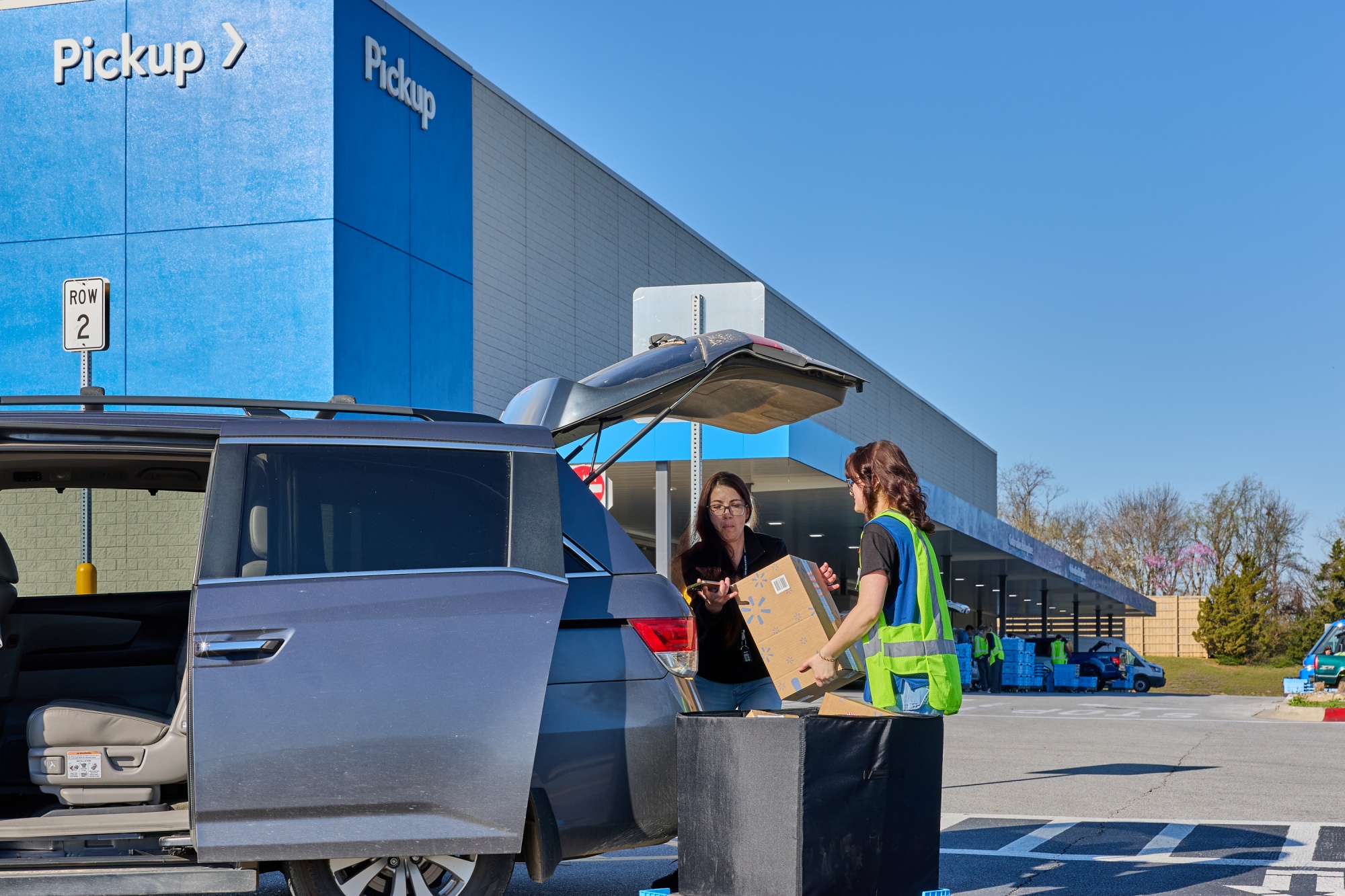
Loading up online orders at a Walmart in Bentonville, Arkansas. Photographer: Melyssa St. Michael/Bloomberg
Walmart’s stores now handle most of the company’s same-day online orders. The retailer delivered a record 8.6 billion items on the same or following day last year, according to an internal memo.
Still, Walmart says shoppers pick up about one-third of online orders. In part that’s because they can buy a couple of items in person while they’re in their local store. To keep customers coming to its stores and fight off Amazon and rivals like Aldi, Walmart is expanding its assortment and seeking to keep prices low.
The Rural Shopper
Rural residents largely buy the same things as city shoppers. But because they skew older and earn less than their urban counterparts, they tend to prioritize low prices over convenience. Almost half of rural shoppers said low prices compelled them to buy things at Walmart, compared with just 25% at Amazon, according to a Numerator survey of more than 1,000 consumers conducted in March.
Bloomberg analyzed consumer transactions from 20,000 rural shoppers tracked by Second Measure and found they spent about three times as much at Walmart compared with Amazon. Walmart also has a longstanding advantage in groceries, especially fresh food that Americans still prefer to buy in person.
Consider Cynthia Cash, who last year opened a dog grooming and boarding shop just off the main drag in Kinston, North Carolina, and not far from Amazon’s rural delivery station. She shops Amazon for specialized items she can’t find in town, like bulk containers of dog shampoo, treats and grooming blades that are usually delivered within a day.
“When you run your own business, it’s hard to find time to get out and shop,” she said. But when buying groceries and personal household items for herself and her family, the nearby Walmart gets her business.
Where Rural Consumers Shop
Source: Numerator survey conducted in March 2026
Shopping preferences between the two retailers are clearly defined. Three in four rural shoppers preferred to buy groceries at Walmart compared with about 14% who preferred Amazon, according to the Numerator survey. About 60% of rural shoppers preferred to buy apparel at Amazon compared with just a third who chose Walmart.
Tanya Jackson, who lives in Grand Rapids, Minnesota, buys gym outfits on Amazon because it has a big selection, as well as a nutritional supplement for her golden retriever and some hair products. But groceries and most other household needs she buys locally. She doesn’t think faster delivery times will change that. Quick delivery — same-day or next-day — isn’t as important to rural shoppers as it is to their counterparts in cities and suburbs, according to the consumer insights firm GWI.
“The sad thing is we’re so far away from cities and we don’t have everything, and Amazon is great when you can’t find it locally,” said Jackson, who owns P&D Sewing Center.
Head-to-Head in New Hampshire
Sources: Amazon, Walmart, USDA
Amazon’s rural warehouses are barebones affairs with minimal technology and automation. The facility that processes packages for Peterson, the Utah smoothie entrepreneur who makes deliveries on the side, is about 100,000 square feet and employs about 300 part-timers.
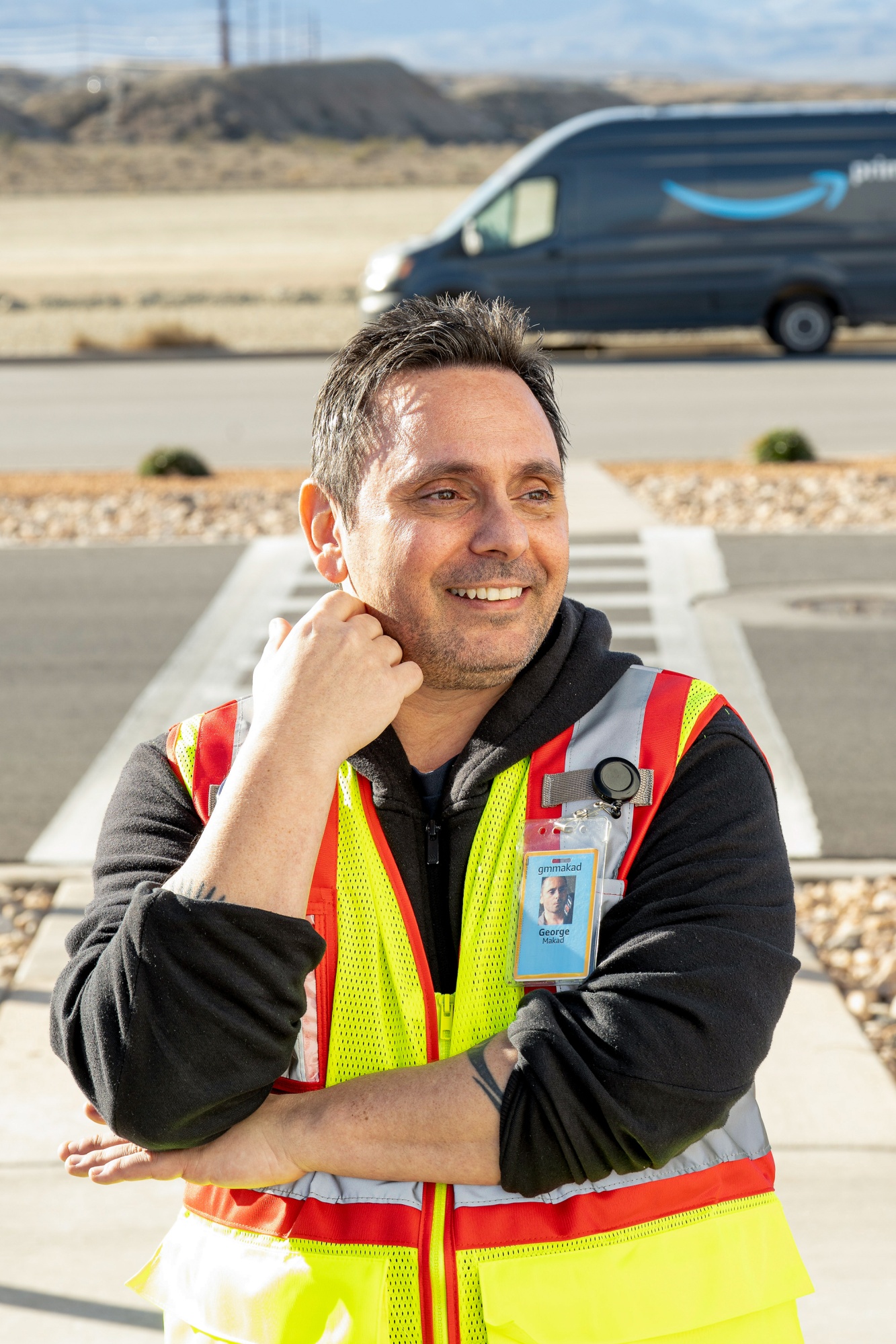
George Makad, site leader at the Amazon delivery station in St George, Utah. Photographer: Jacob Kepler/Bloomberg
Opened in 2024, the one-story warehouse has an open floor packed with metal racks on wheels used to bring packages to delivery vans that pull up in waves of 20 next to dock doors. Unloading inventory from trucks that come from Las Vegas and transferring it to delivery vans is done manually.
“People who couldn’t get stuff can now get it in a day,” said George Makad, who manages the facility.
Amazon has long outsourced its delivery operations to contractors or gig workers. The rural service is called Amazon Hub and is sort of a cross between mom-and-pop contractors known as Delivery Service Partners and a gig-economy program called Amazon Flex.
The company has a fraught relationship with its delivery drivers, who complain that Amazon’s relentless focus on speed and cost containment makes the jobs arduous and sometimes dangerous.
Amazon’s rural push will require a lot more rural business owners willing to make deliveries. The recruitment process isn’t always smooth.
Muscling Into Minnesota
Sources: Amazon, Walmart, USDA, Planet Labs
Ben Hoppenrath, who owns a knife shop in Traverse City, Michigan, said he started making Amazon deliveries in 2024 to supplement his income selling and sharpening knives but only lasted a week, calling the experience “too unorganized and chaotic.” The delivery route often took him down dead end roads and he frequently encountered stray dogs and had to wait in his car for a customer to retrieve their package.
“Frankly, it was just dangerous, and I didn’t need the money that badly,” he said. Amazon said it improved its navigation system based on feedback from Hoppenrath.
Another small business owner in northern Michigan signed on two years ago after finding a flyer that said Amazon was looking for delivery partners. She thought it was a scam at first. But after discovering the flyer was legit, she put two of her daughters to work making Amazon deliveries, helping them supplement incomes that were largely reliant on summertime tourists.
“My girls could make $800 to $1,000 a week, which is pretty good money out here,” she said.
Then last year, Amazon lowered her per-package rate to $1.50 from $2.50 and her package volume also dwindled by half to about 35 a day, she said.
“When you go from making $1,000 a week to $250, that’s pretty s***ty, and I told Amazon as much without mincing any words,” said the delivery partner, who requested anonymity because she fears retaliation from Amazon. “What are they gonna do? Fire me?”
Economic development policy chief Sullivan said pay for rural delivery drivers varies by location and package volume. Kelly, the spokesperson, said Amazon continuously refines the program to “ensure competitive compensation for Hub Delivery partners in their markets.”
Amazon Closes Parcel Volume Gap With USPS
Source: Pitney Bowes
Today, Amazon delivers more parcels overall than UPS and FedEx, which are both shedding workers and shrinking their delivery networks, including in rural areas. By picking up the slack, Amazon is expected to become the largest parcel carrier in the US — surpassing the postal service — in 2028, according to the shipping software company Pitney Bowes. Amazon currently delivers two of three orders itself.
For rural shoppers, the most visible change will be fewer brown UPS trucks, fewer packages delivered by mail carriers and more small business owners pulling up in their minivans. Peterson, the smoothie shop owner, used to work part-time as a hairdresser. Now she does the delivery route with her partner, a seasonal tour guide, who drives the van while Peterson rummages through the packages.
When she spots a new address on their route, Peterson slaps a round sticker on the box that says, “This package was delivered by Asava” along with her web address. The hope is that, in addition to the $2.50 per package, she can get some Amazon shoppers to swing by her shop for a Country Road made with chocolate and peanut butter or a Desert Sky made with mango, banana and spirulina, a blue algae that gives the drink its color.
“We’ve met lots of people on the route,” said Peterson, who started making deliveries in May. “They’ve become our customers and friends.”