Satellite Imagery Shows Gaza’s Destruction and Resilience With War Unresolved
With 40% of structures still intact, Gazans have repopulated major cities with tents and tarpaulins.
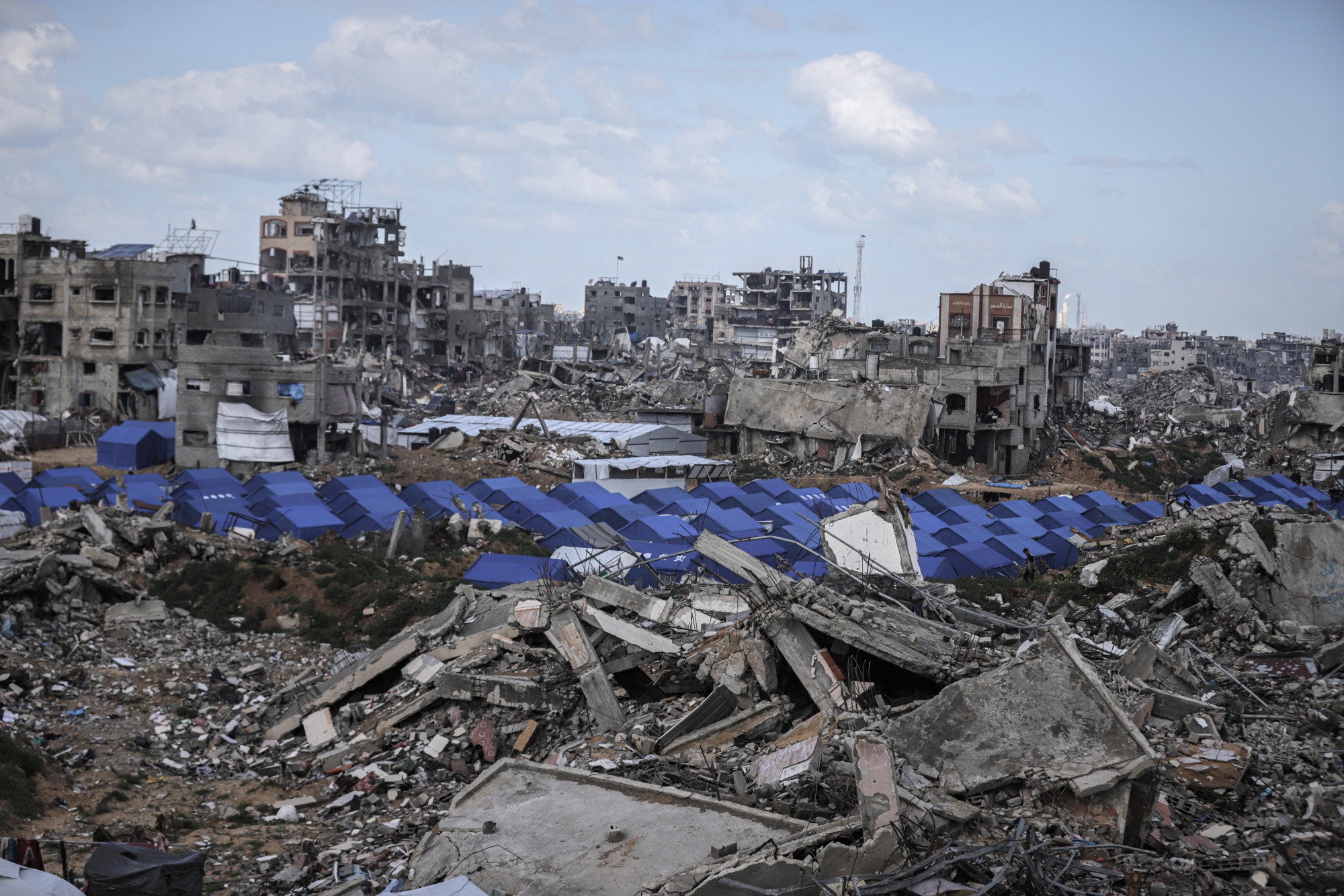
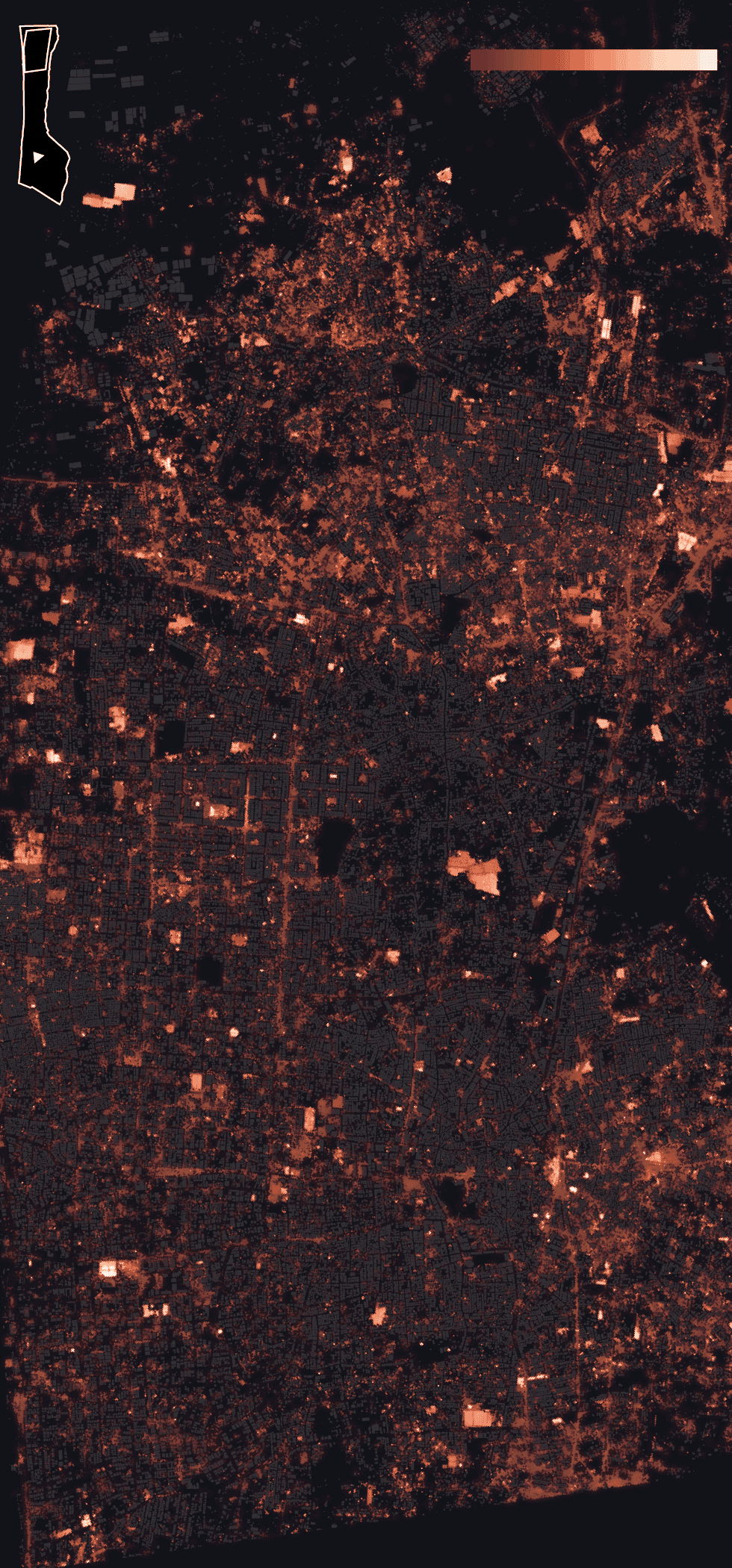
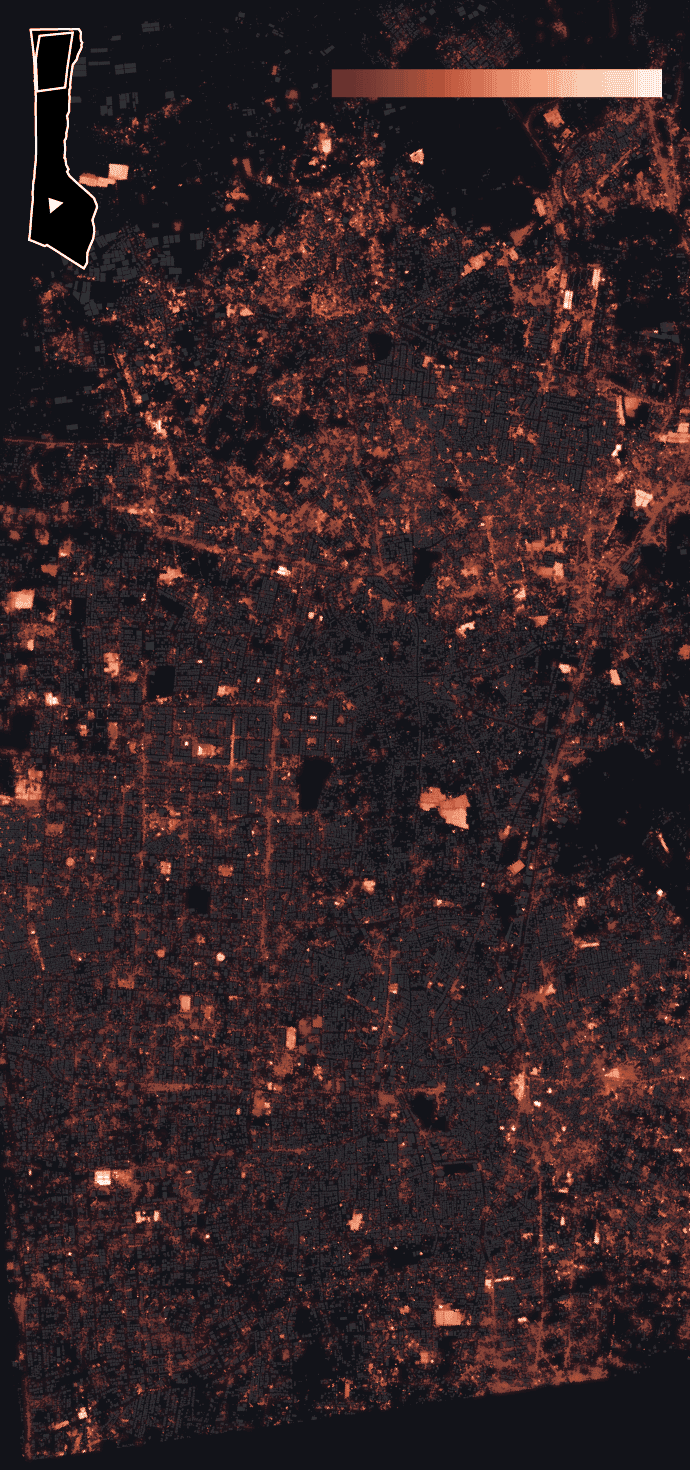
Palestinians have been returning to the north of Gaza since a ceasefire between Israel and Hamas was declared in January, looking to salvage what’s left of their homes after more than 15 months of fighting.
Despite the destruction, nearly 140,000 buildings are still standing across the territory — or about 40% of the total — according to radar imaging analysis by researchers at Oregon State University.
In the Heavily Damaged North, Less Than One Third of Buildings Remain Standing
- Buildings with no damage detected
- Damaged buildings
The highest level of damage was recorded in the northern governorates of North Gaza and Gaza City. That area was repeatedly targeted by Israeli air strikes throughout the war and was subject to a siege in the latter half of 2024. Civilians were ordered to evacuate amid heavy bombardment.

Mediterranean Sea
N
Al-Shifa Hospital
Islamic
University
of Gaza
Al Saftawy Road
Jabalia
Beit Lahia
Gaza City
Kamal Edwan
Hospital
Salah al-Din Road
Shejaiya
Indonesian
Hospital

Mediterranean Sea
N
Al-Shifa Hospital
Islamic
University
of Gaza
Al Saftawy Road
Jabalia
Beit Lahia
Gaza City
Kamal Edwan
Hospital
Salah al-Din Road
Shejaiya
Indonesian
Hospital

N
Beit Lahia
Indonesian
Hospital
Kamal Edwan
Hospital
Jabalia
Salah al-Din Road
Al-Shifa
Hospital
Gaza City
Shejaiya
Islamic
University
of Gaza

N
Beit Lahia
Jabalia
Salah al-Din Road
Gaza City
Shejaiya

N
Beit Lahia
Jabalia
Salah al-Din Road
Shejaiya
Gaza City

Mediterranean Sea
N
Al Saftawy Road
Jabalia
Beit Lahia
Gaza City
Salah al-Din Road
Shejaiya

Mediterranean Sea
N
Al Saftawy Road
Jabalia
Beit Lahia
Gaza City
Salah al-Din Road
Shejaiya

N
Beit Lahia
Jabalia
Salah al-Din Road
Gaza City
Shejaiya

N
Beit Lahia
Jabalia
Salah al-Din Road
Gaza City
Shejaiya

N
Beit Lahia
Jabalia
Salah al-Din Road
Shejaiya
Gaza City
Fewer tents
More tents
Mediterranean Sea
N
Al Saftawy Road
Jabalia
Beit Lahia
Gaza City
Salah al-Din Road
Shejaiya
Fewer tents
More tents
Mediterranean Sea
N
Al Saftawy Road
Jabalia
Beit Lahia
Gaza City
Salah al-Din Road
Shejaiya
Fewer tents
More tents
N
Beit Lahia
Jabalia
Salah al-Din Road
Gaza City
Shejaiya
Fewer tents
More tents
N
Beit Lahia
Jabalia
Salah al-Din Road
Gaza City
Shejaiya
Fewer tents
More tents
N
Beit Lahia
Jabalia
Salah al-Din Road
Shejaiya
Gaza City

Mediterranean Sea
Al Saftawy Road
Makeshift camps
Makeshift camps
Jabalia
Beit Lahia
Gaza City
Salah al-Din Road
Shejaiya

Mediterranean Sea
Al Saftawy Road
Makeshift camps
Makeshift camps
Jabalia
Beit Lahia
Gaza City
Salah al-Din Road
Shejaiya

Beit Lahia
Jabalia
Salah al-Din Road
Makeshift
camps
Gaza City
Shejaiya

Beit Lahia
Jabalia
Salah al-Din Road
Makeshift
camps
Gaza City
Shejaiya

Beit Lahia
Jabalia
Salah al-Din Road
Makeshift
camps
Shejaiya
Gaza City

Mediterranean Sea
Photo taken in
Al-Shati Camp
Al Saftawy Road
Jabalia
Beit Lahia
Gaza City
Salah al-Din Road
Shejaiya

Mediterranean Sea
Photo taken in
Al-Shati Camp
Al Saftawy Road
Jabalia
Beit Lahia
Gaza City
Salah al-Din Road
Shejaiya

Beit Lahia
Jabalia
Photo taken in
Al-Shati Camp
Salah al-Din Road
Gaza City
Shejaiya

Beit Lahia
Jabalia
Salah al-Din Road
Photo taken in
Al-Shati Camp
Gaza City
Shejaiya

Beit Lahia
Jabalia
Salah al-Din Road
Photo taken in
Al-Shati Camp
Shejaiya
Gaza City
- Damage detected
- Damage not detected

Palestinians in a makeshift shelter among destroyed houses in Al-Shati Camp, Feb. 7.
Whether or not intact buildings are safe to move into is still an issue, with local engineers working to establish the structural soundness of homes to avoid building collapse. Unexploded ordinances remain a significant risk, with at least five people killed due to the explosion of suspicious objects since the ceasefire began, according to the Armed Conflict Location and Event Database (ACLED).
Yet, in some parts of Gaza City, some rooms and units in high-rise apartment blocks are still habitable, according to Sam Rose, acting director of UNRWA, Gaza’s largest aid organization. United Nations staff, for example, have returned to two apartment buildings they previously occupied.
As people return to urban centers, aid has followed, said Rose. Bakeries are churning out bread and small shops have reopened. A network of community kitchens has been established to produce 800,000 hot meals a day across the Strip, according to UNRWA, and some schools, now emptied of or housing far fewer displaced people, have resumed teaching.
That may change after Israel halted all humanitarian aid and other imports amid an impasse over the status of the Hamas ceasefire.
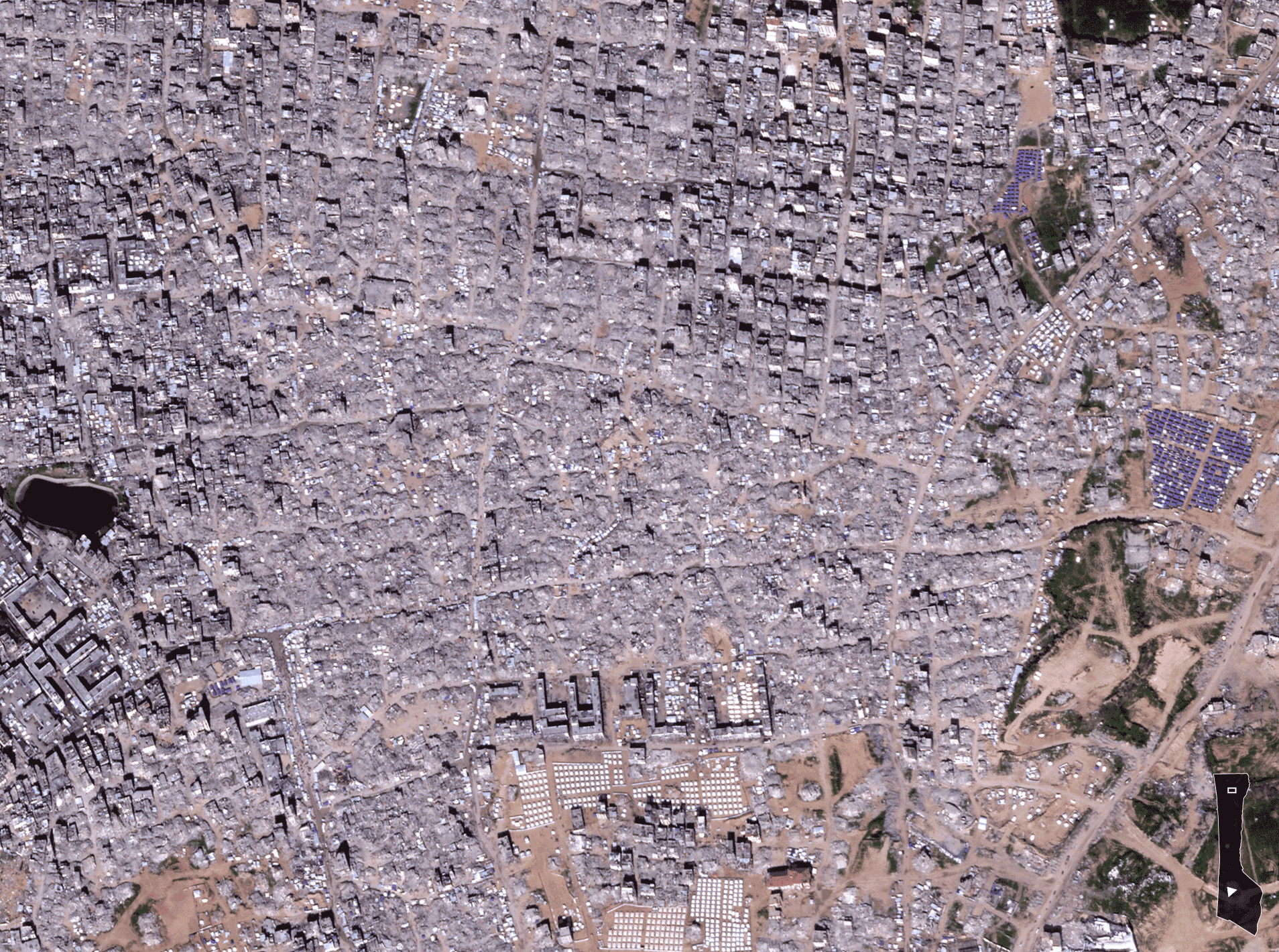
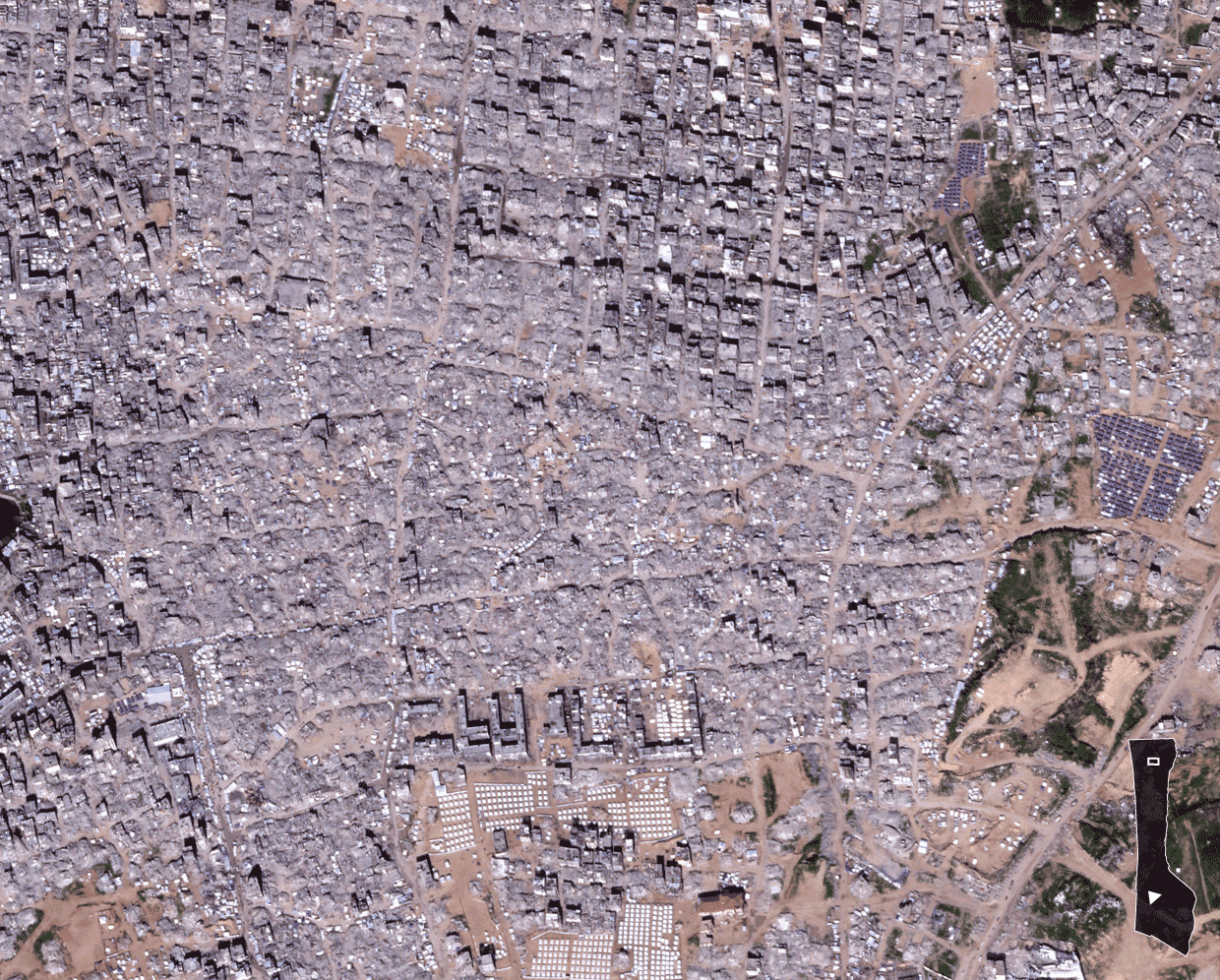
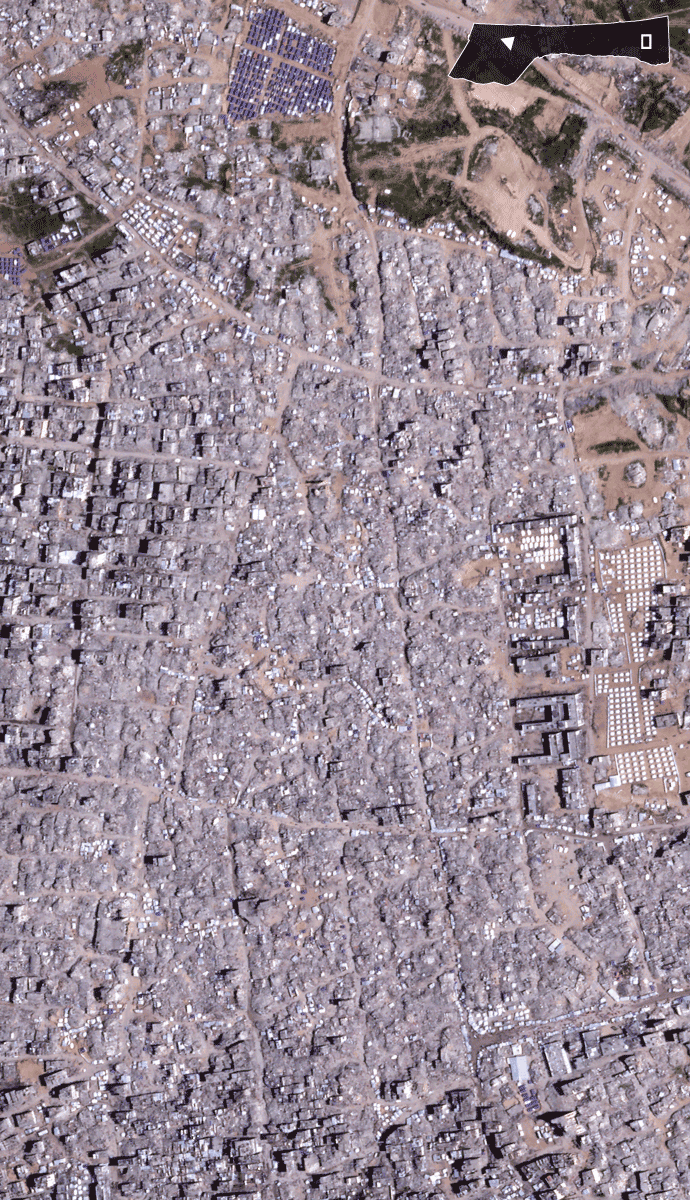
A few miles north, there are fewer structures to save.
Al Almey
Al-Sikkeh
Tents among flattened
residential buildings
Al Mouhawei
N
Al Almey
Al-Sikkeh
Tents among flattened
residential buildings
Al Mouhawei
N
N
Al-Sikkeh
Al Mouhawei
Tents among flattened
residential buildings
Al Almey

Kamal Edwan
Hospital
Al Almey
Al-Sikkeh
Tents among flattened
residential buildings
Tents lining
El Awda Road
Al Mouhawei
N

Kamal Edwan
Hospital
Al Almey
Al-Sikkeh
Tents among flattened
residential buildings
Tents lining
El Awda Road
Al Mouhawei
N

N
Al-Sikkeh
Al Mouhawei
Tents among flattened
residential buildings
Al Almey
Tents lining
El Awda Road

Al Almey
Al-Sikkeh
Tents among flattened
residential buildings
Al Mouhawei

Al Almey
Al-Sikkeh
Tents among flattened
residential buildings
Al Mouhawei

Al-Sikkeh
Al Mouhawei
Tents among flattened
residential buildings
Al Almey
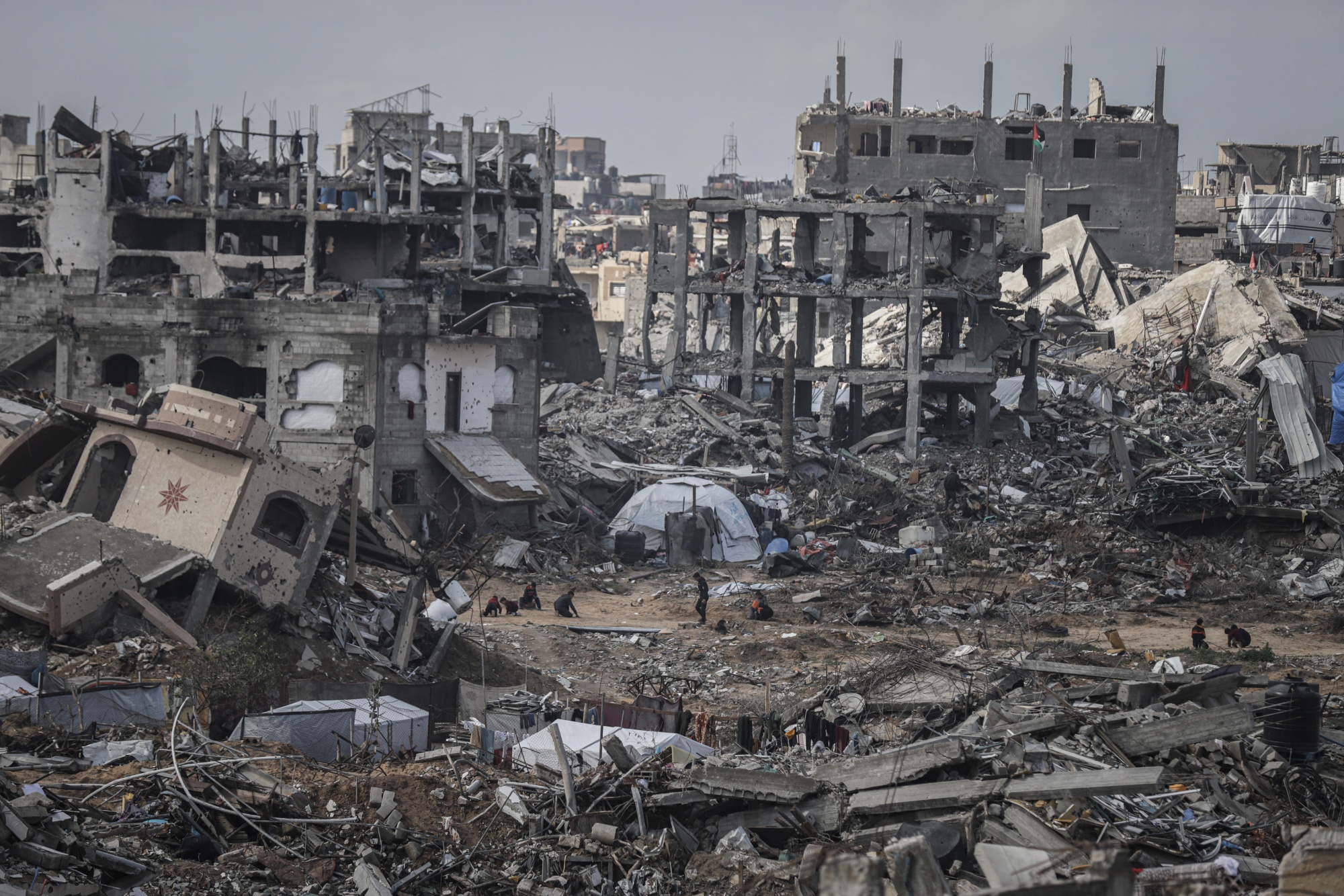
Palestinian children amidst the camp’s destroyed buildings, Feb. 13.
In Jabalia, people are more dependent on aid organizations, clustering in groups or around critical infrastructure such as wells, food distribution points or field hospitals.
“If you’ve got water, people will come back,” Rose said. “Wells have been re-established.’’ Gazans “know how to set up camps too, with civil engineers able to direct sewage. Lots of UNRWA schools and shelters have toilets or temporary latrines,” he said.
At least 1,500 water points and nine field hospitals are now operational across Gaza, according to the United Nations Office for the Coordination of Humanitarian Affairs.
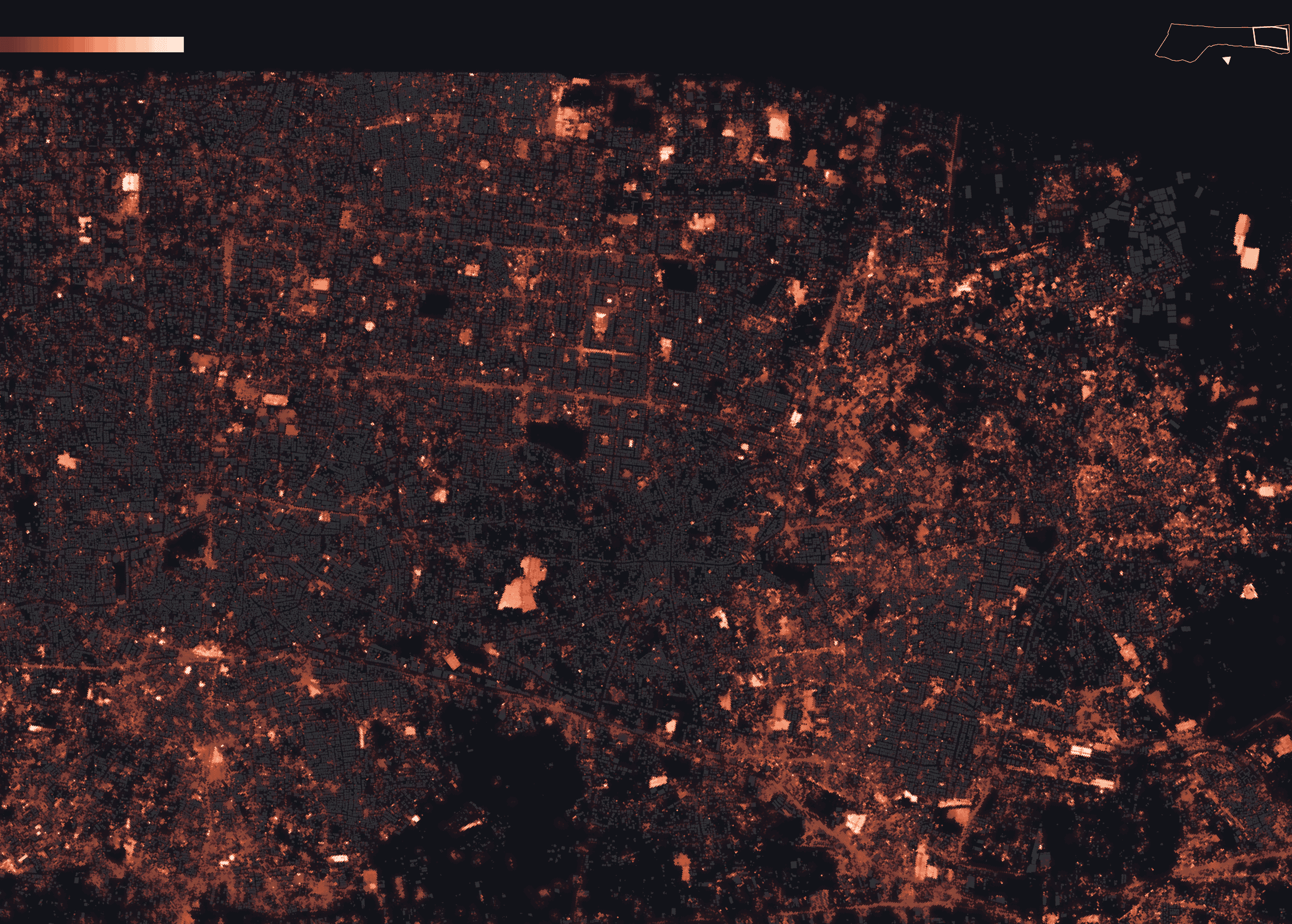
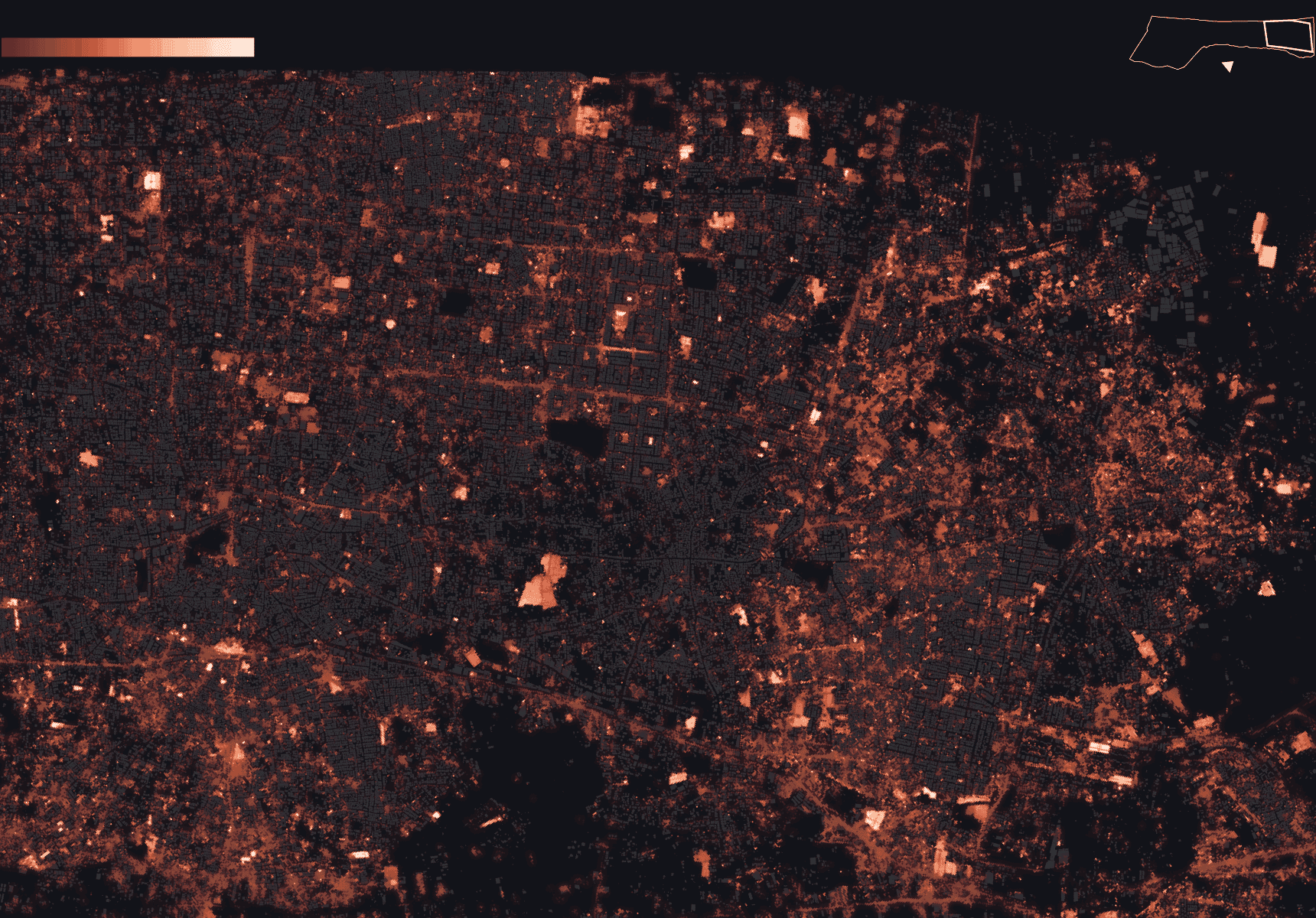
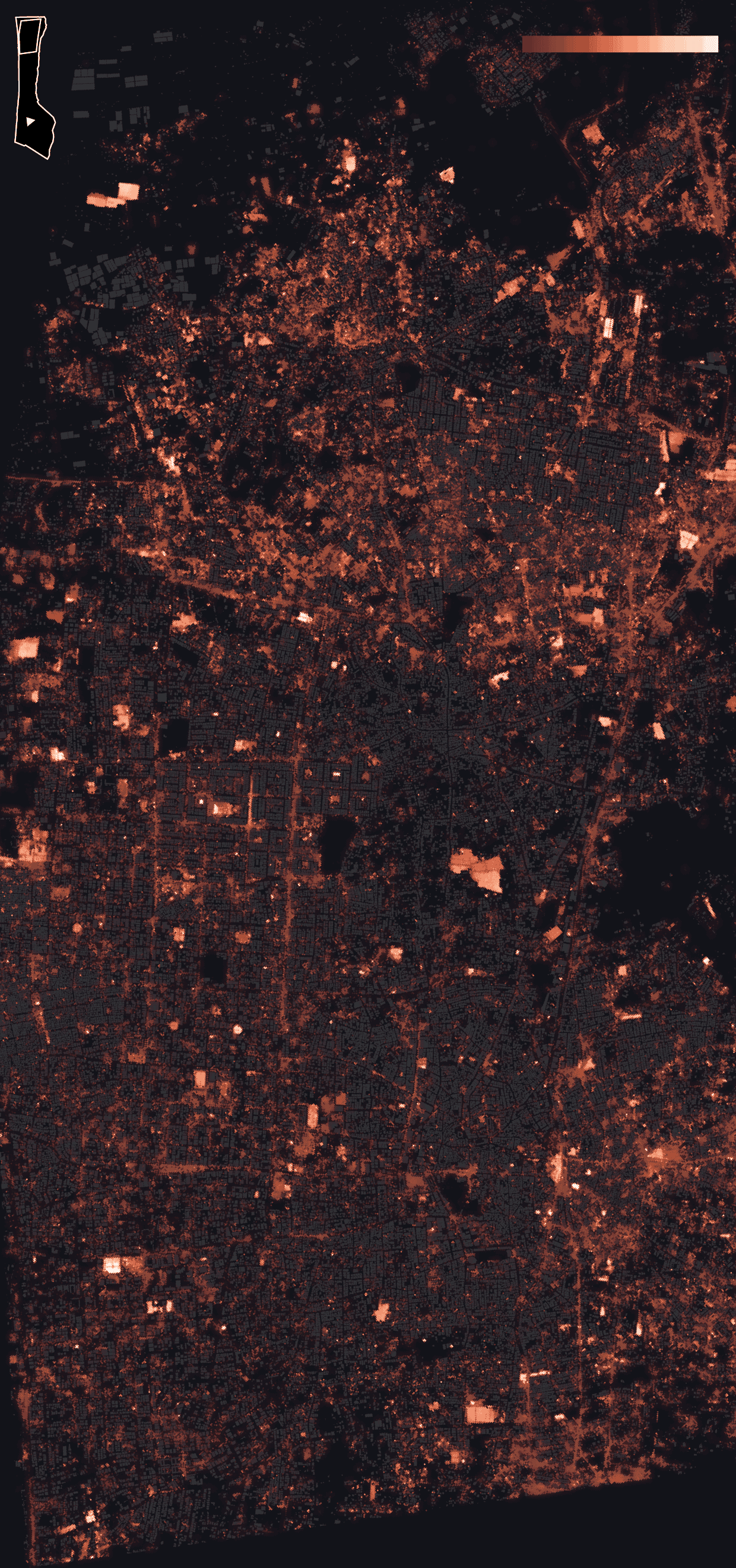
In the northern town of Beit Lahiya, most tents are clustered in the center, although there are nearby areas of open land available.
Agricultural land accounts for 41% of the Gaza Strip, according to UN analysis, but much of it has suffered damage, including 80% of tree crop and 65% of greenhouses, according to remote sensing analysis by He Yin, an assistant Professor of Geography at Kent State University.
“It could have been bulldozed and razed or it could have unexploded ordinances,” said Yin. “From bombings, there is debris and chemicals — there is always the likelihood the soil got polluted.”
Even so, some of this land could be used for temporary housing as reconstruction gets underway, with the provision of 60,000 caravans a core promise of the Israel-Hamas ceasefire agreement.
“It could be used and developed,” said Yin. “It’s hard to tell right now how much land is safe to use.”
For now, most Gazans have chosen to return to urban centers rather than open land where camps were previously established.
Since the ceasefire began, the number of tents in the al-Mawasi “humanitarian zone” has decreased by nearly 40%, according to Bloomberg’s analysis.
“The morning of the ceasefire we were woken up by people hammering on wood,” said Rose. People were “taking their tent structures apart.”
“Within days, hundreds of thousands of people had moved back home.”
Hundreds of Thousands Have Left Humanitarian Zone
Source: Bloomberg analysis of satellite imagery from Planet between Jan. 7 and Feb. 17
Phase 2 of the ceasefire was due to begin on Sunday, March 2. Instead, Israel-Hamas talks stalled, and Israel responded by blocking aid. Hamas is designated a terrorist organization by the US and many other countries.
US President Donald Trump’s suggestion is to relocate the Gaza population to other countries and redevelop the territory as a “Riviera of the Middle East,” while Israeli Prime Minister Benjamin Netanyahu has not ruled out a return to fighting.
On Tuesday, March 4, leaders of Arab countries endorsed a new Gaza reconstruction plan at a summit in Cairo. The 150-page document proposes that Gaza’s residents could be housed in surviving buildings and pre-fabricated temporary units spread over seven sites, as the removal of unexploded ordnance and rubble gets underway.
Rebuilding would then take place in multiple phases at a total cost of $53 billion. However, details are still to be ironed out, including who will be responsible for overseeing reconstruction and the role of Hamas. At the heart of their proposal is for Palestinians to stay on their land.
For now, most Gazans have been left to try and resume their lives amid the rubble. As Ramadan got underway, some broke fast using tables running through the ruins, the nighttime meal lit up with generator-powered fairy lights.
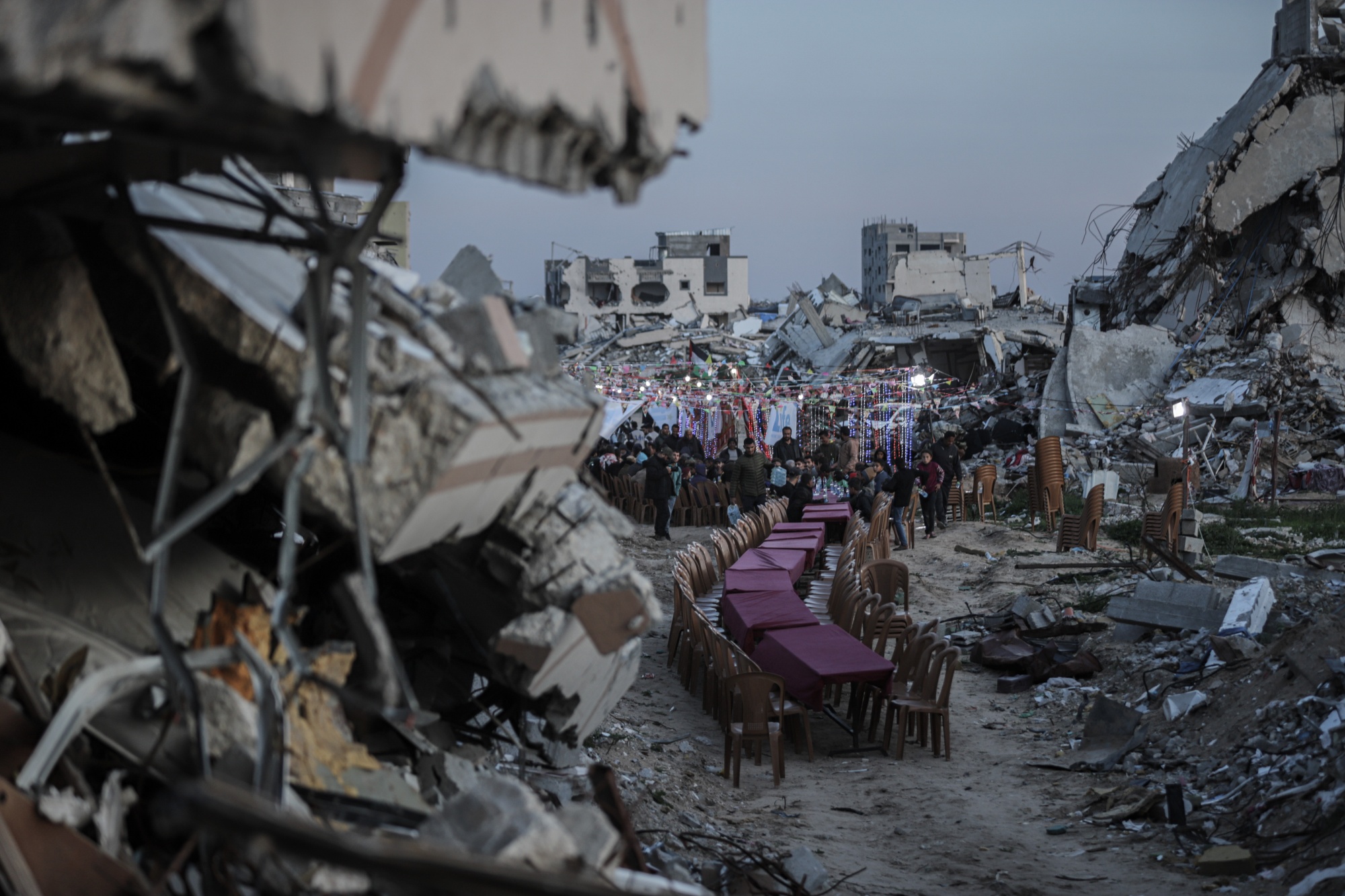
Iftar dinner in Gaza City, March 2.
“This is quite a highly educated population,” Rose said. “Gaza is full of engineers that can assess the structural soundness of buildings, direct sewage and re-establish wells. Bear in mind they’ve had to do this before. ”
“But they can’t rebuild the place without cement or pipes coming in,” he said. “Israel is not letting anything in that gives the impression that we’re at the recovery phase.”