It’s a Good Time to Be a Scammer in America
Investment fraud is up, and not just for Boomers.
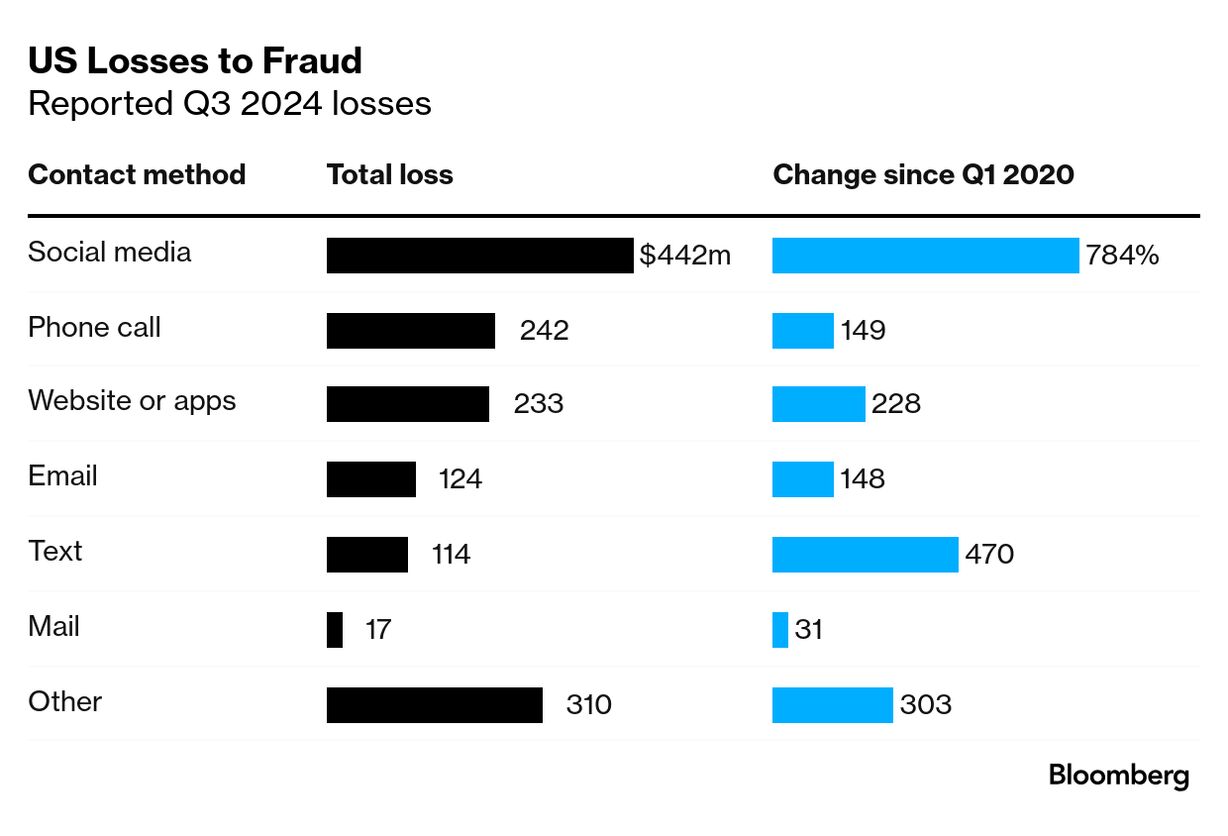
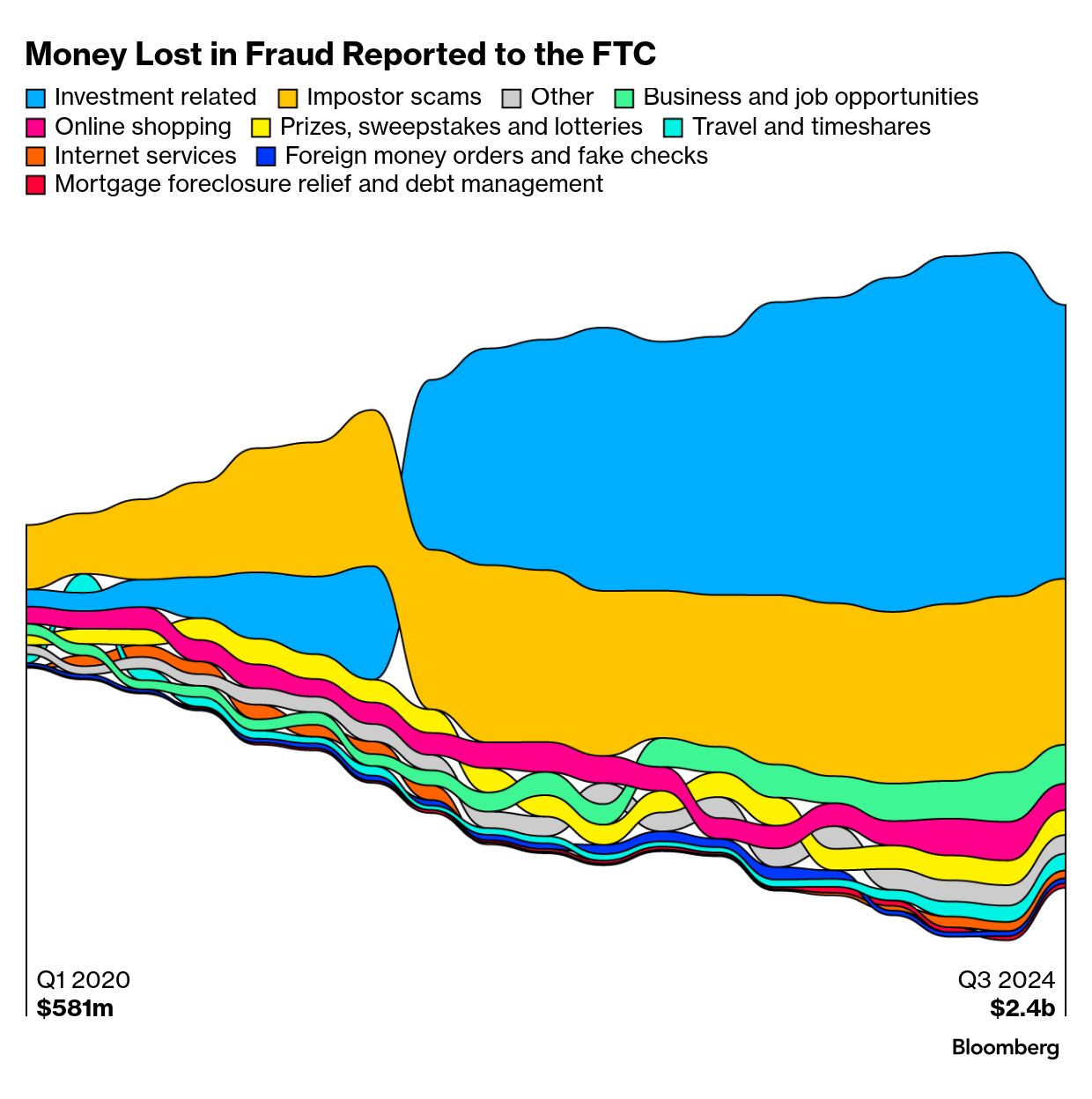
It’s no secret that the Digital Age has been good for scam artists. In the third quarter of 2024, the most recent period for which US government data is available, $2.5 billion was reported lost to fraud—more than tripling since the first quarter of 2020, with the median loss increasing from $321 to $500. Colorado was the leader in imposter scams, but investment fraud happened most in Hawaii. The biggest increase in money affected people contacted on social media.
US Losses to Fraud
Reported Q3 2024 losses
The nature of fraud has changed in recent years. Impostor scams, where the aggressor pretends to be someone known or trusted, defrauded people of the most money through the third quarter of 2021, with the majority of that cash involving romantic come-ons. The largest number of reported cases in 2020 involved scammers pretending to be government officials. In 2021, most reports were business scams. But by the end of that year, investment-related fraud took over and accounted for almost half of all categorized fraud losses in 2024’s reports.
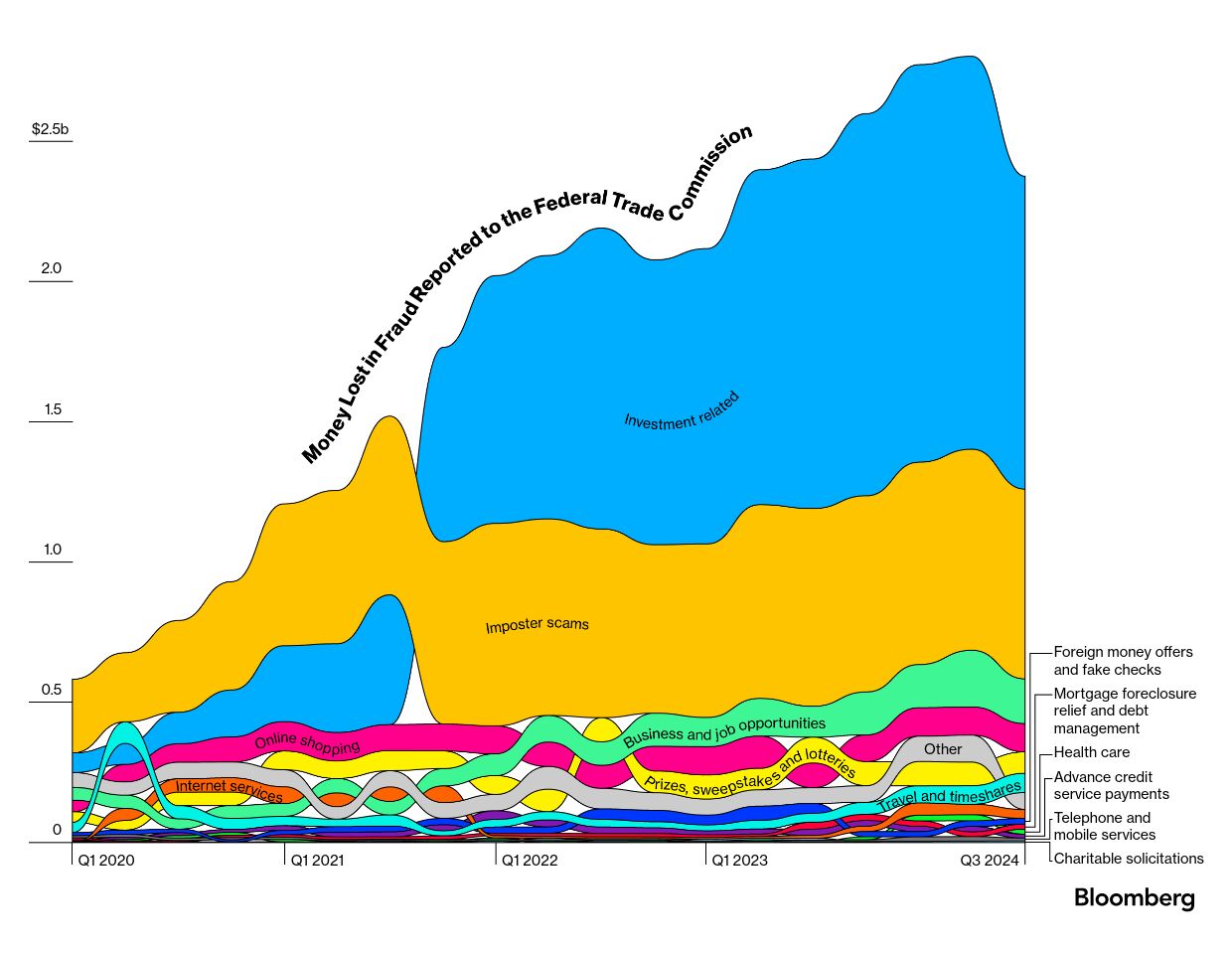
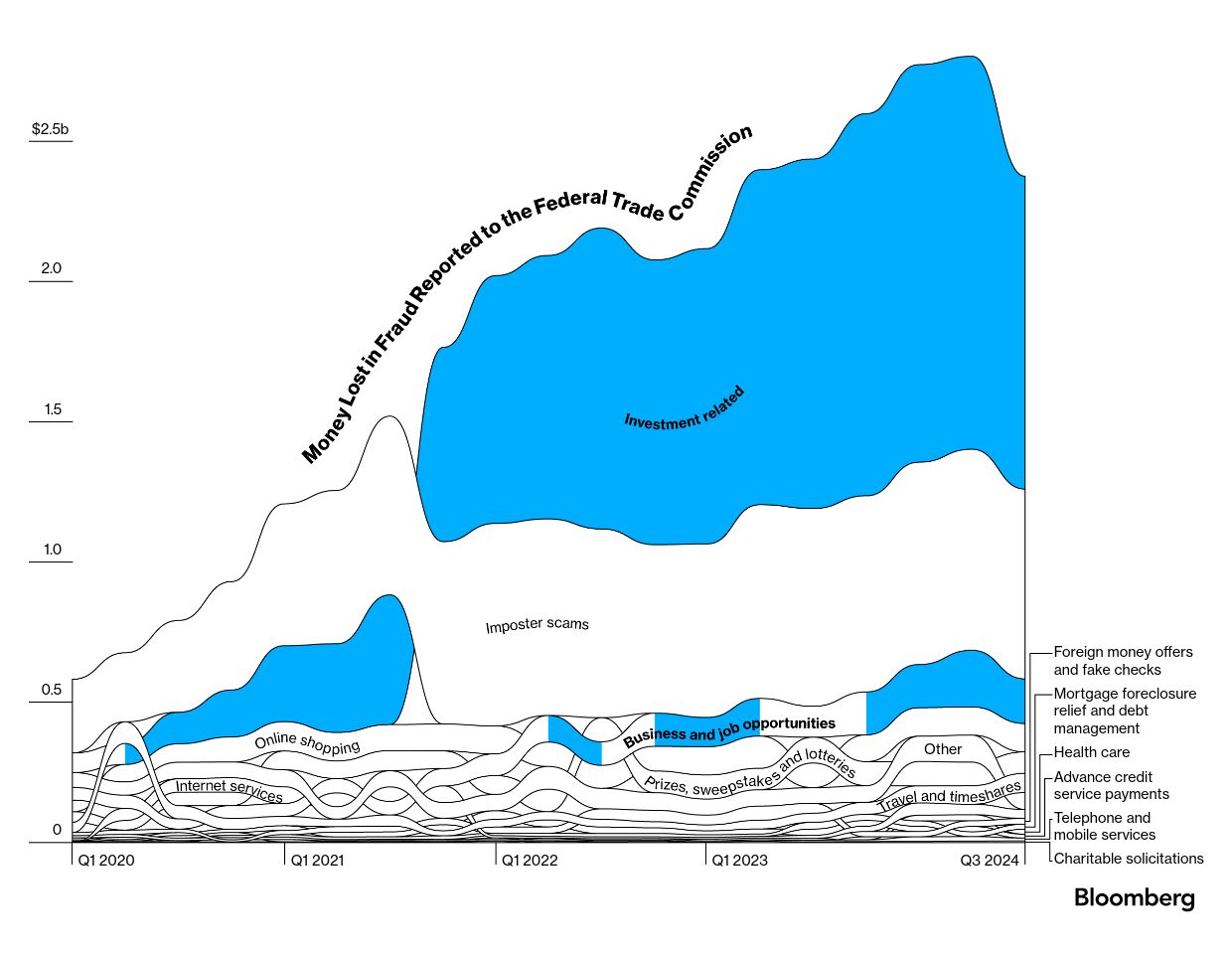
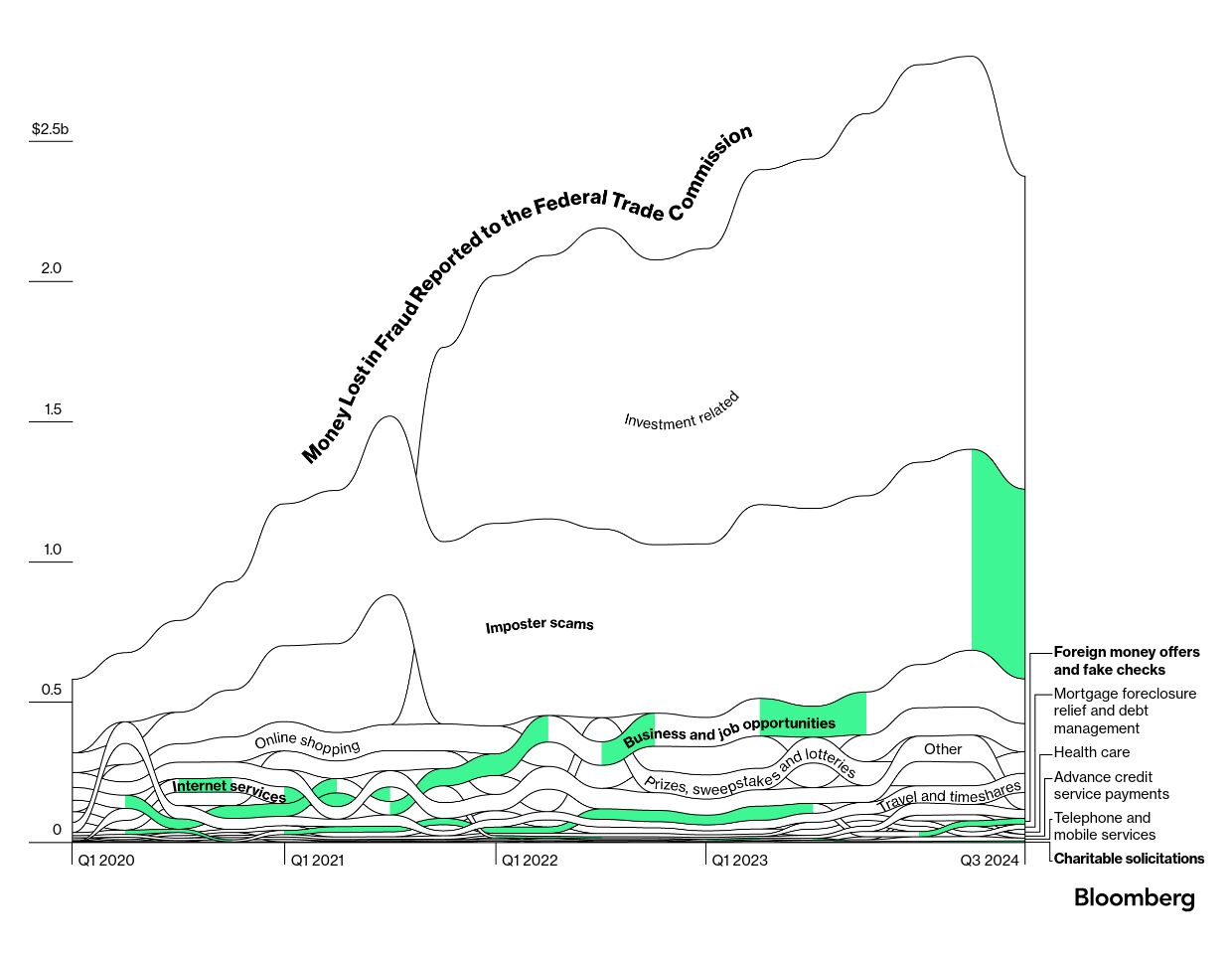
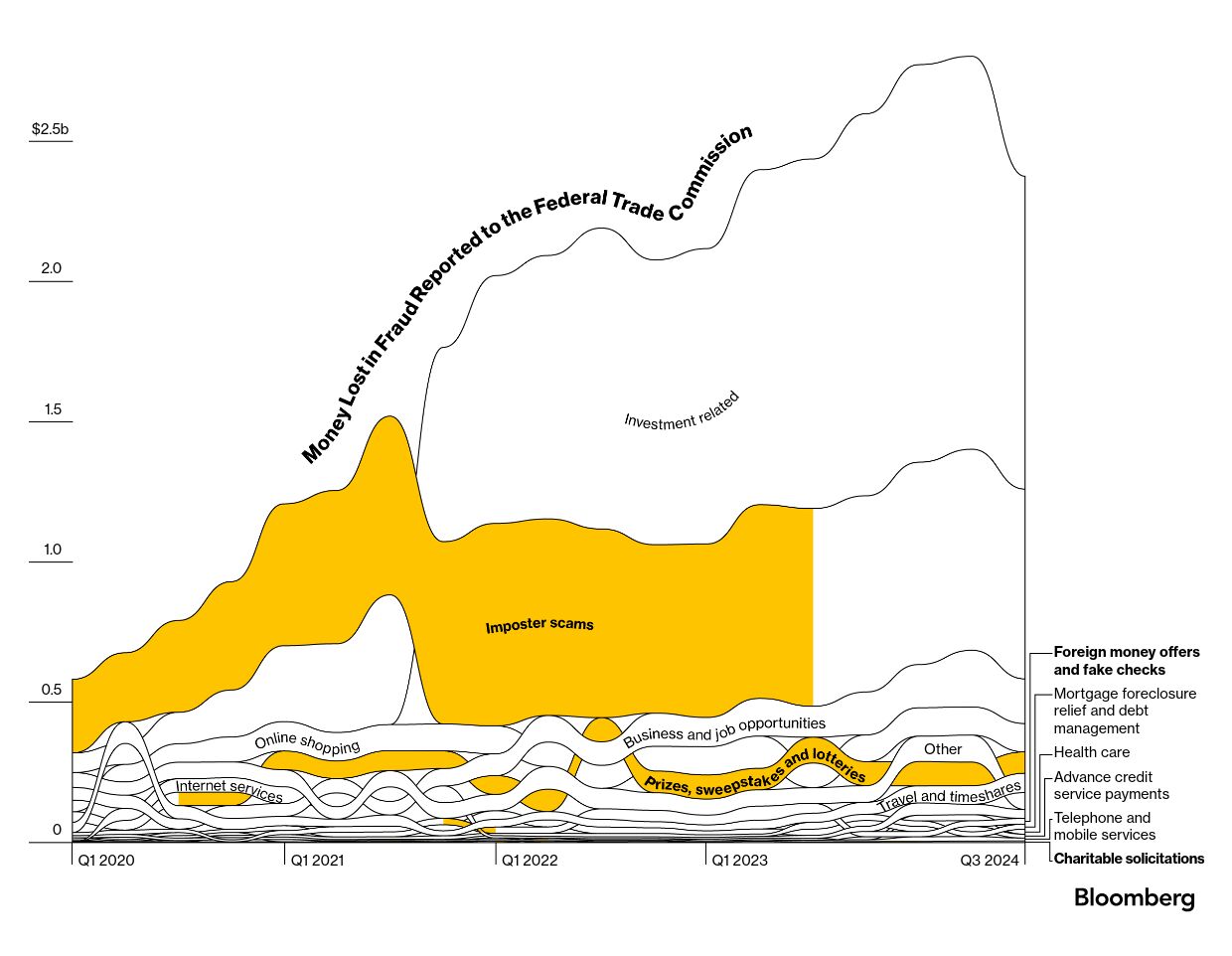
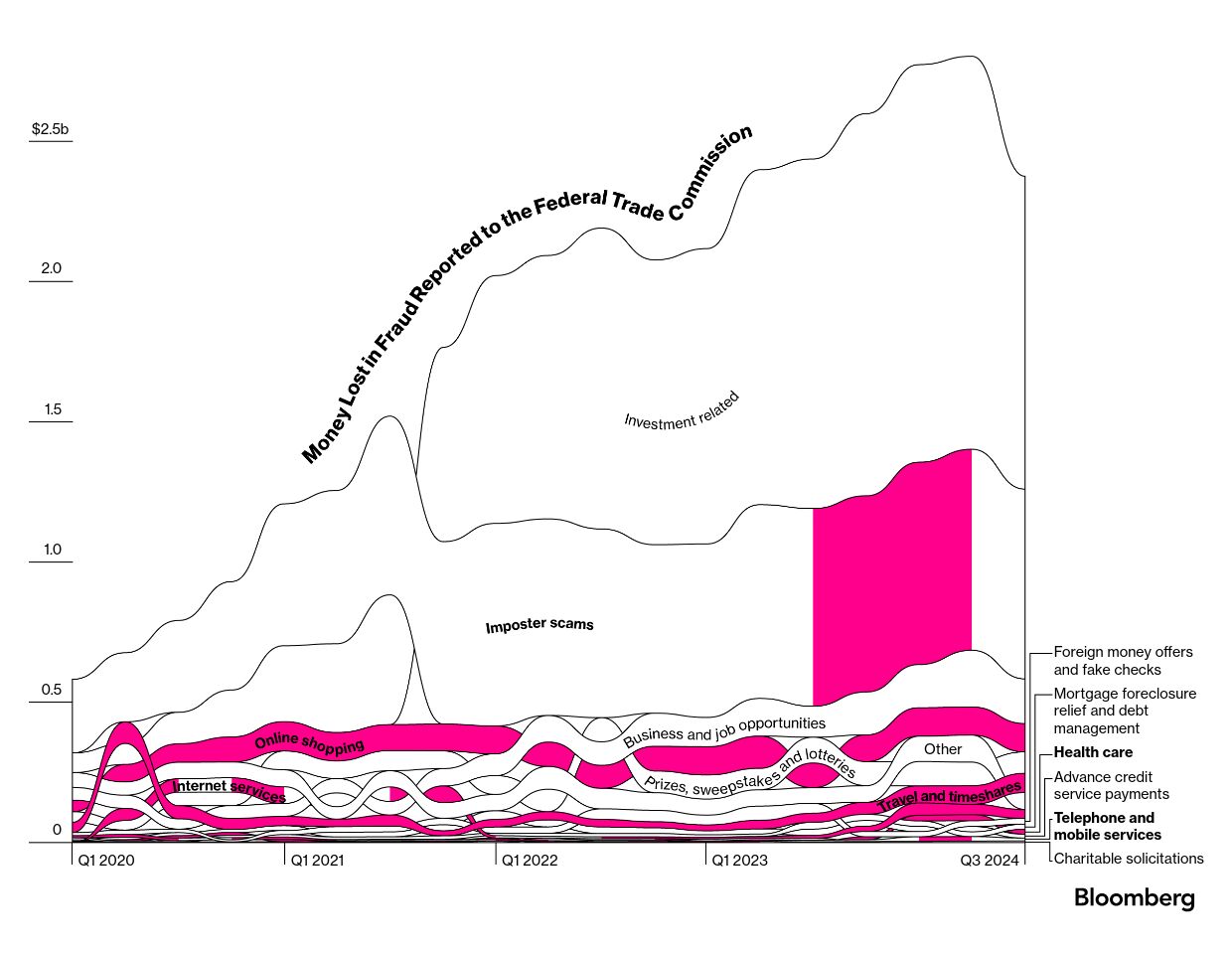
Money Lost in Fraud Reported to the FTC
The largest numbers of recent frauds are paid with credit cards and payment apps, but the bulk of money that’s lost comes from bank transfers and cryptocurrency, where the stakes are typically higher.
Fraud Loss Types
Money lost by selected payment methods
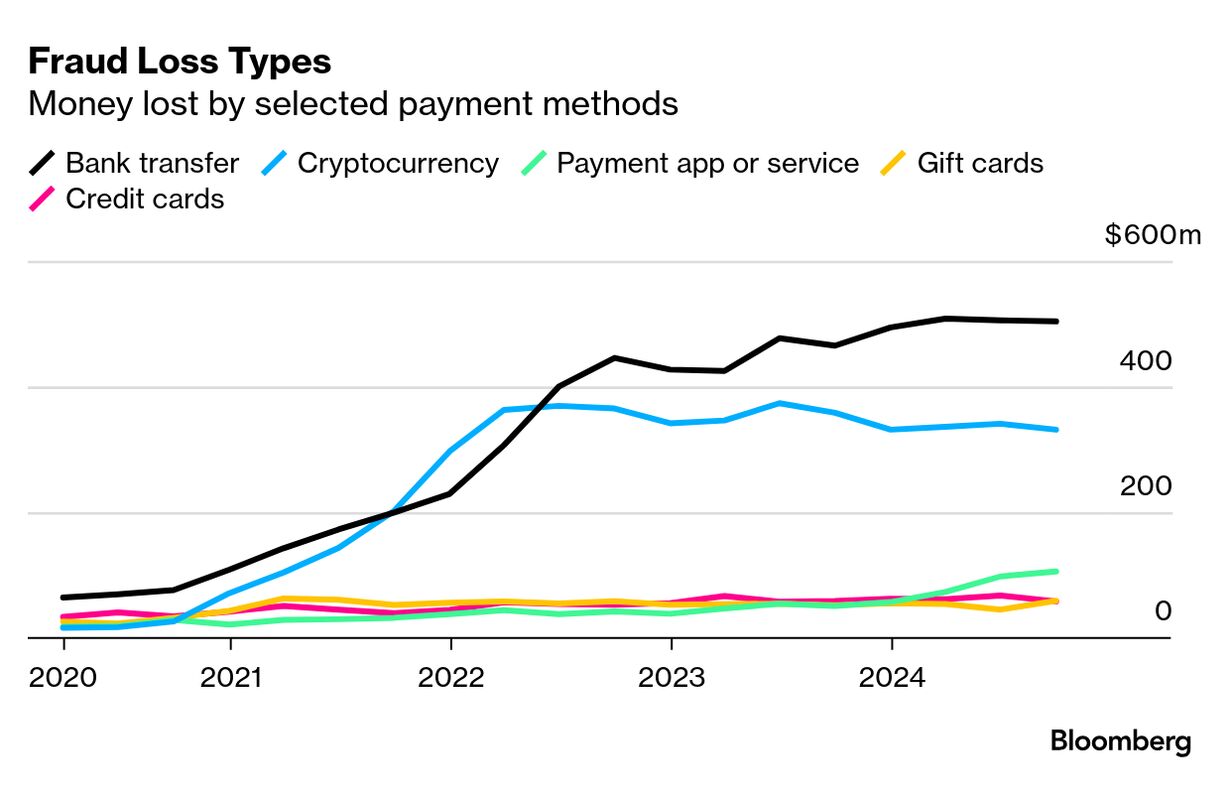
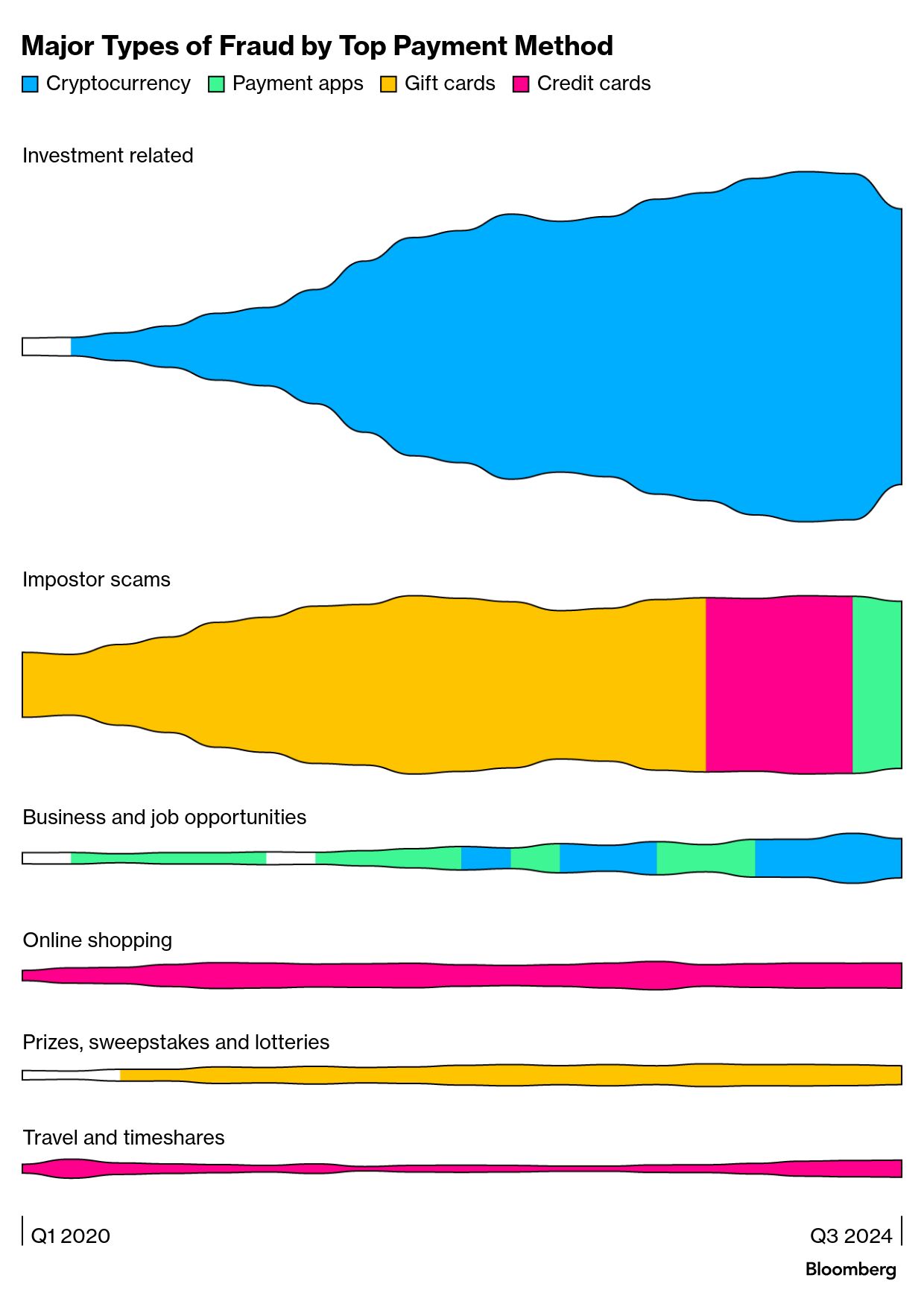
Cryptocurrency payments were most concentrated in fraud involving phony investment opportunities, job scams and business impostors. When the victim sent money through payment apps, the largest losses involved investment fraud, business impostors, romance scams and online shopping fraud.
Major Types of Fraud by Top Payment Method
Older people are commonly imagined to be the main victims of online scams, but the data show that they are not the only population affected. Only 4% of fraud reports came from people age 80 and older, but they have the highest median loss ($1,450). About a fifth of fraud reports (18%) came from those age 60 to 69, but their median loss was only $500. While investment-related fraud was the most common form for all age groups, those over 80 lost the largest amount of money to government imposters.
Source: Fraud reports made to the US Federal Trade Commission.
Note: Not all fraud reports included a category, contact method or payment method. Fraud by category includes only reports that had a category. Fraud by contact method and payment method is shown in the same way.
Additional work by Jeremy C.F. Lin