Africa’s Energy Shortage Is Stalling Its Industrial Revolution
Hundreds of thousands of gallons of the Nile River gush through Africa’s largest hydropower plant every second, propelling turbines and generating electricity that Ethiopia hopes will fuel an industrial revolution the East African country — and most other nations across the continent — desperately need.
Inaugurated in September, the 5,150-megawatt, mile-wide Grand Ethiopian Renaissance Dam towers 475 feet above the desert plain in the remote west and holds great promise for the country’s 135 million people. Fourteen years and $5 billion in the making, the project is an optimistic outlier on the least electrified continent in the world, where funding major power infrastructure has become far harder, grids are decrepit and state utilities are often broke. The result is that Africa cannot industrialize on a scale anywhere near what’s needed to create jobs for its young population, which by 2050 will nearly double to 2.5 billion, or a quarter of all humanity.
Read More: Africa Needs 1 Billion Jobs by the End of the Century. Where Will It Find Them?
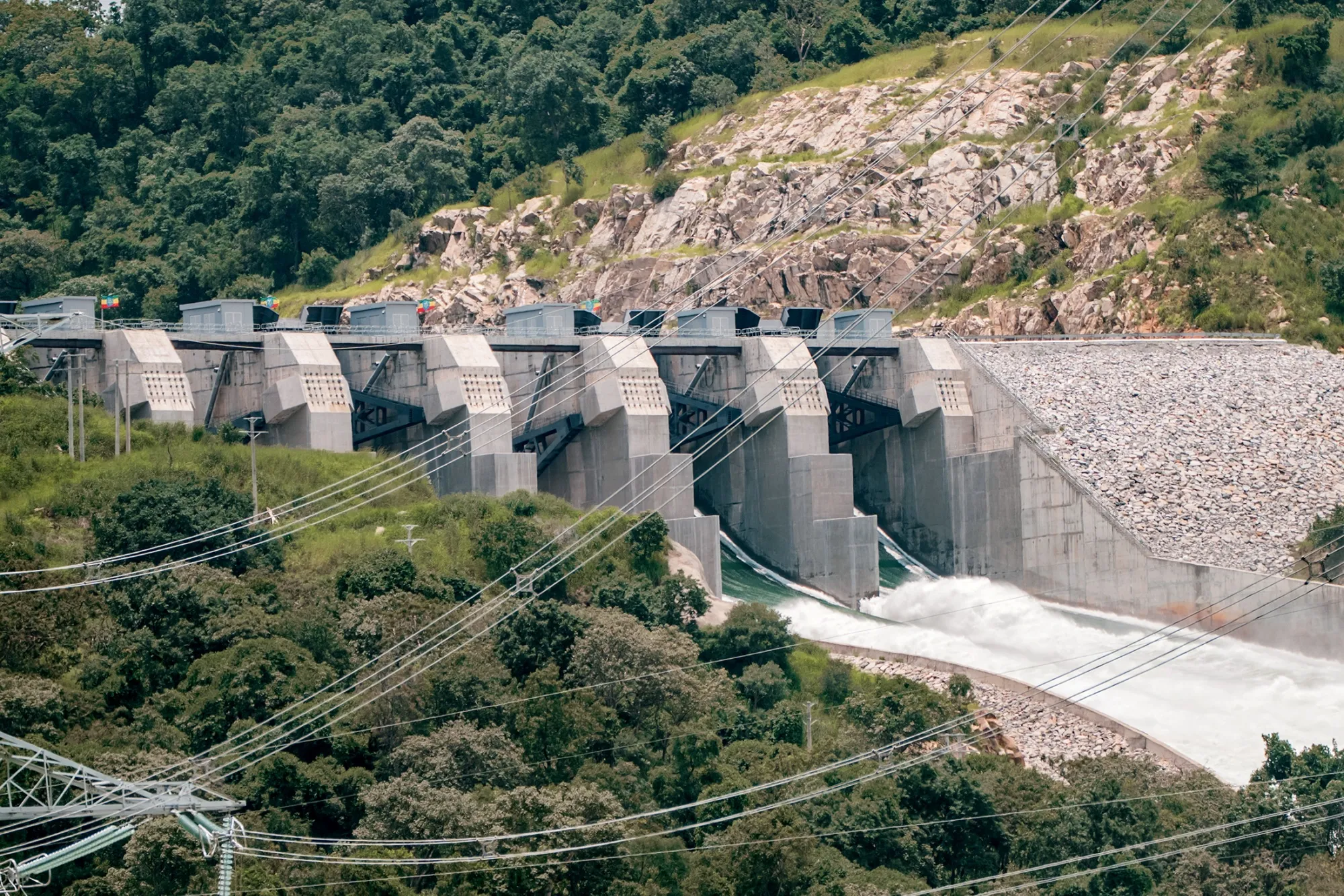
The Grand Ethiopian Renaissance Dam (GERD) in Guba, Ethiopia, on Tuesday, Sept. 9, 2025. Photographer: Amanuel Sileshi/Bloomberg
“Industrialization is very difficult to achieve because you need competent government, and mechanisms to mobilize society and facilitate private sector growth and increase the skills base of the population,” said Zainab Usman, former director of the Africa Program at the Carnegie Endowment for International Peace. “But there’s no other pathway in which a country moves from abject poverty – it’s the only tried and tested pathway.”
Watch: How Africa Can Transform Into an Industrial Powerhouse
Some African countries are pushing to improve their power sectors. Beyond the GERD, initiatives to bring private companies in to upgrade South Africa’s grid, connect Democratic Republic of Congo’s miners to hydropower in neighboring countries, realize gas plants in Senegal and build intercontinental transmission lines could gain traction. Morocco provides a model — it’s transformed itself into an industrial hub for Europe in part through its access to reliable, affordable electricity.
New Projects Boost Africa’s Energy, But Gaps Remain
Sources: World Resources Institute, World Bank, National Geospatial-Intelligence Agency, Bloomberg research
That is what Ethiopia hopes to do with the GERD, attracting foreign investment that will create jobs to bring young people back home, according to Water and Energy Minister Habtamu Itefa Geleta.
“Our youth who are unemployed now and are suffering in different parts of the world now, will come back, and will get employed,” he said.
Industrialization has driven the growth of every major economy, enabled in large part by ready access to financially sustainable electricity. From 19th century England to 20th century America to the “Asian Tigers” of the 1990s and Bangladesh’s textile explosion soon after, in China, Mexico, Brazil and Morocco, it was manufacturing that sparked economic progress.
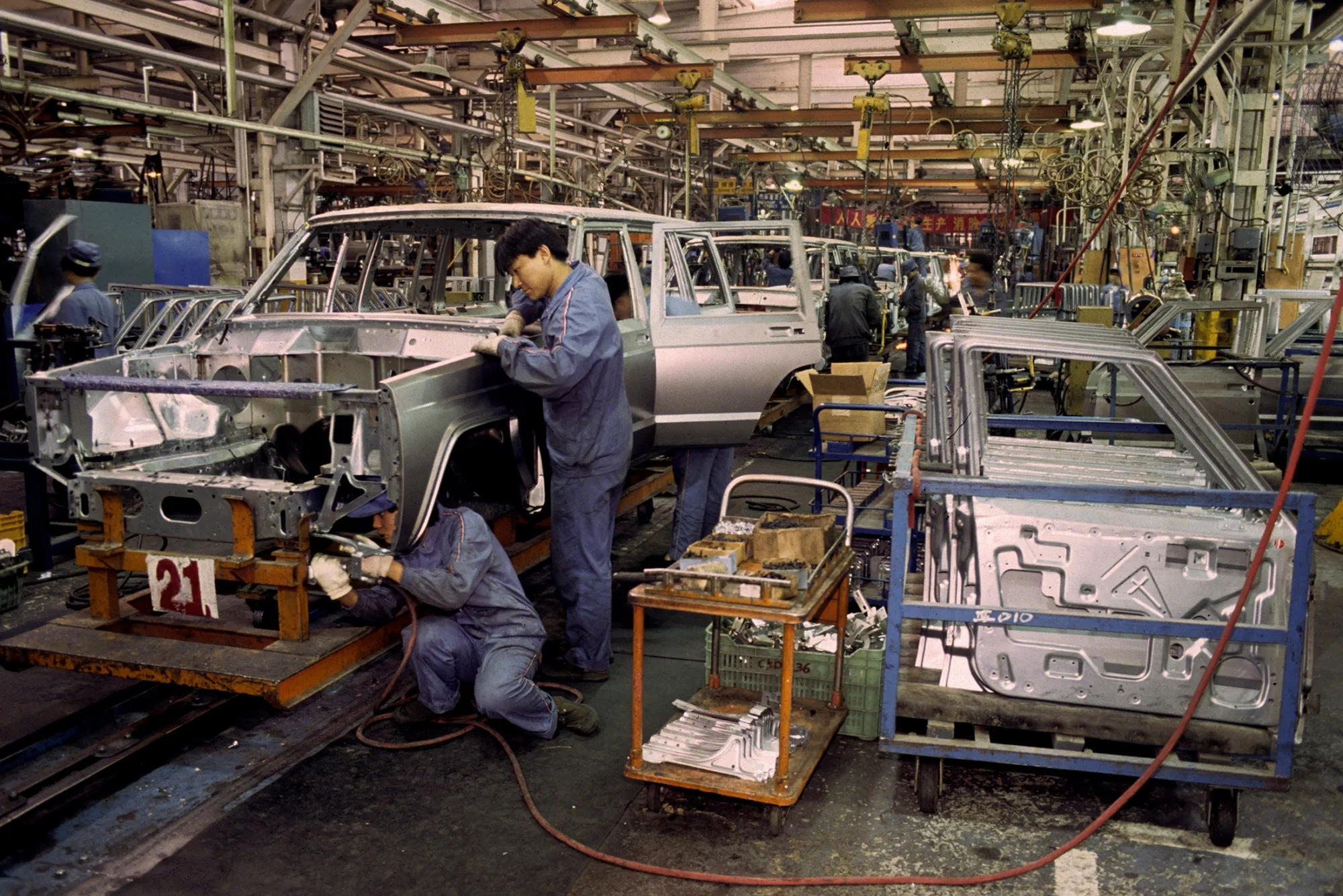
A jeep assembly line at a Chinese joint venture with Chrysler in Beijing, China in 1993. Photographer: Forrest Anderson/The Chronicle Collection/Getty Images
Africa has largely been left behind — manufacturing contributes just 11% of GDP in sub-Saharan Africa, according to World Bank data, compared to 22% in East Asia. The continent contributes just 2% of global manufacturing value added — a metric that serves as a gauge of industrialization — down from about 3% a decade ago, according to the UN’s Industrial Development Organization.
The reasons are myriad — a skills gap, poor road and rail infrastructure, corruption and state inefficiency – but the primary driver is a lack of power. That dearth scares off investors, keeps factories from being built, and pushes big industrial users off-grid — locking utilities into a death spiral where raising prices only shrinks demand further.
The region also lags other emerging economies by every electricity metric, from generation to consumption.
Even South Africa falls below the world’s average electricity consumption per capita, according to the International Energy Agency. Nigeria ranks among the last 15 countries on the list. The DRC is a few positions lower, with the average Congolese consuming about 1% of what someone in the US uses.
Power Inequities Stall African Economies
Source: World Bank
Note: Modern energy minimum is 1,000 kWh per person per year, with at least 250 kWh at home and 750 kWh in the broader economy.
In Nigeria — where the grid meant for 230 million people delivers about as much electricity as that of a small European country — manufacturers rely on private gas-fired plants on industrial estates. In DRC, miners rely on costly diesel units that limit production of critical minerals essential to the energy transition. In South Africa, by far the continent’s most industrialized country, the woes of the state-run electric company slowed growth and investment to multi-decade lows. Other state utilities can hardly keep aging assets going, much less build new capacity.
The challenge is even greater given that China, once Africa’s main financier, has pulled back, and the US under President Donald Trump has slashed electrification initiatives on the continent. Over the previous two decades, China loaned African countries billions of dollars to build power and energy infrastructure through its Belt and Road Initiative. But as China’s domestic economy struggled, it scaled back its lending significantly — focusing on much smaller projects, including some solar and renewables — and little foreign funding has replaced it.
Public and development finance funding for African energy fell about a third in the last 10 years to $20 billion in 2024, led by an 85% drop from China, according to the IEA.
On a recent afternoon at Sam & Sara’s garment factory outside Lagos, the power generator belched out black smoke as it burned diesel from a 1,100-gallon tank.
The garment industry, which propelled the economies of Asian nations, thrives on low labor costs and a vast, skilled workforce, advantages Nigeria also possesses. But without reliable power supply — fueling generators costs the company a quarter of annual expenses — its potential remains unrealized.
“For those of us that require electricity for production, you have cheaper goods coming in from China and Vietnam that don’t have to deal with such challenges” founder Folake Oyemade said. “How do you compete?”
Roughly 86% of Nigerian businesses rely on gasoline and diesel generators, with economic losses from a lack of reliable electricity estimated at around 5% to 7% of GDP, according to the World Bank.
Small firms like Sam & Sara’s are largely stuck on diesel generators. Only larger companies can afford to build their own off-grid solutions. Beta Glass – a bottle manufacturer outside Lagos whose clients include Coca-Cola – has added an array of gas generators and 2 megawatts of solar to keep their furnaces running 24/7.
Nigeria Depends on Generators
Sources: Access to Energy Institute, Dalberg, Nigerian Electricity Regulatory Commission
Note: Average available capacity figure is from September.
Nigeria’s grid usually only has around 5 gigawatts of available power plants for its nearly quarter of a billion people — the same capacity that’s connected to Croatia’s grid serves 4 million citizens. Since 2019, the national grid has suffered more than three dozen partial and total collapses, according to the regulator, but most Nigerians never notice, because of how often the power is out.
Outages average 12 hours daily, leading to Nigerians using more than 22 million back-up generators, according to a 2021 World Bank report. Electricity outages cost Nigeria $26 billion a year, not counting the $22 billion that Nigerians spend on fuel for generators, according to a 2024 Standard Bank report.
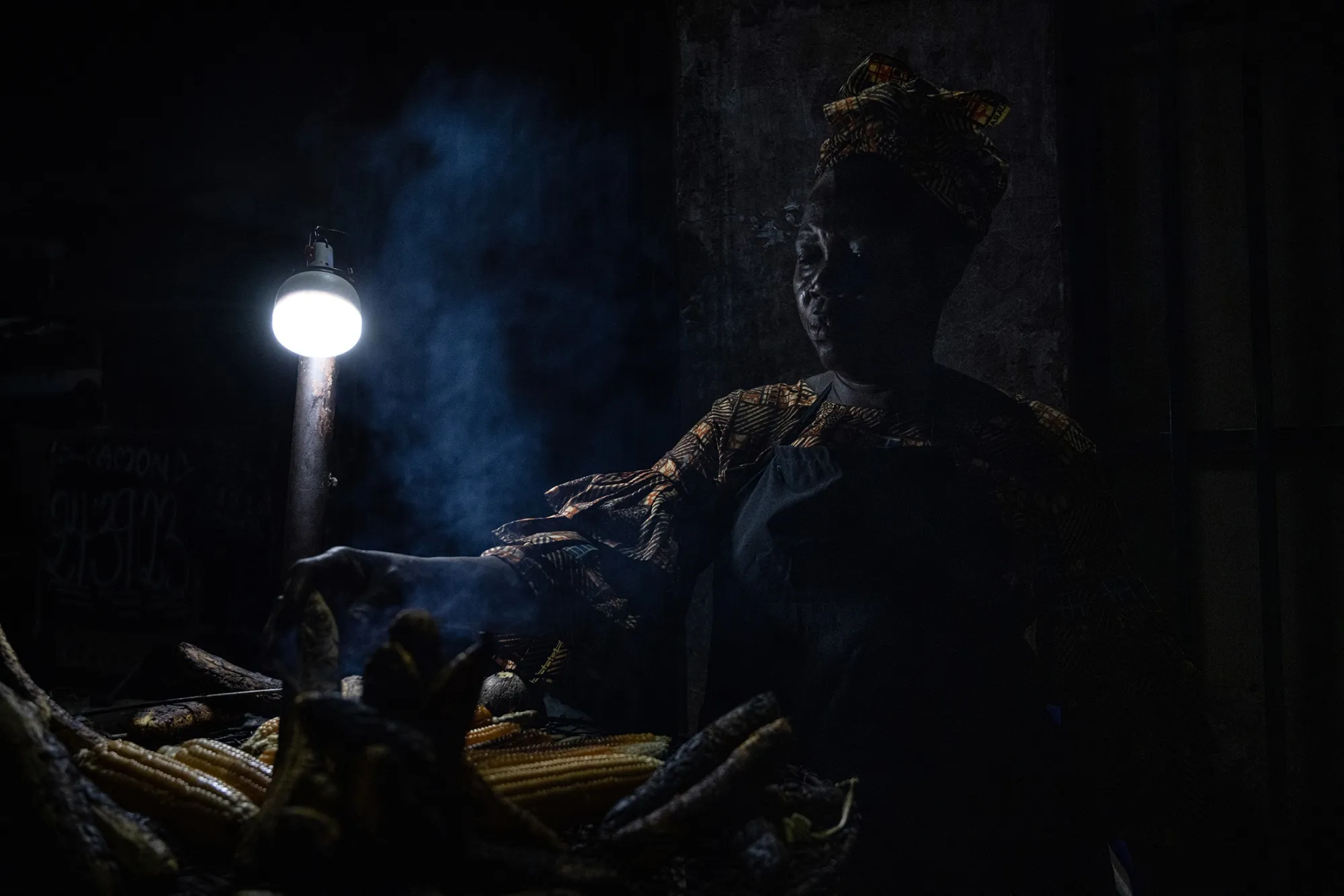
A roadside trader uses a rechargeable bulb for illumination as she roasts corn and plantain at her stall in Lagos. In Nigeria, outages average 12 hours daily. Photographer: Etinosa Yvonne/Bloomberg
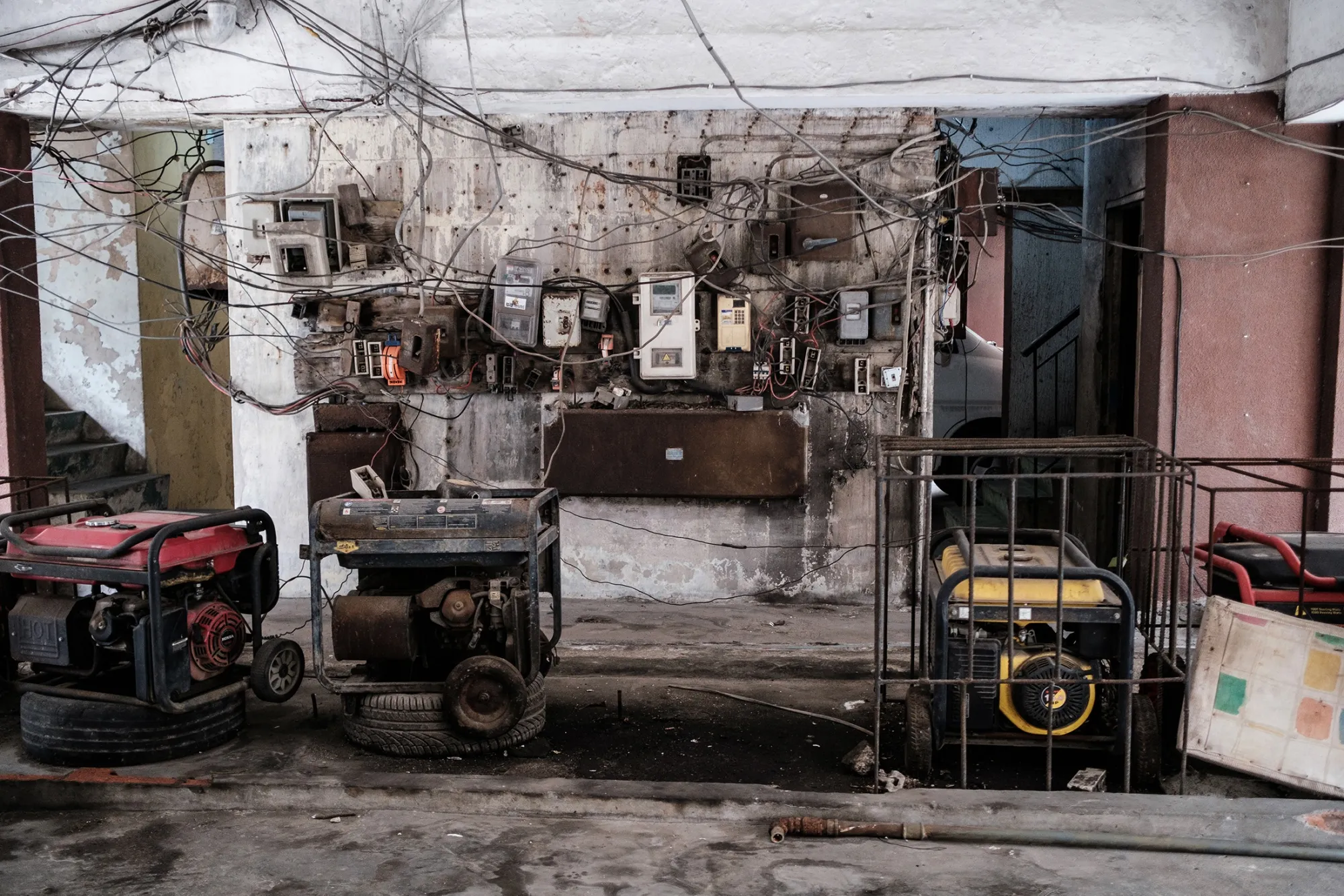
Generator sets are lined up as a substitute for irregular electricity in Lagos. Photographer: Victor Adewale/Bloomberg
Nigeria’s electricity sector is “basically bankrupt,” said Edu Okeke, chief executive officer of Azura, one of the last large-scale independent power plants built in the country, more than a decade ago.
The $900 million gas plant was backed by the World Bank and long held up as a model for similar projects across Africa, but it nearly defaulted in 2020 because of a dollar shortage in the country, which was itself driven by a central bank policy to hoard the greenback that was marred by corruption allegations. Part of the plant’s business case was based on the government fully removing an electricity subsidy similar to those in many African countries, but while tariffs have gone up for some customers, it hasn’t been completely rescinded.
That means that “people that can pay are not getting the services and people that are not paying are riding on the back of that — you want to serve everybody but nobody’s served,” he said. “It’s getting worse because what is now happening is that every manufacturing establishment in Nigeria is investing in its own capacity, and everybody’s leaving the grid.”
Billionaire Aliko Dangote is among them — one of the few stations built since Azura is his 435-megawatt project at his oil refinery outside Lagos.
As major industries go it alone, they feed the death spiral that’s crippled Africa’s biggest state utilities. They were created during the period of colonial rule — built for small, non-native populations and aimed at extractive ends — and typically remained monopolies long after independence, when they needed to serve populations far larger. For decades, they’ve struggled to collect arrears — South Africa’s Eskom Holdings SOC Ltd. alone is owed more than $5 billion by municipalities. Corruption has leached many more billions of dollars.
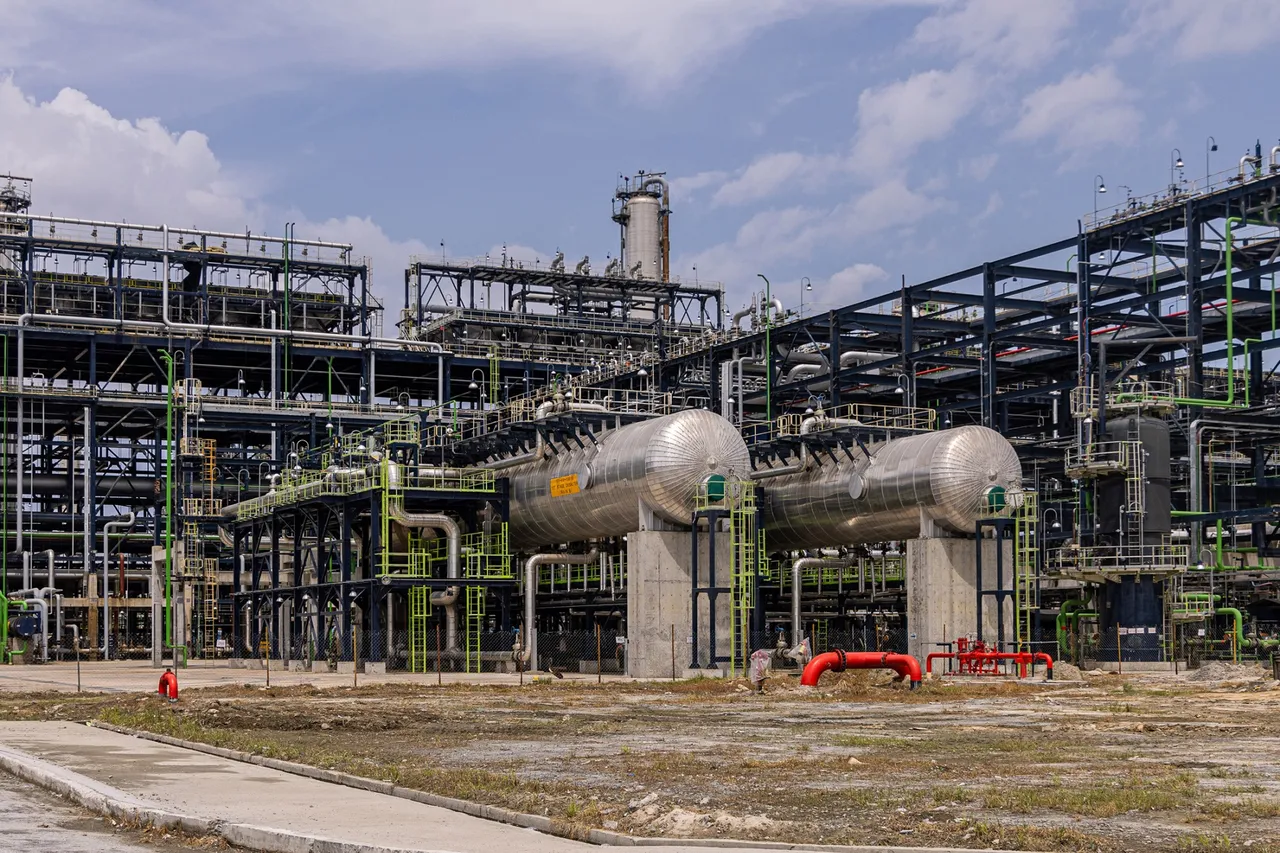
Aliko Dangote’s oil refinery outside Lagos. Photographer: Benson Ibeabuchi/Bloomberg
“Despite many initiatives for the sector, risk evaluations continue to be a deterrent for massive investment, leaving it dependent on public funding,’’ said Carlos Lopes, former head of the UN Economic Commission for Africa and a professor at the University of Cape Town.
In Ethiopia’s case, that meant selling domestic bonds via local banks. Much of that debt is now on the state’s balance sheet and the government must service it while keeping tariffs cost-reflective.
Whether Ethiopia will be able to avoid the fate of most power utilities on the continent remains to be seen.
“It’s all about how they manage their costs’’ and whether they’re able to pass that on to the consumer, said Yvonne Mhango, Bloomberg Economics’ Africa economist. “There’s also that question of as demand starts to hit supply, do they prioritize the big off-takers over the population.’’
With private sector players largely shying away, African countries have largely turned to development finance and foreign aid – but they’ve delivered mixed results. Power Africa, a program started under former US President Barack Obama, met less than half of its goal of building 30 gigawatts of new generation on the continent before it was canceled by Trump in February.
Energy-transition programs funded by the West, such as South Africa’s coal phase-down deal, stalled for years amid debates over loan-heavy financing. Opponents cite cheap coal and Africa’s small share of global emissions.
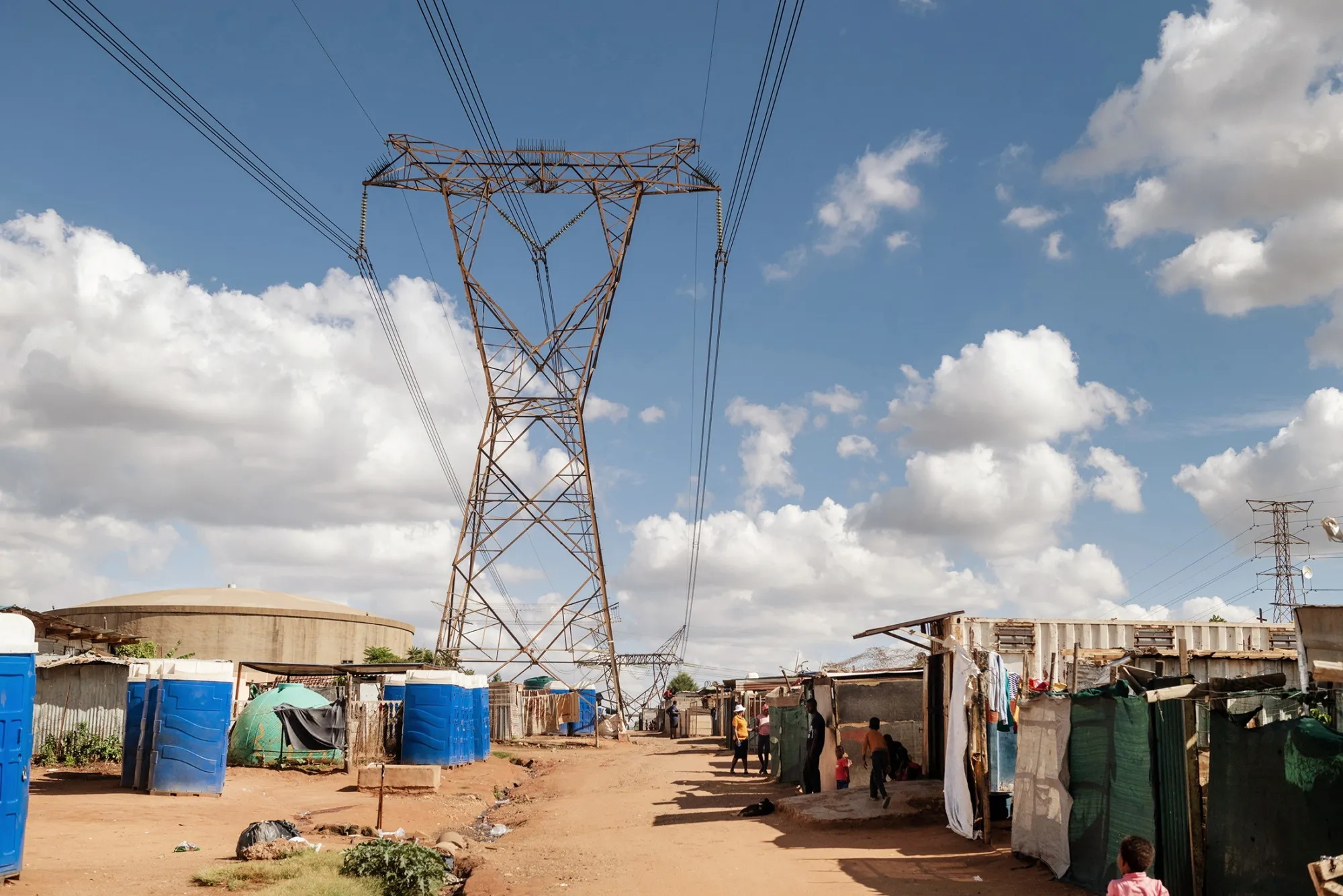
Electrical transmission tower and power lines in the Ivory Park settlement in Johannesburg. The World Bank’s Mission 300 aims to bring electricity to 300 million Africans. Photographer: Leon Sadiki/Bloomberg
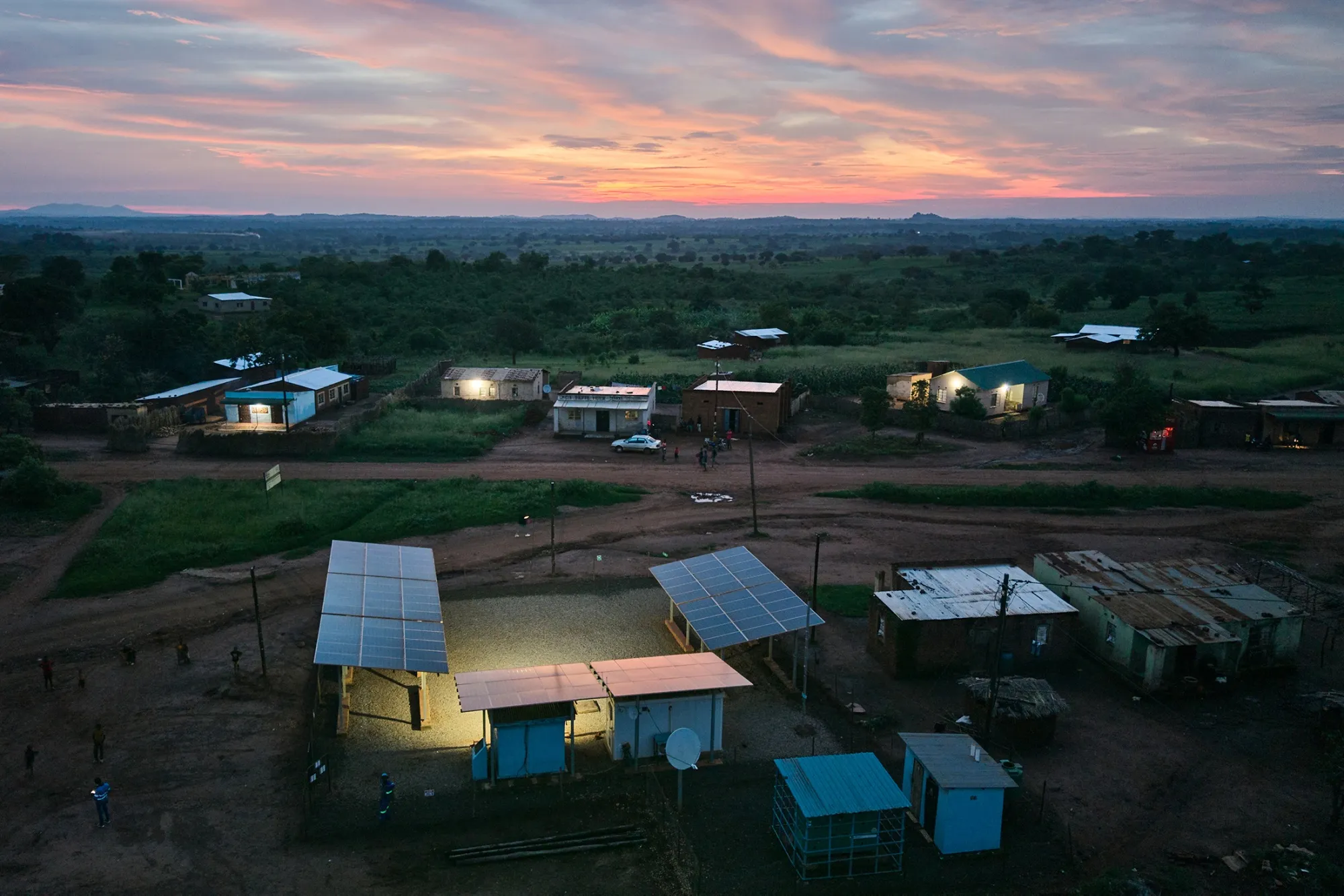
Houses are powered from solar micro-grid in Chitandika village, Zambia. Photographer: Zinyange Auntony/Bloomberg
At the same time, the World Bank’s Mission 300 aims to bring electricity to 300 million Africans – about half of those on the continent who lack power. But some economists argue that Africa should prioritize electrifying industry to build exports, wealth and jobs.
“We don’t export enough out of the continent because the electricity provision isn’t there, and there’s more focus on electricity provision to rural poor households than there is to dollar-generating export industries on the coast,” said Charlie Robertson, economist and head of macro strategy at FIM Partners.
Okeke, of Azura, agrees, arguing that Nigeria should focus its meager power “where we have manufacturing industries and tell every other person, ‘sorry, there is no power until we build it out.’” The country is currently in talks with the Export-Import Bank of China for a $2 billion loan to build a new grid in the coastal south, where most industry is concentrated.
Nigeria’s Grid Supplies Less Power to Growing Population
Source: World Bank
Still, as major projects and foreign assistance campaigns sputter, Africa has presented a major opportunity for private clean energy companies from Europe and the Middle East in particular, as the continent contains some of the world’s best solar, wind and geothermal resources.
Infinity Power, a joint venture between Egypt’s Infinity and Abu Dhabi’s Masdar, is a leader in clean power in Africa with 1.3 gigawatts in operation and a pipeline of more than 10 times that capacity, targeting both residential and industrial customers.
“Once you get the right project, the money’s there for sure,” Mohamed Ismail Mansour, its chairman, said in an interview.
But many analysts argue that renewables on their own can’t support manufacturing at a significant scale.
“Given the economic hardship across the continent and its fast-growing population, Africa’s energy strategy should adopt an ‘all-of-the-above’ approach in the short term, prioritizing the cheapest available options,” particularly natural gas, said Moussa Blimpo, assistant professor at the University of Toronto’s Munk School of Global Affairs and former World Bank economist.
Already, Africa generates a fifth of its electricity from hydropower — outpacing the US — and many countries plan to link dams to critical minerals mines. It’s still not clear where the financing will come from to make that happen — even the Chinese, which dominate mining on the continent, have struggled to fully power all of their projects, investing billions of dollars mainly in hydro. Investments in power may not make sense for the extractives sector unless they will be paid off before the resource is exhausted.
Ethiopia’s GERD addresses another needed step — connecting regional grids. It’s already selling surplus power to Kenya, Djibouti and Sudan. Now other parts of the continent must figure out how to connect themselves to more energy-rich neighbors.
“Can you imagine how much more powerful Nigeria can be if it has full access to electricity?” said Landry Signe, a senior fellow at the Brookings Institution in Washington.
The Democratic Republic of Congo, home to three-quarters of world cobalt production and the second-biggest source of copper, is at the heart of the global energy transition. But its lack of power is keeping it from being able to process those critical minerals at home, move up the value chain and break the resource curse that's left so many African countries shipping their natural resources abroad raw for other countries to get rich from while not diversifying their economies at home.
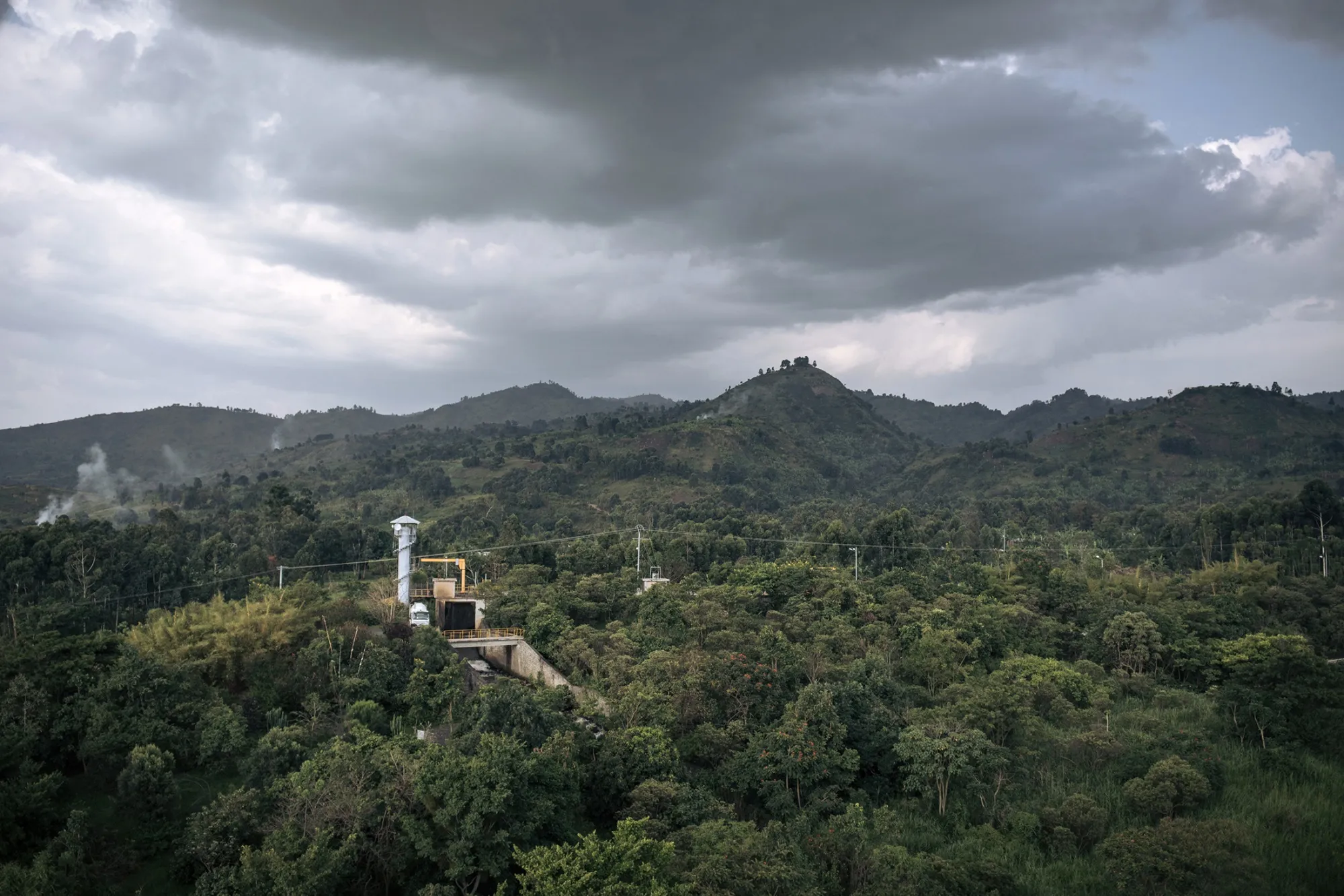
A hydroelectric power plant in Virunga National Park in DRC. Photographer: Alexis Huguet/AFP/Getty Images
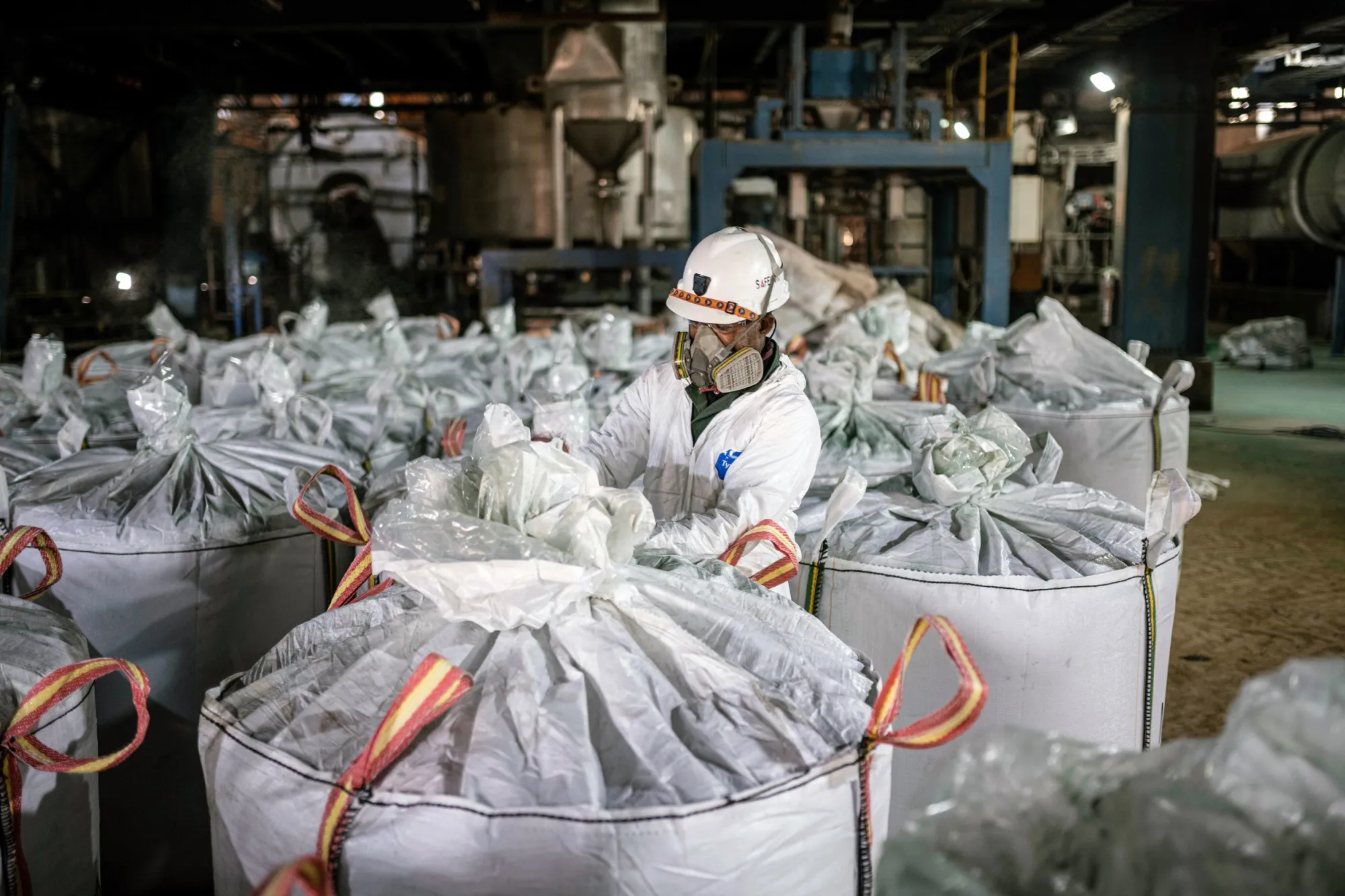
Packing cobalt hydroxide at Glencore Plc’s Mutanda industrial mine in Congo. Photographer: Arlette Bashizi
Even the world’s biggest miners, including Glencore Plc., Ivanhoe Mines Ltd., CMOC Group Ltd. and Zijin Mining Group Co., operate below capacity because the country — despite being home to some of the greatest hydropower potential on Earth and 110 million people — produces less electricity than Slovenia. It’s a huge loss for the central African nation, which relies on extractives for 99% of its export revenue.
The companies have installed legions of expensive diesel-powered generators. Congo’s utility, Societe Nationale d’Electricite, estimates miners spend as much as $600 million a year on fuel for the power plants, which more than quadruples electricity costs for miners, according to Abidjan and Paris-based Innogence Consulting. When a fire broke out at Ivanhoe’s Kamoa-Kakula project — one of the world’s biggest copper mines — earlier this year, it damaged 36 megawatts of diesel generators and delayed its development.
Some of the biggest miners, like China’s CMOC and Sicomines SA, have invested hundreds of millions of dollars in hydropower dams, mainly for their own operations. Glencore spent $450 million to rehabilitate part of a dam and rebuild power lines and infrastructure.
Sources: Resource Matters, World Bank, HYDRO-LINK, Bloomberg research
Note: Only power stations with potential of 10MW or greater are shown. Hydropower capacity for existing plants is installed capacity.
Hydroelectric power accounts for 96% of domestic power production.
“We have a 1,500-megawatt deficit in the copper belt there,” Mines Minister Louis Watum told Bloomberg in September. And that doesn’t include the potential processing needs in other parts of the country, where gold, diamonds, tantalum, tin, iron, manganese, lithium and bauxite are abundant.
Congo needs to “wake up from the 30-40 years we are asleep, to be honest,” and build more power capacity, Watum said.
Long before DRC became the continent’s mining epicenter, South Africa transformed itself into its industrial powerhouse on the back of its own extractive industry.
For over a century, the economy has tracked the fortunes of its power company, initially founded to support the mining industry. In recent years, that meant South Africa’s economic growth stagnated when Eskom’s plants faltered.
Eskom’s failure to meet demand took a 2.9 trillion-rand ($169 billion) toll on South Africa’s economy in 2023 — about a third of GDP — according to the state-owned Council for Scientific and Industrial Research. Improved maintenance resulted in better performance last year, when the cuts still cost as much as 481 billion rand ($28 billion).
South Africa finally took action, slashing limits on independent power plants, and the regulator has registered almost 13 gigawatts of fresh generation since 2018. At the same time, rooftop solar panel installations more than tripled in the last three years, helping take residential load off the grid.
Still, Eskom’s rates have soared 190% over the past decade, far above inflation, according to the CSIR. South African businesses that can afford to have built their own power supply — like their counterparts in Nigeria, DRC and other parts of the continent — or pay for clean energy from private producers.
South Africa, like virtually every nation with a centralized grid, also needs a massive upgrade to connect more renewable stations, batteries, and other clean technology, as coal power is gradually retired.
The process of attracting investment needed to build more than 8,700 miles of transmission lines in the next decade is “on track,” Eskom Chief Executive Officer Dan Marokane said in an interview. It’s just one of the issues the utility needs to solve, as South Africa attempts to balance potential job losses from higher industrial prices with rising residential rates faced by the poor.
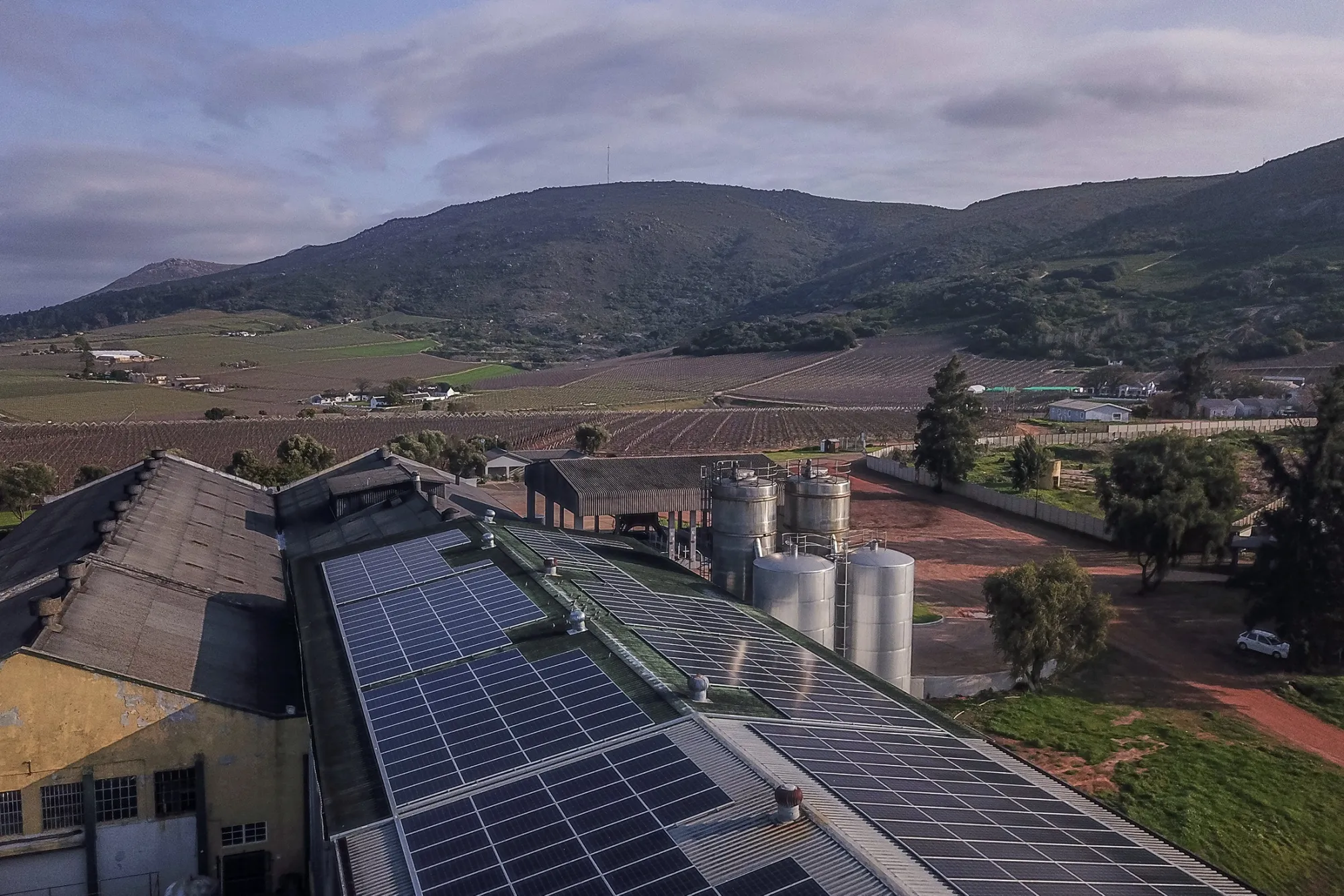
Solar panels on the roof of the Boland Wine Cellar in Cape Town, South Africa. Rooftop solar panel installations more than tripled in the last three years. Photographer: Guillem Sartorio/Bloomberg
That’s true across Africa, and utilities are struggling to attract big customers and stoke economic growth. Ethiopia’s government found a solution in the form of Bitcoin mining near the GERD.
Around two dozen crypto miners now pay a flat, dollar-denominated rate for power in exchange for consuming nearly a third of the electricity produced. But in August — amid criticism that crypto firms were taking a big chunk of the electricity in a country where four out of five households live without power — the government announced that it’d phase out prioritizing crypto miners in the coming years.
Blimpo, the former World Bank economist, said the focus on anchor investors — whether miners of cobalt or Bitcoin — was sound, and showed how the government was following “historical precedents” by “focusing primarily on strengthening its economy” rather than rural electrification. It had turned the GERD into a nationalist, patriotic project even as foreign funders balked.
“More than generating power, Ethiopia has demonstrated to the rest of Africa what can be achieved when there is strong political will, even in the face of lukewarm support from development partners,” he said.
Now it must turn that power into industry, he added.
“If we can get one country or two to really pull it off so that we are no longer looking for a good example outside of the continent, it will be a massive start.”
Read More:
Africa's Richest Man Is in the Running to Be Nigeria’s Rockefeller
Europe’s Rush to Buy Africa’s Gas Draws Cries of Hypocrisy
Why South Africa Is Mired in an Electricity Crisis: QuickTake
Chinese Bitcoin Miners Find a New Crypto Haven in Ethiopia