A Detailed Map Shows How Airstrikes and Refugees Reshaped Rafah
More than 1 million displaced Palestinians have packed the area in the south of Gaza with tents
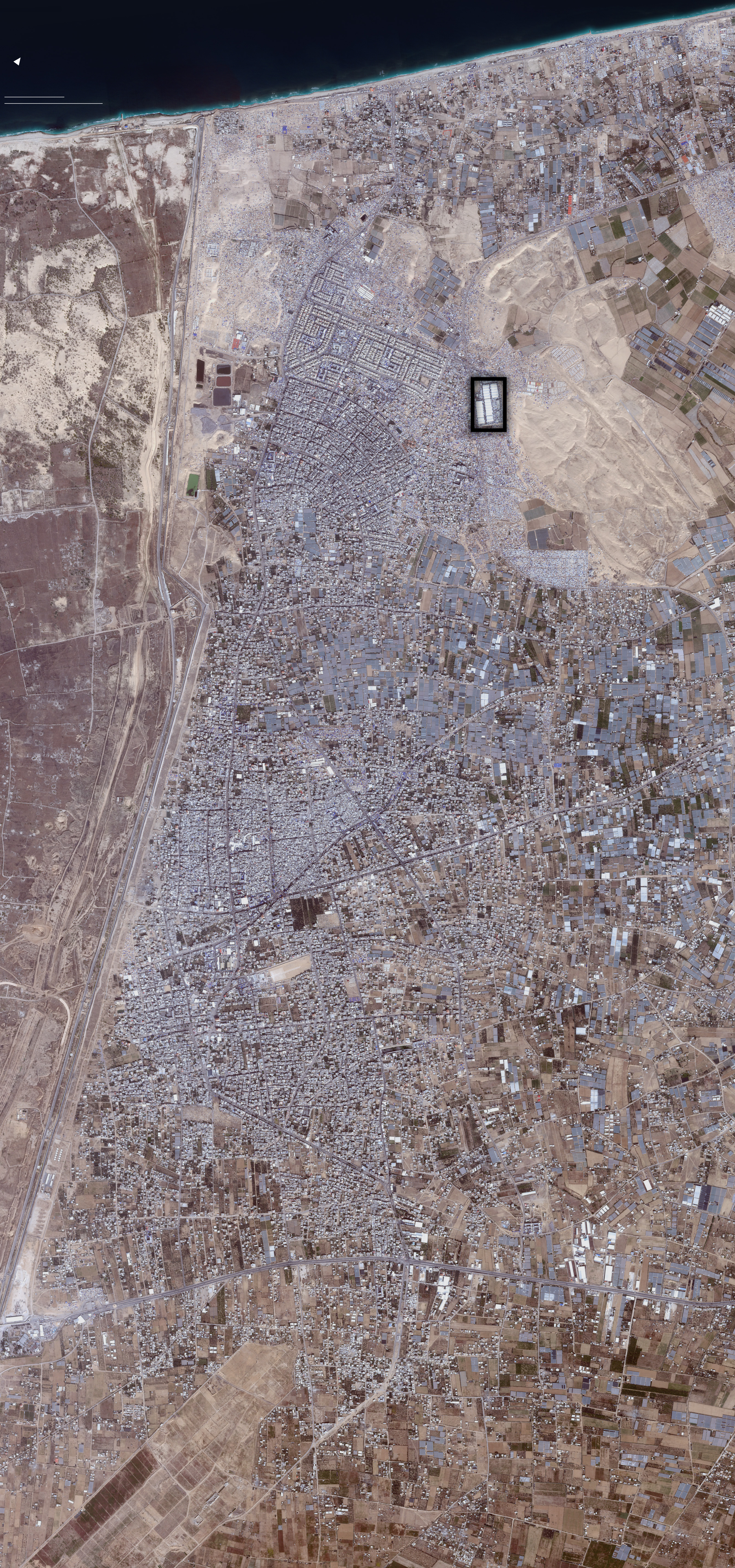
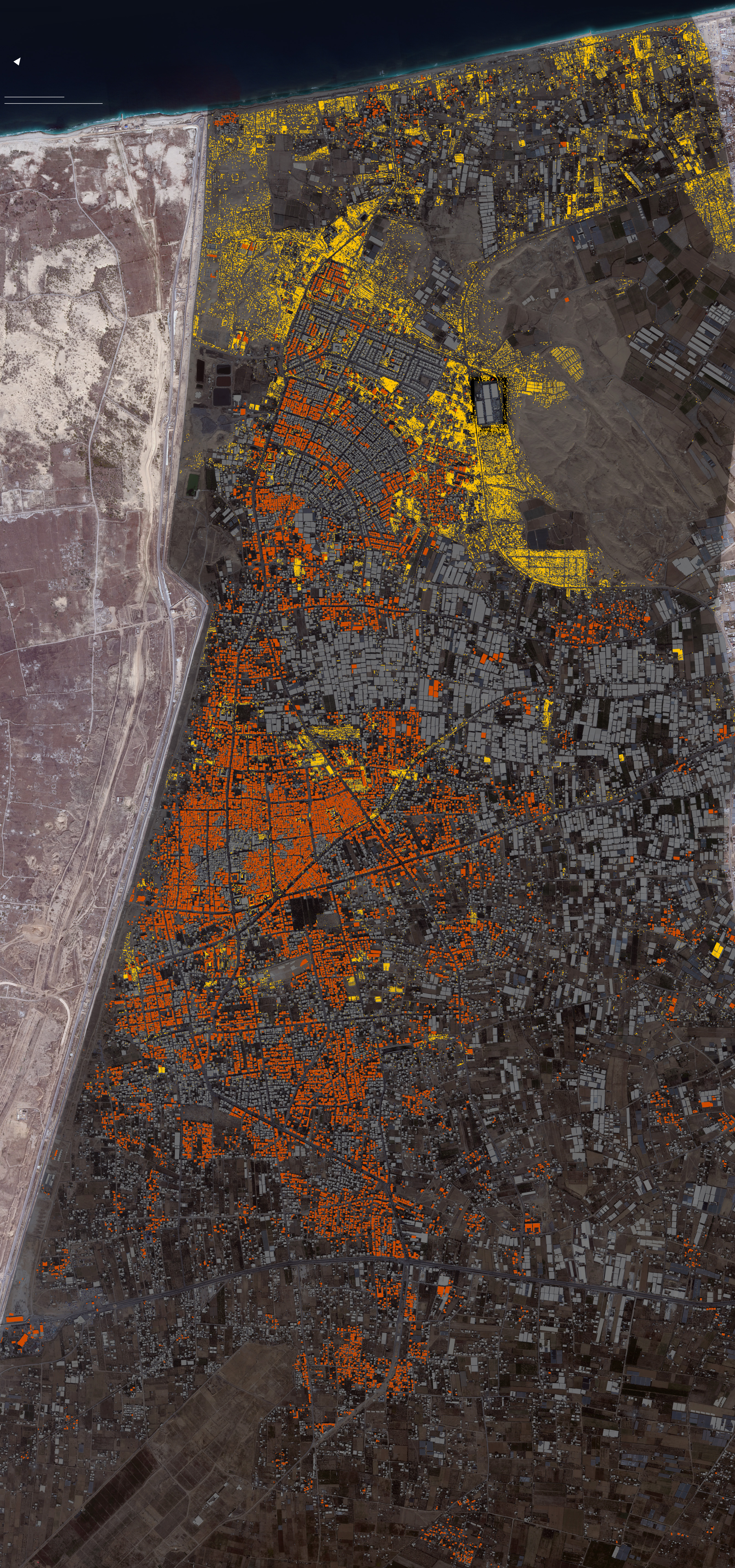
Gaza’s southern city of Rafah is now home to more than a million displaced people. It’s also Israel’s last major military target in its campaign to eradicate the leadership of Hamas, the Iran-backed militant group considered a terrorist organization by the US and European Union. Using satellite analysis to identify damaged buildings and refugee tents, here is what the Rafah region looks like after six months of war.
GAZA
Rafah
N
0.5 km
0.5 mi
N
0.5 km
0.5 mi

Tents and
new structures
Damaged buildings
Mediterranean Sea
Highlighted areas show where
satellite analysis detected
tents or damaged buildings.
UN main warehouse
Rafah
Egypt
Deeper in the city,
tents fill open
areas along roads.
Roughly one-third of Rafah’s buildings
have been damaged or destroyed.
Rafah Crossing
Sources: Tents and new structures from Bloomberg analysis of satellite imagery; damaged buildings analysis of Copernicus Sentinel-1 satellite data by Corey Scher of CUNY Graduate Center and Jamon Van Den Hoek of Oregon State University, as of March 29, 2024; satellite imagery from Planet Labs PBC; building footprints from Microsoft Buildings and OpenStreetMap.
More than half of Gaza’s population has been pushed into Rafah and southern Gaza, which had a pre-war population of about 280,000 people, since the war began in October following Hamas’s attack on Israel in which 1,200 people were killed and 250 kidnapped. More than 33,000 Palestinians have been killed since the war began, according to the Hamas-run Health Ministry. Israel says it has killed 12,000 Hamas fighters.
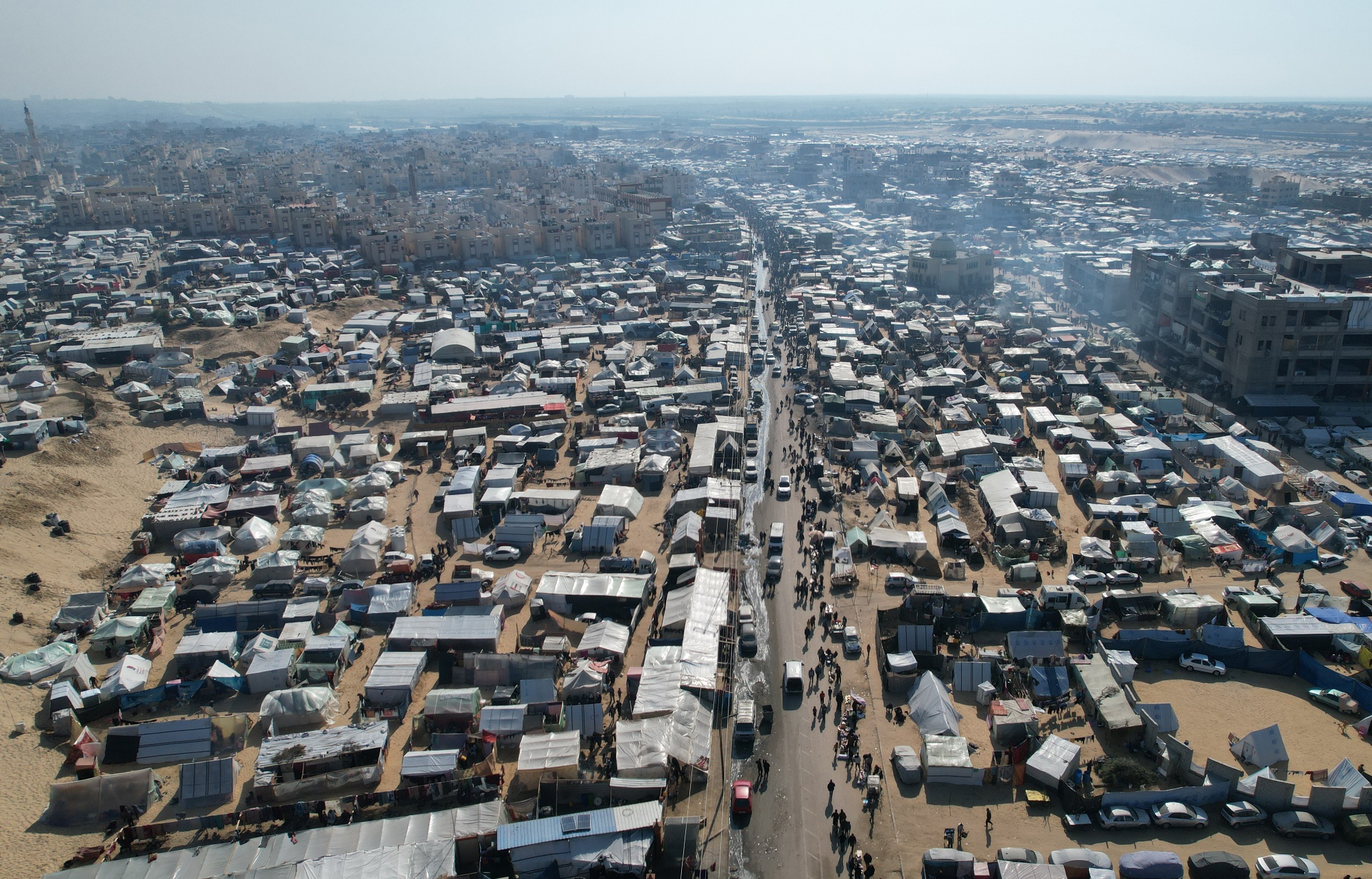
Makeshift camps for displaced Palestinians near the Egyptian border in Rafah on Jan. 19. Photographer: Ahmad Salem/Bloomberg
Bloomberg trained a machine learning model on high resolution satellite imagery to search for tents and new structures in the Rafah governorate region. Using a pair of images from Nov. 10, 2023 and March 28, 2024, we looked for changes, specifically, new structures. The tents vary in size and typically have white, blue and orange roofs. We trained our model to look for these colors — and for things that simply did not exist before — in the most recent image.
Israeli airstrikes have damaged about 32% of the region’s buildings since the start of the conflict, according to analysis by researchers at Oregon State University and the CUNY Graduate Center. Across the entire Gaza Strip, about 56% of buildings have been damaged.
Here is a closer look at what has happened in Rafah:
Tents Surround UN Facilities
Clusters of tents formed first around United Nations Relief and Works Agency facilities in the northern part of Rafah after Israel began issuing orders to leave Gaza City in mid-October 2023. The UN opened its logistics hub and warehouse in 2019.
The tent cities surrounding the main UN warehouse have a visible street grid.
Packed into Rafah’s Center
Toward the center of the city, tents are densely packed into open areas and courtyards along main streets. In the north-south street in this image, a wide area between travel lanes has been filled with tents stretching for about 3,800 feet (1.1 km). To the west, tents have filled in open spaces around Kuwait Specialized Hospital.
Tents Form Around Field Hospitals and Coastline
Tents have filled in all the way to the beach.
Two field hospitals are operating here. The United Arab Emirates erected a 150-bed field hospital, which opened in December. The US-based International Medical Corps opened a 140-bed field hospital in January and relocated it over the course of a week in early April to this area. The field hospital is the second-largest functioning health care facility in Gaza, according to a spokesperson for the IMC.
People have also built tent encampments around mosques throughout Rafah, like they’ve done here, around the Taiba Mosque.
Israeli officials say they must attack Rafah to defeat Hamas and have been preparing for weeks. They estimate 5,000 to 8,000 Hamas fighters are in the city. The US and other allies have urged Israel to abandon the operation to allow for a cease-fire and humanitarian aid.
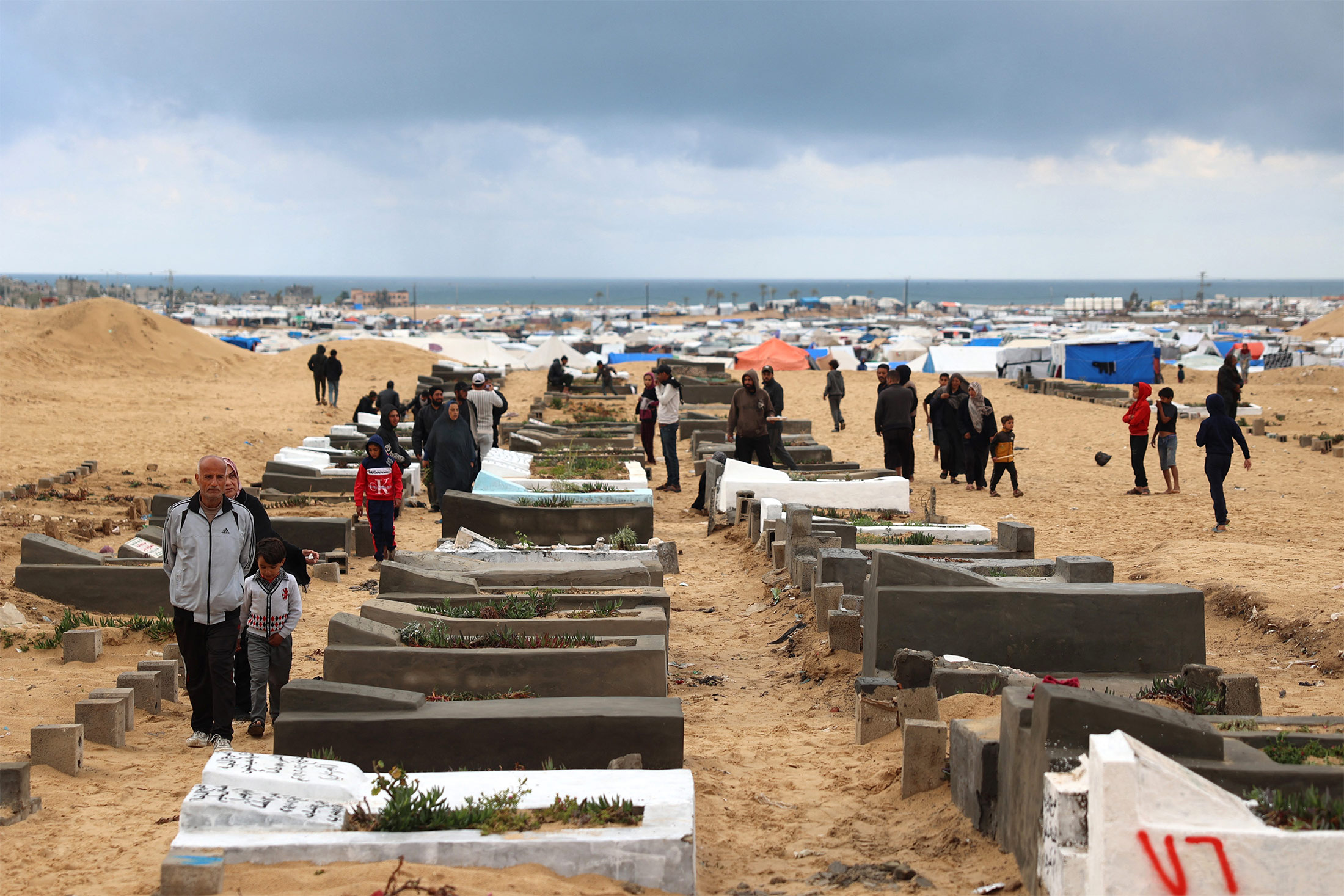
Palestinians visit the graves of loved ones at a cemetery in Rafah on April 10, 2024. Photographer: AFP via Getty Images
Israel’s Prime Minister Benjamin Netanyahu said last week he has set a date for a military operation in Rafah. US Secretary of State Antony Blinken said he had not been given the date for the assault and doesn’t see an assault as imminent.
Iran launched an unprecedented attack of more than 350 drones and missiles at Israel on Saturday in retaliation for an April 1 strike on an embassy compound in Syria, which killed two Islamic Revolutionary Guards Corps generals and five others. The strike in Syria has been attributed to, but not acknowledged by, Israel. Israeli officials have not yet decided on a response, while US officials and other allies are working to avert a larger war.