Presidential
Palace
Ministry
offices
Ceremony
Plaza
Indonesia’s New Jungle Capital
Is a Work in Progress
President Joko Widodo wants to cement his legacy with a $29 billion megaproject to replace Jakarta.
Its fate is uncertain
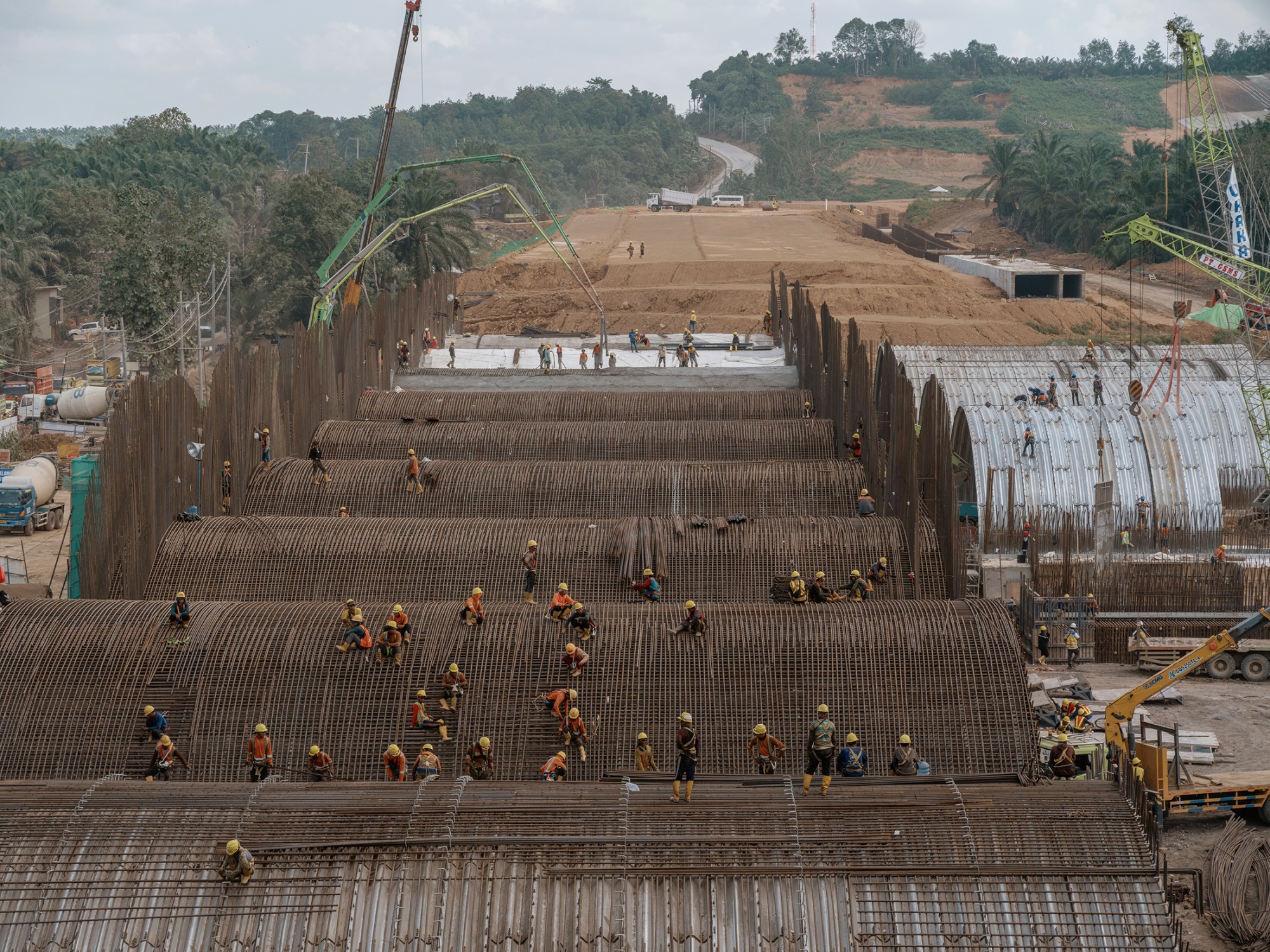
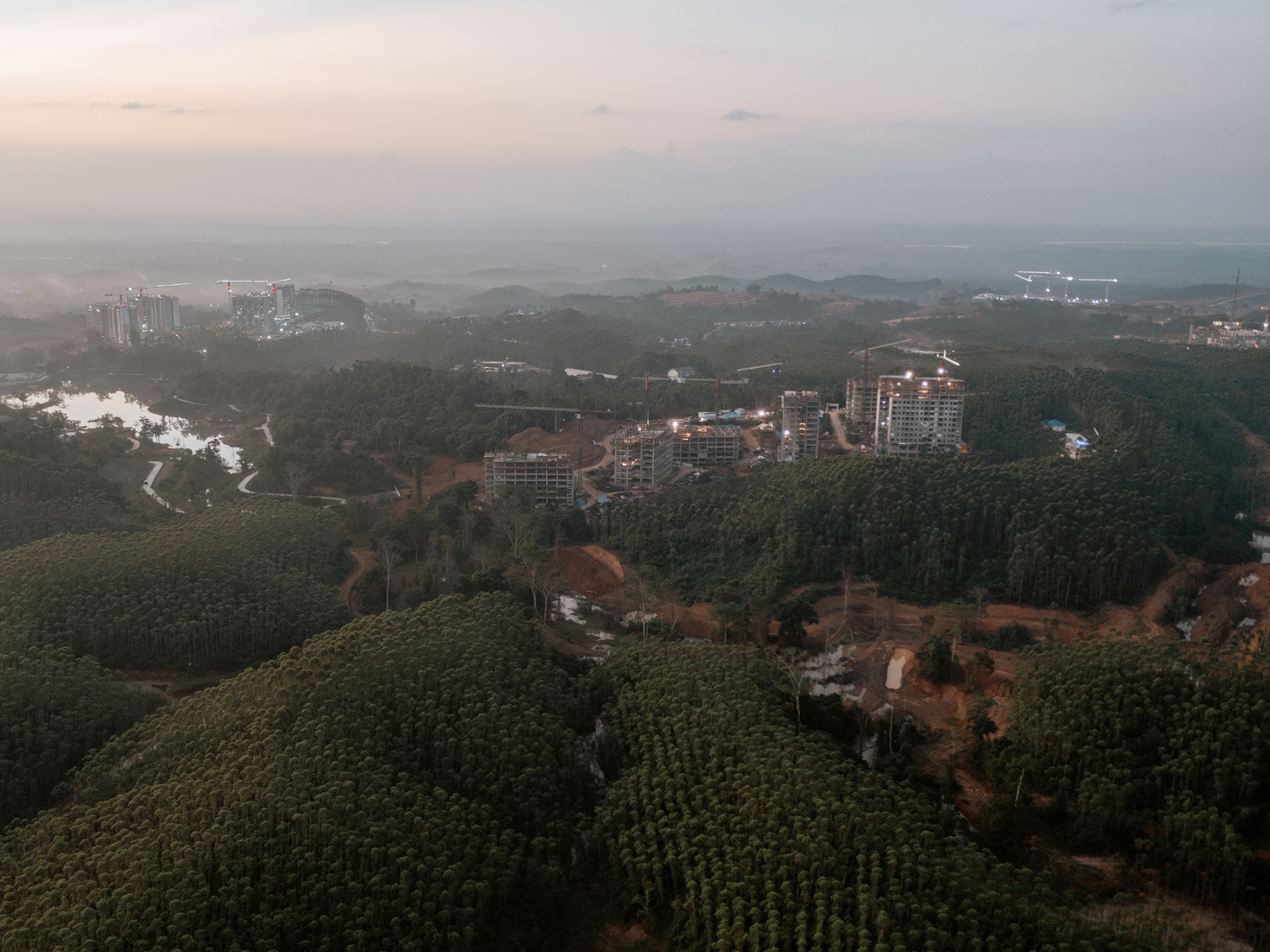
More than 1,000 kilometers northeast of Indonesia’s capital, Jakarta, construction crews are carving a new administrative headquarters for the country out of the Borneo rainforest.
Nusantara, the planned city, is intended to be outgoing President Joko Widodo’s biggest legacy: a new center for the government, which will be free of the overcrowding and flooding that afflict Jakarta. The project, however, has failed to attract significant investment and has been plagued by construction delays.
In late July, Jokowi, as the Indonesian leader is known, began working from the presidential palace under construction in Nusantara. He set a goal of completing the palace so that Independence Day can be celebrated there on Saturday and the capital officially inaugurated. But he’s been forced to cut the guest list by more than 80% to 1,300 people due to logistical challenges. With a new president taking office in October, the fate of the entire megaproject is up in the air.
Two years after work began on Nusantara, city plans mapped onto satellite imagery from mid-July show the preliminary state of construction.
Sources: Planet Labs, Ministry of Public Works and Housing
How Construction Has Progressed
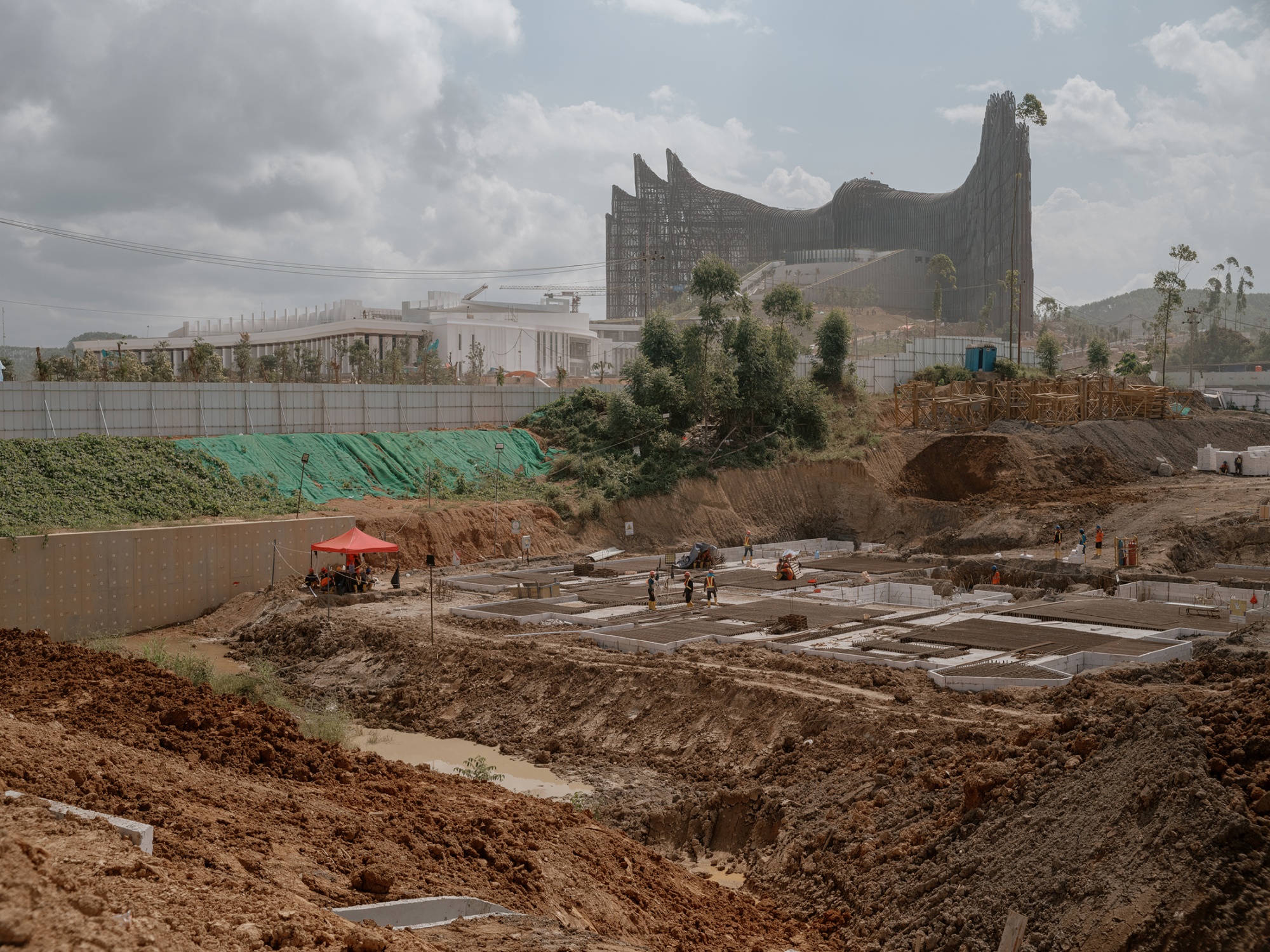
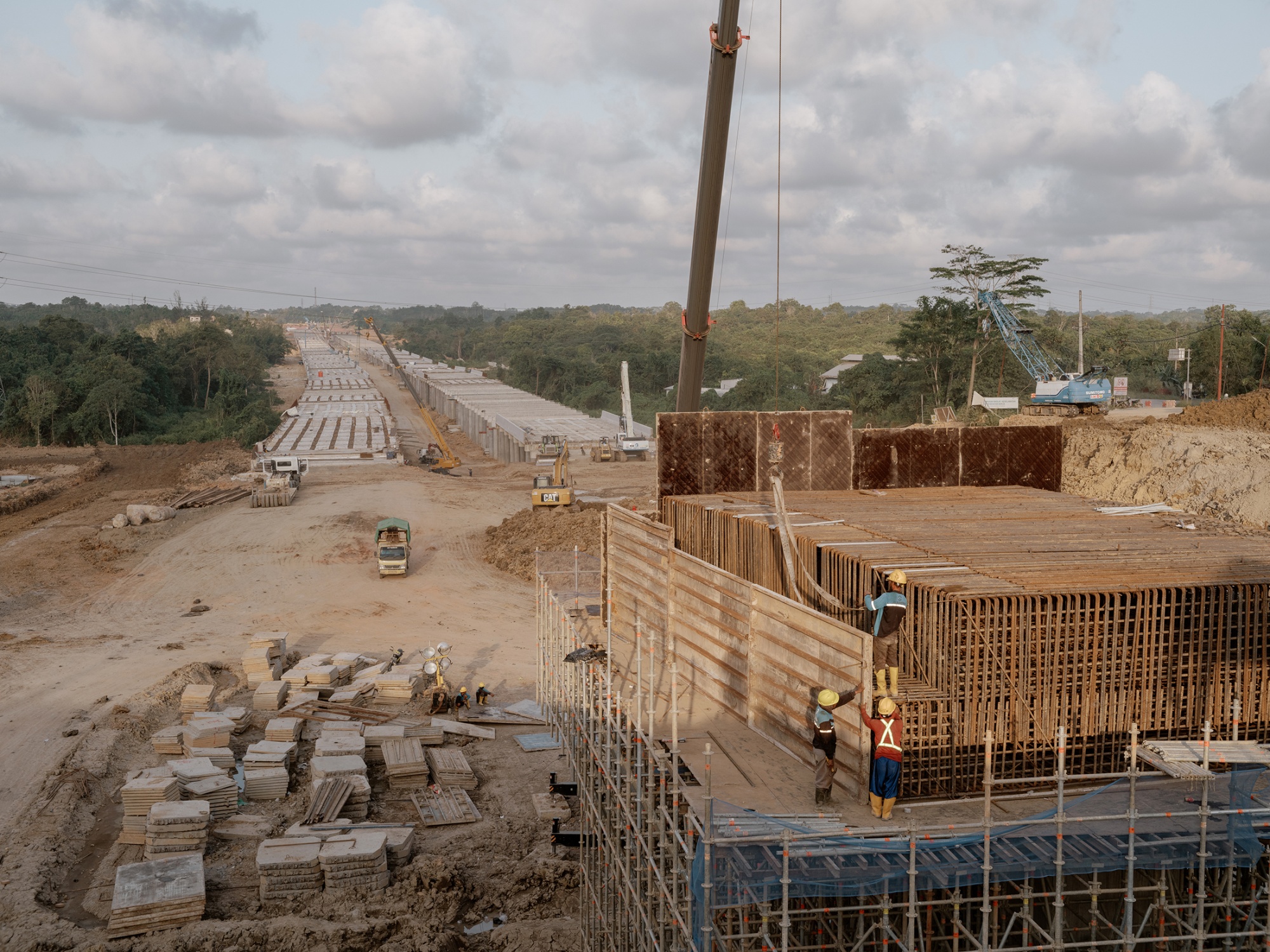
More than 40 hectares (99 acres) of land to the east of the core government area consists of dirt and standing water. Some roads are still unpaved. When it rains, access routes to the palace are filled with mud. Weather constraints also prompted a delay in the planned opening of operations at Nusantara’s airport, which had been targeted for Independence Day.
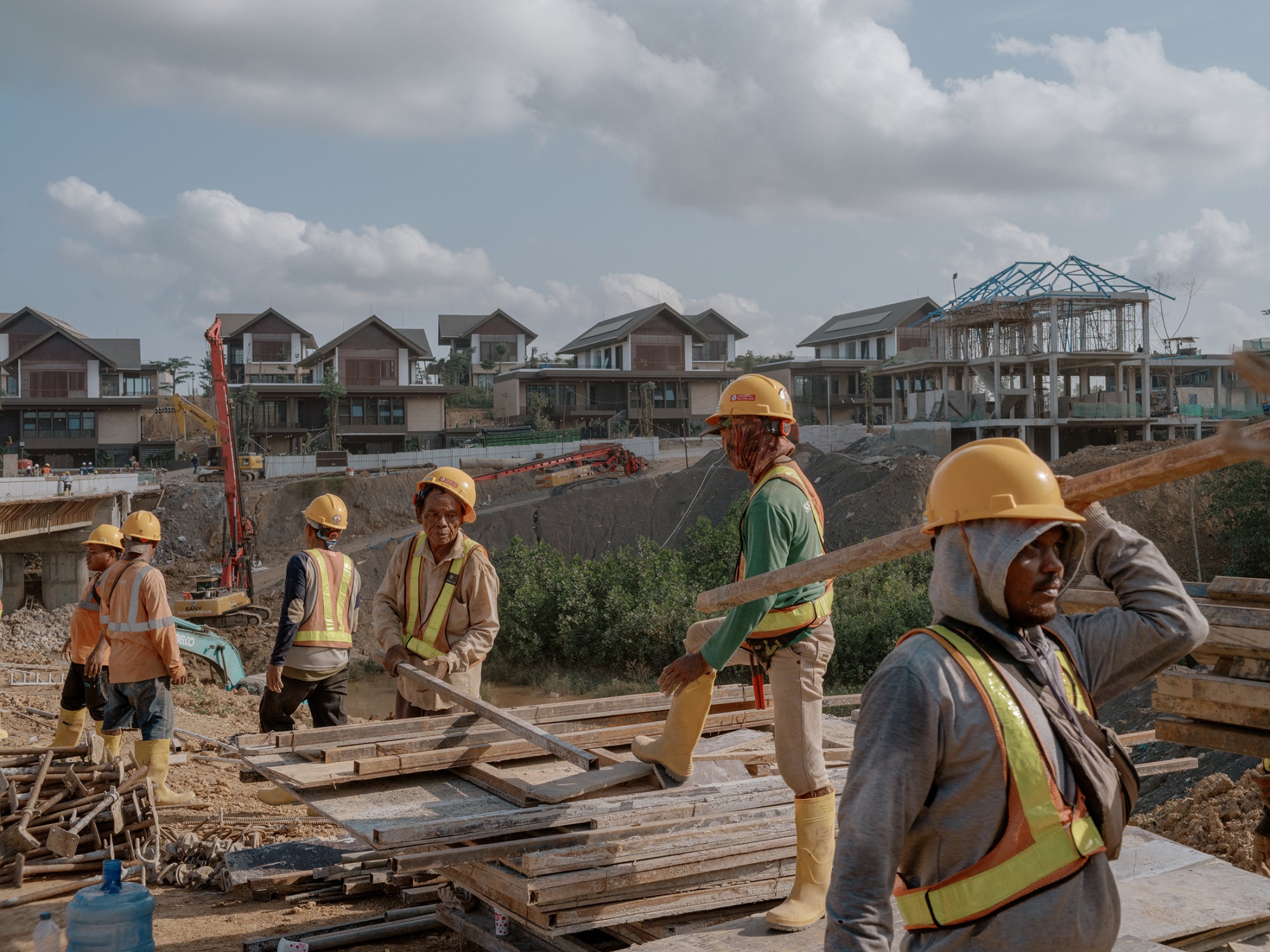
Workers in Nusantara on July 25. Photographer: Muhammad Fadli/Bloomberg
Source: Nusantara Capital City Authority
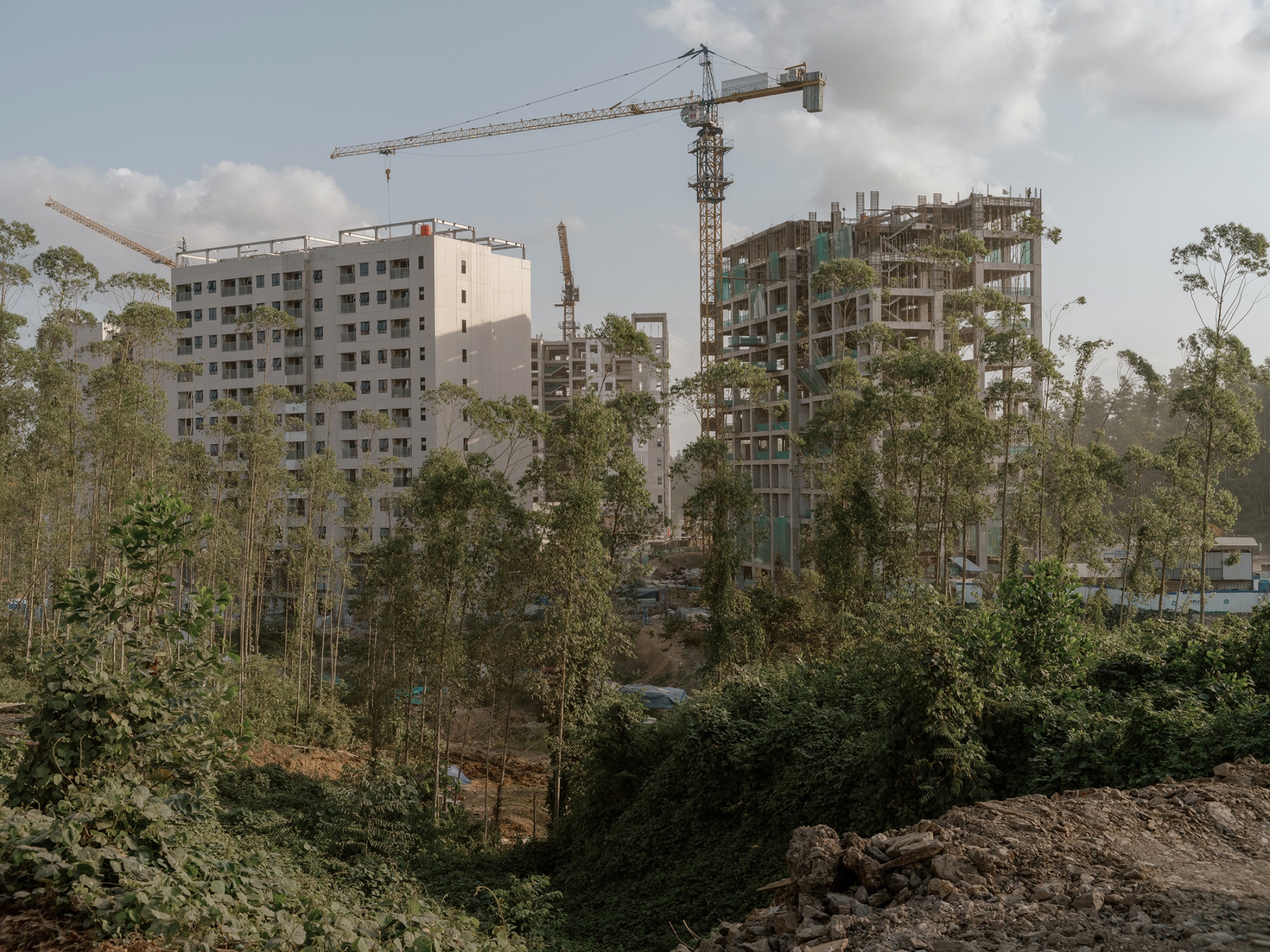
The gradual transfer of more than 10,000 civil servants, planned first for March and then July, has been postponed again until September because their office and housing complexes aren’t ready — and may be delayed even further. Construction is complete at just one office building, meant to house four government agencies. Electricity and water, supplied through cables and pipes laid in underground tunnels, have begun to flow to some of the offices there. When civil servants do arrive, they may have to share rooms and work from temporary quarters, such as cafeterias.
Why Move the Capital?
Jokowi announced the relocation of the capital in 2019 to ease the pressure on Jakarta. Because Jakarta is sinking rapidly — at about 30.5 centimeters per year — experts predict that a third of the city will be underwater by 2050. About 40% of Jakarta is already below sea level. The city’s coastal areas are threatened by tidal floods that cause losses of more than 2 trillion rupiah ($128 million) annually. Polluted air is a daily reality for Jakarta’s 10 million inhabitants, as is stultifying traffic. Gridlock costs an estimated 100 trillion rupiah a year in lost productivity for the greater Jakarta area, known as Jabodetabek, encompassing 30 million people.
Nusantara Government Core Area
Source: Composite of Copernicus Sentinel-2 satellite images
The site selected for the new capital is an area in East Kalimantan province on the island of Borneo, which Indonesia shares with Malaysia and the nation of Brunei. Some 1,400 kilometers (870 miles) northeast of Jakarta, the site is geographically in the middle of Indonesia and largely protected from the kinds of natural calamities (earthquakes, tsunamis and volcanic eruptions) that befall other islands in the archipelago. Construction began in 2022 after being stalled by the Covid-19 pandemic.
Nusantara Plan
Source: Nusantara Capital City Authority
Plans for a Modern Metropolis
The plan is to complete a part of the government core area by the end of this year. After that, the focus is on expanding basic infrastructure and offices with the aim of moving tens of thousands of civil servants to Nusantara by the end of 2029.
But that’s just the beginning of Jokowi’s very ambitious dream. His vision is to fill Nusantara with world-class educational institutions, modern hospitals and botanical gardens. With an environmentally friendly transportation system that uses only electric vehicles, he aims to have the city achieve net zero carbon emissions.
The whole plan is slated for completion by 2045. By then, the government estimates that 1.9 million people will live in Nusantara; many residents of Jakarta are expected to relocate there.
A Shortfall of Investor Interest
It’s expensive to build a new city from scratch. Nusantara’s price tag is about $29 billion, according to the official estimate. Jokowi’s idea is for financing to come from a mix of the government, state-owned enterprises, private companies and private-public partnerships, with the smallest burden falling on the state.
Related: The Big Take Podcast
Listen and subscribe to The Big Take on iHeart Apple Spotify The Terminal
But so far, it hasn’t worked out that way. Since the groundbreaking, the state has spent nearly 72 trillion rupiah ($4.6 billion) on initial infrastructure development, close to the limit the government can spend, according to its official development plan. Despite various incentives offered by the government, such as tax breaks and long-term property rights, Nusantara has attracted less than 50 trillion rupiah in total investments, all of which came from local companies and state-owned institutions. Foreign companies are among the more than 400 that have signed letters of intent to invest, but none have yet made a binding commitment.
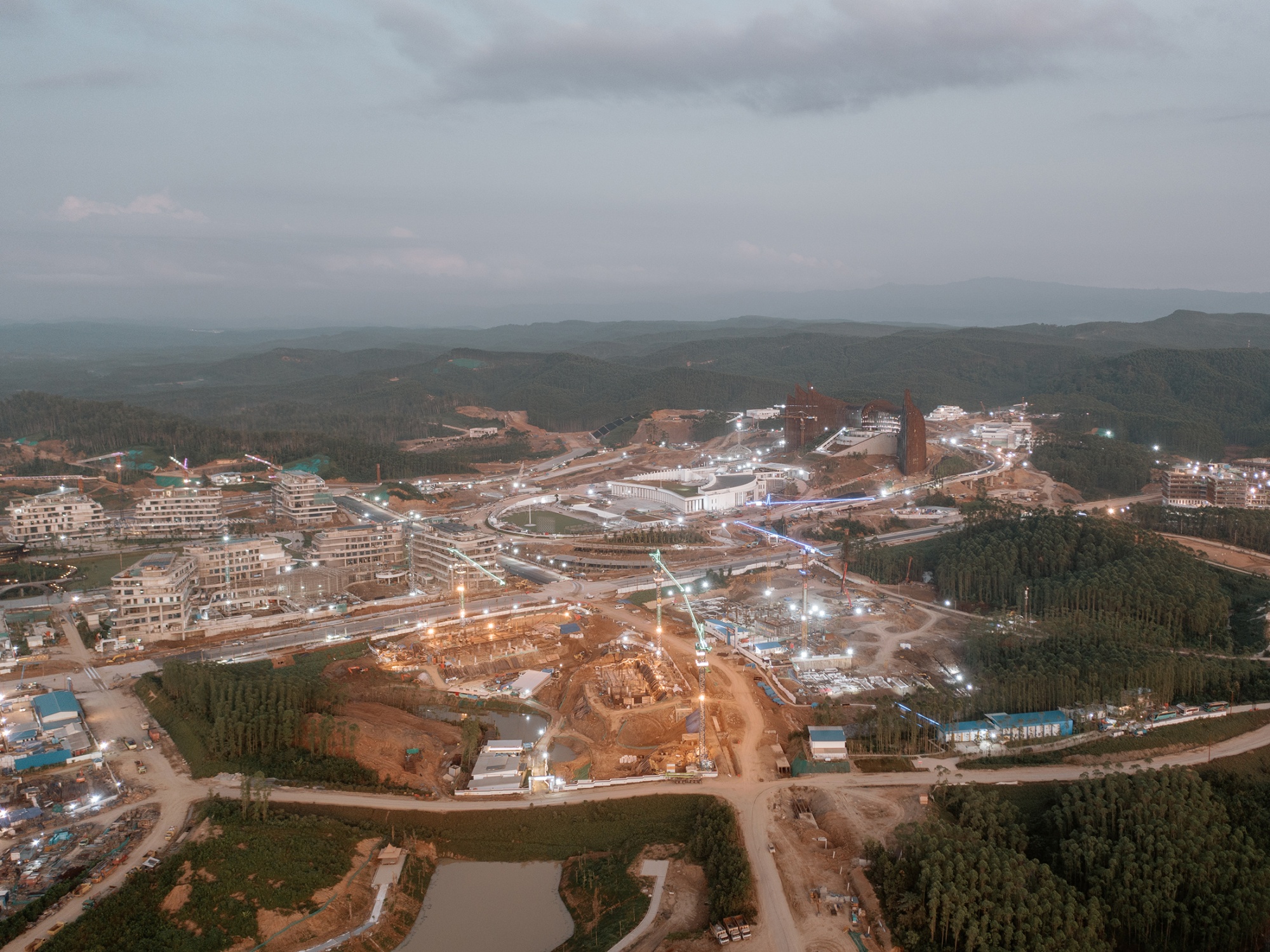
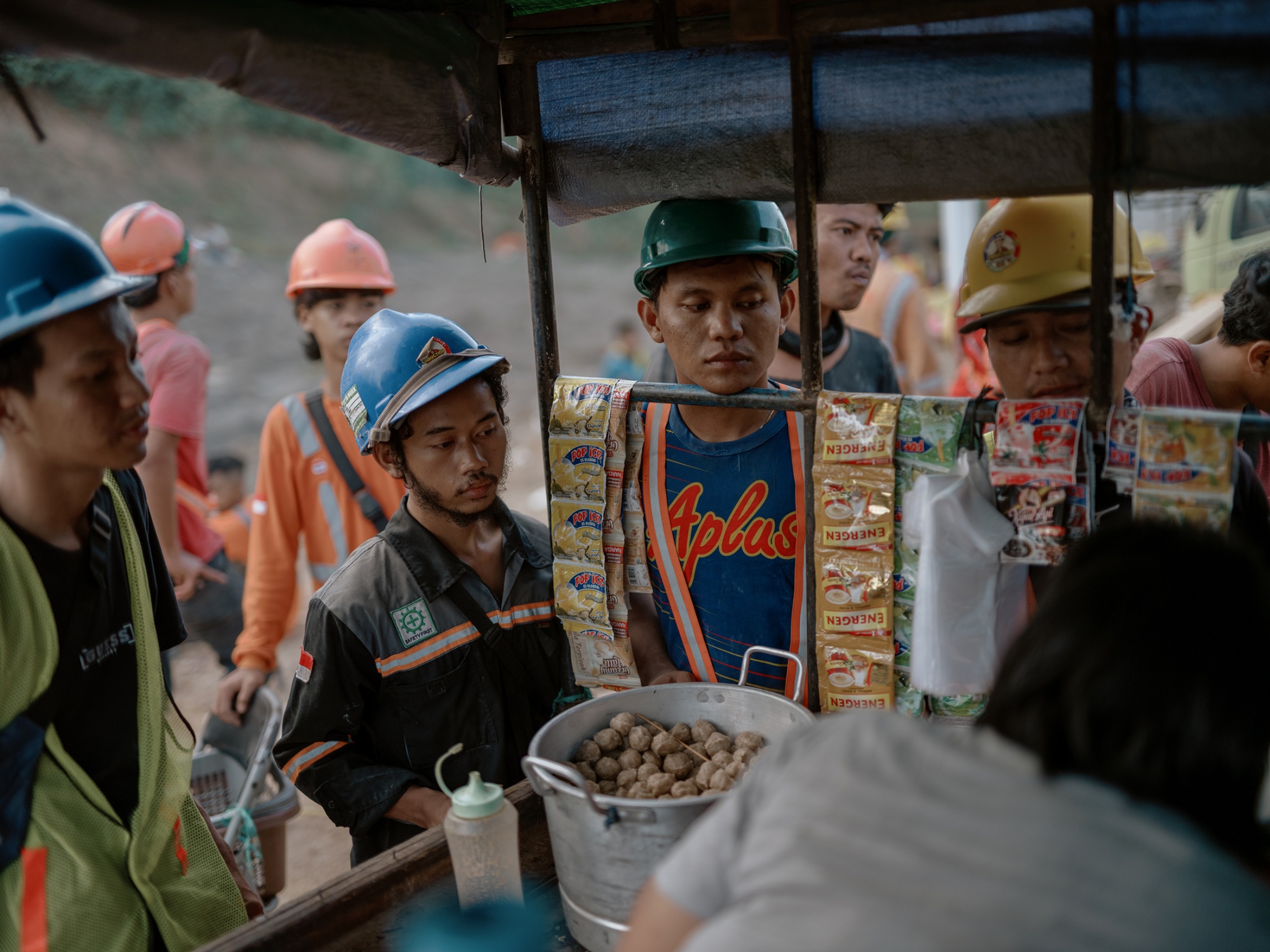
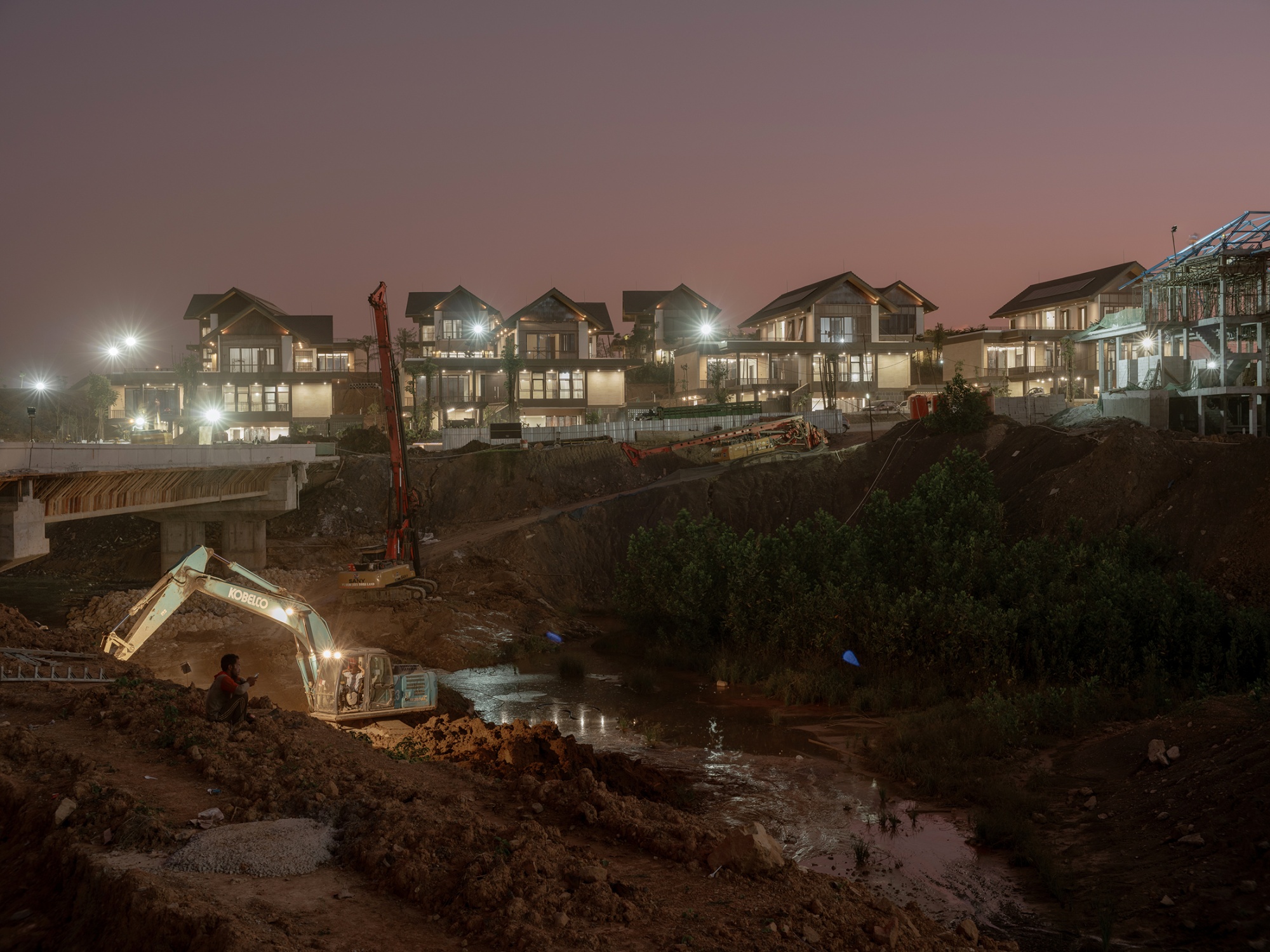
Nusantara has attracted less than 50 trillion rupiah in total investments, all of which came from local companies and state-owned institutions. Photographer: Muhammad Fadli/Bloomberg
A Murky Future
President-elect Prabowo Subianto said on Monday that he is committed to continuing the project. But he is likely to face difficulties funding the new capital on top of his own campaign promises without breaking Indonesia’s budget. Prabowo has promised to provide free, nutritious meals to more than 80 million school children. It’s estimated the program will cost 450 trillion rupiah a year when it runs at full-scale.
Indonesian authorities point to the successful relocation of at least other 30 capitals in the past century, including Brasilia (Brazil), Astana (Kazakhstan) and Canberra (Australia). On the other hand, Naypyidaw, conceived by Myanmar’s previous junta, remains practically empty. While a new capital will typically host government buildings, it’s rare to see a large-scale uprooting of private business and the general population. In Egypt, about 1,500 families have so far moved to what’s called the New Administrative Capital, outside of Cairo; the target is 6.5 million residents.