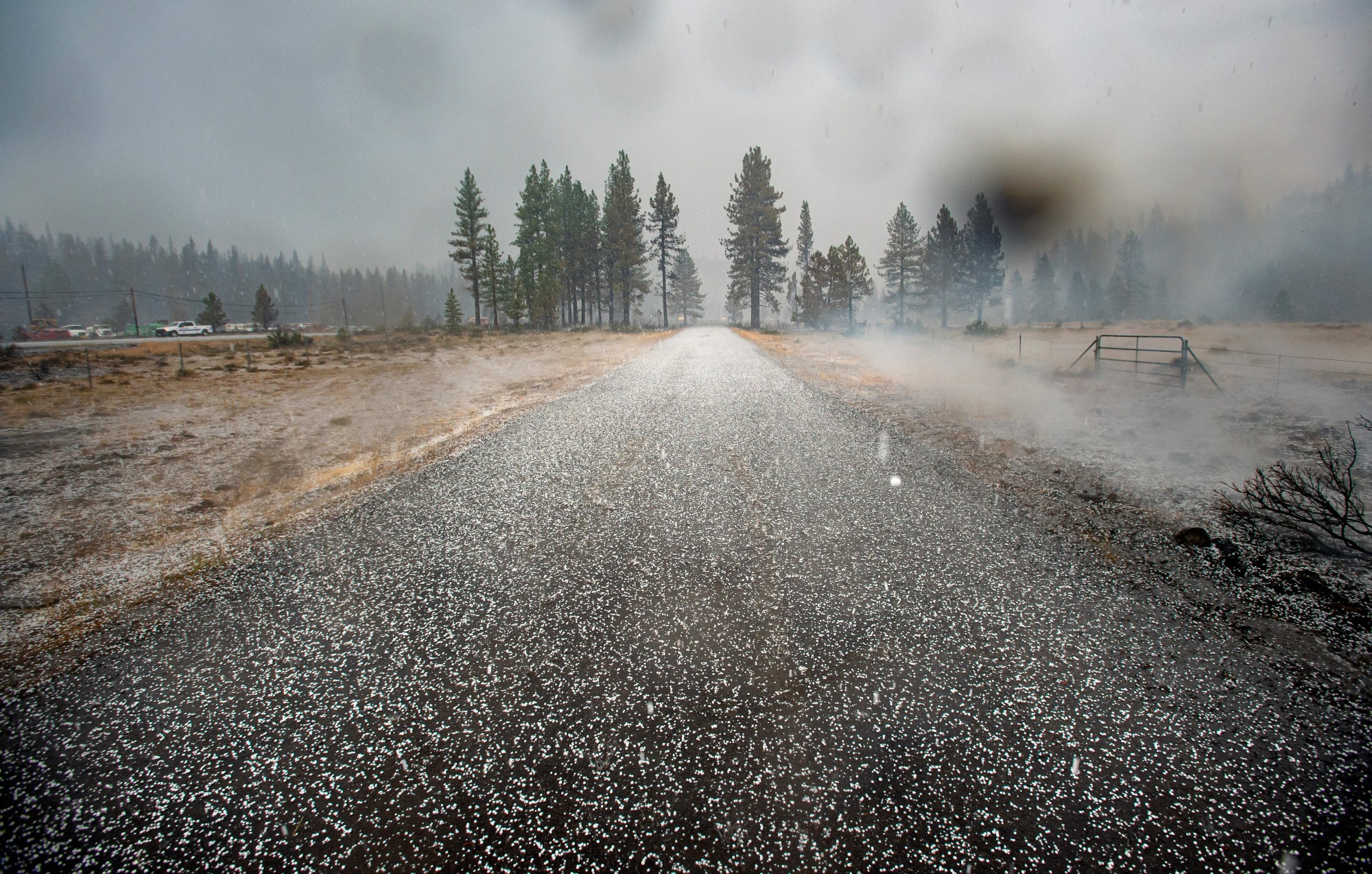
Giant Hail Is the Weather Threat Keeping Insurers Up at Night
Powerful hail storms are wreaking more destruction in the US and Europe, at a cost of billions of dollars a year.
On May 9, hailstones the size of baseballs pummeled San Marcos and Johnson City, Texas, taking down power lines and cracking car windscreens.
Only weeks before, hail pounded a solar farm in the state, damaging many panels. And in mid-March, grapefruit-sized hail pelted down from the skies over Kansas, Oklahoma and Missouri, leading to damages on the ground exceeding $4 billion.
For insurers, the first half of 2024 has underscored the growing threat posed by hail, which accounts for more and more of the industry’s losses in the US and Europe.
Insurance companies classify severe thunderstorms and their side effects — including hail — as “secondary perils.” Although they can turn deadly, thunderstorms are more localized than earthquakes or hurricanes, meaning their financial impact is usually more contained.
But the damage done by thunderstorms in the US — and, more surprisingly, in Europe — has been steadily ratcheting up in recent years, belying the “secondary” label. In the decade from 1980 to 1989, the US National Oceanic and Atmospheric Administration reported only eight severe storms in the US that each caused $1 billion (adjusted for inflation) or more in damage. There have been 67 such storms just since 2019.
More Billion-Dollar Storms
Source: National Oceanic and Atmospheric Administration (NOAA)
Note: 2024 billion-dollar disaster data as of May 17, 2024. Other billion-dollar disasters include events like hurricanes, wildfires, flooding, drought, winter storms and freezes. Costs are CPI-adjusted to 2024.
In 2023, a year that set all sorts of weather records, not only were there 19 storms in the US that topped $1 billion in damage, there was an uptick in storms globally. Damages topped $64 billion, according to Swiss Re, the international reinsurance giant. And that’s insured damages only — not all damage is insured.
High winds and heavy rains both play their parts in severe storm damage, but hail is the biggest single component, accounting for 50% to 80% of the total annually, Swiss Re says.
Hurricane Andrew in 1992 and the Camp Fire in 2018 changed how insurers evaluate cyclone and wildfire risk, respectively. The results included better predictive risk models and updates to building codes — but also higher deductibles for policyholders, with some insurers even pulling out of affected areas completely.
A similar turning point for hail may be on the horizon. It wrought so much destruction in 2023 that it’s led to a rethink in the insurance industry, said Karen Collins, a vice president at the American Property Casualty Insurance Association (APCIA).
“There is a tremendous amount of discussion and revisiting models to understand, ‘Should there be a distinction between primary versus secondary perils?’” she said.
America’s hail factory
Hailstones are balls of ice that form when updrafts in thunderstorms carry raindrops into extremely cold areas of the atmosphere, causing them to freeze.
The middle of the US has perfect geographical conditions for creating hail. There is a deep pool of warm moist air in the Gulf of Mexico, cool air descending from Canada and atmospheric instability as the winds come in off the Pacific and cross the Rocky Mountains. This turns the Great Plains into a hail factory, said Lou Gritzo, chief science officer at FM Global, an industrial insurer.
Where the US Hail Belt Is
Source: NOAA
Scientists are still studying whether hail, like wildfires and hurricanes, is being made worse by global warming. It’s hard to know, said Victor Gensini, a meteorologist who teaches at Northern Illinois University. Global records on hail “don’t become really good until the 1990s.”
As the climate has warmed, there’s been an increase in the ingredients that make up hail storms: more instability in the atmosphere and stronger updrafts. The altitude in the atmosphere where water freezes has also been rising because of the warmer weather. This means that small hailstones often melt before they hit the ground. The upshot, said Gensini, is the hail that hits will be bigger and storms that produce small stones will be less frequent, thanks to climate change.
Yet even if warming’s effect on hail globally is still emerging, there are clear climate signals in specific places, namely Europe, according to Ian Giammanco, lead research meteorologist and managing director of standards and analytics at the Insurance Institute for Business & Home Safety (IBHS), an industry-funded research group. “The hail across northern Italy, France and that sort of belt is increasing at an anomalously high rate,” he said.
Growing cities, rising risk
Setting aside the influence of climate change, hail damage is increasing because of what’s called the bull’s-eye effect: Humans are busy building in the very places that are known to get pummeled. For example, on the north side of the Dallas-Fort Worth metroplex, areas that were farmland 20 years ago are now suburbs. Similarly, in the Colorado corridor that runs from Fort Collins to Denver to Colorado Springs, what was once ranch land is now built up.
Houses and garages in these zones are targets for hail, to residents’ frustration. “In some places, like Dallas or Oklahoma City, you’re talking about new roofs at almost every-five-year intervals,” said Giammanco. “It’s an incredible inconvenience and annoyance for homeowners who are then paying their deductible repeatedly over a short time span.”
Dallas-Fort Worth Is an Ever-Bigger Target
Sources: NOAA; University of Maryland Global Land Cover and Land Use data
And it’s not just residential property at risk — so are energy resources. Two US events in particular have made insurers nervous to touch big solar farms, according to Jason Kaminsky, CEO of kWh Analytics, a firm that specializes in risk analytics for renewable energy portfolios.
Solar Farms in Hail’s Path
Sources: NOAA, US Energy Information Administration (EIA)
In West Texas in 2019, a brief hailstorm caused the destruction of more than half of the Midway Solar power plant’s 685,000 photovoltaic panels, causing at least $70 million in damages. Then this March, the Fighting Jays Solar project outside Houston took a major beating from hail.
Hail-related incidents have prompted FM Global to start testing all the solar panels on the market by firing industrially produced hail at them and measuring how well they can produce power in a damaged state.
Pain headed for consumers
When it comes to large solar farms, insurance markets are already working out tools to bring down the cost of coverage, such as parametric products.
For homeowners, protecting their property will likely be more complicated and more expensive, according to the APCIA’s Collins. The big reinsurers have looked closely at hail, and they don’t like what they see. They’ve begun changing the terms on which they do business with direct insurers, leaving insurers to carry more of the risk for small and medium-sized events.
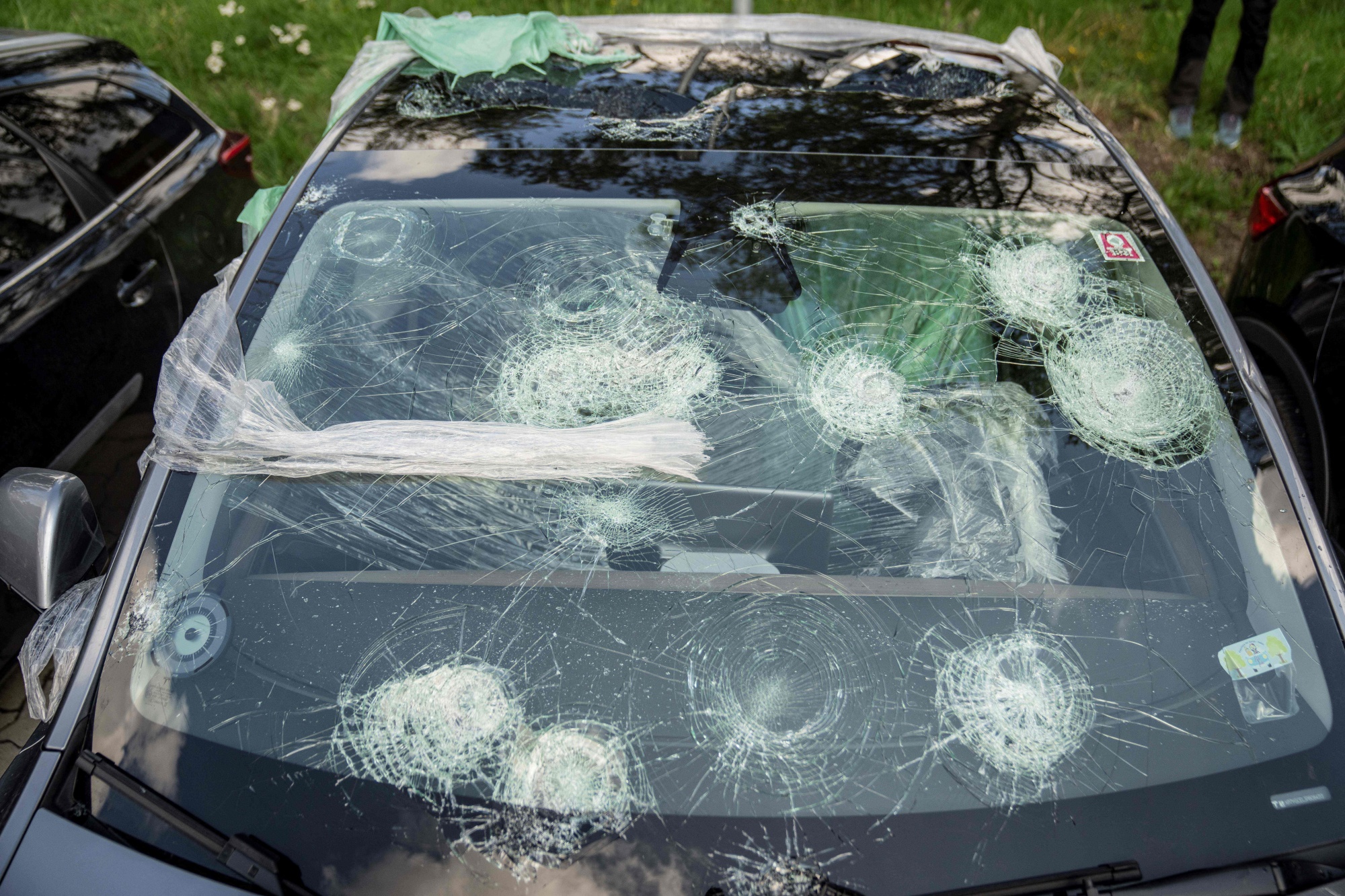
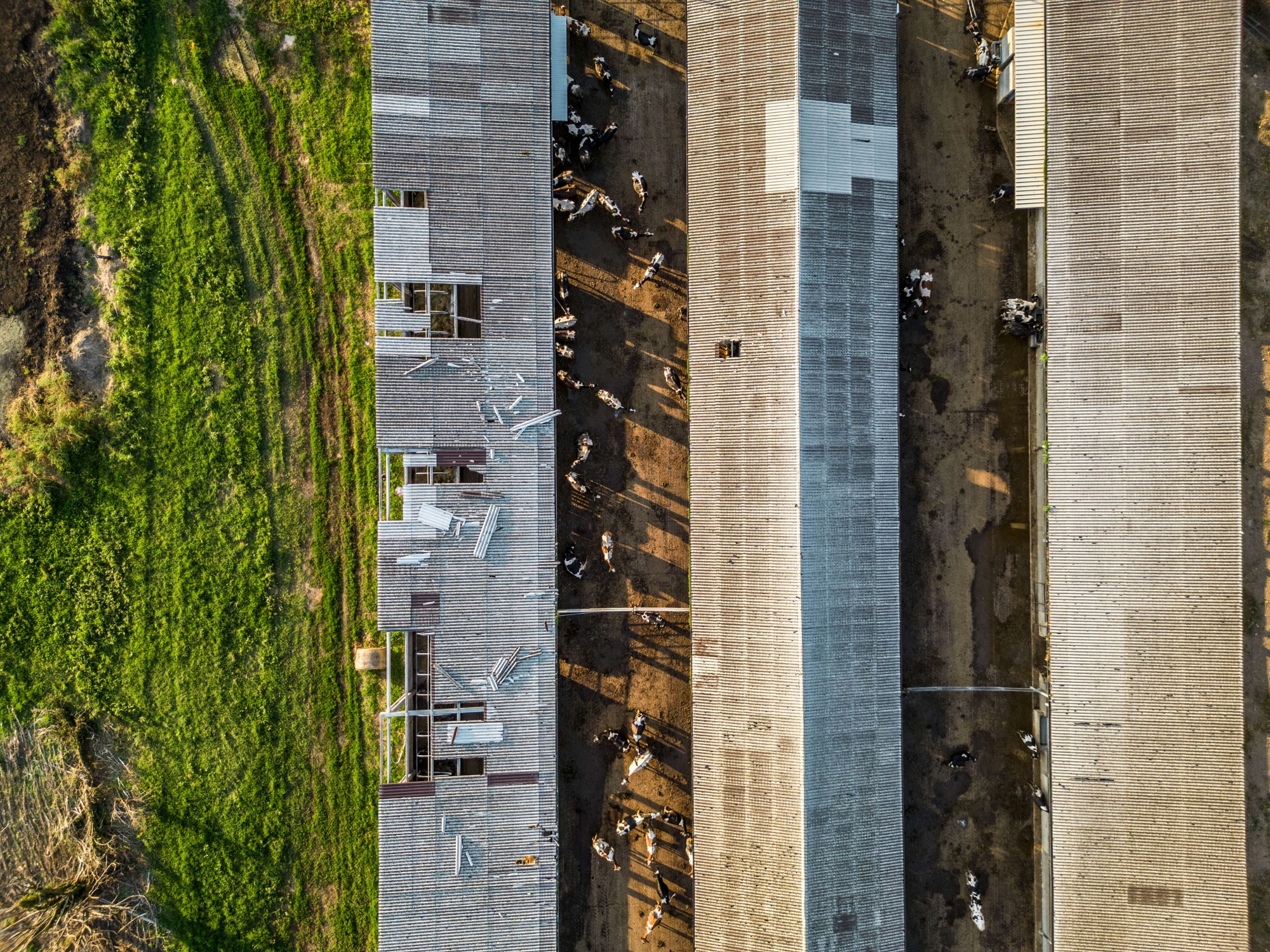
A severe hailstorm in Northern Italy left circular cracks in a car windshield in August 2023. The roof of a cow shed shows damage from a hail storm in Truccazzano, near Milan. Photographers: Mads Claus Rasmussen/Ritzau Scanpix/AFP; Francesca Volpi/Bloomberg
That will trickle down to consumers. “Companies in the Midwest are adjusting pricing,” Collins said. “The concern is where those prices settle.” States prone to severe storms like Oklahoma and Nebraska already have some of the highest insurance costs in the nation, rivaling Florida’s and higher than California’s.
Research has shown that hail-resistant roof materials make a difference, said Roy Wright, president and chief executive officer of the IBHS. Fort Collins, Colorado, requires that asphalt shingles used on new and replacement roofs be impact-resistant. More cities and states may revamp their building codes to ensure secure roofs.
But in the meantime, Wright said, “consumers are going to absorb much more of the first dollar losses before they reach into insurance, in much the same way that the insurers are retaining far more of those losses until they reach their reinsurance layer.”
If premiums get too high, insurers might raise deductibles, as they have in Florida for hurricane damage; some deductibles there have soared from $2,500 to $10,000. “What does that mean for the next severe convective storm?” Wright asked. “Maybe the roof cover is entirely just on you.”