More Than 165 Lawsuits Are Already Shaping the 2024 US Presidential Election
Pre-election fights preview an expected firestorm of legal challenges after the November vote
How are votes counted in Georgia? Where can Wisconsinites drop their absentee ballots? What ID can college students show at polls in North Carolina?
Courts started shaping the US presidential race long before the Nov. 5 election. An extraordinary onslaught of cases filed over the past two years has questioned fundamental principles of who can vote, how ballots are cast, which votes count, and how the winner is decided.
Three weeks out from the election, judges continue to hand down decisions. On Tuesday, a Georgia court ruled that state officials have a “mandatory” duty to certify election results. And new cases are still being filed, more fuel for an expected firestorm of legal challenges after the November vote.
It’s an ominous turn for the world’s oldest democracy. Judges aren’t supposed to decide who wins the White House. And even when courts don’t play a major role in the outcome, lawsuits can amplify the belief that vote counts can’t be trusted – a perception fueled by conspiracy theories and controversies after Donald Trump refused to concede the 2020 election.
“Grafted onto every major election now is litigation,” said Matthew Haverstick, an attorney at Kleinbard LLC in Pennsylvania who has represented state Republicans. “One party or another is going to try to use the courts in advance of an election to set the table its way.”
The 2020 contest and the violence that followed loom over the latest legal fights. Trump and his allies four years ago filed more than 60 lawsuits rooted in unsupported claims of widespread fraud, setting the stage for the Jan. 6 riot at the US Capitol.
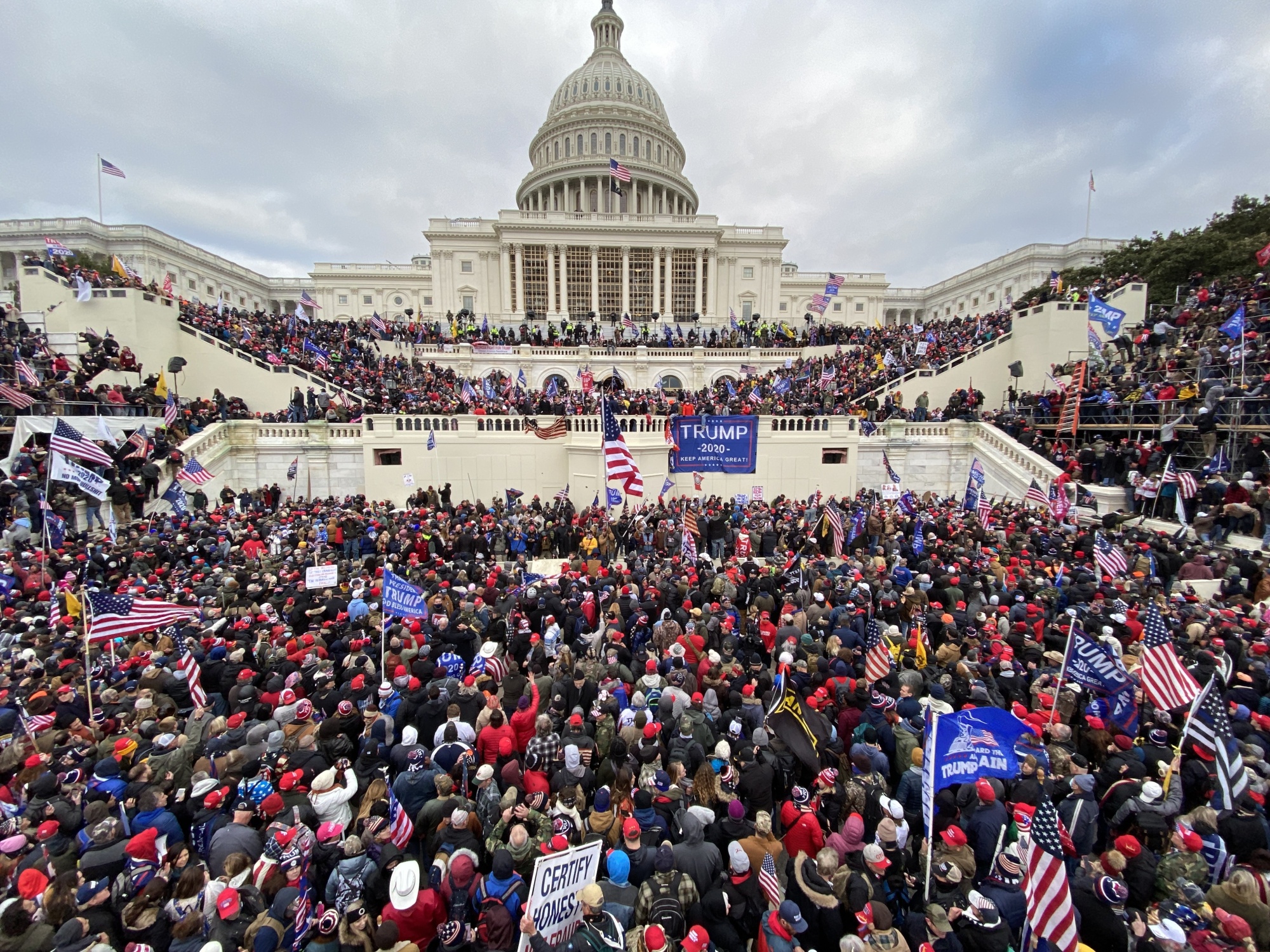
Supporters of US President Donald Trump gather outside the Capitol building in Washington on Jan. 6, 2021. Photographer: Tayfun Coskun/Anadolu Agency/Getty Images
Judges can be called on to play a critical role in US elections, but it’s rare and almost always controversial. When the fight over Florida’s electoral votes arrived at the US Supreme Court in 2000, Justice Stephen Breyer wrote in a dissenting opinion that “the court was wrong to take this case” and risked “a self-inflicted wound – a wound that may harm not just the court, but the nation.”
Two decades later, the logistical obstacles to voting presented by the pandemic in 2020 sparked a flurry of pre- and post-election litigation. Republicans opposed the sudden expansion of absentee voting options; Democrats supported it. The chaotic voting landscape fueled Trump’s efforts to use courts to overturn the results.
Well ahead of this year’s matchup, the Republican National Committee launched what it described as a comprehensive and “unprecedented legal strategy” to challenge state and local governments that they say have failed to do enough to protect against illegal voting. In an interview this week with Bloomberg News, Trump showed he’s watching the dockets, criticizing the Department of Justice’s efforts to reinstate Virginia voters who were recently removed from the polls.
The Democratic Party and its allies haven’t been idle, contesting laws that they say keep eligible voters from the polls or put up barriers to voting.
2024 Election Fights Mount as Vote Nears
- Republican or conservative
- Democrat, progressive or liberal
- Republican National Committee
- Democratic National Committee
- All other cases
Source: Bloomberg analysis of court filings
The court action has been concentrated in the seven states critical for an electoral college victory: Arizona, Georgia, Michigan, Nevada, North Carolina, Pennsylvania, and Wisconsin.
To understand the rapidly changing political-legal tactics, Bloomberg News analyzed cases with the potential to affect voting procedures and ballot counting in the November presidential contest.
Outcomes have been mixed. The RNC lost fights over late-arriving absentee ballots in Nevada and Mississippi and the use of drop boxes in Wisconsin, but won an order limiting voter ID options for North Carolina college students. The DNC joined an unsuccessful push to get undated mail ballots counted in Pennsylvania but backed Wisconsin’s successful defense of its rules for absentee ballots requested online.
For the GOP, each favorable ruling “is an incremental step towards election integrity,” said Steve Roberts, a partner at the law firm Holtzman Vogel, which represents Republicans in election fights. Voting rights advocates call such claims spurious – “pure speculation” and “a messaging tool,” said Sophia Lin Lakin, director of the American Civil Liberties Union’s Voting Rights Project.
Election officials across the political spectrum strenuously dispute allegations of pervasive problems with voting apparatuses at the state and local level. They say that baseless claims of mismanagement and voter fraud – which researchers have found is rare – are the bigger blow to the integrity of elections.
Who Can Vote
Of the cases tracked by Bloomberg, nearly one-third focus on who should be allowed to vote. The majority have been brought by Republicans or conservative groups seeking to limit access to the polls, chiefly by accusing states of failing to purge their rolls of ineligible voters.
States have hit back, accusing the challengers of cherry-picking data and casting aspersions on common and lawful voter roll maintenance practices. Many of these cases have been filed since July and are unlikely to wrap up by November – fueling criticism that they’re primarily aimed at sowing mistrust, not securing tangible outcomes.
Listen: Big Take: The 2024 Election Is Playing Out in Court (Podcast)
Democrats and left-leaning groups have focused their efforts on expanding, or ensuring, access to the polls. Civil rights groups led by the Alabama Coalition for Immigrant Justice sued to block a directive from Alabama’s Republican Secretary of State Wes Allen to bar from voting more than 3,000 residents listed in a federal database of foreign nationals.
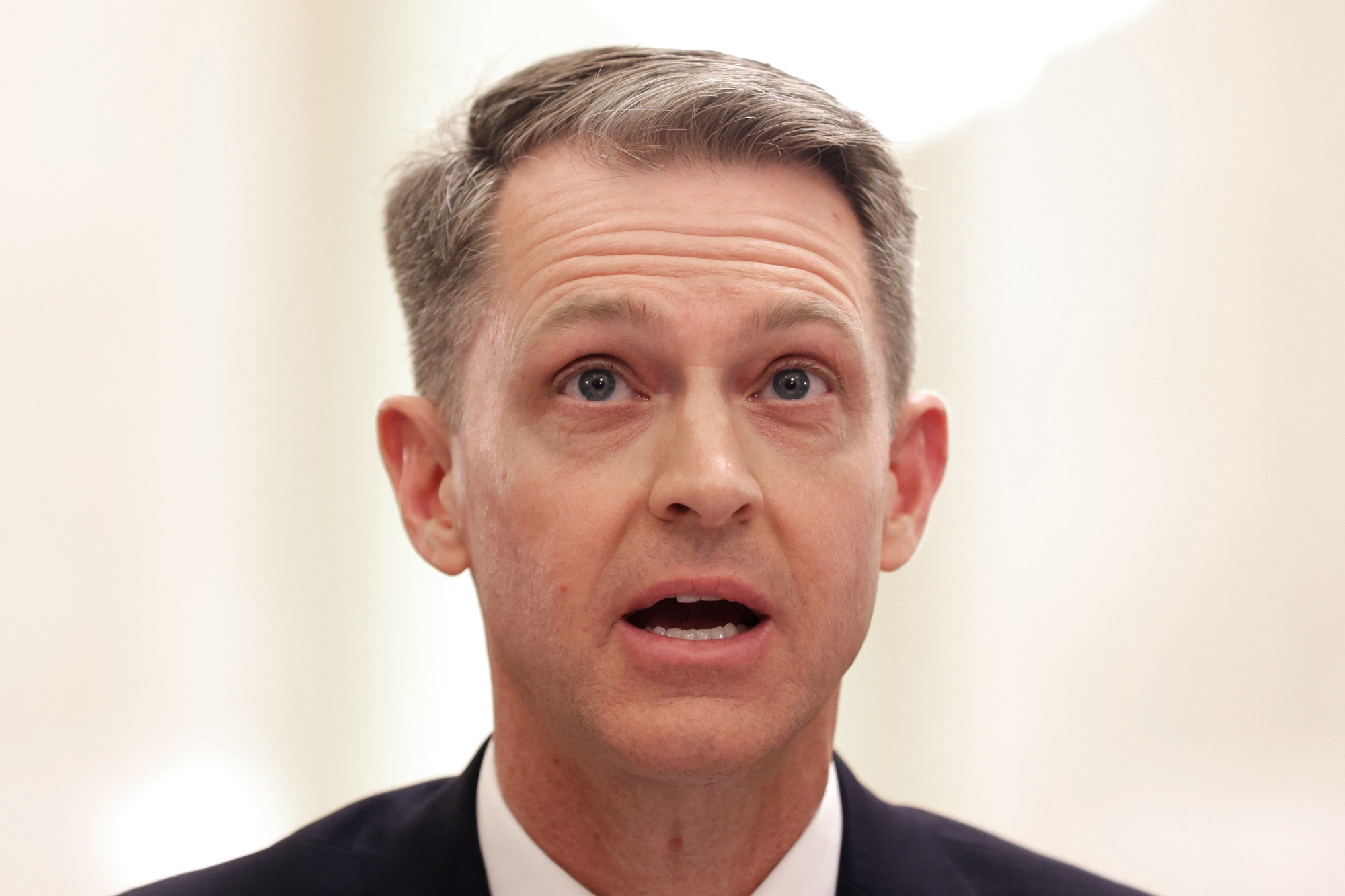
Alabama’s Republican Secretary of State Wes Allen. Photographer: Alex Wong/Getty Images
Allen has acknowledged that some of those people may have become citizens and therefore eligible to vote, others may have been listed by mistake; either way, they’d have to prove it. The suit says the broad purge violates voter protections and the US Constitution and is in league with a “nationwide, bad-faith effort” to boost the false idea that non-citizens are voting in large numbers.
The US Department of Justice also sued Alabama. A federal judge hasn’t ruled yet whether the 3,000 can remain eligible to vote while the cases proceed.
Other eligibility cases have involved whether people with past felony convictions are allowed to vote and how states and counties handle challenges by outside third parties to the validity of voter registrations.
How Americans Vote
The Covid pandemic inspired a record 43% of American voters to cast an absentee ballot in 2020. While that fell in the 2022 midterms, it was still well above historic levels.
The new enthusiasm for remote voting continues to inspire lawsuits. The current fight over Wisconsin’s use of ballot drop boxes resurfaced claims Republicans have been making since 2020, that the practice heightens the risk of fraud. State officials defend it as a secure, time-tested way to encourage voter participation.
In 2022, the Wisconsin Supreme Court barred the use of drop boxes; in July, a new and more liberal slate of justices reversed the earlier ban.
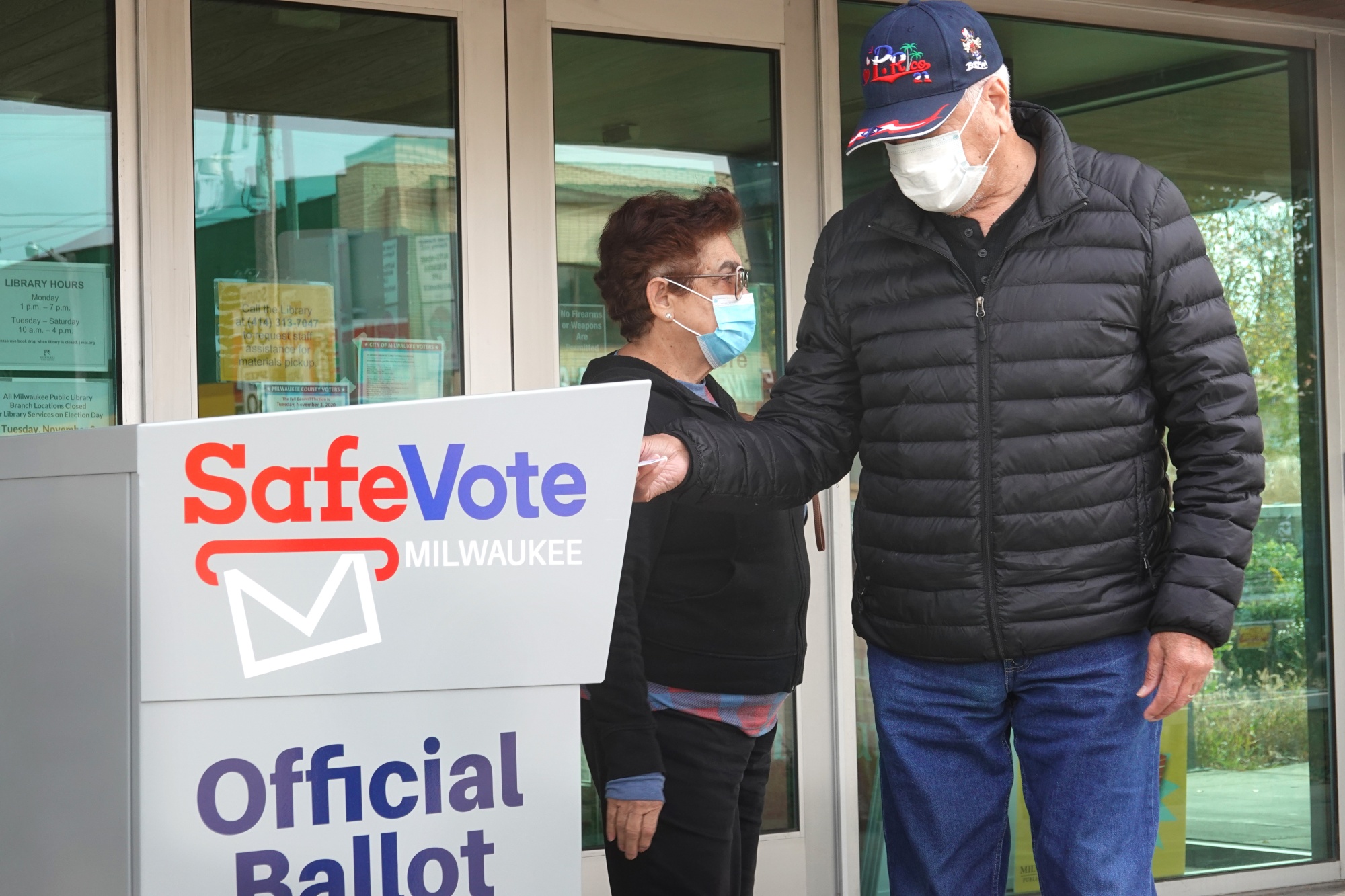
Residents drop mail-in ballots in an official ballot box outside of a library in Milwaukee on Oct. 20, 2020. Photographer: Scott Olson/Getty Images
Of all the cases identified by Bloomberg since January 2023, more than a third were filed in August and September, suggesting a rush for resolution – or at least the public’s attention – in the final weeks of the campaign.
In North Carolina, the RNC sued on Sept. 12 to block students and employees from the University of North Carolina at Chapel Hill from showing their school-issued digital ID cards as proof of identity at the polls. A judge rejected the party’s request on Sept. 20. But a week later, an appeals court reversed and said the digital cards couldn’t be used.
Judges are aware that last-minute decisions risk confusion among voters and could interfere with the administration of the election. There isn’t a hard and fast rule for precisely how close to an election is too close for courts to act, leaving officials in limbo until cases finish moving through the legal system.
Which Ballots Count
Election officials stress that no presidential contest is officially decided in the hours after polls close, no matter what news outlets say. More than half of all states accept at least some absentee ballots that arrive after Nov. 5. It’s a practice that Republicans have gone to court to protest; appeals are pending after the GOP lost fights in Nevada and Mississippi.
Other cases grapple with what happens when voters make mistakes on their ballots. Pennsylvania in particular, with its deadlocked polls and 19 electoral college votes, has become a hotbed for these types of fights.
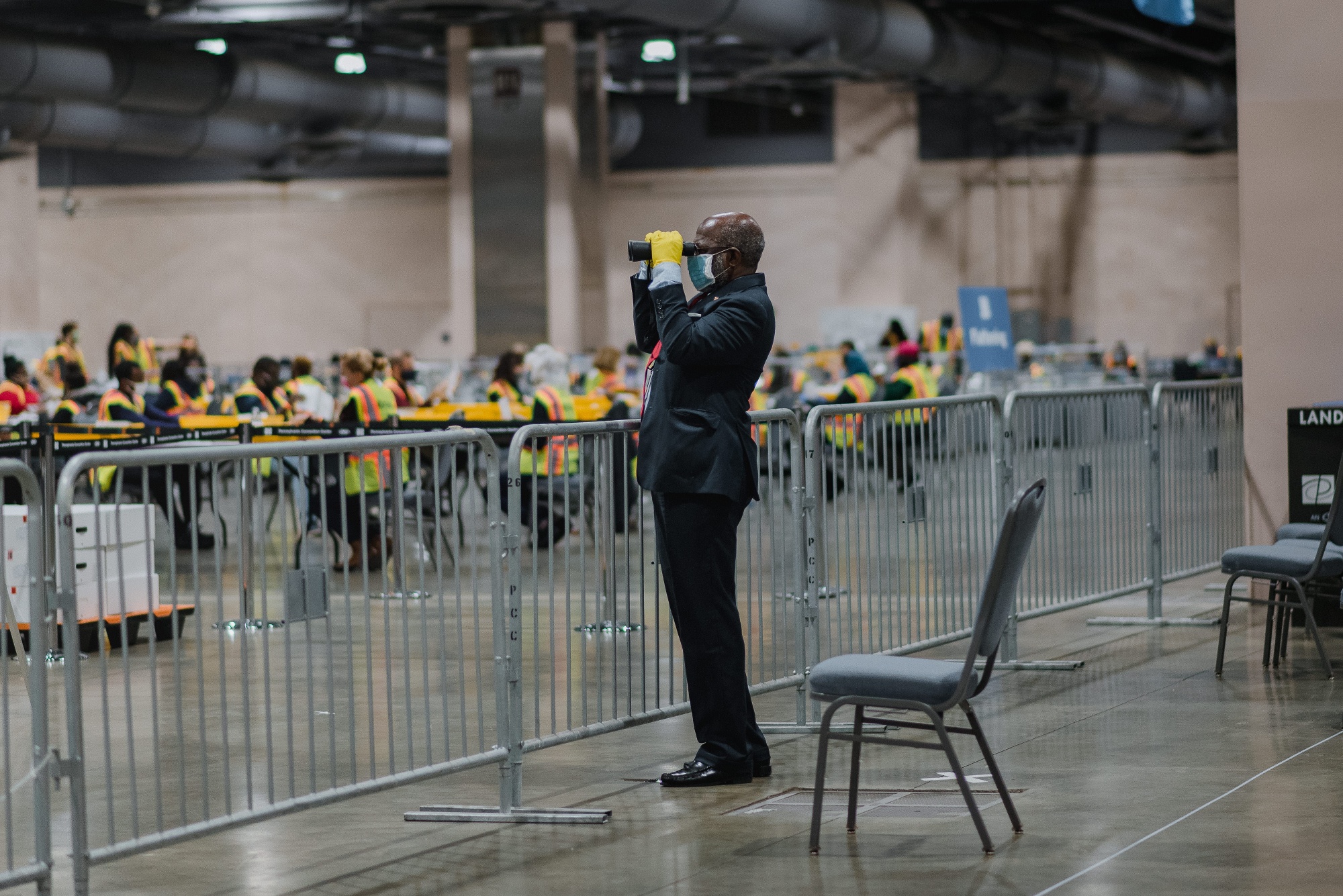
An official poll watcher uses binoculars as workers count ballots for the 2020 presidential election at the Philadelphia Convention Center on Nov. 3, 2020. Photographer: Hannah Yoon/Bloomberg
The Supreme Court of Pennsylvania rebuffed several challenges to a state law that invalidates undated or misdated mail ballots, even if they arrive on time. Voting rights groups, with support from the DNC, say the rule has led to thousands of rejected votes in past cycles.
The state’s high court also rejected a case brought by the RNC seeking to block counties from notifying voters about problems with their mail ballots and giving them an opportunity to fix them.
In 2020, people who voted for President Joe Biden were almost twice as likely to say they mailed in their ballots compared with Trump supporters, according to a Pew Research Center study.
How the Election Is Finalized
A small but critical subset of cases involves the duty of local election officials to certify vote tallies – historically an uncontroversial, routine function with little room for independent action. The 2020 election changed that, as Trump’s supporters in swing states explored options to delay or block his loss from being certified by states and Congress.
This election is the first major test of 2022 congressional legislation that established new deadlines and other processes for states to certify results in presidential contests. Deliberate, partisan foot-dragging could throw the enterprise into uncharted territory – and into court.
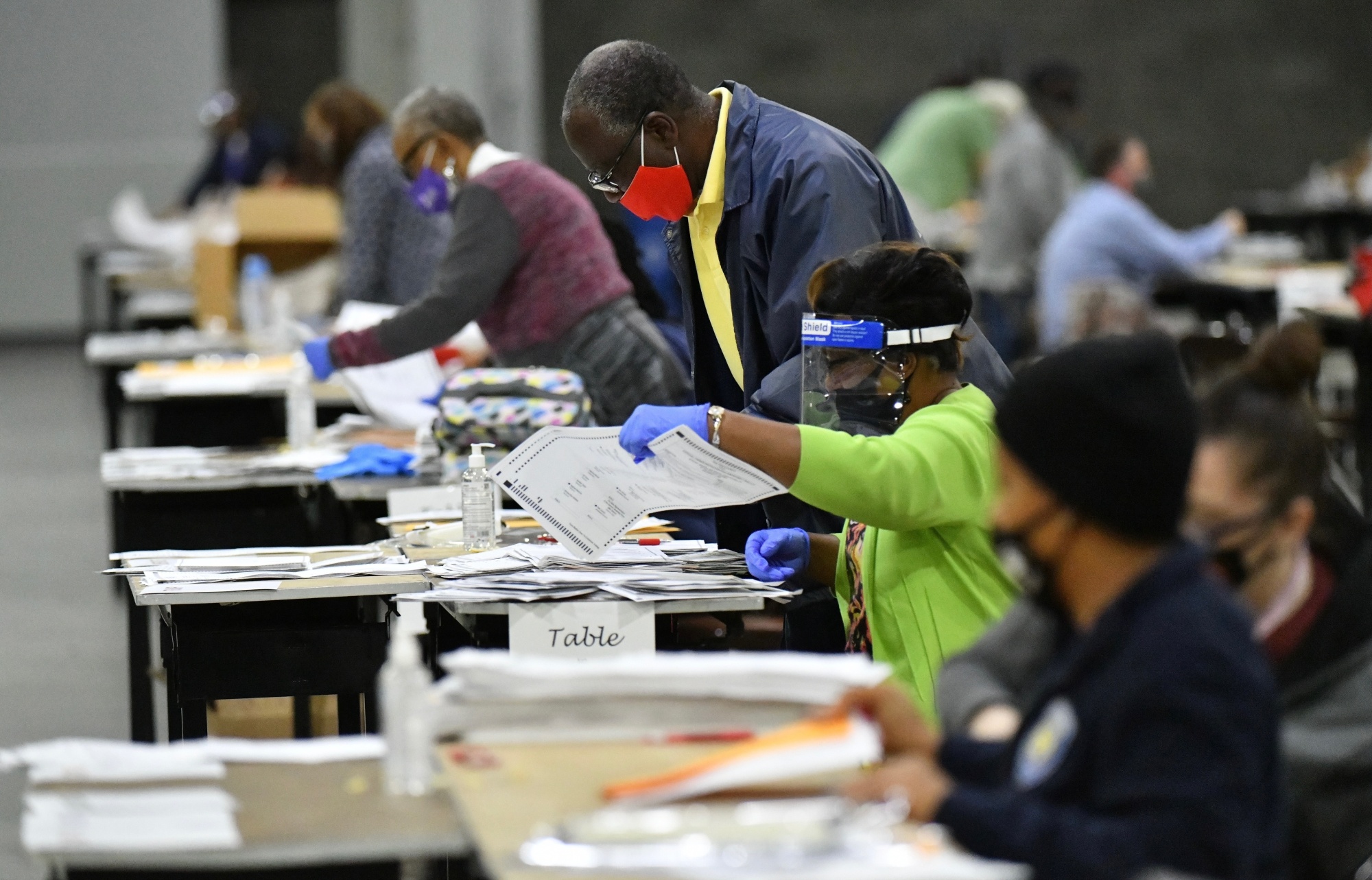
Election workers in Fulton County began working through a recount of ballots in Atlanta on Nov. 14, 2020. Photographer: Hyosub Shin/Atlanta Journal-Constitution/AP Photo
In the spring, Julie Adams, a Republican member of the Fulton County, Georgia, election board, refused to certify the results of the presidential primary. Ultimately, her reservations were overruled by other members of the election board, but she sued to preemptively protect the ability of county officials to deny certification in November.
A judge ruled against Adams on Oct. 15, writing that officials in her position must certify results. “Georgia voters would be silenced,” he wrote, if election officers were “free to play investigator, prosecutor, jury and judge.”
Democrats – concerned about a repeat scenario in the battleground state – are asking the same judge to block new rules adopted by the Republican-majority state election board that require election officials like Adams to conduct a “reasonable inquiry” before they certify. The DNC is also suing over the state board’s decision to require a hand count of ballots.
Until vote counts come in, it’s impossible to know which issues in which states will trigger legal fights after Nov. 5. Ideally courts will dispatch as many cases as possible ahead of election day, says Rebecca Green, co-director of the Election Law Program at William & Mary Law School.
That’s the best chance to allow judges – some of whom are elected partisans or federal jurists whose presidential appointment will inevitably be scrutinized – to retain the high ground, she said: “You’re resolving these questions at least behind a veil of ignorance about who will benefit.”