Corporate America Hired More Black Workers. Then It Stopped.
Corporate America Hired More Black Workers. Then It Stopped.
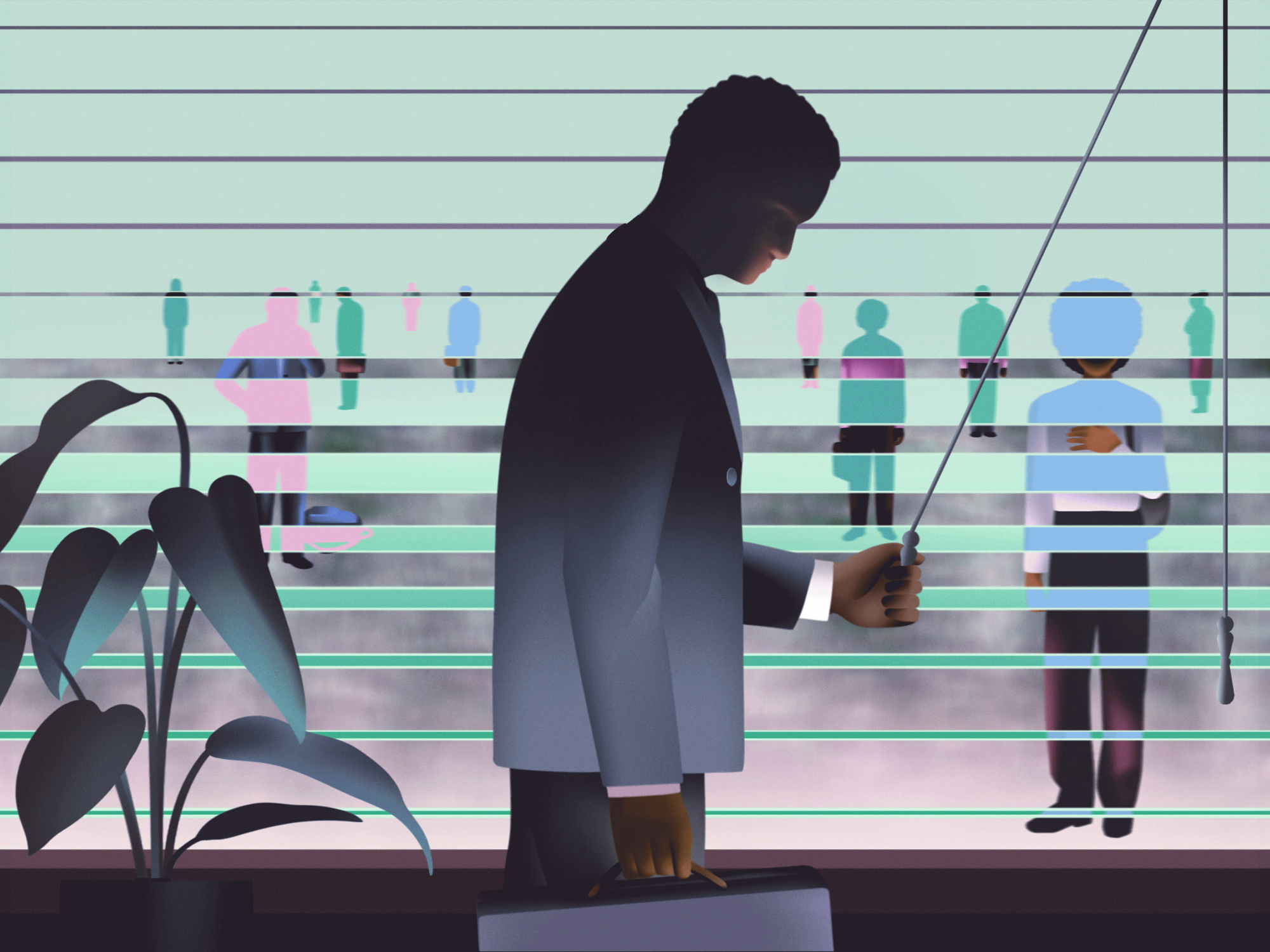
Black workers are losing share at big US public companies as conservatives amp up their anti-diversity push ahead of Donald Trump’s second presidential term.
For Black employees in America’s biggest companies, progress has stalled.
The share of Black workers in the S&P 100 workforce declined to 16.8% in 2023 from a peak of 17% in 2021. The change, though incremental in percentage terms, is noteworthy directionally. Black employees have all but erased the gains they had seen since 2020, when corporations made a plethora of promises to address historical racial imbalances in the workplace following the murder of George Floyd.
That’s according to an exclusive Bloomberg News analysis of the latest race and gender data that 84 of the top US companies provided to the Equal Employment Opportunity Commission. At a majority of the companies, the share of Black managers shrank after rising for two years, the data show.
“The post-George Floyd momentum that we got was a huge moment historically,” said Lisa Simon, chief economist at Revelio Labs, a workplace data consultancy. “It only took a random year of less enthusiasm to take that away again.”
Many Companies Reversed Gains for Black Managers in 2023

2021
2022
2023
Source: Bloomberg News analysis of EEO-1 data. To learn more about our analysis and term definitions,
This analysis looked at the S&P 100 companies that made their information available for each year, from 2020 to 2023.
Those 84 companies employed about 8.9 million workers in the US in 2023, according to the data, and half of those workers were people of color.
Other highlights from the data
- In 2023, the 84 S&P 100 companies that provided complete data shrank their workforces by 127,418 employees from a year earlier
- White workers are no longer the majority of the workforce at those firms, declining to 49.9% of all workers from 53% in 2020
- White men in senior positions saw the largest decrease, with their share of executive roles dropping to 46% (from 53% in 2020) and manager roles to 37% (from 41%)
- White and Asian women increased their combined share of executive roles to 30%, up from 27% four years ago
Industry giants from finance to tech promised to hire and promote more Black people following 2020’s Black Lives Matter protests. More than any other demographic group, corporate diversity, equity and inclusion programs became centered around boosting Black people. Walmart Inc., the world’s biggest retailer, allocated $100 million in funding to a racial equity center with a mandate to “address the root causes of gaps in outcomes experienced by Black and African American people” across a range of areas. Goldman Sachs Group Inc. committed $25 million to a five-year program to aid historically Black colleges and universities and promised to double HBCU hires by 2025.
But the data show the 84 companies started losing Black workers in 2022. It was only a couple thousand at first, but those losses gathered momentum in 2023, growing almost tenfold.
The corporations in this analysis cut their overall workforce by 127,418 employees last year. Of those, about 26% were Black workers — a disproportionate figure compared with their share of the workforce. Just two years earlier, in 2021, when many of those same companies expanded their workforce, nine out of 10 net new additions were people of color, and almost a quarter were Black.
Companies including American Express Co., PayPal Holdings Inc., Capital One Financial Corp., Verizon Communications Inc. and McDonald’s Corp. saw the biggest percentage point declines in Black workers, according to the data. Meta Platforms Inc. and McDonald’s were among businesses with the biggest percentage point declines for Black managers. The companies declined to comment.
In executive roles, more than half of the companies saw the share of Black people regress. Still, there was only one company — Broadcom Inc. — that had no Black executives, down from six firms in 2020. And the total workforce at the 84 companies remains more diverse than the overall US labor force. Broadcom didn’t respond to requests for comment.
Backlash, Job Cuts
The reasons for the decline in the share of Black workers across the top US companies are complex. One likely cause is the growing backlash against corporate DEI efforts, experts said. The popularity of these initiatives — that aim to promote an inclusive environment with hiring programs, trainings and pay audits — exploded after the nationwide protests of 2020 and played an instrumental role in the hiring and retaining of Black workers through 2022.
A ‘last in, first out’ workforce reduction practice, where employees last hired are often the first to be laid off, may have disproportionately affected Black workers who were hired most recently, they said. Return-to-office mandates for in-person attendance may have also hurt Black people, as pandemic-era work-from-home policies had allowed businesses to hire workers in more diverse areas of the country, they said.
The anti-DEI movement has been building since 2022, when Republican politicians started campaigning against “woke capitalism” — a catch-all term for criticizing corporate efforts on everything from environmental sustainability to creating greater equality in the workplace. The suggestion is that a focus on diversity can distract from a company’s core business. That push for companies to scale back diversity, equity and inclusion policies has snowballed since, with conservative activists Edward Blum and Stephen Miller going after these initiatives in the courts, while online campaigns by influencer Robby Starbuck helped to curb some of these initiatives at companies from Walmart to Toyota Motor Corp.
See how the diversity makeup of S&P 100 companies has changed since 2020 with our interactive tool ↓
“The decline in the share of Black workers in the S&P 100 can be attributed to companies rolling back their DEI policies with regard to hiring and promotions,” said Renu Mukherjee, who focuses on affirmative action research at Manhattan Institute, a think tank that helped design anti-DEI legislation adopted by several states. She said the Supreme Court’s decision last year to ban affirmative action in college admissions highlighted that “racial preferences are impermissible.” While the case centered on higher education, anti-DEI activists are using it to make a similar argument to attack employment programs, too.
Under President-elect Donald Trump, the rollback of DEI programs is likely to spread to more companies. Trump and Vice President-elect JD Vance are both vocal critics of DEI, and have outlined plans to remove diversity requirements from federal contractors. Trump has also signaled that he will use the Justice Department to attack companies for diversity policies. Without DEI programs and a specific focus on adding underrepresented workers, corporate America is likely to hire fewer Black employees, DEI advocates said.
“Looking back over the last four years you can identify the things that supported hiring of Black people and then the things that started to work against it,” said Debbie Dyson, Chief Executive Officer of OneTen, a consortium of more than 60 companies formed in 2020 to help Black workers into middle class jobs. She said interest in some OneTen services that helped companies find Black workers with the right skills began to decline in 2022 and then almost dried up in 2023. OneTen has since expanded its services to workers of all races without four-year degrees.
For their part, many of the companies that revised their diversity policies and scrapped the term “DEI,” as well as training and other initiatives, have said they remain committed to fostering a diverse workforce.
White Workers Slip
For the first time, 2023 also saw White workers lose their majority in the S&P 100 workforce, slipping to 49.9%, according to the data. That compares with 53% in 2020, with the loss of share most pronounced in the high-paying categories of executives, managers and professionals. The data doesn’t specify why the change happened, and it likely contains a mixture of retirements as well as layoffs.
White men in leadership positions saw the biggest shifts, particularly among executives, whose share declined 7 percentage points, and managers, down 4 percentage points. White and Asian women were the main beneficiaries of the shift in executive jobs, while Asian men and women boosted their share of manager roles.
Still, White men, who make up less than a third of the S&P 100 workforce, continue to carry outsize weight in senior roles. They control 46% of executive and 37% of manager positions, the data show. White workers overall hold 71% of executive jobs, 61% of manager spots and 54% of professional roles — higher paying jobs that typically require a college degree. Black and Hispanic employees were overrepresented in entry-level roles.
Bloomberg’s data analysis reflects what’s been happening in the broader employment market. The Black unemployment rate, which briefly touched a record low of 4.8% in April last year, jumped back up close to 6% near the end of the year, Bureau of Labor Statistics data show. That’s despite the overall joblessness rate hovering near a five-decade low at the end of 2023 — the sign of a tight job market.
Tenisha Bogan, 31, says finding new work has been tough. When she lost her job in the communications department at Amazon Web Services in June 2023 after just a year, she noticed that many of the other workers cut were also people of color. She thinks many were newer workers hired in the past two years, while more experienced White coworkers kept their positions. A spokesperson for Amazon pointed to the company’s publicly posted workforce demographic data, and didn’t provide further comment.
Though it felt more like “last in, first out” than anything to do with her race, she sometimes applies for jobs using only her initials because she’s worried that a “Black-sounding name,” along with her gender, might impede consideration.
‘Gut Feels’
The pushback against DEI, the Supreme Court’s decision on affirmative action and an increasing number discrimination complaints being filed by White employees have caused companies to be less focused on hiring Black workers than they were in 2020 and 2021, said Cari Dominguez, chairwoman of the EEOC from 2001 to 2006.
“Companies have been more circumspect about addressing workforce underrepresentation,” especially in public, said Dominguez, who now chairs the National Association of Corporate Directors’ Center for Inclusive Governance.
Even for companies still hiring, the focus on diversity is likely to diminish because of an uncertain economic climate with the incoming Trump administration.
“When labor markets become tighter, discrimination becomes greater,” said Lauren Rivera, a management and organizations professor at Northwestern University’s Kellogg School of Management. “All of a sudden things like people’s gut feels — who I like, who I have a close relationship with — those can carry the day.”
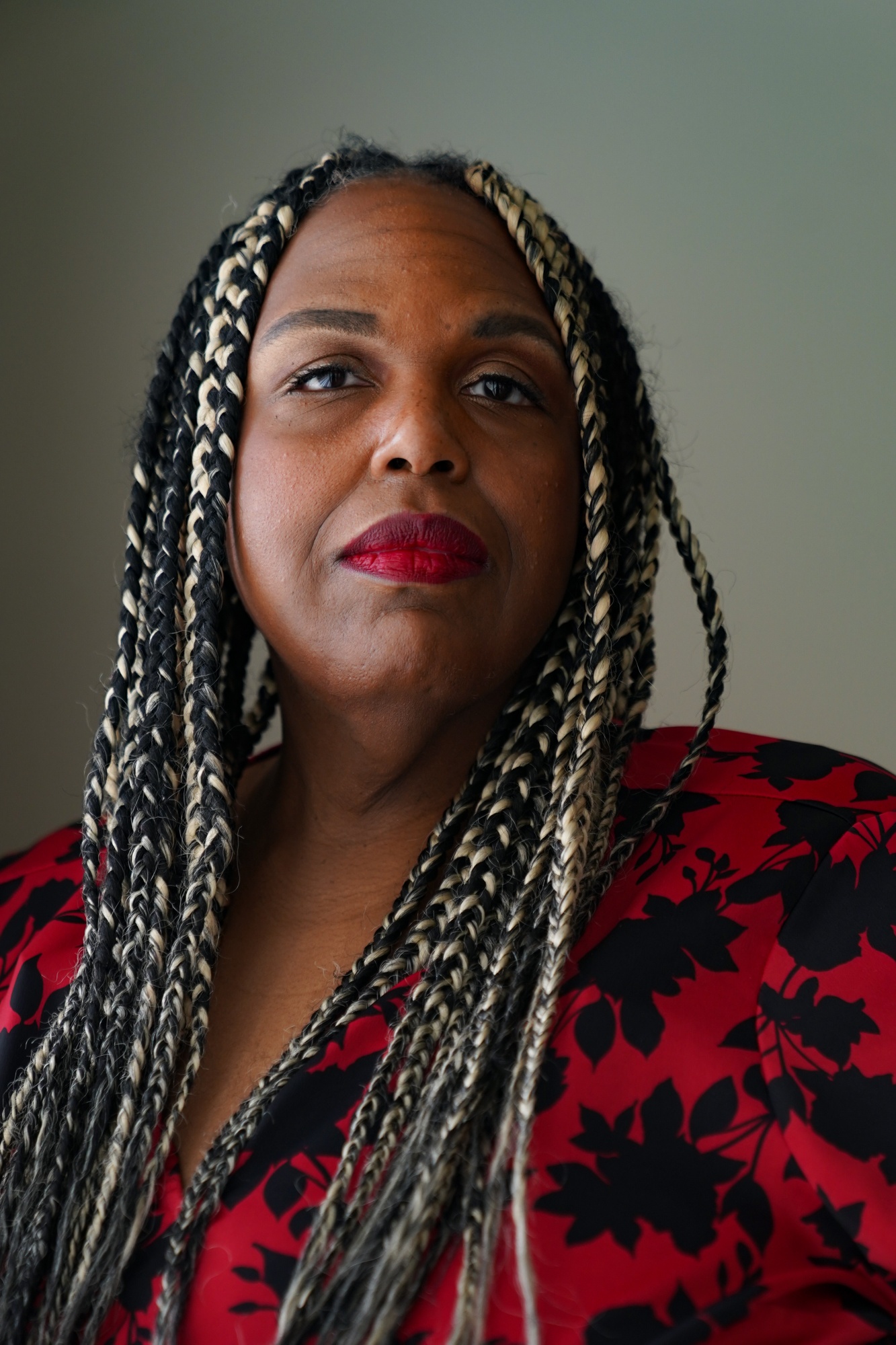
Felicia Ann Rose Enuha, who lost her job last year, is surviving mostly off credit cards. Photographer: Megan Varner/Bloomberg
That’s how it seems to Felicia Ann Rose Enuha, who has applied for at least 100 jobs since she was cut from a senior marketing role at food catering firm Sodexo in June last year. She moved to Atlanta from Los Angeles to live with a friend and is surviving mostly off credit cards. Sodexo didn’t respond to requests for comment.
The 46-year-old, who was hired in 2021, views the aftermath of Floyd’s murder as a time when a lot of companies were forced to recognize that their workplaces were disproportionately White and for a “hot second” they made choices that were “uncomfortable,” she said.
Now, she feels, people are hiring people they know — people who make them “comfortable.”
“Unfortunately, in our country, race is a very uncomfortable construct,” she said. “And that has real world consequences.”
Explore How the Workforces of the Largest US Companies Have Changed Since 2020
- White
- Hispanic
- Black
- Asian
- Other
Workers at 84 S&P 100 Companies Disclosing Data
Return to the top of the tool ↑
- EMR:US (Emerson Electric Co)
- NKE:US (Nike Inc.)
- ORCL:US (Oracle Corp)
- TSLA:US (Tesla Inc.)
- XOM:US (ExxonMobil Corp)
- AXP:US (American Express Co)
- PYPL:US (PayPal Holdings Inc)
- COF:US (Capital One Financial Corp)
- VZ:US (Verizon Communications Inc)
- MCD:US (McDonald's Corp)
- META:US (Meta Platforms Inc)
- AVGO:US (Broadcom Inc)
- AMZN:US (Amazon.com)