


Two Towns, Two Factories: How a $500 Billion Boom Exposes American Failures
One county gets 300 jobs making pet food; the other, 1,800 in high tech. What it means for the US middle class.
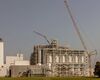
TO TOUR THE FACTORY that Nestlé Purina PetCare Co. will soon open in Rockingham County, North Carolina, is to see the future of pet food. Its brightly lit production floors, robot-controlled freezers and autonomous trolleys will produce hundreds of thousands of pounds of cat and dog chow.
Losing Factory Jobs
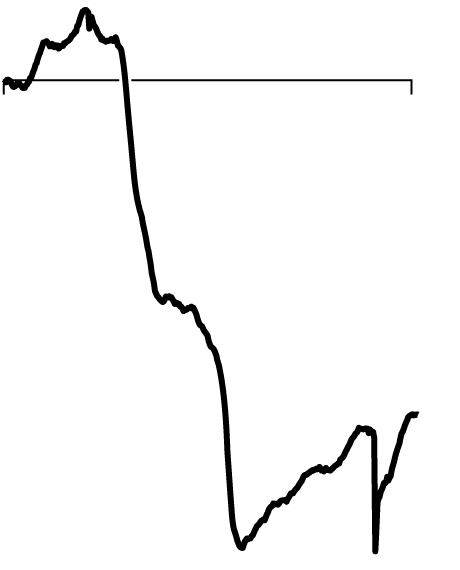
1992
2023
–23%
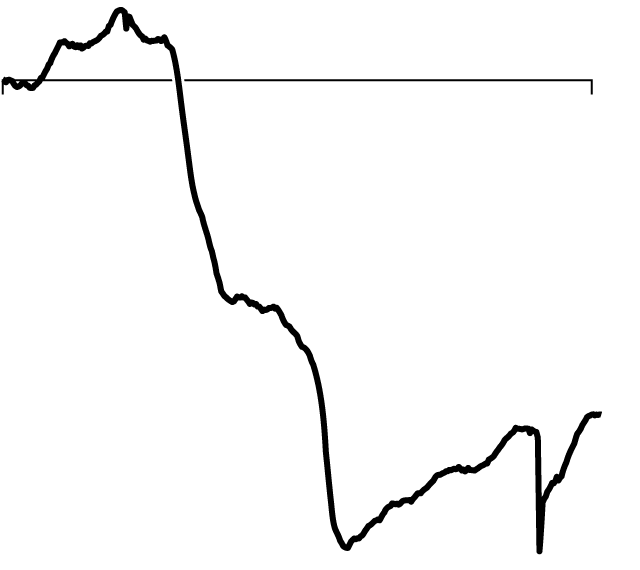
1992
2023
–23%
Drive more than an hour south to Chatham County, North Carolina, and you’ll see the site of Wolfspeed Inc.’s latest project, where you can peer into a cement-floored pit big enough to house an aircraft carrier. There, over the next 18 months, the semiconductor company and its robots will begin 24-hour-a-day production of the raw ingredient for the computer chips essential to make electric vehicles and their batteries run longer and charge faster.
The two plants are emblems of a manufacturing boom in America. Factories are being built at a rate not seen in decades, a trend hailed from the White House on down as essential to reviving the middle class. But zoom in on a map to see where these operations are actually landing, and you’ll also see a familiar geographic pattern. It helps explain why some towns win jobs making pet food, while others become hubs for higher-paying work in computer chips and EV technology.
There’s no doubting the broad renaissance: Since President Joe Biden took office in January 2021, companies have announced about $500 billion in private investment in industrial projects. Billions of dollars in promised federal subsidies are driving a push to bring home, or reshore, production of EVs, solar cells, batteries and semiconductors—along with well-paying middle-class jobs—in the name of competing with China.


This shift amounts to a remarkable pandemic-influenced turn in US economic policy, now supported by both major political parties in Washington. It began with President Donald Trump’s rise on the back of disenchanted blue-collar voters and his levying of tariffs on everything from Chinese-made pet food and handbags to European steel and Scotch whisky. Biden has turned those trade wars into subsidy wars via his forceful embrace of industrial policy—government intervention and incentives to prod businesses into alignment with national goals rather than rely on market forces.
Read more: The US Middle Class’s Economic Anxiety Will Decide the 2024 Election
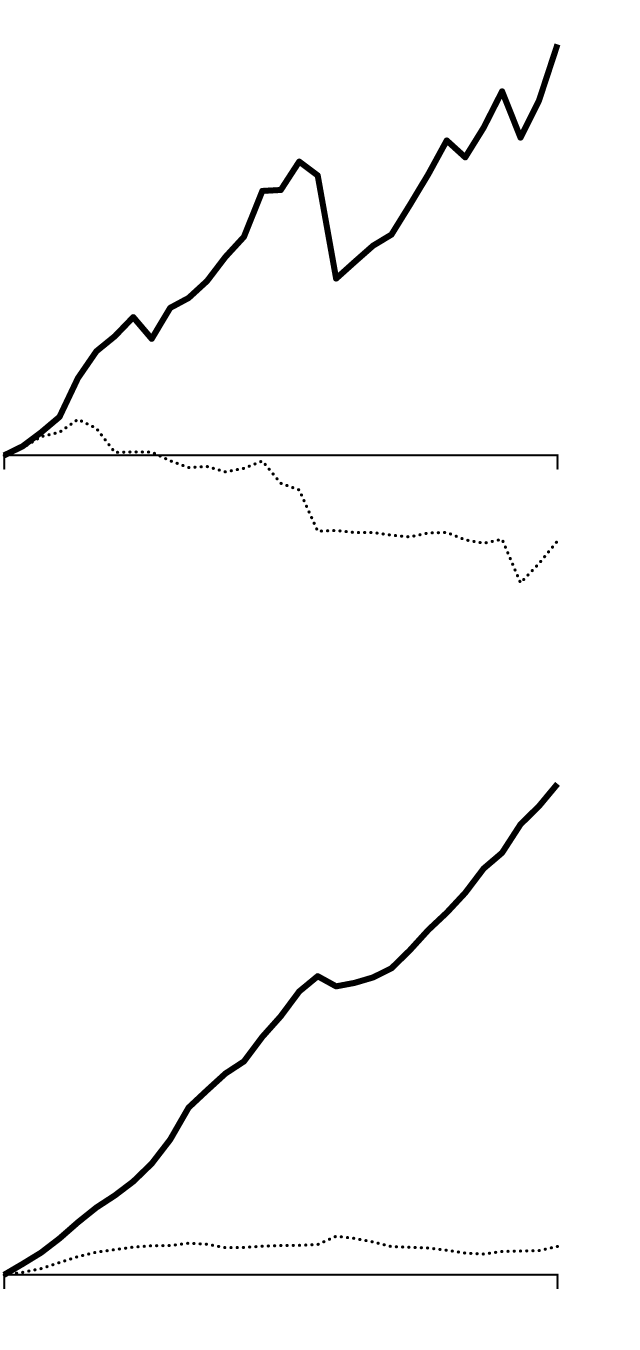
The two new factories, both in central North Carolina, amount to hard-won victories for communities on diverging economic paths. One in five people in Rockingham County, which has battled deindustrialization for decades, live under the poverty line. One in five people in Chatham County, thanks to its proximity to the thriving Research Triangle region, earns more than $200,000 a year.
To Have and Have Not
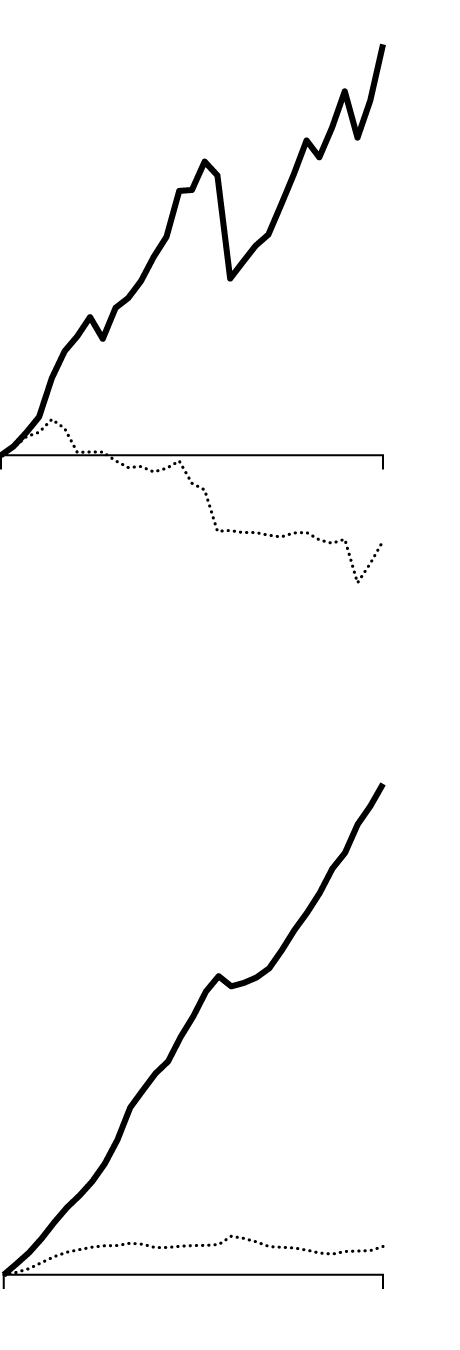
+64%
Chatham
County
1992
2022
–13%
Rockingham
County
Change in resident population
+95%
Chatham
County
Rockingham
County
+5%
1992
2022
+64%
Chatham
County
1992
2022
–13%
Rockingham
County
Change in resident population
+95%
Chatham
County
Rockingham
County
+5%
1992
2022
The new industrial boom has the potential to widen this divide rather than close it. Rockingham’s pet food plant in Eden, a fading mill town of 15,000, will employ 300 people; Chatham’s, 1,800. On average, the Rockingham workers will earn $42,000 a year; Chatham’s, $78,000. Or consider the sheer industrial and economic impact of each employer. Nestlé Purina is investing $450 million, the most valuable economic development project in Rockingham County history. Wolfspeed is investing $5 billion, the most in state history. Again and again, the Rockinghams are falling behind the Chathams even when both win economic prizes.
All this factory investment has failed to live up to its billing as a way to fix the damage wrought by an earlier era of competition with China that began more than 20 years ago. Over the past decade, economists David Autor at the Massachusetts Institute of Technology, David Dorn at the University of Zurich and Gordon Hanson at the Harvard Kennedy School have documented what’s become known as the “China shock.” After China joined the World Trade Organization in 2001, cheap imports contributed to the loss of more than a million manufacturing jobs in the US. Declining populations of young workers, as well as lower pay, have persisted in Rockingham and other communities hardest hit by this China shock, the researchers found in a 2021 paper.
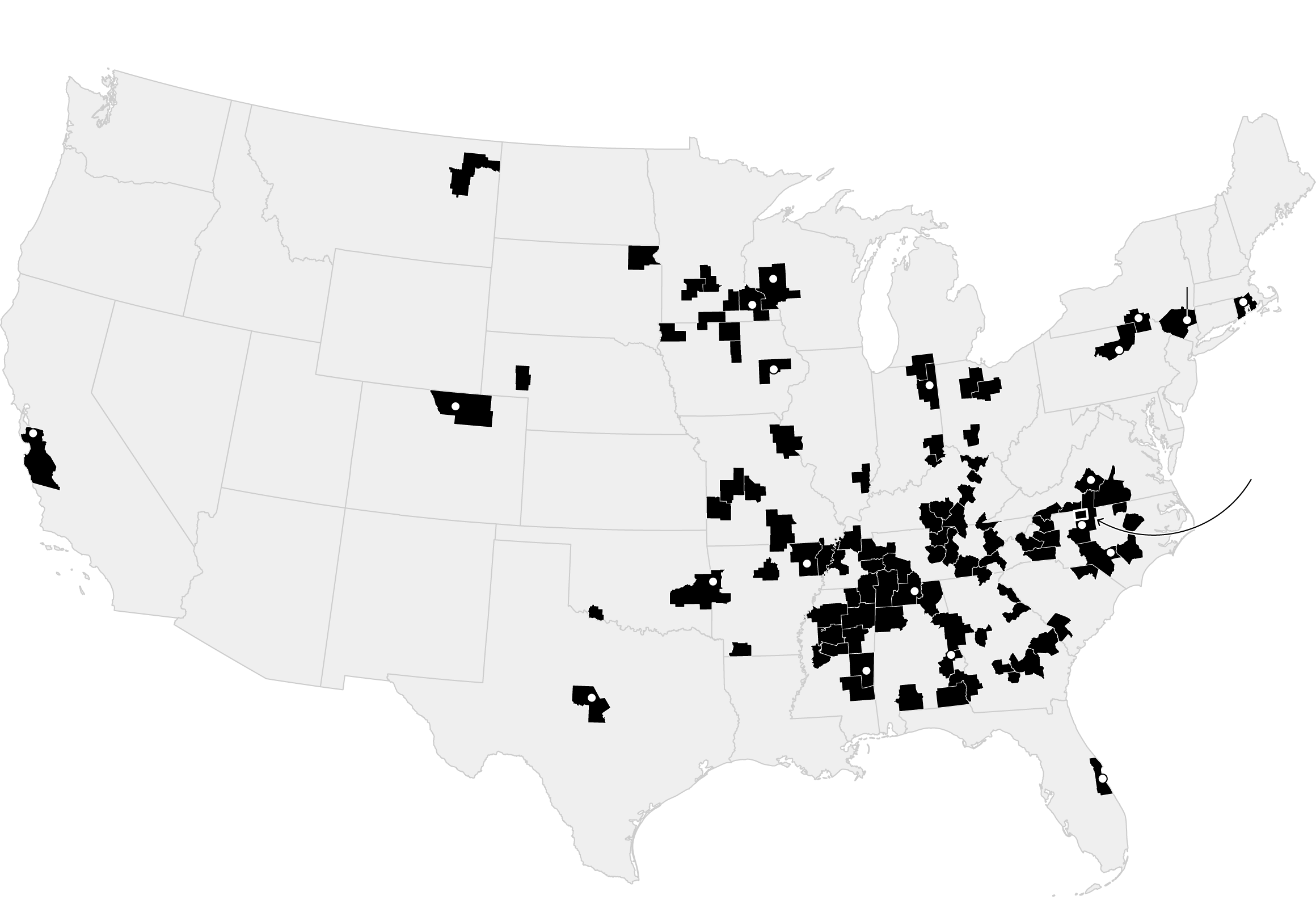
Today’s manufacturing turnaround has so far largely bypassed these hardest-hit places, according to a Bloomberg analysis of data provided by the White House and the China shock authors. Only 16 of those 100 commuter zones most affected by the China shock have won even a single new manufacturing investment since 2021, the year Biden took office. They have accounted for just 11% of the announced investment. White House spokesman Michael Kikukawa says those zones represent only 4% of the US population, so the analysis understates their impact. “Bidenomics is investing in communities that have been left behind, with investments going disproportionately to lower-income and disadvantaged communities,” he says.



Comparing Chatham and Rockingham counties helps to explain why differences in education, transportation, infrastructure and available land make closing the gap so hard. The contrast also illuminates the politics of electoral battlegrounds such as North Carolina that will likely decide the 2024 presidential contest. It shows why some places buy into Trump’s populist, anti-global rhetoric more than others. In 2020, Trump won Rockingham by 32 percentage points. Biden took Chatham by 12 points.
Ever since Trump’s 2016 election, a debate has raged over competition with China and the need to bring factories home. It’s become a familiar refrain: Blue states and big coastal cities that win out because of globalization are clueless about its costs; angry red states and rural areas get left behind. Less discussed are the internal rivalries among communities, often in the same state, or how the industrial boom is following a familiar pattern, rather than altering it. Keith Debbage, an economic geographer at the University of North Carolina at Greensboro, has spent more than 30 years studying development in the state and says the Rockingham-Chatham divide illustrates a rule at the heart of his discipline: “It’s just a fundamental fact of economic geography. There are winners and losers.”
Increase in Chinese imports per worker ⟶
Bottom 20%
Middle 20%
Top 20%
Increase in Chinese imports per worker ⟶
Bottom 20%
Middle 20%
Top 20%
Increase in Chinese imports per worker ⟶
Bottom 20%
Middle 20%
Top 20%
Increase in Chinese imports per worker ⟶
Bottom 20%
Middle 20%
Top 20%
Increase in Chinese imports per worker ⟶
Bottom 20%
Middle 20%
Top 20%
Eau Claire
Poughkeepsie
Binghamton
Rochester
Providence
Cedar Rapids
Williamsport
Fort Wayne
Fort Collins
San Jose
Rockingham
County
Lynchburg
Greensboro
Jonesboro
Fayetteville
Fort Smith
Huntsville
Auburn
Meridian
Brownwood
Melbourne
Poughkeepsie
Eau Claire
Binghamton
Rochester
Providence
Cedar Rapids
Williamsport
Fort Wayne
San Jose
Fort Collins
Lynchburg
Greensboro
Jonesboro
Huntsville
Fort Smith
Auburn
Rockingham
County
Brownwood
Meridian
Melbourne
Poughkeepsie
Eau Claire
Binghamton
Rochester
Providence
Williamsport
Cedar
Rapids
Fort
Wayne
San Jose
Fort Collins
Lynchburg
Greensboro
Jonesboro
Huntsville
Fort Smith
Auburn
Rockingham
County
Meridian
Brownwood
Melbourne
Poughkeepsie
Eau Claire
Binghamton
Rochester
Fort
Wayne
Providence
Fort Collins
San Jose
Lynchburg
Jonesboro
Huntsville
Fort Smith
Auburn
Rockingham
County
Meridian
Brownwood
Melbourne
Poughkeepsie
Rochester
Fort
Wayne
Fort
Collins
San
Jose
Providence
Huntsville
Rockingham
County
Brownwood
Melbourne
Investment value:
$1B
$10B
$40B
Investment value:
$1B
$10B
$40B
Investment value:
$1B
$10B
$40B
Investment value:
$1B
$10B
$40B
Investment value:
$1B
$10B
$40B
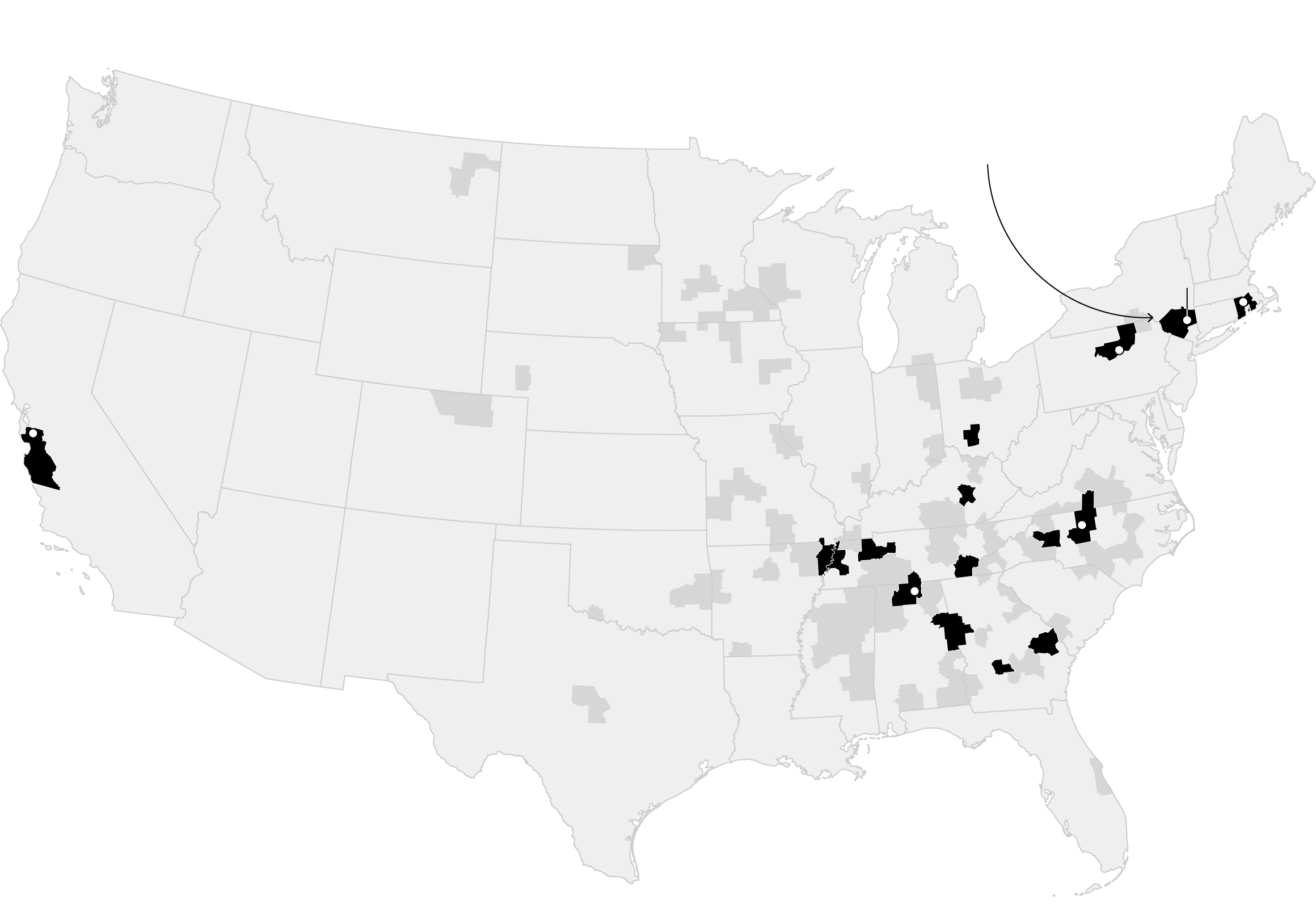
IBM plans to invest $20B over the next decade in upstate New York, the largest single amount for the most-affected areas.
Poughkeepsie
Providence
Williamsport
San Jose
Greensboro
Huntsville
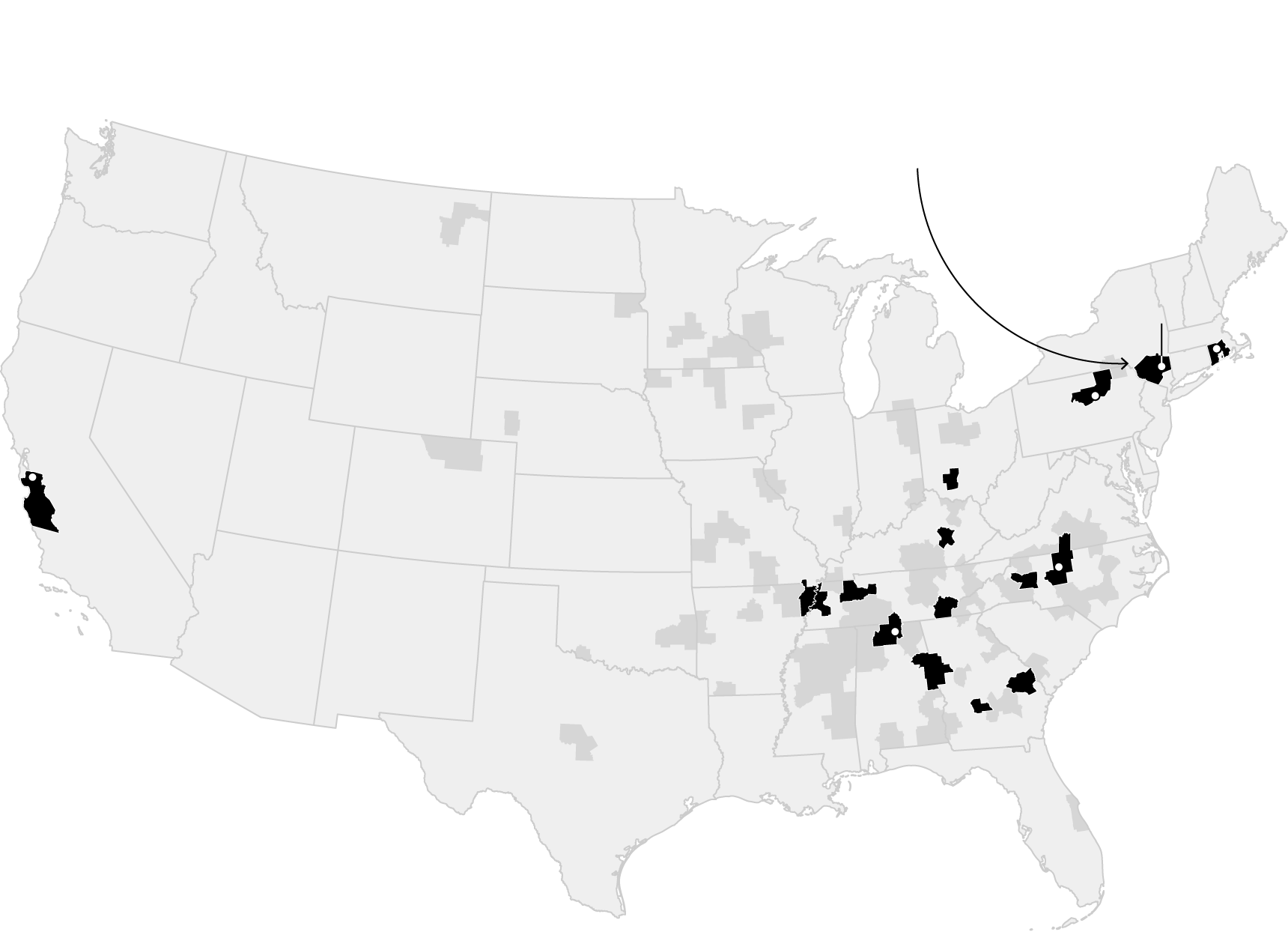
IBM plans to invest $20B over the next decade in upstate New York, the largest single amount for the most-affected areas.
Poughkeepsie
Providence
Williamsport
San Jose
Greensboro
Huntsville
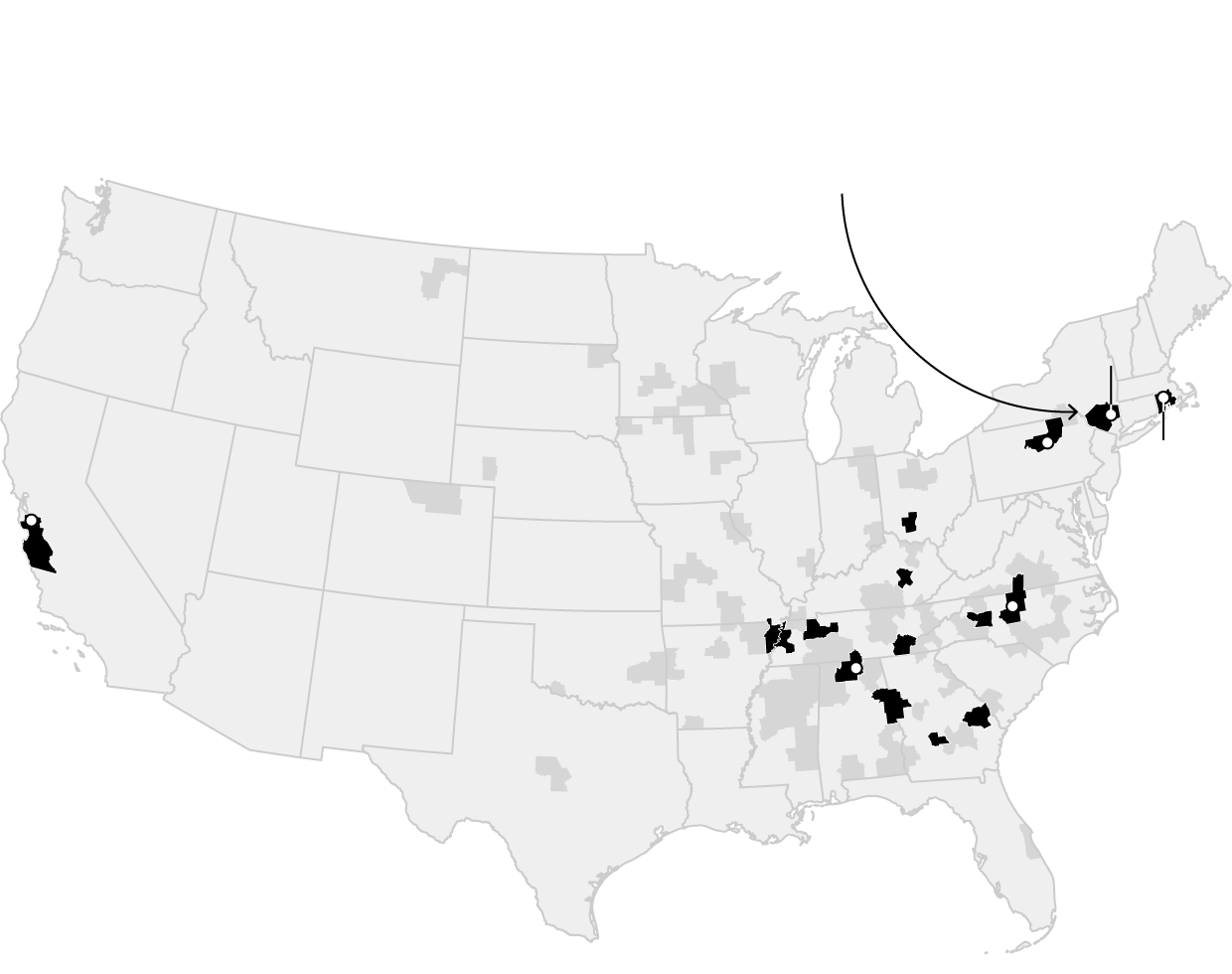
IBM plans to invest $20B over the next decade in upstate New York, the largest single amount for the most-affected areas.
Poughkeepsie
Providence
Williamsport
San Jose
Greensboro
Huntsville
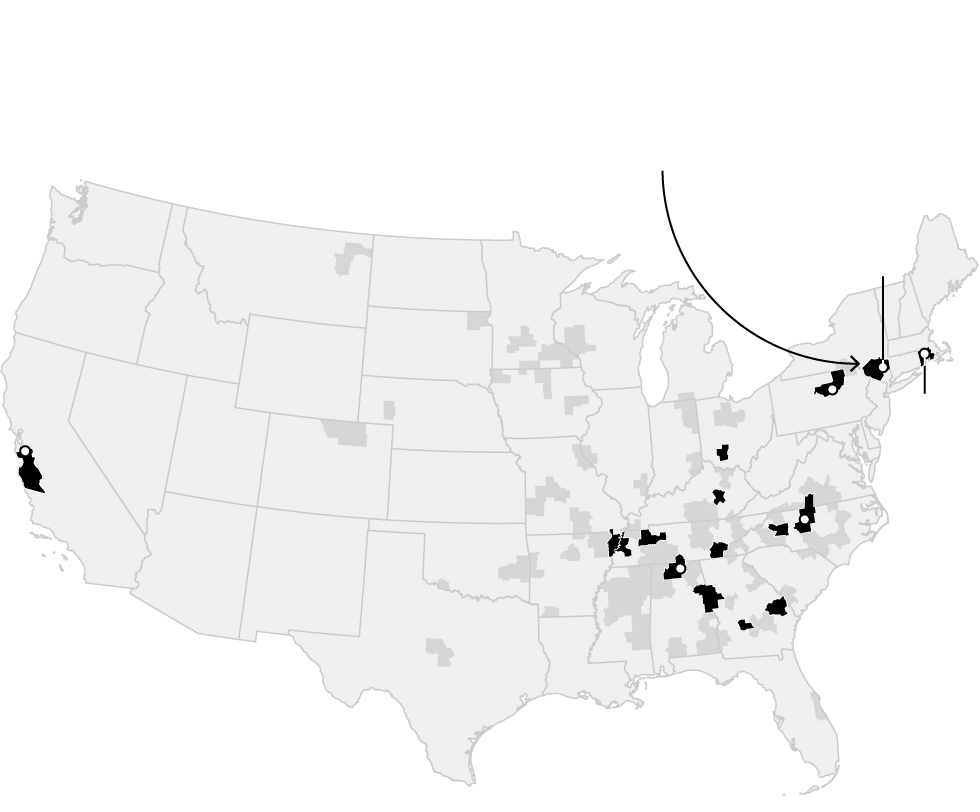
IBM plans to invest $20B over the next decade in upstate New York, the largest single amount for the most-affected areas.
Poughkeepsie
Williamsport
Providence
San Jose
Greensboro
Huntsville
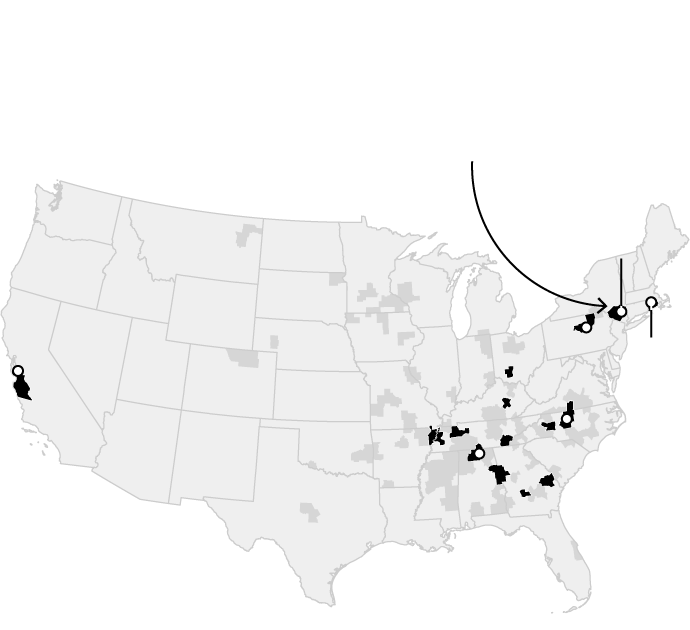
IBM plans to invest $20B over the next decade in upstate New York, the largest single amount for the most-affected areas.
Poughkeepsie
Williamsport
San
Jose
Providence
Greensboro
Huntsville
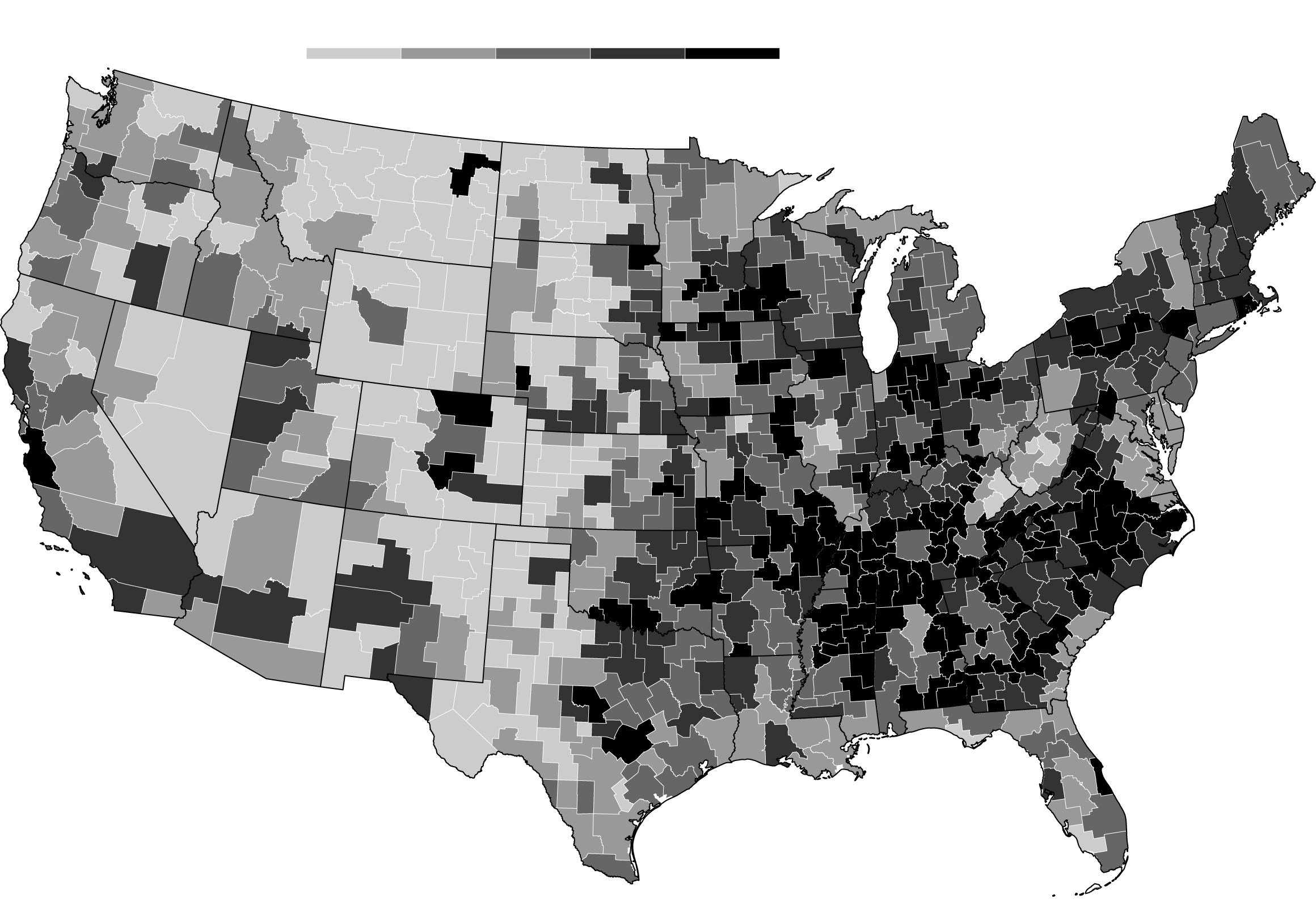
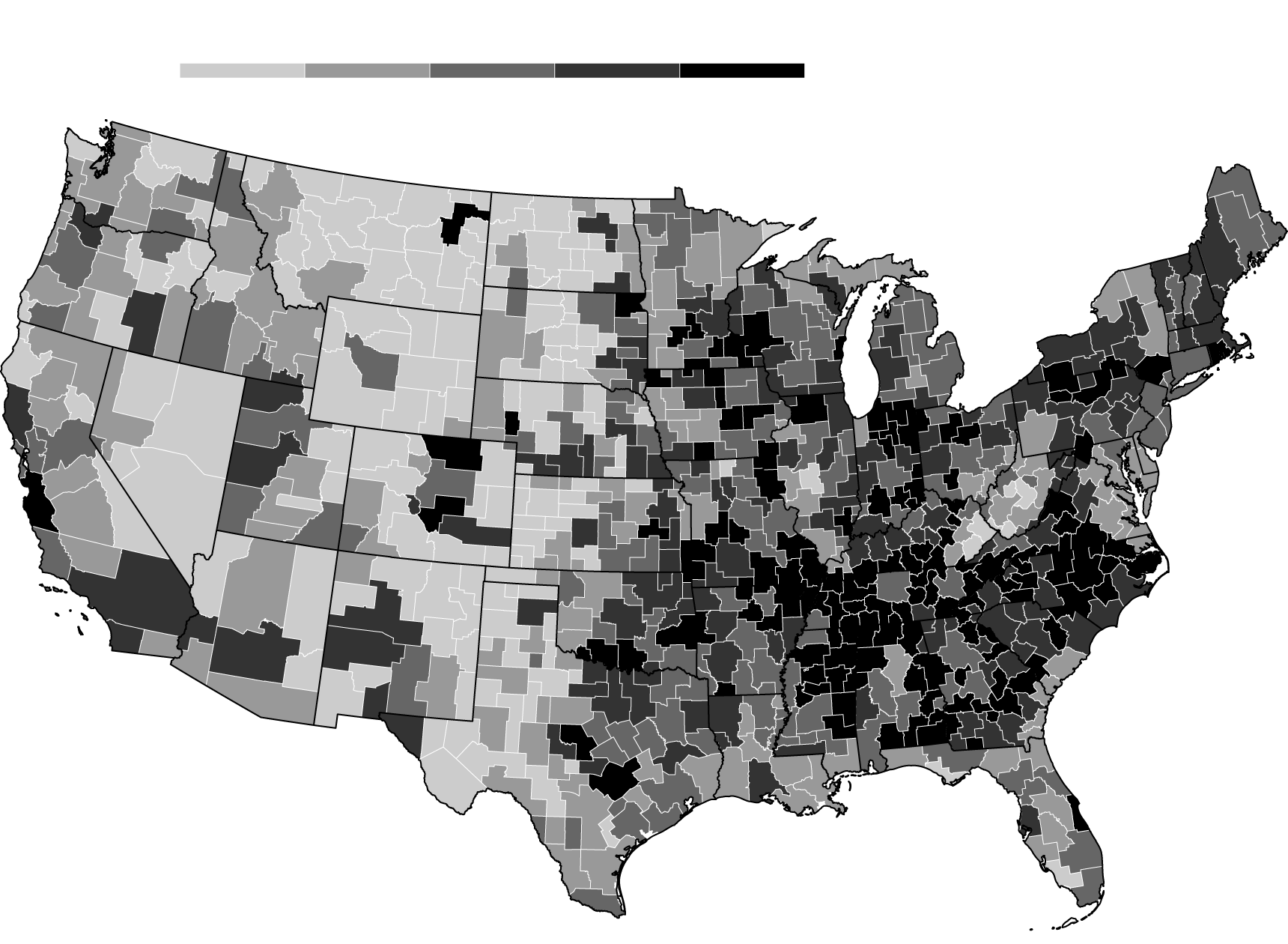
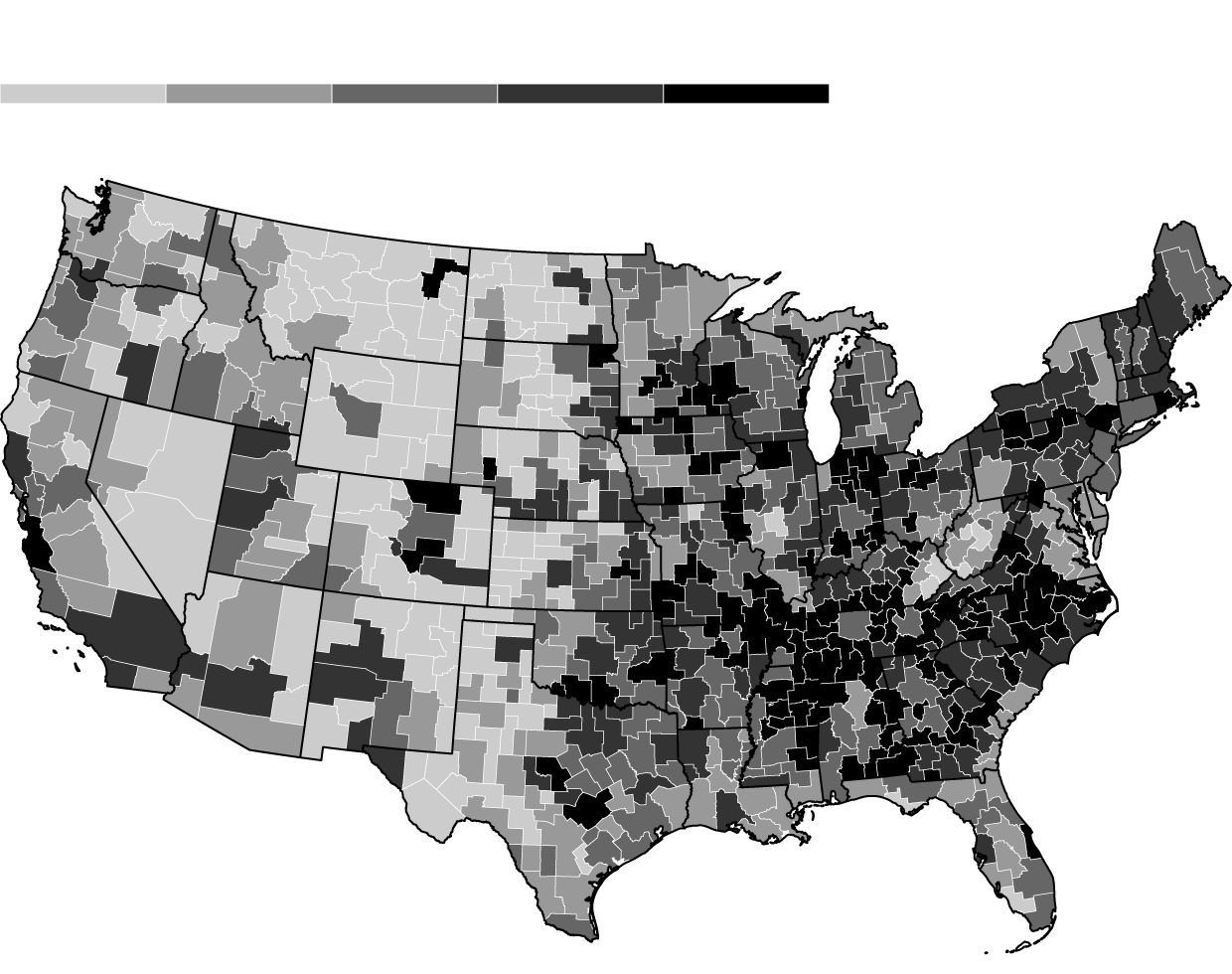
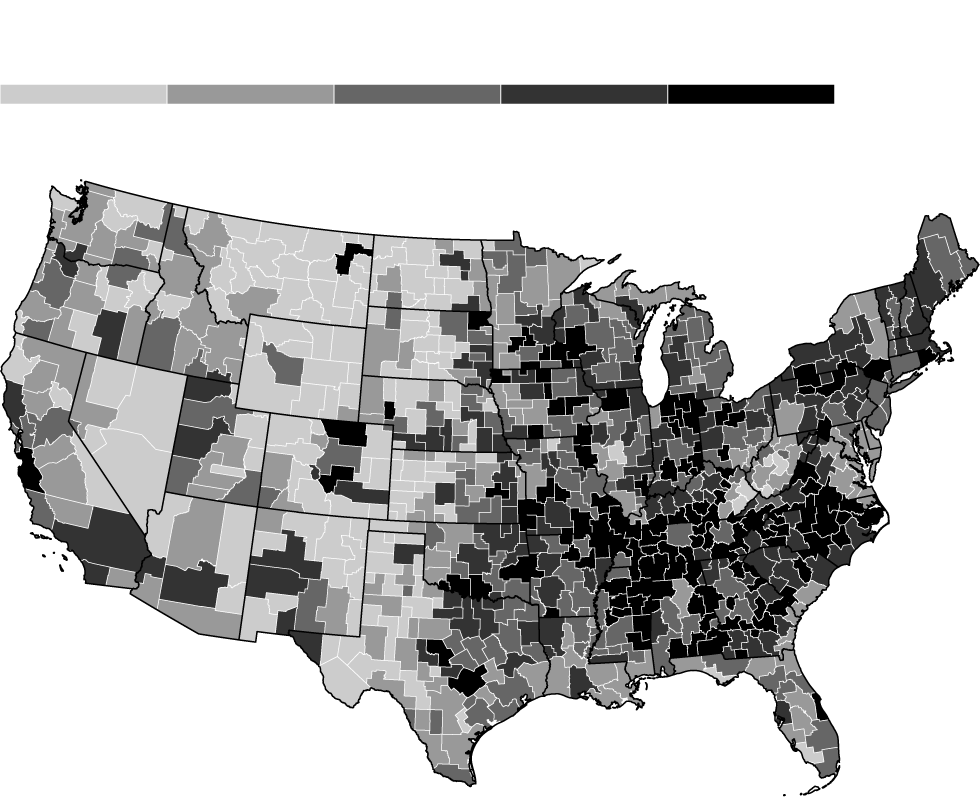
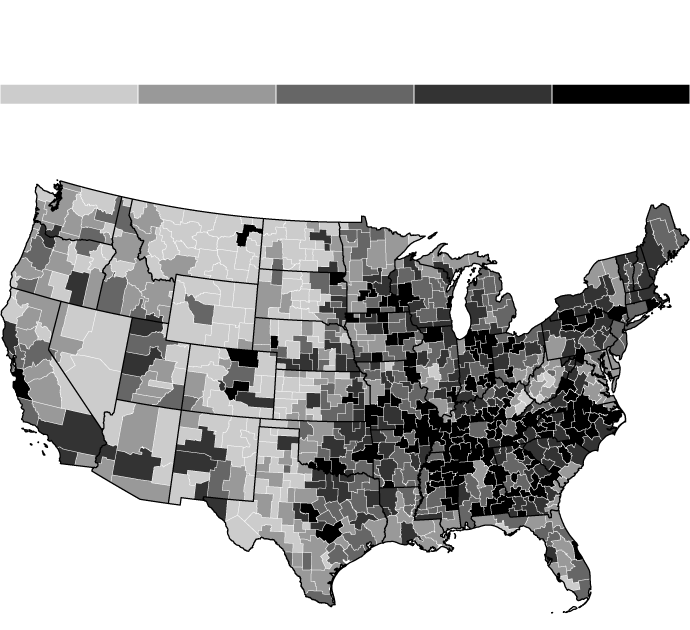
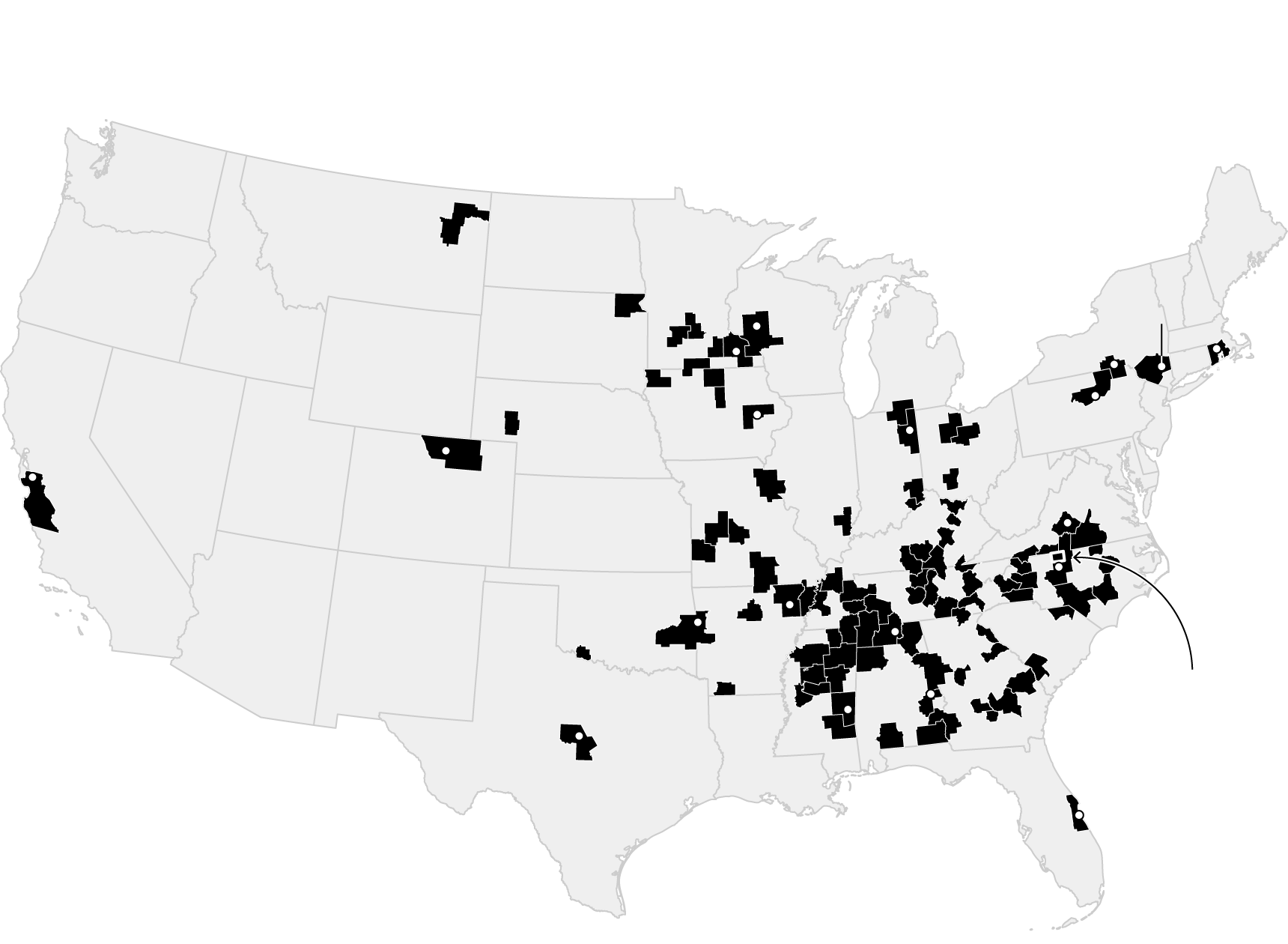
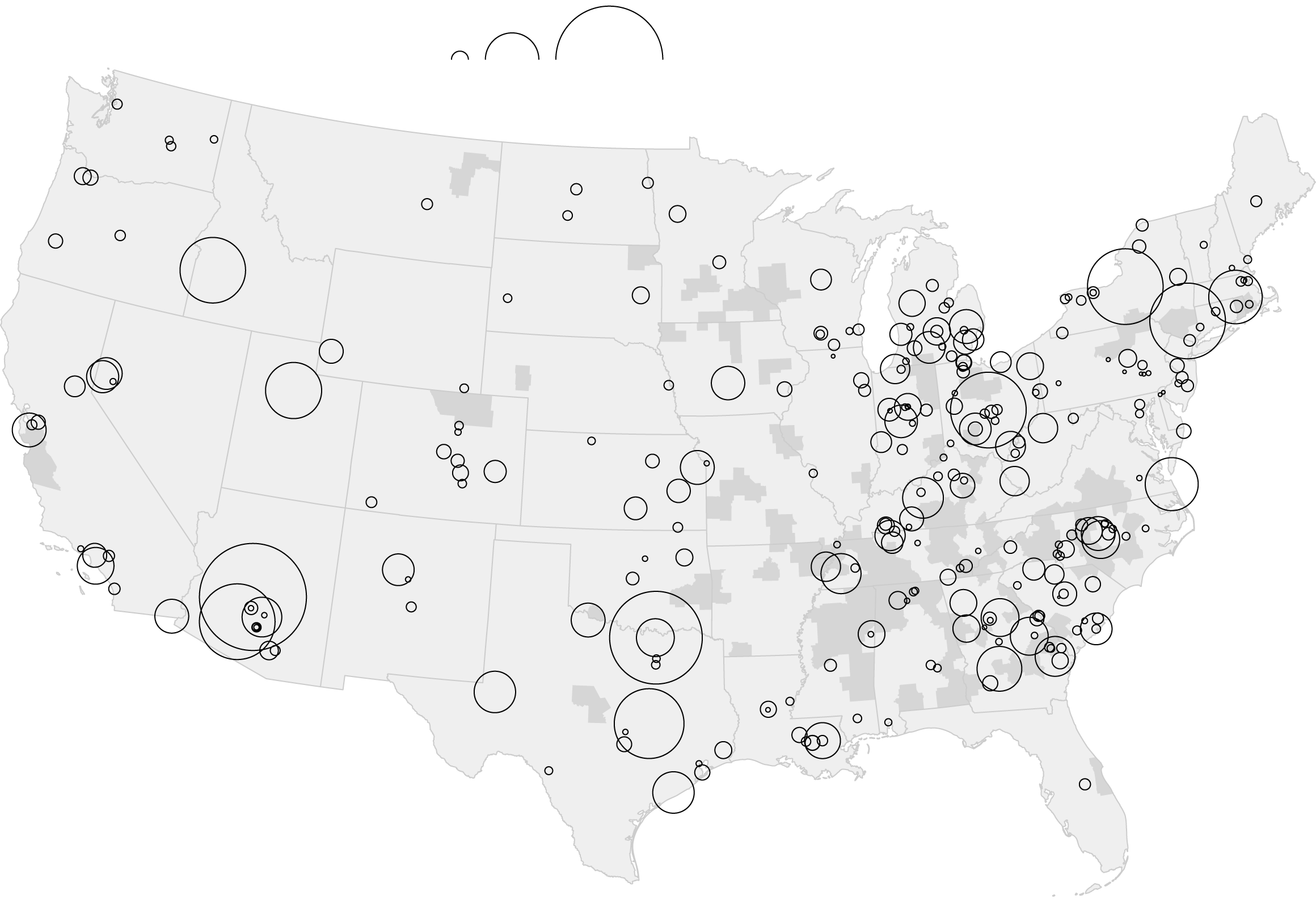
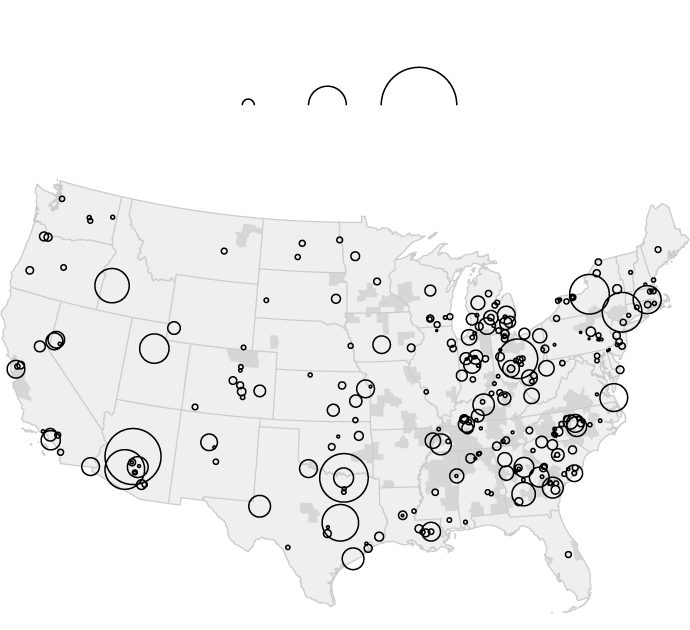
Economist David Autor and his co-authors have over the past decade documented what has become known as the “China Shock”, or manufacturing jobs lost to competition from cheap imports. Their work focused on commuter zones from 2000 to 2019. Here, the darker the area, the greater the impact of the shock.
The 100 commuter zones hit hardest by the China Shock include places like Rockingham County, North Carolina, where textile jobs have moved outside the US and factories have shut down. Typical of the most affected communities, it is a small rural county that lost its once healthy manufacturing base.
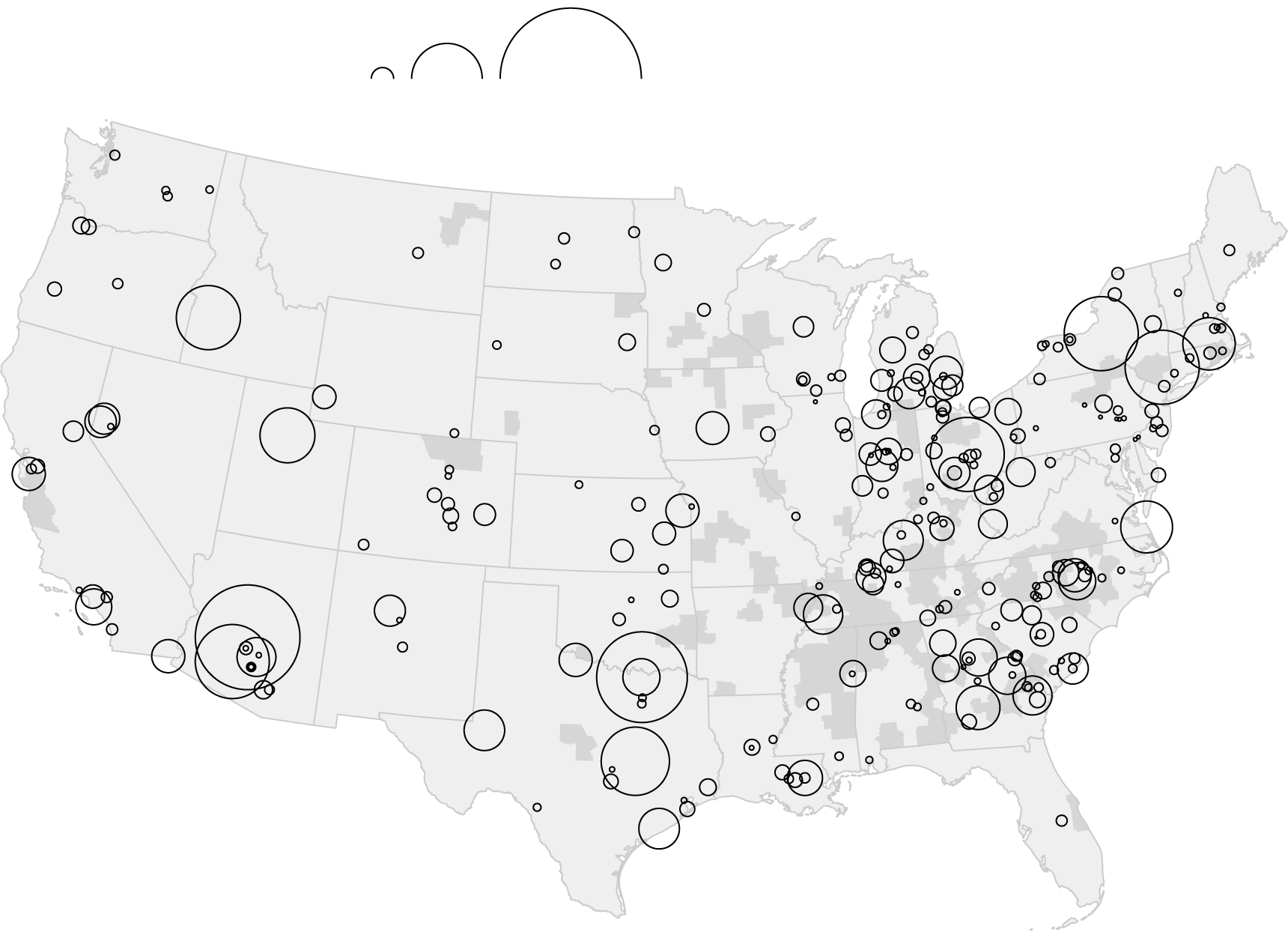
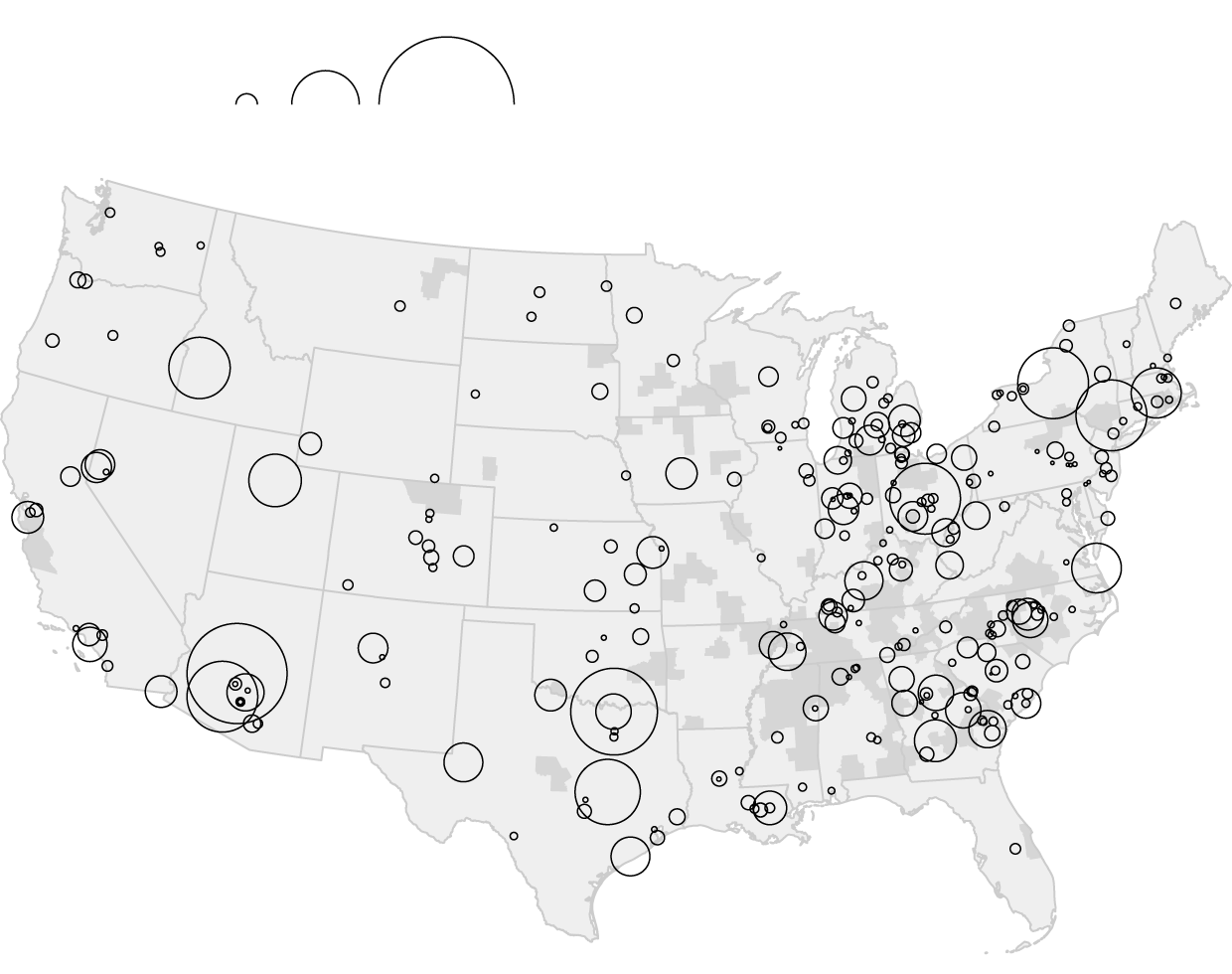
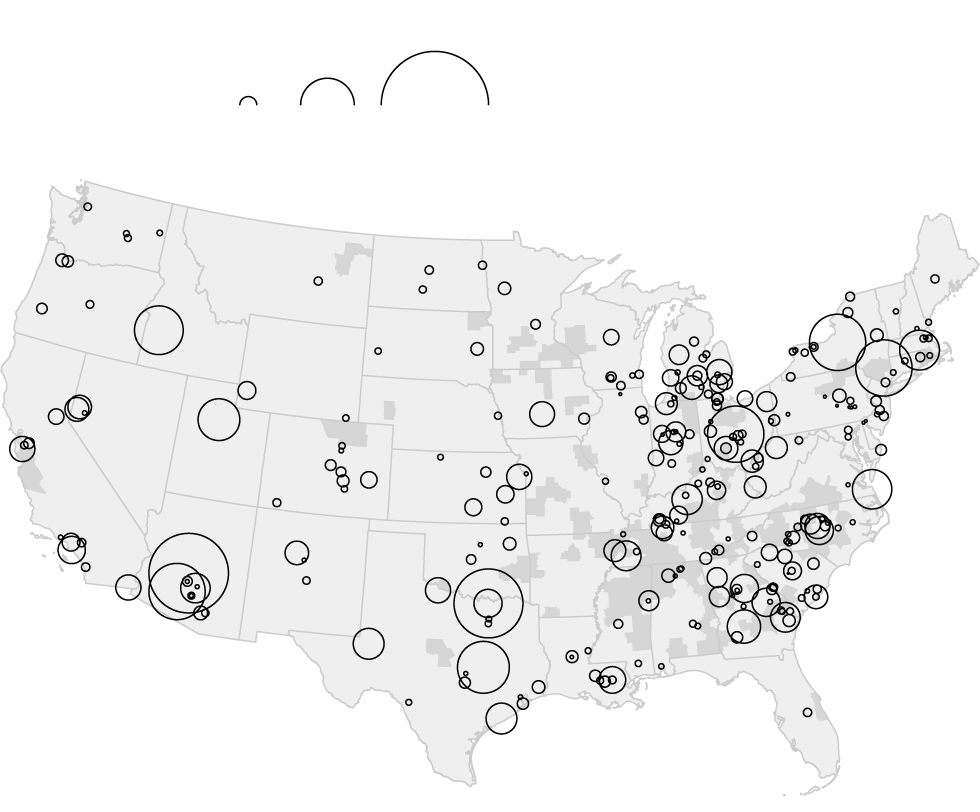
There’s undoubtedly a new boom in manufacturing investment in the US. By the end of June, the White House listed 308 announced projects worth nearly $503 billion since Joe Biden took office in January 2021.
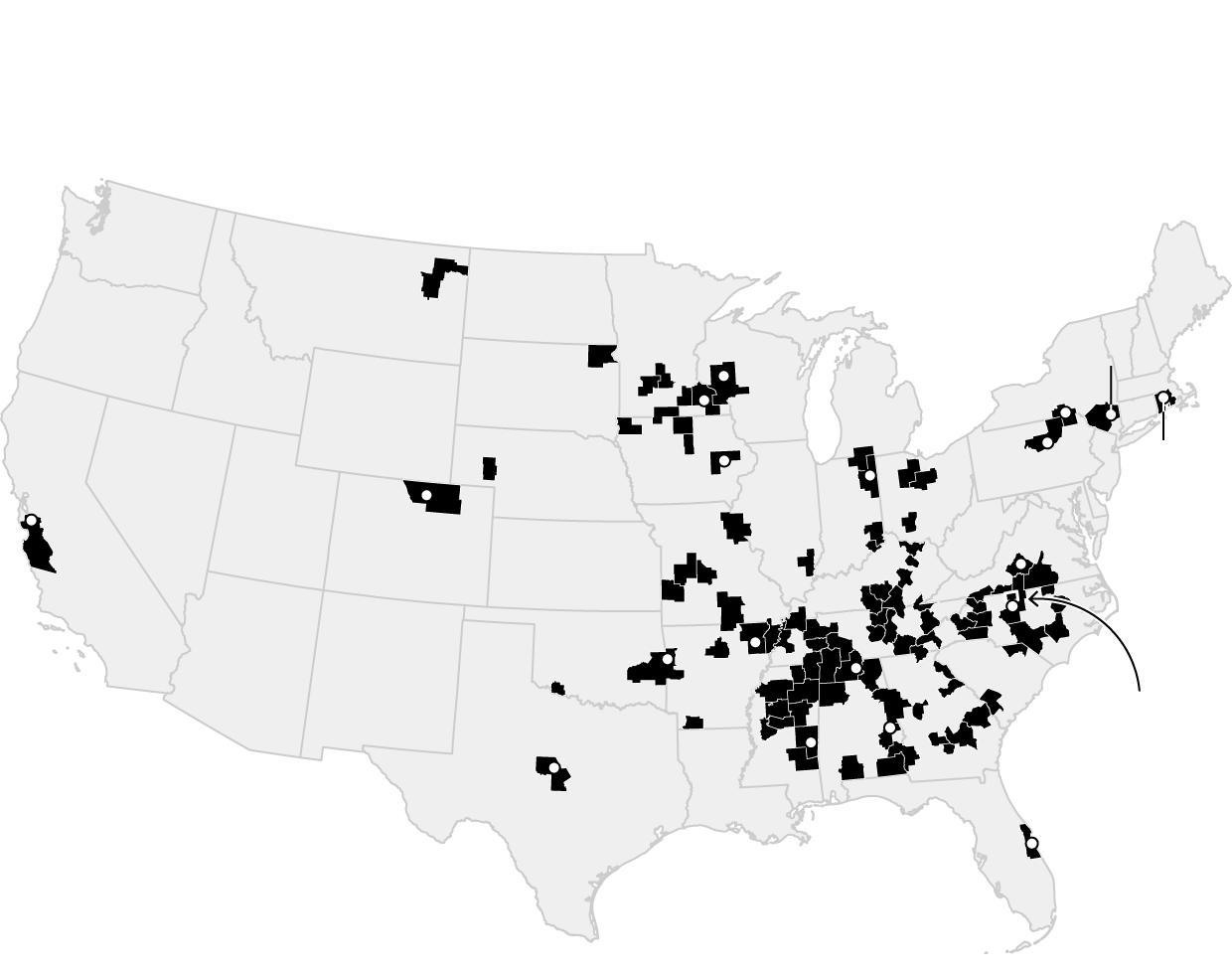
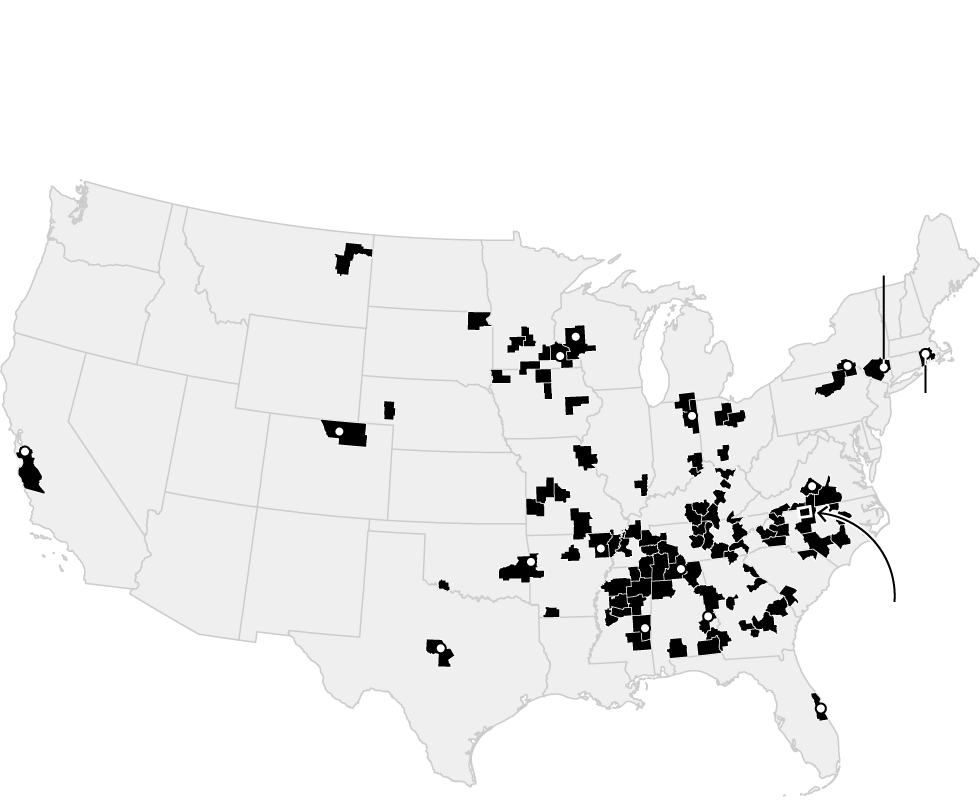
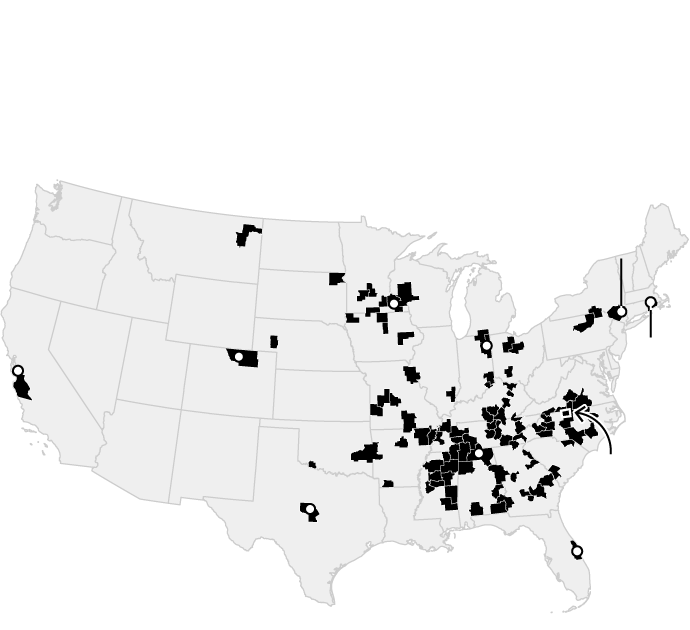
But the new industrial boom has mostly bypassed the areas hit hardest by the China Shock. Just 16 of the 100 most affected commuter zones have been the sites of any newly announced projects over the past two years. These areas are projected to receive just 11.4% of the value of those projects, or $57.4 billion. And, of that sum, a lone IBM announcement accounted for $20 billion.
FOR ALMOST 100 YEARS, a whistle marked shift changes at the Karastan rug factory in Eden. Today the whistle sits in the front window of the local museum just down the road. The plant shut down for good in 2021. The building’s new owner leases it out as a warehouse space to tenants including the Dollar General discount store chain. Nearby, the remains of another century-old plant would have been turned into apartments, but then a fire swept through it in January. The 1994 North American Free Trade Agreement, increasing US trade with China and the decline of the tobacco industry have all punished North Carolina’s Piedmont region, in the foothills of the Blue Ridge Mountains.
Eden and the rest of Rockingham County wear the physical legacy of their industrial past heavily. While old factories can make for stunning lofts in big cities, they can get in the way in places searching for manufacturing jobs. Big companies prefer wide-open tracts for their operations. And in Rockingham, Leigh Cockram, the director of economic development, says the biggest undeveloped tract measures just 33 acres, enough only for a small factory.
Rockingham has attracted more than $1 billion in investment and 1,400 jobs since 2019, including the Nestlé Purina plant, Cockram says. Farmina Pet Foods, an Italian company, is building its own factory nearby. Belgium’s Ontex Group NV is expanding a diaper plant. The county isn’t relying only on state or federal money. It’s levying a sales tax to pay for a workforce development center going up at the local community college.
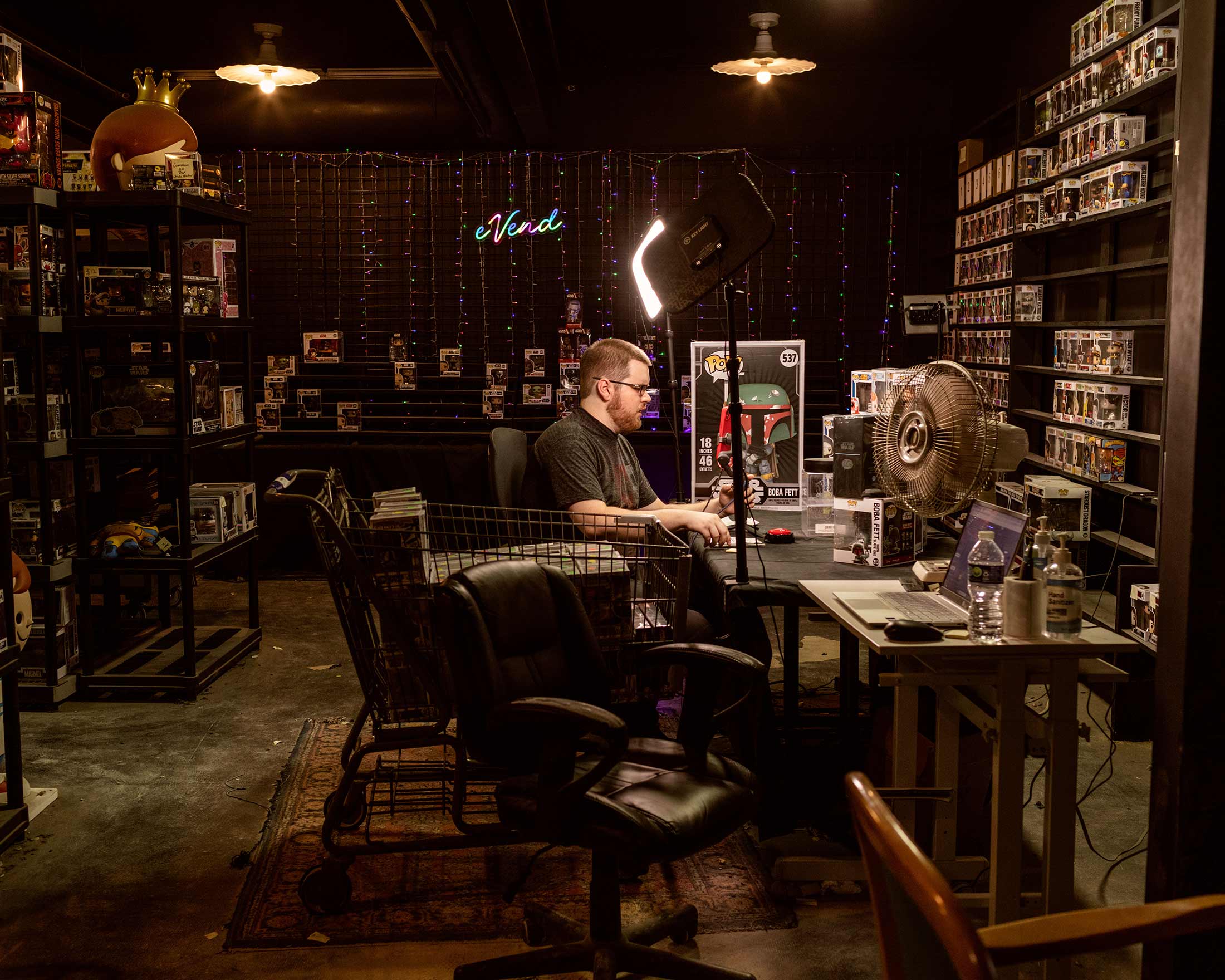
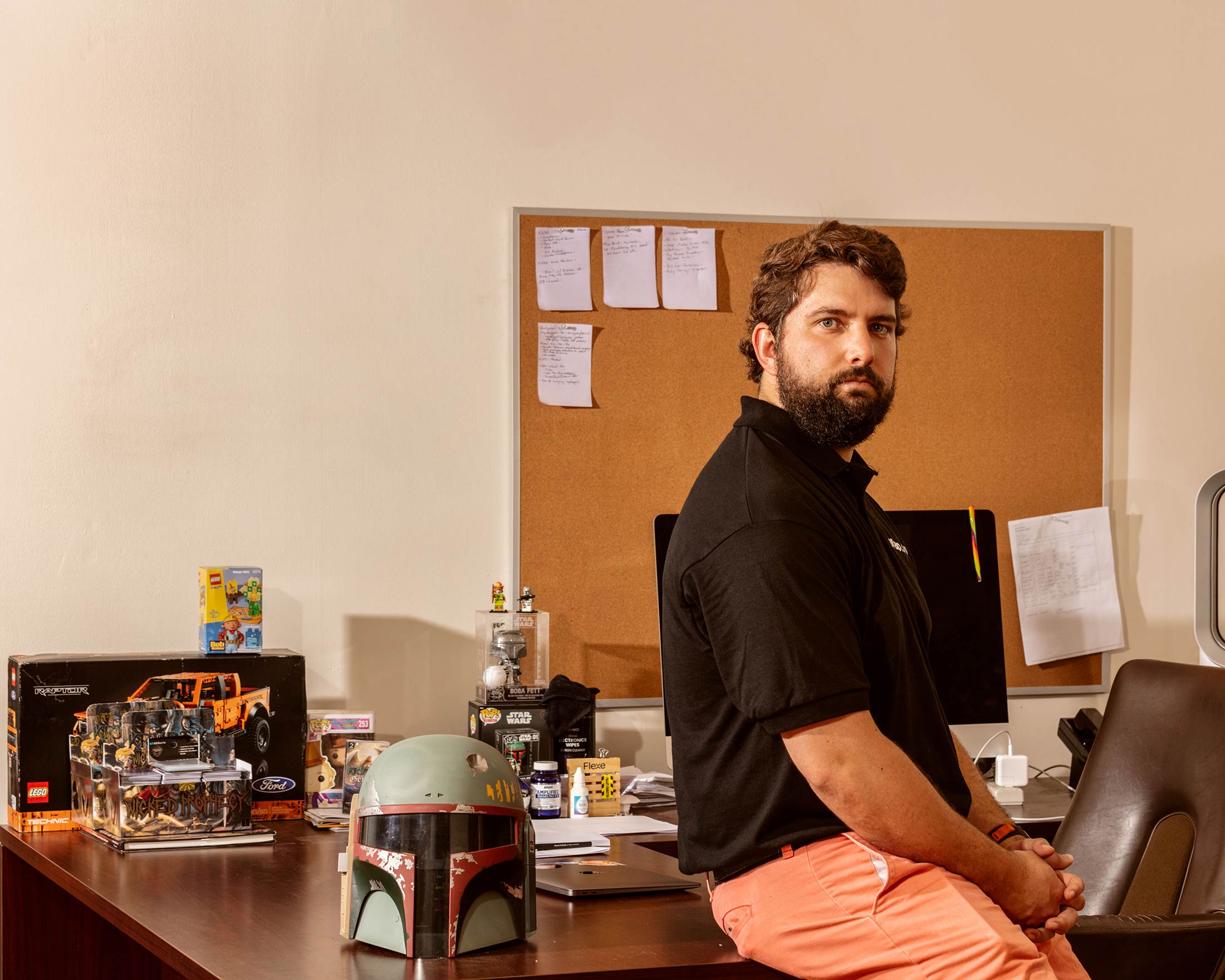
In nearby Reidsville there’s hope again below the old smokestack bearing the words “Lucky Strike.” The cigarette plant, once the town’s biggest employer, closed for good in 2019. It now has new owners: Evans Richards, a 30-year-old e-commerce entrepreneur, and his partners. His company, ReVend, sells Lego sets, Star Wars memorabilia and superhero collectibles. It’s setting up video-streaming studios around the building to do real-time online sales. ReVend occupies several floors. Richards and his co-investors are leasing out space to a warehouse company, in which he has a stake. Another part of the complex is slated to be rented out to a small manufacturer or data center. “An ecosystem,” Richards calls it.
Rockingham County, NC
Population
Unemployment rate
College degree
2020 presidential election results
Median household income
Jobs announced since 2019
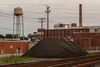
Stacey Kalilimoku is delighted. She spent 12 years working alongside her husband in the old cigarette plant. Now she and three of her four daughters work at ReVend. “It’s creating a stable income for people,” she says. “I hope we’re busting at the seams in a few years.” But it won’t be like the old days. At its peak a half century ago, Lucky Strike employed 3,600. At best, Richards says, hundreds will work at ReVend one day.
At its new plant, Nestlé Purina, a unit of Swiss food giant Nestlé SA, will also be hiring at that scale. It’s moving into a former MillerCoors brewery that shut down in 2017 and once employed more than 1,000 people. Everything at the pet food plant is designed for efficiency and automation. According to Will Steiner, the plant manager, raw ingredients coming into it will be stored in freezers and handled only by robots. Around the plant, squadrons of autonomous vehicles that Steiner likens to industrial Roombas will ferry around finished products. The jobs remaining are in great demand. A recent posting for production positions drew 4,000 applicants, he says.
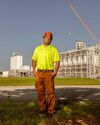
To Neville Hall, Eden’s mayor, the Purina plant is a welcome addition. But he also has his eyes on a 3,500-acre industrial plot known as the Berry Hill megasite just across the state line in Virginia. It offers the promise of many more jobs, but local officials have yet to find a taker. “They’re going after the big fish,” Hall says.
Torrey Easler, a Baptist pastor, has watched Rockingham County’s efforts to draw investment for more than a decade. To date, none has stemmed a slow decline. As a result, members of his own congregation increasingly commute to faraway jobs in search of middle-class wages. His own wife drives almost an hour each way to hers, managing a practice for an oral surgeon. It’s a similar story for his adult son.
“Manufacturing has come back somewhat, but it’s still not on the level that it was,” Easler says. “Sometimes we want to put on the rose-colored glasses, because we don’t want to see the widening gap between the upper class and the lower class or the lower middle class.”
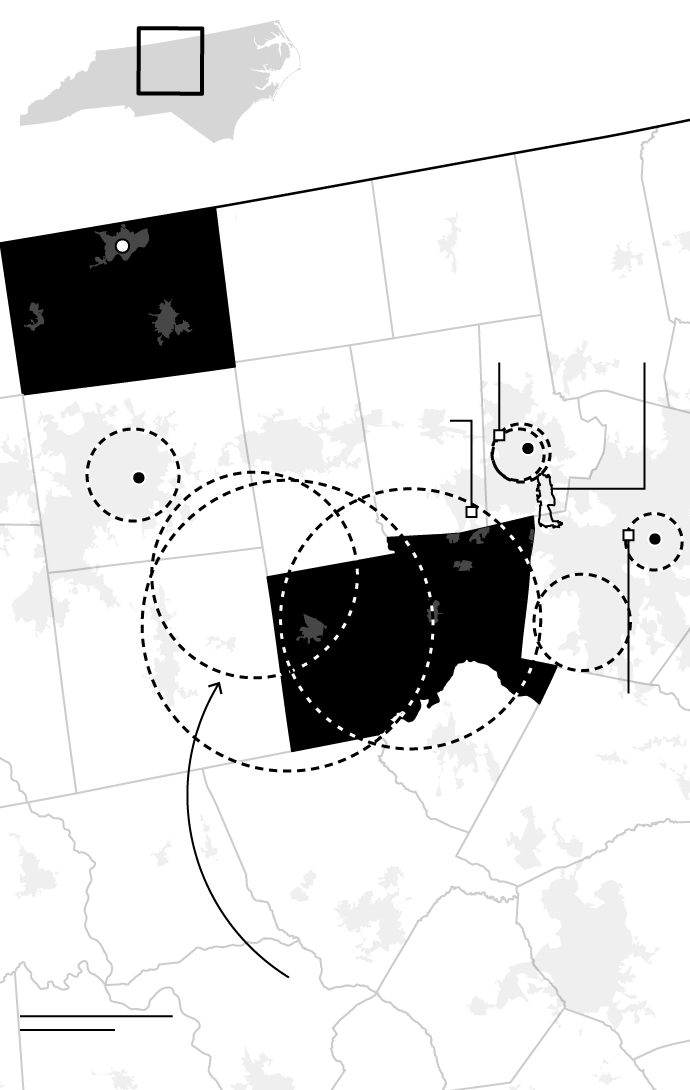
Economic Geography
Virginia
North carolina
Eden
Rockingham
County
Duke
Univ.
Research
Triangle Park
Durham
Greensboro
UNC
Chapel Hill
Winston-Salem
Raleigh
NC
State
Chatham
County
Investments in and around Chatham County total
$13.4B, including a $2.5B
investment from Toyota
20 mi
20 km
Virginia
North carolina
Eden
Rockingham
County
Duke Univ.
Research
Triangle Park
UNC
Chapel Hill
Durham
Greensboro
Winston-Salem
NC
State
Raleigh
Chatham
County
Investments in and around Chatham County total $13.4B, including a $2.5B investment from Toyota
20 mi
20 km
Virginia
North carolina
Eden
Research
Triangle
Park
Rockingham
County
Duke
Univ.
UNC
Chapel Hill
Durham
Greensboro
Raleigh
Chatham
County
NC
State
Investments in and around Chatham County total $13.4B, including a $2.5B investment from Toyota
20 mi
20 km
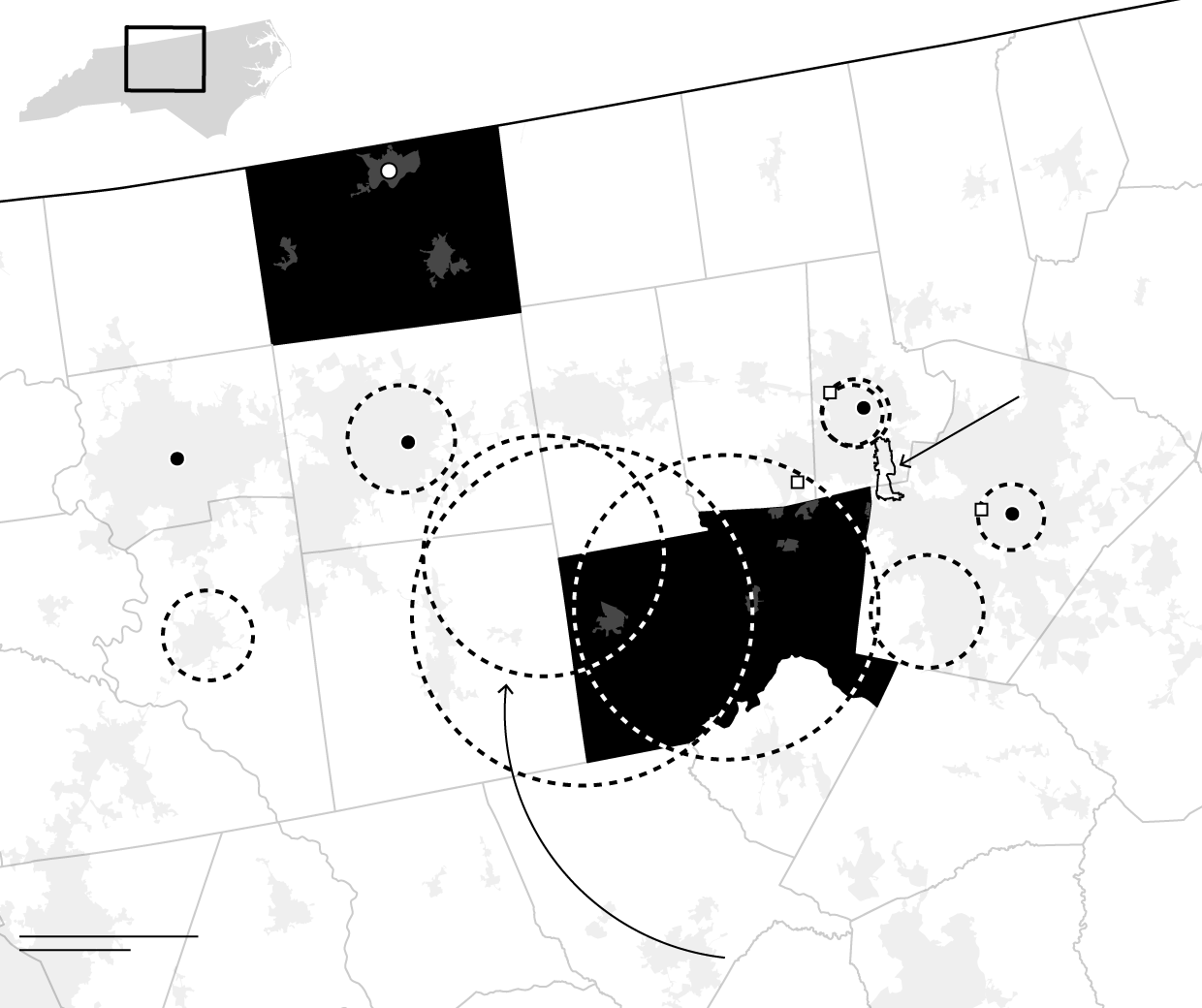
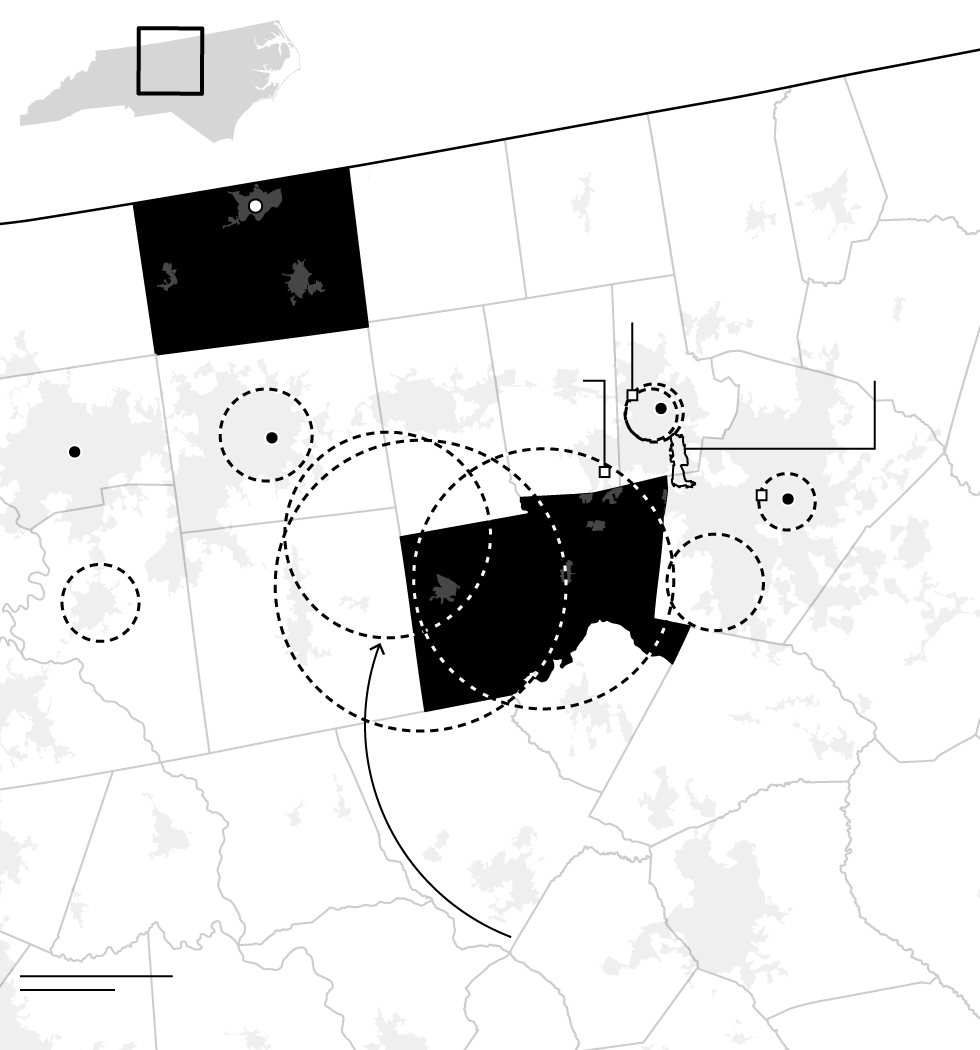
IF YOU WANT TO UNDERSTAND why Chatham County has followed a different economic trajectory, visit Chatham Park in Pittsboro. It’s an emerging suburban colossus that extends for almost 11 square miles. Its 25,000 apartments and houses will one day hold some 70,000 people, almost doubling Chatham County’s population. It will include schools, medical facilities, offices, restaurants and even a swim and pickleball club named Paddles with a $1,500-a-year membership fee. Town houses go for $400,000; custom four-bedroom single-family homes are listed for around $1 million.
In a US plagued by housing and labor shortages, Chatham Park helps the county make its pitch to manufacturers: We have open land for your companies, homes for your employees and every amenity they could want. Senior executives scouting industrial sites “all come here,” says Vanessa Jenkins, executive vice president of Preston Development Co., which markets the project.
Chatham County, NC
Population
Unemployment rate
College degree
2020 presidential election results
Median household income
Jobs announced since 2021

The development is in the fast-growing exurbs of the famed Research Triangle, home to the University of North Carolina’s flagship campus in Chapel Hill, Duke University in Durham and North Carolina State University in Raleigh. In 2021, Apple Inc. announced plans for a 3,000-employee campus in Research Triangle Park, which is packed with tech companies. Alphabet Inc.’s Google is building a hub for as many as a thousand engineers in downtown Durham.
So Chatham’s latest industrial wins are building on the area’s success because of its location and wide-open stretches of vacant former farmland. A 20-minute drive to the south, a Vietnamese car company, VinFast LLC, has announced plans to build a $4 billion EV factory that will create 7,500 jobs. In neighboring Randolph County, Toyota Motor Corp. is building a $3.8 billion battery plant that will employ about 2,000.
But in terms of 21st century ambition, nothing quite matches the Wolfspeed semiconductor plant, which is rising on the peak of a hill next to a long-abandoned dairy farm near Siler City. It will be a vast 2 million square feet, a 24-hour-a-day operation that will produce silicon carbide and turn it into wafers to be made into computer chips at other Wolfspeed factories. “That’s the robot highway,” says Facilities Director Bobby Palmer, pointing across the pit that will house the company’s main production lines.
Wolfspeed already makes 60% of the world’s silicon carbide at its Durham headquarters, a 50-minute drive from Siler City. The new plant will produce 10 times as much, shipping wafers off to plants in upstate New York and possibly Germany, where the company is in negotiations to build a chip factory. During a March visit to Wolfspeed, Biden called the Siler City operation just the kind of investment that will revive US industry. “Where is it written that America can’t lead the world in manufacturing again?” he asked.
The high-tech factory also marks a dizzying break with Siler City’s past. Its biggest employer has long been the decidedly low-wage, low-tech poultry business. “We’re going from one extreme to the other,” says Hank Raper, Siler City’s town manager.
Business leaders and local officials say they’ve prepared long and hard for the arrival of companies like Wolfspeed. They first envisioned the site of the plant, and an additional 1,400 available acres, two decades ago, around the same time Chatham Park was being conceived. The county has invested in its schools and introduced zoning to carve out potential industrial sites that would attract corporate investors.

Like many in the community, Karen Howard, a Democrat who chairs the county’s Board of Commissioners, celebrates that growth. She worries, however, that the arrival of more higher-paying jobs will make it tougher for families still struggling because of rising living costs, especially the lack of affordable housing. To handle the boom, the county will need to recruit hundreds of new teachers. To house them, the school system is negotiating a master lease for homes in Chatham Park, so it can rent them out at a subsidized rate.
Howard says these struggles should be a bigger part of the national conversation about the economy. The focus on manufacturing still leaves behind people in many other parts of the labor market. “For the majority of people in the middle class, those financial struggles are real,” she says. “There’s nothing on the horizon that’s going to suddenly make them better.”
In other words, Chatham County may be a winner in the battle for manufacturing jobs. But for all its good fortune, it remains far from solving all of the economic riddles confronting America’s middle class.