Carbon Capture Needs Enough Pipelines to Circle Earth Four Times
The US goal to cut carbon dioxide hinges on transporting and burying more than a billion tons per year.
The world inked a historic pact at COP28 climate talks this week to move away from using fossil fuels. But it also endorsed a key technology that could give them a lifeline: carbon capture and storage. And the US is set to be the most important proving ground for capturing the greenhouse gas and the sprawling network of infrastructure needed for it to work.
The rest of the world will be watching. More than $83 billion in investments have poured into CCS over the past three decades, according to BloombergNEF. Now, the US is making a new massive bet on carbon capture and storage and the country will be a test case for technology’s success — or failure. If capturing carbon is going to be part of the world's arsenal to fight global warming, it has to work in the US.
The challenge starts with actually capturing the carbon dioxide. One of the primary ways to do it is to equip power plants and factories with systems to catch the emissions. The technology, which isn't economical yet in most scenarios — is only in use at a handful of sites.
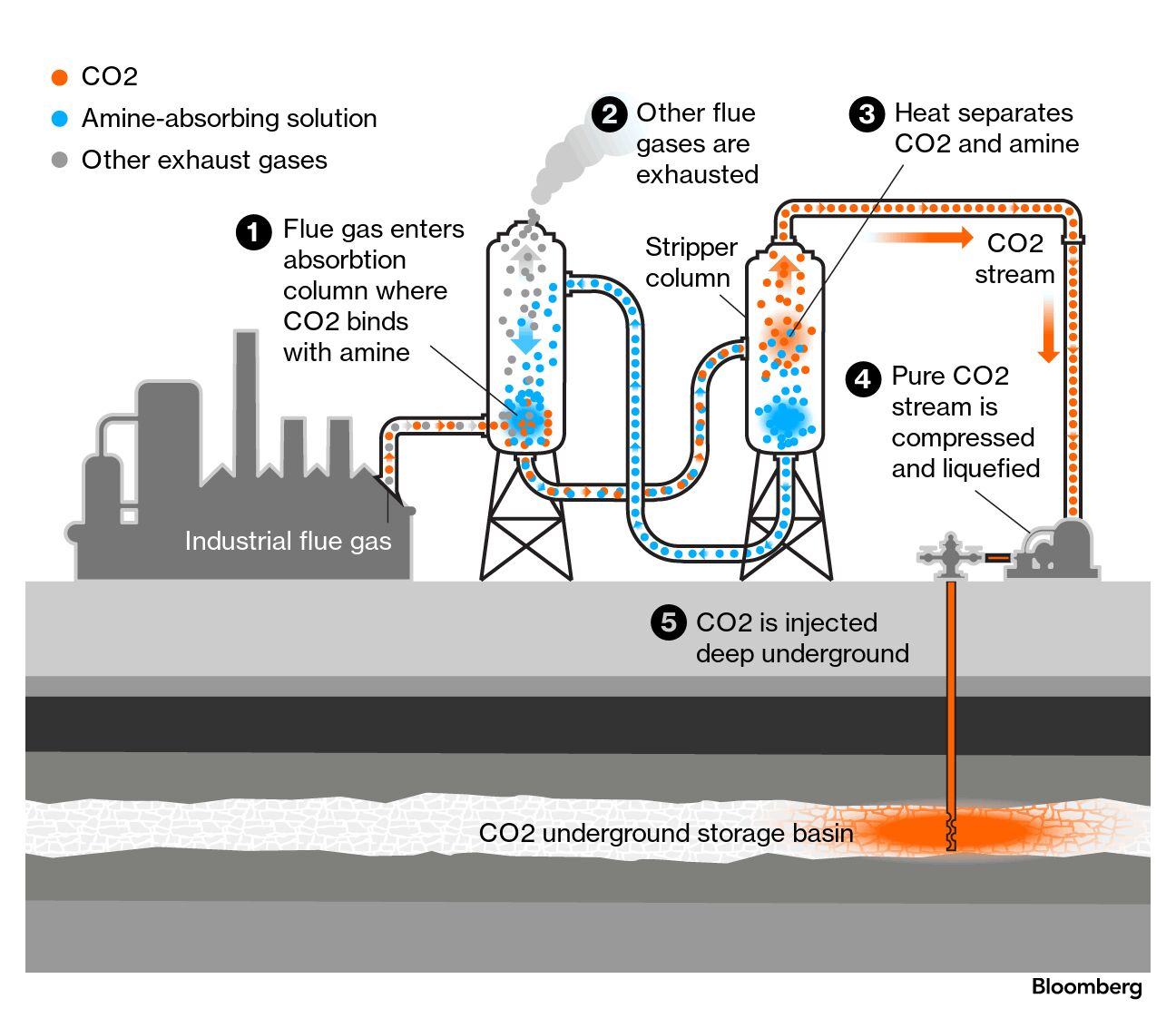
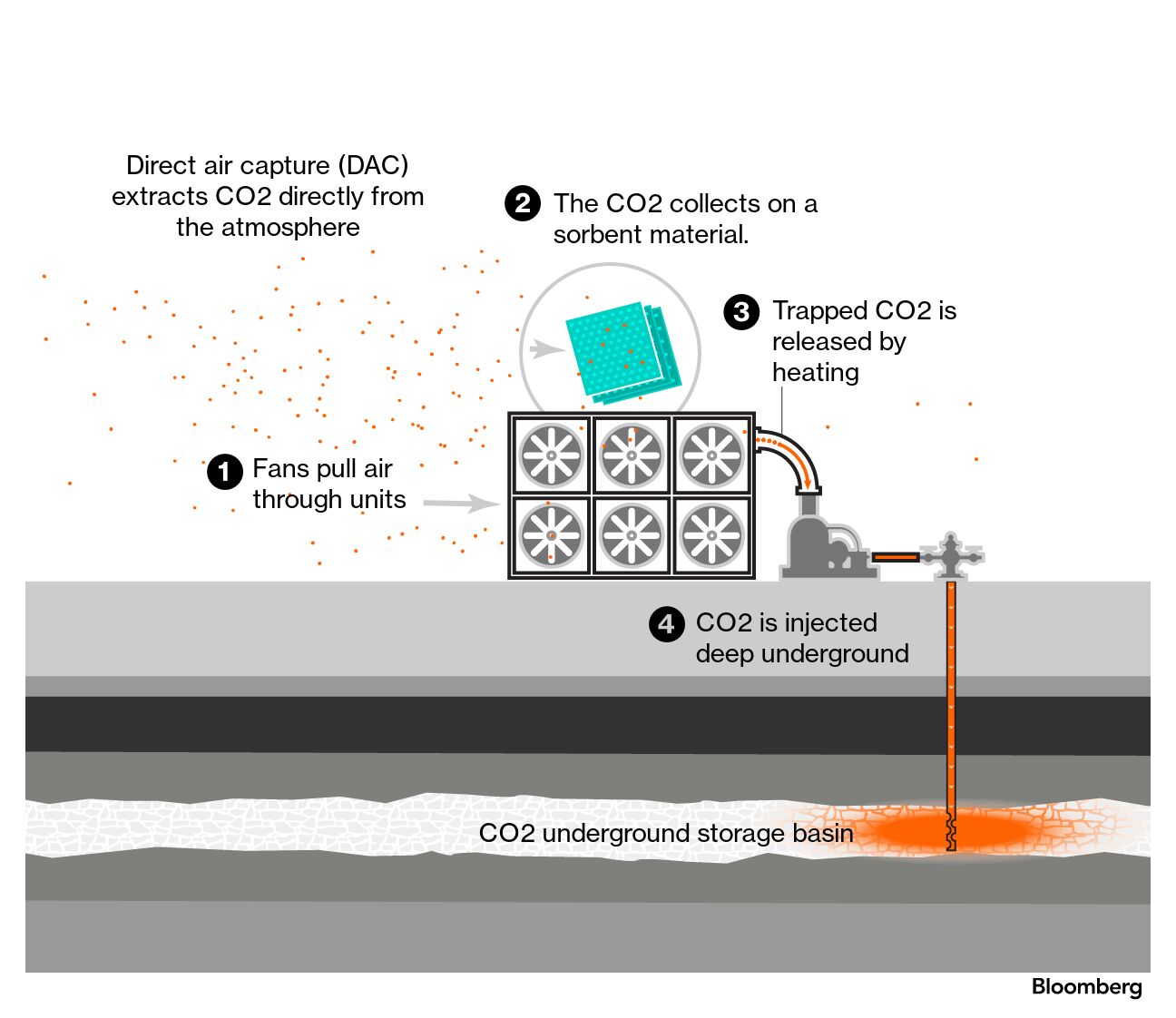
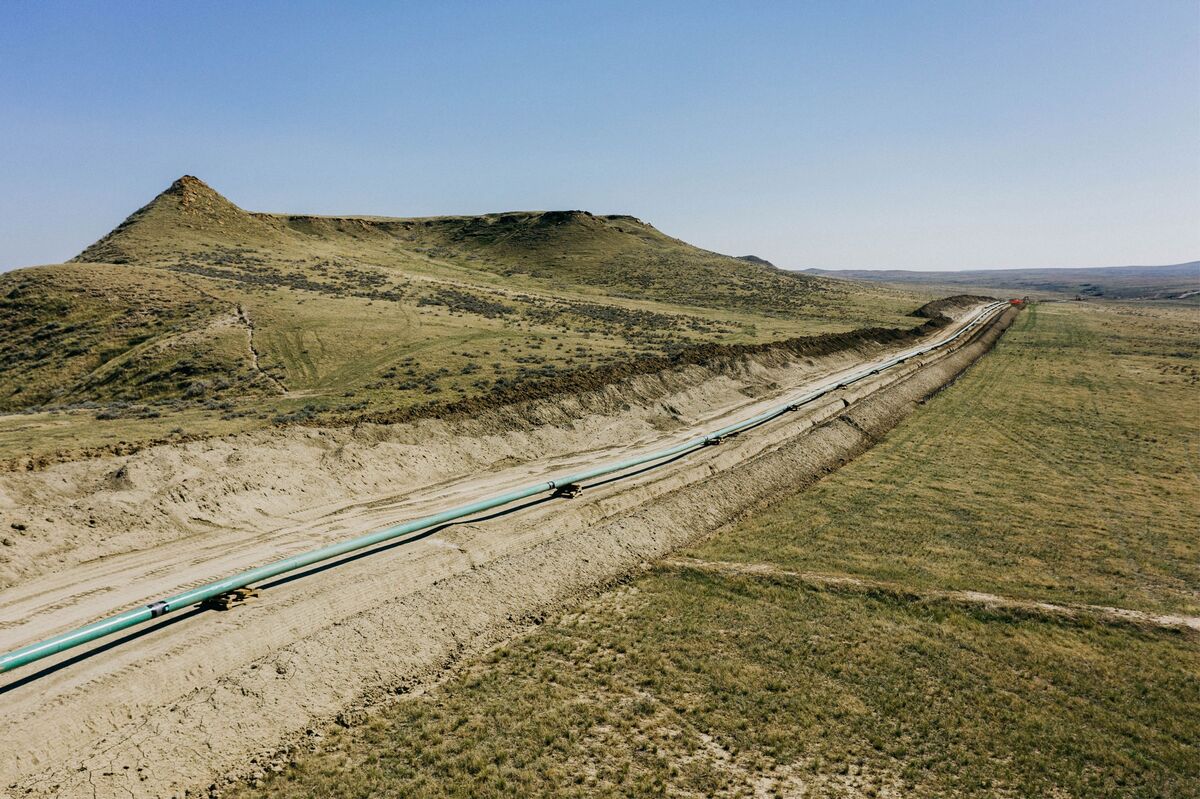
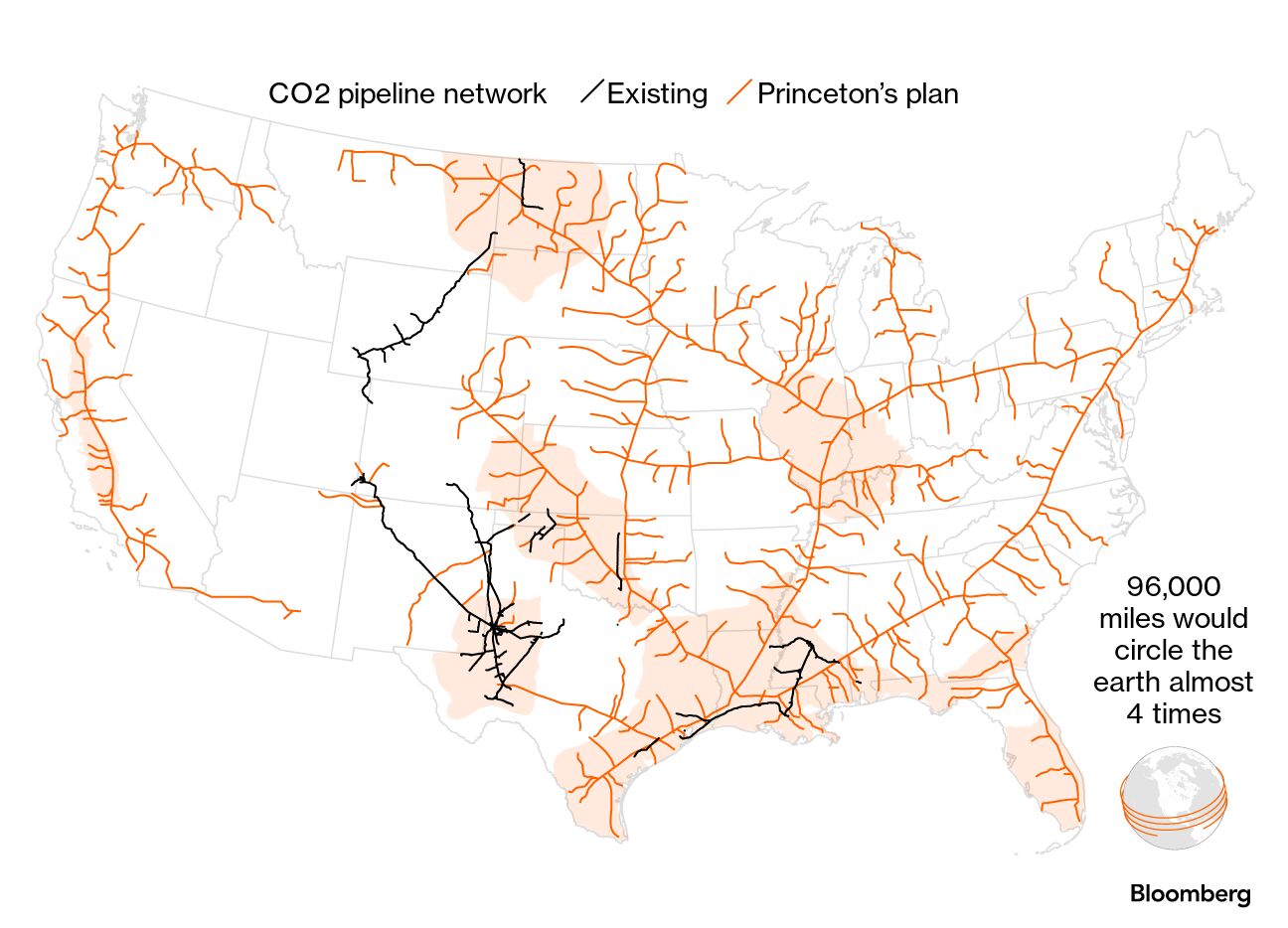
But it’s not enough to capture carbon. It will also need to be stored somewhere — often in locations far from where it’s trapped. The network needed to handle CO2 captured from power plants or sucked directly from the atmosphere in the US would be staggering in scope, requiring as many as 96,000 miles of new pipelines, according to an Energy Department estimate. That's enough to encircle the Earth four times.
Storing the amount of CO2 captured annually would require a cavern 1,700-foot deep, with a footprint as big as New York’s Central Park.
Building all the infrastructure needed would cost as much as $230 billion, according to a Princeton University Andlinger Center for Energy and the Environment analysis.
Biden’s signature climate law, the Inflation Reduction Act, contains billions of dollars in incentives for carbon capture. That includes increasing a tax credit for power plants and other polluters who capture and store their carbon from $50 to $80 a ton. Those incentives climb even higher for carbon stored from direct air capture, a nascent technology to grab CO2 from the ambient air.
Limited pipeline infrastructure could prove to be a bottleneck, though. Banking on CCS could also end up extending the life of fossil fuels while slowing the transition to renewable energy.
“I don't believe it’s anywhere near practical to a scale in a timeframe that matters,” said Kert Davies, a director with the accountability-focused nonprofit Center for Climate Integrity, calling it a “get out of jail free card” for the fossil fuel industry. “We need a different plan.”
While critics say the incentive hands a lifeline to uneconomic coal plants, supporters say the funding is needed to help meet the Biden administration’s ambitious goal of reaching net-zero carbon dioxide emissions by 2050.
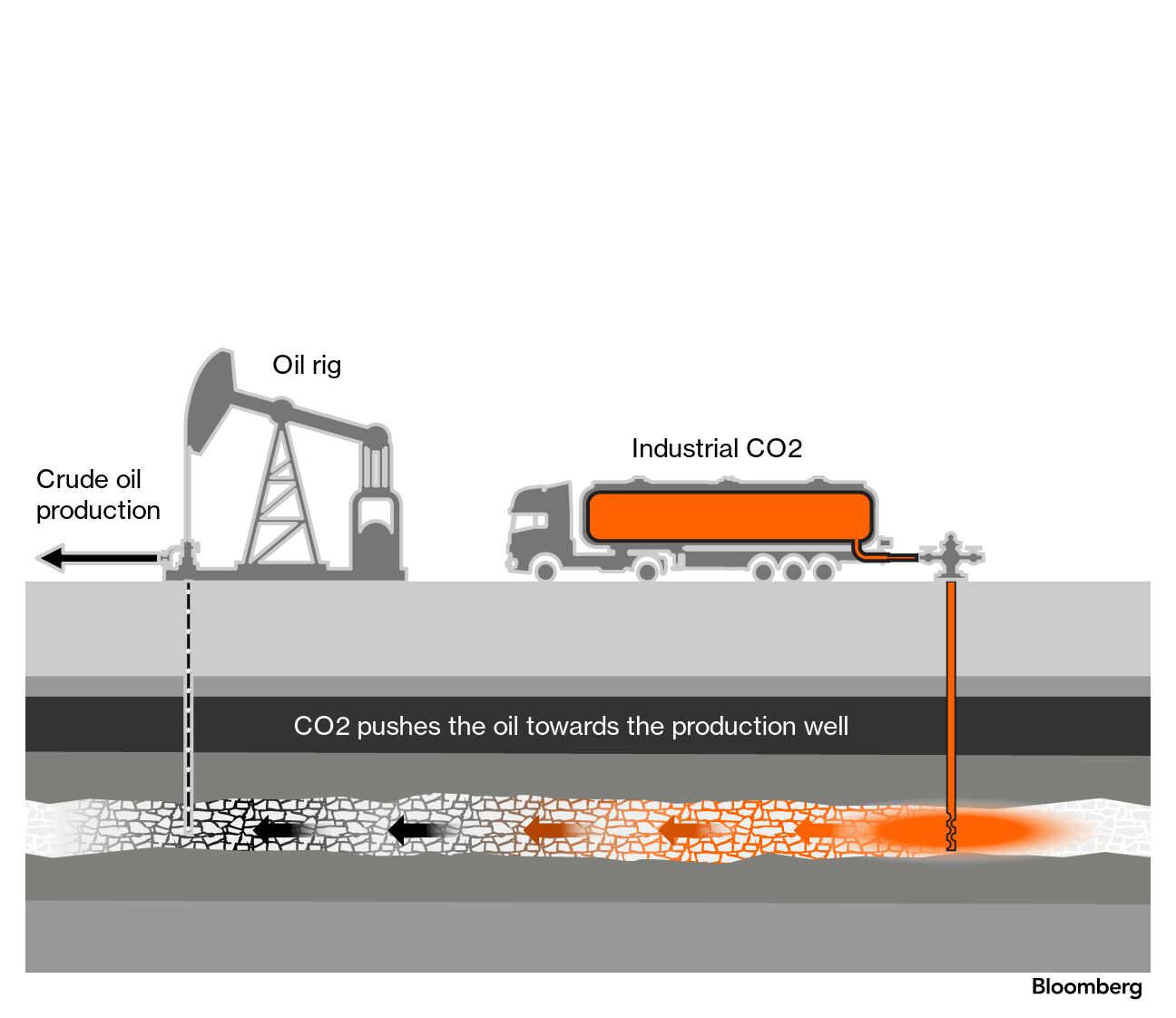
The US currently puts about 80 million tons of CO2 per year back underground, largely to coax more oil from old wells. The Princeton analysis shows that number would need to grow to as much as 1.7 billion tons annually by mid-century.
Much of that CO2 won’t be captured in places suitable for storage. The Princeton analysis shows there are six major areas in the US with geology that’s conducive to storing large amounts of CO2.
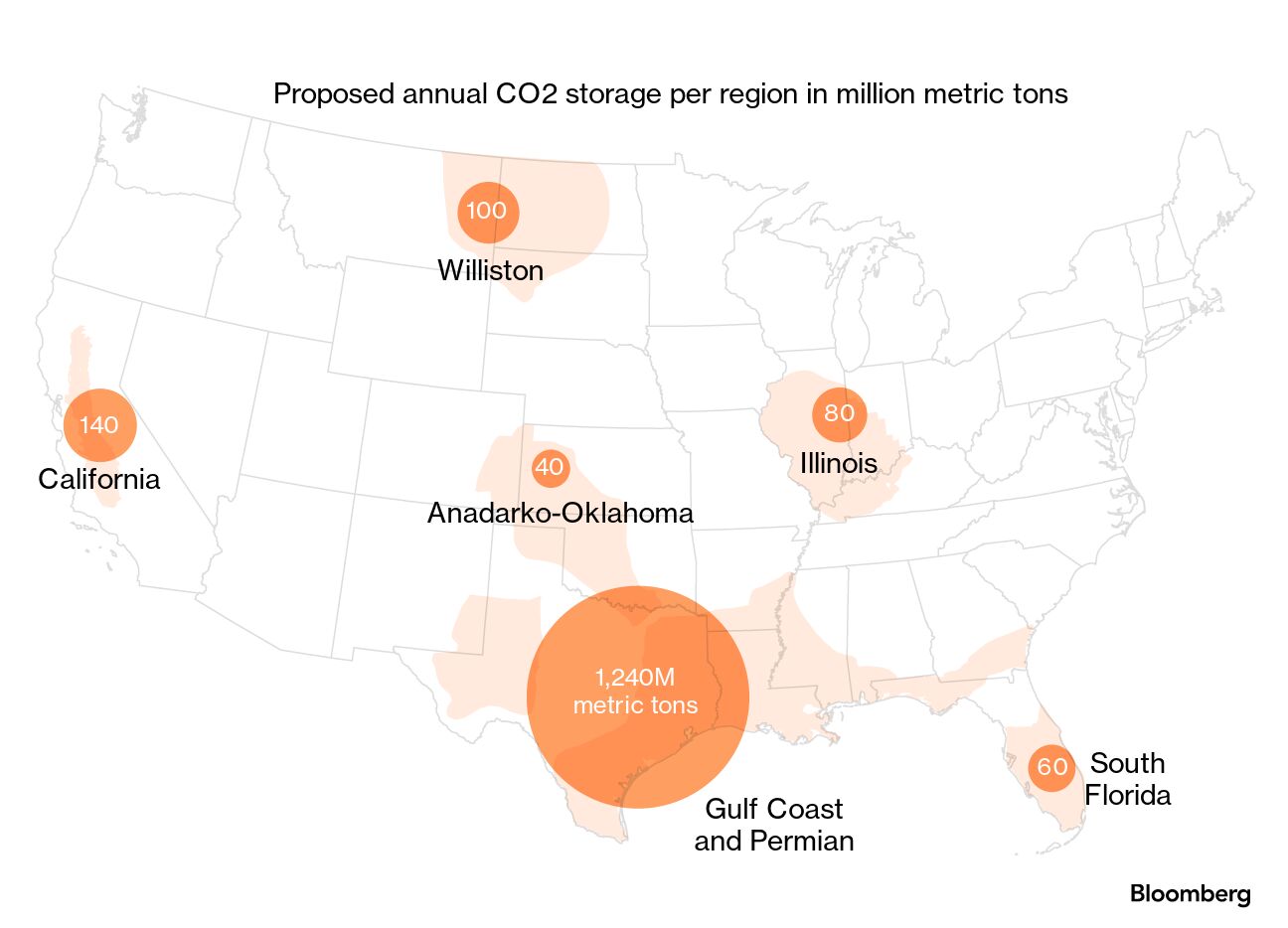
Finding and building specific underground storage sites will be a costly and time-consuming endeavor. Even before a site is constructed, environmental studies and permitting will need to happen. Those could take as long as 8 years, according to the Princeton report, and the total cost could reach some $13 billion by 2035.
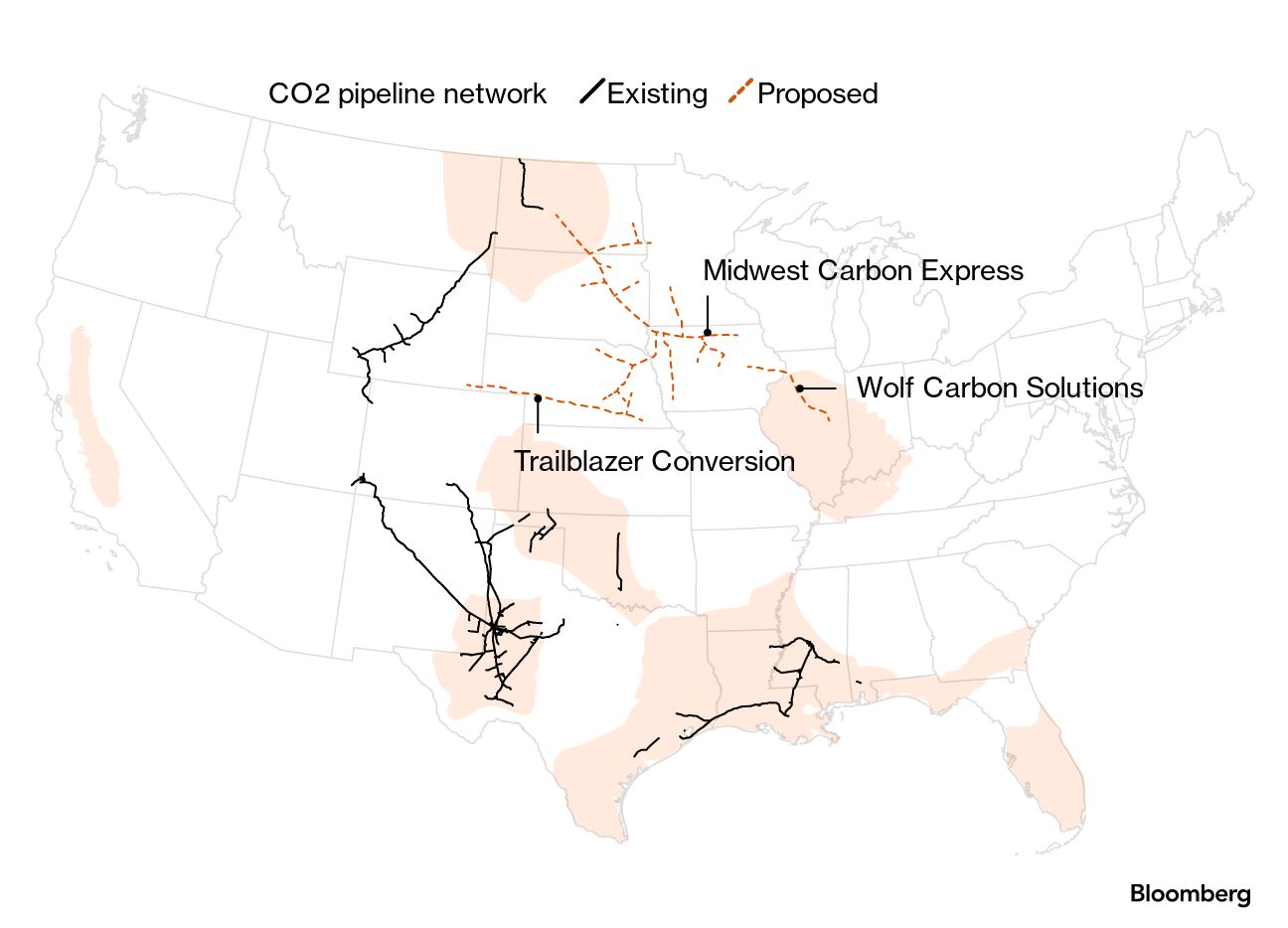
Efforts are already underway to develop the carbon transport system, but so far, they’ve been stymied. Last month, a plan backed by BlackRock Inc. to build a pipeline to ship CO2 captured at ethanol plants in the Midwest was scrapped in the face of opposition from regulators and landowners. Similar projects face fierce pushback in the Midwest and Gulf Coast, providing a reality check for the Biden administration and its goal to get the US on track for net-zero emissions by 2050.
US Leads in Carbon Capture Capacity Worldwide
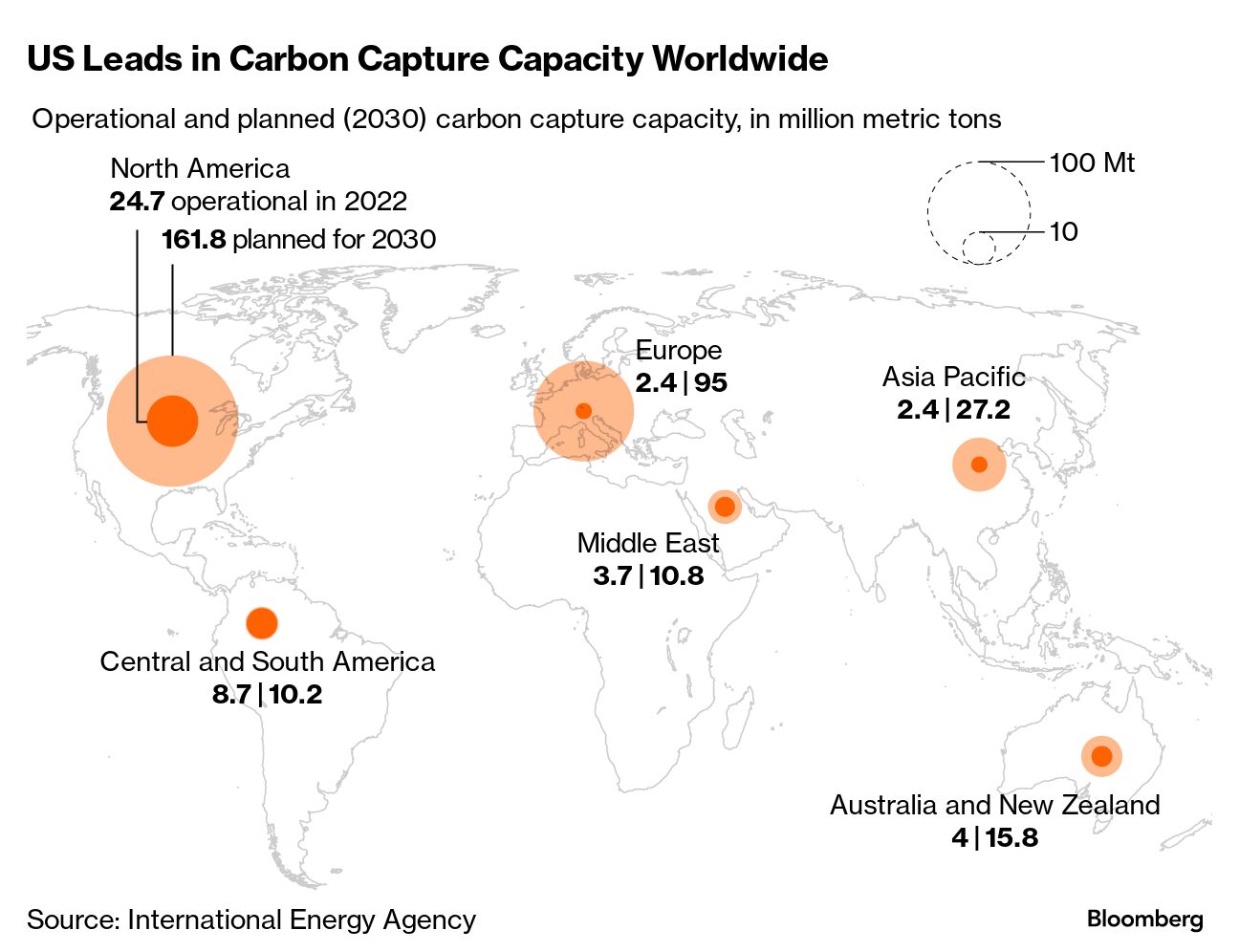
While almost no one wants a pipeline running through their backyard or beloved park, many scientists say that building at least some infrastructure to move and store CO2 is crucial if the US is to meet its climate goal and help stave off the worst impacts of global warming.
Related tickers:
BLK US (BlackRock Inc)