Arizona Is Running Out of Cheap Water. Investors Saw It Coming
The state just moved to restrict housing construction around Phoenix as groundwater demand outstrips supply. But fast-growing towns are already buying water from elsewhere — and investors’ bets are paying off.
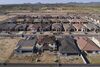
With sand-colored houses overlooking an ornamental lake and a vast pool complex, Harvest in Queen Creek, Arizona, is typical of the developments that have multiplied on the fringes of Phoenix in recent years. The homes abutting the Sonoran Desert start at $400,000 and are being snapped up by young families and retirees even as mortgage rates rise.
Queen Creek was incorporated in 1989 when its population was just over 2,500. Now this town 35 miles southeast of Phoenix has more than 70,000 people, and local leaders had hoped it would double in size again. As of last year it was the seventh-fastest-growing city in the nation, according to the US Census Bureau.

This is the second
article in a
Bloomberg Green
series investigating
how private
investors are
commandeering
public water for
profit
The explosive growth of Queen Creek and suburbs like it in Maricopa, Pinal and Pima counties had rested on the promise that the vast aquifer system beneath them held enough groundwater to keep the pools full for 100 years. That assumption came to an end this month after Arizona officials made a stunning announcement: There’s not enough groundwater to meet projected demand, and new housing construction in the region will be more tightly regulated. A new state report indicates the water supply is about 5 million acre-feet, or 4%, short of what’s needed the next century. It’s enough of a gap to pause development plans and could send home prices higher.
More importantly, it’s challenging the mindset that desert growth can continue without limits in a time when climate change is making everything even drier. “Essentially, we’re overdrawing that bank account of groundwater, and we’re overdrawing the amount in storage,” said Sharon Megdal, the director of the Water Resources Research Center at the University of Arizona.
Many of the US counties that are growing the fastest now also happen to be among the driest, according to an analysis by the Economic Innovation Group, a Washington, DC think tank. That’s projected to continue with Americans flocking to warmer areas, setting up increasingly fraught struggles over a scarce natural resource.
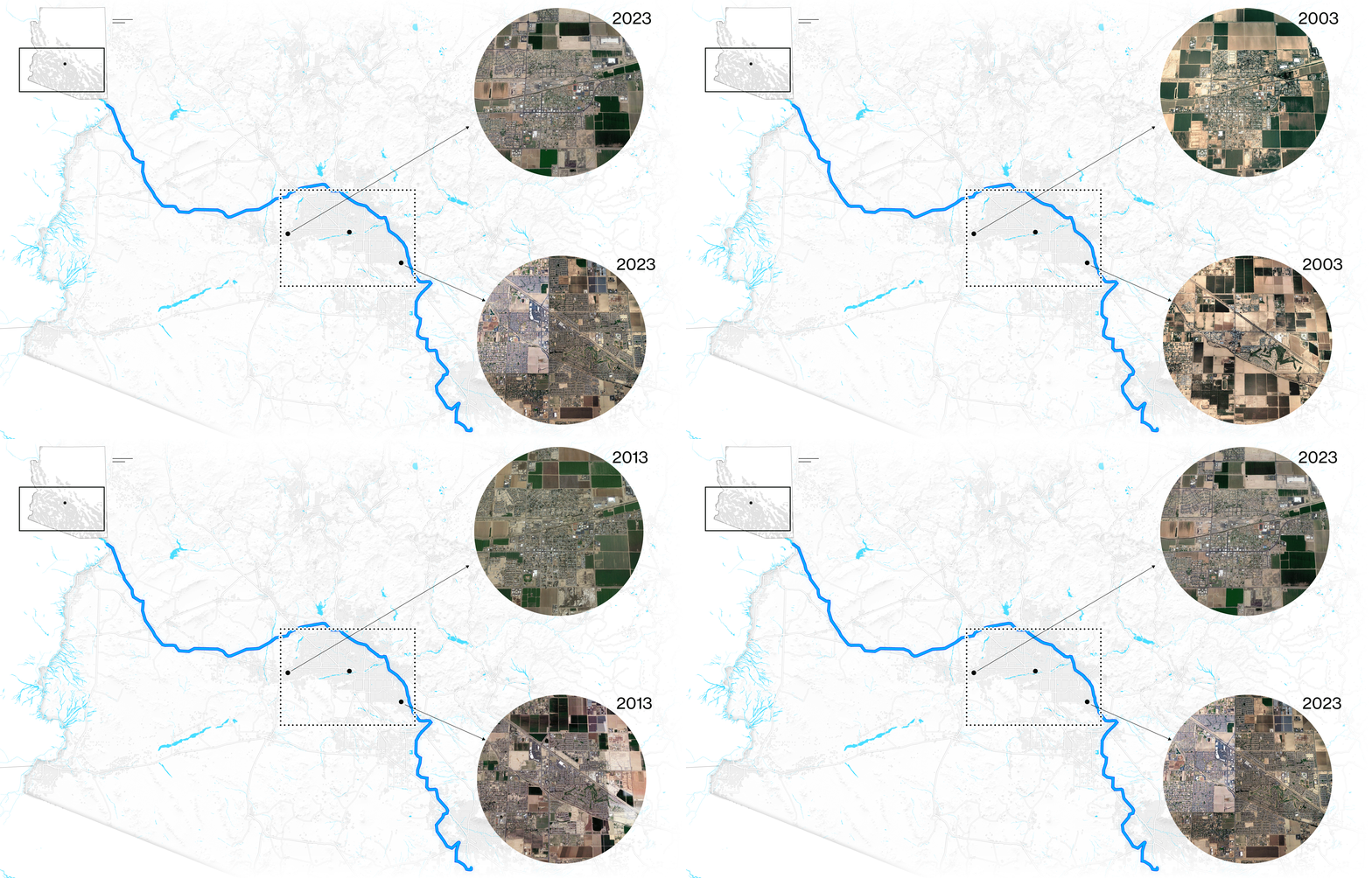
Booming Suburbs vs. Strained Water Supplies
10 mi
Arizona
10 km
Area of detail
Phoenix
Sedona
Aquifers
California
Both Queen Creek and Buckeye
have looked to purchase water
from this basin outside
the Phoenix metro area
Lake Pleasant
Colorado
River
Agua Fria River
Harquahala
Populated
area
Central Arizona Project
Phoenix
Cibola
Salt River
Buckeye
Queen Creek struck
a water deal with a farm
in this small town, about
200 miles away
Queen Creek
Gila River
Suburbs of Phoenix like Queen Creek and
Buckeye previously could grow if they
proved they had enough groundwater to
sustain the new development for 100 years.
Now that is no longer possible and they are
searching outside the region for alternative
water supplies
Yuma
Tucson
Mexico
10 mi
Arizona
10 km
Area of detail
Phoenix
Sedona
Aquifers
California
Both Queen Creek and Buckeye
have looked to purchase water
from this basin outside
the Phoenix metro area
Colorado
River
Lake Pleasant
Harquahala
Populated
area
Central Arizona Project
Phoenix
Cibola
Buckeye
Salt River
Queen Creek struck
a water deal with a farm
in this small town, about
200 miles away
Queen Creek
Gila River
Suburbs of Phoenix like Queen
Creek and Buckeye previously
could grow if they proved they had
enough groundwater to sustain the
new development for 100 years.
Now that is no longer possible and
they are searching outside the region
for alternative water supplies
Yuma
Tucson
Mexico
Sedona
Central Arizona
Project
Lake
Pleasant
Colorado
River
2
Harquahala
Cibola
Phoenix
Buckeye
3
1
Queen
Creek
Gila River
AZ
Aquifers
Phoenix
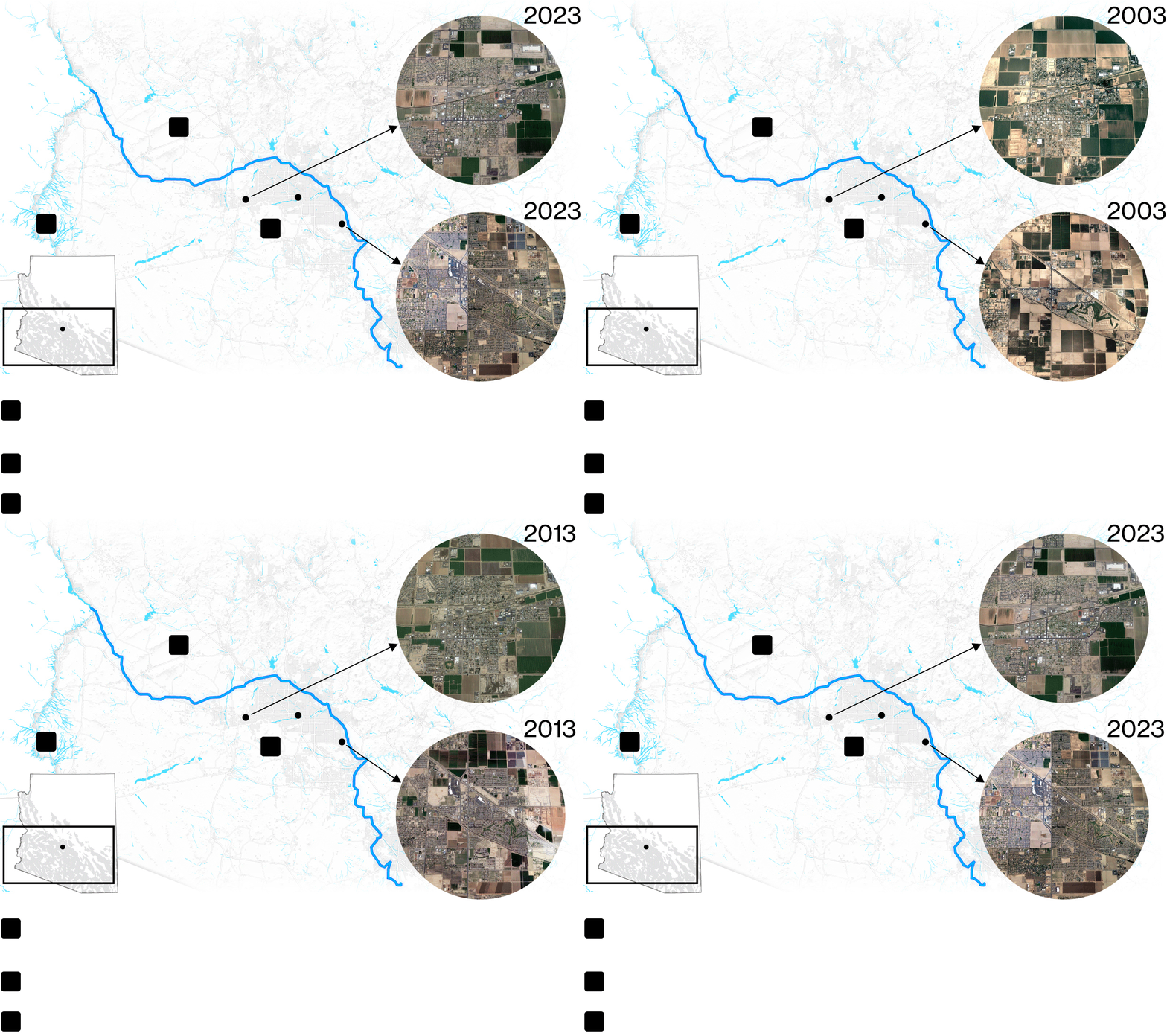
Suburbs of Phoenix like Queen Creek and Buckeye previously could grow if they proved they had enough groundwater to sustain the new development for 100 years. Now that is no longer possible and they are searching outside the region for alternative water supplies
1
Both Queen Creek and Buckeye have looked to purchase water from this basin outside the Phoenix metro area
2
Queen Creek struck a water deal with a farm in this small town, about 200 miles away
3
10 mi
AZ
10 km
Aquifers
Sedona
Phoenix
Both Queen Creek and Buckeye
have looked to purchase water
from this basin outside
the Phoenix metro area
Colorado
River
Lake Pleasant
Harquahala
Central Arizona Project
Phoenix
Cibola
Buckeye
Queen Creek struck
a water deal with a farm
in this small town, about
200 miles away
Queen Creek
Suburbs of Phoenix like
Queen Creek and Buckeye
previously could grow if they
proved they had enough
groundwater to sustain the
new development for 100 years.
Now that is no longer possible
and they are searching outside
the region for alternative
water supplies
Gila River
Yuma
Central Arizona
Project
Sedona
Lake
Pleasant
Colorado
River
2
Harquahala
Phoenix
Cibola
Buckeye
1
3
Queen
Creek
Gila River
AZ
Aquifers
Phoenix
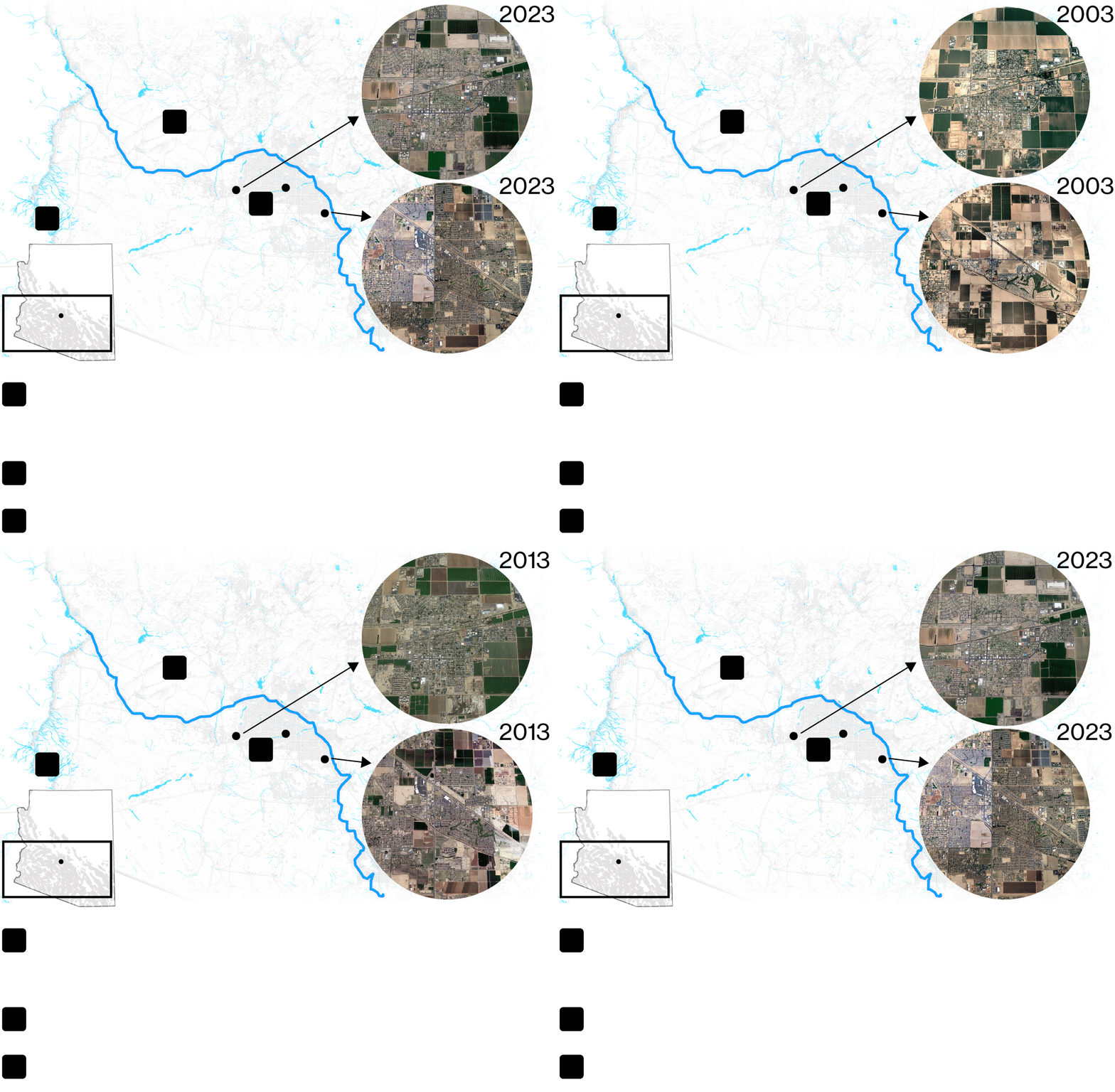
Suburbs of Phoenix like Queen Creek and Buckeye previously could grow if they proved they had enough groundwater to sustain the new development for 100 years. Now that is no longer possible and they are searching outside the region for alternative water supplies
1
Both Queen Creek and Buckeye have looked to purchase water from this basin outside the Phoenix metro area
2
Queen Creek struck a water deal with a farm in this small town, about 200 miles away
3
Central Arizona
Project
2
Colorado
River
Harquahala
Phoenix
3
Buckeye
1
Cibola
Queen
Creek
AZ
Aquifers
Phoenix
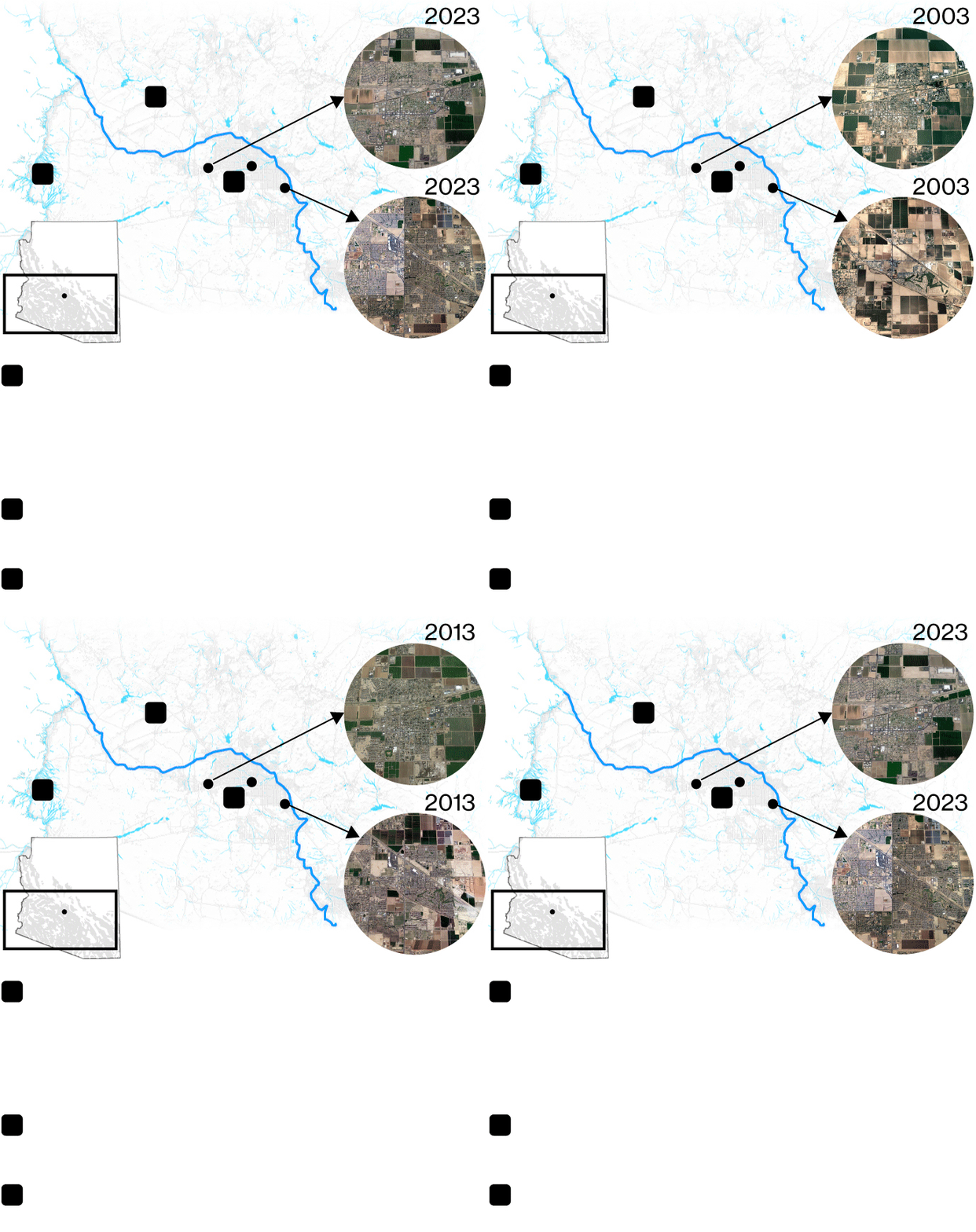
Suburbs of Phoenix like Queen Creek and Buckeye previously could grow if they proved they had enough groundwater to sustain the new development for 100 years. Now that is no longer possible and they are searching outside the region for alternative water supplies
1
Both Queen Creek and Buckeye have looked to purchase water from this basin outside the Phoenix metro area
2
Queen Creek struck a water deal with a farm in this small town, about 200 miles away
3
Arizona is at the leading edge of these water battles. In some places around greater Phoenix, new development that would draw on the aquifer won’t be allowed. Those places include Queen Creek.
But town officials aren’t panicking over the new rule. That’s because Queen Creek has already been diversifying its water portfolio, in a way that was once controversial but now seems prescient. Most towns around Phoenix rely at least in part on local groundwater, some extensively so. Queen Creek’s main plan has been to reduce its dependence by buying water on the free market, shifting supplies from farms or less populous water districts far away.
Back in 2018, anticipating drier times ahead, the town paid $21 million to a farm on the Colorado River, 200 miles away, to transfer some of its water rights in perpetuity. The deal met with howls from people who saw it as rewarding “drought profiteers.” The farm had been purchased for only $9 million in 2013 by Greenstone, a water-investment firm owned by Massachusetts Mutual Life Insurance Co., allowing an investor to realize an extraordinary return.
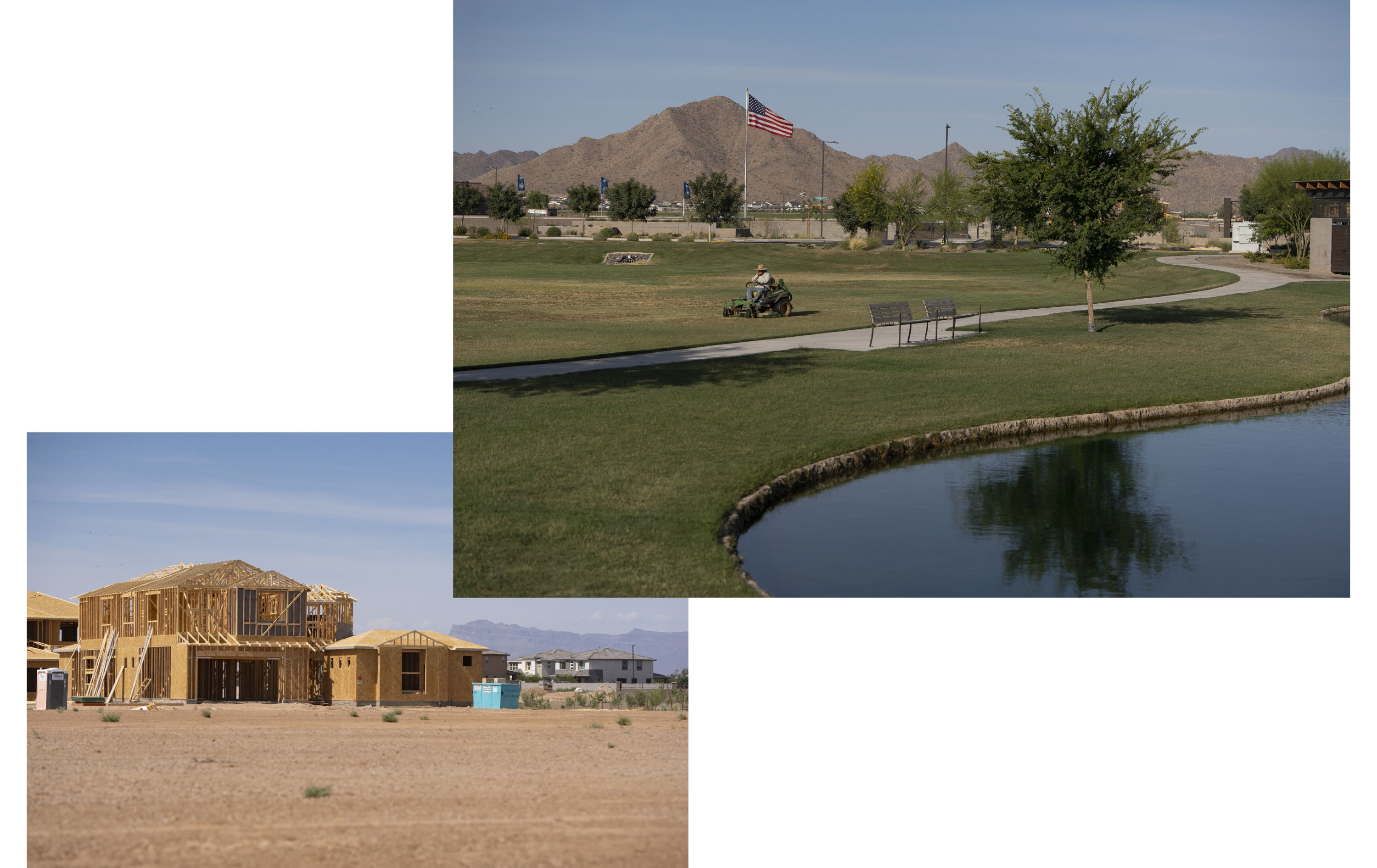
A man mows the grass by the lake in the Grange Park at Harvest in Queen Creek. ▶
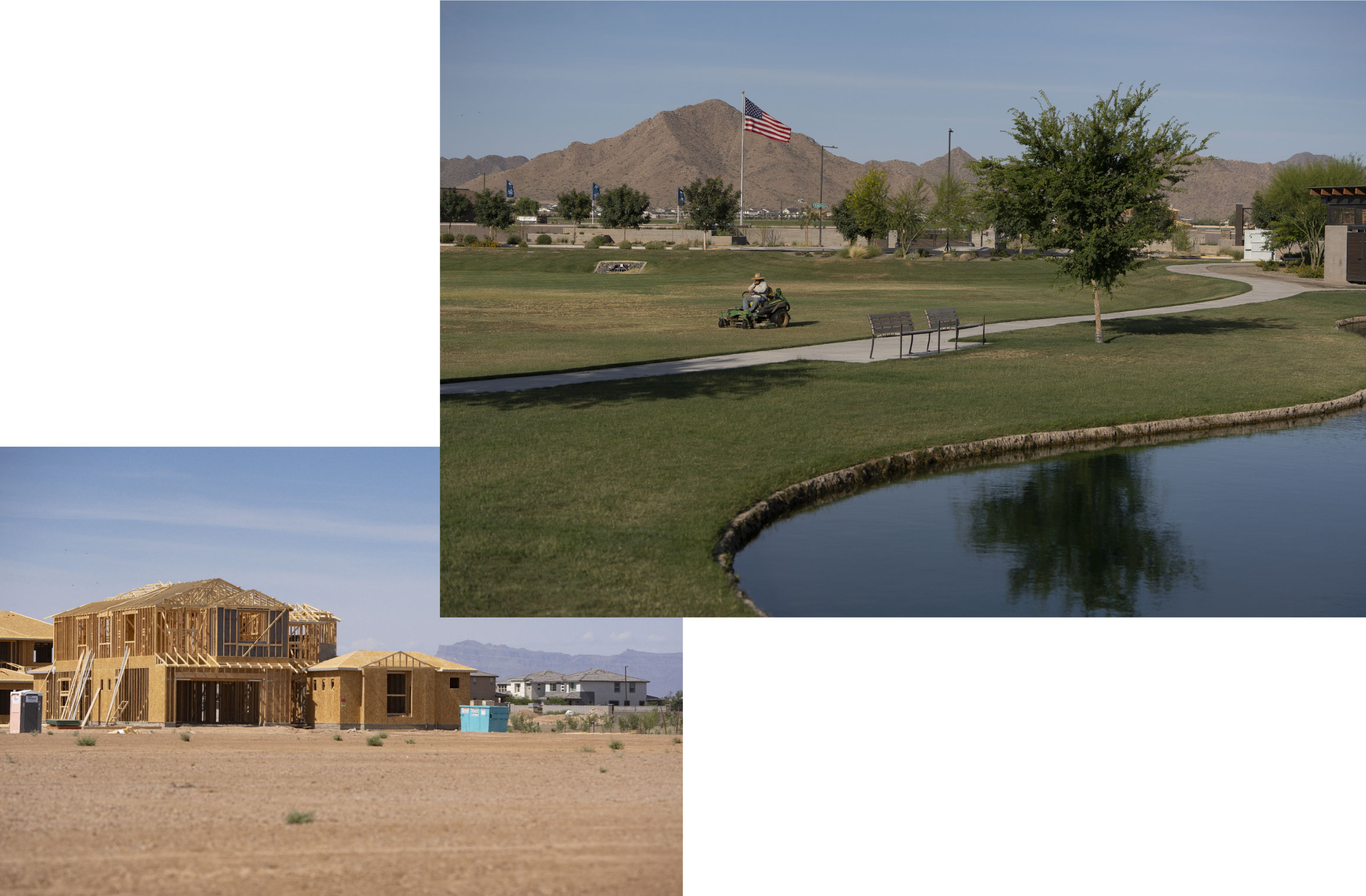
◀ Homes under construction in the Harvest development.
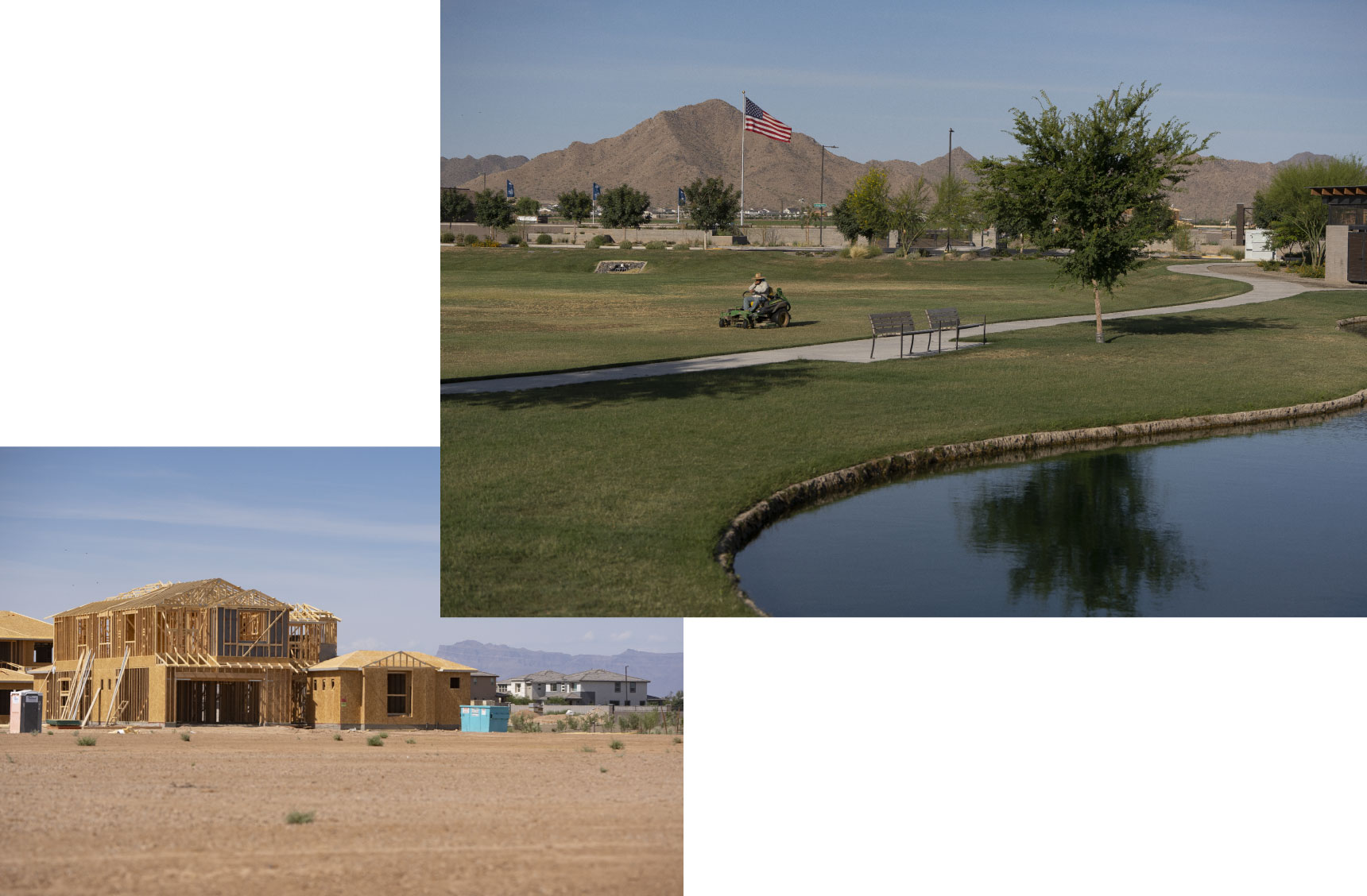
A man mows the grass by the lake in the Grange Park at Harvest in Queen Creek. ▶
◀ Homes under construction in the Harvest development.
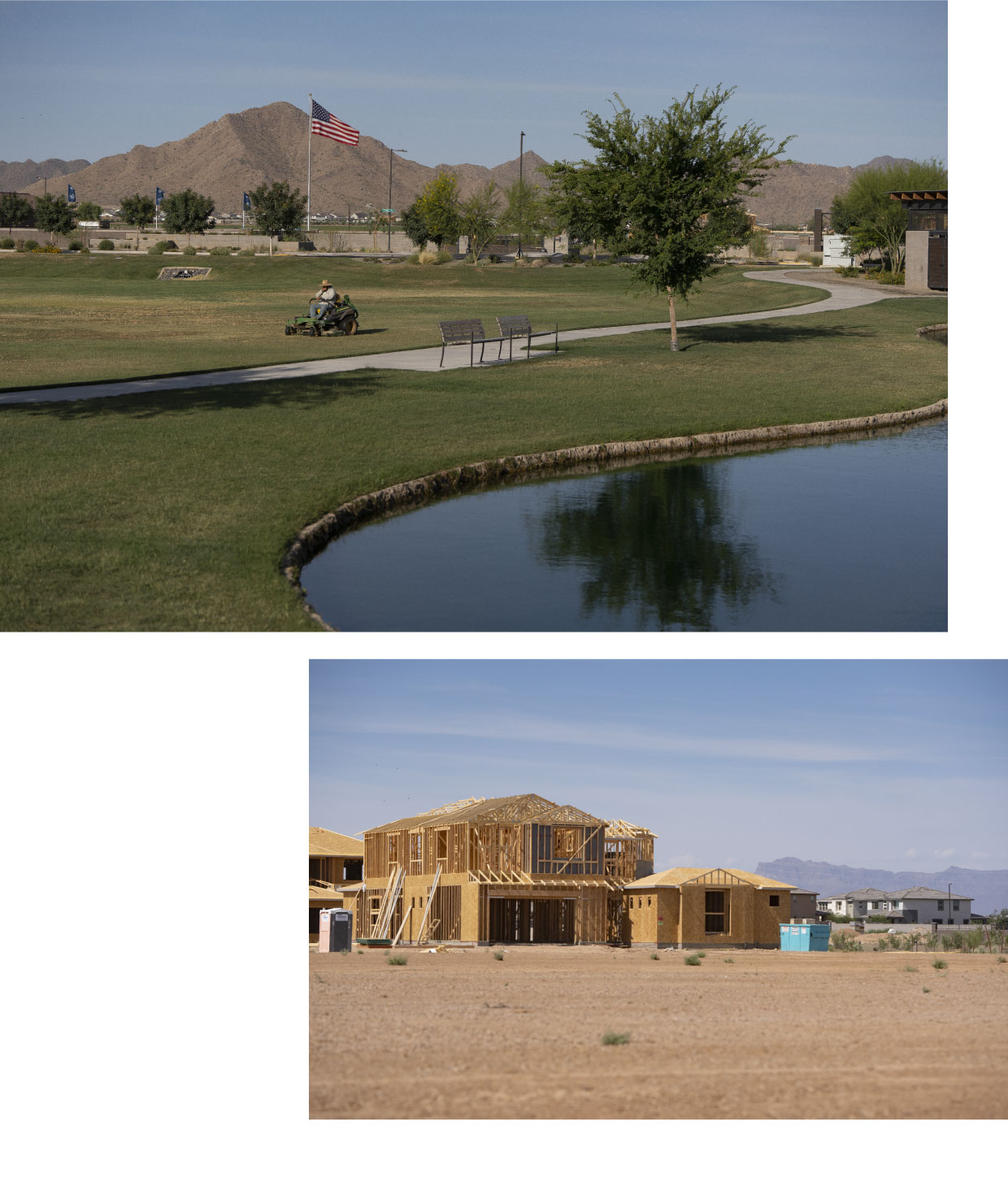
▲ A man mows the grass by the lake in the Grange Park at Harvest in Queen Creek.
▲ Homes under construction in the Harvest development.
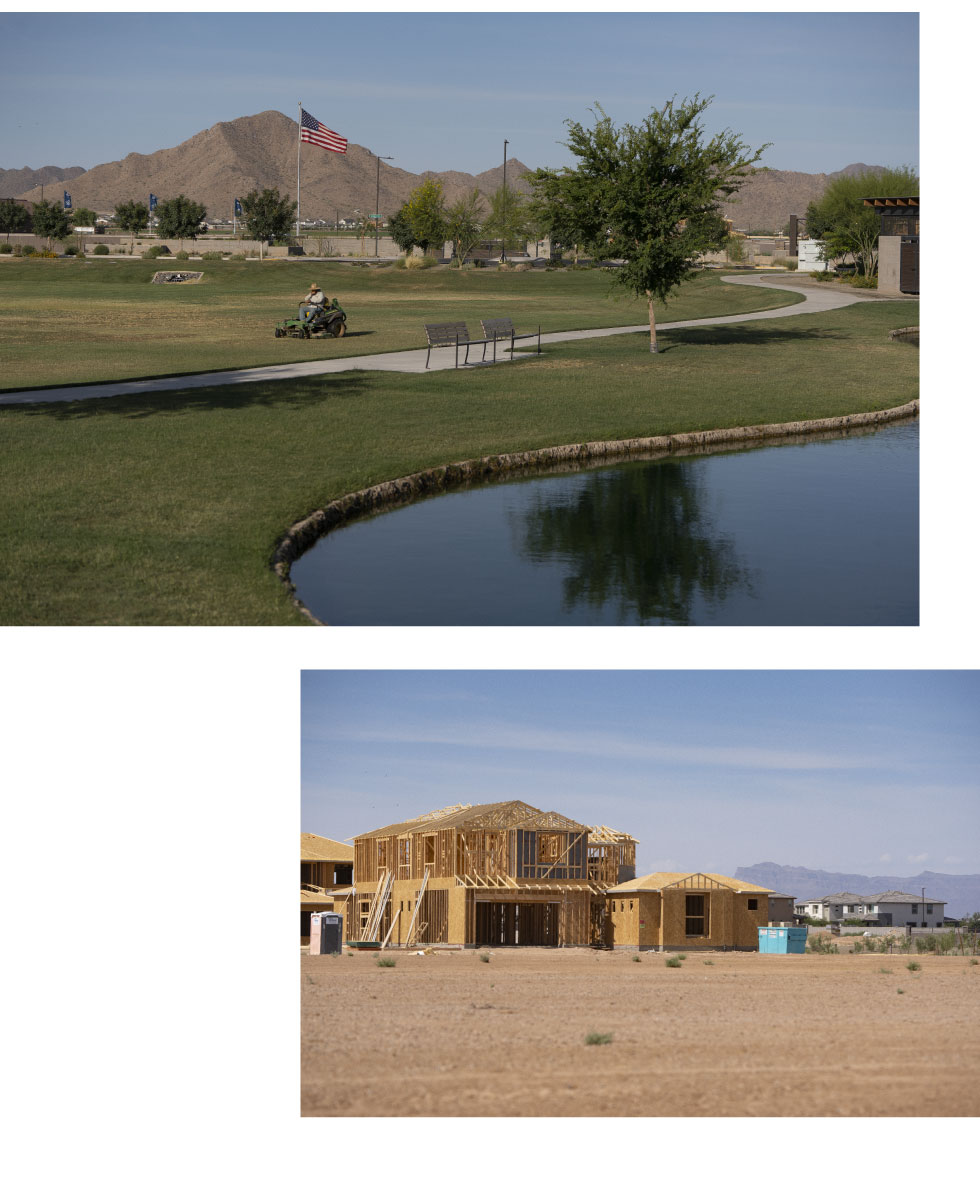
▲ A man mows the grass by the lake in the Grange Park at Harvest in Queen Creek.
▲ Homes under construction in the Harvest development.
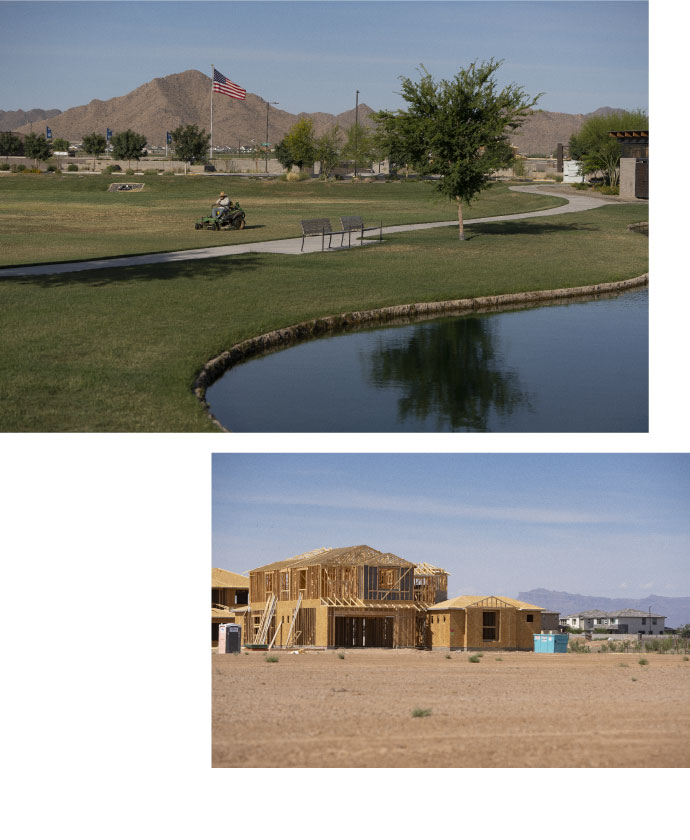
▲ A man mows the grass by the lake in the Grange Park at Harvest in Queen Creek.
▲ Homes under construction in the Harvest development.
A man mows the grass by the lake in The Grange Park at Harvest in Queen Creek. ▶
◀ Homes under construction in the Harvest development.
Fearing that water speculation would suddenly sap agricultural areas — water rights had been passed from farm to farm along the river for years, but never far away — three rural counties sued the federal government to block the transfer. But in April a judge let the deal go through while the lawsuit plays out, and the river water is expected to arrive in Queen Creek, via the Central Arizona Project canal, as soon as July.
Banks, pension funds and insurers have been turning California’s scarce water into enormous profits, leaving people with less to drink
“We are pioneering a new system,” Queen Creek’s utilities and water director Paul Gardner told Bloomberg Green earlier this year, even before the state made its dramatic groundwater announcement. He described the town as leading the way toward a more rational model in which more of Arizona’s water flows from agriculture to homes. Currently, more than 70% of water consumed in the state is used for farming.
Opponents predict dark outcomes: namely, that prices will rise dramatically with competition and as a result more and more farmers will sell out, leaving the rural communities high and dry. Holly Irwin is a supervisor for La Paz County, where the farm that sold to Queen Creek is located. “I am worried about everyone transferring water that has water rights,” she said, “and there will be nothing left for river communities.” La Paz is one of three counties that sued to stop the water sale.

Gardner doesn’t deny that there will be winners and losers in the coming scramble for water. Suburbs like his will be able to grow only if they can buy enough outside supplies. As more towns follow in Queen Creek’s footsteps, he says, “The costs are going to be astronomical.”
Gardner adds, “We don’t know the limit to the price of water yet. But we are about to find out.”
In the beginning, there was organized water crime. As Phoenix’s growth went into overdrive in the 1960s and 1970s, mobsters made millions selling Easterners land that turned out to be bare patches of desert. So in 1980 Arizona passed a law requiring that developers prove a 100-year “assured supply” of water before anyone could get a permit to build.
To prevent depletion of the precious and finite resource, in 1993 the state created the Central Arizona Groundwater Management Replenishment District (CAGRD). Communities would pay to pump water and in return the agency would replenish what they took out with water from the Colorado or other rivers.
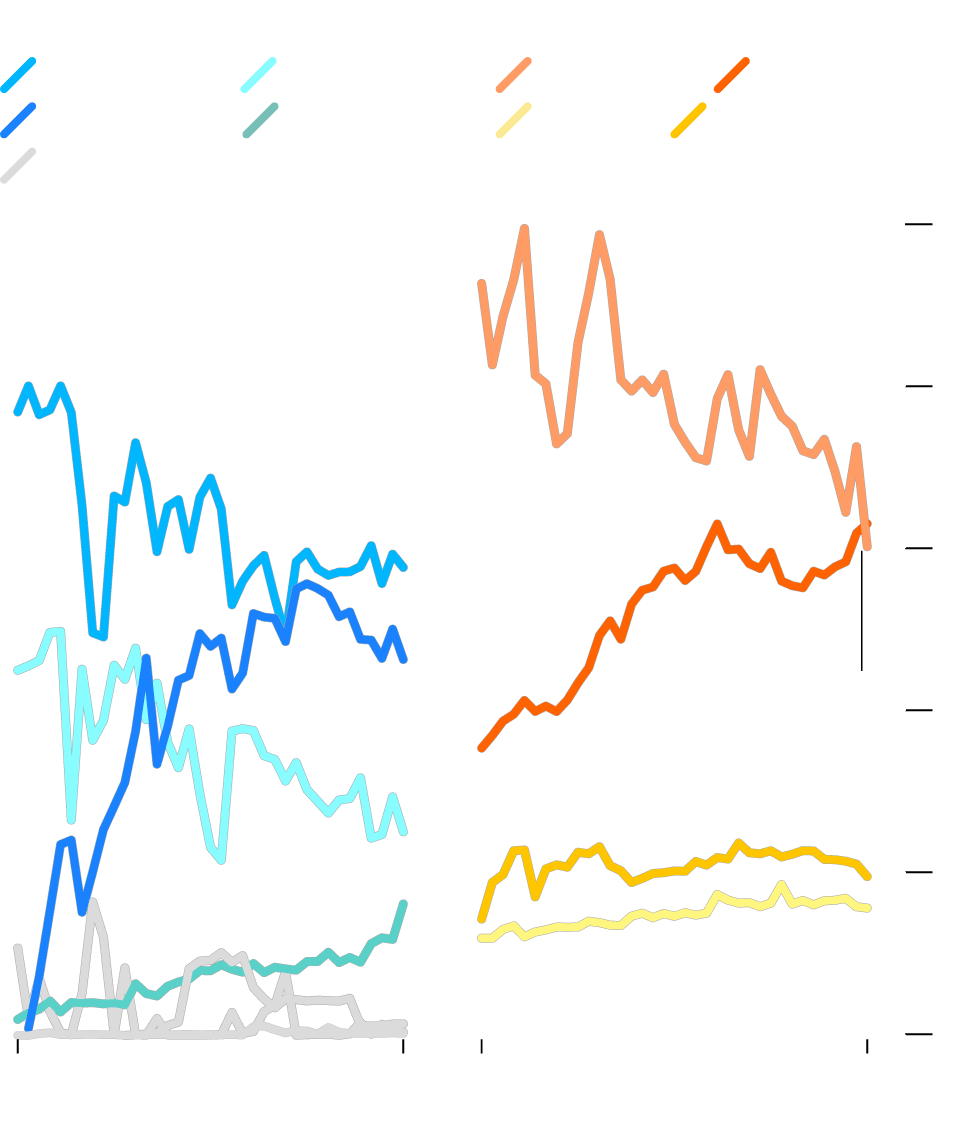
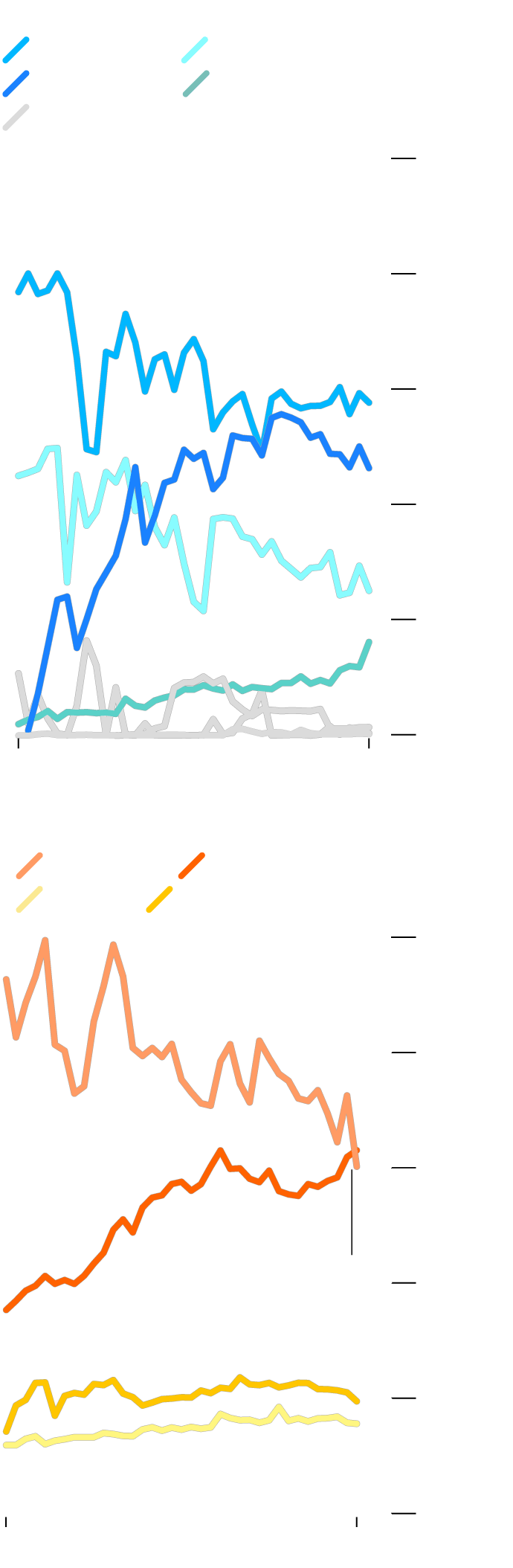
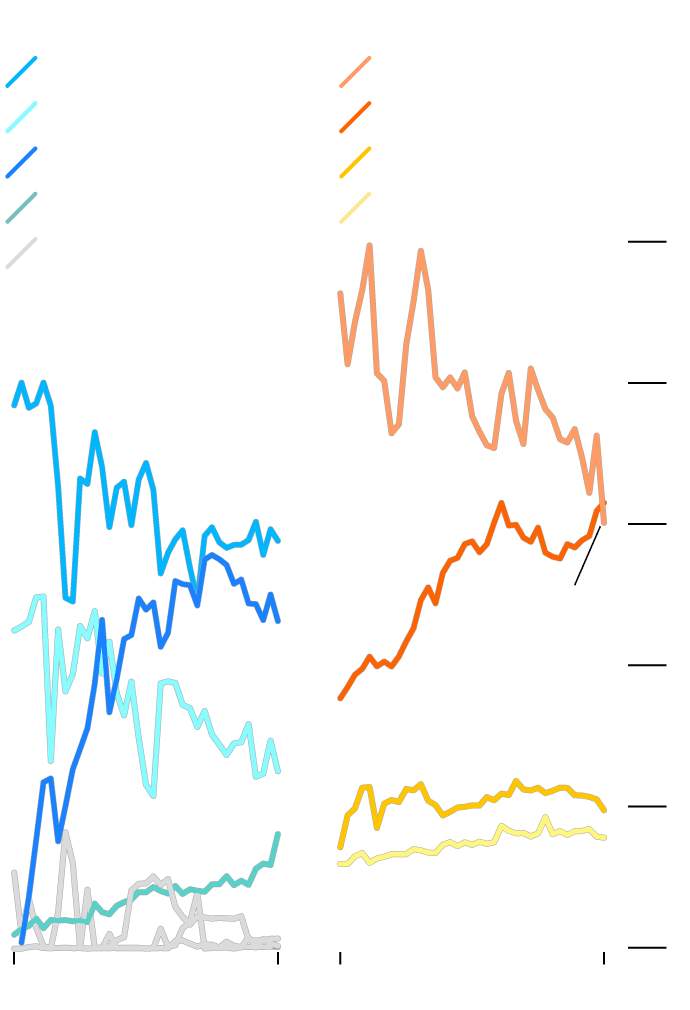
Where Arizona Gets Water and How It Uses It Is Changing
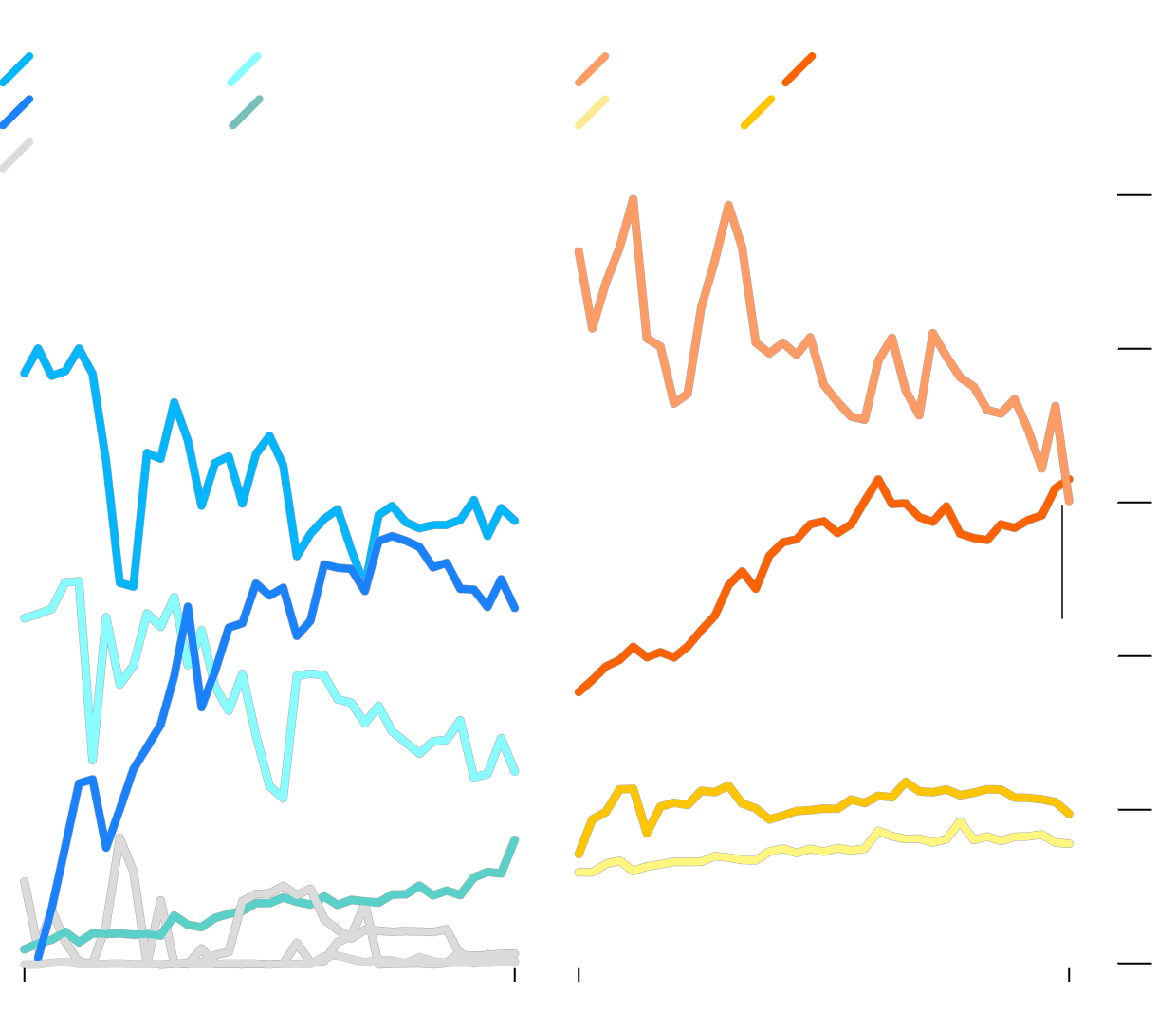
Sources of Water
Consumption by Sector
Groundwater
Surface water
Agricultural
Municipal
Colorado River
Effluent water
Industrial
Tribal land
Acre-feet
Other
2.5M
2.0
1.5
1.0
Municipal demand
for water first
surpassed agricultural
demand in 2021
0.5
0
0
1985
2021
1985
2021
Sources of Water
Consumption by Sector
Groundwater
Surface water
Agricultural
Municipal
Colorado River
Industrial
Tribal land
Effluent water
Other
Acre-feet
2.5M
2.0
1.5
1.0
Municipal demand
for water first
surpassed agricultural
demand in 2021
0.5
0
0
1985
2021
1985
2021
Sources of Water
Groundwater
Surface water
Colorado River
Effluent water
Acre-feet
Other
2.5M
2.0
1.5
1.0
0.5
0
0
1985
2021
Consumption by Sector
Agricultural
Municipal
Acre-feet
Industrial
Tribal land
2.5M
2.0
1.5
1.0
Municipal demand
for water first
surpassed agricultural
demand in 2021
0.5
0
1985
2021
Sources of Water
Consumption by Sector
Groundwater
Agricultural
Surface water
Municipal
Colorado River
Tribal land
Effluent water
Industrial
2.5M
Other
2.0
1.5
Municipal
demand
for water first
surpassed agricultural
demand in 2021
1.0
0.5
0
0
1985
2021
1985
2021
Back then this seemed easy: There were less than a million people in Phoenix, and Colorado River water was “abundant,” as CAGRD officials wrote at the time. Official projections described the chance of a shortage in the next 20 years as “virtually non-existent.”
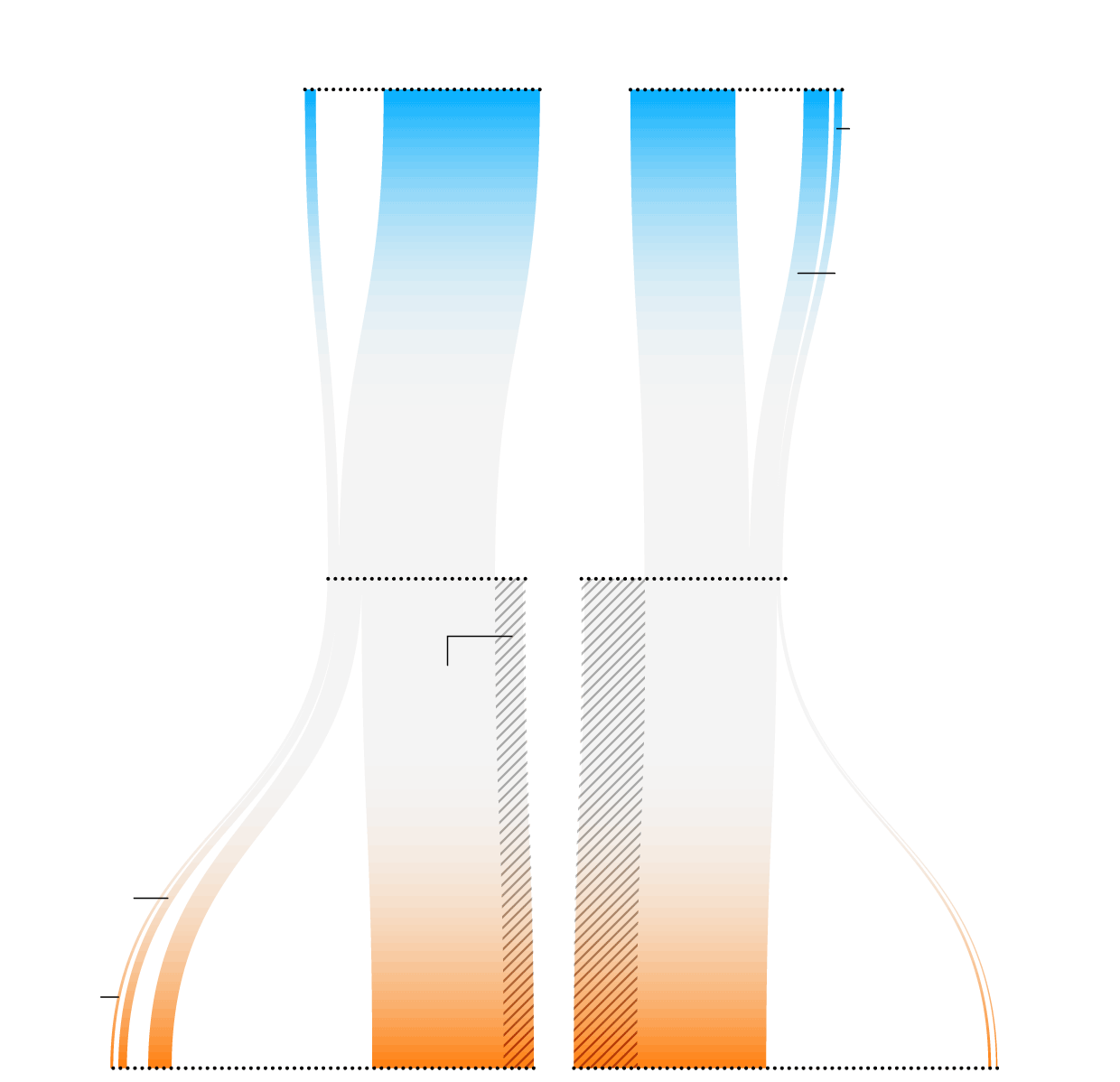
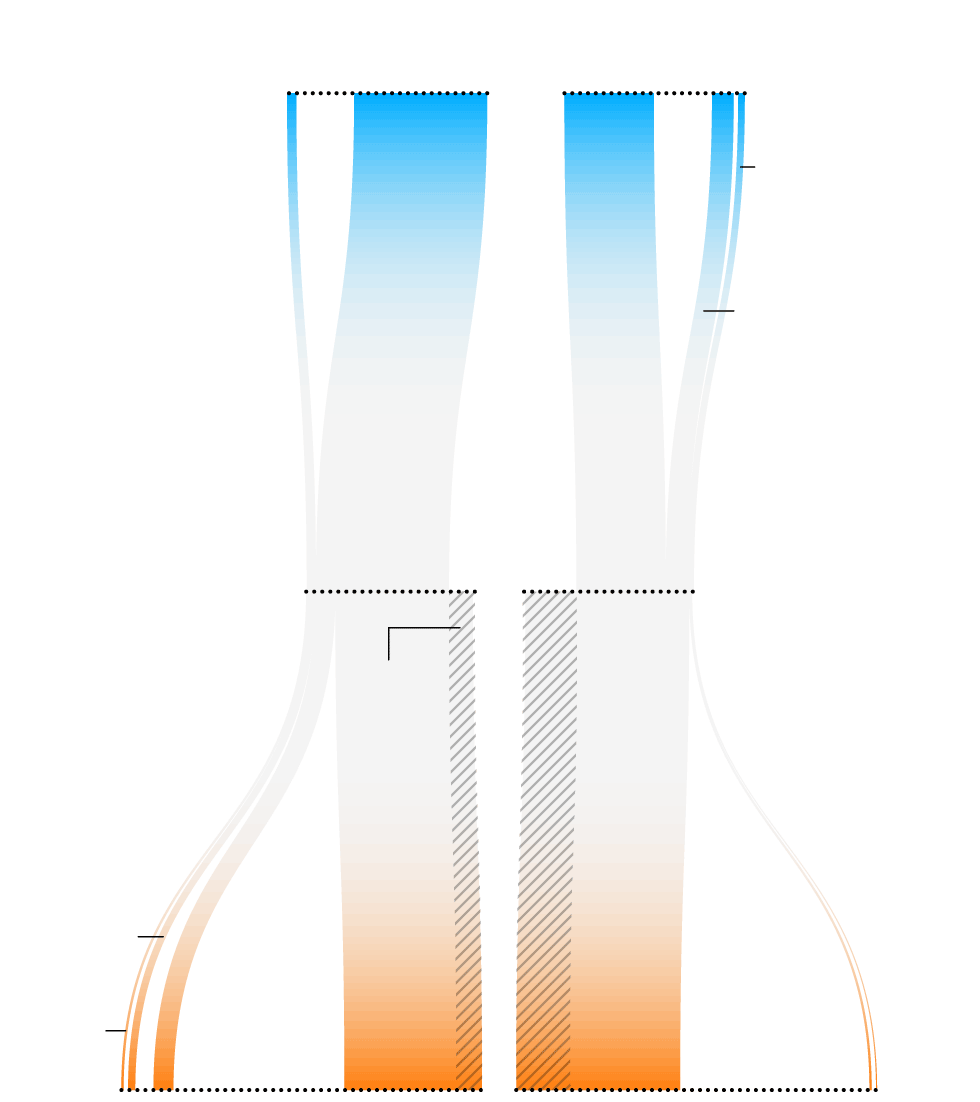
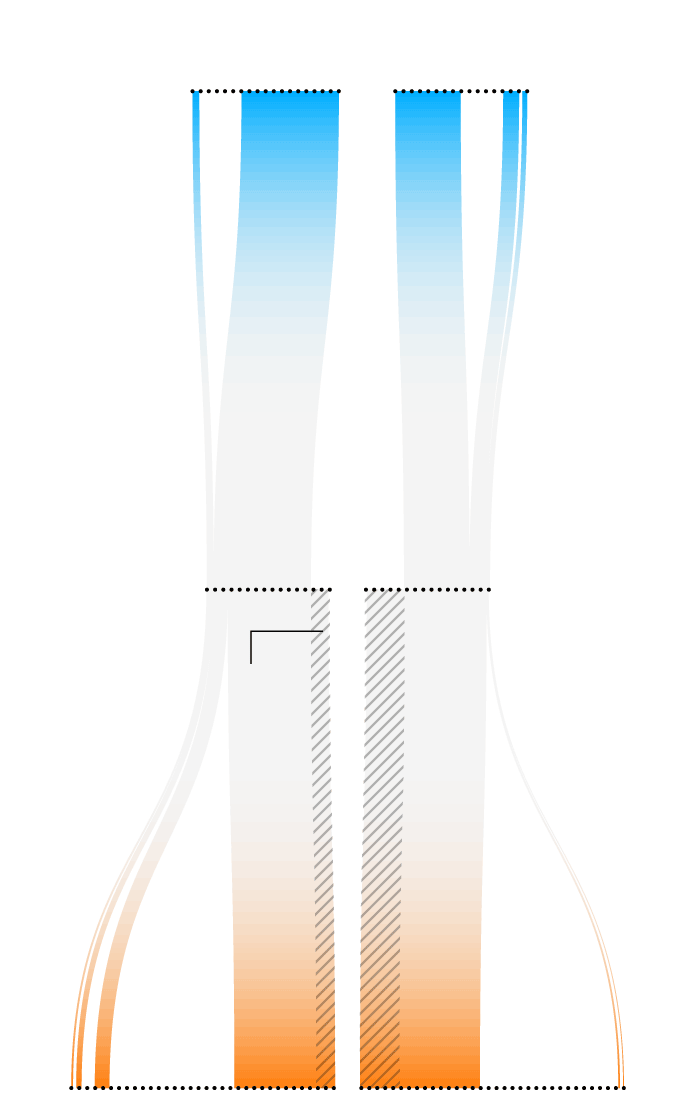
Since then the population in and around Phoenix has surged to almost 5 million people. By 2024 more than 1 million people in 380,000 households will rely on groundwater districts, severely taxing it in places. And up until the state’s water-scarcity decree earlier this month, the forces behind the building boom chose to minimize the undeniably deepening drought. West of the city in booming Buckeye, for example, more than two dozen developments are in the pipeline but not yet built.
For years the state was able to balance the conflicting trend lines of more people and less available water for two main reasons. First, conservation: Ninety-three percent of water that enters wastewater treatment in the state is recycled. The lake in the center of Harvest, the new development in Queen Creek, for instance, stores treated effluent from kitchens and bathrooms and makes it available for gardening and landscaping so that groundwater doesn’t need to be used.
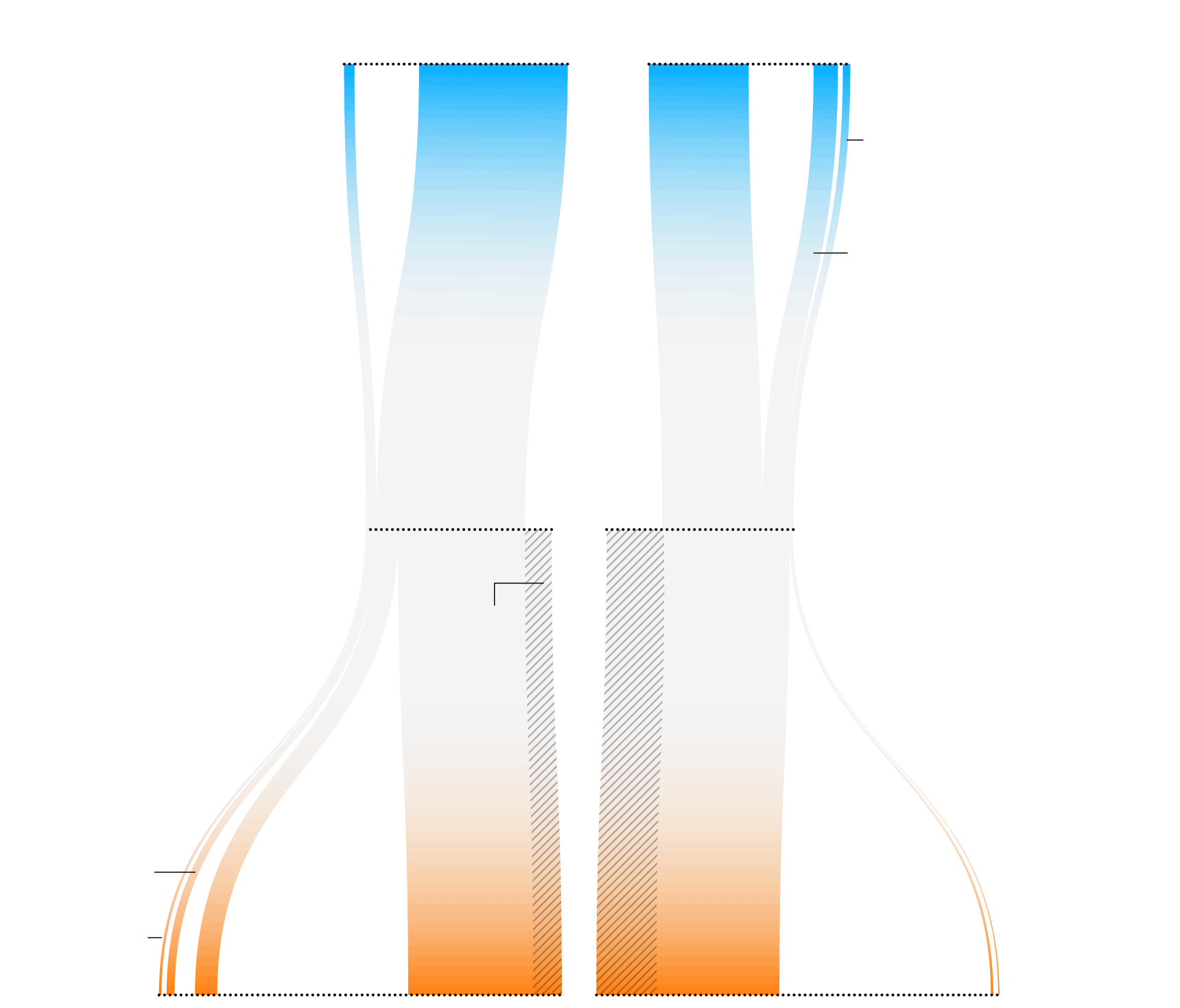
More Water Going Out Than Going In
1900-2021
2022-2121
Total inflow
Total inflow
Stream
leakage
Water
recharge
Water
recharge
Other
Other
Total outflow
Total outflow
168K
acre-feet of
aquifer storage
lost each year
387K
Stream
leakage
Evaporation
Pumping
Pumping
Evaporation
Other
Other
1900-2021
2022-2121
Total inflow
Total inflow
Stream
leakage
Water
recharge
Water
recharge
Other
Other
Total outflow
Total outflow
168K
acre-feet of
aquifer storage
lost each year
387K
Stream
leakage
Evaporation
Pumping
Pumping
Evaporation
Other
Other
1900-2021
2022-2121
Total inflow
Total inflow
Stream
leakage
Water
recharge
Water
recharge
Other
Other
Total
outflow
Total
outflow
168K
acre-feet of
aquifer storage
lost each year
387K
Stream
leakage
Pumping
Pumping
Other
Evaporation
Evaporation
Other
2022-2121
1900-2021
Total inflow
Total inflow
Stream
leakage
Water
recharge
Water
recharge
Other
Other
Total outflow
Total outflow
168K
acre-feet of
aquifer storage
lost each year
387K
Second, some of the water that once went to farms now flows to people, who are not as thirsty as crops. An acre-foot of water can grow a little more than a third of an acre of cotton — or sustain three average households for a year. Arizona’s rapid urbanization has actually helped temper demand for water. The state used the same amount of water in 2017 as it had in 1957, or roughly 7 million acre-feet a year, according to the Arizona Department of Water Resources.
But then the rush on groundwater coincided with the region’s most severe drought in 1,200 years, fueled by climate change. Drought has reduced the flow of the Colorado so much that last year, the federal government cut Arizona’s draw from the river by 21%. In May, under federal pressure, Arizona, California and Nevada all agreed to a combined cut of another 13%.
“The region has to have a plan for a future with less water overall,” said Kevin Moran, who does water policy advocacy in the Southwest for the Environmental Defense Fund. “And we can’t assume going forward that diversions from the Colorado River or other surface water are going to solve the problem.”
Soon after she took office in January, Arizona Governor Katie Hobbs, a Democrat, said it was her top priority to tackle the shortfall straight on, calling water management “the challenge of our time.” With that she released a Department of Water Resources report that she claimed had been held back by her Republican predecessor. The document focused on the groundwater west of Phoenix and indicated that towns like Buckeye did not, in fact, have enough to sustain their anticipated growth. A subsequent report released earlier this month from the same department found a similar mismatch across a larger area, prompting the state’s new limits on housing development.
The restrictions could shift the pattern of growth in the region long-term. Builders might rethink large homes set around lush golf courses. Residential development may move from the exurban fringes to closer-in locations with water access. Tracts without water might be developed for industrial or commercial uses rather than housing.
And, clearly, the price of water will go up.
We don’t know the limit to the price of water yet. But we are about to find out.
In addition to the 2018 deal with Cibola, in 2021 Queen Creek paid $30 million for 5,000 acre-feet of water over 100 years in Harquahala, a basin west of Phoenix. It’s negotiating for another 8,000 acre-feet there, though the cost will likely be much higher this time around: Buckeye approved paying $80 million for 6,000 acre feet from the same area in January, and Gardner says he expects to pay about the same per acre foot. That’s more than double what Queen Creek paid in 2021.
Households in the groundwater district pay bills for water and separate assessments for groundwater replenishment. Those rates have already gone from $154 per acre-foot in 2002 to $768 per acre-foot in 2021. Laura Gringnano, the manager of CAGRD, says acquiring new supplies since 2010 to replace the diminishing Colorado was part of the reason prices have already spiked.
In the days since the governor made her groundwater announcement, Eric Orsborn, the mayor of Buckeye, says he’s fielded hundreds of calls from residents and businesses worried about their water becoming unaffordable. (His own water bill, separate from the assessment, can reach $400 a month, he said.) He tells people to relax: “We want growth to pay for growth. It wouldn’t be fair to our current homeowners to foot the bill.”
The rising cost burden will not be felt equally. It will fall on municipalities and developers and, more quietly, on buyers of new homes. Orsborn says Buckeye will work with developers to find new sources of water, but developers will have to shoulder the cost. With the 100-year assured supply rule, they must lock in water before they build. That cost will then be factored into the price of new homes and passed on to buyers.
In Queen Creek, similarly, Gardner estimates that the cost of securing water may eventually raise individual home prices by $15,000. He doesn’t think that will discourage buyers.
But there are other municipal costs to get more water for existing homes. Queen Creek Mayor Julia Wheatley says the town spent $168 million this year alone for “renewable water resources,” up from $60 million last year. She says most town residents won’t see a dime for this on their water bill or property taxes because the money came out of general funds.
There is new infrastructure spending on the horizon, too. Queen Creek is currently working with several other communities to evaluate the economics of raising the Bartlett Dam on the Verde River. The state of Arizona is looking at the cost of desalination projects.
Although groundwater assessments still average under $100 dollars per household annually, according to CAGRD, the increases were significant enough to convince Gardner, a former water company owner, that he could do better by purchasing sources outside the groundwater district. “We have to protect ourselves,” he said.
But that, of course, creates a cycle of competition, as CAGRD also has to hunt for alternative supplies, since there’s ever less water available from the Colorado River to top up the aquifer.
“I don’t want to get into lecturing about supply and demand,” said Megdal, the water-resources expert who is an economist by training. “But when supply is less and the demand’s still there, what is expected to happen? Prices go up.”
About 200 miles east of Queen Creek near the California border sits Cibola, a tiny riverside farming town. The mighty Colorado looks like a large brown stream by the time it passes through here. Farmers grow alfalfa and cotton, both water-intensive crops.
River farms have something else that is increasingly coveted: private water rights. Many of the farms predate the incorporation of nearby cities and have a legal right to draw water from the Colorado River indefinitely.

2013
2018
$9M
$21M
What Greenstone paid to buy
GSC Farm in Cibola, Arizona
What Queen Creek paid for
rights to most of the farm's water
five years later

2013
2018
$9M
$21M
What Greenstone paid to buy
GSC Farm in Cibola, Arizona
What Queen Creek paid for
rights to most of the farm's water
five years later

2013
2018
$9M
$21M
What Greenstone paid
to buy GSC Farm in
Cibola, Arizona
What Queen Creek
paid for rights to
most of the farm's
water five years later
Deep-pocketed investors guessed that these lands will be very valuable and have quietly been buying them. In 2013 Greenstone purchased a farm with water rights in Cibola, and Queen Creek in 2018 bought the rights to 2,033 of its acre-feet, enough for about 7,000 homes for a century. The deal left Greenstone with the land and even some of the water, as well as a gain of about $12 million.
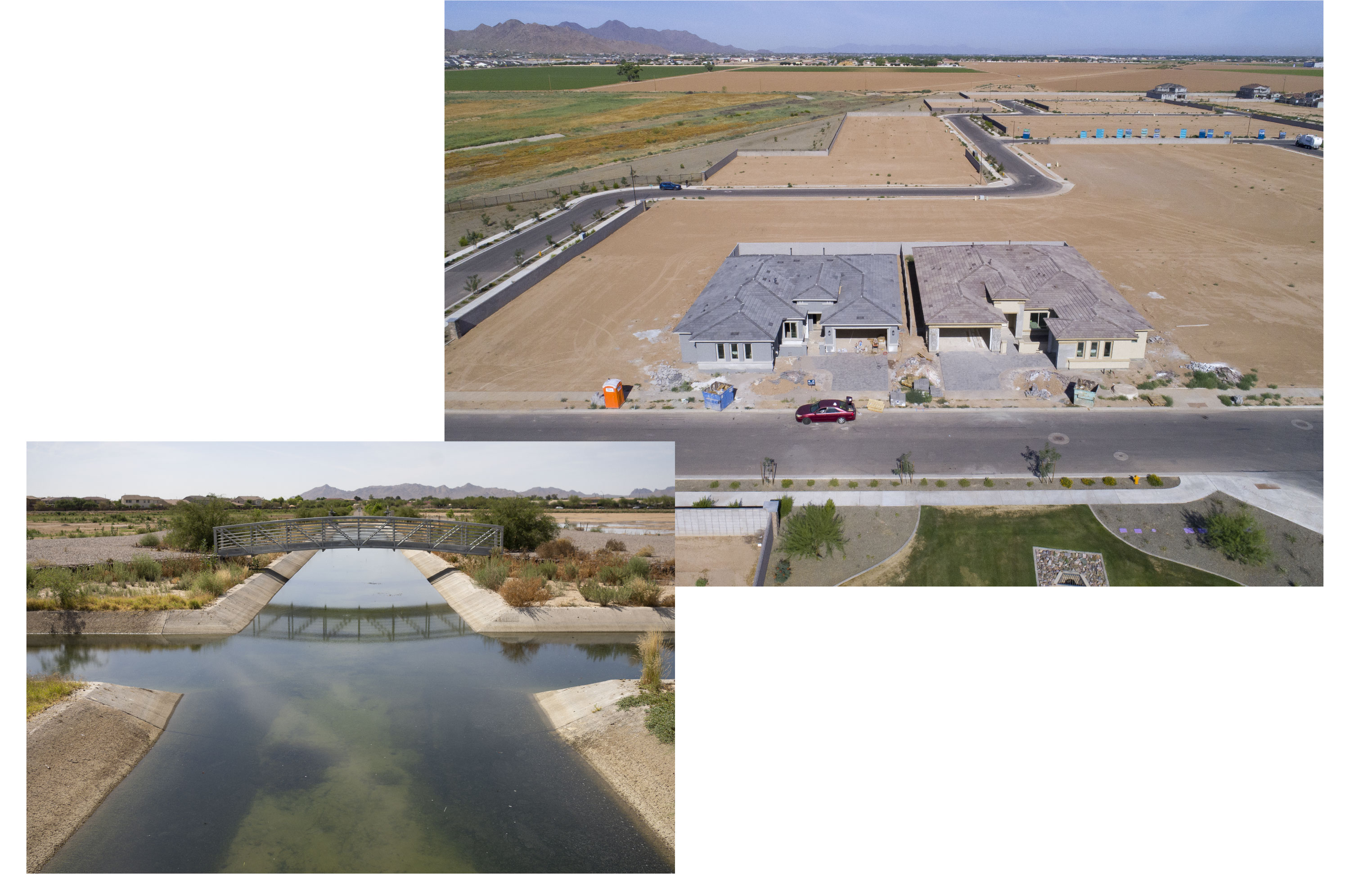
Green fields and desert scrub abut new
homes at Harvest in Queen Creek. ▶
◀ Effluent, or treated wastewater, in canals in
Queen Creek. Reusing water is one way
Arizona has been able to meet rising demand.
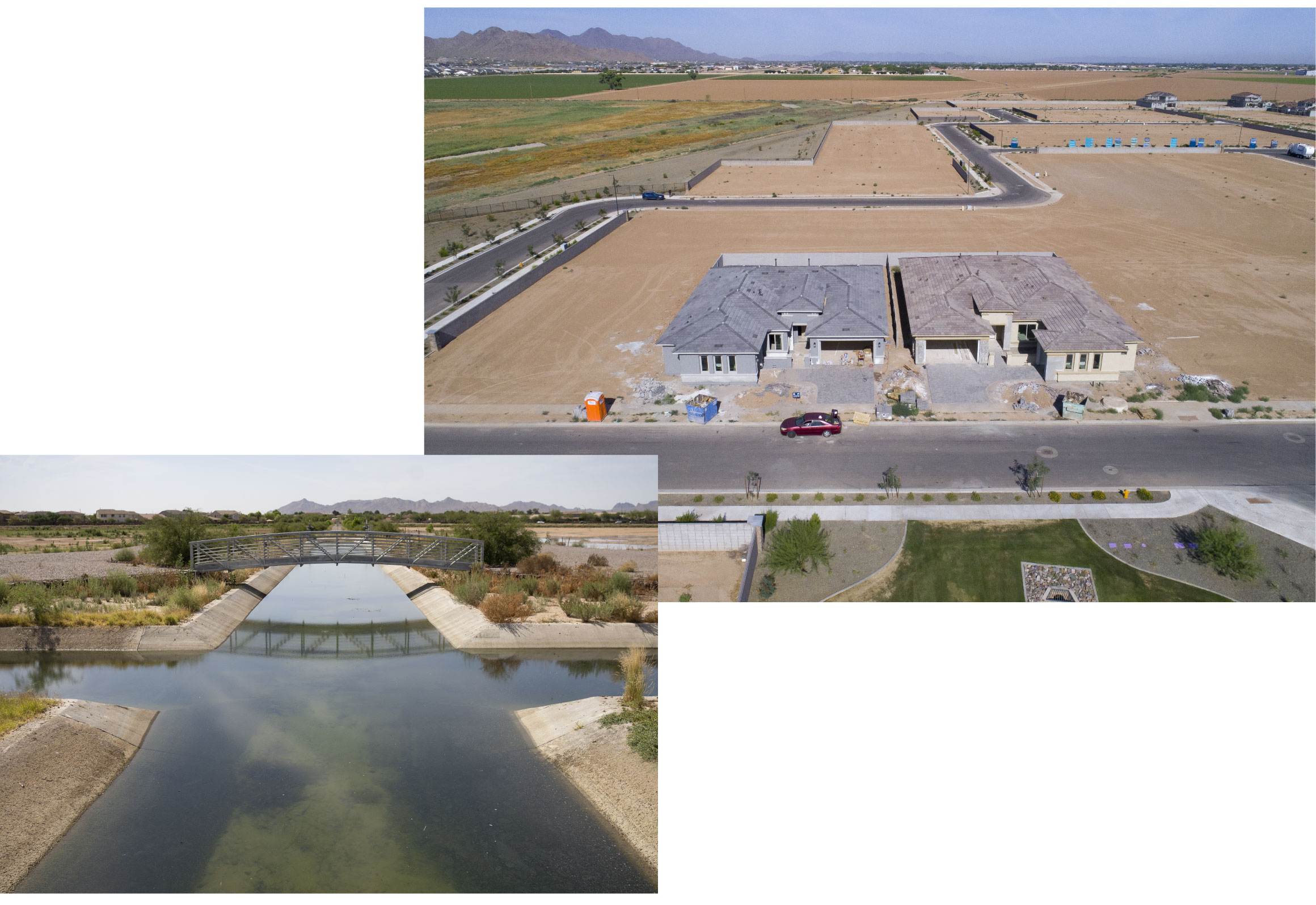
Green fields and desert scrub abut new homes at Harvest in Queen Creek. ▶
◀ Effluent, or treated wastewater, in canals in
Queen Creek. Reusing water is one way
Arizona has been able to meet rising demand.
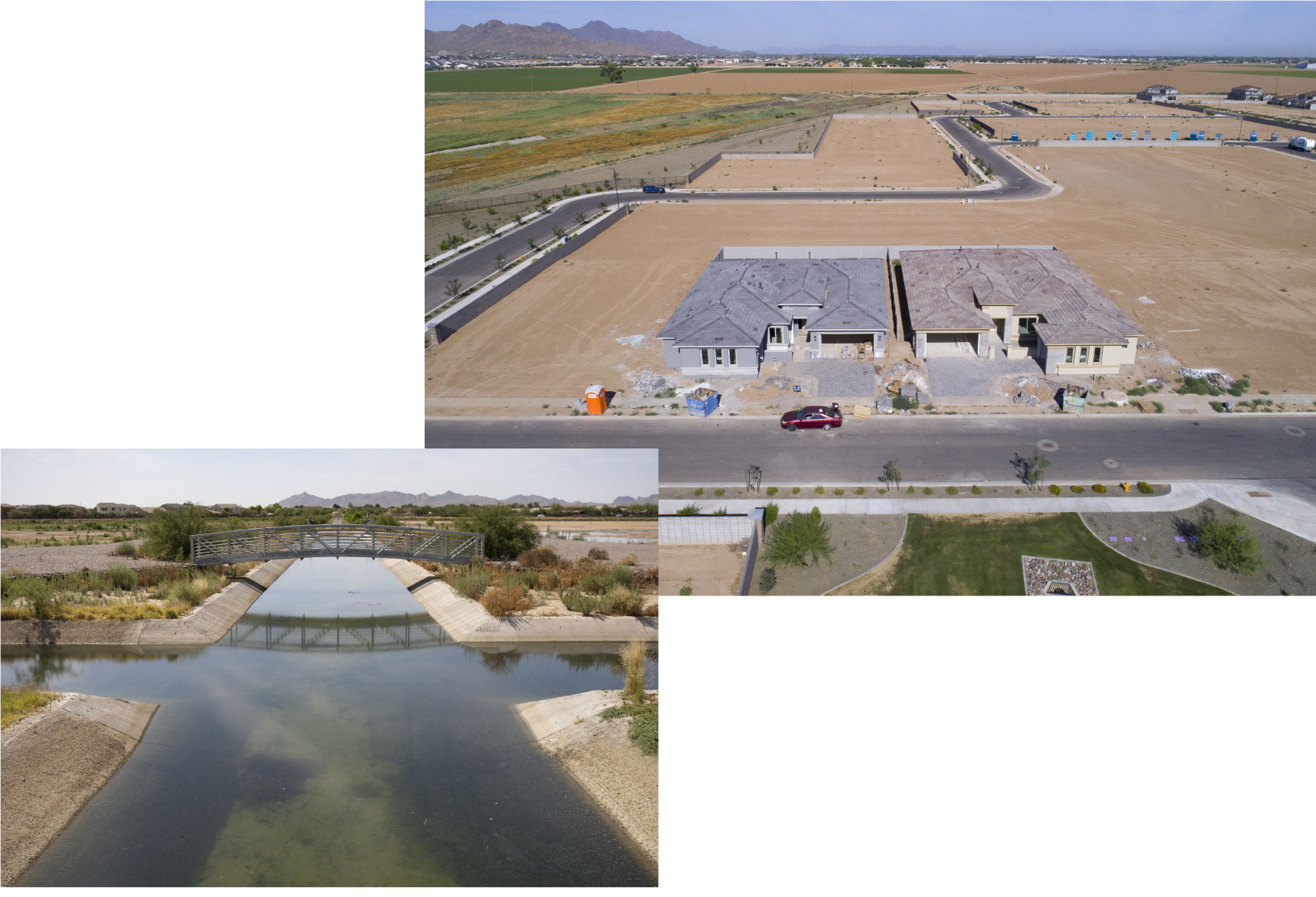
Green fields and desert scrub
about new homes at Harvest in Queen Creek. ▶
◀ Effluent, or treated wastewater, in canals in
Queen Creek. Reusing water is one way
Arizona has been able to meet rising demand.
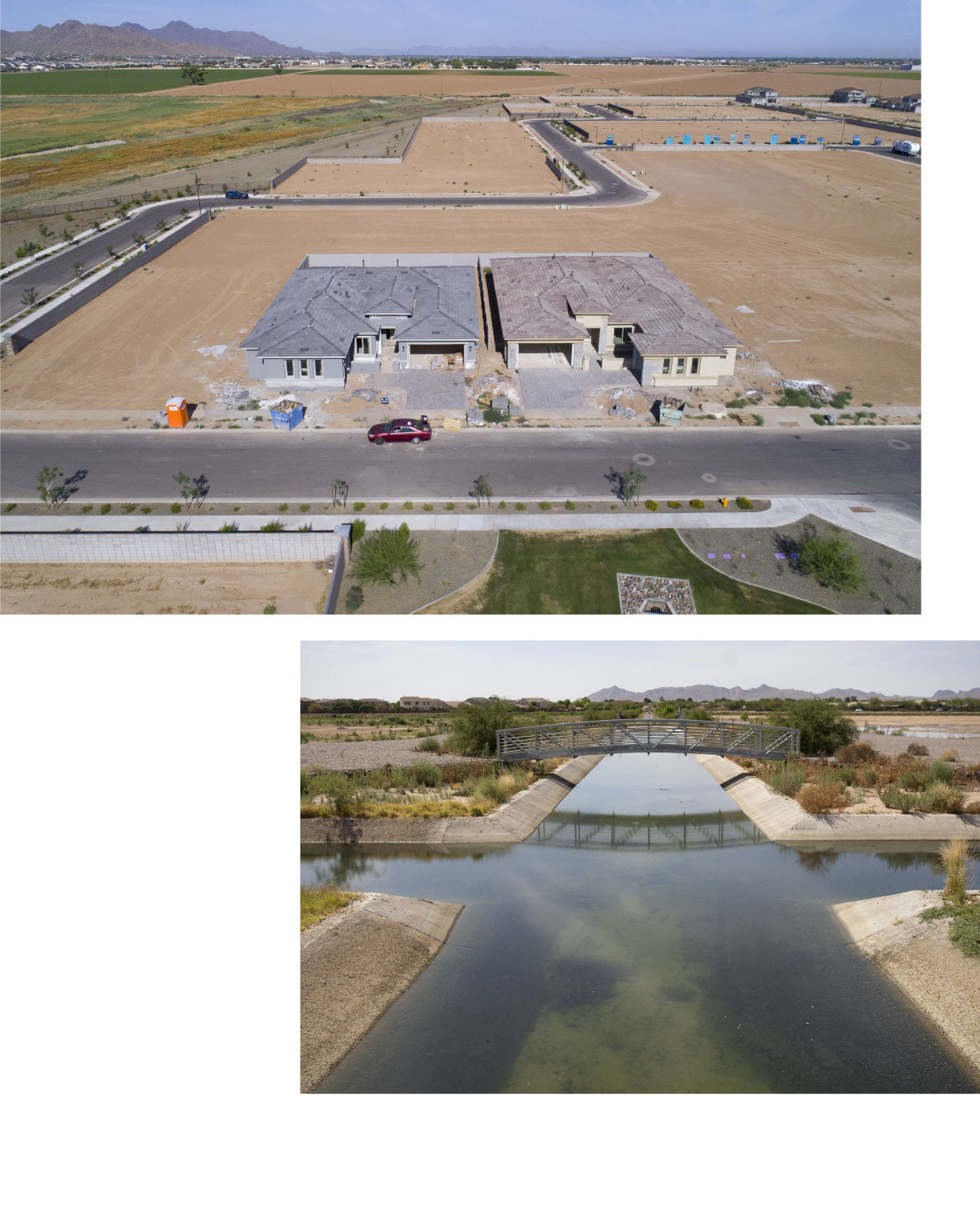
▲ Green fields and desert scrub abut new homes at Harvest in Queen Creek.
▲ Effluent, or treated wastewater, in canals in
Queen Creek. Reusing water is one way
Arizona has been able to meet rising demand.
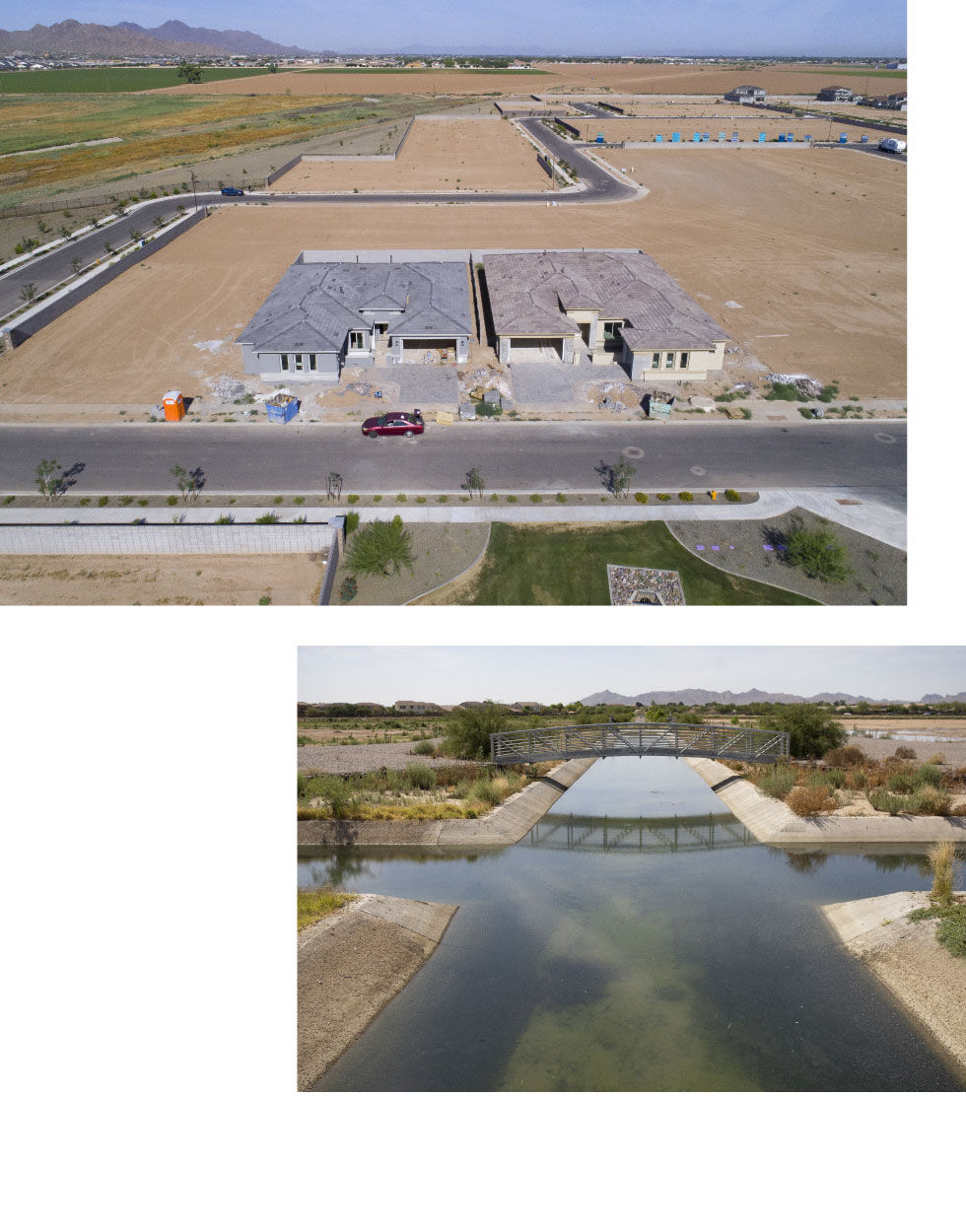
▲ Green fields and desert scrub abut new homes at Harvest in Queen Creek.
▲ Effluent, or treated wastewater, in canals in
Queen Creek. Reusing water is one way
Arizona has been able to meet rising demand.
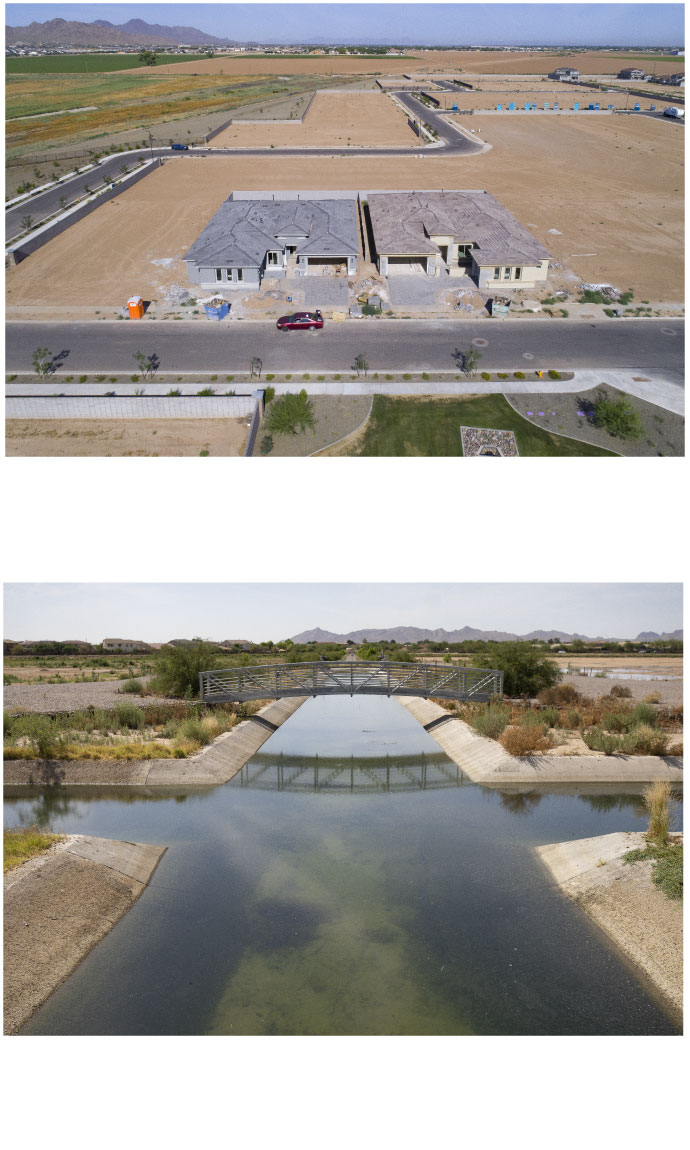
▲ Green fields and desert scrub abut new homes at Harvest in Queen Creek.
▲ Effluent, or treated wastewater, in canals in
Queen Creek. Reusing water is one way
Arizona has been able to meet rising demand.
Greenstone did not respond to requests for comment. Grady Gammage Jr., an attorney who represented the company on the purchase, said concerns the deal will cause a domino effect are overblown. He said few farmers have the high-priority rights that buyers would want, and even when they do, the logistical challenges of moving the water are formidable.
He does, however, acknowledge that at least some of the state’s agricultural water will be sold for high prices — and he thinks that’s fine. “Part of the reason we have the problems we have is that we haven’t allowed markets to operate with regard to water like we do other resources,” said Gammage, a former president of the Central Arizona Project, the canal that brings Colorado River water to central and southern parts of the state. “And water is very seldom priced anywhere near its real value, and that’s the source of a lot of these problems.”
This is wealth coming out of the ground and being shipped away. We should be compensated appropriately.
Now that a judge has declined to stop the Queen Creek transfer, people are watching to see if other water investors will cash in and for how much. According to local property records, Greenstone still has additional holdings in La Paz and neighboring counties. Water Asset Management, a New York-based hedge fund, has farm acreage across the state. And Harquahala Valley Landowners, a group of farmers and investors, is looking to sell water in their irrigation district west of Phoenix.
Irwin, the La Paz County supervisor, says she’s not done fighting deals like the one made between Queen Creek and Greenstone. She said that she and other rural officials met with the governor in May to ask her to ban future water sales from the river. The governor’s office did not respond to requests for comment.
Irwin also wants to change how farms are taxed. If their main business is selling water and not growing things, she argues, they should be paying a mining tax. “This is wealth coming out of the ground and being shipped away. We should be compensated appropriately,” she said.
Not everyone in Cibola supports this proposal. Irwin says some of her own neighbors are mad about it. She laughs: “They think they are going to get rich selling water.”