
Sports TV Rights Are Costlier Than Ever — But They’re Cable’s Last Lifeline
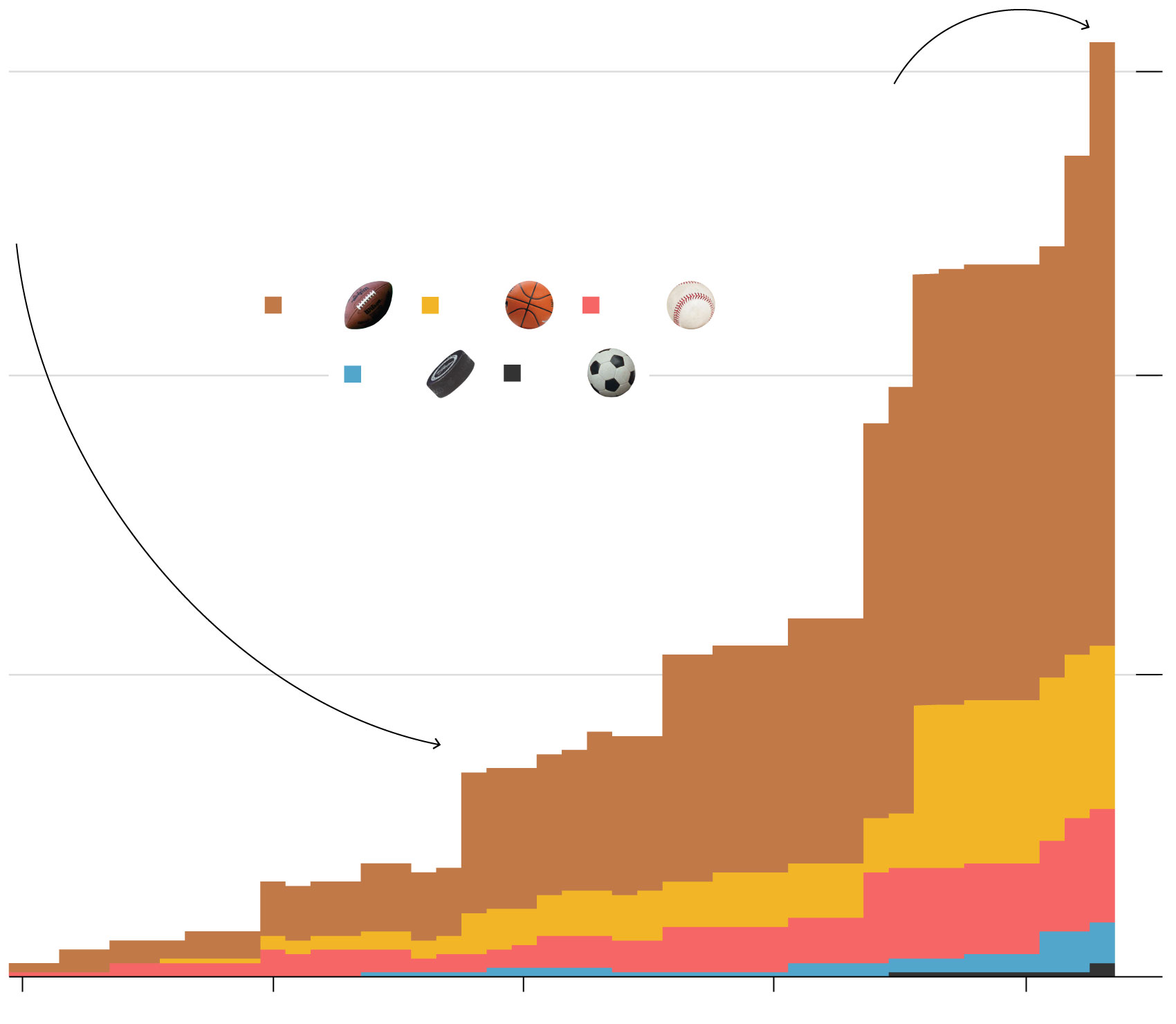
As Americans grapple with inflation, media companies are seeing steep increases in the cost of a valuable commodity: sports rights.
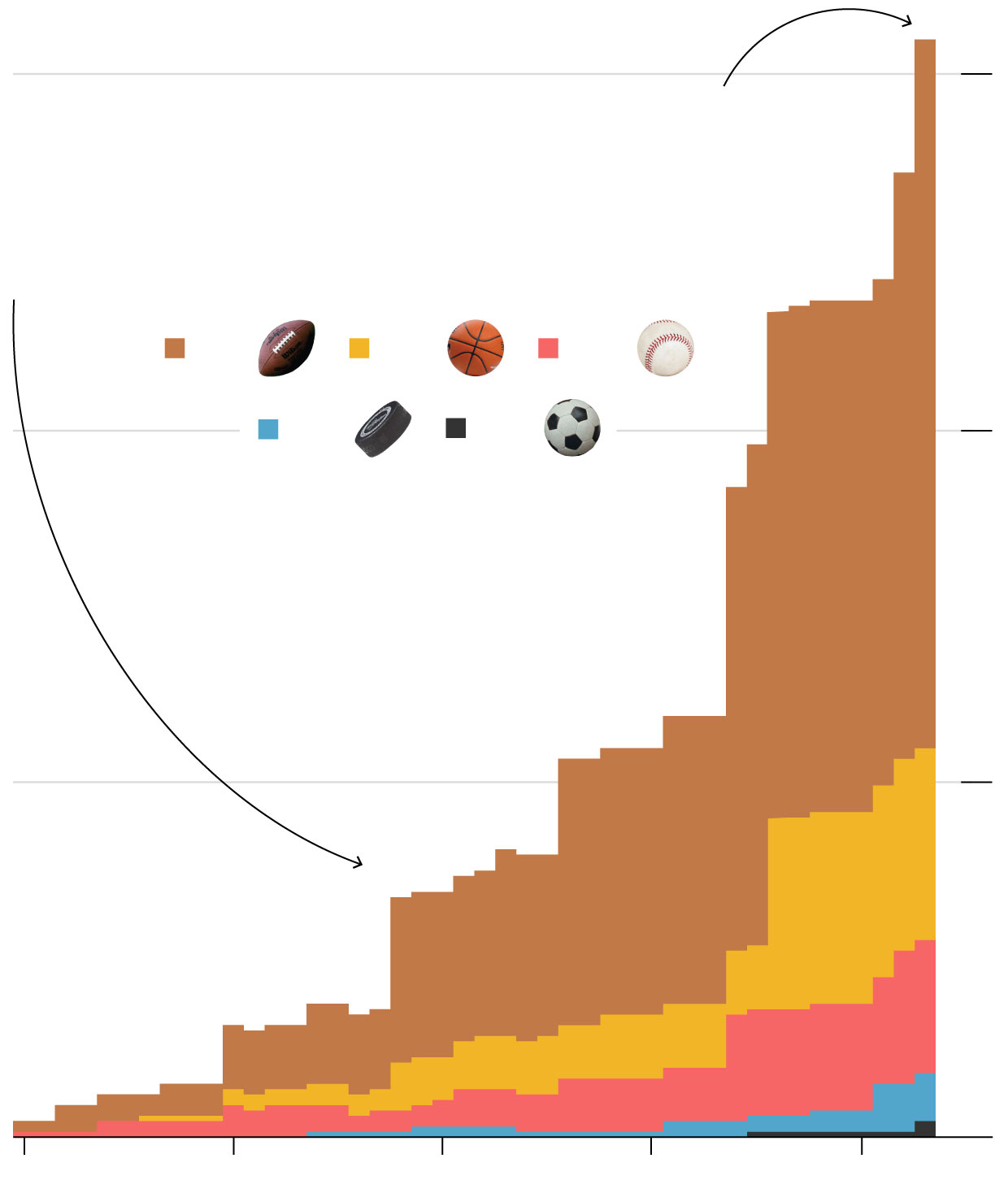
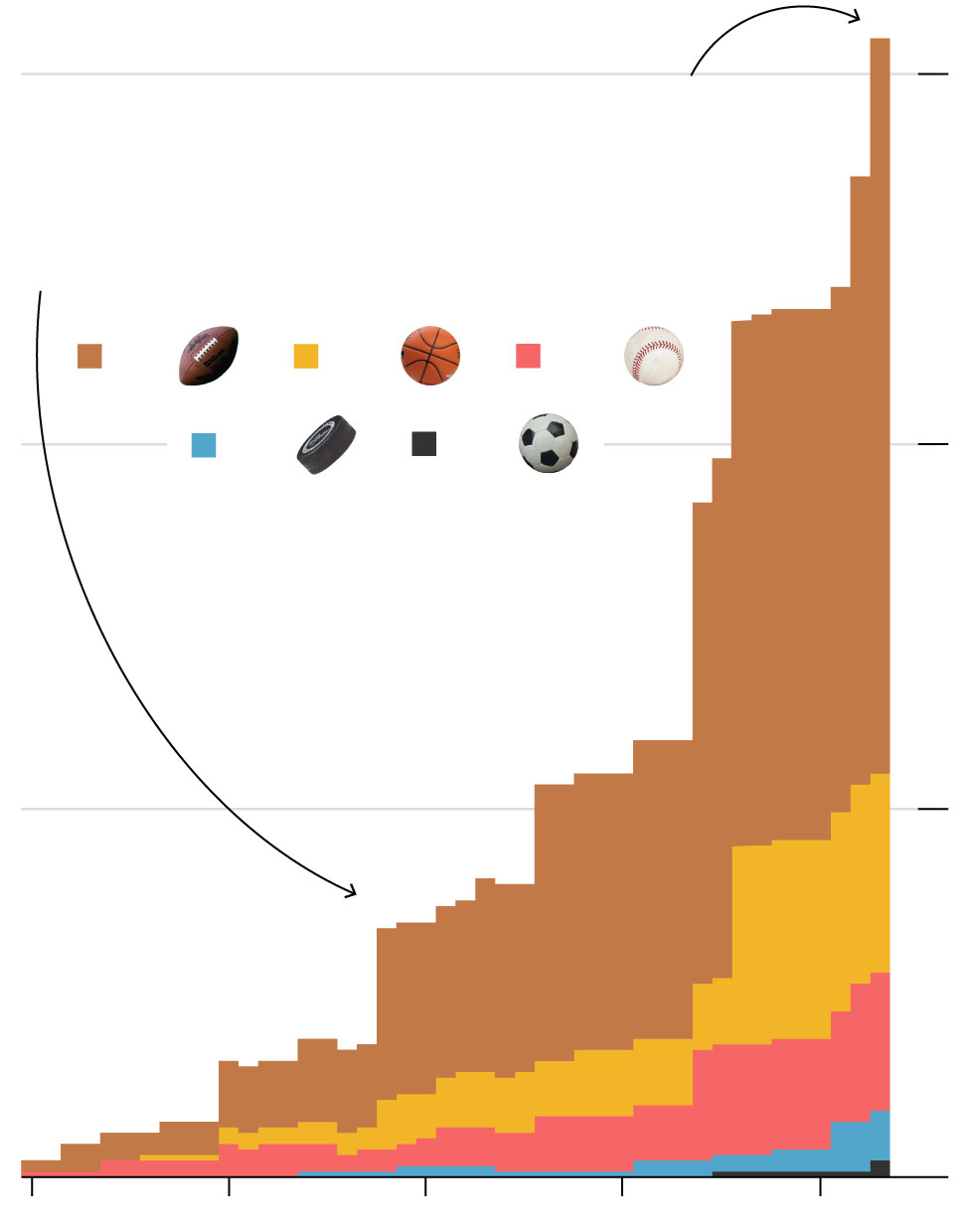
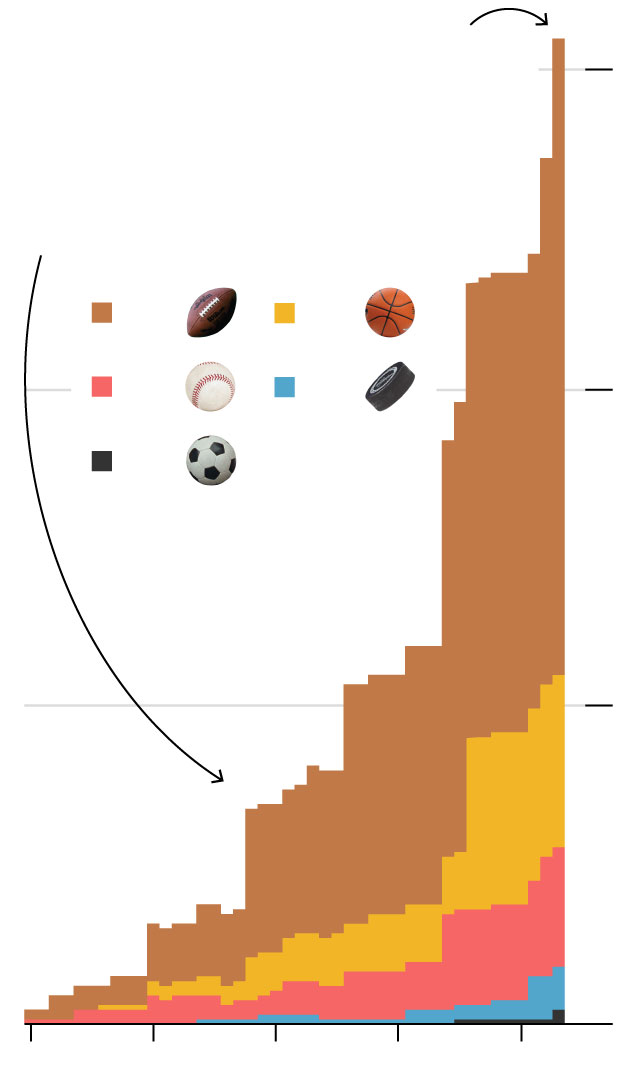
For years, companies like Walt Disney Co.’s ESPN, Comcast Corp.’s NBC, Fox Corp. and Paramount Global’s CBS have spent more and more on the rights to broadcast games. From 1980 to 2023, the five largest professional US sports leagues will have earned more than $210 billion from domestic media rights alone, according to a Bloomberg News analysis (the National Football League accounting for 65% of it.) Recently, deep-pocketed tech giants like Amazon.com Inc. and Apple Inc. have also jumped into sports broadcasting, bidding up the price that traditional media companies pay.
Several TV networks will pay the NFL roughly double their current fees to broadcast games under new long-term deals. Apple will pay Major League Soccer nearly triple the value of the league’s previous media contract. Warner Bros. Discovery Inc., which owns TBS and TNT, will pay Major League Baseball 65% more as part of a new agreement that took effect this year.
The Soaring Cost of Sports Media Rights
$15B
$3.4 billion
$15.4 billion
The highest the annual
cost of rights totalled
before 2000
How much broadcasters
and streaming services
will pay in 2023
NBA
MLB
NFL
10
MLS
NHL
5
0
1980
1990
2000
2010
2020
$15B
$3.4 billion
$15.4 billion
The highest the annual
cost of rights totalled
before 2000
How much broadcasters
and streaming services
will pay in 2023
NBA
MLB
NFL
10
MLS
NHL
5
0
1980
1990
2000
2010
2020
$15B
$3.4 billion
$15.4 billion
The highest the annual
cost of rights totalled
before 2000
How much broadcasters
and streaming services
will pay in 2023
NBA
MLB
NFL
10
MLS
NHL
5
0
1980
1990
2000
2010
2020
$15B
$3.4 billion
$15.4 billion
The highest
the annual cost
of rights totalled
before 2000
How much
broadcasters and
streaming services
will pay in 2023
NFL
NBA
10
MLB
NHL
MLS
5
0
1980
1990
2000
2010
2020
It’s not just men’s sports that are getting more expensive for broadcasters. The NCAA Women’s Basketball Tournament is expected to be worth more than $100 million a year if it’s sold as a separate package to media companies, according to a report commissioned last year by the National Collegiate Athletic Association. ESPN currently pays an average of $34 million per year for the women’s tournament and more than 20 other NCAA championships in a deal that expires in 2024.
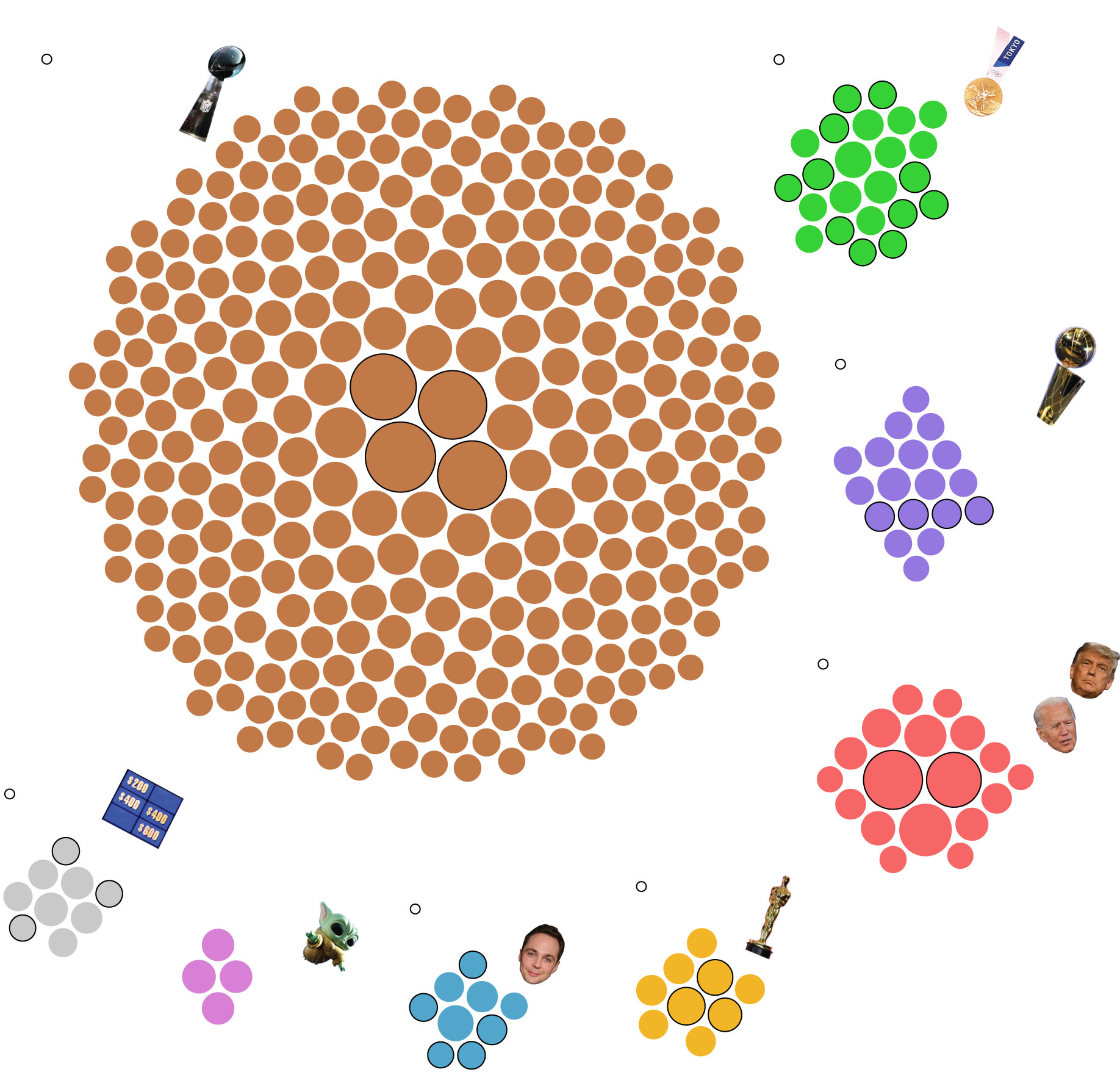
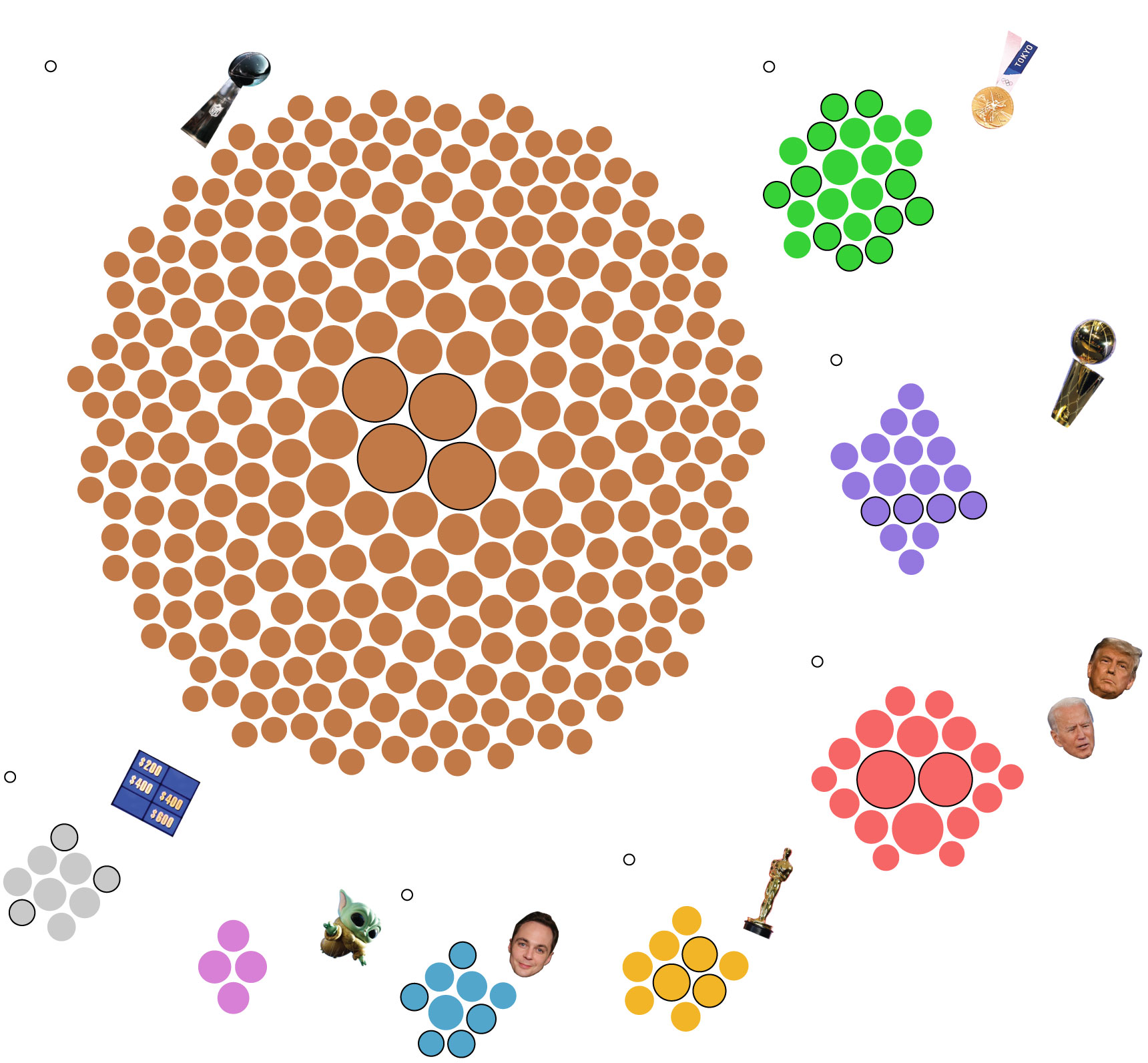
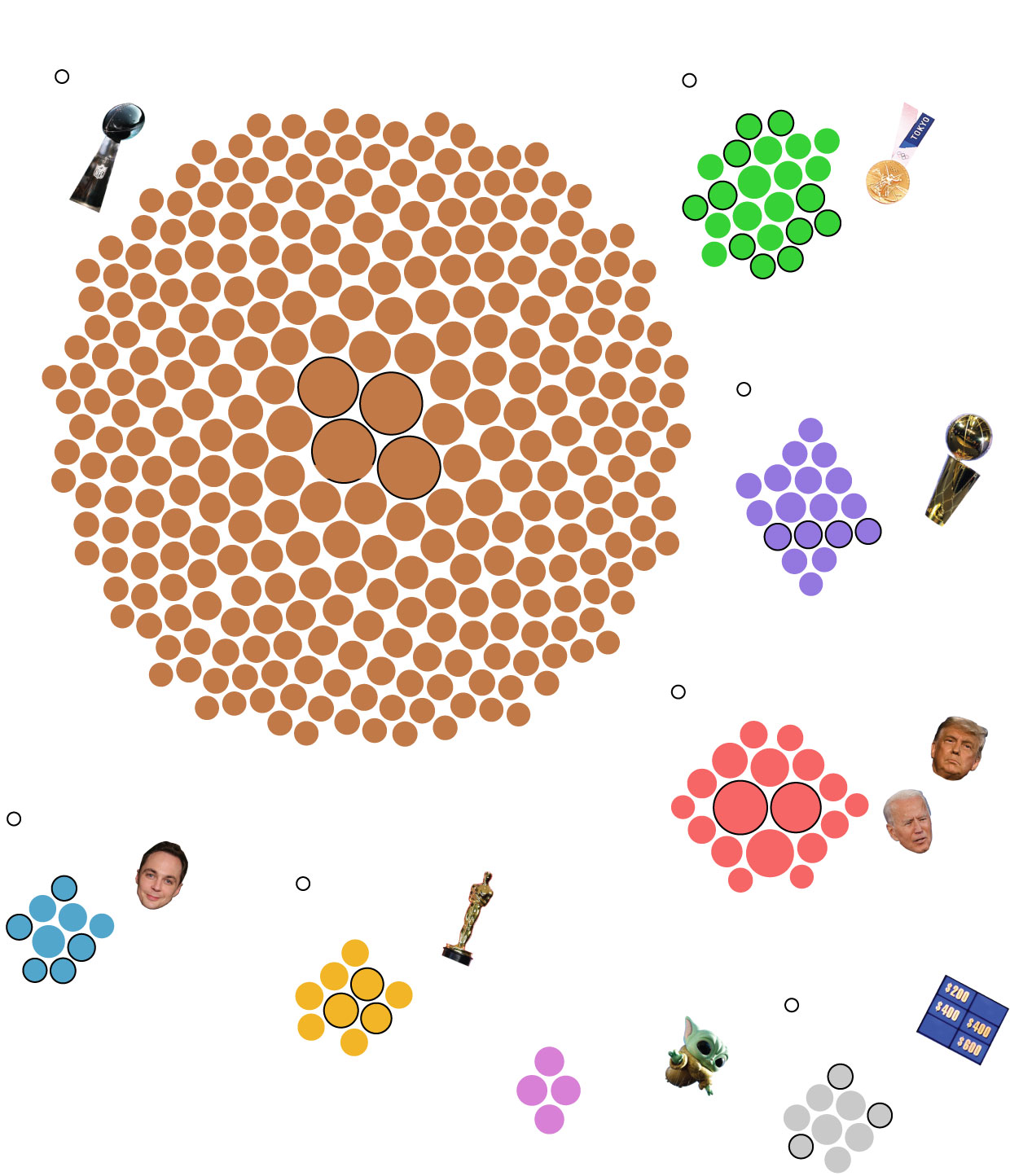
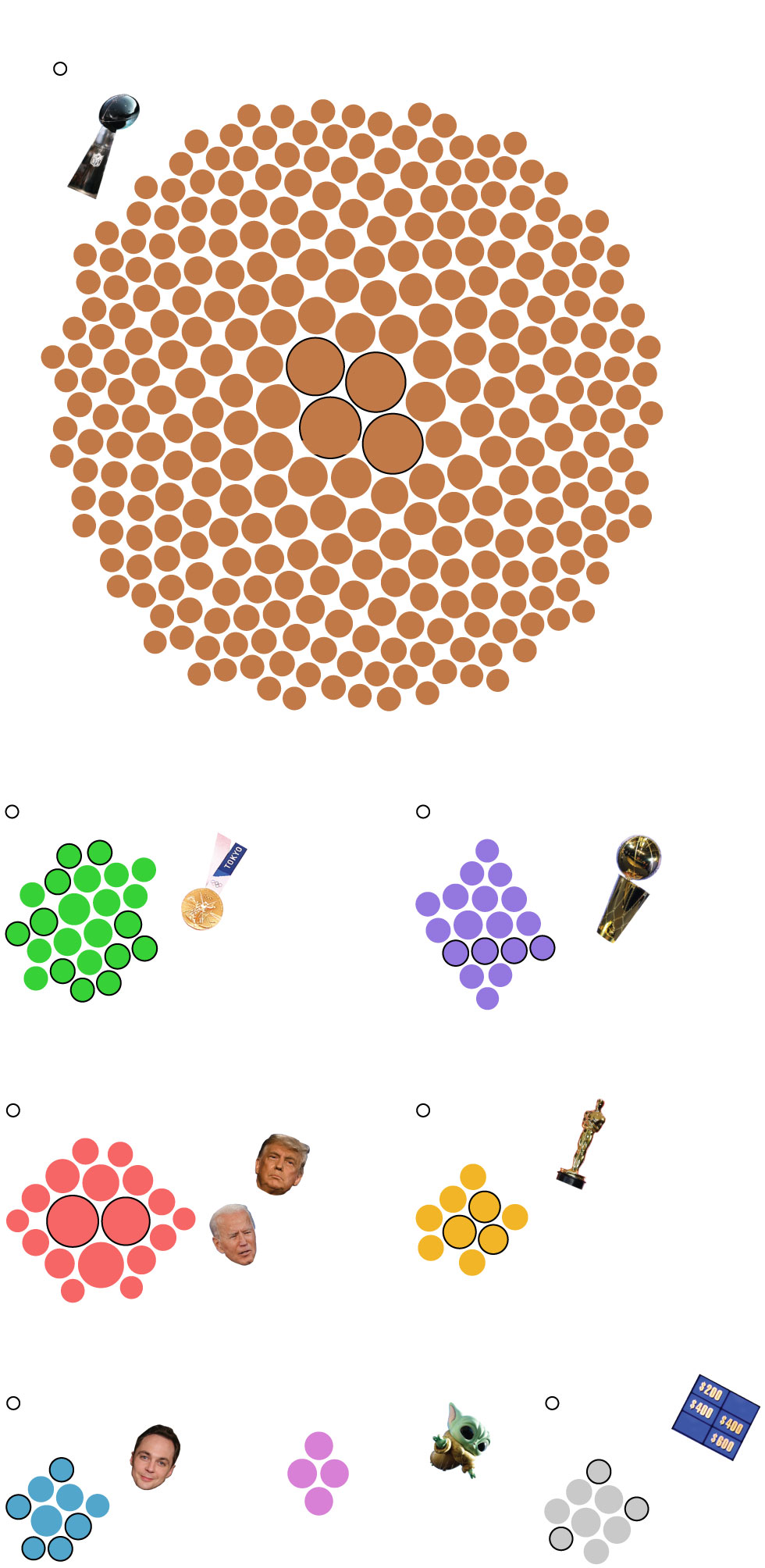
Broadcasters have little choice but to pay up. Live sports are one of the few reasons that people still pay for cable TV. In fact, sports routinely account for the vast majority of the 100 most-watched broadcasts on TV each year, according to Sports Business Journal research. Giving up those rights would likely hasten the decline of TV viewers.
Sports Is King of TV Content
310 broadcasts
23
Football
Olympic Games
NFL Super Bowls
incl.
Tokyo 2020 coverage
20
18
Other sports
NBA 2017 Finals games
92
98
103M
viewers
100
19
18
Politics, news shows
Trump-Biden 2020 debates
9
Other
63
73
Jeopardy!
specials
9
16
4
9
Award shows
Thanksgiving
Day Parade
Series
The Oscars
ceremonies
The Big Bang Theory
episodes
24
27
30
19
23
310 broadcasts
Olympic Games
Football
NFL Super Bowls
incl.
Tokyo 2020 coverage
20
18
Other sports
NBA 2017 Finals games
92
98
103M
viewers
100
19
18
Politics, news shows
Trump-Biden 2020 debates
9
Other
Jeopardy!
specials
73
63
9
Award shows
4
9
16
The Oscars
ceremonies
Series
Thanksgiving
Day Parade
The Big Bang Theory
episodes
27
24
30
19
310 broadcasts
23
Football
Olympic Games
NFL Super Bowls
incl.
Tokyo 2020 coverage
20
18
Other sports
92
NBA 2017 Finals games
98
103M
viewers
100
19
18
Politics, news shows
Trump-Biden 2020 debates
9
Series
73
63
9
The Big Bang Theory
episodes
Award shows
The Oscars
ceremonies
9
4
19
Other
Thanksgiving
Day Parade
27
Jeopardy!
specials
30
16
24
310 broadcasts
Football
NFL Super Bowls
incl.
92
98
103M
viewers
100
23
18
Olympic Games
Other sports
NBA 2017 Finals games
Tokyo 2020 coverage
20
19
18
9
Politics, news shows
Award shows
Trump-Biden 2020 debates
The Oscars
ceremonies
27
73
63
30
9
4
9
Series
Other
Thanksgiving
Day Parade
The Big Bang Theory
episodes
Jeopardy!
specials
16
24
19

310 broadcasts
Football
NFL Super Bowls
incl.
92
98
103M
100
23
18
Olympic Games
Other sports
NBA 2017 Finals
games
Tokyo 2020
coverage
18
9
Politics, news shows
Award shows
Trump-Biden
2020 debates
The Oscars
ceremonies
27
30
63
73
9
4
Series
Thanksgiving
Day Parade
The Big Bang
Theory episodes
24
9
Other
Jeopardy!
specials
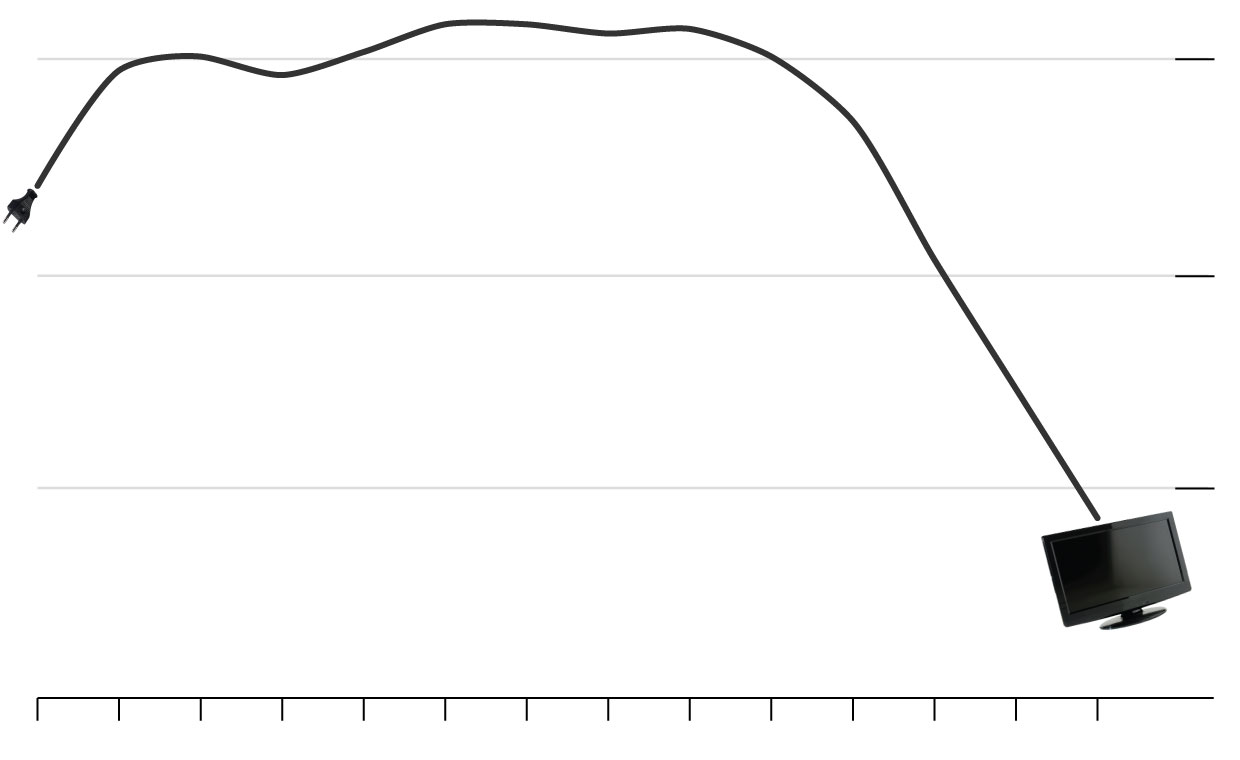
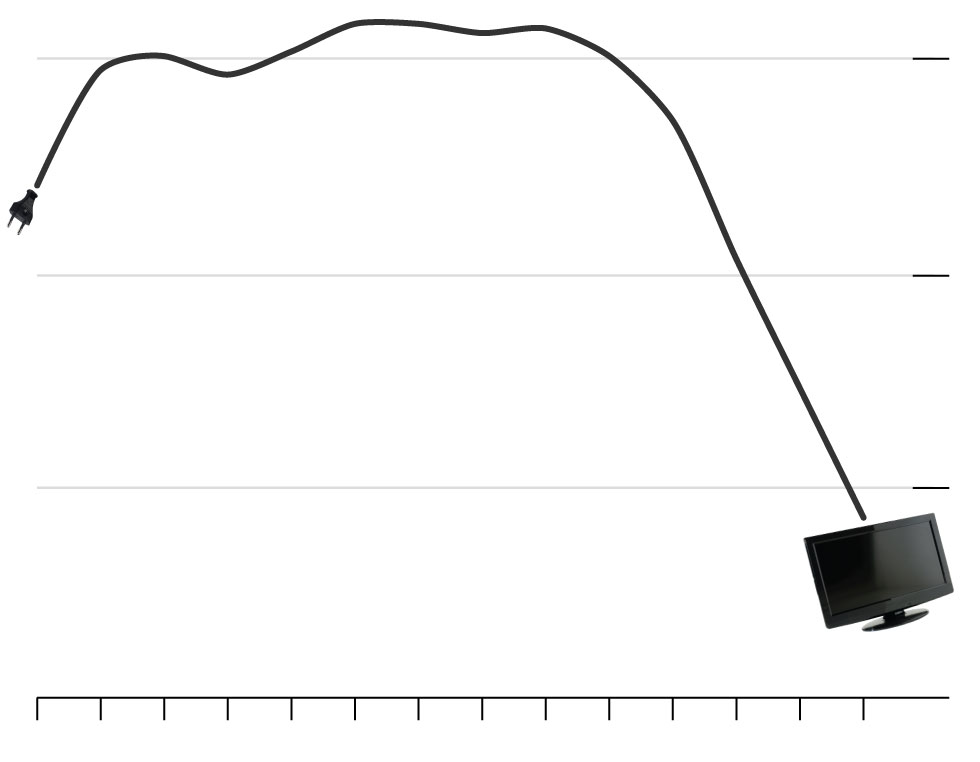
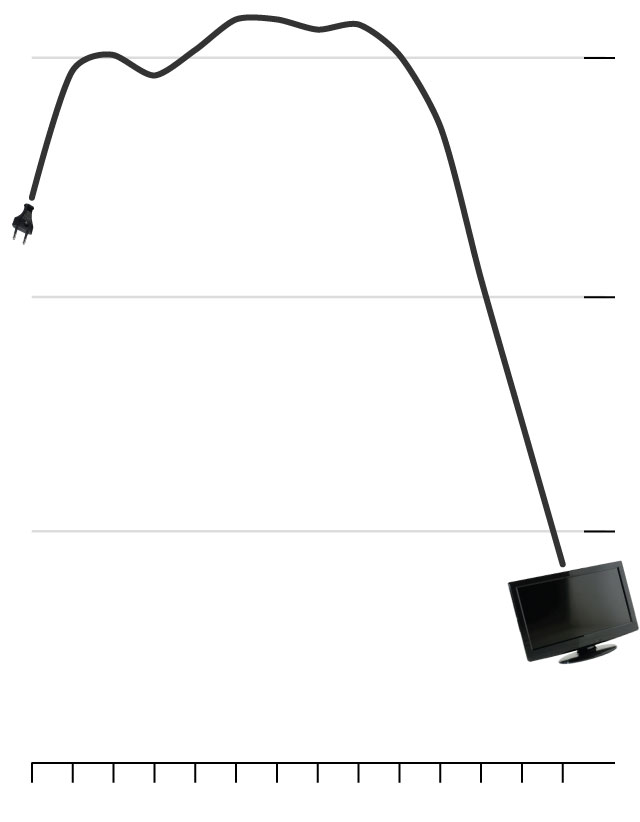
Meanwhile, the number of cable-TV subscribers is shrinking, jeopardizing a key revenue stream that media giants need to afford sports rights.
“Sports rights may not be tenable for all of the current holders as linear [TV] declines,” Wells Fargo analyst Steven Cahall wrote in a note this month.
At the end of 2018, pay-TV subscribers stood at 87 million. By the end of this year, they’re expected to fall to 63 million, according to Bloomberg Intelligence. Media companies generate much of their revenue from fees that are based on the number of people subscribing to cable and satellite TV.
Pay TV In Free Fall
90M
80
70
60
2008
2012
2016
2020
90M
80
70
60
2008
2012
2016
2020
90M
80
70
60
2008
2012
2016
2020
The National Basketball Association, which begins its regular season on Oct. 18, will be the next big test of whether media companies can continue to afford popular sports. Disney and Warner Bros. Discovery are expected to begin negotiations with the league soon and will likely pay a big premium to renew those rights, which expire in 2025. Amazon has also expressed interest in acquiring NBA rights.
So far, companies say the escalating cost of sports is worth it to keep people subscribing to cable TV. But they’re keeping a close eye on Apple and Amazon who have the financial muscle to outbid everyone when the next big deal comes up.
“For the most part, it’s the been the incumbents that have acquired the meaningful needle-moving rights domestically,” ESPN Chairman Jimmy Pitaro said in an interview. “The question is: Does that continue or do the large tech companies get even more aggressive in that space?”