Georgia Shows Just How Broken American Unemployment Benefits Are
An analysis of more than 2 million claims shows Black workers who lost jobs during the pandemic were more likely to be denied help than White people.
Black workers in Georgia who lost jobs during the pandemic were more likely than White ones to be denied unemployment benefits and suffered disproportionately when the state withdrew early from a temporary federal program.
Those conclusions, drawn from a Bloomberg News analysis of more than 2 million claims, tell a bigger story about what happened to many of America’s most vulnerable workers: A historic government response pushed more than $860 billion through a system designed more for Ford and General Electric than Uber and TaskRabbit.
What unfolded in a Republican-led state where race is at the heart of some of the nation’s fiercest political battles also points to how the paring back of President Joe Biden’s $1.6 trillion social-spending package now sitting in Congress is leaving gaping holes in the safety net.
The story of how and why some workers were left behind reveals long-running structural inequities in the U.S. For many of the almost 317,000 Black workers rejected for benefits in Georgia, the economic consequences remain all too present.
Tenel Belcher, a former Atlanta transit worker, waited five months to find out her unemployment application had been denied and didn’t hear about the status of her appeal for 10 more months—and then only after Bloomberg asked the Georgia Department of Labor about her case.
Outfitted in a mask, gloves and goggles, Belcher, 56, spent the early months of the pandemic as one of the essential workers keeping Atlanta’s trains running. Then, one day, she was assaulted by a man who refused to pay his fare. When she pointed to a pad where he could tap his fare card, he smashed her hand on the gate.
Belcher requested a transfer to another station, where the same man walked off a train and stood behind her, startling her. Often left alone in a place that once had other workers and fearing for her safety, Belcher submitted her resignation. In her mind, she was a victim of changes caused by the pandemic. So she applied for unemployment in September 2020. It wasn’t until the following January that she found out her application had been denied because she voluntarily quit her job.
“It was just so incredibly hard to deal with because no one would answer the phone, no one would answer emails,” Belcher says. “No one would just say, ‘OK, you were denied,’ and so if you feel like that was done unjustly, that these are your next steps.”
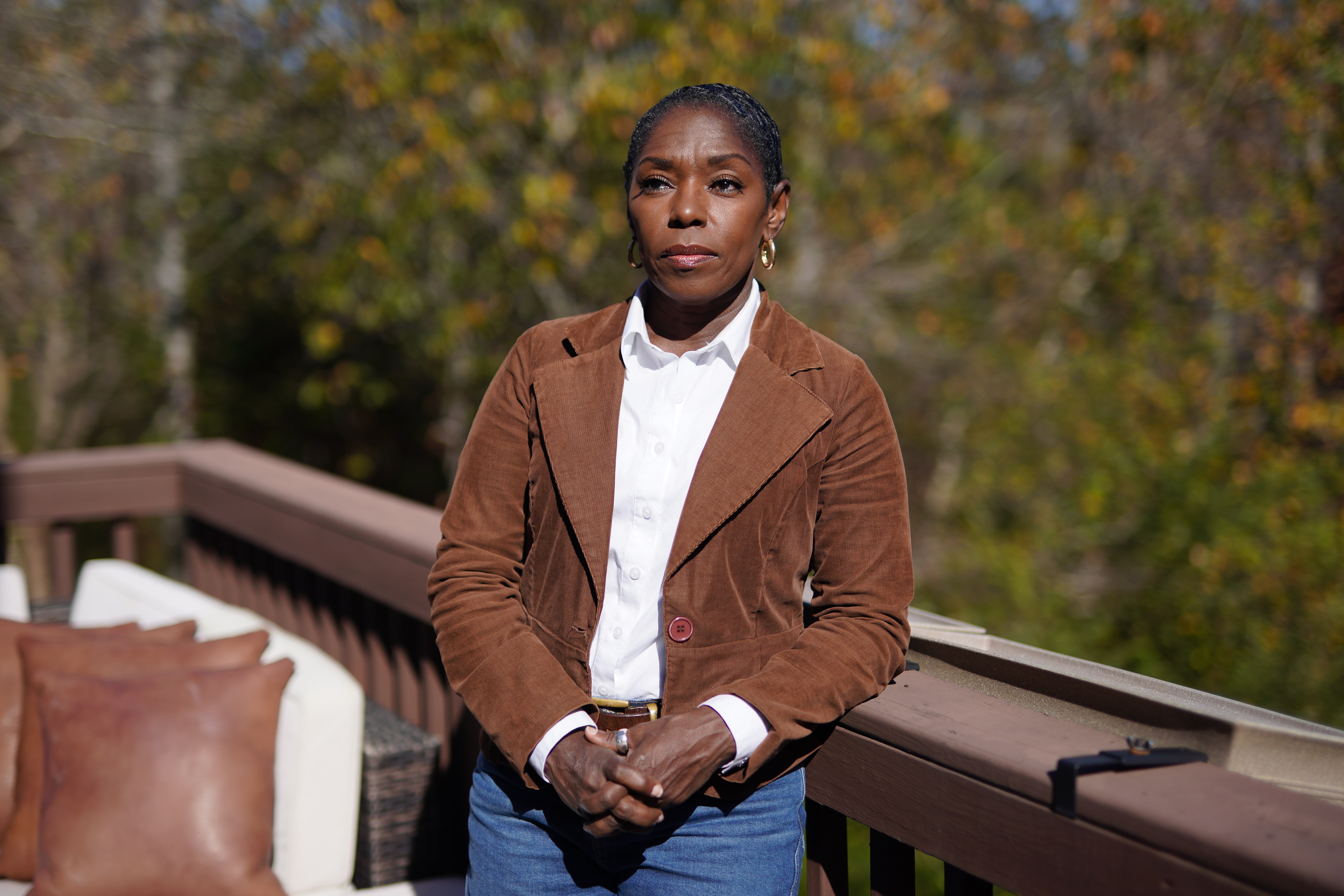
Belcher was told earlier this month, almost a year after she filed an appeal, that it’s being processed. A hearing date has been scheduled for next week. “They really want me and people like me to just stop and just give up and say, ‘You know what, forget it.’” she says. “But I’m so angry on the inside that I won’t stop. You owe me money!”
The Georgia labor department said in a statement that it can’t comment on individual cases like Belcher’s but that it processes all claims for unemployment benefits “in accordance with applicable state and federal laws and regulations without regard to race, ethnicity or gender.”
What happened in Georgia is emblematic of a system that since its birth has often served Black workers poorly, especially in southern states. “In these states where a large workforce is people of color, fewer and fewer people are getting benefits as more and more restrictions have been put into place that have made it harder for workers to get benefits in the traditional state system,” says Andrew Stettner, a senior fellow at the Century Foundation.
The U.S. Department of Labor doesn’t require states to report demographic data about workers who are denied unemployment, leaving a blind spot in the world’s richest economy. Almost all 50 states refused to share such data when approached by Bloomberg this year, though most acknowledged gathering the information as part of the claims process.
Related Story: U.S. States Balk at Providing Data on Jobless-Benefits Denials
In response to a request filed under the state’s open-records law, Georgia’s labor department provided anonymized data for 2.25 million regular unemployment claims filed in the year after March 1, 2020, when pandemic job losses began to accelerate.
The data show that Black workers had a harder time getting unemployment benefits than their White counterparts in a system that both predated the pandemic and is left behind after the expiration of a temporary federal program.
More than half of the 912,574 Black applications for regular unemployment benefits, or 53%, were ruled invalid because the department had no record of income or were denied for other reasons, compared with 42% of White applications, the data show. The disparity was greater for Black applicants who cleared the first hurdle for regular state benefits. They were denied at a rate of 21.6%, more than twice the 10.2% rejection rate for White workers.
The inequity is even more pronounced when the racial composition of Georgia’s labor force is factored in: There are roughly twice as many White workers in the state as Black ones, yet Black workers were twice as likely to have their claims denied.
Those deemed invalid were told to apply for benefits under the special federal program known as Pandemic Unemployment Assistance, or PUA, which helped close some of the racial gap. But many didn’t follow through. Of those who applied for unemployment insurance, 35% of Black workers weren’t approved for any state or federal benefits compared with 30% of Whites.
PUA was created because Congress knew the national unemployment system would be insufficient to support the millions of people thrown out of work by the pandemic. So Republican and Democratic lawmakers increased payment amounts and greatly expanded benefits to those typically left out.
The PUA program didn’t have the same income or job stability requirements. And unlike state unemployment benefits, where employers largely foot the bill, the federal government funded the new program with the intent of supporting those who would normally fall through the cracks, like contractors, gig workers, low-wage workers and even those who couldn’t work because their kid’s school was closed.
Of the 480,860 Black workers denied or ruled ineligible for regular unemployment in Georgia, 181,325 applied for PUA. All but 17,390 were approved. The result was that Black workers, who represent 32% of the state’s labor force, made up a disproportionate percentage of PUA recipients, accounting for 47.4% of those approved.
Some of these outcomes are the result of broader inequities and the structure of the economy. In Georgia, more than half of Black households had an annual inflation-adjusted income below $50,000 in 2019, compared with one-third of White households. And the low-income service jobs hit hardest in the pandemic, in Georgia and across the U.S., were disproportionately ones held by Black, Hispanic and other people of color.
I think it’s racist. Why would you want to treat people like this when they’ve worked and done what you asked them to do?
Black workers across the country have reported not receiving unemployment benefits they applied for at a higher rate than White applicants. In June, the U.S. Census Bureau reported that 31% of Black applicants nationwide said they had failed to receive the help they sought since the beginning of this year compared with 26% of White claimants.
Some Georgia Democrats see inequities in the distribution of unemployment benefits and Republican Governor Brian Kemp’s decision to cut off federal help early, along with anger over voting restrictions, as issues that will motivate Black voters to turn out for the 2022 election. A spokesperson for Kemp declined to comment.
To Sandra Scott, a Democratic state legislator who represents a predominantly Black district on Atlanta’s southern fringe, Bloomberg’s findings point to the need for a state audit of Georgia’s distribution of billions of dollars in unemployment benefits and a U.S. Department of Justice investigation into the civil-rights consequences.
“I think it’s racist,” Scott says, calling the disparities a “mean-spirited” attempt by Republicans in the state to undermine the economic recovery of Black working communities. “Why would you want to treat people like this when they’ve worked and done what you asked them to do?” she says. “I can only call it the way I see it, as racist.’’
In a city like Atlanta, which has a long history of segregation, the consequences are easy to see on a map. ZIP codes in the north of the city with a predominantly White population saw lower denial rates for regular state benefits than largely Black areas in the south.
Kenny Grigsby, who lives in ZIP code 30311 in southwest Atlanta, where 94% of the population is Black, was scratching out a living officiating at high school and collegiate basketball and football games before the pandemic. When sports shut down, so did the 61-year-old former postal worker’s main source of income. He was denied regular unemployment because he was a freelancer and then told he was eligible for PUA.
He applied in April 2020 and was sent a debit card a few weeks later. But after 19 months, Grigsby is still waiting for what he is owed to be loaded into the account linked to the card. He’s three months late on his rent, and while he has gotten rental assistance in the past with help from a local charity, Hosea Helps, he is again fending off his landlord and struggling to pay bills. After Bloomberg asked the labor department about his case, he was told he would have to reapply all over again because the agency said it never received his PUA application.
“That’s a year of my finances coming in—that’s a pretty big lick,” Grigsby says of the missing benefits. “I’ve been taking care of my business. They should take care of theirs. It’s hurtful. You are trying to find a way to do it without losing your cool, but you get pushed to the edge.”

Grigsby is one of thousands of low-income Georgia residents for whom getting benefits means running an obstacle course.
Workers who leave a job voluntarily or are dismissed for misconduct are required to earn at least 10 times the weekly unemployment benefit in a new job before they become eligible again. It’s a rule that can hit low-income temp workers in the service industry especially hard as it applies to any job assignment they don’t accept from an agency. Other states have requirements of five times, or less.
Of the 224,710 Georgians denied state unemployment benefits in the year after the onset of the pandemic, 124,785 were rejected because of that requirement, according to the data obtained by Bloomberg. Black workers accounted for about 40% of all applicants but more than half of those denied because of the 10-times-weekly-benefit hurdle.
Advocates for reform of the U.S. unemployment system say that while eligibility rules are designed to ensure benefits go to workers who lose their jobs rather than more casual members of the labor force, they often discriminate against people stuck in low-income service jobs. They had hoped that moves to broaden benefits and reduce barriers would be part of the reconciliation bill that now contains Biden’s social agenda. But the breadth of that bill was scaled back after some Democrats objected to its size, leaving any significant reform unlikely in the short term.
“Congress has not taken any kind of lesson that there’s something wrong with the core program,” says the Century Foundation’s Stettner. “So now we’re back to a place where the system is once again incredibly inequitable.”
In an economy in which the nature of work has changed, rules disqualifying gig workers are old-fashioned, says Wingo Smith, a regional policy analyst at the Southern Poverty Law Center. His group, along with others, has filed a class action lawsuit against Georgia over delays in the payment of unemployment benefits. “What we see is really just a barrier that we’re putting up in order to exclude low-income workers and to reduce the cost to employers,” Smith says.
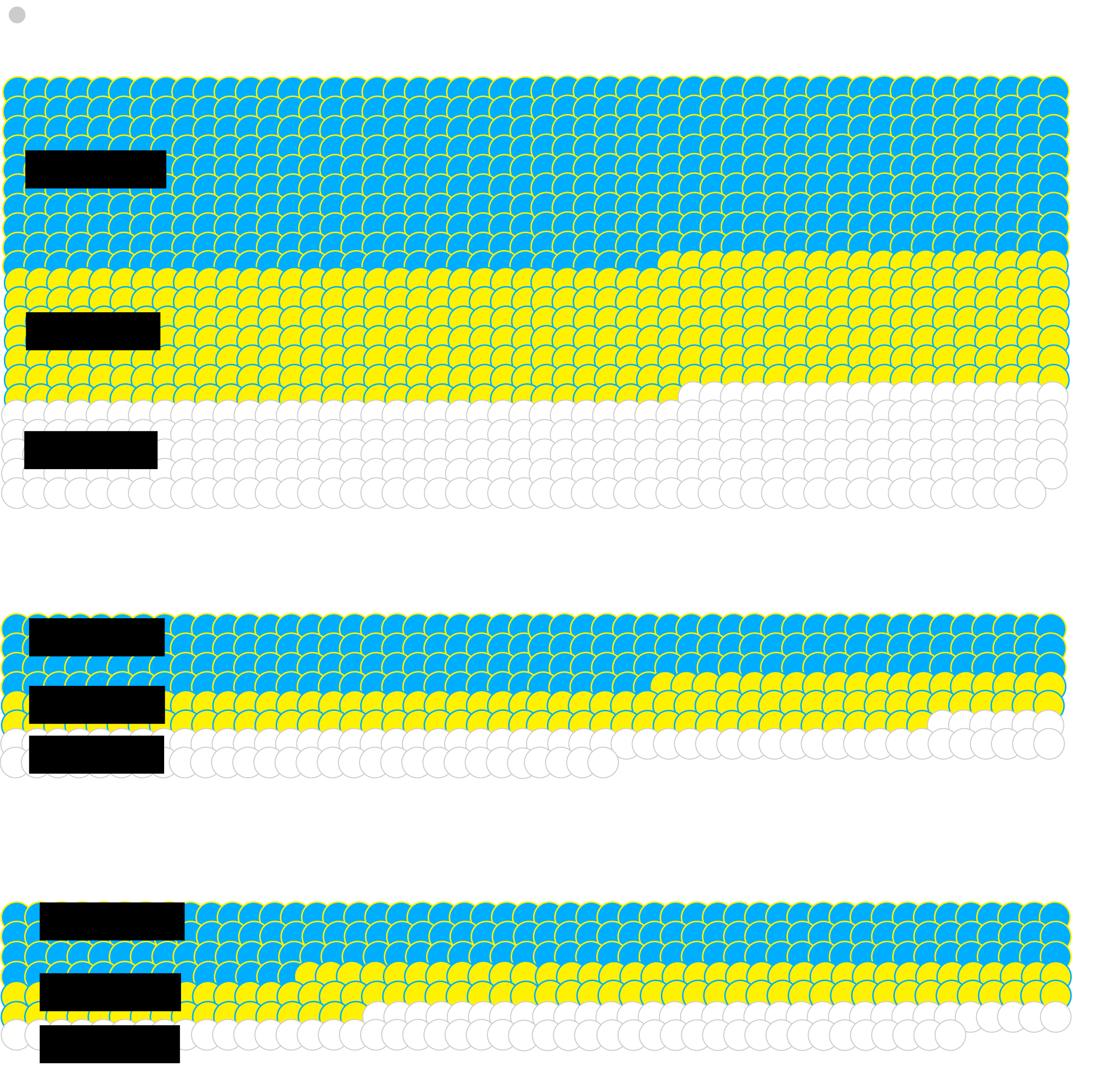
More than 1 million people who applied for regular unemployment benefits in Georgia had claims denied or otherwise ruled invalid.
= 1,000 people
43.8% Black
31.9% White
24.3% Other
Only 35% of them applied for the federal aid, leaving more than 700,000 people who sought help with no benefits at all.
47.7% Black
29.8% White
22.5% Other
Of those who did apply to the federal program, 91% were approved. The approval rate was roughly the same for Black and White applicants.
47.4% Black
29.9% White
22.6% Other

= 1,000 people
More than 1 million people who applied for regular unemployment benefits in Georgia had claims denied or otherwise ruled invalid.
43.8% Black
31.9% White
24.3% Other
Only 35% of them applied for the federal aid, leaving more than 700,000 people who sought help with no benefits at all.
47.7% Black
29.8% White
22.5% Other
Of those who did apply to the federal program, 91% were approved. The approval rate was roughly the same for Black and White applicants.
47.4% Black
29.9% White
22.6% Other
= 1,000 people
More than 1 million people who applied for regular unemployment benefits in Georgia had claims denied or otherwise ruled invalid.
43.8% Black
31.9% White
24.3% Other
Only 35% of them applied for the federal aid, leaving more than 700,000 people who sought help with no benefits at all.
47.7% Black
29.8% White
22.5% Other
Of those who did apply to the federal program, 91% were approved. The approval rate was roughly the same for Black and White applicants.
47.4% Black
29.9% White
22.6% Other
It also meant that when Georgia pulled out of PUA and other federal programs in June, months before they ended, Black Georgians suffered disproportionately.
While it was in place, PUA “was an anti-racist tool,” says Ray Khalfani, an analyst at the Georgia Budget and Policy Institute. “It opened the window to a lot of workers who had been denied access to unemployment benefits.”
That something similar hasn’t made it into the Democrats’ social spending plan is frustrating, he says. “We can’t afford to be in this type of place again in another recession,” says Khalfani. “I’m hoping that we finally learn our lesson. Because the need is now.”
The data obtained by Bloomberg offer an incomplete picture. More than 385,000 regular state unemployment claimants declined to share information about their race. Less than 1% identified as Hispanic, even though about 10% of the labor force is. In addition, there are far fewer claims than the 4.7 million the state labor department reported it received during the same period. Officials say much of the difference comes from duplicate claims filed by frustrated workers trying to navigate an overloaded system.
What we see is really just a barrier that we’re putting up in order to exclude low-income workers and to reduce the cost to employers.
The U.S. unemployment system has left many Black workers behind from the start. When it was established under the Social Security Act of 1935, it excluded agricultural and domestic workers, a disproportionate number of whom were Black. Census data from that period show those exclusions meant 27% of White workers and 65% of Black ones weren’t covered.
Like many across the country, Georgia’s unemployment system received an unprecedented number of claims during the pandemic. But to critics, the backlog and delays that resulted were the consequence of a decade-long project by Republicans to strangle the system.
The economic consequences of how unemployment benefits were distributed are still playing out. While Georgia’s unemployment rate is now at a record low, many Black workers have been slower to find jobs. They remain a disproportionate share of those still receiving unemployment benefits, making up 51% of recipients in September.
In the city of East Point, where the economy revolves around the nearby Hartsfield-Jackson Atlanta International Airport, the disparities still cast a shadow. The unemployment rate of 5.3% in September was down from a 20.5% peak in April 2020. But like many predominantly Black areas in and around Atlanta, more than half the working-age population applied for regular unemployment benefits in the 12 months beginning in March 2020. And more than half of those had their claims denied or declared invalid, the data show. While some got into the PUA program, more than one-third of all applicants got no help at all.
For too many of her constituents “the safety net didn’t provide any safety,” says Deana Holiday Ingraham, East Point’s Democratic mayor. That had a domino effect that endures today, she says, leading to more people seeking food assistance or help catching up on their rent. The city saw its own income from hotel room taxes fall by 70% last year and has been scrambling to get hold of federal aid distributed by state and county governments.
Who got benefits and when often made little sense. Nick Anderson, who lives in East Point, received unemployment for a while after losing his job as a waiter at an Applebee’s near Truist Park, home of baseball’s Atlanta Braves, in March 2020. A fellow server, Heather Duhaime, was denied benefits for not having worked in Georgia long enough. That led the pair to set up their own landscaping business and go door to door in search of work.
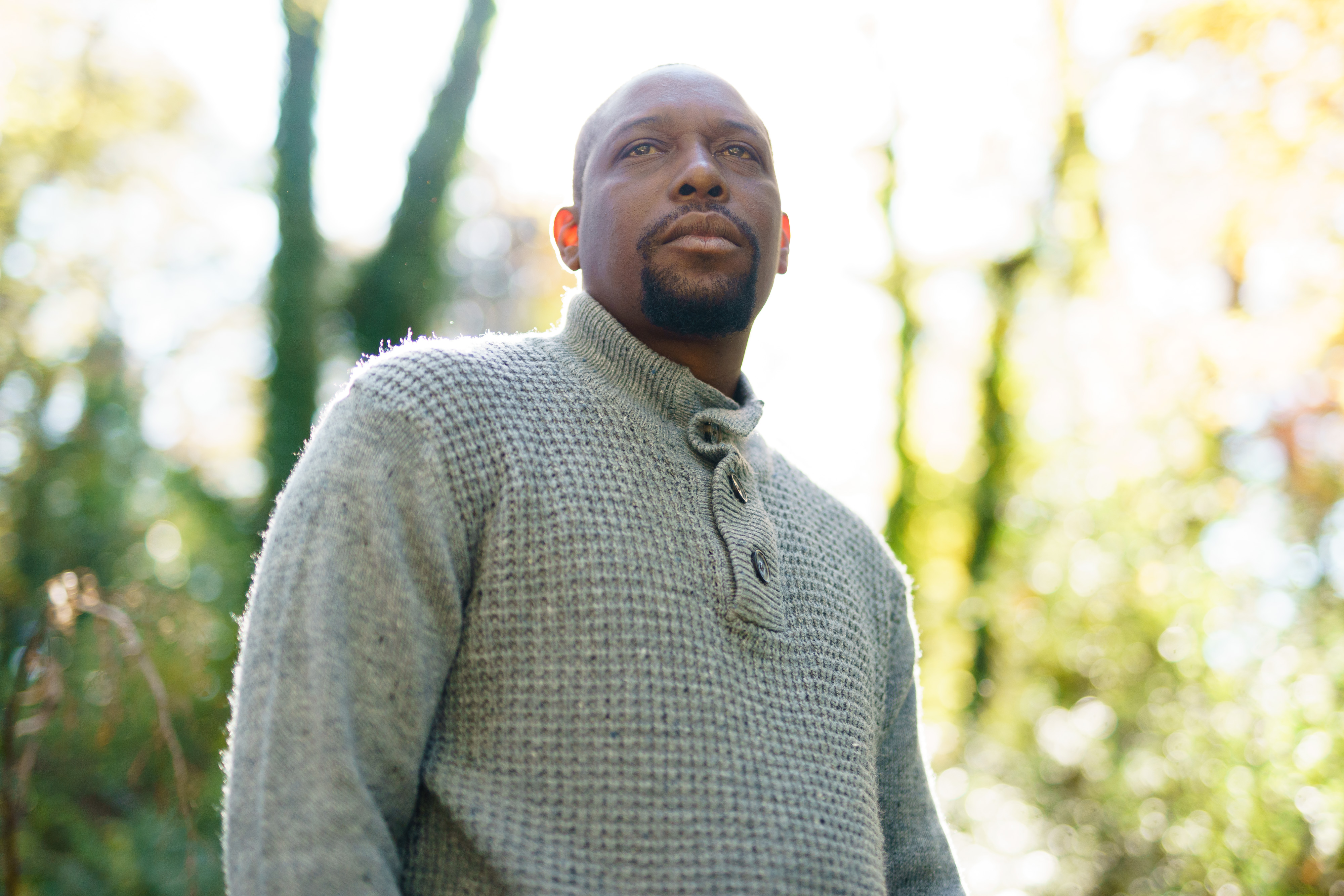
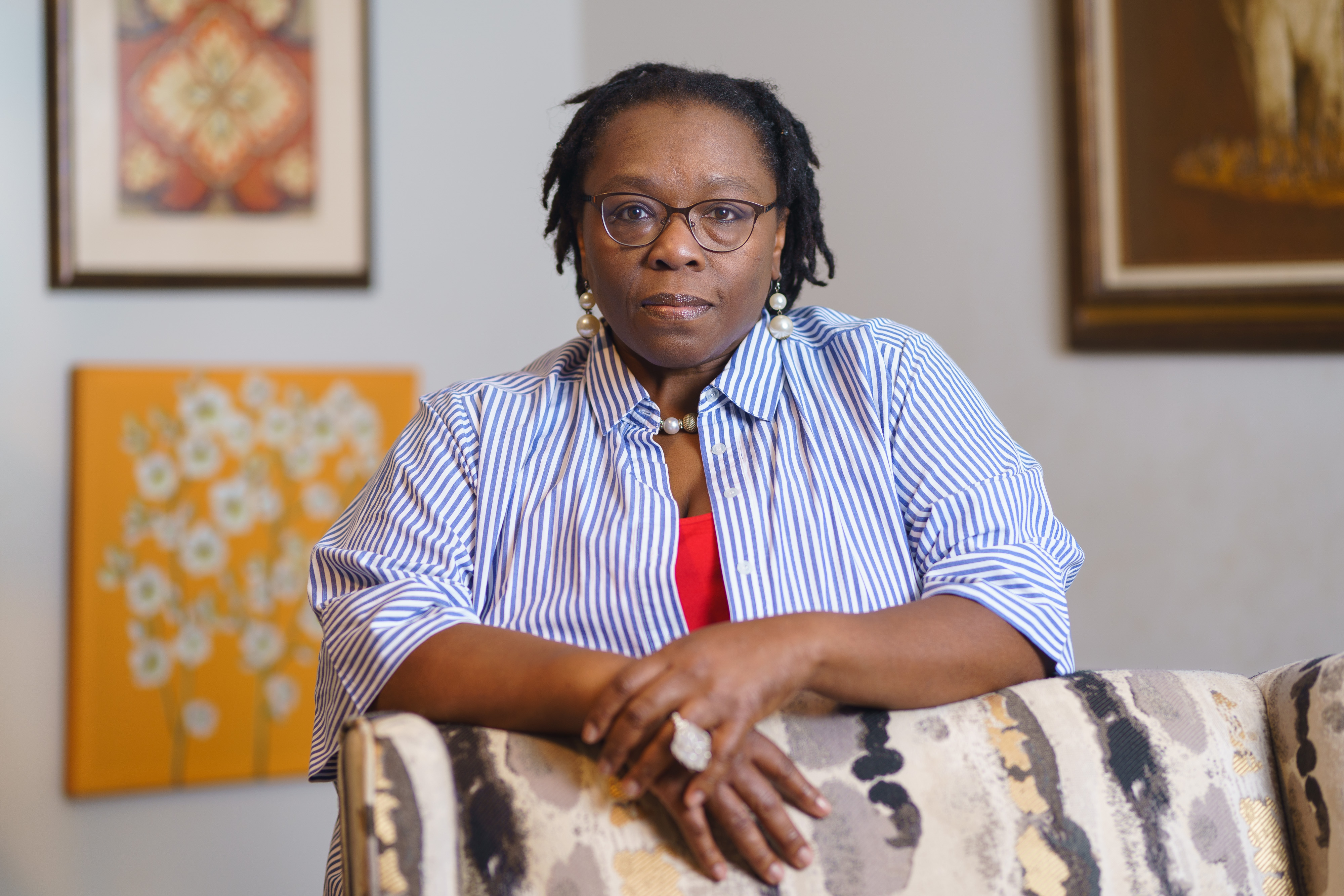
They moved in with Nick’s sister, Sheila Anderson, to save money. Sheila, who lost her $80,000-a-year job as a manager at an Instacart call center, spent six months fighting an overloaded system to get her first unemployment payment, a $6,000 lump sum that landed in February. She received $665 a week until the end of June when her benefits ended.
The family’s economic woes have been overshadowed by their own pandemic tragedy. Nick and Sheila lost their mother to Covid-19 in January, shortly after Sheila was hospitalized with the virus.
But the daily economic hardships haven’t gone away. Sheila spent most of October applying for jobs and wondering how she would pay her November rent. Her main income was coming from $15-a-plate Sunday meals she cooked for neighbors. Her 23-year-old son moved to Texas in search of work and promised to send money. Nick helped too. Still, the toll was hard to escape.
“I’ve been drowning financially, and I’m drowning emotionally,” Sheila says. “I now feel like a dog in the dirt scrapping for crumbs.”