A Year Later, U.S. Is Still Charting the Long Way Back to Normal
After the worst economic collapse in almost a century, the U.S. is now on the cusp of the biggest boom since the Reagan years.
Wave after wave of stimulus spending by the Trump and Biden administrations, coupled with unprecedented moves by the Federal Reserve to keep ultra-low-rate loans flowing to Wall Street and corporate America, are big parts of the reason why.
But as good as this rebound will feel, it promises to be about as cruelly uneven — benefiting some greatly while barely touching others — as the crash. And even if all goes as planned and growth surges to a red-hot 6% or more, many parts of the economy will still end the year deep in the pandemic hole they fell into last spring.
Normal, in other words, is still a long, long ways off.
One year after the Fed unveiled many of those first emergency measures late on a Sunday afternoon, here’s an industry-by-industry look at how far the economy has snapped back already — and how much farther it has to go.
Home Front
Some of the biggest beneficiaries of the Fed’s move to slash its benchmark interest rate to essentially zero were homeowners and homebuyers.
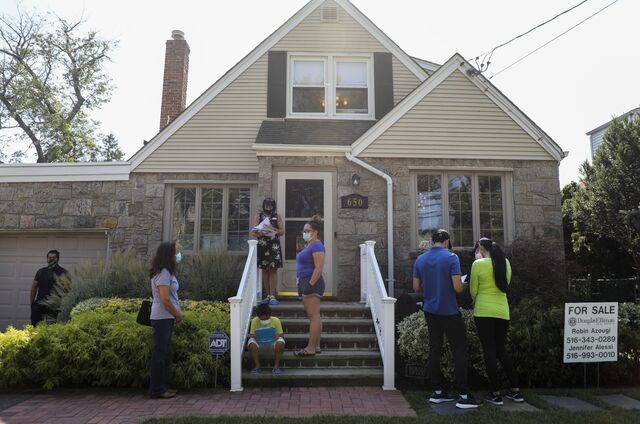
The rock-bottom rates ignited a refinancing boom that pushed mortgage industry profits to a record high, and a flood of buyers looking for suburban properties — with more space to work from home — sent values to a record high. The increase in home prices on a year-over-year basis currently rivals gains not seen since the height of the previous housing boom in 2005.
Home Prices

Sources: Bloomberg, National Association of Realtors
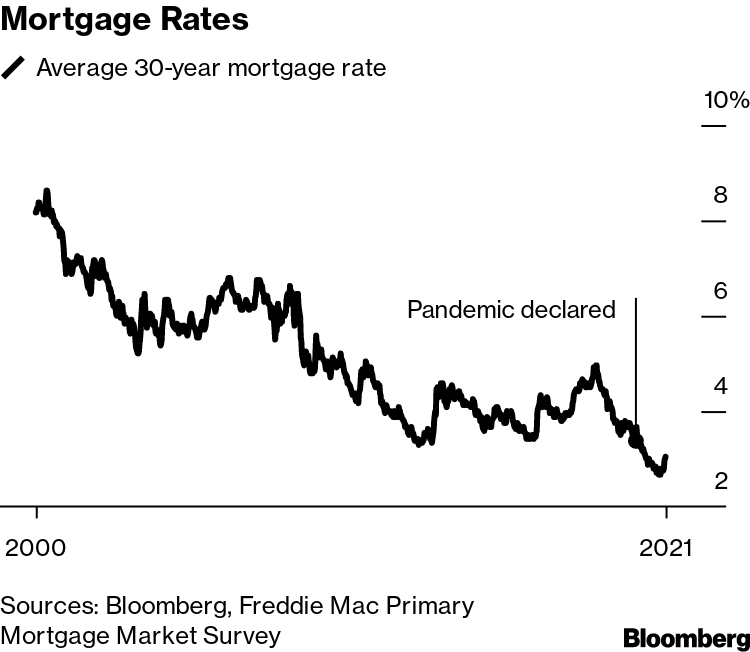
Mortgage rates hit a record low 17 times since last March. And while the interest rate on a 30-year loan ticked up this year, it’s still around 3%, which was once thought to be as low as costs could go.
Mortgage Rates
Sources: Bloomberg, Freddie Mac Primary Mortgage Market Survey
But as many benefited, many fell behind. About 11 million renter and homeowner households were significantly overdue on payments as of December, according to a March report from the Consumer Financial Protection Bureau. And Black and Hispanic households were more than twice as likely to be behind as White families.
Government forbearance programs have largely staved off an eviction crisis so far, but that shadow of unpaid debt hangs over the economy in the months ahead.
Junk Rally
The Fed’s decision last April to prop up even some junk-rated securities sparked a rally that was so powerful it paved the way for a record year of U.S. corporate debt issuance that’s so far carried into 2021.
While ultimately only a small portion of its firepower was used, the Fed created a backstop, which reassured Wall Street that a massive wave of defaults would likely be avoided.
Some of the companies worst affected by the pandemic such as Carnival Corp., United Airlines Holdings Inc. have borrowed billions of dollars from institutional investors to stay afloat.

And nearly a year after the Covid-19 outbreak was officially declared a pandemic, the average yield on U.S. high-yield bonds dropped below 4% for the first time since records began in the 1980s. It has since climbed back slightly, reaching around 4.4% as of March 10.
Junk-Bond Yields

Note: Based on securities with middle rating from Moody's, Fitch and S&P of Ba1, BB+, BB+ or below
Source: Bloomberg Barclays U.S. Corporate High Yield Bond Index
Even municipal bonds that help finance state and local governments — which incurred immense strain battling the pandemic — have rebounded. Prices went haywire in March 2020, prompting the Federal Reserve to step in with a $500 billion lending program in April that sought to provide bridge loans to municipalities.
Ultimately, the Fed's Municipal Liquidity Facility only made about $6 billion worth of loans in 2020, but its presence in the market as a buyer of last resort helped restore market calm and helped drive benchmark municipal-bond yields back to their lows.
Wall Street
On Wall Street, government aid to households and declines in spending spurred some $2 trillion in fresh deposits to flow to the 25 biggest U.S. banks last year, Fed data show.
For the first time in recorded data, the share of big banks' collective assets dedicated to loans, their primary product, dipped below half in May 2020 and have fallen further since. Bank lending had contracted during past downturns, such as after the 2008 financial crisis, but never to this extent, especially when measured against their capacity to provide credit.
Shunning risk, banks sought refuge in Uncle Sam. Their holdings of cash, Treasuries and other federally-backed securities jumped to record levels, to the point that close to $2 of every $5 they have is in an asset with virtually zero credit risk.
Assets of Large Banks

Note: Based on data from U.S.'s 25 largest domestically chartered banks; figures for cash, Treasuries, etc. include agency and mortgage-backed securities
Source: U.S. Federal Reserve
Executives at the nation's largest banks have told regulators and their investors that there's little demand for credit. But that drop in demand coincided with a historic tightening of terms, leaving it unclear whether borrowers stopped asking for money, or if they turned away from lenders after bankers made it harder for them to borrow.
Some bank executives have told investors in recent months that they expect to grow their loan books in the second half of this year, prompting analysts to expect higher revenues. The nation's largest banks will have some catching up to do: Loans have fallen by more than $35 billion through the first two months of this year.
Travel Stop
When it comes to energy, there are early signs the U.S. is starting to see a return to normal.
A rolling average of gasoline supplied, which the U.S. government uses as a proxy for demand, shows consumption for the fuel is up 52% from the end of April as Americans get back on the road.
Change in Fuel Demand

Note: Change since January 2020, based on four-week average of product supplied
Sources: Bloomberg, U.S. Department of Energy
The outlook is grimmer for jet fuel, which has borne the brunt of the pandemic’s impact among oil products.
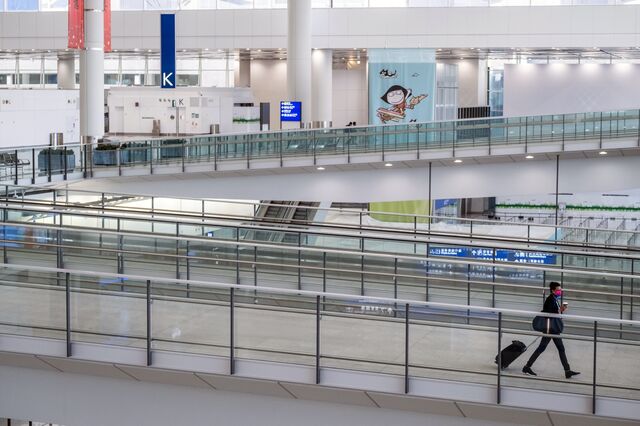
A stronger recovery in international travel will likely occur starting from the middle of next year, according to Bloomberg Intelligence. In the meantime, while daily foot traffic at U.S. airports has averaged over 1 million so far in March, it still remains nearly 50% below levels over the corresponding period last year, data from the Transportation Security Administration show.
Jobs Market
The jobs market is arguably the biggest hole yet to close in the economy. More than 22 million jobs vanished in March and April. And millions dropped out of the labor force because of fears of contracting the virus, a lack of childcare while schools closed or other pandemic-related restrictions.
Joblessness

Note: Chart shows the U-6 unemployment rate, which is broader than the more widely cited U-3 rate; it also includes underemployed (part-time) workers and those discouraged from seeking jobs
Sources: Bloomberg, U.S. Bureau of Labor Statistics
Weakness in the labor market laid bare inequalities among race, gender and socioeconomic lines. The unemployment rate for Black Americans has recovered slower than the rate for White Americans, and the labor force participation rate has weakened more for women than men.
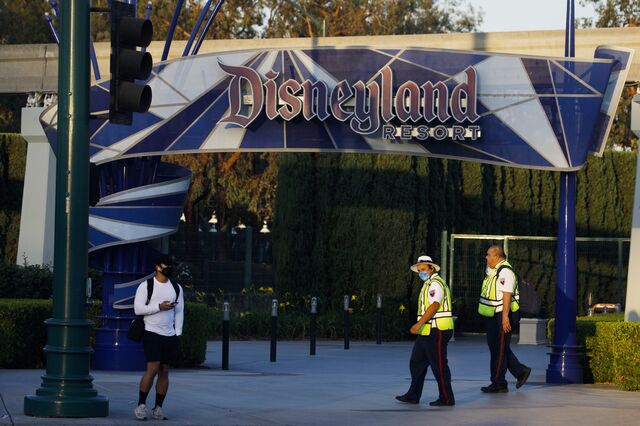
A full recovery depends heavily on the performance of the services sector — that includes hotels, theme parks and concert venues. The latest jobs report for February saw a surge in leisure and hospitality employment, but the sector is still about 3.5 million jobs short of a year ago.
Restaurants and Bars

Note: Change measured from December 2018, based on seasonally adjusted figures
Sources: National Restaurant Association, U.S. Census Bureau (sales), U.S. Bureau of Labor Statistics (jobs)
And while online sales at companies like Walmart Inc. and Target Corp. surged during the pandemic, small businesses that relied on in-person activity — like restaurants and bars — were hit particularly hard. Many have yet to fully regain lost ground.
Wealth Gap
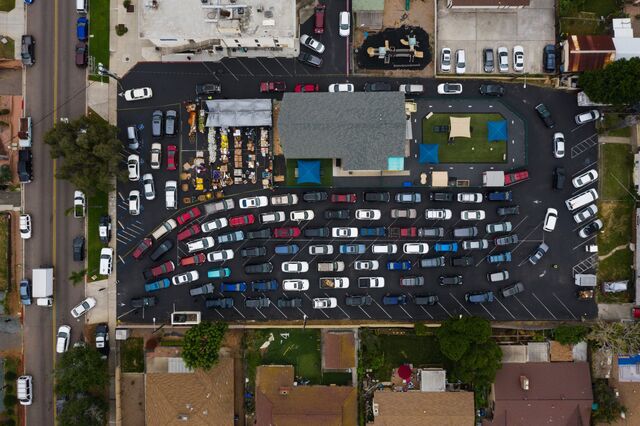
The job losses brought the sharpest rise in the U.S. poverty rate last year since the 1960s and images of Americans waiting in lines around the country for food are one of the lasting images of the pandemic.
In what has been deemed the K-shaped recovery, the wealthiest separately saw their incomes rise as stocks soared on support from the Fed and government stimulus. The S&P 500 Index of U.S. equities is up about 75% from the low in March last year, increasing the combined wealth of the nation’s 100 richest people by more than $1 trillion.
Richest Get Richer

Source: Bloomberg
President Joe Biden’s additional $1.9 trillion to support the economy, which passed Congress this week, aims to reduce some of the inequities that the pandemic exposed. It comes at a time of extremely low interest rates on debt but has also spurred debate among economists and investors over future inflation and how to pay for the spending.
The U.S. federal debt will grow to more than double the size of the economy in three decades, the Congressional Budget Office said March 4.
Outlooks for the economy are improving with the rollout of vaccines and as states reopen more activity but challenges remain for a full recovery.
"There's still a lot of pain out there,” said Fed Chair Jerome Powell on March 4. “If we can just decisively end the pandemic, we could get back to normal."
With reporting from Vince Golle, Alex Tanzi, Amanda Albright, Davide Scigliuzzo and Jack Witzig