How China’s Influence Is
Reshaping the Landscape of
香港
Hong Kong
Hong Kong
Beijing’s increasing grip over Hong Kong has done more than snuff out democracy advocates: It’s also led to fluid changes in the city’s physical landscape. From shuttered storefronts and barricaded buildings in the wake of historic protests in 2019 to a hotel converted into the headquarters of the new National Security Office, evidence of China’s heavy hand is all around.
Even more changes are in store for the former British colony, which came under China’s control in 1997. Hong Kong’s government is embracing closer ties with the mainland, while thousands of city residents may move to the U.K. to take up an offer of citizenship. Beijing’s new restrictions on free speech and increased pressure on the judiciary may also spur an exodus of some multinational companies whose logos dot Hong Kong’s much-photographed skyline. And barricades erected during the protests are now starting to come down as the demonstrations have subsided.
Here’s a look at the changes now consuming Hong Kong, from rural areas near China’s border to the skyscrapers towering over Victoria Harbor.
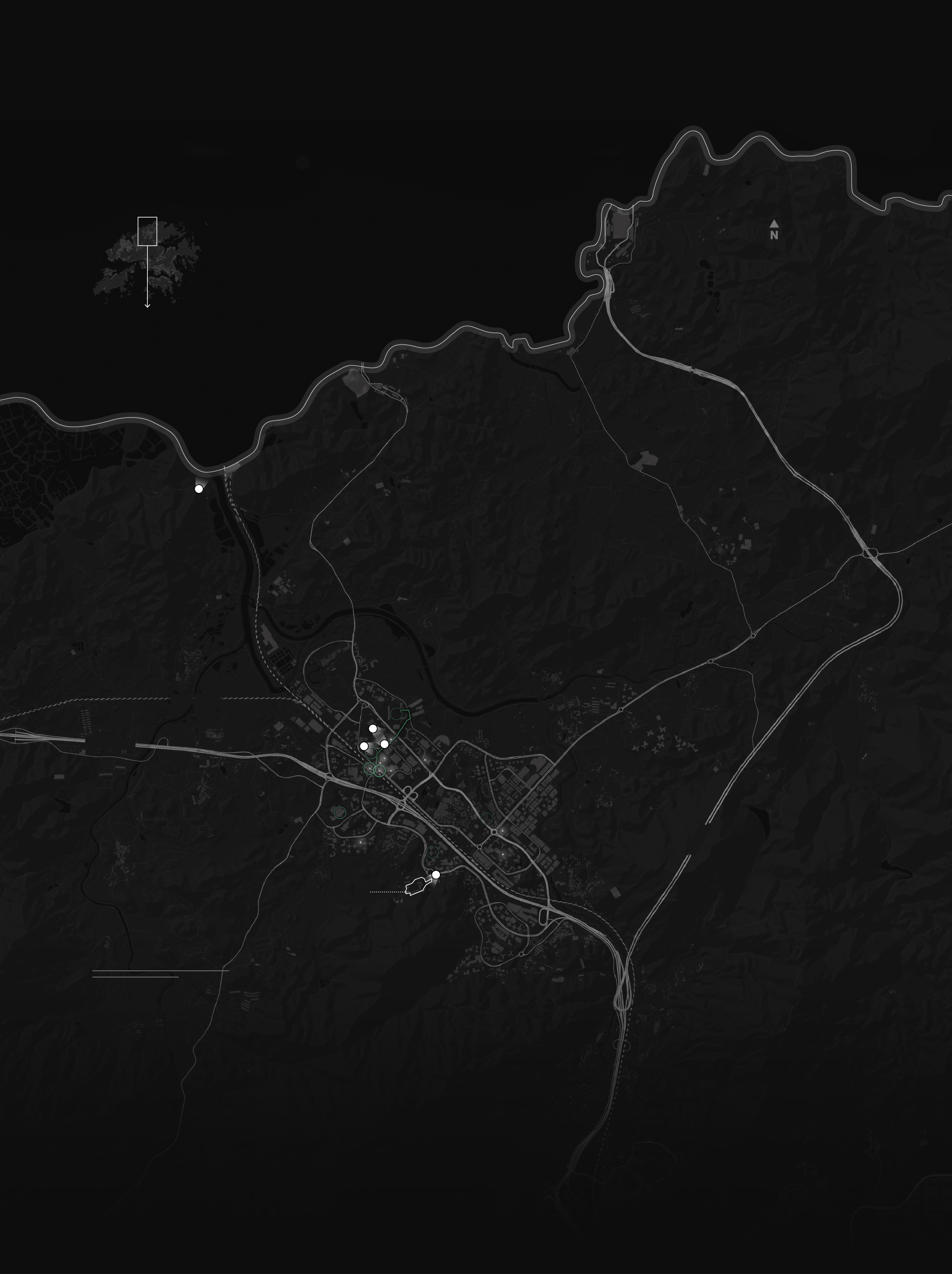
New Territories
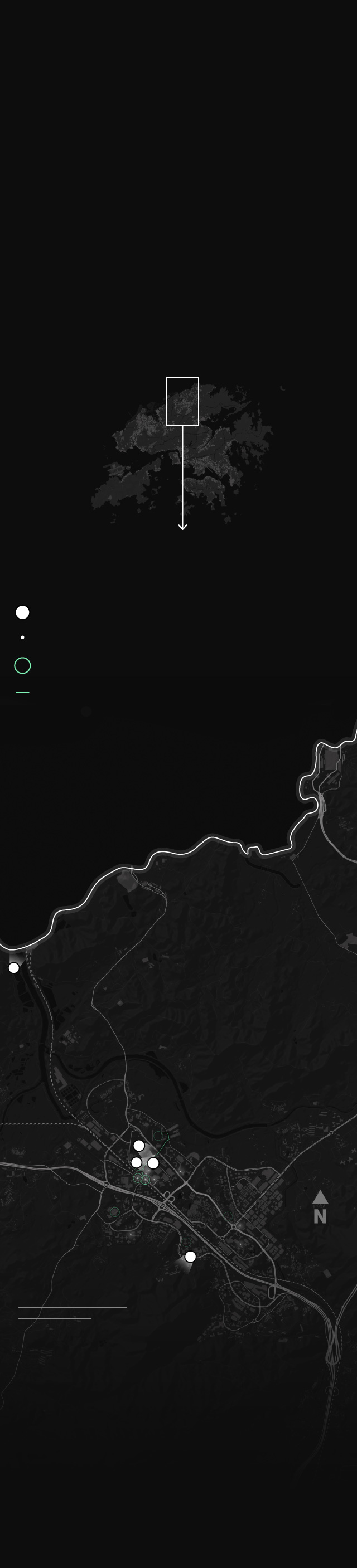
The neon skyline of mainland technology hub Shenzhen looms over this part of the territory.
Enlarged
area below
Shenzhen
HONG KONG
Lo Wu
NORTH
District
RAILWAYS
HIGHWAYS
Sheung Shui
TUNNEL
Hong Kong Police Tactical Unit Headquarters
Fanling
1 mile
1 km
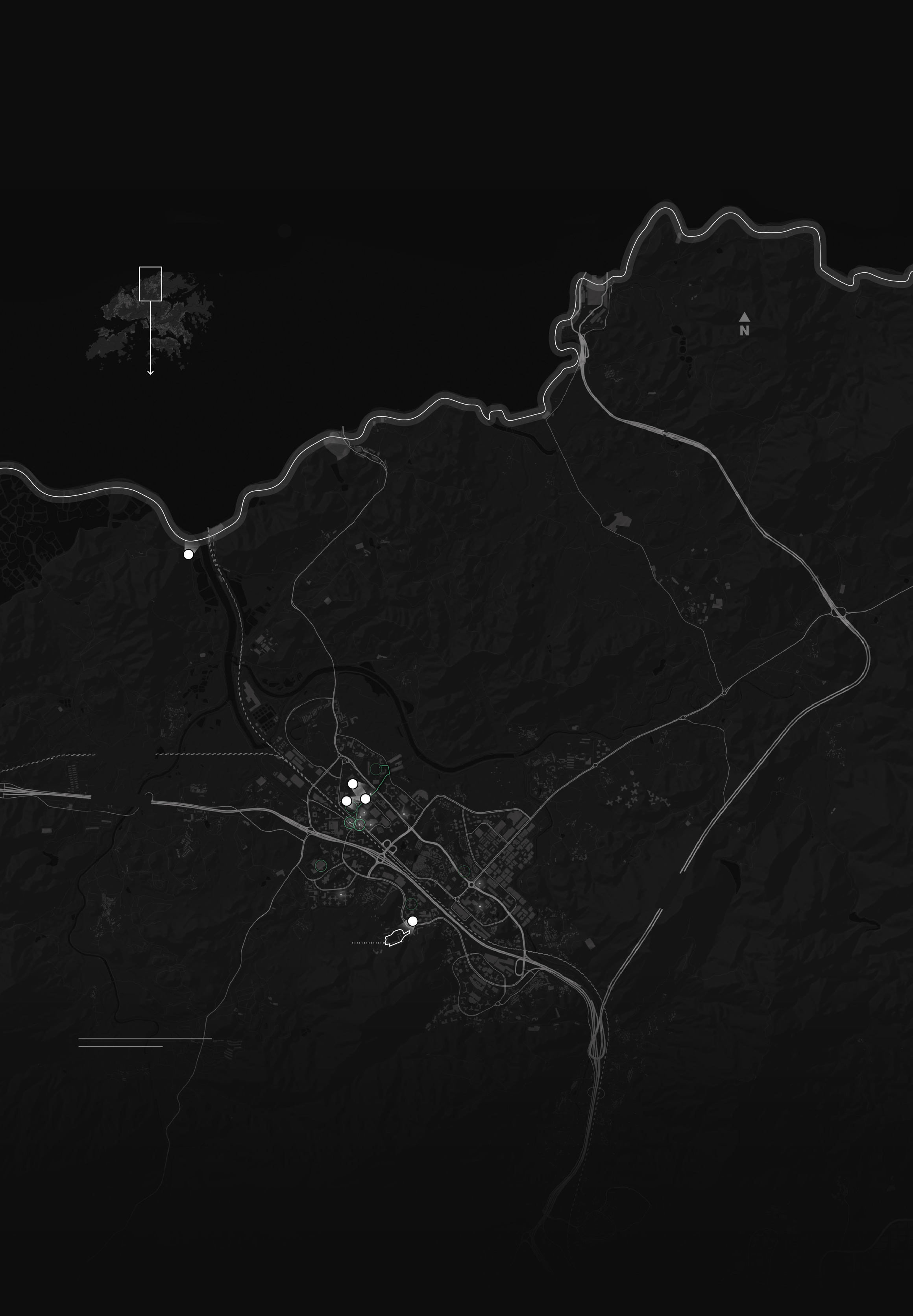
New Territories
The neon skyline of mainland technology hub Shenzhen looms over this part of the territory.
Enlarged
area below
Shenzhen
HONG KONG
Lo Wu
NORTH
District
RAILWAYS
HIGHWAYS
Sheung Shui
TUNNEL
Hong Kong Police Tactical Unit Headquarters
Fanling
1 mile
1 km
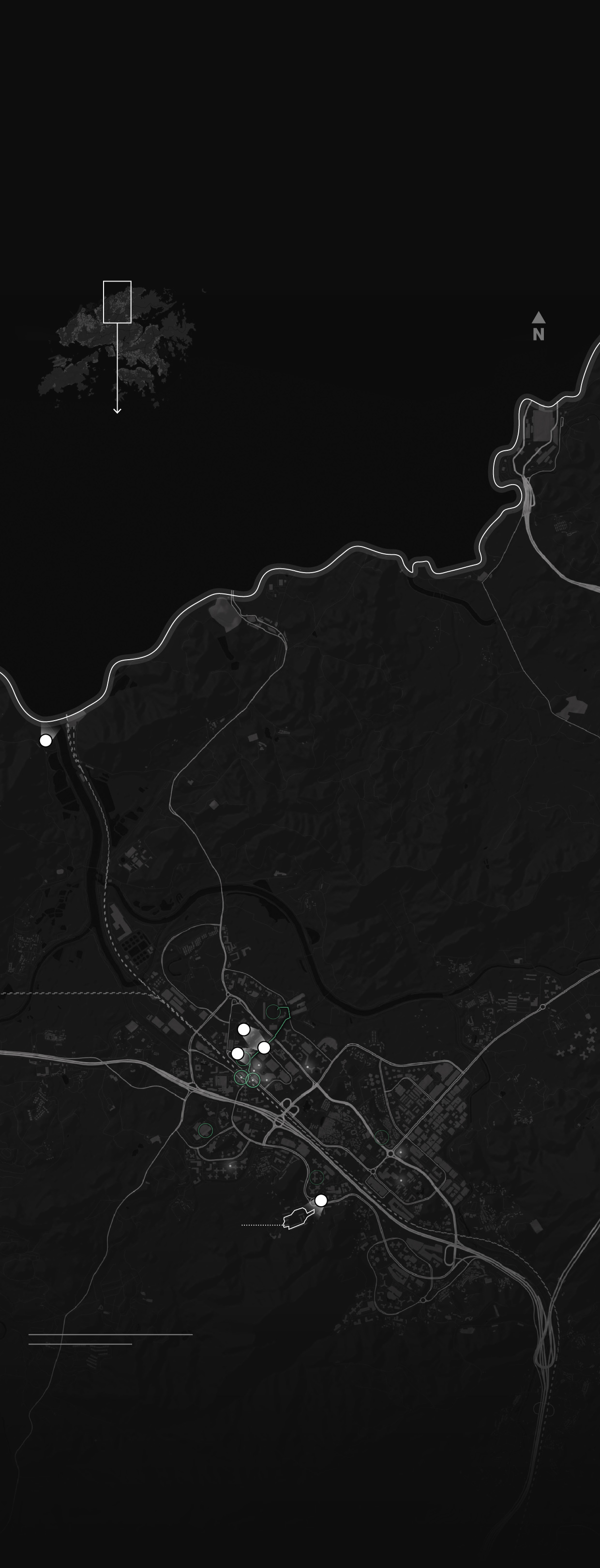
New Territories
The neon skyline of mainland technology hub Shenzhen looms over this part of the territory.
Enlarged
area below
Shenzhen
HONG KONG
Lo Wu
Sheung Shui
Hong Kong Police Tactical Unit Headquarters
Fanling
1 mile
1 km
New Territories
The neon skyline of mainland technology hub Shenzhen looms over this part of the territory.
Enlarged
area below
LOCATION WHERE EACH PHOTO WAS TAKEN
TEAR GAS FIRED DURING PROTESTS
PROTESTS LOCATION
PROTESTS Mobilization
Shenzhen
HONG KONG
Lo Wu
Sheung Shui
1 mile
Fanling
1 km
Lo Wu and Sheung Shui
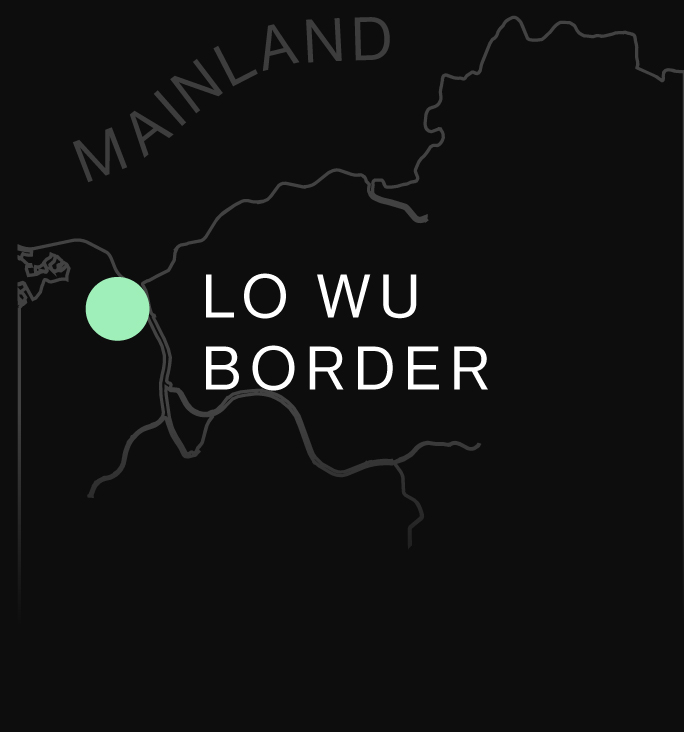
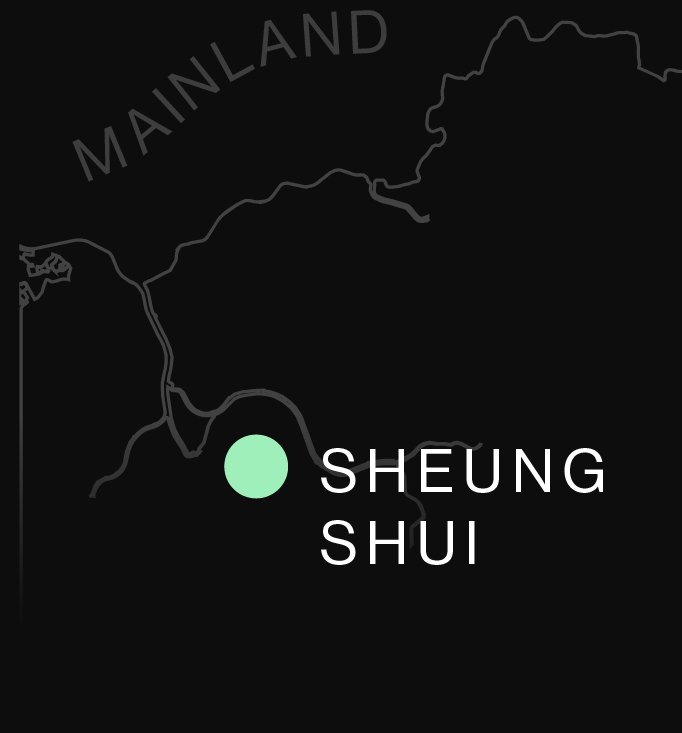
Hong Kong’s metro trains end at Lo Wu, the station at the border with Shenzhen. One stop away is the former traditional village of Sheung Shui, which has been transformed by mainland tourism. Before the coronavirus shut down travel early last year, it was the center of a practice known as “parallel trading” in which goods are bought in Hong Kong and resold across the border.

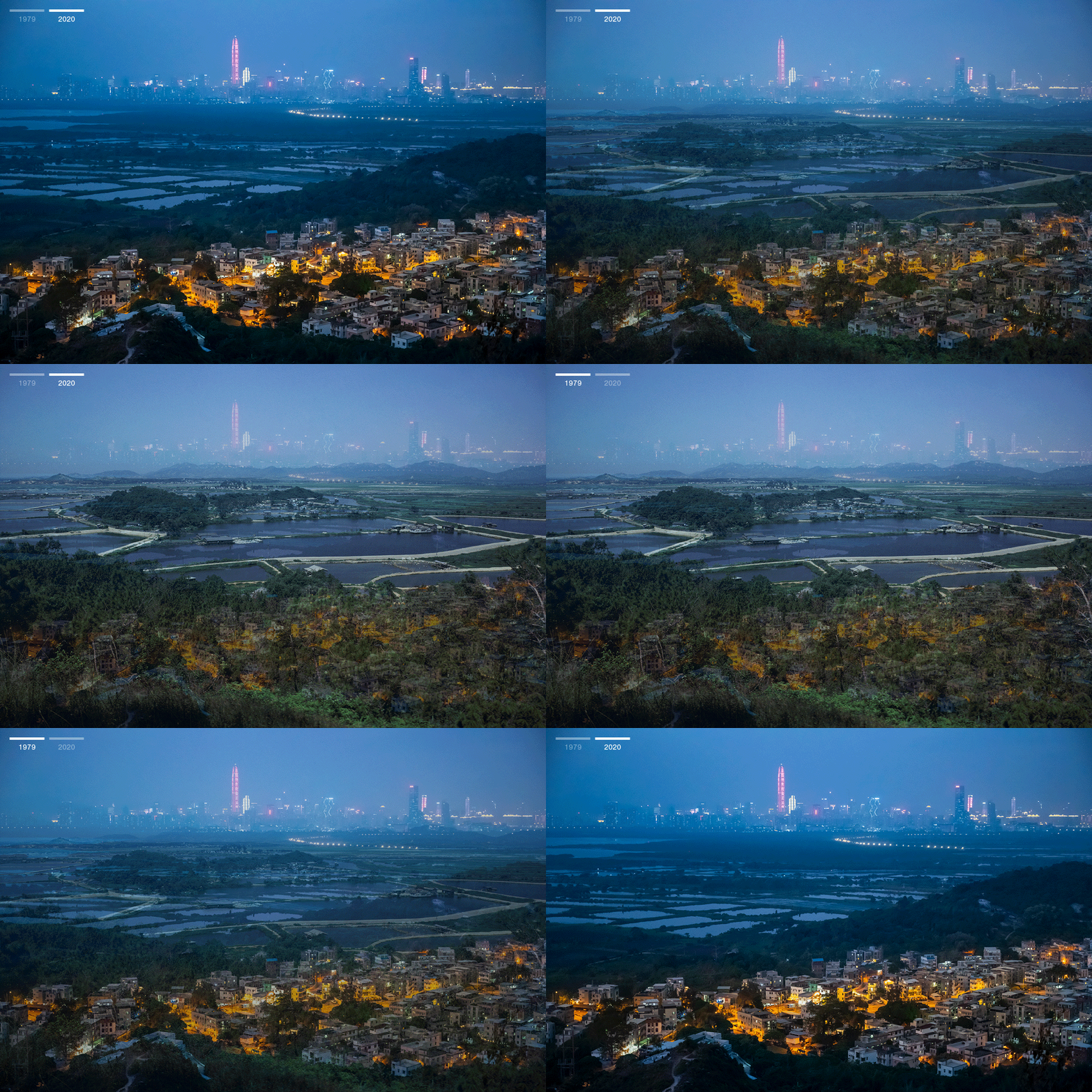
The rise of tech hub Shenzhen just across the Hong Kong border has exacerbated concerns over China's growing influence since the 1997 handover. A proposal to allow extraditions to the mainland kicked off the 2019 pro-democracy protests.
▲ Photographer: Billy H.C. Kwok/Bloomberg; Richard Baker/In Pictures/Getty Images
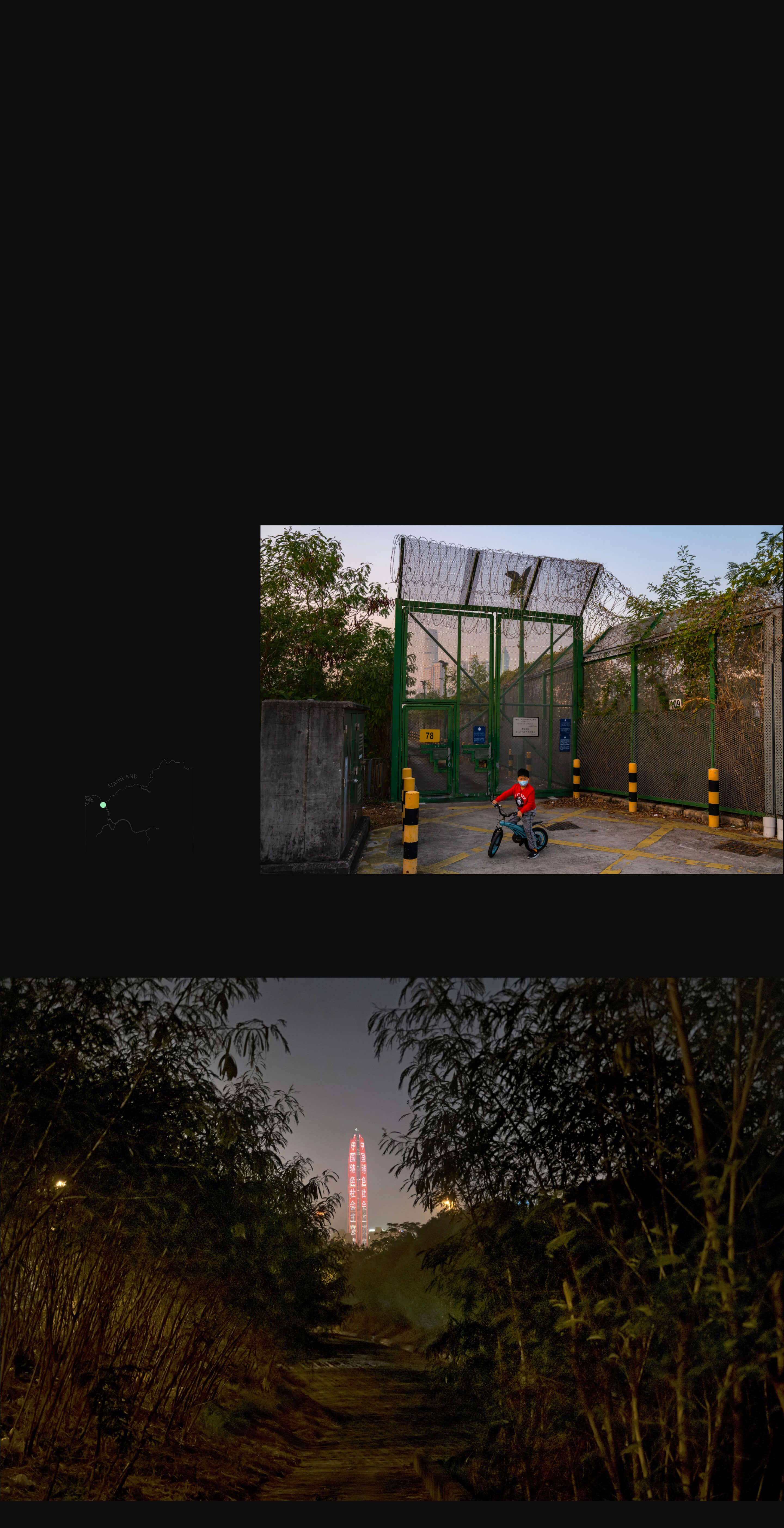
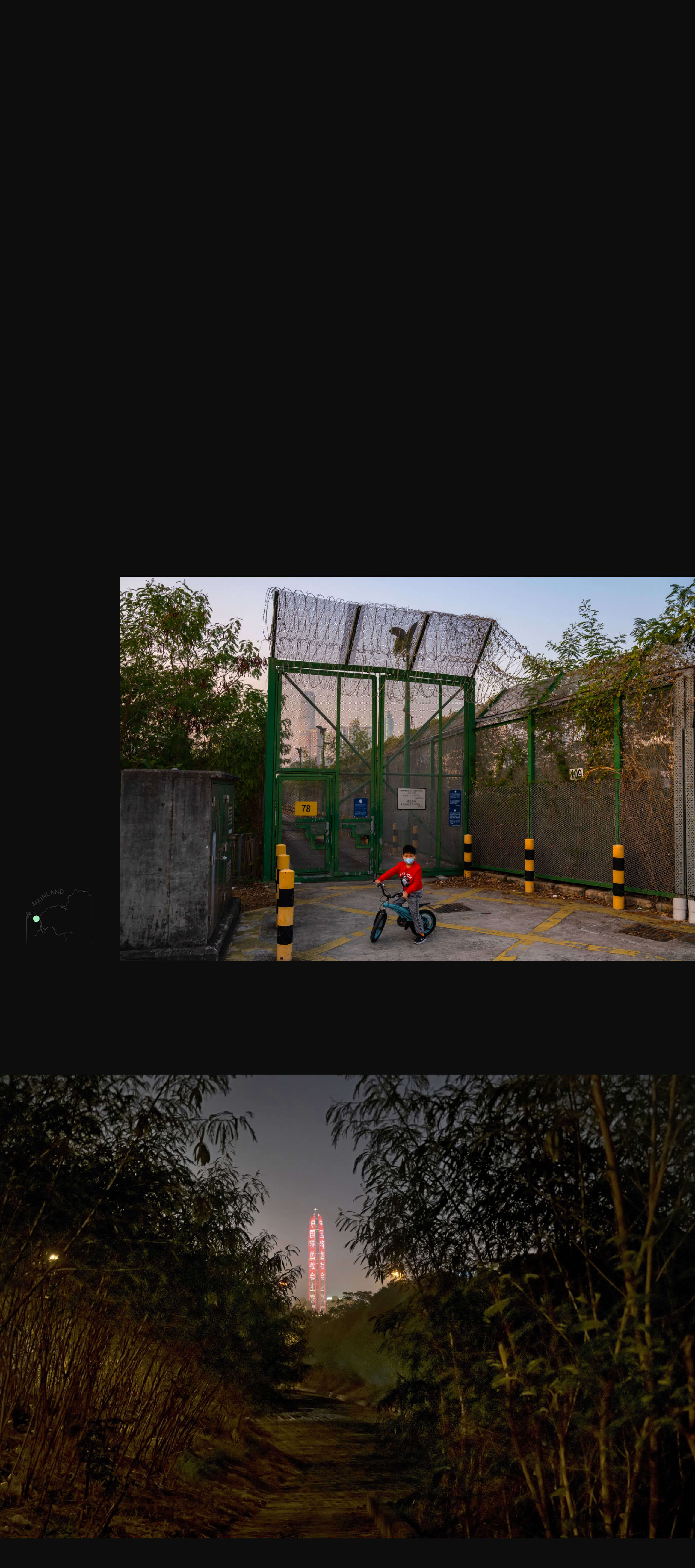
A boy rides a bike on the Hong Kong side of the border in Lo Wu on Dec. 6, 2020. In the decades before the handover, mainlanders had sought to sneak into Hong Kong in search of a better life.
LO WU BORDER
▲ Photographer: Billy H.C. Kwok/Bloomberg
Lit up with the words “Socialism With Chinese Characteristics,” the Ping An Financial Center – one of Shenzhen’s tallest buildings – was easily visible from Hong Kong’s New Territories on Dec. 6, 2020.
▲ Photographer: Billy H.C. Kwok/Bloomberg

The rise of tech hub Shenzhen just across the Hong Kong border has exacerbated concerns over China's growing influence since the 1997 handover. A proposal to allow extraditions to the mainland kicked off the 2019 pro-democracy protests.
▲ Photographer: Billy H.C. Kwok/Bloomberg; Richard Baker/In Pictures/Getty Images
A boy rides a bike on the Hong Kong side of the border in Lo Wu on Dec. 6, 2020. In the decades before the handover, mainlanders had sought to sneak into Hong Kong in search of a better life.
LO WU
BORDER
▲ Photographer: Billy H.C. Kwok/Bloomberg
Lit up with the words “Socialism With Chinese Characteristics,” the Ping An Financial Center – one of Shenzhen’s tallest buildings – was easily visible from Hong Kong’s New Territories on Dec. 6, 2020.
▲ Photographer: Billy H.C. Kwok/Bloomberg
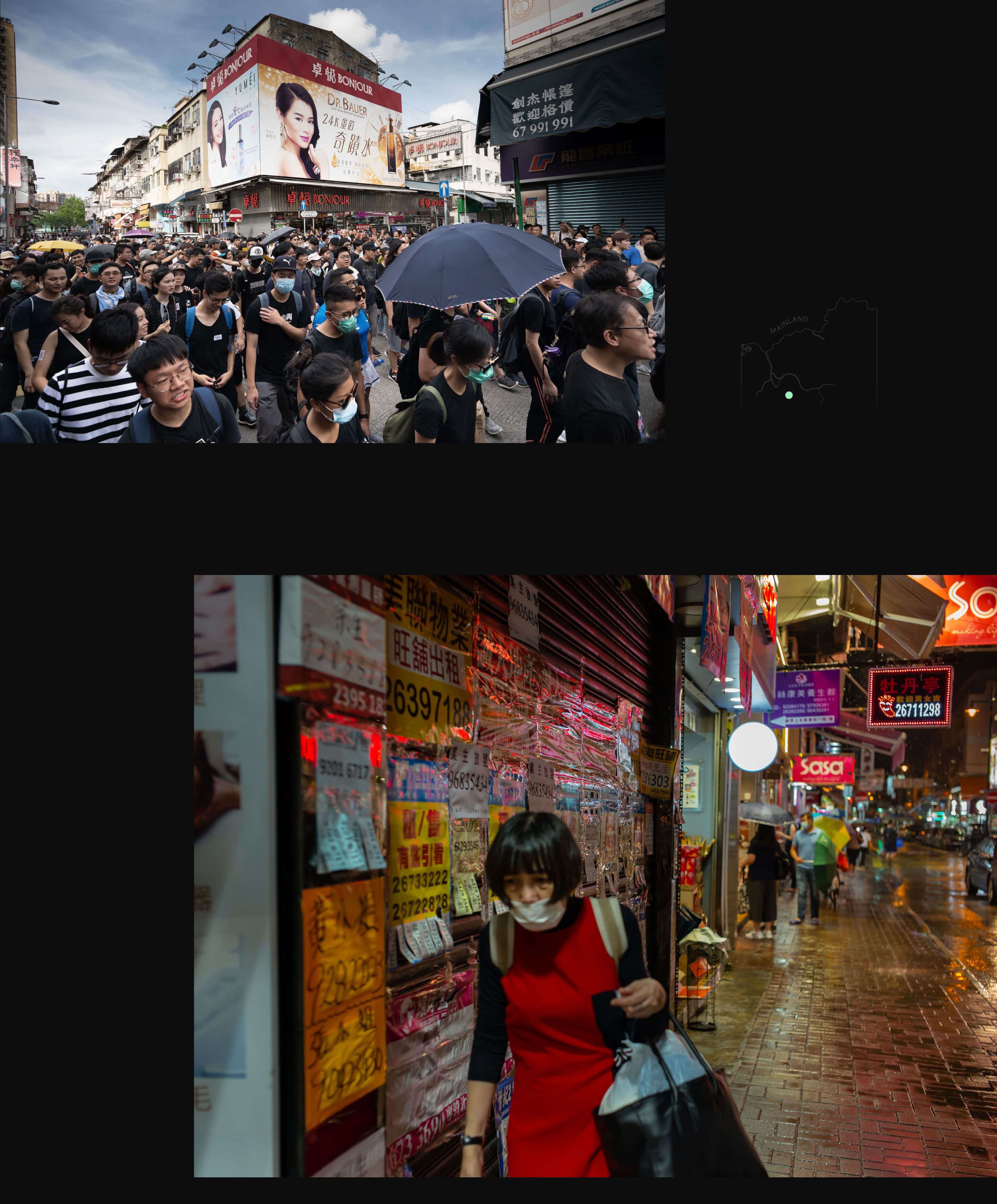
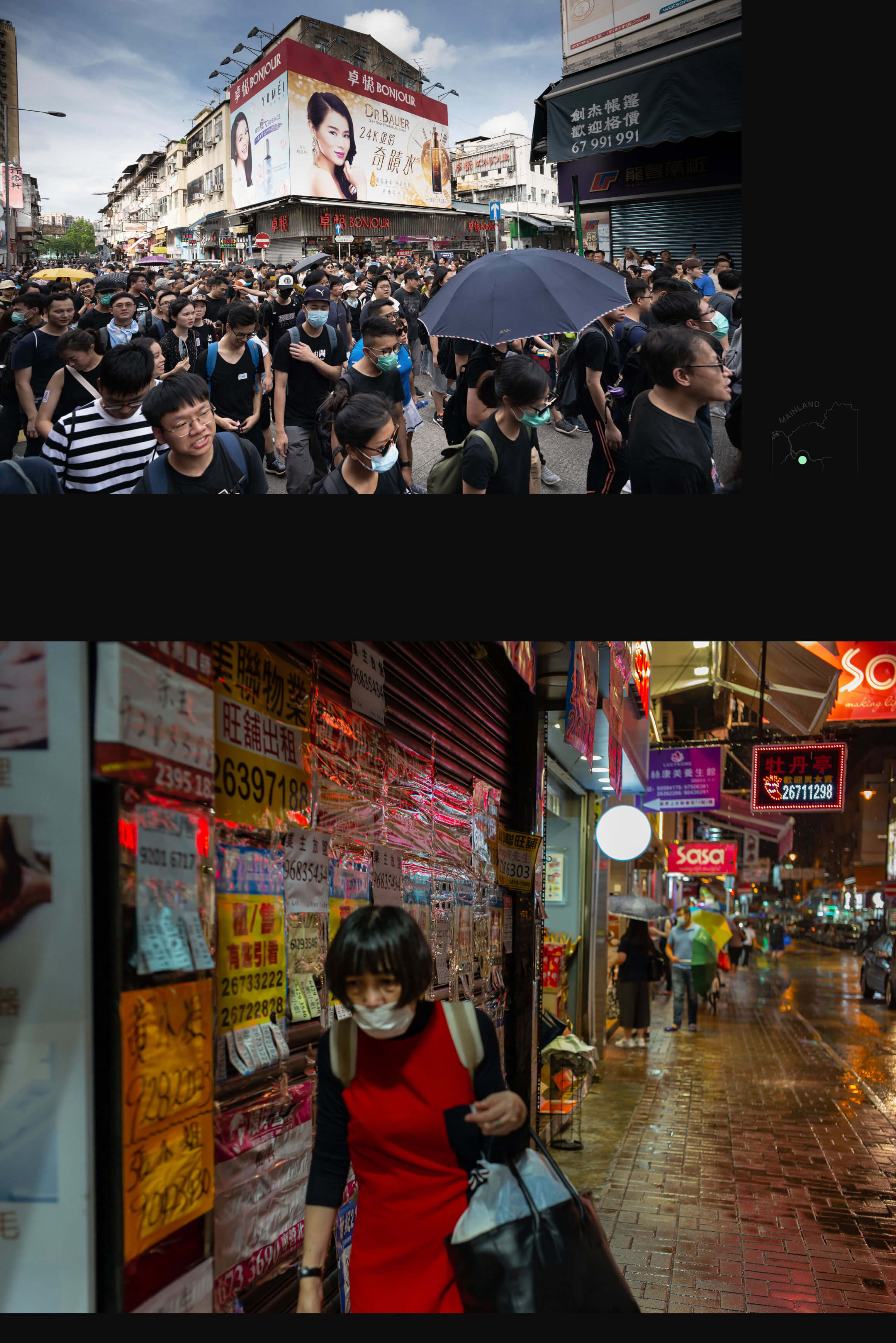
Protesters march through the streets of Sheung Shui on July 13, 2019. The “Reclaim Sheung Shui” rallies against an influx of mainlanders and parallel trading erupted in 2019 as part of the wider protest movement.
SHEUNG
SHUI
▲ Photographer: Geovien So/SOPA Images/LightRocket/Getty Images
A woman walks past lease advertisements plastered over one of many closed-up storefronts on Sept. 17, 2020, as the dual hit of protests and the Covid-19 pandemic devastated shop owners. Day shoppers from the mainland accounted for “a large part of our business,” said a 39-year-old fruit seller outside the Sheung Shui MTR station, who gave his name as Mr. Tsai.
▲ Photographer: Billy H.C. Kwok/Bloomberg
Protesters march through the streets of Sheung Shui on July 13, 2019. The “Reclaim Sheung Shui” rallies against an influx of mainlanders and parallel trading erupted in 2019 as part of the wider protest movement.
SHEUNG
SHUI
▲ Photographer: Geovien So/SOPA Images/LightRocket/Getty Images
A woman walks past lease advertisements plastered over one of many closed-up storefronts on Sept. 17, 2020, as the dual hit of protests and the Covid-19 pandemic devastated shop owners. Day shoppers from the mainland accounted for “a large part of our business,” said a 39-year-old fruit seller outside the Sheung Shui MTR station, who gave his name as Mr. Tsai.
▲ Photographer: Billy H.C. Kwok/Bloomberg


The rise of tech hub Shenzhen just across the Hong Kong border has exacerbated concerns over China's growing influence since the 1997 handover. A proposal to allow extraditions to the mainland kicked off the 2019 pro-democracy protests.
A boy rides a bike on the Hong Kong side of the border in Lo Wu on Dec. 6, 2020. In the decades before the handover, mainlanders had sought to sneak into Hong Kong in search of a better life.

Lit up with the words “Socialism With Chinese Characteristics,” the Ping An Financial Center – one of Shenzhen’s tallest buildings – was easily visible from Hong Kong’s New Territories on Dec. 6, 2020.
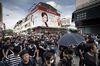
Protesters march through the streets of Sheung Shui on July 13, 2019. The “Reclaim Sheung Shui” rallies against an influx of mainlanders and parallel trading erupted in 2019 as part of the wider protest movement.
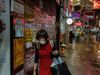
A woman walks past lease advertisements plastered over one of many closed-up storefronts on Sept. 17, 2020, as the dual hit of protests and the Covid-19 pandemic devastated shop owners. Day shoppers from the mainland accounted for “a large part of our business,” said a 39-year-old fruit seller outside the Sheung Shui MTR station, who gave his name as Mr. Tsai.
Fanling
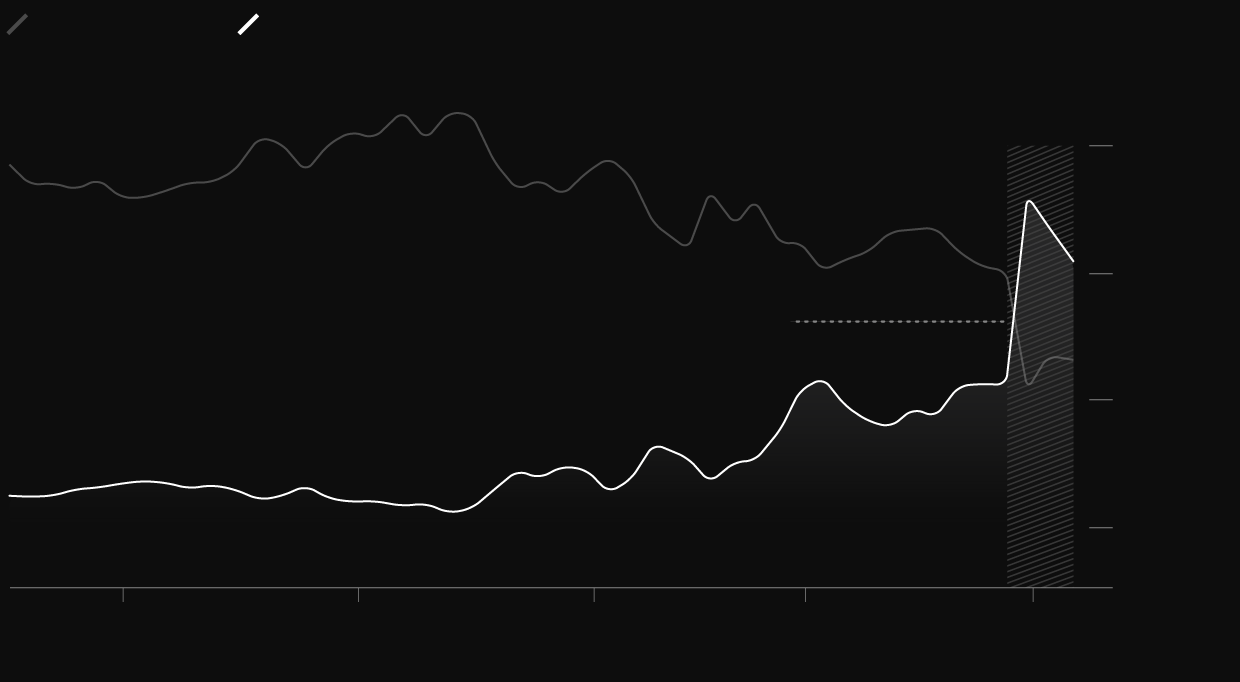
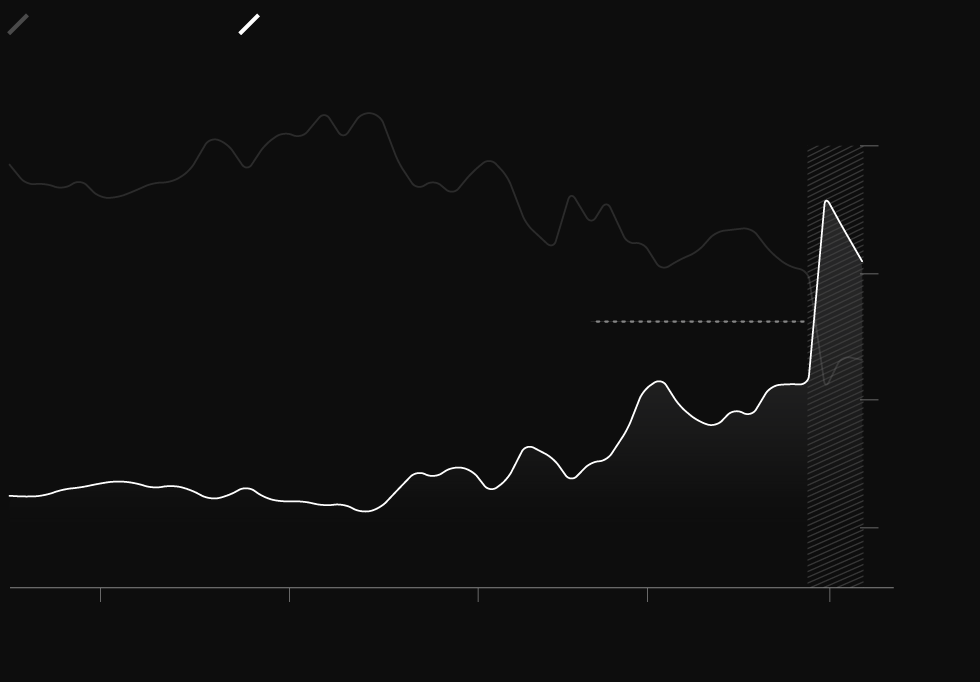
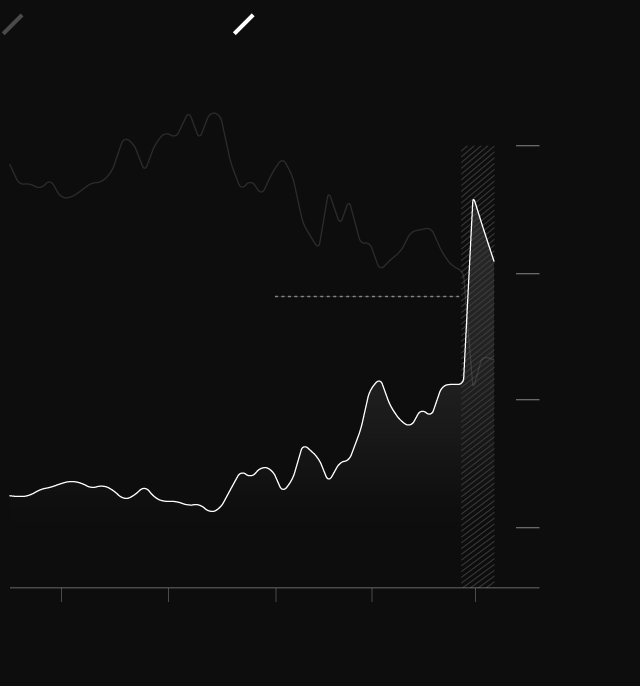
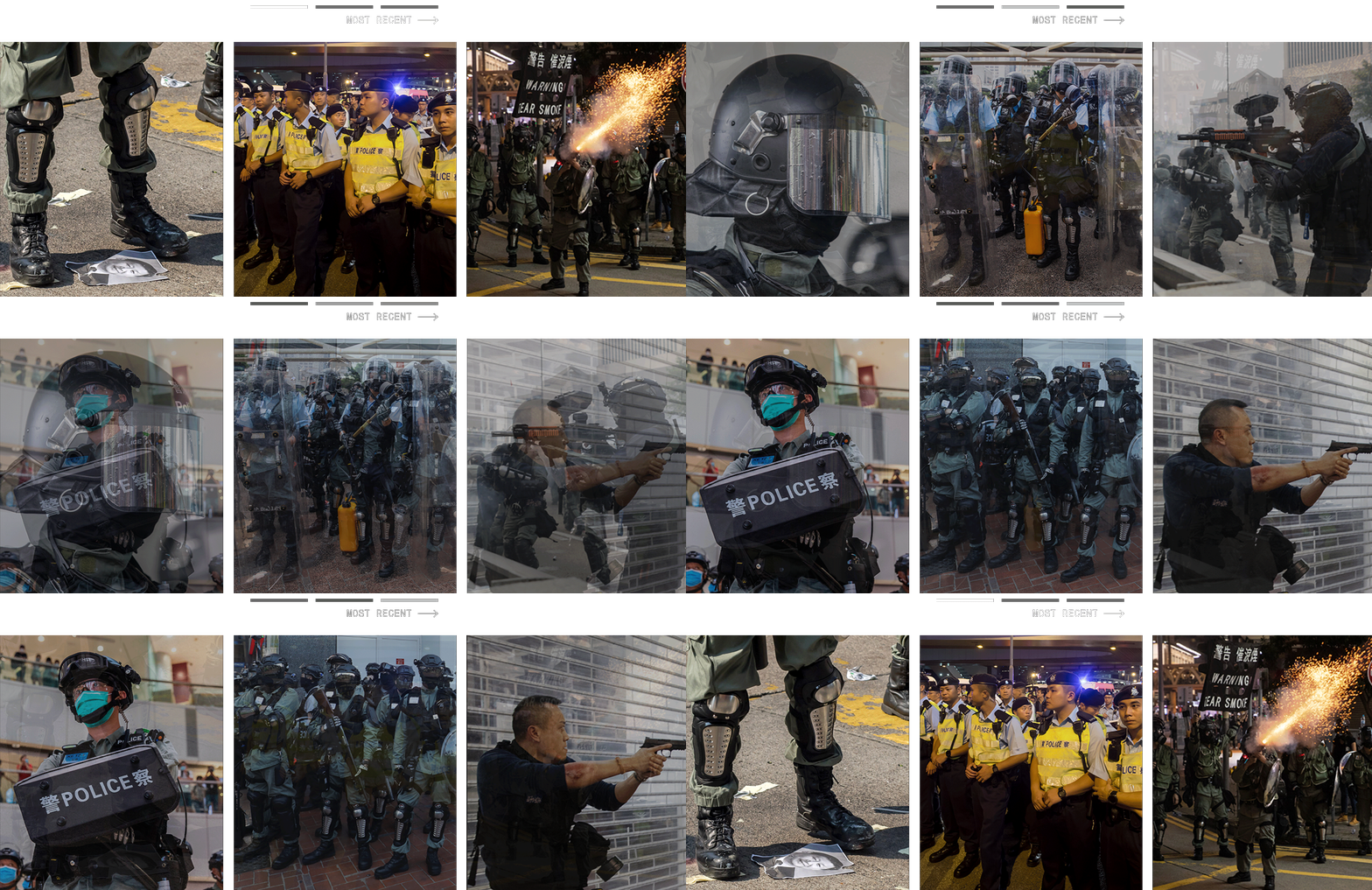
The reputation of Hong Kong’s storied police force took a hit after the pro-democracy protests erupted in June 2019, with reports of abuses during dispersal operations spurring calls for an independent inquiry. While the police denied wrongdoing, resignations spiked and recruitment declined after the demonstrations.
Police satisfaction survey
Satisfied
Dissatisfied
75%
50
A large increase in respondents dissatisfied with the police since 2019
25
0
Jan
2000
Jan
2005
Jan
2010
Jan
2015
Jan
2020
Satisfied
Dissatisfied
75%
50
A large increase in respondents dissatisfied with the police since 2019
25
0
Jan
2000
Jan
2005
Jan
2010
Jan
2015
Jan
2020
Satisfied
Dissatisfied
75%
50
A large increase in respondents dissatisfied with the police since 2019
25
0
Jan
2000
Jan
2005
Jan
2010
Jan
2015
Jan
2020
By the end of that year, public satisfaction with the police had plummeted to the lowest since China took control of Hong Kong. The police force repeatedly said it only used the amount of force necessary to deter violence among protesters.
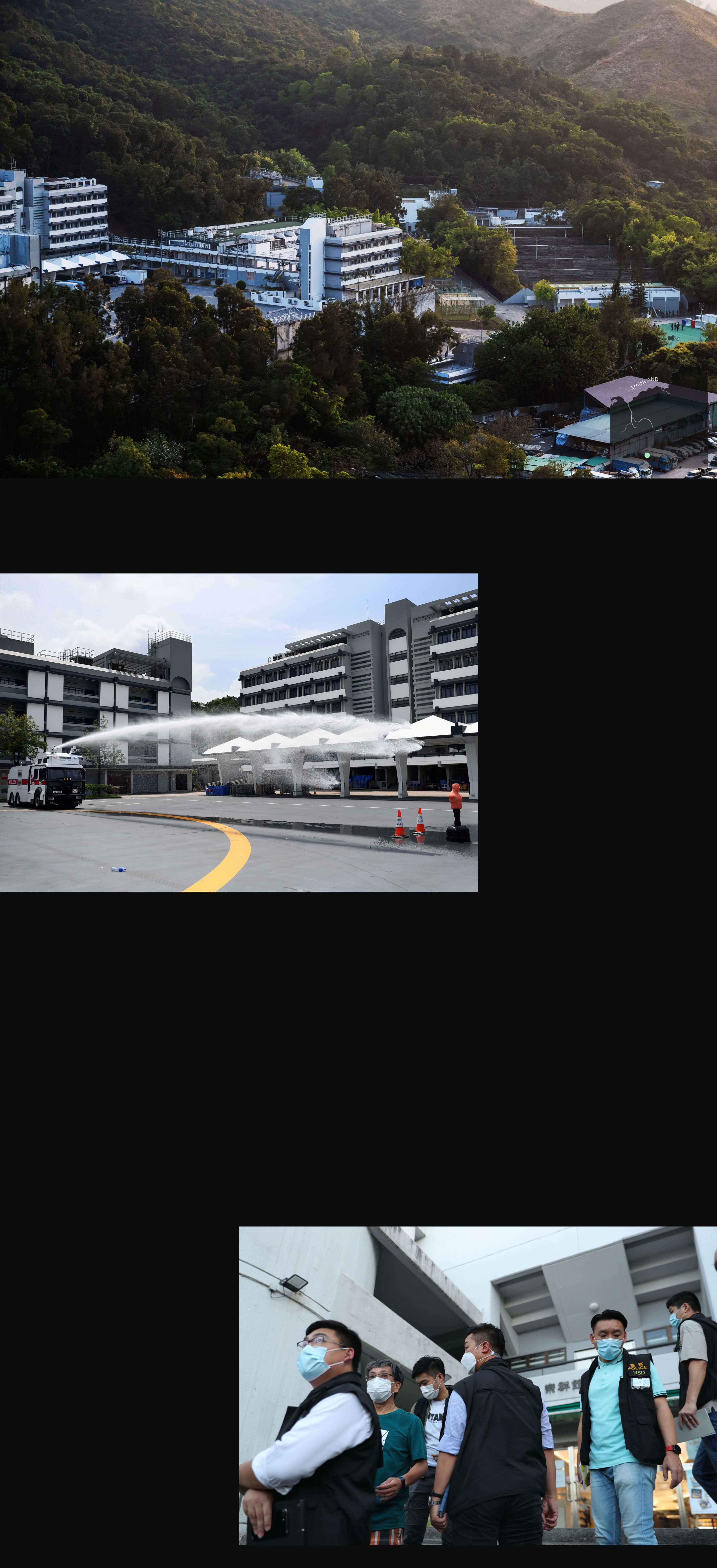

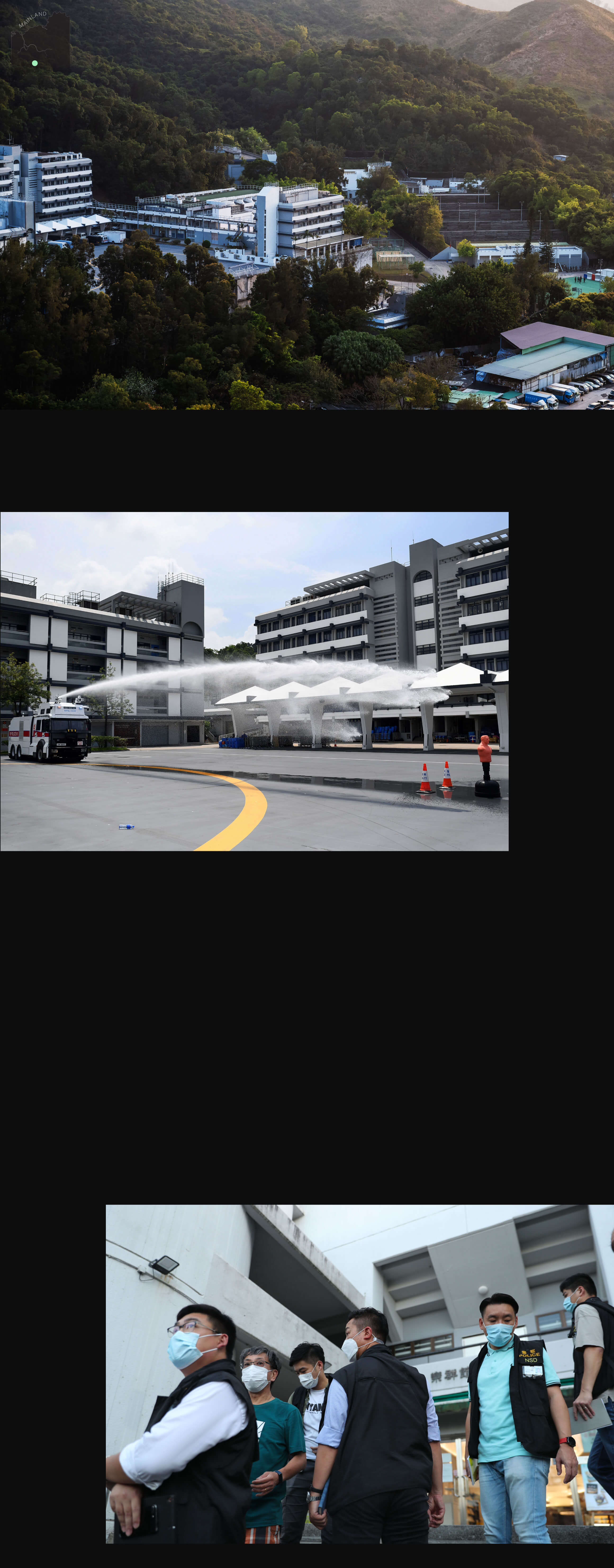
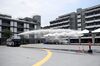
The Fanling base of the elite Police Tactical Unit on Feb. 16, 2021. The Hong Kong Police Force came under fire when police shot a demonstrator with live ammunition for the first time on Oct. 1, 2019–a holiday marking 70 years of Communist Party rule in China. Officers also fired more than 1,400 rounds of tear gas and hundreds of rubber bullets that day.
POLICE
TACTICAL UNIT
HEADQUARTERS
▲ Photographer: Billy H.C. Kwok/Bloomberg
Police demonstrate a water cannon at the PTU base in Fanling on Aug. 12, 2019. At the height of the protests, police used them to soak demonstrators with a mixture of water and blue dye.
▲ Photographer: Manan Vatsyayana/AFP/Getty Images
BODY ARMOR
UNIFORM
WEAPONS
Officers with the police force’s new national security department at the Chinese University of Hong Kong on Nov. 20, 2020. The force later made eight arrests over a protest at the university, fueling concerns about the future of academic freedom in the city.
▲ Photographer: May James/Bloomberg

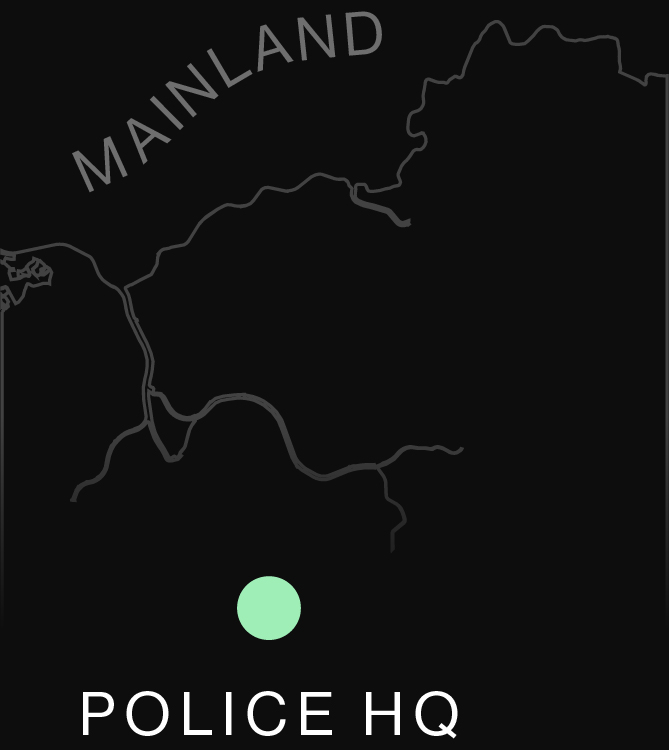
POLICE HQ
The Fanling base of the elite Police Tactical Unit on Feb. 16, 2021. The Hong Kong Police Force came under fire when police shot a demonstrator with live ammunition for the first time on Oct. 1, 2019–a holiday marking 70 years of Communist Party rule in China. Officers also fired more than 1,400 rounds of tear gas and hundreds of rubber bullets that day.
▲ Photographer: Billy H.C. Kwok/Bloomberg
Police demonstrate a water cannon at the PTU base in Fanling on Aug. 12, 2019. At the height of the protests, police used them to soak demonstrators with a mixture of water and blue dye.
▲ Photographer: Manan Vatsyayana/AFP/Getty Images
BODY ARMOR
UNIFORM
WEAPONS
Officers with the police force’s new national security department at the Chinese University of Hong Kong on Nov. 20, 2020. The force later made eight arrests over a protest at the university, fueling concerns about the future of academic freedom in the city.
▲ Photographer: May James/Bloomberg
The Fanling base of the elite Police Tactical Unit on Feb. 16, 2021. The Hong Kong Police Force came under fire when police shot a demonstrator with live ammunition for the first time on Oct. 1, 2019–a holiday marking 70 years of Communist Party rule in China. Officers also fired more than 1,400 rounds of tear gas and hundreds of rubber bullets that day.
Police demonstrate a water cannon at the PTU base in Fanling on Aug. 12, 2019. At the height of the protests, police used them to soak demonstrators with a mixture of water and blue dye.
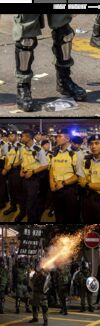
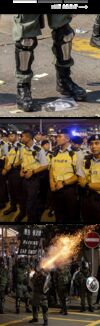
BODY ARMOR
UNIFORM
WEAPONS

Officers with the police force’s new national security department at the Chinese University of Hong Kong on Nov. 20, 2020. The force later made eight arrests over a protest at the university, fueling concerns about the future of academic freedom in the city.
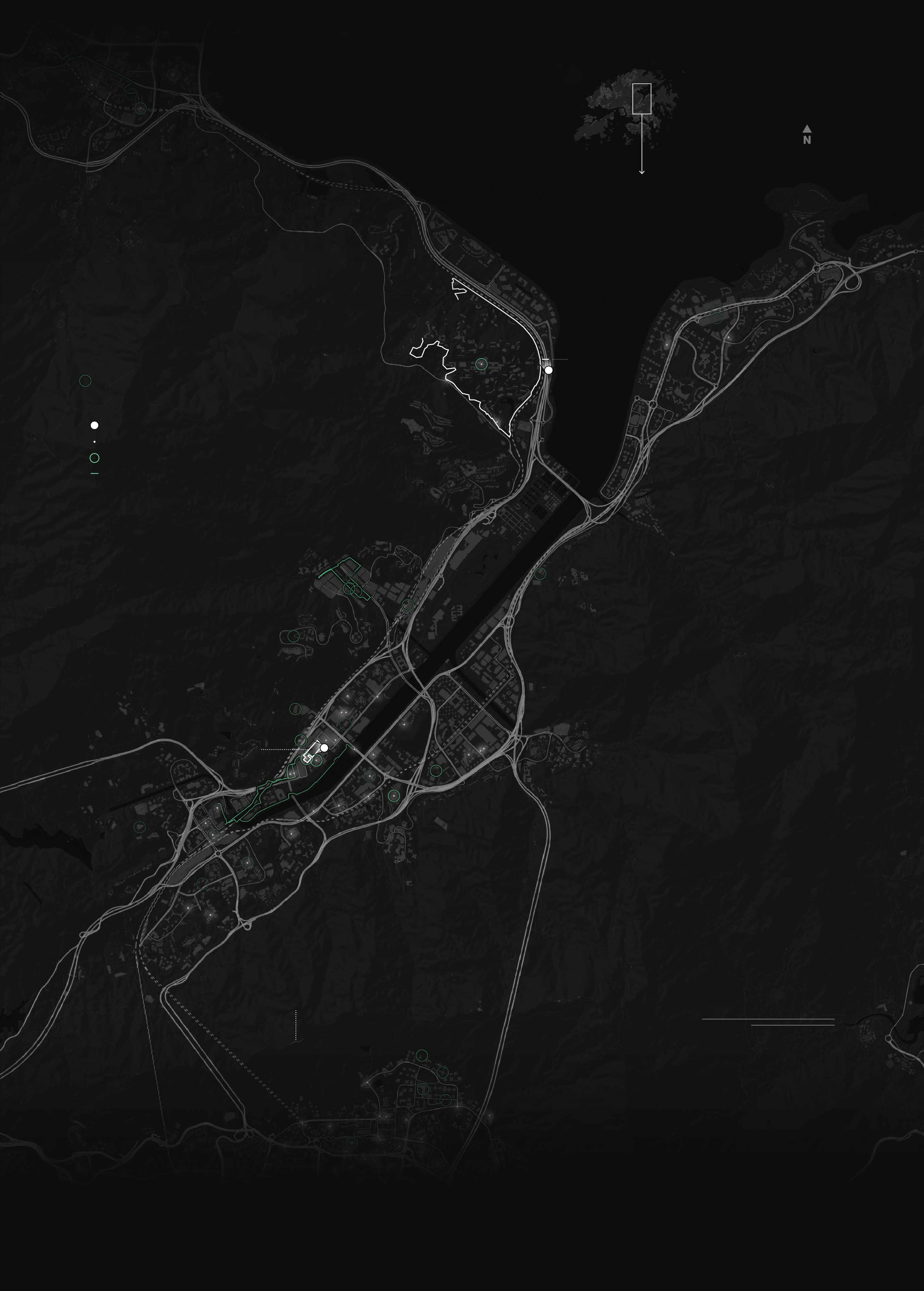
Enlarged
area below
TAI PO
DISTRICT
Sha Tin Hoi
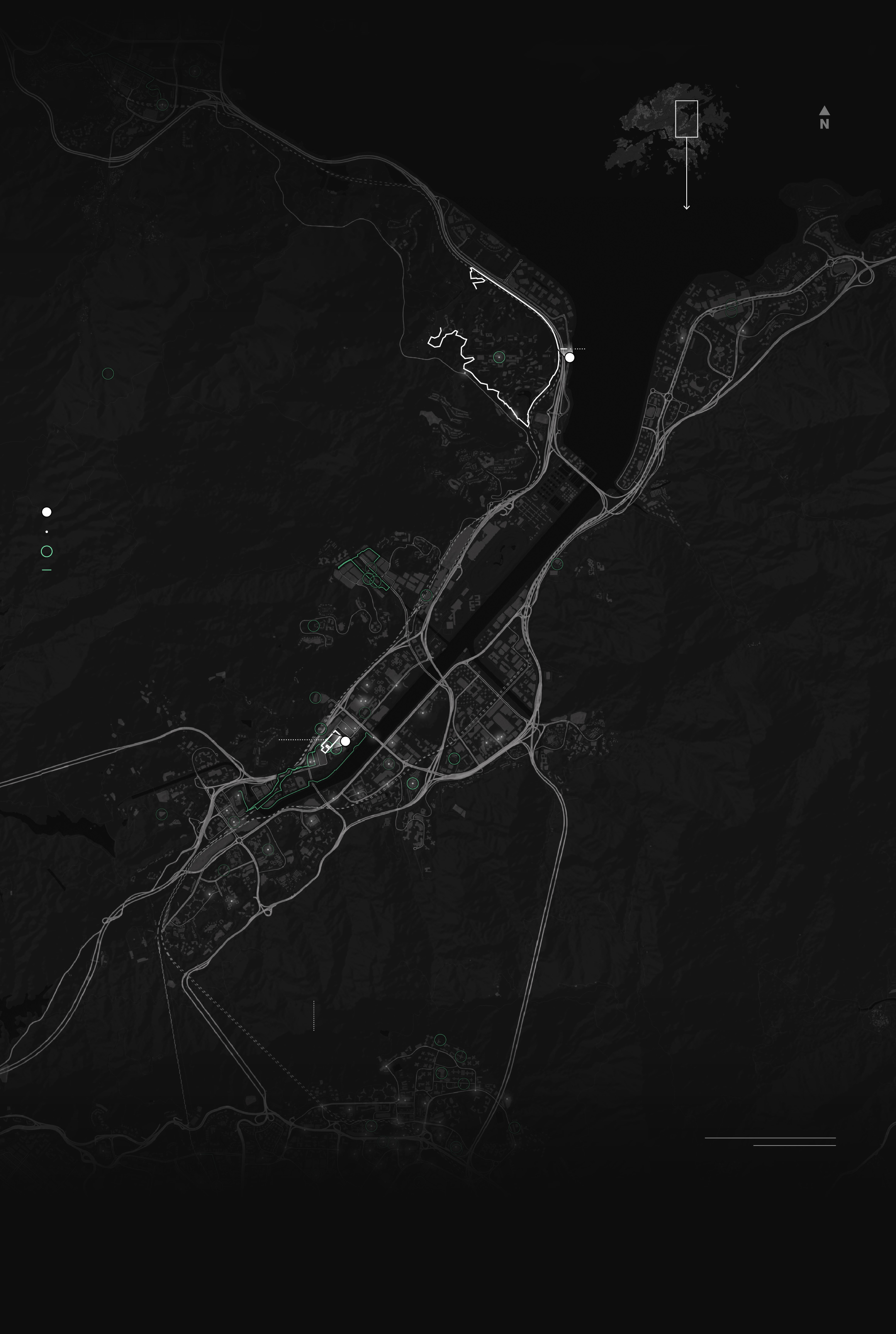
Since the 1970s, Sha Tin has transformed into a major district home to high rises, metro stations and one of the city’s two racecourses.
The Chinese University
of Hong Kong
Number 2
Bridge
LOCATION WHERE EACH PHOTO WAS TAKEN
TEAR GAS FIRED DURING PROTESTS
PROTESTS LOCATION
PROTESTS Mobilization
Shing Mun River
Sha Tin
SHA TIN
District
New Town
Plaza
Lion Rock
1 mile
1 km
Enlarged
area below
TAI PO
DISTRICT
Sha Tin Hoi
The Chinese University of Hong Kong
Number 2
Bridge
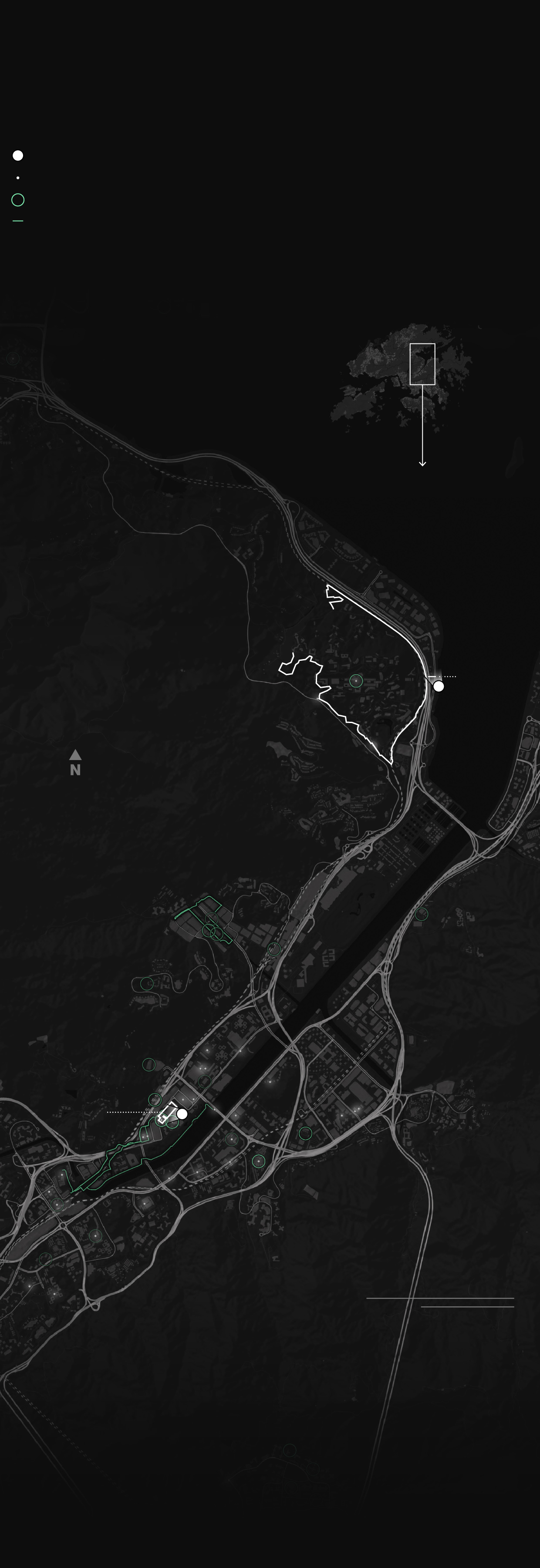
Since the 1970s, Sha Tin has transformed into a major district home to high rises, metro stations and one of the city’s two racecourses.
LOCATION WHERE EACH PHOTO WAS TAKEN
TEAR GAS FIRED DURING PROTESTS
PROTESTS LOCATION
PROTESTS Mobilization
Shing Mun River
Sha Tin
New Town
Plaza
SHA TIN
District
Lion Rock
1 mile
1 km
Since the 1970s, Sha Tin has transformed into a major district home to high rises, metro stations and one of the city’s two racecourses.
LOCATION WHERE EACH PHOTO WAS TAKEN
TEAR GAS FIRED DURING PROTESTS
PROTESTS LOCATION
PROTESTS Mobilization
Enlarged
area below
TAI PO
DISTRICT
Sha Tin Hoi
The Chinese University of Hong Kong
Number 2
Bridge
Shing Mun River
SHA TIN
District
Sha Tin
New Town
Plaza
1 mile
1 km
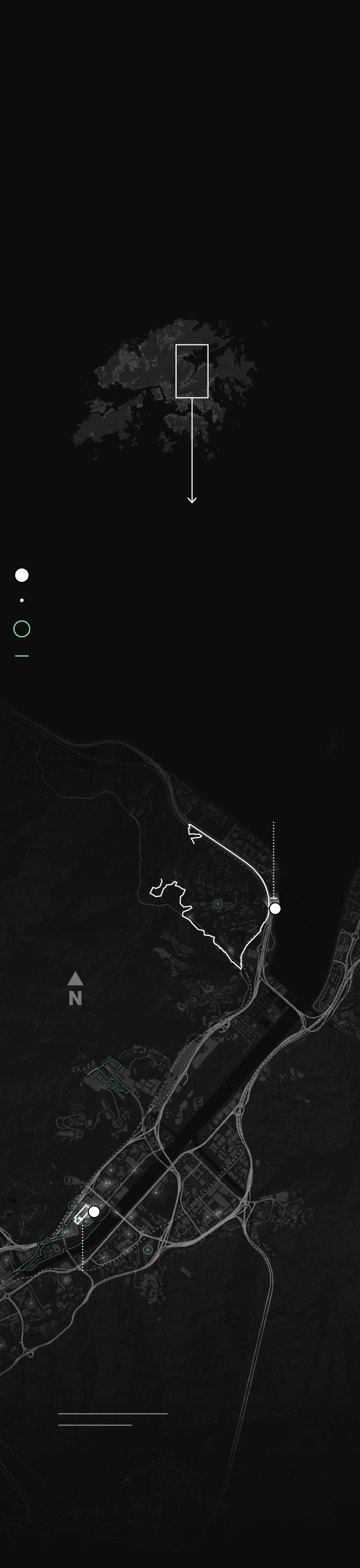
Since the 1970s, Sha Tin has transformed into a major district home to high rises, MTR stations and one of the city’s two racecourses.
Enlarged
area below
LOCATION WHERE EACH PHOTO WAS TAKEN
TEAR GAS FIRED DURING PROTESTS
PROTESTS LOCATION
PROTESTS Mobilization
Number 2
Bridge
The Chinese University of Hong Kong
Shing Mun River
Sha Tin
New Town
Plaza
1 mile
1 km
The Chinese University of Hong Kong
The normally tranquil campus became a flashpoint in November 2019 as riot police and students turned it into a smoke-filled battlefield. Classes were cancelled for the semester and some mainland students at the school fled across the border to Shenzhen.


Student protesters carrying umbrellas to protect themselves from tear gas occupied a campus bridge on Nov. 15, 2019. Now the bridge is flanked by fencing and coils of razor wire.
CHINESE UNIVERSITY
OF HONG KONG
▲ Photographer: Justin Chin, Billy H.C. Kwok/Bloomberg

Student protesters carrying umbrellas to protect themselves from tear gas occupied a campus bridge on Nov. 15, 2019. Now the bridge is flanked by fencing and coils of razor wire.
CUHK
▲ Photographer: Justin Chin, Billy H.C. Kwok/Bloomberg
Student protesters carrying umbrellas to protect themselves from tear gas occupied a campus bridge on Nov. 15, 2019. Now the bridge is flanked by fencing and coils of razor wire.
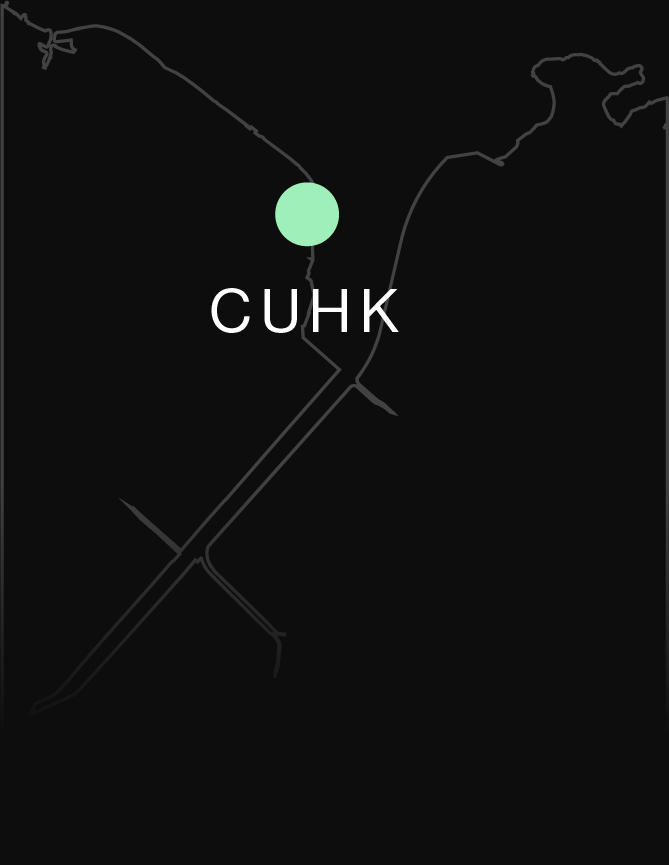
Sha Tin
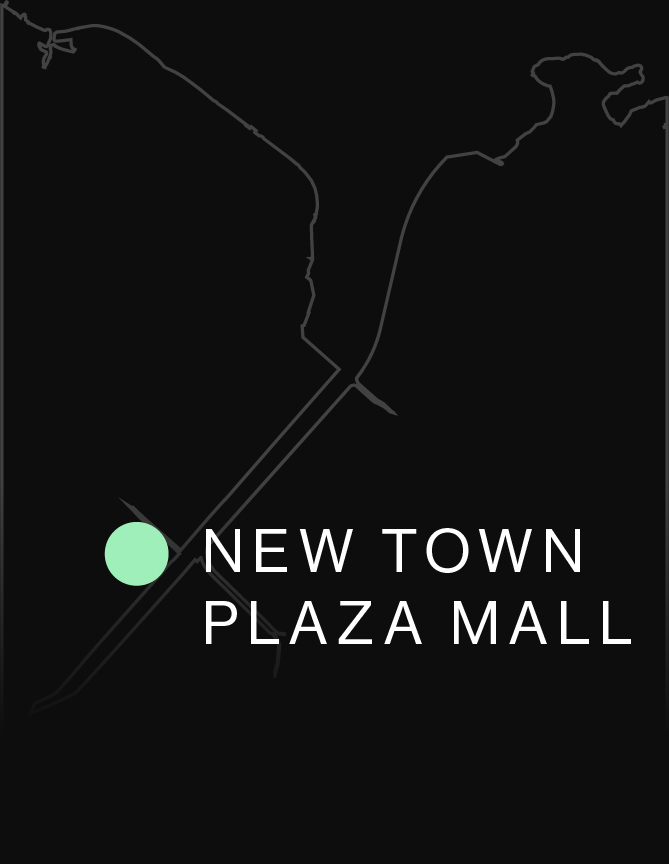
At the heart of Sha Tin is New Town Plaza, a spacious mall once popular with mainland tourists that saw some of the more violent confrontations between protesters and police in 2019.
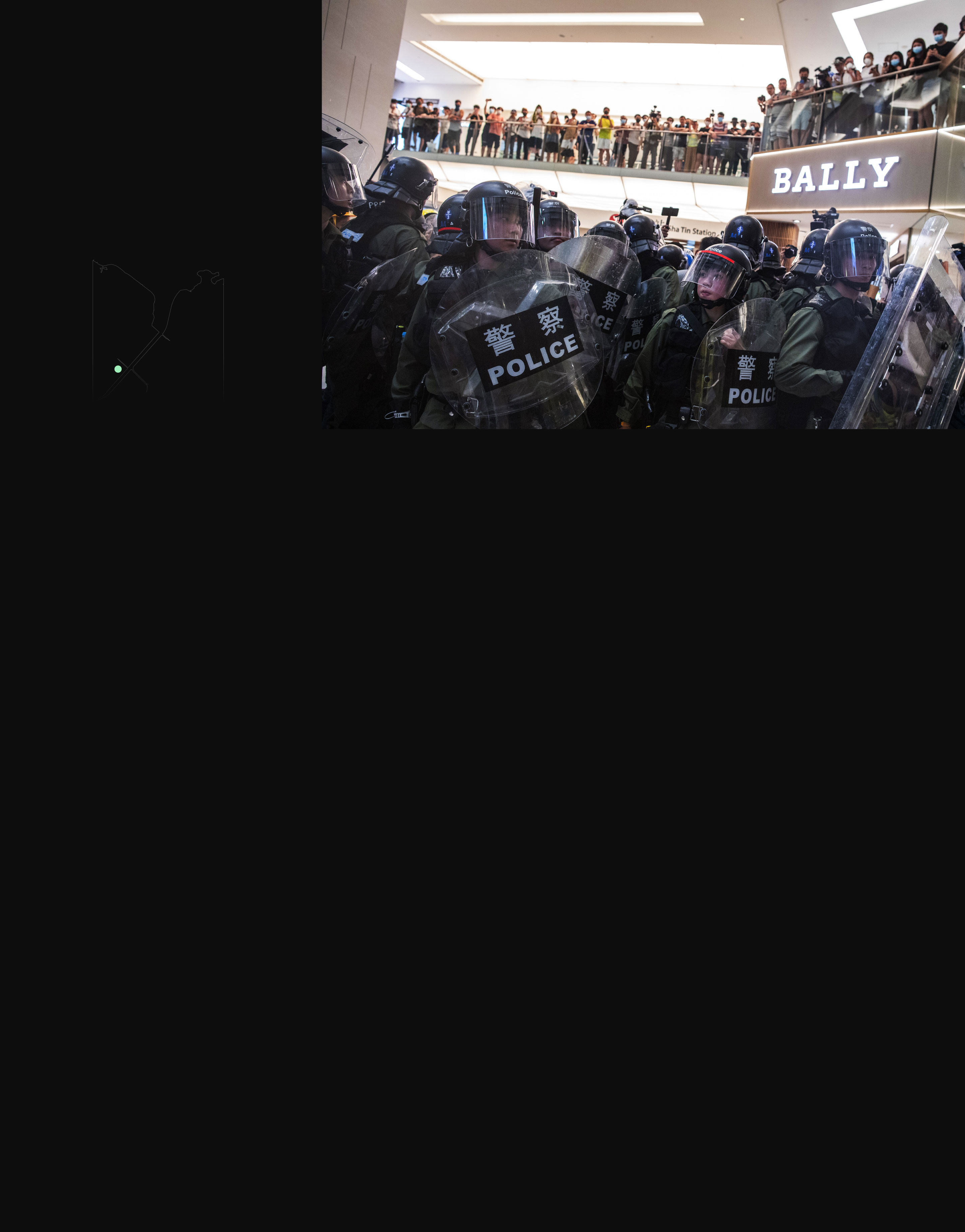
Riot police stand off against protesters inside the New Town Plaza mall on July 14, 2019. “The boom started because of China years ago, and the city’s gloom now is also because of China,” a watch shop employee who gave his name as Mr. Tang said recently.
NEW TOWN
PLAZA MALL
▲ Photographer: Justin Chin/Bloomberg
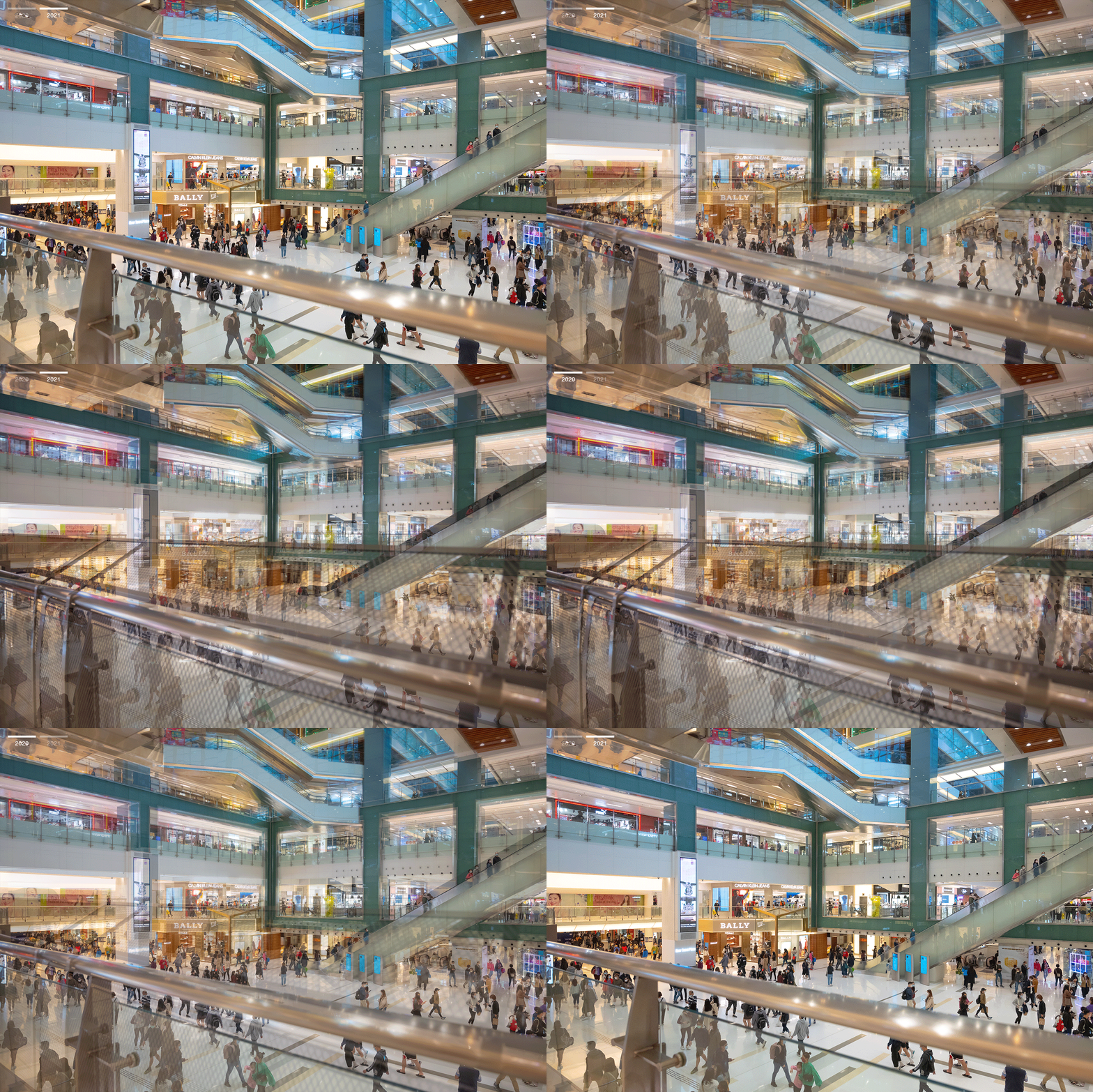
Railings were erected at the shopping center’s atrium following protests in 2019. They were removed after the national security law was imposed last year.
▲ Photographer: Billy H.C. Kwok/Bloomberg
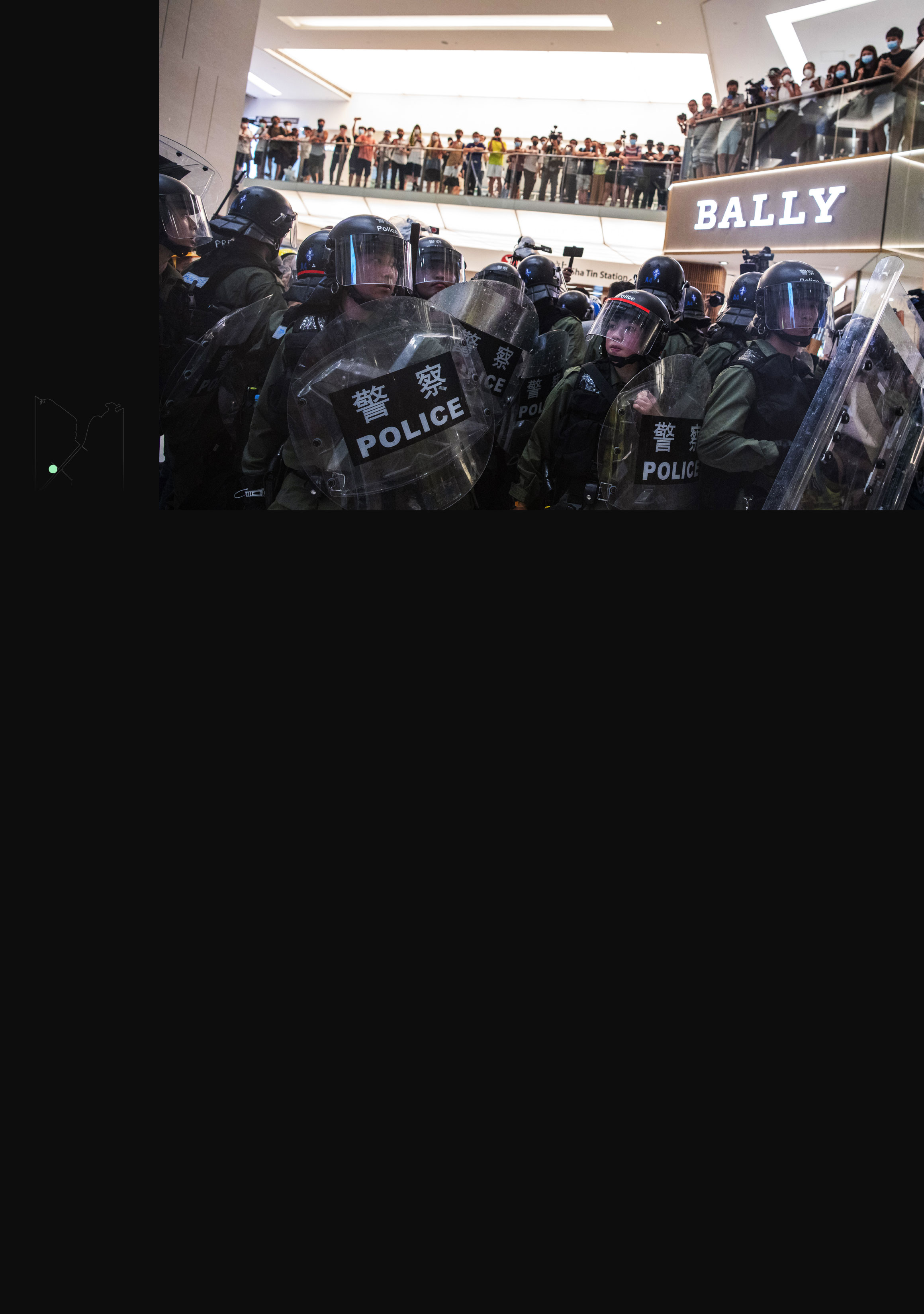
Riot police stand off against protesters inside the New Town Plaza mall on July 14, 2019. “The boom started because of China years ago, and the city’s gloom now is also because of China,” a watch shop employee who gave his name as Mr. Tang said recently.
NEW TOWN
PLAZA MALL
▲ Photographer: Justin Chin/Bloomberg
Railings were erected at the shopping center’s atrium following protests in 2019. They were removed after the national security law was imposed last year.
▲ Photographer: Billy H.C. Kwok/Bloomberg
Riot police stand off against protesters inside the New Town Plaza mall on July 14, 2019. “The boom started because of China years ago, and the city’s gloom now is also because of China,” a watch shop employee who gave his name as Mr. Tang said recently.
Railings were erected at the shopping center’s atrium following protests in 2019. They were removed after the national security law was imposed last year.
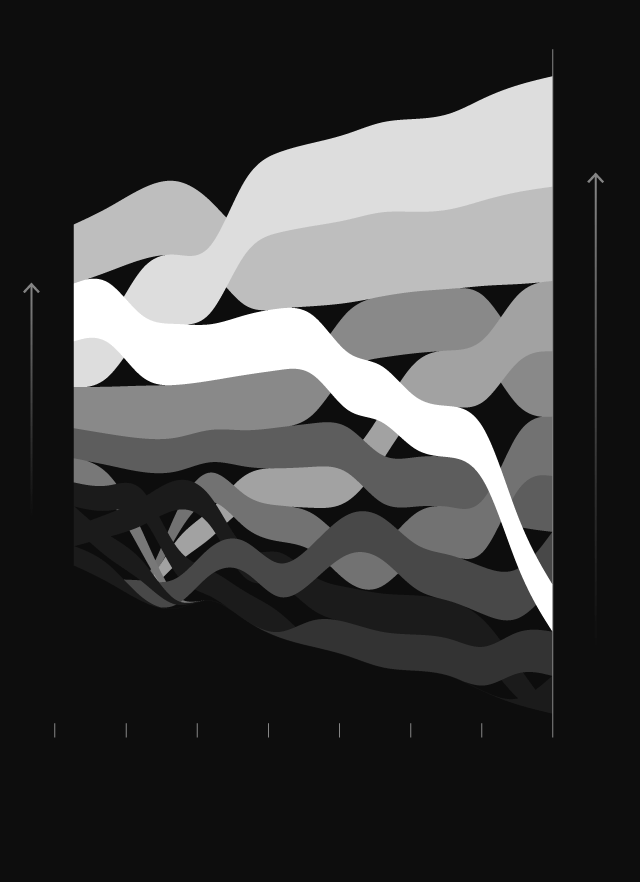
Hong Kong’s economy slid into recession amid the protests and Covid-19. But even before demonstrations kicked off, the territory had slipped in global port rankings.
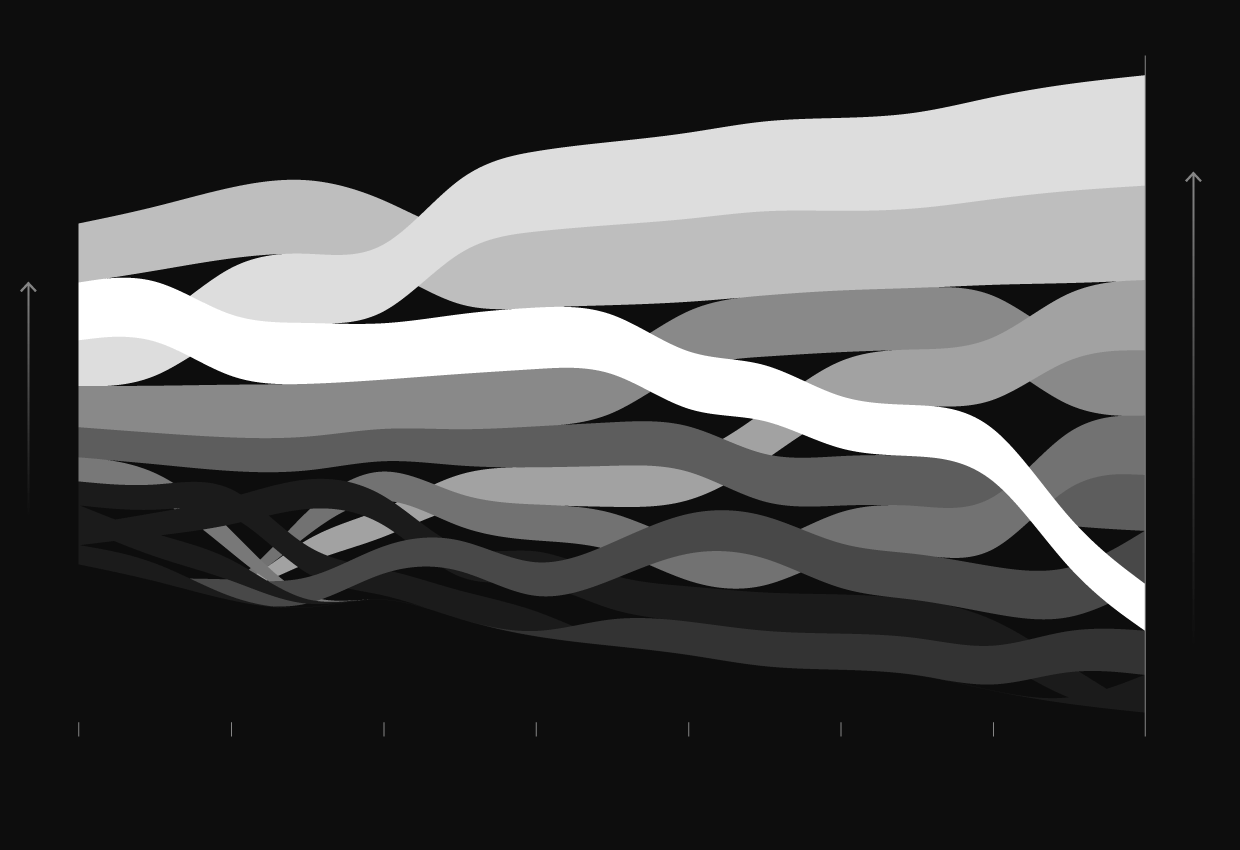
Shipping volume of top 10 ports, by million teu*
Total 250.4M
Shanghai
1st
Singapore
1st
Ningbo
Shenzhen
Hong Kong
Shenzhen
Busan
Guangzhou
10th
10th
2005
2007
2009
2011
2013
2015
2017
2019
*teu = twenty foot equivalent unit or standard 6.1-meter-long shipping container
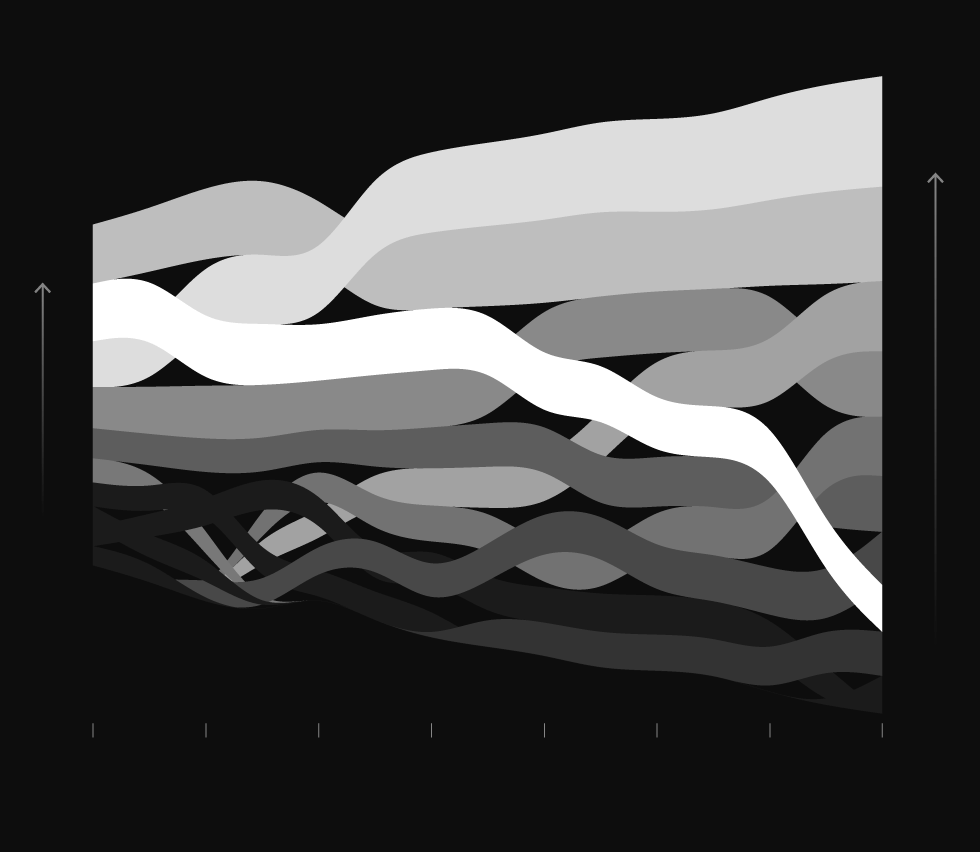
Shipping volume of top 10 ports,
by million teu*
Total 250.4M
Shanghai
1st
Singapore
1st
Shenzhen
Ningbo
Hong Kong
Shenzhen
Busan
Guangzhou
10th
10th
2005
2007
2009
2011
2013
2015
2017
2019
*teu = twenty foot equivalent unit or standard 6.1-meter-long shipping container
Shipping volume of
top 10 ports,
by million teu*
Total 250.4M
1st
Shanghai
1st
Singapore
Shenzhen
Ningbo
Hong Kong
Shenzhen
Busan
Guangzhou
10th
10th
2005
2019
*teu = twenty foot equivalent unit or standard 6.1-meter-long shipping container
Kowloon
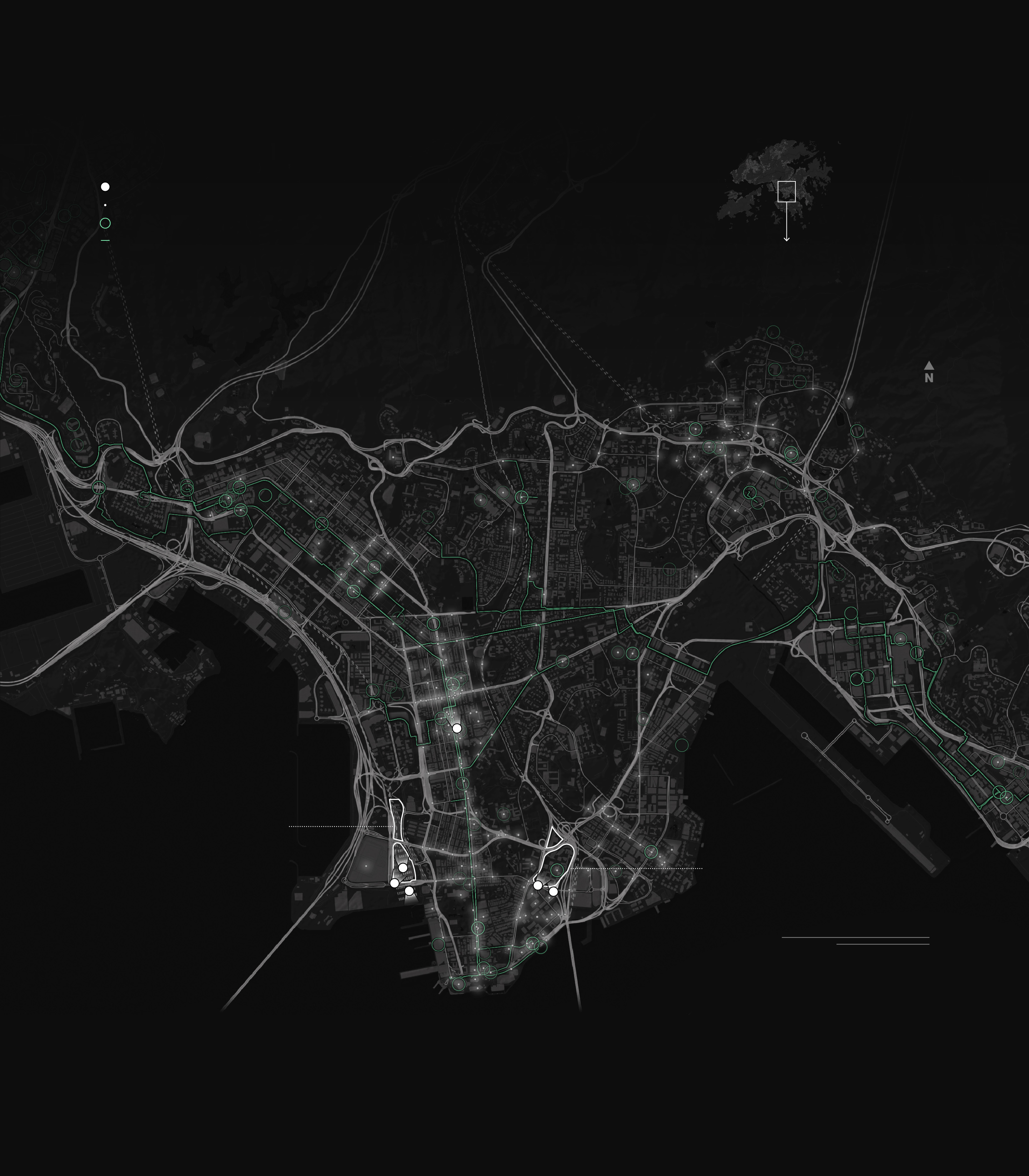
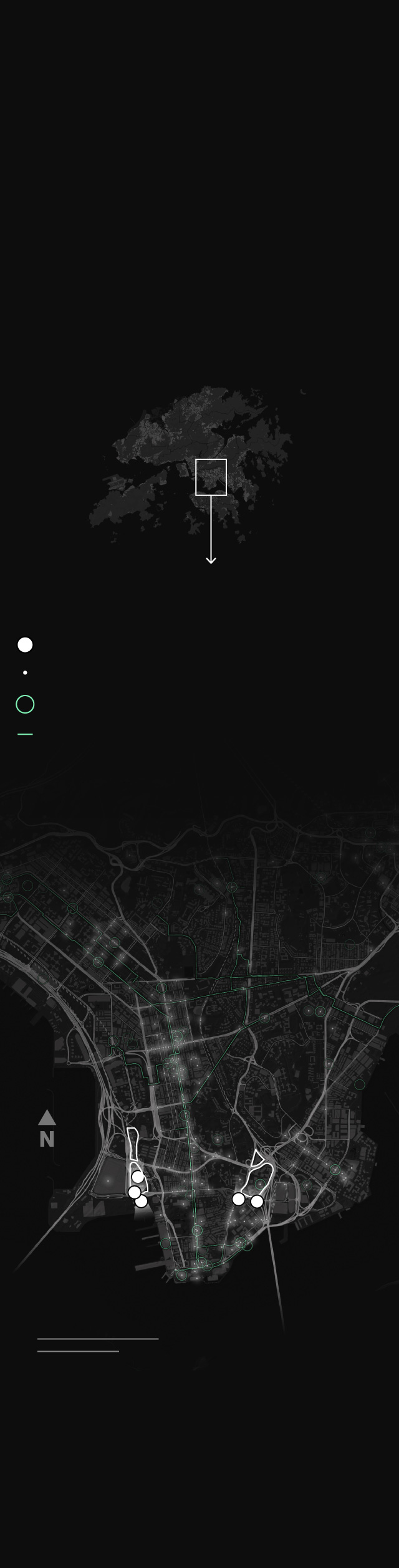
The densely populated series of neighborhoods saw its landscape altered by months of protests.
Enlarged
area below
LOCATION WHERE EACH PHOTO WAS TAKEN
TEAR GAS FIRED DURING PROTESTS
PROTESTS LOCATION
PROTESTS Mobilization
SHAM SHUI PO
District
KOWLOON CITY
District
YAU TSIM MONG
District
West Kowloon
Rail Station
The Hong Kong
Polytechnic
University
1 mile
1 km
Victoria Harbour
Kowloon
Enlarged
area below
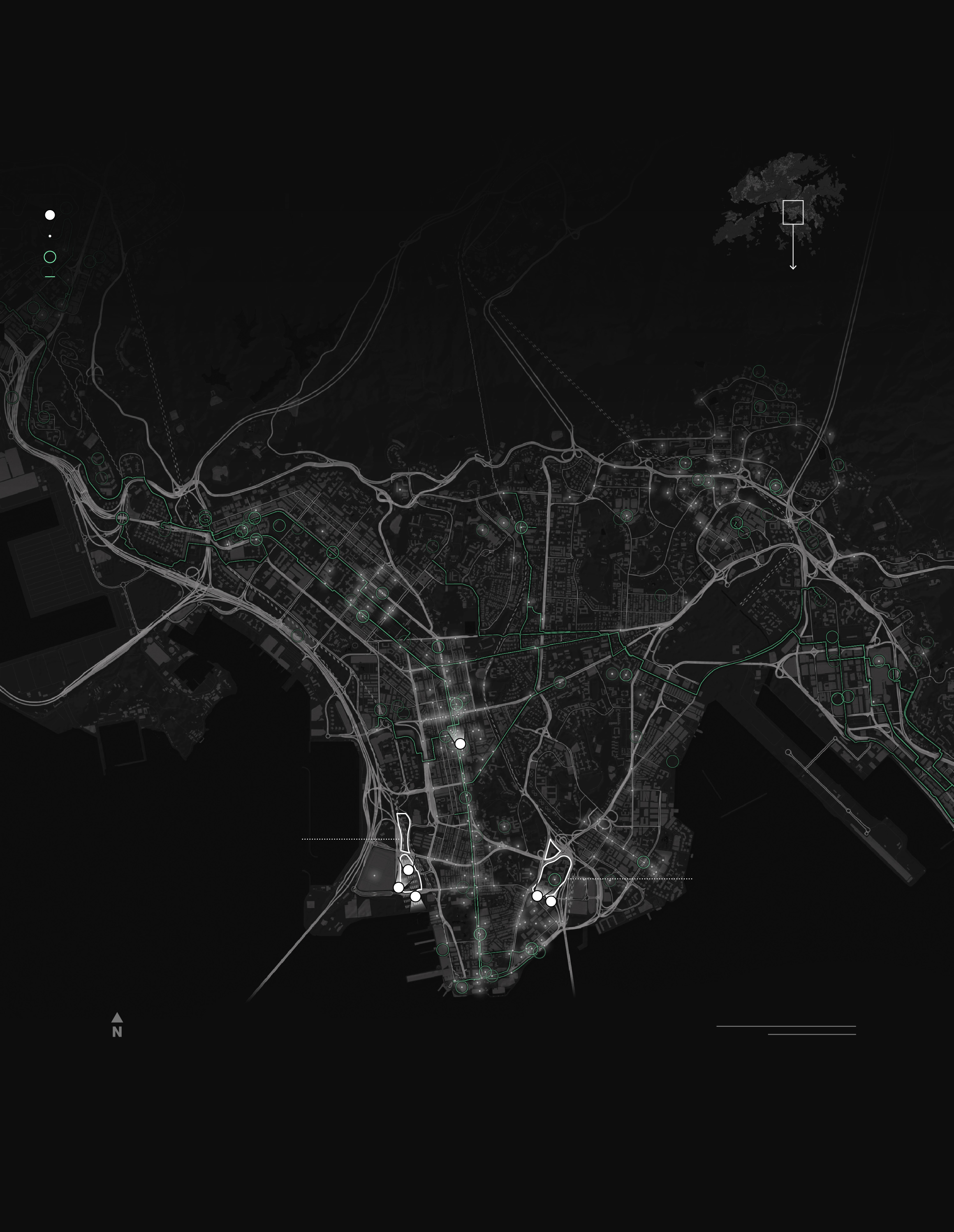
The densely populated series of neighborhoods saw its landscape altered by months of protests.
LOCATION WHERE EACH PHOTO WAS TAKEN
TEAR GAS FIRED DURING PROTESTS
PROTESTS LOCATION
PROTESTS Mobilization
SHAM SHUI PO
District
KOWLOON CITY
District
YAU TSIM MONG
District
West Kowloon
Rail Station
The Hong Kong
Polytechnic
University
1 mile
1 km
Victoria Harbour
Kowloon
Enlarged
area below
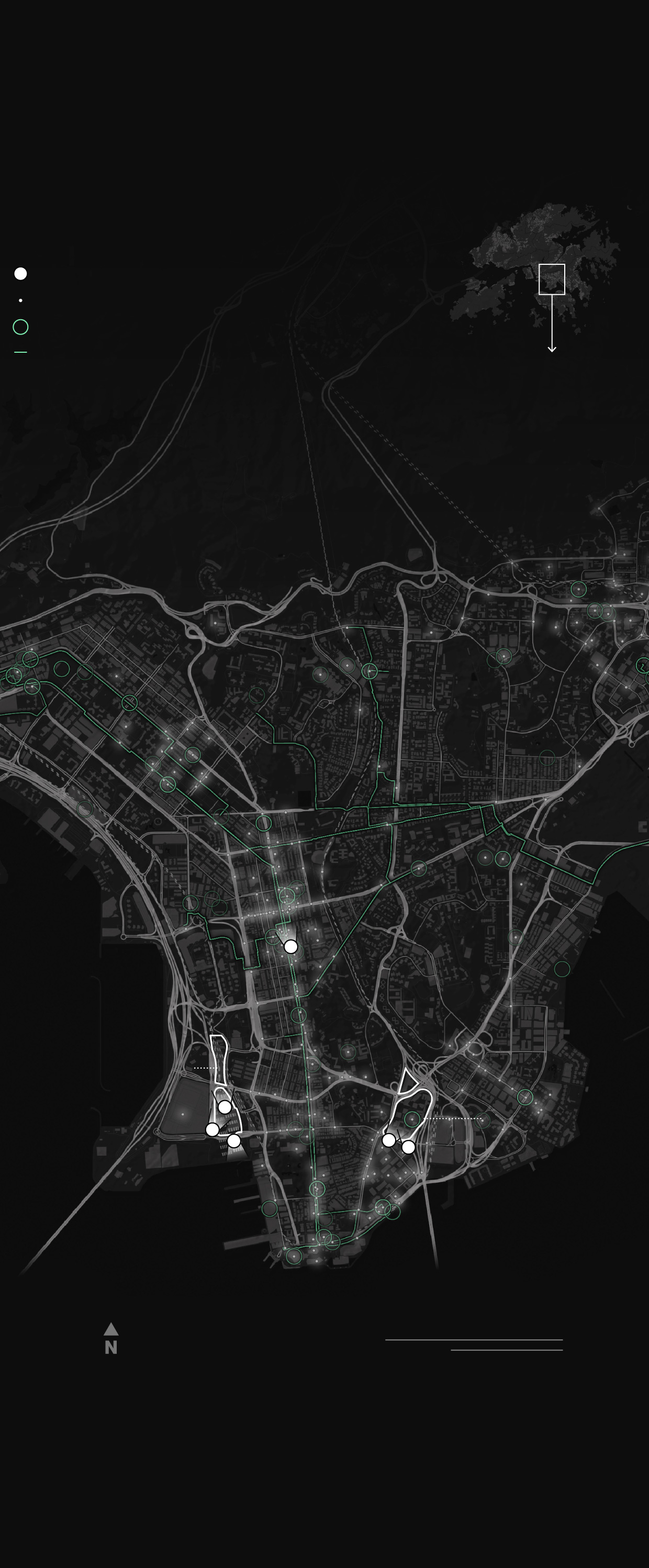
The densely populated series of neighborhoods saw its landscape altered by months of protests.
LOCATION WHERE EACH PHOTO WAS TAKEN
TEAR GAS FIRED DURING PROTESTS
PROTESTS LOCATION
PROTESTS Mobilization
SHAM SHUI PO
District
YAU TSIM MONG
District
West Kowloon
Rail Station
The Hong Kong
Polytechnic
University
1 mile
1 km
Kowloon
The densely populated series of neighborhoods saw its landscape altered by months of protests.
Enlarged
area below
LOCATION WHERE EACH PHOTO WAS TAKEN
TEAR GAS FIRED DURING PROTESTS
PROTESTS LOCATION
PROTESTS Mobilization
YAU TSIM MONG
District
West Kowloon
Rail Station
The Hong Kong
Polytechnic
University
1 mile
1 km
Mong Kok
Mong Kok is one of the city’s most crowded areas, known for food and good bargains that draw tourists from across the world. In the middle is Nathan Road, a major thoroughfare that became a regular site of protests in 2019.
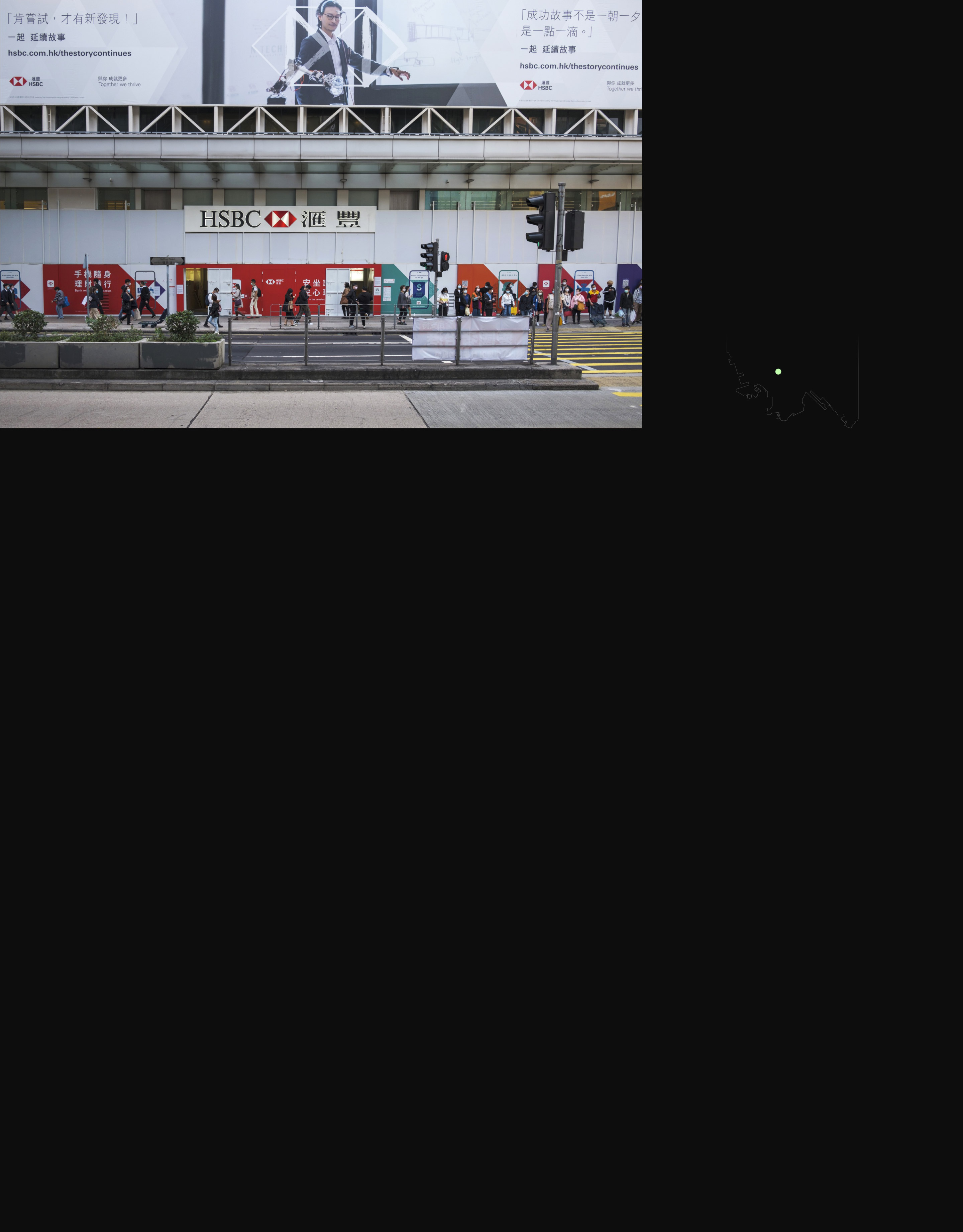
Pedestrians pass by a boarded-up HSBC branch in Mong Kok, once a hub for tourism. Protesters set it ablaze on Christmas Eve in 2019.
HSBC BRANCH
▲ Photographer: Justin Chin/Bloomberg
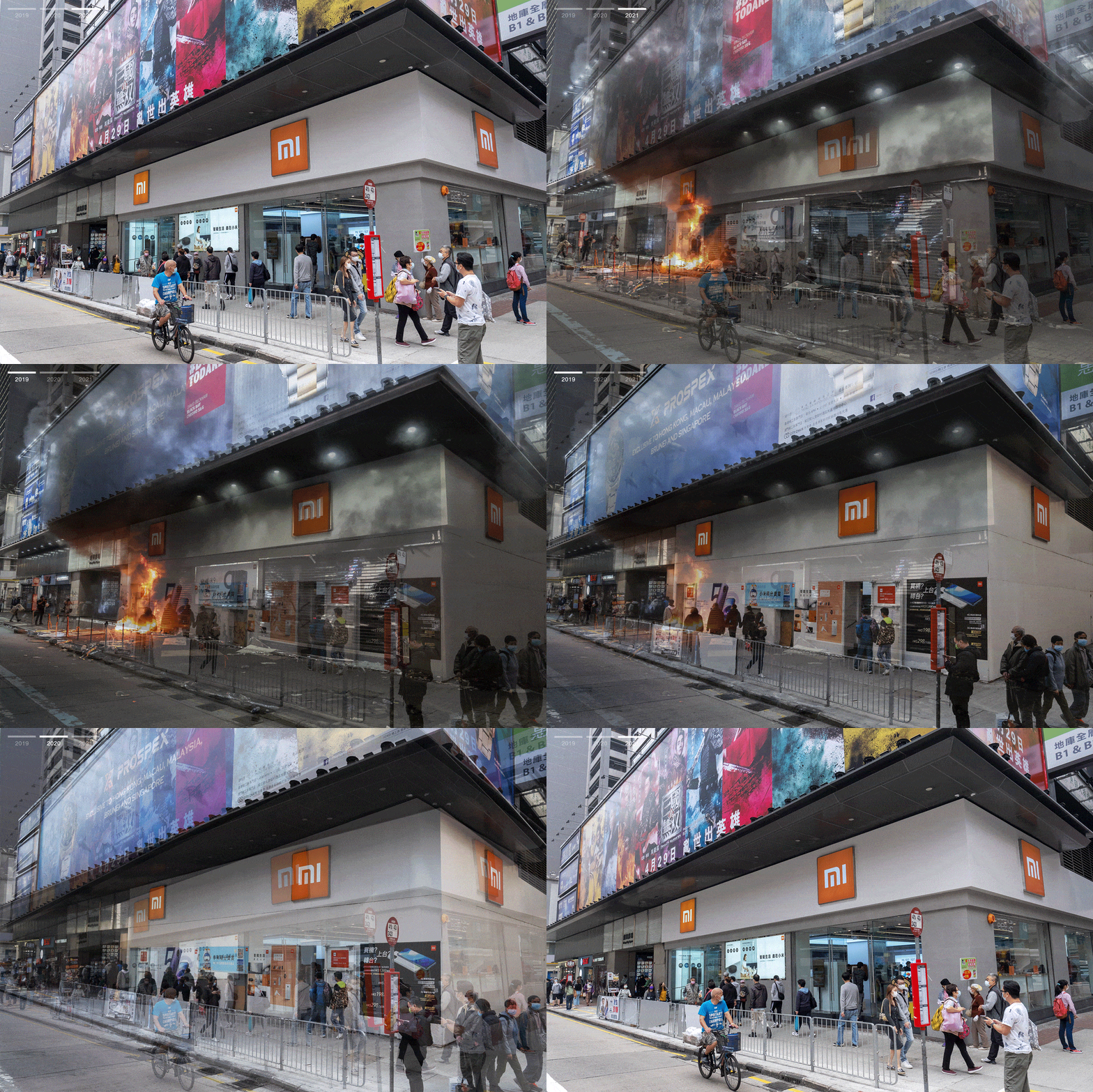
A store selling products from Chinese electronics giant Xiaomi Corp. at the corner of Nathan Road and Soy Street in Mong Kok was marked with graffiti and set on fire during protests on Oct. 20, 2019, and remained boarded up for over a year, seen here on Jan. 14, 2021. It has since been refurbished and unveiled its new appearance on March 6.
▲ Photographer: Justin Chin, Billy H.C. Kwok/Bloomberg
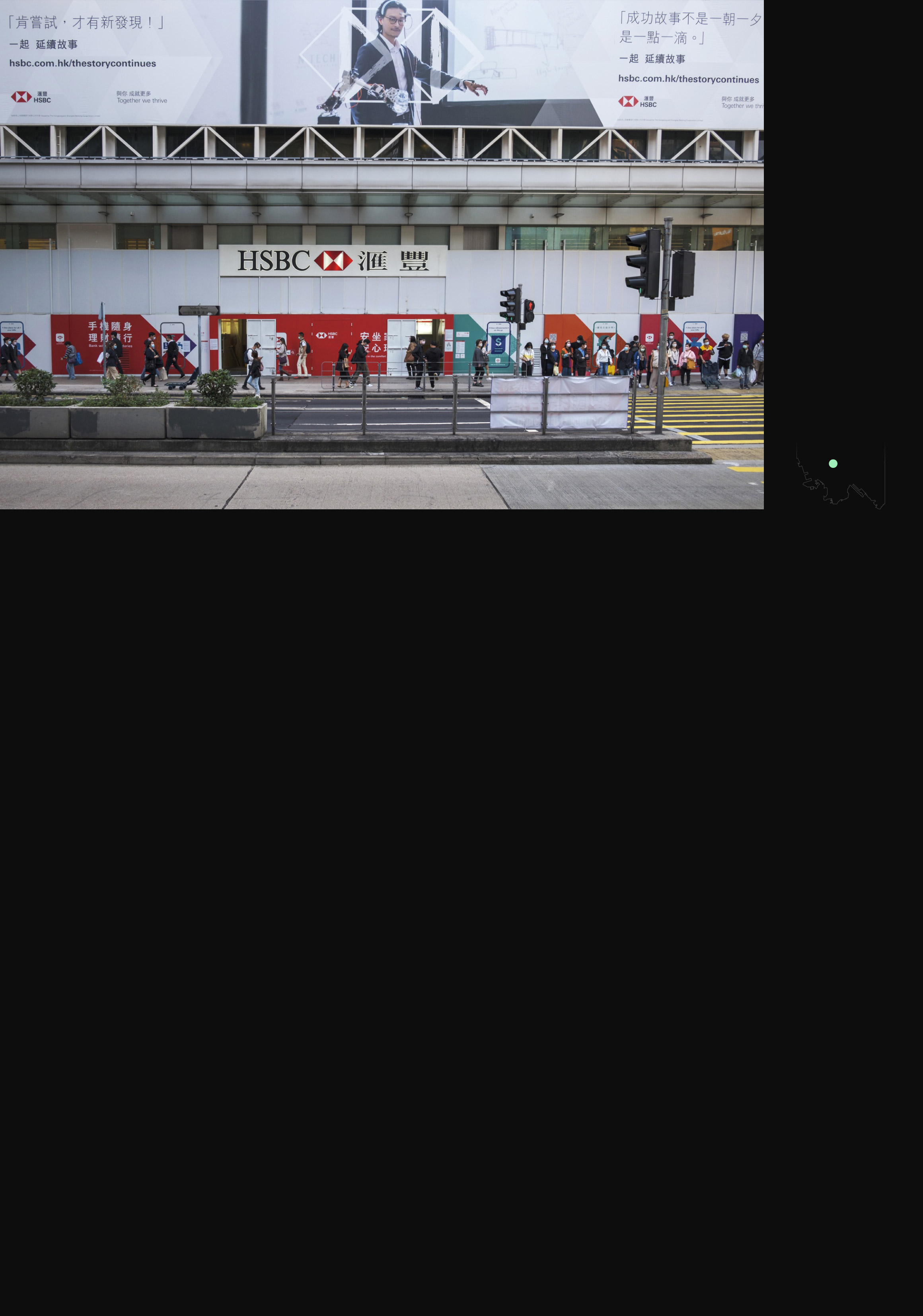
Pedestrians pass by a boarded-up HSBC branch in Mong Kok, once a hub for tourism. Protesters set it ablaze on Christmas Eve in 2019.
HSBC BRANCH
▲ Photographer: Justin Chin, Billy H.C. Kwok/Bloomberg
A store selling products from Chinese electronics giant Xiaomi Corp. at the corner of Nathan Road and Soy Street in Mong Kok was marked with graffiti and set on fire during protests on Oct. 20, 2019, and remained boarded up for over a year, seen here on Jan. 14, 2021. It has since been refurbished and unveiled its new appearance on March 6.
▲ Photographer: Justin Chin, Billy H.C. Kwok/Bloomberg
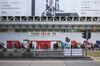
Pedestrians pass by a boarded-up HSBC branch in Mong Kok, once a hub for tourism. Protesters set it ablaze on Christmas Eve in 2019.
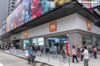
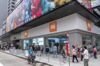
A store selling products from Chinese electronics giant Xiaomi Corp. at the corner of Nathan Road and Soy Street in Mong Kok was marked with graffiti and set on fire during protests on Oct. 20, 2019, and remained boarded up for over a year, seen here on Jan. 14, 2021. It has since been refurbished and unveiled its new appearance on March 6.
The Hong Kong Polytechnic University
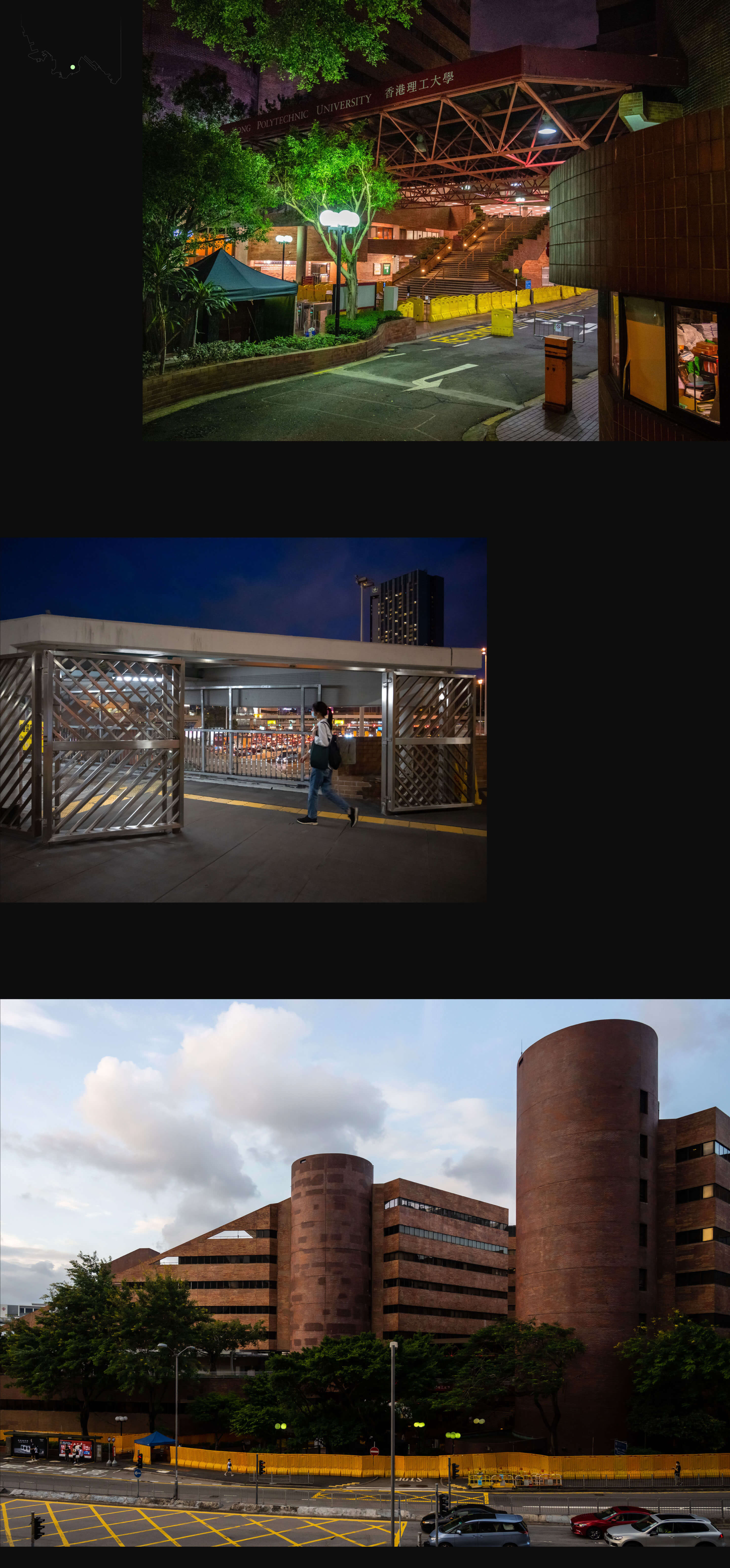
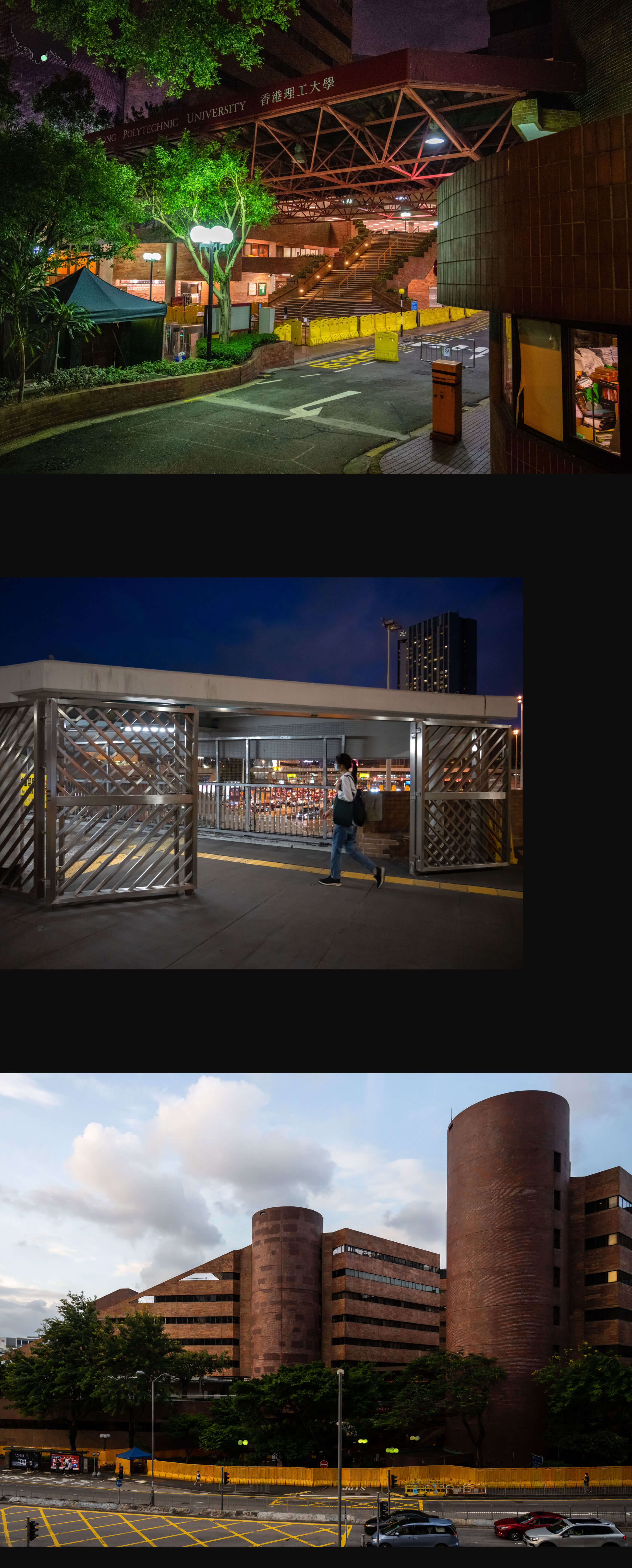
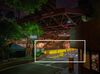
One of Hong Kong’s top universities served as the backdrop for some of the most dramatic scenes in 2019, including a chaotic 16-day siege that led to permanent changes. Once openly accessible, the campus later locked down, with uniformed security guards barring visitors from entry unless they received permission in advance.

THE HONG KONG
POLYTECHNIC
UNIVERSITY
Yellow barricades and a metal gate block the entrance to PolyU on Sept. 26, 2020.
▲ Photographer: Billy H.C. Kwok/Bloomberg
Metal gates at a campus bridge on Sept. 26, 2020, following a standoff that briefly made the site the epicenter of the battle between protesters and Hong Kong authorities.
▲ Photographer: Billy H.C. Kwok/Bloomberg
Barriers cordon off PolyU’s campus on Cheong Wan Road on Sept. 26, 2020.
▲ Photographer: Billy H.C. Kwok/Bloomberg

POLYU
Yellow barricades and a metal gate block the entrance to PolyU on Sept. 26, 2020.
▲ Photographer: Billy H.C. Kwok/Bloomberg
Metal gates at a campus bridge on Sept. 26, 2020, following a standoff that briefly made the site the epicenter of the battle between protesters and Hong Kong authorities.
▲ Photographer: Billy H.C. Kwok/Bloomberg
Barriers cordon off PolyU’s campus on Cheong Wan Road on Sept. 26, 2020.
▲ Photographer: Billy H.C. Kwok/Bloomberg
Yellow barricades and a metal gate block the entrance to PolyU on Sept. 26, 2020.
Metal gates at a campus bridge on Sept. 26, 2020, following a standoff that briefly made the site the epicenter of the battle between protesters and Hong Kong authorities.
Barriers cordon off PolyU’s campus on Cheong Wan Road on Sept. 26, 2020.
Hong Kong West Kowloon Rail Station
The high-speed rail station connecting Hong Kong to major hubs in China has attracted controversy since it opened in 2018. Located in the heart of the city, it includes an area under Chinese jurisdiction that has customs and immigration officers from the mainland. “The border is becoming much less of a marker of two administrative regions,” said Steve Tsang, director of SOAS University of London’s China Institute. “You have a bit of Hong Kong where Chinese jurisdiction and Chinese rules operate.”
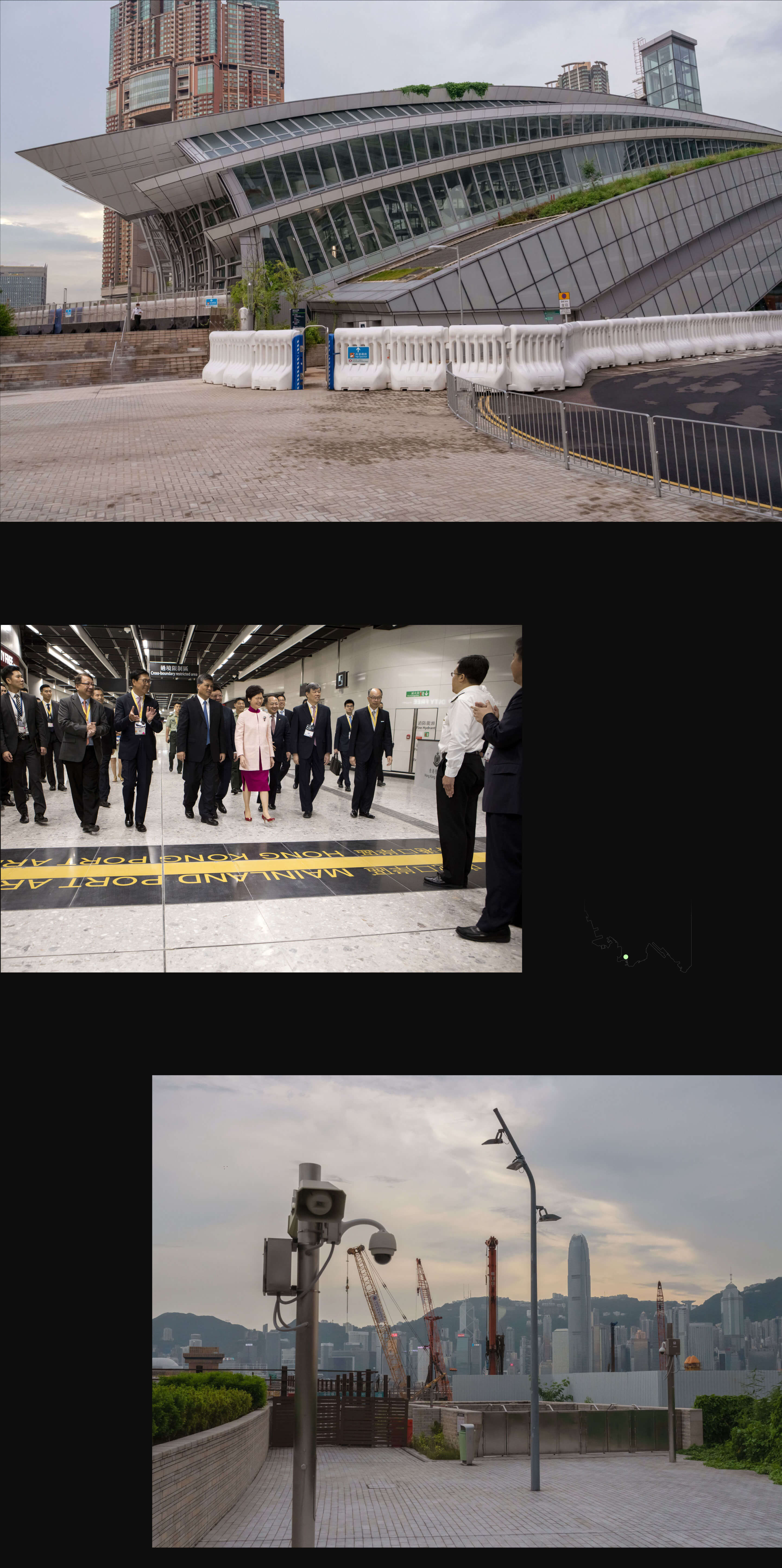

Barricades – now removed – guarded the entrance of the train station on Sept. 12, 2020, after they had been in place for more than a year. Its engineering lead–the U.S. firm Aecom–called the building the “southernmost terminus” of China’s national train network.
▲ Photographer: Billy H.C. Kwok/Bloomberg
Hong Kong leader Carrie Lam, center, walks up to the demarcation line with the mainland during a tour of the station on Sept. 22, 2018.
WEST KOWLOON
RAIL STATION
▲ Photographer: Giulia Marchi/Bloomberg
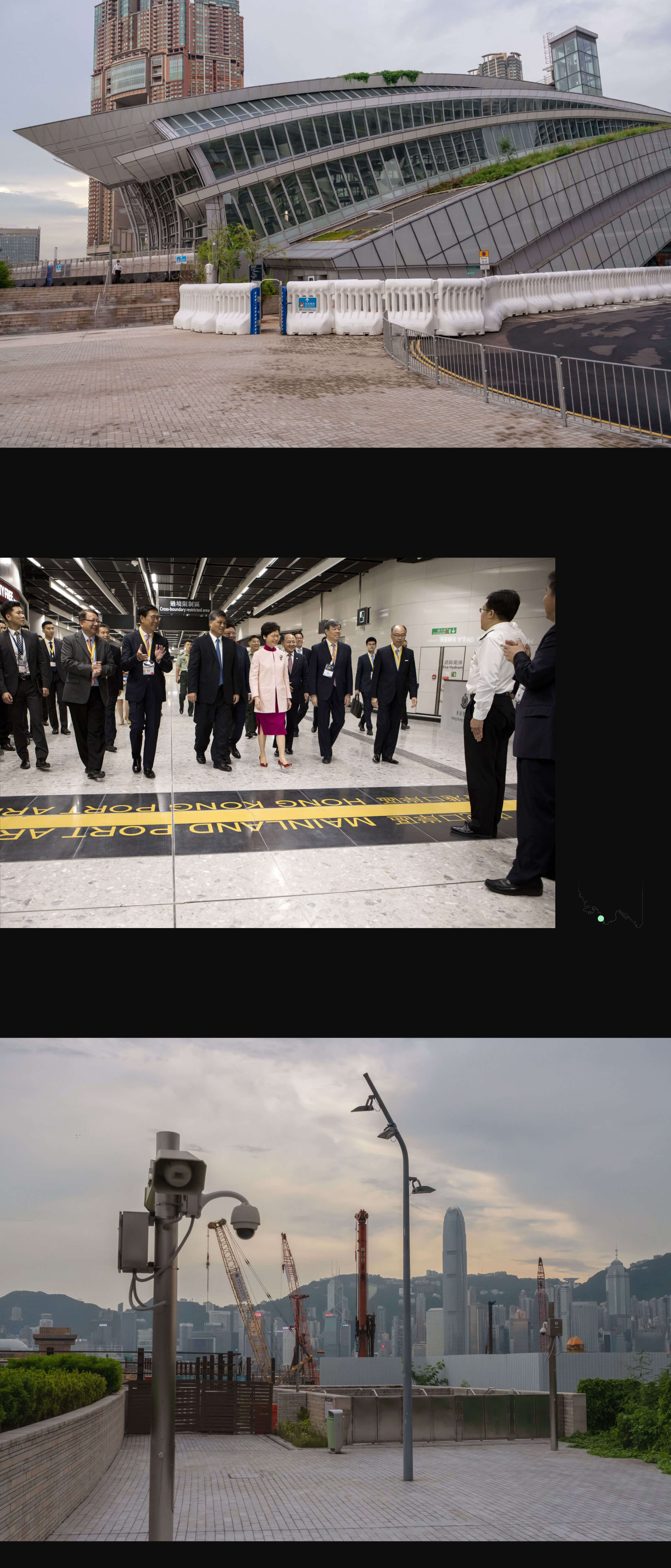
A CCTV camera that had already been installed before the protests kicked off keeps watch outside the train station on Sept. 12, 2020. Fearing a surveillance state similar to the mainland, demonstrators had attempted to shield their anonymity by wearing masks or destroying security cameras.
▲ Photographer: Billy H.C. Kwok/Bloomberg

Barricades – now removed – guarded the entrance of the train station on Sept. 12, 2020, after they had been in place for more than a year. Its engineering lead–the U.S. firm Aecom–called the building the “southernmost terminus” of China’s national train network.
▲ Photographer: Billy H.C. Kwok/Bloomberg
Hong Kong leader Carrie Lam, center, walks up to the demarcation line with the mainland during a tour of the station on Sept. 22, 2018.
WEST
KOWLOON
RAIL
STATION
▲ Photographer: Giulia Marchi/Bloomberg
A CCTV camera that had already been installed before the protests kicked off keeps watch outside the train station on Sept. 12, 2020. Fearing a surveillance state similar to the mainland, demonstrators had attempted to shield their anonymity by wearing masks or destroying security cameras.
▲ Photographer: Billy H.C. Kwok/Bloomberg
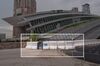
Barricades – now removed – guarded the entrance of the train station on Sept. 12, 2020, after they had been in place for more than a year. Its engineering lead–the U.S. firm Aecom–called the building the “southernmost terminus” of China’s national train network.
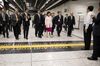
Hong Kong leader Carrie Lam, center, walks up to the demarcation line with the mainland during a tour of the station on Sept. 22, 2018.
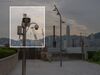
A CCTV camera that had already been installed before the protests kicked off keeps watch outside the train station on Sept. 12, 2020. Fearing a surveillance state similar to the mainland, demonstrators had attempted to shield their anonymity by wearing masks or destroying security cameras.
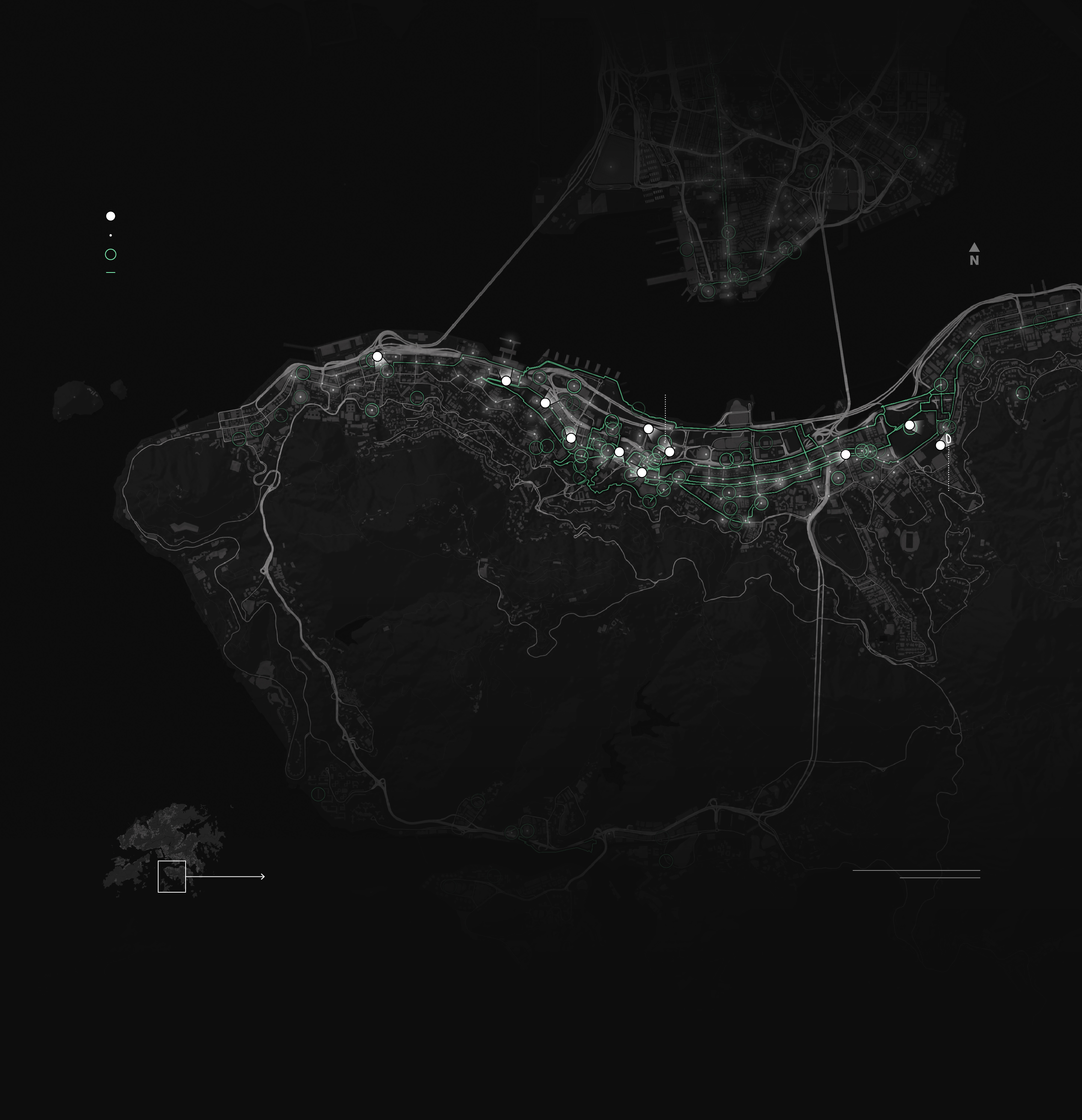
Hong Kong Island
The skyline of Hong Kong’s glitzy main island is famous across the world -- a shifting landscape that increasingly reflects China’s influence.
YAU TSIM MONG
DISTRICT
LOCATION WHERE EACH PHOTO WAS TAKEN
TEAR GAS FIRED DURING PROTESTS
PROTESTS LOCATION
PROTESTS Mobilization
Victoria
Harbour
Legislative
Council of
Hong Kong
Tai Hang
Central
EASTERN
District
Central
AND Western
District
National Security
Office Tower
Wan Chai
District
1 mile
1 km
Enlarged area
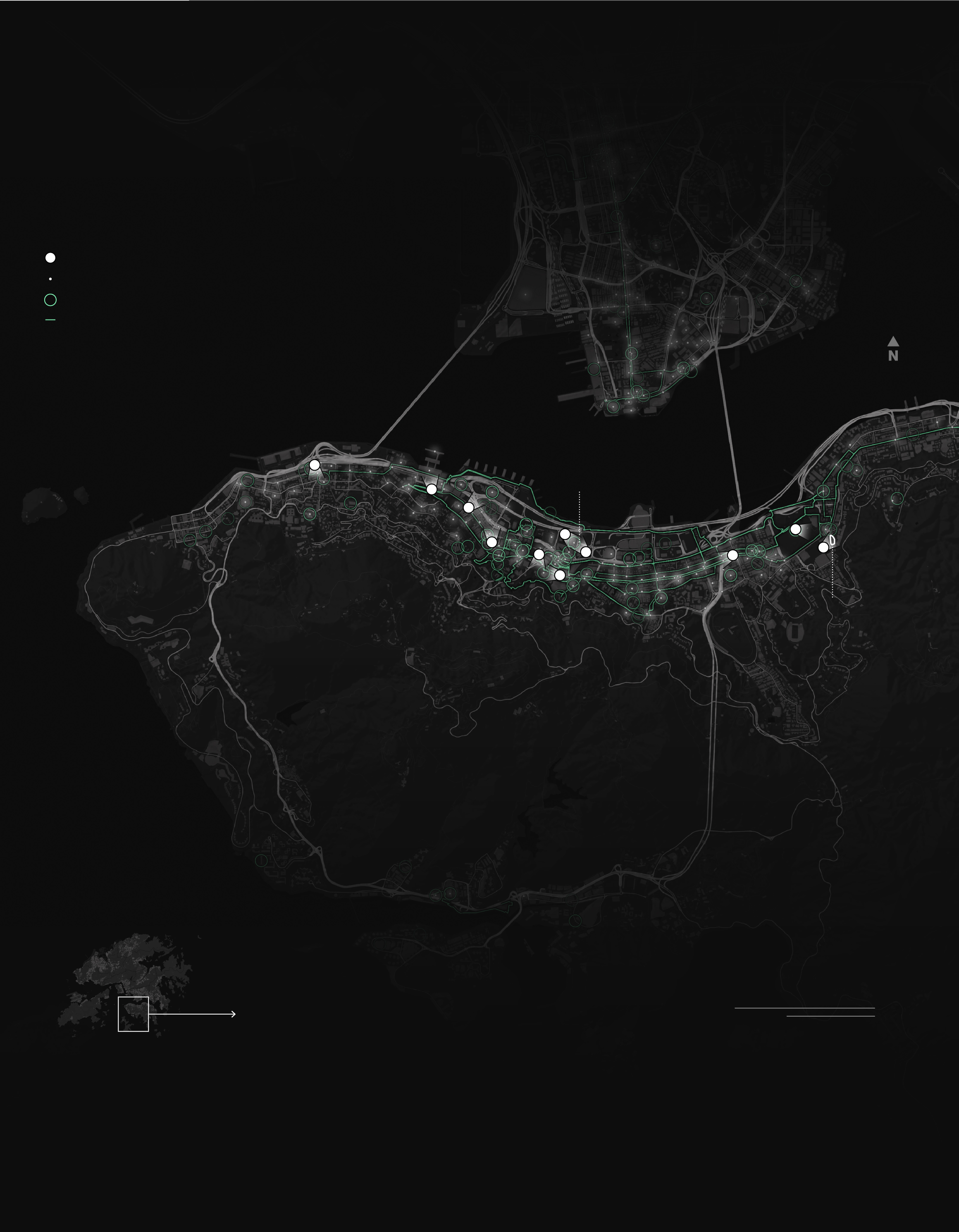
Hong Kong Island
The skyline of Hong Kong’s glitzy main island is famous across the world -- a shifting landscape that increasingly reflects China’s influence.
YAU TSIM MONG
DISTRICT
LOCATION WHERE EACH PHOTO WAS TAKEN
TEAR GAS FIRED DURING PROTESTS
PROTESTS LOCATION
PROTESTS Mobilization
Legislative
Council of
Hong Kong
Victoria
Harbour
Tai Hang
Central
EASTERN
District
Central
AND Western
District
National Security
Office Tower
Wan Chai
District
1 mile
1 km
Enlarged area
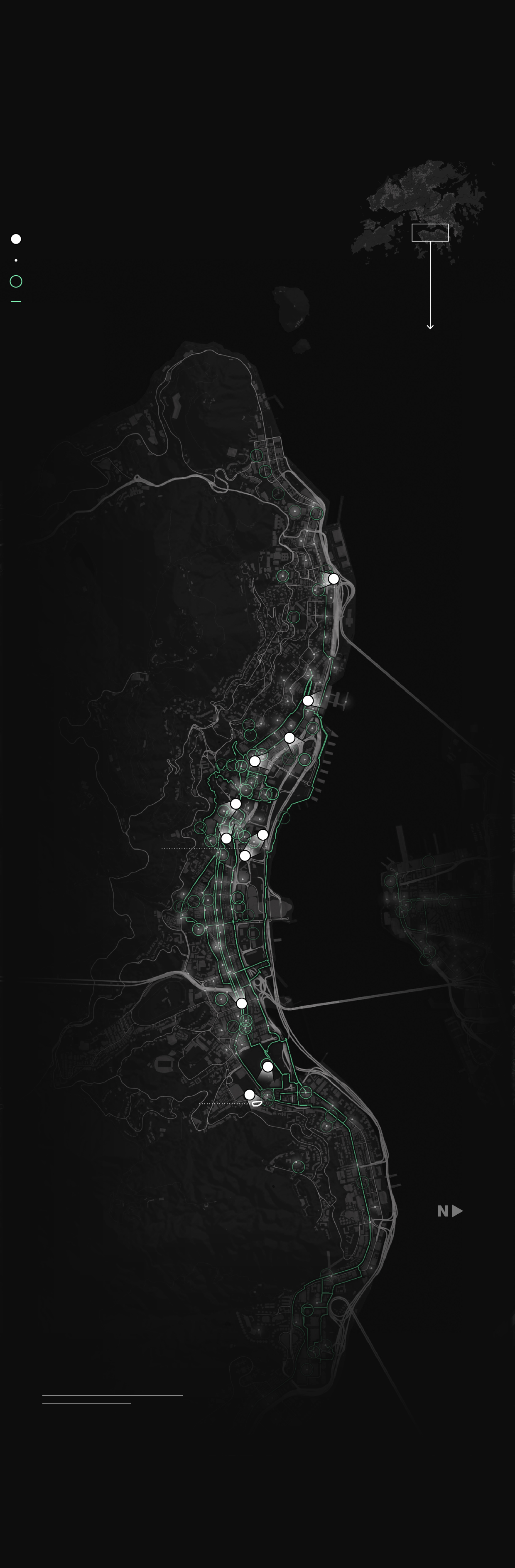
Hong Kong Island
The skyline of Hong Kong’s glitzy main island is famous across the world -- a shifting landscape that increasingly reflects China’s influence.
Enlarged area
LOCATION WHERE EACH PHOTO WAS TAKEN
TEAR GAS FIRED DURING PROTESTS
PROTESTS LOCATION
PROTESTS Mobilization
Central
AND Western
District
Central
Legislative Council
of Hong Kong
Wan Chai
District
Victoria
Harbour
National Security
Office Tower
Tai Hang
EASTERN
District
1 mile
1 km
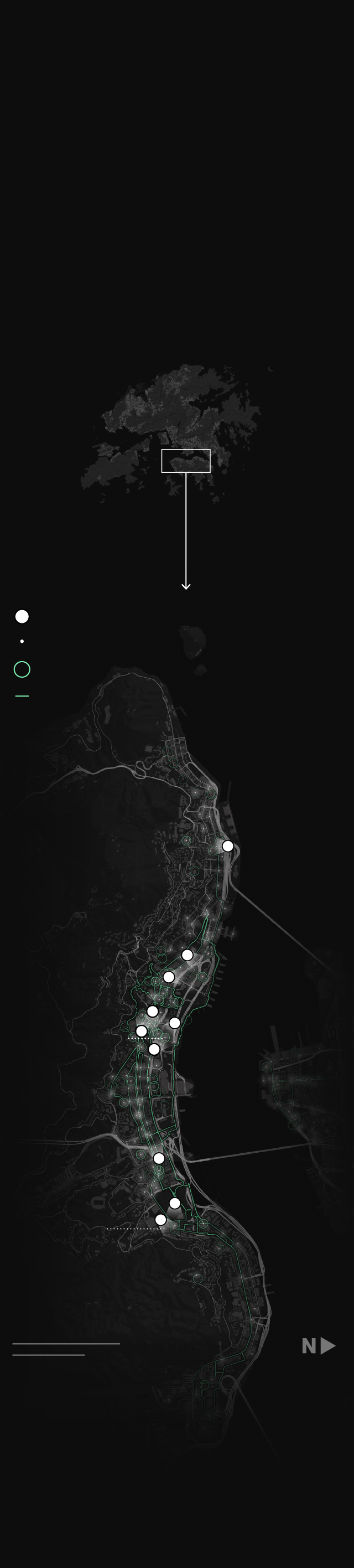
Hong Kong Island
The skyline of Hong Kong’s glitzy main island is famous across the world -- a shifting landscape that increasingly reflects China’s influence.
Enlarged area
LOCATION WHERE EACH PHOTO WAS TAKEN
TEAR GAS FIRED DURING PROTESTS
PROTESTS LOCATION
PROTESTS Mobilization
Central
AND Western
District
Legislative
Council of
Hong Kong
Victoria
Harbour
National
Security
Office
Tower
1 mile
1 km
Central
Hundreds of thousands of protesters marched through the Central business district and its environs in the summer of 2019. Office workers also organized regular “flash mob” protests that saw street battles play out near the backdrop of stores featuring luxury brands like Louis Vuitton and Cartier.
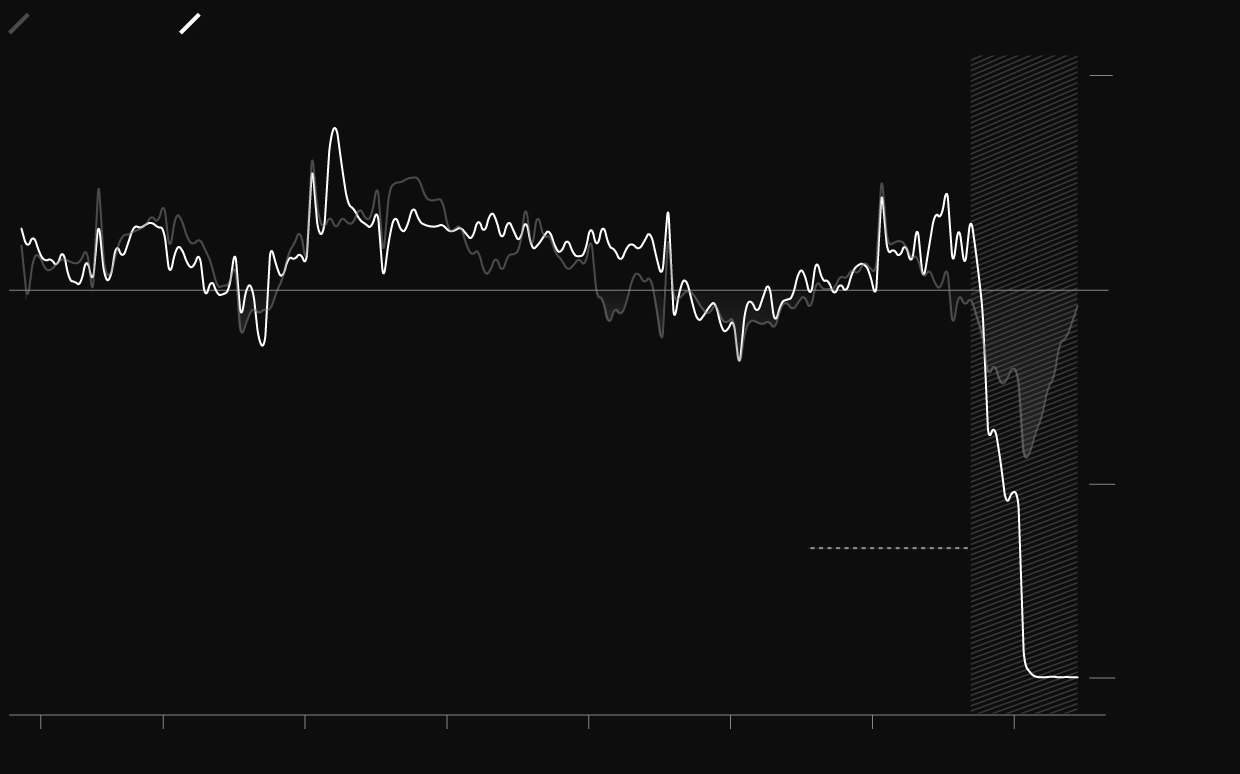
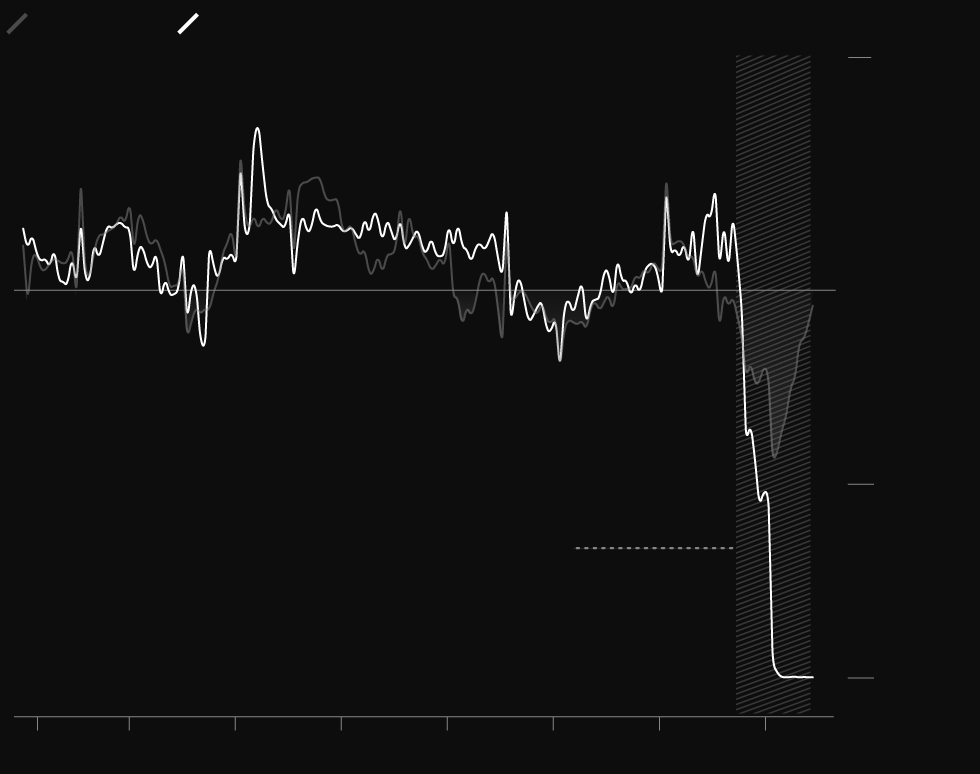
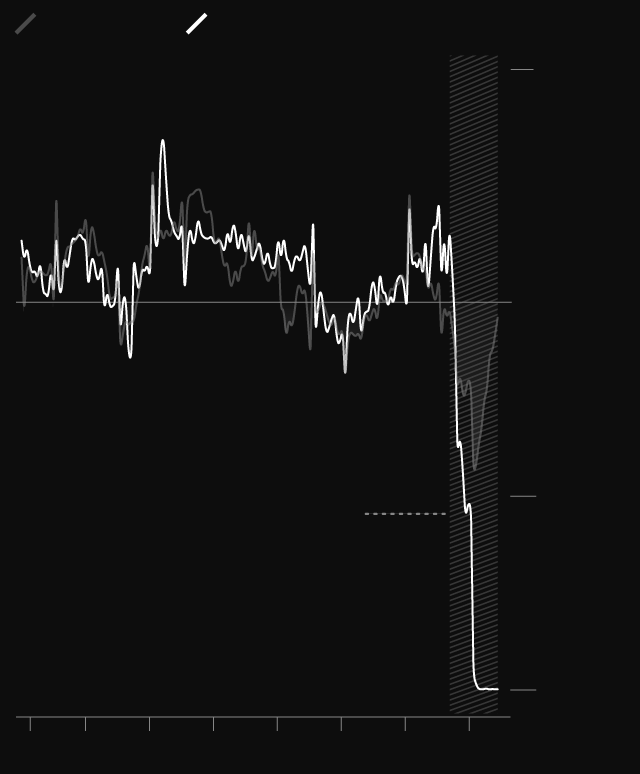
The ugly scenes deterred tourists even before the pandemic hit last year.
Sales
Arrivals
50%
0
-50
A combination of a year of protests and travel restrictions due to coronavirus ended in a drop of almost 100% visitors
-100%
2006
2008
2010
2012
2014
2016
2018
2020
Sales
Arrivals
50%
0
-50
A combination of a year of protests and travel restrictions due to coronavirus ended in a drop of almost 100% visitors
-100%
2006
2008
2010
2012
2014
2016
2018
2020
Sales
Arrivals
50%
0
A combination of a year of protests and travel restrictions due to coronavirus ended in a drop of almost 100% visitors
-50
-100%
2010
2020
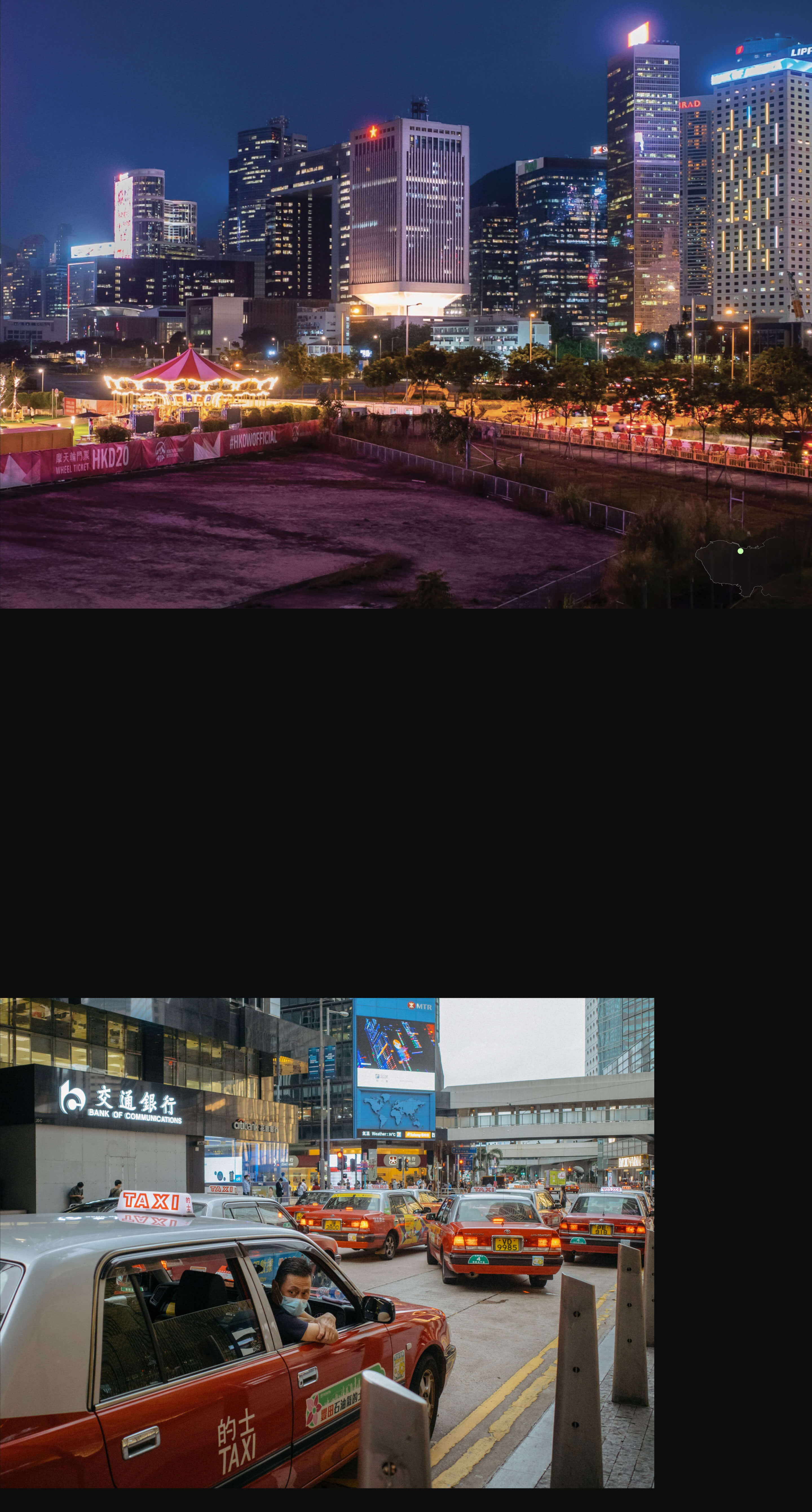

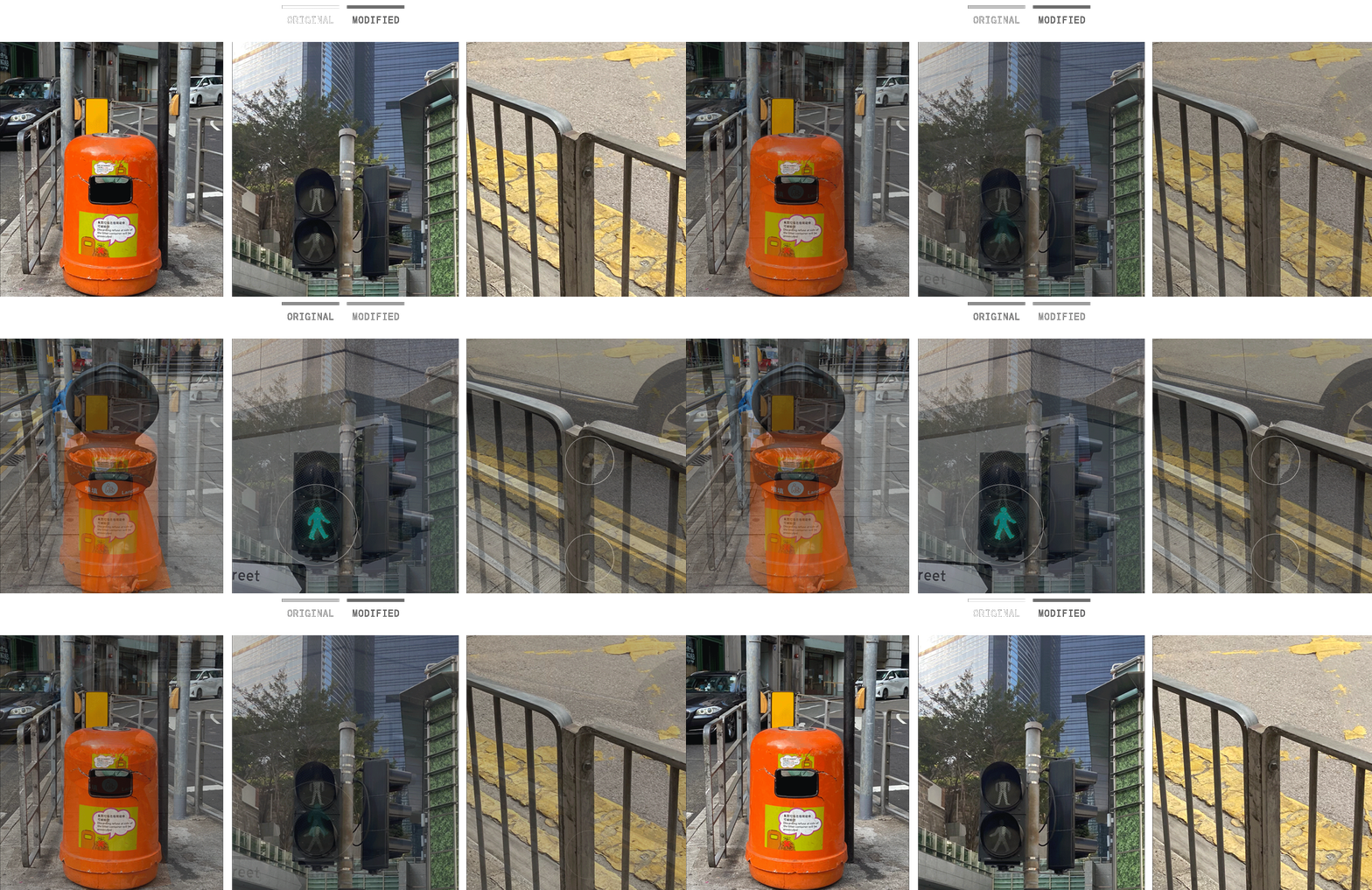
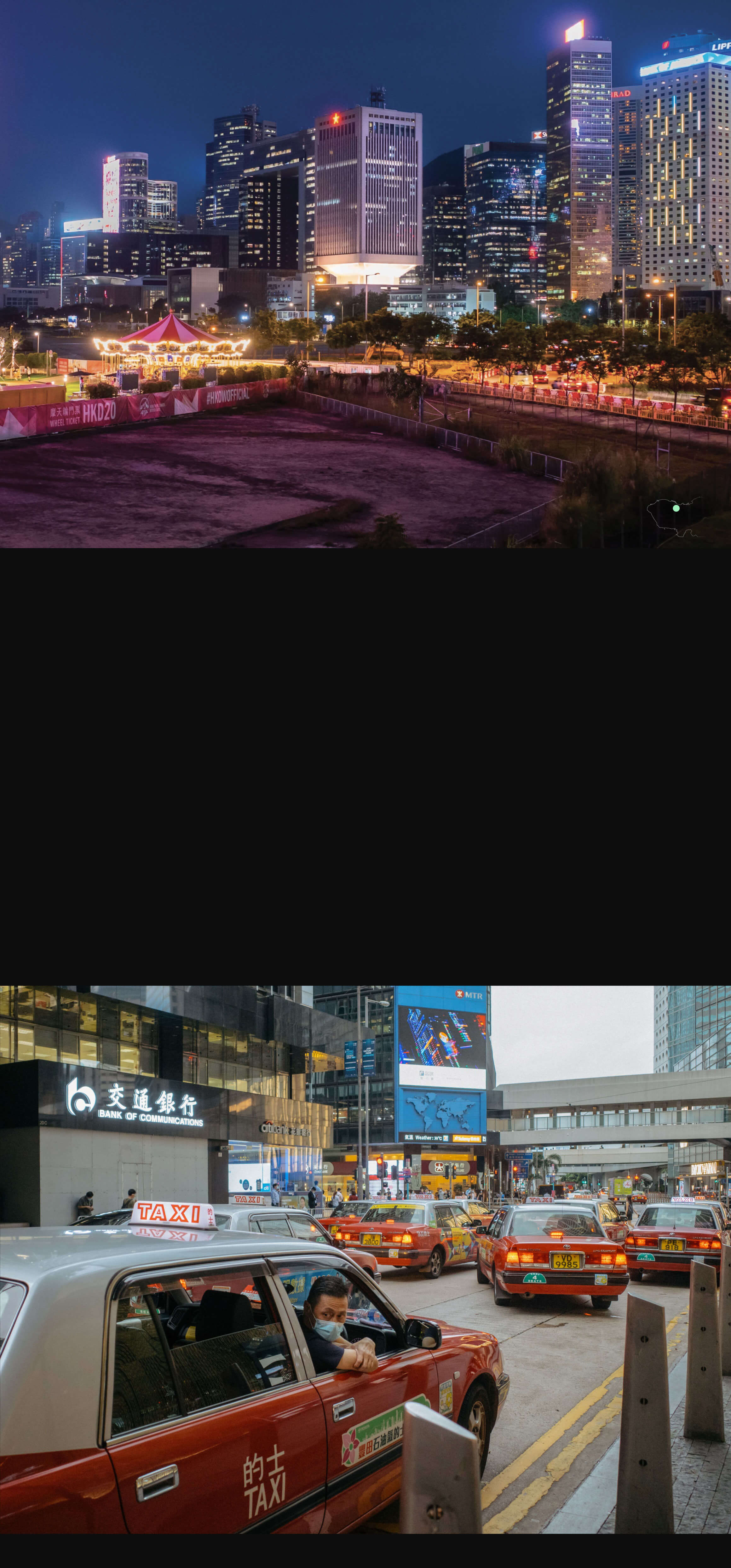
The headquarters of China’s People's Liberation Army Hong Kong Garrison sits on the Central waterfront, as seen here on Sept. 23, 2020. It’s a stone’s throw from Victoria Harbor, high-end shopping districts and gleaming skyscrapers that host international companies.
PLA BUILDING
▲ Photographer: Billy H.C. Kwok/Bloomberg
TRASH BIN
REINFORCED
TRAFFIC LIGHTS
SECURED
RAIL GUARDS
A branch of the Shanghai-headquartered Bank of Communications (Hong Kong) Ltd. is boarded up on Pedder Street on Sept. 23, 2020. A number of branches of Chinese banks across the city became targets of protesters in 2019 and were subsequently boarded up, while others like the Citibank next door were spared.
▲ Photographer: Billy H.C. Kwok/Bloomberg

The headquarters of China’s People's Liberation Army Hong Kong Garrison sits on the Central waterfront, as seen here on Sept. 23, 2020. It’s a stone’s throw from Victoria Harbor, high-end shopping districts and gleaming skyscrapers that host international companies.
PLA BUILDING
▲ Photographer: Billy H.C. Kwok/Bloomberg
TRASH BIN
REINFORCED
TRAFFIC LIGHTS
SECURED
RAIL GUARDS
A branch of the Shanghai-headquartered Bank of Communications (Hong Kong) Ltd. is boarded up on Pedder Street on Sept. 23, 2020. A number of branches of Chinese banks across the city became targets of protesters in 2019 and were subsequently boarded up, while others like the Citibank next door were spared.
▲ Photographer: Billy H.C. Kwok/Bloomberg
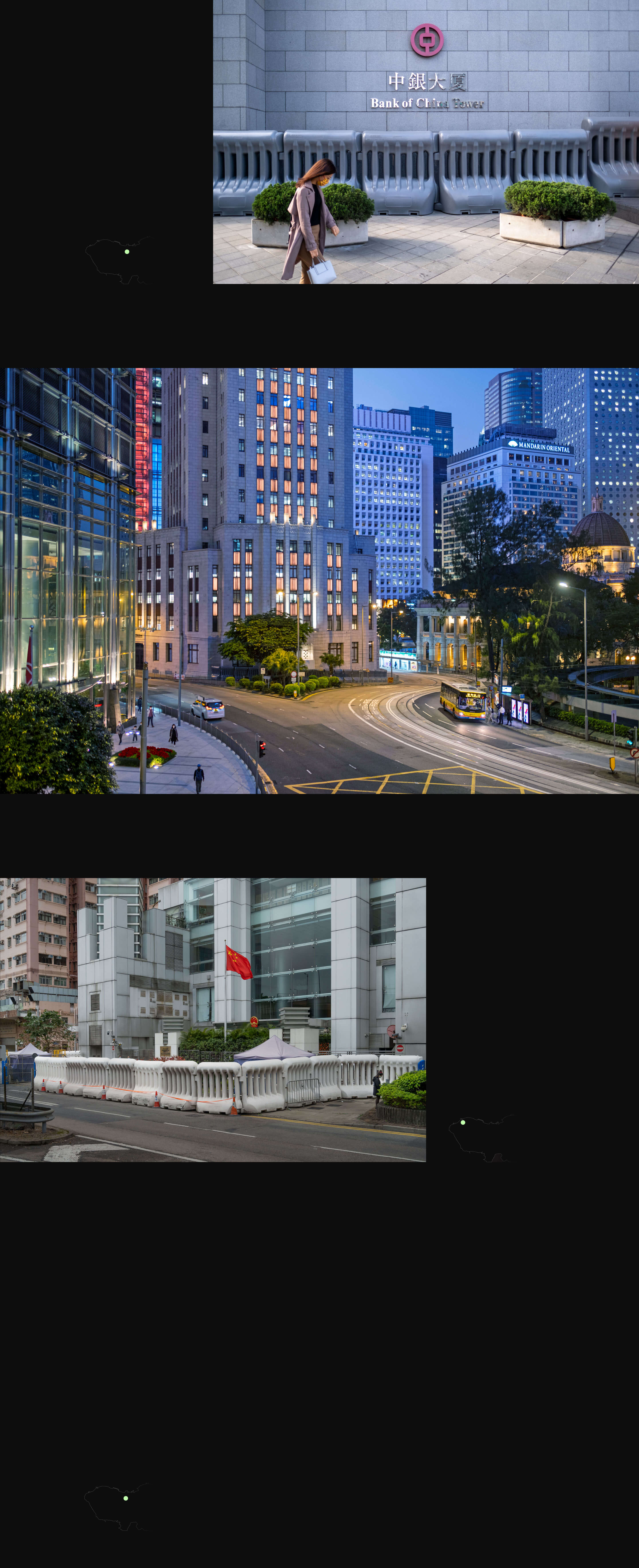

The Bank of China saw its local headquarters and branches vandalized. Barricades remain erected in front of the building on Feb. 16, 2021.
BANK OF CHINA
▲ Photographer: Justin Chin/Bloomberg
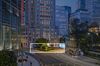
A barricade surrounds a section of the Old Bank of China building in Central on Feb. 16. The building is near the end of the main route used during some of the city’s biggest protest marches.
▲ Photographer: Justin Chin/Bloomberg
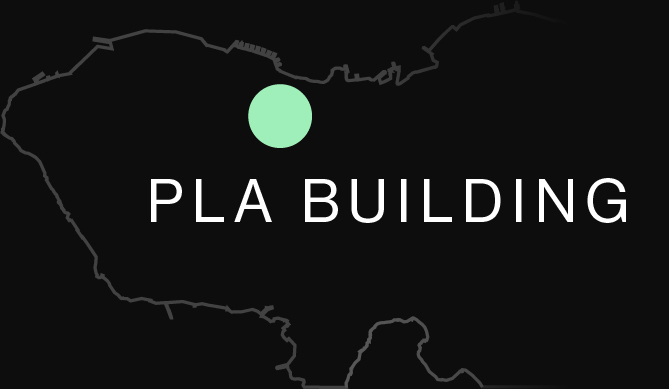
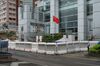
Barricades in front of China’s Liaison Office in Hong Kong – Beijing's top agency overseeing the city – in Sai Ying Pun. The office controls local newspapers and book publishers that promote the central government’s agenda.
LIAISON
OFFICE
▲ Photographer: Billy H.C. Kwok/Bloomberg
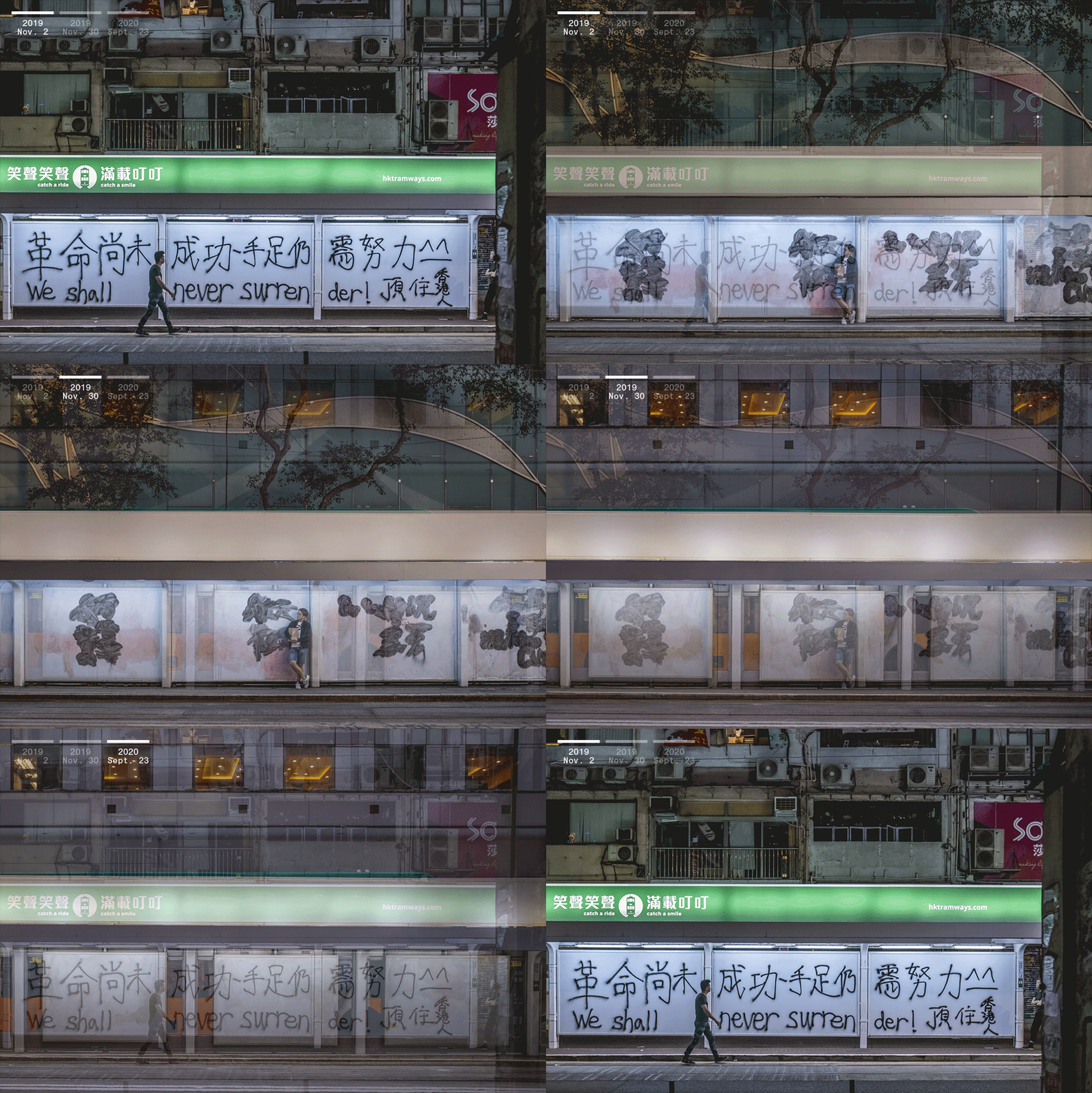
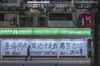
Tram stops in Central, which were regularly covered in graffiti during the protests, have since been cleaned. Demonstrators who broke into the city’s legislature on July 1, 2019, scrawled slogans such as “There are no rioters, only tyranny” and “Carrie Lam step down.”
TRAM STOPS
▲ Photographer: Justin Chin, Billy H.C. Kwok/Bloomberg
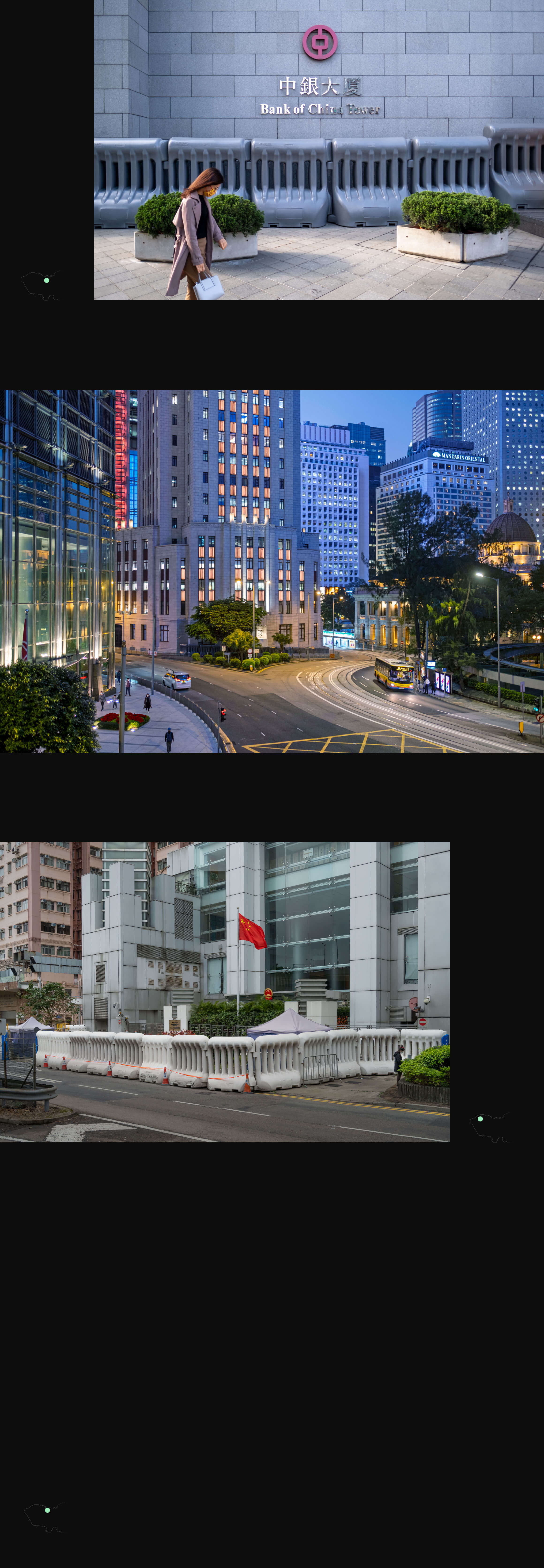

The Bank of China saw its local headquarters and branches vandalized. Barricades remain erected in front of the building on Feb. 16, 2021.
BANK OF
CHINA
▲ Photographer: Justin Chin/Bloomberg
A barricade surrounds a section of the Old Bank of China building in Central on Feb. 16. The building is near the end of the main route used during some of the city’s biggest protest marches.
▲ Photographer: Justin Chin/Bloomberg
Barricades in front of China’s Liaison Office in Hong Kong – Beijing's top agency overseeing the city – in Sai Ying Pun. The office controls local newspapers and book publishers that promote the central government’s agenda.
LIAISON
OFFICE
▲ Photographer: Billy H.C. Kwok/Bloomberg
Tram stops in Central, which were regularly covered in graffiti during the protests, have since been cleaned. Demonstrators who broke into the city’s legislature on July 1, 2019, scrawled slogans such as “There are no rioters, only tyranny” and “Carrie Lam step down.”
TRAM STOPS
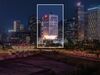
The headquarters of China’s People's Liberation Army Hong Kong Garrison sits on the Central waterfront, as seen here on Sept. 23, 2020. It’s a stone’s throw from Victoria Harbor, high-end shopping districts and gleaming skyscrapers that host international companies.
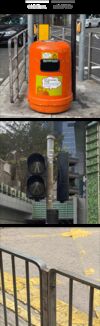
TRASH BIN
REINFORCED TRAFFIC LIGHTS
SECURED RAIL GUARDS
A branch of the Shanghai-headquartered Bank of Communications (Hong Kong) Ltd. is boarded up on Pedder Street on Sept. 23, 2020. A number of branches of Chinese banks across the city became targets of protesters in 2019 and were subsequently boarded up, while others like the Citibank next door were spared.
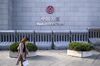
The Bank of China saw its local headquarters and branches vandalized. Barricades remain erected in front of the building on Feb. 16, 2021.
A barricade surrounds a section of the Old Bank of China building in Central on Feb. 16. The building is near the end of the main route used during some of the city’s biggest protest marches.
Barricades in front of China’s Liaison Office in Hong Kong – Beijing's top agency overseeing the city – in Sai Ying Pun. The office controls local newspapers and book publishers that promote the central government’s agenda.
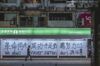
Tram stops in Central, which were regularly covered in graffiti during the protests, have since been cleaned. Demonstrators who broke into the city’s legislature on July 1, 2019, scrawled slogans such as “There are no rioters, only tyranny” and “Carrie Lam step down.”
Legislative Council of
Hong Kong
Protesters stormed the main legislative building in Hong Kong on July 1, 2019–the 22nd anniversary of Hong Kong’s handover to China. Using a cart as a battering ram, they eventually made their way to the chamber floor.
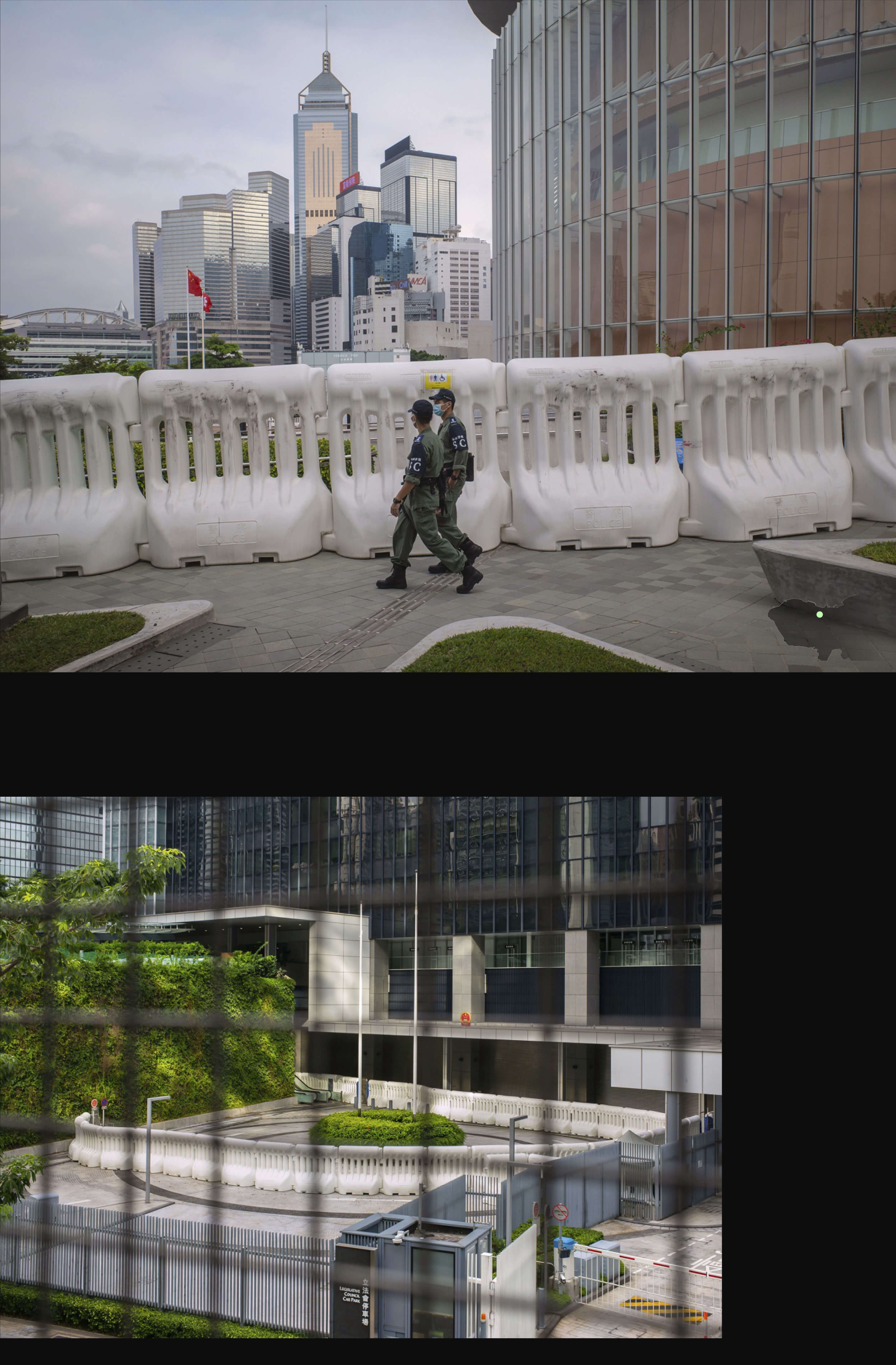
Members of the Hong Kong Fire Services walk past water-filled barriers surrounding the Legislative Council on Sept. 25, 2020. In November 2019, the police force brought in hundreds of officers from other departments to serve as special constables to help quell the disorder.
HONG KONG
ISLAND
▲ Photographer: Billy H.C. Kwok/Bloomberg
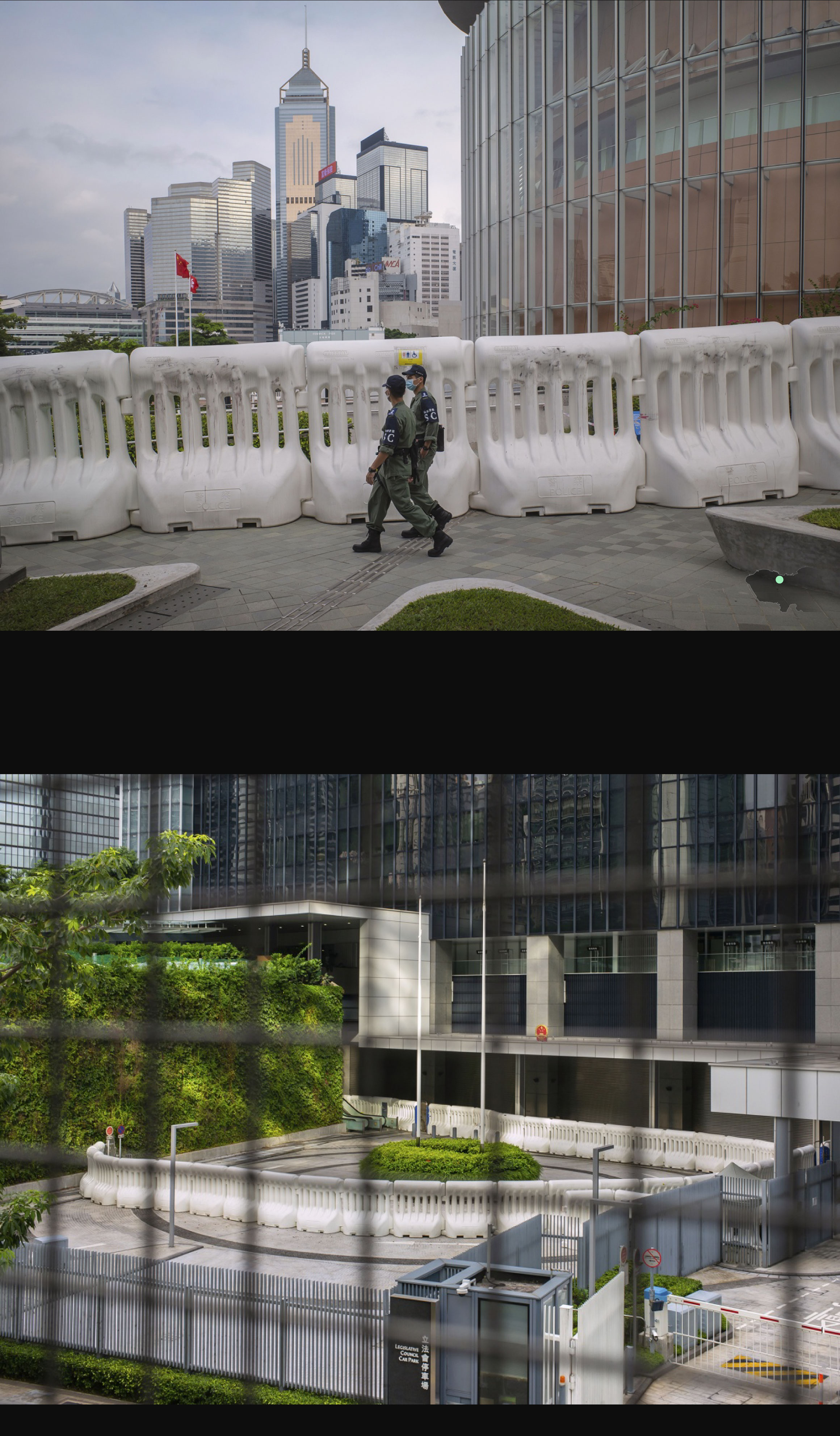
Barricades guard the entrance to the LegCo compound on Sept. 5, 2020. Opposition lawmakers resigned en masse in November 2020 after China imposed a new loyalty clause on lawmakers, prompting local authorities to disqualify several members of the pro-democracy camp.
▲ Photographer: Billy H.C. Kwok/Bloomberg
Members of the Hong Kong Fire Services walk past water-filled barriers surrounding the Legislative Council on Sept. 25, 2020. In November 2019, the police force brought in hundreds of officers from other departments to serve as special constables to help quell the disorder.
LEGCO
▲ Photographer: Billy H.C. Kwok/Bloomberg
Barricades guard the entrance to the LegCo compound on Sept. 5, 2020. Opposition lawmakers resigned en masse in November 2020 after China imposed a new loyalty clause on lawmakers, prompting local authorities to disqualify several members of the pro-democracy camp.
▲ Photographer: Billy H.C. Kwok/Bloomberg
Members of the Hong Kong Fire Services walk past water-filled barriers surrounding the Legislative Council on Sept. 25, 2020. In November 2019, the police force brought in hundreds of officers from other departments to serve as special constables to help quell the disorder.
Barricades guard the entrance to the LegCo compound on Sept. 5, 2020. Opposition lawmakers resigned en masse in November 2020 after China imposed a new loyalty clause on lawmakers, prompting local authorities to disqualify several members of the pro-democracy camp.
Causeway Bay
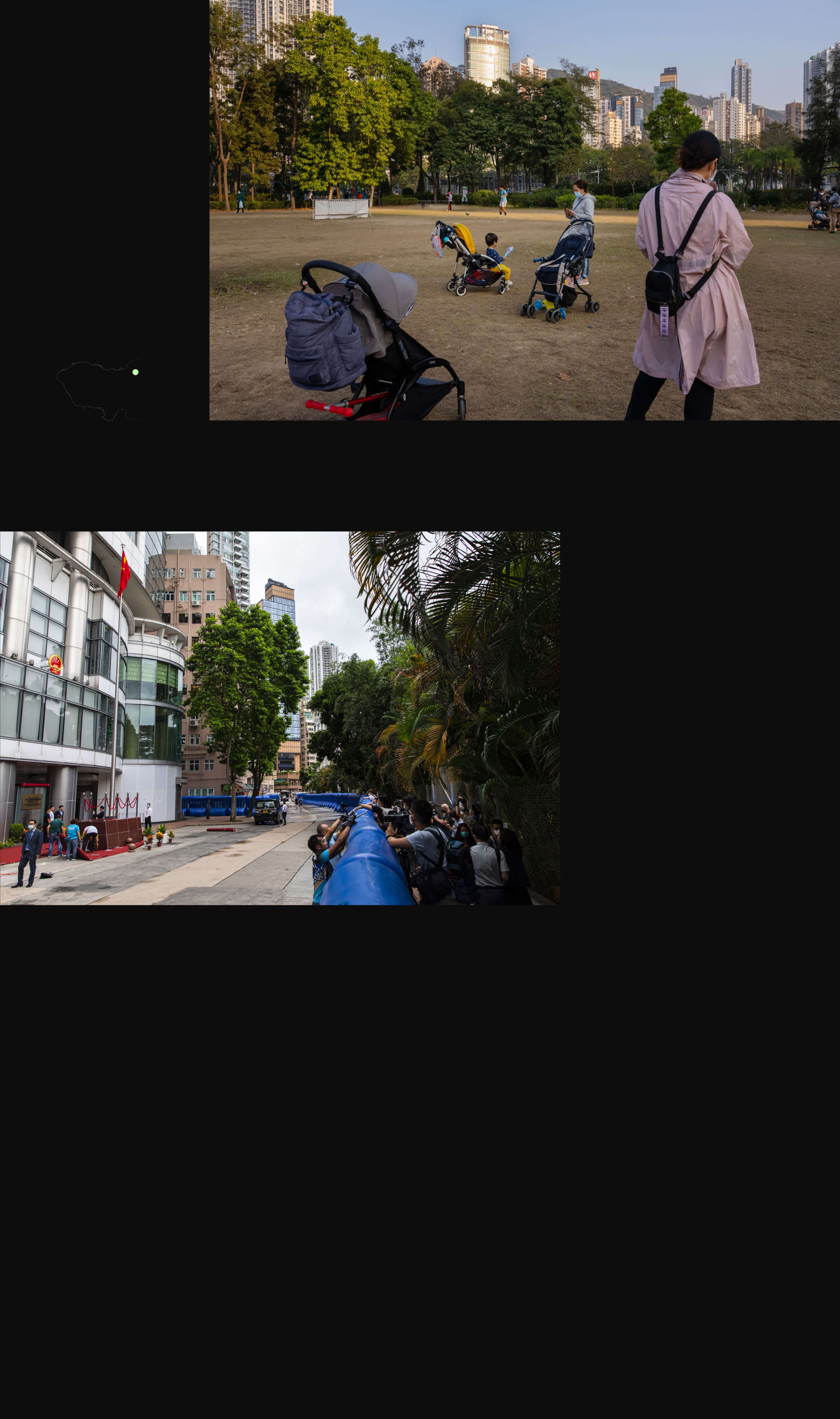
Residents of the hipster district Tai Hang–home to pricey sushi, boutiques and upscale coffee shops–have a new neighbor: China’s Office for Safeguarding National Security. Last summer the Metropark Hotel was converted by Beijing authorities shortly after China imposed its national security legislation.

National Security
Office Tower
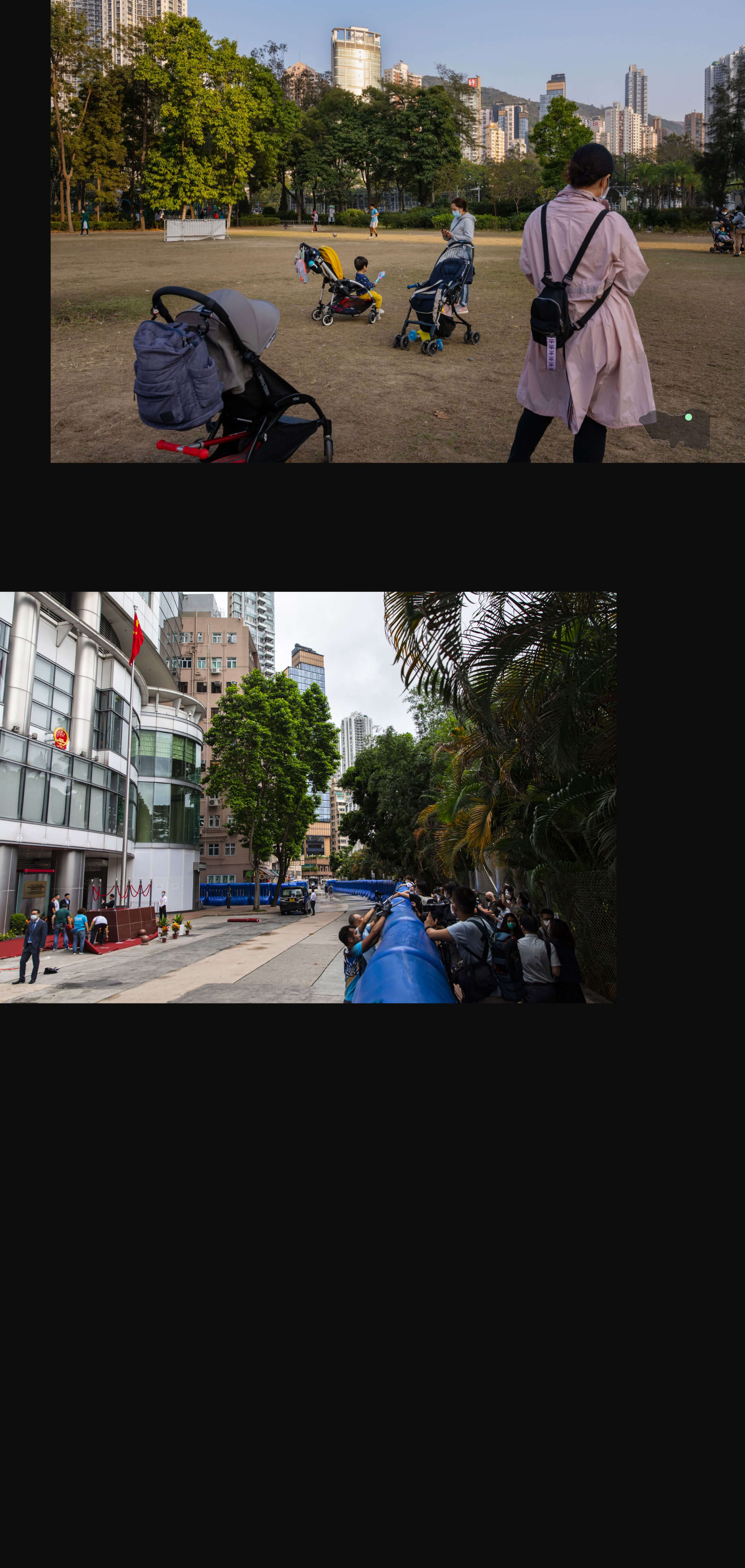
The National Security Office towers over Victoria Park on Jan. 18, 2021. The site served as the starting point of mass marches in 2019, as well as an annual vigil commemorating Beijing’s 1989 crackdown in Tiananmen Square. The Metropark’s tall vantage point was once used by journalists to photograph gatherings in the park.
NATIONAL
SECURITY
OFFICE
▲ Photographer: Billy H.C. Kwok/Bloomberg
Barriers block crowds on the day the National Security Office opened in Tai Hang on July 8, 2020. A hotel driveway once populated by travellers now bustles with security personnel eyeing pedestrians as they walk past.
▲ Photographer: Chan Long Hei/Bloomberg
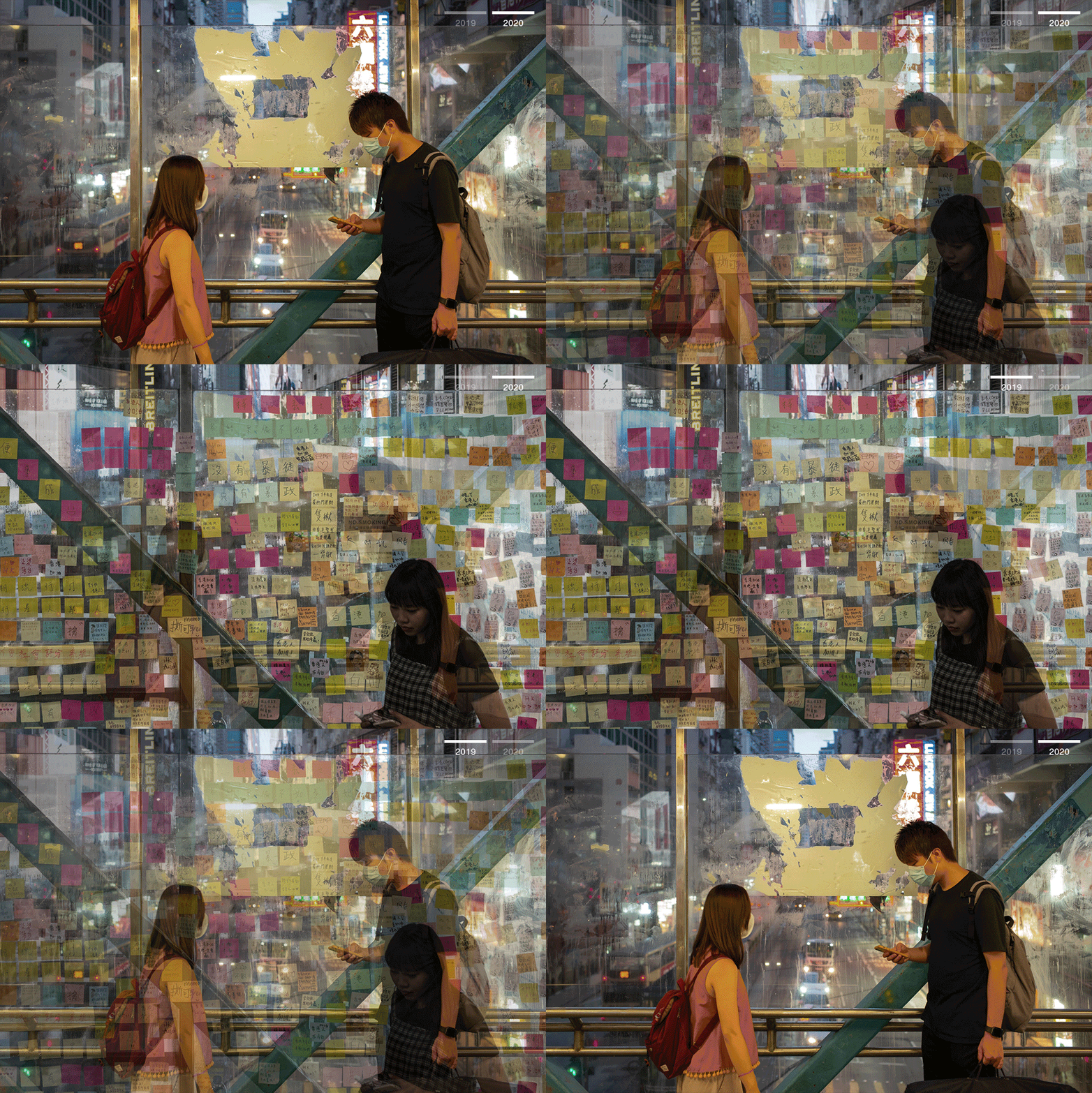
So-called Lennon Walls, like this one in Wan Chai, sprang up in 2019 on college campuses and outside train stations. The public walls became a flashpoint for protests, with messages offering support for the movement. They have since been almost entirely removed by authorities.
▲ Photographer: Justin Chin, Billy H.C. Kwok/Bloomberg

National Security
Office Tower
The National Security Office towers over Victoria Park on Jan. 18, 2021. The site served as the starting point of mass marches in 2019, as well as an annual vigil commemorating Beijing’s 1989 crackdown in Tiananmen Square. The Metropark’s tall vantage point was once used by journalists to photograph gatherings in the park.
NATIONAL
SECURITY
OFFICE
▲ Photographer: Billy H.C. Kwok/Bloomberg
Barriers block crowds on the day the National Security Office opened in Tai Hang on July 8, 2020. A hotel driveway once populated by travellers now bustles with security personnel eyeing pedestrians as they walk past.
▲ Photographer: Chan Long Hei/Bloomberg
So-called Lennon Walls, like this one in Wan Chai, sprang up in 2019 on college campuses and outside train stations. The public walls became a flashpoint for protests, with messages offering support for the movement. They have since been almost entirely removed by authorities.
▲ Photographer: Justin Chin, Billy H.C. Kwok/Bloomberg
The National Security Office towers over Victoria Park on Jan. 18, 2021. The site served as the starting point of mass marches in 2019, as well as an annual vigil commemorating Beijing’s 1989 crackdown in Tiananmen Square. The Metropark’s tall vantage point was once used by journalists to photograph gatherings in the park.
Barriers block crowds on the day the National Security Office opened in Tai Hang on July 8, 2020. A hotel driveway once populated by travellers now bustles with security personnel eyeing pedestrians as they walk past.


So-called Lennon Walls, like this one in Wan Chai, sprang up in 2019 on college campuses and outside train stations. The public walls became a flashpoint for protests, with messages offering support for the movement. They have since been almost entirely removed by authorities.
Macau Bridge
The sea link spanning 34 miles (55 kilometers) between Hong Kong and the mainland city of Zhuhai opened in October 2018. Containing enough steel to build 55 Eiffel Towers, it forms part of China’s Greater Bay Area plan to more fully integrate the former colonies of Hong Kong and Macau with the mainland.
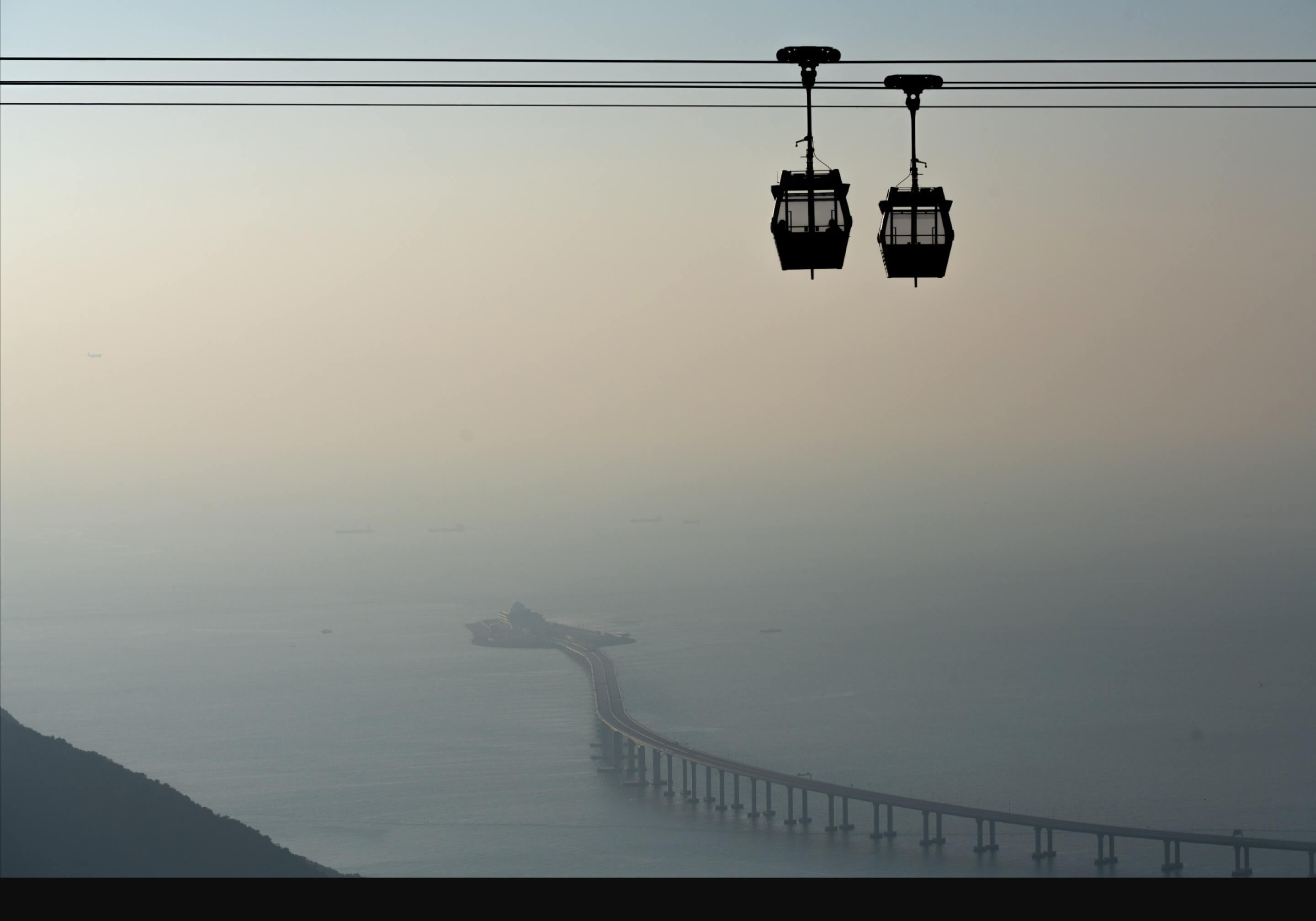

Cable cars glide on Hong Kong’s outlying Lantau island on Oct. 3, 2020. The bridge is visible from rural villages and hiking trails to ferries heading to Macau to passenger jets landing at a nearby airport. The road itself descends into a tunnel running to the mainland, showcasing the ever-closer ties between Hong Kong and Beijing.
▲ Photographer: Billy H.C. Kwok/Bloomberg
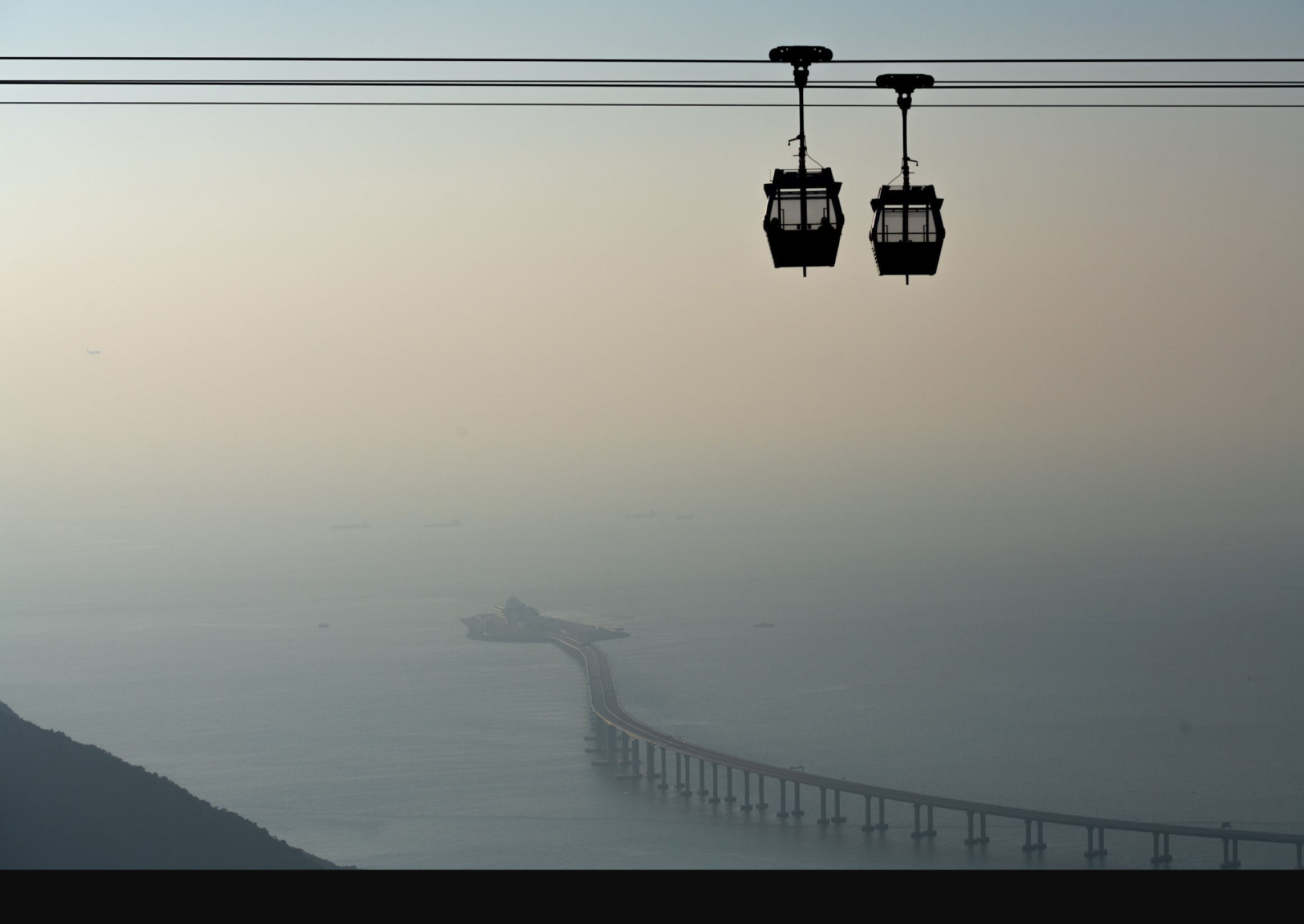

Cable cars glide on Hong Kong’s outlying Lantau island on Oct. 3, 2020. The bridge is visible from rural villages and hiking trails to ferries heading to Macau to passenger jets landing at a nearby airport. The road itself descends into a tunnel running to the mainland, showcasing the ever-closer ties between Hong Kong and Beijing.
▲ Photographer: Billy H.C. Kwok/Bloomberg
Cable cars glide on Hong Kong’s outlying Lantau island on Oct. 3, 2020. The bridge is visible from rural villages and hiking trails to ferries heading to Macau to passenger jets landing at a nearby airport. The road itself descends into a tunnel running to the mainland, showcasing the ever-closer ties between Hong Kong and Beijing.