
China Plans 39 Million-Mile Race to Mars to Catch Up With NASA
China is taking its rivalry with the U.S. to another planet.
The Chinese space agency is preparing a mid-year mission to Mars, marking the most ambitious project on an exploration checklist intended to achieve equal footing with NASA and transform the nation’s technological know-how.
Landing the unmanned probe on the red planet would cap President Xi Jinping’s push to make China a superpower in space. The nation already has rovers on the moon, and it’s making bold plans to operate an orbiting space station, establish a lunar base and explore asteroids by the 2030s.
Mars Hits and Misses
Flyby
Orbiter
Lander
Rover
Failure
Successful
Operational
Planned
Soviet Union / Russia
1960
1965
1970
1975
1980
1985
1990
1995
2000
2005
2010
2015
2020
2025
U.S.
1960
1965
1970
1975
1980
1985
1990
1995
2000
2005
2010
2015
2020
2025
Europe
2000
2005
2010
2015
2020
2025
China
2010
2015
2020
China’s probe
will study the atmosphere, geology and magnetic properties of Mars
2025
Japan
1995
2000
2005
2010
2015
2020
2025
India
2010
2015
2020
2025
Europe and Russia
2015
2020
2025
United Arab Emirates
2015
2020
2025
Flyby
Orbiter
Lander
Rover
Failure
Successful
Operational
Planned
1960
’65
’70
’75
’80
’85
’90
’95
’00
’05
’10
’15
’20
2025
Soviet Union / Russia
U.S.
Europe
China’s probe
will study the atmosphere, geology and magnetic properties of Mars
China
Japan
India
Europe and Russia
United Arab Emirates
Failure
Successful
Operational
Planned
Flyby
Orbiter
Lander
Rover
1960
’65
’70
’75
’80
’85
’90
’95
’00
’05
’10
’15
’20
2025
Soviet Union / Russia
U.S.
Europe
China’s probe
will study the atmosphere, geology and magnetic properties of Mars
China
Japan
India
Europe and Russia
United Arab Emirates
Failure
Successful
Operational
Planned
Flyby
Orbiter
Lander
Rover
1960
1965
1970
1975
1980
1985
1990
1995
2000
2005
2010
2015
2020
2025
Soviet Union / Russia
U.S.
Europe
China
China’s probe
will study the atmosphere, geology and magnetic properties of Mars
Japan
India
Europe and Russia
United Arab Emirates
“It’s about prestige, the demonstration of technological prowess on the world stage,” said Emily Lakdawalla, a solar system specialist at The Planetary Society nonprofit foundation. “If they can stick the landing, they will accomplish something amazing.”
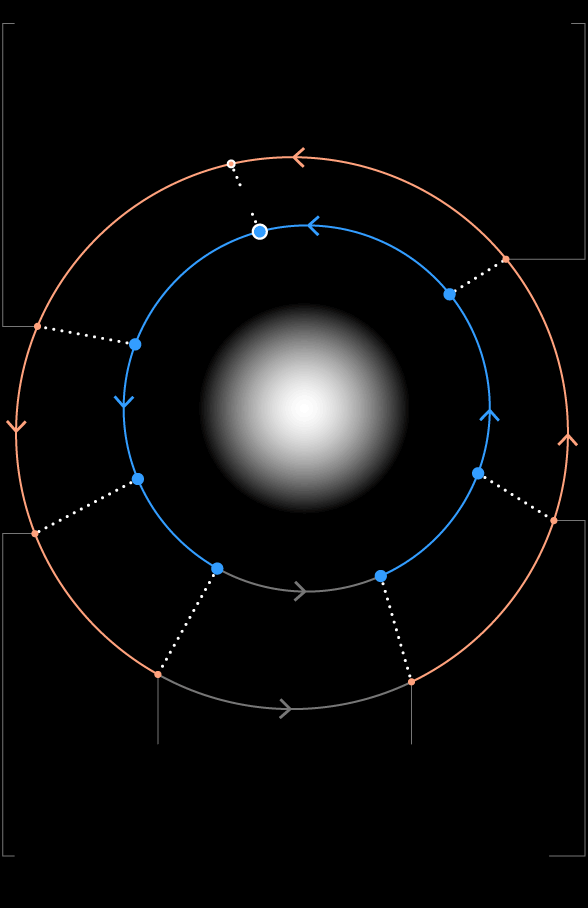
Chinese scientists have plenty of company as they look at least 39 million miles away at what’s called Huoxing, or “fire star,” in Mandarin. Thanks to Mars and Earth being closer in orbit, a phenomenon that happens only every 26 months, this promises to be a breakthrough year for exploring the planet that has fueled countless science-fiction tales.
Mars Makes its Closest Approach to Earth Since 2018
December 1, 2022
81.45M km
July 31, 2018
57.59M km
October 6, 2020
MARS
62.070M km
EARTH
SUN
(not to scale)
February 20, 2027
101.42M km
April 14, 2014
92.39M km
January 12, 2025
96.08M km
May 31, 2016
75.28M km

MARS
October 6, 2020
62.070M km
July 31, 2018
57.59M km
EARTH
December 1, 2022
81.45M km
SUN
(not to scale)
May 31, 2016
75.28M km
January 12, 2025
96.08M km
February 20, 2027
101.42M km
April 14, 2014
92.39M km

MARS
October 6, 2020
62.070M km
July 31, 2018
57.59M km
EARTH
December 1, 2022
81.45M km
SUN
(not to scale)
May 31, 2016
75.28M km
January 12, 2025
96.08M km
February 20, 2027
101.42M km
April 14, 2014
92.39M km
A record number of robotic missions by the U.S., Europe, Russia and the United Arab Emirates space agencies is scheduled to launch in July or August, when the two planets are closest. The private sector, particularly Elon Musk’s Space Exploration Technologies Corp. and Richard Branson’s Virgin Orbit LLC, also has plans for Mars.
Above all, the probes will help scientists determine whether people can live elsewhere in the universe. Mars is the planet considered most similar to Earth, and these missions will help prepare for eventual human exploration.
China’s program passed a major test in December with the successful launch of its Long March-5 rocket, nicknamed the “Fat Five,” to propel craft into deep space. It was the first trial of the rocket, which carried a communications satellite, since an embarrassing failure in 2017, when it malfunctioned within six minutes of liftoff from Hainan island and then crashed.
With the Long March-5 now back in action, China can move ahead with its aggressive 2020 launch schedule, which includes sending another probe to the moon and taking steps toward building a space station expected to be finished by 2022, according to state media. “The return of ‘Fat Five’ is a heartfelt victory for Chinese astronauts,” the state-run People’s Daily said in an editorial.
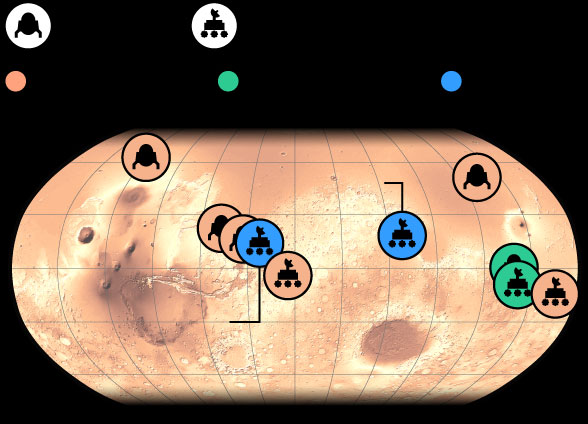
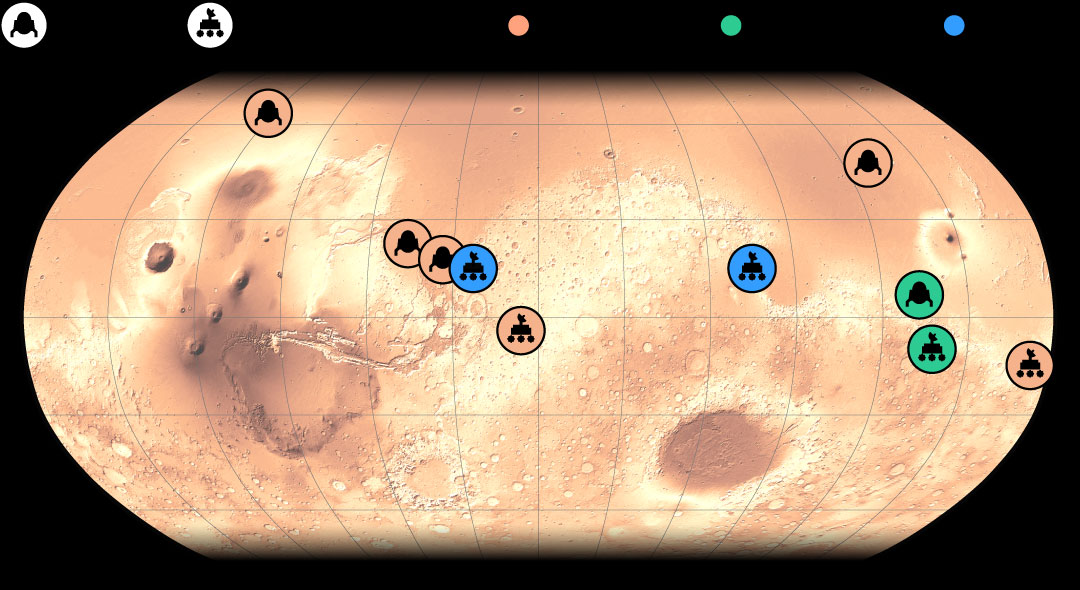
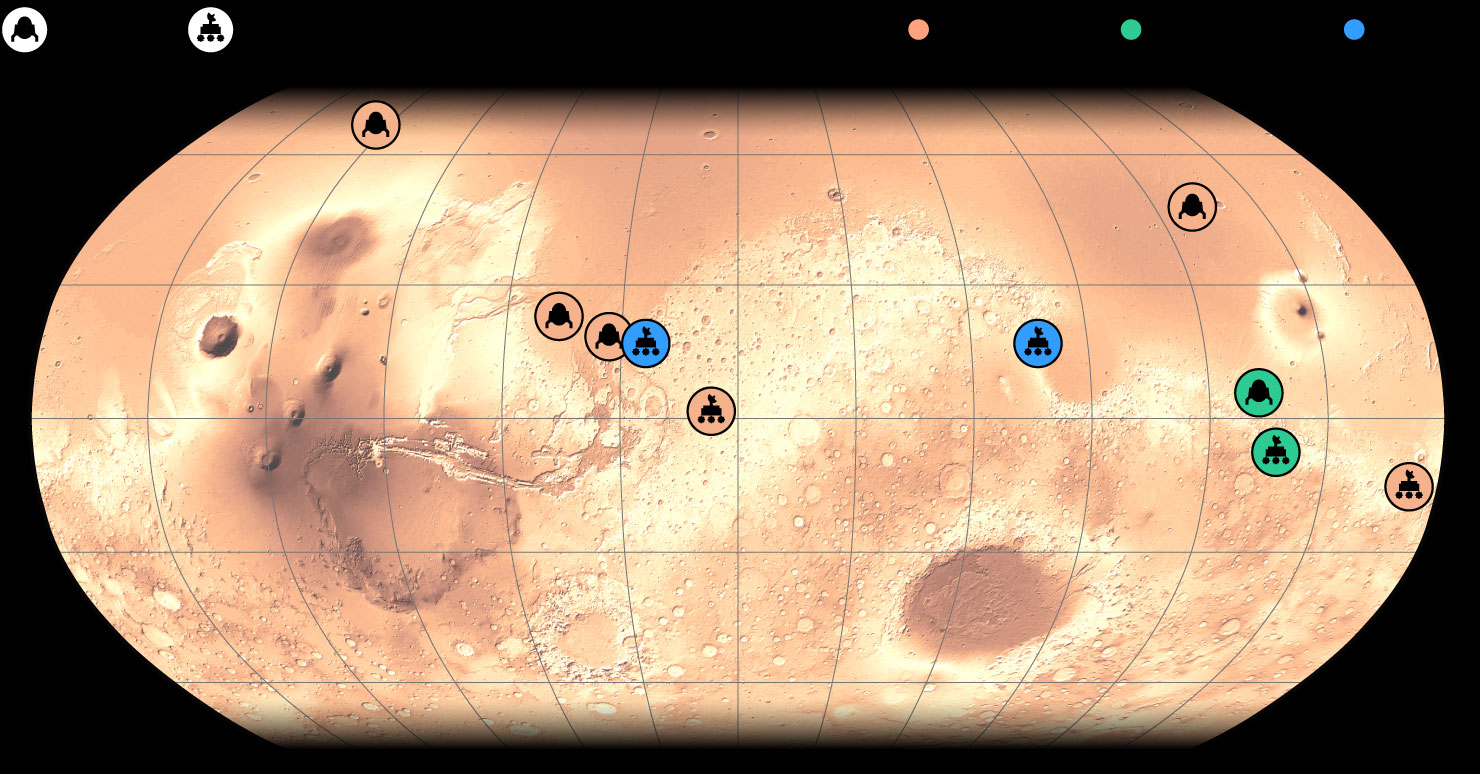
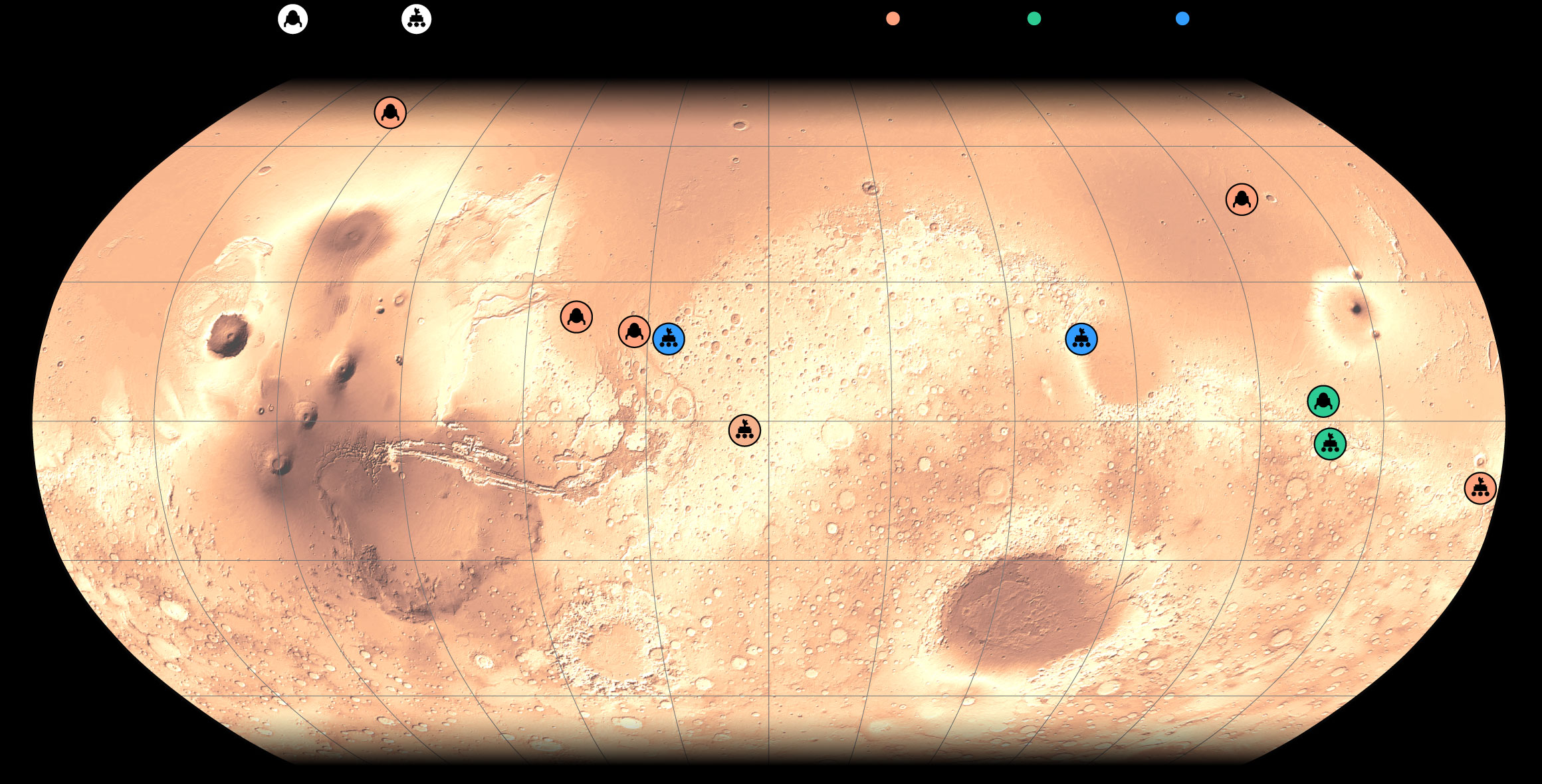
Countries have tried about 50 times to reach the fourth planet from the sun, and more than half of those missions failed. Only NASA has successfully landed and operated probes and rovers, starting with Viking 1 in 1976. That mission provided dramatic photos of a desolate landscape of volcanoes and canyons, and was the first to sample Martian soil.
Mars Landings
Lander
Rover
Successful
Operational
Planned
MARS
2020
EXOMARS
2020 mission
Lander
Rover
Successful
Operational
Planned
Phoenix
Mars arrival: 2008
VIKING 2
1976
VIKING 1
1976
EXOMARS
2020
mission
INSIGHT
2018
MARS
2020
PATHFINDER
1997
CUROSITY
2012
OPPORTUNITY
2004
Spirit
2004
Lander
Rover
Successful
Operational
Planned
VIKING 2
1976
Phoenix
Mars arrival: 2008
VIKING 1
1976
EXOMARS
2020 mission
MARS 2020
INSIGHT
2018
PATHFINDER
1997
OPPORTUNITY
2004
CUROSITY
2012
Spirit
2004
Successful
Operational
Planned
Lander
Rover
Phoenix
Mars arrival: 2008
VIKING 2
1976
VIKING 1
1976
MARS 2020
2020 mission
PATHFINDER
1997
INSIGHT
2018
EXOMARS
2020 mission
OPPORTUNITY
2004
CUROSITY
2012
Spirit
2004
“At the national level, the United States has done it, and we in China can do it,” said Li Dapeng, co-founder of Mars Society China, part of a global organization promoting exploration of the planet.
NASA launches its Mars 2020 rover in July or August, and the mission will be the first to attempt creating oxygen from the carbon dioxide in the atmosphere.
Establishing a stable oxygen supply is essential for accomplishing the ultimate achievement in space exploration: landing astronauts on Mars. The first humans could arrive there in the 2030s, after NASA establishes a sustainable presence on the moon.
“Mars remains the horizon goal for NASA’s human exploration program, but it is important to note that we are at Mars now, with a growing number of robotic assets,” Administrator Jim Bridenstine told U.S. lawmakers in July.
Although Mars visitations are the preserve of government-backed space agencies for now, Branson’s Virgin Orbit in October formed a consortium with partners from Poland to carry small satellites to Mars. The first launch could be as soon as 2022, Virgin Orbit said.
Musk’s SpaceX is testing a vehicle called Starship that’s designed to carry people to the moon and to Mars. He envisions building a fleet of 1,000 vessels capable of transporting 100,000 people every 26 months, when the planets are closest to each other. “There will be a lot of jobs on Mars!,” he said Jan. 16 on Twitter.
Musk also has ambitious hopes for Mars colonization, having talked about traveling there himself.
“It’s possible to make a self-sustaining city on Mars by 2050,” Musk wrote in a tweet in March.
Based on this year’s launch schedule, there may be plenty of inhabitants by then. The European Space Agency and Russian counterpart Roscosmos are collaborating on the ExoMars program, hoping their rover lifts off in late July or early August.
The United Arab Emirates will send an orbiter this summer aboard a Mitsubishi Heavy Industries Ltd. rocket. The Hope Probe should help scientists learn more about the climate and atmosphere if it arrives successfully next year.
China’s space budget likely is dwarfed by NASA’s, though precise figures are hard to find because the program probably includes secret military research.
Its first shot at Mars flopped in 2012, when the Yinghuo-1 spacecraft crashed into the Pacific Ocean. The next shot, probably this summer, will deploy an orbiter to circle the planet and a rover to land on it. The journey probably will take seven months.
“The Chinese mission is the most complicated by far, combining an orbiter, lander and rover together,” said Dylan Taylor, chief executive officer of Voyager Space Holdings, a Denver-based investor in space companies. “If they’re successful, then it will unequivocally put China’s space program in the top tier.”
China’s still-unnamed probe will study the atmosphere, geology and magnetic properties of Mars – potentially providing clues about the origin of the solar system, Ye Jianpei, chief scientist of space science and deep-space exploration with the Chinese Space Technology Academy, told state media in October.
The government agencies and state-run enterprises overseeing the space program didn’t reply to emails and faxes seeking comment.
Mars Atmosphere Compared to Earth

1.9%
Argon
1.9%
Nitrogen
0.2%
Others
96%
Carbon
Dioxide
MARS
1%
Others
20.9%
Oxygen
78.1%
Nitrogen
EARTH
1%
Others
1.9%
Argon
1.9%
Nitrogen
0.2%
Others
20.9%
Oxygen
78.1%
Nitrogen
96%
Carbon
Dioxide
MARS
EARTH
1.9%
Argon
1.9%
Nitrogen
0.2%
Others
96%
Carbon Dioxide
MARS
1%
Others
20.9%
Oxygen
78.1%
Nitrogen
EARTH
China’s goals in the cosmos include returning samples from Mars in 2028 and exploring Jupiter a few years later, according to a strategy published by the State Council in 2016.
Yet the long-term science gains from a Mars mission likely take a back seat to the immediate political symbolism for Xi, who is implementing a blueprint for transforming China into a manufacturing superpower in aerospace and technology by 2025.
“They can get a lot of economic advantages from this,” said Peter Lui, founder of the Hong Kong Aerospace Society. Chinese makers of telecom equipment, navigational satellites and weather observation systems are among those likely to get a boost, he said.

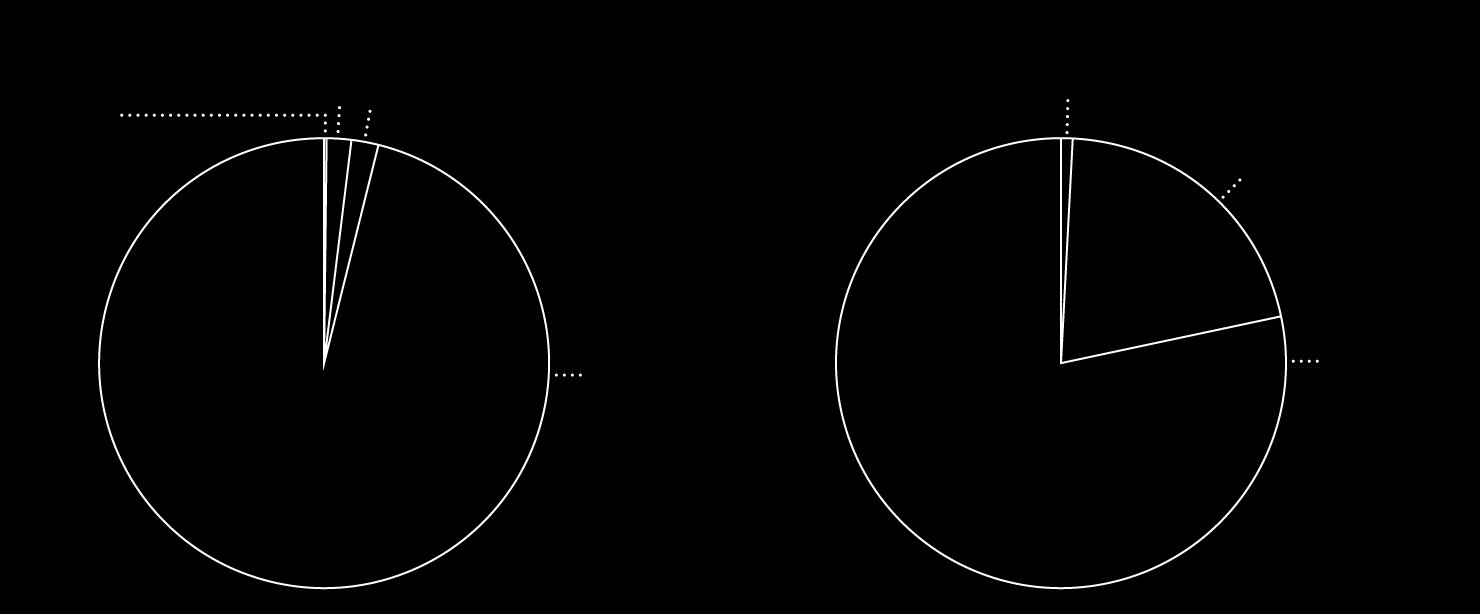
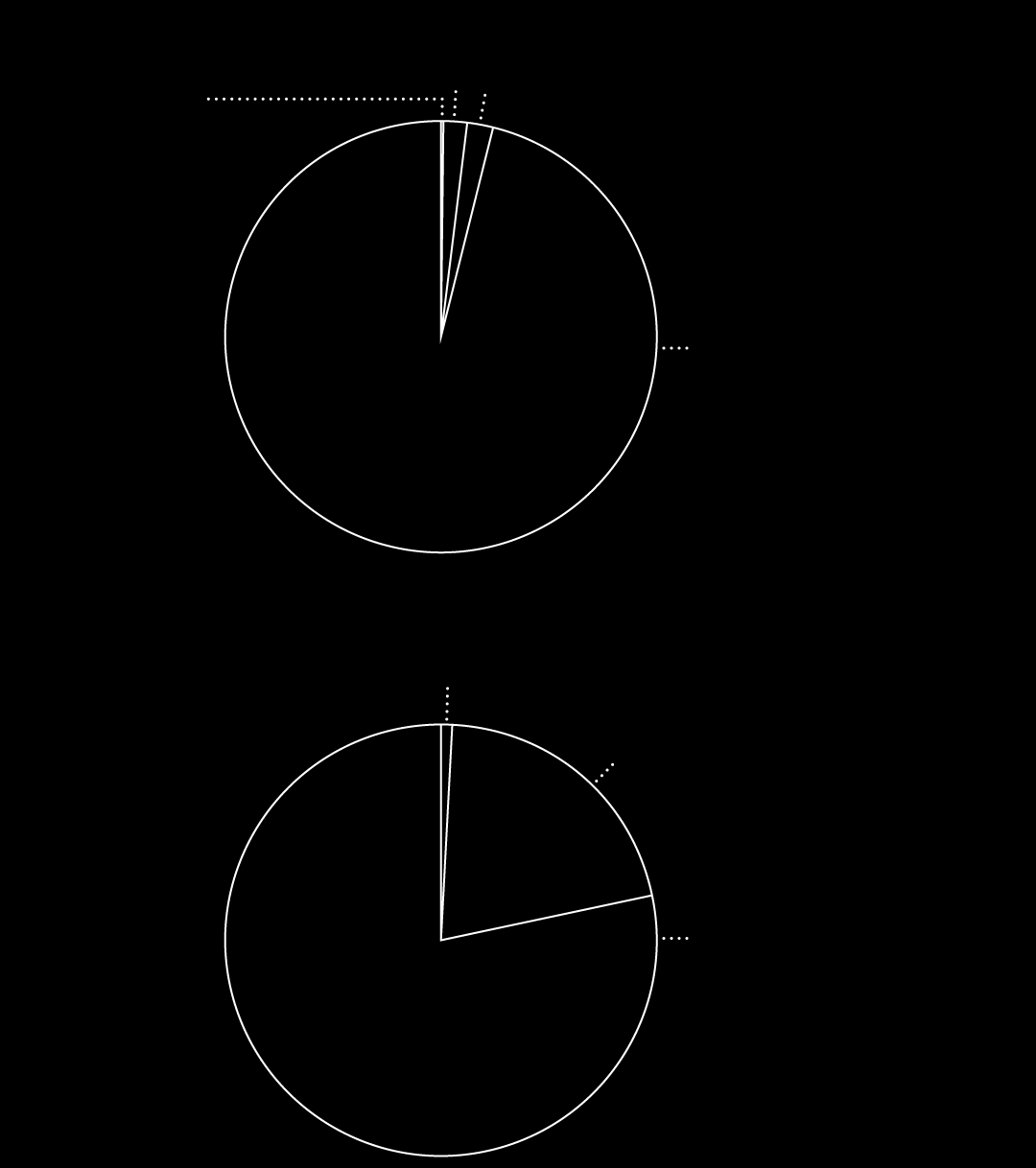
Mars is a more challenging destination than the moon not just because it’s farther, but also because of its thin atmosphere, said Nilton Renno, a University of Michigan professor who has advised NASA. The Martian atmosphere is mostly carbon dioxide, with only a trace amount of oxygen.
A spacecraft speeding toward the planet at about 20,000 kilometers (12,427 miles) per hour needs to brake and land within 10 minutes.
“If Mars had no atmosphere it would be easier to land, and if it had a much thicker atmosphere it would be easier to land,” he said.
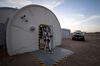
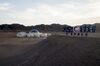
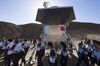
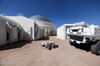
To sway public support for interplanetary travel, a Chinese company built a Mars simulation center in the Gobi Desert that hosted a reality-TV show.
In November, the space agency completed an obstacle-avoidance test near Beijing, with a probe separating from a spacecraft at an altitude of 70 meters (230 feet) and then descending slowly toward the surface.
“They only line up in the right place at the right time every 26 months,” Lakdawalla said of Earth and Mars. “You can launch a moon mission every month, but if a Mars mission is delayed you have to wait 26 months.”