The Fast & Furious cinematic universe is expanding. The eight films have racked up $5.1 billion at the worldwide box office so far, becoming an action-packed moneymaker for Universal Studios and parent Comcast Corp. After morphing from a street racing curiosity to a mainstream spectacle of big guns and fierce combat, the series is now getting a spinoff starring its two most violent characters. “Hobbs & Shaw” hits theaters on Friday, marking the first time that actor Vin Diesel’s team will break away from its main story.
The family at Bloomberg decided to meticulously analyze all eight movies prior to “Hobbs & Shaw” to track their evolution and see how we got here. We counted just about everything that could be turned into a meaningful metric to find out who inflicts the most pain and kicks the most ass.
BRINGING THE PAIN
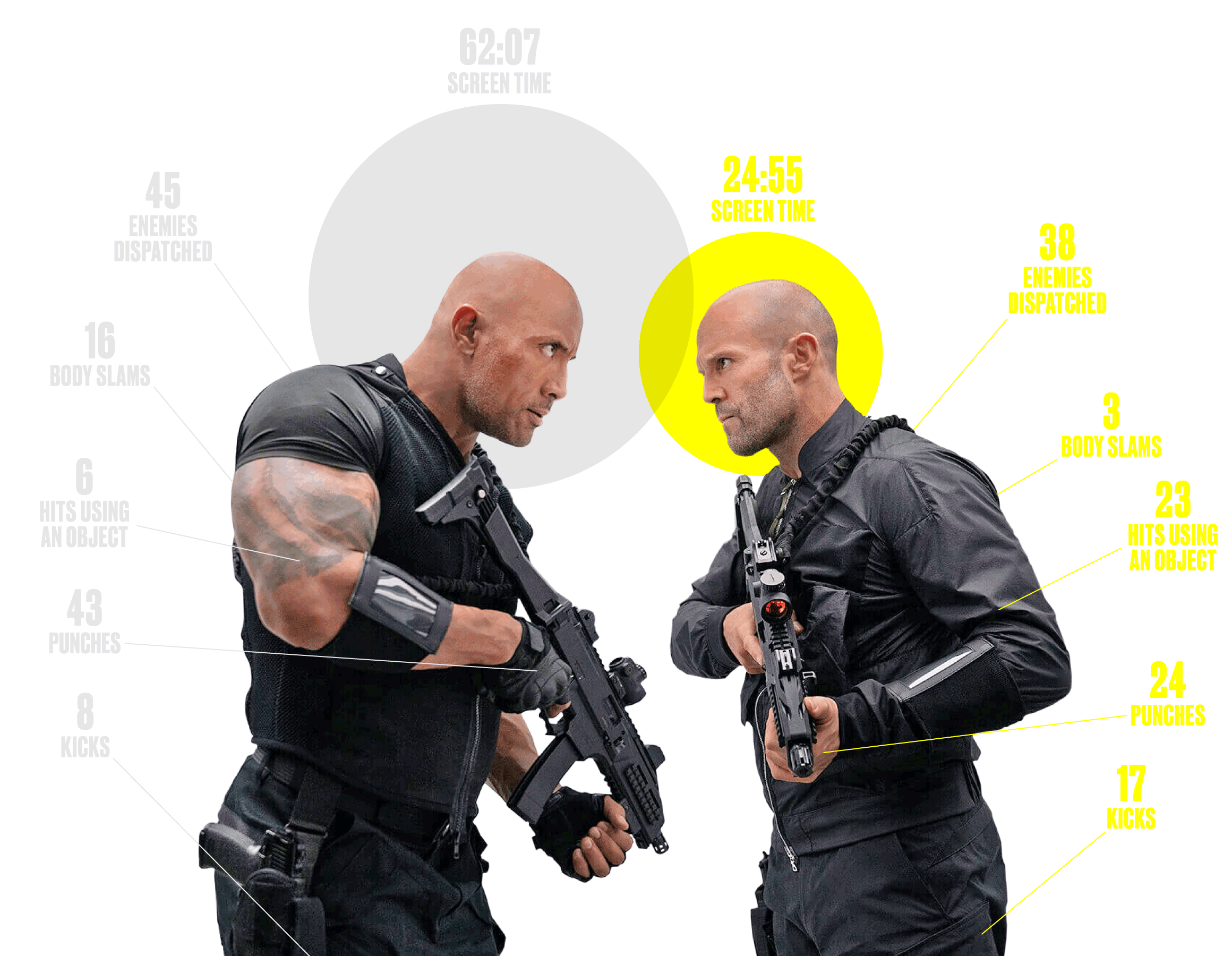
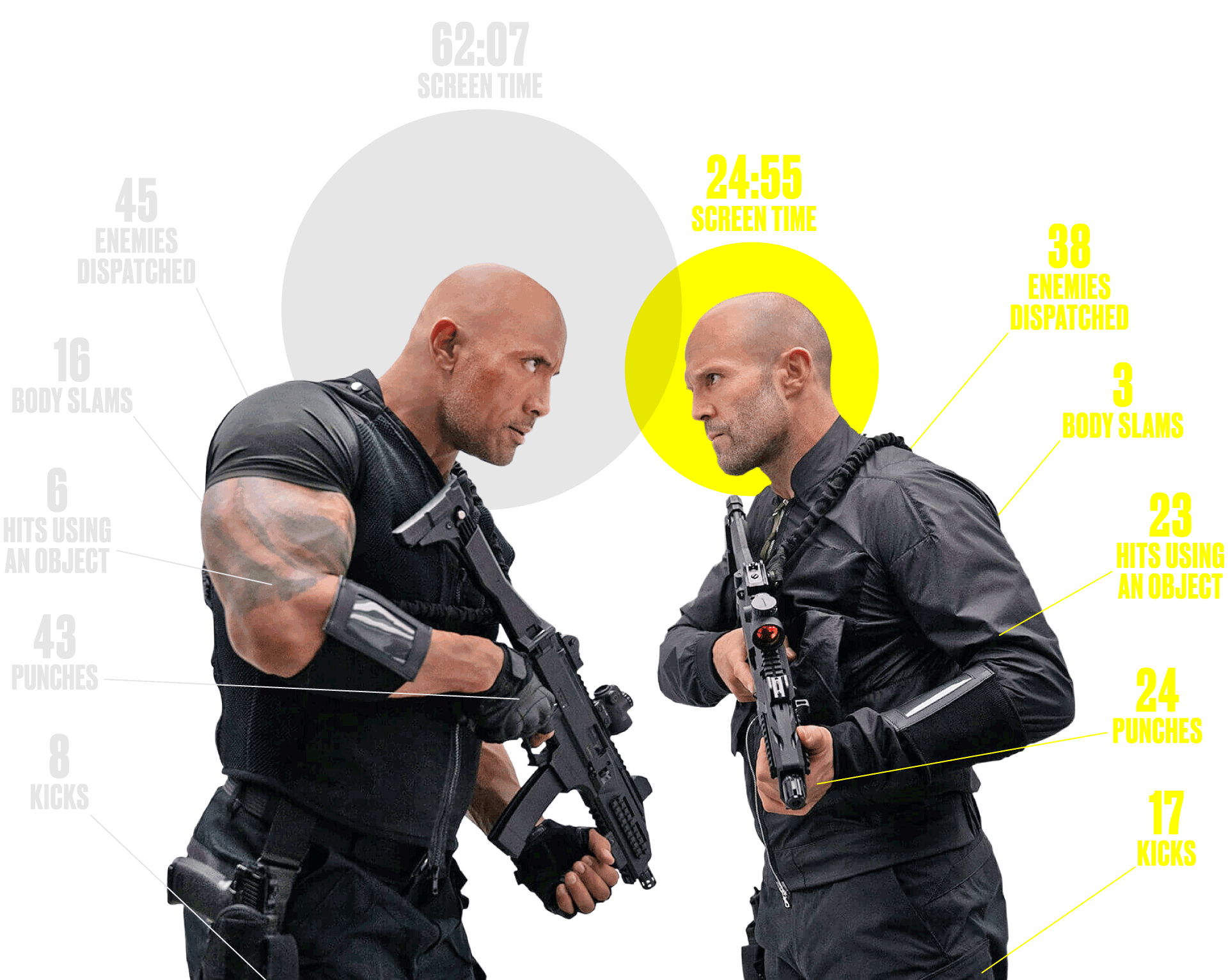
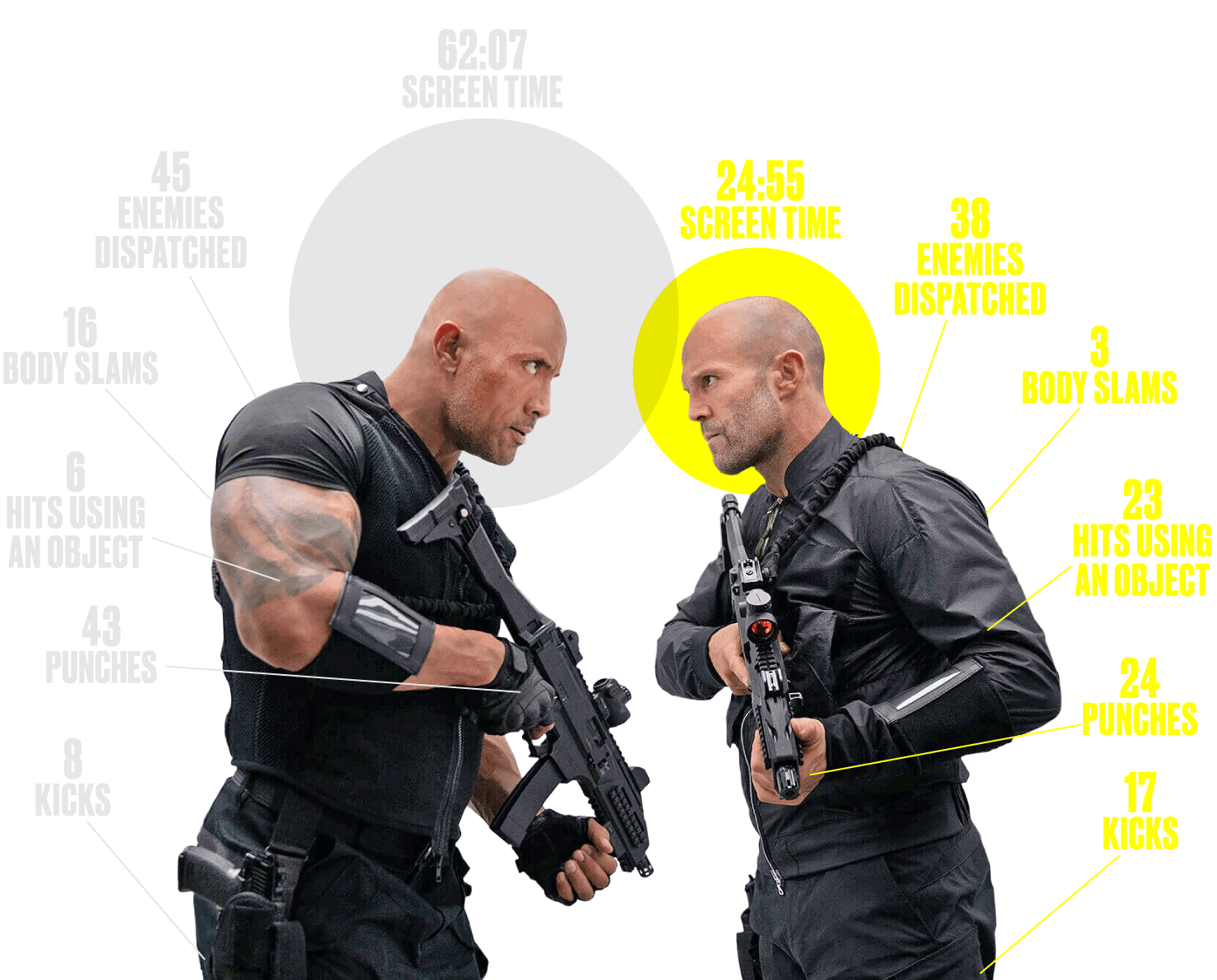
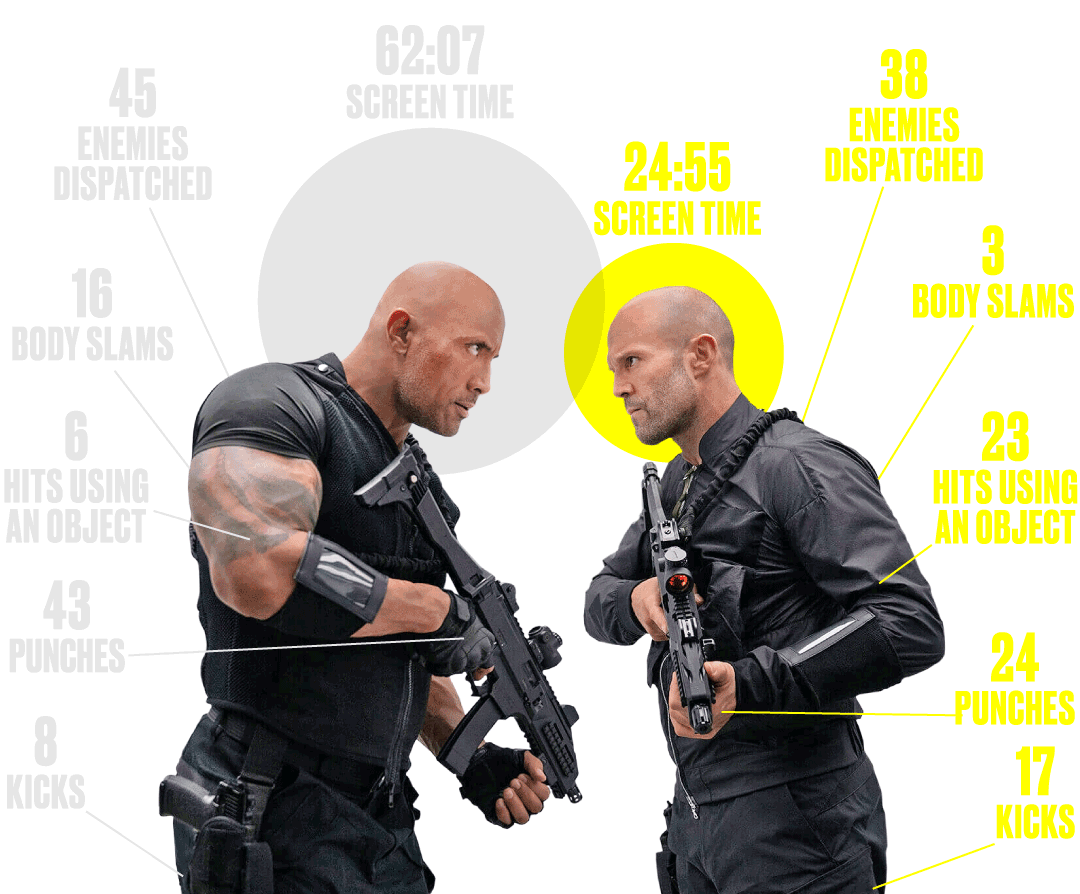
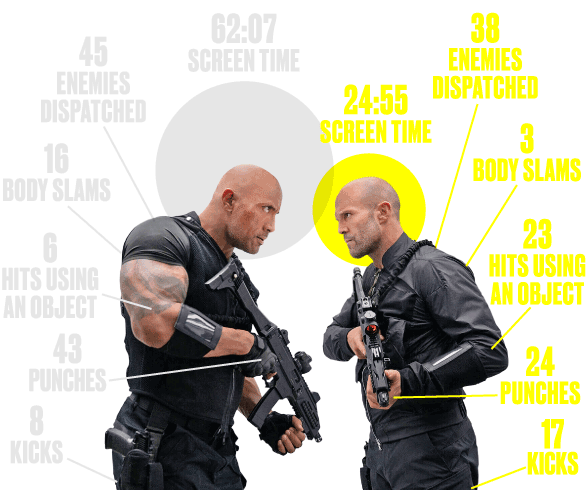
“Hobbs & Shaw” will feature Dwayne Johnson as the sweaty, muscle-bound lawman Luke Hobbs and Jason Statham as elite soldier turned mercenary Deckard Shaw. Their additions to the Fast & Furious roster several films ago amped up both the star power and bloodshed, filling the films with punches, kicks and body slams. They also use weapons to defeat their foes, ranging from firearms to knives to ceiling lights—even a torpedo. Ever the trash talkers, both are constantly threatening to beat up their enemies. The Rock spends much of his screen time moist, oiled or outright drenched, as a brawny action star tends to look while battling evil baddies. (He's particularly wet in “Fast Five”, as the Ringer's Shea Serrano noted in an April podcast.)
Note: Remember, these figures don't yet include tallies for “Hobbs & Shaw” and will inevitably go up
Screen time
Fighting stats (films five through eight)
Weapons used
Enemies defeated
Smiles
Threats made
Share of Hobbs's screen time that he's wet
Shifting Gears
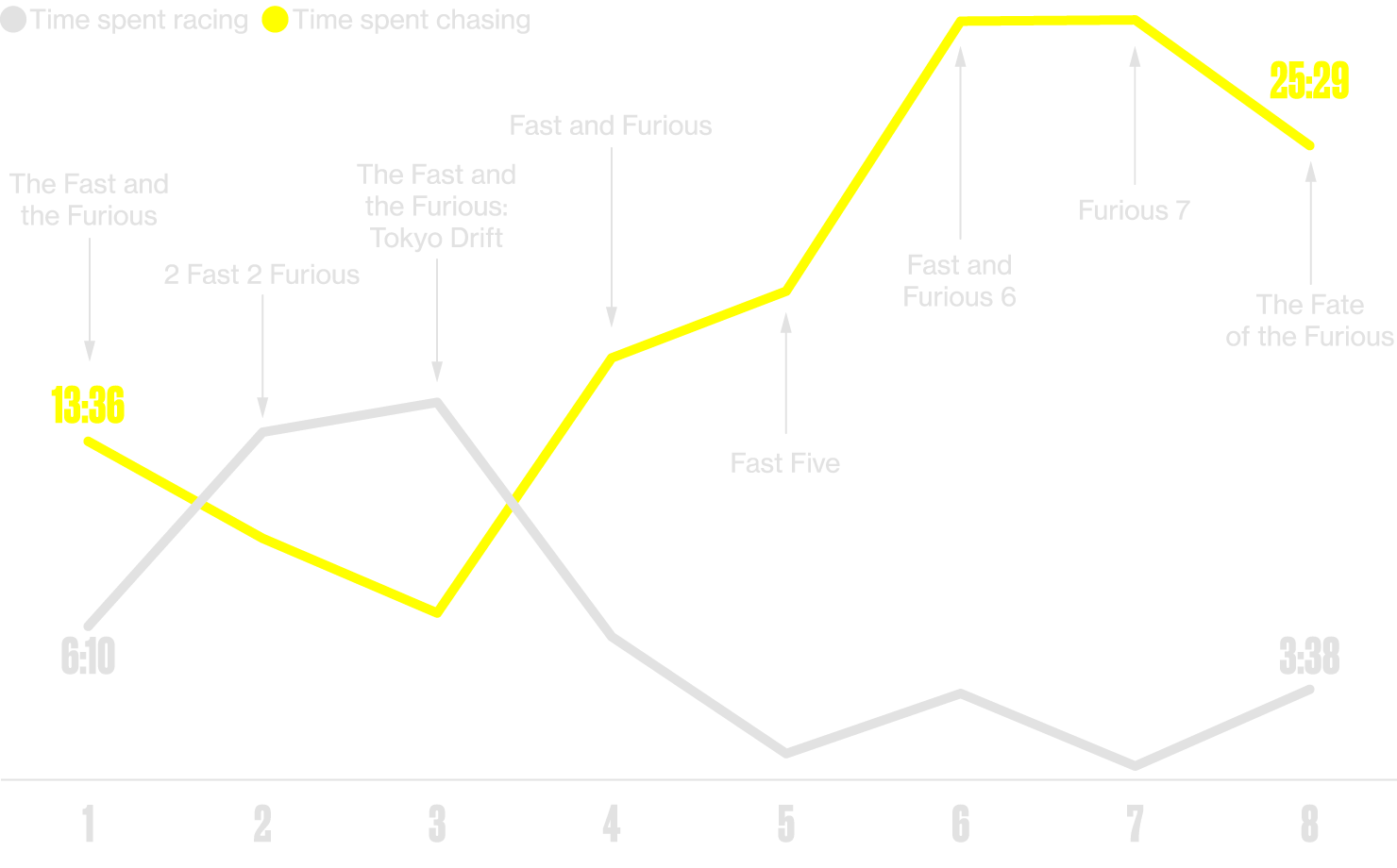
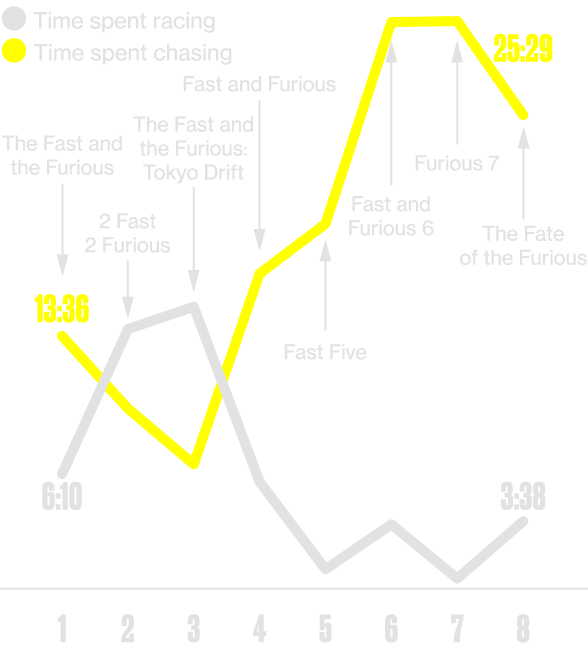
It’s been an 18-year journey for the street racers who don’t race all that much anymore. The first iteration, released in 2001 and dubbed “The Fast and the Furious”, was full of neon glow and nitrous oxide. The stakes have skyrocketed since then. Bad guys went from local crime bosses to international hackers bent on world domination. As expected, “Hobbs & Shaw” continues down the same path from the drag strip to comic book crime fighting. Idris Elba plays the antagonist, a supersoldier who says he’s Black Superman.
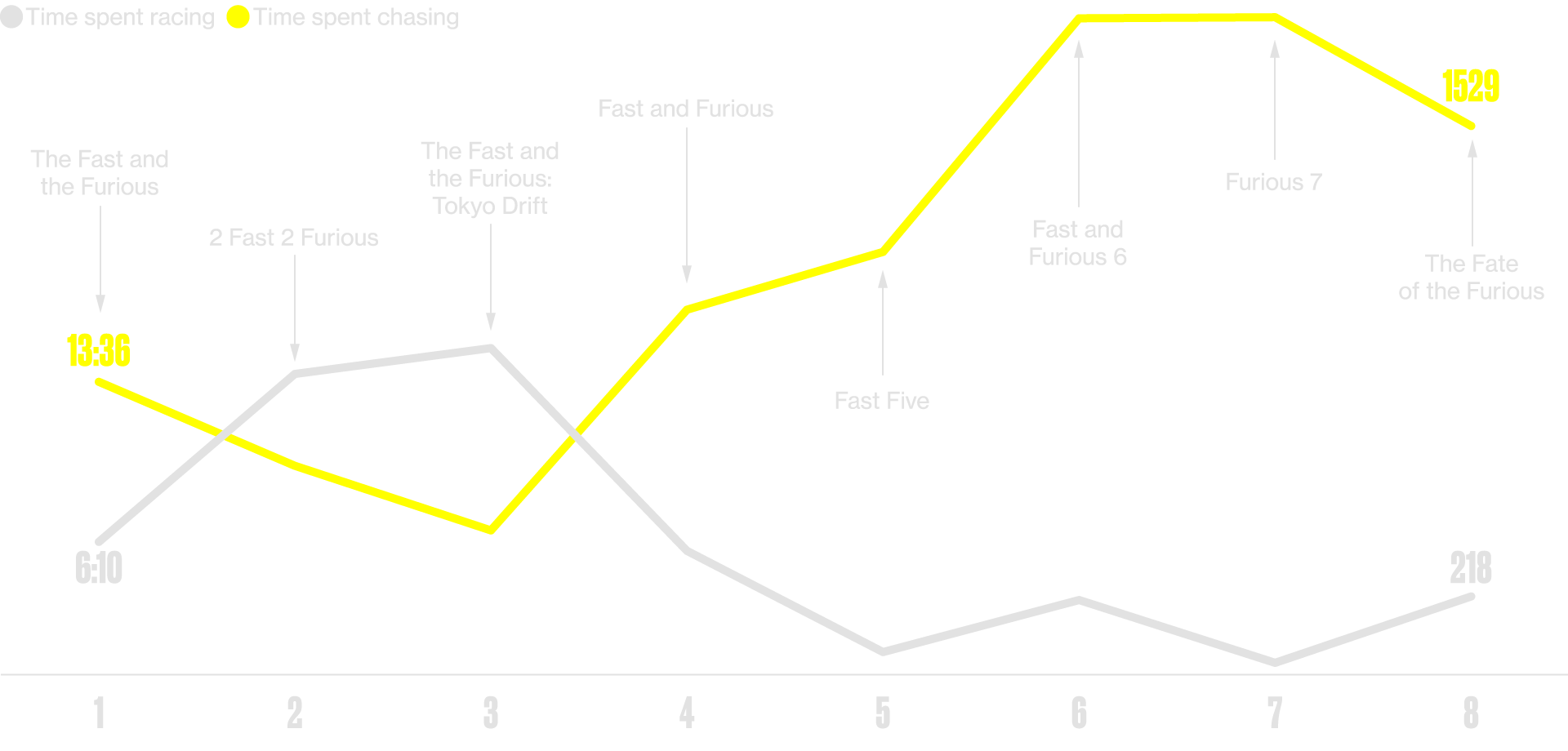
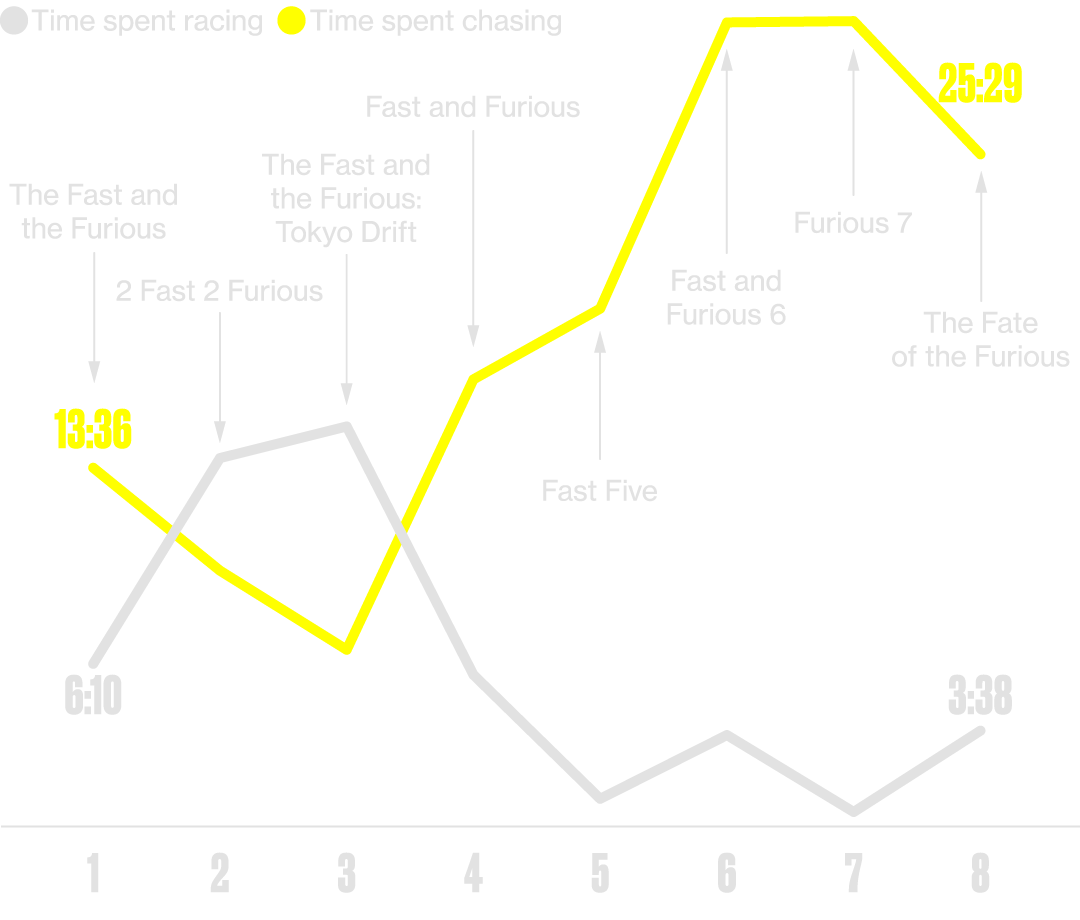
Less street racing, more action
Box-Office Billions
The shift from racing to chasing happened after the weak performance of the third movie, “Tokyo Drift”, with the following films improving in both audience size and critical acclaim. “Furious 7” remains the biggest success for the franchise so far, grossing $1.5 billion worldwide, with $353 million coming from the domestic market. “Hobbs & Shaw” has an even bigger budget than that installment. It's projected to rule the box office with an opening weekend that could top $195 million globally.
Box-office revenue
Film budget
Critical and audience acclaim
Less Racing
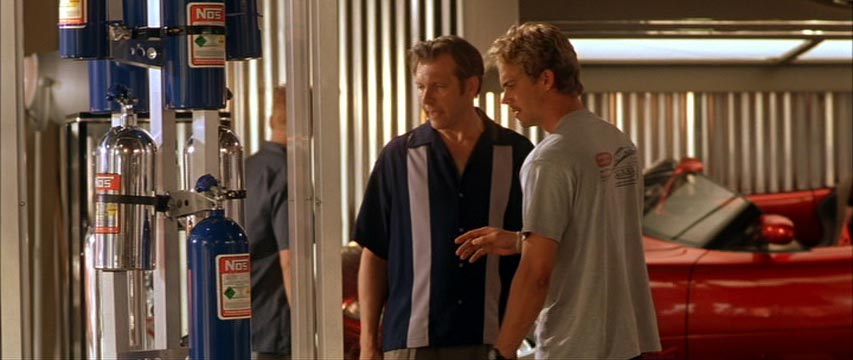
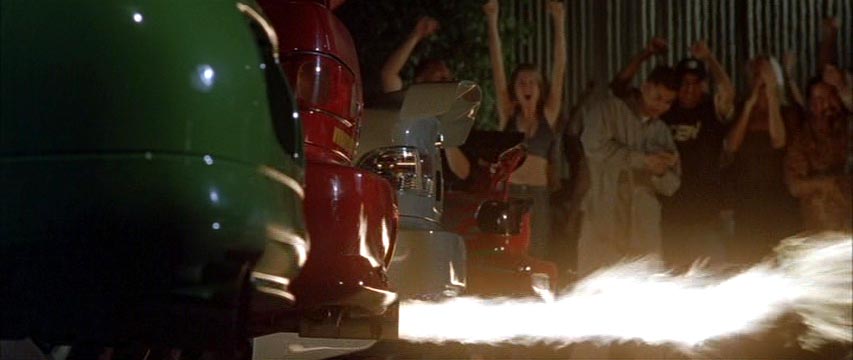
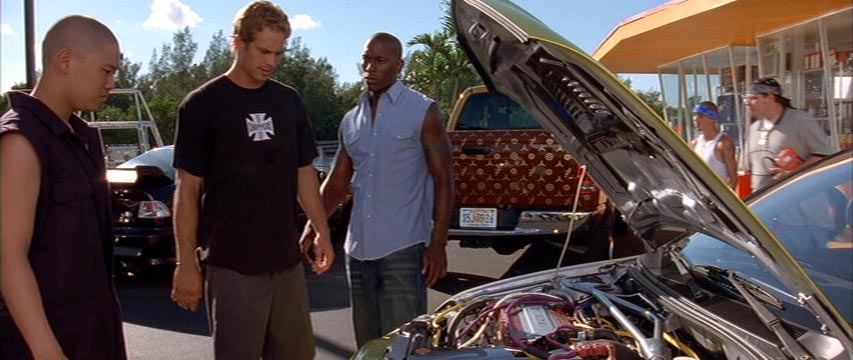
In the early days, all that mattered was who crossed the finish line first. Now it’s all about the action, and the nods to racing culture have dwindled. The crew talks less about their cars, uses fewer NOS speed boosts and spends less time in commercial car garages. A few of the franchise’s staples have survived, however, as there’s still plenty of engine revving and gear shifting.
RACING TIME
NOS USES
ENGINE REVVING TIME
TIME TALKING ABOUT RACING OR CARS
TIME SPENT IN PLACES WHERE CARS ARE WORKED ON
GEAR SHIFTS
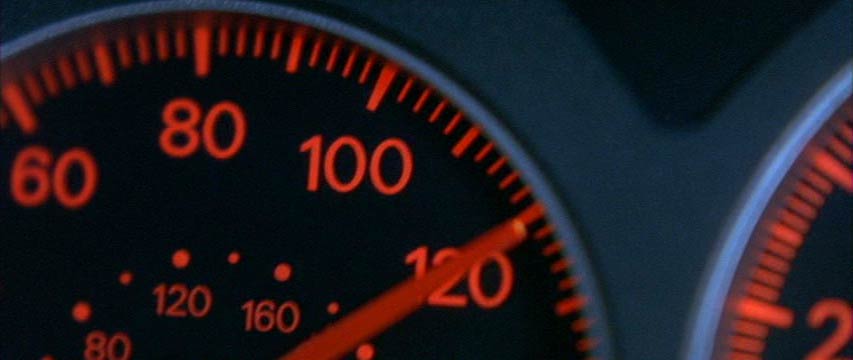
SPEEDOMETER / TACHOMETER SHOTS
MORE ACTION
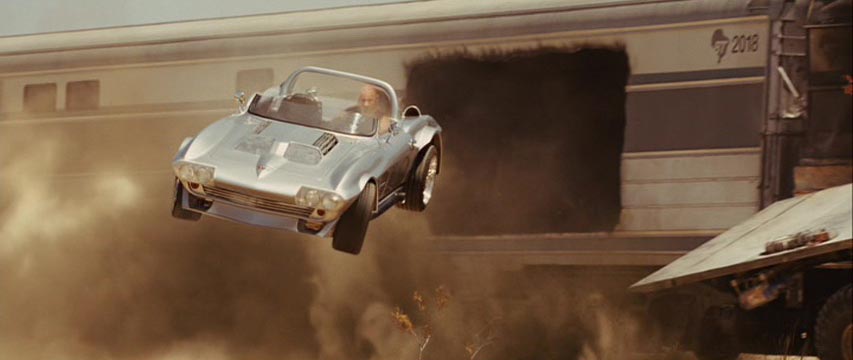
Quarter-mile drag races have been replaced by action-driving sequences that have included a train heist and a chase across a Russian ice field involving a nuclear submarine. Guns and hand-to-hand combat have become much more prevalent, including fight scenes with mixed martial arts brawlers Ronda Rousey and Gina Carano. Recent films have unleashed the pyrotechnics, too, with explosions galore.
CHASING TIME
EXPLOSIONS
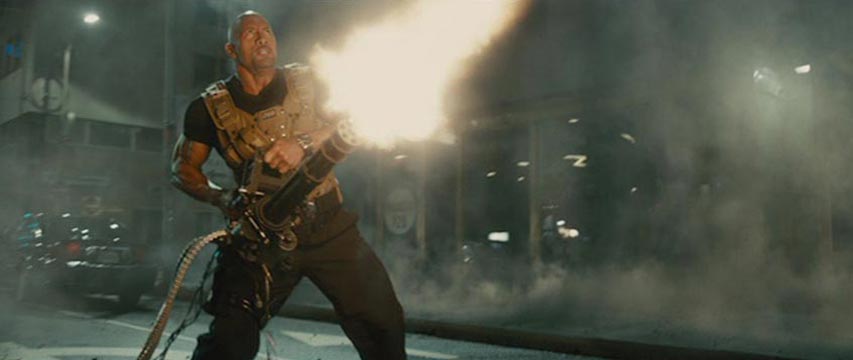
TIME A GUN IS WIELDED
TIME IN HAND-TO-HAND COMBAT
TIME SPENT RIDING OUTSIDE MOVING VEHICLES
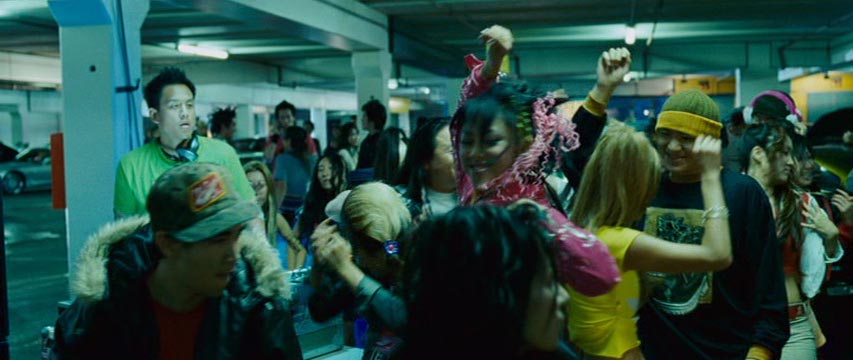
TIME SPENT AT SOCIAL GATHERINGS
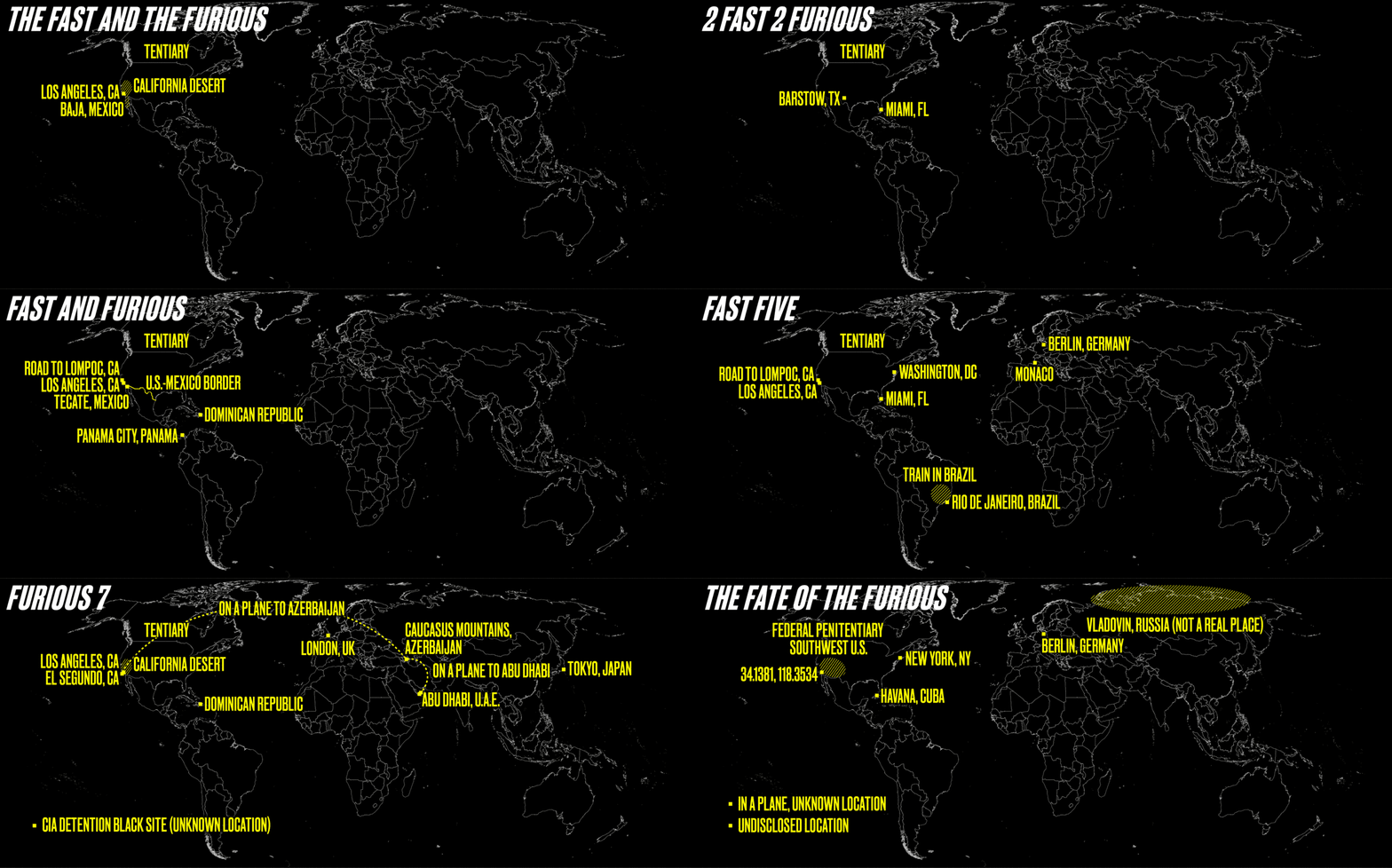
PLACES THE MAIN CHARACTERS GO
Bigger budgets have brought the team across the planet. Still, every film since the fourth installment has dedicated at least one scene to the series’ hometown of L.A.
Sex Appeal
All the Fast & Furious films, including the spinoff, are rated PG-13, but they’ve all been infused with a bit of sex. There are bulging muscles on screen constantly between the zoom-in shots of women’s butts. Exposed biceps hit their peak in the eighth movie, thanks largely to Diesel and Johnson going sleeveless throughout most of their time on screen.
MALE BICEPS TIME
GRATUITOUS FEMALE REAR-END TIME
More Love!
Amid the crashed cars and battered bodies, Fast & Furious is really a series about family. Recent sequels involve much more dialogue about the “family” and “team” of fast-driving heroes. The characters have made their language more family-friendly, too, after dropping S- and F-bombs every few minutes in “2 Fast 2 Furious”.
HUGS
MENTIONS OF "FAMILY" & "TEAM"
ROLL-UPS WITH A CREW
CORONA SIPS
Swearing
FILM CREDITS OF TOP-BILLED CAST
Fast & Furious enlisted the A-list as it grew into the multibillion-dollar franchise it is today. “Hobbs & Shaw” is no different, with Johnson, Statham and Helen Mirren joined by Idris Elba, Vanessa Kirby and Eiza Gonzalez as new additions. One notable loss in the series: actor Paul Walker, who died in a 2013 car crash. Below is the number of film credits of the first 10 actors listed on each film’s IMDb page at the time of the film’s release.
Top Billed Cast
TIMELINES
min
⬇ Run time 0:00:00
totals
Note: Some instances may not be visible because of the scale.
METHODOLOGY
Hobbs & Shaw: Screen time
This measures the length of time the character is in any way visible on screen.
Hobbs & Shaw: Fighting stats
Punches are any defined broadly here as any strike with an arm. Kicks are any strike with a leg. Strikes that miss or are blocked have been excluded. Hits with an object are strikes with weapons or other items, such as a shard of glass or an overhead lamp. A body slam is broadly defined here as a maneuver in which an opponent is involuntarily lifted and/or hurled toward the ground, into the ceiling, or across the room. Excluded here is a single tackle followed by a long slide.
Hobbs & Shaw: Weapons used
A weapon has been used by a character if they brandish or wield it.
Hobbs & Shaw: Enemies defeated
This measures the number of enemies each character has visibly killed, destroyed, rendered unconscious, or otherwise eliminated from opposition. Included here are defeats in combat, murders by means of a vehicle, and the destruction of a drone with an ambulance.
Hobbs & Shaw: Smiles
This is a count of the number of distinct smiles by each character.
Hobbs & Shaw: Threats
This measures the length of time the character is in any way visible on screen.
SHARE OF HOBBS’S ONSCREEN TIME SPENT WET
This is the percentage of time Hobbs is visible on screen and appears wet or glistening. This includes instances of sweat, the appearance of applied baby oil, weather-related dampness and, potentially, a shine attained by an unusually strong or highly reflective wax.
Racing time
This measures the length of any race involving motorized vehicles (cars, jet skis, etc.), including, but not limited to, formal competitions between two or more drivers, impromptu street races, and individual time trials for racing or drifting. For races that don't conclude with a scene shift, racing time ends when the competition appears to conclude. A formal race between two people ends when the winner crosses the finish line. A formal race among more than two people, on the other hand, might end when the penultimate finisher crosses the finish line if the other losing racers fail to finish. Also included in this metric are any midrace pauses in which racers stop momentarily and stare one another down or flashbacks occurring prior to a race. Scenes that include a live video feed of a race are included in the tally of racing time; scenes in which characters review previously recorded race footage are excluded. Race-like competitions such as a demolition derby are also included in racing time.
Chasing time
This measures the length of any scene in which a motorized vehicle is involved in a chase; dashes recklessly toward or away from a place or person; or performs an uncommon maneuver (e.g., high-speed driving in formation; launching a car onto a boat; dropping a car out of the back of an airborne plane; dragging a bank vault through the streets of Rio de Janeiro; donuts; etc.) A chase ends when all vehicles involved either are no longer in the scene or have come to a full stop. We referred to this category informally as “action driving.”
We excluded scenes in which police drive quickly to the scene of a crime. We decided a chase begins only when police are in pursuit of another party in a motorized vehicle. A chase involving vehicles operated remotely or set into motion by parties not onboard counts in this metric, as do scenes in which characters watch live video feed of a chase in progress or experience a flashback to a prior chase. Again, we excluded time in which characters review previously recorded chase footage. The coordinated, remote operation of many vehicles in an attack has been included, but the operation of a small, remote control car has been excluded.
Time talking about racing or cars
This metric captures all moments in which movie characters discuss races, auto customization, or cars in general. Included here is a portion of a rap song with lyrics about racing. Excluded are automotive metaphors for sex or dogma.
Garage time
This metric quantifies time at or inside personal, commercial, or school-based garages; auto parts stores; or body shops. Included here are the driveways and roads immediately outside such places. At Dominic Toretto’s house, for example, time at his personal garage and driveway are included, while time in the adjacent yard and picnic area are excluded.
Hideout time
This measures time inside large rooms or hangars that house vehicles and equipment for vigilantes (e.g., Dominic Toretto’s crew), criminals (e.g., Owen or Deckard Shaw’s crews) or law enforcement agencies (e.g., U.S. Customs and Border Protection, the Diplomatic Security Service, or whichever arm of the U.S. government or military is said to run a covert operations base in El Segundo, Calif.). If a hideout has been vacated—the equipment removed and the inhabitants gone—it's no longer a hideout.
NOS uses
The total number of times nitrous oxide is used in or out of a race for any purpose, including to achieve a speed boost, cause an explosion, power a harpoon, or forcibly eject a passenger door. Double boosts are counted twice. Included here is the use of so-called Cuban NOS. Excluded here are uses of nitromethane, which is frowned upon in this series.
Engine revving time
This counts all time during which one or more engines can be heard roaring without a coincident movement in the vehicle’s wheels.
Gear shifts
The number of times a driver is observed changing gears. A visible gear shift is defined here as a shot of a gear knob or stick-changing position and/or a clutch pedal being pressed or released. Also included are shots of the dashboard displays of some vehicles shifted by remote control. Shots of an emergency brake being engaged aren't included in this metric.
Speedometer/tachometer shots
The number of times a speedometer or tachometer is the primary focus of a shot.
Explosions
This tally includes all visible explosions. An explosion involving a car is one that occurs in, on, or immediately adjacent to a car. An explosion not involving a car is self-evident. Included here is one explosion that results not in a fiery blast, but in plumes of sewage erupting from five toilets. Excluded is a shot of a car engine bursting into flames but not exploding. Secondary shots of the same explosion have been excluded.
Time a gun is wielded
This captures all times in which a projectile weapon is used or held in such a way that it may be used. A holstered gun is excluded, while a gun held by its grip is included. A wielded weapon doesn't have to be visible once it's been established in the scene. Gun time ends when the scene shifts or the weapon is no longer being wielded. Included here are many varieties of guns, shoulder-mounted rocket launchers, electromagnetic pulse weapons designed to disable vehicles, a drone established as armed, tank turrets once established as ready to fire, and banks of remote control automatic weapons deployed from beneath a truck. We excluded harpoon launchers. Gun time also includes in-scene video of areas where weapons are being wielded.
Time in hand-to-hand combat
Any time in which two or more characters are physically fighting or attacking one another is counted in this metric. Fight time is the duration of a fight in a scene. If the scene shifts before the fight is ended, fight time is suspended until the scene shifts back to the fighters. A fight begins when a character winds up for the initial attack. A fight stops when all bodies are at rest or one character has another suspended in a hold. A single attack, however brief, can constitute hand-to-hand combat. Weapons and other objects may be wielded during hand-to-hand combat.
Time spent at social gatherings
This measurement includes all times in which a group of people socialize, including parties, barbecues, and certain racing-related events. A sufficiently large group in a garage or hideout and not involved in work may constitute a social gathering. These sequences can be deemed to have ended in the case of an interruption even before participants vacate a scene.
Time spent riding outside moving vehicles
A measure of all moments in which one or more characters ride on the outside of a moving vehicle, either visibly or out of the frame. A character is riding outside if their center of gravity appears to be outside the vehicle. Excluded here are times when passengers ride casually in the backs of pickup trucks.
Hugs
A count of two-armed embraces wherein the arms of at least one person wrap around the body of one or more individuals.
Mentions of “Family”
Number of utterances of the word “family” in any language.
Mentions of “Team”
Number of utterances of the word “team” or “teams.”
Curses
Number of utterances of “shit” or “f---,” or any variation thereof. Includes instances when the word is inaudible but clearly mouthed. Includes instances in Spanish and German.
Crew roll-ups
Number of times two or more members of a group arrive at a location in or on separate vehicles and park together. Included here are roll-ups by protagonists, antagonists, and the police.
Corona sips
Number of times a character drinks a Corona beer out of a bottle. Includes one instance of Dominic Toretto lifting a bottle toward his lips just prior to a cut.
Male biceps time
This tally captures all instances in which one or more bare male biceps are visible on screen. A muscle is considered visible only if the character is shirtless, disrobing, or wearing a sleeveless shirt. This is a highly restrictive counting methodology because biceps are often visible on characters in close- or loose-fitting shirts. Included here is a brief shot of a televised broadcast of “The Incredible Hulk”, featuring a shirtless Lou Ferrigno.
Gratuitous female rear-end time
A metric of all times during which one or more female rear is featured prominently in the foreground in or near the primary focus of a shot. A rear end may be dressed in any number of coverings, including but not limited to leather pants, bathing suits, thongs, and skirts of various lengths. Includes the rear ends of women portrayed in digital images displayed on screens. Excluded here is the screen time of the many rear ends in the background or clearly outside the primary focus. We also excluded what appear to be incidental occurrences, such as two women fighting and a mother bending over to hug her daughter, as well as a male rear end in a pair of snakeskin pants.
Film credits of top-billed cast
The number of film acting credits of the first 10 actors on each film’s IMDb page at the time of the film’s release, excluding credits within the Fast & Furious franchise.
General Notes on Reporting
Six analysts watched the iTunes digital downloads of the eight “Fast and Furious” films, with at least two viewers per movie, and recorded in a spreadsheet the tally and time indexes of the variables reported here. Each recorded duration is rounded to the nearest second, and no timed variable was assigned less than one second in duration. The standard editions of the films were used.
By Mark Glassman, Chandra Illick, Kim Bhasin, Mira Rojanasakul, Steph Davidson, Jeremy Diamond and Kyle Stock
Sources: Film credit data from IMDb; box-office gross figures from BoxOfficeMojo; production budget figures from The Numbers; Rotten Tomatoes critic and audience scores from Rotten Tomatoes; Bloomberg estimates
Notes: Box office gross figures not adjusted for inflation.
Reporting: Kim Bhasin, Jeremy Scott Diamond, Hannah Elliott, Mark Glassman, Chandra Illick, Mira Rojanasakul, and Kyle Stock
Photo assistance: Rachelle Klapheke
Photo credits: Everett Collection, Getty Images, and Universal Pictures