Clinton and Trump Have Very Different Strategies for the Final Stretch
Correction, Oct. 6: Due to an error from the data provider, a previous version of this graphic reported incorrect advertising totals for each candidate. The graphic has been updated to reflect how much each candidate spent on television ads last week.
As the presidential campaign enters its final weeks, Hillary Clinton and Donald Trump are making their closing arguments in this long and bruising election. The candidates’ positions on the issues and their personal styles couldn’t be more different, and that’s true of the way they campaign, too. Bloomberg tracked every move Clinton and Trump made in the hectic week following the first debate—where they went, what they tweeted, how much they spent on ads—to see which voters they most want to win over with the precious days and dollars they have left.
Trump needs Florida; Clinton wants North Carolina
Polls and forecasts try to keep tabs on who’s leading in swing states, but if you really want to know where the campaigns expect the closest races on Election Day, look to where Clinton and Trump visit, and how often. No campaign resource is more finite than a candidate’s time, so the campaigns must carefully choose which voters get their personal attention. Trump’s first stop was to Florida for three campaign events. This reflects how important the state is to his chances of winning. Without Florida, Trump would need to sweep a handful of Midwestern swing states that have voted Democratic in recent presidential elections—explaining campaign stops in Wisconsin, Iowa, and Pennsylvania.
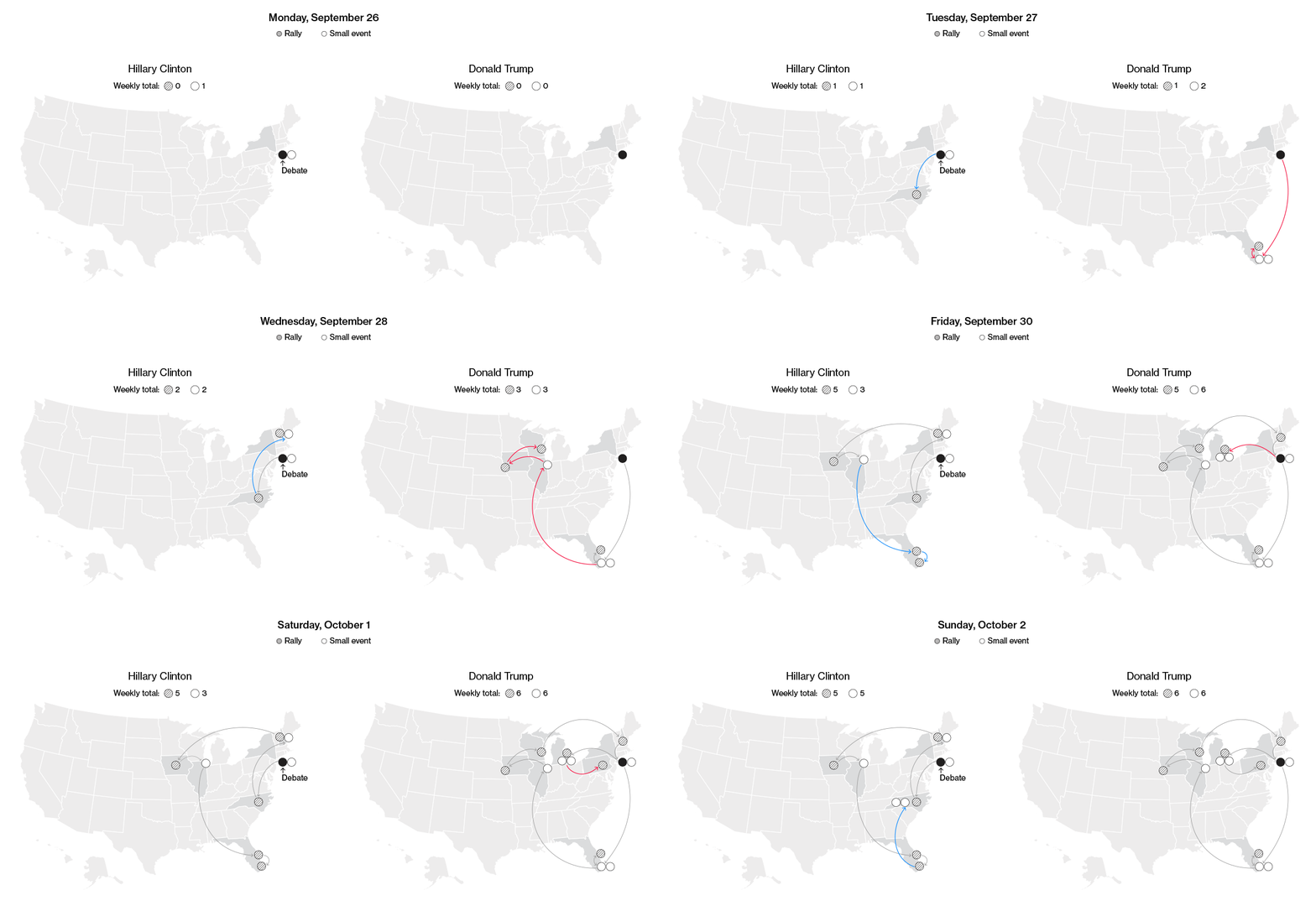
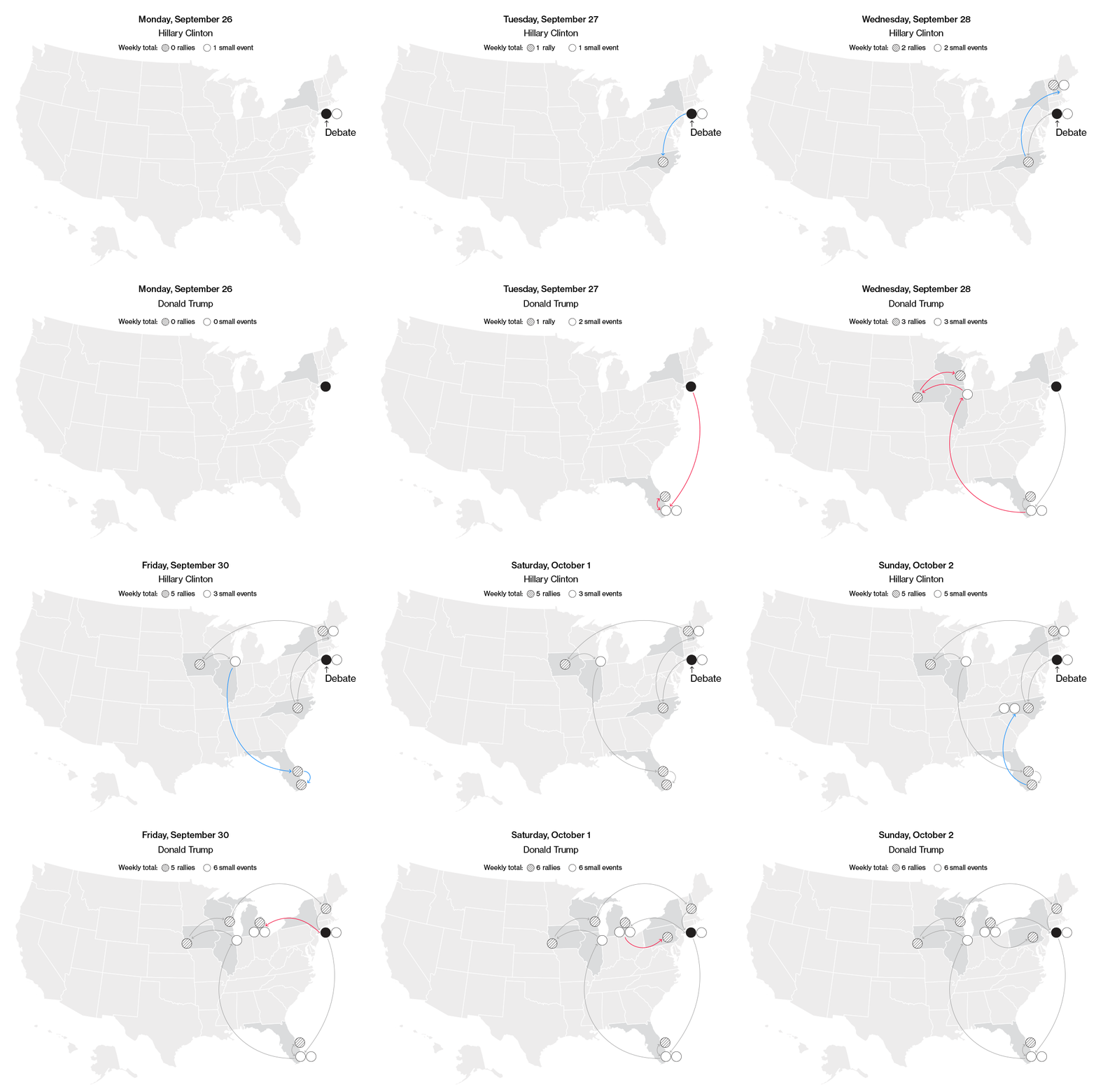
Clinton spent time in many of the same states as Trump, but prioritized North Carolina. She held a rally there the day after the debate and returned later in the week. For Clinton, winning the state—which Mitt Romney narrowly won in 2012--would likely put a dagger in Trump’s chances at the White House. Recent polls indicate the race is very close. While she can probably take the presidency without North Carolina, a win there would help her run up the score.
Clinton rakes in millions from rich people. And so does Trump.
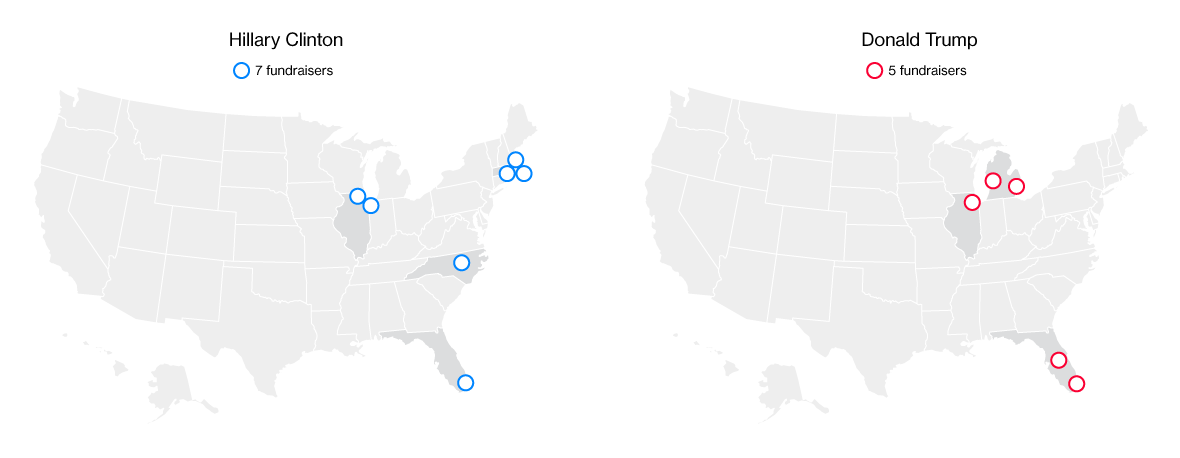
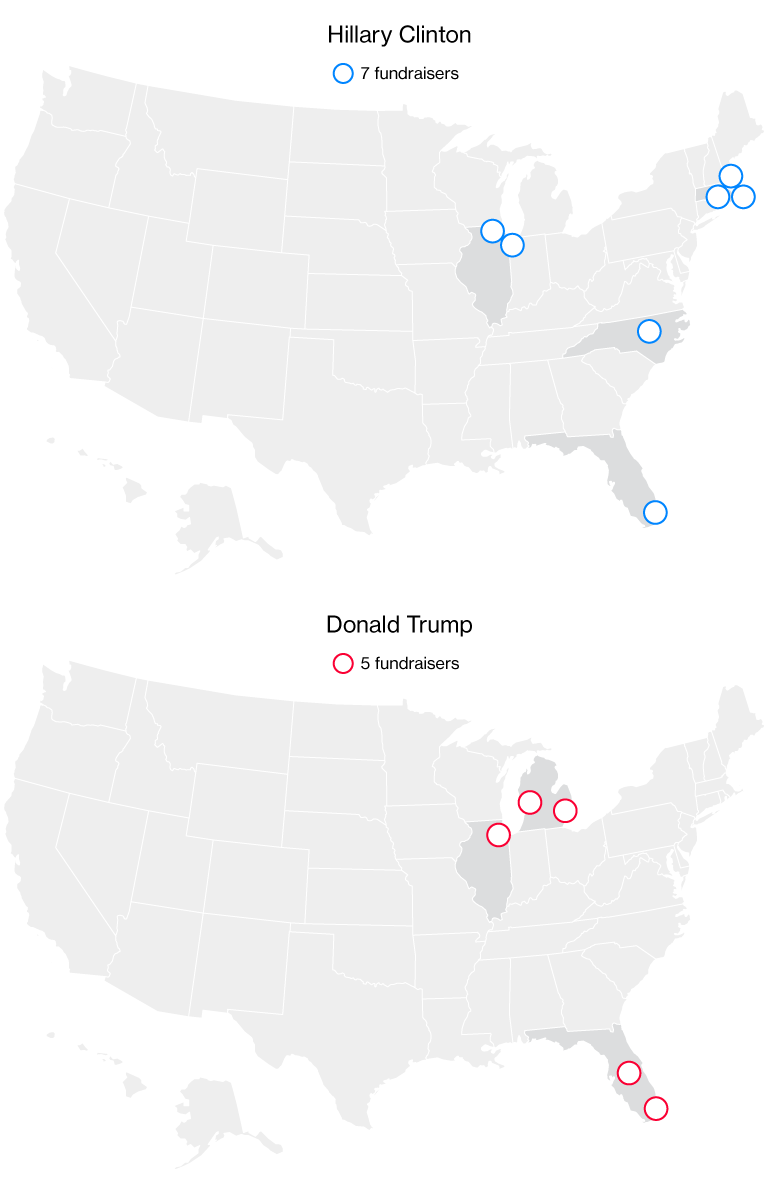
Trump regularly derides Clinton as beholden to special interests and wealthy donors while claiming he funds his campaign with his own money and the help of small donors chipping in a few bucks here and there. That’s not the case. Last week alone, Trump rubbed elbows with his wealthiest benefactors in five private fundraisers, each requiring donors to put up thousands of dollars for the privilege of attending. Not to be outdone, Clinton held seven fundraisers of her own last week.
Trump tweets a lot. But not nearly as much as Clinton.
Trump uses social media as an extension of his personality
The people are really smart in cancelling subscriptions to the Dallas & Arizona papers & now USA Today will lose readers! The people get it!
— Donald J. Trump (@realDonaldTrump) September 30, 2016
Unbelievable evening in Melbourne, Florida w/ 15,000 supporters- and an additional 12,000 who could not get in. Thank you! #TrumpTrain #MAGA pic.twitter.com/2N3Xq7AGmx
— Donald J. Trump (@realDonaldTrump) September 28, 2016
Well, now they're saying that I not only won the NBC Presidential Forum, but last night the big debate. Nice!
— Donald J. Trump (@realDonaldTrump) September 27, 2016
The people are really smart in cancelling subscriptions to the Dallas & Arizona papers & now USA Today will lose readers! The people get it!
— Donald J. Trump (@realDonaldTrump) September 30, 2016
Unbelievable evening in Melbourne, Florida w/ 15,000 supporters- and an additional 12,000 who could not get in. Thank you! #TrumpTrain #MAGA pic.twitter.com/2N3Xq7AGmx
— Donald J. Trump (@realDonaldTrump) September 28, 2016
Well, now they're saying that I not only won the NBC Presidential Forum, but last night the big debate. Nice!
— Donald J. Trump (@realDonaldTrump) September 27, 2016
Clinton uses social media as an extension of the campaign
Clinton’s attacks are laser focused
Clinton is plastering the airwaves with TV ads
Throughout the campaign, Clinton has raised more money than Trump. As of the last Federal Election Commission report, Trump had raised $166 million to Clinton’s $373 million. And that advantage has manifested itself in a massive, consistent advantage in television advertising.
In the week that started Sept. 27, Clinton spent $10 million on television ads, compared to around $6.4 million for Trump, bringing their totals for the cycle up to $131.6 million and $25.7 million. This is actually an improvement for Trump: in the previous week, he didn’t advertise in any battleground states. Trump was on the air in eight states last week, while Clinton was advertising in nine.
Trump prefers free media…but he’s doing a lot less of it
Instead of spending a lot on ads, Trump has effectively used the news media to get out his message. During the primaries he frequently called into news programs or agreed to interviews, getting free time on air that his opponents would never be able to match with paid advertising. Clinton has long been known to be wary of the media, and Trump often attacked her unwillingness to answer reporters’ questions during the summer.
As the campaign enters its final days, however, the Trump campaign has exercised more caution, limiting his appearances to friendlier terrain. The week after the debate, most of Trump’s media appearances were with Fox News programs or local news affiliates. The lone exception was on Friday, when Trump called a reporter from the New York Times to respond to attacks from the Clinton campaign—which probably reflects Trump’s occasional habit of veering from campaign strategy to speak his mind. Clinton twice briefly answered questions aboard her campaign plane from the reporters who travel with her. (Trump flies separately from the reporters who cover his campaign).
The campaign stops, hundreds of social media posts, and millions spent on ads by both campaigns last week show how diligently both campaigns attempted to drive their message post-debate. This week, the campaign has shifted west, as Trump held rallies in Colorado and Arizona. The frequency and urgency of the campaigns’ efforts will only increase as Election Day nears.