How to Trade Options

The US options market is heading for a sixth straight year of record volume amid a boom in retail trading.

Options trading has evolved dramatically since the days when brokers stood shoulder to shoulder in trading pits. The adrenaline of open outcry trading, whether in commodities, Treasury futures or equities, was reserved for the well connected. Three decades on, the democratization of financial markets has been turbocharged by technology and social media, allowing practically anyone with a brokerage app to buy or sell options with a few taps.

Investors, whether retail newcomers or veterans of the dot-com era, often look to options as a way to navigate volatility. They aren’t a cure-all for market anxiety, but options can provide a strategic advantage and, for some, a dose of excitement.
Options trading, once the domain of hedge funds and trading desks, is a cheaper way for even retail investors to wager on stock moves—or hedge against them.
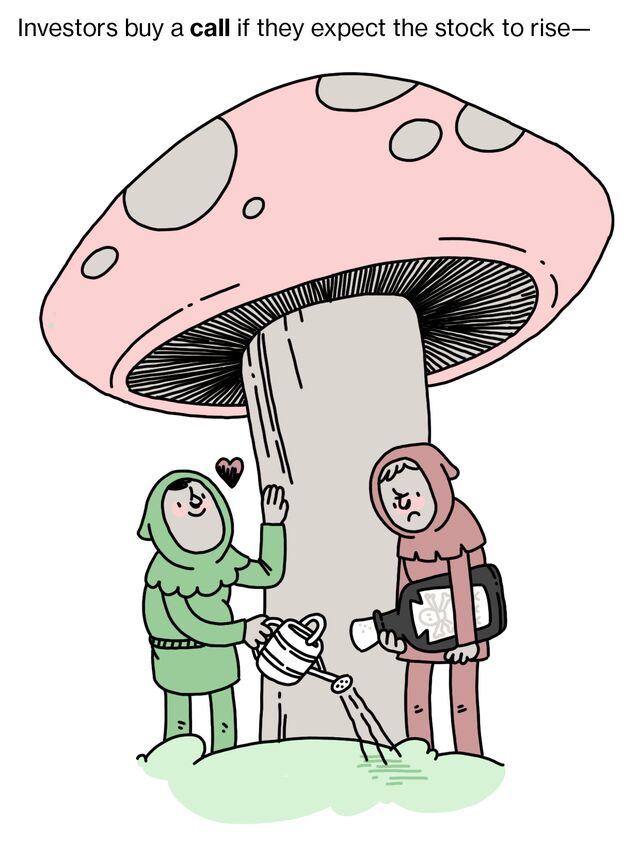
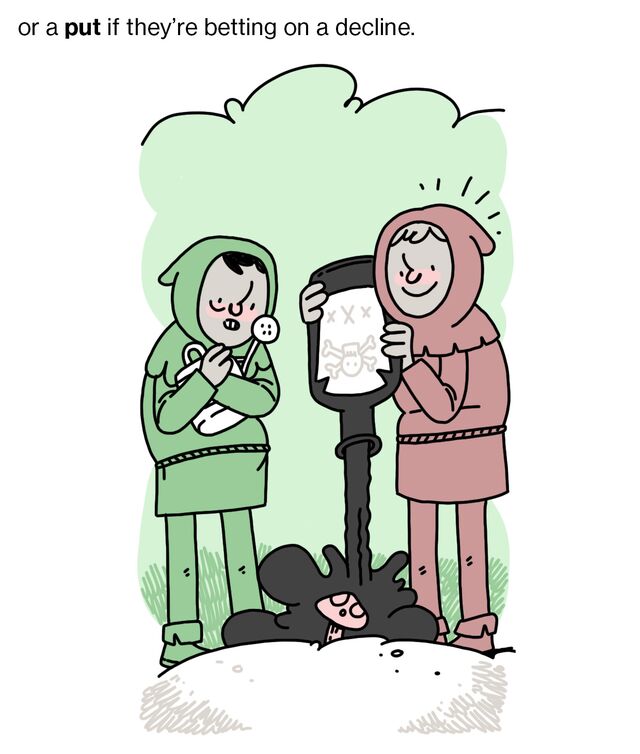
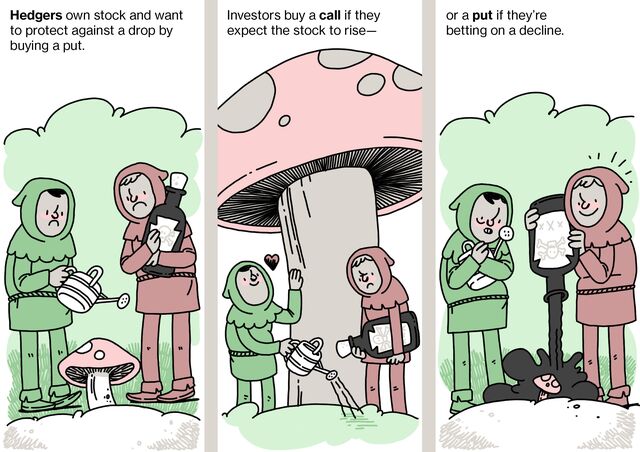
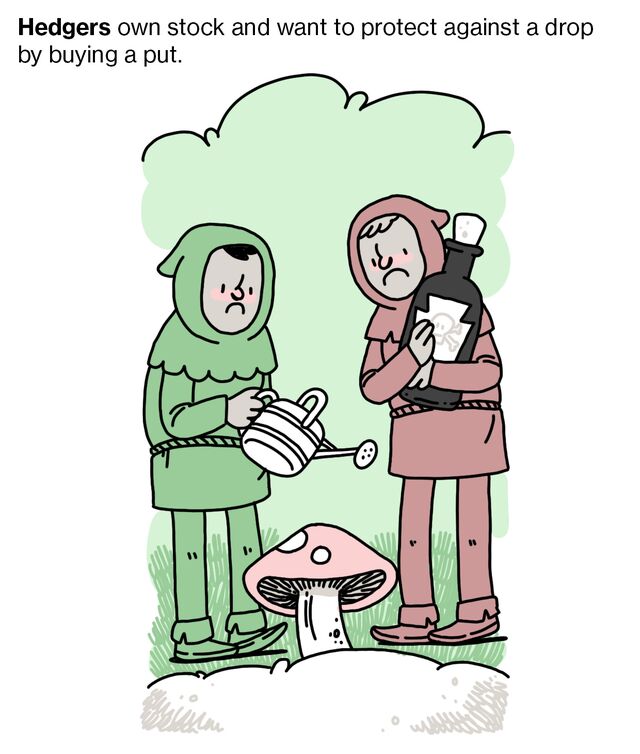
Hedgers own stock and want to protect against a drop by buying a put. Investors buy a call if they expect the stock to rise—or a put if they’rebetting on a decline.
Hedgers own stock and want to protect against a drop by buying a put.
Investors buy a call if they expect the stock to rise—
or a put if they’rebetting on a decline.

One key attraction of options? The ability to place bigger bets with less money.
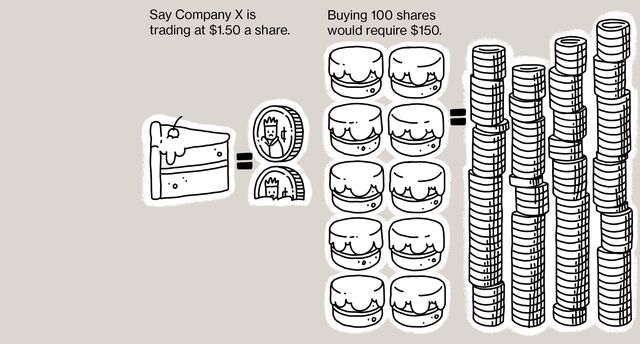

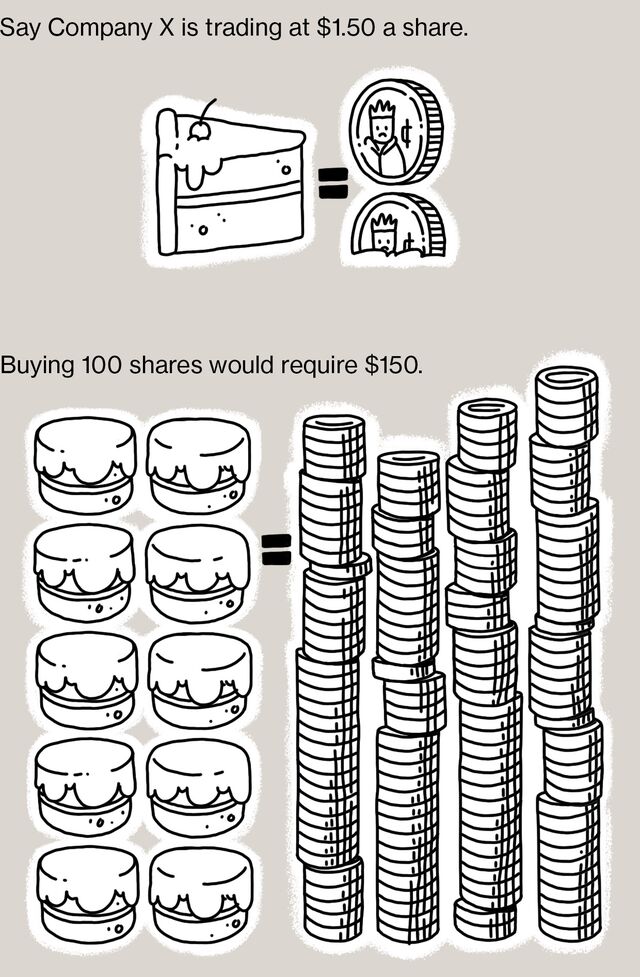
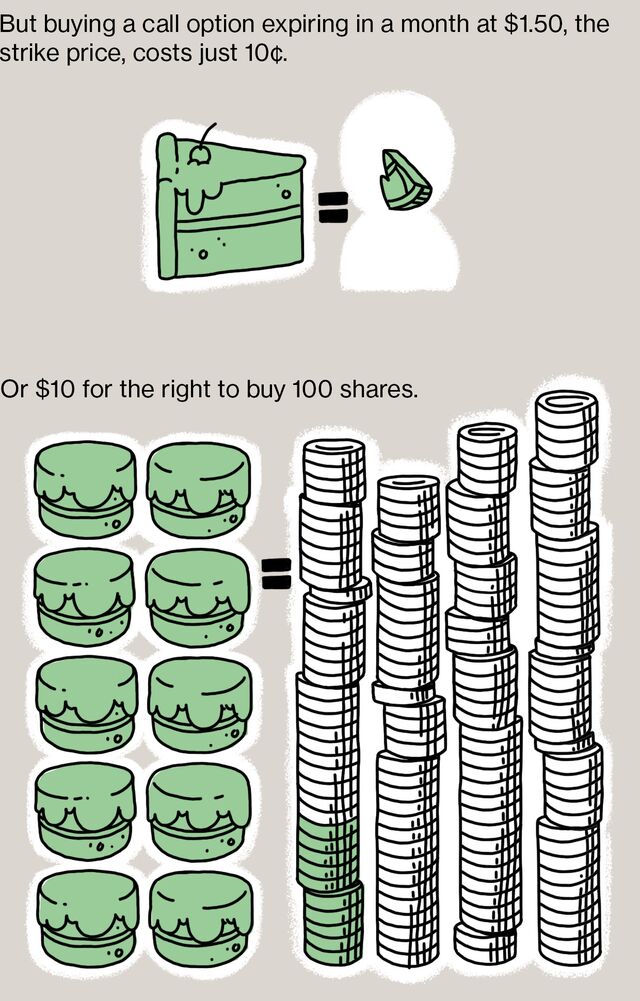
Say Company X is trading at $1.50 a share. Buying 100 shares would require $150.
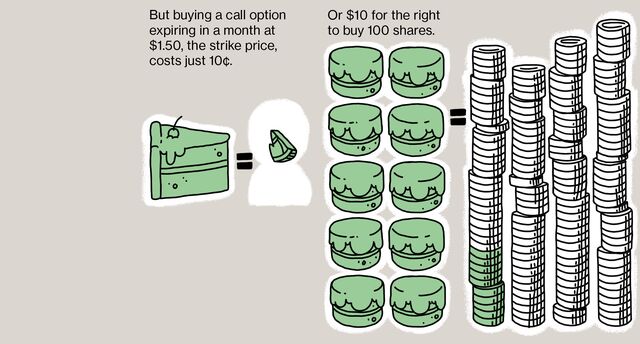
But buying a call option expiring in a month at $1.50, the strike price, costs just 10¢. Or $10 for the right to buy 100 shares.
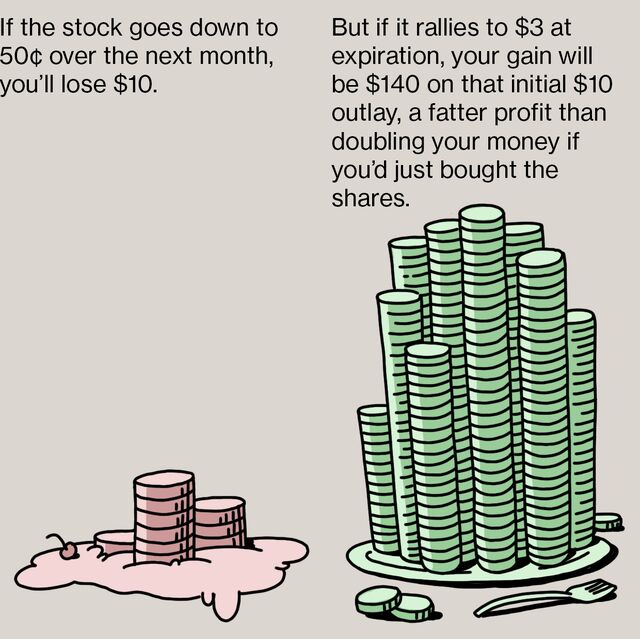
If the stock goes down to 50¢ over the next month, you’ll lose $10. But if it rallies to $3 at expiration, your gain will be $140 on that initial $10 outlay, a fatter profit than doubling your money if you’d just bought the shares.

Your risk if the stock doesn’t move the way you hoped depends on whether you’re buying or selling.
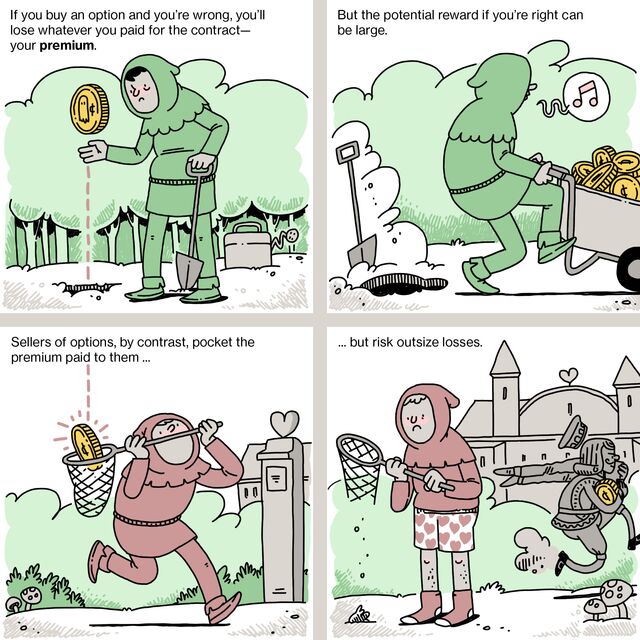
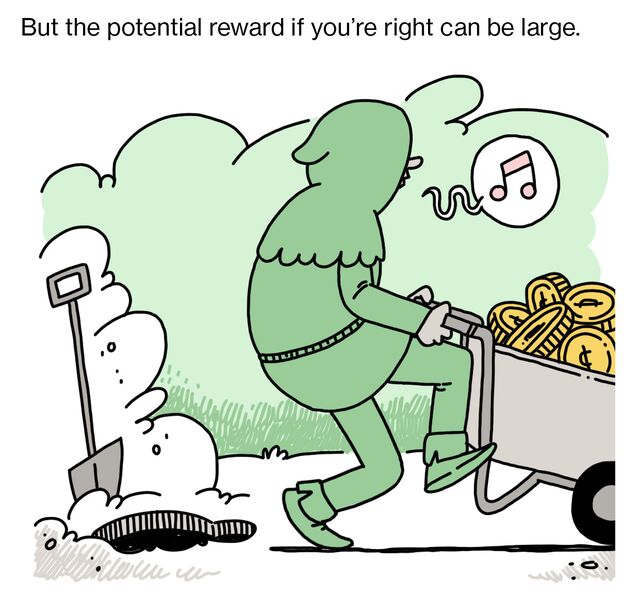
If you buy an option and you’re wrong, you’ll lose whatever you paid for the contract— your premium. But the potential reward if you’re right can be large. Sellers of options, by contrast, pocket the premium paid to them ... but risk outsize losses.
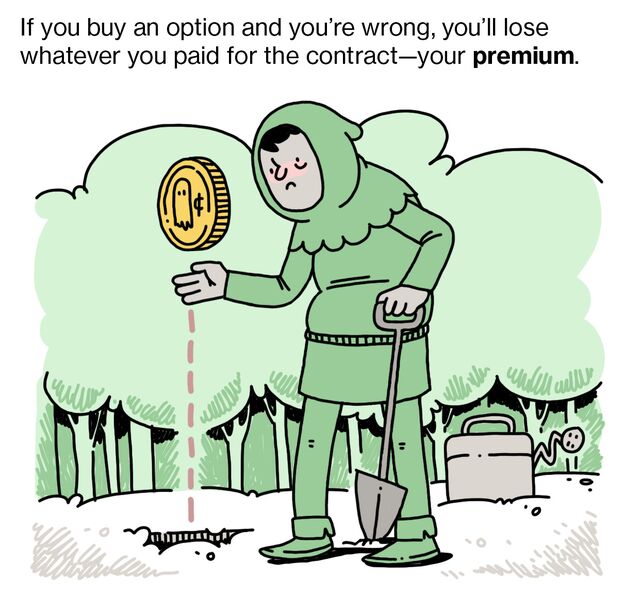
If you buy an option and you’re wrong, you’ll lose whatever you paid for the contract— your premium.
But the potential reward if you’re right can be large.
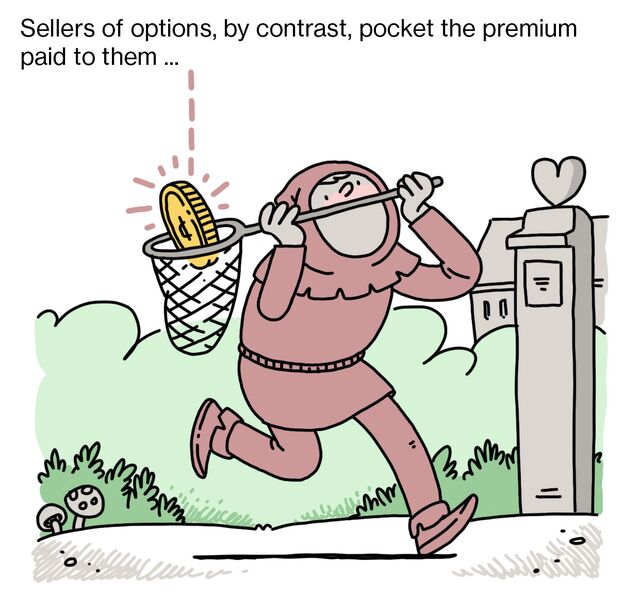
Sellers of options, by contrast, pocket the premium paid to them ...
... but risk outsize losses.

Traders sometimes liken it to picking up pennies in front of a steamroller.
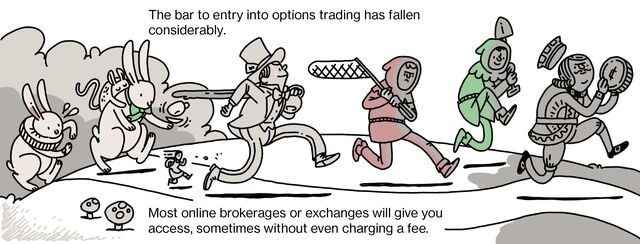

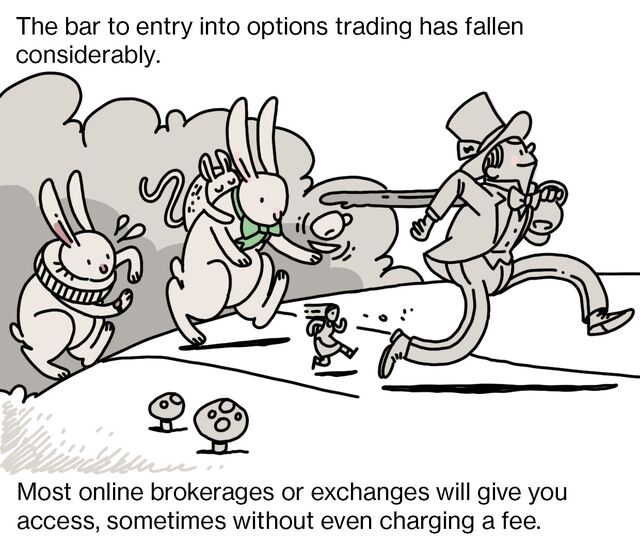
The bar to entry into options trading has fallen considerably. Most online brokerages or exchanges will give you access, sometimes without even charging a fee.

Once you join the action, you’ll find yourself among a diverse cast of participants, all with distinct motives for trading options.
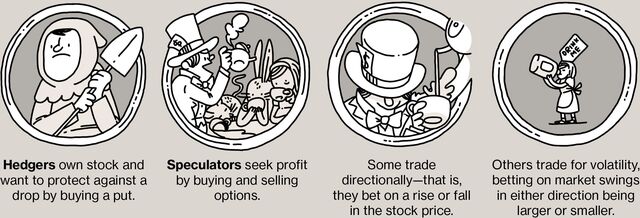
Hedgers own stock and want to protect against a drop by buying a put. Speculators seek profit by buying and selling options. Some trade directionally—that is, they bet on a rise or fall in the stock price.Others trade for volatility, betting on market swings in either direction being larger or smaller.
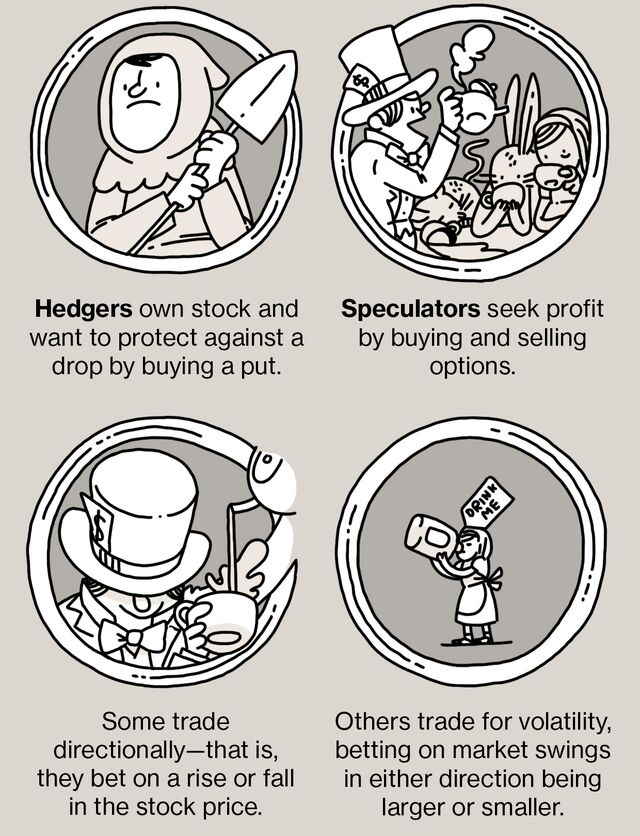
Hedgers own stock and want to protect against a drop by buying a put. Speculators seek profit by buying and selling options. Some trade directionally—that is, they bet on a rise or fall in the stock price. Others trade for volatility, betting on market swings in either direction being larger or smaller.
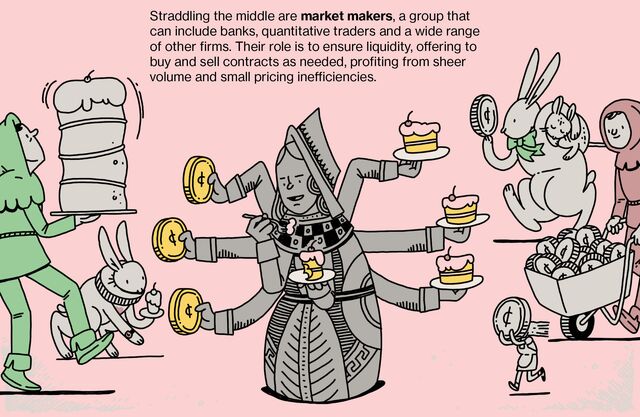
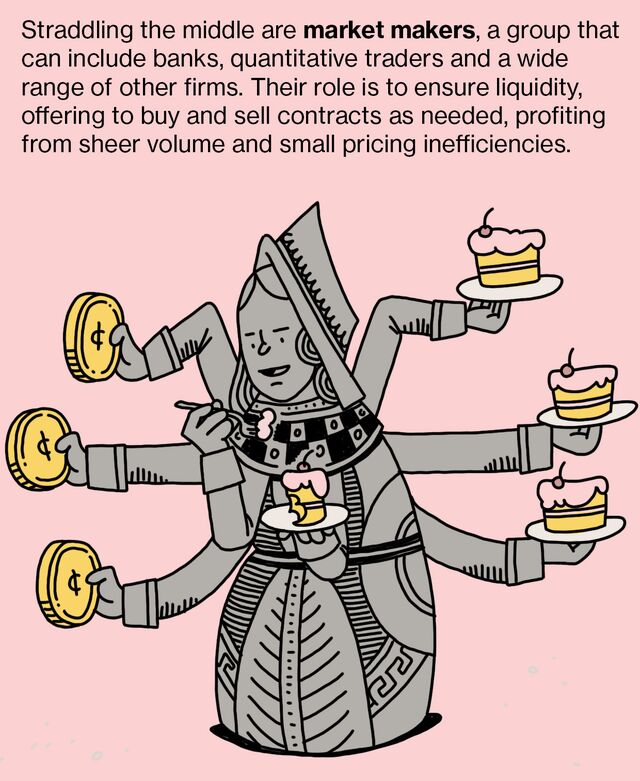
Straddling the middle are market makers, a group that can include banks, quantitative traders and a wide range of other firms. Their role is to ensure liquidity, offering to buy and sell contracts as needed, profiting from sheer volume and small pricing inefficiencies.
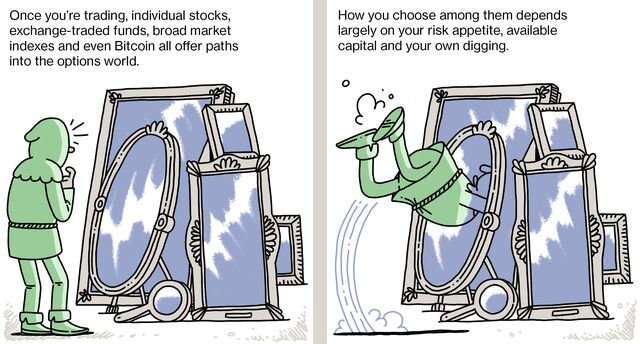
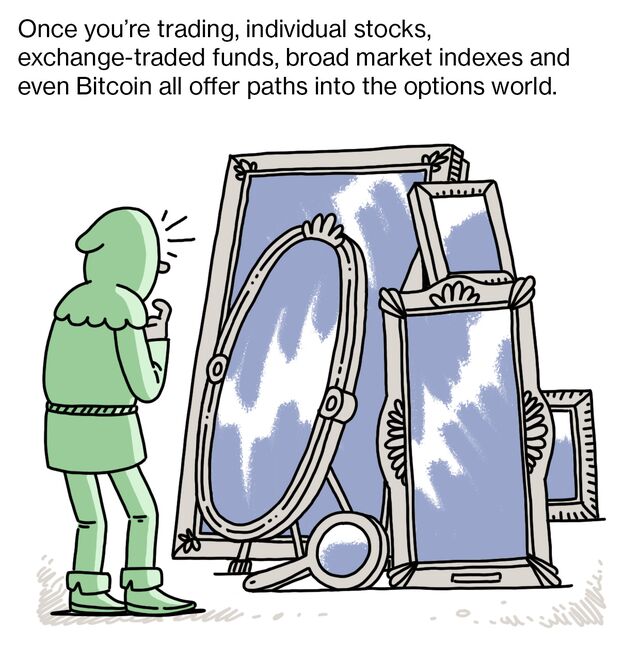
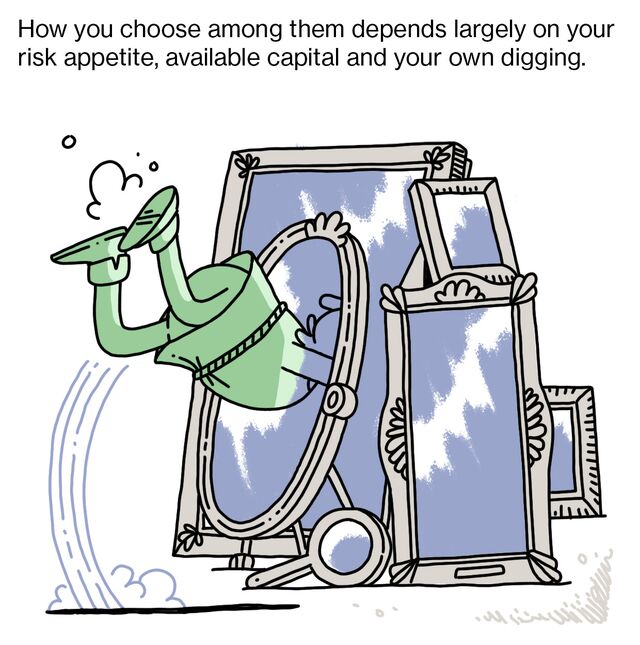
Once you’re trading, individual stocks, exchange-traded funds, broad market indexes and even Bitcoin all offer paths into the options world. How you choose among them depends largely on your risk appetite, available capital and your own digging.
Once you’re trading, individual stocks, exchange-traded funds, broad market indexes and even Bitcoin all offer paths into the options world.
How you choose among them depends largely on your risk appetite, available capital and your own digging.
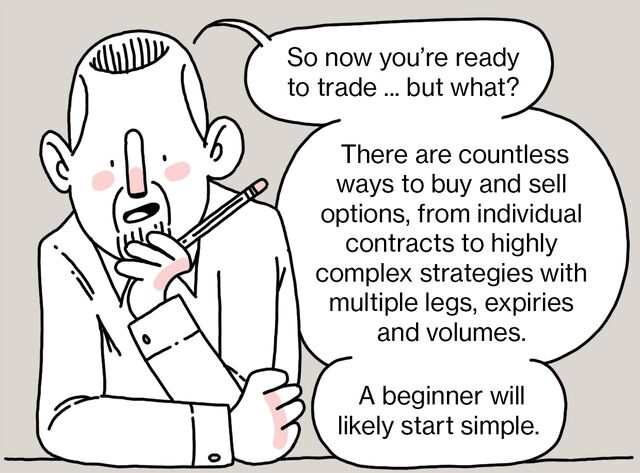
So now you’re ready to trade ... but what?  There are countless ways to buy and sell options, from individual contracts to highly complex strategies with multiple legs, expiries and volumes.  A beginner will likely start simple.
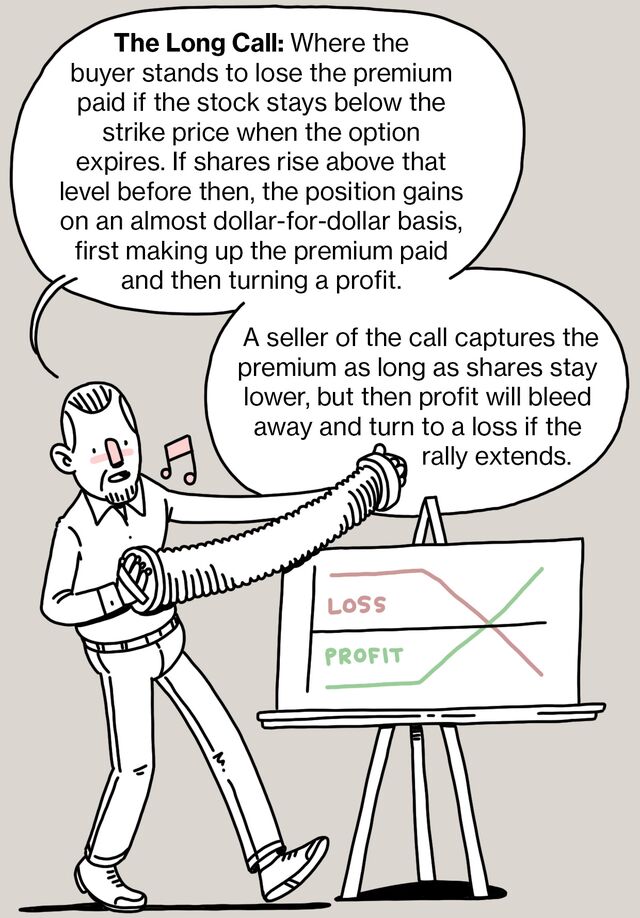
The Long Call: Where the buyer stands to lose the premium paid if the stock stays below the strike price when the option expires. If shares rise above that level before then, the position gains on an almost dollar-for-dollar basis, first making up the premium paid and then turning a profit.  A seller of the call captures the premium as long as shares stay lower, but then profit will bleed away and turn to a loss if the rally extends.
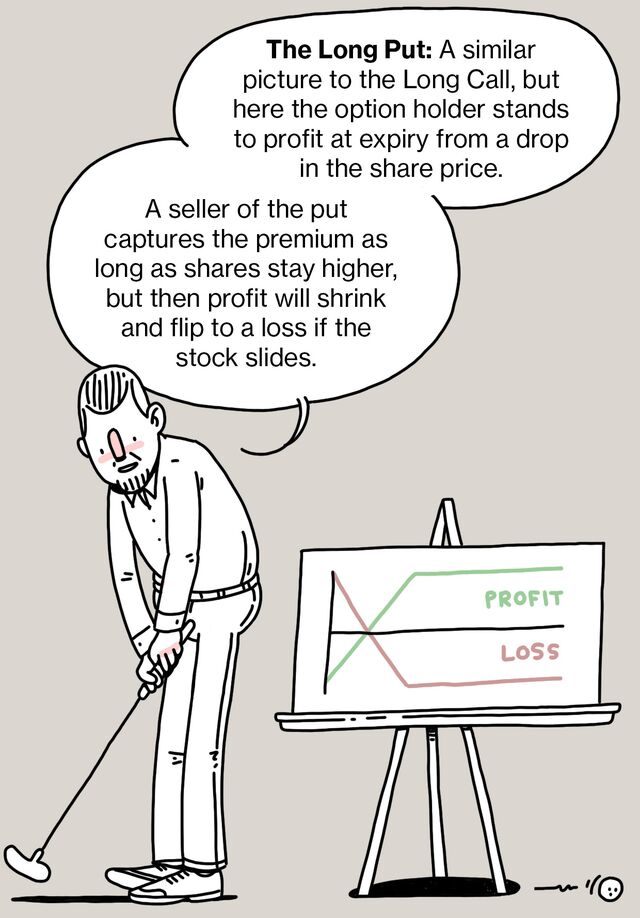
The Long Put: A similar picture to the Long Call, but here the option holder stands to profit at expiry from a drop in the share price. A seller of the put captures the premium as long as shares stay higher, but then profit will shrink and flip to a loss if the stock slides.
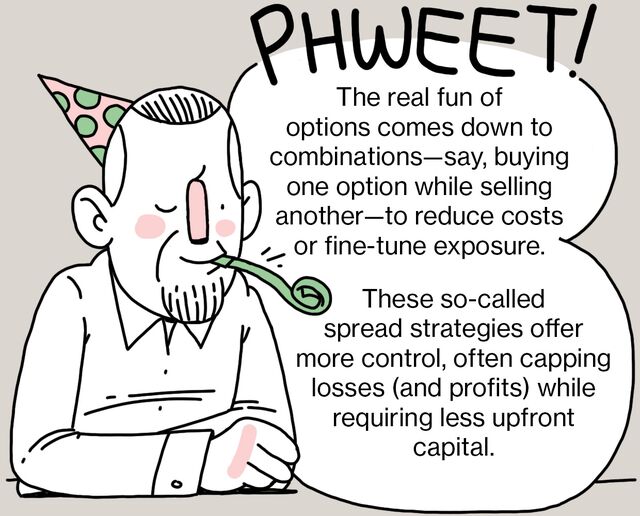
The real fun of options comes down to combinations—say, buying one option while selling another—to reduce costs or fine-tune exposure. These so-called spread strategies offer more control, often capping losses (and profits) while requiring less upfront capital.
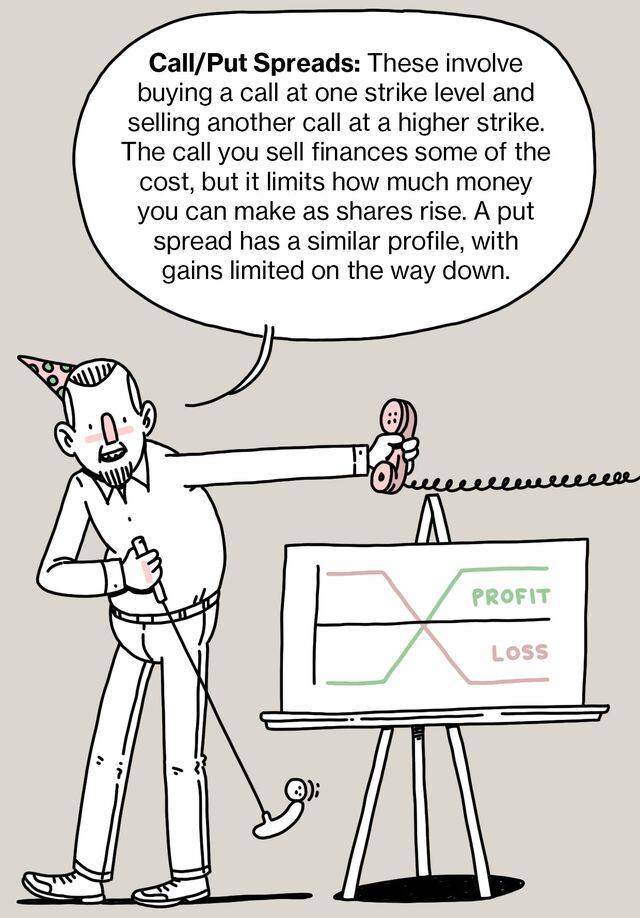
Call/Put Spreads: These involve buying a call at one strike level and selling another call at a higher strike. The call you sell finances some of the cost, but it limits how much money you can make as shares rise. A put spread has a similar profile, with gains limited on the way down.
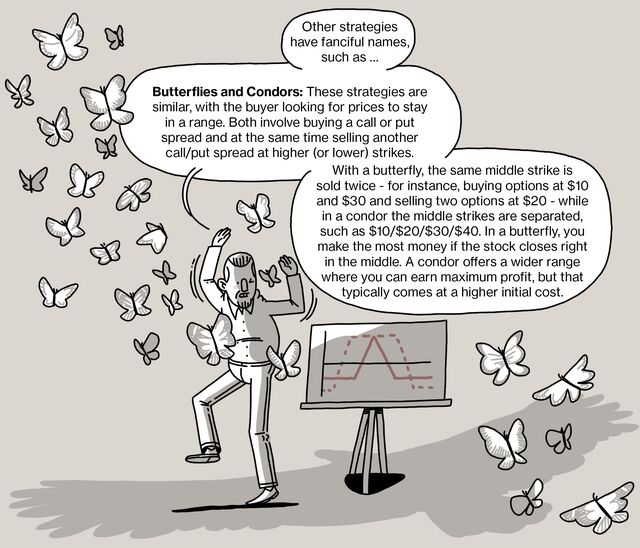
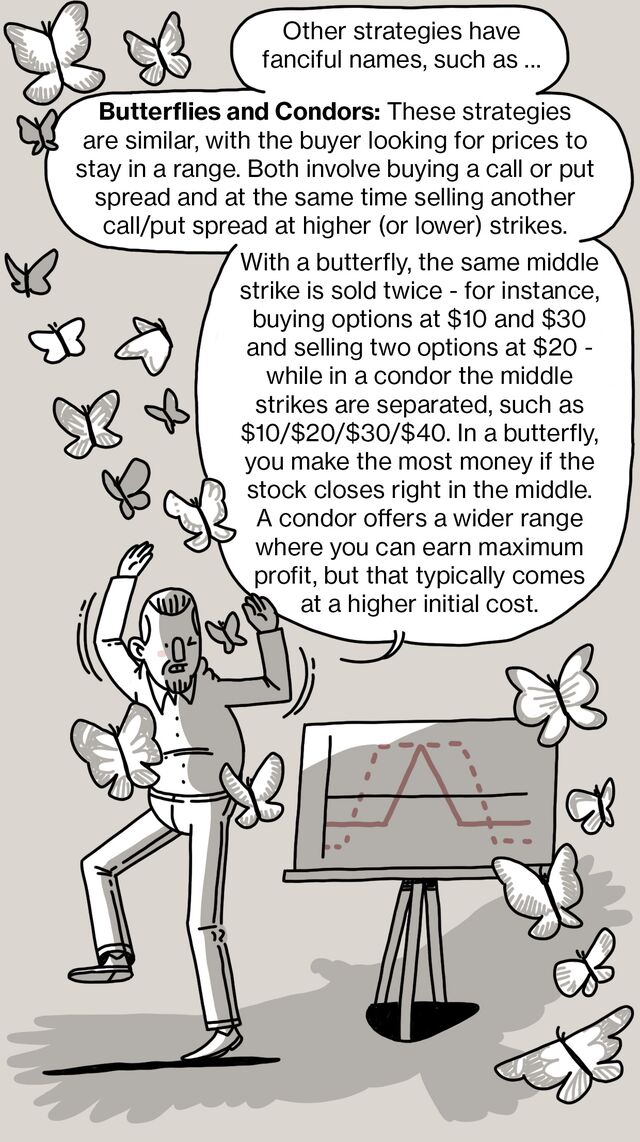
Other strategies have fanciful names, such as … Butterflies and Condors: These strategies are similar, with the buyer looking for prices to stay in a range. Both involve buying a call or put spread and at the same time selling another call/put spread at higher (or lower) strikes. With a butterfly, the same middle strike is sold twice - for instance, buying options at $10 and $30 and selling two options at $20 - while in a condor the middle strikes are separated, such as $10/$20/$30/$40. In a butterfly, you make the most money if the stock closes right in the middle. A condor offers a wider range where you can earn maximum profit, but that typically comes at a higher initial cost.

That language of the trade extends further: Delta tracks sensitivity to the underlying price, gamma measures how quickly that sensitivity shifts, and vega captures exposure to volatility.

Used wisely, options trading can boost returns or hedge losses—but retail traders would do well to remember that options carry far more risk than passive investing. If you’re going to go around picking up pennies, you’d better be certain you can escape the steamroller.


More On Bloomberg