Markets Magazine | How To
How to Count Cards

Hedge fund manager Boaz Weinstein reveals how a secret blackjack skill can inform important lessons about risk on Wall Street.

How much do you believe in luck? It’s an undeniable force, sometimes even dictating how entire fortunes are won. Yet luck is often just a clever facade hiding a world of calculated odds and risk assessment—a happy combination of chance and opportunity that Wall Street greats have long exploited, on trading desks as well as casino floors. And, as it turns out, blackjack is something of a bridge between the two worlds.

The goal of the game is to beat the dealer by having a hand of cards valued as close to 21 as possible—without going over. Sure, luck of the draw is a factor. And yes, the house will usually win. But if you have a talent for quick mental math, the patience to wait for your moment and the guts to get kicked out of the casino if you’re caught, counting cards is a sure way to make your own luck.

This article is based on an episode of Bullish With Sonali Basak. Watch the full episode here.
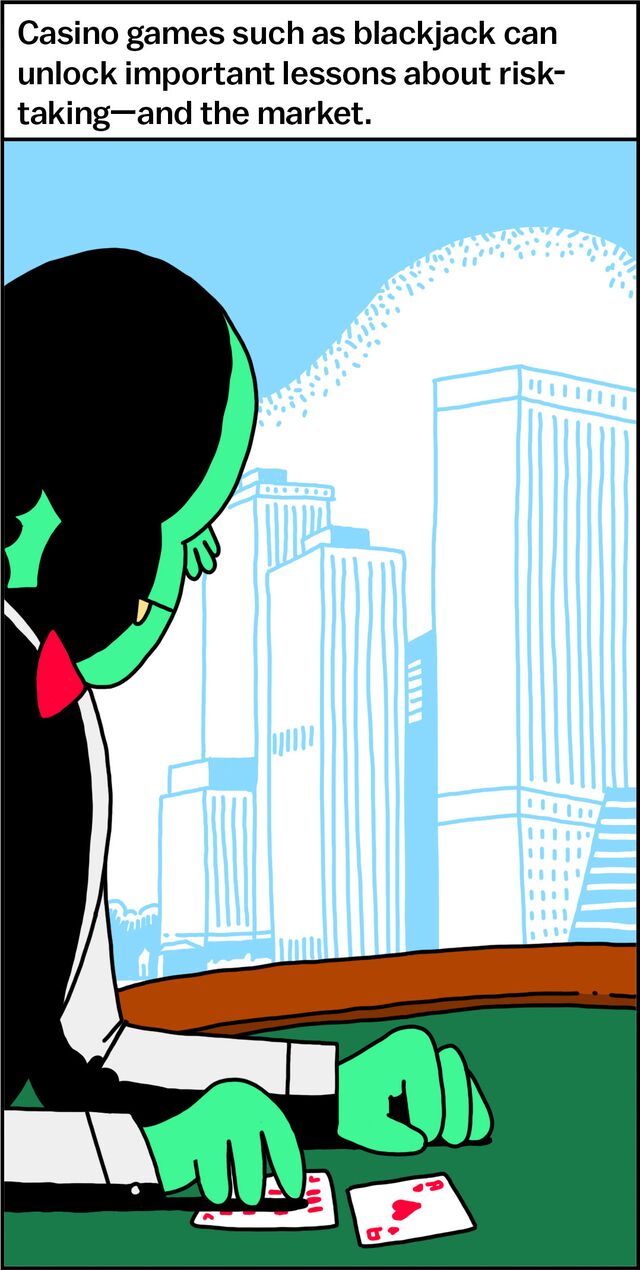
Casino games such as blackjack can unlock important lessons about risk-taking—and the market.
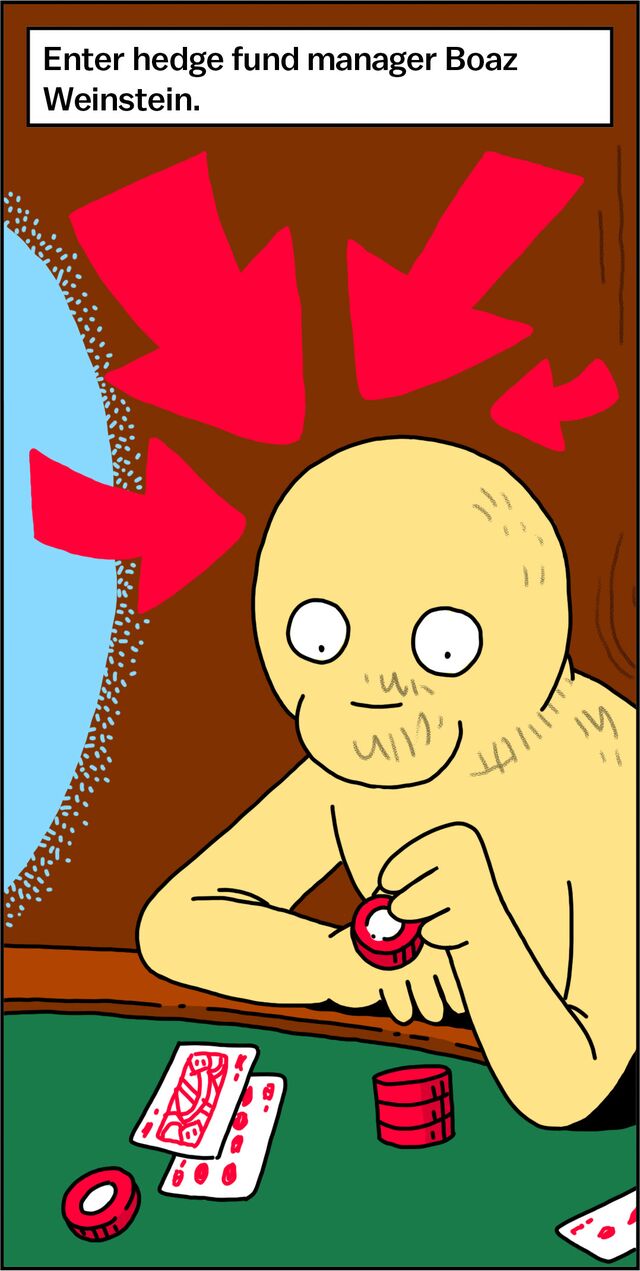
Enter hedge fund manager Boaz Weinstein.
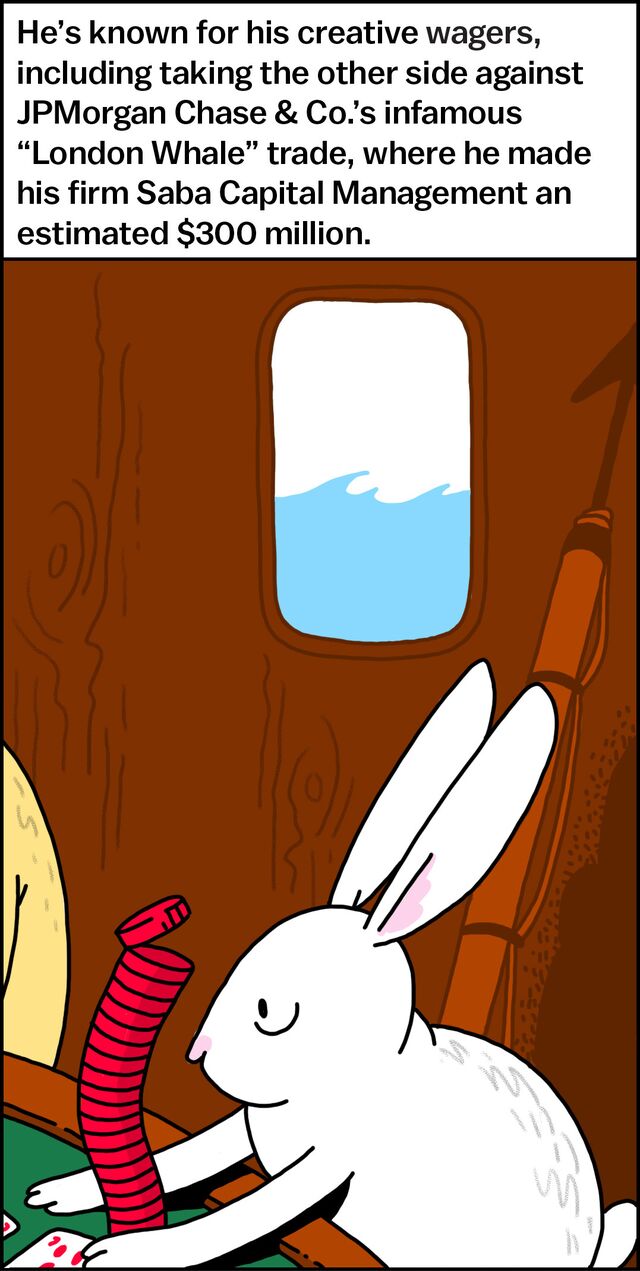
He's known for his creative wagers, including taking the other side against JPMorgan Chase & Co.'s infamous "London Whale" trade, where he made his firm Saba Capital Management an estimated $300 million.
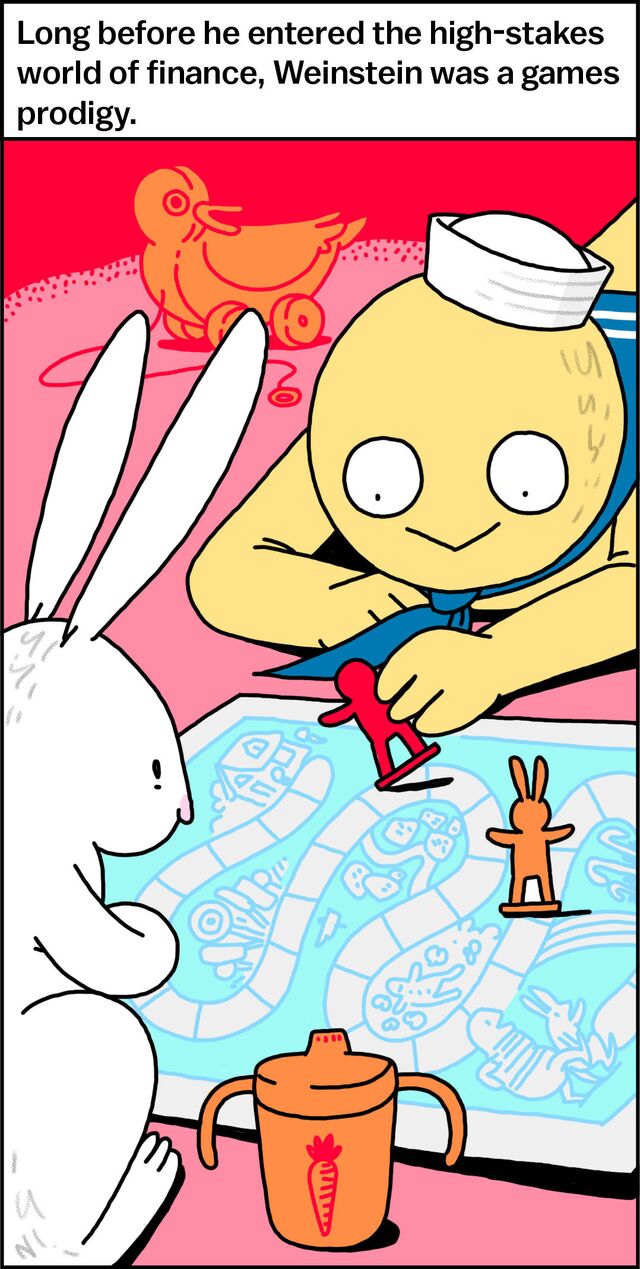
Long before he entered the high-stakes world of finance, Weinstein was a games prodigy.
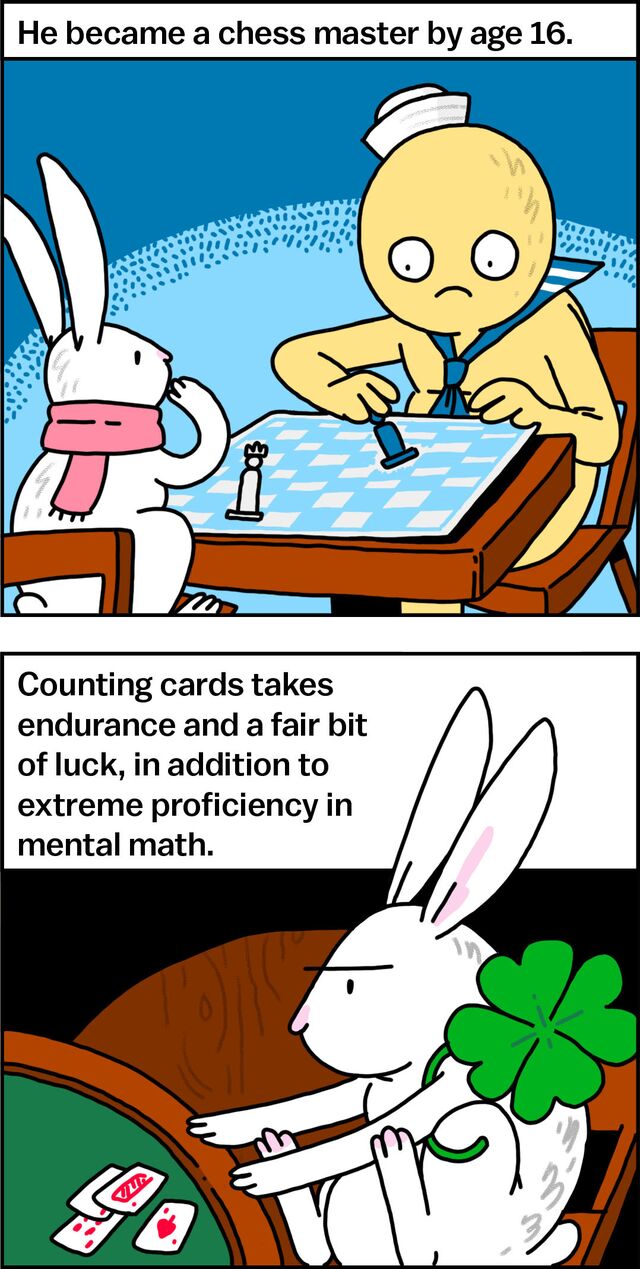
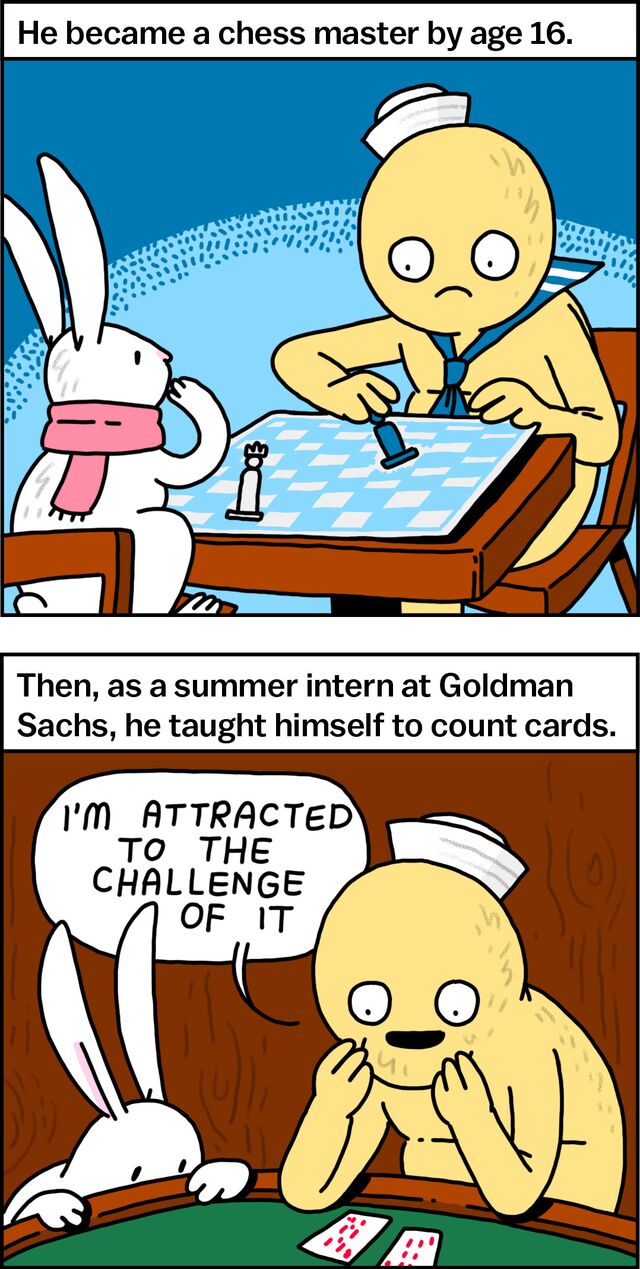
He became a chess master by age 16. Counting cards takes endurance and a fair bit of luck, in addition to extreme proficiency in mental math.
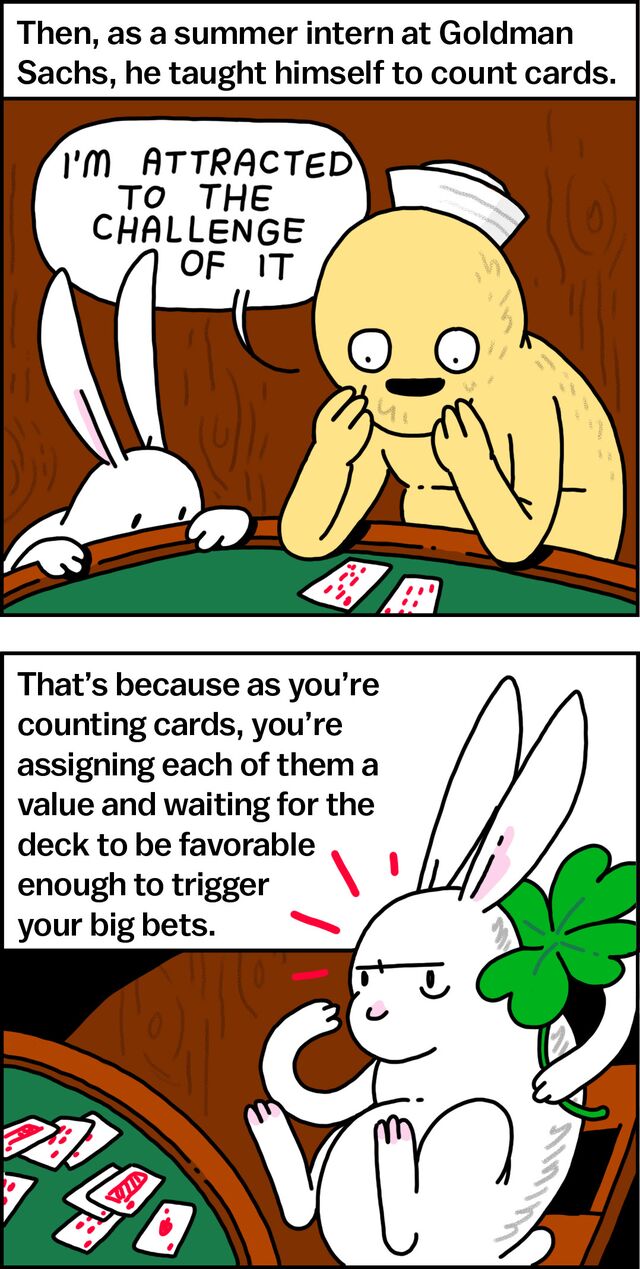
Then, as a summer intern at Goldman Sachs, he taught himself to count cards. "I'm attracted to the challenge of it". That's because as you're counting cards, you're assigning each of them a value and waiting for the deck to be favorable enough to trigger your big bets.
Long before he entered the high-stakes world of finance, Weinstein was a games prodigy.
He became a chess master by age 16. Then, as a summer intern at Goldman Sachs, he taught himself to count cards. "I'm attracted to the challenge of it."
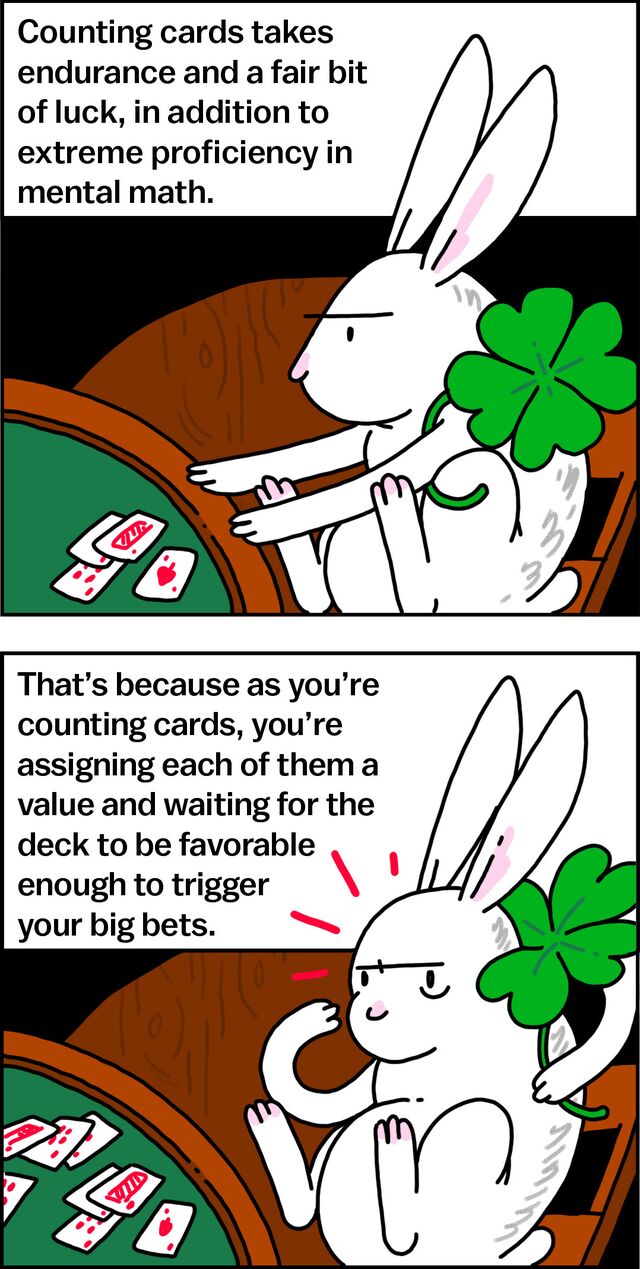
Counting cards takes endurance and a fair bit of luck, in addition to extreme proficiency in mental math. That's because as you're counting cards, you're assigning each of them a value and waiting for the deck to be favorable enough to trigger your big bets.
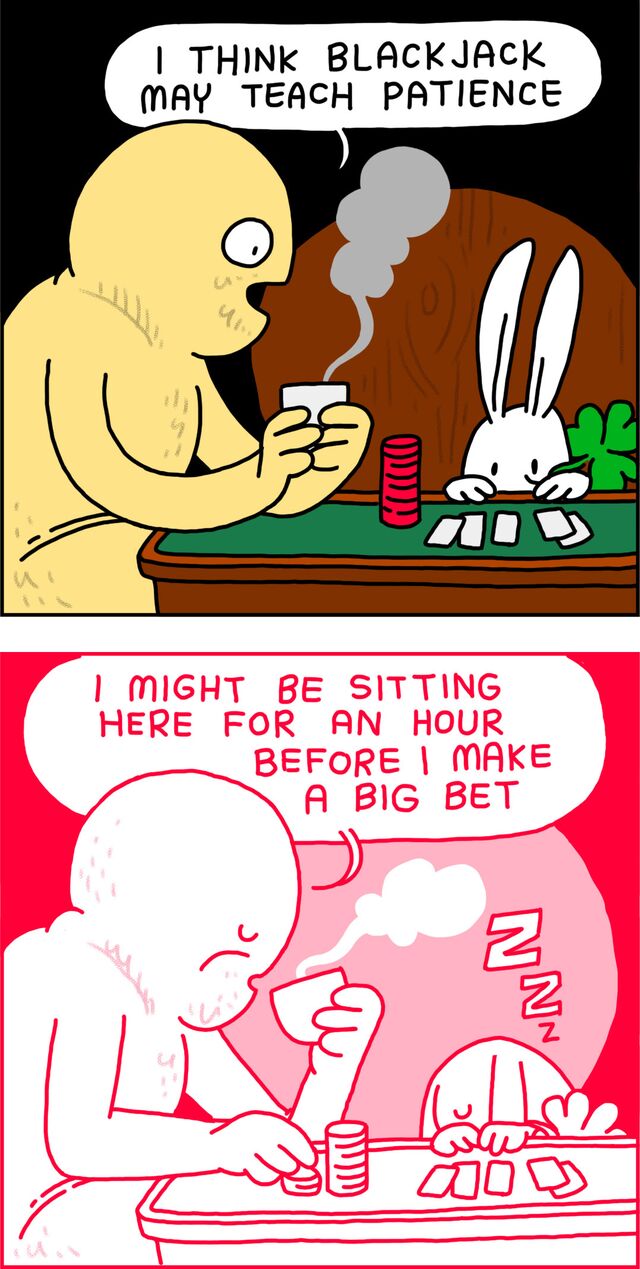
I think Blackjack may teach patience. I might be sitting here for an hour before I make a big bet.
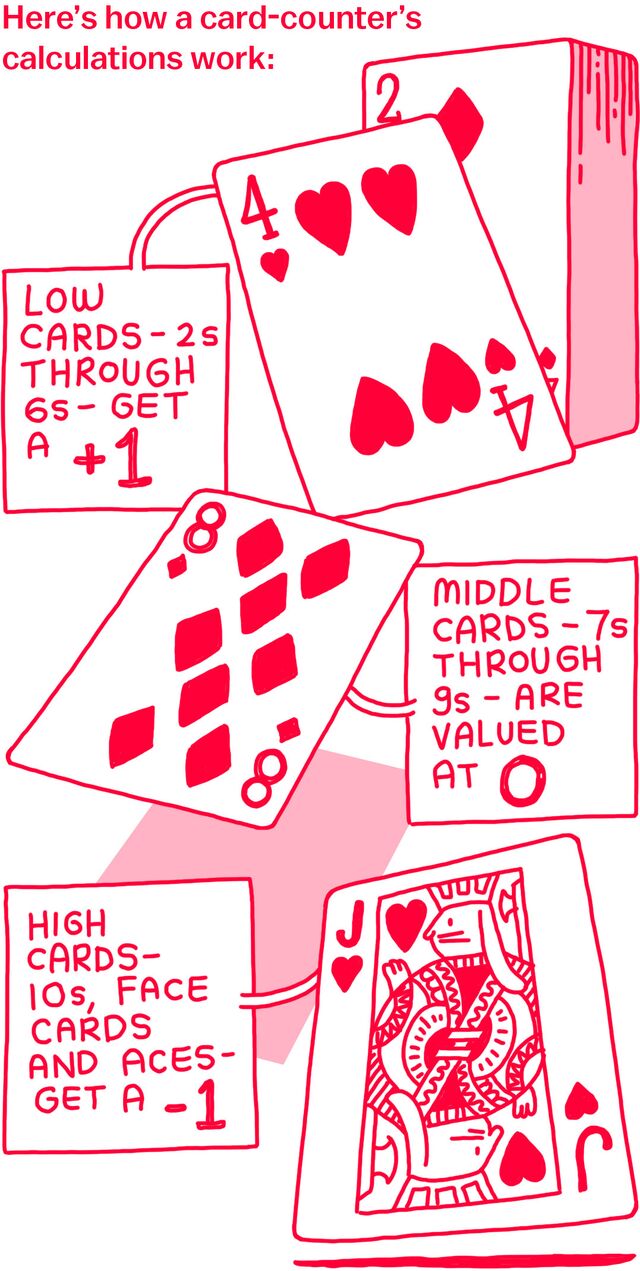
Here's how a card-counter's calculations work: Low cards - 2s through 6s - get a +1. Middle cards - 7s through 9s - are valued at 0. High cards - 10s, face cards and aces - get a -1.
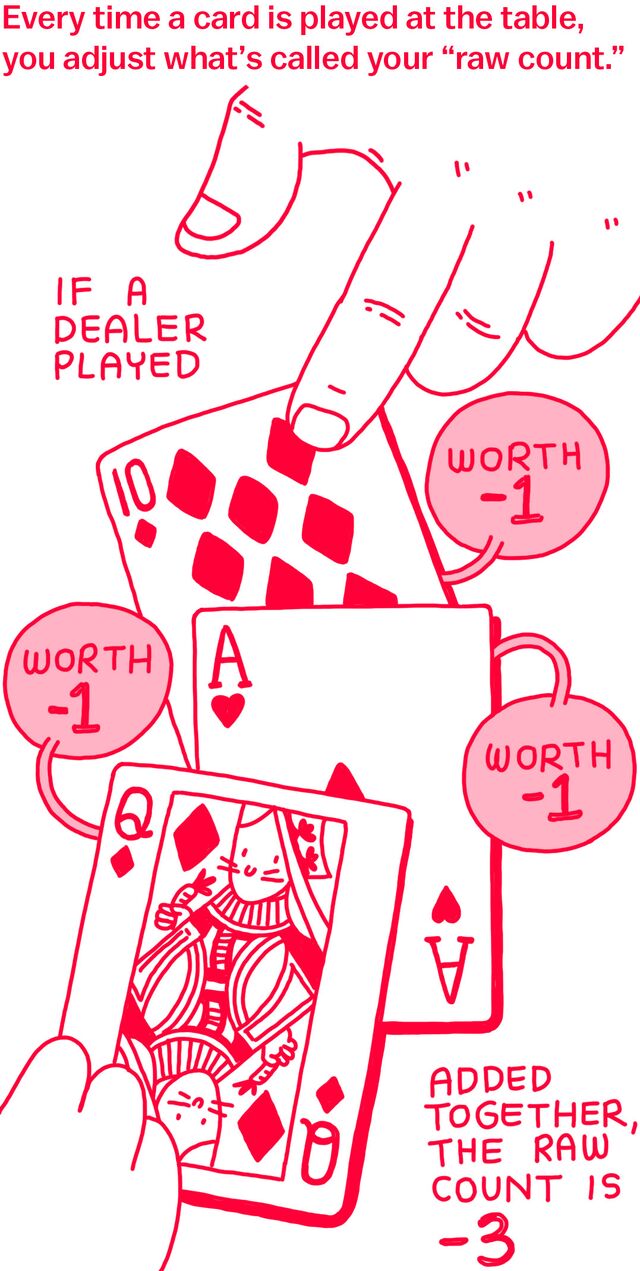
Every time a card is played at the table, you adjust what's called your "raw count." If a dealer played 10, worth -1; Ace, worth -1; Queen, worth -1. Added together, the raw count is -3.
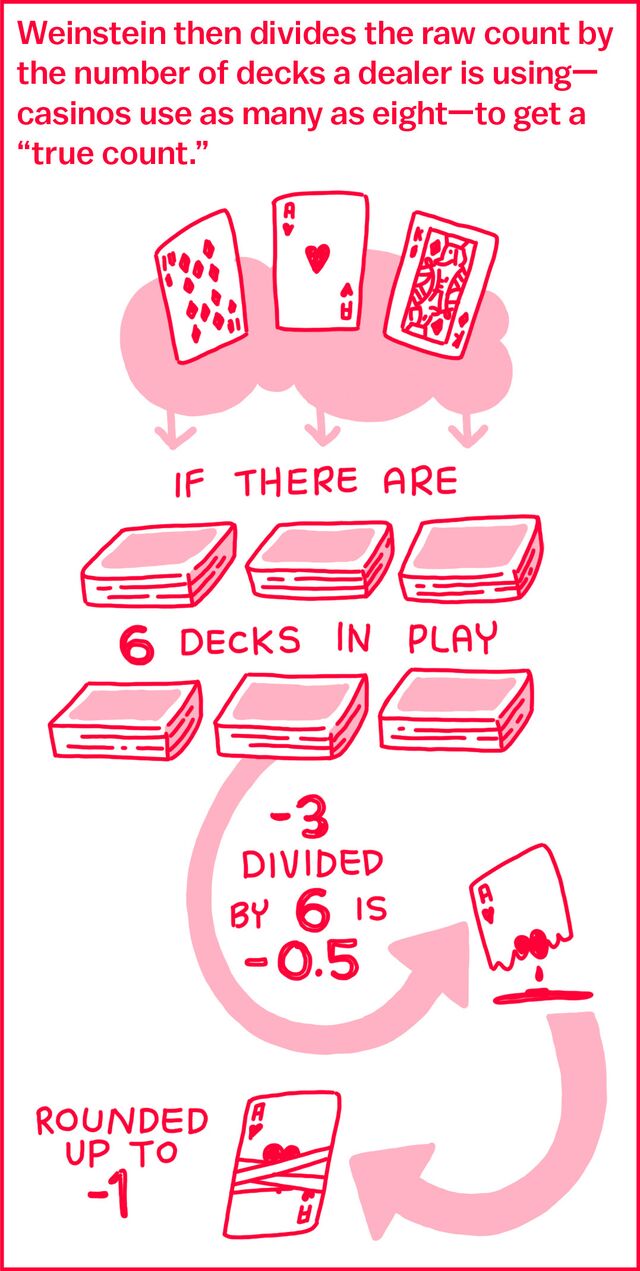
Weinstein then divides the raw count by the number of decks a dealer is using—casinos use as many as eight—to get a "true count." If there are 6 decks in play, -3 divided by 6 is -0.5, rounded up to -1.
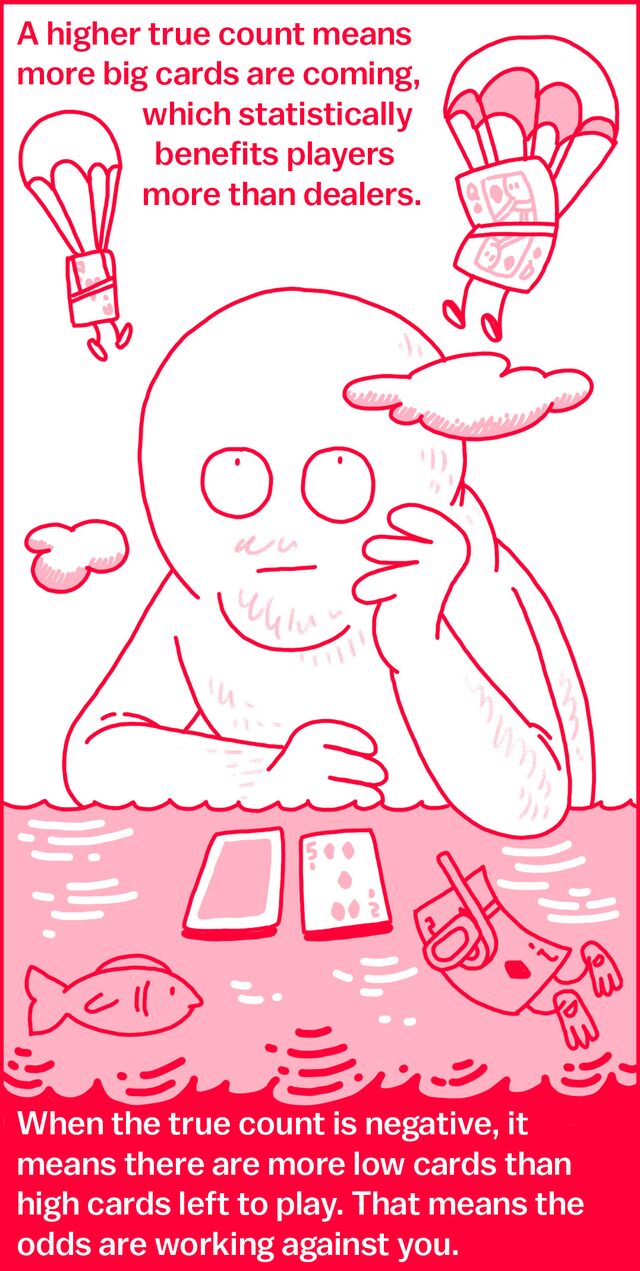
A higher true count means more big cards are coming, which statistically benefits players more than dealers. When the true count is negative, it means there are more low cards than high cards left to play. That means the odds are working against you.
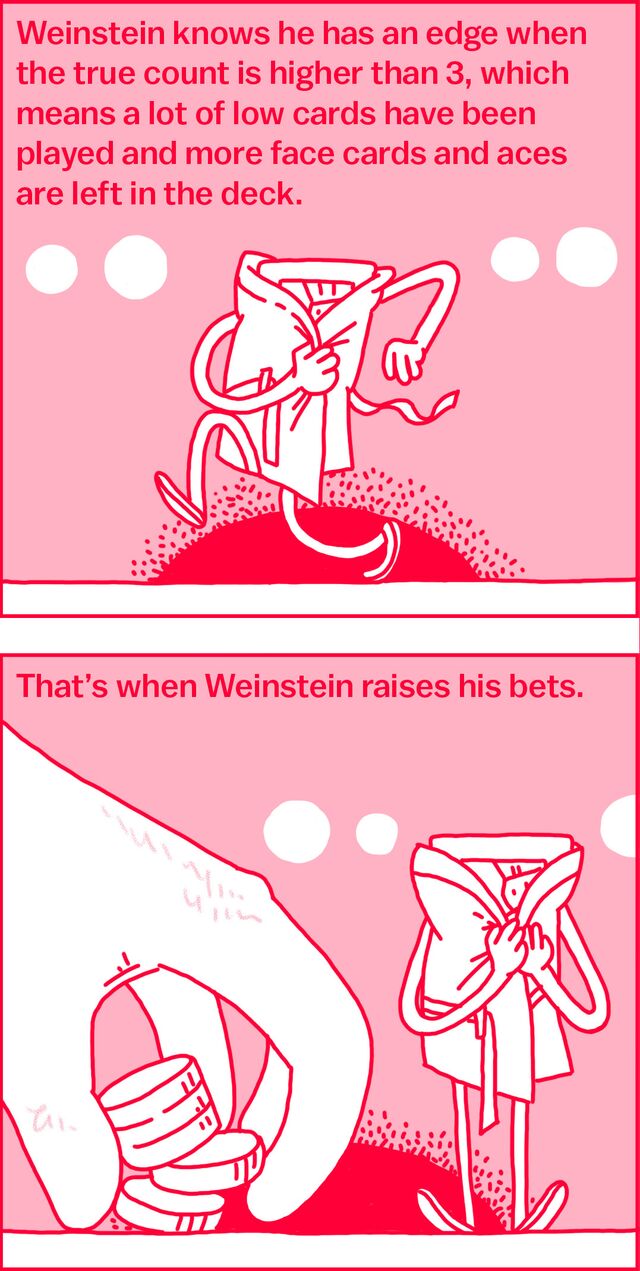
Weinstein knows he has an edge with the true count is higher than 3, which means a lot of low cards have been played and more face cards and aces are left in the deck. That's when Weinstein raises his bets.
In blackjack, the only other hand that can beat you is the dealer's—and you're both trying to hit 21, or get closer than the other without going over. Since the dealer must draw until their hand totals 17 or higher, high cards can force them to "bust," or go over 21. Your modest advantage over the dealer is you don't have to draw: You can hold or hit as needed.
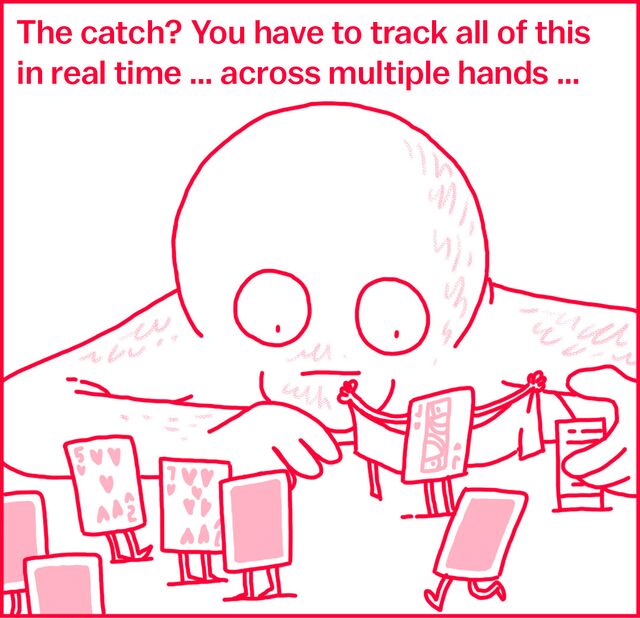
The catch? You have to track all of this in real time ... across multiple hands ...
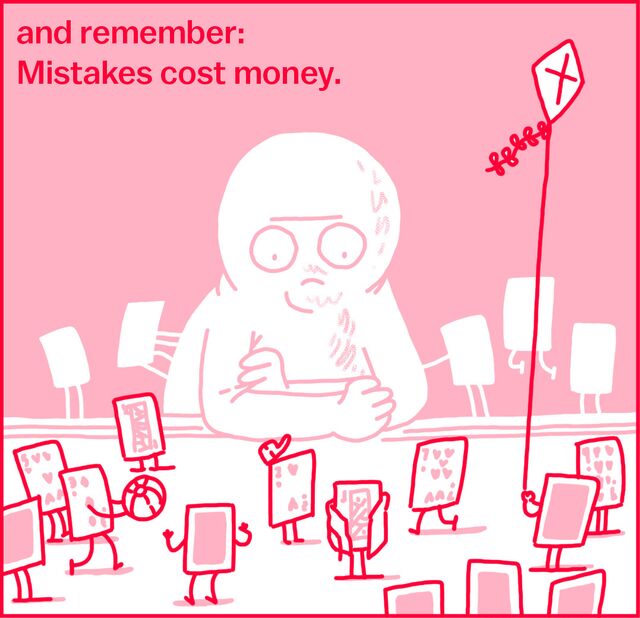
and remember: Mistakes cost money.
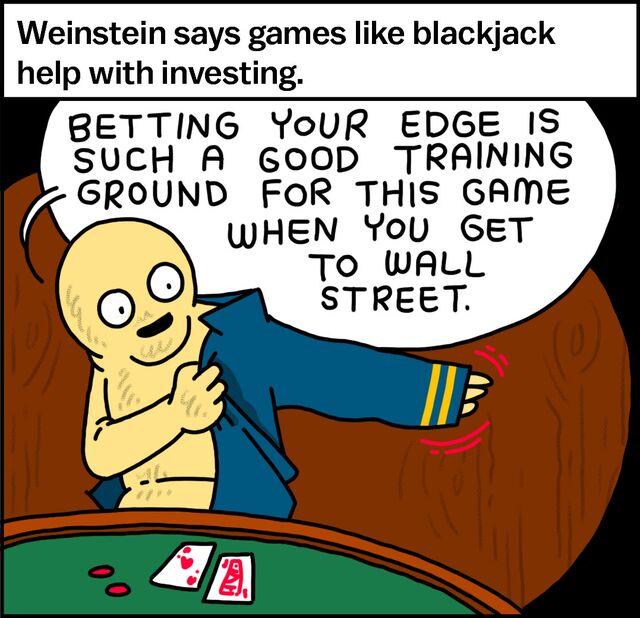
Weinstein says games like blackjack help with investing. "Betting your edge is such a good training ground for this game when you get to Wall Street.
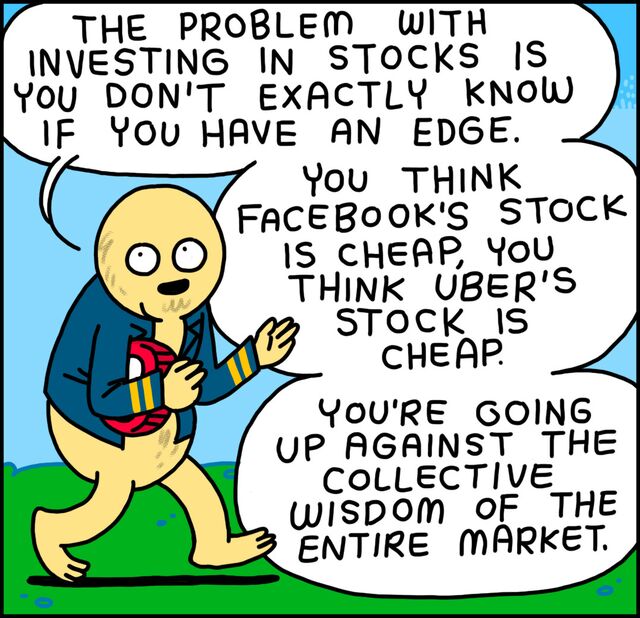
"The problem with investing in stocks is you don't exactly know if you have an edge. You think Facebook's stock is cheap. You think Uber's stock is cheap. You're going up against the collective wisdom of the entire market."
In blackjack, you know the odds and come up with the ideal bet, given your risk tolerance and bankroll.
For Weinstein, the intersection of cards and finance isn't just about hard math—it's about timing, discipline and emotional control. Blackjack teaches you how to wait for the edge. It's a numbers game, one where probabilities can be ascertained and optimal moves calculated in advance.
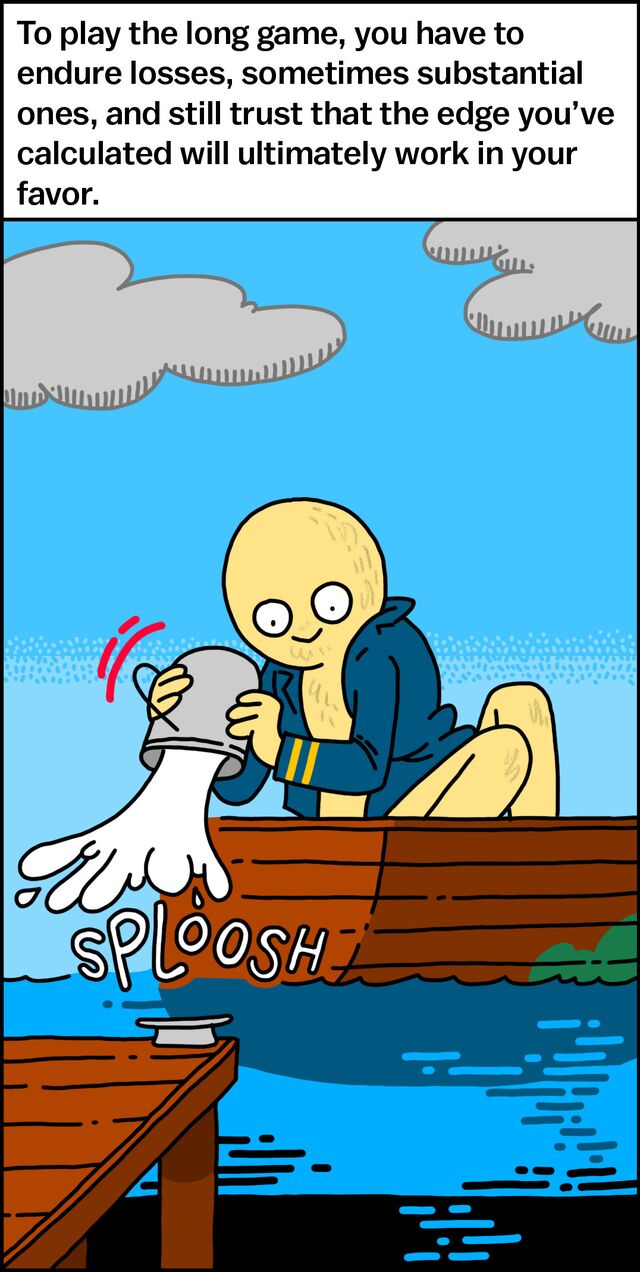
To play the long game, you have to endure losses, sometimes substantial ones, and still trust that the edge you've calculated will ultimately work in your favor.
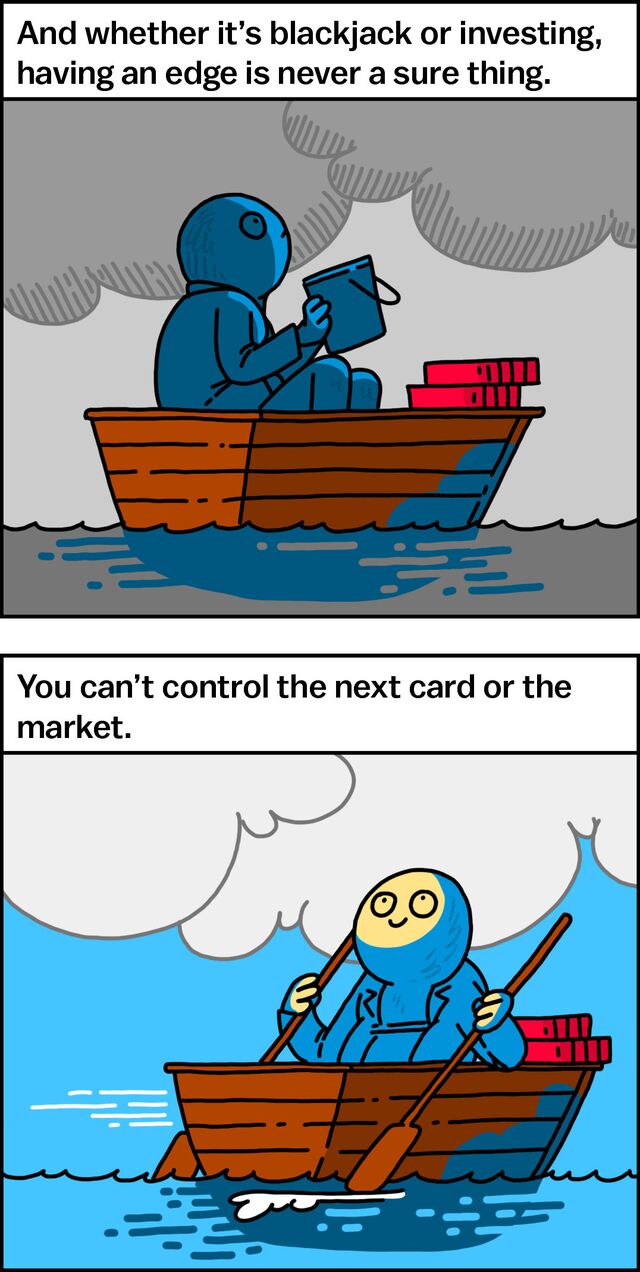
And whether it's blackjack or investing, having an edge is never a sure thing. You can't control the next card or the market.
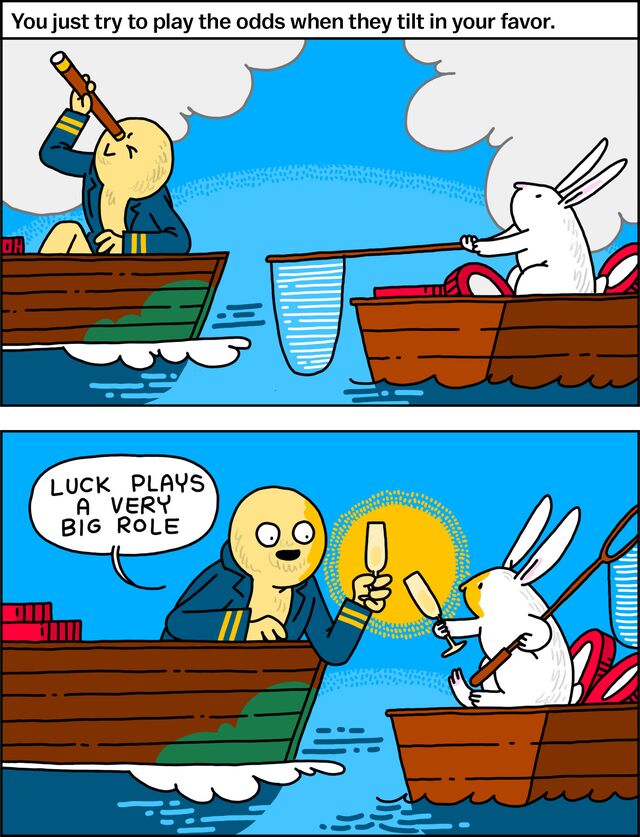
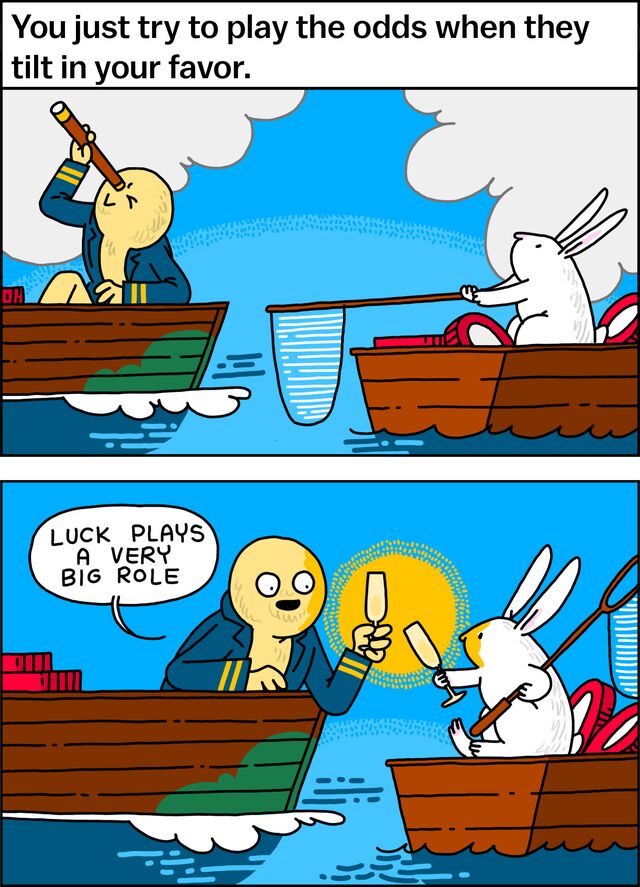
You just try to play the odds when they tilt in your favor. "Luck plays a very big role."
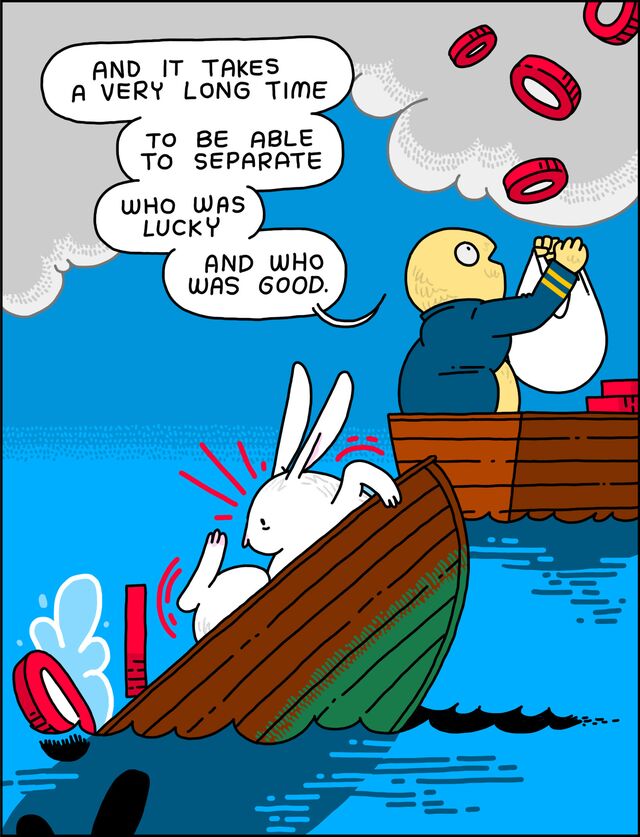
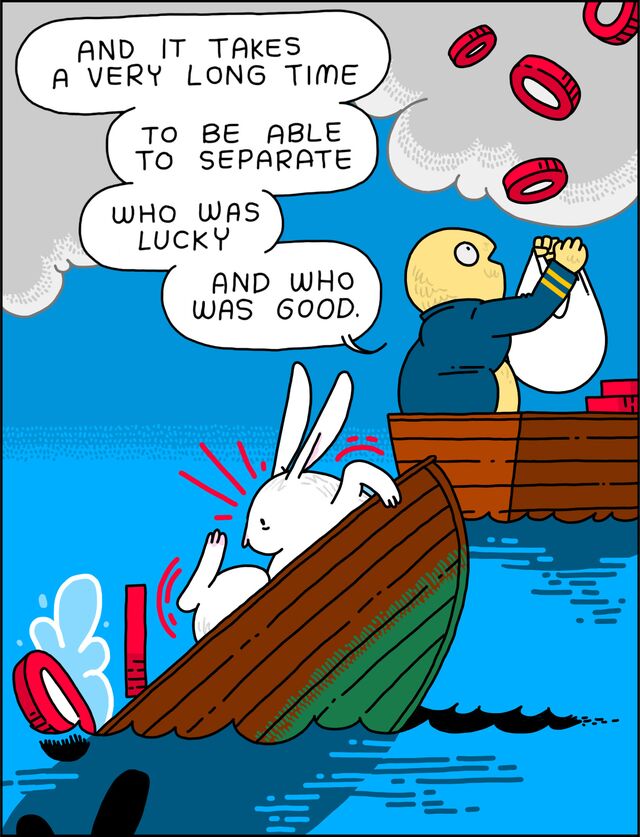
"And it takes a very long time to be able to separate who was lucky and who was good.
You just try to play the odds when they tilt in your favor. "Luck plays a very big role."
"And it takes a very long time to be able to separate who was lucky and who was good.

More On Bloomberg