
Why Iran Isn’t Breaking
Iranian-American scholar Vali Nasr says Tehran believes time is on its side, and that a prolonged conflict can alter Washington’s calculus and strengthen nationalism at home.
Has the United States “won” its war with Iran or does it still need to “finish the job”? US President Donald Trump made both comments in one speech this week, as ongoing US-Israeli strikes fuel a conflict rippling across the Middle East and the wider world.
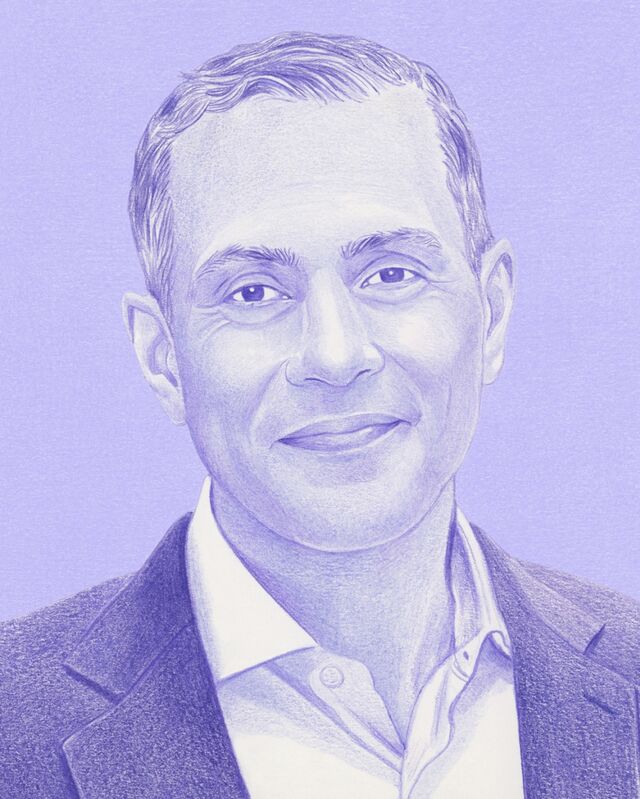
Despite the intensity of the campaign against it, Iran’s regime — now under a new supreme leader — has not given Trump the surrender he seeks. Why not? To answer that question, we’ve turned to Vali Nasr, a pre-eminent interpreter of Iran based at Johns Hopkins University’s School of Advanced International Studies.
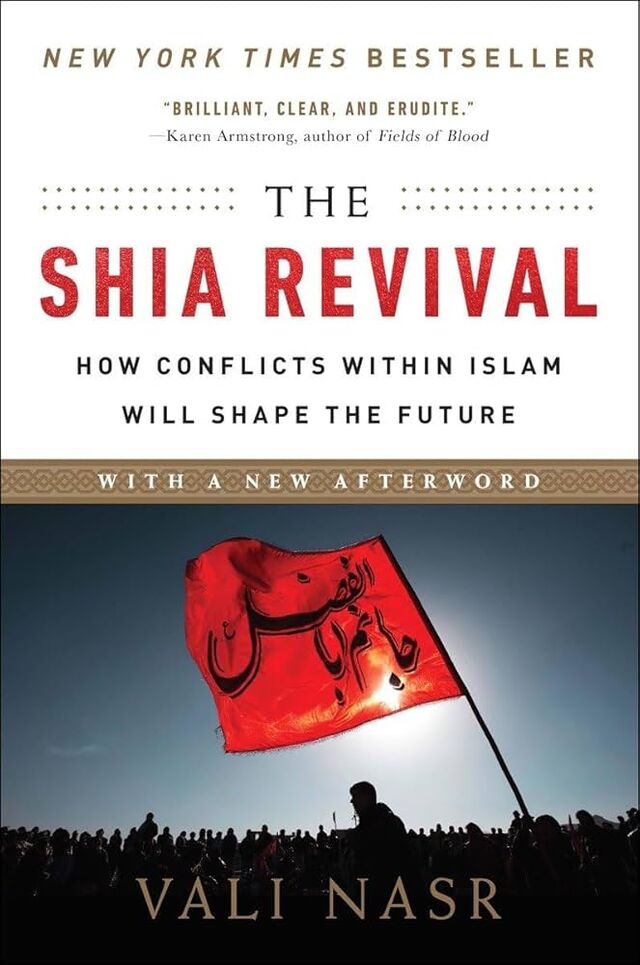
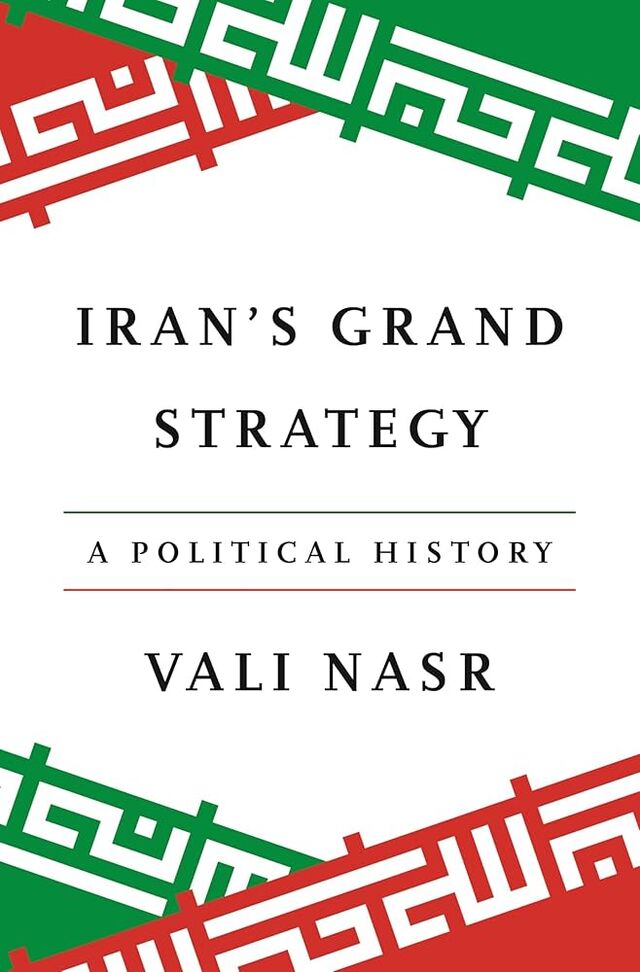
Born in Tehran, Nasr’s family was forced into exile during the 1979 revolution, an event that also shaped his professional interests. His books include The Dispensable Nation, on US foreign policy (Nasr is a former State Department advisor); The Shia Revival, on the Shia sect of Islam, and 2025’s Iran’s Grand Strategy: A Political History.
This conversation has been edited for length and clarity. You can listen to an extended version in the latest episode of The Mishal Husain Show podcast.
Can we begin with what President Trump has been saying — suggesting that the war will end soon. What do you think?
That is what he wants. He was hoping this would be a very quick war — that he would have a major win, kill the supreme leader, bomb some strategic sites and there would be a new leadership in Iran. He would be the president who brought Iran in from the cold.
Now, this war has gone out of his control. It’s longer, messier and is exacting a cost from the US — in terms of damage to its military in the region, but also to energy markets and the global economy.
I don’t think Iran is ready to quit. They’ve put their teeth into the United States and they’re not ready to let go. They’ve already suffered a lot. I think they’re prepared to suffer more. They want to come out of this war changing the US calculation. They don’t want to go back to the status quo.
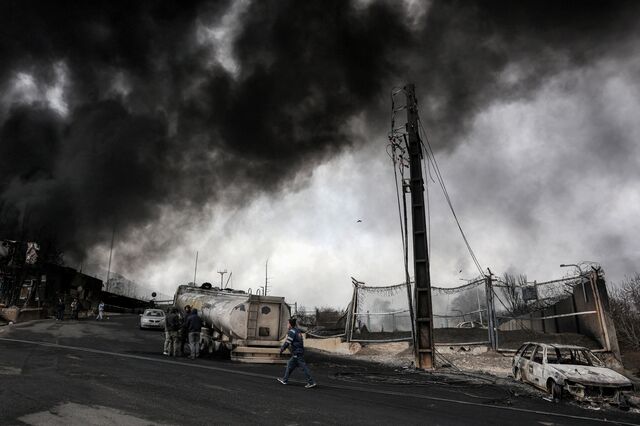
More than 1,000 people have been killed, fuel depots have been set on fire, oil supplies are affected. How large a price is Iran willing to pay?
Their calculation is that this is about who has a higher threshold of pain. They think [the] United States and Israel can dash a lot faster, but [that] they’re not really long-distance runners.
Every indication — the choice of a new leader, the fact that the population is getting angry at the US and Israel, and rallying around the defense of the country — tell[s] them they can last longer.
To what end?
Their thinking is that this has to be the last war. Either they go down or the United States and Israel will abandon the idea that they could go into Iran and have a war every six months or at will — this idea of “mowing the lawn.” 1 The United States has to pay a high enough cost to lose its appetite for war with Iran.
1 I had previously encountered this term — more commonly “mowing the grass” — in relation to Gaza. Before Oct. 7, 2023, it was used by the Israeli military and government to refer to a strategy of periodic strikes on the territory.
[Iran] wants sanctions lifted and [the] withdrawal of Israel from Lebanon. They are saying very openly that they want the United States to abandon its bases in the region. They’re following a very clever strategy of convincing Gulf states that the US bases are not really there to protect them; they’re there to wage war against Iran and invite war on the Gulf. They’re hoping that when this war ends, it will problematize the US presence in the region.
Is this what drives Mojtaba Khamenei? The son of the Ayatollah and the new supreme leader. 2
2 Mojtaba Khamenei, 56, was named as his father’s successor on March 8 but has not been seen in public since, a possible security measure after reports that he was wounded on the war’s first day. Bloomberg has written about the younger Khamenei’s global property empire — which includes mansions on London’s “Billionaire’s Row” — being used to channel money to Western markets despite US sanctions.
Yes. What Israel and the United States have done is to eliminate the first generation of the revolution, by and large, from the leadership.
A whole new generation of younger [Islamic] Revolutionary Guard [Corps] commanders have come to the fore who have a very different view of national security. These are not people who earned their stripes in the Iran-Iraq War — in a big land war. These are people who fought against the US and ISIS in Syria and Iraq.
Mojtaba was very intimately involved in the whole process of shaping the Revolutionary Guard over the past 25 years. He’s very tight with them.
Mojtaba has two qualities that really matter now. He’s been sitting next to his father for three decades [and] doesn’t need two [or] three years to learn the job. Secondly, the manner in which his father, wife, son [and] sister were killed [according to state media], gives him a particular charisma. He’s earned this office not because he’s a grand ayatollah or a great scholar, [but] because of his suffering. He replicates Shia saints or mythical Iranian heroes. 3
3 For Shia Muslims, a defining moment in Islamic history is the assassination of Imam Hussein, grandson of the Prophet Mohammed, at Karbala (present-day Iraq) in 680 A.D. Almost all of Hussein’s family and followers were killed alongside him. The anniversary of the massacre is commemorated by Shia communities every year, often with processions and acts of lamentation.
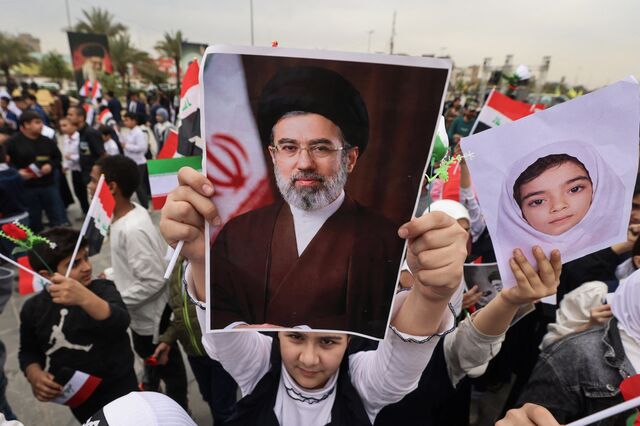
Doesn’t the choice also challenge how outsiders think of the theocracy? Father-to-son succession is not supposed to be a thing in the Islamic Republic. And as you say, he doesn’t have the religious credentials.
Well, neither had his father. This office has been metamorphosing over time. You’re correct that Khamenei himself was of two minds as to whether it was a wise idea to have a dynastic succession.
At the same time, the country is fighting for its survival. When President Trump talks about arming the Kurds, 4 or that Iran’s borders may not be the same at the end of this war, he’s threatening Iran itself. Ultimately, the Council of Experts thought [this leader] was the best for this moment.
4 Kurdish groups in northwest Iran and Iraq are seen by Israel as a possible asset in the fight against Tehran. There have been reports that the Trump administration held “active discussions” with Kurdish groups about military support, but the president has since told reporters that the US doesn’t “want to make the war any more complex than it already is. I have ruled that out. I don’t want the Kurds going in.”
Has the effect of this war been to transform Iran in the opposite way to what the US intended? You were writing before this of a regime under pressure because of sanctions [and] the cost of living. 5 Now you are painting a picture not only of the determination of the regime, but people turning against the US and Israel.
5 In his latest book, Nasr argues that “the impact of maximum pressure on Iranian society and the economy cannot be overstated,” citing a 14% contraction in per capita income between 2018 and 2022, and an 11% rise in poverty.
Very much so. There is still [a] huge amount of anger and dislike of the regime. Nobody wants to live under theocracy or economic isolation. But that simple black-and-white choice for Iranians — us against the regime — has been complicated. The country’s under attack. Iranians are fighting for their survival. The city of Tehran is under acid rain. People are dying. Lives are being destroyed.
There’s a new political line opening up: Are you for war or are you against war? As opposed to: Are you for the regime or against the regime? This is complicating the picture. Increasingly, anti-regime Iranians are saying: At this particular moment, it’s not the time to have our internal fight over politics, but to support the country.
If [Trump] was looking for a quick political uprising in Iran, it won’t happen until the dust of this war settles.
How long do you think that is going to take?
Longer than President Trump is hoping for. He thinks that he can just turn the switch off. It’s not that simple — unless he’s willing to offer Iranians something big. They are rebuffing overtures from the US. It’s not like last time. 6
6 Nasr is referring to the 12-day war with Israel and the US in June 2025, which ended in a fragile ceasefire and prompted Iran to disperse its missiles across the country. Now Iranian President Masoud Pezeshkian has said that some countries are initiating mediation efforts, while foreign minister Abbas Araghchi told PBS he didn’t think “talking with the Americans would be on our agenda anymore.”
The future of the Islamic Republic will depend [on] whether they come out of this war damaged but with their head held high — that they withstood these two massive militaries, came out intact and forced certain compromises on them. Or, whether they get battered and then have to accept the ceasefire.
Do you think that terrorism could be a dimension Iran chooses to employ?
I don’t want to say definitively not, but I think they already have their strategy. They don’t need to do something that may turn off public opinion.
I was in India recently and it’s very clear that outside the United States and the West, [the Iranian regime is] enjoying huge amounts of support for standing up to Donald Trump [and] for standing tall.
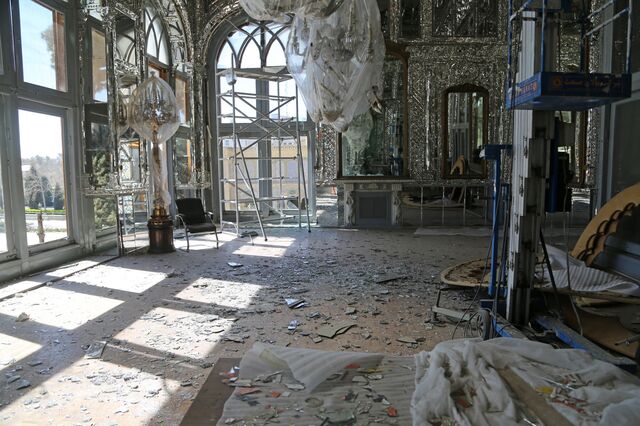
There have been some searing images in the past two weeks. The school girls who it appears were killed by Tomahawk missiles, which are used by the United States. The destruction of heritage sites [and the] bombing of a city like Isfahan.
Yes. Those things will turn the Iranian public hugely against the United States and Israel. It convinces the population that the US and Israel are not liberators and are out to destroy Iran. It’s not about the regime, it’s about Iran.
Your book goes back in time to before the revolution, but I was particularly struck by how you described the impact of the 1980s war with Iraq.
That was a harrowing war. Iran ultimately was able to liberate its territory by relying on its own resources — learning how to fight when everybody was supporting Saddam and nobody would sell it anything. 7
7 Saddam Hussein ordered an invasion of Iran in 1980, not long after Ruhollah Khomeini came to power in the 1979 revolution. Saddam was a Sunni Muslim leader in a majority-Shia country, who wanted to undermine the ayatollahs, exploit Iran’s post-revolution international isolation and seize territory. The conflict descended into bloody trench warfare, lasting eight years and costing over a million lives.
The Islamic Republic, for 47 years, has grown up trying to figure out how to do it on its own. We see this in the fact they’re able to produce missiles and drones — they’re not buying them. This is a do-it-yourself country.
But also a country that’s willing and able to sow destruction elsewhere — whether it’s the Iranian drones that have been used by Russia against Ukraine, or the regime’s backing of groups such as Hezbollah.
I know how it looks to adversaries [and] friends around the region, but in their own thinking — there is a strategy. This is not wanton destruction, or some kind of religious war on the world.
They cannot fight this in a conventional way. Nobody will help them. Essentially it’s a global guerilla strategy against the US. You build militias in Lebanon, Iraq and Syria in order to defend yourself farther away from your borders. You help Russia at its moment of need because you need a Russian veto at the UN. You try to needle the Arab countries in order to raise the cost of supporting the US.
It has often backfired. It won them the enmity of the Arab world, and the strategy of defending themselves in Lebanon and Syria collapsed. Now, this is the final battle — the final stand. Either resistance collapses, or resistance manages to change the rules of the game — that’s what they’re betting on.
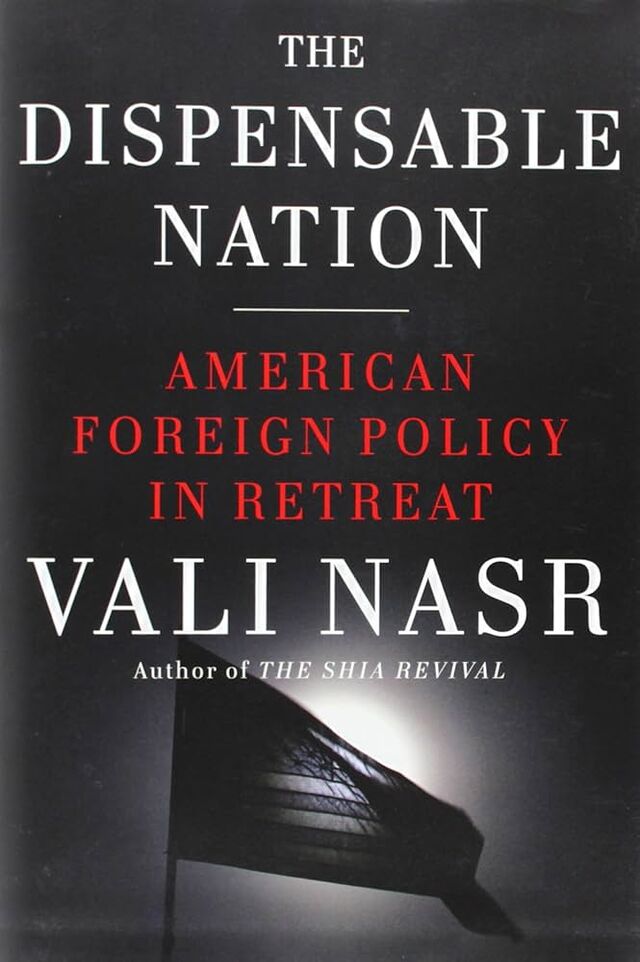
You were an adviser to the State Department under President Barack Obama, which did result in a policy of engagement towards Iran. There were nuclear negotiations. If Trump hadn’t ripped up the Iran deal, would it have resulted in a better present or is the regime too entrenched for that? 8
8 Nasr joined the Obama administration in 2009 as senior adviser to Richard Holbrooke, then special representative for Afghanistan and Pakistan, who often clashed with the White House. In The Dispensable Nation, Nasr criticized the administration for favoring an Iraq-style counterinsurgency strategy in Afghanistan and, more widely, military decision-making over diplomacy.
It could have ended up in a better place. Even revolutionary governments evolve.
It’s not only that Trump came out of the deal, but what followed — maximum-pressure sanctions — transformed Iran: hardened it, radicalized it, made it much more determined that the US cannot be trusted and is out to destroy Iran. The more hardline, hard-headed leadership rose to the helm.
[The office of] President [Hassan] Rouhani had an estimation, that if the deal had lasted for 10 years, the size of Iran’s middle class would’ve grown 35% — that was really the constituency for change in Iran. When Trump came out and imposed maximum pressure, 20% of Iran’s middle class within the first two years fell under the poverty belt. A poorer society under economic pressure becomes more authoritarian and more radical.
The Joint Comprehensive Plan of Action was a leap of faith, but it is a tragedy that it was not given the opportunity to prove itself.

Get the Bloomberg Weekend newsletter.
Big ideas and open questions in the fascinating places where finance, life and culture meet.
By continuing, I agree to the Privacy Policy and Terms of Service.
Do you think Iran will now be determined to create a nuclear bomb, if it possibly can?
Yes, I think the door is open.
Khamenei had issued a fatwa saying that nuclear weapons are forbidden under Islam. The West may dismiss this as irrelevant, but to a Shia ayatollah and his followers, a fatwa is a very strong statement.
The Shias don’t follow dead ayatollahs, [so] that fatwa is no longer valid. It would be up [to] Mojtaba and clerics in Qom to decide whether they will renew that fatwa or not.
National security imperatives now suggest that Iran will go towards nuclear weapons — that their strategy over 20 years of trying to have an open nuclear program that could be monitored by [the International Atomic Energy Agency] was a mistake. They should have followed in [the] India-Pakistan model. 9 They should have gone for a bomb, rather than a [civilian] program.
9 Both India and Pakistan developed nuclear weapons in secret. India tested its first nuclear device — codenamed Smiling Buddha — in 1974. In 1998, days apart, the two countries conducted nuclear tests and formally declared themselves nuclear-armed states. Israel, which possesses an estimated 90 nuclear warheads, has never formally acknowledged having nuclear weapons.
Where they go from here is either give up the program altogether — which I don’t think is likely — or the program would essentially become much more military and secret.
I learned so much from your book about Iran’s experience in World War II and during the Cold War — and what someone like Khomeini learned from those experiences.
The leadership of the Islamic Republic, but also the Iranian people, are keenly aware of Iran’s history. It’s continuously evoked.
It’s a history in which Iran has barely survived to the 20th century. It had aggressive neighbors — Russia and the Ottoman Empire — who’ve taken territory from it. It’s been abused by British and French colonialism. In both world wars, the country went through famine because of Western policies. The older generation of the Islamic Republic was reared in that environment. In 1946, the Soviet Union occupied northern Iran and wanted to break it off. Barely seven years later, Britain and the US intervened to remove a prime minister who wanted to nationalize Iran’s oil company.
Khomeini [and] Khamenei believed the Islamic Republic was created to change that history. No more foreign intervention. No more bullying by superpowers.
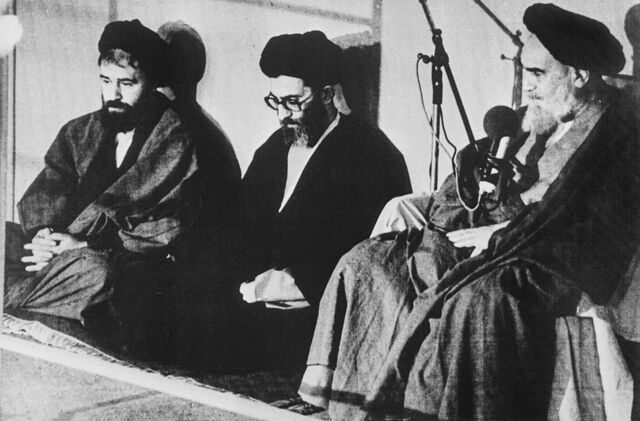
What do you think of the Shah’s son, Reza Pahlavi, and the support he got from some people, at least before this war? The fact that his name was being chanted on the streets. 10
10 In the aftermath of World War I, a military officer named Reza Khan took power in Tehran through a coup, later becoming king and ruling as Reza Shah Pahlavi. In 1941, as Britain and the Soviet Union invaded Iran, he was forced to abdicate in favor of his son, Mohammad Reza Pahlavi, who ruled until he was exiled in 1979.
He did have a huge moment before this war, and we’ll see whether it continues.
There have been two important institutions of power in Iran since at least the 1500s — the monarchy and the clergy. When the monarchy was in power, and it abused power, the clergy stood up for the people. When the clergy are in power, and they abuse power, it’s the monarchy [that] people see as the alternate institution.
Iranian monarchy has always stood for the grandeur and power of Iran. There is enormous nostalgia among Iranians for the Shah and his father — that despite authoritarianism, Iranians had better lives, an open country. The Shah’s son symbolizes the desire for a return to the good old days, a future cast in the image of a golden past.
The problem is that he never invested in building a ground game in Iran — an actual organization and movement. Popularity is not the same thing as having a political program. In addition, he’s allied very closely with both Israel and the United States, and this runs against the grain of Iranian nationalism. Unless he actually stands and represents Iran’s desire for safety and security at this point, it will be very difficult for him to play a significant role.
This history changed your life. You were 18 when you had to leave Iran. Can you describe that period?
My family left Iran very abruptly in 1979, for fear of our safety. Our property was taken by the revolutionary government, and I ended up going to university in the West. The disruption was traumatic. It is extremely difficult to lose your country involuntarily. The bonds with where you were born, where your identity comes from, the history that you know, people that you know, are there. The pain that Iran faces is a pain that you continue to acutely face — even though it’s been 47 years.
I’m curious about your father. I know him by reputation; he’s a renowned scholar of Islam. Why was it not possible for your family to stay in Iran? I would’ve thought his knowledge would be appreciated by the clerics. 11
11 Professor Seyyed Hossein Nasr is the author of more than 50 books, including Islam in the Modern World. In 1950 he became the first Iranian undergraduate admitted to the Massachusetts Institute of Technology, where he majored in physics. Later, feeling that science could not fully explain the nature of reality, he developed an interest in philosophy, history and religious studies. Now 92, he only recently stepped down from teaching at George Washington University.
First, he worked in the Shah’s government. He was chancellor of a university and [later] head of the Queen’s Special Bureau. Government affiliation made him a target.
Second, not all Islams are the same. My father stood for a mystical, different, interpretation of Islam that was not the creed of the revolutionaries.
Over the years, his books have been translated into Persian and have a huge following in Iran, but mostly among those who have a deep cultural and spiritual relationship with Islam — or want to have it — but don’t want to subscribe to the political Islam of the Islamic Republic. [The] Islamic Republic, like all revolutionary governments, is very intolerant of those who it sees as a political and ideological deviation or rivalry.
How is he in the face of all this? What are your conversations like at the moment?
For his generation this is even more painful. They lived a far longer time in Iran and they saw much more of its history. Now they are living to see the destruction of the country. And some of them also remember World War II — my father was a child then — and so they can very easily empathize.
For the majority of Iranians I think this is an incredibly painful moment, regardless of what they think about the Islamic Republic. The relationship of Iranians to Iran is cultural, patriotic [and] nationalistic. It goes above and beyond any one government. For a lot of them, they feel it is not the Islamic Republic that’s suffering; it’s Iran that is suffering. Emotionally, it’s very difficult.
I first came to the US during the hostage crisis, as a 17, 18-year-old. It was extremely difficult being Iranian. We all lived in the post-9/11 period, [when it] was incredibly difficult being a Muslim. Now America’s at war with Iran. For a lot of Iranian-Americans, this is as difficult a moment as being a Muslim-American was after 9/11.
How do you handle all of that? Your job is to make sense of this complex and difficult period, to interpret it. As you look at the videos and see messages on Telegram and elsewhere, do you find yourself shaken?
Yes, often. Deep down this animosity between us [the US] and Iran has not been good for either country. But we all have to cope. There are also deep fractures within the Iranian-American community that are, in a way, even more painful to watch. The community abroad is eating itself as a consequence of these events.
Because some people are cheering the Americans and the Israelis on?
Yes, exactly. This is creating a great deal of friction. It’s become common to talk about how friendships are broken, how members of the family don’t talk to each other.
There are those abroad who say they’re willing for Iran to be divided. To lose territory, or at any cost, for the regime to go. [The] most difficult conversations we’re having now are with our own kin.
Do you think that there will be a change to borders at the end of it? 12 There are Iranian-Kurdish groups on the Iraqi border and Baloch people on both sides of the border with Pakistan.
12 Iran’s geography and abundant natural resources help explain why its territory has long attracted outside interest. It has access to both the Caspian Sea and the Arabian Sea, and its population includes a diverse mix of ethnic groups, including Azeris, Kurds, Baloch and Arabs.
If the state collapses, Iranian security forces cannot control a country the size of Western Europe, and you have neighbors, along with [the] United States and Israel, supporting separatist groups. [So] it’s possible.
[That] prospect is actually unifying the Iranian people in defense of the country. It’s not about the collapse of the Islamic Republic, which maybe many of them would welcome. They are really worried at the price that the country itself might pay.
Iran Remains Defiant in Face of US-Israeli Airstrikes
Strikes since Feb. 28, most recent are circled

To close, I want to go to the epigraph at the start of your book, where you wish that Iran finds its rightful place in the world. What is your vision of that place?
I would like to see a country that is prosperous, open, at peace with its neighbors and with itself.
Iran for 47 years now has been at war — with the United States, with Iraq, economic war and now hot war. Its population is exhausted. Iran is capable of much more than this. It should be a great power on the world stage.
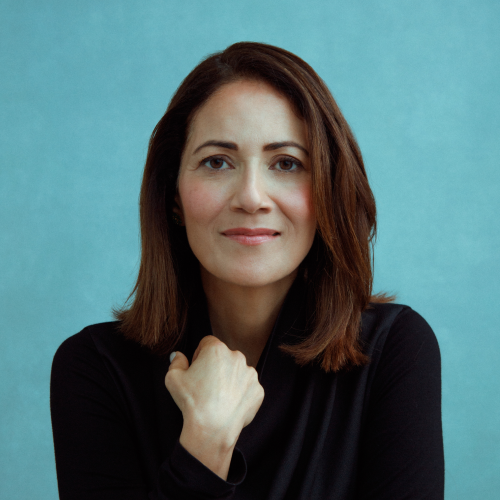
Mishal Husain is Editor at Large for Bloomberg Weekend.