
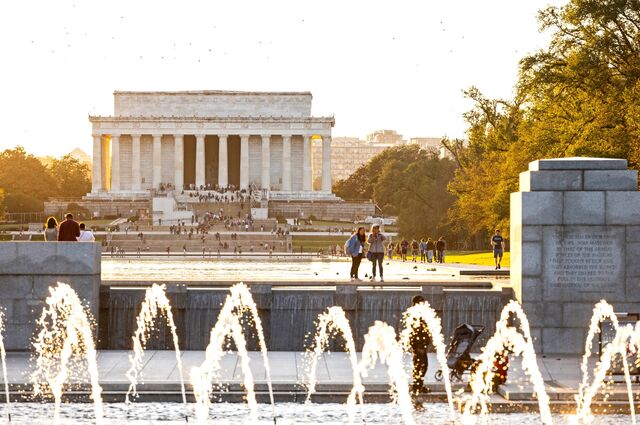
Two-Night Minimum Washington, DC
You know it for the political drama. But DC is a vibrant cultural and culinary capital in its own right.
Welcome back to Two-Night Minimum, a series of city guides for people who want to get to the heart of a place in a short time — be it on a business trip or a weekend vacation. For this Washington edition, we independently scoped out more than 300 venues and distilled the list down to the very best of the best: Every recommendation below has earned our most discerning stamp of approval.
I’d been exploring my way through Washington, DC, for two whole weeks before I finally made it to the National Portrait Gallery. In one of its most iconic halls, each of the country’s former presidents is immortalized in chronological succession — 45 men, some more memorable than others. And at the end is Donald Trump’s painting, where I noticed something strange: Stand just to the right of the frame, and the words “The Struggle for Justice” — affixed to an exhibit in the next room over — will share the view.
It feels impossible to discuss Washington without bringing up politics. The capital’s raison d’être is to function as the seat of federal government, of course. But the city is so much more than the National Mall and its monuments to American glory. Its full-time residents are steadfastly liberal, even if the elected population successively paints the White House in shades of blue and red every four years.
Your Next Destination
In Washington, political sway holds the same social currency as money in New York and fame in Los Angeles. But this is also a destination for bon vivants who love art, theater, restaurants and easy access to nature — there’s a plethora of urban green spaces and the thrill of sailing on the Chesapeake Bay nearby. While other American cities swell with corporate towers, then sprawl in endless expanse, DC has a dense framework of low-lying buildings in its 100-square-mile diamond-shaped core. As it turns out, the city’s French urban planner, Pierre Charles L’Enfant, wanted it to feel as walkable and manicured as his native Paris.
And although the two Washingtons — the seat of government and the cultured city around it — often feel like oil and water, it’s hard to explore one without being confronted by the other. In a city whose most iconic landmarks so sharply emphasize national pride, it’s especially glaring that a simple visit to a restaurant can turn into a lesson on immigration as transplants cook the recipes from the countries they left behind. And nowhere else does an innocent walk through the halls of a museum make you frequently wonder if curatorial design might just be doubling as an act of quiet dissent. Whether it’s by intention or by complete coincidence, I’ll leave it up to you.
Top Rooms in Town
The details you really need to know to stay in comfort
All-Day Dining
Our favorite restaurants for every meal
The seeds of the American Revolution were sown in a tavern, so maybe it’s no surprise that restaurants in Washington are as vital to the nation’s political machinations as any government building. They’re crucial points of encounter, where deals are struck and uprisings are born. For many of the capital’s cultured constituents, dining out is an act of social justice — Uyghur, Palestinian and Ethiopian venues bustle as though eating laghman or injera is a grassroots form of humanitarian support. And over the past 20 years, DC’s culinary quality has risen to that almighty occasion. It’s no question: Washington has become one of the best food cities in the nation.
Still, it’s a punishing place to be a restaurateur. Rents are impossibly high. And a voter-approved law called Initiative 82, enacted in 2023, mandates higher starting wages for tipped hospitality pros. That combo, plus a slowdown in business caused by federal workforce reductions, has spiked meal prices and made it difficult for even excellent spots to stay afloat. This guide contains more venues than usual, in case some of my favorites meet a similar (untimely) fate.
When it comes to tipping, be warned: Some places bake service into their prices, and others add arbitrary percentages to the bill. It’s best to ask for clarity when you pay — no one will be offended, as everyone in town is likely to be just as befuddled.
● Power Italian
There’s one thing that unites Democrats and Republicans in DC: good ol’ Italian food. Joe Biden’s favorite, the Red Hen, is staunchly blue despite its name. Some call Cafe Milano the White House’s second cafeteria — it’s Treasury Secretary Scott Bessent’s go-to. With so many spots capitol-izing on cuisine from the boot land, one could spend an entire day gorging on pizza and pasta. OK, twist my arm.
In the morning, head to the Navy Yard neighborhood for an espresso and snap-able cheese focaccia at Ama’s counter, where chef-owner Johanna Hellrigl pays tribute to her northern Italian roots. For lunch there’s no better deal in town than Fiola Mare’s $35 three-course meal, served riverside. As its name suggests, it specializes in Italian seafood, such as hamachi crudo with Sicilian olive oil and tangerine granita.
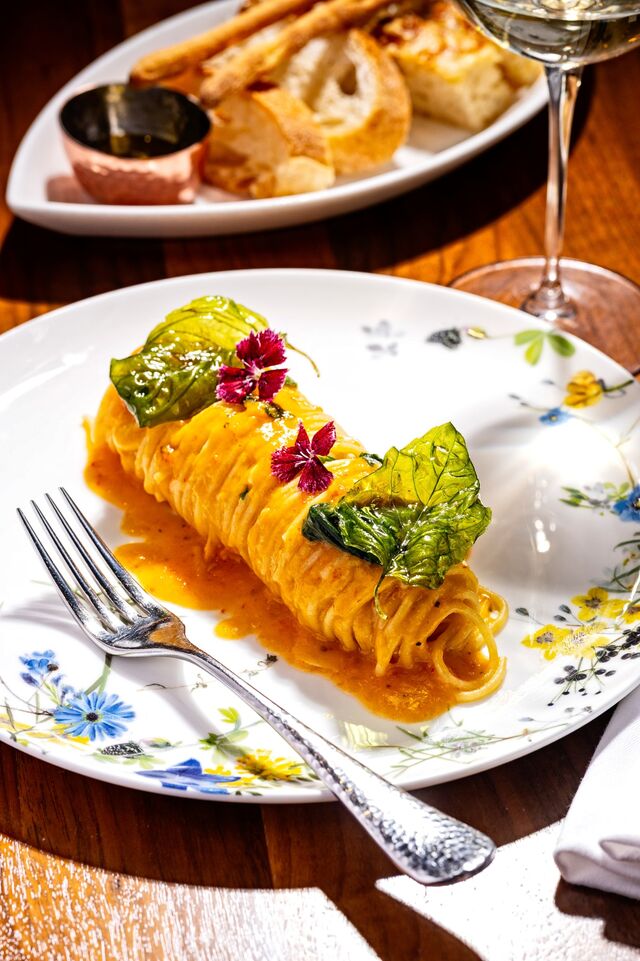
For a dinner that’s not too buttoned-up, start with L’Ardente’s fried calorie bullets of arancini. Then get the famous 40-layer lasagna — a toppled Jenga tower of short rib ragu and truffle under a blizzard of cheese. Or try Kamala Harris’ fave, Centrolina. Chef-owner Amy Brandwein is one of those culinary savants with a preternatural ability to make basic flavors sing in ways you couldn’t have imagined. Her humble tomato-butter-cheese spaghetti is one of the most indelibly delicious bites I’ve ever tasted.
● The Occidental
It’s Stephen Starr’s world, and we’re all just dining in it. The Philadelphia-based restaurateur has expanded his empire all along the East Coast, but nowhere else has he become as dominant as in the capital. “Le Dip” (that’s Le Diplomate, if you’re a Washington noob) first solidified his local culinary reign, with its frites-filled brasserie menu and vibes to match. But Starr’s newest spot is his best yet.
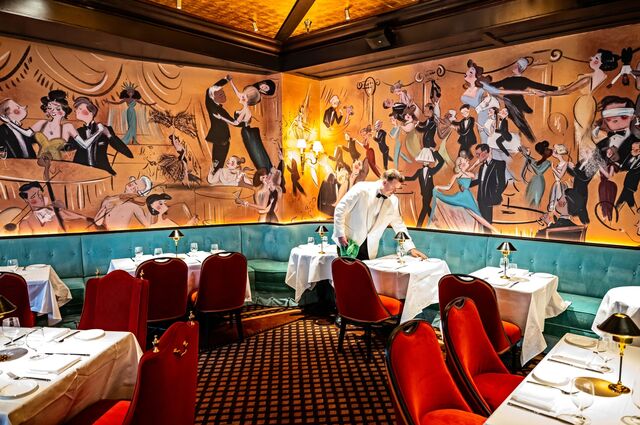
The Occidental, a stone’s throw from the White House, is the glam reimagining of a longtime watering hole for capital cronies, with dazzling, illustrated murals of cavorting socialites framed by gusseted curtains. Slide into a leather banquette on the ground floor for some serious power lunching — Mayor Muriel Bowser’s chief of staff was at the table next to mine when I dined.
And be sure to get the crab cakes. Starr and his team apparently taste-tested dozens upon dozens of recipes all down the mid-Atlantic to find their platonic ideal: more crab than crumb, with generous mounds of flaky meat and just a whisper of crispy carb. Perfection.
● Hotel bars
In Washington, hotel bars brim with more locals than tourists — they’re choice venues for post-Capitol debriefs. Off the Record, in the basement of the Hay-Adams, is famously self-described as the place to be seen and not heard. Up the street from the White House, it’s popular with over-the-Hill flirts (lest they be fili-busted by their wives at home), though it’s worth checking out for the coasters alone. No, really: They’re a collect-them-all assortment of caricatures depicting politicos, including a Barbie-fied Kristi Noem being served a giant ICE cube.
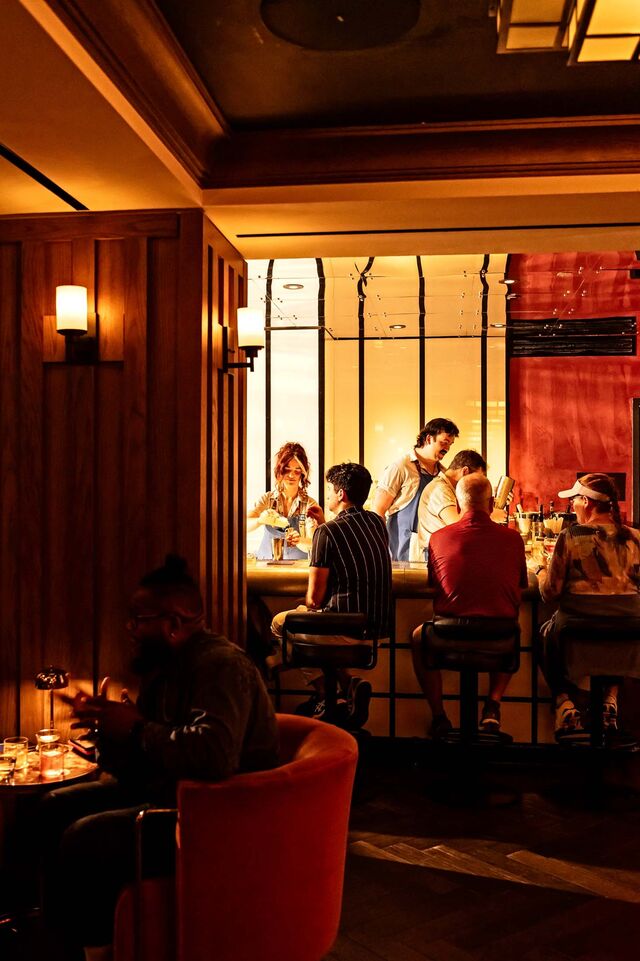
Over at the Silver Lyan, in the basement vault of the Riggs, a boutique hotel in a former bank, classic drinks are bolstered with unusual ingredients such as burdock soda or mesquite carrot vermouth. They’re dreamed up by British-Sri Lankan cocktail impresario Ryan Chetiyawardana and served among red velvet drapes and silver athletic trophies.
And up in the more gritty Adams Morgan, which feels like a graffitied neighborhood from Portlandia, the bar of choice is No Goodbyes. It fills the lobby of the Line, where professors, hipsters and trustafarian slackers all mingle in the former apse of a neoclassical church.
● La’ Shukran
The Union Market neighborhood feels like a neonatal version of New York’s Meatpacking District, with a sudden flourish of rental condos surrounding old, dilapidated warehouses that are being refashioned into trendy eateries. A lot of spun-off restaurants are located here too, including New York’s Pastis and Minetta Tavern, but you should instead make a beeline to La’ Shukran.
In fact, if you have time for only one meal in DC, it should be at this mod Middle Eastern lounge, where pitch-perfect meze plates — from crispy falafel to harissa crab — are passed among plush surrounds. The cocktails are just as pivotal. Most are made with arak, a licorice-flavored spirit from the eastern Mediterranean. The restaurant’s name, ironically, means “no, thanks” in Arabic, but we’d give an enthusiastic “yes, please!” to any of chef Michael Rafidi’s Levantine restaurants, which also include the more buttoned-up Albi and fast-casual Yellow.
● Moon Rabbit
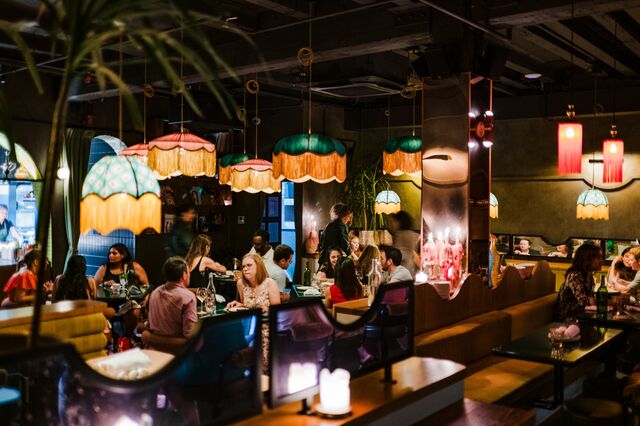
There should be a word in the English language for the pangs of nostalgia one can feel for someone else’s past. Kevin Tien elicits exactly that sentiment at Moon Rabbit, where Vietnamese dishes are brought to the table by way of his Louisiana upbringing. It may sound strange on paper, but in practice, Tien takes his diners on a culinary journey that’s so unbelievably delicious it’s somehow also emotional. Southern-meets-Saigon twists include the Báhn Rán — pearls of mochi beignet paired with freshwater eel and pickled veg — and the must-get Món Khai Vi, a starter of cassava cornbread with condensed milk butter.
● The Dabney
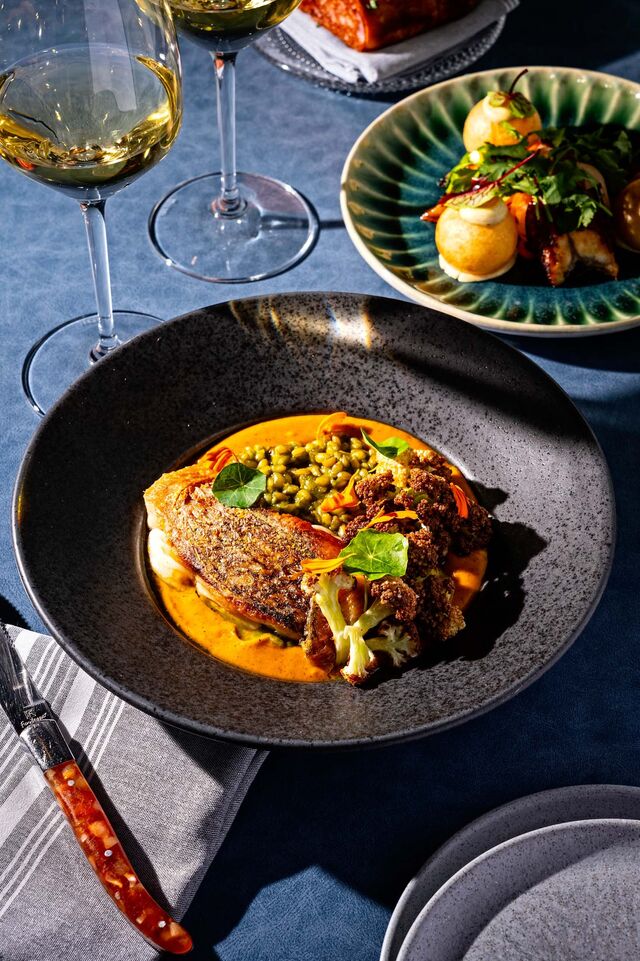
In light of the painful price point that’s plagued Washington’s fine dining scene, this tribute to the mid-Atlantic’s bounty has ditched the prix fixe formalities that earned it a Michelin star a decade ago. Now it’s as easy to come for a quick nibble at the bar (the “sweet potato roll” is essentially a catfish Big Mac, and it’s incredible) as it is to get a multicourse dinner with friends. If you opt for the latter, make sure to sit by the open hearth at the back. Chefs are constantly using it to produce most of the restaurant’s headliner dishes, like fire-kissed vegetables that get served up with faro and ricotta, plus a confetti of herbs from the building’s rooftop garden.
● The Land of José
The humanitarian work of World Central Kitchen’s José Andrés, the godfather of social justice dining, has long superseded his culinary prowess. Although he’s rarely in the kitchen these days, Andrés still has an outsize impact on DC’s food scene, through both the legion of restaurants that fly under his banner and an entire generation of now-prominent chefs who rose through its ranks.
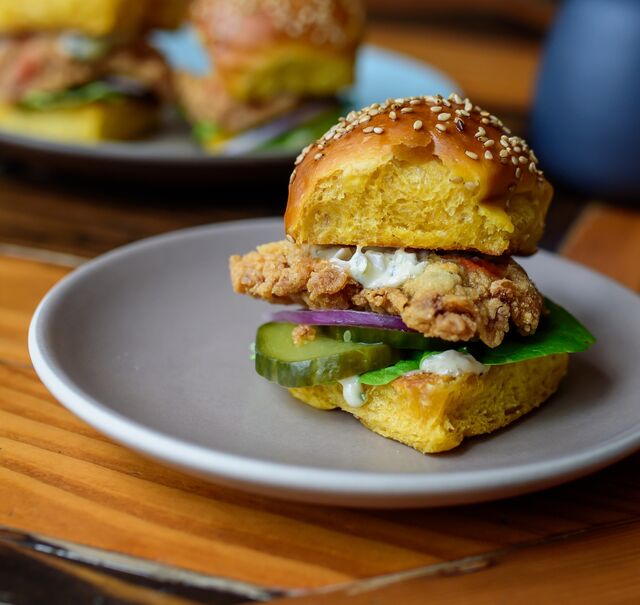
Hot spots helmed by Andrés alums include Causa and Amazonia — a pair of Peruvian restaurants that share a building in Blagden Alley, one fine dining and one casual — and Casa Teresa, Washington’s premier tapas temple. For an Andrés OG, Zaytinya reigns supreme for its tender, char-kissed octopus, and spanakopita in a flaky phyllo cigar, which have effortlessly sailed the tides of the city’s fickle cooking trends.
● Gemini or Astoria
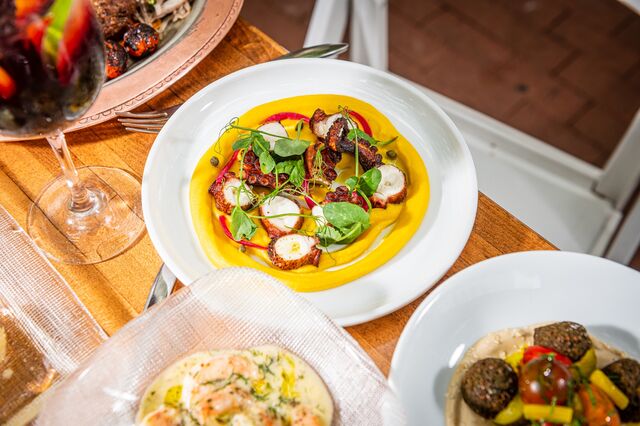
Gemini is what happens when an internationally acclaimed fine dining chef gets tired of the rat race and decides to use his craft to benefit his community. Here, Johnny Monis’ menu is an ode to the world’s most beloved comfort foods: wine, pizza and ice cream, available to go or to stay. Expect a Gen Zer with the surliness of a Vulcan to take your order at the counter — and if you decide to dine in, be sure to get some handmade pasta and the shaved celery salad. Then squeeze your way up to a standing-room-only table before 8:30 p.m., the restaurant’s very modest closing time.
No need to call it a night, though: One block over, at the bustling Astoria, tropical cocktails are executed with laser precision and served with lip-smacking Sichuan small plates such as spicy chili wontons. Both spots are great for solo diners — cramped quarters and flowing libations will have you chatting to friendly strangers in no time.
● Maketto, then Providencia
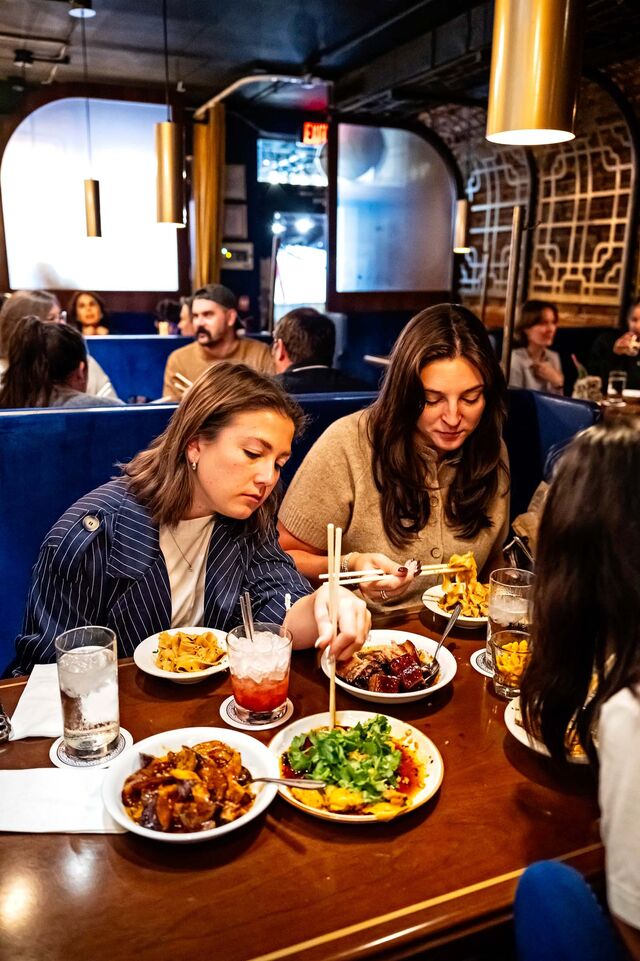
Maketto is the rare gem that’s managed to weather the boom-and-bust storm on H Street — which was a hive of culinary activity before the pandemic made it feel rather dour. The strategy? Keeping flavors bold and prices mild. Its Cambodian-meets-Taiwanese dishes have a loyal following, with neighborhood folks driving a big takeaway business. Just grab a seat in the spunky, white-brick space — walk-ins are welcome — and let the food do the talking.
The fried chicken sandwich on buttery brioche is nonnegotiable; each bite is the perfect equation of crunch and heat. Then pair it with some dim sum starters or a noodle soup. Power dining this is not, but you won’t regret it.
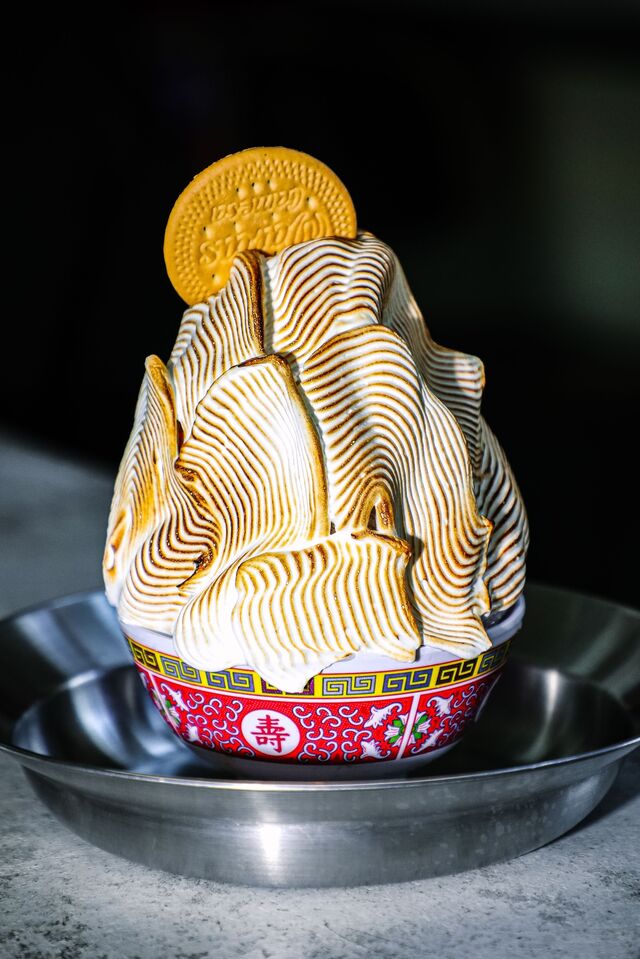
Skip dessert, though. For that there’s Providencia, tucked down a back alley around the corner. Owned and operated by the Maketto team, it’s a teensy bar with a pronounced Salvadorian twist (pupusa snacks!). Dessert at a bar? Believe it. Here the knockout is a geometric baked Alaska that’s as much of a work of art as it is a sweet finish to your evening.
On the Town
Activities to squeeze into any schedule
● A worthy museum that isn’t a Smithsonian
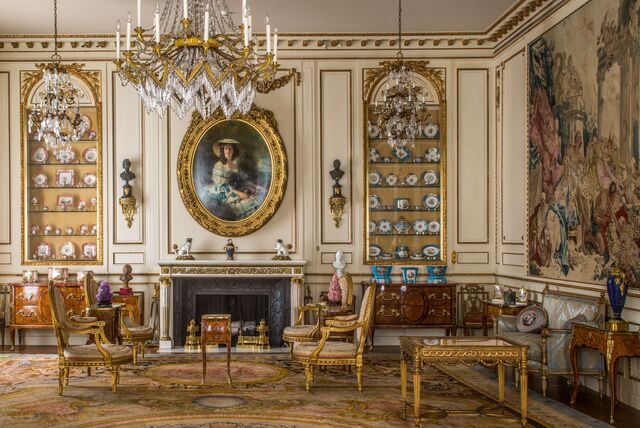
Bold statement: Even in Smithsonian City, the Hillwood Estate takes the prize for DC’s most delightful museum. Set in the home of Marjorie Merriweather Post, the richest woman in America for most of the 20th century, it’s about a 15-minute drive north of the White House, in Cleveland Park. It’s also a testament to all that money can literally buy, which feels more salient than superfluous in an era of outright billionaire worship.
The cereal heiress’s dazzling, Gatsbyesque property is filled with myriad objets d’art and priceless czarist heirlooms acquired in Moscow while Post’s third husband served as the American ambassador to the Soviet Union. There are royal portraits, Fabergé eggs aplenty and a chalice commissioned by Catherine the Great. And if the connections between Post’s ostentation and the current day aren’t immediately clear, consider that she envisioned her winter estate in Florida as a veritable “Winter White House.” You may know it as Mar-a-Lago.
● A worthy green space that isn’t the National Mall
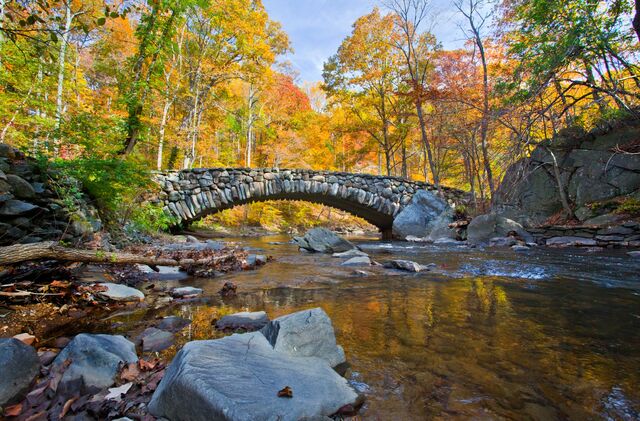
When Washington’s rigidly gridded streets and parks start to feel too manicured, head to Rock Creek Park, a ribbon of wilderness in the heart of the city that feels like a shrunken-down national park. The easy Boulder Bridge Loop — a perfect 5 kilometers (3.1 miles) — combines parts of the Western Ridge and Valley trails and winds through dozens of forested acres.
The park also includes the Smithsonian’s National Zoo, which features two giant pandas on loan from China for 10 years — they were acquired in late 2024, mere days before the last election was called, as a symbolic act of amnesty between the two powerhouse nations. How that deal survived the subsequent trade war is a political mystery for which we can all be grateful.
● The games people play …
Maybe it’s the strategic aspect of political machinations. Maybe it’s the desire for in-person connection amid the pervasive anonymity of social media. Either way, board games have taken Washington by storm.
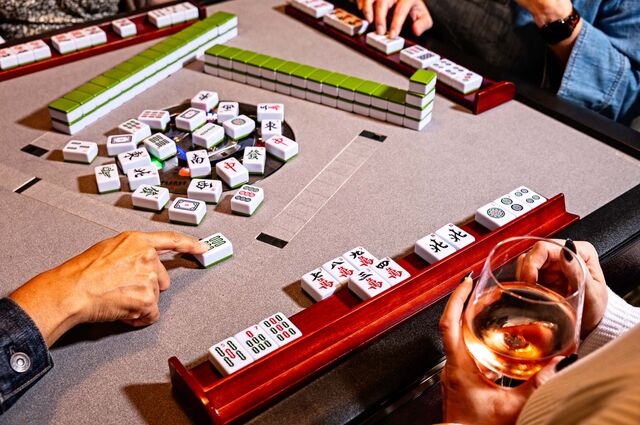
Lucky Danger in Penn Quarter is unequivocally the hardest table in town to book, not for its Chinese eats but for its once-weekly mahjong night, during which the owner’s elderly father teaches newcomers how to play the popular tile game over cocktails in the restaurant’s back room. For reliable free play, including guided tutorials, check out the Capital Jewish Museum, which hosts drop-in mahjong sessions every Sunday afternoon.
If “pung,” “kong” and “chow” mean nothing to you, try one of the 100-plus games at Board Room in Dupont Circle, be it Catan or Imhotep, or something lower-stakes, like Sushi Go! or Farkle. Stop by on Monday evenings for a giant chess rally.
● Hack the Mall
In Washington all roads quite literally lead to the National Mall — and if it’s your first time in the district, it’s almost guaranteed you’ll wind up there to explore the many free museums and monuments. Consider adding these oft-overlooked points of interest to your visit, to enhance your experience.
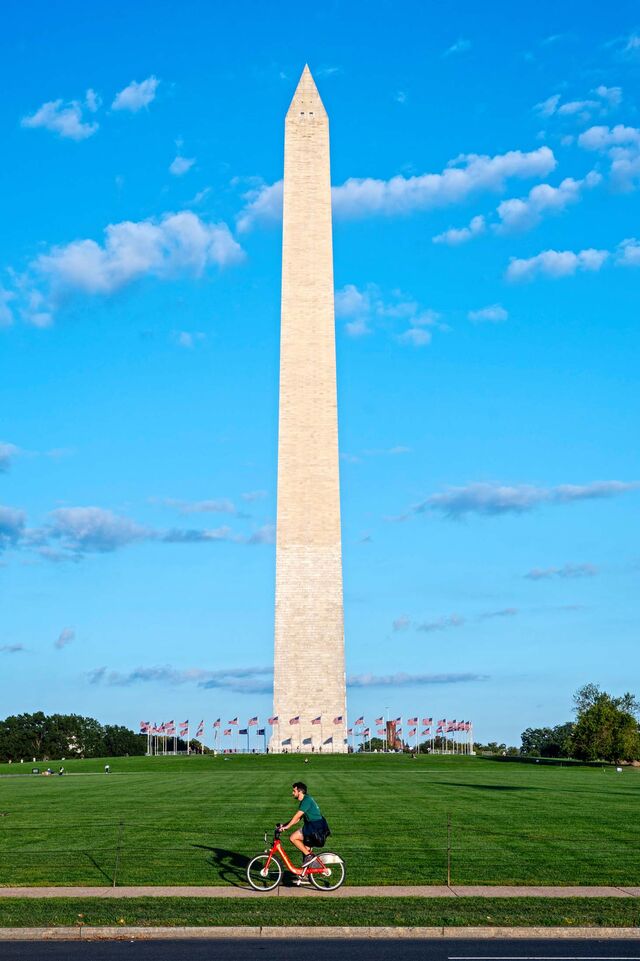
The preamble to your Mall day, regardless of your other plans, should be assembling a picnic lunch of sandwiches and snacks from the vendors at Eastern Market. Carve out 45 minutes to zip through the US Botanic Garden, a gigantic greenhouse detailed in flamboyant wrought-iron trim on the grounds of the Capitol. Inside are a dozen rooms simulating American climates, from the parched-dry Mojave to steamy Hawaii and everything in between.
For a coffee break between exhibitions, sneak over to the Folger Shakespeare Library. It contains the world’s largest collection of the Bard’s materials, plus a cafe of theatrical proportions. If you’re lucky enough to snag reservations, it does a high tea fit for Queen Elizabeth I.
Neighborhoods to Know
Half-day guides to two areas you should hit: One central and one worth the (short) detour
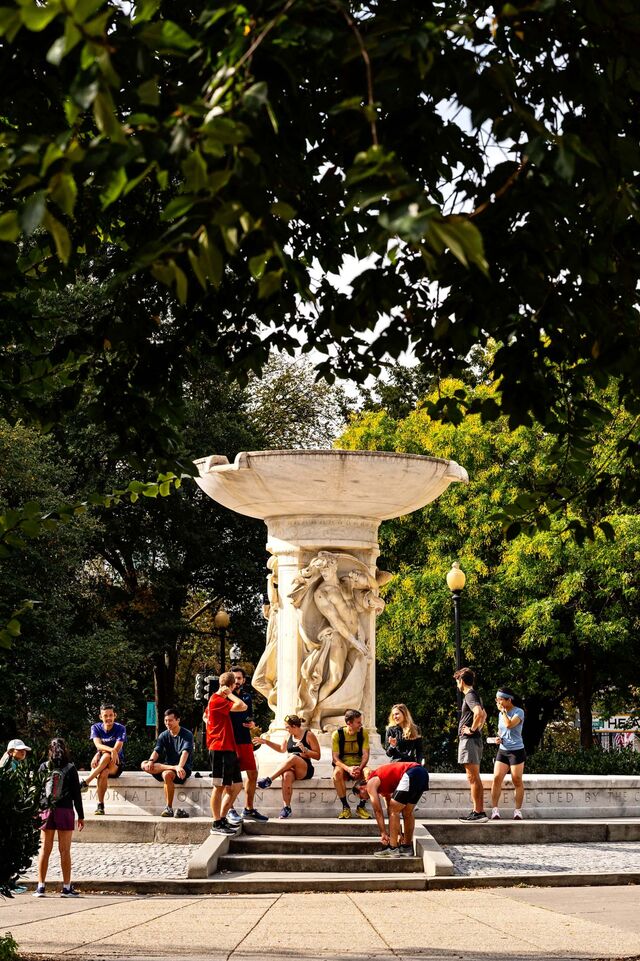
● Dupont Circle
Anchored by a giant traffic rotary and home to some of Washington’s grandest residences, Dupont Circle wears two hats. It’s one of the district’s most affluent areas and also its first “gayborhood,” with parallels to New York’s Stonewall Inn as a locus of activist movement from the 1970s onward.
Today its main crosstown conduit is Embassy Row, where international ambassadors work, play and host free cultural events. Even just a casual walk down Massachusetts Ave. NW (the street’s official name) quickly becomes a tour of opulent architecture as you stroll by the embassies of Indonesia, India and Greece. And if a historical mansion hasn’t been turned into a diplomatic residence, then it’s likely a museum, such as the Phillips Collection. Its assortment of heavyweights, including Matisse, Monet and Picasso, comes without the Smithsonian crowds. (Be sure to download the Bloomberg Connects audio guide to enhance your experience!)
Part of the area’s contemporary lore, Kramers opened in the ’70s as a bookshop, cafe and all-night hangout. It gained national attention during President Bill Clinton’s impeachment scandal, when the shop fought a subpoena that sought to pull the receipts of Monica Lewinsky’s supposedly lurid book purchases. Today it’s still a shining star among a constellation of local booksellers that also includes the preowned — and double entendre — specialist, Second Story Books.
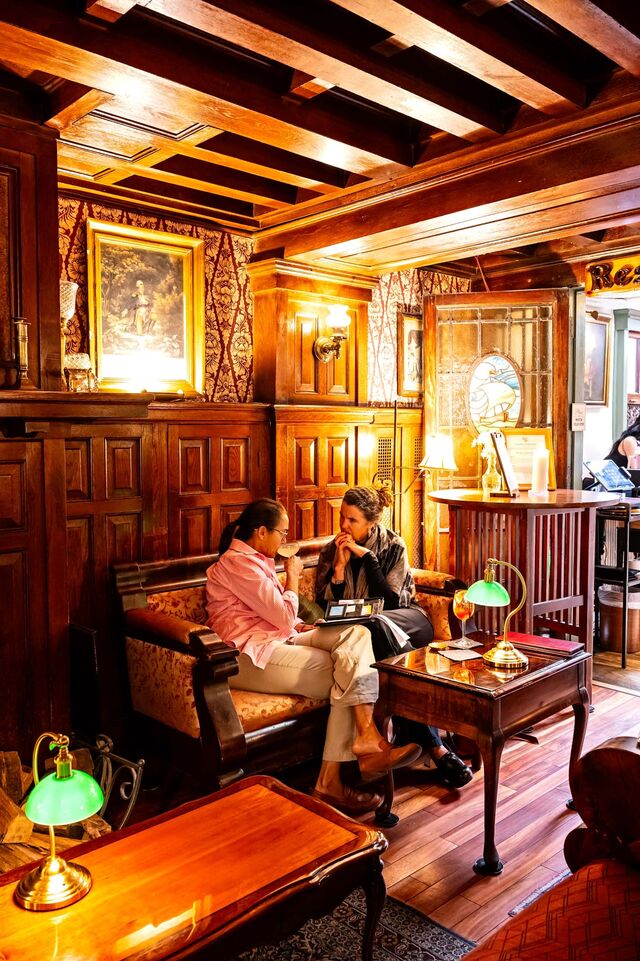
Travel further back in time for a coffee and doughnut break at the iconic Tabard Inn, famous for being the longest-running establishment of its kind in Washington, and for being female-owned since its inception in 1922. But you’re not really here for the history lesson; you’re here to peep the absurd prepster fashion — double-popped collars, Bermuda socks — donned by the Waspy mid-Atlantic clientele.
● Georgetown
Established as its own port settlement and officially rolled into the district later, Georgetown feels palpably different from the rest of DC, with its colonial-era cobbled lanes and Federalist homes. Without a metro station, the upscale neighborhood is decidedly pedestrian-oriented; M Street NW is the main commercial artery, with a mall’s worth of athleisure brands, while Wisconsin Avenue NW is its uphill diagonal, lined with restaurants and historic mansions.
Start with an espresso at Grace Street Coffee, hidden under the freeway overpass along the Potomac River. In Georgetown it can feel like every other commercial spot is a coffee shop, so high is the local proclivity for caffeine. This one is the standout for its assortment of single-origin beans that are roasted on-site.
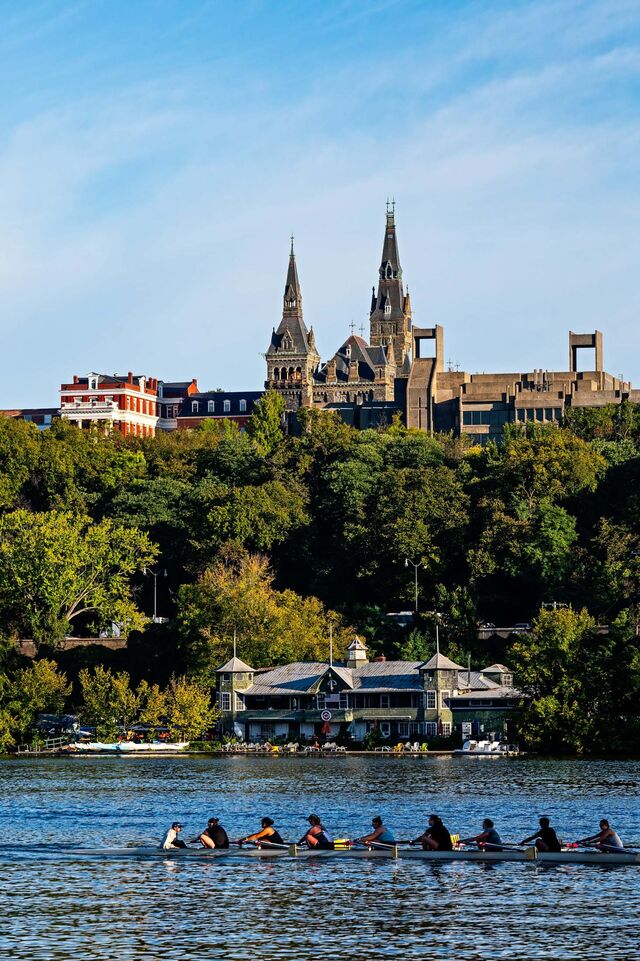
Follow the so-called Exorcist steps — spooky stairs prominently featured in the iconic horror film — up to Georgetown University, America’s first federally chartered school of higher learning. The campus has a stunning array of buildings, both old and new; the most captivating is Healy Hall, with its soaring, Harry Potter-esque clock tower.
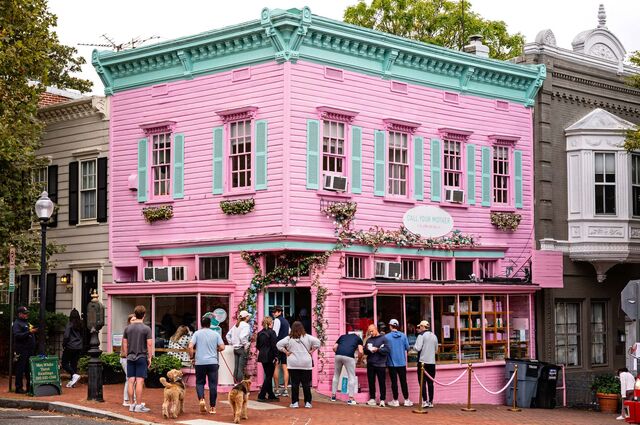
After a proper snoop in the quad, choose a lunch spot among the neighborhood’s many options. Call Your Mother offers fresh, on-the-go bagel sandwiches; its more elaborate options include the Jetski, topped with pastrami, brisket, sofrito and melted cheese. And don’t be discouraged by the lines that reliably pour out of this bright pink and periwinkle storefront — they move quickly. For a more elevated takeaway option, Two Nine serves decadent chirashi bowls topped with buttery raw tuna and pearls of ikura roe.
There’s nowhere better for a sit-down lunch than Lutèce, a French-inspired bistro wedged into a narrow storefront between wrought-iron windows and exposed brick. The short list of Gallic plates is filled with winners, but the dry-aged cheeseburger, cut with the zing of Dijon mustard and sheathed in a sesame bun, is a must.
Among the many old properties dotted throughout Georgetown, Dumbarton Oaks is worth a closer look. The grounds were once home to the Bliss family, who were avid collectors of Byzantine and pre-Columbian art, now on display as part of a Harvard University-run institution. But it’s the Georgian manse’s private garden, a surprisingly large 50-plus acres, that makes it worth the detour. It’s dotted with plenty of elaborate verandas, canopies and benches that let you appreciate the beauty of each season.
Extend Your Trip
Adventures beyond the city limits
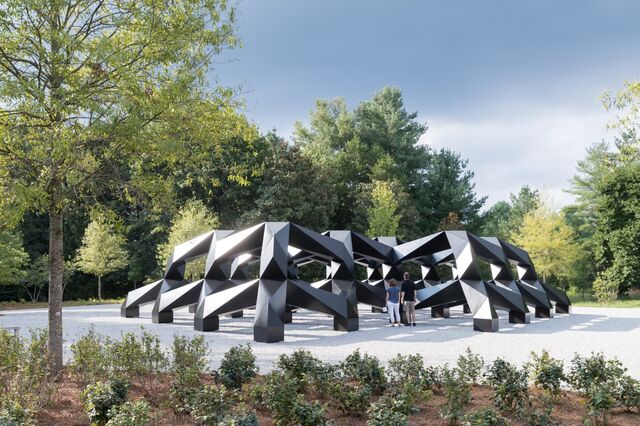
For an afternoon away from the fray, Glenstone — the largest private contemporary art museum in the country — is an unequivocal favorite among all stripes of Washington urbanites. Located about an hour’s drive north, in Potomac, Maryland, it was co-founded by now-divorced billionaire couple Mitchell Rales and Emily Wei Rales, whose collection includes sculptural masterworks by such names as Richard Serra and Jeff Koons.
But the art is almost beside the point. Glenstone is really an alternate universe of smooth, Gattaca-esque structures and wooded, weedy hillocks, where (free) admission is capped to a very small number of people. That ensures an enriching, choose-your-own-adventure experience for everyone who gets in — tickets are released on the first day of each month.
For a weekend escape, head to the Inn at Little Washington instead, some 90 minutes away from Capitol Hill. Its showstopper restaurant, the Dining Room, has long been considered the best table in the mid-Atlantic, luring DC power brokers for multicourse parades of perfected recipes that blend local ingredients and French techniques. But for me it was the inn itself that completely stole the show.
Like Stars Hollow — the fictional setting of Gilmore Girls — but with a heavy twist of High Americana that puts Ralph Lauren to shame, chef Patrick O’Connell’s property inhabits a dozen or so buildings in the quiet township of Little Washington, Virginia, near the foothills of Shenandoah National Park. And the upkeep of each of the 20-plus rooms mirrors the famed precision with which each dish is assembled in the kitchen. Every curl carpeting and tuft of upholstered fabric has been so thoroughly treated it’s as though each guest is the first person to touch it.
The inn is the perfect base from which to explore the emerald necklace of higher-altitude wineries abutting the Blue Ridge Mountains. Among them are two tasting rooms to prioritize.
Crimson Lane Vineyards pairs its Bordeaux-inspired reds and crisp whites with dramatic valley vistas, and Lost Mountain Vineyards specializes in distinctive red blends dominated by cabernet sauvignon. As of 2024 the property is owned by the Bouygues family, of French telecom fame, making it the third, and unexpected, vertex of a triangle of elite winemaking that includes Bordeaux and Napa.
One More Thing
A final tip before you’re on your way
Whether or not America’s Semiquincentennial is something you feel compelled to celebrate, the country’s 250th birthday is ushering in a new collection of things to see and do around Washington. That’s because dozens of DC’s attractions have used it as a deadline for their openings and renovations.
The Smithsonian’s National Air and Space Museum will complete its $1 billion refurbishment, with new halls celebrating modern aviation history, plus an immersive exhibition zone detailing how astronauts have lived on Earth-orbiting space stations over the past few decades. The National Archives Museum, the Hirshhorn Sculpture Garden and the Smithsonian Castle will all reopen as well, with a spate of new exhibition spaces. The Lincoln Memorial is getting a new museum in its basement “undercroft,” set to depict the history of its construction and the acts of civil rebellion that have been staged on its premises.
And the Tidal Basin will get an additional 250 cherry trees to further enhance its blossom-viewing experience; it’s arguably the best springtime display outside Japan. Think of the Semiquincentennial as a catalyst for urban renewal and growth, just like the Olympics have been in other cities — though this celebration comes with a slew of bonus summertime events, which will continue to get updated here.
Read next: Two-Night Minimum: Las Vegas
(Corrects a caption to reflect the proper name of a building in Georgetown in the fifth section.)