
WHO’s Dr. Tedros: ‘Viruses Get the Advantage When We Are Divided’
The director-general of the World Health Organization reflects on the fight against Covid, rebuts vaccine skeptics and shares what worries him most.
A few weeks ago, the United States followed through on one of President Donald Trump’s first executive orders of January 2025, withdrawing from the World Health Organization — a global body it helped establish just after World War II.
The US has retreated from global health over the past year, including on vaccines and USAID. But its rupture with WHO began in Trump’s first term, when relations deteriorated as the Covid-19 pandemic set in. The administration has recently revived that dispute in blistering terms, accusing the organization of mishandling the pandemic and of slighting America by failing to promptly return the flag that had long flown outside its Geneva headquarters (it was later sent to the nearby US diplomatic mission).
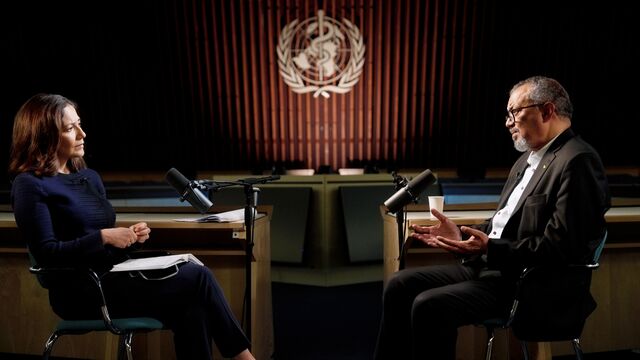
I traveled to Geneva for my conversation with WHO Director-General Tedros Adhanom Ghebreyesus. Dr. Tedros, as he is known, said that despite tension with the US, he is in close contact with Health and Human Services Secretary Robert F. Kennedy Jr. He also reveals how personally he sees the battle against preventable disease: In 1970, his younger brother died of measles at 2 years old.
This conversation begins with a graphic description of war, and has been edited for length and clarity. You can listen to an extended version in the latest episode of The Mishal Husain Show podcast.
You’ve done this job for nearly 10 years. I’m interested to learn about your motivation and your background. Tell me about growing up in Ethiopia and what your family went through at that time.
I remember from childhood the images of the war — the smell, the sound. As you may imagine, growing up in a developing country like Ethiopia is difficult, especially where conflicts are frequent. Not just conflicts, but major wars. So with that background I can call myself a child of war. Seeing people being killed and the image of someone’s head blown up. 1
1 Tedros was born in 1965 in Asmara, which was then part of Ethiopia but is now the capital city of Eritrea. At the time, what would become a marathon conflict was in its early stages: Eritrea’s fight for independence from Ethiopia lasted from 1961 to 1993. Since then, conflict has continued to impact Tedros’s Ethiopia-based family, and there are new risks. He has made repeated appeals for peace.
You saw this as a child with your own eyes?
That’s why when I see the world now, with conflicts and war, it makes me sad. I can see from my own experience how children actually feel — what they’re going through.
What did your parents do to try and protect you?
My mother used to warn us not to leave the house and [during fighting] asked me and my siblings to go under the bed, which was piled [with] mattresses. This is [a] mother’s instinct. She thinks it would protect us — it might from light bullets, but imagine if it’s a mortar or cannon. She would do whatever was at her disposal to protect us.
I remember, most of all, when she was crying and praying for us to survive.
On the one hand, it makes me understand perfectly how you have ended up doing a job like this. On the other hand, you’ve suffered trauma and you are in a job where you have to relive it in many crisis-hit places.
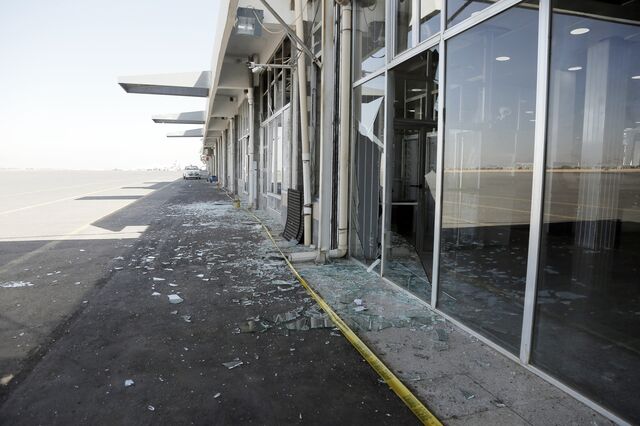
You’ve seen Sudan. You were in Yemen, and there was an Israeli airstrike on Houthi rebels at the airport while you were there. How do you cope with what you see?
In many places, our colleagues are in the middle of conflict. In Sudan, we met with people who fled from Darfur, mothers and children mainly. You could read from their eyes what they had been through.
And then of course, Yemen. When Israeli drones hit the airport, we were ready to depart after a mission. 2 Even in the room where we were, the sound was so heavy. It took me back to the old sound, the old image, the smell that I knew as a child.
2 Six people died in the Dec. 26, 2024 attack, which occurred at the end of Tedros’ visit to Yemen, where WHO provides medical assistance to 12 million people.
Your job is also about the everyday basics of public health. As you look across the world today, what worries you the most?
[My] biggest worry is the rise in conflict, because that’s already affecting many people — millions, actually. We always say — peace is the best medicine. War and disease are old friends. 3
3 Global conflict has reached its highest levels since World War II, according to the 2025 Global Peace Index, which describes the current era as “a fundamental reshaping of our global order” and warns that “the prospect for further conflict is high.”
For instance, Gaza. Because of the war, even diseases like polio that had been eliminated long ago came back. This is because war destroys sanitation, hygiene, infrastructure and the health system.
I attended the Munich Security Conference for many years, when I was [Ethiopia’s] minister of health and [then] foreign minister. I have never seen a more worrisome Munich Security Conference [than] last year, because many high-income countries were announcing their increase in military expenditure.
I asked some of the foreign ministers: Why? They said, We feel threatened. You see what’s changing. Then I told them, At least don’t forget the invisible enemy: a virus like Covid that can hit and kill even more than any war killed in recent memory. Covid killed more than 20 million. 4
4 We went back to WHO to check this number, as their website still cites a 2022 estimate of 14.9 million excess deaths attributable to Covid-19, based on 2020–21 data. WHO told us subsequent analyses and modeling, incorporating later phases of the pandemic, now puts excess deaths worldwide at 21.1 million. They’ll publish consolidated estimates covering 2020–23 this year.
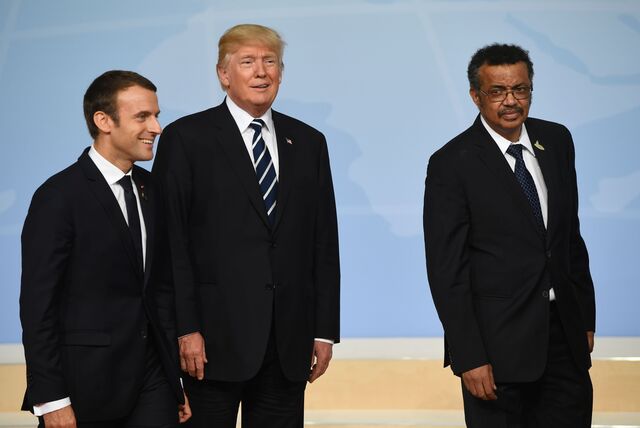
That was the Munich Security Conference when [US Vice President] JD Vance lambasted America’s allies. When you were putting this across to foreign ministers, did you feel the penny dropped with anyone? Or six years on, have they put Covid-19 completely into the past?
During Covid, the whole world panicked and was investing billions. But when priorities change, you neglect health and invest in defense. That should not be the case. We should strike a balance.
Some people say arming yourselves could be a deterrent. Fine, if that’s what they believe. But still, it should not be at the expense of health, which is number one in terms of importance. It’s only healthy people, [a] healthy society that can progress.
How far away do you think the next pandemic is?
We are still vulnerable. People ask me whether we are prepared or not. I say yes and no.
There are many initiatives we have started based on Covid lessons. The International Health Regulations were amended, the Pandemic Fund — which we installed in partnership with the World Bank — is already helping 70 countries. And then there is the BioHub to share pathogen samples as quickly as possible. So that gives me confidence.
But at the same time, these are only starting. We need to continue to invest and make sure that the Pandemic Agreement is ratified, implemented. Then we can be better and prevent the next one, or detect early and manage it without serious damage. 5
5 After three years of talks, WHO member states adopted a Pandemic Agreement in May 2025 aimed at coordinating preparedness and ensuring more equitable access to vaccines and treatments. The WHO says it will be legally binding once ratified by 60 countries. In November, Bloomberg News reported on US State Department plans for bilateral health agreements, an apparent workaround for operating outside the WHO framework.
The US is withdrawing from WHO; you received the formal notification in January. The accusation from the Trump administration is that WHO mishandled the pandemic. What is your response?
Like any organization or any country, we might have our own problems or weaknesses. I cannot say WHO is perfect, but what I know is we have tried our best.
As soon as the Wuhan municipality posted this new virus on their website — December 31, 2019 — we started probing, asking questions to China. Colleagues at the country level, colleagues at the regional level and [at] headquarters, including myself, were notified. Nobody said, This is New Year’s Eve. Everybody took it seriously.
By Jan. 4, we announced [the cases], and the rest is history.
I want to go back to the Covid and China question. You didn’t [say] whether you got the answers you wanted from the Chinese. Do you think it was infected animals and infection crossing into humans? Or was it a lab leak?
The WHO position is [that] all hypotheses [are] on the table — natural or lab leak. We don’t have enough evidence to believe beyond reasonable doubt any of the hypotheses.
Get the Bloomberg Weekend newsletter.
Big ideas and open questions in the fascinating places where finance, life and culture meet.
By continuing, I agree to the Privacy Policy and Terms of Service.
That means you haven’t had full transparency from China.
We have said that many times, starting from when the first report came in 2021. I asked China to be transparent and to give us all the information that they have in order to determine the origin of the virus.
How disappointed are you that you never got that?
Very disappointed. Because this is not just a science issue, it’s also a moral issue. It’s trust as well. 6
6 China has repeatedly rejected criticism that it failed to act transparently on Covid-19, and denied withholding information on its origin. Beijing has tried to shift attention from the Wuhan wet market and lab leak theories by suggesting, with little solid scientific support, that the virus got into China via frozen food packaging, or originated at a US Army research lab in Maryland.
The lack of transparency — doesn’t it suggest that perhaps it was a lab leak? Because if they’re not transparent, then perhaps they’ve got something to hide.
After the report was released, we said all hypotheses [are] on the table, including lab leaks. We formed a group called SAGO [Scientific Advisory Group for the Origins of Novel Pathogens]. And that group prepared many questions, especially related to the Wuhan lab. I transferred those questions to senior officials, including President [Xi Jinping]. But we haven’t received any response.
Without getting answers to those questions, we will not be able to determine how Covid started. We cannot force anyone. We only operate based on the willingness of nations.
There are some countries, including the US, who say [they] have “intelligence information” about the lab leak. I wrote to the US asking for this information, but I haven’t received anything. If they want us to finalize, they can give us the information that they have from intelligence or elsewhere. 7
7 In the meantime, the US still owes WHO approximately $260 million. According to a 1948 congressional resolution, US financial obligations should be met as part of any withdrawal process. Now, the Trump administration is reportedly proposing spending $2 billion a year on its own global disease surveillance platform, much more than its annual commitment to WHO.
Are you still sharing information with the US from your database on current health threats?
Yes. They get all the information that we have, especially important information they need related to health security. Nothing has changed.
Even though they’re not paying anymore and they owe you money?
We give them all the information because WHO’s mission is to make the American people safe and the rest of the world also safe. 8
8 By mid-2026, WHO is expected to shed about 25% of its workforce amid funding cuts. However, Tedros maintains that budget changes he began in 2017 will put the organization on a better financial footing in the long term.
I want to talk about the fact that child mortality is rising after years of very impressive declines. At the same time, trust in vaccination is declining in many countries.
This is a combination of factors. One is a decline in overseas development assistance. [The other] is the misinformation and disinformation that’s influencing many parents not to vaccinate their kids.
And we have, in the US, a vaccine-skeptic who is the health secretary. Have you had this conversation with Robert F. Kennedy Jr., about his views on vaccines?
We work together. We have to continue to speak to each other. We have differences. I don’t agree with his positions on vaccines. But I agree with his position on addressing the root causes of health.
For instance, health is not made in hospitals or clinics. It’s made in homes, in schools. It’s the food we eat — as he says, “real food” — and the environment we live in and our own behavior, whether we smoke or drink or abuse sugary drinks and so on. You can still work together while disagreeing on some issues. 9
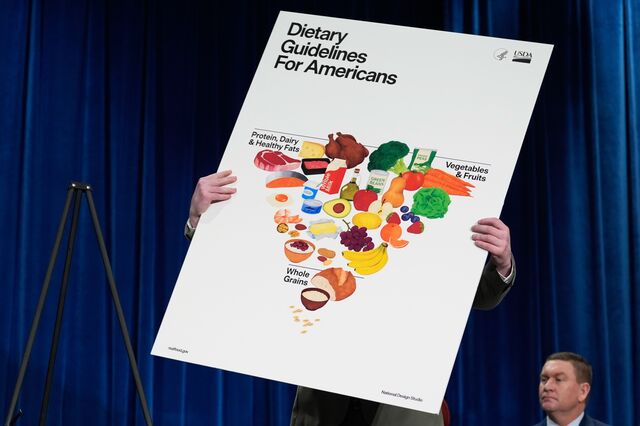
9 RFK Jr.’s Make America Healthy Again initiative has focused on chronic disease prevention and food policy, including efforts to revise the US dietary guidelines, tighten scrutiny of food additives and promote what he calls “real food.” As part of that shift, the US food pyramid has been restructured to emphasize unprocessed foods and increase recommended red meat consumption.
But would you call his views on vaccines dangerous? When he said, for example, that autism comes from vaccines?
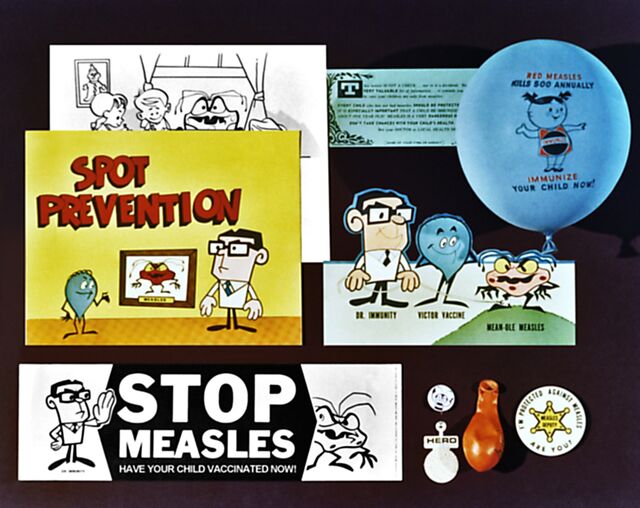
I have issued a statement saying that there is no association between vaccines and autism. It’s dangerous, because measles could kill. 10
10 RFK Jr. has denied being anti-vaccination, but in a 2023 interview on Fox News he said, “I do believe autism comes from vaccines.” Bloomberg’s Editorial Board recently warned that the stability of the US vaccine market could be compromised if Kennedy adds autism to the list of injuries for which patients can sue pharmaceutical companies.
You know this from your family life. You lost a brother when he was very young to measles.
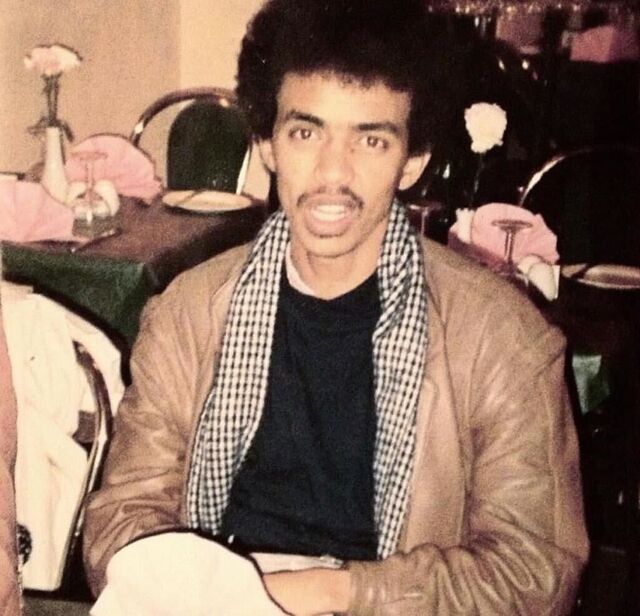
Very young. Yes, my younger brother. The second in the family. I’m the first.
At this point in the interview, Ghebreyesus paused, and I could see him struggling. He asked if he could take a minute and we both stepped away from the microphones and cameras. I apologized for upsetting him, and asked if he would prefer to change the subject. He said we could resume, but that grief still affects him, even after more than 50 years.
I had a brother, and his name was Yemane. And from what my mother tells me [of the symptoms], he had measles. We used to sleep in the same bed, play together. I’m the lucky one and he was not the lucky one. I survived, just pure luck. And he died. That’s it.
Do you remember him getting sick?
I remember. With technology now, he could have survived. What makes me sad is kids are still dying from measles, and that’s wrong.
My brother didn’t have access and no one would expect for measles vaccines to be delivered in Africa as soon as they were ready. But even in developed countries where you have access to measles vaccines, kids die because of misinformation.
There is strong evidence that measles vaccines are actually safe, and parents should use those vaccines to protect their kids. 11
11 Prior to the release of the first vaccine in 1963, there were more than 30 million cases globally per year, and 2 million deaths. The disease’s high infectivity rate means that at least 95% immunity in a population is required to prevent epidemics. Now, with vaccine skepticism on the rise, the US is in the middle of its largest outbreak since 2000.
What is the way to combat misinformation and the wrong kind of leadership on vaccines? One of the people that RFK Jr. has put into the key panel advising on vaccination in the US thinks that polio vaccination might not be needed in the country.
Health services should not be politicized, especially how we handle or how we respond to viruses or bacteria. Politicians should support the experts and spread expert opinion. When it’s used as a political weapon to attack opponents, then the result is we lose our citizens; our kids could die.
There has been an exodus of research expertise in the US. RFK Jr. has also canceled funding for mRNA vaccines.
mRNA is a technology we are using now for vaccines. In the future, it could help even with fighting cancers. We are in the molecular age, and this technology has a huge potential. So it’s a mistake. I hope the US will reconsider and other countries will invest.
Do you think the Americans will be back in the next decade?
I think so, because we still work together. They understand the value of the organization in terms of health security; they need this platform. They contributed greatly in building it, and I hope they will come back.
What makes it a bit personal to me is I led the transformation of the Ethiopian health sector. If I [had to] single out one country [that gave] significant support, it’s the US. And I’m very grateful for that. For American generosity. They were helping me to train nurses, midwives, doctors. 12
12 Ethiopia expanded primary health care and tackled malaria to great success while Tedros was health minister. He cited support from organizations like USAID — shut down by Trump — and George Bush’s President’s Emergency Plan for AIDS Relief (PEPFAR).
What is the opportunity for Trump on global health? If you could persuade him to put his animosity aside, what’s the upside for him?
During Covid, his initiative, Operation Warp Speed, [saw] vaccines produced in record time. Covid was stopped. I don’t know why he doesn’t want to take credit.
He can make a difference. And WHO is the best platform to do that. It’s not about the money. [The US] can continue [its leadership] for the benefit of humanity. We need to have maximum cooperation [and] solidarity, because viruses get the advantage when we are divided.
We’ve come to see you here in Geneva. And this conversation is part of Bloomberg Weekend. Therefore I would like to ask about your weekends. What is your life like outside this building?
It’s a bit of a boring one. I enjoy having time with my grandkids. But weekends — Saturday I am always in the office. And Sunday [I’m] at home, but a good part of Sunday also, I work.
And — church?
Church... They say the church of God is your heart. So I do that. Maybe you understand.
Mishal Husain is Editor at Large for Bloomberg Weekend.