

Israel’s War With Iran Will End When Trump Says Stop
Israeli security expert Shira Efron says the Iran war has united the country — but the next elections will be crucial.
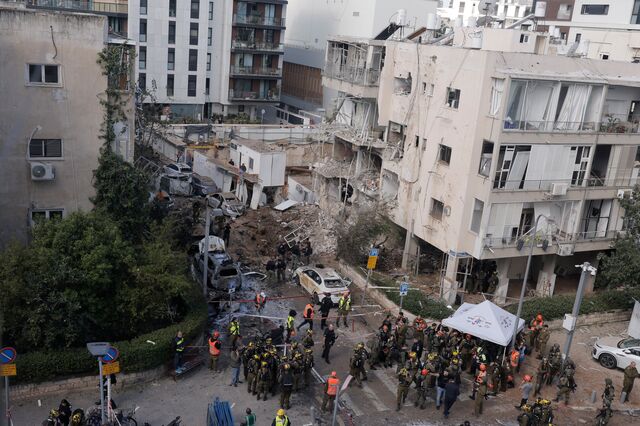
For four weeks, Israeli jets have carried out daily air strikes on Iran, while retaliatory attacks have killed or wounded scores of Israelis — extending the country’s post-Oct. 7 war footing and adding to its growing economic toll.
To gauge what might come next, much attention is on US President Donald Trump’s announcements. But the war looks different from Israel’s perspective: Prime Minister Benjamin Netanyahu has warned of an Iranian threat for decades. What happens if the two allies diverge on the endgame?
For insight into how Israelis see the conflict, we turned to Shira Efron, a Middle East analyst and distinguished chair for Israel policy at RAND. Based in Tel Aviv, she discussed public opinion, potential miscalculations on Iran, the war in Lebanon and what’s at stake in Israel’s coming election.
This conversation has been edited for length and clarity. You can listen to an extended version in the latest episode of The Mishal Husain Show podcast.
Can we begin with what this war has meant for your family life?
It’s lost on outside audiences, who see Israel and the US as the aggressors [and] forget there is a human dimension in Israel.
On [a] personal level, we are fine. God bless. We have a bomb shelter at home we never thought we would use. Since [Oct. 7, 2023], it’s been the room most frequented in the house. There’s an ear-shattering scream that comes through the phones, before the sirens, to make sure you wake up. About six to 10 minutes afterwards, the sirens come. We all go down to the shelter. You hear bombs exploding somewhere. The kids say, Oh, it sounds like a cluster rocket now, or It sounds like a direct hit, or Maybe it’s the Iron Dome interception. Then we get out. We try to continue with our lives.
There are other Israelis who are less lucky. There have been casualties [and] property damage across the country.
Help me understand whether Israeli public opinion on this war has shifted as the weeks have gone on. The most recent polling I’ve seen has suggested about 80% support for this war. Do you sense any change in the public mood?
There are two things that can be true at once. There is a belief in the necessity of this war to remove an existential threat — and we can debate the merit of this argument.
However, there is fatigue. People are home with the kids. It’s very difficult for parents to go to work. Anyone who survived Covid with kids would sympathize. It takes a toll on people who own their own businesses [and] anyone who is on reserve duty. Israel has been at war for around 900 days [since 2023]. I have friends who have been on reserve duty for 800.
There is maybe [a] slight decline in the belief that this war will reach its objective — which, from an Israeli perspective, was supposed to bring a toppling of the Iranian regime. There’s a feeling of déjà vu. We had heard in June 2025 that the Iranian threat was removed. The US president said he obliterated the Iranian nuclear plan. The question is: Wait, if we just did it, how come we need to do it again?
It’s not just Iran. We had heard that Hezbollah was decimated and that we took out its arsenal. There is misalignment with promises and declarations versus reality, frustrating the Israeli public.
Is the fact that there’s an election coming in Israel part of the prime minister’s calculation in starting this war?
It’s very difficult to disconnect anything that is happening in this country from political motivations.
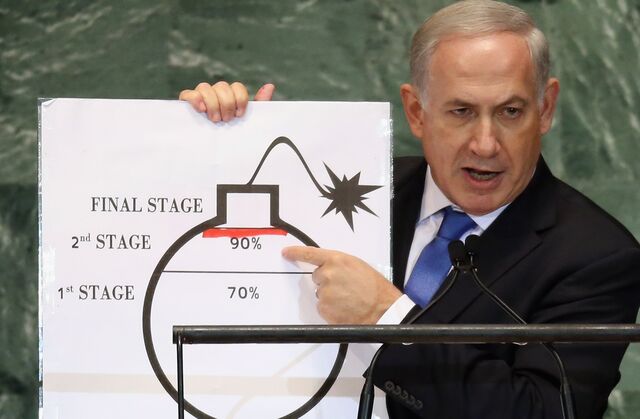
For Netanyahu, Iran has been like a religion for four decades. He’s been speaking about the need to remove — to hit — the Islamic Republic of Iran. He’s using apocalyptic terms. It is genuine from his perspective. It does not mean that what he sees as the national interest does not align with his political interests.
The reason for opening this war — first in June, and now again — was an operational opportunity, but there is a sense in Israel that the desire to keep Israelis in this perpetual state of war also serves the prime minister’s political objectives.
It’s very difficult to go to elections when you’re in the middle of a war. This is a good reason to keep postponing elections, especially if polling shows you’re not likely to win again. 1
1 The latest weekly poll from Israel’s Channel 12 News has Netanyahu’s Likud party on course to be the largest party in elections due by October. But coalition politics mean his current bloc may lack enough support to form another government.
You think that could be part of the calculation — a desire to delay the election?
It’s difficult to say. When Oct. 7 happened — the biggest massacre of Jews since the Holocaust — the expectation in Israel was that the prime minister [would] resign and [seek] a renewed mandate from the Israeli public. That has not happened. The pretext for this was: We can’t go to elections when we are in the middle of a war.
Netanyahu has portrayed himself all his life as Mr. Security. Being in a state of war could strengthen him, [although] we’re not seeing it in the polls yet.
The New York Times is reporting that the chief of [Israeli spy agency] Mossad went to the prime minister with a plan. He believed that within days of the war beginning, Mossad would be able to galvanize the Iranian opposition — igniting riots and other acts of rebellion that could lead to the collapse of the regime. How did Mossad get it so wrong?
I have not seen the PowerPoint by Mossad. I see some reporting that indicates Mossad never said this will happen right away [but] that after strikes are complete, within six months [to] a year, the Iranian regime will fall.
Whether [this leak] came from the US or the IDF [Israel Defense Forces] — there’s lots of competition in terms of who wants to throw Mossad under the bus.
I would’ve expected some agency on the part of leadership — both Israel and the US — to say, Okay, this is one idea and one option, but what if it doesn’t work? You can’t base decisions on [a] hypothetical operational plan to topple [the] regime.
My fear is there are a lot of people around the world that blame Israel for dragging the US into this war. These reports only strengthen this narrative, which I think for Israel is very, very dangerous. 2
2 Tucker Carlson, one of the most influential voices on the American right, articulated this view early in the war: “This happened because Israel wanted it to happen,” he said on his podcast. “This is Israel’s war.”
Dangerous because of American public opinion?
First and foremost.
Netanyahu sees the international community [as] between Pennsylvania Avenue and Capitol Hill.
It also matters what public opinion is in other countries. Israel has [its] most important trade relationship with Europe — investment, open skies, cultural initiatives. Israeli academia and R&D cannot survive without European funding.
It matters what the world thinks. Relationships matter.
Israel has become more divisive within the MAGA movement, and within the Democratic Party. 3 There’s polling suggesting that more Americans today are sympathetic towards Palestinians than Israelis. I want to ask what you feel when you see that? You were born in New York. You moved to Israel with your parents as a child. You are a citizen of both countries.
3 Democratic Congressman Ro Khanna, a recent Weekend Interview guest, has called on his party to take a “new moral direction” over Gaza — blaming Kamala Harris’s 2024 defeat, in part, on a failure to address the issue. But Democrats are walking a thin line: California Governor Gavin Newsom recently agreed with a characterization of Israel as an “apartheid state,” before later saying he regretted using the term.
I have no issues with greater sympathy for the Palestinians. I don’t think it needs to be a zero-sum game, but I think it’s very dangerous strategically. For Israel, the pillar of national security is the special relationship with the United States. I’m not sure this relationship can be sustained — definitely not with trends we’re seeing at the moment.
The relationship between Israel and the Jewish community has also [been] a pillar of Israel’s strength. As someone who roams in both of these communities, I often find that the [American]-Jewish community is awfully concerned for Israelis. I don’t think that Israelis are fully sympathetic to American and diaspora Jews in the same way, not understanding how hard it’s been for them after Oct. 7 — with protest [on] campuses, rising antisemitism, and being associated with the country that might have dragged the US into war.
Israel does not understand that what it does affects an entire community that is connected to Israel, and is important to Israel.
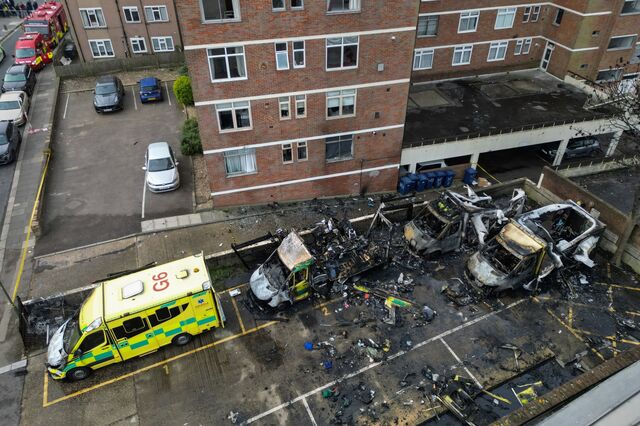
In the past few days, there’s been an attack in London on ambulances belonging to a Jewish charity — chilling not only for the Jewish community, but others watching.
We definitely see the rise of antisemitism. I’m not one that thinks any criticism of Israeli policy is antisemitism — there’s a very clear difference — but the numbers [of antisemitic incidents] speak for themselves.
In Israel, both policymakers and the public [are] not as sensitive as they need to be.

Get the Bloomberg Weekend newsletter.
Big ideas and open questions in the fascinating places where finance, life and culture meet.
By continuing, I agree to the Privacy Policy and Terms of Service.
On the relationship with the United States — the war in Iran has been a joint enterprise. What happens if Trump decides to stop?
[During] the 12-day war, President Trump gave a green light [to] Israel. After Israel cleared the sky, and did all the work, the US came with their immense capabilities and it was game over. Trump did tell Israeli planes — which were in the air to strike Tehran — to turn around. I heard from people who were in the command center.
You had the chief of the [Israeli] Air Force with one phone [to] the pilots, and another [to] the prime minister getting them an order in real time — an order straight from the US president.
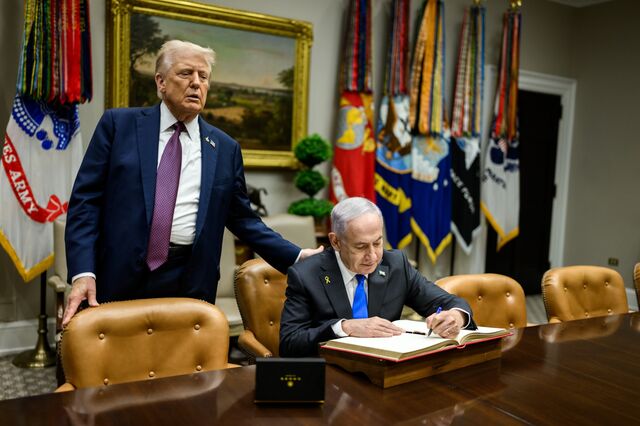
What we have here is a very different partnership. You have Israeli Air Force officers, even senior level, and in double-digit numbers, who are stationed in CENTCOM [US Central Command], and vice versa, working together. But in terms of decisionmaking, there’s one boss, and this boss is President Trump.
It’s very clear — when President Trump says, we’re done, Israel is going to be done. Israelis could be disappointed at this outcome; an agreement is not something Israel favors.
Read More: Israelis Hold Out for Full Victory
What happens to Lebanon — this other front — including with ground forces [and] the blowing up of bridges? Israeli Finance Minister Bezalel Smotrich [is] saying the Litani River in Southern Lebanon should be a “new border” between the two countries. If that happens, that’s essentially a new occupation.
Right, exactly. It’s probably not likely, but I would hope that whatever agreement with Iran — if there is one — is a broader agreement [that] also includes Hezbollah. I’m not sure the US attention is there at the moment, but absent this, what is now a very secondary front — Lebanon — could turn into the primary front, with Israel just digging deeper.
Israel Plans to Hold Zone South of Lebanon’s Litani River
Defense minister said return of Lebanese residents depends on security situation in northern Israel

We’re seeing targeted strikes, but we’re also seeing [the] IDF taking more and more positions inside Lebanon and creating [a] de facto buffer zone. It is not an occupation at the moment, but it could turn into one absent a diplomatic agreement.
Read More: War on Hezbollah Leaves Lebanon Near Ruin
Israel has a long history of occupying land in Lebanon, and it never delivered the result that Israelis want. I’m very concerned about this folly. This definition of insanity — doing the same thing over and over again and expecting different results — is how I see the Israeli campaign at the moment.
No one questions that the Israeli north shouldn’t be shelled by a terrorist organization on the border and that the Lebanese state should do more to contain it. But Israel has a partner in Lebanon. If Israel occupies parts of Lebanon, it’s going to lose the partner. 4
4 More than 1,000 people have been killed in Lebanon this month, and a million more are displaced amid intensified strikes that Israel says are aimed at the militant group Hezbollah. Defense Minister Israel Katz has now said the country will maintain control of a “security zone” up to the Litani river — around 30 kilometers (19 miles) inside Lebanese territory.
Meaning the Lebanese government, who would like to see Hezbollah disarmed and its influence brought to an end?
Yes — the Lebanese government and the Lebanese public. We are seeing fractures in [Hezbollah’s] support base. This whole idea of disarming terrorist organizations — it can never be a solely military endeavor. It hasn’t worked anywhere. It’s never just a kinetic activity; there’s a political part.
This opportunity for taking on Hezbollah politically is available now in Lebanon. The Lebanese government needs help. They don’t need to be squashed.
Are you saying that the policy on disarming terrorist organizations — even on Gaza, this strategy on Hamas — has not worked, and will not work?
As we talk now — and maybe under the fog of war — everyone forgot where Gaza is. We are five months after signing a ceasefire that, thank goodness, brought the Israeli hostages back home and allowed the Palestinians some sort of respite.
Now, you have Hamas, the de facto sovereign government of half of Gaza, where most of the people are. Israel occupies the other half. For two years [Israel] tried to disarm Hamas kinetically, and it hasn’t worked. It has to come with a political part, where Palestinians disarm Palestinians. It has to be something the Palestinian people choose to do.
I hope that after this Iran round finishes, we can focus on Gaza — where there is a framework. We can criticize elements of it, but the opportunity still exists and we shouldn’t miss that, because otherwise, Israel will go back to fighting in Gaza. This could happen in the next few months.
Would that be with the blessing of the Americans? There’s this little-recognized body, the Civil Military Cooperation Center [CMCC] — which is essentially part of the US Army — in southern Israel. It’s supposed to be monitoring the ceasefire.
I’m a frequent visitor to the CMCC, and I think it has a lot of advantages — monitoring the ceasefire and coordinating aid or goods that go into Gaza.
I don’t know if the US is going to bless renewed fighting. I have a lot of appreciation for the Trump administration. I had not thought they would lead a UN Security Council resolution [on the Gaza ceasefire] — that they would be speaking about negotiations [for a] Palestinian state. I’m putting aside other criticisms. 5
5 The US has vetoed multiple UN resolutions on the Israeli-Palestinian conflict — including several on a Gaza ceasefire — and Trump has rebuked allies who recognized a Palestinian state. Efron is referring to the November 2025 UN resolution, which endorsed Trump’s 20-point plan for Gaza. Point 19 said that once the Palestinian Authority has carried out reforms, and the redevelopment of Gaza was underway, “the conditions may finally be in place for a credible pathway to Palestinian self-determination and statehood.”
My assessment is that no one — not Israel, not Hamas, not [the] Palestinian Authority, not the UN — wants to be blamed for derailing this effort, because it is important to President Trump.
I am not sure that any of these parties really want this to succeed — and for this to succeed, you need to make an utmost effort. That’s why the US push is very much needed. There is a ceasefire, but the fire hasn’t really ceased.
There’s a death toll of 70,000 Palestinians, not including those who might be buried under the rubble. At the same time, [violence] is ongoing in the West Bank — not only Israeli settlers, [but] also actions of the Israeli military. One example was the shooting of a couple and two children in their car the other day.
It is so tragic, what is happening between Israelis and Palestinians. I think this is the existential threat for Israel. Israel is supposed to be a Jewish democracy, and we have this going on in areas that Israel controls, security-wise.
I’m going to separate the two for a moment.
The Gaza death toll is something that is still being debated — not in terms of the numbers, but in terms of the breakdown of how many of these have been militants. But this is something that Israelis have become numb to. Children are children. It does not matter if they’re the children of terrorists. It’s not their fault.
I don’t believe the IDF engaged on purpose in discriminatory killing — there are protocols here in terms of opening fire. But the fact is that two years [of] urban warfare, and being more risk-averse about soldiers’ lives than Palestinian lives, get[s] to this outcome. 6
6 Last July, the Washington Post published the names of 18,500 children killed in Gaza since Oct. 7, 2023, based on records from the Hamas-run Health Ministry in Gaza. While Israel has disputed the ministry's figures throughout the war, Israeli media reported in January that a senior security source now regards the overall death toll as accurate. On IDF protocols, one incident that contradicted the military’s initial account was the killing of 15 aid workers.
This idea of being numb to the suffering of people when talking about humanitarian aid — it’s against Jewish values.
Of course there were Israeli hostages — and we can’t even imagine the suffering that they’ve been through. [But] there was no empathy and sympathy among the Israelis for Palestinians after Oct. 7. Nothing justified Oct. 7 — but Oct. 7 couldn’t justify everything.
The West Bank is almost like a separate territory, even though it is Palestinian. In 2017, Smotrich had a manifesto where he [said] that Israel will annex all the West Bank and transfer the Palestinian population. Under the fog of war, he’s been implementing his vision. What we have is de-facto annexation of territory — making Palestinians’ lives miserable.
Read More: West Bank Hit by Deadly Settler Raids
I don’t want to say [it’s] government sponsored, but unchecked settler violence is occurring in the West Bank, a complete disregard for Palestinian lives and livelihood. 7
7 The West Bank, which Israel has occupied since 1967, is home to more than 3 million Palestinians and 500,000 Israeli settlers, excluding East Jerusalem. Critics of settlements argue they are illegal under the Fourth Geneva Convention, which prohibits an occupying power from transferring its civilians into territories it occupies. The Israeli government, which refers to the West Bank as Judea and Samaria, has authorized more than 60 new settlements since 2022.
You interviewed Smotrich when he was starting to talk about this plan. At that time, did you think, This is a fantasy or did you think, He’s going to make this happen?
I thought it was a fantasy. I had never imagined in my life that Bezalel Smotrich — who was interrogated by the Shin Bet for his past, and involvement in violent activities — would ever be the finance minister of this country, and with the portfolio of a minister in the defense ministry. That gives him control of the bureaucracy, control of the West Bank. 8
8 Smotrich is himself a settler, whose roles in Israel’s coalition government give him far-reaching powers over much of the West Bank, including issuing building permits. In February, Bloomberg reported that new administrative measures “create, for many Palestinians, a rampart of red tape that could be impossible to negotiate or contest.”
Could he be prime minister?
I don’t think so. To the extent that polls are indicative of outcomes, he may not pass the electoral threshold. His party may be out of the government in the next elections, which is why he’s rushing to implement his vision. He is not sure he’s going to have another turn.
Haven’t some of his positions become more mainstream in Israel? Whatever happens to his own political future, hasn’t [the] public as a whole been moved more to the right — not only since Oct. 7, but before that?
We are seeing a shift to the right.
It’s not that Israelis were on the verge of a two-state solution on Oct. 6, 2023 — and Oct. 7 shadowed the picture. We can trace [it] to the Second Intifada, which came after a peace process. Israelis felt that [then-Prime Minister] Ehud Barak genuinely offered a peace proposal [to Yasser Arafat in 2000]. [But] buses exploding in the middle of the cities turned Israelis [to] thinking, There is no partner on the other side.
Netanyahu fed on [that]. 9
9 The Second Initifada began in 2000, when many Palestinians felt they had gained little from several years of the Oslo peace process. Talks had failed to come up with solutions on settlements, borders, the status of Jerusalem, and Palestinians’ demand for the right to return to pre-1948 homes. Netanyahu was Israeli prime minister from 1996 to 1999, before he was succeeded by Barak. He returned to power in 2009.
For a long time until Oct. 7, Israelis didn’t even remember there were Palestinians around. Think about it. Gaza’s behind a wall. Most Israelis don’t visit the West Bank. You live your life normally, pretend you’re part of Europe, [and] go to the US often. There’s a booming tech sector.
Oct. 7 showed, in the most monstrous way, that there are actors on the other side. Not all Palestinians want to kill Israelis — but in the Israeli mindset, that fed into a narrative: There are no innocent people in Gaza. If we pull away from the West Bank, the same thing that happened from Gaza will happen closer to Tel Aviv. We can never have them independent. We can never withdraw.
It will take some time for the Israelis to think there’s another way, but I do hope there will also be leadership that presents this alternative vision.
One of the tragedies is, it’s not just Netanyahu — it’s also the opposition leaders. You don’t hear the vision of separating peacefully from the Palestinians. The vast majority of Palestinians do not want to wake up in the morning and kill Jews. Israelis don’t hear that — and they should hear this from leadership.
It would be a brave leader, wouldn’t it, who stood up and said, Palestinians have rights too. Just as Israel has a right to exist, Palestine should have a right to exist.
It’s a very brave Israeli position to take today and I don’t think anyone will take it.
The tragedy [for] both Israelis and Palestinians, is that it’s portrayed as a zero-sum game and it’s not — your right to self-determination does not negate the others.
It’s easier for me to speak about the lack of Israeli leadership that presents this vision — but we haven’t had a good vision on the Palestinian side either. They deserve better leadership too. 10
10 In Israel, even centrist politicians such as opposition leader Yair Lapid articulate hawkish security positions and are strong supporters of the Iran war. Meanwhile, in the West Bank, Palestinian Authority President Mahmoud Abbas, now 90, has been in office since 2003.
Can I ask you to think ahead to 2028? It will be the year of Israel’s 80th birthday. By the end of the year, a new US president will be coming into the White House. What do you think Israel — and Israel-US relations — will look like then?
I want to be optimistic. I can’t stress how important the next Israeli elections are. In our group of friends, the very few who are still in Israel — because so many have left in the past few years as a direct result of the policies of the Israeli government — are holding their passports in hand and not making decisions [until] this election.
If there is a different government in Israel that sees the benefits of all the country, a complete stop to settler violence, [and] leadership that improves relationship with Israel’s neighbors, the Jewish community and Europe — I think Israeli-US ties can sustain this.

Mishal Husain is Editor at Large for Bloomberg Weekend.