
The Historian Who Says Finance Is Wasting a Generation of Talent
Seven years after skewering the Davos elite, Rutger Bregman discusses populism, the backlash to his Trump remarks, and why ideals mean little without strength.
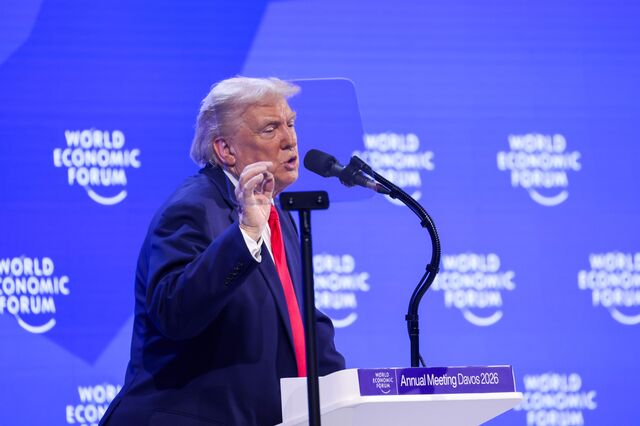
One year on from President Donald Trump’s return to the White House, this week laid bare the chaotic new nature of international relations. What the US government portrays as negotiation can look to others like bullying — notably over Greenland — a dynamic that dominated Trump’s trip to the World Economic Forum in Davos.
Davos has long styled itself as a forum for conscience as well as capital, a self-image that went viral in 2019 when a young Dutch historian used the stage to excoriate the rich for paying insufficient tax. Rutger Bregman has been needling elites ever since, most recently in his book Moral Ambition and in a series of prestigious BBC lectures — after which he accused the organization of censoring his views on Trump.
But Bregman’s worldview is more nuanced than you might expect. He is impressed by entrepreneurs and thinks those on the right understand him better than many on the left. He also agrees with Trump that Europe is “not heading in the right direction” — though he is far more scathing about the state of US leadership.
This conversation has been edited for length and clarity. You can listen to an extended version in the latest episode of The Mishal Husain Show podcast.
You see history as a guide to the present — a compass, you’ve called it. Europe and America, at the start of this new year, where are we?
So let’s start with near-term history.
We all remember February 2020, this moment when really knowledgeable people were like: You’ve got to stockpile masks right now. [But] you looked at the [TV] and it’s like, It’s going to be fine. It’s probably nothing big.
I really feel we’re in that moment right now, in two respects.
With the rise of AI — we talk about it a lot, but the vast majority of people have no idea what’s going to hit them in the next three, four or five years.
The other thing is the complete breakdown of everything. Historians of fascism — I’m afraid I have to use that word — have developed a very precise terminology to talk about different regimes. I think the family resemblances [are] getting pretty long now.
If you talk about leadership in the US right now, two words come to mind — a combination of immorality and unseriousness. If I look at European elites, I would add a third word — irrelevant. Europe is squeezed in the middle. American elites look at Europe like [it’s] an open-air museum.
Are you not excited by the promise of AI? Drug discovery. Energy efficiency.
I am super excited about that.
It’s very hard for us to wrap our head[s] around how horrible life was for most of human history — even if you were royalty. In the UK, Queen Anne had 17 [pregnancies] and they all died before the age of 18. All of them today would be alive thanks to modern technology. So I would be the last one to deny the extraordinary promise and potential of [AI].
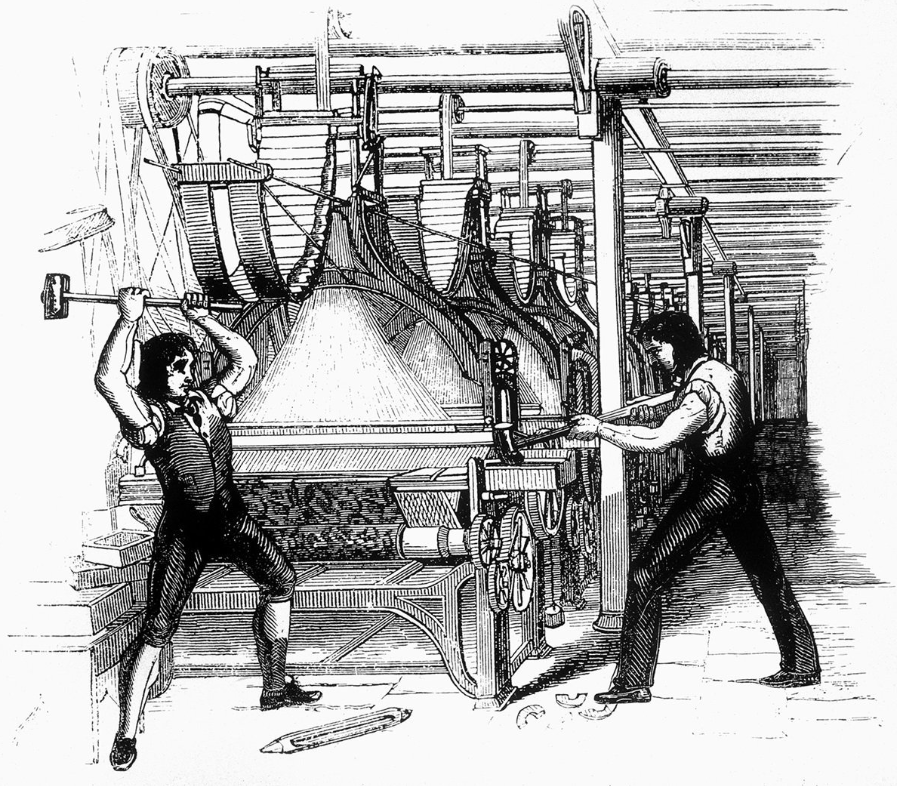
The Industrial Revolution, for at least a century, was pretty bad for most people. The Luddites — famous for smashing machines in the 19th century — were basically right. They were not unskilled laborers. They lost their jobs and became much poorer because of it. The agricultural revolution made life worse for everyone for thousands of years. People had a worse diet. The age of hierarchy and inequality dawned — and wars. It was probably better to be a nomadic hunter-gatherer. 1
1 I confess I did not expect this answer to include a reference to prehistoric times, but Bregman’s words on the Industrial Revolution made me think of India, and the livelihoods destroyed when mass-production of textiles began in Europe and the US. I don’t think Bregman is calling for a great leap backwards, but he wants us to reflect on winners and losers in each age of advances.
You’ve just come back to Europe from the US. Why were you living in the US in the first place?
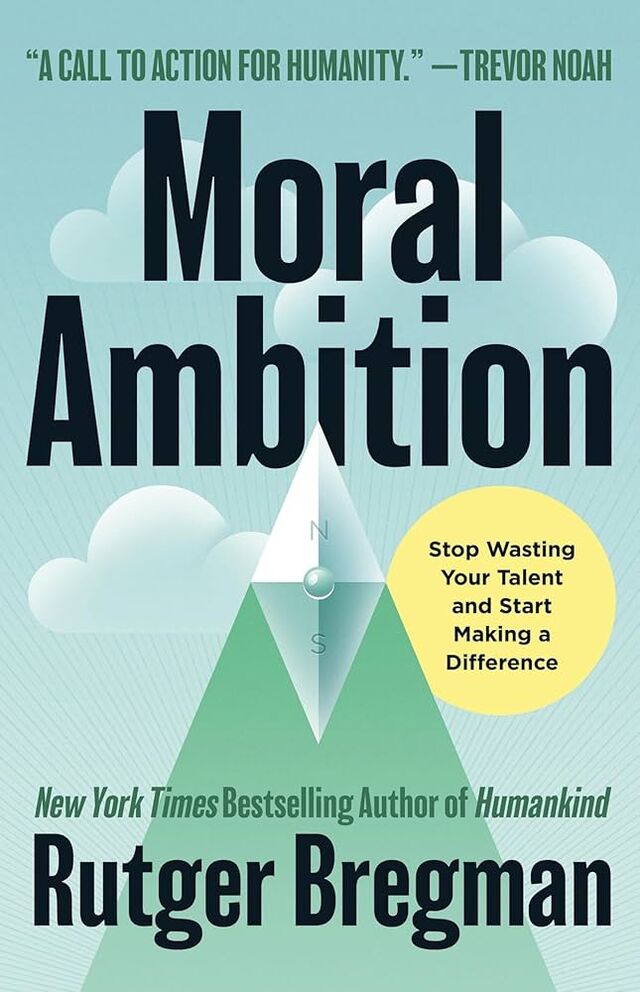
So I wrote a book called Moral Ambition, which is all about using what you have — your talent, your time, your capital, your resources — to make a massive difference. To make this world a wildly better place. The waste of talent is one of the greatest wastes of our time. There are so many people currently stuck in jobs that don’t really make the world a better place.
Maybe AI is going to start doing some of those jobs?
That’s true!
Honestly, after a decade of basically being a pundit, I was a bit fed up with myself. I [co-founded] an organization called The School for Moral Ambition. We like to see ourselves as the Robin Hoods of talent. We recruit people that in another life would go and work at a hedge fund, and convince them to work on the most pressing issues we face as a species. That’s why I was [in the US]. We built the US chapter and launched our first fellowship at Harvard. 2
2 The Harvard fellowship is probably better understood as a summer internship after junior year, offering 12 students a placement at a “mission-driven organization” rather than funneling them into consulting or banking. Bregman’s nonprofit has also set up seven-month, full-time programs focused on work ranging from food policy to tobacco regulation and lobbying for a global billionaires’ tax.
I think you are partly funded by philanthropy, and yet you’re pretty harsh on [philanthropists].
Yeah, most of them. A lot of philanthropy is BS. PR. Whitewashing your reputation.
Philanthropy at places like Harvard funds scholarships for students who couldn’t otherwise afford to go.
Yeah, and really big buildings. I’m not saying it’s all wasted, but sometimes I want to pull my hair out if I look at these billionaires who could make a massive difference. 3
3 Harvard University’s endowment stood at $56.9 billion in the 2025 fiscal year. The school granted $784 million in financial aid and scholarships in the same period, with 1 in 4 undergraduate students paying no fees. In his book, Bregman writes: “Most rich-guy philanthropy doesn’t amount to much. They generally donate a mere fraction of their net worth, and when they give, it’s mostly for vanity projects.”
I recently spoke to Nick Allardice of GiveDirectly, which is one of the greatest NGOs in the world. They have found the way [to] tackle global poverty — just give people money. There are thousands of billionaires in the world who could call up Nick Allardice right now and say, Let’s pull Malawi out of poverty, and they would. So yes, I’m quite critical of a lot of wealthy people. I think they ought to be doing way more. 4
4 Writing for Bloomberg Businessweek last year, economics professor Heath Henderson characterized cash transfer as an “inadequate” solution to global poverty. “Giving people money doesn’t change the systemic or structural barriers that produce and perpetuate extreme poverty,” he wrote, citing a study in Kenya showing that families receiving such transfers could improve their children’s health only if they already lived close to medical facilities.
Is European leadership in a better place than American leadership today?
No, not really. You could say that the decadence, the corruption, is not as bad.
In the US we really see the collapse of democracy and it is unclear whether we will have free and fair elections in 2028. If you listen to people like Stephen Miller — basically the prime minister in the US right now — there’s an entire worldview that believes if you have the power, you can just do whatever you want. 5 Trump himself is saying, The only check on what I do is my own head. It’s my own morality.
5 Stephen Miller has risen to prominence as one of the president’s key policy aides and a leading ideologue across both Trump administrations. As Bloomberg’s Nancy Cook reported in a recent profile of Miller, he has outlasted many rivals and wields significant influence in the White House.
The main problem of Europe is, frankly, its weakness.
A few years ago, the EU proudly announced its AI Act to the world — the first major regulation of artificial intelligence — but we hardly have any AI companies. So we’ve become really good at regulating industries we don’t have. I like to say we’ve become the continent of handbags instead of hardware.
The reality is that [militarily] we’re quite dependent on Daddy Trump — as my fellow Dutchman, Mark Rutte, would say. That’s an embarrassing and painful position to be in, but it is the reality.
I imagine someone from your background also has qualms about the pivot in European budgets towards more military funding? 6
6 I used this phrasing having read and listened to Bregman on heroes from the Quaker abolitionists to pacifist philosopher Bertrand Russell, imprisoned during World War I for writing a pamphlet objecting to conscription.
I don’t have those qualms. The only thing I [am] worried about is that we’re mainly spending money to buy more American weapons, while we should have those ourselves.
So if Europe manufactures weapons rather than handbags, that’s a better place to be?
Absolutely. If there’s one thing we can learn from history, it’s that values and ideals are worth very little if you don’t have the power to back them up.
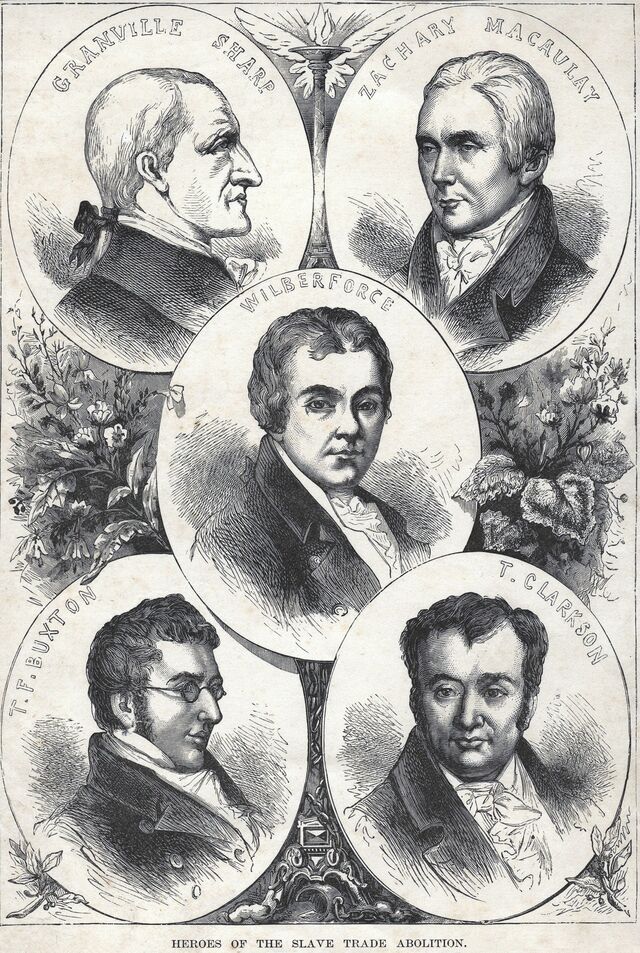
I talk a lot about the British abolitionists. Abolitionism was a failure pretty much everywhere. In the Netherlands, Spain, Portugal [and] the US, it hardly took off. Britain was different; it became a massive movement. In 1807, the slave trade was abolished after hundreds of thousands of people signed petitions [and] joined boycotts. Then the British Royal Navy was able to force 80% of other countries to stop slave trading as well. Power mattered in that respect. 7
7 The abolition of slavery — as distinct from the slave trade — took effect across the British Empire in 1834, with Parliament allocating £20 million, about a third of Treasury income, to compensate slave owners and free roughly 800,000 people. The move contributed to Dutch-speaking settlers leaving British territory in the Cape Colony in South Africa, a migration known as the “Great Trek.”
What is the equivalent today? Who do you see that gives you hope?
Someday historians will look back on us. There are still things going on that are absolutely horrific. The way we treat animals is probably the most obvious example.
You’re a vegan.
I am, but I don’t think that’s my big contribution to making the world a better place. The real personal commitment would be building a movement.
But my question was where your sources of hope are. Is there anyone who’s coalescing or building some kind of community around a cause you support?
My dad is a minister. I grew up sitting in church on Sunday hearing the answers to the five great questions of religion: Who are we as a species? Where do we come from? Where do we go? How should we live? What is sacred? For me, the old answers that theology provides don’t work anymore. I find answers to those questions in history. My heroes and saints are people like William Wilberforce, Thomas Clarkson, Susan B. Anthony — the great moral pioneers.
But where are those figures today?
There are so many of them — it’s just that very often they’re not very famous.
Something I deeply care about is malaria — one of the most horrible diseases. [It’s] extremely neglected from the left to the right. Very few people care about it.
There’s a guy named Rob Mather here in London, who built The Against Malaria Foundation. In another world, he would have been one of the richest hedge fund managers, but he chose to use incredible talent — the ability to build a juggernaut, a machine — to take on this horrible atrocity. If he [had] died 20 years ago, more than 100,000 people would not be alive because they would’ve succumbed to malaria. 8
8 There was immense progress in malaria prevention between 2000 and 2015, due in large part to the commitment of Bill Gates and his then-wife Melinda; the World Health Organization says 14 million deaths have been averted since 2000. Despite this success, the WHO is now warning that cases are rising, citing funding issues, insecticide resistance and climate change.
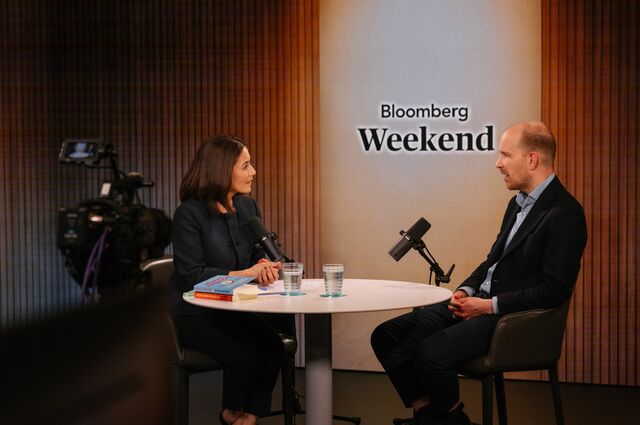
Isn’t there a moral dilemma, then, for someone like you? You get money from philanthropists. Maybe the more moral thing, if you really believe in [Mather’s] work, is to say, Fund him rather than my office.
Everything I earn with the book is going into the [School for Moral Ambition]. I think it’s important to practice what you preach, but I also love working with morally ambitious entrepreneurs.
Of the 12 founders of the British Society for the Abolition of the Slave Trade, 10 were entrepreneurs. If there’s anything I’ve come to really enjoy, it’s being in the company of entrepreneurs — people who have skin in the game, who know what it takes. It’s just sad that so much of this entrepreneurial energy is currently going to waste.
Most of the pushback to Moral Ambition has actually come from the left — people who say, We need systemic change. You can’t ask individuals or small groups to do their thing. On [the] right, a lot of people said, Rutger, you’re basically right. We should do way more.
Someone like [New York City Mayor] Zohran Mamdani. What does he represent to you? Does he show that the American political system is not broken?
Yes. [His election win] was a very joyful thing to see. Finally, a Democrat politician who understands the attentional game — how politics works.
He understands social media as well as Donald Trump [and is] much more of a pragmatist than a lot of people appreciate. He is very open to working with more centrist liberals. He’s excited about the abundance agenda — not just old-fashioned redistribution but also deregulation. 9 He doesn’t seem to be this old traditional socialist who has been reading German philosophers. He seems to look at the world as it really is — [to] be quite curious and learn new things.
9 Abundance, by US journalists Ezra Klein and Derek Thompson, was one of 2025’s most talked-about books. With a focus on enabling scale-up of renewable energy tech, it’s often seen as a liberal manifesto for growth-oriented development.
You said he understands social media as well as President Trump. You have expressed some concern about the messages that helped get [Mamdani] elected. I think you have a suspicion of very simple political messages.
This is the classic dilemma of populism, right? You need certain populists.
Is he a populist?
Of course he is.
You don’t have a problem with that?
No, no, no.
As long as it’s a populist from the left?
Some populism on all sides of the political spectrum is what you need to really give people the feeling that you are speaking for them. I think that’s totally fine. The question is, what happens after that? Can you deliver? 10
10 Over the past decade, populist politics have often been associated with the right, and in the UK with messaging on Brexit. But a progressive version of populism is also emerging. Zack Polanski has been dubbed “the British Zohran Mamdani” as his Green Party surges in the polls — alongside its ideological opposite, Nigel Farage’s Reform UK.
A good example is rent control. Super popular. At the same time, economists are very, very clear that it just doesn’t work. It usually makes [the] problem worse. This is one of those cases where I hope Mamdani will be smart.
You grew up the son of a pastor, but I think you then lost your faith?
I did.
Why? And when did that happen?
When I was 16, 17 years old.
I wrote my first essay around that time — about free will. I came to the conclusion that free will cannot possibly exist because I didn’t choose who I am. I didn’t choose my genes, my parents [or] my passport. Everything started to collapse around me — the whole notion of heaven and hell [and] divine will.
I think today there are a lot of people walking around with a hole in their soul — really a God-shaped hole.
What I [found] fascinating as I studied abolitionists was how important religion was. I used to think that it was the Enlightenment — the secular belief in human rights, people like Voltaire, Rousseau, Locke. Not true. It was the Quakers. It was the evangelicals. People who were deeply religious and were like, This is our big mission in life and if we don’t do that, we’re all going to go to hell.

Get the Bloomberg Weekend newsletter.
Big ideas and open questions in the fascinating places where finance, life and culture meet.
By continuing, I agree to the Privacy Policy and Terms of Service.
Religion’s been used in many different ways. I’m thinking about all those people who trafficked and enslaved Africans, and thought the most important thing was that they should become Christians, to save their souls.
Absolutely. The whole British establishment used religion in all kinds of ways to perpetuate this horrible atrocity. That’s definitely true. But there’s another side to that coin as well.
This God-shaped hole you think lots of people are walking around carrying, is it actually being filled increasingly with God? Do you see a resurgence in religion?
I see that maybe, particularly in the US. You have all these conversion stories from JD Vance to Ayaan Hirsi Ali.
America’s always been more religious than a lot of Europe.
That’s true.
I wonder if you see it in the UK or in Europe?
I haven’t. Have you?
I’ve seen more European politicians talk about their faith. Famously, in this country, Tony Blair converted to Catholicism [only] after he left Downing Street, [but] I had Nigel Farage sitting exactly where you are, telling me he’s thinking about becoming a Catholic.
It’s hard to read people’s hearts and minds. Sometimes it does feel a little bit disingenuous or [like there’s] a political angle. So I struggle with that a bit.
I tried really hard to become a Christian. It’s just that I wanted to have really good reasons, and intellectual honesty is really, really important for me.
You were clearly quite upset a few months ago when you gave a lecture on the BBC and expressed a strong opinion about President Trump. In the recorded version, the BBC decided it had to be removed. A few months on, do you see the complexity of the legal position that the BBC was in?
No, honestly not. I think it was pure cowardice. That opinion has only become stronger, to be honest.
For months, I worked with an incredible team who helped me to make the best lectures I’d ever written. They had given me a ton of useful feedback. They wanted me to take out some things about Gaza — I didn’t do that. I had much more about Trump and Vance — I took that all out, because I thought it was too predictable. People would have expected that from me.
It was recorded for 500 people in the BBC Radio Theatre — absolutely fine. It’s only when the Panorama thing happens and [a subsequent story in] the Daily Mail starts what I see as a fake news campaign, [that] a lot of stuff was leaked about what I said. 11
11 The “Panorama thing” refers to a $10 billion dollar lawsuit filed by Trump against the BBC over an edit in a 2024 documentary on the Panorama program. The broadcaster is seeking dismissal of the suit. Having worked at the BBC for many years I reflected on the case, and the resignations it triggered at the broadcaster, in Bloomberg’s Forecast newsletter.
You did get to deliver the opinion you had about President Trump to the audience. But the circumstances around the moment changed because of his willingness to sue. Would your publisher let you put a line like that in your next book?
Absolutely.
Have you asked them that?
My Dutch publisher [is] publishing the Reith Lectures.
And your UK publisher? 12
12 UK defamation law is famously restrictive, and British courts have become a favored venue for litigants with deep pockets. A statement can be successfully defended if proved as true or substantially true, but the burden of proof is on the defendant.
I’m happy to say it right now: Donald Trump is the most openly corrupt president in US history.
That’s your opinion. I think we’re really discussing whether you are able to see any shades of gray, that there is such a thing as legal risk. 13
13 Bregman has called his allegation “defensible and plausible,” and cited an August 2025 New Yorker calculation of what it called “the Trump family’s profiteering” from the presidency. White House Press Secretary Karoline Leavitt has said that it’s “absurd for anyone to insinuate that the president is profiting off of the presidency.”
The lecture itself is about media networks, corporations [and] universities bending the knee to the new administration. The BBC [is] one of the most important media institutions in the world — I think it was so shameful and embarrassing. This is exactly what the lecture was about. In a way, it was proving my point.
You are assuming that [the edit] was because of legal advice. I don’t know that. The lawyers I’ve spoken to think that the whole case is pretty weak and that it’s more of a bullying tactic. 14
14 A BBC spokesperson at the time said: “All of our programmes are required to comply with the BBC’s editorial guidelines, and we made the decision to remove one sentence from the lecture on legal advice.”
Let’s talk more about you — whether you have changed your mind over the years on some issues. If so, what have they been?
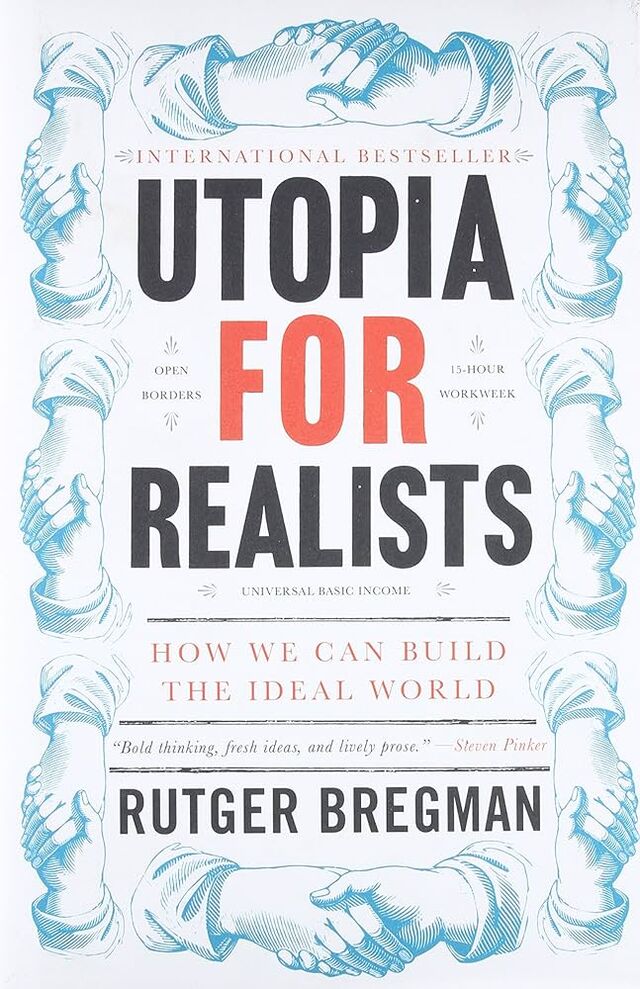
Oh, quite a few. I [used to be] much more hopeful in general about the direction in which politics was going. I wrote Utopia for Realists a decade ago because I honestly thought the boring age of neoliberalism might end, and we could finally discuss interesting new ideas again, such as universal basic income [UBI]. Things have been moving in another direction.
Have you followed arguments that maybe AI gets the world closer to that idea, because it will disrupt jobs so much? That there will have to be new ways to support people? 15
15 Microsoft AI chief Mustafa Suleyman told me that he’s long believed in a universal basic income and now thinks it’s inevitable, as AI makes economies more productive.
I think [UBI] should be on the table as a very serious policy option right now.
Maybe we shouldn’t call it universal basic income. Income suggests it comes from work. Maybe we should call it universal basic wealth — a little bit like Alaska. Alaska discovered a lot of oil and decided, We’re going to give that dividend to all the inhabitants.
I think we need something like that. We need to find ways to distribute the massive bounty of AI, otherwise what you get is just a new form of feudalism — if we’re not already there. 16
16 Alaska’s discovery of oil in the late 1960s led to the establishment of a sovereign wealth fund. The state is notable for legally mandating equal annual dividends to eligible residents. Those payouts stood at $1,000 per person in 2025, when more than 600,000 people were eligible.
Would you like to be in politics yourself?
I very much wanted to be in the arena after a decade being on the outside. I think that politics is for power, and ideals are worthless if you don’t back them up with actual strength.
In that sense, Stephen Miller is right. I just think that the purpose of power is to do good — to use what you have to follow in the footsteps of the great moral pioneers who came before us.
Now you sound really energized. Earlier on you said the world is in a darker place than you thought 10 years ago.
Those two things are fundamentally connected.
If there’s one thing that I’ve believed my whole career, it’s that small groups of thoughtful, committed citizens can change the world. That is exactly what we need right now — groups of really committed people who are willing to ignore the script that was written for them by other people and go on that journey and do the right thing. A friend of mine studied at Oxford and he always talks about the “Bermuda Triangle of Talent”: talented young people going into consultancy, finance and corporate law.
That could be one of your kids one day. How would you feel if that happens?
[Laughs] Slightly disappointed, I guess.
We’re talking to a lot of these young people right now — both at Harvard [and] Oxford. Many of them are so excited to live a different kind of life. Read the application essays they write — it’s all about tackling poverty, big diseases, et cetera. Something happens along the way and they are ruthlessly funneled into these cubicles. It’s kind of sad.
We have only one life on this planet. The message that performed best was: You didn’t fight your way [here] to end up in a bull**** job. So we’re having a lot of fun with this.
(Corrects to add context around Alaska’s sovereign wealth fund in annotation 16)
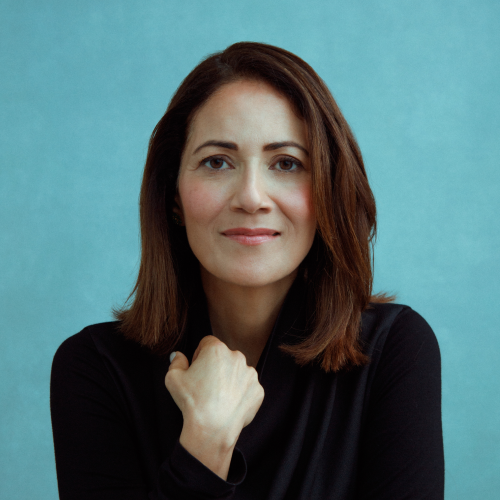
Mishal Husain is Editor at Large for Bloomberg Weekend.