
The Anti-War Democrat Courting MAGA Voters
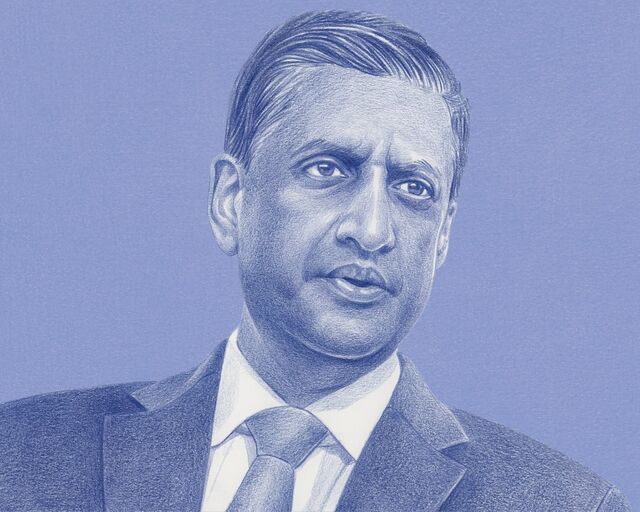
California Representative Ro Khanna says exposing elite impunity, opposing Middle East wars and taxing extreme wealth could unite progressives with disaffected Trump voters.
After three weeks of conflict and with no end in sight, the far-reaching consequences of war with Iran are becoming more obvious. Even when hostilities cease, it will take time to repair infrastructure, energy capacity and confidence of many kinds.
How might that change the political calculus in the US? On Capitol Hill, California Representative Ro Khanna, a Democrat, is among those pushing back on the conflict, even though a War Powers resolution he supported earlier this month failed to pass.
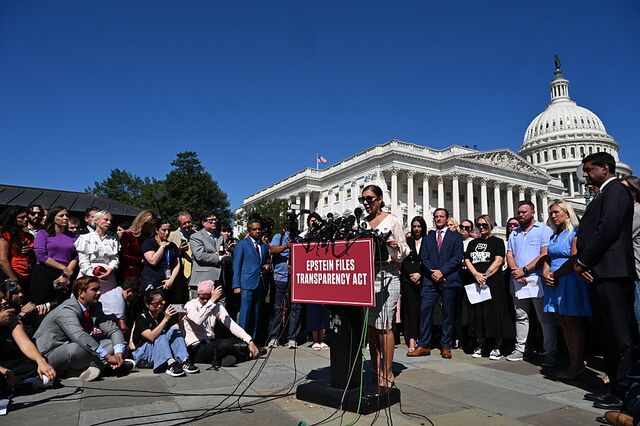
Khanna has been in Congress since 2017, representing Silicon Valley, but gained prominence last year through his work on the Epstein files. A measure initiated with Kentucky Representative Thomas Massie, a Republican, forced the release of thousands of documents; Khanna says it gave him a new confidence on other goals.
The anti-war resolution was another common cause with Massie, but Khanna also has his sights on wealth taxes — even if he risks alienating some of those who elected him.
This conversation has been edited for length and clarity. You can listen to an extended version in the latest episode of The Mishal Husain Show podcast.
Tell me how and when you first heard the name Jeffrey Epstein.
During the first Trump administration, there was reporting about survivors who had been raped [and] abused by this man, Jeffrey Epstein, and that there had been a cover-up. At that time, Elijah Cummings was chair of the [House] Oversight Committee. We put out a statement saying we should investigate it, but then I didn’t think much of it. When there was a lot of press coverage by Julie Brown 1 and others, I started to follow it closely — survivors had been abandoned by our Justice Department.
1 It was investigative journalist Julie K. Brown’s three-part series for the Miami Herald in 2018 that led federal authorities to revisit the plea deal Epstein received in Florida in 2008. Epstein had been investigated for having sex with underage girls, but the deal allowed him to plead guilty only to a state charge of soliciting a minor for prostitution.
Did it feel like a big move for you to get involved [last year]? You represent Silicon Valley, one of the wealthiest and most powerful places in the country. [A lot of] your own writing has been about the future of the economy and tech. Then here you were, going out on a limb for the Epstein survivors.
I didn’t realize quite how many powerful people would be implicated.
I understood how much of an issue this was to a lot of people. The sense that there are two tiers of justice in America — that the rich and powerful can get away with something ordinary Americans can’t.
I visited factory towns, Trump districts, podcasters. I understood this was a matter of fairness for a lot of Americans. I got more deeply involved with Massie. I met survivors. It became a very personal and emotional issue for me — people [were] in my office in tears, reliving their trauma.
I never expected that this would become a cause I would get so involved in, but it was an organic process.
In the UK, there has been a process of accountability, for some, that appears to be underway. 2 What do you feel you have achieved, in concrete terms, in the US?
2 In February, both former Prince Andrew and former minister and ambassador to the US Peter Mandelson were arrested by UK police on suspicion of misconduct in public office, after the US Department of Justice released emails allegedly showing both men disclosing government information to Epstein. Neither has been charged with any offense.
We forced the disclosure of over 3 million files — half the files — which people never thought would be disclosed. It’s been a moral reckoning for the United States — and the world — to see so many powerful financiers, politicians, technology leaders, Hollywood leaders, caught up with Epstein. I’ve called [them] an “Epstein class”: rich and powerful people who thought their wealth and connections shielded them from any accountability — elite impunity.
Now there is a reckoning with that in different countries. In some cases, it’s led to resignations of powerful people from banks and universities.
We need to do more. We need to have investigations of people who gave vast amounts of money to Epstein [and] those who have been credibly accused of raping and trafficking. There need to be prosecutions.
What this has shown the nation is that there are people like Massie and me willing to stand up to the powerful, willing to say that you can’t have elite impunity, that there needs to be one system of justice in this country. That’s the first step to restoring trust in a democratic project.
Do you think that prosecutions will come in the US? You were one of the people allowed to see unredacted files. Give us a sense of what that experience was like. How many names were there that really jumped out at you?
The unredacted files were [themselves] heavily redacted, because there were already redactions done by the FBI in March.
There still need to be “302 forms” released — statements of survivors to the FBI about who abused [and] raped them. We recently saw the cover-up where the woman who accused Donald Trump — one of her interviews was released, but three of them that mentioned Trump were not. It was only because [Representative] Nancy Mace, myself, Massie and journalists pushed that the DOJ relented and now have released those three other interview memorandum.
I’m not saying that all of the allegations are true or not — that’s for the investigation, prosecution and American people to decide. What there shouldn’t be is a cover-up, which is a violation of the law. It shouldn’t be members of Congress having to expose this. There needs to be the release of the rest of the files. 3
3 The unverified claims made against Trump in FBI interviews are now accessible via the DOJ website. White House Press Secretary Karoline Leavitt has called the claims “completely baseless,” saying Trump was “totally exonerated by the release of the Epstein files.” The DOJ told lawmakers it withheld documents only if they were “duplicates, privileged, or part of an ongoing federal investigation.”
Some whose names are in there say that while they were associated with Epstein, they had no knowledge of his crimes. I wonder if you have reflected on the very tight timeframe [of the Epstein Files Transparency Act]. Do you think it led to the messy nature of what ensued? Some names of victims did become public. 4
4 Massie and Khanna’s Epstein Files Transparency Act required the release of documents within 30 days of its enactment. Lawyers representing Epstein’s victims have claimed that “ham-fisted redactions” led to thousands of mistakes.
No. The Oversight Committee had subpoenaed for these files back in August, so the Department of Justice had months to be preparing this. The fact they weren’t is a total violation of the law.
Our law kicked in in November, but they should have already been preparing all of this back in August. They could have petitioned Judge [Paul] Engelmayer and Judge [Richard] Berman in the Southern District of New York for more time to confer with the survivors’ lawyers, but they refused to meet [them]. They refused to meet with Massie and me.
[In] the first round, they basically released nothing, then waited another month to release more information. The only thing that explains this is both a cover-up and incompetence at the DOJ.
Do you think that you are going to get further towards prosecutions? This has moved away from the news agenda, not least because of this war.
It’s moved away from the front pages, but there’s still many Americans who are outraged by what happened — on behalf of the survivors, but [also] at the larger thought that you can’t have a group of people who believe they’re above the law. That undermines the very trust in the nature of the democratic project — the sense that the government isn’t corrupt and beholden to a few.
If you are, like me, a progressive Democrat who believes we need to tackle wealth inequality, that we need national health insurance, universal childcare, a living wage, free public college, a thousand new trade schools, a new ‘economic patriotism,’ 5 then you need to restore trust in the democratic project. That means holding this “Epstein class” accountable — so we will continue to fight for it.
This is not about being in the news cycle or on the headlines.
5 In his 2022 book, Progressive Capitalism, Khanna defines “new economic patriotism” more simply as a call for “America to make things again.” His ideas have even been praised by Steve Bannon, who told Vanity Fair that Khanna is “trying to take Make America Great Again and put even more stars and stripes on it.”
In the eight months that you’ve worked on [the Epstein files], what has it done to you? Has it given you a new resolve that if you needle and get the administration into a corner, you can achieve something?
It’s given me a new confidence that we can build a new governing coalition in America.
This is the first time since Donald Trump came down the escalator that a Democrat has actually worked with Trump voters — found common cause with many people who voted for Donald Trump.
I believe we will build a new coalition in America, with a commitment against elite impunity [and] new wars in the Middle East.

Get the Bloomberg Weekend newsletter.
Big ideas and open questions in the fascinating places where finance, life and culture meet.
By continuing, I agree to the Privacy Policy and Terms of Service.
Essentially, a coalition with disaffected MAGA voters. Is that what you mean?
Progressives, independent voters and some of the voters for Donald Trump can come along in a true coalition that’s going to put working- and middle-class Americans first, and take on a society that has been tilted to the very powerful.
That is the modern FDR coalition. It is a coalition that’s going to win in the future.
Was standing alongside Marjorie Taylor Greene, with Epstein survivors, an example of that? Does it mean that you make new friends in the interest of something bigger?
We have to look for common ground. Marjorie Taylor Greene showed a lot of courage in standing up for survivors — she risked her political career for it. 6
6 The former representative from Georgia, once a staunch supporter of Trump, has broken with the president and GOP leadership on a number of issues, including the full release of the Epstein files and the war in Iran. She announced her resignation from the House in November 2025 and stepped down in January.
What we need to do in this country is not to shame voters who voted for Donald Trump, but to engage in dialogue. Not compromise our values on abortion rights, LGBT rights or immigrant rights — but to approach people who may have voted for Trump and say, Why did they have such anger at the system?
Where does your effort to stop this war fit into all of that? You haven’t had any luck getting your War Powers resolution through Congress. Are you hoping the mood of the country turns against the president on this?
We’ve made tremendous progress. When I used to introduce these War Powers resolutions to try to stop the war in Yemen or other unilateral actions, I was seen as fringe. 7
7 Opposing US involvement in the Saudi-led war in Yemen may have appeared fringe when Khanna first introduced such a resolution in 2017, but by 2019 the effort had gained enough bipartisan support to pass both chambers of Congress. Trump then vetoed it.
Now I had the entire Democratic leadership supporting my efforts, from [House Minority Leader] Hakeem Jeffries down. We had every Democrat but four unified, and we got two Republicans.
Most Americans realize that spending $2 billion a day in Iran is an extraordinary waste of resources. 8 We’ve already lost — unfortunately — 13 service members. We need to find a way of ending this war. That’s where American public sentiment is.
8 Pentagon officials reportedly told US Senate staffers in a closed-door briefing that the first six days of the war cost more than $11.3 billion, and the department has asked for an additional $200 billion from Congress. Public opinion on the war is divided. US farmers — many of them Trump voters — are among those voicing concern as fertilizer and fuel prices increase.
What is that way? What are the levers you can pull?
Stop the bombing.
Now we have Khamenei Junior instead of Khamenei. I don’t understand what we’ve accomplished. We have a 56-year-old hardliner instead of an 86-year-old.
[We need] to be very clear that [Iran] cannot develop nuclear weapons, cannot continue to enrich uranium, and cannot be hitting ships in the Strait of Hormuz.
That requires diplomacy and statesmanship. I believe we can do that. We can look at a negotiated settlement with Iran that denies them nuclear capability. 9
9 I was really asking about actions that Khanna and his colleagues on Capitol Hill could take. The congressman has previously said he will vote against any supplemental funding requests for the war in Iran. On this, the administration could run into difficulty in both the House and the Senate.
Do you think the president is looking for some kind of off-ramp? Do you think this has not gone according to what he was expecting?
He is concerned, in particular, [by] the price of gas in America.
It was incompetence. He was told, apparently, by some advisors that the Strait of Hormuz would be fine — that Iran wouldn’t shoot ships.
The president’s a keen observer of the economy and the stock market. He understands this is hurting the very working- and middle-class Americans who he campaigned for. I do believe he’s looking for an off-ramp to end the war.
There’s nothing in his public statements suggesting that at the time of us speaking. Are you picking up on something behind the scenes, or hearing from Republicans on Capitol Hill that they feel the same way as you?
Oh, Trump’s statements are all over the place. One day he says, We won the war; another day he says, The war’s going to continue. It’s very hard to see where his head’s at.
What I am hearing from Republican colleagues and MAGA influencers is that they’re concerned about the price of gas going up, about more American lives being lost; that we’re not able to change the regime. They understand that young men in this country don’t want to be drafted or sent out to die [in] the Middle East.
The president has a strong base of support among Republican elected officials — and they’re going to give him some time. But I believe the pressure is going to continue to mount — and there are other War Powers resolutions, including by moderate Democrats like [Representative] Josh Gottheimer, that will come up for a vote.
You said something the other day which stuck in my mind — that what is happening now is a “militarism” that is going to “erode the soul” of America. Tell me what you fear the dark side of this could be.
It’s more about the president’s approach to world affairs. He felt impunity to go in and topple [Nicolas] Maduro. He is threatening the Cuban regime with regime change. He’s threatening to conquer Greenland.
This has remnants of “gunboat diplomacy,” where might makes right. That is pre-enlightenment thinking.
Do you think that Cuba could well be next?
There’s a concern.
What we need is a negotiated deal in Cuba, the likes [of what] Ben Rhodes negotiated under Obama. You could have Cuban nationals in Florida, and around the country, investing in Cuba; helping create economic redevelopment. That would be in Cuba’s interest. 10
10 Cuba has been in an acute crisis since January, when Trump captured Maduro, cut off Venezuelan fuel exports to the island, and threatened tariffs on other countries that continued exporting fuel to Cuba. Power outages are frequent, affecting healthcare and delaying thousands of surgeries. In recent days, Havana has confirmed for the first time that it is in talks with the White House.
What we can’t do is try to topple regimes. Trump has an infatuation with that, obviously, but he also has another wing of his party that has been opposed to overseas wars. My sense is that it’s a continual tug of war with him. I am pushing for the side that’ll get him to stop this kind of military threat.
I was thinking about your background. In some ways, your work is part of your family life — your grandfather was a member of parliament in India.
He was jailed by the British as part of [Mahatma] Gandhi’s independence movement, in the early 1930s — working for Lala Lajpat Rai. 11
11 Khanna’s grandfather was Amarnath Vidyalankar, who joined Gandhi’s campaigns against British colonial rule and was elected to India’s parliament after independence. Khanna’s parents moved to the US in 1968.
I do think that my commitment to justice, self-determination, moving beyond the colonial model of the world, stemmed from the values of my faith, Gandhi, Hinduism and the example of my grandfather.
In those days, of course, America was telling Britain that the age of colonies was over. What you are describing about America’s actions on the world stage now — would you call it neocolonialism?
It pales in comparison to the evils of British colonialism — generations of exploitation of people in India and Africa that are unconscionable — but I think that President Trump has taken actions in violation with American ideals that aren’t reflective of the emerging majority.
Are you running for president in 2028?
Well, we’ll see. I’m focused on having Hakeem Jeffries become speaker. Politics is like tennis. If you start thinking about who’s going to win the set, you’ll lose the point in hand.
I’m focused right now on building a majority, but I have a new moral vision for the country.
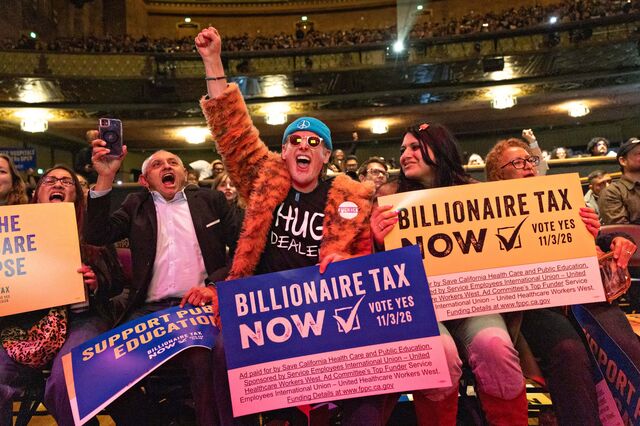
You’ve supported a federal tax on billionaires. 12 You’ve also backed a similar measure at home in California. Tell me where that comes from. The kind of people who put you on Capitol Hill are the people who would be targeted by the taxes you’re now supporting.
12 Khanna has cited French “rockstar” economist Gabriel Zucman as a key influence. Analysis by Zucman and Emmanuel Saez has suggested a 5% wealth tax on US billionaires would raise $4.4 trillion over a decade, though others have suggested this underestimates levels of avoidance and administrative costs.
The people who put me in Capitol Hill are my voters — who are engineers at Google, technologists, teachers and working-class folks. Of course, I come from one of the most affluent districts, but the voters there are not — there may be 200 billionaires in California, and a thousand billionaires across the country.
My allegiance is with the working and middle class. It always has been — since I ran for Congress, since I co-chaired [Senator] Bernie Sanders’s campaign [in 2020]. I have no problem [with] and celebrate entrepreneurship, innovation, wealth generation — but we have a failed social contract. We have 19 billionaires who have 12.5% of the GDP — three times the wealth concentration of the Gilded Age with Rockefeller, Morgan, Carnegie and Vanderbilt.
What I’ve said — and what Bernie Sanders said — is that we need a modest wealth tax on these billions of dollars that aren’t being taxed. They are just sitting there without ever paying income tax and that funding could pay for the healthcare, childcare and education of all Americans.
When you first ran for Congress, you did have donations from some of those very prominent people in Silicon Valley. I imagine some of them have been quite upset with you since.
I’ve never taken PAC [Political Action Committee] or lobbyist money — so I get contributions, but they’re limited at $3,500 in [an] election cycle.
It’s a myth that the Elon Musks and Peter Thiels reflect Silicon Valley. 13 I have broad-based technologists and business leaders who support me, [alongside] labor leaders who understand that the current wealth inequality is not sustainable.
13 Thiel is reported to have made a $3 million donation to a California business lobby whose activities include opposition to the wealth tax. Meanwhile Google co-founder Sergey Brin is among those backing a new political organization that Bloomberg reported will oppose the wealth tax.
You have thoughtful people in the valley — Dario Amodei at Anthropic, Jeff Dean at Google, Jensen Huang at Nvidia — who understand that we need to build a new social contract.
That’s the kind of coalition that I believe we need to build — not one that disparages business leaders, but asks business leaders to be economic patriots. Ask not America to do for Silicon Valley, but Silicon Valley to do for America.
At the state level, do you acknowledge the risk that places can get hollowed out? Even Silicon Valley, storied as it is — people can move away, companies can move away if you don’t safeguard an ecosystem and make sure people aren’t thinking that Texas or Florida are more attractive places, with their taxation.
Absolutely, but the idea that the AI revolution is going to happen in Miami or Austin is only a soundbite for people who don’t know anything about the AI revolution.
The reason it’s in my district, and all over Silicon Valley, is because we have Stanford and Berkeley; we have Google and Apple. Even if some of the founders may leave, the employee base is still there and San Jose State is there. The ecosystem is there.
What’s actually threatening it is cuts to NSF [the National Science Foundation], cuts to NIH [the National Institutes of Health], cuts to university research, restrictions on immigration [and] blanket tariffs. Those are things that pose stress.
We want to make sure that we don’t tax paper billionaires and illiquid assets. We need to make sure that we’re not taxing voting shares. There are things that have to be done properly in designing a billionaire tax.
So you’re confident it’s not going to cost you your seat? Because you have now got a challenger in California who’s being funded by people with a very different view on that tax.
Well, I take nothing for granted, and we will always campaign hard in the district. But my belief is that most people in America, and most people in my district, believe that we need a social contract where people can succeed.
This is the theme you’ve mentioned several times in this conversation. Is that the conclusion you have come to after the last presidential election defeat — that kind of agenda not only wins the candidacy for the Democrats next time around, but wins the country?
I’ve been traveling to factory towns and rural communities since I got to Congress, talking about a nation that cannot be divided into islands of prosperity and seas of despair. We need to make sure that every community and every family is participating in the economic future. I’ve articulated that vision in books and I articulated that view in terms of “economic patriotism,”
It’s not driven by politics. It’s driven by a substantive view of what this nation needs to do to give people a stake in the American dream.
I guess what I’m really asking is do you think a progressive Democrat can win the candidacy, and the country, in 2028?
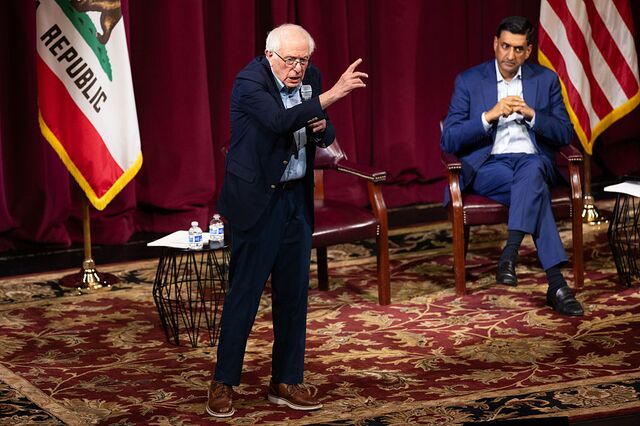
If Bernie Sanders were 15 years younger, he would be the next president of the United States. No one has his trust and popularity on our wing, but I believe what will win the country is someone who has a bold, fresh economic vision, combined with a commitment to rights — that we are going to build a cohesive multiracial democracy where everyone has an economic stake. That, in my view, is where the heart and soul of the American people [is], and we need leadership that will inspire us to fulfill that destiny.
I know politicians always have to be really positive, forward-looking and optimistic, but what do you think could stand in the way of that?
When you have a story like mine — my parents were immigrants, I grew up middle class, took out a lot of loans for higher education, but had people who believed in me — you can’t help but be hopeful about the American story.
What I worry about is the pain and damage in the meantime — to immigrant families in our country, to the young school girls who were killed in Iran, to our service members who’ve lost their lives. There is damage that Donald Trump can continue to do in the next three years.
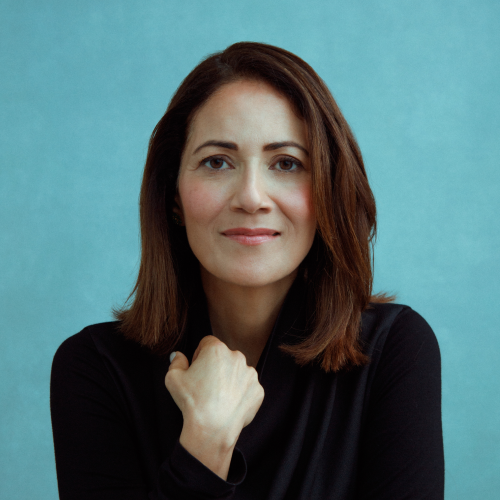
Mishal Husain is Editor at Large for Bloomberg Weekend.