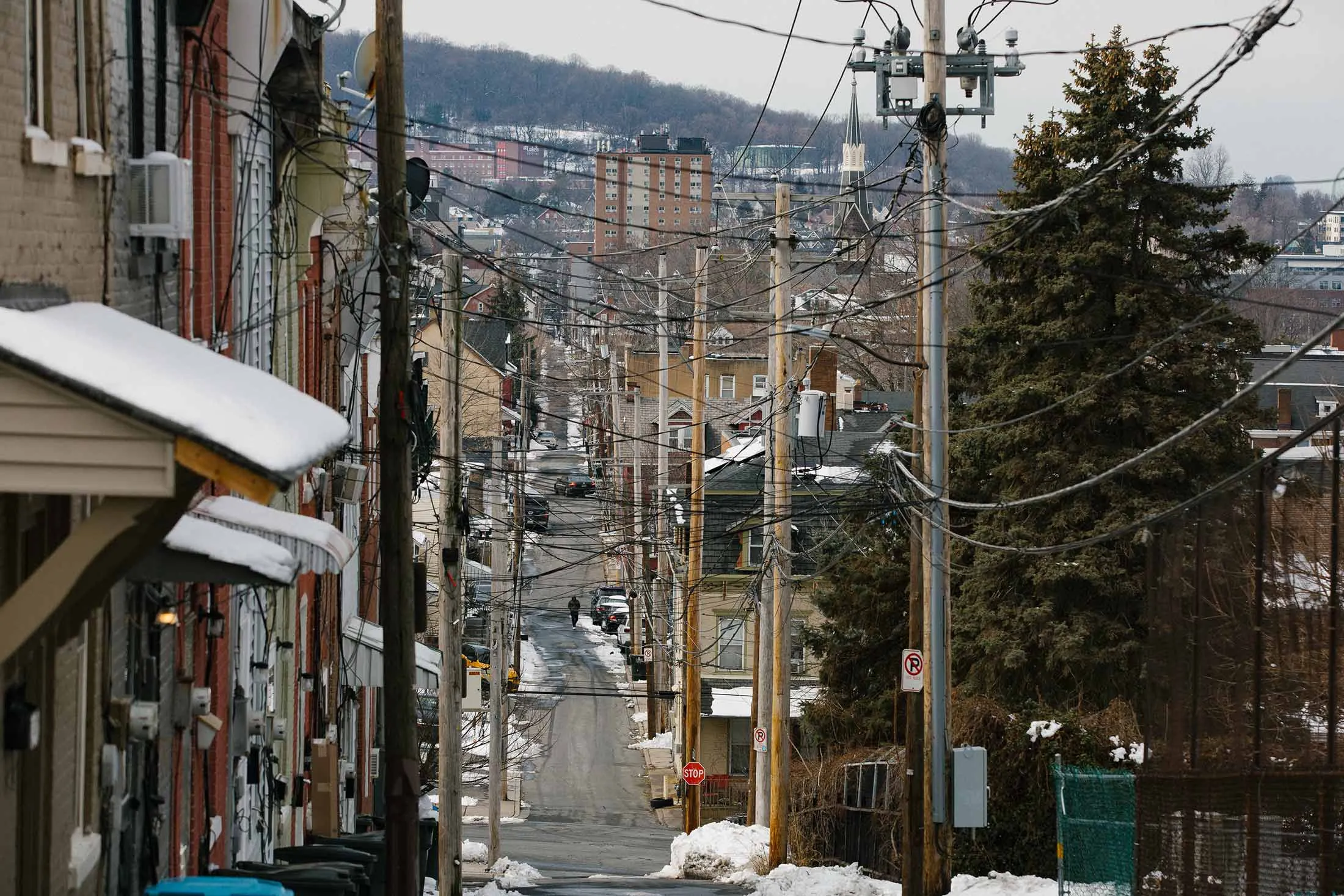
Markets Magazine | The Big Take
Electric Fury
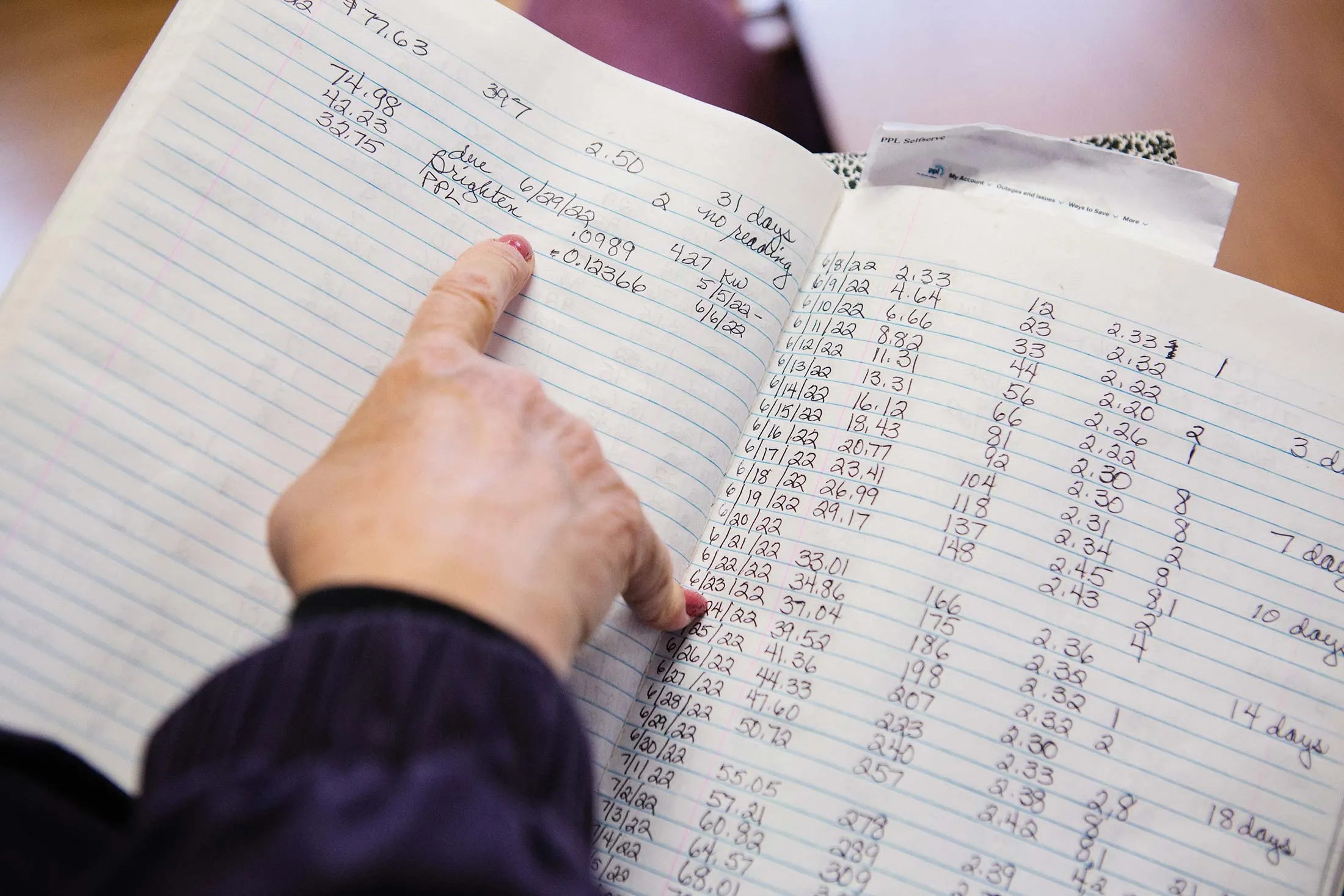
Kris Burek thinks about her power bill with almost every move she makes. When she turns on the air conditioning, runs a load of laundry or fires the oven in her Pennsylvania home, she tracks her electricity use in a composition notebook. Each day, she logs into her utility account to record how many kilowatt-hours she has consumed.
Her careful accounting helps her gain control over power payments that have almost doubled in recent years. “They continually go up in small increments, almost unnoticeable, until one day you get that shocker of a bill and say, ‘Whoa, how did this happen?’”
Burek, a 74-year-old retired social worker, lives on a fixed income in Slatington, a Lehigh Valley town in one of the few remaining US congressional swing districts. For her, electricity isn’t just a pocketbook issue but a political one: She says she’ll vote for any candidate who can help reduce her power bills.
Across the country, soaring electricity costs are burdening consumers and stirring voter anger. The rapid build-out of artificial intelligence data centers, along with tariffs and upgrades to an aging grid, has raised power prices at rates unseen in decades. The war in Iran is throwing global energy markets into upheaval, adding a surge in gasoline prices to affordability concerns.
The energy strains have propelled the once-mundane utility bill to the center of US politics, a place it hasn’t occupied since electricity became a staple of American life. After a 2024 election in which voter concerns over inflation and the economy helped send Donald Trump back to the White House, the outcome of this year’s midterms stands to be as much about the price of power as the price of groceries.
Democrats who focused on household energy costs swept key elections in New Jersey, Virginia and Georgia late last year, a grim omen for incumbent Republicans trying to hold on to a razor-thin margin in the US House of Representatives. Trump himself brought up the issue in his February State of the Union speech, unveiling a plan to have tech companies build their own power plants for their AI data centers. It was the first time in the history of the annual address that a president explicitly framed rising electric bills as a consumer concern.
“It’s completely unprecedented in modern history for it to be talked about nationally and for it to be a campaign issue,” says Joshua Basseches, a Tulane University professor who studies energy policy. “It’s the thing that’s on voters’ minds.”

The pressure will intensify. The North American Electric Reliability Corp., the country’s grid security regulator, forecasts that US power demand in summer will rise 224 gigawatts over the next decade—roughly the equivalent of adding 180 million homes. One analyst said the last comparable surge came during World War II.
Higher energy costs are making waves around the world. The war in Iran is hitting fuel supplies in Europe and Asia, which depend on Middle East natural gas for electricity. Japanese Prime Minister Sanae Takaichi, whose ruling party secured a historic victory in February elections, has said her administration is looking into measures that could be implemented to curb the rise in power and gas prices in the wake of the war. In the UK, opposition parties are campaigning on lower bills and blaming climate goals for utility rate hikes, while the Italian government is under pressure from industry to cut high power costs.

In the US, where narrow margins in a few swing districts can tip the balance of power in Washington, even modest changes in voter sentiment can have a profound effect. In a 2025 poll by Ipsos, three in four respondents voiced concern about rising utility bills. Electricity prices are playing a role in some of the midterms’ most competitive races in Ohio, Maine and Michigan. In Virginia, home to the world’s largest concentration of data centers, Representative Jen Kiggans warns on her website that “sky-high energy bills” have hit her constituents hard. After the Trump administration halted construction on permitted offshore wind projects, the Republican wrote that the delay was preventing her district, Virginia’s 2nd, from accessing affordable power.
Pennsylvania’s 7th District, a mix of rolling mountains and former manufacturing strongholds clustered along the Lehigh River, will be a proving ground for the issue’s importance. Republican Representative Ryan Mackenzie is facing a tight race against Democratic challengers including Carol Obando-Derstine, a former utility employee campaigning on cutting power costs. Both agree that power prices should come down. But like so many other affordability debates in American politics, unity on the problem dissolves into division over the solution.
Residents such as Burek, a registered Democrat, just want relief. “I was getting these outrageous bills in the wintertime that I just could not afford,” she says, paging through one of her notebooks to show monthly payments have jumped from about $58 in June 2021 to almost $100 in June 2025. “I will support anyone who, regardless of party, can make affordability not only words or a promise but a fact.”
Keeping the Lights On
Average US residential electricity price, in cents per kilowatt-hour
Source: US Energy Information Administration
Note: 2025 price is preliminary
Reasons for surging power bills depend on where you live. New England states are contending with higher natural gas prices and too few gas pipelines to supply the region, especially on the coldest days. California’s residential electricity rates are close to double those in the rest of the US in large part because of the state’s ambitious climate policies and costs tied to preventing wildfires.
In Pennsylvania, power plant retirements are squeezing supply as data centers are stoking demand. The state’s electricity comes from the PJM Interconnection power grid, the nation’s largest, stretching over 13 states from the Midwest to the East Coast. Residential electricity rates on this grid have risen rapidly since 2020, with the three states that gave PJM its name—Pennsylvania, New Jersey and Maryland—seeing increases of about 40% in that time, according to BloombergNEF. In parts of eastern Pennsylvania, home to the Lehigh Valley, the price of electricity has soared 200% since 2020, pushing up the average bill by about $23 per month this year alone.
Because infrastructure costs and higher wholesale electricity prices are spread across the grid, even people who live far from data center hot spots are bearing the cost. On the PJM grid, data centers will add at least $23 billion to customer bills over the three years ending in May 2028, according to Monitoring Analytics, the grid’s independent market monitor.
Ask people in the Lehigh Valley about their power bills, and chances are good their first response won’t be about the power plants or the grid. It’ll be about how they hate data centers. “We’re not going to just front the bill for these data centers they want to put in,” says Allison Jones, a 20-year-old nursing-home worker who attended a hearing in December to speak out against a plan by local utility PPL Corp. to raise rates. Power bills are one of the costs, along with high rents, that have Jones and her boyfriend living at his parents’ home in Macungie.

In her eyes, Republicans are pushing data centers with no regard for the impact, while Democrats pander to voters who oppose the facilities but don’t do anything to actually cut the cost of living. “Even if I get a better job, I’m still concerned that even however much money I make, there is not going to be enough to support the price of living and the price of electricity,” Jones says.
Her frustrations reflect a broader mood sweeping the country, where rising household costs are feeding into backlash against incumbents from both parties. With Republicans now controlling the White House and Congress, they may find themselves bearing the brunt of the blame from voters in November.
“Republicans will likely be held more to account for this issue, even if at a policy level they may not deserve as much of the blame as they will be receiving,” says Charlie Dent, a Republican who held the Lehigh Valley congressional seat now occupied by Mackenzie from 2005 to 2018. Mackenzie, who beat the incumbent Democrat in 2024 by just 4,000 votes, stands to be particularly vulnerable. The campaign arm of House Democrats has zeroed in on the race, issuing a February press release quoting local residents complaining about their electric bills.
“Even if I get a better job, I’m still concerned that even however much money I make, there is not going to be enough to support the price of living and the price of electricity”
Mackenzie, a 43-year-old millennial dad in the mold of Vice President JD Vance, says he feels the same as voters in his district about his family’s power bills. “I don’t know exactly how much it’s gone up, but it’s more than I want to pay,” he says while standing in the parking lot of his office in Carbon County, named for its coal deposits.
Mackenzie went to Harvard Business School before landing back in the Lehigh Valley, where his family has lived for nine generations. They watched the area’s transformation over the decades from farming to small-scale manufacturing to the formation of global behemoths like Bethlehem Steel, once one of the world’s largest producers of the metal.
The region shifted again as globalization took hold. Billy Joel in 1982 lamented how “they’re closing all the factories down” in his song “Allentown,” about the downturn in Lehigh County’s capital. Bethlehem Steel filed for bankruptcy in 2001. After some depressed years, the area has been rebuilt around health care and warehouses while holding on to manufacturers including Crayola, Mack Trucks and industrial gas supplier Air Products & Chemicals. Still, Allentown’s median household income of $55,000 is well under the national median of $80,000, according to federal data.


Mackenzie says he broadly supports Trump and views affordability through what he calls the two Fs and the two Hs: food, fuel, housing and health care. He blames rising electricity costs on President Joe Biden and the way his administration battled against fossil fuels. He says the US needs coal and gas, along with nuclear power, for reliable and affordable electricity. “Those missed years from the Biden administration are really damaging because you can’t get that time back,” he says.
On the campaign trail in Pennsylvania in 2024, Trump promised to cut everyone’s energy prices by half within a year. That hasn’t happened. Since taking office, he’s pushed to speed the development of data centers while also trying to head off criticism about soaring costs. In January he proposed compelling technology companies to effectively fund the new power plants their data centers need.
Mackenzie has to navigate a tension increasingly common in US politics, and the same one Trump faces: how to encourage the investment that data centers bring without angering voters who hate the way the facilities eat up green space and drive up their bills. “Come November, hopefully we’re going to be able to show real progress on a lot of these fronts that people recognize,” he says.
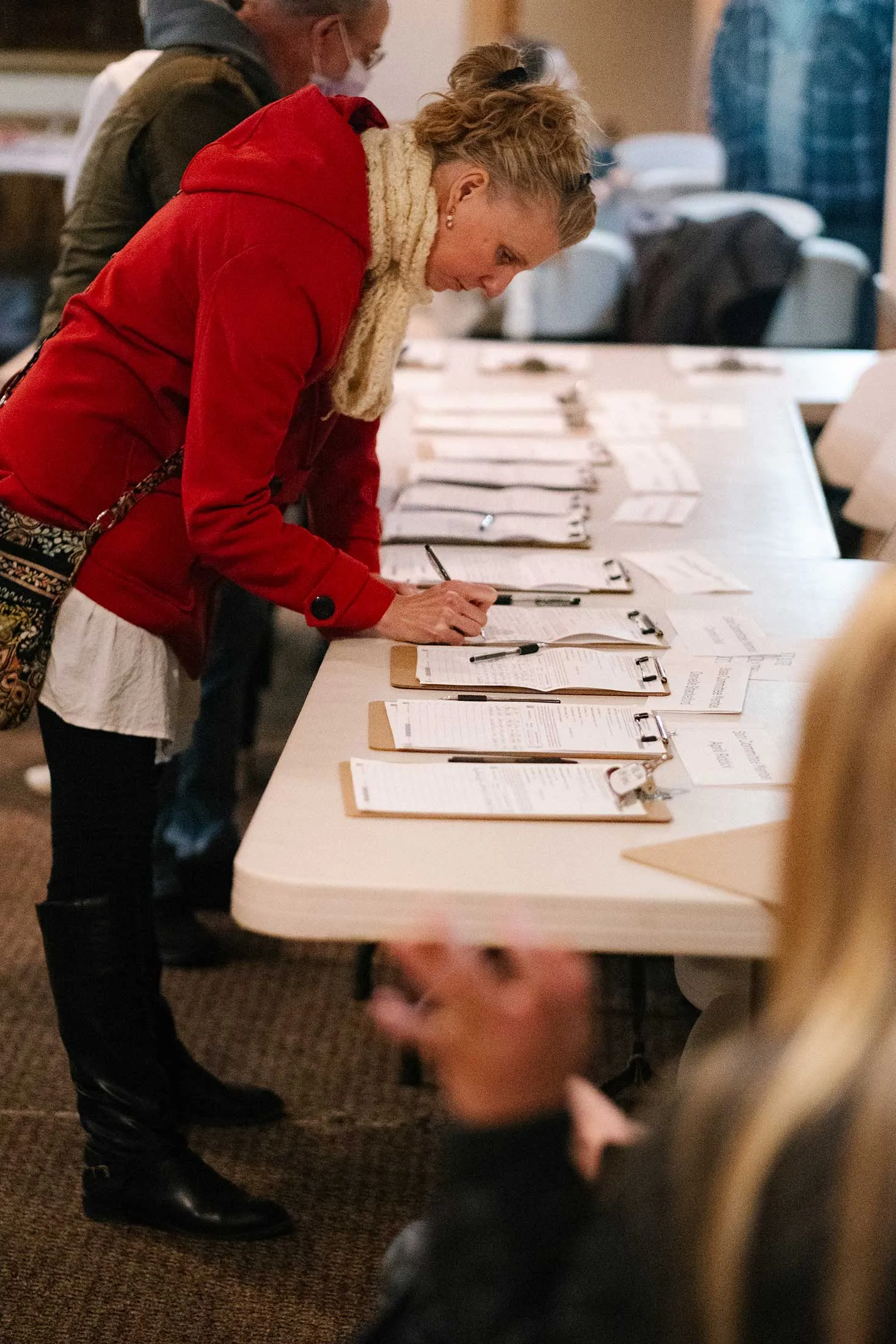
In late February, Democrat Obando-Derstine tried to gather support for her bid to unseat Mackenzie at a petition party, a peculiar piece of US elections where candidates gather the thousands of signatures needed to get their names on the ballot. It was held at the Grover Cleveland Democratic Association, a political clubhouse in Bethlehem named for a president elected in the 1880s and 1890s, when electricity was a luxury that only the wealthiest homes could afford.
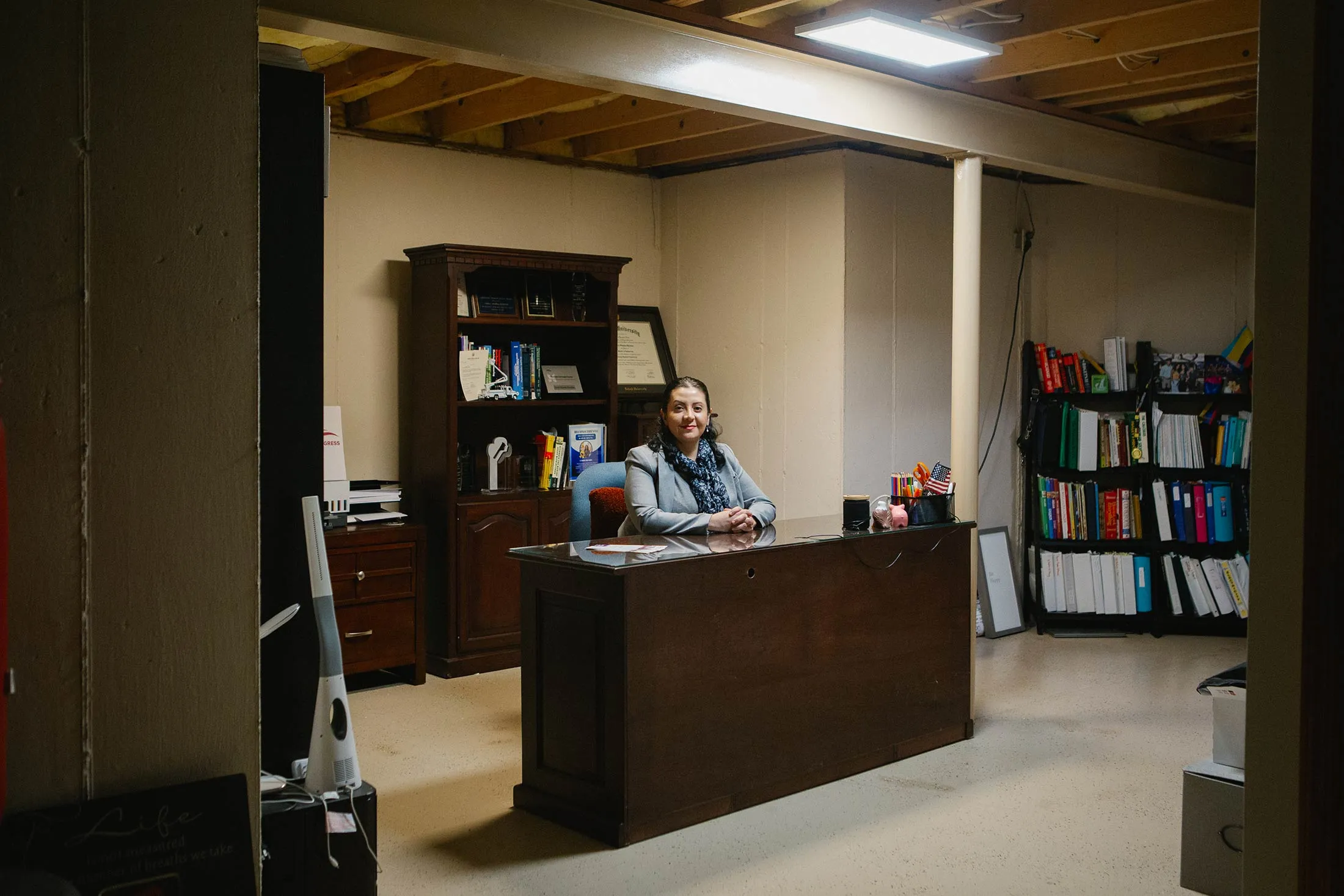
Obando-Derstine, 49, shook hands and talked up her background working for PPL. She emigrated from Colombia when she was 3 years old, attended Pennsylvania State University, ran two nonprofits and eventually went to work for the power company in a role helping customers manage their bills. She then got a master’s degree in energy systems engineering from Lehigh University in Bethlehem before returning to PPL to work on connecting large customers to the power grid.
“Power bills are going up because of the data centers. They’re energy hogs,” she says, “at a time when we see a decrease in the generation available, and so we have a perfect storm.”
Unlike Mackenzie, Obando-Derstine pledges to restore clean energy and efficiency incentives that she says lower power bills and create good-paying union jobs.
Electricity and Electoral Politics
Increase in average residential electricity prices from January 2020 to January 2026

Sources: US Energy Information Administration, Cook Political Report House Race Ratings as of March 12
Note: January 2026 prices used to calculate increases are preliminary
Pennsylvania Governor Josh Shapiro, a Democrat, has backed data center development, joining executives from PPL and private capital giant Blackstone Inc. last year to praise their plan to build gas plants to power the facilities. But he also filed a lawsuit against PJM in 2024 over price hikes, resulting in a settlement that his office says saved PJM customers $18 billion, and has continued to push PJM on reforms to keep bills in check.
Several of the Democrats running against Obando-Derstine in Pennsylvania’s May primary have also made power bills part of their platform. Bob Brooks, president of the state firefighters union, has a platform to “crack down on price-gouging utility monopolies.” The platform of Ryan Crosswell, who resigned as a federal prosecutor to protest Trump’s dropping corruption charges against then-New York City Mayor Eric Adams, includes “fighting the construction of any AI data center built in or around PA-07 that would increase energy costs for Lehigh Valley families.”
PPL, which has about 1.5 million Pennsylvania customers, says that higher bills reflect a combination of factors, including regional wholesale energy markets. Tightening supply that preceded the data center boom has driven much of the increase, including the retirement of power plants without replacement by new generation that can be turned on whenever electricity is needed, the company said in a statement.
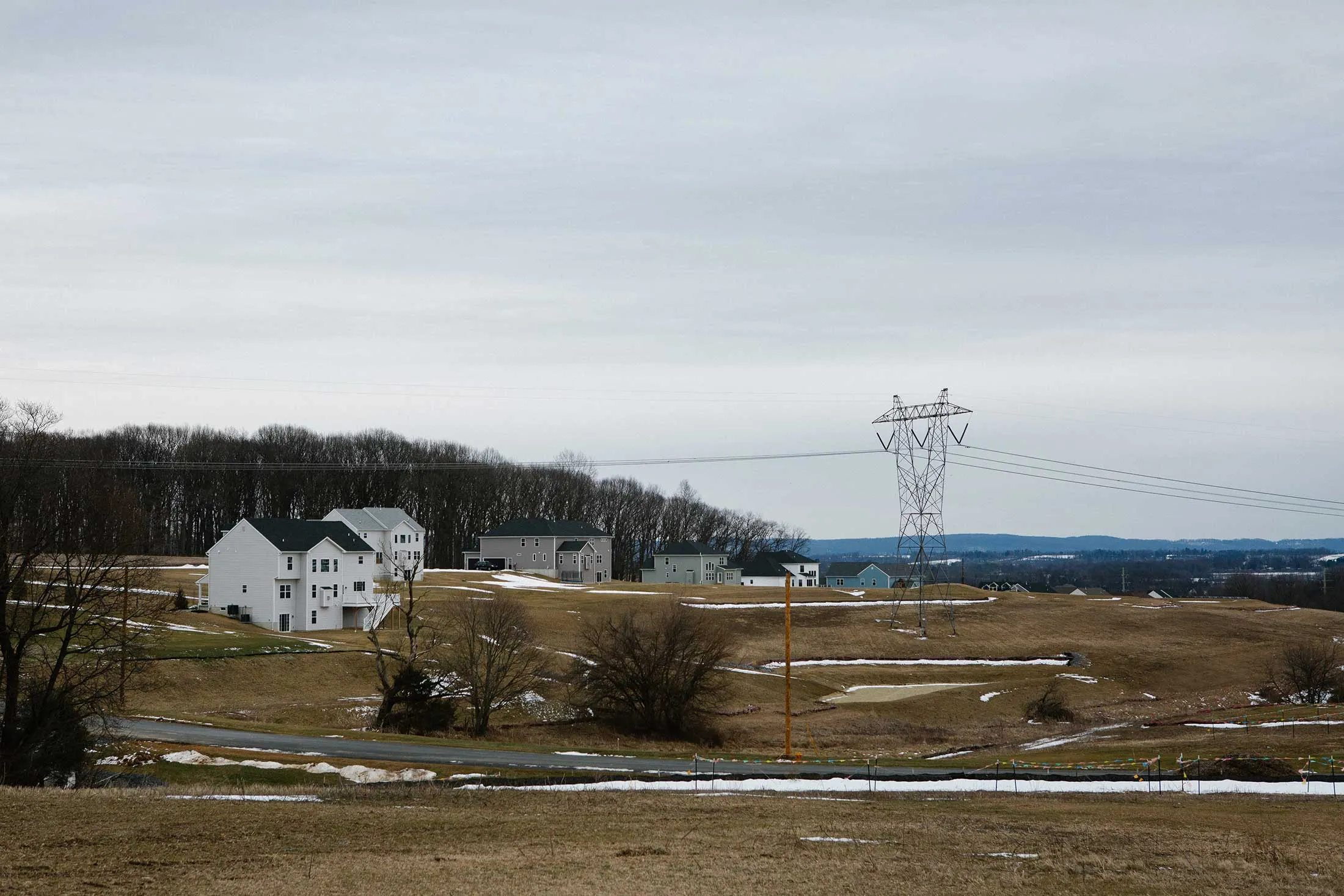
Customers are still angry. They’ve been turning out in large numbers at the public hearings over PPL’s planned rate increases and flooding regulators with handwritten complaints about rising bills and reliability.
“Please, put a stop to this, we are stretched thin as it is,” wrote Shirley Turner, adding that her husband is a veteran of the Korean War and has dementia. “There has to be a stop to these rising prices. We need our electricity!!” The owner of the historic Americus Hotel in Allentown said his monthly power bills have jumped from around $14,000 to $18,500.
Jose Echevarria, an Allentown warehouse supervisor who voted for Trump in 2024 and cites Second Amendment protections as his biggest issue, was used to his PPL bills coming in around $200 in the winter months. The 50-year-old was astounded when his most recent bill hit $367. “I’ll vote for whoever has big ideas to make it lower,” says Echevarria, who grew up in Puerto Rico and drives his gold Ford Fusion for Uber to make ends meet. “It doesn’t matter if they’re a Republican or a Democrat.” —With Naureen Malik, Amanda Cox, Shoko Oda, Eamon Farhat and Will Wade
Saul and Natter cover energy for Bloomberg from New York and Washington, respectively.