

Peter Navarro: ‘There’s No Softening on China’
Trump’s longtime trade adviser discusses tariffs, doing business with Beijing, and the Supreme Court case that could define his legacy.
As the Supreme Court reconvenes after a winter recess, a ruling may be imminent in one of its most consequential recent cases: whether Donald Trump’s use of emergency powers to levy tariffs is legal.
A loss could leave the government facing a multibillion-dollar bill to refund companies for tariffs already paid, while dealing a blow to one of the key architects of the president’s trade policy. Peter Navarro, an economics professor and one-time Democrat, advised Trump during both his first term and his current one, and in between served four months in prison for refusing to comply with a subpoena related to the Jan. 6, 2021 attack on the US Capitol.
Navarro has been a China hawk for years, so when we spoke in Bloomberg’s Washington D.C. bureau, I was also keen to understand if he’s comfortable with the latest trade position on China: the one-year truce agreed in October between Trump and Xi Jinping.
This conversation was recorded before the US military raid on Venezuela and has been edited for length and clarity. You can listen to an extended version in the latest episode of The Mishal Husain Show podcast.
I wonder if we could start with the origins of your bond with the president. When did you meet him for the first time?
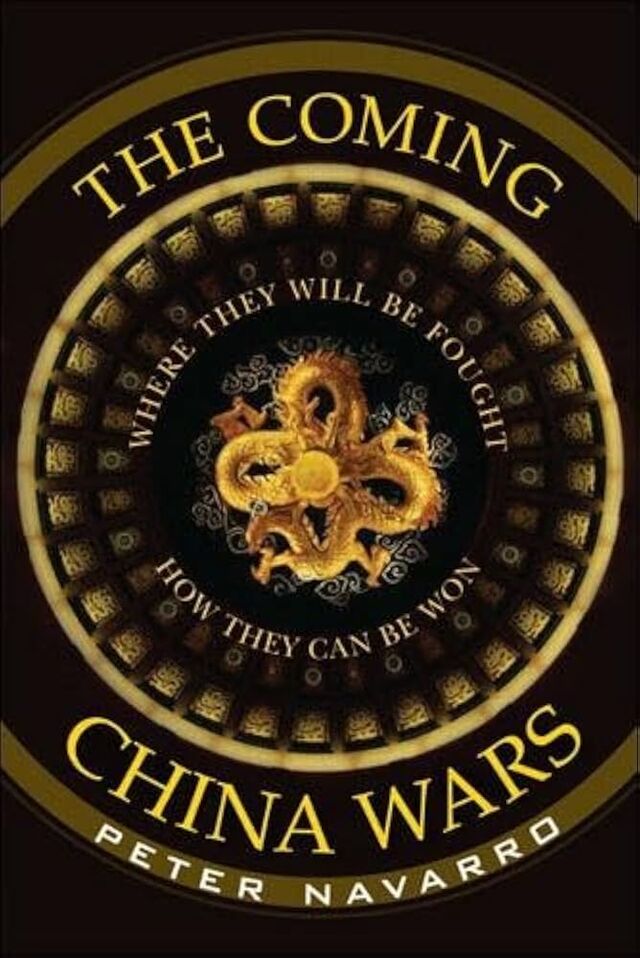
It goes back to 2006, when I wrote a book called The Coming China Wars. At the time, it was widely viewed as hyperbole. Right now, it reads like a government report.
The prevailing view in the early 2000s — as China joined the World Trade Organization [and] was beginning to inundate the world with dumped manufactured products — was that it was simply [about] cheap labor.
My analysis showed [it] was a lot more than that. China set about taking the world apart using things like high government subsidies, intellectual property theft, counterfeiting, piracy and state-owned enterprise. 1
1 Navarro’s personal and political journey is worth reflecting on: Raised in a single-parent household in Florida, he gained his PhD in economics at Harvard and went on to teach at the University of California Irvine. Once active in the Democratic Party, he then became convinced of the economic threat from China, and wrote three books on the subject.
Unfair trading practices, essentially.
The whole gamut.
In 2011, President Trump was asked what his favorite books on China were. Mine was on the list, so I sent him a note of thanks and we exchanged correspondences.
When he went down the escalator with Melania and declared, I sent him a note to say, Hey, you need anything? They called in 2016. I was supposed to go out to New York and meet him there. It was pretty funny. I get into this black SUV in the back seat. He gets in the front seat and he’s going, Hey, Rupert, what’s going on? He’s talking to Murdoch. He hangs up, looks back and goes, Who’s that? [Laughs] He’d never seen me before.
So you bonded over China. I want to understand how your views evolved. You used to be a Democrat, right? You used to talk about how bad protectionism would be, not only for the US but the global economy.
Well, you’re conflating a few things there. Historically, Democrats were the ones who were protectionists, in favor of defending the American working class against unfair trade. Alexander Hamilton wrote a stunning book about manufacturing and the need to protect it. Lincoln was a tariff man. McKinley was a tariff man. Henry Clay was a tariff man. Up until 1913, the United States actually funded its government entirely through tariff revenues. Then we passed income tax and shifted away from that.
One of the running jokes the boss and I have is who figured the China thing out first. Of course, he did. There’s a famous interview with him and Oprah Winfrey back in the ’80s. He was talking about Japan and how they were taking us apart with unfair trade. Everything he said would then fit the China model. 2
2 The Oprah interview was in 1988, a year after Trump placed newspaper ads alleging that Japan and other countries had been taking advantage of the US. “The saga continues unabated as we defend the Persian Gulf,” he wrote, “an area of only marginal significance to the United States for its oil supplies, but one upon which Japan and others are almost totally dependent.” The wording led to speculation that Trump was planning to challenge George H.W. Bush for the Republican nomination for president.
My first exposure to the Chinese economic model was when I was in the Peace Corps in Thailand. What was fascinating to me is that virtually everywhere you went in Asia, the commerce was run by Chinese.
Fast forward, I’m teaching business students [at UC Irvine, and] I’m noticing they’re losing their jobs. This was circa 2003, and curiously, two years after China joined the World Trade Organization. All roads led to Beijing. I realized, Hey, this is cheating. It’s devastating our manufacturing base. 3
3 The wider picture is that trade in goods and services between the US and China has boomed in the last quarter-century. China is the fourth largest US export market — and increased trade with China has boosted the purchasing power of US consumers.
Bring us up to the present day. You were at President Trump’s side in the first term. You went to jail for him.
To be clear, I went to prison in defense of the Constitution — the separation of powers. What Congress did in the wake of the January 6th riots on Capitol Hill was engage in a partisan effort to unseat the president and make sure he never ran for office again. 4
4 Navarro received a four-month sentence for contempt of Congress after ignoring a subpoena to appear before and surrender documents to the committee investigating Jan. 6. Navarro has claimed that the 2020 election was stolen and in a 2021 book described plans for Vice President Mike Pence to delay certification of Biden’s victory. He is currently seeking to appeal his conviction.
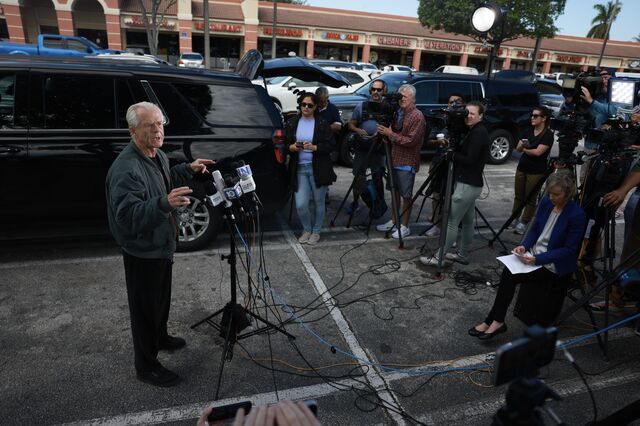
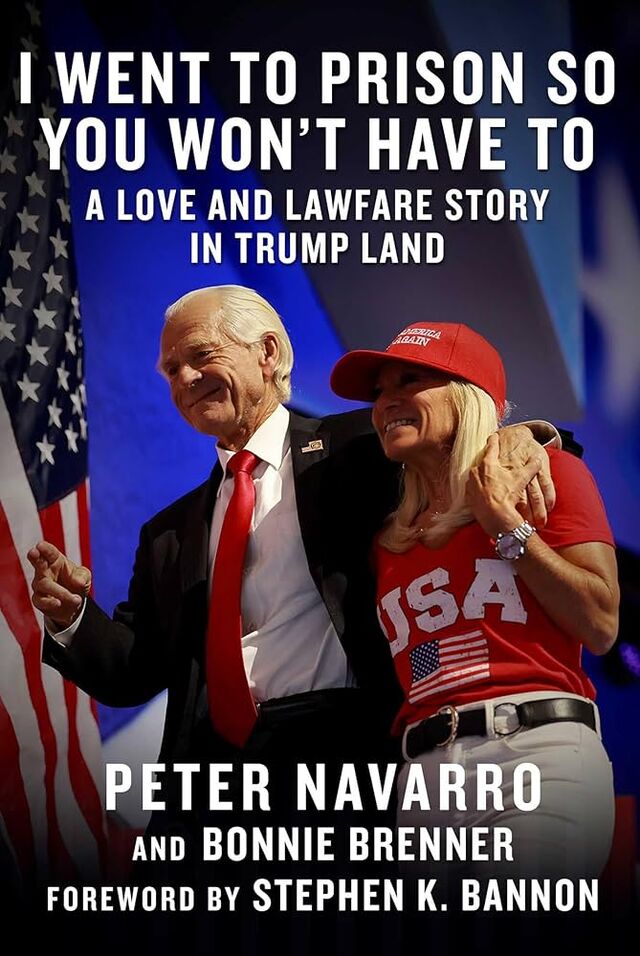
I wonder how much it changed you. I’m struck, reading your account of prison, how much you notice and document all the pettiness — the meanness — that you see around you: the withholding of medicines, the lack of fresh fruit and vegetables. Did you see a different America, which has informed your politics?
No. I grew up poor. I grew up in that milieu. Prison didn’t change me at all. I changed prison. I changed the system.
I went in there to defend the Constitution on principle — and instead of crying in my beer, I turned myself into an investigative reporter. I uncovered a $5 billion scandal. 5
5 This is Navarro’s estimate of the cost of incarcerating people beyond their release dates, which he attributes to the Bureau of Prisons failing to implement a 2018 law aimed at improving outcomes and reducing the prison population. A Trump-appointed prisons director has since pledged to accelerate implementation of the First Step Act.
How’s the relationship between the US and China on trade going now? Help us understand it.
Look, it’s a work in progress.
I’m a veteran of the first term. I spent months with Robert Lighthizer — one of the great American patriots and thinkers — and we negotiated a very comprehensive trade deal. It was an amazing thing that would’ve been really good for China as well as the United States, because it would’ve completely reformed the Chinese model. They agreed to it — then at the last minute, Xi Jinping said no. We signed what was called the “skinny deal” in January 2020, and they didn’t abide by that.
The problem we always face with China is that you wonder whether they’re just stretching you out. 6
6 When the limited US-China trade deal was signed at the White House in January 2020, Democrats accused Trump of giving away vital leverage over tougher issues in the relationship, including subsidies to key industries. Soon after, the Covid pandemic set in, and by July political tensions had risen considerably.
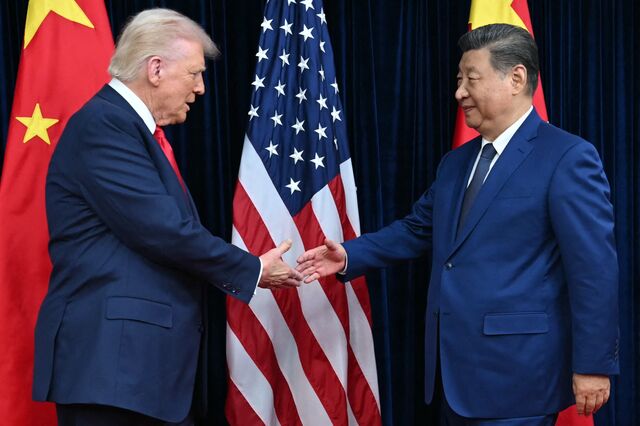
You’re part of the current administration. President Trump meets Xi Jinping in October and you end up with a deal which lowers some tariffs and suspends heightened tariffs — so there’s effectively a year-long trade truce. Is that keeping with your mission to avoid “Death By China”?
You’re burying the lead here. What’s the current tariff rate after they’ve been lowered?
It’s 10% on some things.
The total tariff on China is almost 50%. When you say we lowered the rates, we only lowered them down to 45%. 7
7 According to Bloomberg Economics, the October deal lowered the average effective US tariff rate on China to 30.75% from 40.77%.
But on Chinese imports imposed to curb fentanyl flows? There was also a suspension of heightened reciprocal tariffs.
You have to understand there was a baseline tariff [of 25%] — because of the Section 301 actions in the first term, [which] Joe Biden kept — that we added the [10%] reciprocal tariff to. A 20% fentanyl tariff, we lowered by 10%. Those are robust tariffs on China.
We are strongly encouraging Europe to adopt exactly the same level of tariffs [on China]. When the president puts up tariffs to defend America from Chinese cheating, China can’t sell as much here. Where does it sell it? Europe. Mexico.
Mexico did exactly what I’m suggesting. At the urging of our trade team, the Senate in Mexico passed 50% tariffs on China. Europe should follow the lead — they are doing that in steel [and] EVs. 8
8 Last month, Mexican lawmakers voted to impose tariffs of between 5% and 50% on more than 1,400 products from China and other Asian countries, which was welcomed by Navarro as a “major milestone in President Trump’s trade revolution.” In the EU and UK, Chinese car sales are growing fast despite import tariffs.
I’m sure you can see the contrast between when President Trump first arrived. We end up with a meeting, after which he talks about “enormous respect” between the two countries, and how honored he is that President Xi has authorized the purchase of soybeans and other goods. So there is a softening.
No, there’s no softening.

Get the Bloomberg Weekend newsletter.
Big ideas and open questions in the fascinating places where finance, life and culture meet.
By continuing, I agree to the Privacy Policy and Terms of Service.
How is that not a softening?
You don’t understand how Trump diplomacy works. The great thing that people, particularly on the left, don’t understand is that it’s functional for President Trump to have open lines with Xi Jinping, Vladimir Putin, Erdogan in Turkey — all of the people that the world regards as vicious dictators — which they are. But they are part of the world stage, where you have to negotiate. 9
9 Interesting to see Turkey’s president included on this list: Recep Tayyip Erdogan was invited to the White House last October, after a period in which he was largely ignored by the Biden administration. Bloomberg recently reported Turkey trying to return missile technology to Russia, as part of efforts to improve relations with Washington.
So are you comfortable with him saying “enormous respect” for China? Do you have enormous respect for China?
I have enormous respect for the Chinese people. The Chinese people are under the boot of [the] Chinese Communist Party.
If China’s going to escape its own mercantilist economic model — which is screwing the world, including Europe, and causing tremendous instability in the financial system and great anger towards China — it needs to do one simple thing. It needs to lower the savings rate in China by providing a social safety net for its people. It’s extraordinary that a communist, socialist country has no protections with respect to pensions or healthcare for its people. Instead, what the Chinese do — because that’s the way they roll — is they let the Communist party members become rich and everybody else — the lao baixing — suffer. 10
10 In fact, China operates the world’s largest social security network, although benefits and coverage vary significantly by province and often require some private contributions. Demographic shifts and a shrinking workforce are putting increasing pressure on the system.
I wonder if there are other people who would prioritize doing business with China who have influence over the president in a way that makes you less than comfortable? [Nvidia CEO] Jensen Huang has managed to get Nvidia H200 chips sold to China. Are you comfortable with that?
That’s a work in progress. That’s an ongoing dialogue.
I think people have to understand that there’s a constant negotiation going on with countries around the world. The China relationship is a very difficult one.
You left out the part about how China has weaponized rare earth [and] critical minerals, which are part of virtually every high technology product that’s made around the world. China has been flexing its muscles in Europe, India [and] the United States saying, We’re going to do what we want and if you try to stop us, we’re going to take away your critical minerals. They think they have a monopoly on it, but that’s just a matter of time. American innovation is going to quickly wipe away that weaponization. What do you do in the meantime? You do diplomacy. If people want to call that soft, they don’t understand the chess board.
So are you comfortable with China being able to buy Nvidia [H200 chips] specifically?
11 I suspect Navarro does have strong views on this. Trump’s decision to allow the sale of these chips to China has been seen as a win for Beijing, as it’s likely to give Chinese AI researchers greater aggregate computing power. Huang told Joe Rogan that US Commerce Secretary Howard Lutnick has offered him access to the president whenever he needs it.
It enables competition with US AI companies.
I’m one of only three people who served as a senior adviser in the first Trump administration from the beginning to the end. That happened because I stay in my lane.
Chips are not my lane.
I know from one of your books that you know what it’s like to be part of an administration where different people have influence — how you worry about losing sight of a core agenda. Essentially, people need to remember about delivering for working-class Americans. Are there risks to the American people not understanding the agenda that you are trying to deliver? We’re in the run-up to the midterms.
Of course. Part of my job is to explain exactly what we’ve inherited — which is a mess — how we’re addressing it and how long it’s going to take to see the fruits of the Trump policies.
How long do you think it’s going to take?
Well, the model here is the transition from Jimmy Carter in the ’70s era of stagflation to Ronald Reagan.
Biden set us up for a stagflationary scenario. Carter did the same for Reagan. Reagan comes in, does deregulation — positive supply shock. Does the tax cuts — positive supply shock. Makes adjustments, stops doing stupid stuff like Carter did. It takes time. 12
12 Missing from this account is Paul Volcker. As chair of the Federal Reserve at the time, he began to sharply raise interest rates to tame inflation in 1979, while Carter was president. The Fed raised rates after inflation rose under Biden, however Trump has consistently urged the central bank to lower them.
For Reagan, time ran out. The midterms rolled around two years after he assumed office; it was a bloodbath. The Democrats won the house and basically paralyzed government. But the next six years were a beautiful thing because Reagan’s policies took hold and we had one of the most prosperous times.
We understand that history and we’re trying to make sure we don’t get caught in that same vice. So what we have to do is explain very clearly to [the] American people.
The Threat of Stagflation
In the late 1970s, US inflation and unemployment rose simultaneously

So, “work in progress.” In 2028, who would you trust to continue this agenda?
It’s not for me to say and that’s not my job.
I mean, JD Vance and Marco Rubio — that would be a great ticket.
With who at the top?
JD would be there. Marco’s already said that if JD runs, he wouldn’t challenge him. I love these guys. I always admired Marco. Back in 2016, [during the Republican presidential primary] he was the sharpest tool in the shed, besides Donald Trump. He couldn’t hold a candle to Trump, but he’s really a very capable person.
I think you’re onto something with the messaging. In 2018, because we lost the House — there were some mistakes made that I hope we don’t make again — it became a crap show. The Democrats started issuing subpoenas and impeachments. We don’t want to repeat that.
Here’s what we’re up against. We come in and egg [and] beef prices [are] off the charts. That’s terrible. It’s as American as you get, scrambled eggs and hamburgers. We’ve been able to dramatically reduce the price of eggs almost immediately.
There are also questions about your policy. You mentioned beef. President Trump reduced tariffs on beef, tomatoes, coffee and bananas, exactly because of the pressures on household budgets. That’s an acknowledgement, isn’t it, that some of the actions the administration has taken on tariffs have played a role in hurting ordinary Americans? 13
13 Affordability has become the new watch word in US politics, as voter frustration mounts over the cost of living. Trump’s approval numbers on the economy hit 31% in December — down from 40% in March — and his team has acknowledged the need to improve their messaging ahead of the midterms.
I’m totally supportive of no tariffs on products we don’t make here. We don’t make coffee here. [Laughs]
So why did it ever happen?
It made no sense. It happened and now we make adjustments. That’s what we do. We make adjustments.
Manufacturing jobs have declined for seven straight months.
Well, let’s shift to that. I take that really seriously.
How long do you think it’s going to take you to change it?
I can tell you that with exactitude.
Okay.
Here’s how it works.
No. How long is it going to take?
Well, let me just work you through the quick math. For you to have a new factory in this country, ready to produce things, and therefore have new manufacturing jobs, that’s about two to three years.
What you see in the interim is trillions of dollars of investment, from abroad as well as domestically, which is as we speak beginning to design those factories and get ready to build them. What happens then? You have a boom in construction jobs. But you won’t see any improvement in manufacturing right then. Once you build the factories, that’s when you see the manufacturing jobs. 14
14 Construction was a bright spot in November’s jobs report, leading payroll gains alongside healthcare and social assistance.
Rome wasn’t built in a day. We can’t wave a magic wand. It doesn’t work like that. But if you simply look at the trajectory, it’s going to be a beautiful thing.
Do you think it’s going to be enough of a message to be saying to Americans in the run-up to the midterms, It’s a work in progress; the Democrats left us a really bad inheritance? Don’t you think you might have to do more?
We are doing more. I can assure you. You watch.
Let me give you one concrete thing. What about increasing taxes on the wealthiest? That’s something Steve Bannon, who you know well, is in favor of. Would you support it?
I supported that back in the first term. It’s a debatable issue. 15
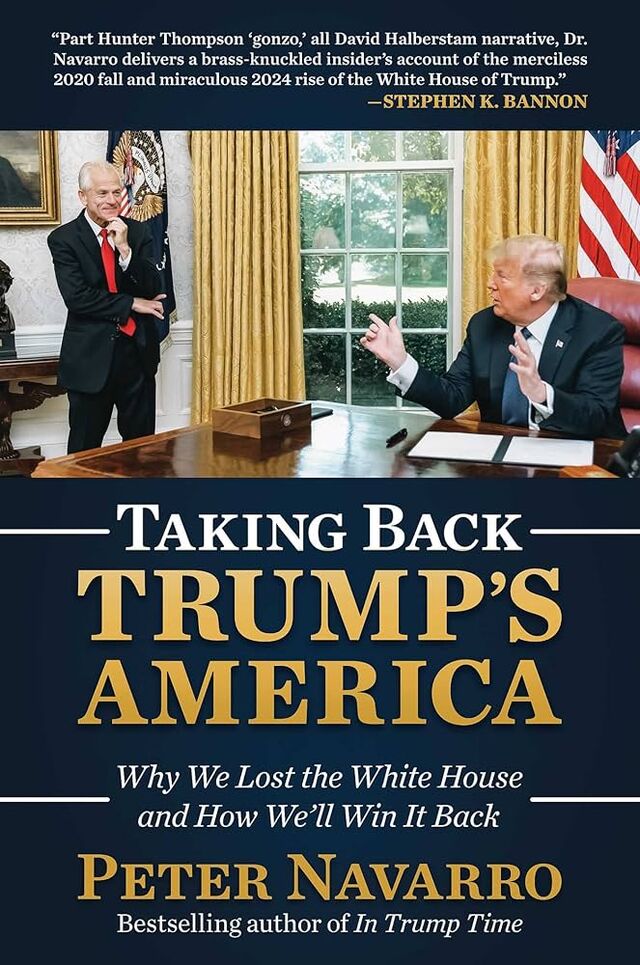
15 Navarro was raised by a single mother and worked several jobs through high school. In Taking Back Trump’s America, he dismisses some of those he worked with in the first Trump White House as globalists and RINOs (Republicans in Name Only). When Reince Priebus tells him early in 2017 that a tax cut is an early priority of the new administration, Navarro replies, “Oh really? How do you think that is going to play in Peoria with our blue-collar manufacturing swing voter base?”
Have you talked to the president about it?
I always trust in the president. He’s playing three-dimensional chess. You can have points of view. You win some, you lose some, but I always trust his judgment.
Now you’re pulling [tax increases] out of left field. [For the midterms] we have to, first of all, explain to people exactly what we’re doing across the areas where we have problems with inflation — which is housing, healthcare, food [and] energy. Those are the biggies.
We are, as we speak, working 24 hours a day on things we can do to make that better.
You’ve got the Supreme Court [tariffs] case verdict coming up soon.
Yes.
A lot of people are preparing for it to go against the government based on the comments that the justices, including John Roberts, made during questioning. What happens if the government loses the case? What is the plan B?
The case itself is about whether you can use the emergency powers of the president to impose tariffs.
It was your advice that he could.
Absolutely.
You were clear that IEEPA [the International Emergency Economic Powers Act] was the act to use?
Yes. If the Supreme Court wants to essentially ratify the president’s use of tariffs under IEEPA, the law is on its side.
There’s two salient points. One is a question of whether a tariff is a tax. In this context — in an emergency context — it’s absolutely not. Revenues are incidental.
The other is a language issue — whether tariffs are [a] legitimate form of import restriction. And of course they are.
With respect to plan B — whatever plan B is, will not be as good as plan A. 16
16 Lower courts have already ruled against the administration using IEEPA to impose tariffs, but allowed tariff revenue to continue being collected pending the Supreme Court decision. Trump has called the case one of the most important in America’s history: “If we don’t win the case we will be a weakened, troubled, financial mess for many, many years to come,” he said in October.
It will be expensive, won’t it? Lots of companies will have to be refunded for the tariffs they were charged?
Depends on what the decision is.
Let’s not go there until we have to go there. I’m very confident that we have a very, very good chance. The law is on our side here, so let’s win that.
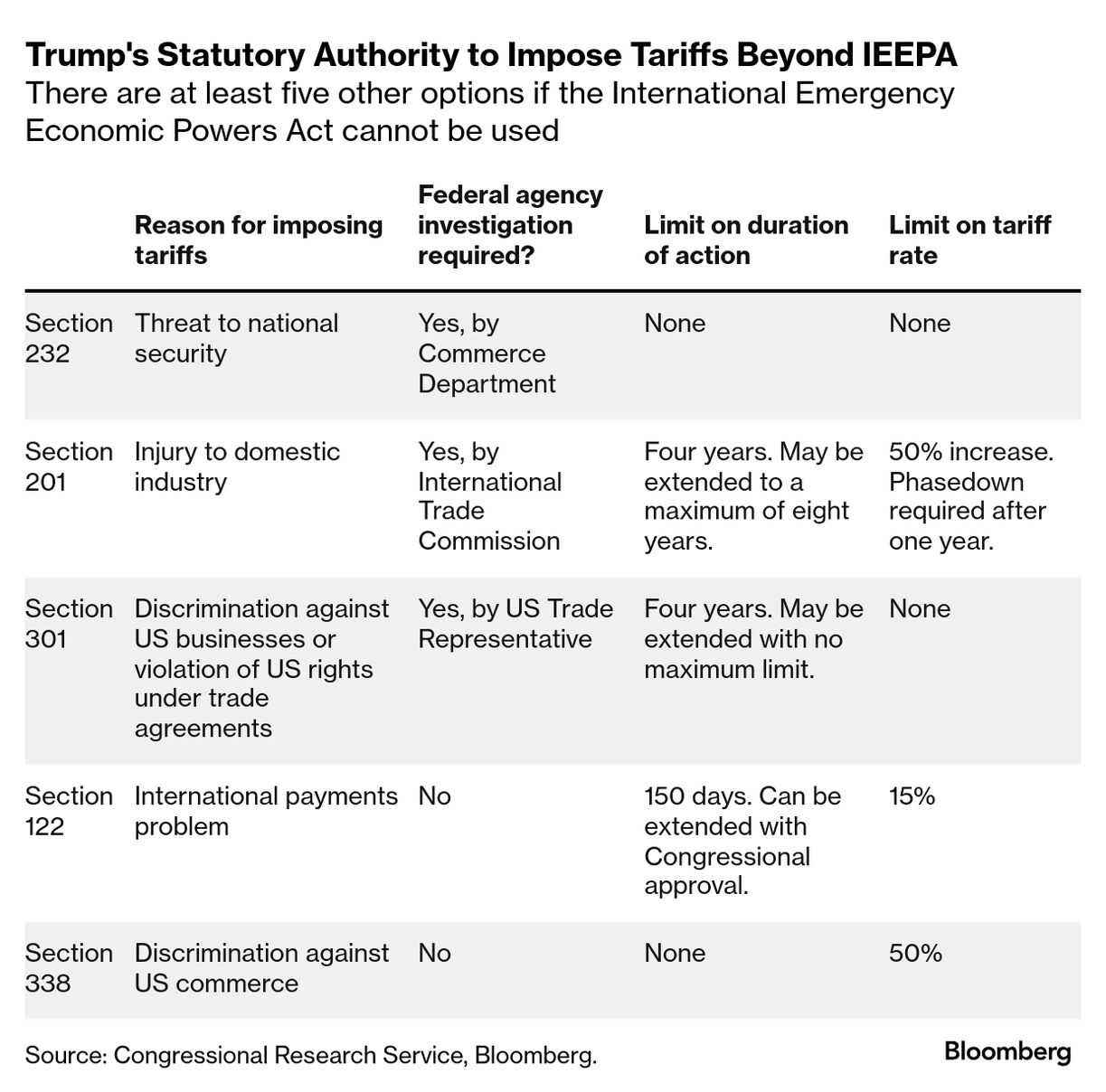
If we don’t win, there’s the whole alphabet number soup of things. We’ve got Section 232, which we are using aggressively already on things like steel and aluminum, lumber, critical minerals [and] pharmaceuticals. We have [Section] 301, which we used on China to impose tariffs — which we can do on any country in the world that’s cheating us.
Trump's Statutory Authority to Impose Tariffs Beyond IEEPA
There are at least five other options if the International Emergency Economic Powers Act cannot be used
But if this case goes against you, it will affect your standing in the White House, won’t it? You were the one who was convinced that this route was the right one to go down with the bulk of tariff policy. Would you consider resigning if the case is lost?
[Laughs] Oh, of course not. That’s silly. And why? I’m part of a trade team. We’ve got Scott Bessent, Howard Lutnick, Jamieson Greer and myself — with JD Vance weighing in. And the only person who matters is President Trump. 17
17 There’s been reporting from Washington that Navarro, seen as the architect of the “Liberation Day” tariffs in April, was moved out of Trump’s inner circle after the fallout from the announcement, and may yet be replaced by Robert Lighthizer.
The vision of how to go about this was crafted not by me but by a group of people. We’re doing exactly what we should be doing. We’ve anticipated contingencies, but we think that the most important thing to do now is focus on winning that case at the Supreme Court. That’s where we’re at. If we lose, then we have a plan B. It’s not for me to talk about that to the world, because I don’t think we’re going to lose. But if we do, we are certainly prepared.
The refund bill could be a hundred billion dollars. 18
18 Or more! According to a December court filing, the US government has collected some $129 billion of tariffs via IEEPA.
You’re making the case why what we’ve done is a very good thing. Think about it. We inherited from the Democrats who spent money like drunken sailors. Just totally fiscally irresponsible. Crazy stuff.
We were looking at a fiscal cliff that was going to crush us with higher interest rates [and] the inability to finance [our debt]. This tariff revenue, if you cost it out, is the difference between a dangerous deficit and a healthy paydown in our debt.
We’re coming towards the end of the conversation. I often ask people what they do at weekends.
Work. When you’re working for the White House, it’s like being at sea or on deployment for the military. You’re working every day.
I know better than most, because I remember the last day from the first term. There was some stuff we left on the table we could have — should have — got done, and we didn’t.
This is not a job, it’s a mission. If this were just a job, I wouldn’t be doing it, because I’m at the retirement age, and I could just as easily be working on my next book.
Some of the White house team are in glossy photo shoots forVanity Fair. What did you think of that?
Every one of those pictures looks demonic. They frame those pictures in a way to have you hate those people and that’s despicable. It’s basically the triumph of fear over fact.
The guy who wrote it, Chris Whipple — shame on him — he was once a fairly good author. He’s turned into a “Trump Derangement Syndrome” guy.
All the quotes are on the record. They’re all on tape.
Well, I would challenge that as well. It’s brutal what they do.
Is that really what you’re taking away from it? I was putting to you that they’re taking the time to be in a Vanity Fair photo shoot. You are talking about a mission, and you weren’t in that photo shoot.
No, no, no, no, no, no, no. Every one of those people in that article works twice as much as anybody you know. They’re working nonstop and the pressure is hard. Stuff happens like on any given day and you’ve got to be quick on your feet. You’ve got to be able to do the right thing.
That Vanity Fair article is a study in propaganda.

Mishal Husain is Editor at Large for Bloomberg Weekend.