Why Everyone Is Heading Back to the Moon
Decades after humankind took a giant step, we’re again racing to the lunar surface—only this time it’s about more than “flags and footprints.”
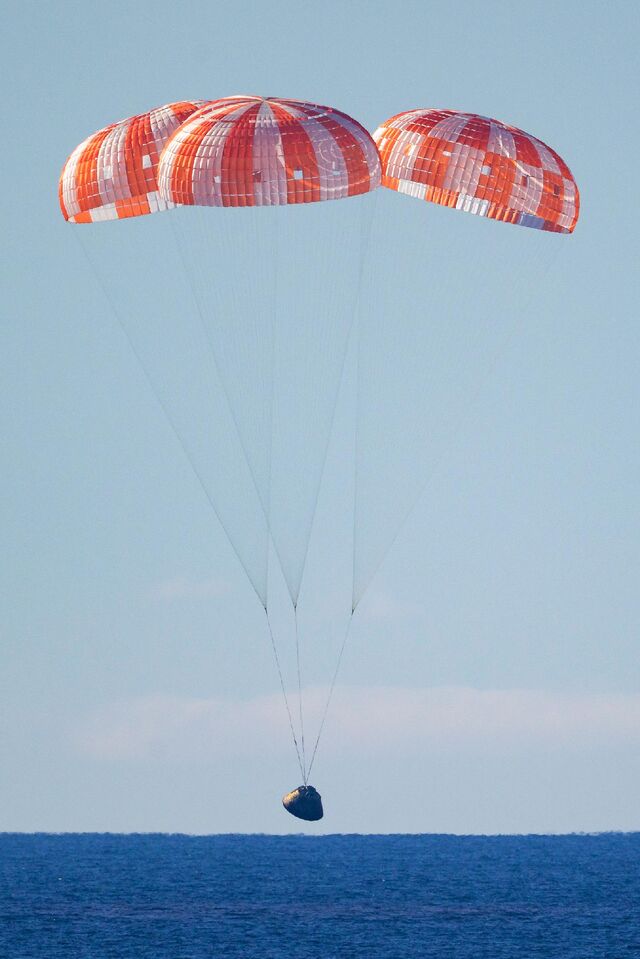
More than 50 years after the last human set foot on the moon, the US and China are competing to repeat the achievement. America’s National Aeronautics and Space Administration successfully launched a crew of four on a trip around the moon in early April in a mission known as Artemis II. They were the first astronauts since the 1970s to travel beyond so-called low-Earth orbit, the domain of the discontinued US Space Shuttle program and the International Space Station, which is still operating. Artemis I sent an uncrewed capsule around the moon in 2022, and mission III is meant to be the prelude to the program’s first human moon landing, Artemis IV, which NASA is targeting for early 2028. Chinese officials have said their goal is a crewed lunar touchdown by 2030.
A handful of other countries have their own lunar programs, as does the European Union. Through 2030, governments and private entities have planned more than 400 missions in the next two decades to fly past or circle the moon or to land crewed or uncrewed spacecraft there, according to a count by the European Space Agency.
Unlike the last moon race, between the US and what was then the Soviet Union, the objective goes beyond leaving so-called flags and footprints on the lunar surface. The aim this time is to stick around for a while, using the moon as a proving ground and staging base for a much more ambitious project: travel to Mars, which is 200 times farther away.

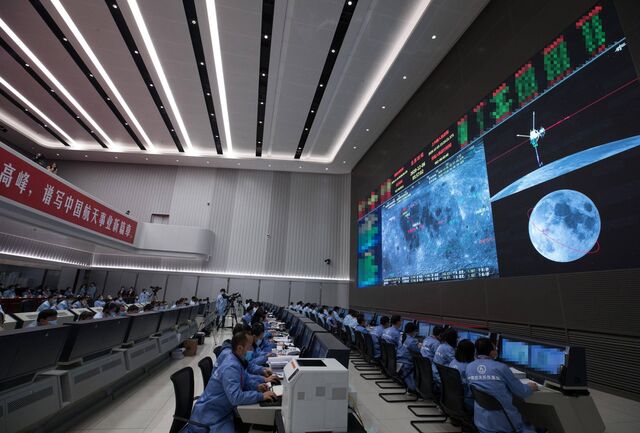
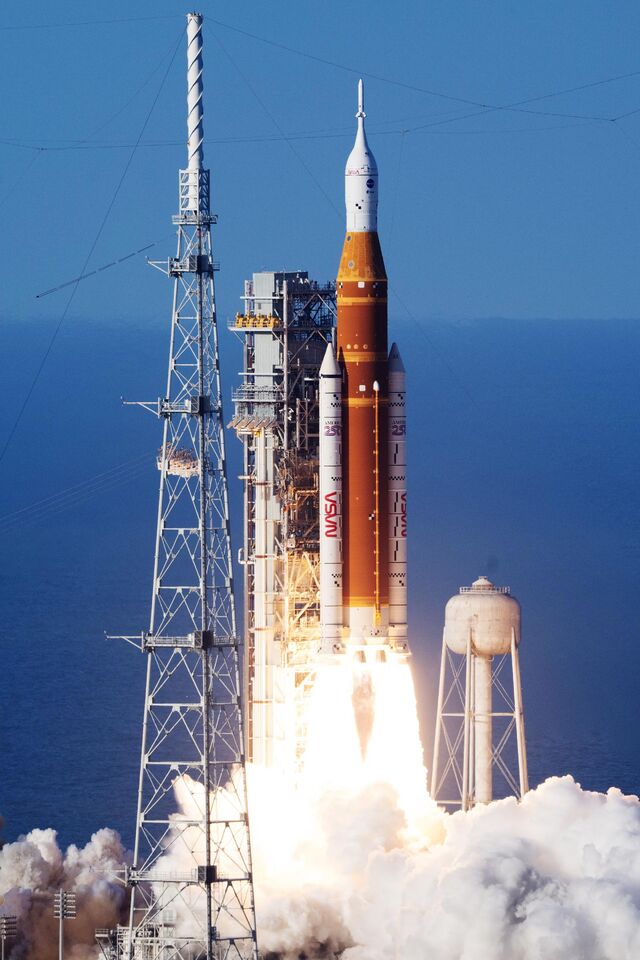
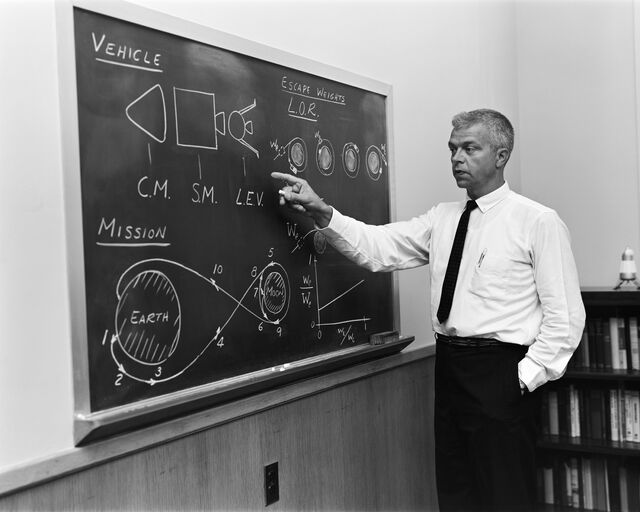
The US is the only country to have put humans on the surface of the moon—12 of them between 1969 and 1972, in the Apollo program. The Artemis effort is named for the goddess in Greek mythology who was Apollo’s twin. The program’s overarching goal is to have moon travelers create a sustainable human presence there. The idea is to learn how to survive on another world before sending astronauts deeper into the solar system.
A Big Discovery
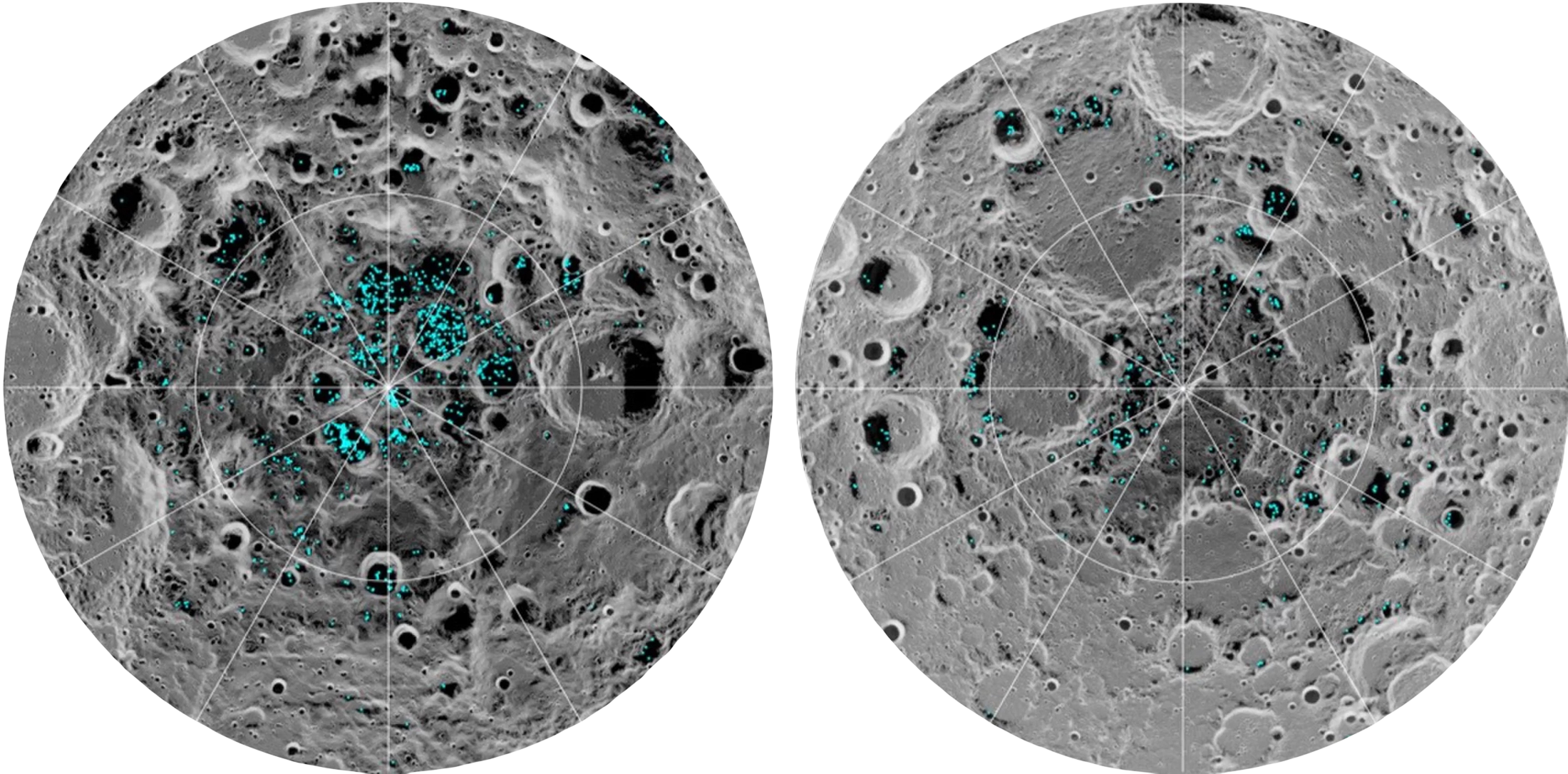
The prospects for such an enterprise have been enhanced by the relatively recent discovery that the moon harbors water in the form of ice, which could be used not only for drinking and irrigating crops but also for producing oxygen and making rocket fuel for future flights. Soil samples brought to Earth by Apollo astronauts had led scientists of that era to conclude that the lunar surface was bone dry. Then in the 1990s, images collected by lunar orbiters provided the first hints of lunar ice, and NASA confirmed it existed in 2018. It’s unknown how much ice the moon holds or precisely how it’s distributed on the surface, making scouting and prospecting missions by robotic rovers important for filling in those knowledge gaps. A particular target for such missions is the south pole region, where extremely cold craters that never see sunlight are thought to contain ice.
Companies to Watch
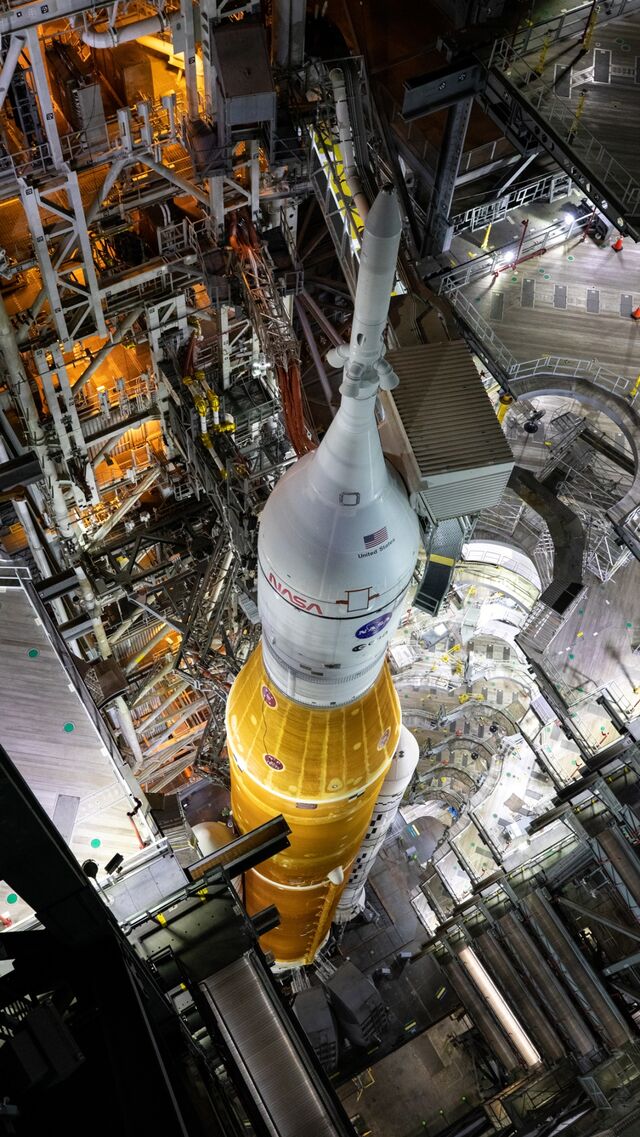
To propel Artemis astronauts into space, NASA has teamed up with two of its longtime contractors. Boeing Co. has built a massive rocket designed to carry Lockheed Martin Corp.’s Orion crew capsule. These collaborations resemble those of the Apollo era in that NASA fully bankrolls and oversees them.
But to create other machinery essential to the missions, NASA has used a new model. It’s partially funded the development of hardware by companies from which it is buying services. The idea has been to foster competition and cut costs, while helping to jumpstart a commercial industry on and around the moon.
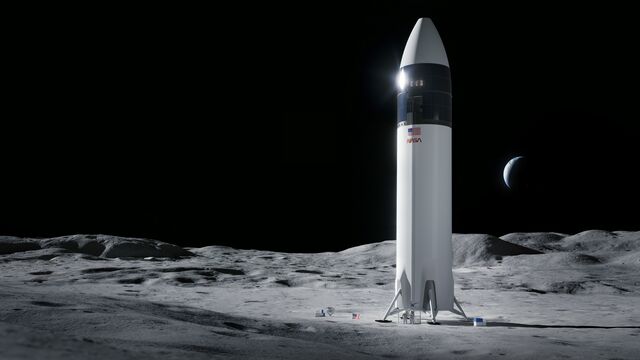
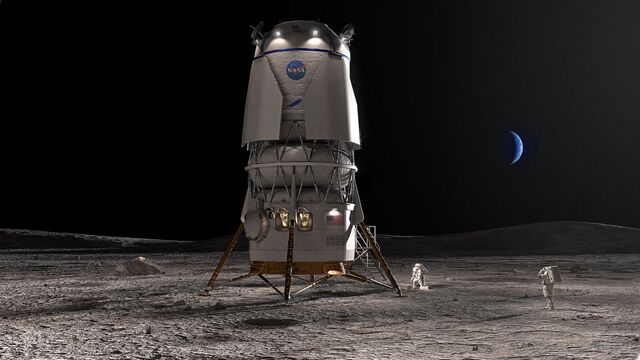
Using this model, NASA has awarded both Elon Musk’s SpaceX and Jeff Bezos’s Blue Origin multibillion-dollar contracts to build moon landers. The agency has said that readiness will determine which lander will be used in Artemis IV: SpaceX’s Starship or Blue Origin’s Blue Moon. If SpaceX wins out, the plan, according to people familiar with the matter, is for astronauts to ride into low-Earth orbit on Orion, which would be propelled into lunar orbit by Starship. Starship would then deliver some of the astronauts to the moon’s surface and return them to Orion when their visit is over. The granularities of a plan involving Blue Moon aren’t yet public.
Apollo Program
Spending as share of US GDP

Artemis Program
Spending as share of US GDP
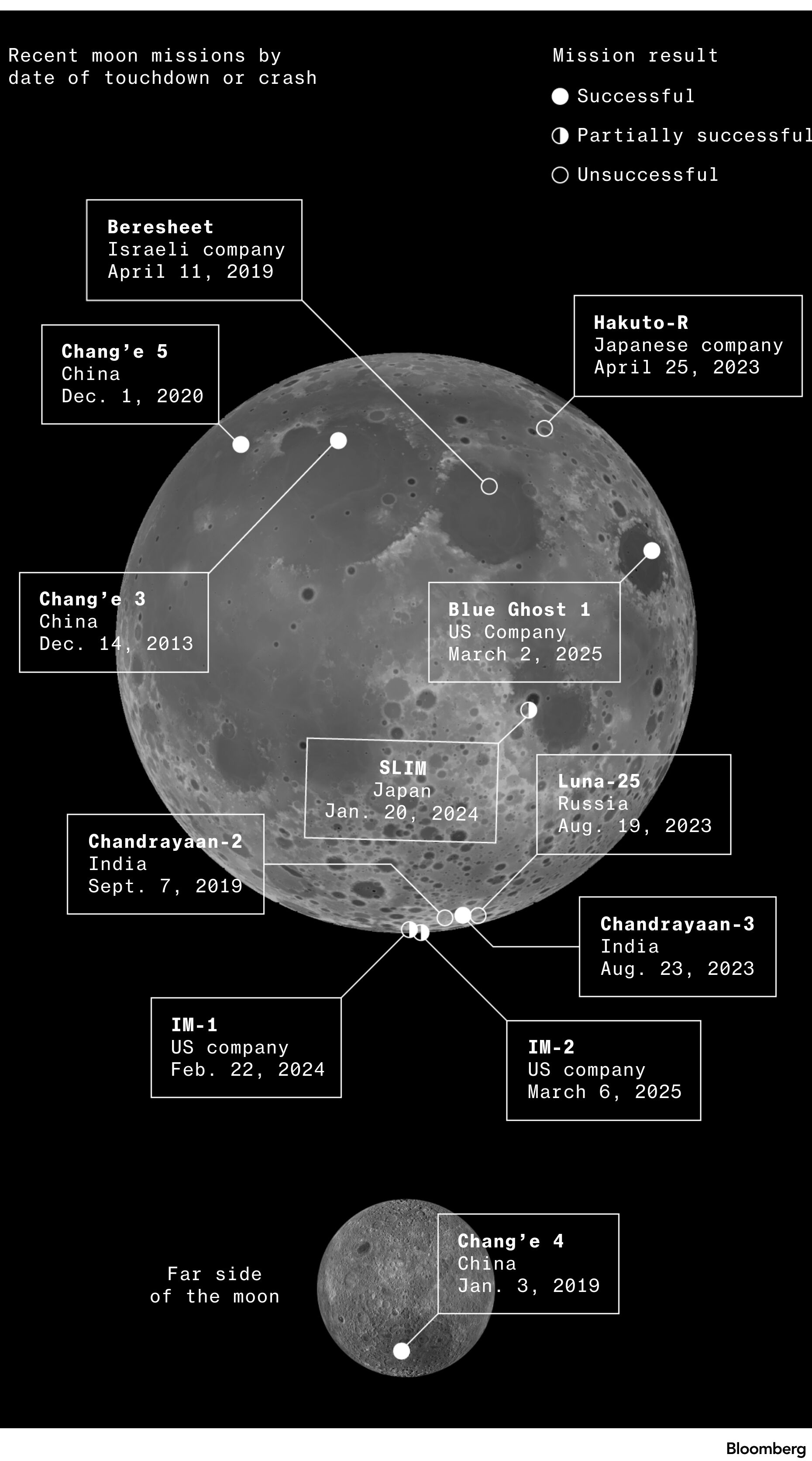
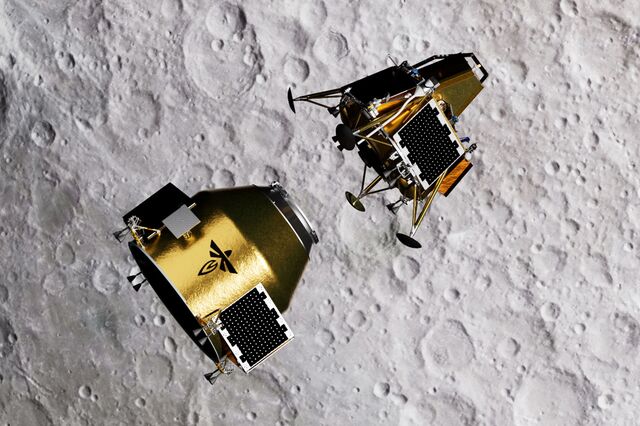
NASA is also funding the development of robotic landers capable of carrying instruments, experiments and other machinery to the moon, as well as robotic rovers meant to study, scout and prospect the terrain in preparation for human missions. As part of this program, Firefly Aerospace in March 2025 succeeded in landing its Blue Ghost spacecraft on the surface of the moon, where it completed more than 14 days of operations, making it the first fully successful commercial lunar touchdown.
In a January 2024 mission, a lander made by Astrobotic Technology Inc. suffered a propellant leak after launching into space and failed to reach the moon. A month later, Intuitive Machines Inc. landed its robotic spacecraft Odysseus on the lunar surface. This marked the first time a US-made lander had touched down on the moon intact since the final Apollo mission in 1972 and the first time a private-sector company had pulled it off. However, the spacecraft tipped over during landing, causing its mission to end earlier than planned. A second Intuitive Machines lander also toppled over in a follow-up effort in early 2025. NASA also finances projects at a number of US universities aimed at smaller innovations useful for Artemis missions.
Artemis involves collaboration between NASA and other space agencies, as well. The European Space Agency is responsible for the support module that provides electricity, water and oxygen to Orion, moderates its temperature, and propels it forward in space once it has separated from the rocket that launches it. In partnership with ESA and the space agencies of Canada, Japan and the United Arab Emirates, NASA had been planning to build a small space station called Gateway meant to orbit the moon and support a long-term human presence there. In late March, the agency announced that it was pausing that project in its current form to focus on building a base on the lunar surface, for which some of the Gateway work could be repurposed.
NASA’s Office of Inspector General has raised concerns about the high costs of the Artemis program, suggesting they may be unsustainable. Expenses eroded popular support for the Apollo missions. Still, Artemis so far has been a bargain compared with the prior effort. NASA isn’t especially transparent about Artemis expenditures, but the inspector general has estimated the project’s costs between 2012 and 2025 at $93 billion. Seen as a share of gross domestic product over the years, the spending on Artemis is a fraction of what was devoted to the Apollo missions.
China’s Ambitions
China’s space program has made significant strides. With its Chang’e-3 mission in 2013, China became the first country since the 1970s to achieve a soft landing on the moon—one in which the vessel remains functional. (When a spacecraft is deliberately crashed into the surface of a celestial body it’s called a hard landing. The US, Japan, China and Europe conducted such missions to the moon in the 1990s and early 2000s.)
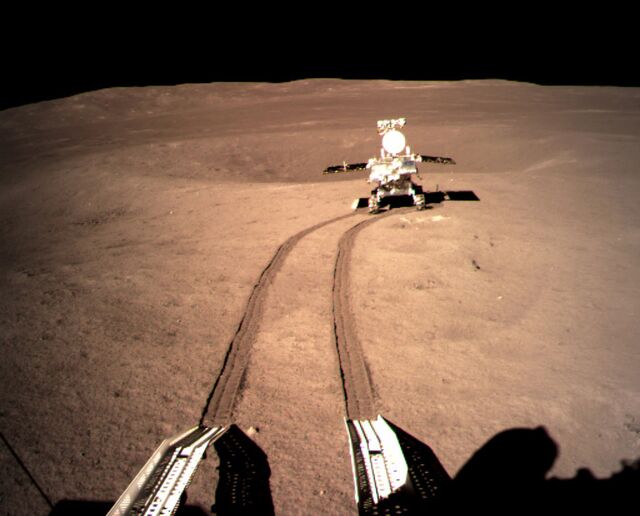
With Chang’e-4 in 2019, China became the first country, and so far the only one, to land on the moon’s far side, which never faces Earth. The mission delivered a solar-powered robotic rover called Yutu-2. It was equipped with a heater fueled by the decay of radioactive plutonium-238 to keep it alive during the lunar night, which lasts the equivalent of two weeks on Earth. Yutu-2 explored the region for years, detecting lava flows beneath the surface, before it appeared to stop moving in early 2024.
Chang’e-6 landed on the moon’s far side on June 1, 2024 and brought the first samples from that region back to Earth three weeks later. The mission was part of a series expected to end with the first Chinese astronauts on the moon.
Like the US, China is seeking allies to boost its lunar ambitions. Russia, South Africa, Pakistan, Egypt, Serbia, Belarus and Azerbaijan are among the countries that have backed its plan for an international lunar research station. China also has said it wants to launch crewed missions to Mars and build a permanently inhabited base there.
Other Noteworthy Efforts
Russia in August 2023 launched the uncrewed Luna-25, which would have been its first spacecraft to achieve a soft lunar landing since the demise of the Soviet Union. However, the spacecraft crashed into the moon’s surface. President Vladimir Putin has said Russia will keep trying. Similarly, United Arab Emirates Prime Minister Sheikh Mohammed bin Rashid Al Maktoum said his country would make another attempt after an uncrewed spacecraft made by Ispace Inc. of Japan that was carrying a UAE lunar rover crashed in April 2023. An Israeli nonprofit called SpaceIL also sent a spacecraft to the moon in 2019 but it smashed into the lunar surface.
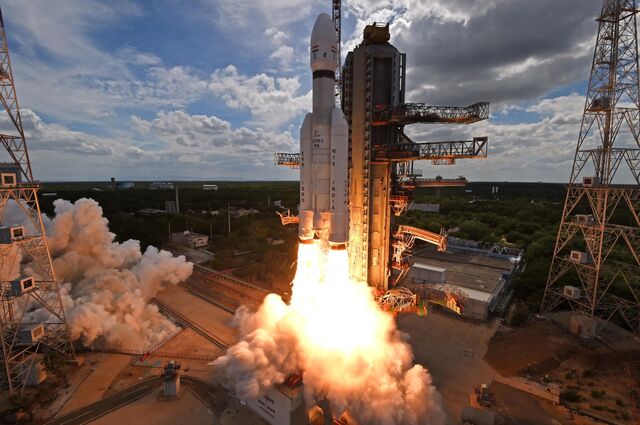
Other countries have had better luck. Shortly after the Russian failure, India, on its second try, landed an uncrewed ship near the moon’s south pole, part of its Chandrayaan-3 mission. Japan joined the lunar landing club in January 2024 with its uncrewed Smart Lander for Investigating Moon (SLIM). The craft, which accidentally landed on its side, defied expectations when it re-established communications a month later, having survived the brutally cold lunar night, when temperatures drop below minus 130C (minus 202F). The space agencies of India and Japan are working together on a mission to explore the moon’s polar regions.
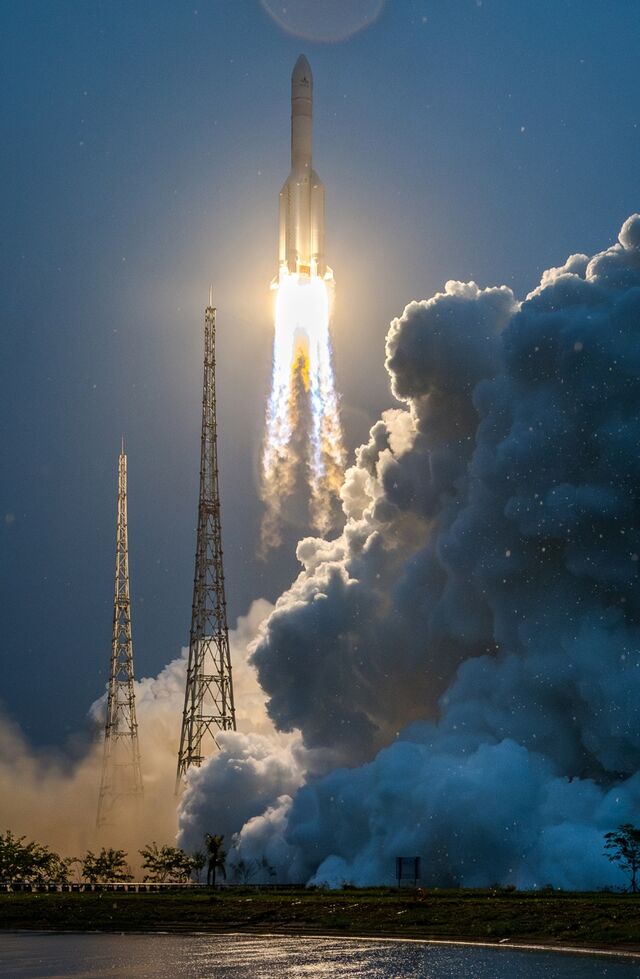
Europe has its own ambitions to reach the moon. Europe’s space program is collaborative. ESA works with the US on certain missions and had cooperated with Russia until that country’s invasion of Ukraine in 2022. The agency envisions using a European rocket called Ariane 6 to send Argonaut, a robotic lunar lander, to the moon to deliver cargo in support of both robotic and crewed missions, including Artemis missions. To complement its own and NASA’s missions, ESA is working under its Moonlight program to launch a suite of satellites around the moon starting in 2028 that will provide communication and navigation services across the lunar surface.
Like other space agencies, ESA regards moon exploration as a step toward travel to Mars. It aspires to send European astronauts to the red planet by 2040.
(Updates for successful completion of Artemis II mission. A previous version of this piece originally published on May 13, 2024.)
Get the Business of Space newsletter, a weekly look at the inside stories of investments beyond Earth.
Sources for landing map: NASA, Lunar Reconnaissance Orbiter Camera team (data), USGS Astrogeology Science Center (near side imagery), NASA/GSFC/Arizona State University (far side imagery).