
US Dominance in the Middle East Is ‘Basically Over’
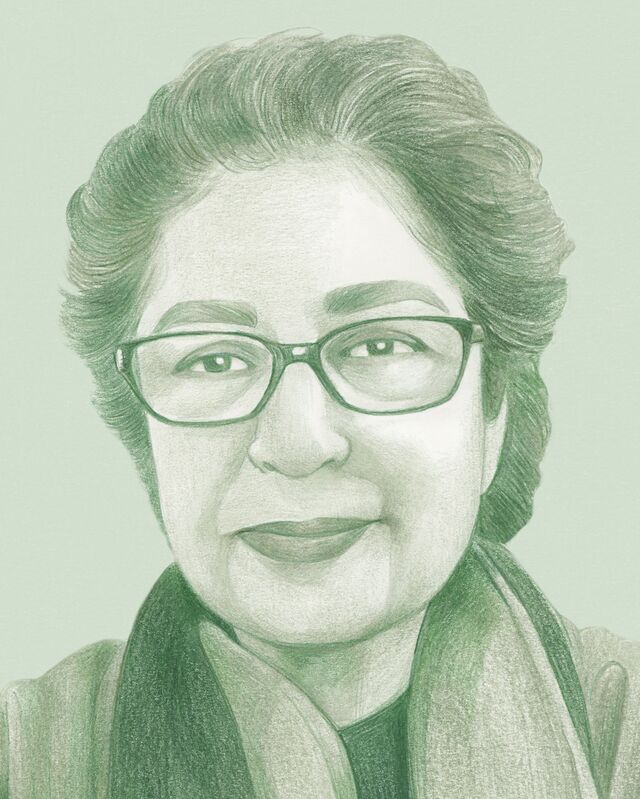
Maleeha Lodhi has represented Pakistan in Washington, London, and at the United Nations. She says brokering US-Iran talks shows Pakistan has emerged as a geopolitical player.
After nearly six weeks of war, how did Pakistan manage to get the United States and Iran to talk? Maleeha Lodhi was Pakistan’s ambassador to the US on 9/11, a moment that reset the relationship between the two countries. Now, she says, personal relationships have made Islamabad the region’s only viable peace broker. For her, this weekend’s talks also carry wider significance, as middle powers take on a larger role in shaping global politics.
This conversation has been edited for length and clarity. You can listen to an extended version in the latest episode of The Mishal Husain Show podcast.
What was happening behind the scenes that made these talks possible?
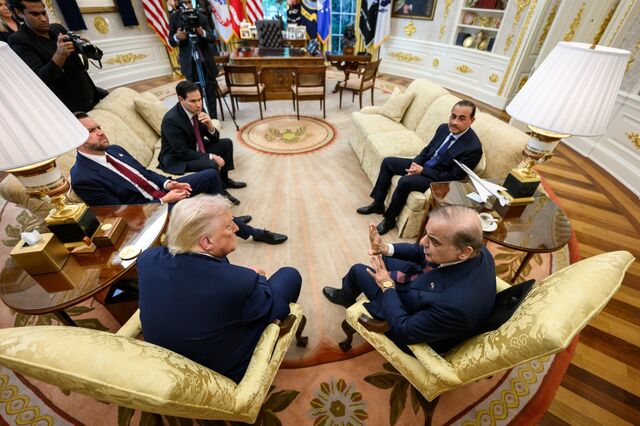
Pakistan’s military and civilian leaders were both working the phones. Pakistan’s army chief, [Field Marshal Asim Munir] in particular, was on the line to Washington at all times, from what I hear — especially in the last couple of days before the agreement was forged. Pakistan’s Prime Minister [Shehbaz Sharif] was on the phone to the Iranian leadership constantly.
They never gave up, even when the situation looked very bleak — especially when President Trump began to say what he said. At that time, it wasn’t clear whether that was just bluster or statements that would so offend the Iranians that they would just call off everything.
The words about ending a civilization, that kind of rhetoric? Did you in that period also think, How is this going to bear fruit?
Yes. When President Trump began to sound so frustrated and angry, I thought, This is it. The US will never agree to the terms the Iranians conveyed — the famous 10 points. Initially, the Americans rejected them. But then, as we’ve seen, both sides walked back from the maximalist positions.
Before we get to those points, I want to explore the relationships that Pakistan has with the United States, and with Iran. First — the relationship between Munir and Trump. How was that bond formed?
This personal relationship between the two came about very early in Trump’s second term, with the first early win that Pakistan handed to him. It arrested, and then extradited, the terrorist who was responsible for the bombing in Kabul during the American evacuation from Afghanistan. Trump was so taken by this gesture that he chose to mention this in his first address to Congress.
During the conflict between India and Pakistan, once Trump played a role in defusing it, Pakistani leaders kept saying how grateful they were to Trump. Then of course, announcing a Nobel Peace Prize [nomination] for him — which I personally was a critic of — seemed to do the trick. Trump became even closer to the Pakistani leadership, particularly Munir.
That level of flattery, even obsequiousness, made many Pakistanis uncomfortable.
Yes, absolutely.
There were also sweetheart business deals. Pakistan [offered] to open up the country for mining for critical minerals, which they knew was really very high up on Trump’s agenda.
All of that together helped Pakistan emerge as the mediator.
The relationship between Pakistan and Iran has also been complex at times. In 2024 the two countries were striking each other, saying there were terrorist hideouts on each other’s soil.
The relationship with Iran has been up and down for the last couple of decades, but after these missile strikes the two countries decided to mend fences.
Significantly, Pakistan stood in solidarity with Iran last year [during the 12-Day War]. Pakistan, amongst all the Muslim countries, [was] probably the most outspoken in expressing its solidarity with Iran, for which Iranian leaders were very publicly grateful.
That was followed by a stream of Iranian visitors to Pakistan, including [former Iranian security chief Ali] Larijani — who was later assassinated. You could see the relationship was being strengthened by all these visits and interactions.
[In] the search for a mediator whom both countries could have confidence in, there really wasn’t any other country. The Arab countries were ruled out. Oman had had their fingers burnt. There was only really Pakistan and Turkey, and Turkey didn’t enjoy that sort of closeness with the Trump administration that Munir did. 1
1 Prior to this war, Oman had mediated between the US and Iran. On Feb. 27, Oman’s Foreign Minister Badr Albusaidi said a peace agreement was “within reach... Let’s support the negotiators in closing the deal.” A day later, the US and Israel began strikes on Iran.
There’s been a bit of tightrope-walking for Pakistan in this period. It condoled over the killing of the supreme leader, and also said to Iran that its attacks on the Gulf were regrettable. I want to ask you about Pakistan’s self-interest in this. How badly has the country been affected by the energy disruption?
This was very high stakes for Pakistan, because a protracted conflict would bring even more economic pain. The government had to raise the price of oil and announced a series of austerity measures because it wanted to conserve fuel. Pakistan imports almost 90% of its oil requirements from the Gulf.
Pakistan’s economy, in any case, is very fragile, within an IMF [International Monetary Fund] program. It would’ve blown our economy off course if the war had continued. 2
2 Pakistan’s economy remains dependent on IMF support and the need to conserve fuel has led to school closures and grave difficulties in getting people to their workplaces. With many reliant on insecure daily wages, this has had an immediate impact on livelihoods.
Iran is going into these talks with very ambitious — some would say outlandish — demands. At the same time, President Trump is saying the military objectives have been met.
Both sides have a narrative which says they’ve achieved their objectives — they’ve been victorious. I think both sides know their terms for these negotiations are maximalist. The question is whether they can find sufficient common ground. They did find common ground when Oman was mediating. They were close to a deal at that time. Suddenly, America decided to join Israel in attacking Iran. So perhaps they can go back to that kind of an agreement.
But the additionality is provided by the Strait of Hormuz — that now becomes central to the negotiation. There you can see the positions are very far apart. President Trump keeps changing his mind, but he’s saying he’d like to work with Iran to regulate or operate the Strait of Hormuz. The Iranians are probably aghast at having to work with anybody, but they’re prepared to work with Oman. They’re saying, This has been a free ride and we are going to charge fees for whatever maritime traffic takes place through the strait — maximalist positions. 3
3 Iran and Oman share territorial rights to the Strait of Hormuz, but Oman’s transport minister has dismissed the idea of charging passage fees.
Strait of Hormuz Geography Puts Focus on Iran and Oman
Vital shipping passes Iranian and Omani territory either side of the strait

We don’t know what kind of agreement they’ll reach or its chances of lasting. We know there’s also a difference on Lebanon. Pakistan’s Prime Minister Shehbaz Sharif is saying Lebanon is part of this ceasefire, and Israel is saying it isn’t.
The big question is whether Israel will sabotage the [US-Iran] ceasefire. If they were to play spoiler by continuing attacks on Iran and exposing Trump’s inability to constrain Israel, then we are looking at a very complex and challenging situation. 4
4 Shortly after this conversation was recorded, news emerged that Israel had launched its largest assault on Lebanon in the current conflict, hitting Beirut, southern Lebanon and the eastern Bekaa Valley. The Lebanese health minister said on Thursday that 203 people were killed and more than 1,000 people injured.
Even though there are many unknowns, what does your instinct tell you about the chances of success from this process in Islamabad?
I’d like to be optimistic. Both sides know there is more economic pain for everyone, including themselves, if there was a relapse into fighting.
Both sides are in a position right now to proclaim, We’ve achieved our objectives. They may not be able to do that if there is a recurrence of war. That provides a strong incentive to try to hammer out a deal.
They can’t keep going to war every seven months. I mean, they can. But the costs have been piling up.
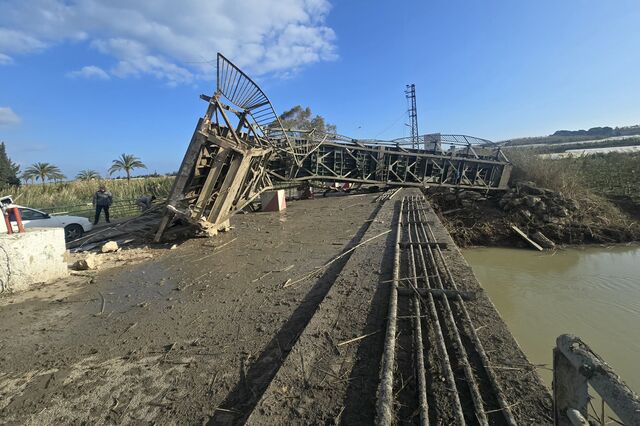
The Strait of Hormuz appears to have been a dimension that the Americans did not think through at all.
Yes, absolutely. The Americans made several miscalculations, and this was one of them. The other was the thought that once [Iran’s] leaders had been decapitated, the regime would just collapse.
Ultimately, the US underestimates the power of nationalism. It’s done that throughout history — in Vietnam, Afghanistan, Iraq and now in Iran. They really thought that by attacking Iran, those who oppose the regime [would] rise. War has the opposite effect. People close ranks. They forget internal differences. They become a more unified nation. That’s exactly what happened.
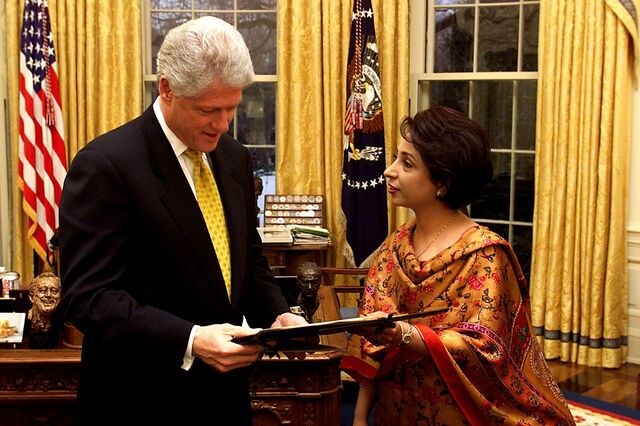
Is that what you hope the United States learns this time? You’ve worked with successive American administrations. You were Pakistan’s ambassador in Washington when 9/11 took place.
I remember the early days after 9/11. My country’s officials privately told the Americans: Don’t go and occupy Afghanistan. Military action should be short and surgical. Don’t become an army of occupation. Why? Because we have experience in this region, and we know that people will resist an outsider. They will resist foreign occupation. That’s exactly what happened.
The US takes pride in its own country. People are flag-waving, yet don’t understand that other countries have people who are equally proud of their country and want to protect it.
Do you think this moment marks the start of a different world order? America can start wars but can’t control the economic fallout, and regional dynamics and alliances shift as a result?
I hope the lesson learned would be that military supremacy doesn’t achieve the outcome that is desired.
[We are] moving towards a more multipolar world. US dominance has been fading.
The combined military might of the United States and Israel took on a country that was militarily much weaker — whose allies in the region had also been weakened — yet that country resisted.
What that says is the era of America’s dominance in the region is basically over. In the case of my country, it shows the advent and importance of middle powers that are now able to shape geopolitics.
Pakistan has established itself as a middle power which has the capacity to influence, if not shape, international politics.

Get the Bloomberg Weekend newsletter.
Big ideas and open questions in the fascinating places where finance, life and culture meet.
By continuing, I agree to the Privacy Policy and Terms of Service.
Is a loser in that, perhaps, democracy in Pakistan? The key player in all of this is an unelected army officer.
Welcome to Pakistan. That’s where we’ve been for a lot of our history.
Yes, we have a hybrid government, which means that power is shared between civilians and the military — and in this particular case, it was the military that was conducting much of the diplomacy. You can’t say the prime minister wasn’t involved — of course he was — but that’s the nature of politics and government in Pakistan. 5
5 Pakistan’s army has long played an outsized role in the nation’s politics, but even in that context, the past four years stand out. The removal of Prime Minister Imran Khan from office in 2022 was widely seen as the result of a falling-out with the military. He has now been imprisoned for more than 900 days, and his family says his health is deteriorating.
When you say the era of American dominance is over, explain how you see that playing out in the Middle East. President Trump is saying this could be the “Golden Age of the Middle East.” America has all these bases in the region.
They will be rethinking in the US: What is the point of having thousands and thousands of troops in the region when they can’t, on their own, determine what happens in the region? Even before Iraq, what did they do there?
It’s been a process; it’s not as if this war has brought it about. US dominance over the world, not just the region, was beginning to be replaced by power dispersed in different places. The war has reinforced trends that were already in play.
If there is one winner in all of this, would you say it’s China?
There are reports the Chinese eventually persuaded Iran [to accept a ceasefire].
Certainly China is a beneficiary. What this entire episode highlighted is that China is a force for peace, cooperation and stability, whereas the US is being run by a man who conducts himself in such a whimsical manner and has disrupted so much — global trade and, of course, this war of choice. The contrast is stunning.
Paint a picture of the Gulf and South Asia in three years’ time. A more settled place? Or do you think what has been unleashed is too immense?
The Middle East has changed forever. Things are not going to go back to what they were before.
What comes in its place depends on reassessments that Gulf countries may have to carry out. Many of them are feeling abandoned by the United States — that this American security umbrella was of no value to them, because America didn’t defend them. America defended Israel. Israel always has a priority over them.
Certainly we’re not going to be in for a period of immediate stability. It will be a period where the US will increasingly withdraw — which is what Trump said in the first place in his National Security Strategy. Who fills that power vacuum will depend on the realignments that will take shape.
From the Indian perspective, the strategy has never been for Pakistan to be in the “middle powers” category. In the last few weeks, we have seen Saudi Arabia, Turkey and Egypt working with Pakistan. Sharif also thanked Qatar and China. Where do you think this leaves India?
On the wrong side of history. They broke from their support for the Palestinians. Prime Minister [Narendra] Modi did a Trump in India: reversed India’s traditional alignments.
In a way, it helps Pakistan to extricate itself diplomatically from South Asia and become a player on a bigger canvas — the Middle East. 6
6 At the same time, Pakistan has since February been fighting what it has described as an “open war” with its neighbor Afghanistan, accusing it of providing a safe haven for armed groups such as the Tehrik-e Taliban Pakistan [TTP]. China has been trying to broker a ceasefire between the two countries.
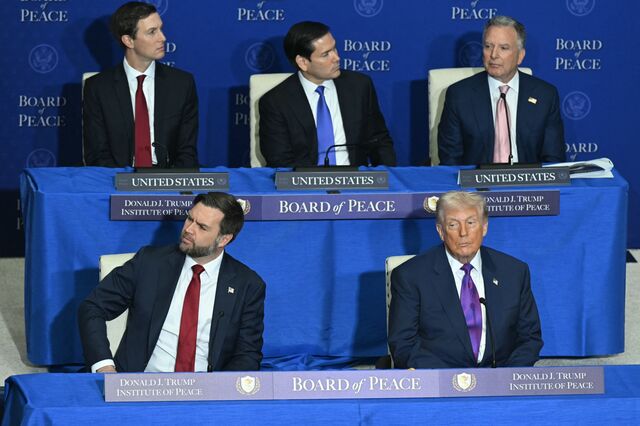
The prime minister of Pakistan is on the Board of Peace, an organization which President Trump would like to be an alternative to the UN. How does that square with having principles on peace and stability and supporting established international organizations?
I was a critic of Pakistan joining the Board of Peace. Trump wanted to legitimize his plan for Gaza and I didn’t think that Pakistan should be a party to that.
It seems that Trump got bored of the Board of Peace. It’s tragic that the Palestinian issue has been sidelined by this war imposed on Iran.
Finally, with your experience of diplomacy, what’s your advice to those gathering for a high-stakes encounter?
What we used to say a lot at the UN: You have to think of the other’s concerns, as much as you push your own interests. Show flexibility, so that common ground can be found. Otherwise, we can’t have an agreement.
Mishal Husain is Editor at Large for Bloomberg Weekend.