

She Bet on K-Pop. Netflix Got Its Biggest Movie Ever.
Maggie Kang on co-directing KPop Demon Hunters, blending Korean culture with global storytelling, and the communal power of music.
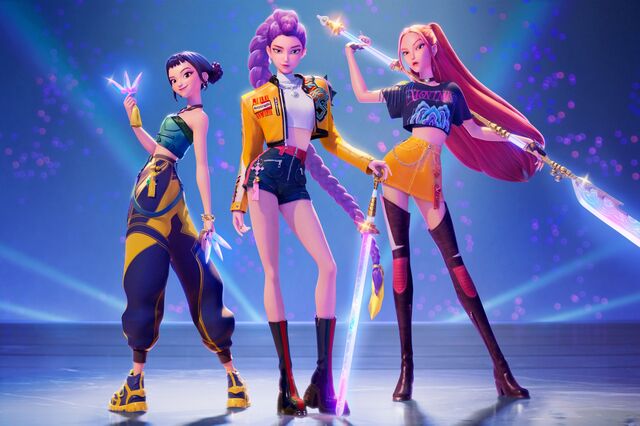
In a world of sequels and remakes, the surprise super-hit of 2025 was an original animated musical that became Netflix’s biggest movie yet: KPop Demon Hunters. The story of a girl group called Huntrix secretly battling to save the world from dark forces has recorded more than 500 million views since its June release, garnered wins at the Golden Globes and the Grammys, and is nominated for two Oscars.
The film is the brainchild of Korean-Canadian animator Maggie Kang, who grew up loving Korean pop music long before it was globally cool, and who forged a Hollywood career on films including The Lego Ninjago Movie and Kung Fu Panda 3. With co-director Chris Appelhans, Kang created a world whose characters are rooted in an authentically Korean milieu, but with universal themes: power, destruction, hurt and shame. She paid attention to the music, too, and now millions of young fans — and their families — have songs like “Golden” on repeat.
Kang is in the midst of a life-changing moment, as her childhood desire to have her culture recognized and appreciated reaches an extraordinary zenith. She spoke to me from her home in Los Angeles, carefully putting Labubus of her three main characters into the frame before we started recording — and exuding joy and wonder at the success of her cherished project.
This conversation has been edited for length and clarity, and includes some spoilers! You can listen to an extended version in the latest episode of The Mishal Husain Show podcast.
When was the moment you realized your creation had become a global phenomenon?
A global phenomenon? Oh, uh, I guess it is. [Laughs]
It was around September. I flew from Korea to JFK [airport], and as soon as I landed, they took me to a screening for one of the singalongs, somewhere near Central Park.
I was very jet-lagged. We’re backstage and they said, Nobody knows you guys are here, but we’re going to surprise the audience.
We walked in and I don’t think I had experienced the kid audience yet. I’d seen all the reactions from Instagram and TikTok online, but not in person. So to walk out there and see the wall of screaming kids, wearing their Huntrix outfits, really blew my mind. I hadn’t really realized how big it was and how many different people were really loving the film. That was a very special moment. 1
1 KPop Demon Hunters gained more than 20 million views in its first week and then — unusually — sustained that pace for eight consecutive weeks. The singalong version Kang describes topped the US and Canadian box office during its two-day theatrical release that month, and is also now on Netflix.
That was some weeks after release on Netflix — the singalongs were the way it went for a short time into movie theaters, and you got this communal experience.
I think the movie got so global, so quickly, because we were on a streaming platform. Through Netflix, we were able to release the movie [in] 120 countries at once and [have it] dubbed [in] so many languages.
But to experience a movie that you made and worked on for so long in a theater — it felt like a concert, like I was experiencing what we were trying to capture in our film, that communal love for Huntrix. So that was very special. 2
2 The movie features many scenes with Huntrix playing to packed venues — only to see a demon-manufactured boy band try to muscle in on their territory.
Kara Swisher was the one who first told me to see it, and I have. For anyone who hasn’t, how would you describe it?
The way that I pitched it to my producer friend who bought the concept is: It’s a K-pop girl group who secretly moonlight as demon hunters and protect [the] world. That’s it.
What kind of reaction did you get? We’re all used to the concept now; it’s been massively successful. But it sounds pretty unlikely.
Fortunately, the person I pitched it to felt it was very gettable and unique. He was immediately like, Let’s do this. I totally thought he was joking, but the next week he had a deal ready — we jumped right into development.
But it is a wild concept, I agree.
Was the genesis of the film in the back of your mind for a long time? 3
3 KPop Demon Hunters draws on Korean folklore and mythology in multiple ways. One example is Huntrix’s boy band nemesis, the Saja Boys, who get their name from the Jeoseung Saja, Grim Reaper-like underworld figures, and are depicted at times in traditional gat hats and hanbok clothing. The movie’s overall feel is “a North American perspective underpinned by a Korean soul,” writes Bloomberg Opinion’s Juliana Liu.
I’ve always wanted to do a film rooted in Korean culture. For years I waited for a project like this to come along that I could contribute to, but it never came.
I felt like I had developed my writing, comedy, storyboarding [and] filmmaking skills, and I felt confident [enough] to step into the directing role.
I thought, Nobody has done this yet. Maybe I have to take it on myself to make something for our culture. So that’s what I did. 4
4 Kang was recruited as an animator for DreamWorks straight out of college and went on to work for Sony. Her portfolio includes films in the Shrek, Puss in Boots, Madagascar and Minions franchises.
What you’ve done is create this blend of something that is authentic — Korean mythology, the setting in Seoul, the names of your characters and places — and yet accessible. Deconstruct that for us.
I truly believe it’s because I am somebody who lives between two cultures, almost equally. I would always introduce myself as a Korean-Canadian. I always put Korean first, even though I’ve spent the majority of my life outside of Korea.
I think it’s because my parents, mom specifically, always told me, You are Korean. You can never forget the language. [They] instilled that Korean pride in me early on. We spent all our summer vacations in Korea with our cousins. That’s where I was immersed in Korean culture. I grew up listening to Korean music, before the style of K-pop existed. 5
5 Korean pop started to go global in the 1990s, with Psy’s “Gangnam Style” marking a major milestone in 2012. Today, K-pop’s appeal is best exemplified by bands like BTS, who kick off their highly anticipated world tour in April. With South Korea’s population aging and shrinking, the industry’s future depends on the international market, which is why there’s now a conscious shift toward being less Korean.
English is my second language, and North American pop culture is my second knowledge, [but] I do feel like I have equally deep roots in both. I was able to select all the things that I loved about each and meld it together.
Did you find yourself at school ever having to explain where Korea is, or what Korea is?
I was maybe about 8 or 9, and my teacher asked me if I was Chinese. I said, No. They asked me if I was Japanese. I said, No, I’m from Korea. The teacher tried to find it on a map and could not find it. I was shocked.
How did it make you feel at the time — like where you came from didn’t matter?
I was very confused why somebody wouldn’t know about this culture, that I had been told by my parents [was] this great culture. It didn’t make me feel like our culture was smaller, but it made me a little bit more proud. I think it lit a spark in me. I wanted to do whatever I could to educate people about our culture. Even at a young age, I remember having that feeling.

Get the Bloomberg Weekend newsletter.
Big ideas and open questions in the fascinating places where finance, life and culture meet.
By continuing, I agree to the Privacy Policy and Terms of Service.
What did your parents want you to grow up to be? Were they trying to push you in a particular direction?
I’m the younger of two kids, so I didn’t get the “doctor, lawyer” typical Asian family. [Laughs]
I got that.
My dad’s a huge cinephile. I was exposed to the best films created — Kurosawa, Fellini, Kieślowski, Chaplin, Keaton.
I think he knew that I wanted to be a storyteller. I wrote little stories at school and I would draw when I had something to say. [He] bought me a Disney animation book, and that was the first time I realized this could be a career.
They were very supportive of a child going into the arts. I’m really grateful for that.
Is there a freedom in animation?
You can iterate to no end. You iterate until your producer says, Okay, we’re out of money, or, Your time is up and we need to move this into production. We always joke that in animation, you’re never done, you just run out of time.
You’re able to craft moments, and until [they’re] almost perfect. That’s what we are striving for in animation: perfection. It can be dangerous, because when you rework something, it can feel labored and unnatural. To make it feel natural [and] spontaneous is really tricky. But we strive for that as well. 6
6 Animation — alongside visual effects and makeup — is among the areas of the entertainment industry most affected by the rise of AI. Recent examples of the technology’s use in Hollywood include the de-aging of Harrison Ford in the latest Indiana Jones and Adrian Brody’s digitally enhanced Hungarian accent in The Brutalist. Meanwhile, Disney stepped into new territory in December when it licensed original IP to OpenAI for use on its AI video platform.
How do you get there?
It requires rewatching something many, many times. Sometimes it’s changing a couple of words, or the performance of it. When we work with the actors, we’ll get 20 or 40 different takes of [the] same line, and review every single one of them. Every intonation can change the tone of the entire sentence.
There’s probably a point where they’re thinking, Can I really do it anymore?
Oh I know. After you say the same line five or even 10 times, they just become syllables and lose all meaning. It just becomes weird. You don’t know what you’re saying anymore. 7
7 Korean-American actress Arden Cho voices the main protagonist Rumi, and has said the character’s identity struggles resonated personally: “Rumi had to cover her [demon] patterns … she cannot be who she is supposed to be,” she said. “I felt that way in my 20s … So when Rumi says, ‘No more hiding, no more lies,’ that really hit me.”
You have songs within the film that have been incredibly successful in their own right. Do you give the songwriters a brief: I want a certain kind of song for this moment?
It was a very long process.
We work on something called a story reel — storyboards, all hand-drawn, that represent the finished movie. Then we have temporary music, dialogue, sounds, and basically mock up the film. During that process, we pick a song that already [exists] in the world. We’ll drop it into the moment just for vibes, to see if this is the right kind of song that we want. Based on that, we will create an original song, more in tune with what we would like it to be emotionally and [to suit] the story.
So in a way, it’s not the right thing to think of it as a soundtrack? You are thinking of the songs as an integral part of the story?
Very late in the process, we realized that “Golden” needed to be a song that gave us a little clue of each of the girls’ backstories. The song is about this amazing group of women — and then Rumi within that has her own personal story. We would write that and hand [it] off to lyricists. It’s their job to take a paragraph of dry information and distill it down into 20 words.
The track is also made at the same time and we listened to a few tracks and didn’t really approve any song until we felt tingles — butterflies in our stomach. The whole point of this movie is to show that music has this power to make us feel. 8
8 I’ve had “Golden” ringing in my ears since I began preparing for this conversation, but I don’t mind: Its Golden Globe, Grammy win and Oscar nod are well-deserved. The Demon Hunters album became the first soundtrack to have four songs in Billboard’s Hot 100 Top 10.
One important aspect is that your characters are distant from stereotypes about race and Asian characters that we still see often in movies — they’re very studious, or they’re model people without flaws. But I did want to ask you about the portrayal of women. They’re all drawn very thin. Why is that? Did you think about drawing them differently?
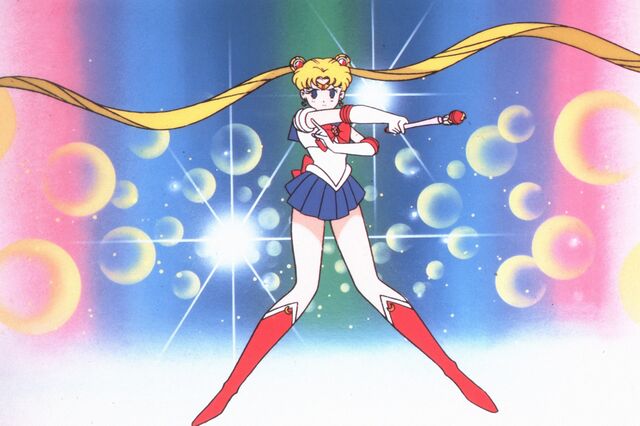
We did. But we were inspired by anime, so we just leaned into those aesthetics. We are just fans of that style: Sailor Moon, Cowboy Bebop, the anime films that we grew up with. So it is an homage to those designs.
Does it trouble you? I get that it’s an aesthetic. But you have all of these girls and young women watching.
Yes. But within our three characters we worked very hard to distinguish them and Zoey in particular — we gave her thicker legs and a bottom. [Laughs]
So [I] do feel like we hit those little differences. 9
9 I do understand the homage to an artistic tradition, but I still felt sad that these tweaks were as far as it felt possible to go. Animation as a whole has tended to picture girls and women with exaggerated body shapes, including tiny waists and mile-long legs. One campaign group calls this not only degrading but says it creates “a subconscious standard for young girls who look up to these characters.”
The film has come out at a moment where the world is in the midst of a rupture — as Mark Carney said to me. How do you feel about the way audiences see it at this moment?
Even in the first draft, the movie ended with this big concert where the girls would be reunited [with] an entire stadium full of fans contributing singing to defeat the demons. We worried it was a little cheesy to make a movie about the power of music.
During Covid, a lot of groups, [including] BTS, had online concerts where millions of people around the world were tuning in. I remember there was this shot where they’re on stage, and behind them there were all these faces of the audience that were tuning in. It was just incredible to see this unifying force of music, bringing joy to people at this dark time.
That told us this moment could really land — people coming together to celebrate and share the experience of this movie together.
The songs are in English, but they’ve got Korean words and phrases in them. People are singing along, there are words they might not understand and it doesn’t matter. They can still enjoy it. What a contrast to the Super Bowl, where the use of Spanish was to some people really controversial.
Art just speaks to you no matter what language it is in. 10
10 Popular artists who choose to perform in their mother tongue, such as Bad Bunny and Chinese rapper Skai Isyourgod, stand in contrast to the direction of some K-pop artists. Tiffany Ap wrote that Skai’s ascent represents a shift in the streaming era in which music rooted in accent, place and cultural texture can resonate globally.
You were a fan of K-pop long before the rest of the world had discovered it. Have you helped deliver a key moment for K-pop, further opening a gateway to its growth in the rest of the world?
That’s what they tell me. [Laughs]
There [are] four major labels [for] K-pop in Korea, and I’ve met with all of them. They’re so grateful that K-pop has reached another level.
So many fans I meet tell me, I didn’t even know what K-pop was and now I’m a big fan. The fandom allows them not just to enjoy the music, but want to learn more about the culture and experience other K content — movies, beauty or food. 11
11 The spread of South Korea’s cultural exports, amplified in recent years by social media platforms such as TikTok, is known as Hallyu, or the Korean Wave. But its momentum may not be permanent. Bloomberg’s Sohee Kim has noted that many of these exports draw on Japanese pop or Hong Kong cinema — cultural forces whose influence has since faded. “The task now is to avoid the decline,” she writes.
K-pop is in the title of the film. That would’ve been a draw to people who know what it is, but it could have been a barrier to others. You took a risk by doing that.
Yes, we did. This was always the working title of the movie, but we went down a lot of different routes. It’s a little cheesy, I have to admit. But the movie is a little kooky and because of that, I think the title fits.
There must be some vindication in that. People weren’t expecting it to be a runaway success. A lot of retailers didn’t buy into the merchandise. Sony made it, but sold the rights to Netflix. Are there people at Sony who are regretting that?
[Laughs] Maybe. We produced the movie at Sony, so we’re all celebrating the success there. But yes, we were definitely the underdog. We were fortunate to have a really good trailer. There was no marketing for the movie.
That’s got to be tough.
It was really tough, all the way through.
But I think back to the moment we got the green light during Covid, a time where the movie industry was already pretty uncertain. To be given an opportunity during those hard times to make a movie — let alone a personal film about my own culture — [and] an original, not a sequel, I was just grateful.
When we finished, I really loved the movie and our team did too. We really believed that if an audience finds it, it could do okay — and they did, they found it right away.
Would you have liked it to be in theaters for longer? Their future depends on having films that get people in the door. The singalong release was for a very short time.
As somebody who’s working in Hollywood, we don’t want to see theaters die. That experience is unlike anything else. It’s like going to a concert. You’re sharing art with strangers and connecting with them — even though you might not be talking to people sitting next to you.
That said, the way that people are consuming content — especially younger generations — has changed. We tend to absorb content on our phones, all alone. Without the fans, a movie like this, on a streaming platform, couldn’t have gotten this big. It was all word of mouth and content being created by fans [and] shared on social media.
I do think the two can coexist, and I would love to see a world where that can happen. 12
12 Theatrical releases clearly have value: KPop Demon Hunters’ brief US cinema run made it eligible for the Oscars. Whether Netflix will make them part of its long-term strategy remains an open question. In April 2025, Netflix co-CEO Ted Sarandos called movie theaters “an outmoded idea, for most people — not for everybody.” His comments drew further attention once the streaming giant launched its bid for Warner Bros.
Do you have a message for fans about what comes next? What is the next iteration of KPop Demon Hunters?
I can’t really share that at the moment.
There’s a sequel, surely?
I can’t really say that officially, but in a world that loves sequels, I don’t think it’s a surprise that something else could be coming.
But it’s going to be a long wait unfortunately, because animation takes a long time. 13
13 Kang has previously said there’s leftover material, including on the backstories of Rumi’s bandmates; that might mean a new movie isn’t starting from scratch. But Sony Pictures Animation President Kristine Belson has downplayed suggestions that a sequel could be released as soon as 2029.
Does it have to be animation? What about a live-action version?
There’s so much that animation brings to the film — the tone of the movie, the types of characters we were able to create, the type of comedy we were able to push, the drama. I firmly believe that the movie couldn’t have seen the success [it has] if it was live action.
I aspire to do live action someday, but they are two very different mediums. Animation is able to be successful with multiple demographics for a reason.
What else could be part of this ecosystem? I wonder if you dream of a franchise or live events. There are so many dimensions in which you can take great characters and storytelling. 14
14 Theme parks have long brought iconic worlds from film and television to life, but I was thinking here about a growing trend of live experiences, immersive shows or themed shops and restaurants built around IP. Netflix has turned shuttered department stores into permanent entertainment venues, while Bridgerton creator Shonda Rhimes talked to me last year about her creation’s “lifestyle brand” power.
Yes. It’s every filmmaker’s dream to have IP that can live for generations and we can share with our children. We have a lot of merch coming up, which is very exciting for the fans.
How are you preparing for Oscar night? Will you be apprehensive before a big moment like that?
We had the Oscars luncheon where we celebrated every single nominee, and that was really special. When your name is called, you go and stand for a big class photo. It was so amazing to share that moment with fellow nominees. Like, Wow, you are going to the Oscars, this event that you’ve been watching on TV with your family for decades.
I’m just going to enjoy every single second of it. No matter what happens on March 15, me and KPop Demon Hunters are there.

Mishal Husain is Editor at Large for Bloomberg Weekend.