
Kara Swisher on the Blind Spot That Broke Big Tech
The host of On with Kara Swisher and Pivot talks about the tech industry’s Trump pivot, exciting IPOs, and the uneasy economics behind the AI boom.
After a year of dominating mega-deals and driving stock-market gains, the tech industry is poised for a pivotal 2026 that centers largely on one question: Can AI start to show that it’s worth the massive investments being made?
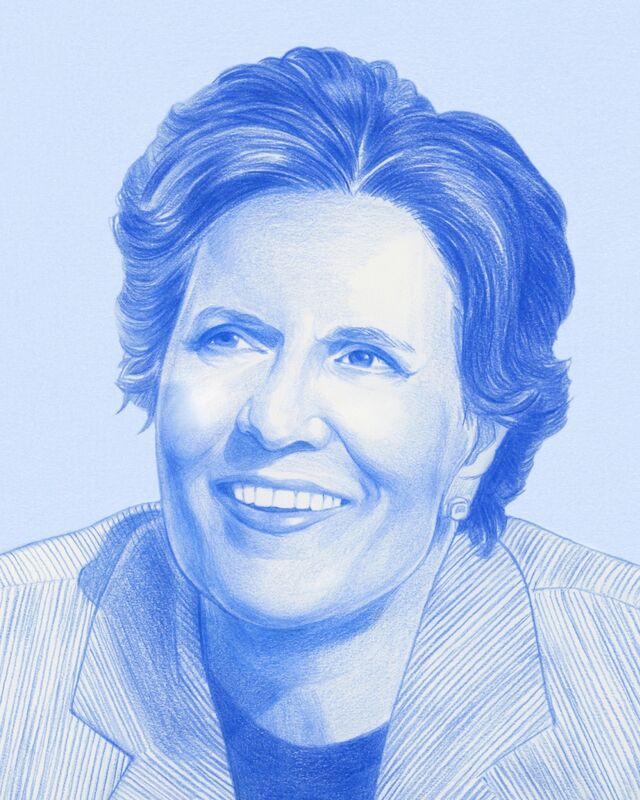
To anticipate what lies ahead, we turned to a woman who’s tracked Silicon Valley since the 1990s, covering companies from AOL to OpenAI and players from Steve Jobs to Elon Musk. Kara Swisher started out writing for The Washington Post and The Wall Street Journal, but over time her deep knowledge — and her concern about industry failings — turned her into more of a commentator and critic. She’s also an entrepreneur in her own right, becoming a podcaster early on. Today her wide interests are in evidence on her two shows for Vox Media: On With Kara Swisher and Pivot.
Crucially, she’s unafraid to tell it as she sees it. Think of this as a Swisher sitrep — one year on from the tech industry lining up behind US President Donald Trump — and her take on the advances and people to watch in the year ahead.
This conversation has been edited for length and clarity. You can listen to an extended version in the latest episode of The Mishal Husain Show podcast.
You’ve seen the story of tech up close for so long. As a new year begins, what’s on your mind?
A lot of focus will be on whether Big Tech continues its hegemony.
They’ve seen a huge run-up in their stock prices — they’re basically running the stock market, so [there’s] a question of what will happen to valuations? It has a lot of echoes to the internet crash, which happened right after the New Year too. 1
1 In early 2000, investors began selling off their internet-related holdings, and the five-year dot-com bubble burst. By the time the tech-heavy Nasdaq bottomed in October 2002, the slump had erased about $6 trillion from US equity prices.
The other is IPOs — Stripe, OpenAI, SpaceX — that could really invigorate the tech system. So where are the valuations of those?
Most people are focusing on whether AI will be a bust — whether it’s a bubble.
You are taking the thought that this could be an AI bubble seriously? Not something we should disregard?
Why would you disregard it? You’d be stupid to. These buildouts are enormous. The question is, where’s the business behind it and how patient are investors going to be?
It’s not to say that AI isn’t critical going forward. It is the next Cambrian explosion. But they may be ahead of their skis. Too many data centers, too many back-and-forth deals — it feels a little round trippy in a lot of ways — that are holding each other’s valuations up. I think Nvidia has an outsized role here the way Cisco did. 2
2 Much as Nvidia’s chips power today’s AI boom, Cisco’s networking equipment put it at the heart of the internet revolution, helping it become the world’s most valuable public company in 2000 before taking a hit in the crash. (Shares only recently surpassed their dot-com peak.) Some AI analysts now worry about a web of “circular deals,” in which companies buy from and invest in one another — echoing dot-com-era startups that purchased each other’s services to inflate growth.
Is there something circular that’s dangerous for the industry? These companies need IPOs to get money flowing in, but the IPOs put greater pressure on them to achieve returns?
Well, they’ve done plenty well being private. And they are for sale — you can buy and sell stock on the private market.
I think the most interesting IPO would be SpaceX. It didn’t grow as much [last year] as, say, OpenAI, but it’s going to own space. I think it’s got 90% of the rocket launches [in the US], some crazy number.
The only thing is — Elon Musk, who also has to drag around Twitter, Grok, Tesla. Even though [Tesla] stock has managed to stay afloat, the business is disintegrating at a very rapid pace.
He provided one of my most memorable, if toughest, moments of 2025, when I had a long conversation with him.
It’s pointless to interview him right now. He’s there to be a troll. He doesn’t say anything of any substance.
Is there a lack of big ideas? Elon Musk has certainly had them, but you’ve said that the industry is below its potential; people aren’t necessarily solving the big problems of our age.
Well, there’s a lot of promise with AI, right? I’ve just finished a documentary about health and AI. AI plays a big role in terms of drug discovery. The problem is the Trump administration is cutting money to those places, and so they’re all going to Canada.
There’s a lot of promise in not just job destruction, but job creation. The question is, is it fast or is it more of a slow burn the way electricity was? Electricity didn’t change everything overnight.
At the beginning of the internet, you didn’t know there was going to be Uber or Airbnb. Google didn’t exist until almost the turn of the century.
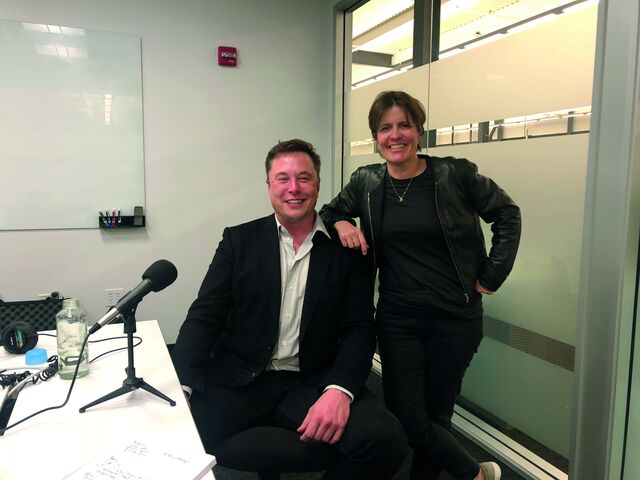
Back to your own relationship with the industry. I was struck by the line in your book calling it a “meet-cute love story that turned sour.” Let’s do the love story. Do you remember sending your first email? The first key internet moment you had? 3
3 I remember mine! It was via a computer in a UK university library around 1994. A friend at college in the US had told me there was a way for people to communicate through something called email, from one university to another. But how would you know when a message was waiting for you in that computer? I puzzled, unable to imagine a world where messages popped up on personal devices all the time.
It was when I downloaded a Calvin and Hobbes comic collection on a university server. At the time you didn’t have much speed, so the person running it was pissed at me, because I clogged it up. But I was like, I downloaded a book.
I remember thinking everything that can be digitized would be digitized. Then my imagination took off. What else can be digitized? Why do we need paper? Why do we need phones on desks? Why do we need to be at the desks?
I was a very early user of a lot of this stuff. Some of it was silly, but you could see it shifting and changing how we work and live. It was like being around when the car or plane was invented. Like, wow.
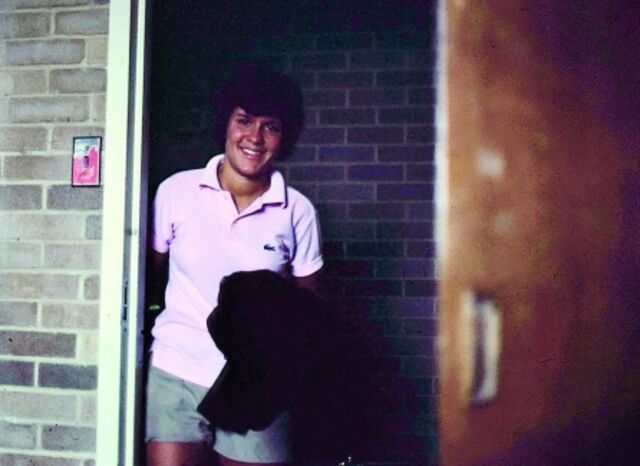
I think that you loved the promise of the technology, but you weren’t convinced by a lot of the people, even early on.
Right. I really started covering these companies in 1996. It was very clear that these were groundbreaking technologies and that the people doing it were very young and very ill-informed.
One of the first stories I did for The Wall Street Journal was the “Top 10 lies Silicon Valley people have told me since I got here.” We’re in this together. We don’t care about money. It’s all about community. There are no titles here. It was all a lie.
They all were very monarchical. They’d have hoodies, but they’d be cashmere hoodies. There was always such a disconnect. Every one of them ended up with a private plane and a private chef.
Real serious wealth creates real problems for people. They isolate themselves in their wealth, essentially. You could see the warping of them right from the get-go, because they loved to tell lies about things. Most of them were harmless at the time, but later not so harmless. 4
4 Swisher was working for The Washington Post in Washington, DC, when she first became interested in tech. Most of her colleagues were focused on US politics as the key to their career advancement, and saw hers as a niche interest. By 1997 Swisher had written a book about AOL and was moving to The Wall Street Journal bureau in San Francisco.
You would call them lies, not just hype?
They believed it. They were lying to themselves. There was a lot of discussion about changing the world, and it was very religious, almost.
Zuckerberg was someone who had built a worldwide network of information — largely on other people’s ideas. This idea that it’s really good that we let people do whatever they want, and give them all the information, and there’s not going to be a problem — it was naivete and ignorance of history. I’m sorry I made this gun. I didn’t know people would get shot by it. It’s not my fault people got shot by my guns. But they’re designed to shoot people.
Several different interviews that I did with him over the years [showed that]. He doesn’t speak to me now.
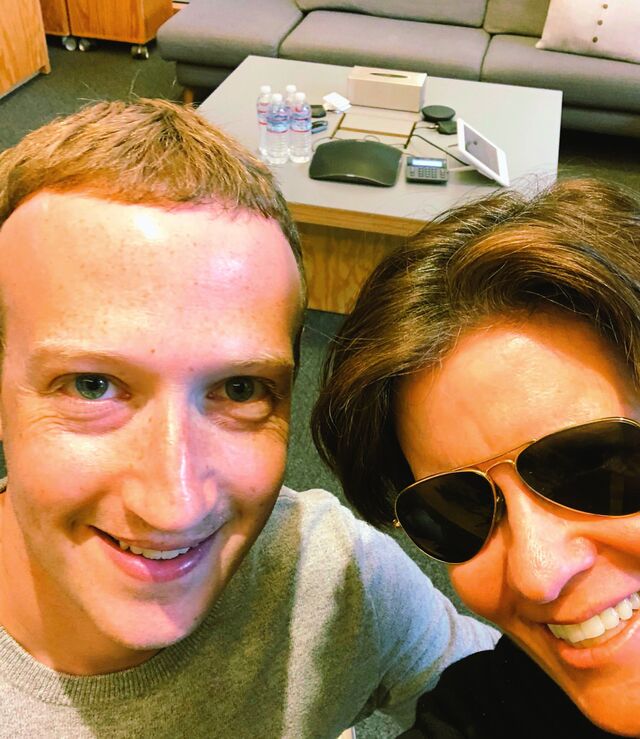
In 2011, when the Arab Spring happened, I did a documentary called How Facebook Changed the World. I slightly cringe when I think about the title now. At that time, we saw social media as benign. It was connecting people who were not being connected in other ways. By 2016, it’s a different story.
Right.
Which is why I wonder — perhaps it’s not all their fault that the technology was used in nefarious ways, even if it always had that potential?
The fault would be our regulators who decided to let them do whatever they wanted. 5
5 Section 230 of the Communications Decency Act shields social media companies from liability for content posted by users. For more on this, I’d recommend Can’t Look Away, a documentary based on Bloomberg reporting. Despite a 2024 US Supreme Court ruling that social media platforms have First Amendment rights against being forced to amend content, thousands of lawsuits alleging harm to children have been filed against Meta, Snap and TikTok.
I think that they didn’t have any safety thoughts in their brains. They never felt unsafe and therefore they created systems that were easily abused and easily gamed and they didn’t care. 6
6 The major platforms, have repeatedly expressed commitment to making their technologies safe. In 2019, Meta created and funded a “Supreme Court-like” content oversight board to review its policies and content moderation decisions — though last year it ended its third-party fact-checking program and eased content restrictions to “allow more speech.”
There were others, weren’t there, like Steve Jobs?
He actually thought about safety [and] privacy. He was an adult. When you [challenged] him, he didn’t act like you had stuck him in an eye with a dry stick. He could have a discussion. It’s a low bar, but every time you say something tough to Mark Zuckerberg he looks like you killed him. How dare you say this to me.
I just interviewed Sam Harris, who the tech guys loved. They got mad at him for being normally critical. Same thing with Yuval [Noah] Harari. They couldn’t get enough of Sapiens, then he wrote a book that said these information systems are not unlike the propaganda from the Middle Ages that killed a lot of women. [Now] they’re like, What are you talking about?
I don’t think Yuval, myself, or Sam have changed. They have changed.
Get the Bloomberg Weekend newsletter.
Big ideas and open questions in the fascinating places where finance, life and culture meet.
By continuing, I agree to the Privacy Policy and Terms of Service.
There does seem to be a common thread of being very thin-skinned.
Yes. Well, you got the big one. You got Elon.
But you did think he was different, earlier on?
I did. I feel like that’s the one I got wrong. Not completely wrong, because what Tesla did was astonishing.
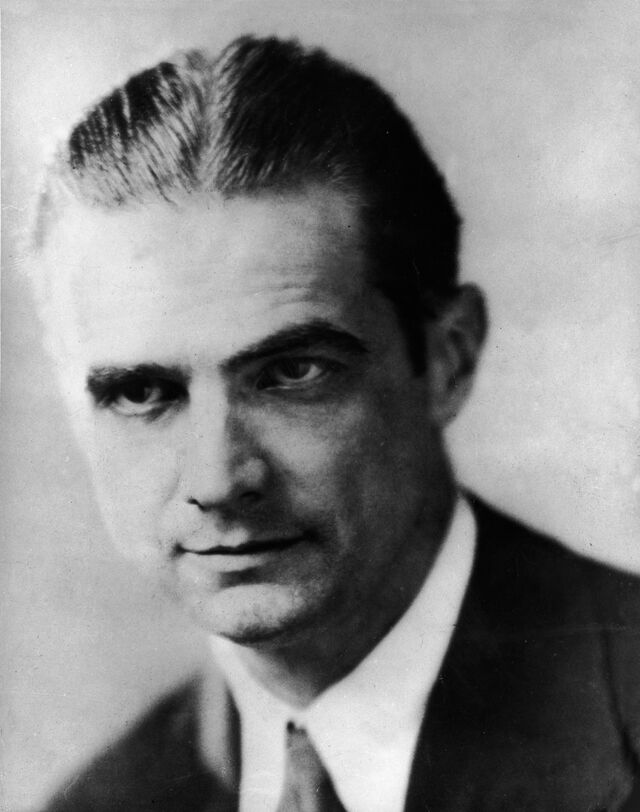
I think he had a vision that was big, and then who knows what happened. The hatefulness, the obsession with trans people, the drug use. Howard Hughes comes to mind when I think of him. 7
7 Hughes was one of the wealthiest men in the world during his lifetime. Like Musk, he found success across multiple industries — from movies to aviation — and he broke the record for a transcontinental flight in 1938. Later in life, Hughes would develop a drug addiction and become a recluse, dying of kidney failure in 1976.
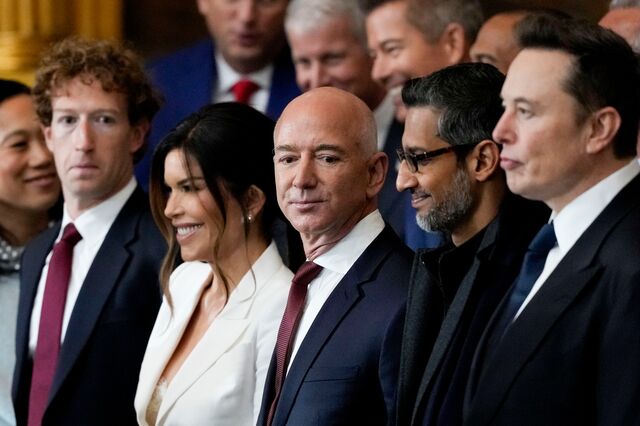
Let’s go more into politics, and Big Tech’s relationship with the president. Is that political expediency — it doesn’t take just a donation, now you’ve got to show up to the inauguration — or is it a fundamental belief that Trump is good for business?
I would say both. They don’t mind doing it. They get to do what they want, when they want to do it. They’re like Veruca Salt — I want that squirrel right now. So they’re willing to stand there. 8
8 The greedy and spoiled character from Roald Dahl’s Charlie and the Chocolate Factory, Salt demands her father buy her a trained squirrel — then gets her comeuppance when the squirrels judge her to be a “bad nut” and she’s thrown down a garbage chute. (The squirrels did not appear in the 1971 movie adaptation, though they did show up in the 2005 remake.)
A lot of them think the Biden administration wasn’t as pro-tech. They have some argument to be made, but [it’s] a massive overreaction.
That was Elon’s entire shift to Trump. I didn’t get invited to some stupid car summit the Biden administration had. He went on and on about that. That [was] the last communication we had. I was like, Calm the f**k down, dude.
Then they saw someone willing to take their money in a more explicit way — either through cryptocurrency or sweetheart deals. Steve Jobs would never have brought Donald Trump a golden statue — not on any planet Earth that I know of. He would be happy to talk to him. Steve often engaged with people he didn’t like or had difficulty with, like Rupert Murdoch.
The idea you could bring someone a gold statue and then get a tariff break — I wouldn’t do it. Maybe you wouldn’t do it. They’ll do it because they think shareholders win overall. I’m not surprised by any of it.
How much of what’s happening now is about the influence of Peter Thiel?
He was conservative for a long time. No shift for him, he’s the same.
But is it partly his influence behind the scenes, or the people he’s helped bring up, like JD Vance? 9
9 Much has been written about the shifting culture of Silicon Valley, including its reported turn towards Christianity. Thiel, the co-founder of PayPal and Palantir, made headlines in September with a series of lectures on the Antichrist. He also bankrolled Vance during the Ohio Republican Senate primary and facilitated a meeting between Vance and Trump at Mar-a-Lago. Under the Trump administration, Palantir has secured lucrative government contracts.
Well, Vance is an unusual character, because he was so anti-Trump. I was in the presence of him where he was insulting Trump so much. One time I said, You know what? [Trump] does have some good characteristics. If I’m the one saying, Don’t be so mean to Trump, you know something’s awry.
What year was that?
When he was working for [CEO of Revolution] Steve Case, I think. Years ago [Vance] was in tech. He’s a different character, who I just don’t understand in any way.
Some of them, [like] Marc Andreessen — I had no idea what his politics were. He has gotten radicalized. Some of them are just doing it for expediency. I would say Tim Cook doesn’t want tariffs, so he’ll do what it takes. He’ll do the minimum, but he’ll do it. Or Sam Altman.
The problem is they like the person who gets out of their way more than they should.
I wonder whether you see anything different in the younger generation of tech leaders? I talked to Mustafa Suleyman of Microsoft the other day.
He’s really smart.
Smart, and resolute [that] AI needs to serve humans. Does that give you some hope for the future of the industry? Is Sam Altman in the same sort of category? 10
10 In a recent Weekend Interview, Suleyman affirmed his commitment to building “humanist superintelligence” and pledged that Microsoft would not “continue to develop a system that has the potential to run away from us.”
I don’t know, because Sam Altman has also exhibited a lot of stuff that’s troubling.
I like Sam personally, and he certainly does respond, but he’s going to do anything it takes to make OpenAI win. He’s incredibly aggressive — and so he’s in a jam, because Google has decided to be Google again, and is really coming on hard with Gemini.
I think he hates it every time I say it, but is OpenAI Netscape or Google? Netscape, started by Marc Andreessen, really was it until Microsoft came and mowed them down. That may be happening to OpenAI right now, even though it’s the most popular by far.
The plains are covered with the bodies of tech pioneers.
Do you think it’s unlikely there’s a market for ChatGPT, Claude, Google Gemini and Microsoft Copilot? Does only one of those four survive?
Yeah, they do the same thing. They’re not that different.
I think what’ll be interesting is [large language models] that are specific to industries. [A company] has my medical information — I can’t believe I let them have it, but there it is. It’s more helpful than the doctor, and it’s accurate, because it’s based on my information and available scientific information. It isn’t hallucinating. It’s like Google on steroids.
What about spatial intelligence? There is a lot of focus on large language models, and many of us miss this other dimension. Fei-Fei Li really believes in that.
She’s great. I love her.
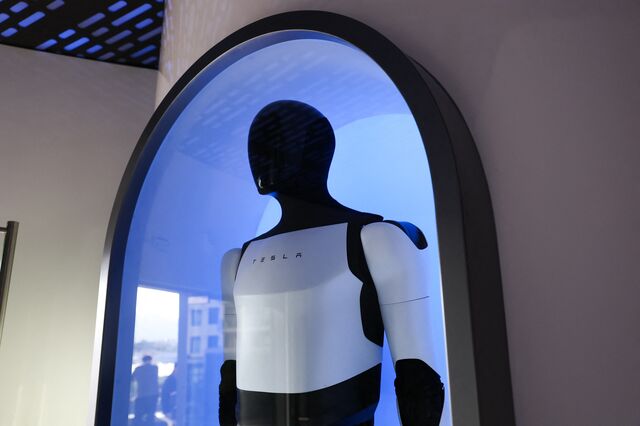
If I had to say one thing I’m going to pay a lot of attention to this year, it’s robotics. Unfortunately, Elon has hijacked this with his stupid robots that have to run — and you don’t want a robot to run. You want a robot to walk the dog, but does it have to look like a human? No. It could be a box. You have to be more creative in how robots are going to enter our lives, in ways that are not as if we’re on Lost In Space.
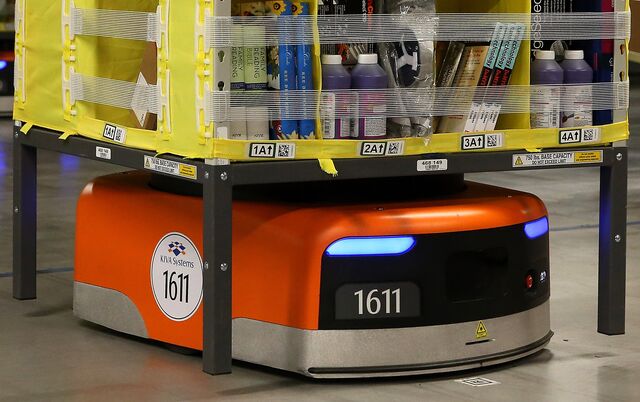
Years ago, I went to an Amazon warehouse. I thought, Oh wow, now they’re a robot company — because these little robots were moving things around in the most unlikely ways. There was shampoo next to a book by Sheryl Sandberg, and it was so much more efficient. I could see the day of no people.
You mentioned Sheryl Sandberg.
Remember her?
I wonder how you see her now.
Historically, I had a lot of sympathy for Sheryl — and then I didn’t. I agree with the idea that Sheryl and Mark were careless people. 11
11 Careless People is the title of an exposé of Facebook by its former public policy chief, Sarah Wynn-Williams, and a reference to F. Scott Fitzgerald’s The Great Gatsby. Swisher uses the same line in the prologue of her memoir, Burn Book: “They were careless people, Tom and Daisy — they smashed up things and creatures and then retreated back into their money or their vast carelessness or whatever it was that kept them together, and let other people clean up the mess they had made.”
I’d be like, I’m worried about Russians and bot farms. I’m worried about information being queered up so that we don’t understand anything. I’m worried about propaganda. They’d be like, Oh, don’t worry about it.
That was the famous interview I had with Mark, where he said Holocaust deniers don’t mean to lie. It was so striking for that level of ignorance to be at the head of this company. I think Sheryl went along to get along and I think a lot of people placed the blame on her. I would put it on him more than her, but she was certainly right next to him doing these things and could have mitigated it — or maybe she couldn’t. She certainly could have left and said something, but didn’t. 12
12 Zuckerberg used the example of Holocaust denial when trying to explain Facebook’s policy on content removal. “I’m Jewish, and there’s a set of people who deny that the Holocaust happened,” he told Swisher. “I find that deeply offensive. But at the end of the day, I don’t believe that our platform should take that down because I think there are things that different people get wrong. I don’t think that they’re intentionally getting it wrong.” Facebook ultimately banned content that denies or distorts the Holocaust in 2020.
Do you think you learned from your time in Silicon Valley, in terms of the startup mindset? You’ve had a really successful business; you’re an early adopter of podcasts.
I was always a difficult employee. People would tell me things and I’d be like, Oh, you’re such an idiot. So I decided I was better on my own; turned out I had some good business sense of what audiences wanted.
Also, I was early to cell phones, the internet [and] email. I was one of the first people at The Washington Post to put an email on my stories because I wanted to hear from readers.
Then I think I really did see the coming destruction of media as I started to cover the internet. We had a classifieds business at The Washington Post and it was expensive. I was like, The digital age is going to change this so easily. It’s going to bring down the prices. You don’t have to talk to anyone; it works and doesn’t cost anything.
I saw ways to make money too. It didn’t have to be a doom story of media. You could control it your own way. So I just kept shifting, and that’s what I do.
We have the word podcasting from the iPod, which is obvious when you say it.
Yes — iPod and broadcasting.
I got interested in [podcasting] because the relationship between myself and my phone got rather intimate. If you’re listening to people on these things, you have a parasocial relationship — which I think I do with my listeners in a lot of ways.
Can I cheekily ask you for some advice then? I’m the opposite of the early adopter, because I’ve spent most of my career in broadcasting, and now I’m in this space. What should I do?
Make something that is useful to people. I don’t mean, Here’s a list of 10 quiches you should make. It has to be interesting, and you can’t get it anywhere else. It can’t be copied by AI. It can’t be copied by anything. If you have those things, you tend to do really, really well.
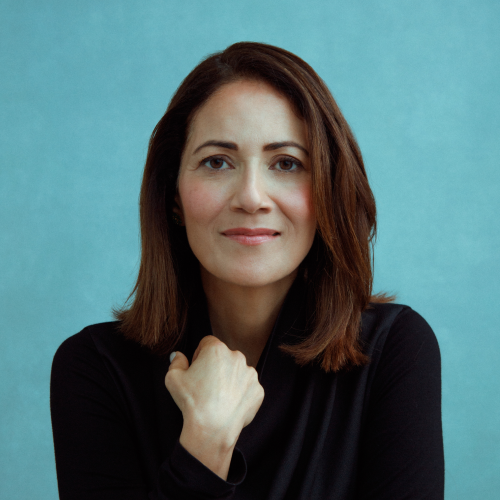
Mishal Husain is Editor at Large for Bloomberg Weekend.