Businessweek | The Big Take
The CEO Playbook to Navigating Trump
Pressure has replaced protocol as the White House rewrites the rules of engagement with corporate America.
Corporate America is entering the second year of Donald Trump’s second term with a new, hard-won understanding: The president’s personal interventions can shape business as profoundly as any economic force.
Trump has stunned Wall Street by calling for a 10% cap on credit card interest rates. He’s pressuring energy companies into rebuilding Venezuela’s crippled oil infrastructure. His administration’s criminal investigation into Federal Reserve Chair Jerome Powell threatens the future independence of US monetary policy.
Those are just the moves in recent days. From public attacks on media conglomerates to the ever-present threat of new tariffs, Trump has spent the past year blowing past the norms that have traditionally governed relations between the Oval Office and titans of industry.
There are signs that some executives are starting to push back, with JPMorgan Chase & Co. saying Tuesday that “everything is on the table” to fight Trump’s credit card directive. As oil executives gathered at the White House last week to discuss Venezuela, Exxon Mobil Corp. Chief Executive Officer Darren Woods called the country “uninvestable”—a rare public note of dissent that quickly drew backlash from the president.
It’s a tension that now defines the corporate operating environment. Companies are constantly recalibrating strategy, weighing when to signal political fealty against the risk of damaging their share price or reputation. Trump’s whims carry the weight of market forces, reshaping capital flows, supply chains and the very balance of power between business and government. For CEOs, that means adopting strategies for dealing with the most interventionist president in almost a century.
Trump has brought an “unprecedented personalization of government and business dealings,” says Jonathan Levy, a historian at Sciences Po in Paris who focuses on capitalism and the US economy. “Trump seeks to rule patrimonially. Loyalty must be to him, not to laws and institutions. His authority is rooted in his persona. He rules by making others dependent and subservient to him.”
Presidents have long pressured business leaders to back their agendas, though few have done so as ruthlessly as Trump. Franklin D. Roosevelt pushed through the New Deal amid fierce opposition from Henry Ford and other industrialists of the era. Bill Clinton’s Department of Justice hounded Microsoft Corp. and its CEO, Bill Gates, setting a precedent for later actions against monopolistic behavior.
President Joe Biden had a markedly cool relationship with top business leaders. Some chafed at his antitrust push, climate regulations and overt support for organized labor. Instead of consulting corporate titans, Biden often sought economic perspective from labor leaders or voters in his home state of Delaware. He infamously excluded Tesla Inc.’s Elon Musk from a 2021 White House event with US automakers to unveil electric-vehicle goals, a snub widely seen as contributing to the billionaire’s rightward turn.
Against that backdrop, Trump’s return to power landed in a business community receptive to a different style of engagement. That shift was visible at his inauguration, where Jeff Bezos, Mark Zuckerberg, Sundar Pichai and other billionaires had prominent seats—a scene few would have predicted after Trump was effectively excommunicated from the corporate world following the Jan. 6, 2021, attack on the US Capitol.
Taylor Budowich, who served as deputy chief of staff at the White House before departing in September, says Trump’s focus is on advancing the American economy—and CEOs should be receptive to that.
“They may not see eye to eye on every issue, but he sincerely wants their companies—and their workers—to benefit greatly by his administration,” Budowich says. “That means the door is always open, and CEOs have ignored the BS narratives and sat in front of him to make their case, and it has moved the needle.”
Heading into 2026, Trump is confronting falling approval ratings, lingering inflation and critical midterm elections—but given his propensity for ignoring conventional political forces, it’s unlikely he’ll back off from leveraging his power to sway business policy in his favor.
Beyond the credit card edict and Venezuela moves, Trump declared last week that institutional investors will no longer be able to buy homes to rent. He also demanded that large defense contractors halt dividends and stock buybacks until they ramp up production, singling out RTX Corp.
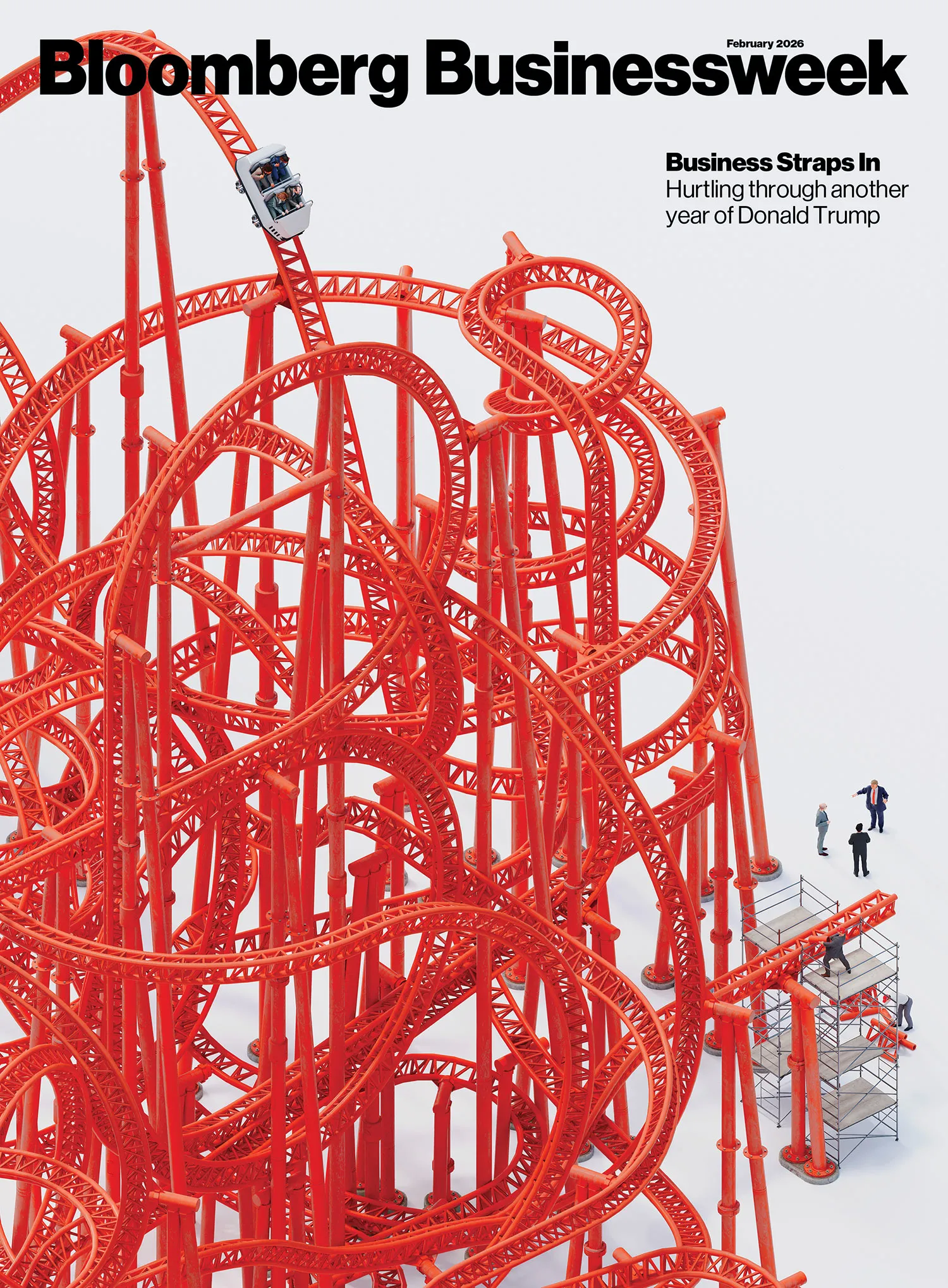
So far, the broader stock market has taken the turbulence in stride, with the S&P 500 little changed this year. But it’s unlikely that has eased anxiety in corporate boardrooms.
Hardly any CEO is willing to speak publicly about the effect of Trump’s meddling, and traditional corporate advocates including the Business Roundtable and the Chamber of Commerce declined to comment on the record for this story. Interviews with more than a dozen executives, lobbyists, public-relations experts and people close to the White House, several of whom requested anonymity to speak freely, show some of the steps companies are taking, such as building back channels and at least giving the appearance of acquiescence.
Here’s what we’ve learned. Call it the CEO’s Guide to Managing Trump.
Known to hand out his number to executives, Trump is the rare president who can be reached directly on his mobile phone. During his first term the president said Apple Inc.’s Tim Cook was a “great executive” because “he calls me, and others don’t.” In October, Trump said he canceled plans to send federal troops to San Francisco after receiving calls from “friends” in the area, name-checking Jensen Huang of Nvidia Corp. and Marc Benioff of Salesforce Inc.
“Love him or hate him, he’s accessible; if you’ve got issues, he’ll talk about it,” United Airlines Holdings Inc. CEO Scott Kirby said in a September interview with Bloomberg News. “That doesn’t mean he’ll agree with you, but you can get him to engage in a way that politicians historically didn’t engage.”
Still, access to Trump is tighter than it was during his freewheeling first term. And CEOs without a direct line can be reluctant to reach out, wary that any conversation could take an unexpected turn, says one person familiar with the workings of the White House.
Less risky is finding a line into White House chief of staff Susie Wiles or cabinet secretaries such as Treasury’s Scott Bessent and Commerce’s Howard Lutnick, both finance industry veterans. Top MAGA lobbyists like Brian Ballard and Jeff Miller also enjoy close access to powerful Trump officials and the president himself, thanks in part to their prolific fundraising.
But not every CEO has Bessent on speed dial, and Ballard’s client list is now crowded with blue-chip companies such as United and Chevron Corp. and law firm Kirkland & Ellis. As an alternative, executives can contact lower-profile White House staffers to discuss policy concerns.
They’ve taken to calling top Trump aides including deputy chief of staff James Blair; Deputy Commerce Secretary Paul Dabbar; and Jim Goyer, director of the White House Office of Public Liaison, according to people familiar with the matter. Since the liaison office is designed to serve as a sounding board for business leaders, Goyer and his deputy, Hailey Borden, are good first ports of call, says David Urban, a managing director at lobbying firm BGR Group and an adviser to Trump’s presidential campaigns.
Even if a CEO can’t land a one-on-one meeting with the president, “that’s not necessarily the worst thing,” Urban says. Any interaction with a high-placed member of the White House—even if it’s just coffee at Butterworth’s cafe, one of Washington’s MAGA-friendly hangouts, or a working dinner at the Occidental, another favorite of top officials and Republican lobbyists—is better than none.
“Business leaders are often reaching out to President Trump because they know they have a pro-business ally in the White House,” says White House spokesman Kush Desai. “But while President Trump is always willing to hear out the business community, the only factor guiding his decision-making is the best interest of the American people.”
Playing to Trump’s whims can take many forms, discreet or overt. The president no longer leans on the New York real estate and banking community as heavily as he did during his first term, according to people familiar with his interactions. Now he speaks more often to tech CEOs and libertarian-minded figures such as Peter Thiel. He’s kindled a close relationship with Nvidia’s Huang, who scored an invite to the banquet King Charles III hosted for Trump’s visit to the UK in September, as did Cook and other American CEOs.
Speaking on Joe Rogan’s podcast in December, Huang praised Trump as an “incredibly good listener” who says what’s on his mind. “Every single time I called, I needed something, I wanted to get something off my chest, express some concern, they’re always available,” he said of the administration. That relationship paid off days later when the White House announced it would allow exports of one of Nvidia’s most advanced processors to China.
In other cases companies have set up staff in strategic ways, such as avoiding conflict with a president who’s repeatedly singled out officials tied to Democratic administrations.
At Apple, Lisa Jackson, who served under President Barack Obama as the first Black leader of the Environmental Protection Agency, oversaw government affairs, sustainability efforts and racial-equity investments for years. She’s taken a less prominent role, engaging with the Trump administration less often than she did with prior presidencies, according to people familiar with the matter. She deputized two of her staffers, Nick Ammann and Tim Powderly, to be the company’s main liaisons, other than Cook himself. Jackson is set to retire from Apple in late January.
Direct personal engagement can be key for those with access. As Netflix Inc. was preparing its $72 billion offer for Warner Bros. Discovery Inc., co-CEO Ted Sarandos met with Trump at the White House and discussed topics including the auction of the film and TV company, Bloomberg News reported in December. Just hours before Paramount Skydance Corp. launched a hostile competing bid, CEO David Ellison was seen chatting with the president at the Kennedy Center Honors in Washington. Paramount’s bid is backed by Oracle Corp. billionaire Larry Ellison, David’s father, who has long-standing ties to Trump.
For formal meetings, coming in with a gift can’t hurt. Seeking relief from tariffs on foreign-made semiconductors, Apple’s Cook gave Trump a glass plate with the company logo set atop a gleaming 24-karat gold base. And when a delegation of Swiss business executives visited the Oval Office in November to press for tariff relief, they presented the president with a gold Rolex clock and an engraved gold bar.
“Trump is predominantly driven by one thing, which is personal gain,” says Jacob Funk Kirkegaard, a senior fellow at the Bruegel think tank. “The guy is a medieval prince. He needs to be buttered up.”
Finding a seat at Trump’s table is just the first step—what a CEO says next matters more. Trump values companies that can demonstrate deep ties to the Main Street economy, says Kevin Madden, a strategist on Mitt Romney’s presidential campaigns who’s now a senior partner at corporate adviser Penta Group. That means emphasizing job creation and investment in the US.
The best approach, leaders and their advisers say, is to understand what Trump wants on a particular issue, then explain how a company or industry can help deliver it. The president famously doesn’t read briefing books yet prides himself on his business instincts, so executives must explain complex issues simply. Making that argument with visual aids often helps, say Trump allies and advisers.
Complaining or arguing rarely does. “Do not stick your hand in the blender,” cautions Urban. “If you go in and make your case without being combative, you will definitely get a fair hearing from the president and his staff.”
The back and forth on tariffs illustrates this nuanced approach. Target Corp. leader Brian Cornell spent time talking to Wiles, Bessent and others about the impact of broad tariffs on American consumers, according to a person familiar with his strategy. Cornell, who chaired the Retail Industry Leaders Association during Trump’s first term, has relied on facts and figures rather than confrontation, the person says. Target declined to comment.
Another option is simply keeping quiet. Walmart Inc.’s Doug McMillon didn’t publicly respond when Trump commanded the company to “EAT THE TARIFFS” in a Truth Social post after the world’s largest retailer said the rising cost of imports might force it to raise prices. Trump didn’t single out Walmart again.
Executives who take a more combative approach risk Trump’s ire. “There is a real sense that the government is often untethered to historical norms,” says Franklin Turner, the co-chair of the government contracts and global trade practice at law firm McCarter & English. “There’s an inherent inflexibility that informs their posture, a sense that you will be put through the paces on this and we will come after you, even if you’re right.”
Trump entered his second term with a well-developed ecosystem of conservative influencers, publications and podcasts willing to amplify his message. In May the White House launched WHWire, a link-heavy aggregation site resembling the Drudge Report that cheers Trump’s moves. A coordinated social media machine centers on Musk’s X, formerly Twitter.
Coca-Cola Co.’s interactions with Trump this past year exemplify the new landscape. In July the president posted on Truth Social that Coke had “agreed” to use “REAL cane sugar” in the US, which likely came as a surprise to both the company and its suppliers of high-fructose corn syrup, the sweetener used in its namesake product.
Coke responded with a short statement saying it appreciated “President Trump’s enthusiasm” for its brand and promising more details. CEO James Quincey ultimately turned Trump’s meddling into a marketing opportunity. When the company decided to unveil a variant made with cane sugar in the US, Quincey promoted the change during a television interview with Liz Claman of Fox Business, a favored news network of the administration.
Similarly, Eli Lilly & Co. CEO Dave Ricks chose Maria Bartiromo’s daily show on Fox Business as the venue to announce plans to make a new weight-loss pill in the US. “We want to work with the administration and others who want to make America healthy again and get these medicines to more patients,” Ricks said.
Perhaps above all, the author of The Art of the Deal sees every interaction as a transaction. Urban, of BGR, cites a Beltway adage: “The first rule of horse trading is to have a horse.”
In Trump’s Washington, those transactions often hinge on what a company can offer—or surrender—to stay in the administration’s good graces. That dynamic was on full display with Intel Corp., whose CEO, Lip-Bu Tan, sought something essential: a lifeline. What he gave up was extraordinary.
Intel had been a major beneficiary of the Biden-era Chips and Science Act, a $52 billion effort to revive semiconductor manufacturing in the US. Trump dismissed the program as a waste of taxpayer money and a “horrible thing.” Within a span of days in August, the president called for Tan’s resignation over the executive’s past ties to China, then reversed course after the two met in private. The result was a deal in which the government acquired $8.9 billion worth of common stock, making it a top shareholder.
The intervention cut against principles of American free-market capitalism that investors and policymakers have long considered sacrosanct. But the White House framed it as business as usual, casting the Intel arrangement as a possible template for deals with other companies.
Many businesses have also sought to stay in the Trump White House’s good graces through donations or public pledges to invest in the US, even when those investments aren’t new. Sponsoring the nation’s 250th anniversary celebration this year has emerged as one relatively low-risk path, says Tevi Troy, a presidential historian who served in the George W. Bush administration: “Companies like doing that, because they’re less likely to alienate employees or shareholders.”
Businesses seeking Trump’s favor might also help foot the bill for his White House ballroom. The companies donating to the $400 million (and growing) price tag for the project include Altria Group, Amazon.com, Caterpillar, Comcast, Google and HP, among others. The Republican lobbyist Ballard, members of his firm and a handful of its clients were spotted at a dinner Trump held to thank the donors in October.
A trio of companies have opted to cover all their bases. Crypto exchange Coinbase Global, defense contractor Lockheed Martin and data analysis company Palantir Technologies are sponsoring both the banquet hall and the nation’s birthday.
Absent from either list is Wall Street titan JPMorgan, whose CEO, Jamie Dimon, told CNN he was “quite conscious” of the risk of “doing anything that looks like buying favors.” Dimon is the rare CEO who wields enough clout that he can largely speak his mind regarding Trump. Most of corporate America doesn’t have that luxury.
For all their new strategies and carefully managed relationships, executives may find the coming year the hardest yet to navigate. “We are entering an unprecedented moment with Trump, in that his political viability is more threatened today than ever before,” says Phil Singer, a corporate communications consultant and former adviser to Chuck Schumer, Hillary Clinton and other Democratic leaders.
A playbook only works when there are clear rules for the game, but Trump can change them at any time. A CEO would be advised to map out their strategy in pencil, not pen, and keep an eraser handy.
—With Mark Gurman, Kristina Peterson, Mary Schlangenstein, Dylan Griffiths, Emily Flitter, Bastian Benrath-Wright and Ian King
Chapter Videos: Getty Images (5)