

What Mohammed bin Salman Fears Most From the War With Iran
Middle East scholar Bernard Haykel explains Tehran’s calculus, the risk of regime collapse, and how Saudi Arabia’s crown prince views the conflict.
Within 24 hours of last weekend’s US and Israeli strikes on Iran, a host of other countries were drawn into the Middle East’s latest war. Iran retaliated by targeting sites in Israel and across the Gulf — including the UAE, Saudi Arabia, Qatar, Kuwait and Bahrain — as well as Iraq, Oman and Jordan. Israel, meanwhile, has carried out air strikes on Lebanon and sent ground troops in as it seeks to dismantle the Iran-allied Hezbollah group after cross-border attacks.
This isn’t last year’s 12-day war. Shipping, air travel, energy supplies and stock markets are already feeling the strain, and the IMF has warned of global economic impact. Messaging from the Trump administration has also been inconsistent.
To contextualize the moment, we turned to an expert on politics in the Middle East. Bernard Haykel is a professor of Near Eastern Studies at Princeton University and a regular commentator on the region, known for taking the long view on its history, religion and social change. His forthcoming book is about contemporary Saudi Arabia and its leader, Crown Prince Mohammed bin Salman — with whom he is in regular contact. Born in Lebanon, Haykel also has a personal connection to the Middle East.
This conversation has been edited for length and clarity. You can listen to an extended version in the latest episode of The Mishal Husain Show podcast.
Tell me about hearing that the US and Israel had begun striking Iran. What were the first thoughts that went through your mind?
I wasn’t surprised that this attack happened. I was only surprised by how soon it did, given that the Iranians were [still] negotiating with the Americans.
Word among the leaders in the Gulf States — like the crown prince of Saudi Arabia — was that Israel would attack sooner or later. They had knocked out most, if not all, of [Iran’s] air defenses last June. This was an opportunity to really destroy and defeat the system itself and topple the regime.
The surprise, really, was more to do with timing — and also the fact that the Americans were all-in, because it was primarily an Israeli decision to attack, I think. 1
1 The US and Israel attacked Iran on Feb. 28, targeting key military and government infrastructure and killing the country’s Supreme Leader Ayatollah Ali Khamenei, as well as other senior commanders. Haykel’s comment on the decision-making echoes US Secretary of State Marco Rubio’s suggestion that Israel’s determination to attack Iran forced the US to act. Rubio later clarified his remarks.
Were you surprised, though, by how fast it spread to other countries?
[Only that] the Iranian regime felt existentially threatened. The Iranians have been saying this to all the leaders in the Arab world: that if they are existentially threatened, they will attack broadly and widely and try to disrupt oil and gas shipments.
Within Iran, the longer-range ballistic missiles had been very seriously destroyed by the Israelis in the 12-day war of last June. The Iranians have a much larger arsenal of short-range missiles and drones that hadn’t been damaged. So that’s why you’re seeing so many more missiles going at the UAE and at Bahrain and Kuwait and Qatar and Saudi Arabia. That’s the arsenal that the Iranians actually still have.
I want to ask how you see a moment like this. You’ve studied history, you’ve studied Islam. When you see the news, are you always using that longer lens, looking back in time, putting it in context?
Yes. These are modern states and ideologies — including the Iranian state’s ideology, [which] draws on a particular cherry-picked version of Islam.
I see the Middle East as divided between two groups or two ideologies — two ways of looking at the world. You have the status quo powers [who] basically want to develop their countries. They want peace and stability to economically advance, and they include Saudi Arabia, Egypt, Jordan, also the UAE — despite what they’re doing in Sudan and Yemen.
Then you have this other group that is revisionist in the sense that they want to redraw the map of the Middle East. They want to change the power dynamics. They include, surprisingly, both Iran and the Israeli right wing.
The Iranians want to see Israel destroyed. They want to see America thrown out of the region militarily, as well as [in terms of] its economic and political and cultural influence. The right wing in Israel also wants to reshape and reimagine the Middle East according to its own political agenda. What we’re seeing today is one of the revisionist powers, that is the Israelis, attempting to do just that. To destroy the Iranian regime and to see either something replace it — or chaos.
And that’s a real fear of mine. If you end up with a failed state with 92 million people, you could end up with a catastrophic situation for Iranians and for the neighbors.
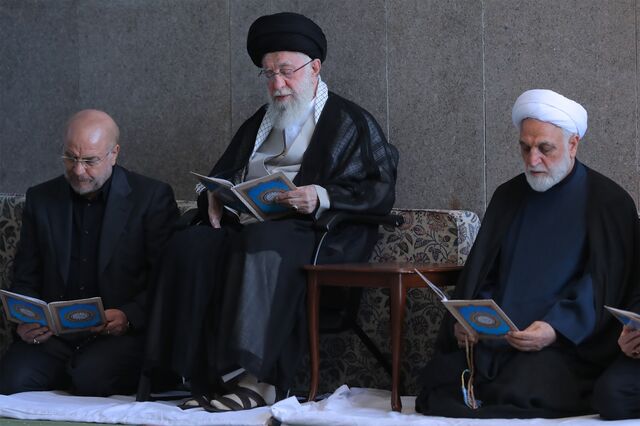
It’s interesting to me that you call Iran a modern state, given its structure — a theocracy with Ali Khamenei, supreme leader and ayatollah, at the top of the pyramid.
It is a theocracy, as much as you have a cleric who heads it. But if you look at the ideology of Iran, of the state, you see it’s a combination of different strands.
You have anti-imperialism. You have anti-colonialism. These are modern ideologies. You have social justice, ideas from communism and Marxism. Those are modern as well. But you also have elements of medieval theology repackaged in a modern guise.
And then you also have Iranian nationalism, which is again, a modern ideology, not an ancient one. So what you have is a hybrid regime in Iran, in its ideology. 2
2 The present system dates from 1979 and the Islamic Revolution that ousted Mohammad Reza Pahlavi as Shah of Iran. In 1953, after Iran’s democratically elected prime minister was overthrown in a coup orchestrated by the CIA and Britain’s MI6, in a bid to maintain control over the oil industry. Now, the former Shah’s son Reza Pahlavi is seen by some Iranians as a potential post-regime leader.
Let’s dig into the peril and the complexity of this moment. Most people are imagining either the Iranian regime survives or, if it doesn’t, then something better comes. You are also raising the prospect that the state could fail and there is just anarchy.
I think there are three possibilities.
The regime survives as it is and gets hardened even further in its determination to be a revisionist power. That’s one possibility.
The other is a Venezuela-like solution: The regime stays, but you have a new leadership that’s less revolutionary [and] willing to cut deals with the Trump administration. Same regime, but reformed.
The third possibility is the downfall of the regime. And in that case, you could end up with a civil war. Iran is only about 50% Persian by ethnicity. You have other ethnicities — the Baloch, the Kurds, the Azeris, the Arabs. They could be armed by outside powers. You could end up with a very chaotic and weakened central state. That would spell disaster for Iran and for the region. Iran is a large country with a super-talented population. It has massive resources in oil and gas. Seeing a Libya-style war in Iran would be catastrophic.
Which of those three scenarios do you think is the most likely?
My bet is that this regime will survive. This is a very tough regime that still has at least 20% of the population on side, and is willing to kill to remain in power. We saw this in the response to the demonstrations that took place in January. 3
3 A sharp depreciation in the value of the Iranian rial sparked protests that became the largest since the regime came to power in 1979. The response was brutal; thousands were killed. At the time President Trump urged Iranians to keep protesting, and said “help is on the way.” He has now urged Iranians to rise up once more.
[The regime] has deep roots in Iranian society. And frankly, despite all its problems, it has delivered on basic services for its population, whether it’s healthcare, education or basic infrastructure.
So I don’t see it disappearing. I think the Americans are hoping for a Venezuela-like reformed regime, and the Israelis probably would prefer chaos in Iran.

Get the Bloomberg Weekend newsletter.
Big ideas and open questions in the fascinating places where finance, life and culture meet.
By continuing, I agree to the Privacy Policy and Terms of Service.
In that first scenario of yours — the survival of the regime and the possible strengthening — will we be asking in time, what was this war for?
I don’t think the Trump administration has thought through the scenarios for after this war at all.
I think they went into this thinking it would be a very quick and easy decapitation of the leader and that somehow the regime would immediately come to a Venezuela-like accommodation. But even President Trump said that the initial attack that killed Ayatollah Khamenei was so successful that it knocked out several of the potential leaders who they were hoping would take over the regime and make this accommodation. This is not a war that has been thought through at all.
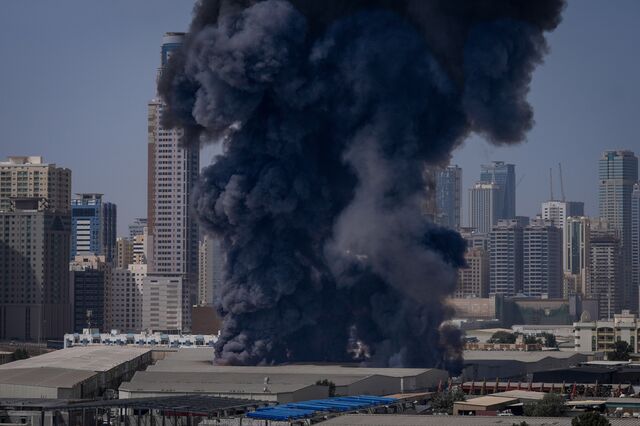
My fear is that the Iranian regime still has the capacity to cause a tremendous amount of chaos in the Gulf. We see this now with the Strait of Hormuz being blocked. No one will insure a ship going through there and that’s about 20% of global oil and a lot of the world’s gas, and so we’re going to see a lot of chaos if this war doesn’t end. 4
4 Trump’s suggestion that the US would insure and protect oil tankers and other vessels passing through the Strait of Hormuz could risk bringing Iran’s anti-ship missiles into play. Concerns about supplies to China and other countries that rely on Middle Eastern energy hit Asian market this week, and without a quick resolution, high oil and gas prices could trigger an inflation crisis.
We’ve seen in a number of countries — India, Pakistan, Yemen, Turkey, Iraq, Nigeria — Shia Muslims protesting and publicly mourning the ayatollah. Is that religious or political, or a mix?
So the ayatollahs in Iran subscribe to a particular version of Twelver Shiism Islam. The doctrine itself is called Velayat-e-faqih, which means the guardianship of the jurist. This is a distinctive, modern, doctrine that Ayatollah Khomeini came up with.
Most Shia — and they represent about 15% of the Muslim population in the world — don’t adhere to this doctrine. They don’t see it as legitimate, but they have tremendous affinity and affection for the regime in Iran and for the leadership of the regime, even though theologically they’re not connected to it. I see most of the Shia lamentation and response to what is happening in Iran, and the killing of Khamenei, as more political than theological.
Is that directly against the United States and Israel, not just mourning for a spiritual leader?
It is more of a political sentiment, and it’s one that’s shared by others. People who see Iran as a country that is resisting the empire, that’s resisting Israel, that’s resisting colonialism, have tremendous sympathy for Iran.
Let’s talk then about Saudi Arabia and particularly Crown Prince Mohammed bin Salman. You talk to him on a one-to-one basis. Can you give us your sense of these conflicting reports about whether he was, behind the scenes, pushing for strikes on Iran. 5
5 Haykel’s forthcoming book is titled The Realm: MBS and the Transformation of Saudi Arabia. MBS, as he is known, has unleashed a torrent of reforms under the banner of “Vision 2030” to position Saudi Arabia as a safe, stable, and attractive destination for investors and tourists. These include relaxing rules on property ownership and liquor, and liberalizing the country’s stock market.
I’ve spoken to Mohammed bin Salman specifically about this issue over the last two or three years. He’s been very clear and categorical that he does not want a war with Iran. He does not want Israel to attack Iran, and he has tried to reduce tensions with Iran and you see this in a détente agreement signed in March 2023 that reopened embassies between Saudi Arabia and Iran.
Which was a really striking moment given their relationship over a long period of time.
The regime in Iran, since 1979, has vilified rulers in Saudi Arabia and seen them as illegitimate puppets of the West. Ayatollah Khomeini used very abusive terms when referring to the Saudi royal family, calling them the camel grazers of Najd — Najd being the central province of Saudi Arabia. The history is one of great tension.
MBS realizes that Iran has this arsenal of short-range missiles that can do a tremendous amount of damage — not just to his oil facilities, but also vital installations like desalination plants, electricity generation plants, communication systems and so on. And he has no effective way of blocking that swarm of attacks that the Iranians can send against Saudi Arabia.
We saw this in September 2019 when the Iranians, in a display of their firepower, attacked a major oil facility in Saudi Arabia called Abqaiq, damaged it very severely and knocked out 50% of production.
So he’s very wary and worried about what Iran can do and did not want the war. The Washington Post article saying that MBS was supporting an attack on Iran is not true.
Are you sure of that? The reporting was that four people familiar with the matter said that he made multiple private phone calls to Trump over the past month advocating a US attack. The Saudis have pushed back publicly.
He did call Trump several times asking him not to attack, so that’s the true version of it. 6
6 Haykel is a fluent Arabic speaker and is therefore able to converse with MBS in his native tongue. They first met in 2016 (in Riyadh, and then again when MBS was visiting the US that same year). They continue to speak and text by WhatsApp, both privately and also on the record, for Haykel’s book.
Having said that, he also warned that if [Iran] were to attack him, he would have to defend himself and launch attacks against Iran. And I think that’s exactly what’s likely to happen. You’re going to see the Saudi Air Force getting involved in this war on the side of both the US and Israel.
MBS is a nationalist and he has to show his own population that he can defend the country, because the attacks have been on civilian targets and industrial targets. He needs to reestablish deterrence.
That would be another widening of this war.
Yes, and I think we’re going to see that if the Iranians don’t stop soon, and if this war doesn’t stop soon. You’ll see Gulf States defending themselves. A city like Riyadh with 7 [million], 8 million people relies very heavily on desalination. If those plants are damaged, you have no water and you would have to evacuate. That’s an existential crisis for Saudi Arabia and that is why he was against this war. 7
7 Across the Gulf countries, and especially as populations have increased over recent decades of development, desalination facilities have been crucial in turning sea water into drinking water.
Would Saudi Arabia not have seen a prize in a potentially weakened Iran?
Well, [MBS] has no love for the Iranian regime. But his main concern is not a weakened Iran, but an Iran that has no state, or a failed state that ends up in chaos, in a civil war.
This is where the perspective of a country like Saudi Arabia is radically different from that of Israel [and] I think this is where the United States shares more with Saudi than it does with Israel.
The Saudis see the Iranians as neighbors. Chaos in Iran would spill over into Saudi Arabia. Whereas Israel is 1,000 kilometers [621 miles] away from Iran and doesn’t care what happens there. I think what MBS will be doing now is telling Trump: We don’t want chaos in Iran.
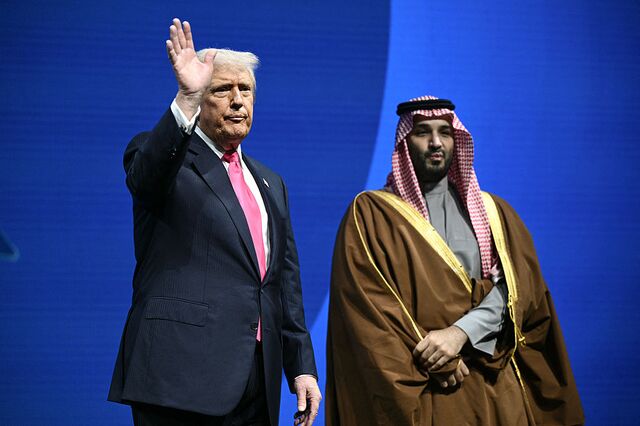
He didn’t manage to deter Trump from being part of this. Yet Trump seems to admire Mohammed bin Salman a lot. 8
8 “I like him a lot. I like him too much… great guy,” Trump said of MBS in a speech in Riyadh in May 2025.
It is very true that [Israeli] Prime Minister Netanyahu has prevailed in convincing President Trump that this war should be waged by the United States. MBS has not been able to convince Trump otherwise.
President Trump came to political awareness in the 1970s when you had the two major oil crises of 1973 and 1979. He sees the Arab sheikhs as the richest and most powerful people, who need to be cultivated, because that’s what he saw in the 1970s with characters like Adnan Khashoggi and Zaki Yamani.
One an arms dealer, one the oil minister of Saudi Arabia for a time.
Correct. He saw the massive transfer of wealth from oil-consuming countries to oil-producing countries. Saudi Arabia became one of the richest countries on the planet almost overnight. That’s very appealing to President Trump. 9
9 Business interests between Saudi Arabia and the Trump family have also prompted ethics concerns in the US, though the Trump administration has denied any conflict of interest.
I think he sees the Arab sheikhs as sources of revenue for the United States. He doesn’t see them as serious strategic allies or thinkers or influencers when it comes to US policy, but rather cash cows, if you like, for the American industry and for the American economy.
What does Mohammed bin Salman think of Donald Trump?
Let me put it to you very bluntly. A very well-connected Saudi — not MBS — told me: Americans can elect a monkey to the White House and we would have to like him. The view of any Saudi leader, when it comes to the United States, is that you have to have a good relationship with the president.
That’s why they’ve almost always insisted that the US ambassador in Riyadh should be a personal friend of the president who can just pick up the phone and call him. They depend for their security on the US, their investments are in the US and their culture is oriented towards the United States.
President Biden in his last year was negotiating seven or eight agreements with the Saudis. There had been very strong institutional links that had developed in that period, and that was something that I think MBS appreciated greatly.
With President Trump, it’s much more personal, much more transactional, and much less predictable. I don’t think that aspect of the relationship — however much MBS might like President Trump — is something that any Saudi leader would appreciate.
From your knowledge of MBS, will he also be resenting what this is likely to mean for his domestic agenda? He’s in the midst of this big Vision 2030 transformation of his economy.
Any chaos in the region, any instability — the flying of missiles and drones — is very bad for Vision 2030. This is the economic diversification and the social transformation of Saudi Arabia that MBS has put into place. So he doesn’t want wars anywhere.
That’s why he’s been very keen to end the war in Sudan. He’s very keen to also see stability in Yemen. He wants an end to the war in Gaza. The vision that he has is of an integrated economic zone in the Middle East that’s comparable to the EU, in which Saudi Arabia is the hub and connects Asia to Africa and to Europe.
All of that is now in jeopardy. That’s why he wants this war with Iran to end very quickly. He also, of course, wants a high oil price, to be able to pay for all these projects.
There’s a temporary rise in oil prices but it’s not sustainable.
Can we talk about other relationships within the region? I’m thinking particularly about Saudi Arabia and the UAE, which have had a very difficult period in the last few months linked to Yemen, and maybe an also broader rivalry.
There is a rivalry and a competition between Saudi Arabia and the UAE, that is both structural and personal.
At the structural level, there’s a difference in size. Saudi Arabia is the 600-pound gorilla and wants the UAE and other countries in the region — the Qataris, Bahrainis, Kuwaitis — to defer to its leadership and to its size.
There’s also a difference in oil policy. The UAE wants to produce a lot more oil. Saudi Arabia wants to contain the production of oil to maintain a floor on the price.
There’s also competition over the vision of the region. The UAE is a bit like Great Britain, trying to spread its influence through a kind of a maritime empire, a network of connections with different actors, some of them non-state actors, in Yemen, in the Horn of Africa — Somalia and Somaliland — [and] in Sudan. This is something that the Saudis don’t appreciate, because they feel that this political ambition of the UAE is encircling them and is causing chaos, especially as the UAE backs non-state actors and separatist movements.
And then there’s the personal difference between the two leaders.
Mohammed bin Salman and Mohamed bin Zayed. How are they different?
The leader of the UAE [Mohamed bin Zayed] thinks that he’s the equal of MBS, and that causes tension. He also has a different view on policy. He’s extremely aggressive when it comes to Islamists. He wants to crush them everywhere. He sees them as a threat.
MBS dislikes Islamists, but is willing to work with some of them, [in] Syria and Sudan and Yemen because he sees the alternative to be worse. He is more pragmatic when it comes to Islamism. And I think there are differences in temperament and personality.
Given that you have conversations with MBS, what surprised you the most as you started to get to know him?
He’s a fairly young person, 40 years old, and very, very charismatic. He tries to get people to like him immediately, and has a phenomenal knowledge. [He] inundates you with information and data when you speak to him.
He’s a kind of techno futurist. He’s a bit like Elon Musk in that way, and some of that strikes me as not realistic. But his knowledge of domestic politics and regional politics is quite impressive.
I also think the way he is able to handle Americans is very impressive. I’ll give you an anecdote about this. There was an American delegation of Republicans and Democrats who wanted to visit him, and they did. The Democrats insisted before going into the room that they did not want photographs with him. Republicans were happy to take selfies. By the time the meeting ended, everyone — Democrat and Republican — wanted photographs with him. He can really captivate people and turn them, in terms of liking him.
I imagine this is after the murder of Jamal Khashoggi, which is probably why the Democrats didn’t want their picture taken with him at first. He obviously has a problem with dissent, doesn’t he? This is a country with political prisoners. 10
10 In 2018, Washington Post journalist and prominent Saudi critic Jamal Khashoggi was murdered inside the Saudi consulate in Istanbul. In 2021 a declassified report revealed a US intelligence conclusion that MBS approved an operation to capture or kill Khashoggi. The prince has denied involvement and the Saudi Foreign Ministry said the report was inaccurate and unacceptable. Human Rights Watch says Saudi Arabia has an “abysmal human rights record” and recorded an “unprecedented surge” in executions in the last year.
Yes, he’s an authoritarian, and he doesn’t conceal the fact that he’s an authoritarian. And like all authoritarians, he will say, I had to be very harsh with dissent because I needed order and stability given the massive transformation that I am undertaking in the country.
He justifies the repression through questions of order and transformation. That said, Americans and others have put pressure on him privately to release some of these dissidents and prisoners of conscience, and he has released about a thousand of the 3,000 that are in prison, over the last year and a half.
He has done this also for pragmatic reasons because he’s very conscious of the brand. He wants the country to have a good reputation, not least to be able to attract tourists and foreign direct investment. He knows that the human rights record — which is a bad one when it comes to Saudi Arabia, also bad for the UAE and almost all Arab countries, unfortunately, except for Lebanon — is bad for business. He wants to improve that aspect of his country’s reputation.
You mentioning Lebanon makes me conscious of your heritage. You were born in Lebanon, you grew up in Lebanon. Do you feel a sense of apprehension for what comes next in the region or is there a sense of opportunity somewhere in all of this?
Look, basically you have in the Middle East a group of nations that are, with the exception of Iran, allies of the United States. The US has to play a central role in pressuring and making sure that these countries get along with each other, despite their many differences — Turkey, Israel, Saudi Arabia, Egypt.
What happens with Iran is crucial for the future. Let’s say you have a reformed regime in Iran that is less revolutionary. There’s an opportunity for the US to bang heads together and make the countries of the region better together. But for that, you would need the US to put pressure on Israel to come up with a solution to the Palestinian question of statehood. You would need to also make sure that tensions, say between Saudi Arabia and the UAE, don’t get worse. You’d need to contain Turkey’s expansion through the use of Islamism.
The US has to play this key role as a mediator. And if it doesn’t, I think that you will have perpetual tension, a lot of instability and sources of radicalization — the most important of which is the question of Palestine.
As things stand, not only is statehood very far away, but aid into Gaza is restricted. That was one of the impacts of this war breaking out. 11
11 Civilians in Gaza remain in a fragile position, as David Miliband of the International Rescue Committee told us last month. Trump has been eager to engage countries such as Saudi Arabia and the UAE in plans for Gaza via his “Board of Peace.”
Yes. I think, from the Saudi perspective — let’s say there’s going to be an election in Israel later this year, and the hope is that you end up with a less right-wing government, that there’s a possibility of a more capacious, more tolerant view on the question of Palestine. That the Israelis can finally come to some sort of accommodation with the Palestinians by realizing that if this problem is not solved, you’ll always have repeated wars, tensions and violence
Do you, today, feel more American than Lebanese? I wonder what your connection is at a personal level, to the region.
I feel like I am an American patriot because this country has been wonderful to me and to my family. I feel very sad and ashamed of Lebanon — for the governments that we’ve had, the fact that you have this remarkable community of Lebanese that is talented, the best human capital in the region. We have lots of money in the diaspora.
The Lebanese could easily turn their country — which is one of the most beautiful in the world — into a paradise and they have not done so. That’s a source of sadness and frankly, of shame. 12
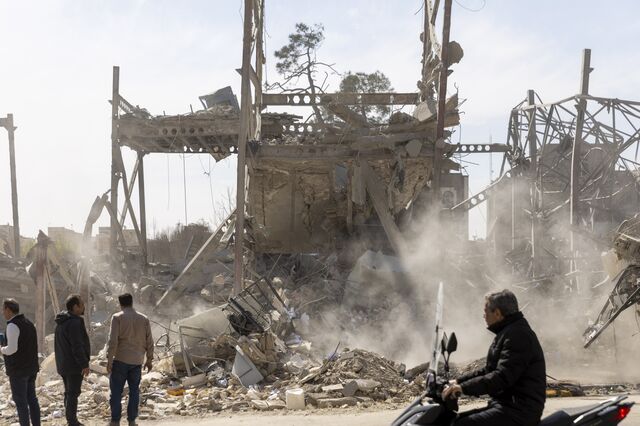
12 On March 3, Israeli forces took new positions in the south of Lebanon for the first time since a 2024 Israel-Lebanon truce. An IDF spokesperson said the war against Iran would not end “without Hezbollah being stripped of its weaponry.” The present Lebanese government has been seeking to disarm Hezbollah, the Shia Muslim group backed by Iran.
They have had a lot of outside meddling.
That’s right. But they’ve been willing to allow outsiders to meddle as well.
There’s a photograph I saw on social media, of a Middle East Airlines plane taking off from Beirut Airport just as airstrikes are coming in. It says something about resilience and what you learn when you’ve been through cycles of conflict.
Yes, the Lebanese are the most resilient people. Frankly, there are also other images where you see people in one half of Beirut, where there is no war, playing tennis, and the other half of the city being bombed to smithereens during the [1975-1990] civil war.
We’ve had scenes like that as well. And those are not anything to be proud of.
Mishal Husain is Editor at Large for Bloomberg Weekend.