Arctic Warfare
Fighting in the extreme north is frigid, complex and exhausting. It also may be a key capability for the US and other militaries looking to protect — or control — a key region.
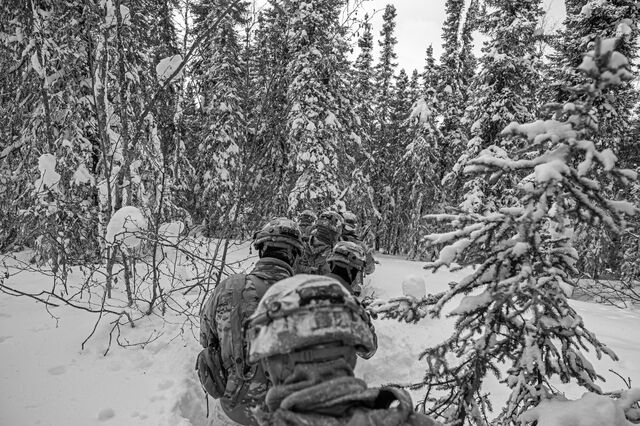
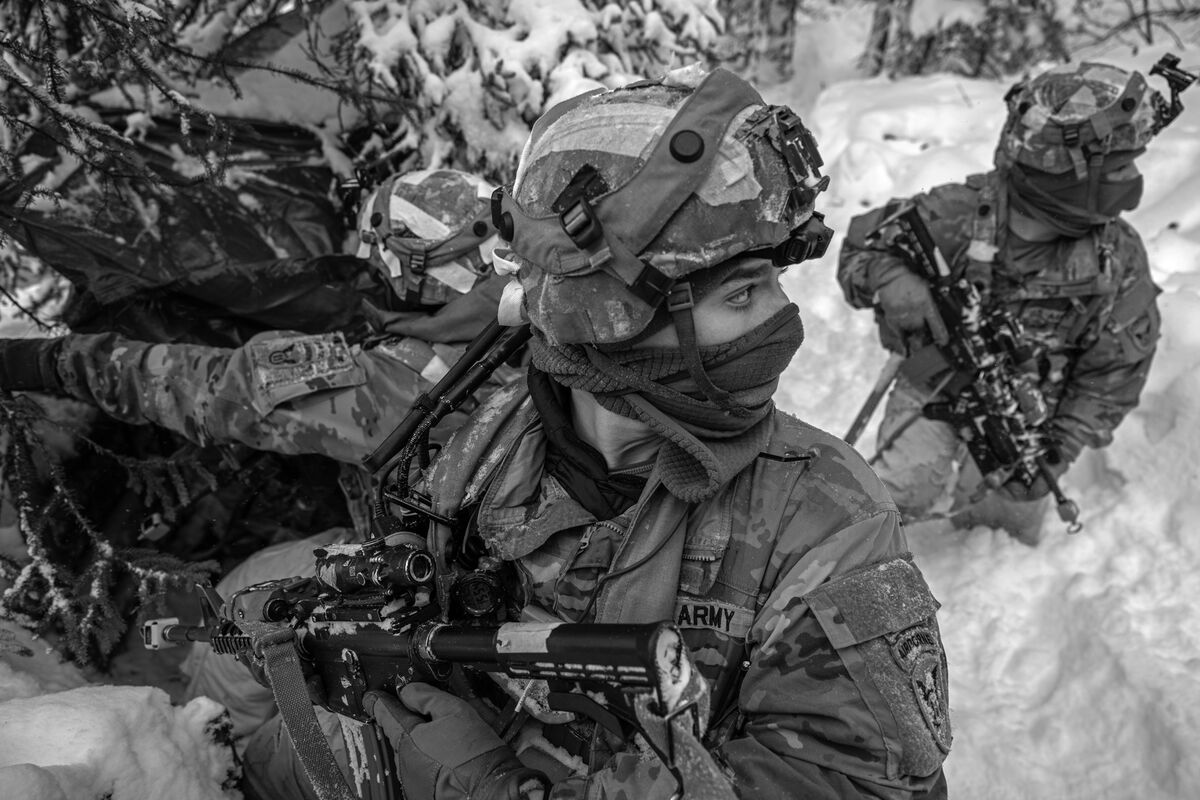
Just a few weeks before the US began its bombing campaign in Iran, soldiers from the US Army’s 11th Airborne Division trained to move, shoot and communicate at a remote Alaskan military training range, where temperatures drop low enough to freeze fuel, disable equipment and drain batteries in minutes.
For years, this kinda of Arctic specialization was treated as a niche mission; deemed important but rarely urgent.
That may be changing.
Thousands of miles east, Greenland has emerged as a geopolitical flashpoint, sharpening Washington’s focus on competition across the High North. The political heat surrounding Greenland could accelerate a broader US military push to rebuild Arctic readiness, which has been long debated but inconsistently funded.
Greenland straddles critical transatlantic and polar routes, and is host to key US military infrastructure, including missile warning and space surveillance systems.
In Washington, the Greenland debate has taken on an unusually sharp edge. President Donald Trump has repeatedly cast control of the vast Arctic island as a national security priority, arguing its position between North America and Europe makes it essential to deterring rival powers.
Purchasing Greenland or capturing it by military force have been a few of Trump’s more extreme ideas, and while that rhetoric has faded, it cast a new light on whether the US and its allies and partners can deter Russian activity and the growing ambitions of China in one of the least-hospitable environments on earth.
In February, the 11th Airborne — reactivated as the Army’s only Arctic-capable division in 2022 — showed a high-ranking entourage how they might do that, tracking and fighting mock adversaries across miles of snowfields at Eilson Air Base’s Yukon Readiness Center Training Range.
“The focus on the Arctic has never been more direct. We can thank Greenland for that,” Republican Sen. Lisa Murkowski of Alaska told Bloomberg News on the ground during the visit. “There is, I think, a greater appreciation of the role of the military when it comes to Arctic preparedness and Arctic security.
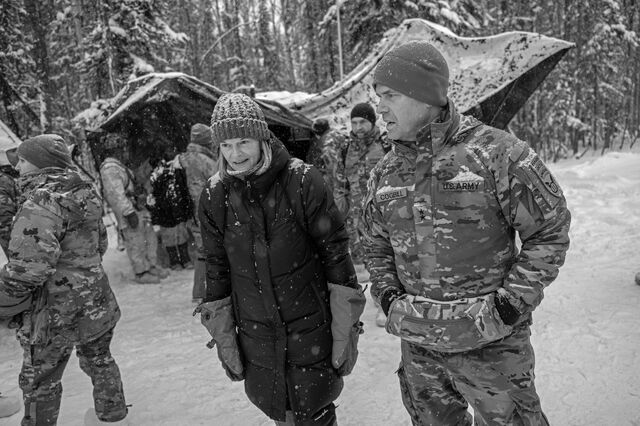
Army Chief of Staff Gen. Randy George, along with the US Army Pacific Commander Gen. Ronald Clark and other generals in charge of the service’s logistics, intelligence, and command-and-control capabilities rounded out the delegation.
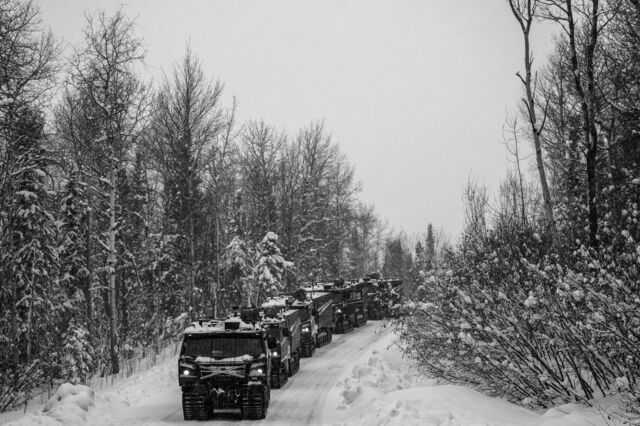
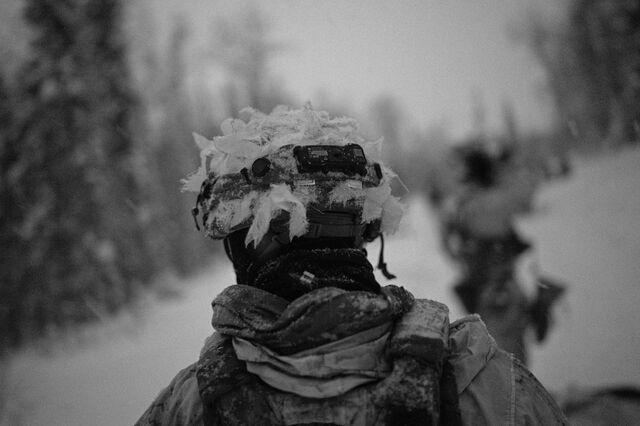
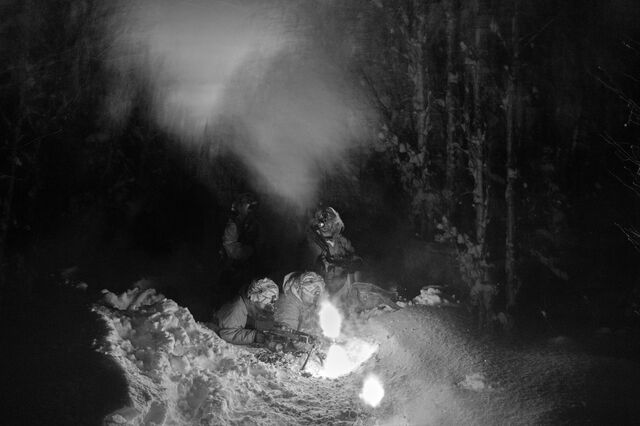
After driving miles into the wilderness in a convoy of tracked BAE Systems Plc Cold-Weather All-Terrain Vehicles, or CATVs, they hiked into the woods in a blizzard using snow-shoe carved paths. There they found soldiers nestled deep in more than 6 feet of snow, using small drones to keep watch and camping in stove-heated tents.
The vehicles, purpose-built for this type of battlefield, are a new addition to the Army motor pool after years of Arctic preparedness struggling to compete with wars in the Middle East and modernization priorities in the Indo-Pacific.
“We really allowed our capabilities to atrophy and now we’re in a catch-up game,” said Heather Conley of the American Enterprise Institute. “Finally, after studying and analyzing the challenge and writing the reports and things like that, now they’re really getting into, we’ve got to have these capabilities.”
George said he believes the Army can get there without an enormous cash injection.
“What they’re trying to do is find things that work that are also cost effective,” he said on the trip, adding that soldiers are coming up with inexpensive solutions even at the lowest unit levels.
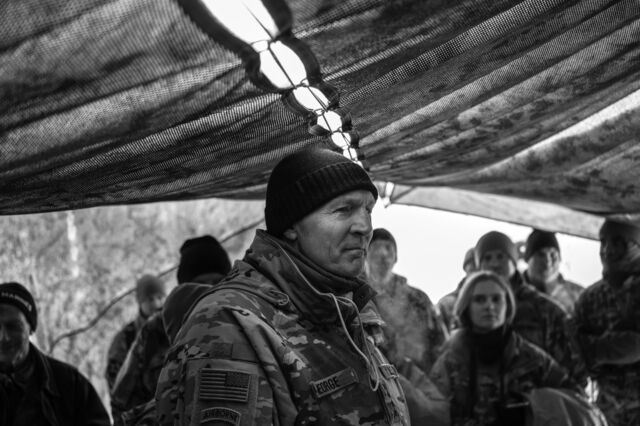
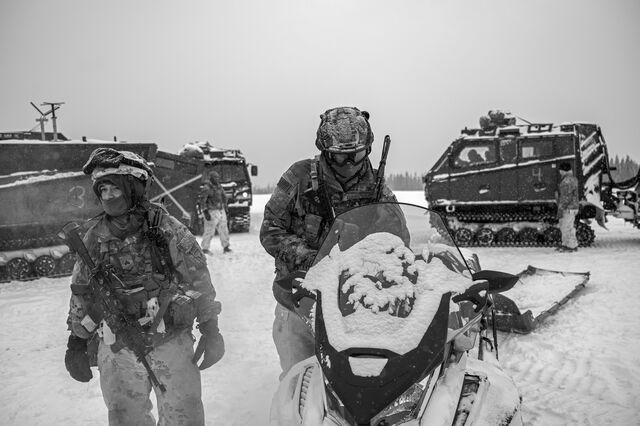
The 11th Airborne’s training rotation through the Joint Pacific Multinational Readiness Center has been a defining moment for the division, still maturing in its new role as the only Arctic-capable unit in the full-time Army.
It has grown rapidly, expanding from a battalion task force into a fully structured airborne division in just a few years, with plans to build out a full Combat Aviation Brigade and a sustainment brigade with thousands more soldiers.
“This is a crucible training event,” Maj. Gen. John Cogbill, 11th Airborne Division commander, said of the exercise, which brings in other friendly Arctic-capable forces like Canada, Finland, Sweden and even Mongolia. “Every year it gets just a little bit better.”
Alaska’s unpredictable winter and extreme temperatures that can drop below -50 F (-46 C) expose weaknesses in equipment, sap momentum and punish poor planning.
The unusually heavy snow during the Army chief’s visit, for instance, “presents some unique challenges for mobility,” Cogbill noted.
JP-8 fuel freezes at -52 F, traditional wheeled fleets seize up, mechanics struggle to keep vehicles running, drone batteries drain in minutes and movement over snow is a grinding march.
More than 40 pieces of new tech were tested during the exercise, including drones, advanced batteries, mobile kitchens and touchscreen tablet warmers.
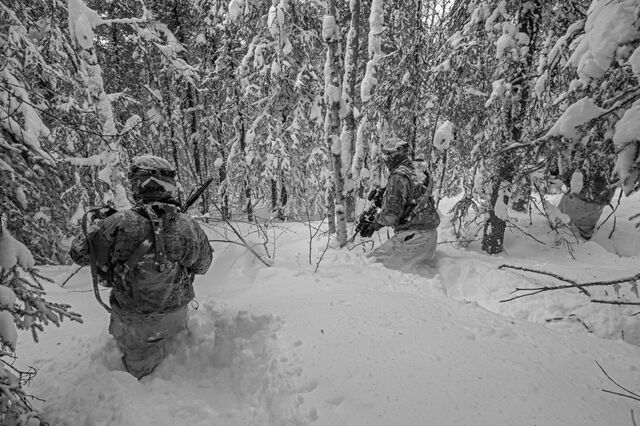
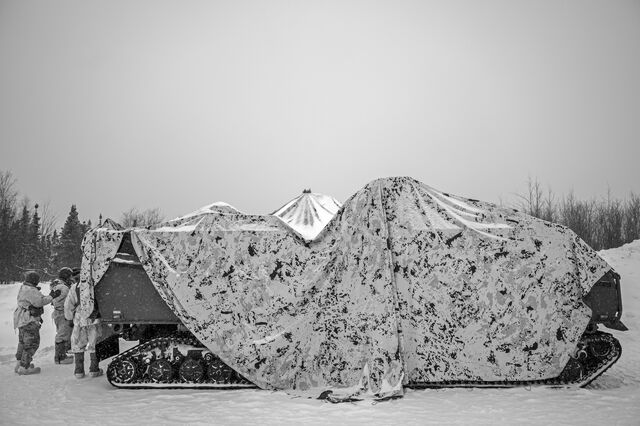
The Army says its CATVs, which haul supplies and sleds, are crucial to the Arctic fight, acting as highly mobile command nodes that can crunch straight over trees and camp concealed in the woods.
In one case, a commander drove his CATV into a frozen bog and fell through the ice. The amphibious vehicle was able to drive out after 10 tense minutes.
Although the unit only has 33 CATVs, it is slated to receive more than 180 in the next few years.
“They’re about a million dollars a pop,” Cogbill said. “But to us they’re worth their weight in gold.”
The frigid, remote territory also amplifies another major issue in a world full of sensors that can see heat: a warm body or tent has an easy-to-spot thermal signature. A drone used by the opposing force in the exercise spotted critical targets, even including Starshield satellite communications links emitting atop concealed CATVs.
Even so, the difficult conditions mean certainty often disappears into the snow. “We’re not going to hide — literally disappear,” said Col. Brian Weightman, commander of the 2nd Brigade of the 11th Airborne, which was acting as the adversary force in the exercise.
“What we’re trying to do as a brigade headquarters, I’m trying to look like a platoon or company” to confuse the enemy, he added.
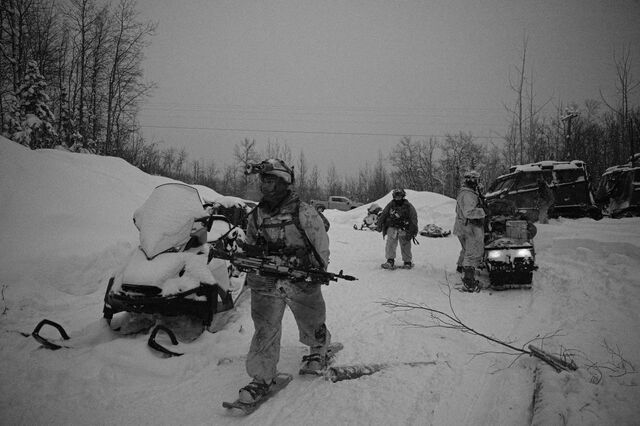
Col. Christopher Brawley, commander of 1st Brigade, said he had been unable to find Weightman’s new Multi-Functional Reconnaissance Company — a smaller, hand-selected unit combining scouts, electronic warfare systems, small drones and mobility platforms.
“We know kind of where it is operating, but it’s really difficult to detect,” Brawley said, adding that Weightman’s force didn’t find his brigade’s command center either.
The weather and terrain present a different kind of adversary. It snowed two feet in two days during the Army chief’s visit. Frozen lakes, bogs, mountains and dense woods compressed formations into tight corridors. Units struggled to reach positions. Artillery batteries competed for the few usable patches of terrain.
A carefully mapped logistics plan dissolves when a unit arrives to find snow up to its neck, requiring engineers and bulldozers before tents can even go up, Brawley said.
“Just putting on snowshoes with gloves on” is a challenge, he said. “Everything takes forever.”
The 11th Airborne is still growing and working through what it really needs, Cogbill said. Commanders say they are building a force that can survive and maneuver where untrained forces stall out in the hardest version of modern war.
At the end of the February visit, Army leaders returned to the CATVs idling in the open, leaving the soldiers hidden in the trees to wait for the enemy.
“Every day, we’re going to continue to add capabilities,” George said. “That’s important for Alaska and the strategic terrain, but they can go anywhere in the world.”
And the entire world is now thinking about the Arctic, and conflict there, in a way it never did before, said Mike Sfraga, the first US ambassador-at-large for Arctic affairs and the interim chancellor at the University of Alaska Fairbanks.
“I think it’s time we started thinking about the Arctic in a different way. It’s not this far off remote place,” Sfraga said. “We’re all connected.”