Exhausted by Wellness Culture? Try a Little Cheat Instead
No matter how long you want your life to be, it’s way too short to spend all of it on time-consuming therapies and expensive medical testing. Maybe just focus on what works: cheating.
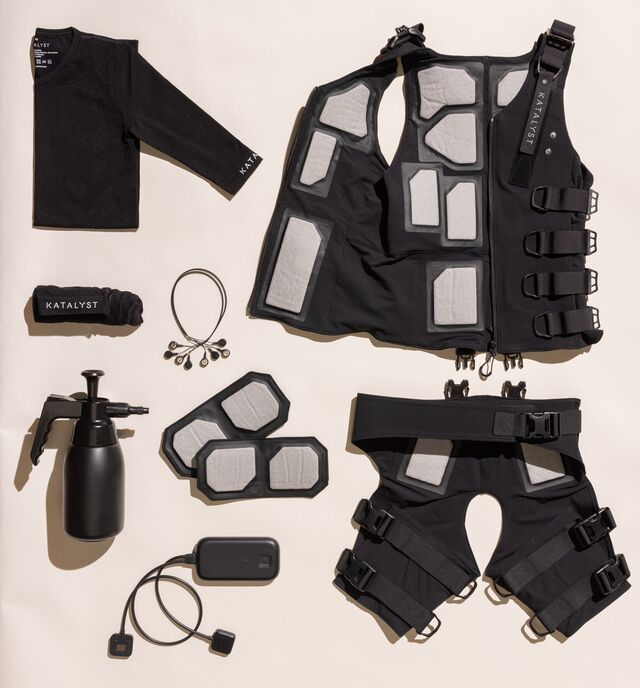
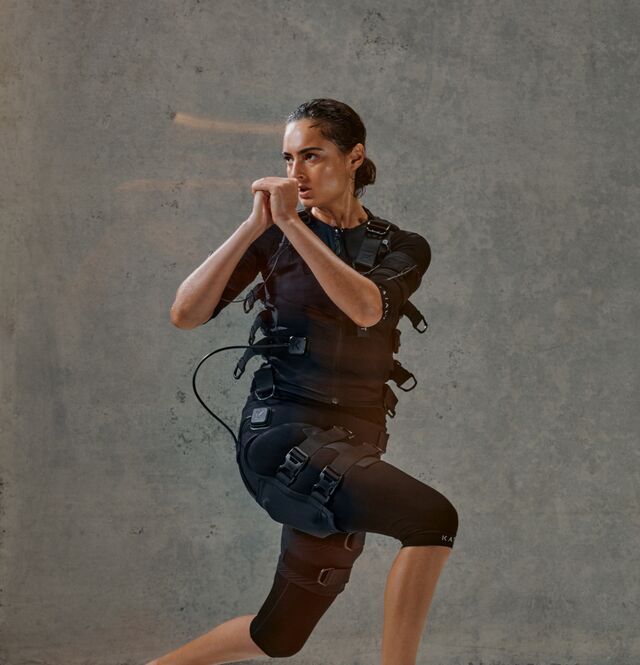
The other day, I woke up an hour before the rest of my family, stumbled into the bathroom and picked up a black bodysuit that hangs on a peg behind the door. Rubbing the sleep from my eyes, I put the suit in the shower, drenching the nylon fabric and its rows of metallic pads until they were soaked through. Then I put it on, tightening the straps along my sides, legs, shoulders and arms, and walked, dripping slightly, into the living room. I flipped on my iPad and found a strength-training video on the Katalyst fitness app, popped my AirPods in and began to work out.
As an extremely attractive trainer led me through a range of bodyweight exercises, the suit sent electric pulses through the wet stim pads into my muscles in a pattern—four seconds on, four seconds off, for 20 minutes. The stimulation isn’t painful, exactly, but by the end of my workout, the jolts were so intense my muscles froze up with every movement—leaving me grunting and gasping, soaked in sweat, ready to collapse under the strain. If my 4-year-old daughter had walked in, she surely would’ve thought I was under some kind of witch’s curse.
Peptide Hype? Fighting midlife malaise with injectable peptides is the longevity treatment du jour. But biohackers, do you know your NAD+ from your BPC-157 and GLP-1? Here's a primer on an $84 billion market in the making. Read More
At some point in your 40s, you start doing weird things to your body.
I started using the Katalyst suit and app in March to speed up my fitness recovery after a couple of winter injuries. Foot surgery, followed swiftly by a fractured elbow from a slip on the ice, left me unable to exercise for months. My physical deterioration was frustrating—and not great for my mental health. What I was looking for was a shortcut back to feeling strong. It wasn’t that I wasn’t willing to put in hard work, but like most people in their fifth decade, I do not shed pounds or build muscle quickly.
I wanted to find, well, a little cheat.
We Americans love a lil cheat. Walk into any CVS, and there are aisles and aisles of them. You’ll find collagen gummies to thicken your skin and hair, tinctures to hack your way to a good night’s sleep and pills to boost your metabolism. (Grand View Research estimates the health supplement industry is a $112.6 billion market.) CVS even offers that old chestnut, horny goat weed, and every kind of whitening toothpaste imaginable.
Yes, you could’ve brushed and flossed flawlessly your whole life and never tasted coffee, but you know what? You didn’t. So, cheating it is! (Call it “boosting” if that makes you feel better.)
This isn’t plastic surgery I’m talking about, or taking steroids, or even going to Turkey to get your hair replaced. It’s not about never dying or suddenly rewinding your face by 40 years like Kris Jenner. These are just minor amplifications—the same way pressing up-up-down-down-left-right-left-right-B-A-start on your controller used to get you 29 extra lives in Contra, the early Nintendo shoot-’em-up game I could never seem to win as a kid.
That’s exactly what I thought of when I heard Katalyst’s suits use electro muscle stimulation (EMS) to cause muscle contractions that supercharge your workout. In 2022, Katalyst raised its Series A funding round of $26 million with buy-in from firms such as Incisive and Unlock Venture Partners; Cindy Crawford and Rande Gerber even invested. I ordered the $2,999 Gen4 Training system, the newest suit, which comes with a free three-month membership to the app that runs the suit and offers guided workout sessions. (It’s $37 a month after.) That’s about the cost of a year at luxe gym chain Equinox.
What does it feel like? Well, for the parents of young children out there: You know how you have to learn how to do all your everyday tasks while someone is yanking your pant leg and shouting “Dad! Dad! Dad!”? This is like that, only the task is a normal workout and, instead of being yelled at, you’re getting electrocuted.
The jolt tickles your muscles at first, then it really gets crackling, buzzing you to the bone and making it all but impossible to even raise your arms above your head. But you get used to it. And 20 minutes pass quickly. Now I can handle intense pulses. The day after a session—even that same afternoon—I’m quite sore. It feels good to know it’s working.
Before the suit, I tried everything else. I’ve been trained in person and online by both humans and artificial intelligence. I’ve tried Barry’s Bootcamp, CrossFit, logging my diet, even Herbalife. I have a personal rule that if anyone invites me to engage in a new form of exercise, I have to say yes. So I’ve dabbled in Solidcore, Zumba, Orangetheory, Soulcycle, Aarmy, Physique 57, Shadowbox, Row House, hot yoga, hotter yoga and even a Pilates class called Chaise 23 because it was on 23rd Street in Manhattan and you did all your exercises in a chair.
Some of you will think this list is normal for a fitness person. Others will think, “That man is dented in the brain.” Good news: You’re both right! But I test products and experiences for a living. I want to try most things at least once. And fitness is better than hard drugs.
I started thinking about what other lil cheats I could employ to feel or at least look as if I was doing everything right. I’ve done a lil Botox in my forehead for years. Should I do more? What about lasers—lasers sound amazing! I take a lil melatonin to help me fall asleep, plus collagen to keep my hair shiny and my skin bouncy. What else should I be taking? Once a year I employ a box of Crest Whitestrips to bleach away the signs of my coffee addiction. Every other night I apply Dr. Dennis Gross’ Alpha Beta chemical exfoliant pads to ruthlessly scrape the top layer off my face and encourage fresh skin cell growth underneath. (These really work, by the way, but sadly not even the pads can heal the brain dents left by a lifetime of thinking you’ll never be perfect enough.)
I don’t qualify for a GLP-1 like Ozempic or Wegovy for weight loss, but those miracle drugs are the ultimate cheat codes, like the “TURTLE” command in Grand Theft Auto that gives you max health and armor. It’s not that people who take them can eat crap and never exercise; it’s that, when you do eat a responsible diet and move your body, those things actually work.
Looking into what else is out there, I dipped my toe into the buzzy world of longevity. I listened to Huberman Lab health improvement podcasts and checked out the supplements offered by Bryan Johnson, the billionaire biohacker with the hyperintense anti-aging regimen. (It involved swapping blood plasma with his own son.) I read up on high-end healthspan clubs such as Continuum, which uses blood panels, X-rays and VO2 max testing to design fitness and nutrition programs for a mere $50,000 a year.
I read Outlive by Peter Attia, wherein I learned about rucking (carrying 50 to 60 pounds in a backpack as you walk around) for as long as four hours a week, using the sauna four to seven times, taking three or four cold plunges, plus VO2 max workouts and continuous glucose monitoring. And this is where I stopped.
Does that sound like bliss to you? It doesn’t to me. It sounds like a whole lot of miserable work. (Except the saunas part.)
Of course I want to live better, longer. At least, I want to want to. I wish I could be diligent enough to build my whole life around my health—or wellness or self-care or healthspan or whatever we’re calling it at the moment. But I’m not. Who has time for all that? I have a kid, a job and people in my life I like to see. The truth is, many of these therapies will turn out to be flashes in the pan. No matter how convincing, health fads almost never last more than a few years. The only principles that endure are the ones we’ve always known about: eating right, exercising consistently, getting enough rest, being assiduous about mental health and being a part of a supportive community.
Even the podcaster Andrew Huberman admits this. “The things that make 90% of the difference—like sleep, exercise, nutrition, light, stress management, relationships, etc.—in our health are the things that we have to do 90% of the days in our lives,” he said during a July episode.
It can be frustrating to try the same things over and over, the stuff that works for other people, and not experience those results yourself. Is it any wonder we’re eternally in search of new cheats in those arenas? I’ve been through it for years on the fitness beat.
But here’s the thing: The Katalyst suit worked. With it, my normal Barry’s Bootcamp and weightlifting routine got supercharged. In six months, I lost a barrier of fat around my waist, shed about 10 pounds and gained muscle. I dropped a belt size, and my posture improved. What’s more, I improved. Because that lil cheat gave me the encouragement to watch my diet, to get more sleep, to eat more protein and vegetables. Could I have achieved the same results with a trainer and nutritionist? Probably. Did I have the time or the patience for either? I did not.
The lil cheat, whether it’s a gummy, a suit or an exfoliating pad, might just be what encourages you to press on and try harder. When my teeth are white, I’m better about flossing. When I’m using retinol, I’m better about wearing sunblock.
We have to accept that many of the shortcuts at CVS (and certainly on the internet) are placebos: According to the Journal of American Medicine, supplement users are more likely to report very good health, have health insurance, use alcohol moderately, eschew cigarette smoking and exercise more frequently than nonusers. They’re better people, and they take supplements. They’re not better people because they take them.
But when I was a little kid surrounded by older boys who were great at Contra, I felt like I needed the code just to get started. When I had that boost, the game became less intimidating and more fun. I had a reason to keep trying.
So if you’re feeling overwhelmed by all the health buzzwords out there, by the fitness tracker data dumps and the celebrity MRI startups and the rucking of it all, I encourage you to let yourself indulge in a few lil cheats. You might find they get you into the game again, the way putting on a wet bodysuit and being sizzled with electricity did for me. It made my life better—at least a lil bit.
Some Buzzy Lil Cheats of the Moment
Wellness really can be this easy.
Xanax in Your Ears
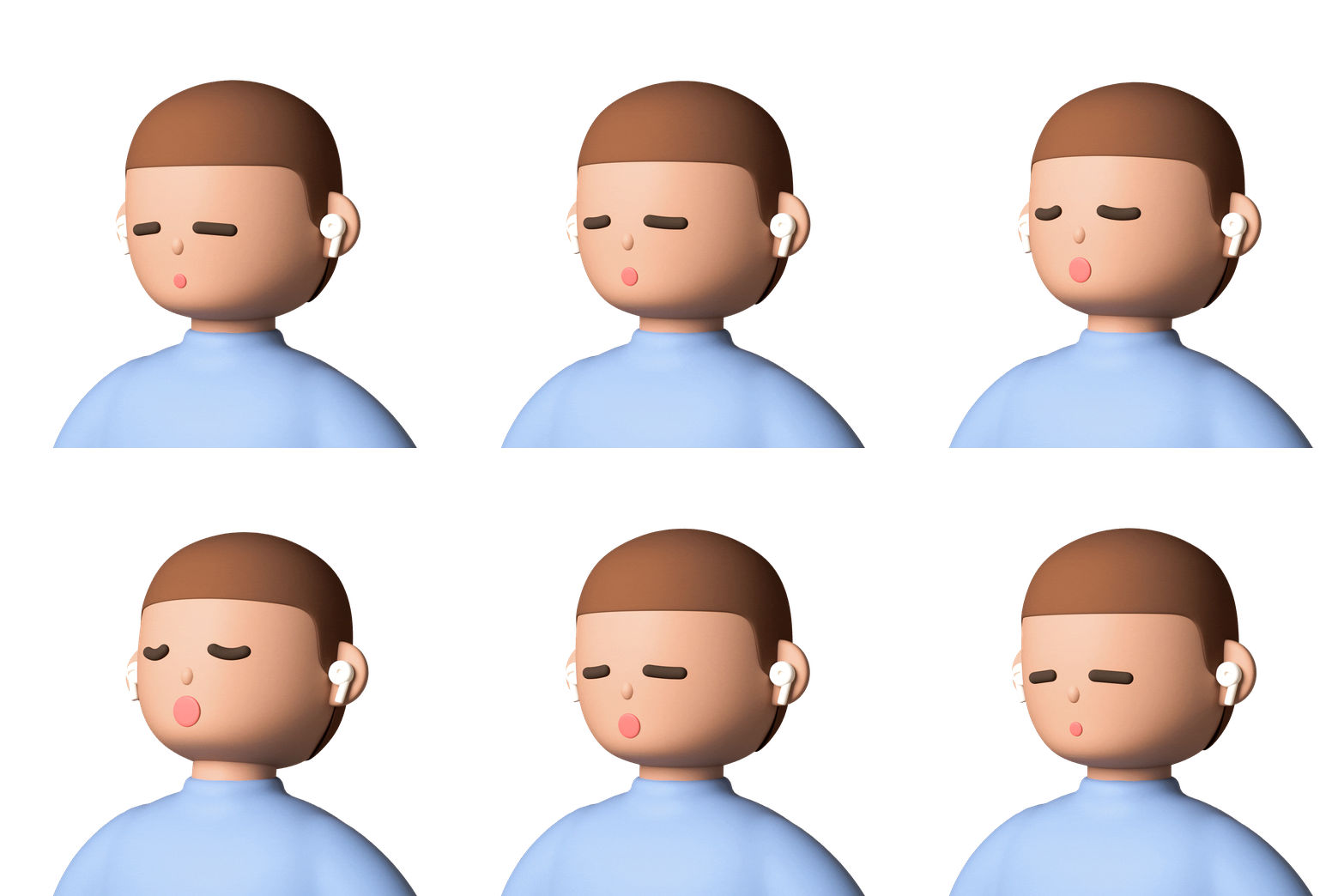
It was an attempt at soothing nervous dental patients that led the late neuroscientist Blake Holloway to create what’s now NuCalm. Pop on your headphones, press play on the app (subscriptions run from $14.99 to $49.99 a month, with a 10% discount if you sign up for a full year), and you’ll hear what sounds like music but underneath is an atonal frequency that works to shift the brain into so-called deep theta, that state associated with meditation and the initial stages of sleep. The ideal “dose” is three to four times a week for at least 20 minutes, and converts speak of deeper sleep, better focus, lower blood pressure and relief from anxiety when they do it regularly. The contemporary symphony-esque sound is eerie at first, but a few daily sessions seemed to slow my racing mind. When my cortisol was tested before and a few months after starting regular NuCalm sessions, it had dipped significantly. Because of the app or just a little more downtime? Who can say? — Mark Ellwood
Snore Less, Sleep Better
Breathing through your nose has major benefits: It filters dust and pollen, humidifies the air you take in and produces nitric oxide, making it easier for nutrient-rich, oxygenated blood to reach organs. It’s also noticeably quieter. Mouth tape, a social media darling, claims to encourage this, but it works only if you can get enough air through your nose. A soft medical-grade nasal dilator called Mute holds your nostrils open like internal scaffolding. The flexible plastic insert slips inside each nostril, straddling the septum. Each D-shaped loop locks into one of four positions, letting you adjust the fit, expanding to about half an inch. A three-pack is $23 and lasts 30 nights, though with cleaning you can likely extend that. After a month, Mute felt surprisingly comfortable, opening my nose better than breathing strips. Sleep deepened, snoring quieted, and mornings started without that groggy, not-quite-rested haze. — Sal Vaglica
Sole Renewal
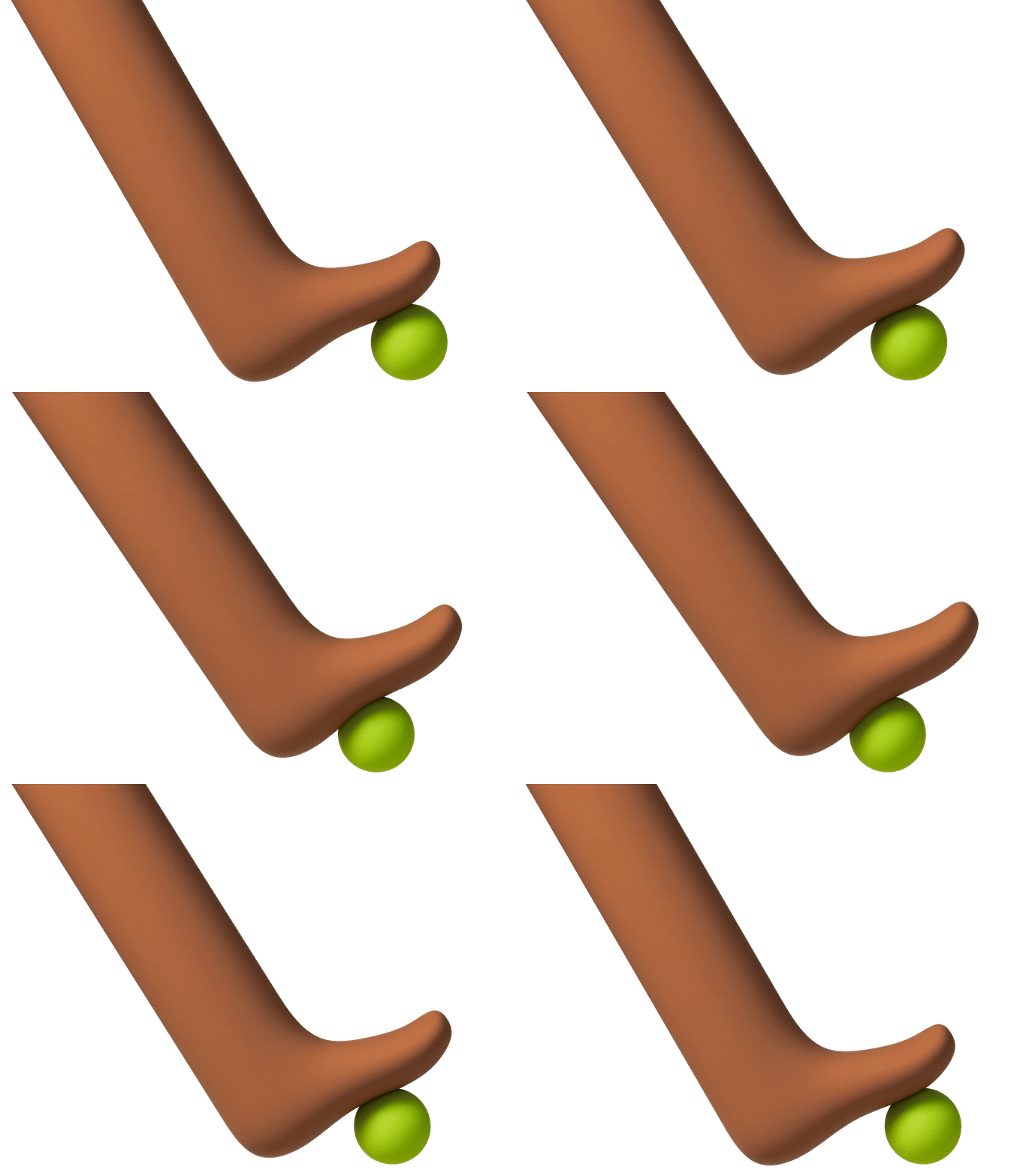
Have only two minutes and a tennis ball? That might be enough to feel better after a difficult day. The tough membranes that connect our muscles are known as myofascial tissues, and working to release the tension in that network is a shortcut to stress relief and better circulation, says Tatsiana Toumel, a sports therapist and head of well-being at Eriro in the Austrian Alps. Focus on your foot fascia, she says, via a ball rolled back and forth on the sole for two to five minutes several times a week. While seated, gently press your foot onto the ball and then release; repeat in every area of the sole, as well as the foot’s outside edges. Be firm but listen to your body. “It’s important to apply comfortable pressure and avoid pain,” Toumel says. It should take only a week or so to start feeling an impact—less foot pain, yes, but also generally more calm and an increase in mobility. — M.E.
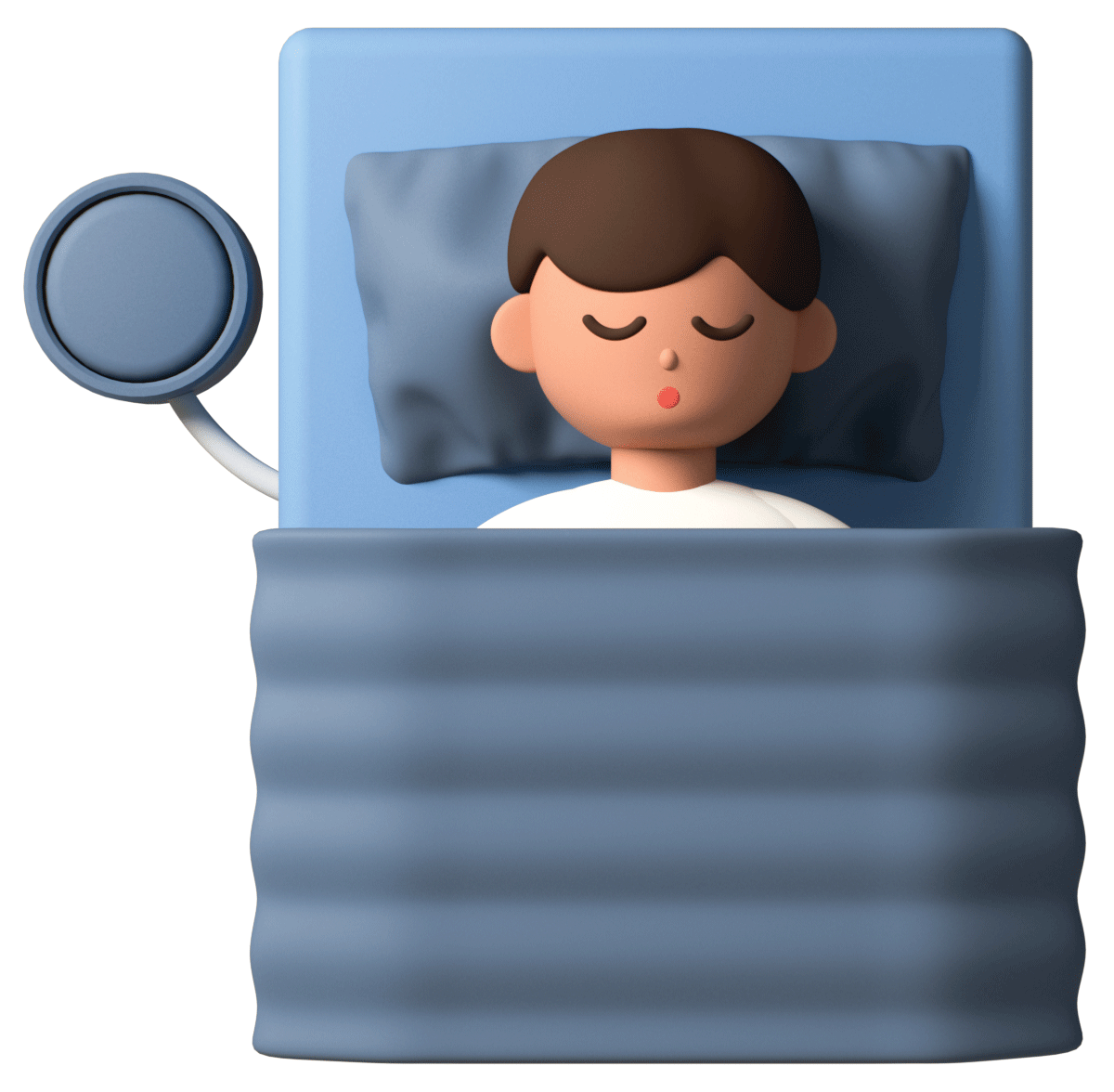
The Good-Sleep Sidekick
As anyone who shares a bedroom can attest, temperature is a tricky thing. The right thermal environment, as sleep researchers call it, is key, yet not everyone agrees on what that is. Enter the Eight Sleep Pod 5 Ultra. Like previous generations, the newest Pod (starting at $5,248 for queen size) features a tubing-filled mattress cover that you place under your fitted sheet. A heat pump rests on the floor near the bed and circulates water through the cover, splitting the mattress into two zones based on each sleeper’s preferences. It can be scheduled or adjusted on the fly from 55F to 110F. There’s also a Pod Base for each side of the bed, a 3-inch-thick metal slab covered in fabric that slides between the mattress and the box spring to support more comfortable reading. It can also raise a sleeper’s head on either side of the bed automatically when it detects snoring. The Pod 5 line offers an optional water-filled blanket ($1,050) that mirrors the mattress temperature. Across a month of testing, it took me an average of 21 minutes to fall asleep, beating Eight Sleep’s 30-minute benchmark for adults. Deep sleep made up 17% of the night, within the recommended 15% to 20%. The Pod’s artificial intelligence ($17 monthly subscription) monitors your sleep—tracking breathing, snoring, heart rate and movement—and makes adjustments to help optimize your night. — S.V.

Sculpt Your Face
I lack the pain tolerance and tens—or hundreds—of thousands of dollars necessary for a deep plane face-lift. And yet sometimes I want to look like I have sculpted cheekbones (or at least as if I’ve gotten eight uninterrupted hours of sleep). So before I go to a major event, I schedule a sculpting facial treatment, which does an excellent job of simulating the current “snatched” beauty ideal for a day or two. (In a pinch, I can also use a gua sha device on myself to gently work the fascia and push the fluid around under my skin.) My go-to is Carrie Lindsey’s Brooklyn or Manhattan studios, where aestheticians stroke, massage and (gently) pinch the skin, particularly around the sinuses, chin and cheekbones, and under the eyes. They will even go inside your mouth—with consent and surgical gloves on—for buccal massage, which hollows the cheeks and feels especially good for anyone who’s a teeth grinder or jaw clencher. The results are clean skin, an hour spent blissfully doing nothing but listening to that strangely relaxing spa music, and a face with reduced jowls and a tight jaw line. It’s recovery in itself, instead of requiring recovery time. — Marisa Meltzer

Instant Eye Lift in a Dropper
Not up for a full upper-eyelid blepharoplasty? There’s a way to fake those results for a few hours. Upneeq ($150 for a 30-dose supply) is a prescription eye drop that raises the eyelid by a noticeable 1 millimeter in 15 minutes, an effect that lasts six to eight hours. Its active ingredient, oxymetazoline hydrochloride (the same chemical in Afrin), causes a tiny involuntary muscle in the eyelid to contract, resulting in a more awake and refreshed appearance. Upneeq was developed for people with medical conditions such as a droopy eyelid, but makeup artists and cosmetic dermatologists love it for the occasional big photo moment—weddings, a red carpet, etc. “It’s a great, innovative product that has served me and my patients well,” says Elizabeth Hale, a board-certified dermatologist in New York City. The most common side effect is irritation. — Cheryl Wischhover
All-in-One Face Fixer
It might be fun to watch influencers transform themselves with a 37-step makeup application, but off-screen, most of us want multitasking products that work without making us look as if we’re wearing 37 layers of anything. This might explain the exploding popularity of skin tints. The category has grown almost 27% this year, according to the Spate Popularity Index. A more lightweight and smarter cousin of the tinted moisturizer, and not as heavy or labor-intensive as foundation, the tints often contain SPF and skin-care ingredients including squalane, niacinamide and hyaluronic acid. They don’t produce miracles, but they can blur fine lines and give you a subtle glow. Try Ilia Super Serum ($48) for the best shade selection, Summer Fridays sheer ($42) for the best glow and NYX Buttermelt Glaze soft glow ($16) for a more affordable option. — C.W.
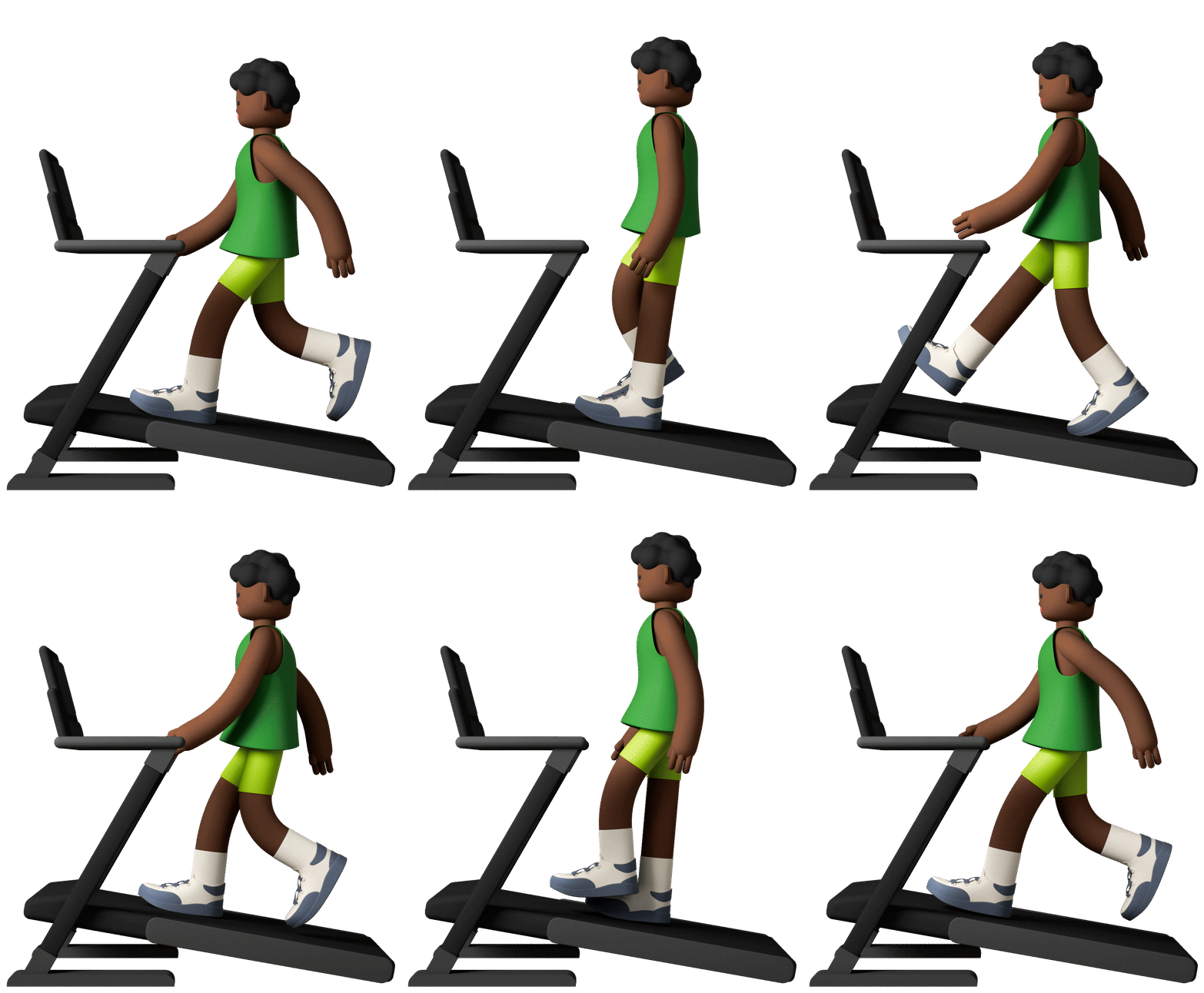
A Better Fat Buster
Forget pounding a flat treadmill breathlessly for 45 minutes and opt instead for a brisk uphill-walk setting, says Bev Ratcliff, a trainer in Brooklyn, New York. Steady, low-intensity hill walking is how bodybuilders traditionally cut fat, she says, saving their strength for weight training. “You can do four hill walks a week, and you’re barely going to notice the fatigue from that. But give me four runs, and I’m going to be sore,” she says. And yet “you’re pulling yourself up a hill, so we’re getting more glute activation, more quads, more hamstrings, more calves.” Ratcliff suggests doing 15 to 30 minutes at a time, varying inclines from 4% to 10% as you go. Keep hips relatively close to the front of the treadmill and don’t hold on, as that neutralizes many of the benefits. And look ahead, rather than at your feet, so you don’t strain your neck. “People are always trying to find this glitzy thing,” she says. “And I’m like, ‘Just do what works.’ ” — M.E.